On the slopes of Mount Hasan in Anatolia, Gelveri is preserving far more than an ancient winemaking tradition. Its work is rooted in native grapes, biodiversity and knowledge passed down through generations.
Long before wine entered his life, Udo Hirsch had devoted himself to the natural world. Over nearly five decades working with the World Wide Fund for Nature (WWF), his commitment to biodiversity took him across continents. His connection with Turkey began with the endangered northern bald ibis in Birecik and eventually led him through the Caucasus, the cultural heritage of Anatolian kilims and the archaeological discoveries of Çatalhöyük. Alongside him is Hacer Özkaya, his closest collaborator in a venture shaped by traditional methods, clay vessels and the daily rhythms of winemaking.
What began in the cellar of an old house in Güzelyurt has since evolved into a project dedicated to protecting indigenous grape varieties, many still growing on their own roots, and preserving knowledge at risk of disappearing. Today, a bottle of Gelveri contains more than wine: it carries the volcanic soils of Mount Hasan, Anatolia’s remarkable grape diversity and a winemaking heritage stretching back thousands of years. We spoke with Hirsch and Özkaya about what it means not simply to revive the past, but to keep its traditions alive in the present.
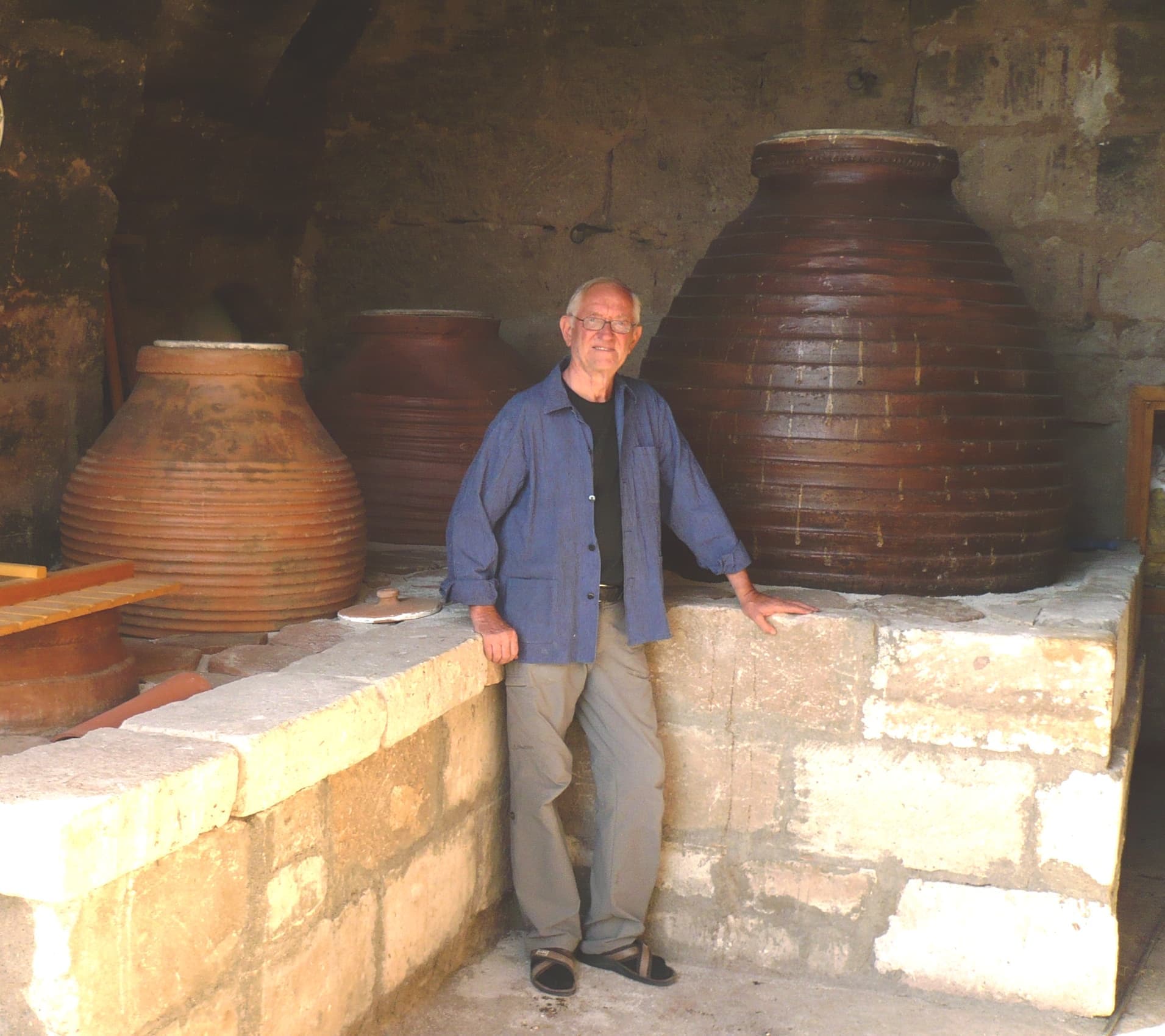
First of all, thank you both for taking the time to speak with us. The story of Gelveri seems as much a story of life as it is of wine. What first brought you to Güzelyurt? Do you remember the moment you decided this was where you wanted to make wine?
Udo Hirsch: It is actually rather difficult to tell Gelveri’s story in those terms, because wine had nothing to do with the beginning. From 1970 onwards, I spent nearly 50 years working for the World Wide Fund for Nature. My first project involved the conservation of the northern bald ibis in Birecik, near Urfa. I subsequently worked in Peru, Bolivia, Chile, Ecuador, the Galápagos Islands, North Africa and Madagascar, as well as spending almost 20 years in the Caucasus.
As one of the founders of the Society for the Protection of Nature in Turkey, I also travelled to the country frequently. I became involved in another project here, accompanying Belkıs Balpınar, director of Istanbul’s Museum of Carpets and Kilims, in collecting important examples of Anatolian carpets and kilims. We published two books on the collection. Later, together with the archaeologist James Mellaart, we published The Goddess from Anatolia, a four-volume work exploring kilims and related wall paintings at Çatalhöyük.
My story with wine began only afterwards. Twenty-six years ago, an old friend from Avanos and I bought a historic house in Güzelyurt and began restoring it. When my friend later moved to Istanbul, I decided to buy his share and continue the restoration myself.
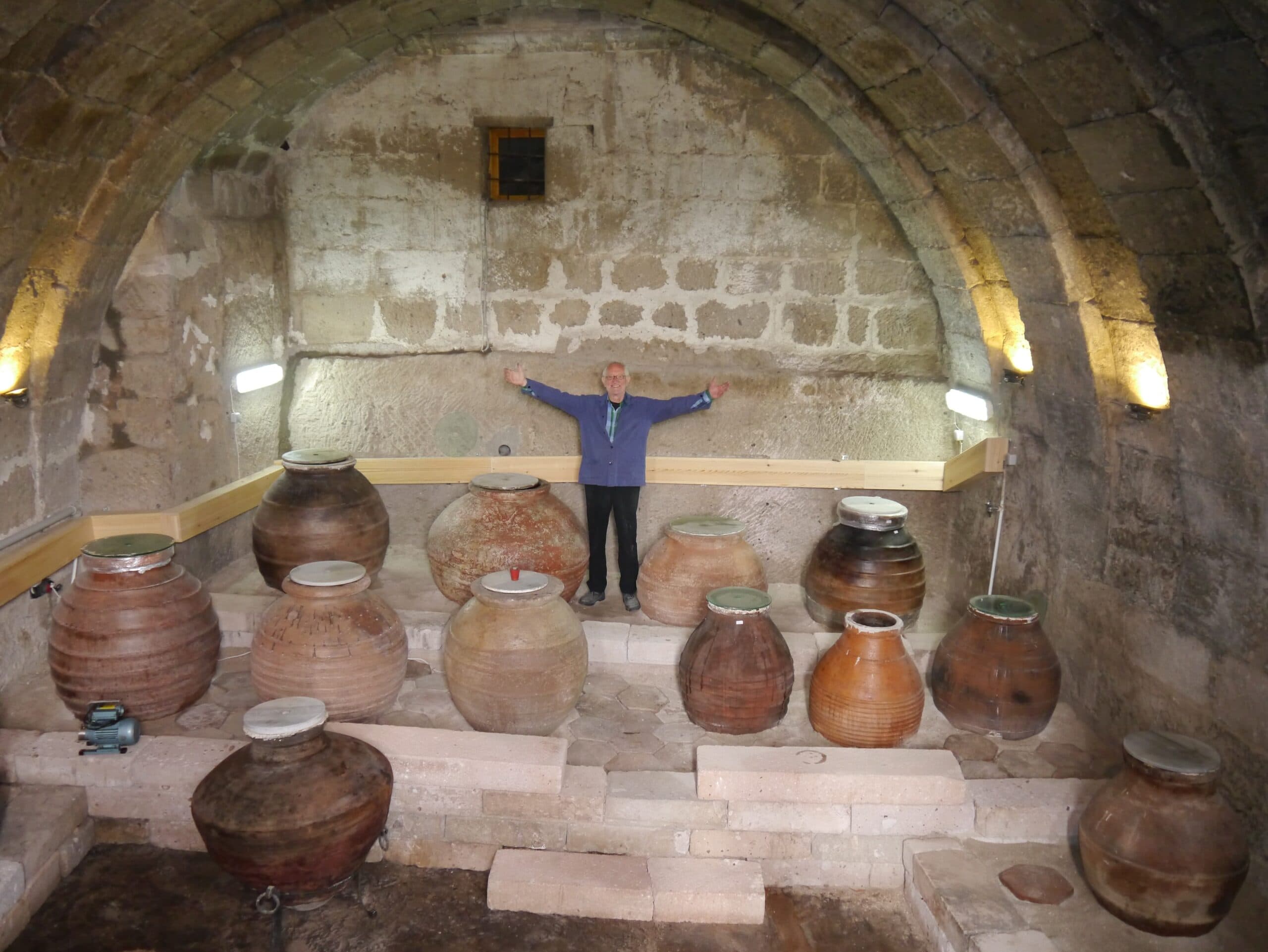
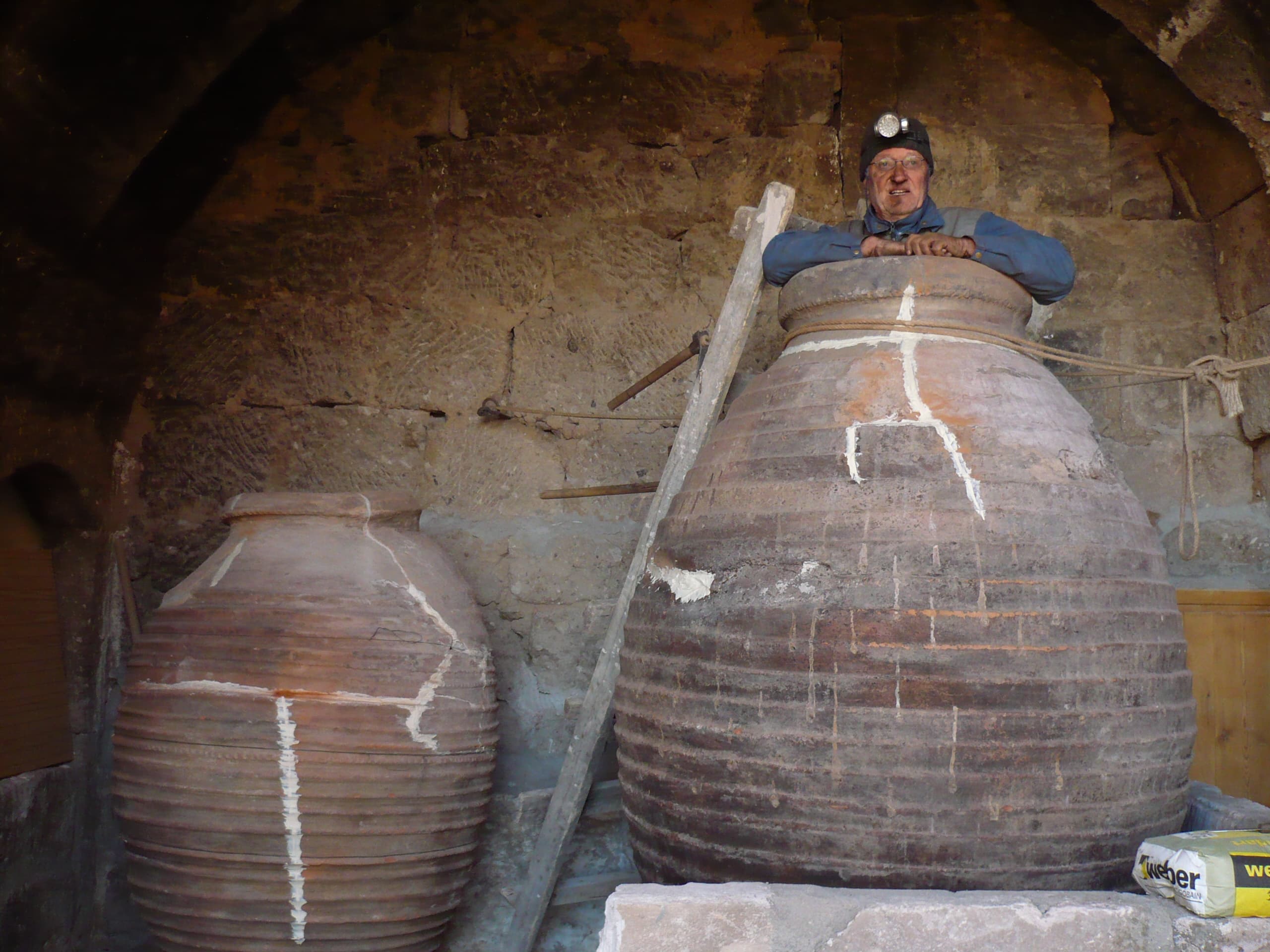
The house had previously belonged to a Christian family who emigrated to Greece in 1924. At that time, most houses in Güzelyurt had a space in the cellar dedicated to processing grapes. We used this area to produce wine using traditional methods, within the officially permitted household limit of 350 litres.
Quite unexpectedly, we encountered our first problem: we had too many friends. Since we were unwilling to give up either our friends or our wine, we decided to establish a model project and officially produce 5,000 bottles a year.
What is the story behind your decision to preserve the name Gelveri through your wines? How does it connect the people who once lived here with those who do today?
Udo Hirsch: Güzelyurt was originally known as Karvali and was later called Gelveri. We chose the name Gelveri for our wines to honour the memory of those who had lived here before us.
We know the descendants of the house’s former owners, and they know us. We have learned a great deal from them, both about the Gelveri wine produced in their time and about the wines we make today. As a gesture of respect for their knowledge and friendship, we named one of our wines Mayoğlu, after their family.
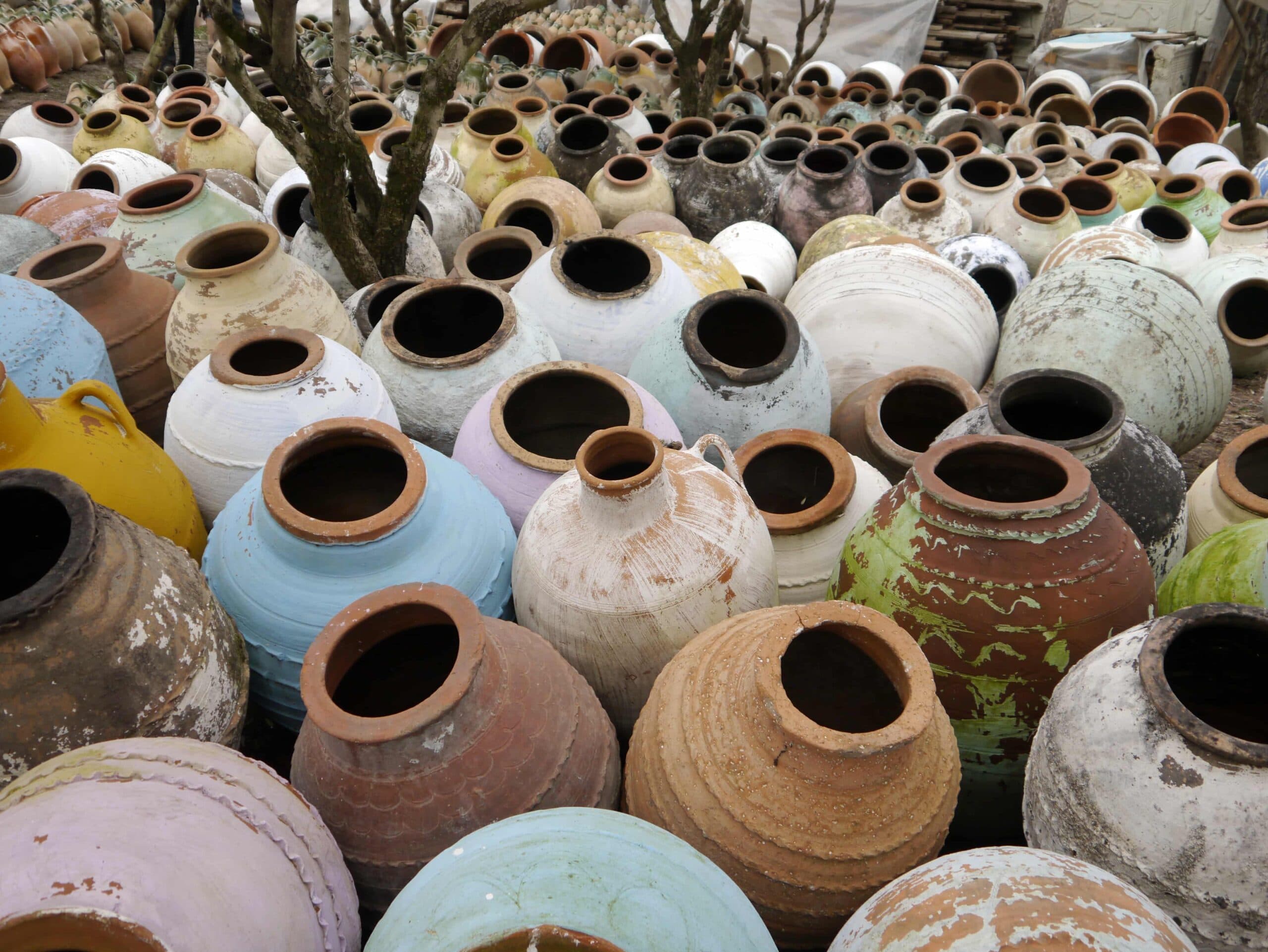
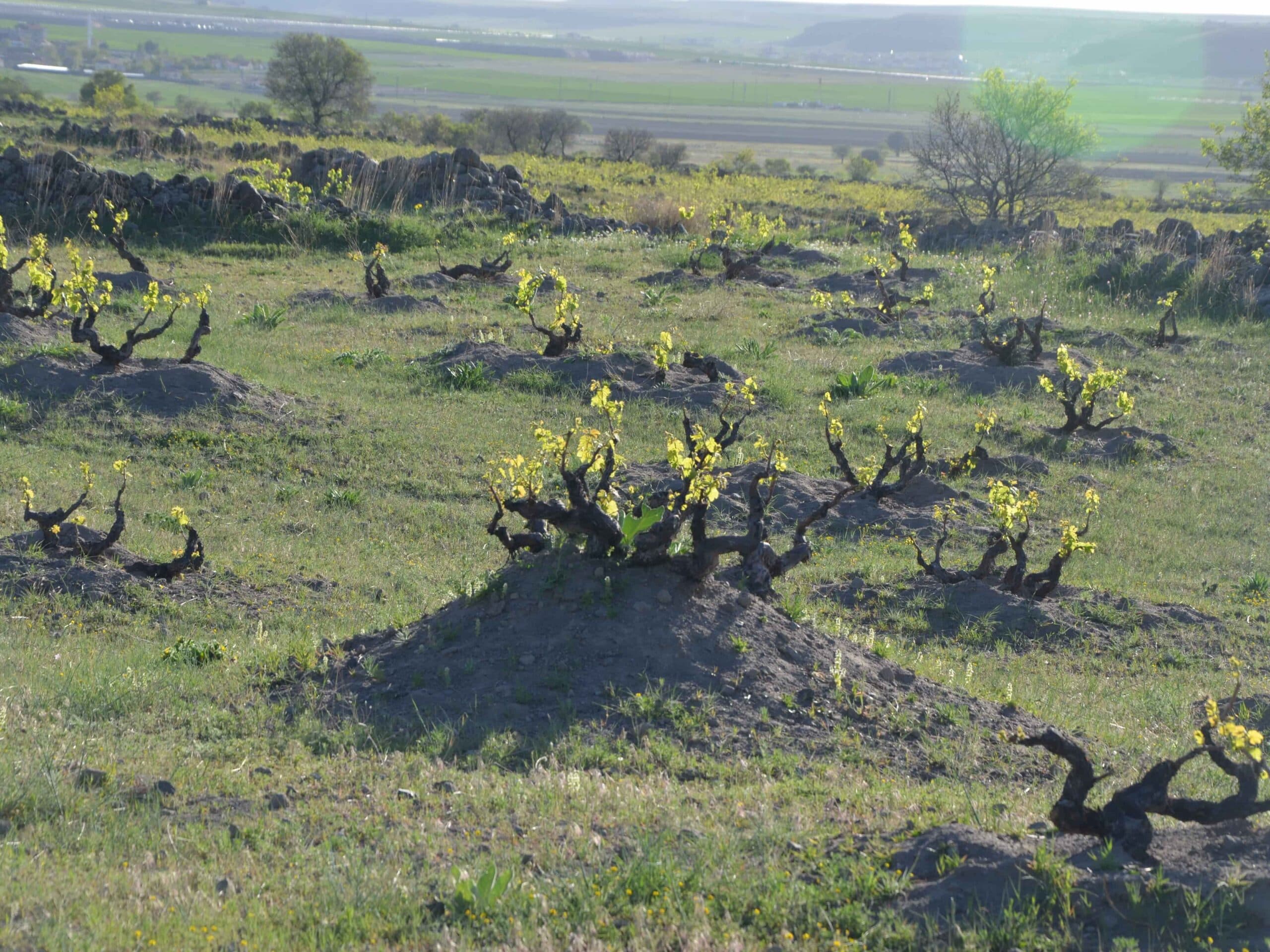
How do Güzelyurt’s volcanic soils, rock cellars and high altitude shape the character of your wines? Could you ever produce the same wine elsewhere?
Udo Hirsch: The Mount Hasan terroir brings together an extraordinary combination of qualities that, in other countries, tend to occur only as isolated advantages.
The characteristics of the region can be summarised as follows: vineyards reaching altitudes of up to 1,600 metres on the slopes of Mount Hasan; annual rainfall of approximately 300 millimetres; temperatures ranging from 40°C in summer to minus 25°C in winter; deep volcanic tuff soils exceptionally rich in minerals and biodiversity; small-scale agriculture practised alongside sheep and goat farming; and non-commercial grape cultivation, including 21 largely unknown varieties still growing on their own roots.
There is also no industry within approximately 50 kilometres of Mount Hasan. I know of nowhere else that offers a directly comparable combination of conditions.
Udo, how has your background in biodiversity conservation influenced your approach to winemaking? Do you see the vineyard as a place of research as much as a place of production?
Udo Hirsch: Biodiversity has always been central to my daily work. The periods during which our WWF team was able to protect, and even enhance, biodiversity were among my most valuable experiences.
For that reason, biodiversity also forms the foundation of our winemaking. What matters to us is not merely protecting it, but sharing this approach with our friends and wine lovers, and passing on what we have learned.
“For that reason, biodiversity also forms the foundation of our winemaking.”
One of Gelveri’s defining missions is to protect indigenous grape varieties at risk of disappearing. Is a grape worth preserving for its flavour alone, or does its cultural history matter just as much?
Udo Hirsch: What matters here is Turkey’s extraordinary genetic wealth, reflected in its 1,600 grape varieties.
Across much of the world, local vines were grafted onto American rootstocks to combat phylloxera. This made it possible to protect the vines, but their distinctive taste was irreversibly lost.
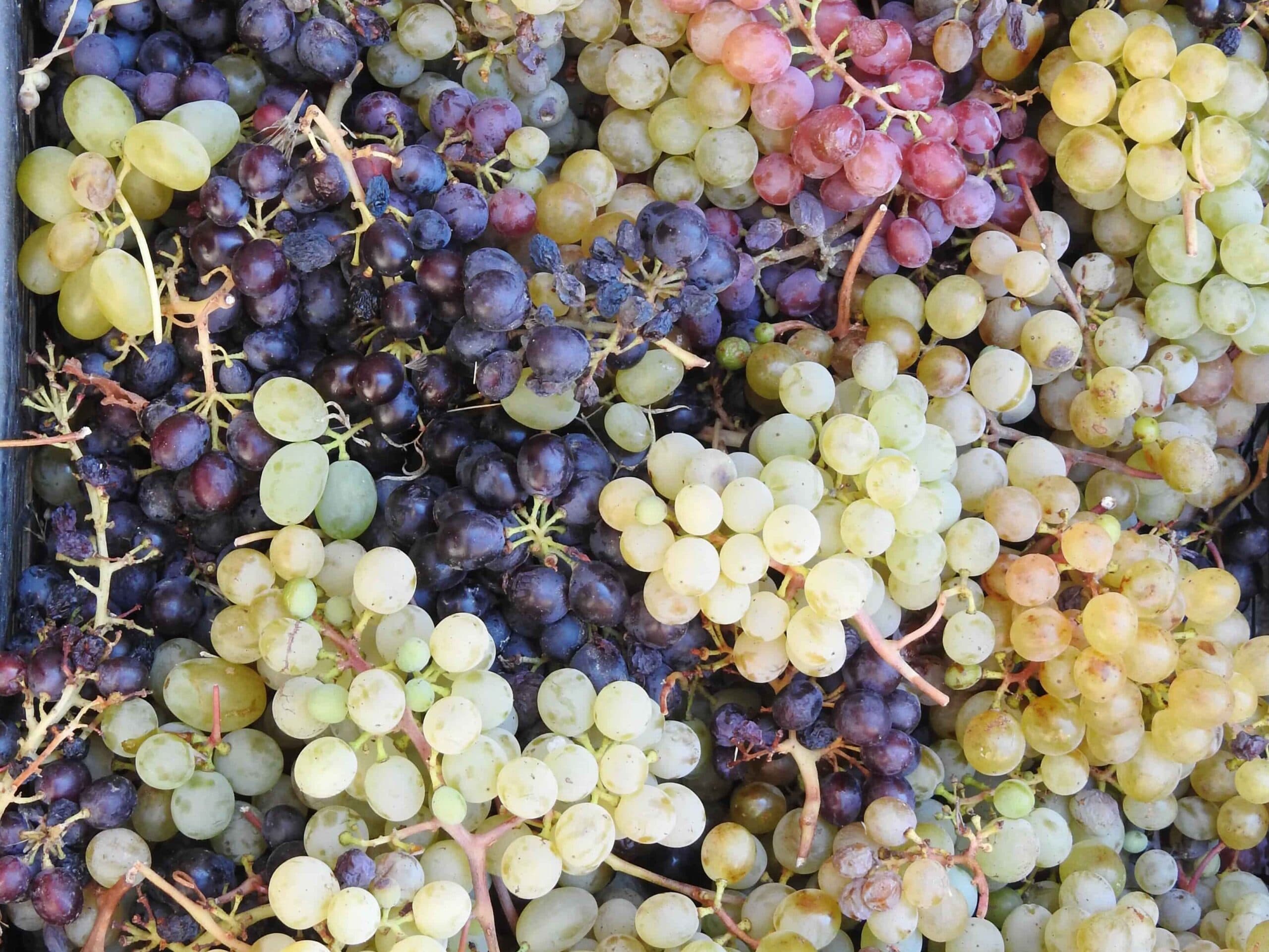
A large proportion of Anatolia’s vines, however, still grow on their own roots. In addition to the varieties we use, local communities around the Mount Hasan terroir continue to cultivate 21 different varieties on their original root systems.
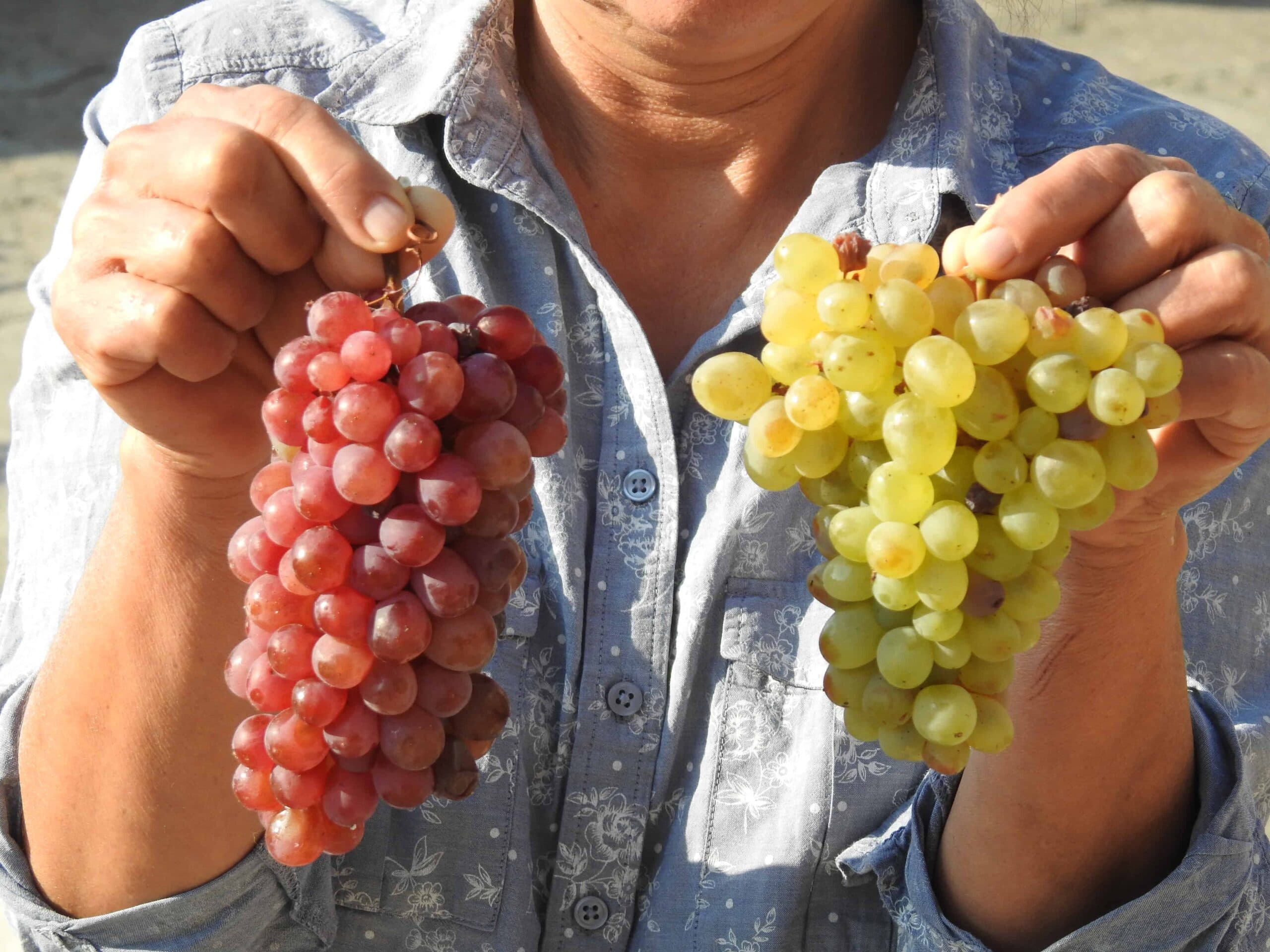
Working with relatively little-known grapes such as Hasandede, Keten Gömlek, Koku Üzüm and Taş Üzüm, which variety has surprised you most?
Udo Hirsch: These varieties were generally classified commercially as table grapes or grapes used for making pekmez, the traditional grape molasses.
Yet after only four years of production, Keten Gömlek and Hasandede won gold and silver medals in Germany for the quality of their wines. This came as a surprise to our customers in Turkey, but for us it was a confirmation of what we already believed.
Hacer, you represent much of the work behind the scenes at Gelveri. What has been the most defining experience for you on this journey?
Hacer Özkaya: I have learned how to make wine using traditional methods and, importantly, to understand the differences between wines produced in this way and those made using industrial techniques.
Is small-scale production an economic necessity for you, or a deliberate choice? Did you ever imagine Gelveri would develop in this way?
Udo Hirsch: Gelveri is a model project. We had no economic need to pursue it, but we wanted to find out whether such an approach could work in practice.
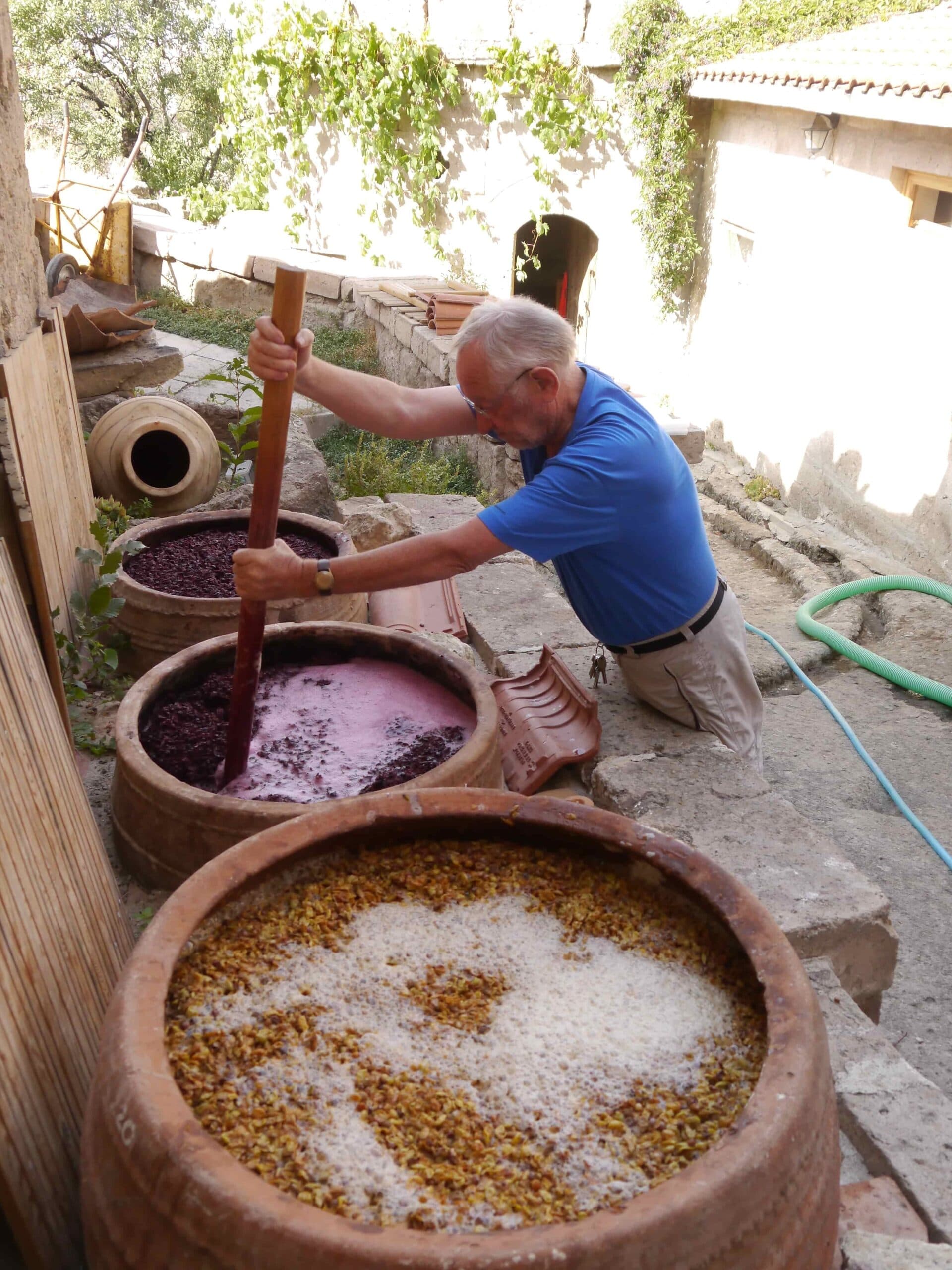
We are getting a little older now, so we have made one exception to our traditional methods: we purchased a small machine to crush and destem the grapes, along with a pump for the grape pomace.
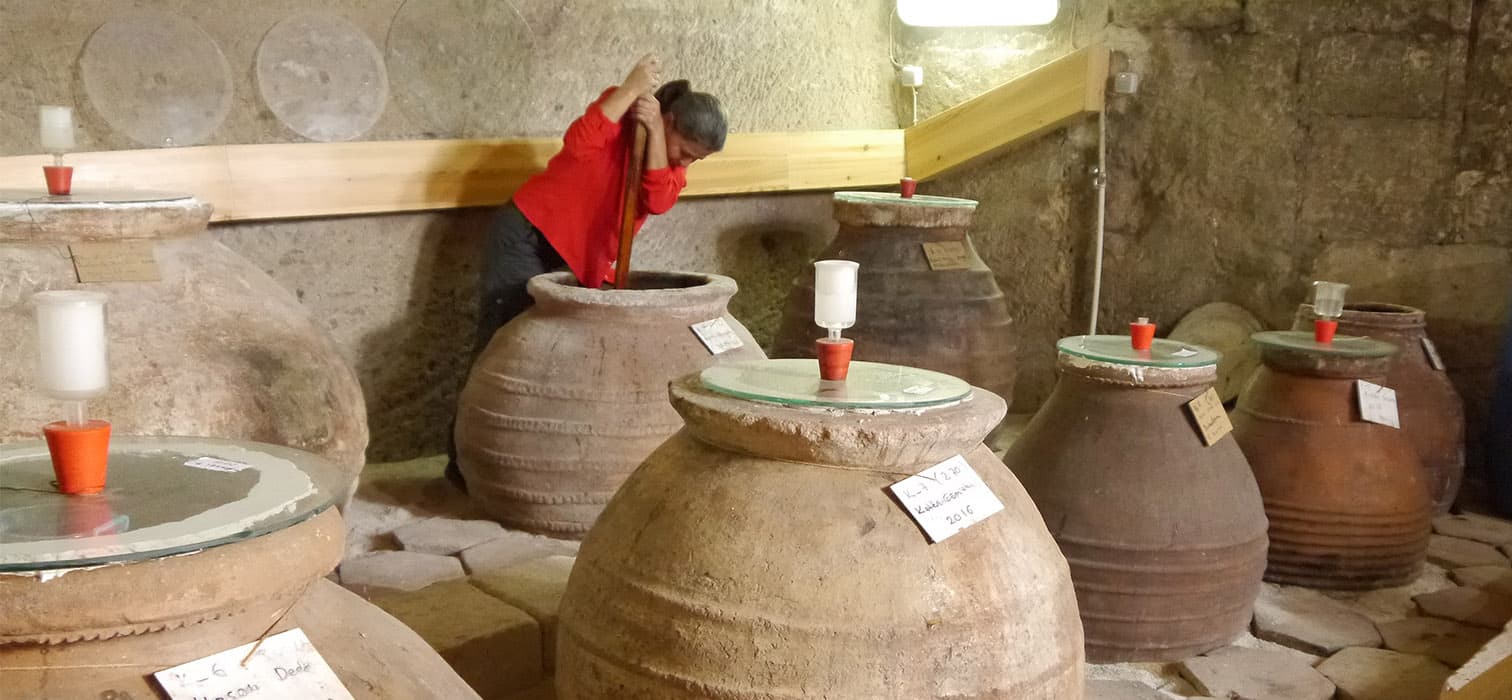
The grape pomace ferments with its native yeasts in open clay vessels for two to three weeks. The wine is then left to macerate for six months in tightly sealed vessels.
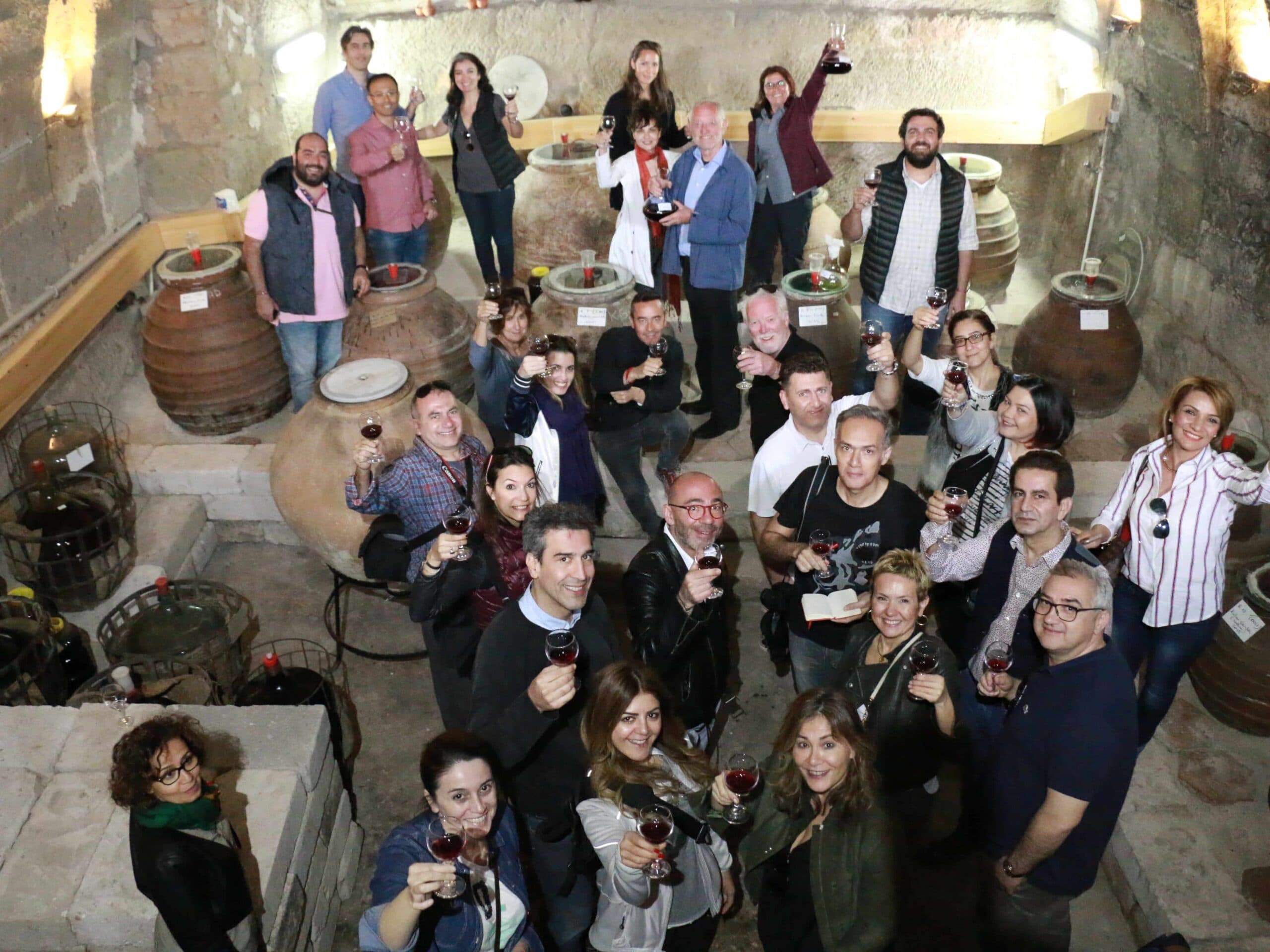
Each year, on the occasion of our Dionysus Festival, we open the vessels for the first time and taste the wine together with our friends.
What was the greatest challenge you faced when you decided to make wine in amphorae?
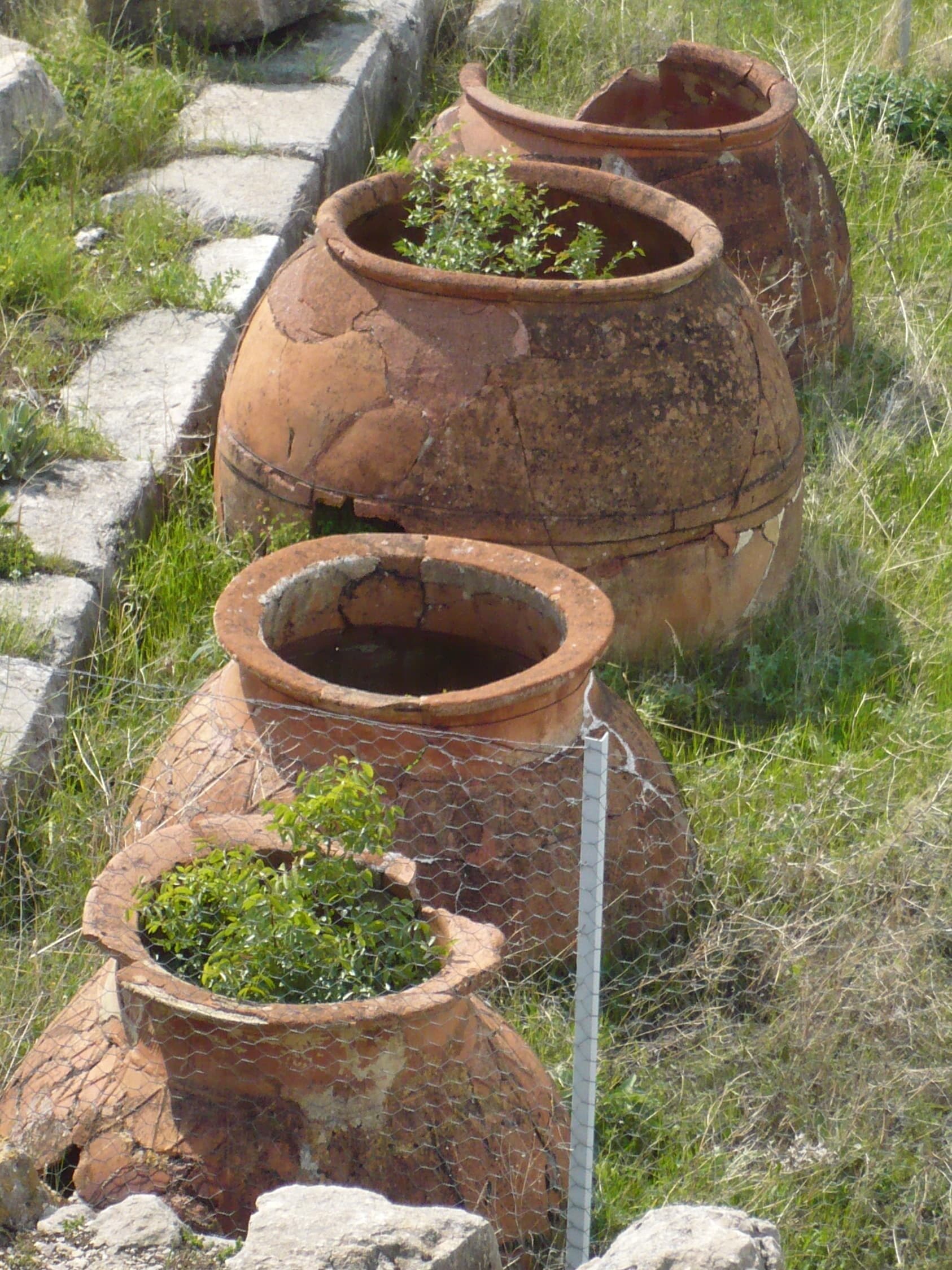
Udo Hirsch: Working with clay vessels was consistent with the requirements of our model project. The real challenge was having to wait two and a half years for official approval to use them. Naturally, we were delighted when permission was finally granted.
“The real challenge was having to wait two and a half years for official approval to use them.”
What connections do you see between Georgia’s qvevri tradition and Anatolia’s history of winemaking in clay vessels? Has Anatolia done enough to recognise and preserve this heritage?
Udo Hirsch: Alongside Anatolia’s tradition of clay vessels, there is the qvevri culture of Georgia and, more broadly, an amphora culture across the eastern and central Mediterranean. Existing research also points to a tradition of tinaja vessels in Spain.
Clay vessels dating from the Early Neolithic period were not yet watertight and could not be properly sealed, which made them unsuitable for wine. Furthermore, domesticated grapes did not yet exist during the Neolithic period. Wild grapevines climb trees and are difficult to harvest. Approximately 10 kilograms of wild grapes yield only a little more than half a litre of juice. Although laboratory analyses have identified certain acids as indicators of wine, other products contain the same acids. Pekmez, or grape molasses, is one example. When heated, pekmez can seal the pores of otherwise permeable clay vessels. It does not require tightly sealed containers and can be stored for long periods, making it a valuable food source. It is now generally accepted that grapevine domestication occurred around 4500 BCE, during the Chalcolithic period, at approximately the same time as the domestication of other fruits. The earliest evidence of wine was found not in villages but in temple storerooms and palace gardens. Wine was a drink of the elite. The earliest written records concerning wine date to the Hittite period. Together, these discoveries demonstrate how deeply rooted wine culture is in Anatolia.
Natural wine remains a subject of debate in Turkey. Do you see it as a passing trend, or as the continuation of a tradition stretching back thousands of years?
Udo Hirsch: What is described as natural wine in Turkey and elsewhere is not the rediscovery of a tradition that is thousands of years old. It is an effort to ensure that an uninterrupted tradition continues into the future.
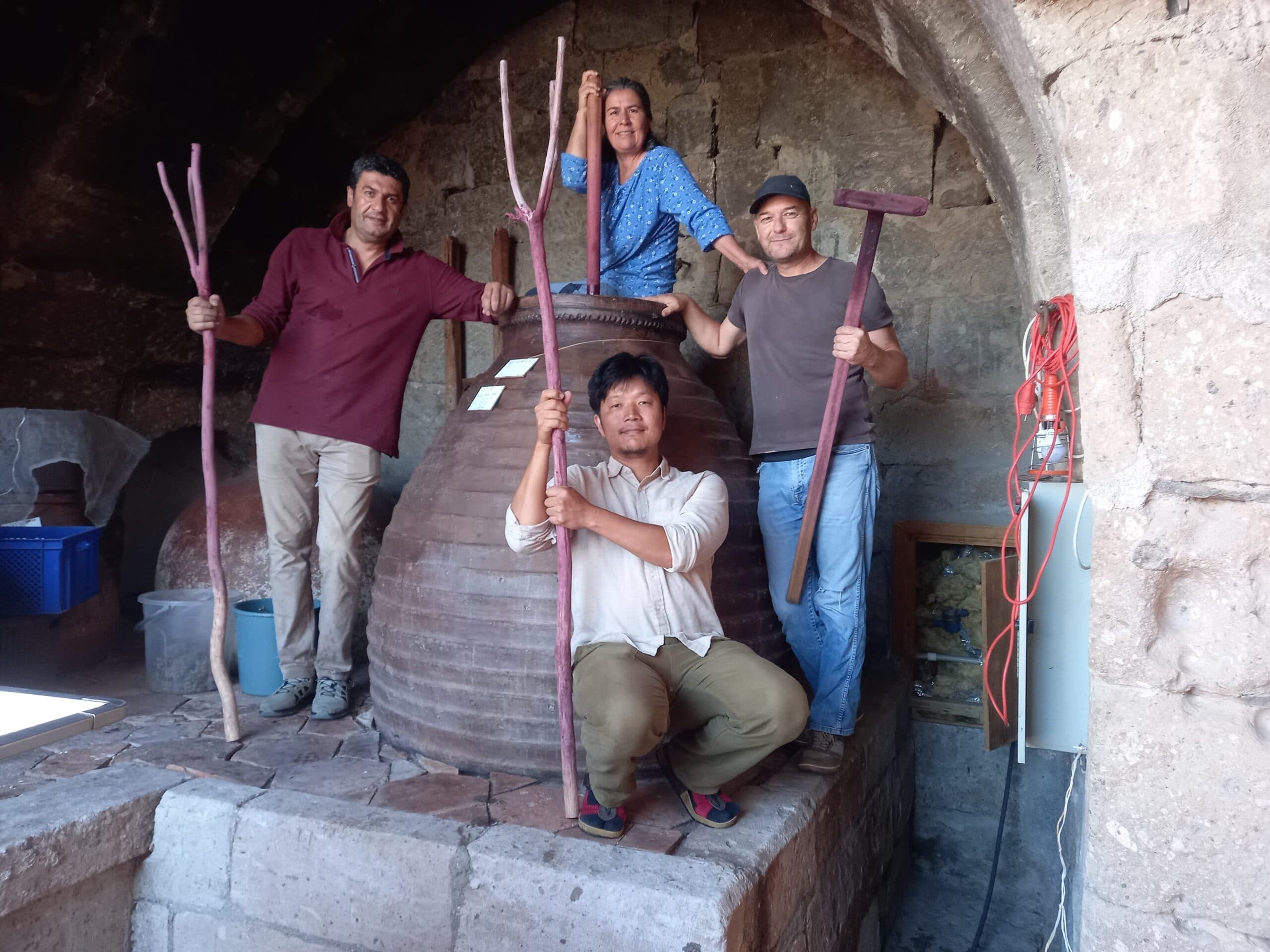
Hacer Özkaya: For modern consumers, it may well be a trend. But for the small number of people who work with traditional methods and strive to preserve this ancient knowledge, it is not a fashion. It is a responsibility towards the future of wine. We are preserving not only traditional methods of cultivation and production, but also knowledge that might otherwise disappear. What seems old-fashioned today may be precisely what we need tomorrow.
“What seems old-fashioned today may be precisely what we need tomorrow.”
Technology is playing an increasingly important role in winemaking, yet your philosophy seems to allow nature greater freedom. Do you believe the finest wines of the future will be more technologically advanced, or more elemental?
Udo Hirsch: In response, I would like to quote an excerpt from an official assessment of the wine industry published in 2022:
“If the modern system of industrial agriculture, which has been in place since the 1970s, were truly the right system, we would not now be facing enormous losses in biodiversity, increasingly serious problems with water quality, five additional diseases caused by pesticide use, eroded and poisoned soils, deaths in viticulture, and calls from the World Health Organization to consume more organic fruit and vegetables.”
And another assessment, from 2026:
“A large proportion of global wine production has moved so far away from wine itself that consideration is now being given to finding another name for these industrial beverages.”
Hundreds of Anatolia’s indigenous grape varieties remain largely unknown. What responsibilities do growers, scientists and the state have in protecting this diversity?
Udo Hirsch: Turkish farmers are custodians of the greatest number of grape varieties in the world, yet they do not necessarily recognise these vines as a form of wealth. A large part of society has little interest in wine, and consequently only a small proportion of scientists are engaged with the subject. Another reason why the diversity of grape-derived products receives insufficient attention is the absence of farmer-led organisations dedicated to the sustainable, diversified use and conservation of these valuable resources. Government support is primarily directed towards table grapes and raisin production, rather than preserving the genetic diversity of wine grapes and exploring their future potential.
“Turkish farmers are custodians of the greatest number of grape varieties in the world, yet they do not necessarily recognise these vines as a form of wealth.”
If we think of Gelveri not simply as a wine producer but as a cultural project, what legacy would you like it to leave behind?
Udo Hirsch: It should leave behind a drink that we can truly call wine, one with which we can raise a glass in honour of its 6,000-year history.
Finally, imagine someone drinking a glass of Gelveri wine 50 years from now. What would you want them to feel? What story should they discover in that glass?
Udo Hirsch: The story of the vine’s natural and cultural diversity, and a blueprint for how that diversity can be used sustainably.
The Living Vineyards of Anatolia with Yaban Kolektif