In pursuit of Anatolia’s nearly forgotten grape varieties, Yaban Kolektif is working to keep alive its vineyards, its growers and a culture that has existed on these lands for centuries.
When can a grape truly be considered saved? Is it enough for its name to be found in an old source, for its DNA to be identified, or for a few surviving vines to remain in a village? Or does it need to regain value, give the grower a reason to continue tending the vineyard, lead to new plantings and, ultimately, find its way back into people’s glasses? The story of Yaban Kolektif is, in many ways, a pursuit of these very questions.
Founded by Levon Bağış and Umay Çeviker, Yaban Kolektif aims to bring renewed visibility to Anatolia’s little-known, forgotten or historically undervalued wine grape varieties. Yet they do not attempt to do this through research and storytelling alone. As they explain in our conversation, at a certain point they realised that they “could not convince people simply by talking about them.” The solution was to make good wines from these grapes and demonstrate their potential directly in the glass. Without a winery of its own, Yaban is therefore somewhat nomadic, following grapes across different regions and producing its wines as a guest in other wineries.
There are two distinct yet complementary sides to this journey. Architect, wine writer and researcher Umay Çeviker has spent years researching Anatolia’s old vineyards, indigenous grape varieties and disappearing viticultural traditions. Levon Bağış, meanwhile, has long worked across wine, gastronomy, dining culture and education, approaching wine through the geography and culture to which it belongs. At Yaban, these two bodies of experience converge around the same question: How can we ensure that grapes which have lived on these lands for centuries survive into the future?
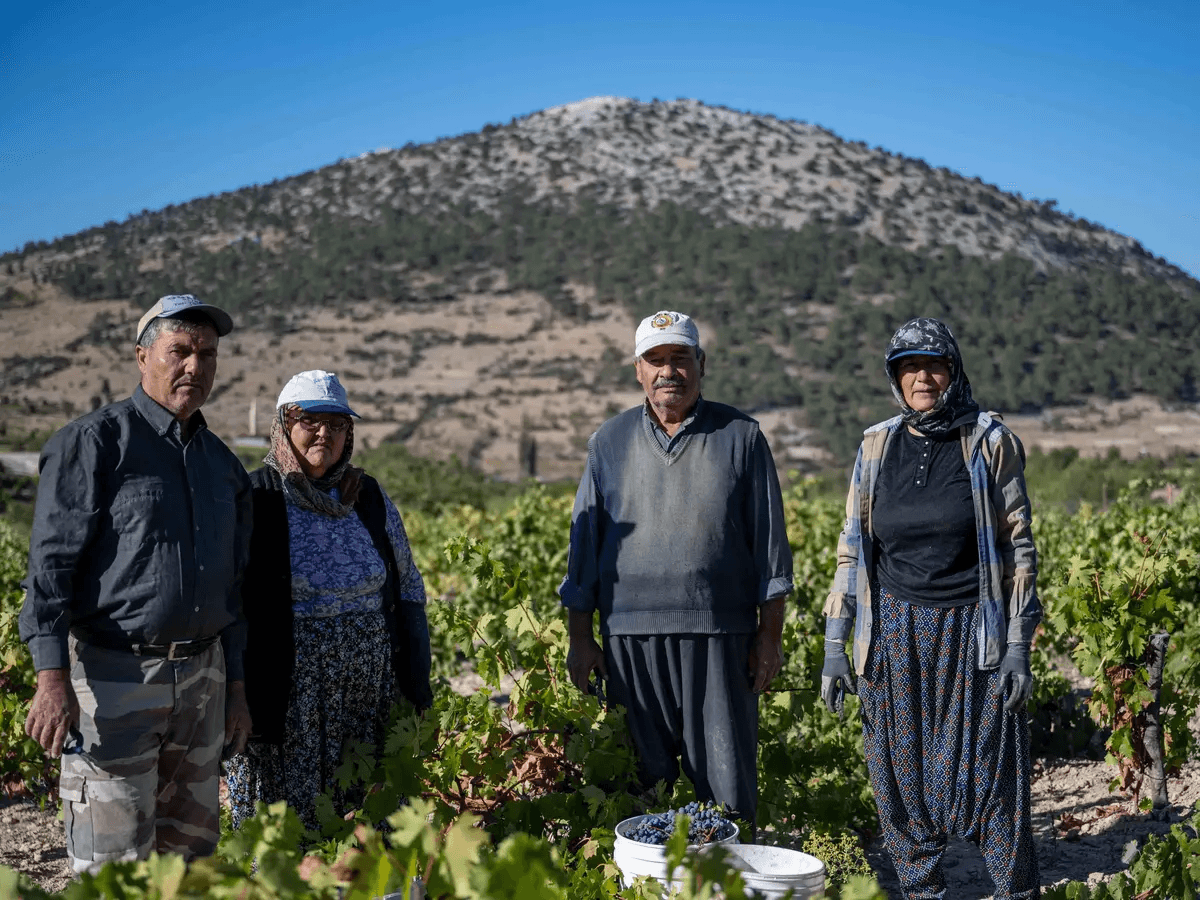
The issue goes beyond saving the grape itself. The farmer growing it must also be able to keep the vineyard alive. If Karasakız vineyards in Bayramiç are being uprooted to make way for more profitable nectarines, or if growers in Cappadocia abandon traditional viticultural practices because they cannot earn a fair return for their labour, talking about cultural heritage alone is not enough. By contrast, the fact that Sungurlu vineyards in the village of Ayağıbüyük in Çorum have grown from approximately 50 dönüm in 2017 to 130 dönüm today demonstrates what can happen when a grape regains value.
Today, Yaban’s map stretches from Van to Çorum, from the Taurus Mountains to Çanakkale. Grapes such as Erciş Karası, Sungurlu, Beylerce, Gök, Patkara and Karasakız emerge from different points on this map and meet around the same idea. Sometimes transporting the grapes costs more than the grapes themselves. Sometimes the same variety grown in two neighbouring villages produces dramatically different wines. And sometimes understanding whether a grape has two distinct clones requires going all the way to DNA analysis.
Yaban Kolektif has now reached its seventh year and sixth vintage. Measuring the success of its work simply by the number of bottles produced would hardly make sense. A more meaningful measure may be that the grapes they have championed are beginning to attract the attention of other producers, that vineyards are regaining value and that new vineyards are being planted in certain regions. Because, as Levon Bağış and Umay Çeviker also point out, preserving this heritage is not something two people—or a single producer—can accomplish alone.
We spoke at length with Levon Bağış and Umay Çeviker about how Yaban Kolektif was born, Anatolia’s disappearing viticultural memory, what it really means to preserve a grape variety and what they hope all this work will leave behind 50 years from now.
I’ll leave the rest to them.
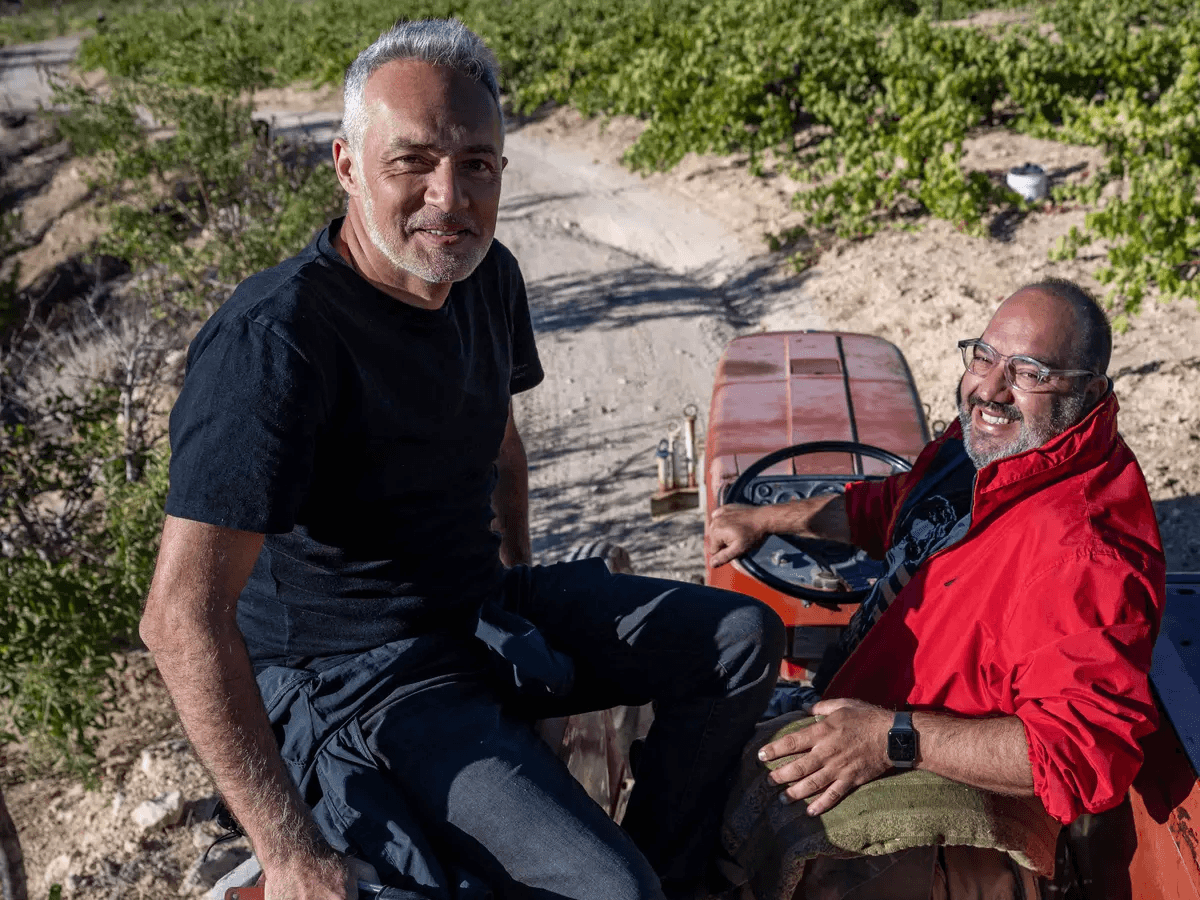
Umay Çeviker and Levon Bağış
First of all, thank you both for agreeing to this interview. I have been following your work and the grapes Yaban has pursued with great interest since the project began. So I would like to start at the very beginning. Researching Anatolia’s forgotten grapes is one thing; deciding to make wine from them is another threshold entirely. What made you move from research into production and say, “We need to establish Yaban”?
Levon Bağış & Umay Çeviker: We realised that we could not convince people simply by talking about them. The way to reach wine producers, their winemakers and the consumers they address was to make good wines from these grapes. That is exactly what Yaban Kolektif aims to do. Without a winery of its own, it operates almost like a nomad, trying to convey its philosophy to the wineries where it produces as a guest. Now that we have reached our seventh year and sixth vintage, we think we have made fairly good progress. Other wineries are now also using the grapes and wine styles we work with.
In fact, what you are describing suggests that the original vision behind Yaban is beginning to find a response. Umay, you have been pursuing Anatolia’s old vineyards and little-known grape varieties for many years. When you enter a vineyard, what are you looking for? What tells you that a vine or grape is genuinely worth investigating and reconsidering as a wine grape?
Umay Çeviker: To be honest, for most of the varieties we work with, we are not the ones making that decision. Nobody comes to us saying, “Come and see, we have a grape like this in our region.” We want to draw attention to varieties that were historically considered high quality, used in winemaking and were already known. Sungurlu and Beylerce are examples of this.
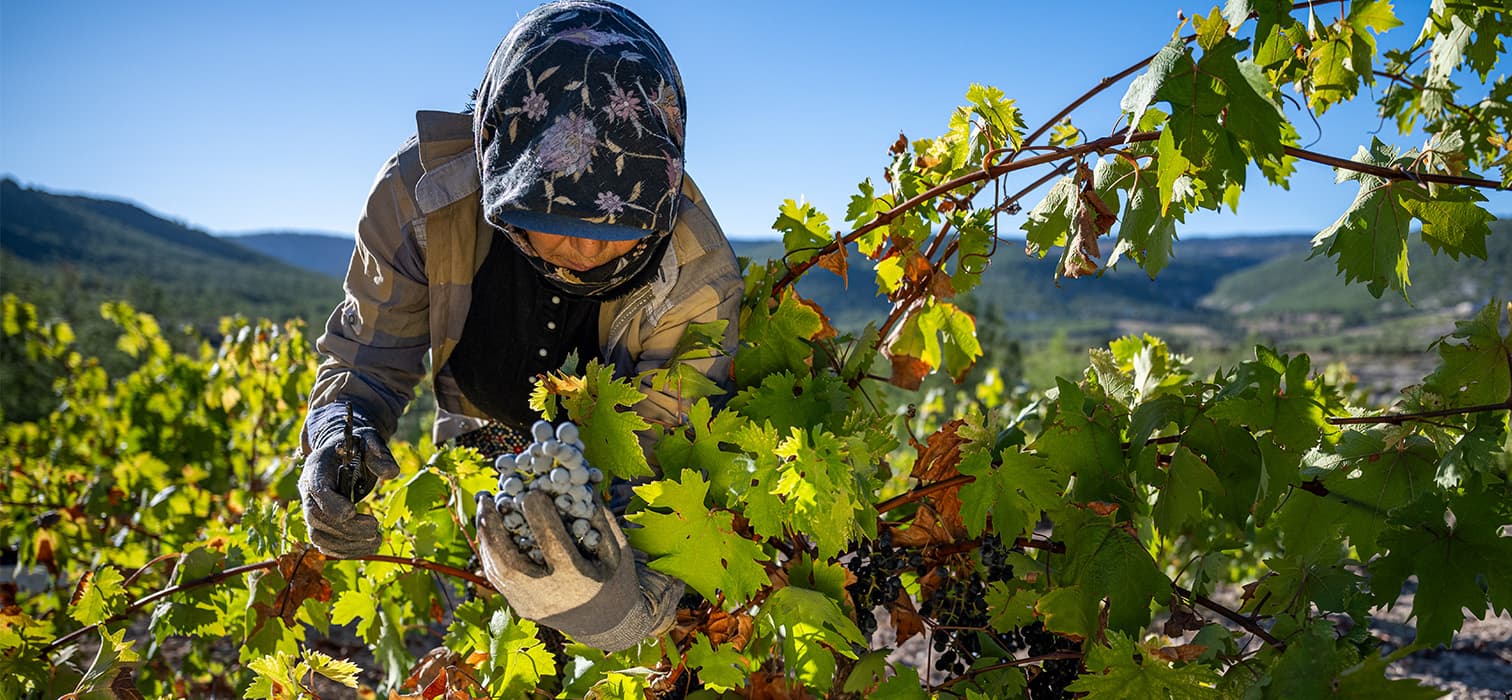
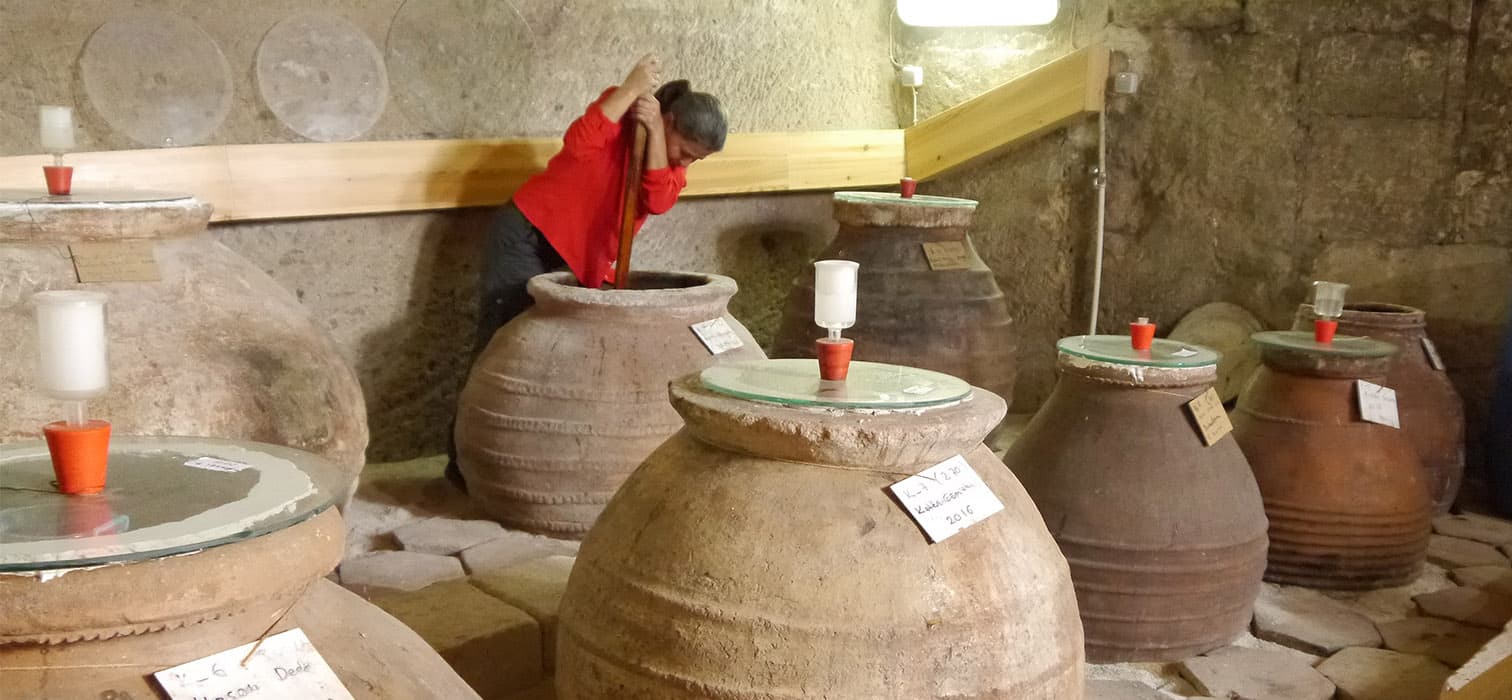
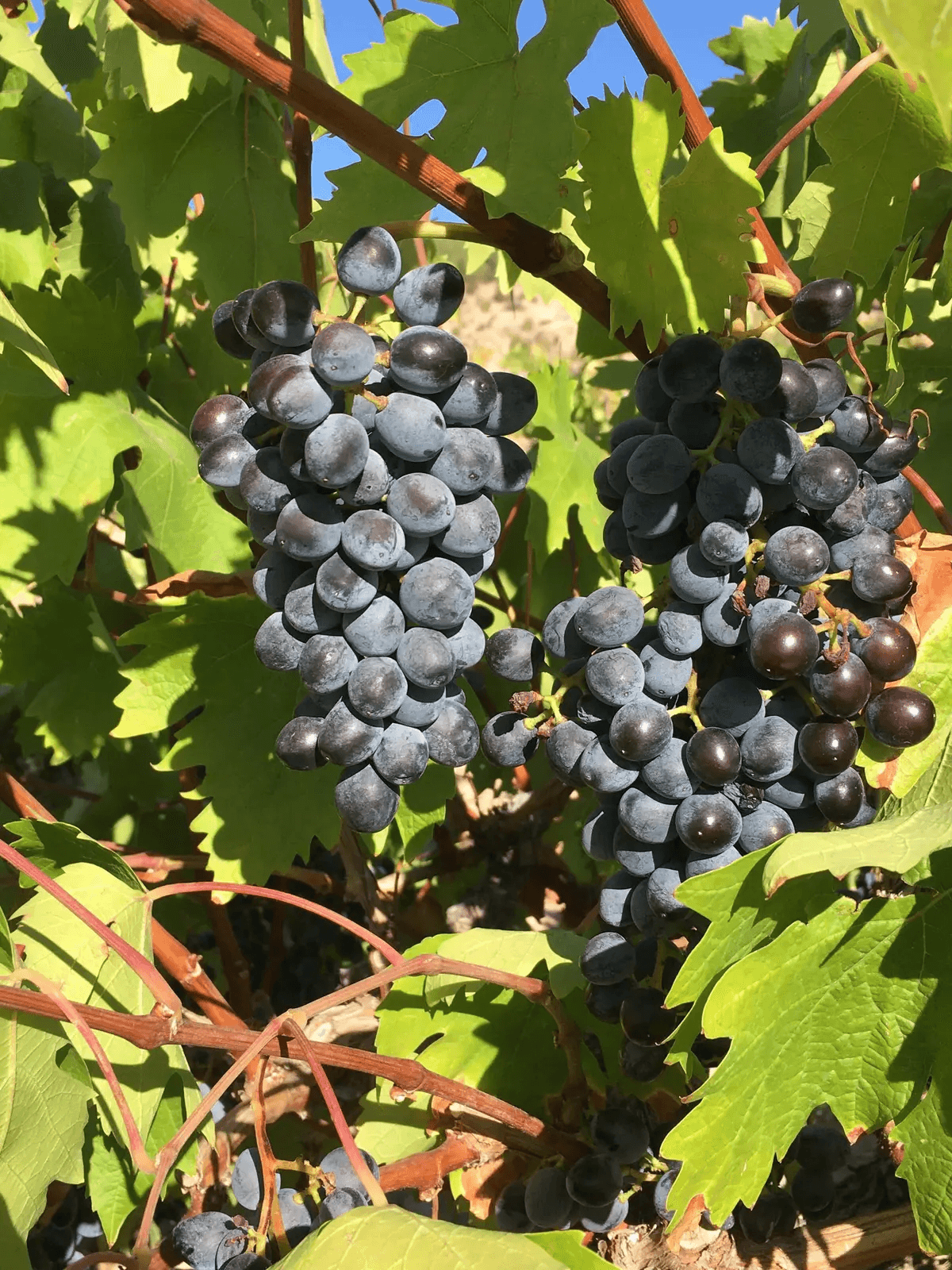
Erciş Karası, however, was first vinified during the Republican era, and the moment you see its bunches you can tell that it is a wine grape: small berries, thick skins and an eye-catching deep blue colour. Gök, Aküzüm and Patkara, found together in very old vineyards in the Central Taurus Mountains, also gave us the clues we needed because they appear as a “field blend” (*) in practically all the vineyards in the region, while rock-cut wine presses dating back to the Roman period can be found in almost every vineyard.
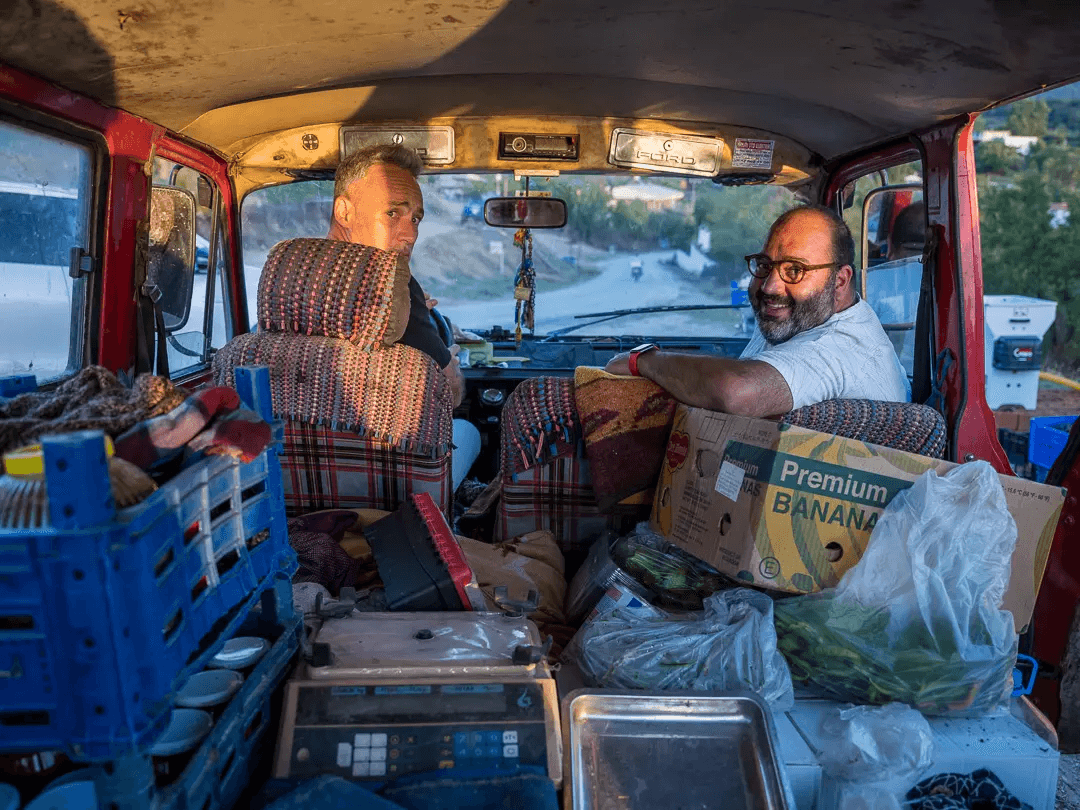
Umay Çeviker and Levon Bağış
Anatolia has been a viticultural landscape for thousands of years, but from what you describe, the loss seems to be far greater than grape varieties alone. When we consider population exchanges, migration, economic transformation and the uprooting of vineyards, what have we actually lost? Only the grapes, or also an entire culture of life and production that existed alongside them?
Umay Çeviker: For all the reasons you have mentioned, Mine, among everything we have lost, vineyards, viticultural methods, grape varieties and the practices and traditions associated with wine culture may perhaps seem easy to overlook. But viewed through the lens of wine culture, what we are talking about is the loss of thousands of years of accumulated knowledge within just a few years.
The most painful part is that we do not even know what we have lost. And it is no longer possible to bring those values back. Our consolation is that grapes have held value in every culture and that vineyards, thanks to their potential for different uses, have in some places managed to survive.
I suppose this is exactly where the economic side comes into play. Recording the name of a grape and adding it to catalogues does not save the vineyard on its own; the farmer also needs a reason not to uproot it. Today, is the main challenge in preserving local grapes in Türkiye the protection of biodiversity, or is it making those grapes economically valuable again for the farmer?
Umay Çeviker: Whatever value we produce, we all want it to be appreciated. That is true for an architectural work or an article, just as it is for a grape or a nectarine. I prefer to explain through examples.
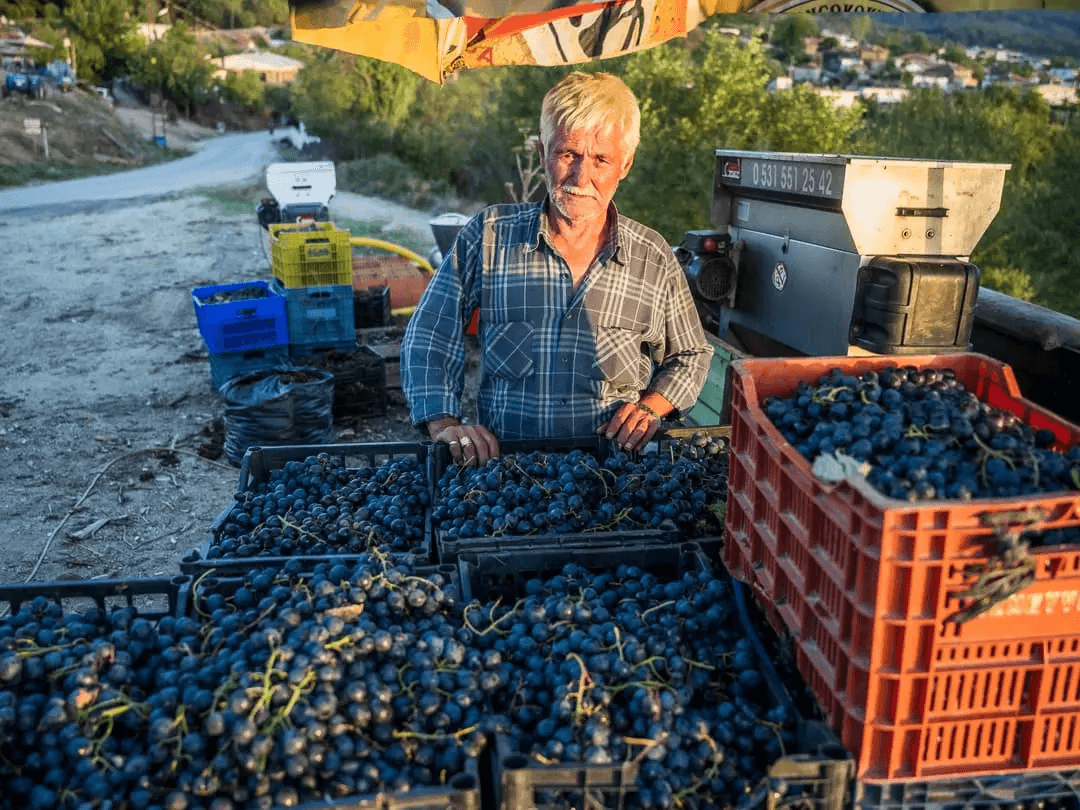
Beylerce is the grape we have the greatest difficulty sourcing. The limited number of growers are so proud to sell the grapes, together with their vineyard companion Razaki, kilo by kilo at markets in larger towns that buying the entire crop in bulk does not mean very much to them, because it deprives them of that pleasure.
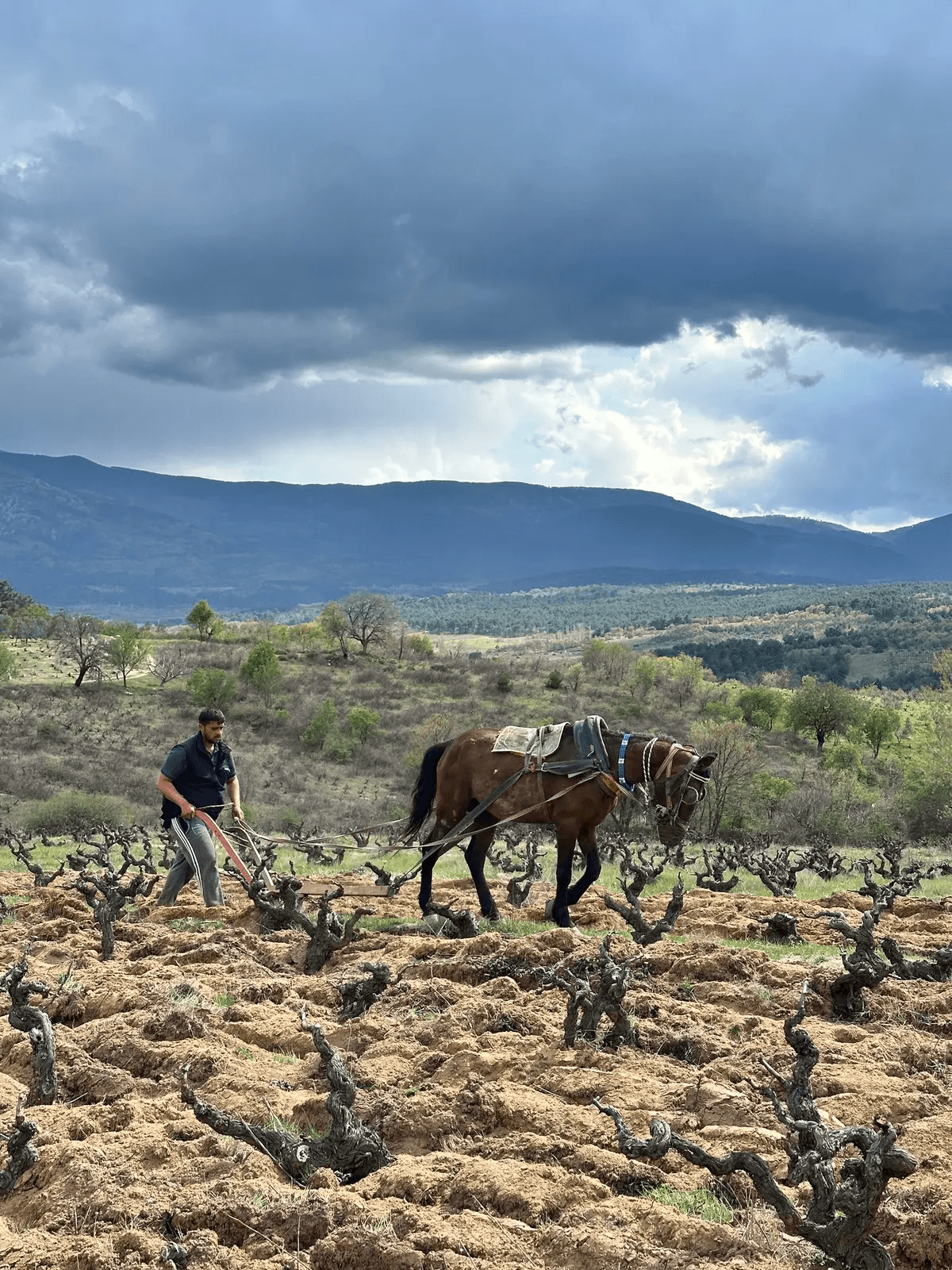
But economic loss of value is, of course, the most important issue. This year, when I asked a grower in Cappadocia why they no longer practised göz açma (**), he replied, “Let grapes be 50 TL a kilo and I’ll sleep in the vineyard.” I would like to point out that the price set by the major companies that year was 35 TL per kilo.
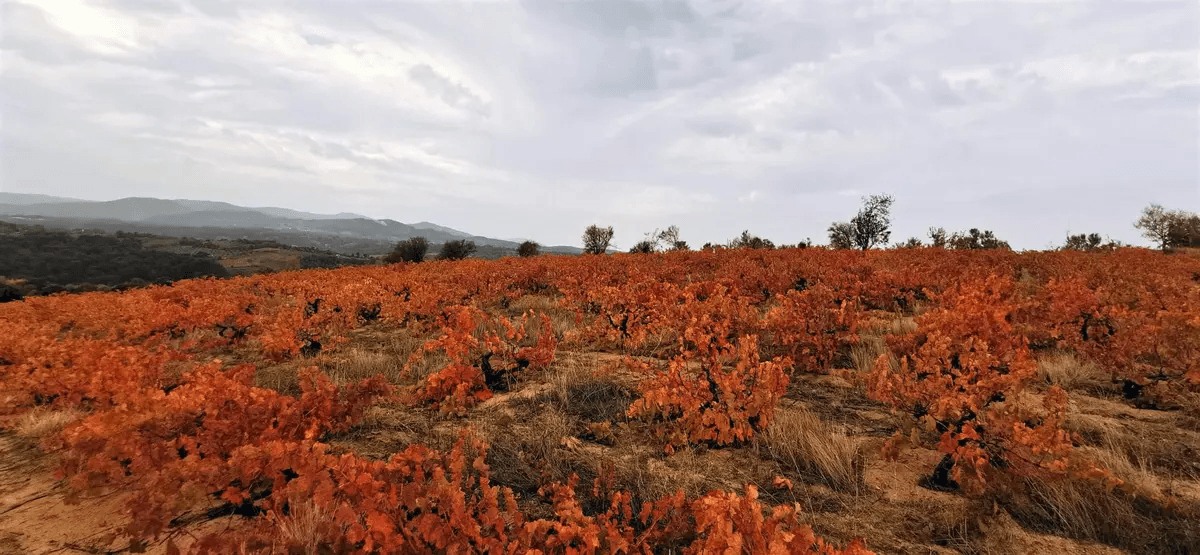
We encountered a similar response in 2022 when, through the Heritage Vines of Turkey project, we reported the severe loss of vineyards in the Bayramiç region. Despite the extraordinary effort required throughout the year in the vineyard, the price of Karasakız grapes simply would not rise. Meanwhile, a nectarine called Bayramiç Beyazı, whose popularity was increasing rapidly—particularly in the Istanbul market—became the preferred crop, and vineyards were uprooted to make way for nectarine saplings. I believe this is the main issue in many regions of Anatolia.
Çavuşlu Village
The Karasakız example also shows how even the same grape can tell very different stories depending on where it grows. Erciş Karası, Sungurlu, Karasakız, Beylerce, Patkara… Thanks to Yaban, grapes many of us had never even heard of are appearing in bottles again. Which of them surprised you the most—the one that made you think, on first tasting it, “There really is something different here”?
Umay Çeviker: My biggest surprise came in 2022, when we processed Karasakız grapes from two different villages under the same conditions and using the same methods. The grapes from the villages of Çavuşlu and Köseler produced wines that were so different from one another that we began to wonder whether there might be two different clones of Karasakız in the region. The development of the two wines was also very different.
This year, we will be carrying out a study comparing the DNA profiles of both grapes, and I hope we will finally have an answer.
Another was Gök, which we worked with in 2023. Both the way the wine changes over several hours in the glass and the transformation of its aromatic profile over the years continue to surprise even the most experienced wine tasters.
Karasakız vineyards / @Zühtü Özçelik
What you are describing shows that you continue to get to know the grape not only by making wine from it but also through research. In fact, the work for which you won the Geoffrey Roberts Award was also focused on Türkiye’s lesser-known vineyards and grape varieties. What continuity is there between the research that began then and what you are doing today with Yaban?
Umay Çeviker: That project aimed first to understand, and then to introduce, Sungurlu, Gök and Patkara. With the support of Urla Şarapçılık, we began getting to know these varieties in 2017. Yaban Kolektif has expanded the scope while also ensuring that this effort can continue and become permanent.
As you follow the grapes, Yaban’s map naturally becomes quite extensive. Erciş Karası from Van and Karasakız from Çanakkale can meet under the same label, even though hundreds, sometimes thousands, of kilometres separate the vineyards and producers. Was travelling across all of Anatolia rather than staying centred on a single terroir a conscious choice from the beginning?
Umay Çeviker: It was more of a necessity than a choice. In 2023, the rosé our winemaker José Hernandez-Gonzalez decided to make in order to increase the concentration of our red wines was a blend of Karasakız, Erciş Karası and Patkara. Looking at a map of Türkiye and seeing the geographical relationship between Bayramiç, Erciş and Mut more or less answers the question.
But this passion for reaching different geographies also brings major risks and financial difficulties. As anyone interested in wine culture knows, not being able to benefit from the enormous advantage of processing grapes where they are grown means that, as a non-profit operation, we take on the risk of transporting grapes over long distances and sometimes incur transport costs that exceed the value of the grapes themselves.
Karacaoğlan @ Zühtü Özçelik
Levon, this is perhaps where your own way of talking about wine—something we have admired and followed for years—through gastronomy, the table and culture really comes into play. With Yaban, however, you are faced with grapes whose names consumers may be hearing for the first time in their lives. What kind of communication challenge is it to ask people to drink “Sungurlu”, “Erciş Karası” or “Patkara” instead of Cabernet Sauvignon or Chardonnay? To bring a grape back to life, do you first need to tell its story?
Levon Bağış: When we started out with Yaban, putting grapes like Patkara, Sungurlu or Erciş Karası into people’s glasses was essentially inviting them into the unknown. Consumers naturally keep their distance from something whose name they are hearing for the first time and for which they have no reference point on their palate.
This is exactly where the language of the table and gastronomy that we have been trying to establish for years comes to our aid. To bring a grape back to life, simply talking about its acidity or tannins is never enough; yes, you absolutely have to tell its story first.
When you tell people how that grape has stubbornly survived on those lands for hundreds of years, and explain the old, dry vineyards it comes from, the wall of unfamiliarity begins to collapse. Once they hear the story, the liquid in their glass becomes more than just wine; it becomes a tangible bridge to Anatolia’s history, identity and forgotten roots.
Of course, this is where the most difficult part begins. One of the truest sayings in advertising is that “good advertising kills a bad product.” A product with a beautiful story also has to be good. Fortunately, our grapes are good…
Speaking of the power of storytelling, there is another side to this. Today, the idea of the “local grape” is becoming increasingly attractive in the wine world, perhaps even a little fashionable. That interest is clearly very valuable for indigenous grapes, but is there also a danger of it turning into a superficial marketing message? Where do you draw the line between simply putting “local” on the label and genuinely protecting the grape and the vineyard?
Levon Bağış: The attention that the idea of the “local grape” receives today gives me hope on the one hand, while on the other, one of my greatest concerns is that the concept may be hollowed out and reduced to a superficial marketing message.
As with every movement that becomes popular, the wine world can become preoccupied with trying to catch a trend. For me, the sharp dividing line between writing “local” on a label and genuinely protecting that grape and vineyard lies directly in the soil itself and in the hands of the villager who works that vineyard.
Real preservation means ensuring that the grape remains in its own village, in its own terroir. And there is only one way to achieve that: making sure the farmer who tends the vineyard receives fair value for their labour, so that they do not uproot it and replace it with another agricultural product that brings in more money.
Our concern is not to market a fashionable word that looks good on a shelf. It is to keep that farmer on that land and preserve a heritage where it belongs, rooted in place despite all the difficulties.
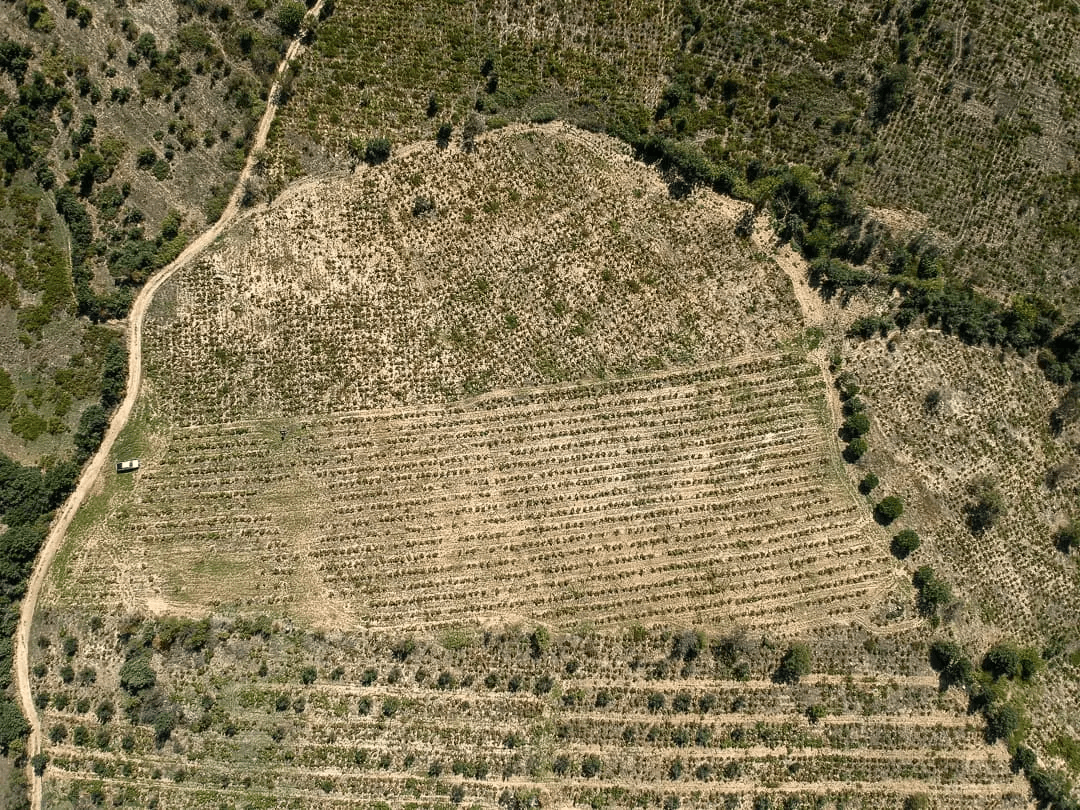
Karasakız Vineyards
Patkara
When we are talking about such different geographies, old vineyards, sometimes ungrafted vines and grapes available in extremely small quantities, the idea of producing a standardised wine inevitably loses its meaning. At Yaban, does the grape determine the method? In other words, does each grape in some sense tell you how it wants to be handled?
Umay Çeviker: The moment you see these extraordinary vines, you immediately understand what needs to be done. Because we want to rediscover these grapes and understand their potential, our aim has been to make wine with the least possible intervention.
That includes using only ambient yeasts, limiting filtration and avoiding oak barrels. We are fortunate that we only had to explain this philosophy to our winemaker once. Since that first meeting, José has made every winemaking decision himself in accordance with this philosophy.
However valuable preserving the vineyard and the grape may be, there is also the farmer’s side of the equation. For the producer in the village, livelihood often comes before cultural heritage. Have you seen a concrete example where, after Yaban began working in a region and the grape gained value, the farmer’s own attitude towards the vineyard changed?
Umay Çeviker: We see the most tangible results of this in Ayağıbüyük, the village where Sungurlu is grown. In 2017, at a time when we were struggling even to buy grapes from the village, there were a total of 50 dönüm of vineyards. Today, that figure has reached 130 dönüm.
We now know every grower by name and meet several times a year. There are entrepreneurs living in Sungurlu, Çorum and Ankara who want to invest in vineyards in the village when they retire. We see neglected vineyards being brought back to life and new vineyards being planted.
In every region where we work, the value of the grapes is rising, vineyards are being tended with greater care and we are even beginning to see vineyard area increase.
The Ayağıbüyük example also shows how research can produce a tangible result on the ground. In that sense, Heritage Vines of Turkey and Yaban Kolektif seem like two different branches of the same idea: one researches, documents and makes visible, while the other turns the grape into wine and brings it into economic circulation. How do these two structures complement one another? To genuinely secure the future of a grape, what kind of balance needs to be established between documentation and production?
Umay Çeviker: Heritage Vines of Turkey and Yaban Kolektif are working towards the same goal. As we mentioned earlier, rhetoric alone—particularly in Türkiye—is not enough. You also need to demonstrate the value in concrete terms.
But we cannot say that we do this only through Yaban Kolektif. One of the main aims of Heritage Vines of Turkey’s research is to draw other producers’ attention to the value we identify in a given region.
For this purpose, in every research project we invite different producers to the region and ask them to consider working with these varieties. Almost all the producers who have purchased grapes from the two regions we have researched to date have continued to use these varieties and include them in their selections.
Karasakız vineyards @Dogo Bitecik
Throughout our conversation, we seem to keep returning to the same point: that Yaban should ultimately exist independently of you, through its own manifesto, and that these local grapes should continue to live on. So finally, let’s look a little further into the future. Fifty years from now, when someone tells the story of Yaban Kolektif, would you be happier to hear, “Levon Bağış and Umay Çeviker made good wines,” or, “The grapes and vineyards they pursued are still alive”? What would you like Yaban to leave behind?
Levon Bağış & Umay Çeviker: It would be wonderful if the next generation continued Yaban. But to be frank, neither Levon nor I believed that a non-profit project could continue for this long in the first place. We are still struggling with difficulties, and the 50 years you suggest sounds like a miracle to us for now.
The goal we have set is something that neither two people nor a single producer can achieve alone. Yaban Kolektif’s real objective is for these varieties to be embraced by more producers. Only then can we ensure that these grapes and vineyards will still be alive 50 years from now.
Provided, of course, that they make good wines!
* A traditional “field blend” system in which multiple grape varieties are grown together in the same vineyard, particularly common in old vineyards in Spain and Portugal.
** A traditional viticultural practice used particularly around Nevşehir and Aksaray, in which soil is mounded around the trunk of the vine to protect it from cold and wind. At the end of winter, ideally in late February, the soil is opened to a depth of approximately 30 centimetres, allowing the lateral roots that developed over winter to dry out.
Saatolog Yıllık Saat Dergisi Saatolog’un yeni sayısı, 2020’nin yarattığı bu dönüştürücü etkiden ilham alarak hazırlandı. Dünya dijitalin etkisiyle her zamankinden de hızlı bir şekilde ilerlerken yavaşlamanın da önemini sonunda kavramış bulunuyoruz ve bu tezatlık hayatlarımızın her anına etki ediyor. Biz de bundan yola çıkarak Saatolog 2020/21 sayısını ‘‘hızlı ve yavaş’’ teması altında hazırladık.