Placing his own body at the centre of the frame, Omar Victor Diop explores history, identity and the questions shaping the present. We spoke with the Senegalese artist about a practice that increasingly moves beyond photography.
Give yourself a few minutes and spend some time with Omar Victor Diop’s photographs. At first, it may be the immaculate compositions, bold colours and carefully chosen costumes that catch your eye. But stay with them a little longer and the layers begin to unfold: in one image, the artist takes you on a journey through history; in another, he opens the door to a past that never existed. At times, he turns his own body into a metaphor for humanity’s relationship with nature. Diop’s photographs are not images to be glanced at and left behind; they reveal themselves slowly.
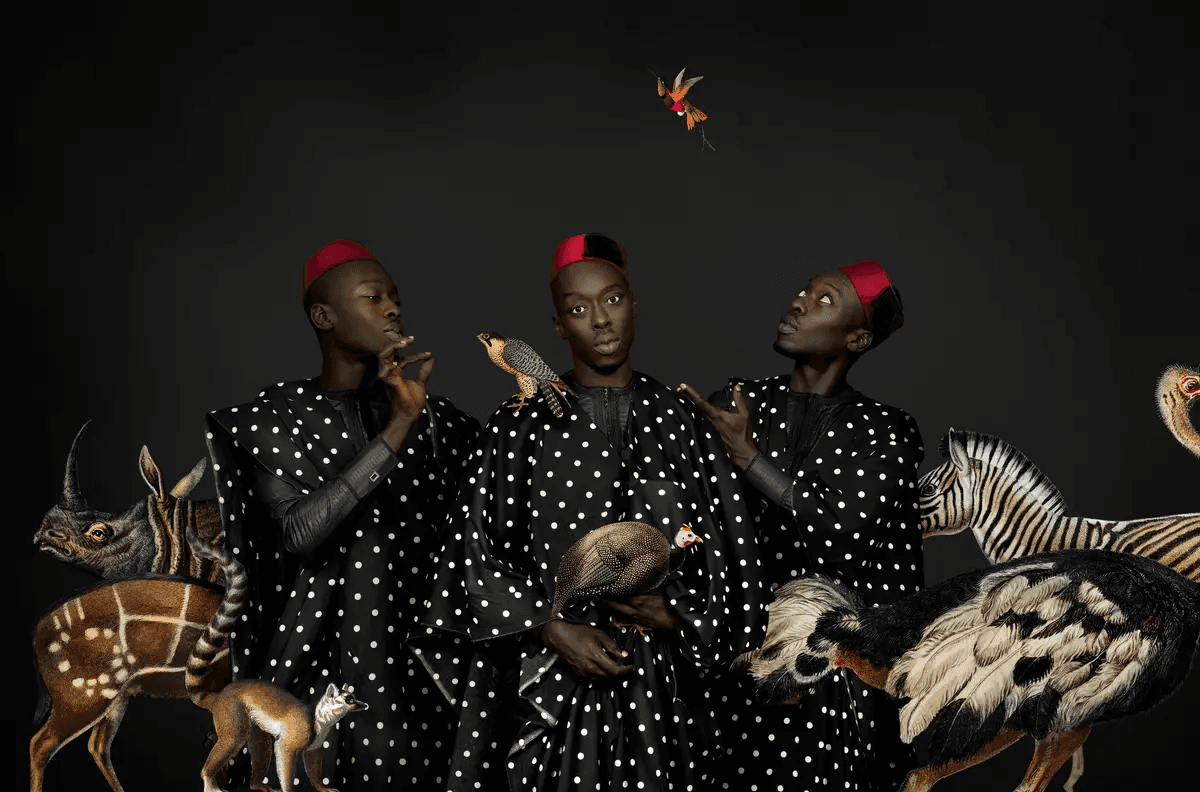
The Senegalese artist is often at the centre of his own work, but the stories he tells are never his alone. By transforming himself into historical figures, imagined characters and versions of himself that might have belonged to other eras, he turns self-portraiture into a way of thinking about identity, representation and empathy. The question he poses to the viewer is, in fact, a simple one:
What would the world look like if we were in someone else’s place?
His visual language draws on a broad range of references, from West African studio portraiture and classical painting to fashion, costume and staging. Yet in recent years, it has become increasingly difficult to define his practice through photography alone. From collage to three-dimensional works, his newer projects are, as he puts it, less about “taking photographs” than about “creating images.”
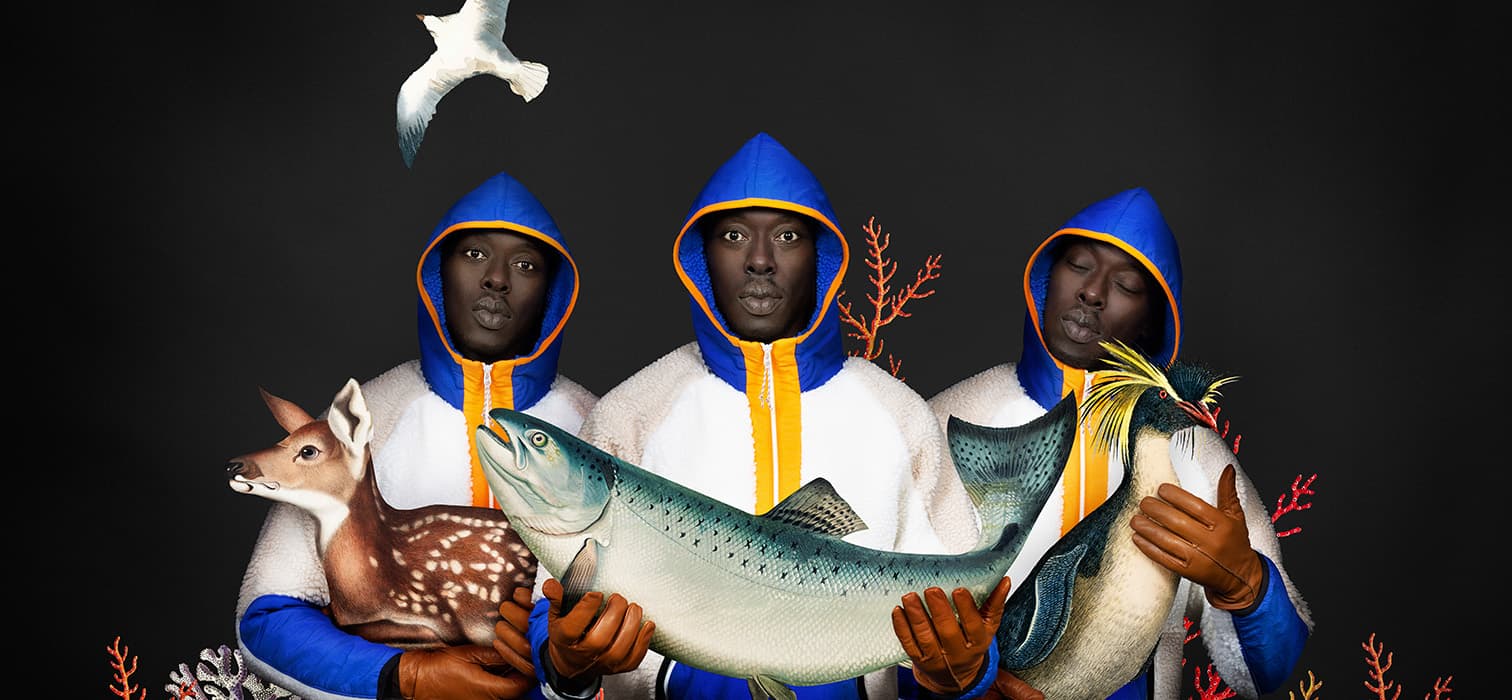
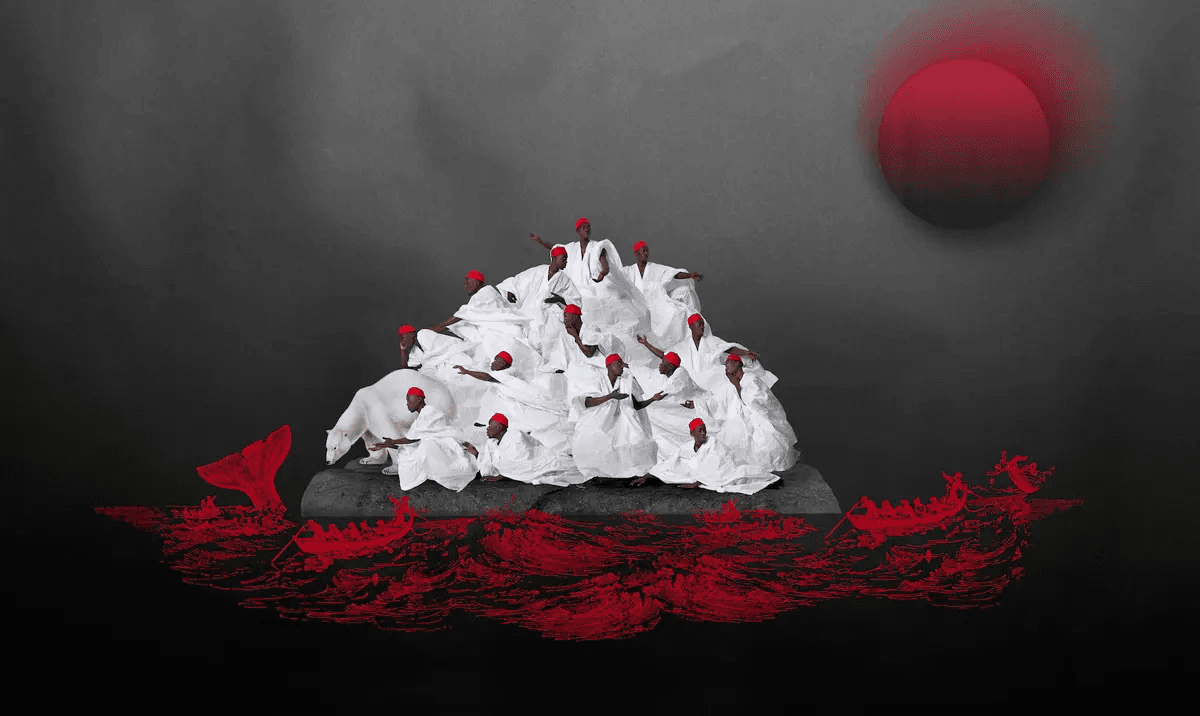
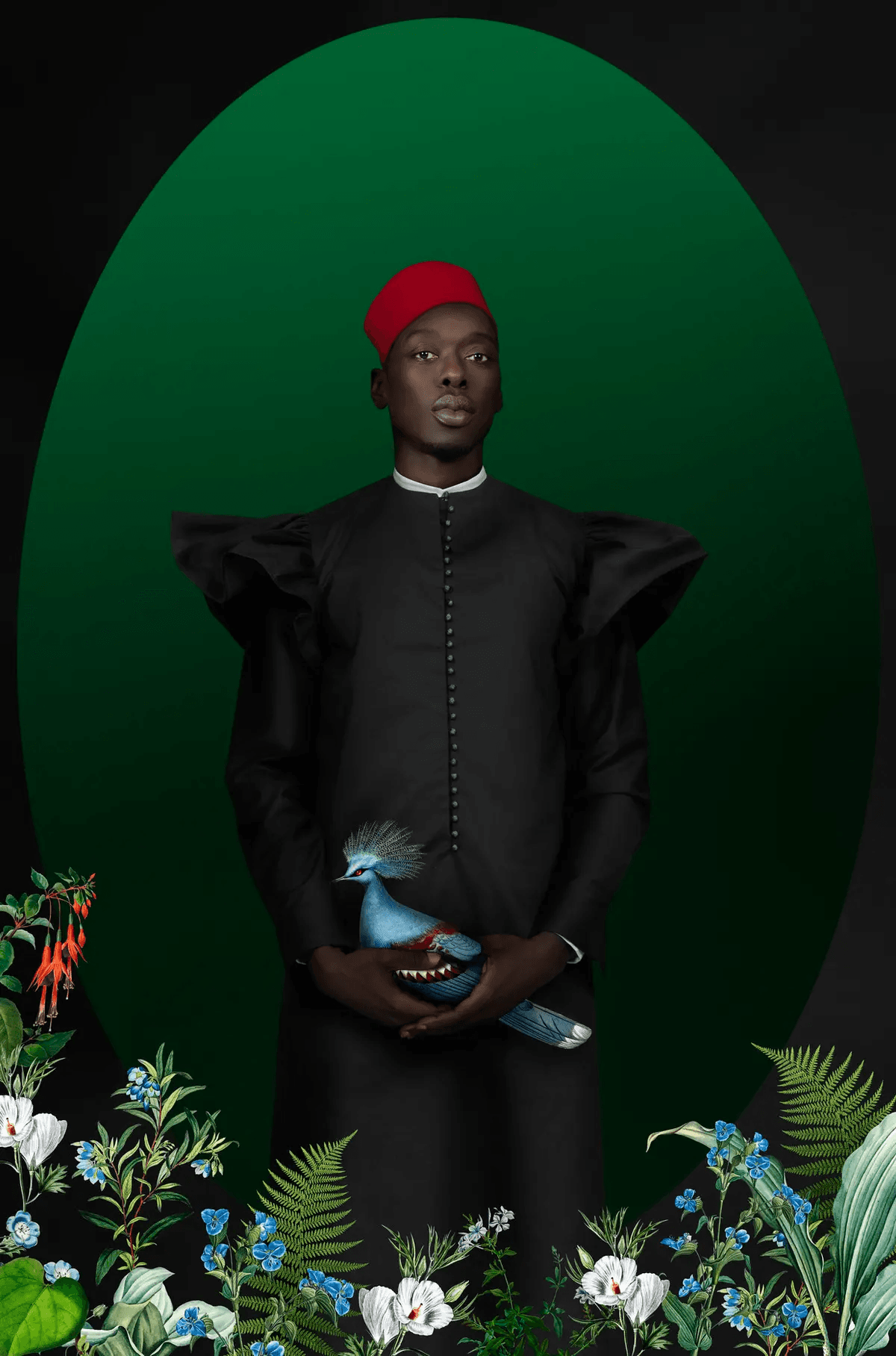
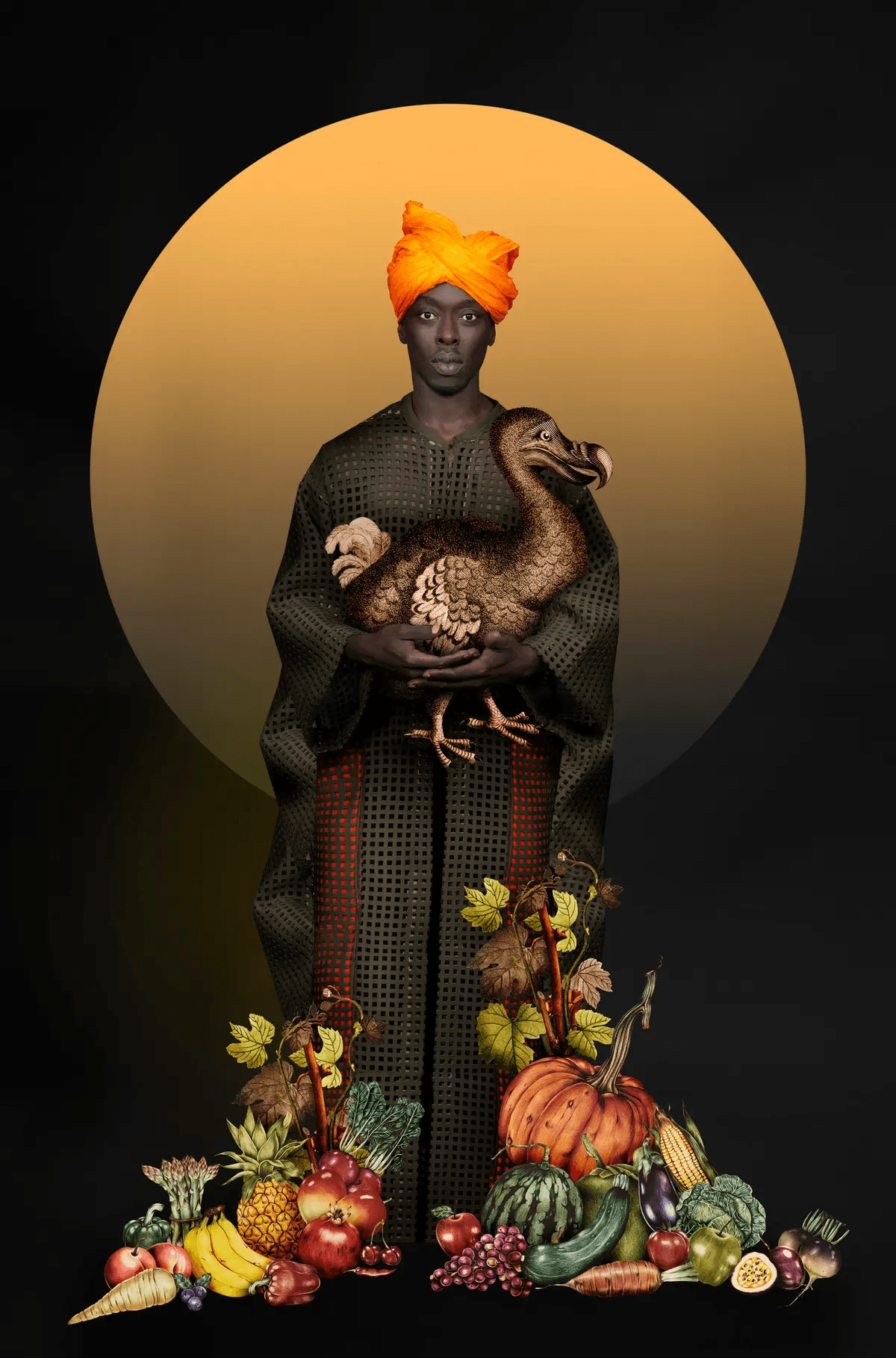
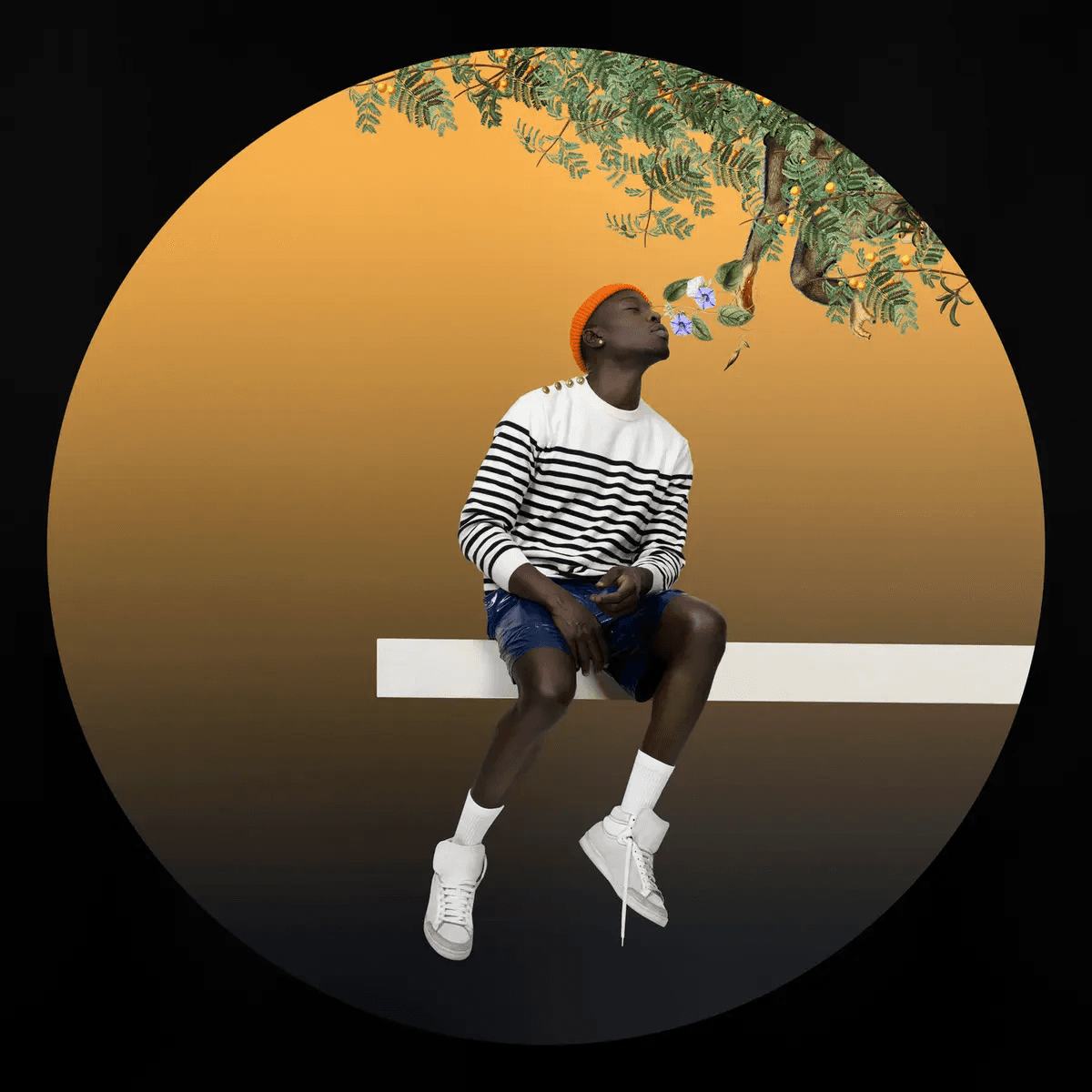
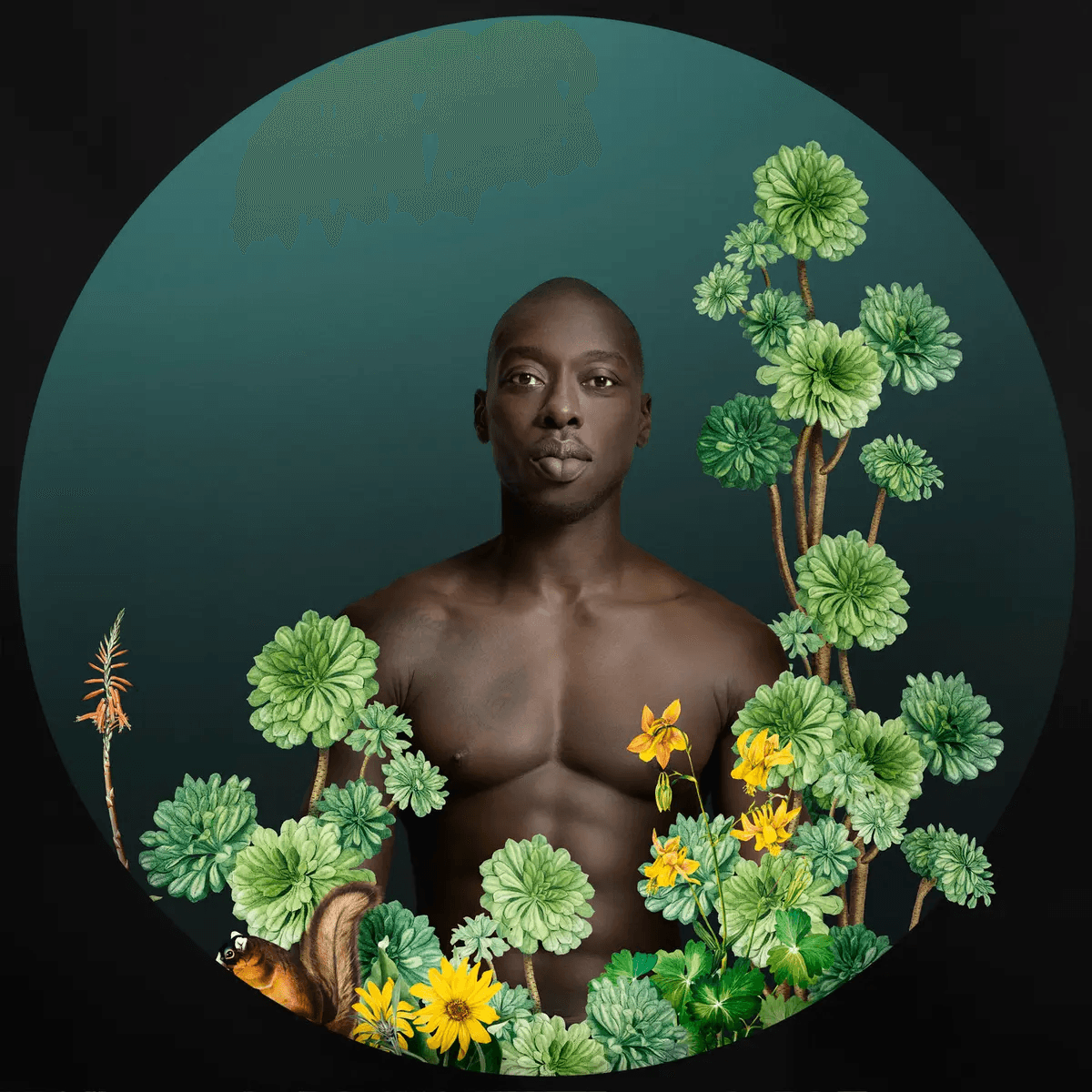
Presented as part of 212 Photography Istanbul, Allegoria turns Diop’s gaze towards humanity’s relationship with nature. Once again placing his own body at the centre of the image, the artist questions the climate crisis and our place on the planet, while extending the idea of empathy beyond human beings to other living creatures.
A Planet We Do Not Own
Allegoria arrives in Istanbul several years after you first created the series. In that relatively short time, the climate crisis has gone from something we discuss to something many of us physically experience. When you look at these images today, has their meaning changed for you too?
Unfortunately, the answer is no. Collectively an individually, we still contribute to the acceleration of climate change, and the projections made by all major scientific studies predict that we will be able to slow it down. I am aware that the scenario that Allégoria depicts (a world where only humans survive) is very unlikely – this planet will probably become hostile enough for us to be extinct and will continue its existence without us – but that’s beside the point.
With Allégoria, what I am trying to create is a feeling of sympathy towards all living creatures. We, humans, tend to consider this unique planet as if it were our property. Hence, our attitude towards it is uncompassionate and leaves no room for gratitude or appreciation. Until we make the mental shift from thinking about ourselves as the “landlord” mindset to being aware of the privilege to inhabit the only hospitable planet in the universe, we will not feel the urge to maintain its ecosystems.
Dressing for Another Life
In Being There, you worked with anonymous family photographs from 1950s and ’60s America. Among all those images, was there a small detail — a gesture, a room, a piece of clothing — that made a stranger’s life suddenly feel familiar to you?
The clothing definitely left a lasting impression on me. Lee Shulman (co-author) of the Being There project and myself, we really wanted the character that I am playing in the images to wear genuine vintage clothes from the fifties. We hired a movie Stylist who found all the items that we needed. The tailoring and the quality of the textiles felt different. Wearing a suit from this era felt different. Also, I realized how much I look like my father in his forties. This triggered emotions that I was not expecting. Positive ones, indeed.
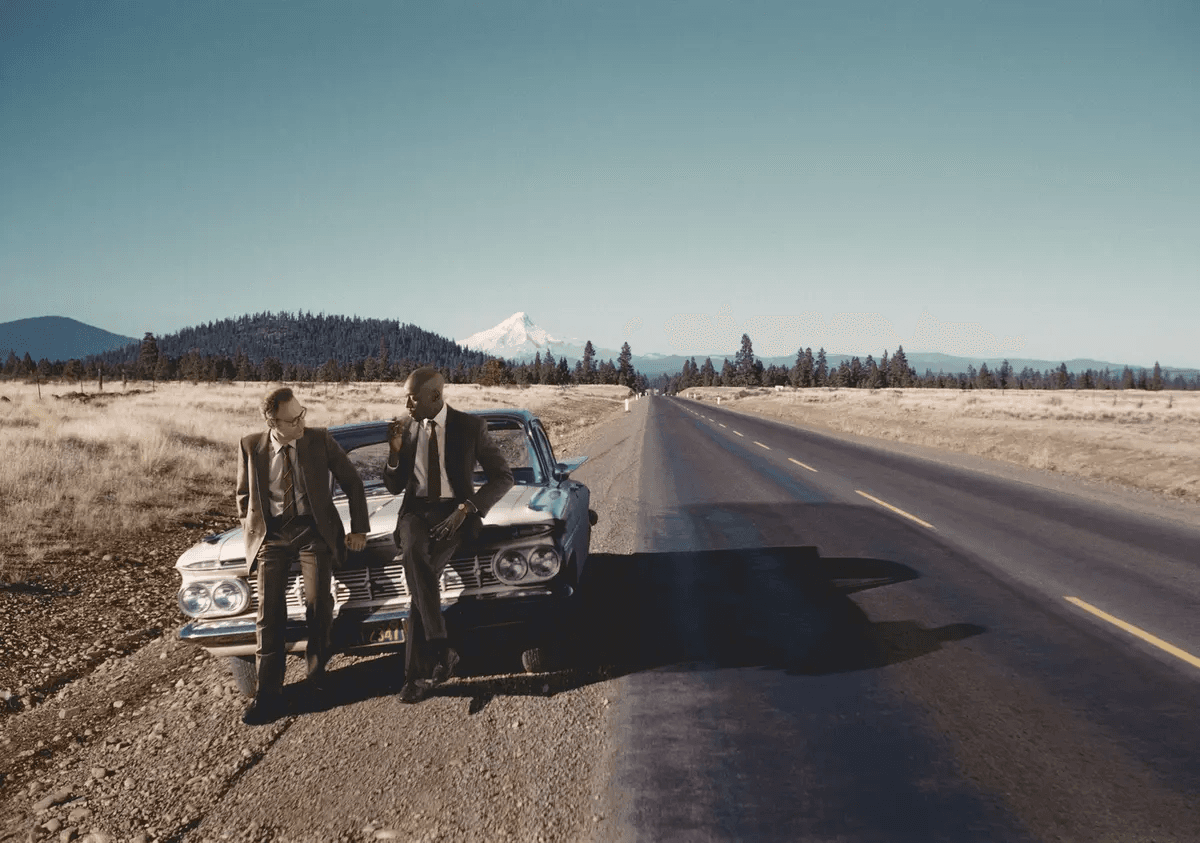
Being There creates a past that looks completely believable, at exactly the moment when AI can manufacture convincing memories of events that never happened. Has the rise of generative AI changed the way you think about the project?
I hasn’t changed the creative part of my work. And I don’t believe it will. However, some newly available tools open new possibilities, for instance in the creative retouching part of my work, instead for painstakingly spending hours selecting manually items on an image, I can now do this in seconds, this allows me to have more time to focus on the creative aspect of the work and worry less about the execution of my ideas. That doesn’t change the fact that the artistic vision is exactly the same.
Beyond Photography
With Bernardaud, your self-portrait became a physical object for the first time with Touki. After spending years creating versions of yourself inside photographs, what was it like to suddenly encounter one of them occupying the same room as you?
It does indeed feel different. There’s a reason why since the early days of human existence, sculpture in all its forms has been central to belief systems, religions and myths.. Objects such as masks and figurative sculptures navigate at the crossroad of imagination and reality. I now know that it’s a form of expression that I want to incorporate in my practice.
A couple of years ago, you joked that if you knew how to paint, you might never pick up a camera again. Now that your practice is moving into new materials and three dimensions, do you still feel that way?
I still look at painters with a mixture of admiration and envy, and the same applies to musicians. It’s quite a natural feeling. It’s like hearing someone speak an unknown language. However, at the end of the day, what matters most to me is to be able to materialize my ideas in some way, and what I do now is not merely photography, I create images, and whatever it takes to get to the final artwork, I’ll find a way to do it; for instance, collage is a great way to compose an image, maybe more satysfiying than drawing.
You received the RPS Award for Achievement in the Art of Photography at a moment when your own practice seems increasingly interested in moving beyond photography. Does the word “photographer” still feel large enough to describe what you do?
I am always happy to be presented as a photographer, although it is indeed more accurate to say that I am a visual artist. But do categories matter anyway?
“It Could Have Been Me”
You have transformed yourself into so many characters over the years — historical figures, imagined figures and different versions of yourself. Is there still a version of Omar Victor Diop that you haven’t found the visual language for yet?
Oh yes there is. Basically, what I’m trying to convey through all these transformations is that we can all practice empathy: the ability to see the world through someone else’s eyes, regardless of who they are, where or when they lived. What I want the viewer to think, even for a second is : “It could’ve been me!”
Reading Time Through History
Your work often moves between different periods in time — sometimes entering the past, sometimes imagining another version of it. Has working with history changed your personal relationship with time? Are there objects, rituals or even a watch that make time feel more tangible to you?
I don’t live permanently in the pictures that I create, thank heavens. But I do feel like an old soul, the more I study history. The uncertainty of the present is a lot less scary when you balance it with a historical perspective. Many things that we fear have happened in the past somewhere, and life has continued. Human beings may have a short memory, but we’re very good a surviving and starting from scratch. I am a calmer person than I used to be, since I developed my interest in history.
Your work is deeply connected to art history, fashion and photography, but I’m curious about the present: what have you seen recently — an artwork, a film, a piece of clothing, even an image online — that made you think, “I wish I had made that”?
I never think that way, very honestly. I rather feel grateful to be able to witness art at its finest. Right now, I’m reading novels from the great French 19th century writer Honoré de Balzac that I hadn’t read yet. It’s pure joy, I highly recommend any of his books.
- Omar Victor Diop’s Allegoria is on view at Eski Posta Han from 26 September to 11 October 2026. The exhibition is open daily from 11.00 to 20.00, with admission via the 212 Photography Istanbul festival ticket.
Jill Greenberg: “Messy Handmade Work Feels Necessary”
Elif Koyutürk Hazen: The Archive of What History Couldn’t Write