From chandeliers beneath the Eiffel Tower to birds above the Grand Palais, Paris Fashion Week delivered plenty of spectacle. But the real story was simpler: clothes we actually want to wear.
For the first two days in Paris, everyone was talking about Rihanna. The reason? She was late. What most people don’t know is that this iconic woman once kept photographer Juergen Teller waiting rather a long time during a shoot. With everyone on set except Rihanna, Juergen promptly arranged for a supermodel, Raquel Zimmermann, to come in and did the shoot with her instead. Could the shows have started without Rihanna? Of course. But would I have written these first five lines, or would tens of thousands of posts have appeared on Twitter about it? I doubt it. So we might as well bow down to the queen. Anyway, on the first evening, Matières Fécales at Place de la République didn’t begin until she arrived, which meant almost an extra hour of waiting. The following day, she was also said to be the reason for the delay at Dior. The message is clear: don’t keep people waiting.
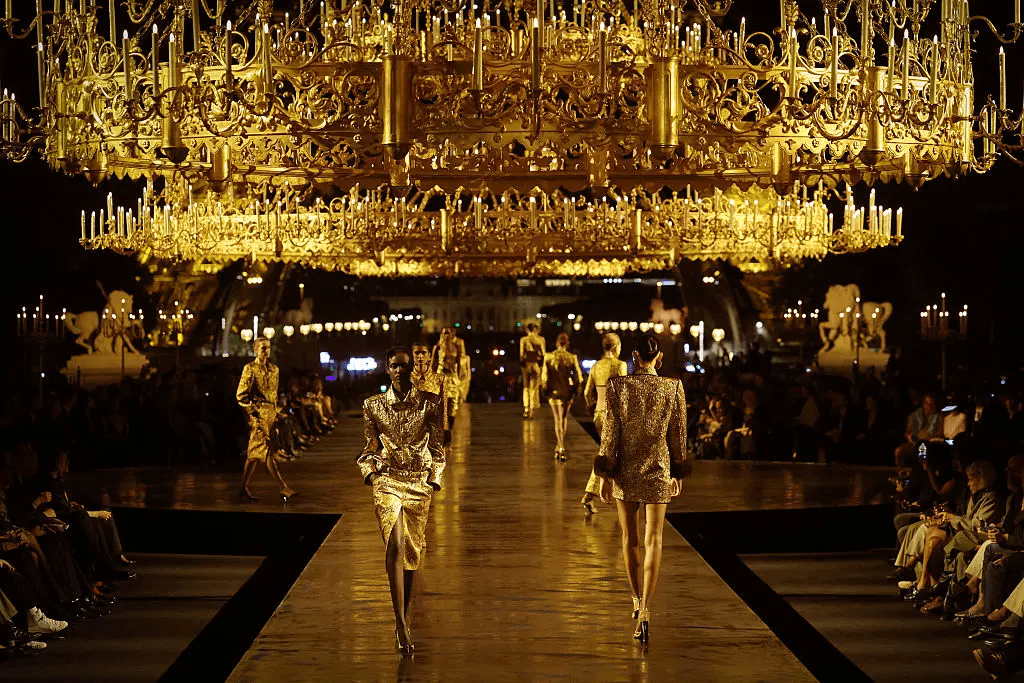
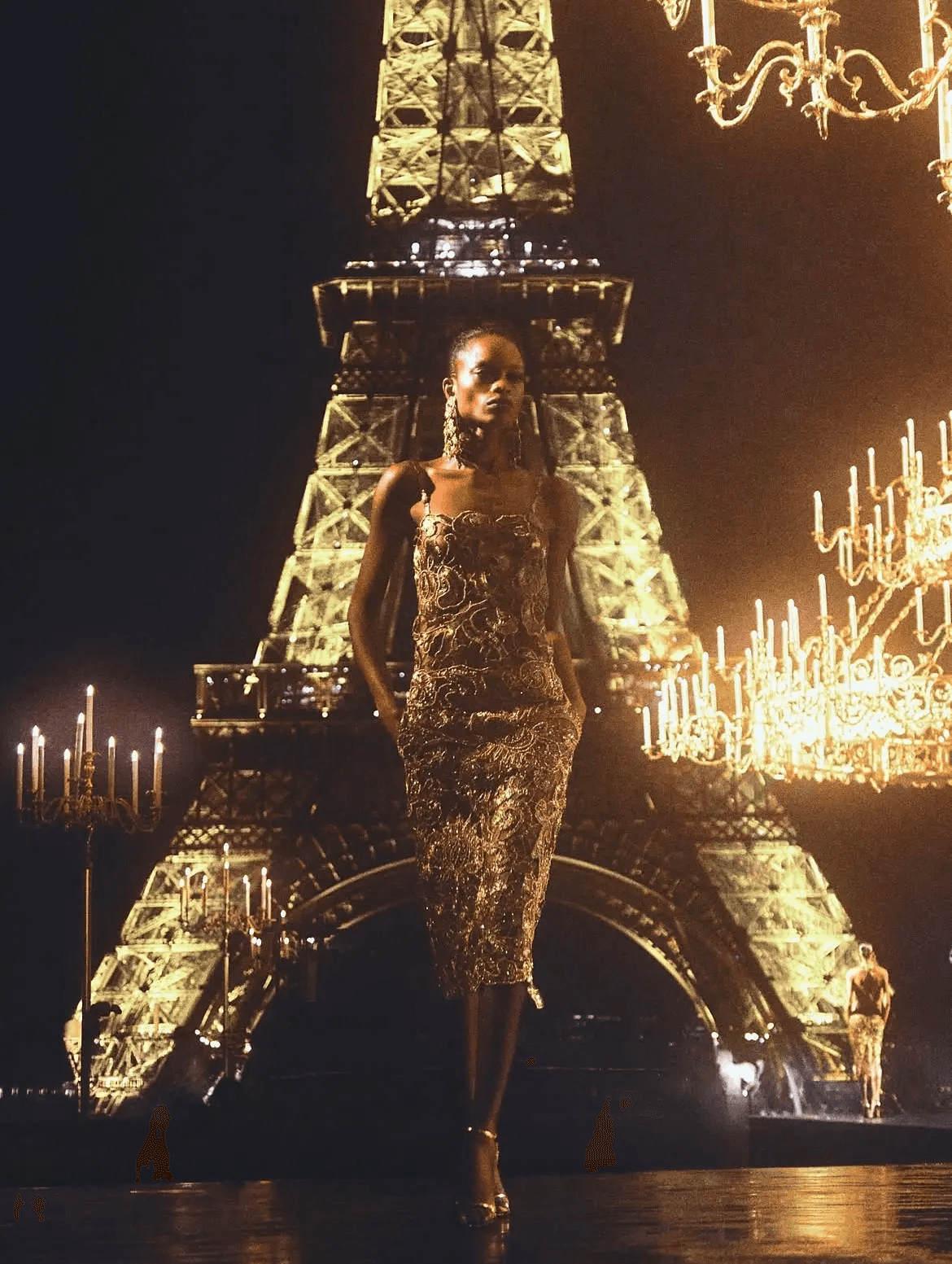
What else happened? Anthony Vaccarello hung three enormous chandeliers in front of the Eiffel Tower and dressed Saint Laurent almost entirely in gold. We took it as a possible, unspoken farewell. A few days later, Olivia Colman walked the runway at Miu Miu, while Josh Homme of Queens of the Stone Age appeared at Ann Demeulemeester. By the fourth week of fashion month, you would think nothing could surprise us anymore. Paris finds a way to prove otherwise every season.
One of the first things you noticed about the clothes was skin. Bras were on display, lace had become almost weightless, and swimwear found its way into city wardrobes. At Dior, shirts were left unbuttoned; at Tom Ford, the body itself became part of the outfit; and Chloé covered almost an entire collection in broderie anglaise. Then there were the skirts. What began around the knee at Prada in Milan had become a full-fledged trend by the time it reached Paris.
But after four weeks of watching fashion, something else stayed with me: designers are interested in ordinary clothes again. A good shirt, a sweater, a pair of jeans, a well-cut jacket. Michael Rider’s Celine was built around precisely that idea. At Miu Miu, Miuccia Prada seemed determined to get us all exercising. At Loewe, Jack McCollough and Lazaro Hernandez showed us familiar clothes that only revealed their true nature when you got close enough. Even Nicolas Ghesquière, who has never stopped imagining the future at Louis Vuitton, began this time with an exceptionally simple white sleeveless dress.
Contents
Saint Laurent
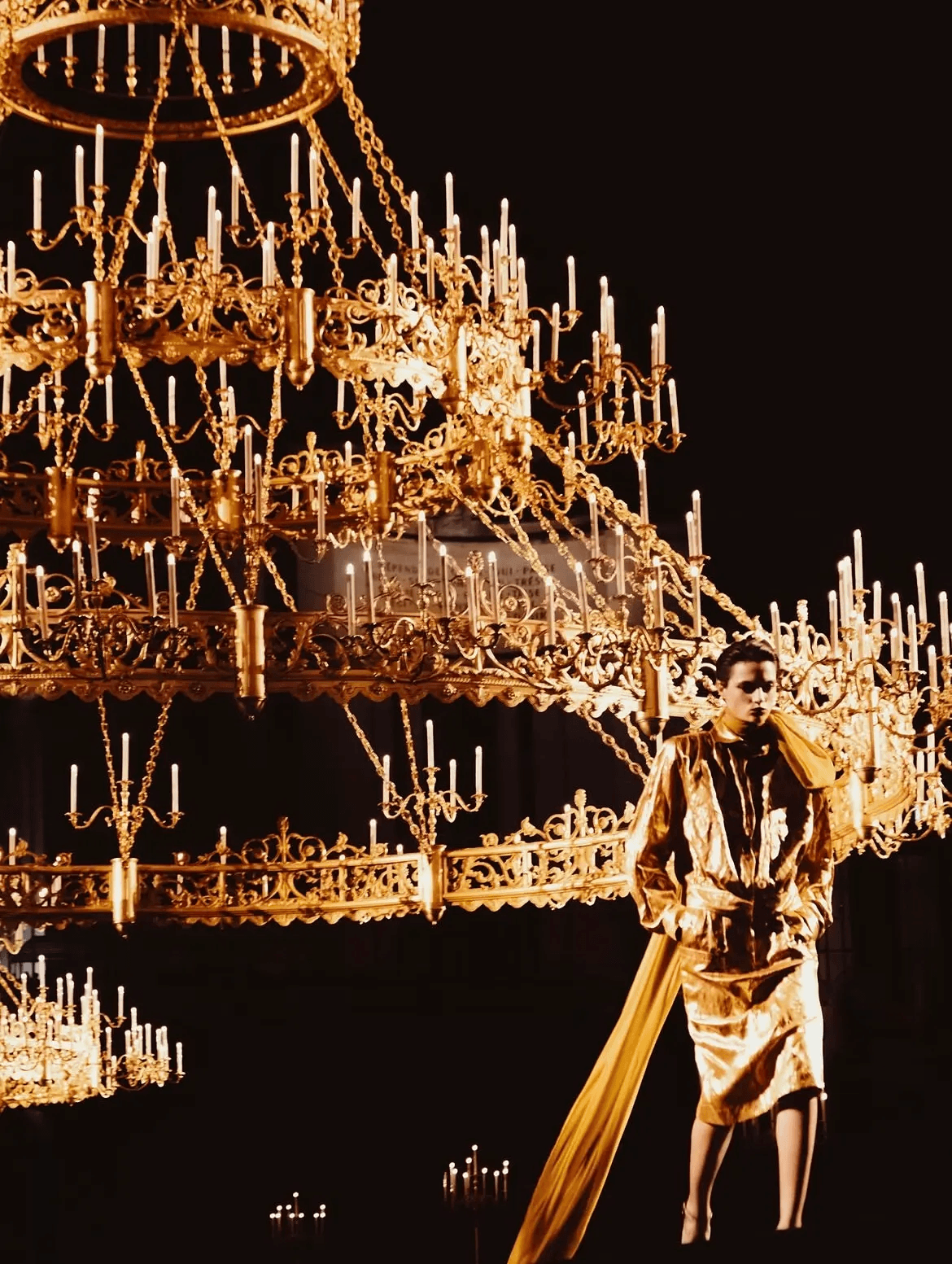
Saint Laurent set the bar remarkably high on just the second evening of the week. It had been exactly ten years since Anthony Vaccarello’s first show for the house, and rumours had been circulating for weeks that this might be his last collection. Vaccarello gave no interviews. Guests received black calla lilies. As everyone took their seats, Miles Davis’s soundtrack for Louis Malle’s Elevator to the Gallows was playing. Then three enormous chandeliers lit up in front of the Eiffel Tower.
The first 49 looks were gold: jackets, trench coats, brocades, pencil skirts and fitted dresses. Ten black dresses followed. There is a lovely little Saint Laurent footnote here: Yves Saint Laurent ended his 1991 collection in gold. Vaccarello reversed the order. At the end of the show, Charlotte Gainsbourg appeared in a black suit and sang. When Vaccarello came out to take his bow, it wasn’t difficult to understand where all the farewell speculation had come from. There has still been no official announcement of his departure. Perhaps in a few months we’ll decide we read far too much into that evening. And then we’ll say, “But nobody in Paris thought so at the time.” Time will tell.
Dior
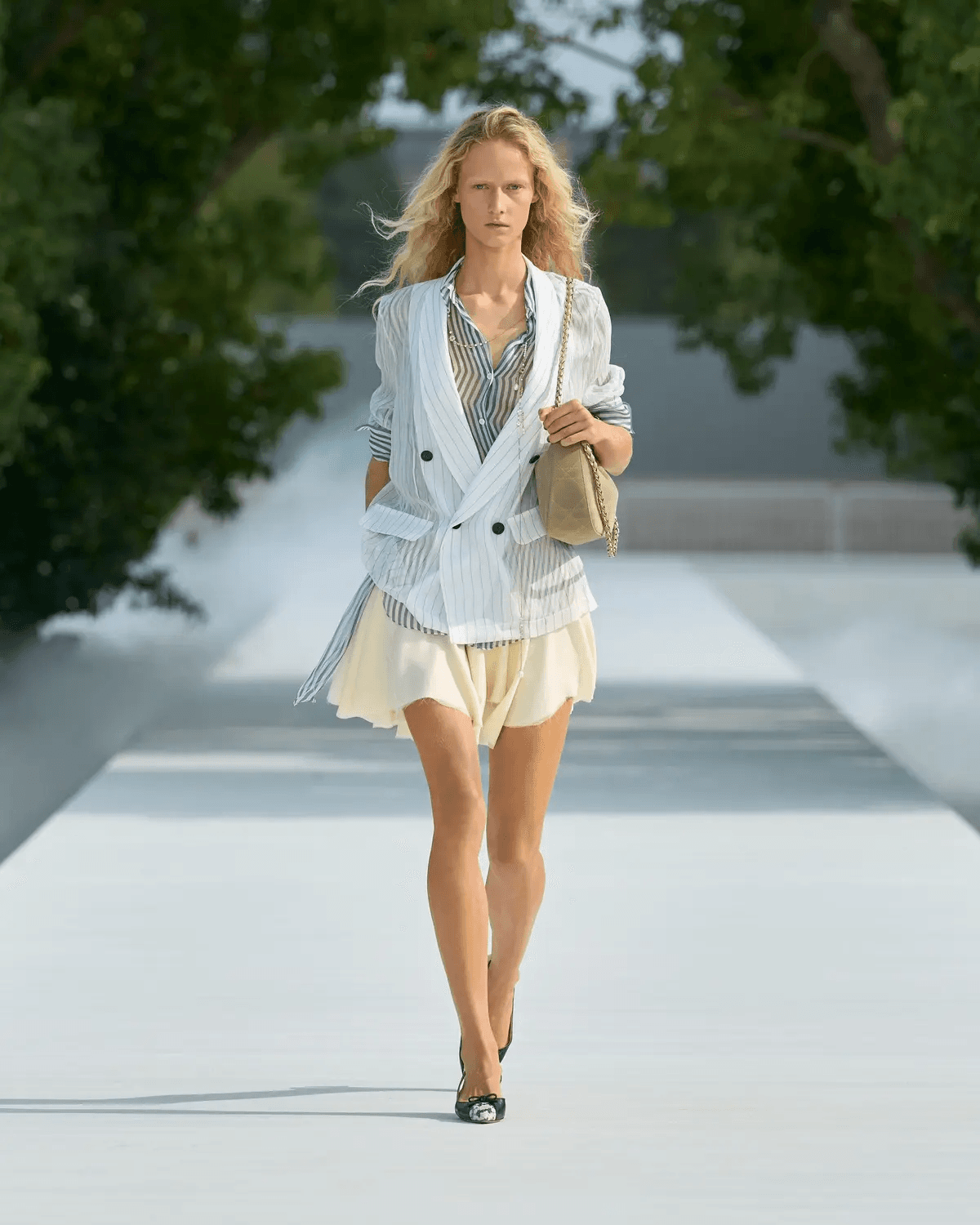
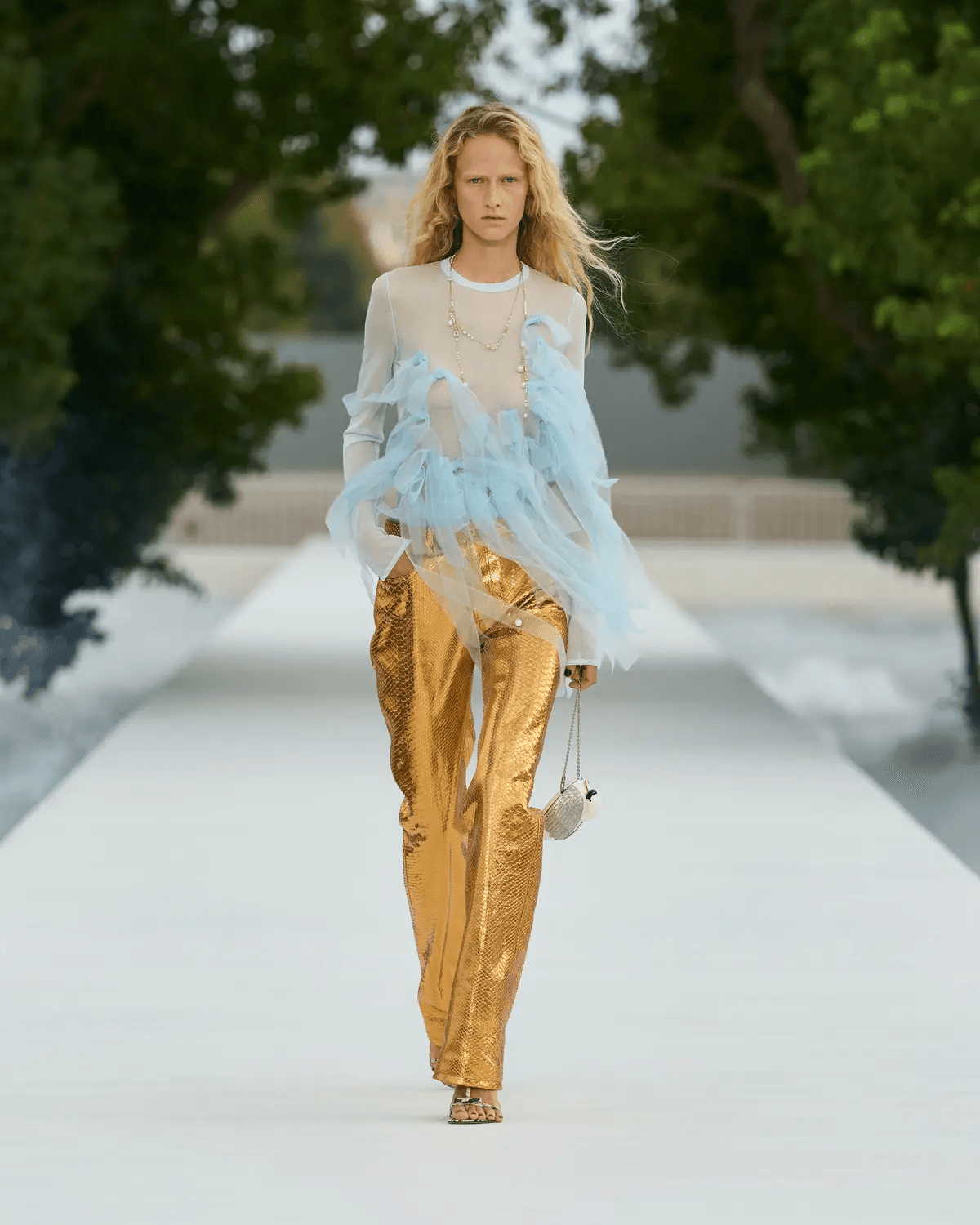
At Jonathan Anderson’s Dior, the most unexpected guest was once again the Paris heat. Fans were running and water was being handed out at the venue built over the pond in the Tuileries Garden, while artificial mist rose from the water. Anderson seemed to have lightened Dior in response to the weather. Chiffon, open shirts, visible bras, pleated fabrics; even the Bar jacket looked less structured than usual.
Certain pieces and ideas from the Summer 2027 men’s collection had also been revisited and developed further. Both shows, for example, opened with the same look. Sheer tailoring, metallic five-pocket trousers and black embroidery creating the illusion of scarves were other examples. All of which brings another number to mind. This was Anderson’s seventh Dior womenswear collection in approximately a year. Seventh. After hearing that, you could probably use another fan.
Miu Miu
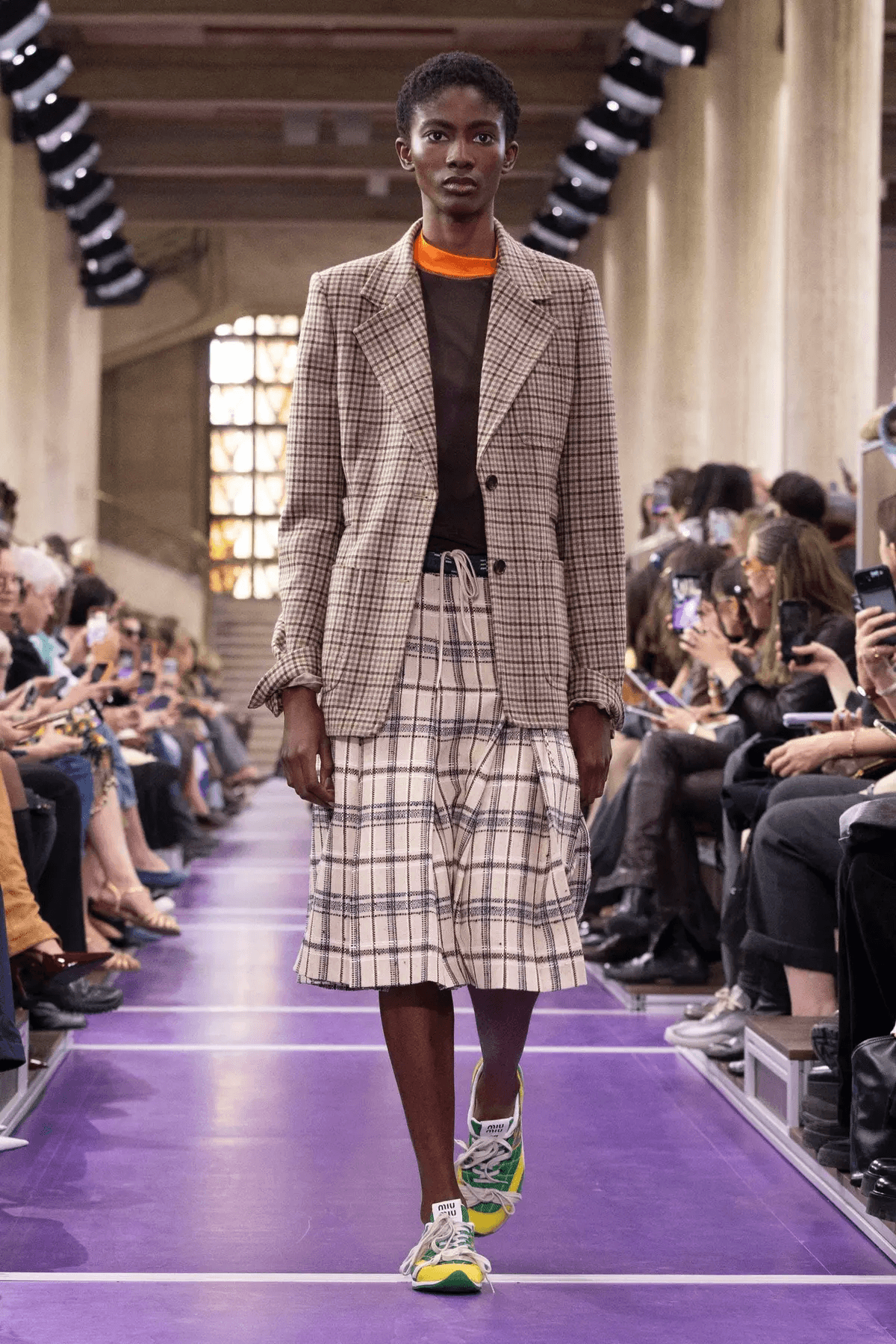
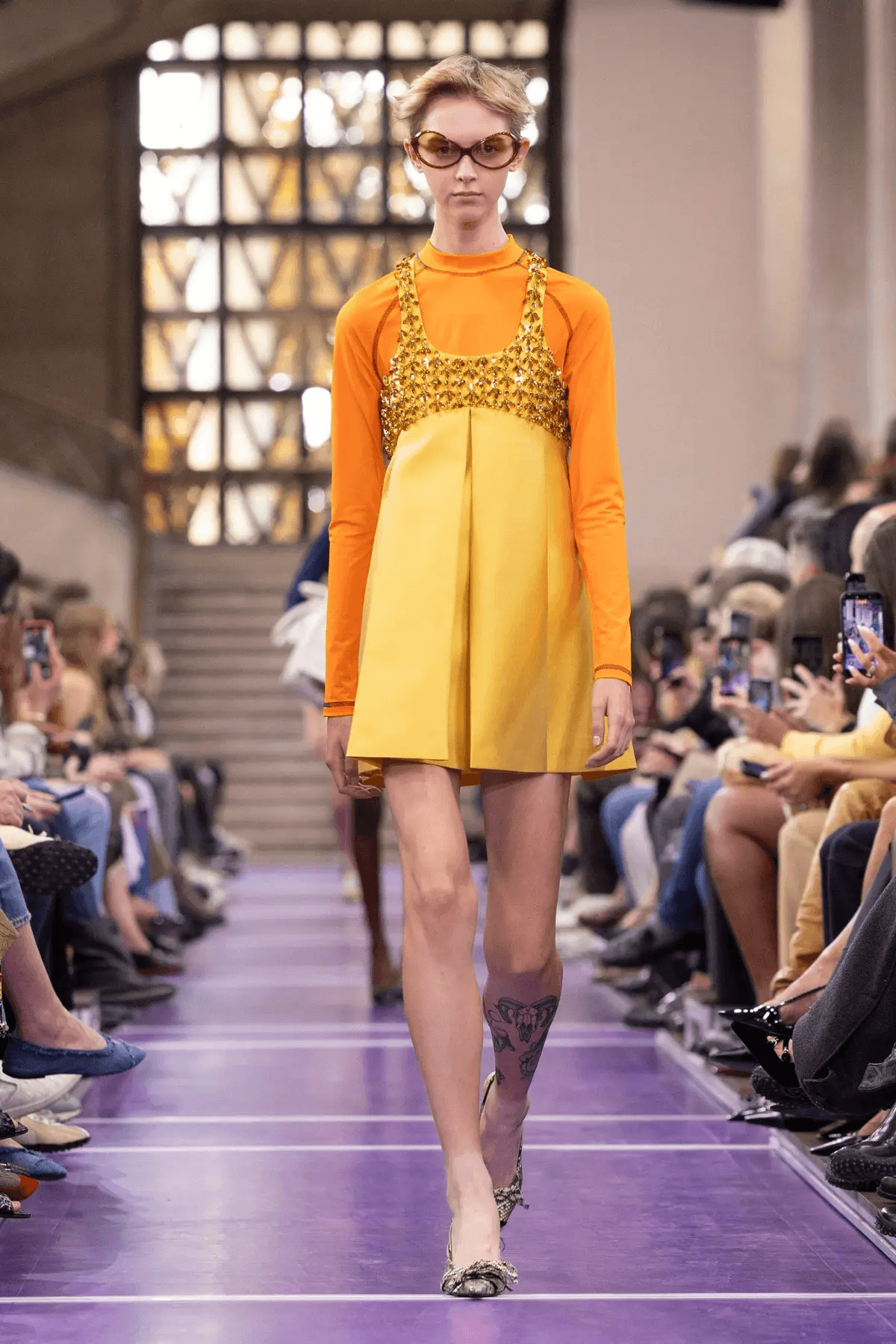
Miuccia Prada continued to pursue her sporting instincts. Running clothes, leather skirt suits, bras, tailored jackets, evening dresses and jeans all found themselves in the same wardrobe. Reusing, rethinking and reconsidering familiar ideas is, after all, a fairly accurate summary of Miuccia’s approach to fashion and clothes.
Geometric prints referenced both Miu Miu’s own history and wider popular culture. With an underlying sense of deconstruction, technical jersey sportswear was cut into cropped tops and worn over or beneath other pieces, while silk bows appeared alone against bare skin. Wrangler collaborated on pieces reconstructed from old jeans, and the partnership with New Balance continued.
What interested Miuccia here was taking the sportswear everyone already wears and making it a little stranger, a little prettier, a little more Miu Miu. Looking at the people on the runway made the idea even clearer. Alongside Gigi Hadid walked Jamie Bell, Emma Corrin, Noah Jupe, Katherine Waterston and Olivia Colman. Olivia Colman, in particular. There has never been just one kind of “Miu Miu girl”. This time, Miuccia Prada made that clearer than ever.
Loewe
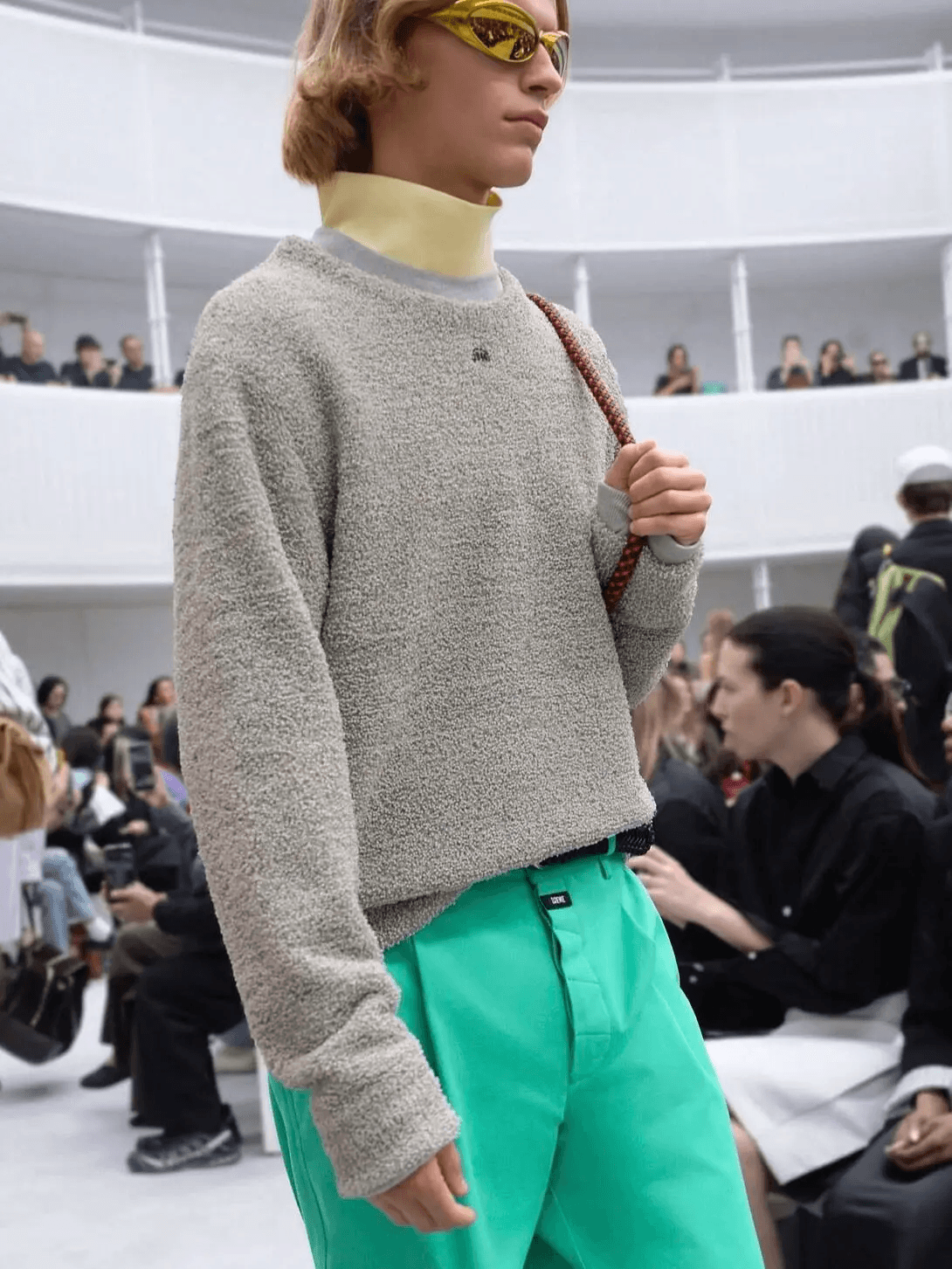
At Jack McCollough and Lazaro Hernandez’s Loewe, the question that dominated their first two collections — “What happens after Jonathan Anderson?” — is gradually becoming less interesting.
At the Château de Vincennes, the audience was almost within arm’s reach of the models. McCollough and Hernandez began with the most ordinary clothes from their own country, America: a striped shirt, a zip-up sweater, a checked jacket, a sports top. The folds of a skirt resembling a crumpled napkin, for instance, were inspired by paintings by Zurbarán and Velázquez that they had seen at the Prado in Madrid. Yet at the waist was a drawstring you might expect to find on sportswear. What looked like a striped cotton jacket was actually leather. A grey top, seen up close, was covered in beads. There is really no need to make some grand statement about the meeting of the Old World and the New.

Celine
Michael Rider’s mood board once again seemed to be made up of people on the street. The way someone wears a jacket, a trouser leg accidentally tucked into a sock, a coat carried under the arm because it’s too hot, or something entirely unplanned that suddenly looks right while getting dressed in the morning.
There were 71 looks in the garden show, and they didn’t behave as though they belonged to a single continuous story. A black summer dress, a suit, crumpled satin, a leather T-shirt, loose trousers, thin belts, pearls. It is becoming increasingly difficult to define the Celine woman, and that’s a good thing. Those who miss Phoebe Philo’s Celine and those who love Michael Rider’s Celine can sit at the same table. Rider isn’t trying to repeat Philo, which would be a rather pointless exercise considering she now has her own label. But the instinct to see clothes as part of a wardrobe rather than as a statement feels familiar.

Chloé
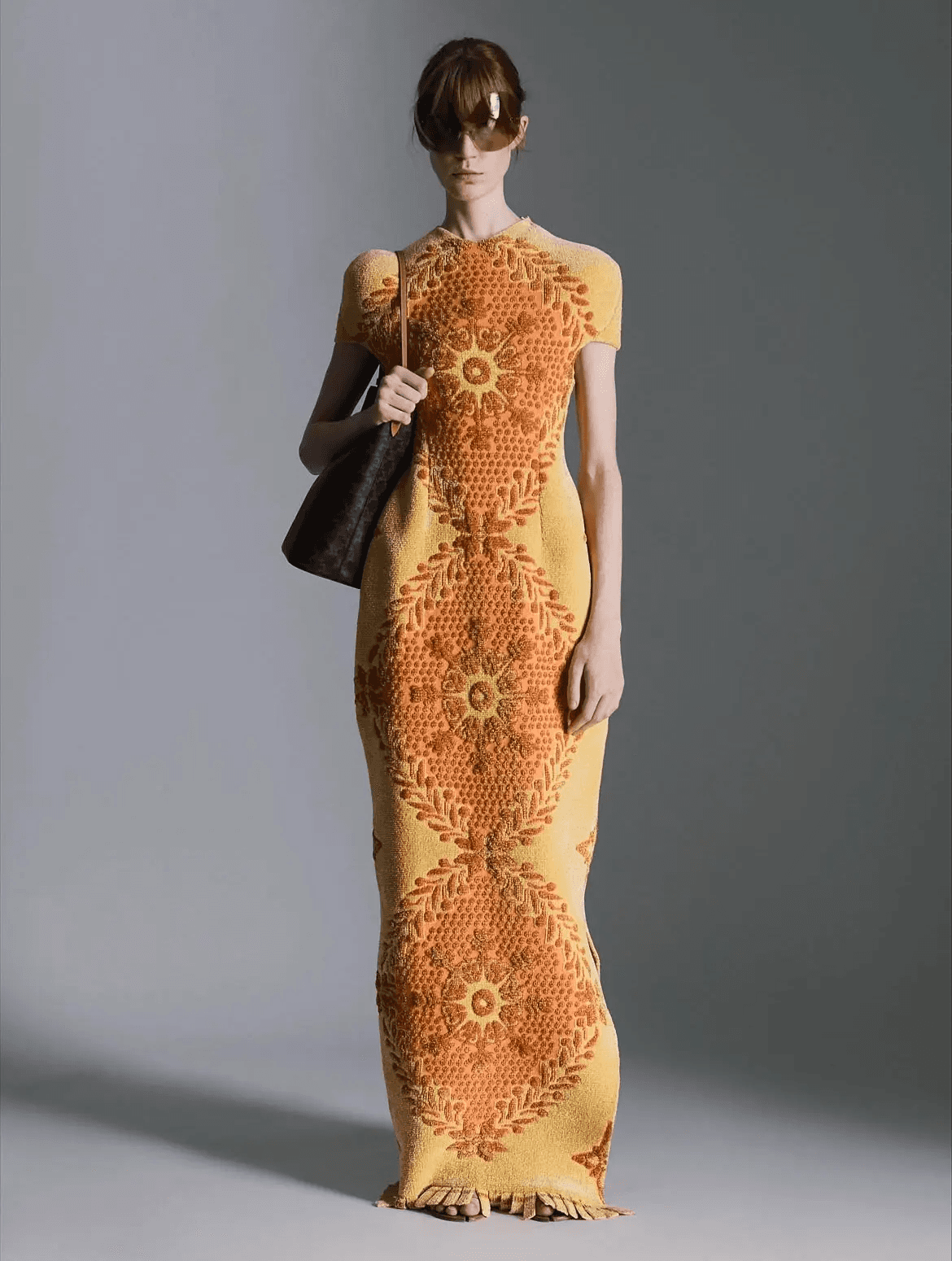
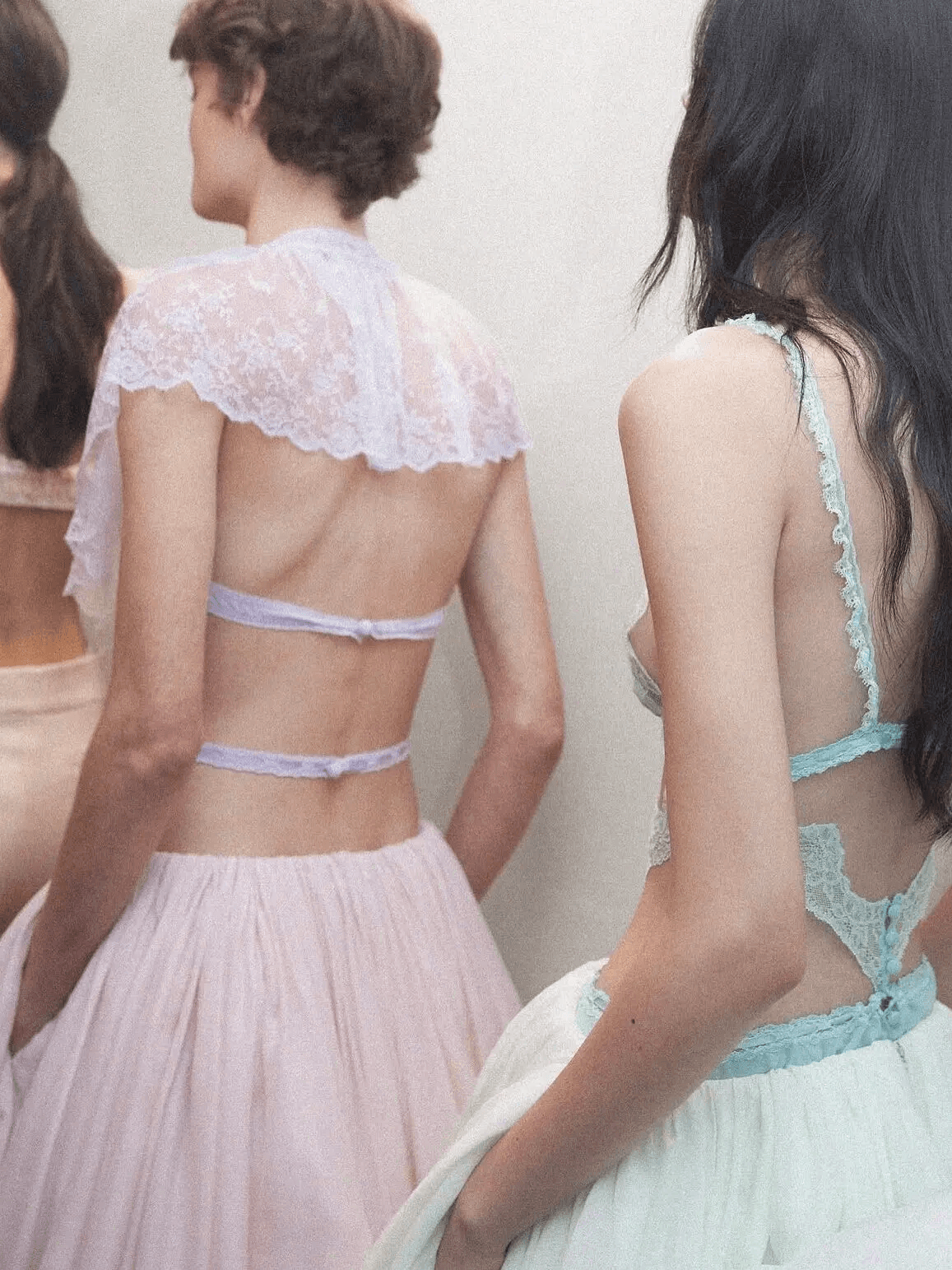
Apparently, Chemena Kamali had two large books of broderie anglaise samples from old French and Swiss manufacturers on her desk. Much of the collection grew out of them. The fabric has a long history at Chloé. Gaby Aghion was using it back in the 1950s, and it reappeared repeatedly through different eras, from Phoebe Philo to Clare Waight Keller.
This time, Kamali took broderie anglaise everywhere, from white summer dresses to pieces almost as light as lingerie. Adding enormous raincoats was a very Chloé move: there was romance, but nobody had forgotten that it can rain in Paris. And then there was Apple Martin. The 22-year-old daughter of Gwyneth Paltrow and Chris Martin made her runway debut in a white, ruffled Chloé dress.
Givenchy
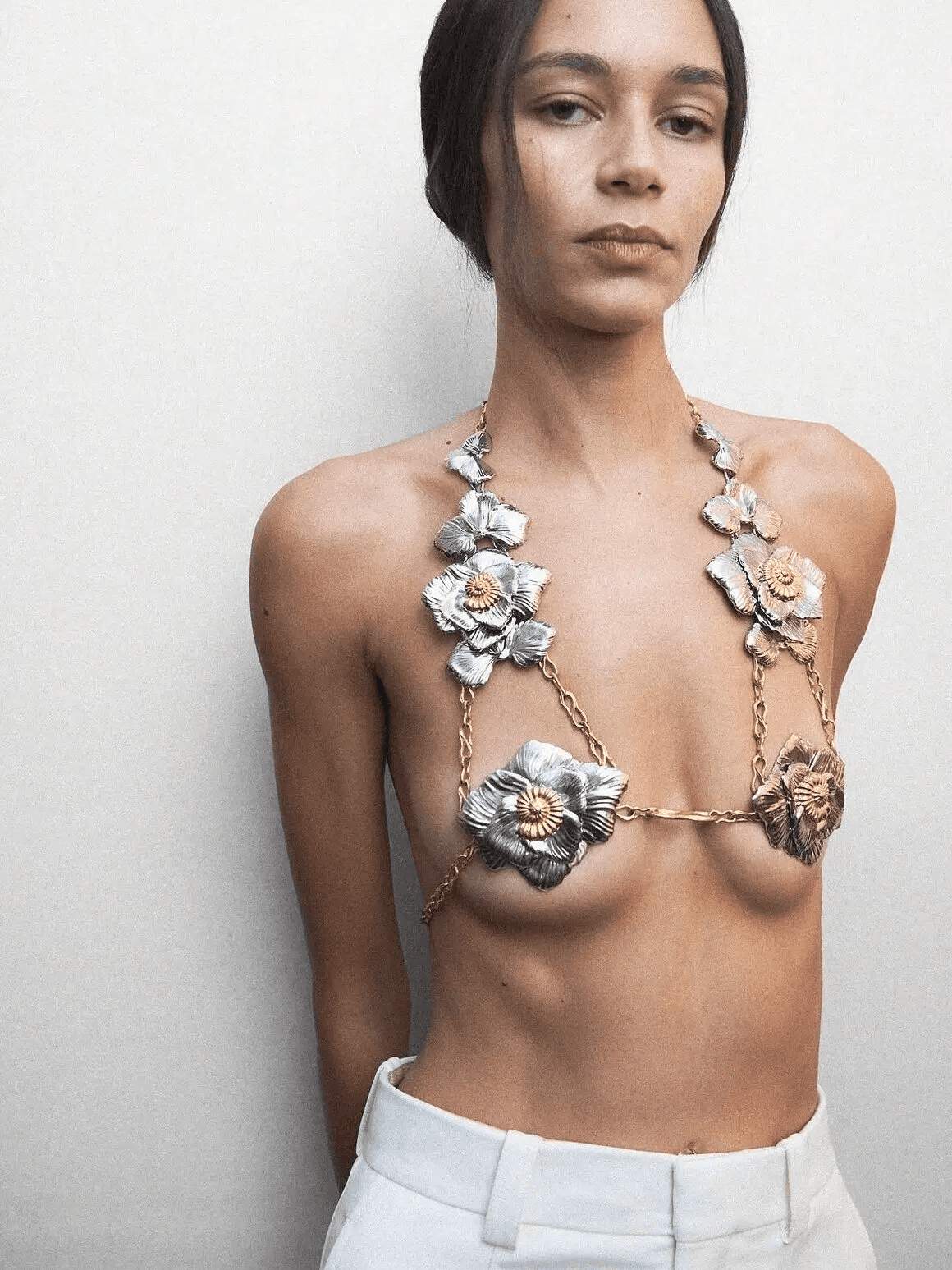
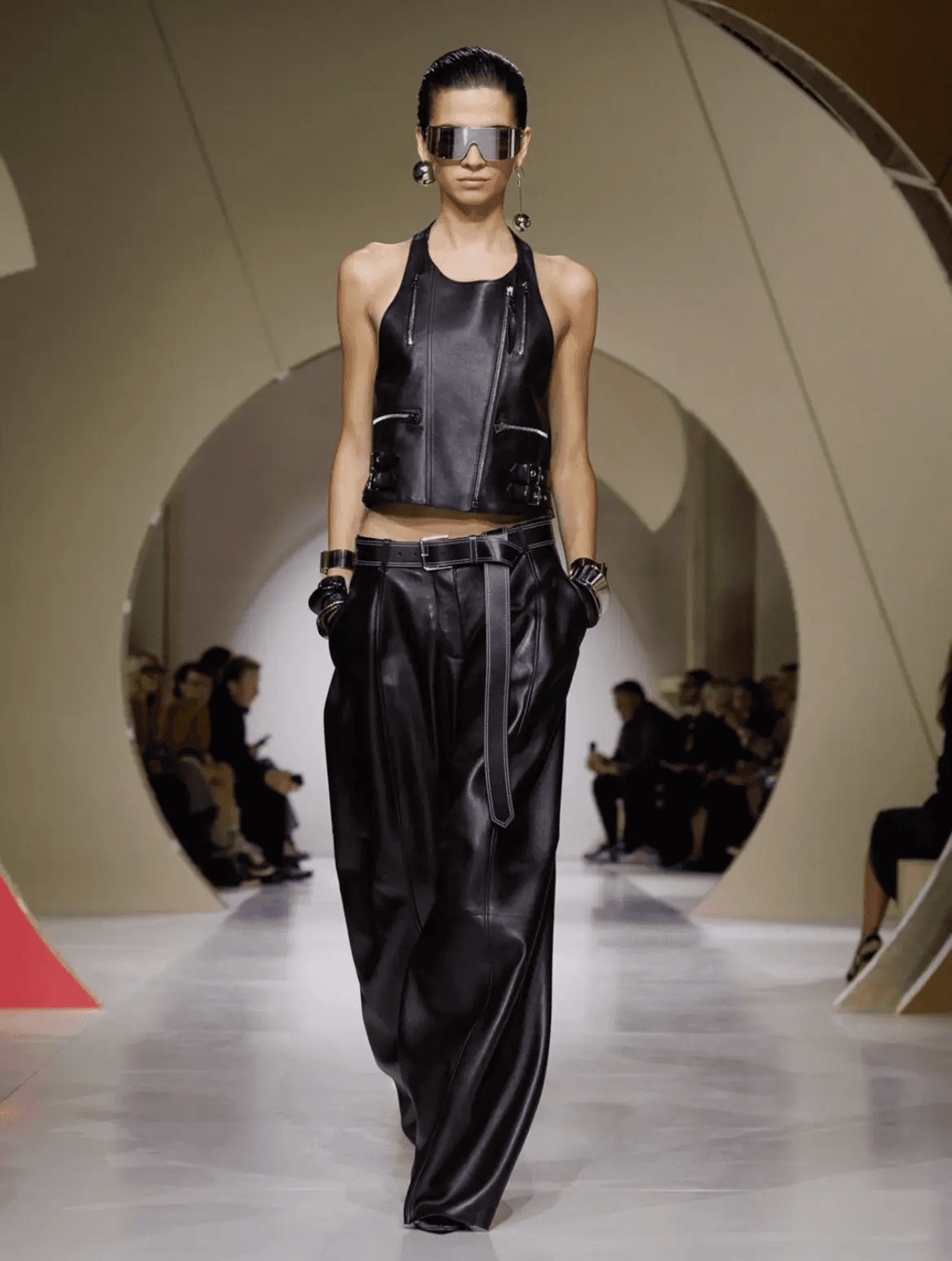
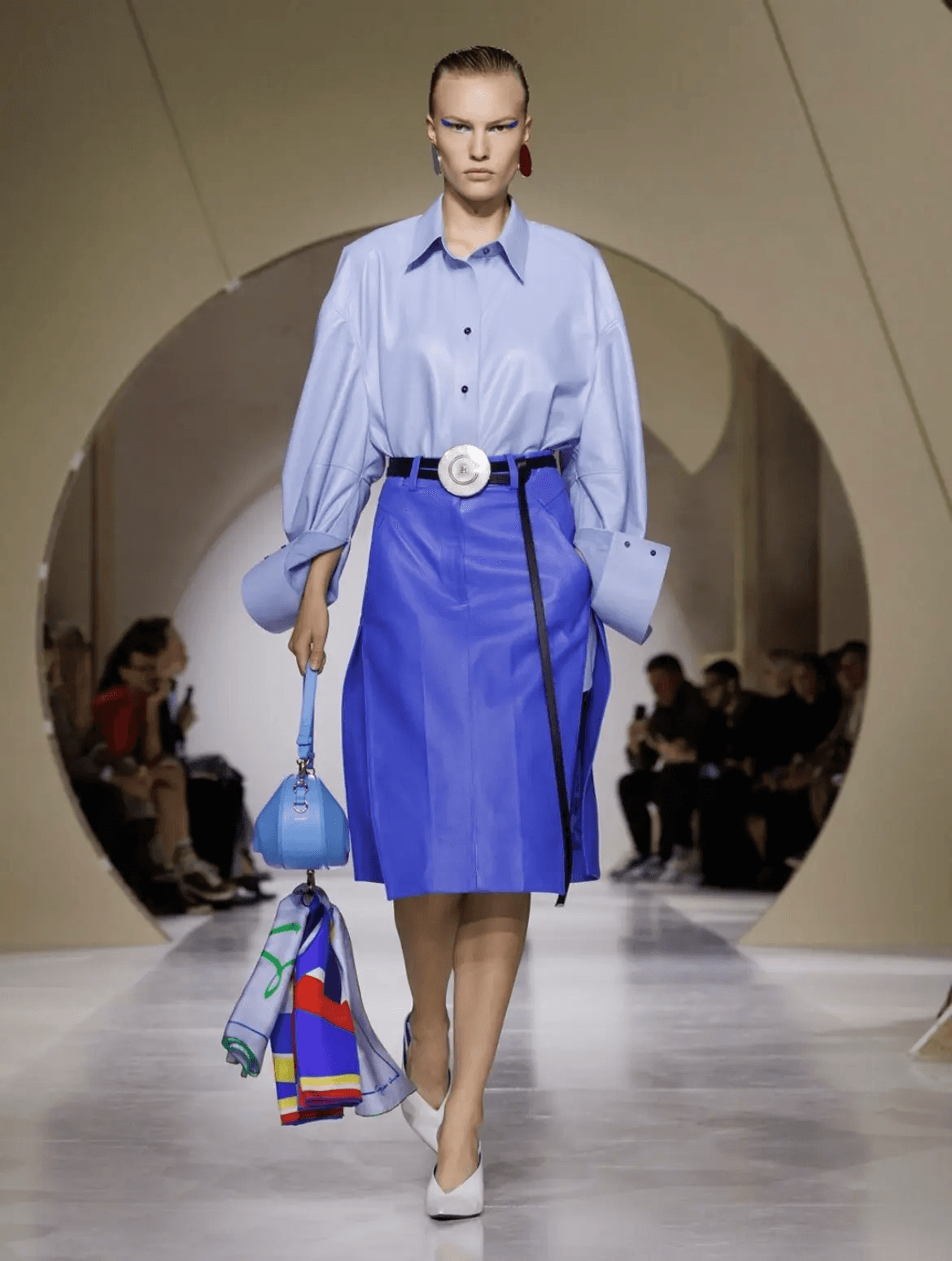
Sarah Burton’s Givenchy came into sharper focus this season. The show opened with a black leather dress, followed by sharply cut jackets, oversized coats and dresses that stood away from the body. And everything could be unzipped. The dresses, the shoes, all of it.
Burton’s clothes have always made the most sense when worn, rather than on a hanger or in a photograph. That is becoming increasingly evident at Givenchy. The clothes are serious but not heavy, feminine without having to be fragile.
Valentino
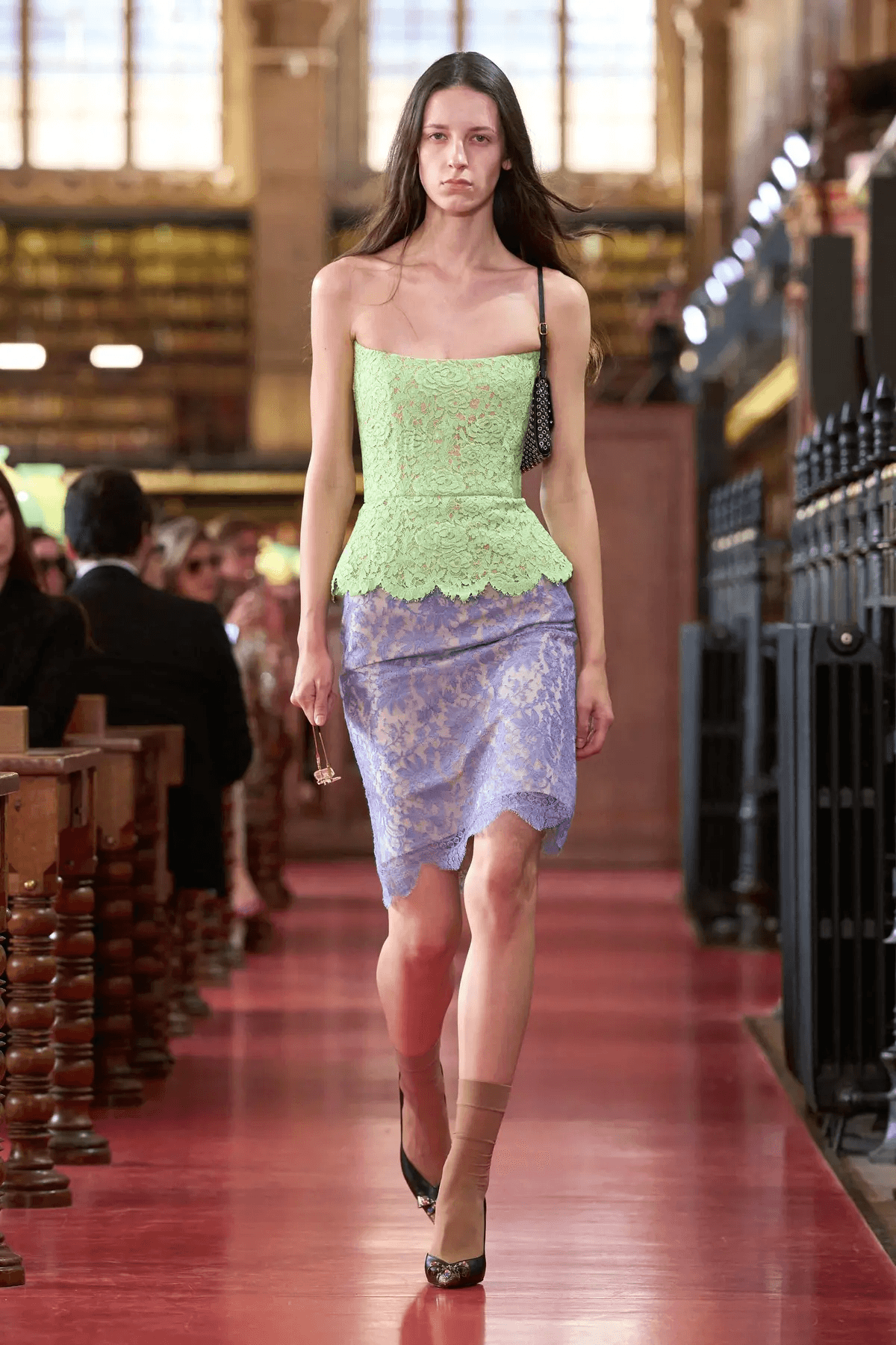
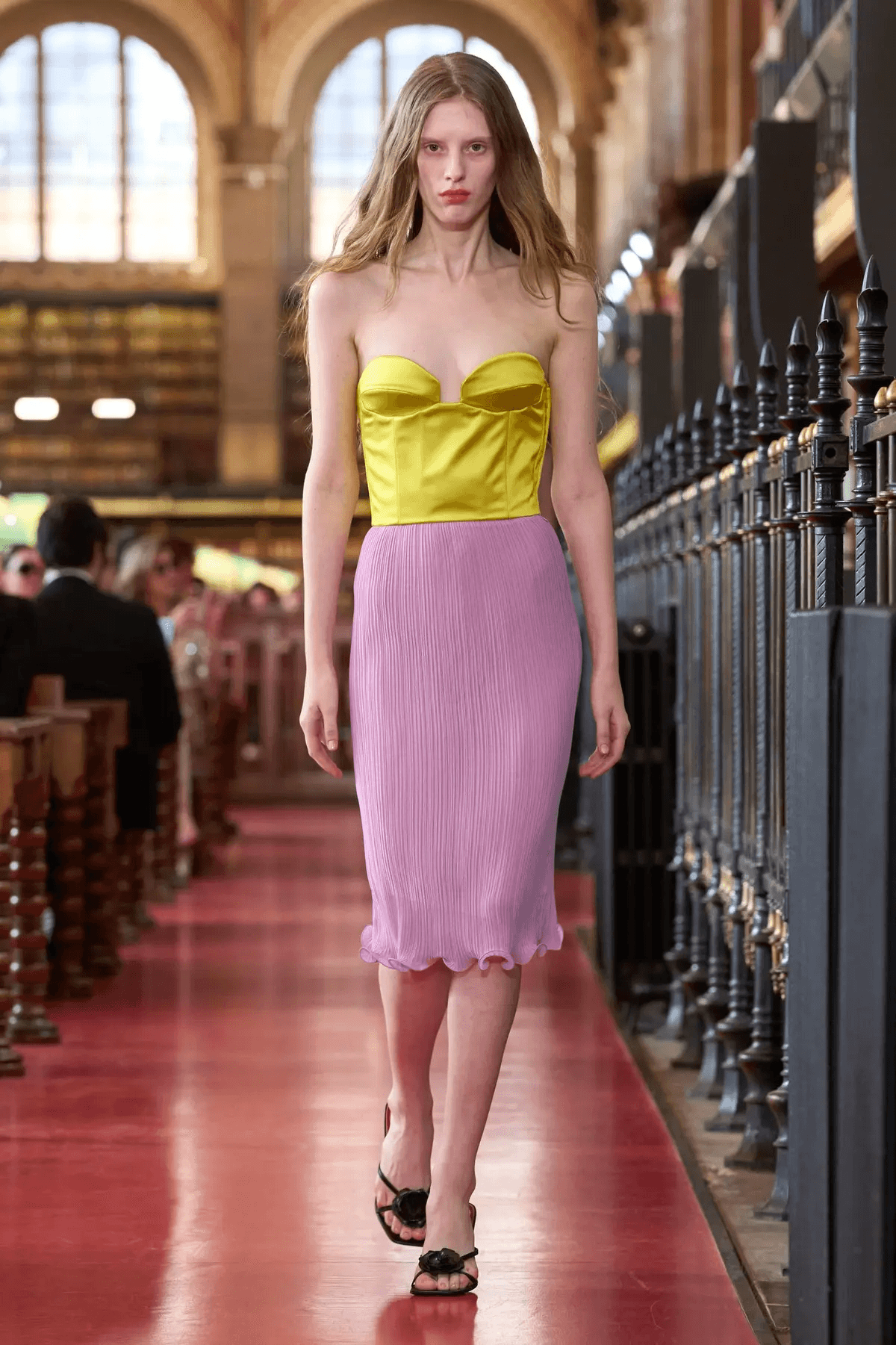
There was an unusual request on the invitation to the Valentino show this time: bring a book.
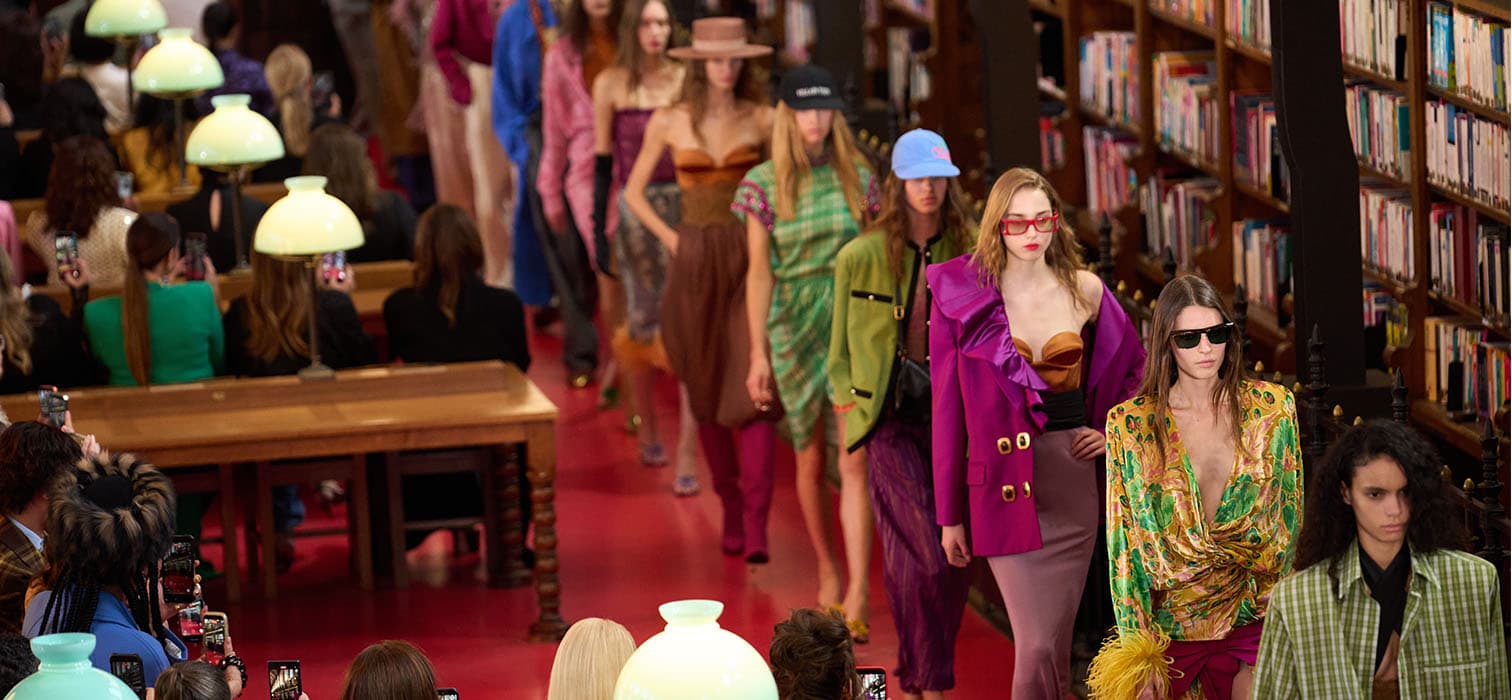
It could be new or taken from your own shelves. Books would be collected at the entrance and later donated to local libraries. Alessandro Michele staged the show at the Bibliothèque Sainte-Geneviève and called it Antibiblioteca, or “The Library of the Unread”. Michele’s starting point was Nassim Nicholas Taleb’s idea of the “antilibrary”: sometimes the books we own but haven’t yet read contain more possibilities than those we have finished.
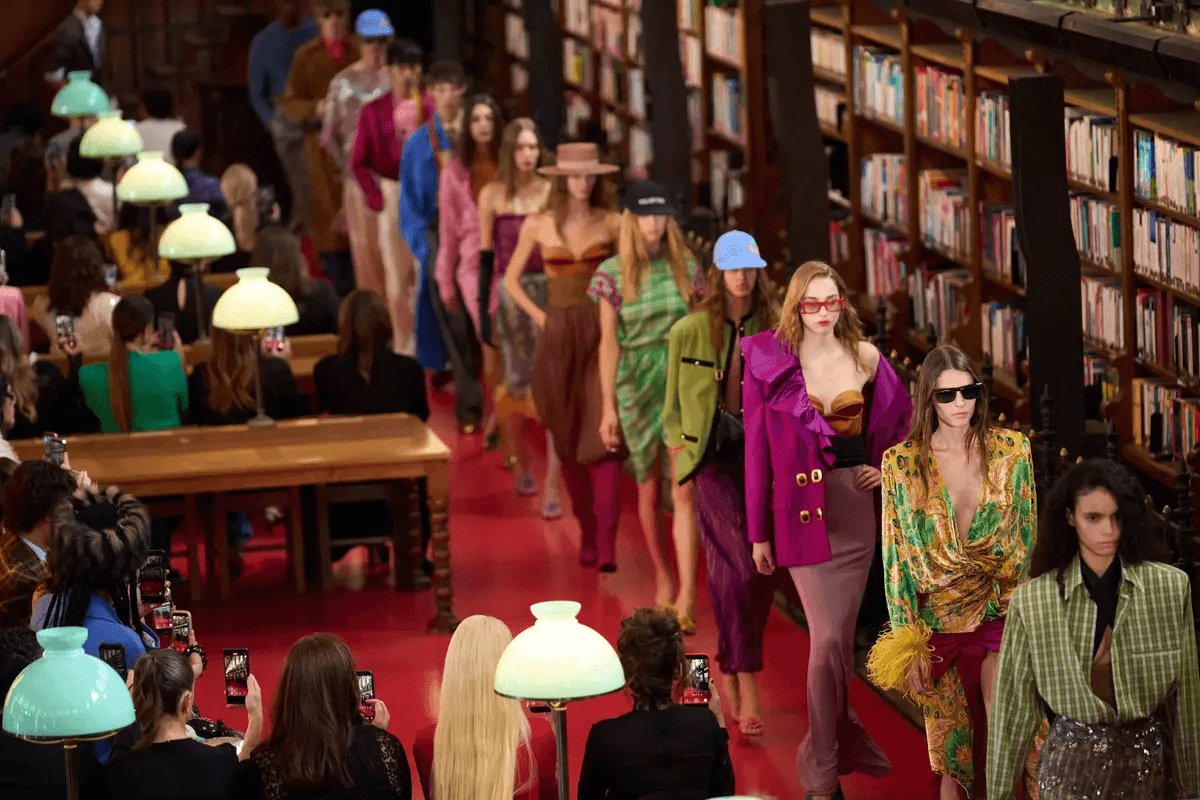
Michele applied the same thought to clothes. Even a dress we never buy or wear, one we simply look at, can suggest the possibility of another life. Cynthia Erivo brought James Baldwin’s Giovanni’s Room. Colman Domingo arrived with Julia Child. Michele had also put together an extensive bibliography of imaginary authors and nonexistent books.
Balenciaga
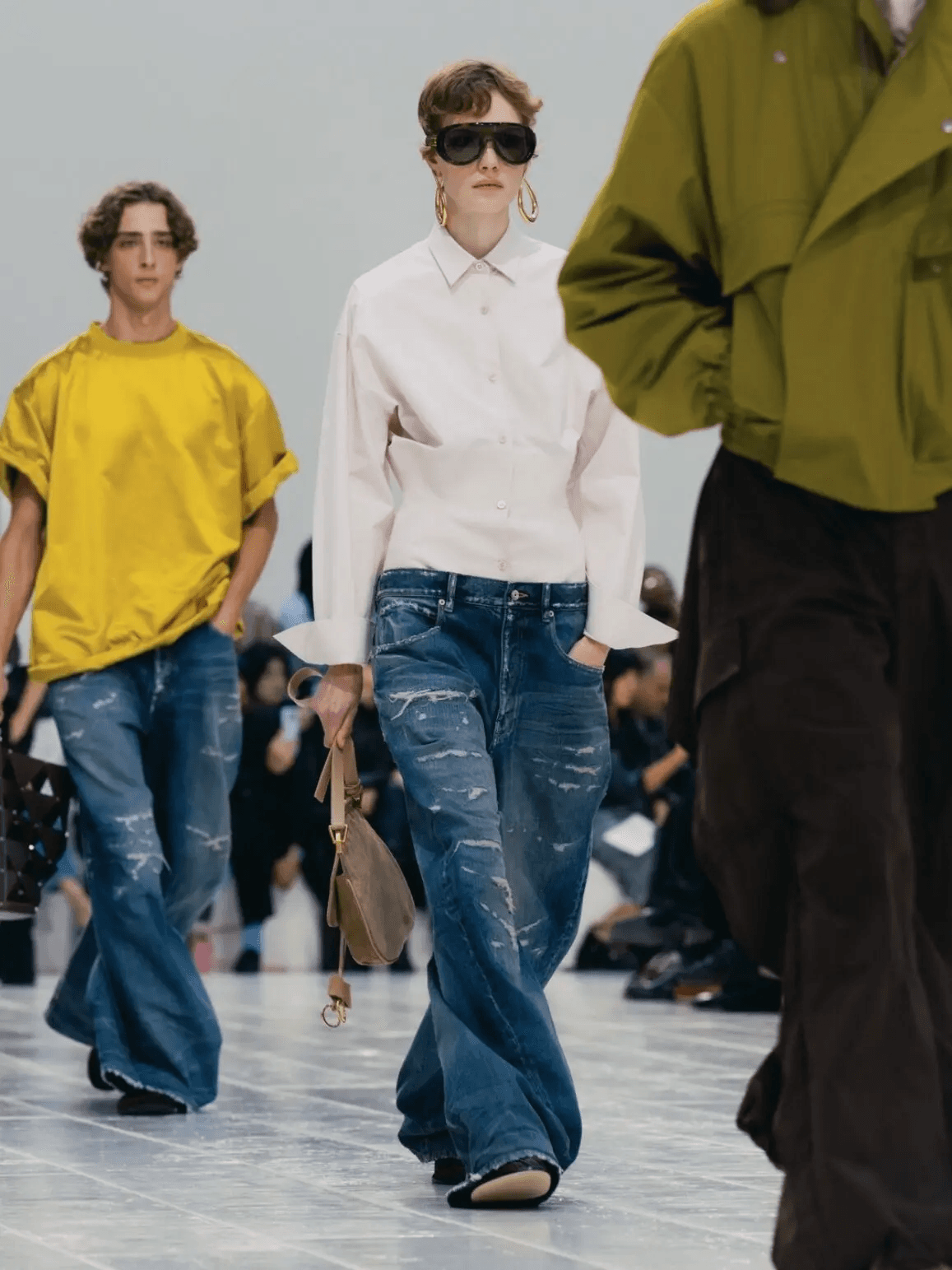
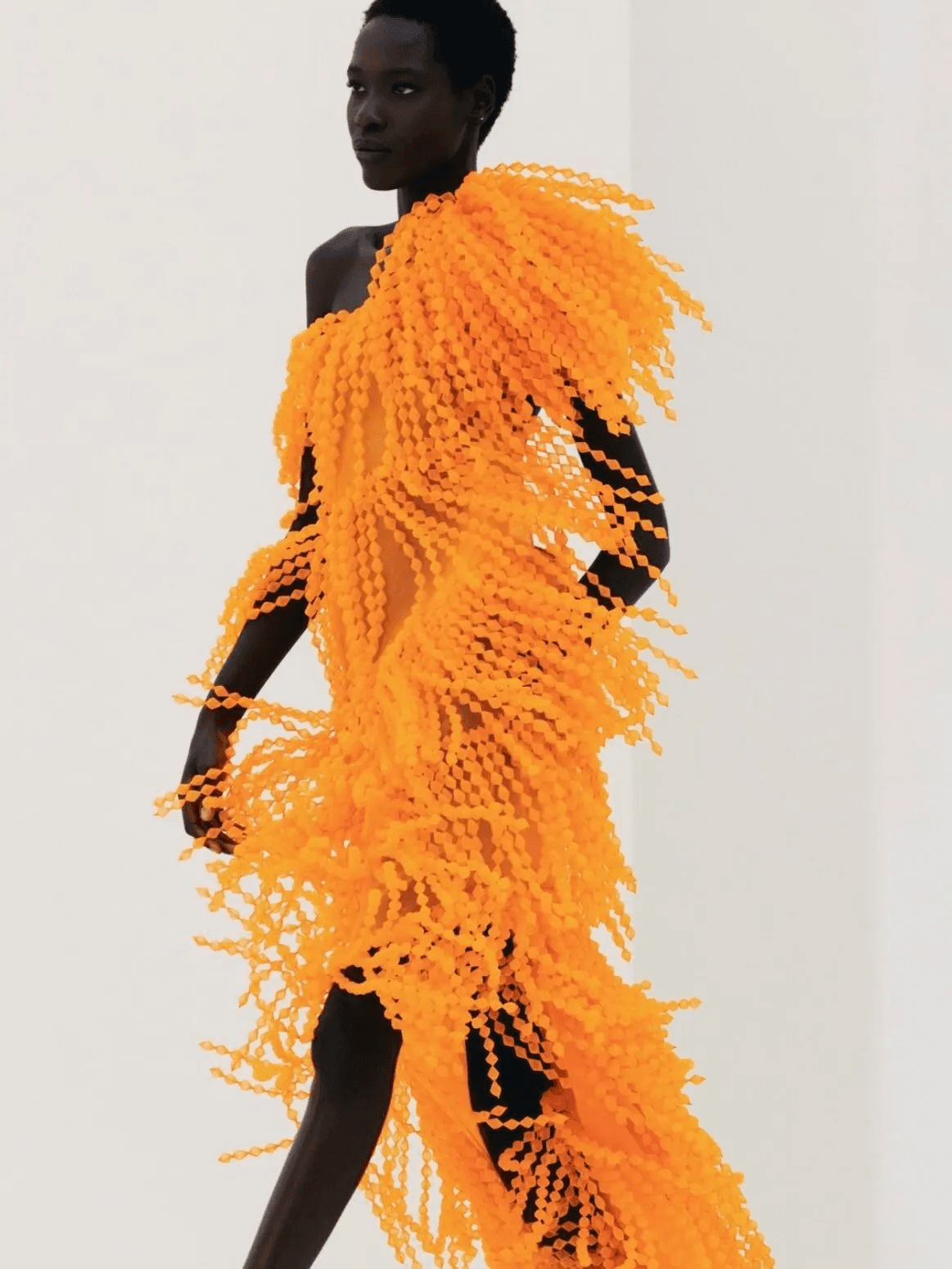
Pierpaolo Piccioli brought Balenciaga out of the darkness of night and into daylight. At the centre of the Tennis Club’s white space stood a large, coral-like fabric sculpture by Aude Franjou. Piccioli doesn’t have an easy job at Balenciaga. On one side is Cristóbal Balenciaga’s haute couture heritage; on the other, the very different streetwear language Demna developed over nearly a decade. Piccioli is still finding his place between the two.
In this collection, the two sides began to meet within the same outfit. A long-tailed satin top appeared over jeans; a white T-shirt suddenly sat alongside something far more ceremonial. It is still too early to make definitive statements about Piccioli’s Balenciaga. Besides, there is something more enjoyable about this brief period when we don’t yet know what a fashion house will become. But if the backstage rumours are anything to go by, this may have been Pierpaolo Piccioli’s final collection.
Tom Ford
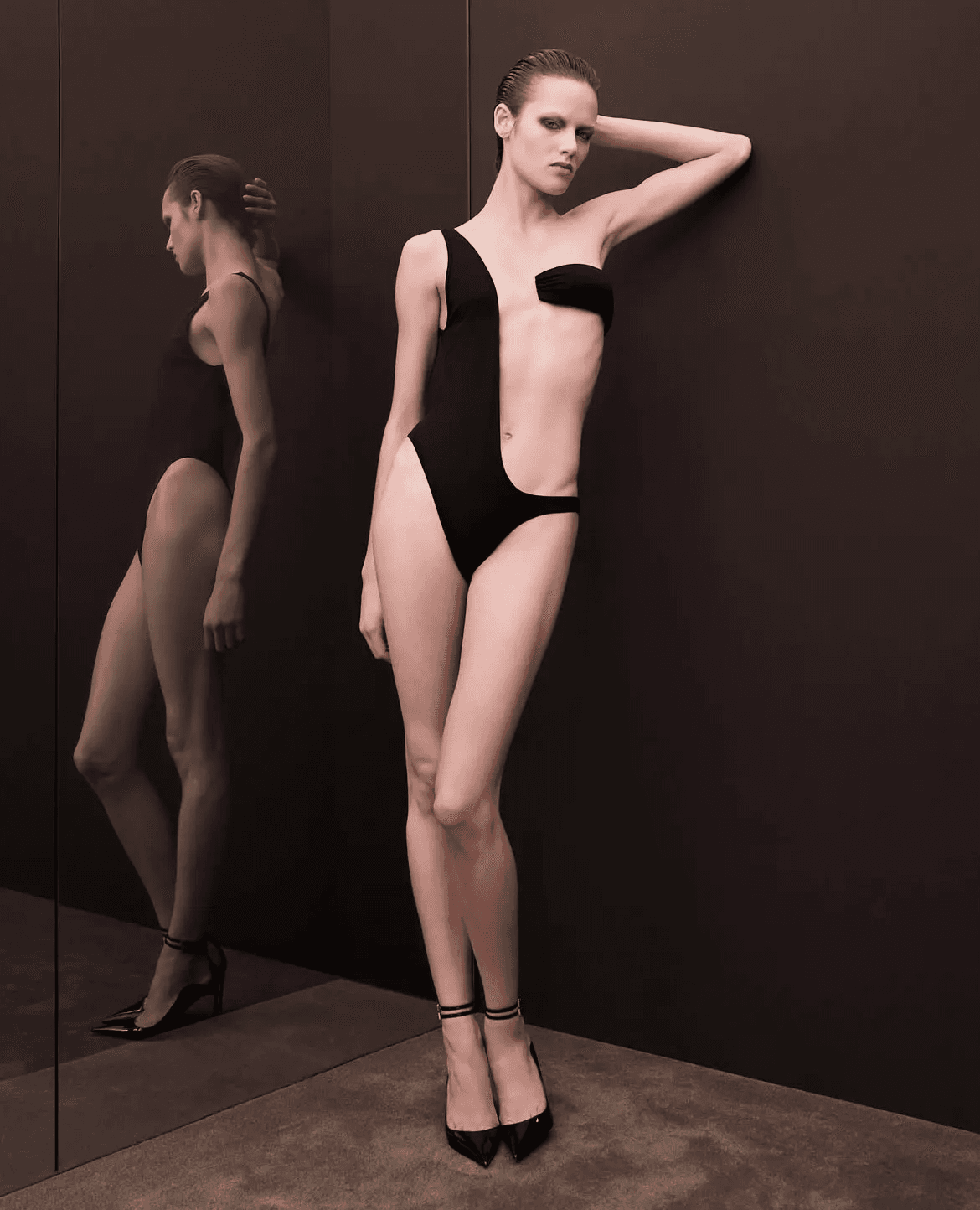
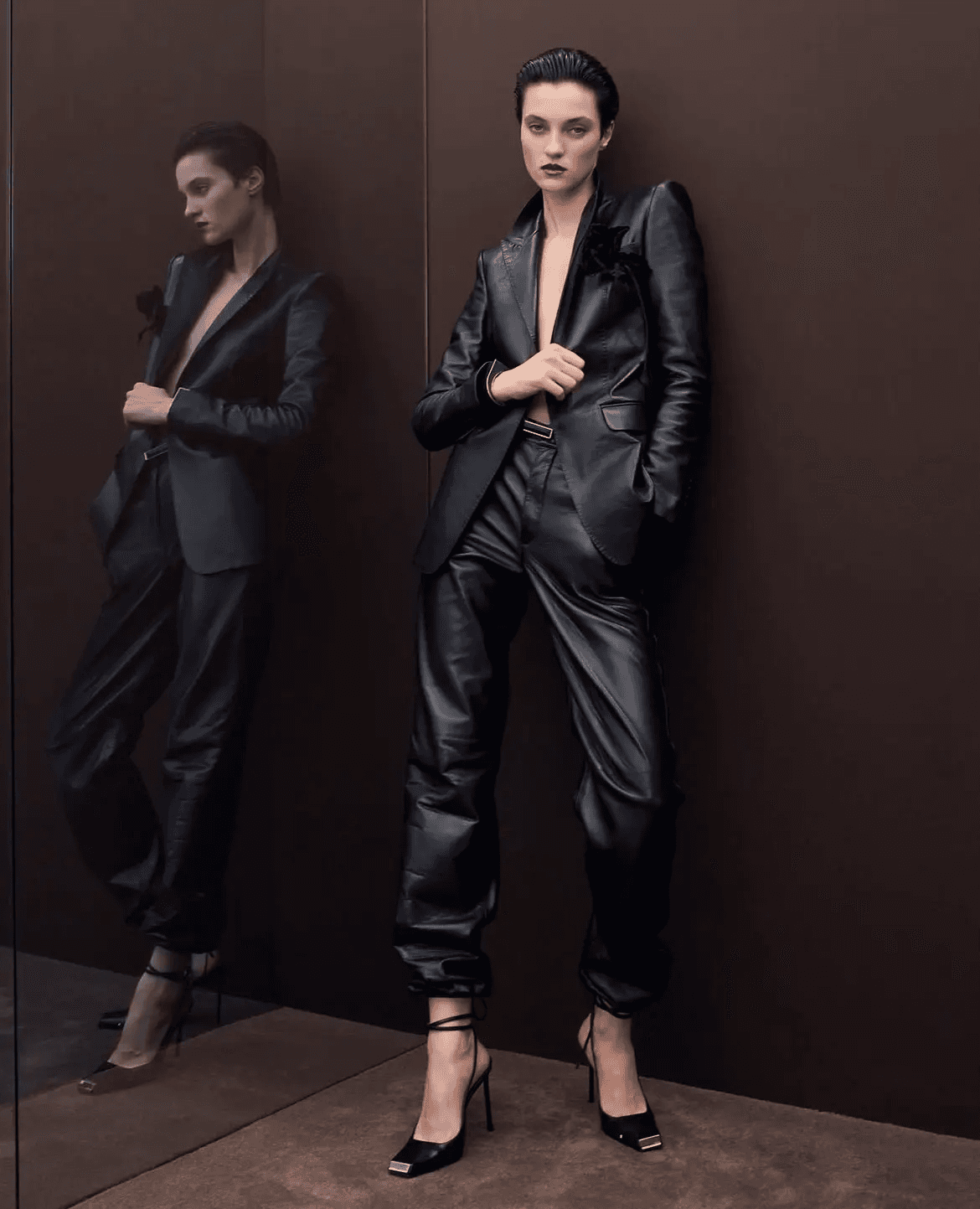
Haider Ackermann placed mirrors along the runway and asked the models to look at themselves as they passed. It is difficult to imagine a more fitting gesture for Tom Ford.
Some stopped to study their reflections, while others looked at the models behind the glass. Swimsuits appeared alongside suits, bras with evening dresses, and pieces reminiscent of silk dressing gowns with sharply tailored jackets. Sometimes you noticed the body before the clothes.
At Tom Ford, seduction has always been the point.
Dries Van Noten
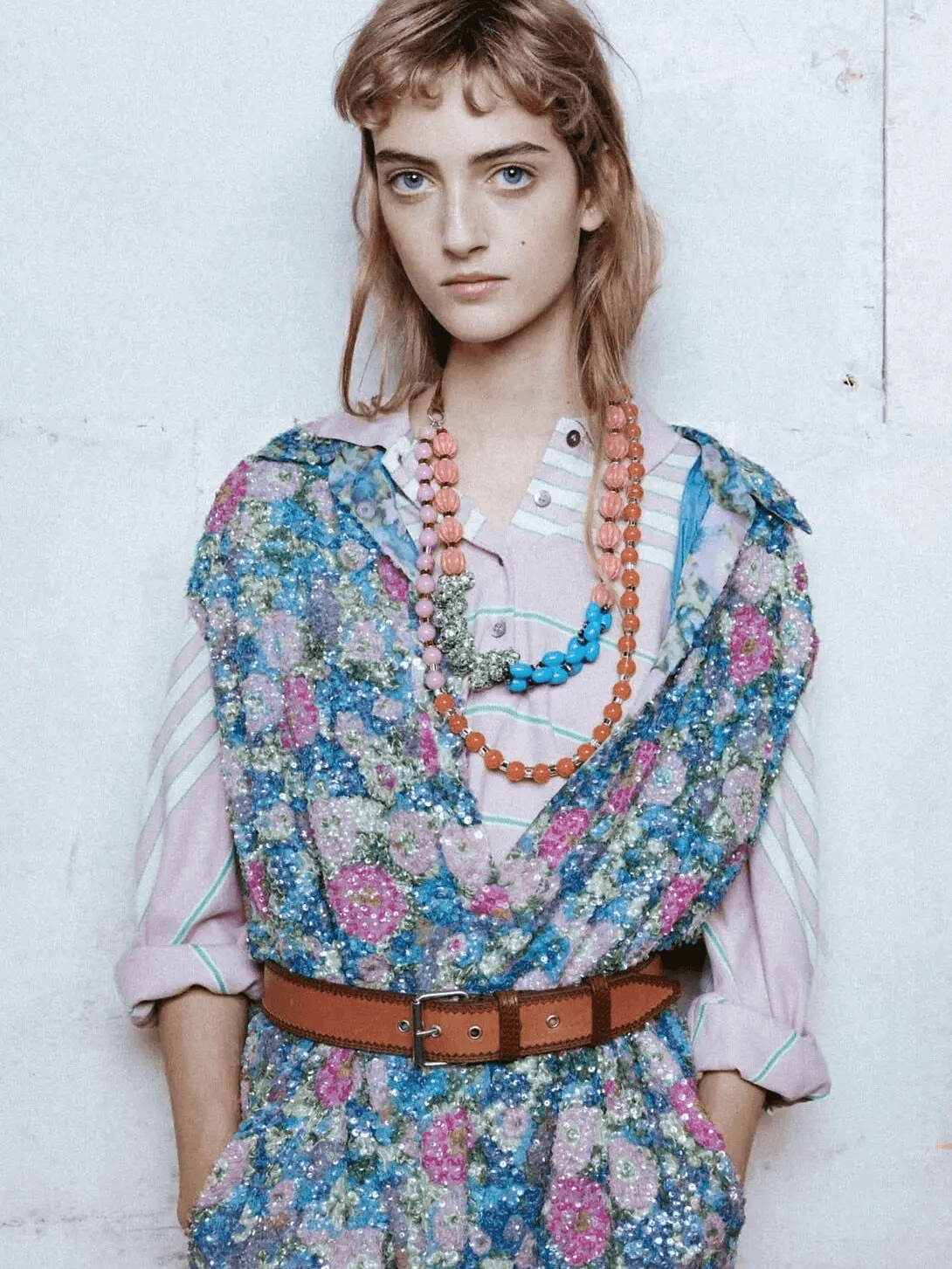
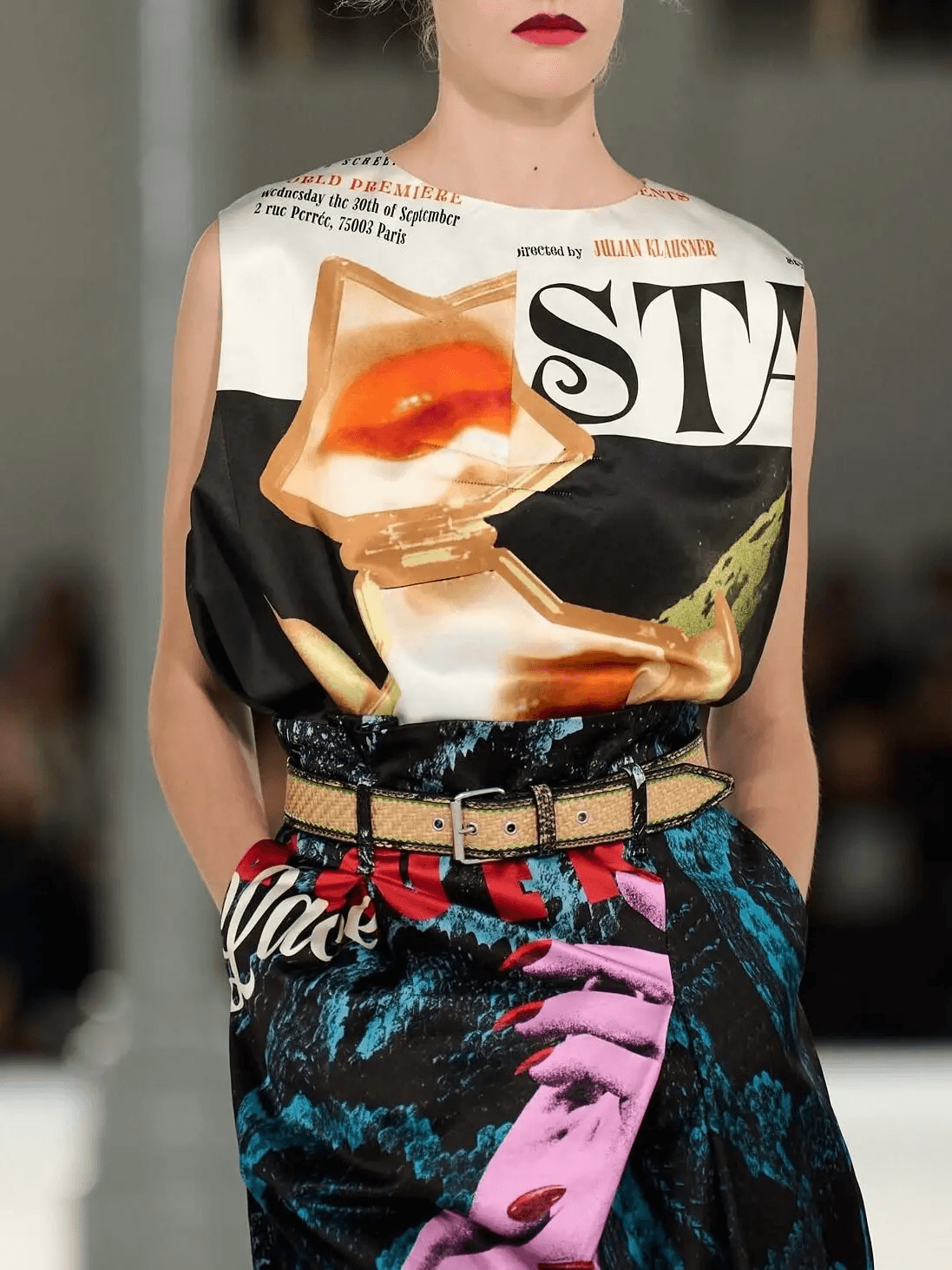
The Dries Van Noten show began with the sound of a woman’s heels on the pavement. In the background were cars, horns, conversations and laughter. Julian Klausner had been thinking about old cinema posters, but the best part was that none of the films actually existed.
The studio invented film titles, actors and posters, then printed them on dresses, skirts and lightweight trench coats. Even the invitation was a film poster delivered in a tube. The star Klausner had in mind wasn’t on the red carpet. She looked more like someone who had just left a film set and was stopping at the supermarket on her way home, without quite having removed all her makeup.
Large bags, loafers, shirts and layered skirts constantly brought the collection’s more glamorous side back down to street level. Those who looked closely at the small print on the posters could even spot Julian Klausner’s name.
Courrèges
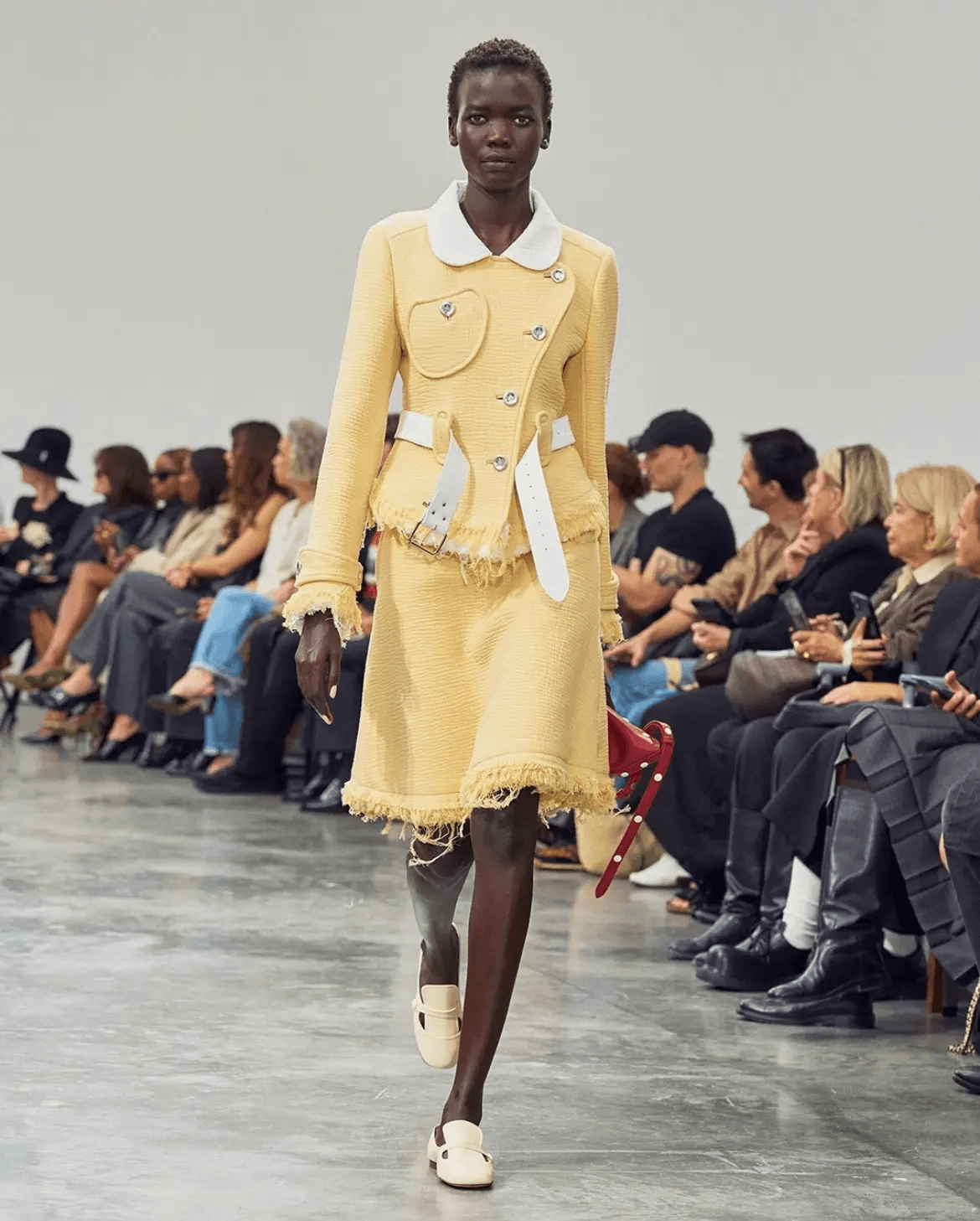
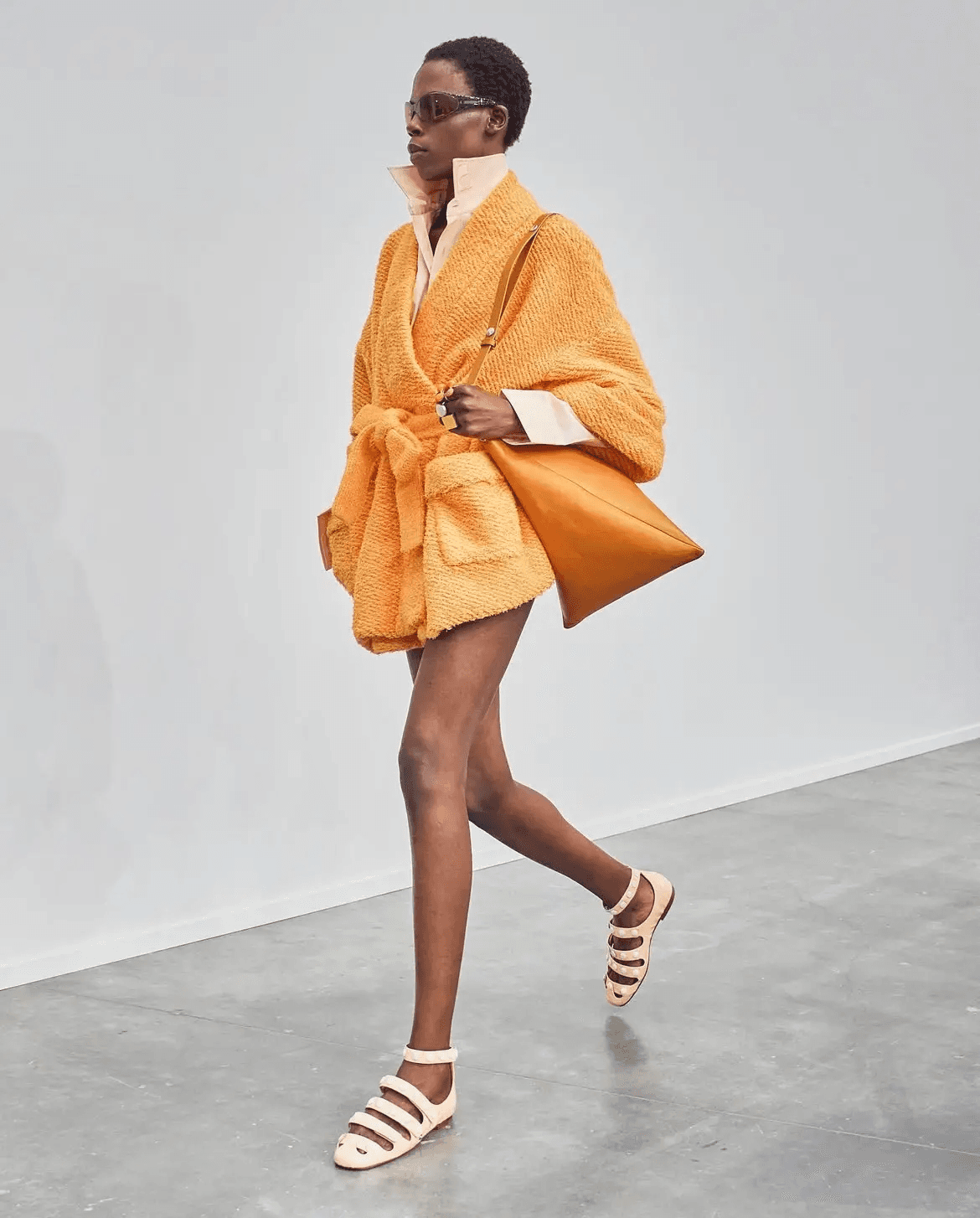
A new chapter at Courrèges. Drew Henry, who succeeded Nicolas Di Felice, had previously worked with Phoebe Philo, Jonathan Anderson and Daniel Lee. He didn’t have much time to prepare, either.
While exploring the archive, he came across an old tomato-red Courrèges hat with a distinctly Space Age feel, crushed and misshapen after years inside a box. Realising that it had only ever appeared in black and white in old photographs, he had it remade. The short boots from André Courrèges’s 1964 Moon Girl collection also returned.
This time, though, they appeared alongside pastels, loosened belts, flowers and dresses with a slightly worn-in feel. After the clean, white, nightclub-ready world of Courrèges in recent years, emerging from the archive with a battered old hat isn’t a bad place to start.
The Japanese in Paris
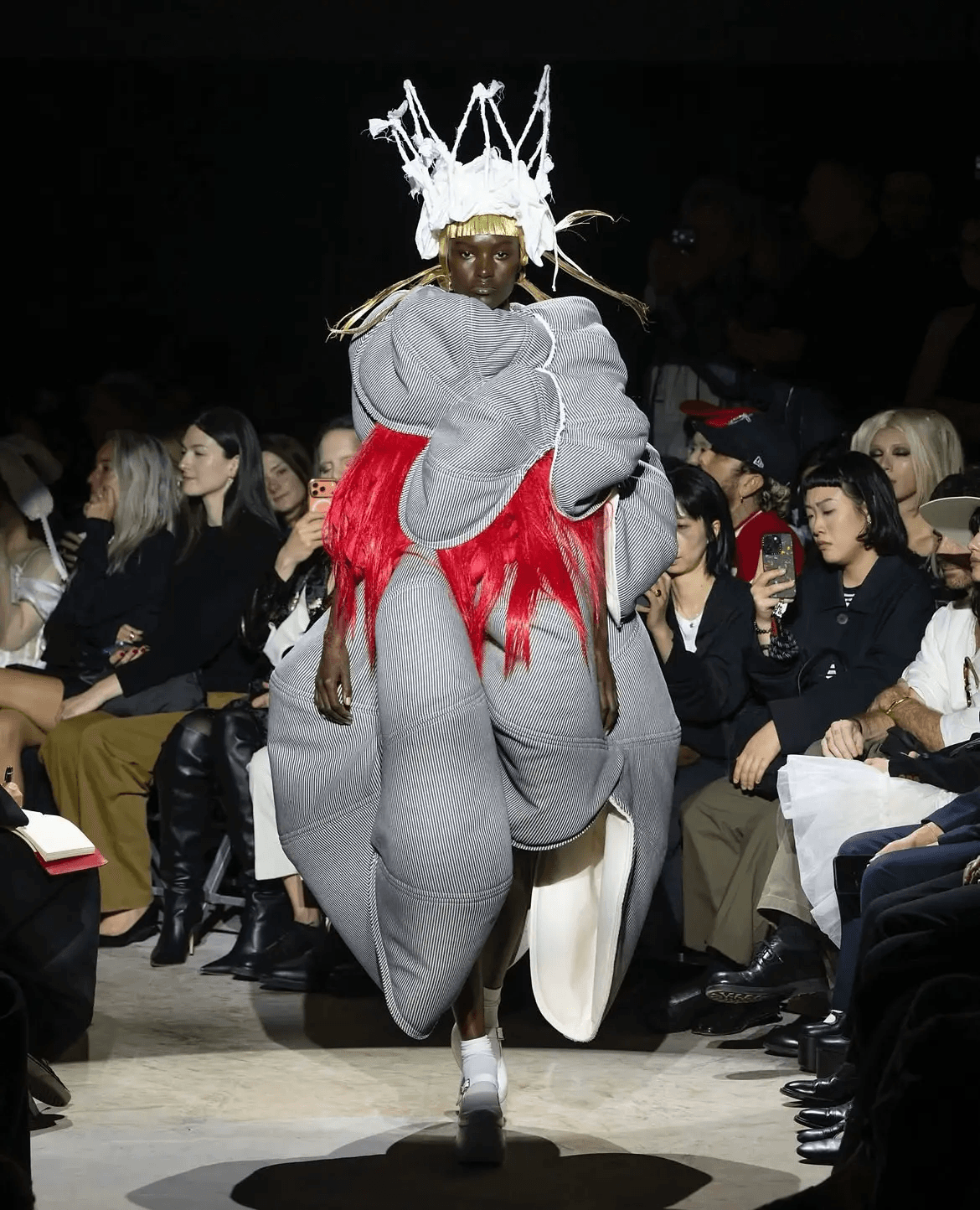
It is a little unfair to group Paris’s Japanese designers under a single heading, but doing justice to each of them would require an entirely separate article. At Comme des Garçons, Rei Kawakubo brought together “royal life and real life”, with models wearing strange crowns made of fabric, wire and hair. Junya Watanabe simply called his collection Funky and sent a pregnant Ciara down the runway three times. On one occasion, she carried a crystal chandelier above her head.
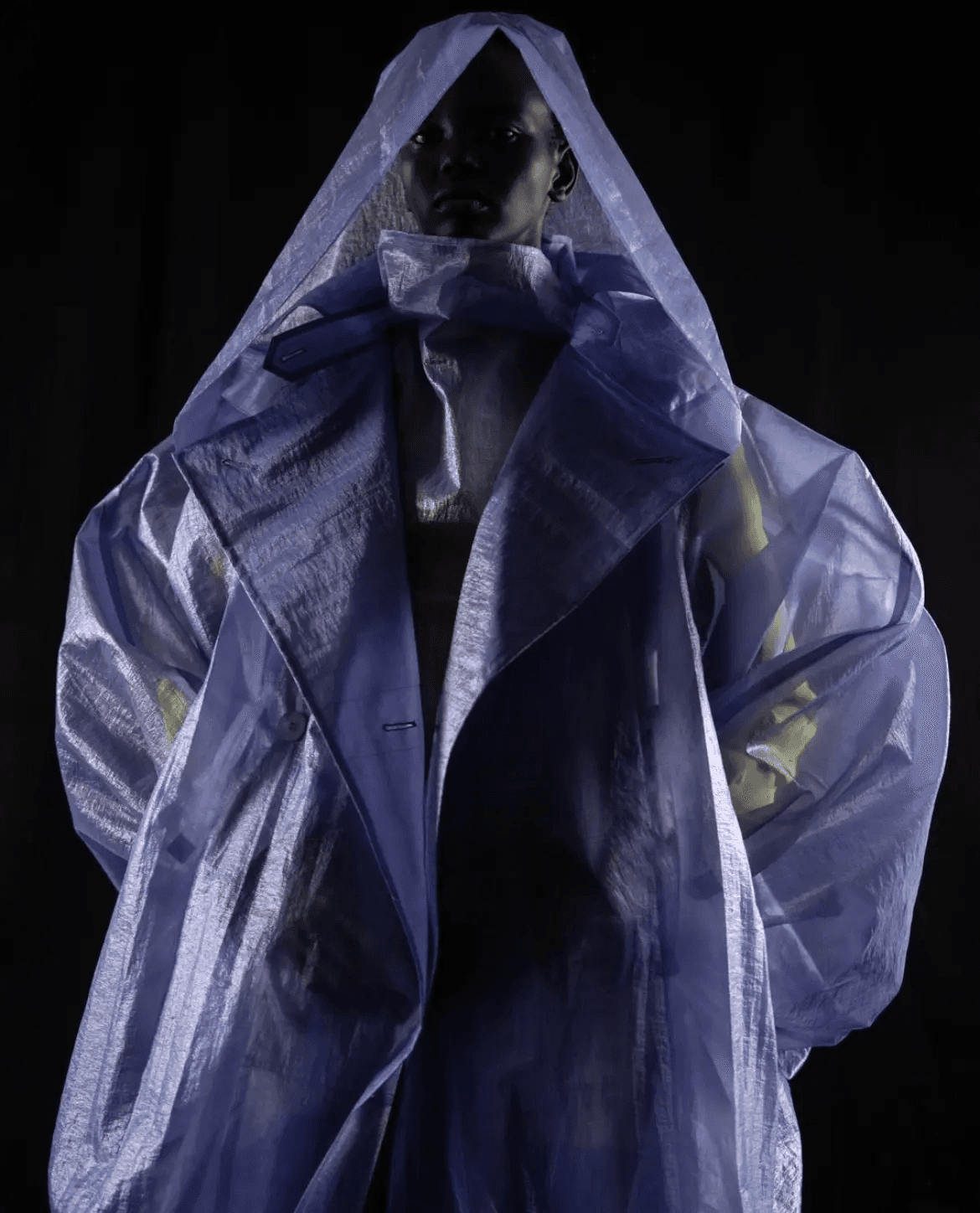
When 82-year-old Yohji Yamamoto was asked what his collection was about, he preferred to leave journalists to their own interpretations rather than offer an explanation. One of his clearest remarks was that, as the world grows warmer, we ought to enjoy summer.
At Issey Miyake, Satoshi Kondo explored the Japanese concept of ma, the space between two things, and worked with Wacoal to develop body forms using bra-moulding technology. Chitose Abe returned to Paris with a Sacai womenswear show after taking a season off, continuing what she has done for years: cutting two separate garments apart and turning them into a third, slightly peculiar but instantly recognisable Sacai piece. They have very little in common.
Chanel
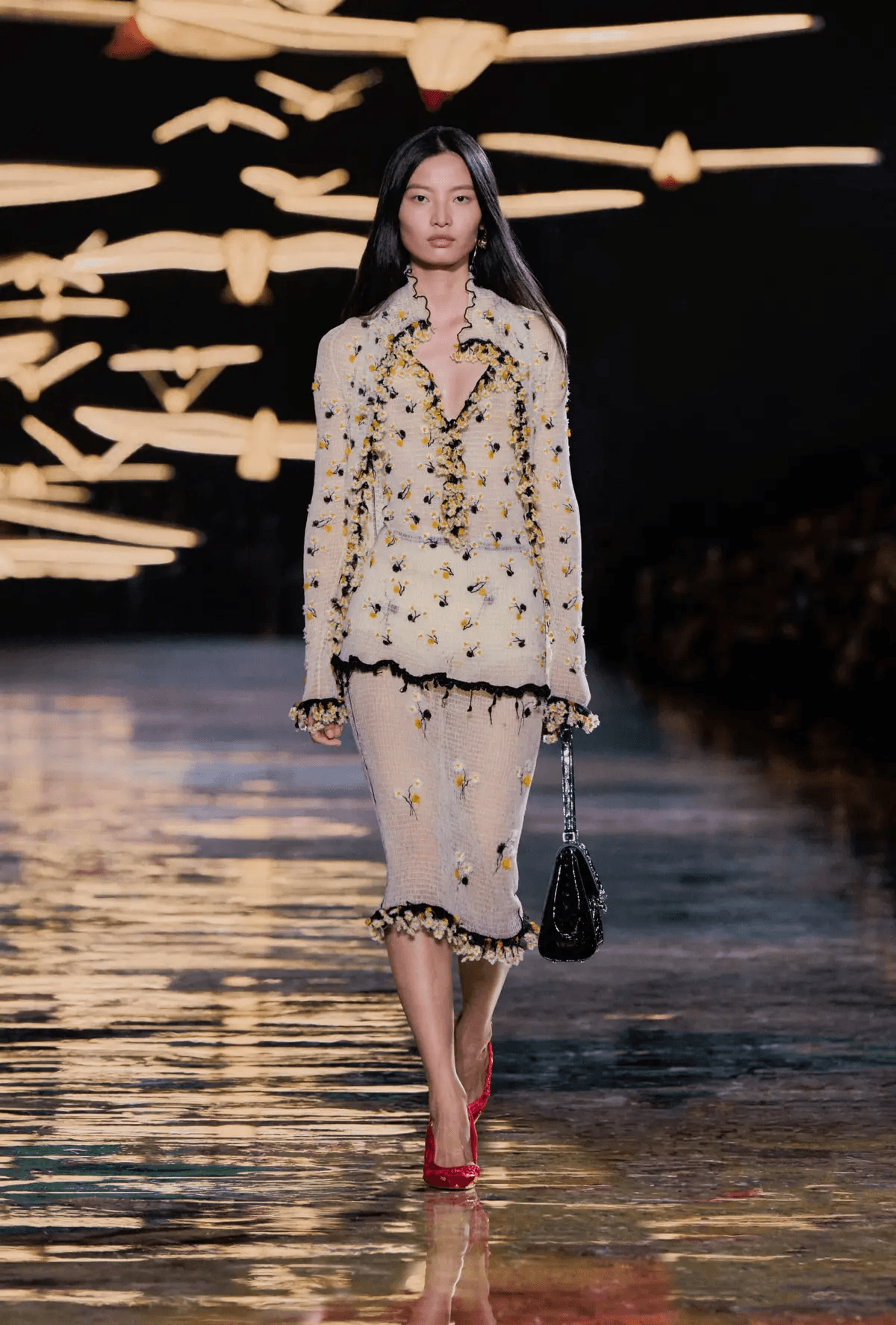
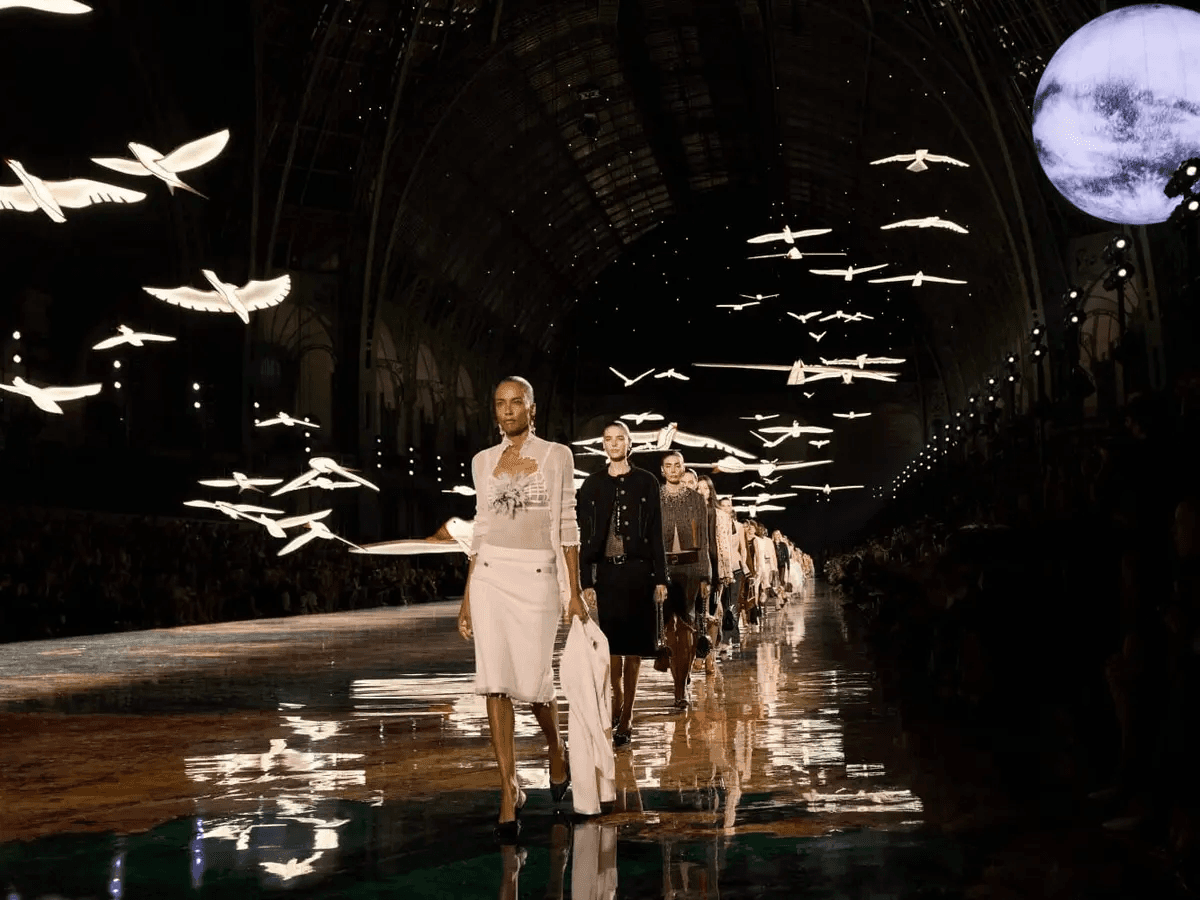
Only a year had passed since Matthieu Blazy’s first show for Chanel. Entering the Grand Palais, you were greeted by 95 enormous illuminated birds suspended from the ceiling. Blazy had been inspired by the migratory birds he watched while on holiday in Calabria.
As the show began, Nicole Kidman’s voice filled the Grand Palais, reading passages from Virginia Woolf’s Orlando and To the Lighthouse. Blazy had also connected the birds to Gabrielle Chanel’s life. He isn’t interested in just one version of Gabrielle Chanel. There is the young Gabrielle; the Chanel who adapted her lovers’ clothes to suit herself; the designer who freed women from corsets.
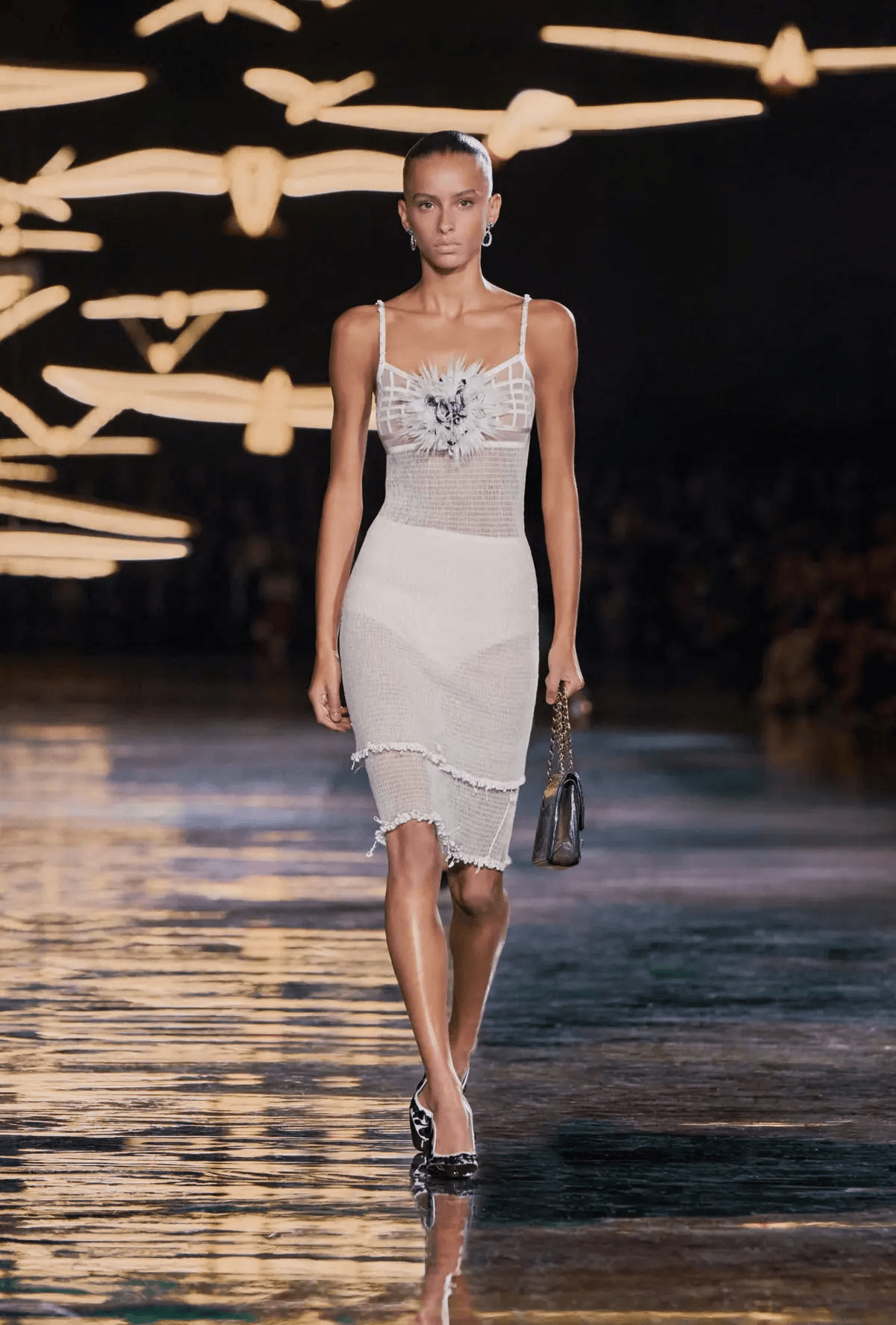
The first look was a delicate white dress. Its accompanying bag was Gabrielle Chanel’s own 2.55, dating from 1955.
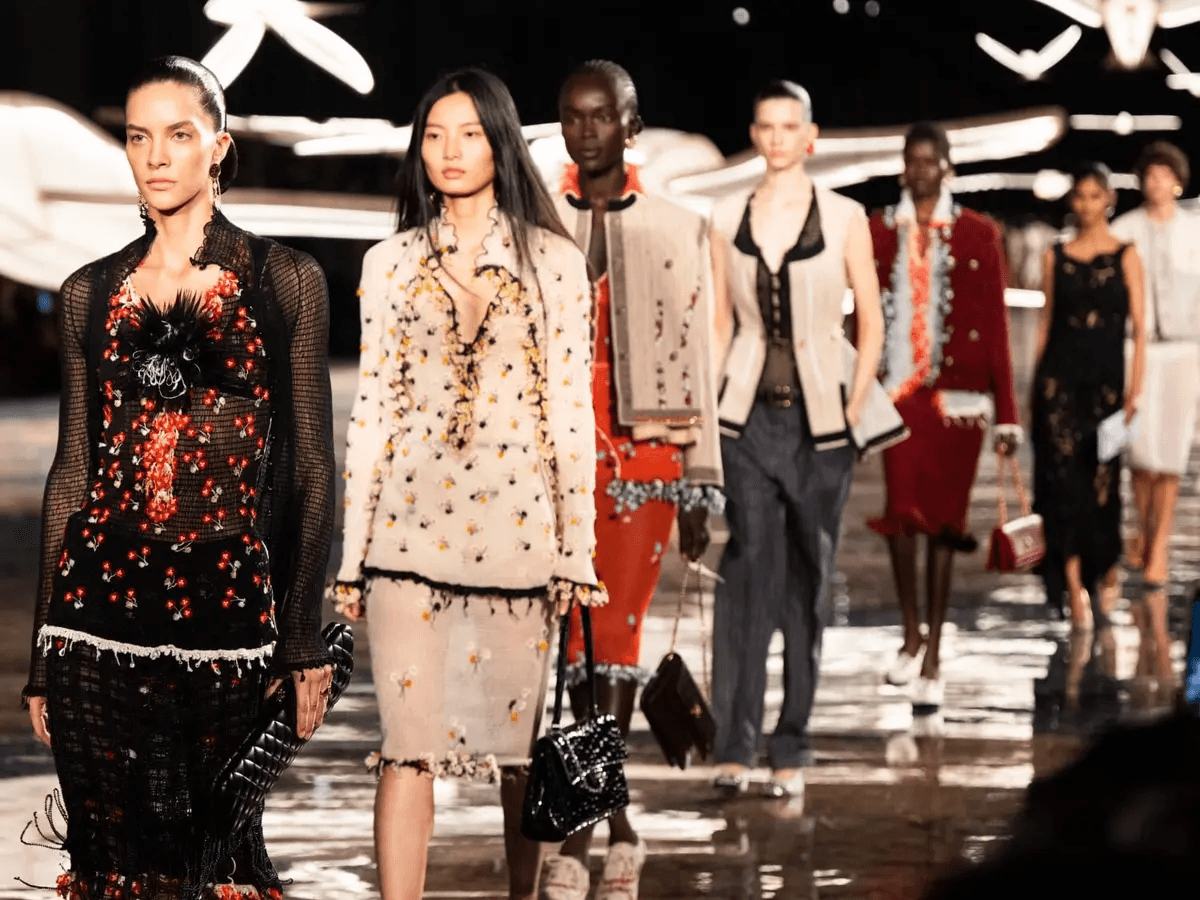
And then? Over 83 looks, we watched Chanel’s familiar symbols being modernised. Sheer suits, red-and-white animal-patterned tweeds, frayed jackets, two-tone shoes in different colours, dresses that sometimes expanded dramatically and sometimes followed the body closely. Blazy seems to pick up whatever he finds in Chanel’s archive and ask, “What else could this become?”
And after all the Virginia Woolf, Gabrielle Chanel, freedom and birds, Britney Spears’s Gimme More began to play. Blazy ran out to take his bow.
Louis Vuitton
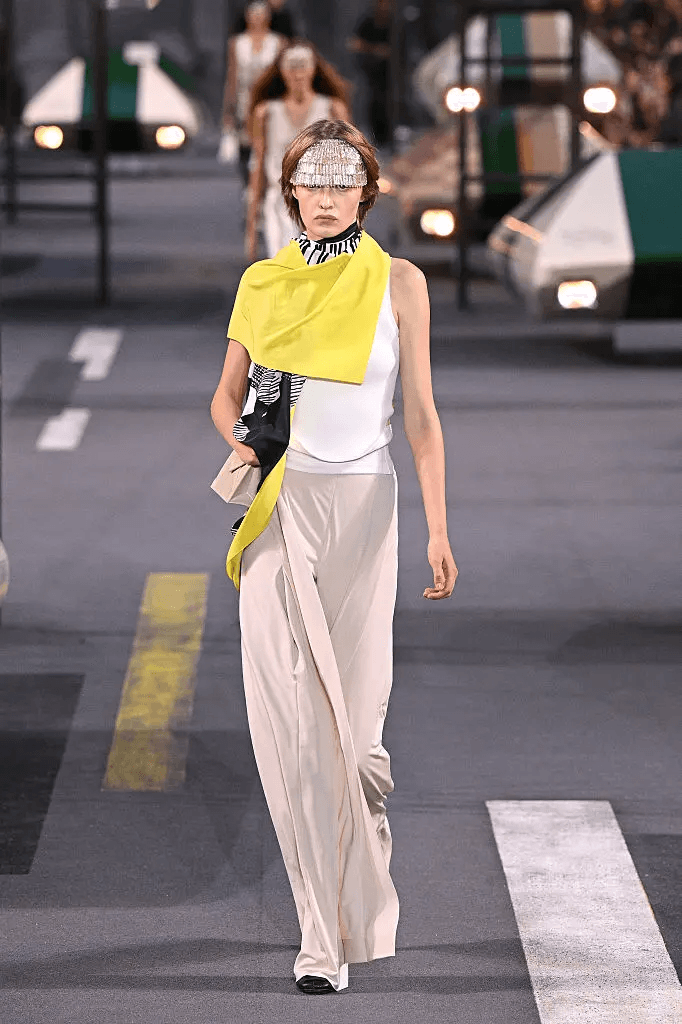
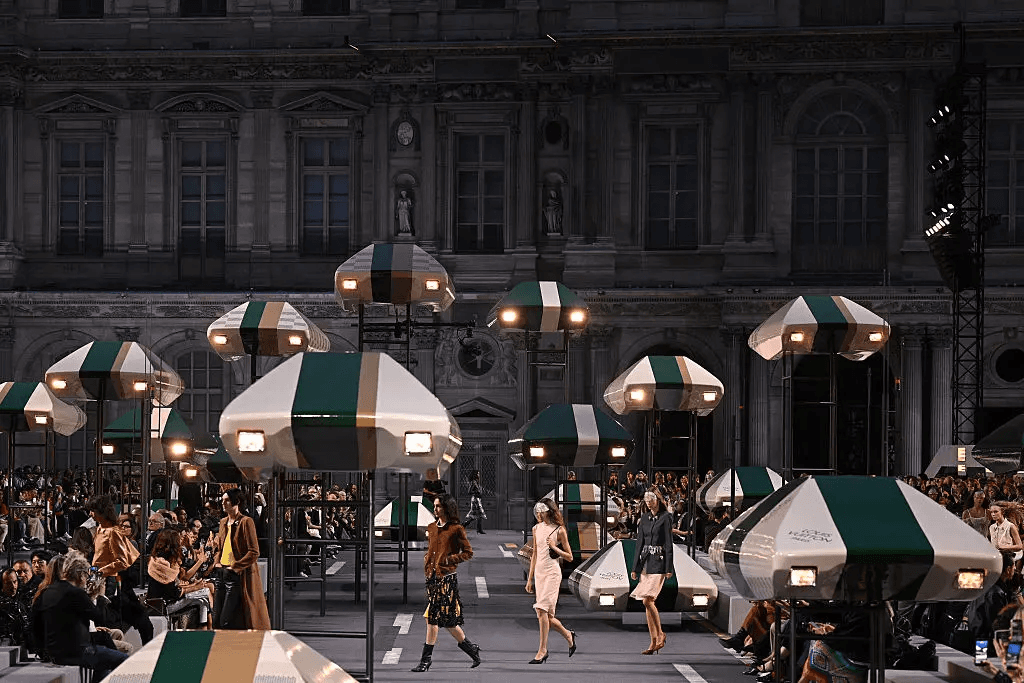
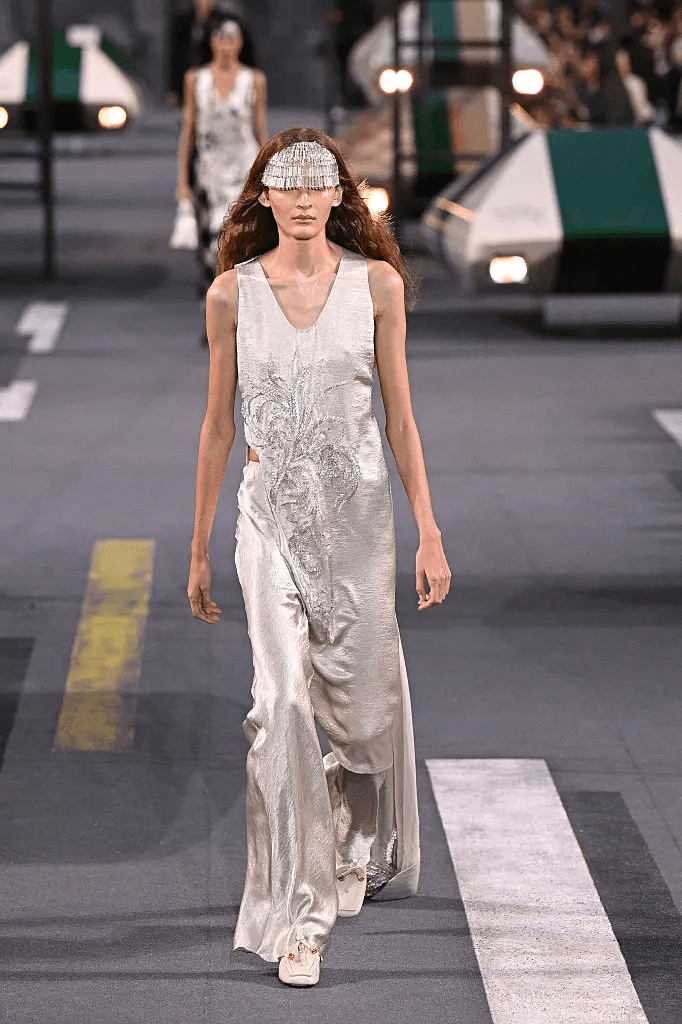
For the final major show of fashion month, Nicolas Ghesquière installed floating Damier-patterned cars above the Cour Carrée courtyard at the Louvre. Look up and you saw The Jetsons. Look at the runway and you saw everyday life.
For anyone who has followed Ghesquière’s fascination with exaggerated volumes, historical time shifts and a little science fiction over the years, the opening white sleeveless dress was almost a surprise reversal. Then came collarless jackets, straight trousers, delicate chiffon dresses and pieces that appeared almost weightless on the body.
One of the things on Ghesquière’s mind lately has been heat. As cities grow warmer, he is reducing fabric, lining and structure. Perhaps his most useful idea for the future is simply a jacket you can wear when it’s 35 degrees outside.
The Clothes We Know, A New Milan
The Fifth City: Copenhagen Fashion Week
Paris Men’s Fashion Week Spring/Summer 2027: A Season Defined by Lightness, New Voices and Character