From Frank Gehry’s sculptural creations to wineries hidden beneath rolling vineyards, discover 15 of the world’s most beautiful wineries, where architecture is every bit as captivating as the wine.
If you’re going to build a winery, functionality and aesthetics need to coexist under one roof. Unless you have absolutely no intention of welcoming visitors or embracing wine tourism — something I would strongly advise against — architecture should never be an afterthought.
Functionality, in this context, means allowing grapes to make their journey from fruit to wine as naturally and gently as possible, with little or no reliance on pumps and mechanical intervention. This is why many wineries are designed around gravity-flow systems, using the natural force of gravity to move wine through successive stages of production.
It sounds perfectly logical, even obvious. Yet achieving it is far from straightforward. The entire production facility must be conceived with this principle in mind, requiring careful architectural planning and a thoughtfully organised workflow.
Once the grapes arrive at the winery, they are sorted and pressed. The resulting juice is transferred to fermentation tanks, before the wine moves on to storage vessels. In a single-storey winery built on level ground, these transfers generally require pumps. Such mechanical handling can be unnecessarily harsh on the wine, potentially affecting its quality. After all, wine deserves to be treated with a gentle touch.
A winery designed across several levels, however, offers a different approach. Grapes enter at the highest point, and the juice and subsequently the wine move progressively downwards through the production stages, propelled by gravity rather than external force. This gentler process helps preserve the wine’s aromas while reducing energy consumption and operating costs. It is an approach that benefits both the wine and the environment.
There is another advantage. Wine cellars naturally occupy the lower, often subterranean levels, where temperature and humidity remain relatively stable. This can significantly reduce the need for artificial climate control, resulting in further energy savings.
Beyond these practical considerations, architecture becomes a matter of creative vision. A winery might disappear almost entirely into its surrounding landscape or announce its presence through an unapologetically bold design. Creating interiors that capture visitors’ imaginations is an art in itself.
Contents
Wineries Around the World
Bodegas Marqués de Riscal, Elciego, Spain
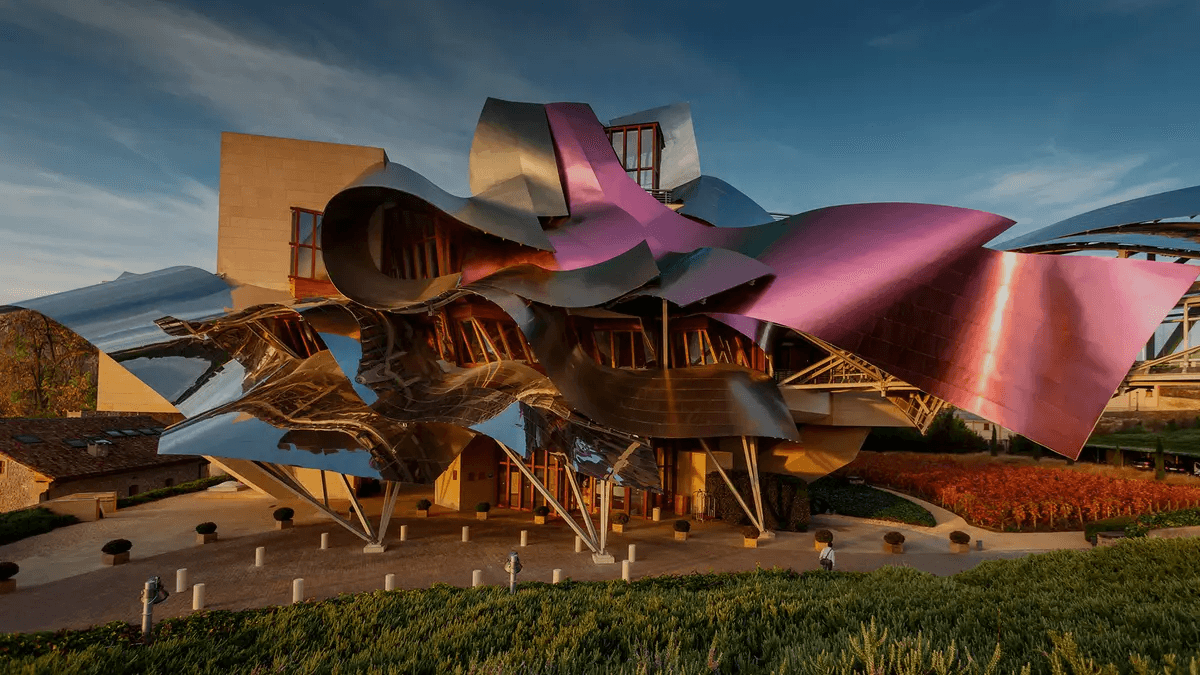
Part winery, part hotel, part restaurant, Marqués de Riscal is an architectural destination in its own right. Designed by Frank Gehry, the visionary behind Bilbao’s Guggenheim Museum, the complex makes a spectacular statement against the green landscape of Rioja.
Sweeping ribbons of titanium in pink, gold and silver twist, overlap and seemingly dance above the building. Throughout the day, their metallic surfaces catch the changing light and reflect the shifting colours of the sky, creating an extraordinary visual spectacle. Few wineries make quite such a theatrical first impression.
Bodegas Ysios, Álava, Spain
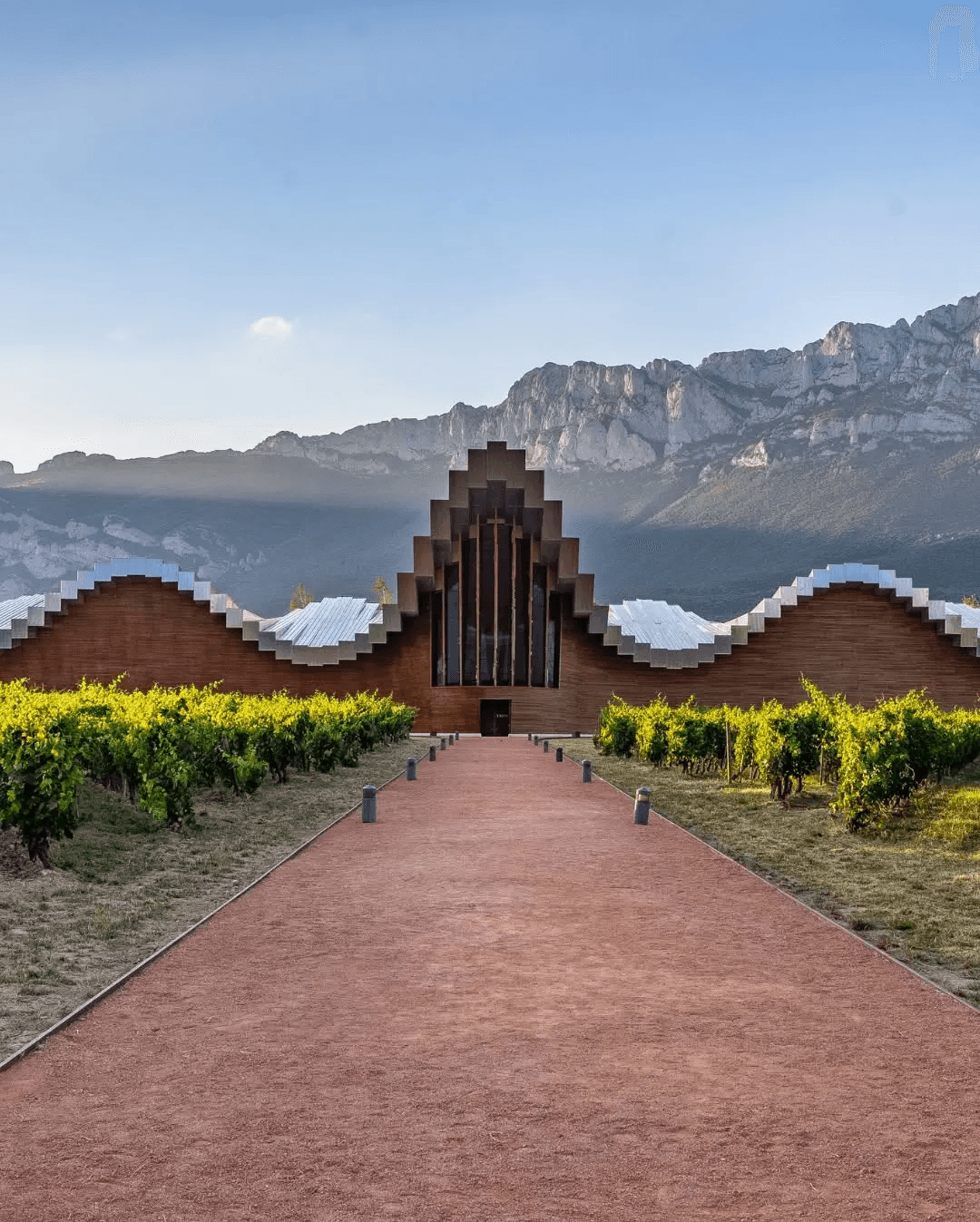
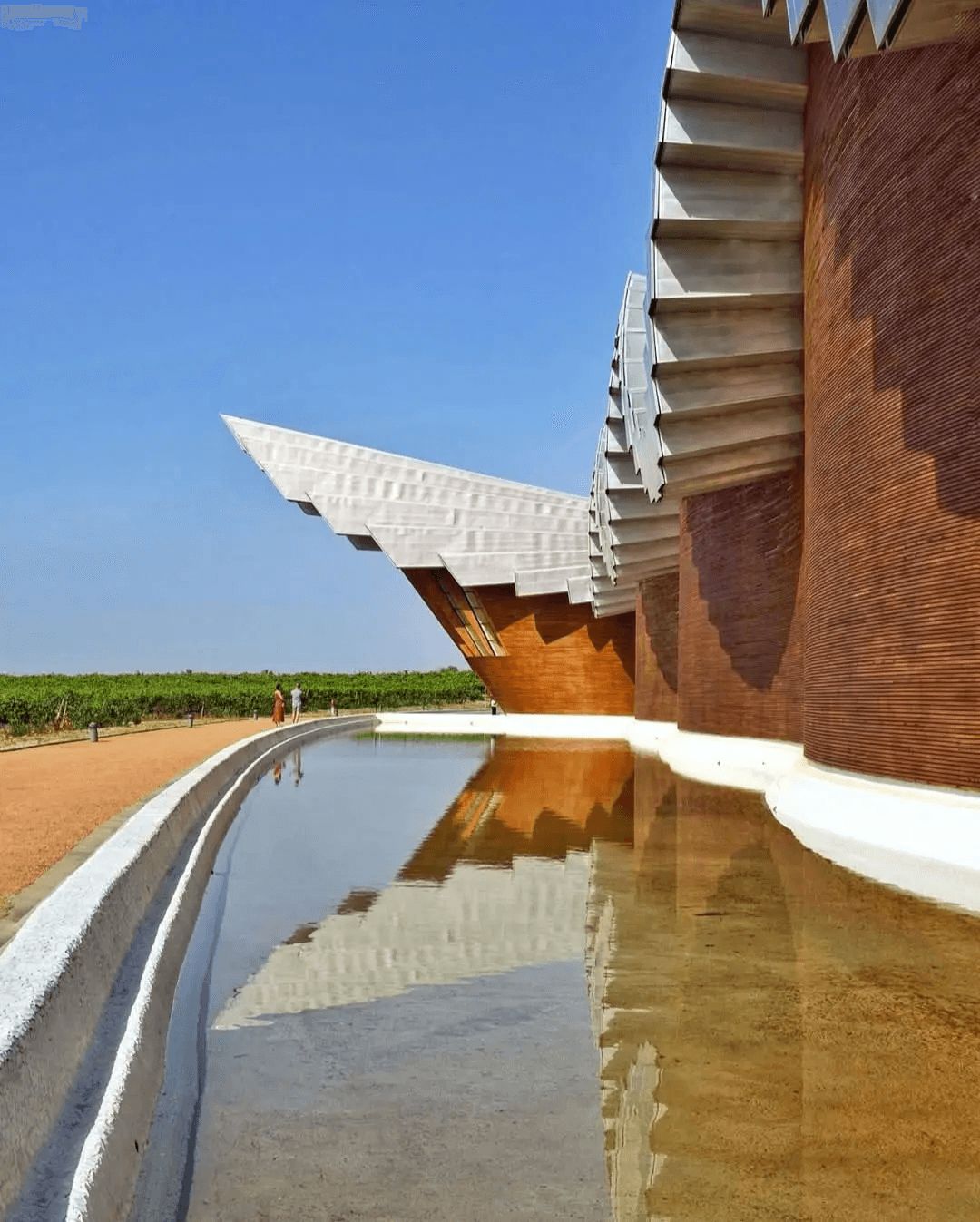
I had the opportunity to admire this remarkable building in person during a visit to Rioja, and its undulating form is every bit as impressive as photographs suggest.
Designed by Santiago Calatrava, the winery sits in striking harmony with the mountain range behind it. The peaks seem to find their reflection in the building’s rhythmic, wave-like roofline, creating a seamless dialogue between architecture and landscape.
The name Ysios pays homage to Isis and Osiris, ancient Egyptian deities associated with agriculture and rebirth. It is a fitting reference for a winery whose architectural philosophy celebrates renewal and respect for the land.
Dominus Estate, Yountville, USA
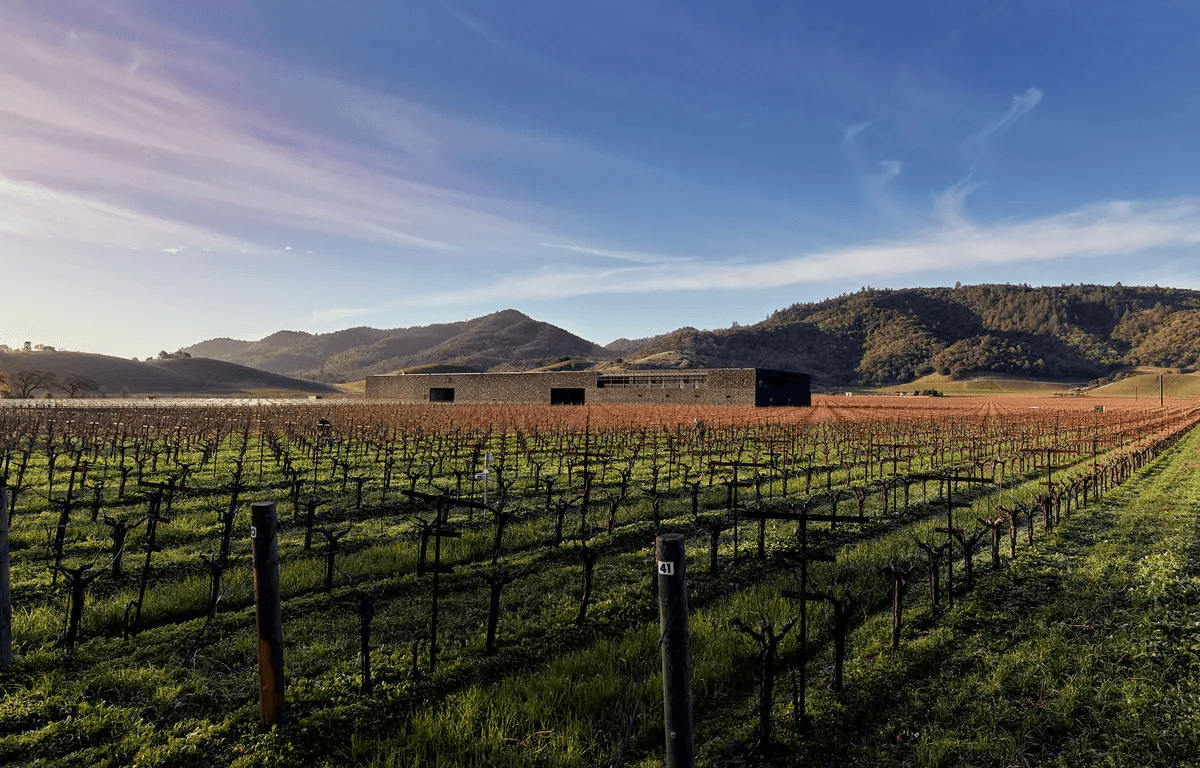
In California’s Napa Valley, Dominus Estate offers a masterclass in architectural restraint. Its façade is constructed from wire gabions filled with locally sourced basalt stones, creating a minimalist structure that seems almost to emerge from the surrounding landscape.
The basalt is more than an aesthetic choice. It also provides natural insulation against the region’s extreme temperatures, giving the building an environmental and functional dimension.
From a distance, the winery appears understated, almost anonymous. Yet as visitors approach, the sophistication of its design gradually reveals itself. It is architecture that rewards a closer look.
Château Cheval Blanc, Saint-Émilion, France
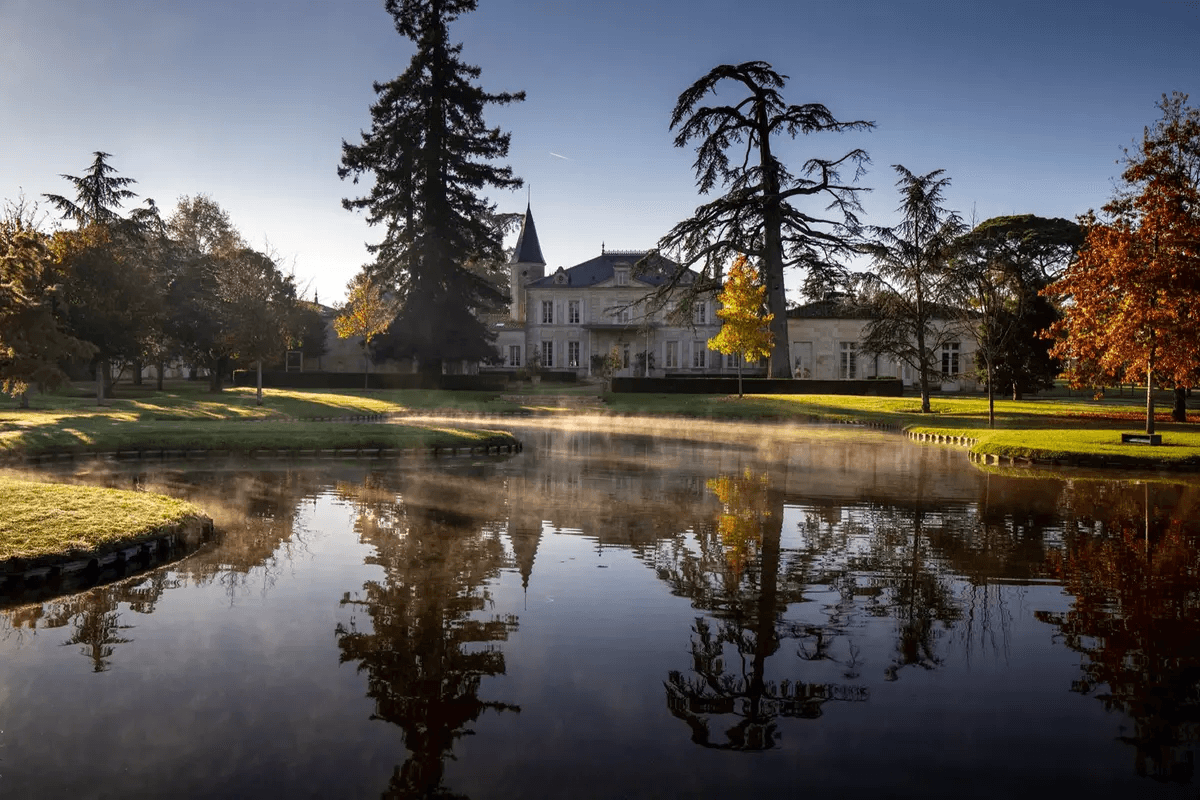
When Château Cheval Blanc, one of Bordeaux’s most prestigious estates, decided to build a new winemaking facility beside its historic château, the challenge was considerable. How could contemporary architecture coexist with a property whose heritage stretches back centuries?
The responsibility fell to architect Christian de Portzamparc.
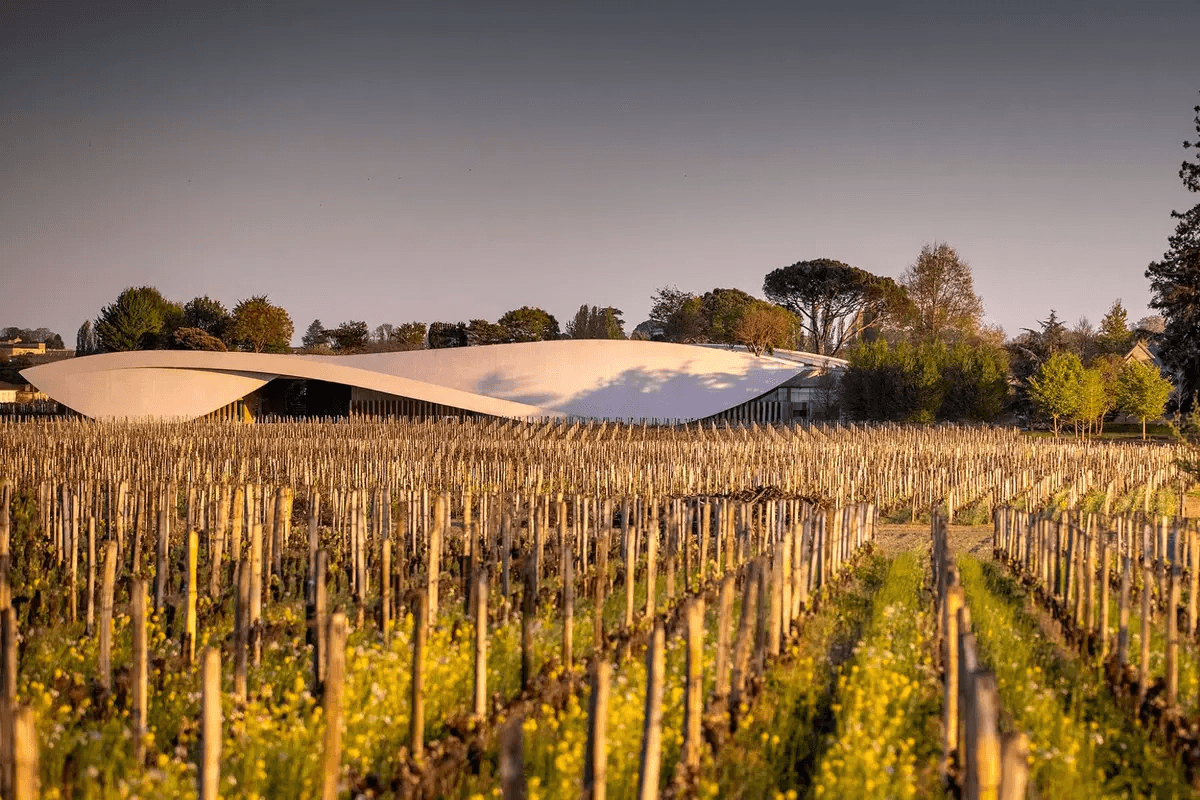
Completed in 2011, the new winery sits at the heart of the vineyards, appearing almost as a natural extension of the château. Its sculptural concrete forms rise gently towards the sky, resembling a fold in the earth that has been lifted into the air. From the building’s elevated surface, visitors can look out across seemingly endless rows of vines.
Inside, the winery houses 52 concrete fermentation vats in nine different sizes, allowing grapes from the estate’s 47 individual vineyard parcels to be vinified separately. Here, architectural ingenuity serves the precision of winemaking.
Antinori nel Chianti Classico, Bargino, Italy
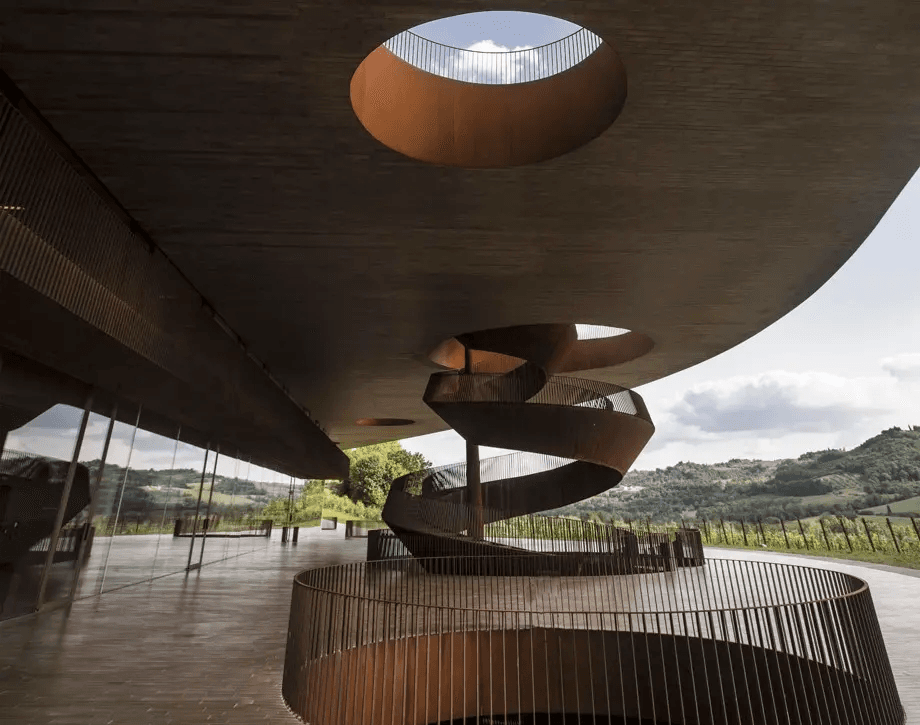
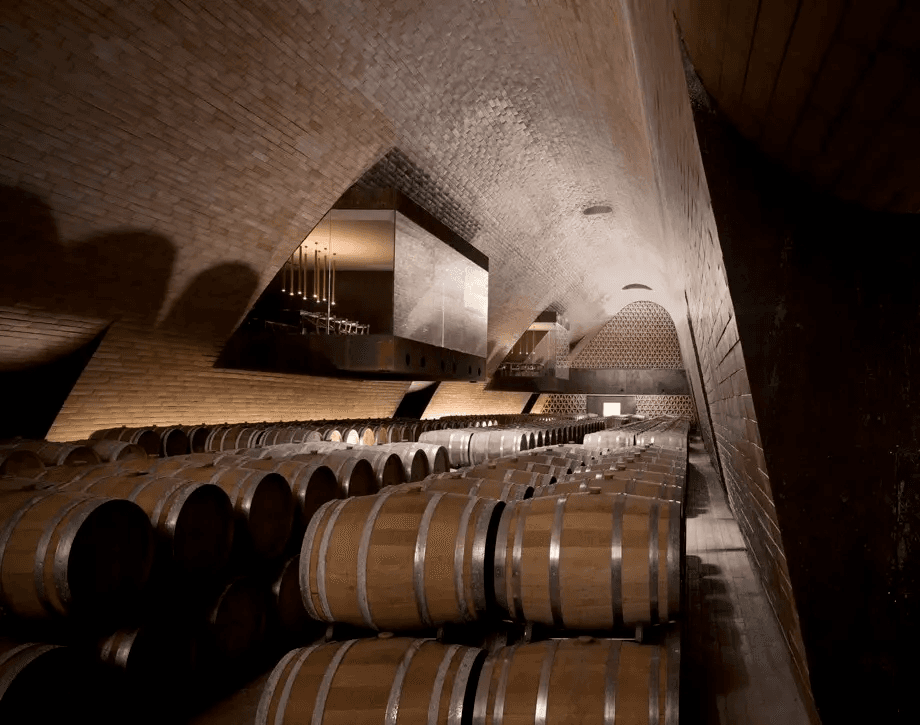
The Antinori family’s winery is one of those rare buildings that genuinely deserves to be called breathtaking. Designed to disappear into its surroundings, the structure follows the natural contours of the Tuscan hillside. Its terraced roof is covered with vines, allowing the architecture to merge almost completely with the landscape. From certain viewpoints, the only clues to its presence are two striking glazed openings.
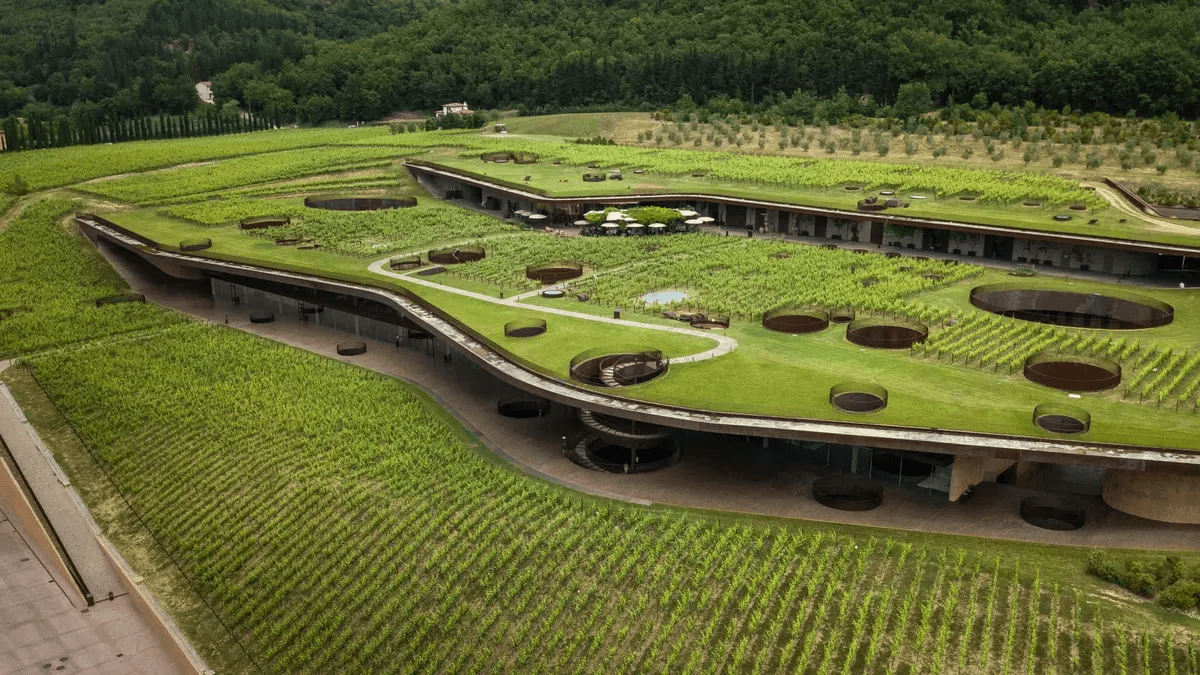
The interior is organised across two principal levels. The lower floors accommodate production and wine storage, while the upper level welcomes visitors with a museum, library, conference facilities, tasting areas and a shop.
The result is a winery where centuries of winemaking heritage meet contemporary architectural thinking without disturbing the beauty of the Tuscan countryside.
d’Arenberg, McLaren Vale, Australia
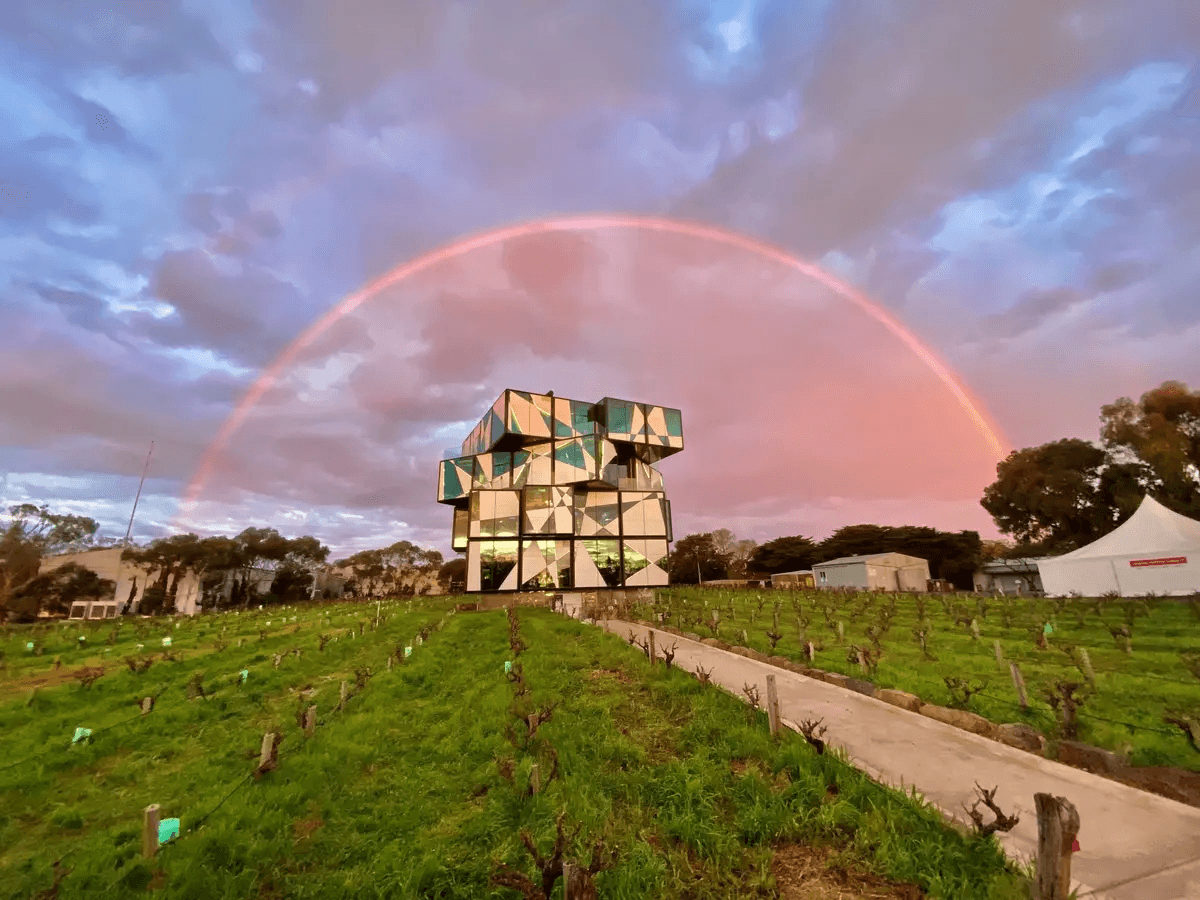
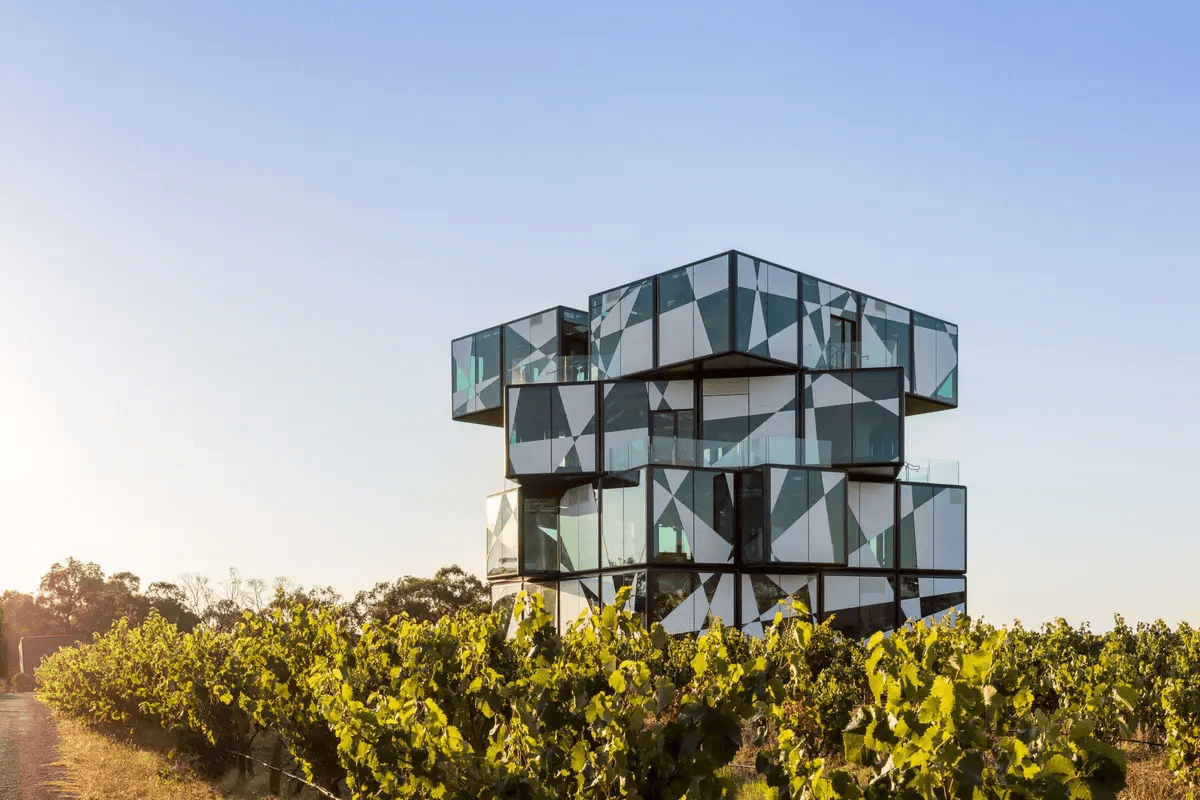
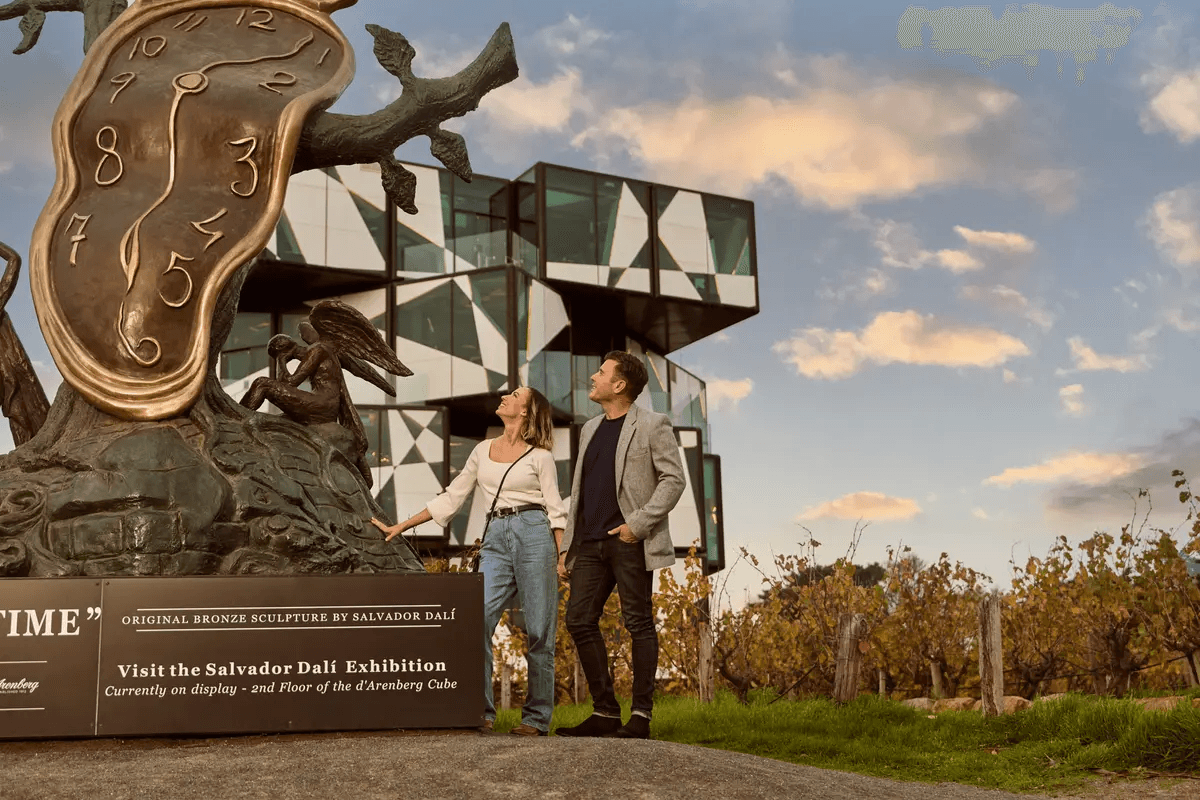
Arriving at d’Arenberg in South Australia’s McLaren Vale, visitors are greeted by what looks like an enormous Rubik’s Cube that has been playfully twisted out of shape. Known as the d’Arenberg Cube, this extraordinary five-storey building houses a wine shop, restaurant, private tasting spaces and a distinctive art gallery.
Wine may not actually be produced inside the Cube, but the structure certainly makes visitors curious about what its creators might be capable of producing in a bottle.
The interiors are every bit as eccentric as the exterior. Colours seem to have escaped from the entire spectrum of the rainbow, while unexpected artworks, playful objects and unconventional design details compete for attention at every turn. It is impossible not to admire the imagination behind such a place — or to wonder what kind of wines might emerge from an equally adventurous creative mind.
Sauska Tokaj Winery, Rátka, Hungary
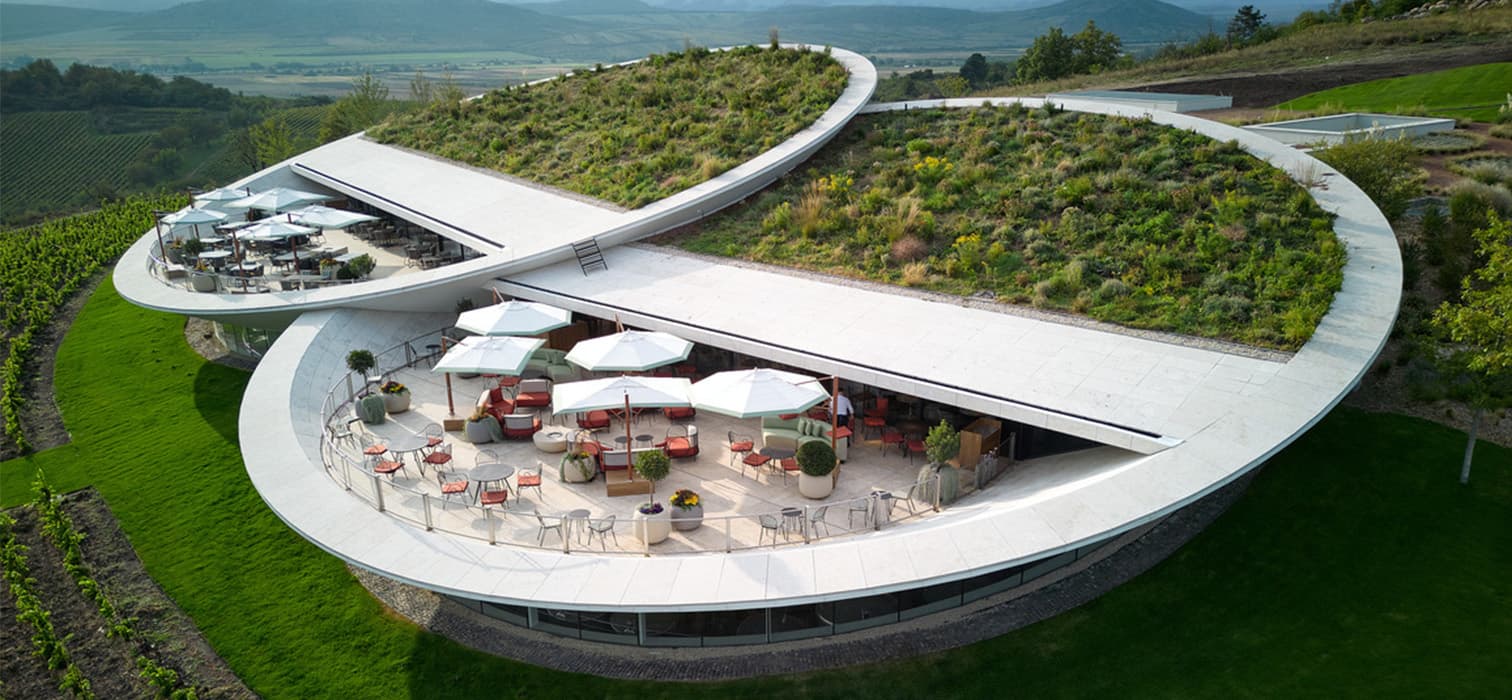
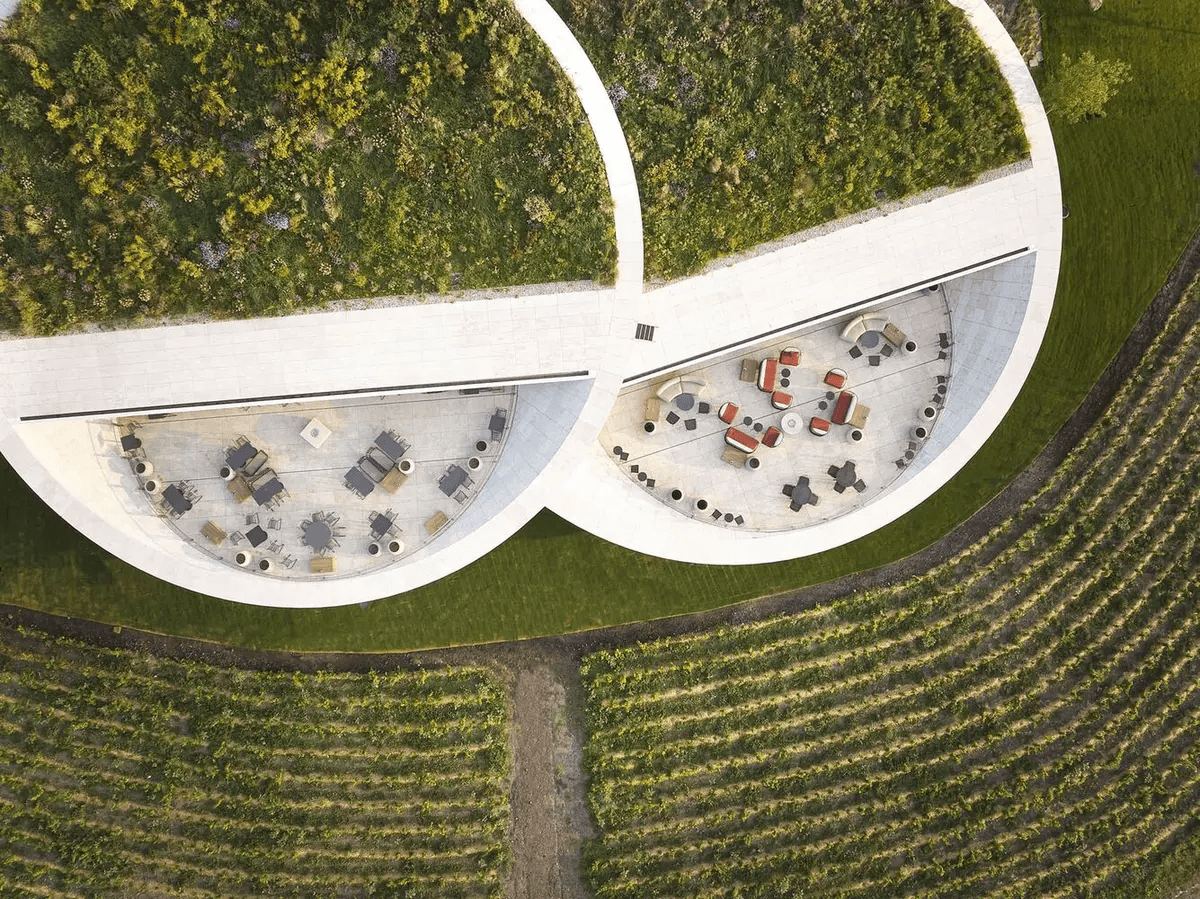
In Tokaj, a region whose sweet wines have long held a special place in my heart, Sauska has created an architectural landmark that seems to hover above the vineyards. The complex consists of two sculptural, lens-shaped structures that reinterpret the volcanic slopes of the surrounding landscape.
Conceived to integrate innovation with nature, the winery places its production facilities underground while reserving its most spectacular above-ground spaces for visitors. Panoramic terraces open towards the vineyards, offering uninterrupted views of the landscape.
The architecture becomes an extension of the terrain itself. Yet its striking contemporary silhouette, particularly after dark, ensures that it never entirely disappears into its surroundings.
VIK Winery, Millahue, Chile
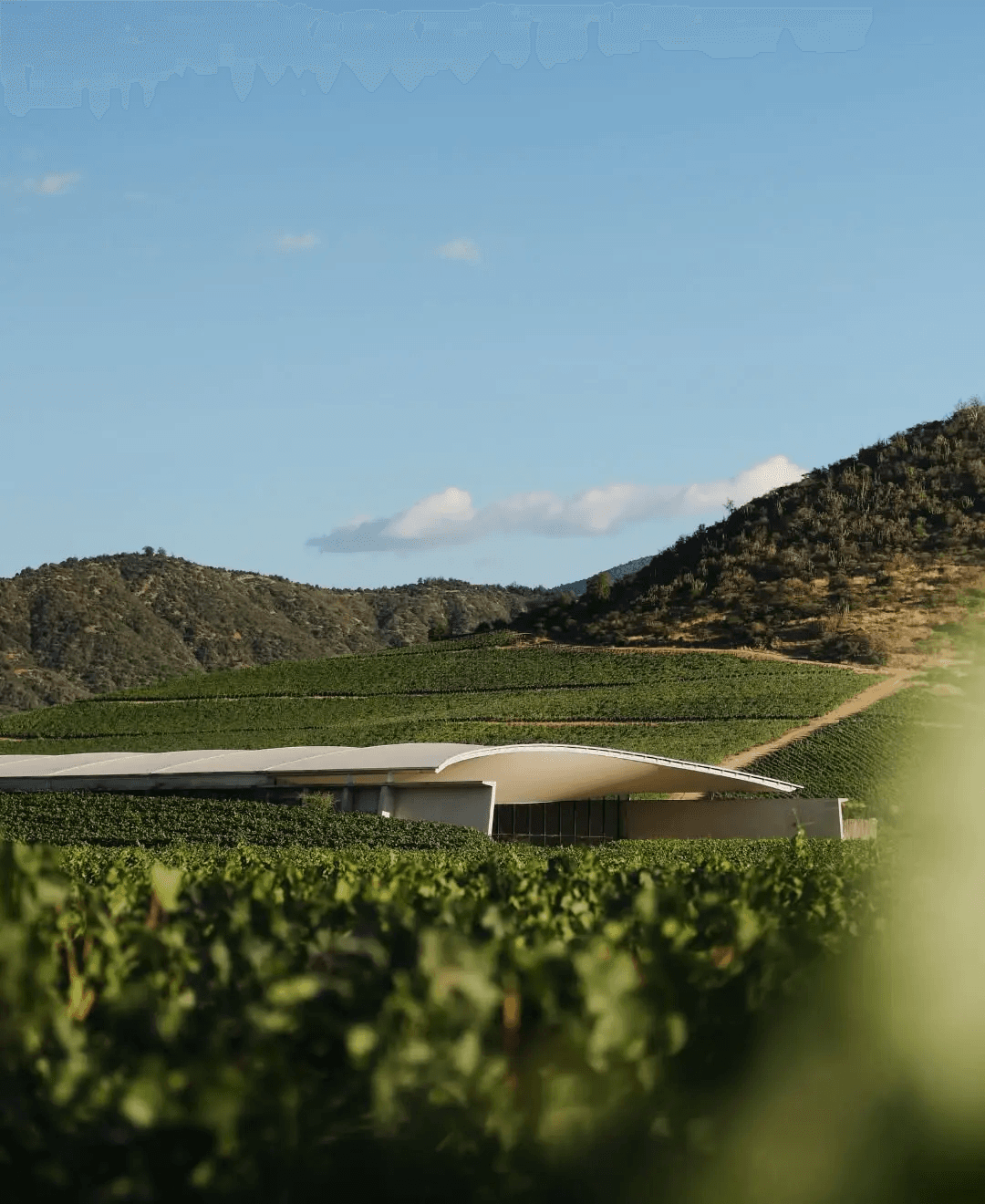
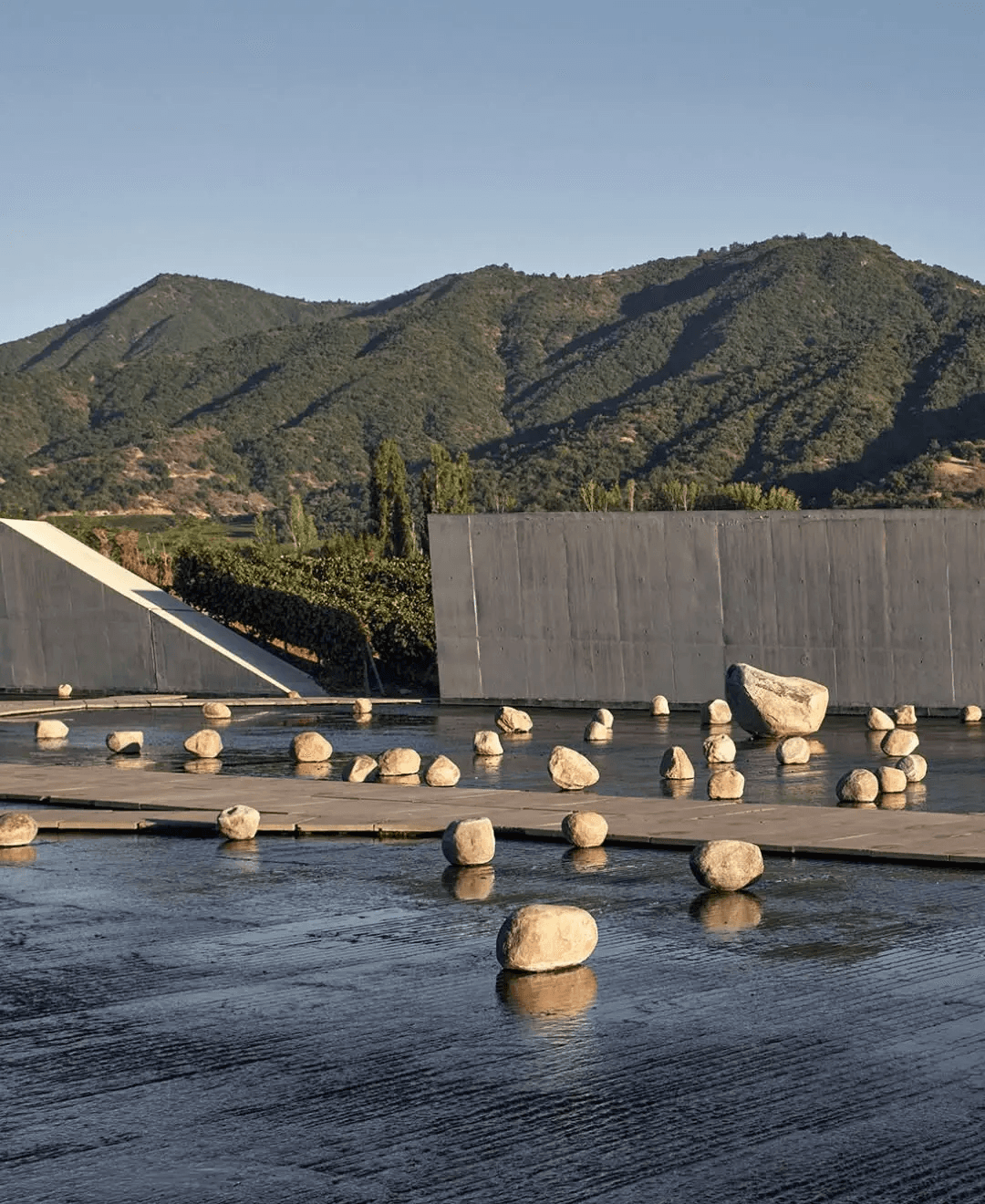
For me, a visit to a winery should begin long before the first glass is poured. The approach matters. I want the journey towards the building to stir my imagination, to make me wonder about the wines waiting inside. VIK understands this perfectly.
Visitors approach the winery across an expansive reflective pool, where the sky, architecture and their own silhouettes are mirrored in the water. The experience is almost ceremonial, transforming a simple arrival into a memorable encounter with the building.
Beyond this dramatic entrance, the winery reveals an architectural language defined by openness, light and generous proportions. It is a place that knows how to build anticipation.
Lahofer Winery, Dobšice, Czech Republic
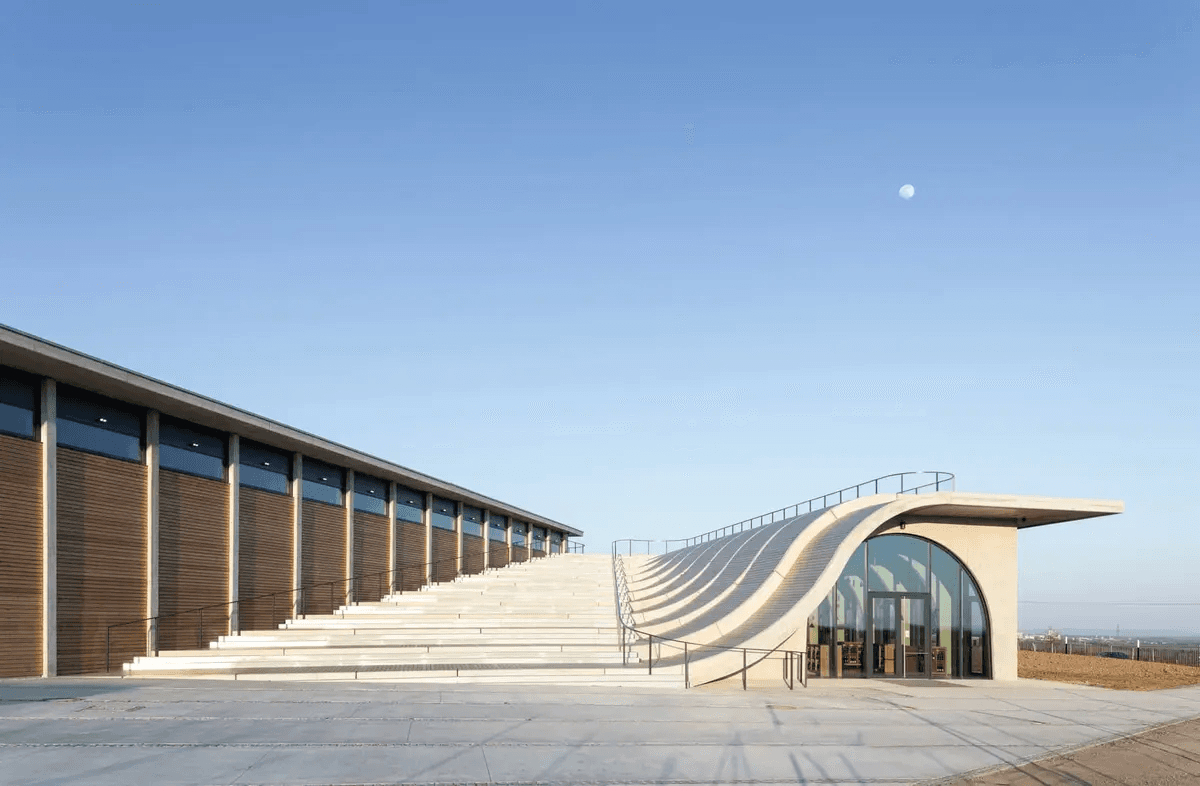
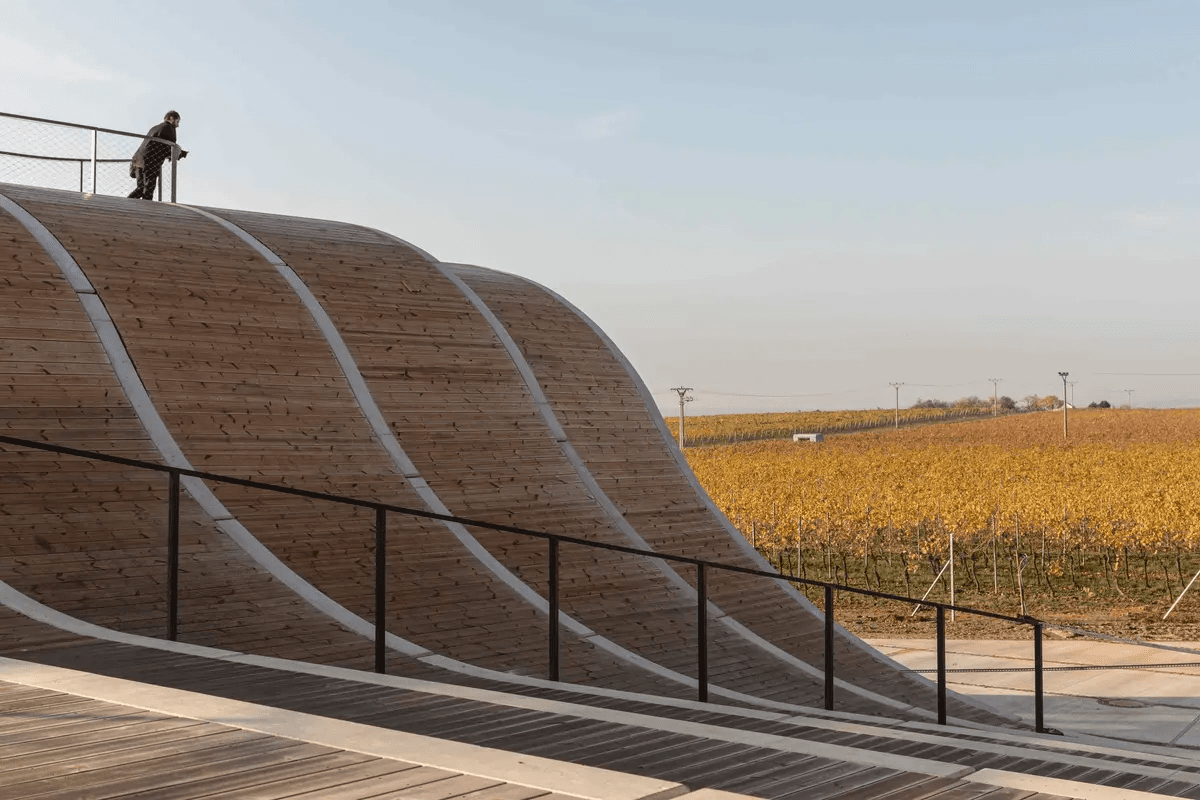
At Lahofer, the architecture draws inspiration directly from the vineyards themselves. The spacing between the rows of vines becomes a recurring motif throughout the building, informing its structural rhythm and visual identity. Its most distinctive feature, however, is the walkable roof.
Designed to double as an open-air amphitheatre, it hosts concerts, harvest celebrations and theatrical performances during the warmer months. The idea of enjoying a glass of wine here, surrounded by vineyard views and perhaps accompanied by live music, is enough to make the experience linger in the imagination.
Maison Delas Frères, Tain-l’Hermitage, France
With roots stretching back to 1835, Delas Frères approached its architectural transformation by combining restoration with contemporary intervention. The historic manor house was carefully restored, while a new winemaking facility was constructed alongside it.
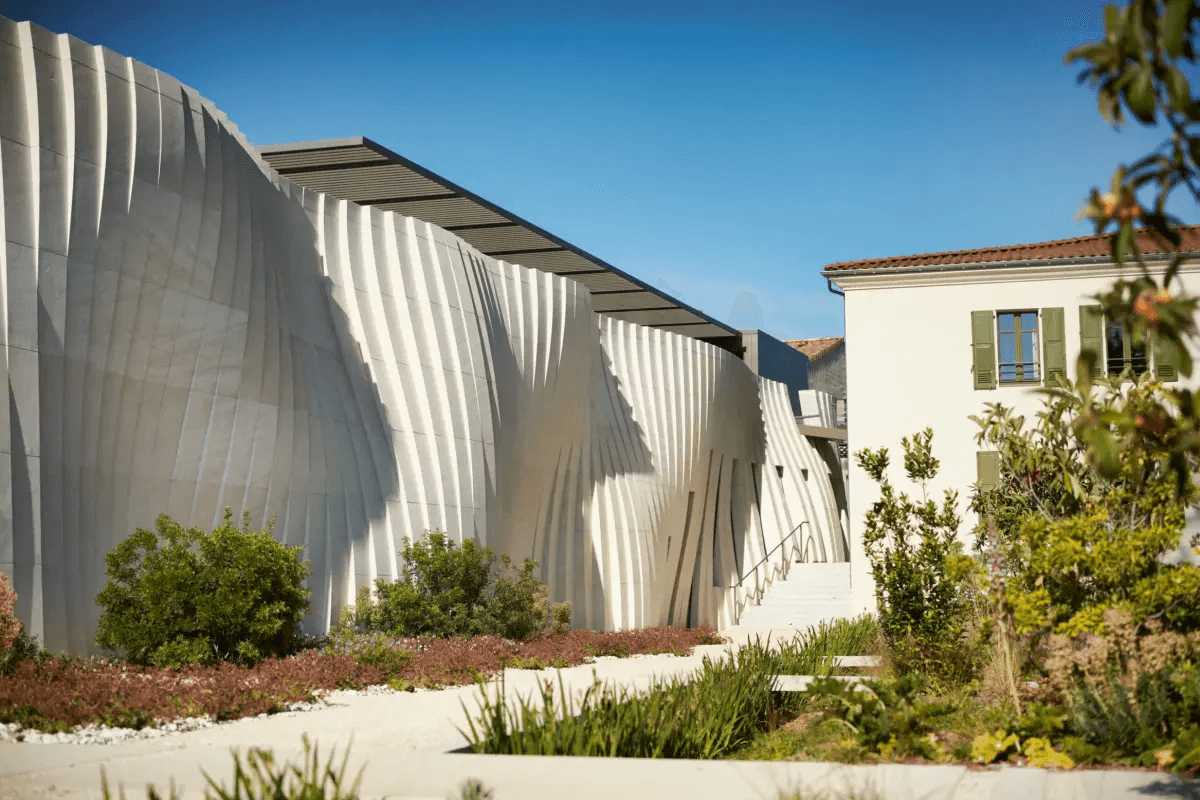
The defining architectural feature is a monumental, undulating stone wall, approximately 80 metres long and seven metres high, enclosing the production and cellar areas.
Carved with the assistance of robotic technology and secured to its foundations using stainless-steel cables, the wall combines traditional materiality with advanced engineering. The result is an architectural statement that reflects the estate’s long history while embracing an entirely contemporary approach to construction.
Wineries in Türkiye
Château Kalpak, Şarköy, Tekirdağ
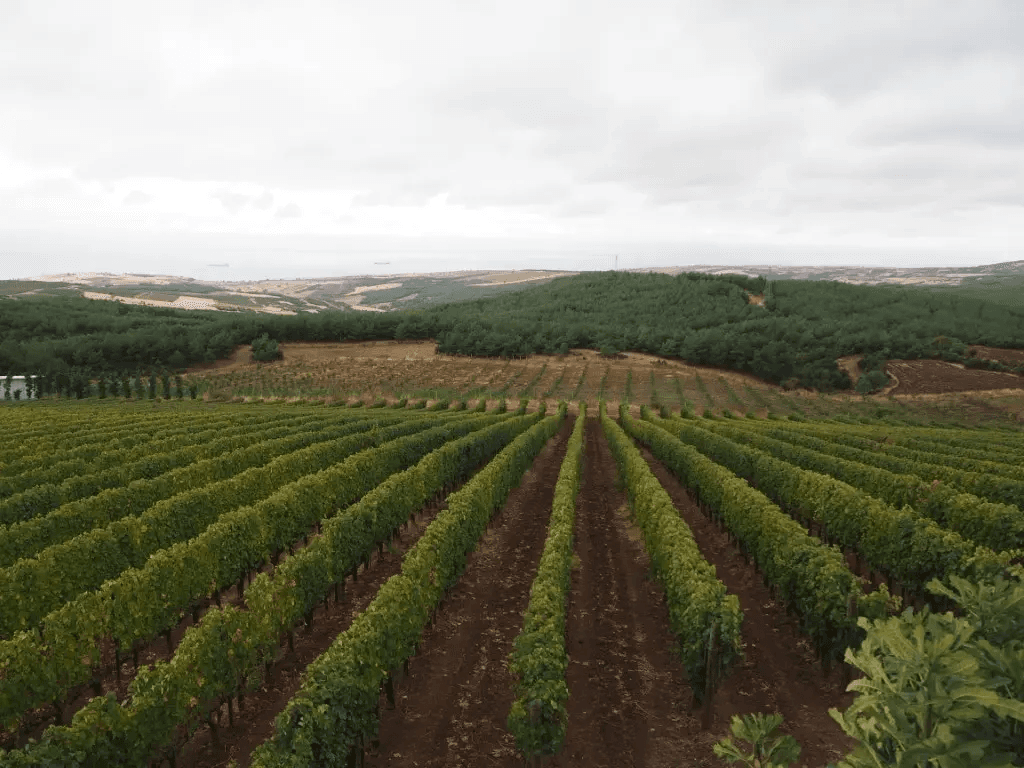
Step inside Château Kalpak, continue towards the terrace, and prepare to be captivated by the view. From this elevated vantage point, the Marmara Sea and the Gulf of Saros stretch across the horizon. Below, immaculate rows of vines stand in precise formation, producing the grapes destined for the estate’s red wines.
Descending into the cellar reveals an entirely different atmosphere. The space is filled with artworks, turning what might otherwise have been a purely functional environment into a place of discovery. There is so much to see that deciding where to look first becomes a challenge in itself.
Kastro Tireli, Akhisar, Manisa
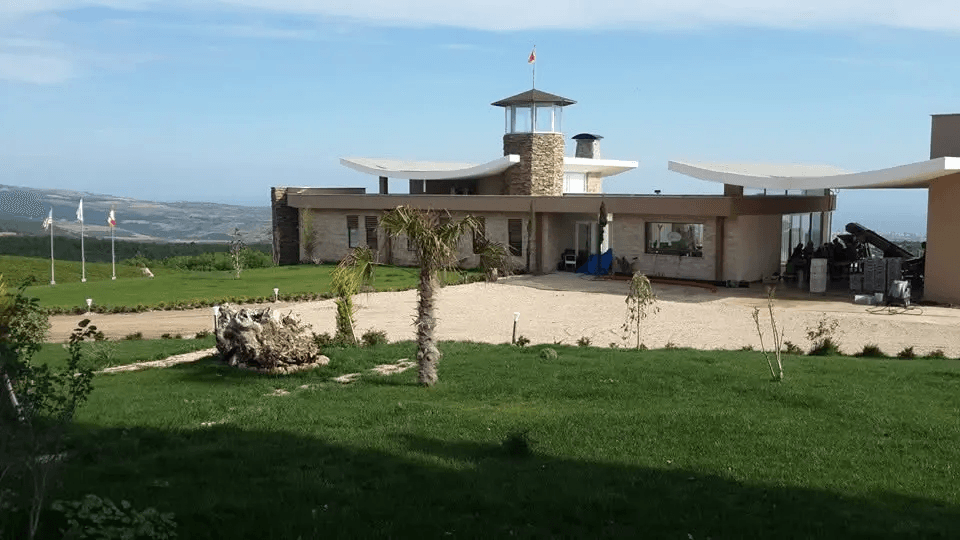
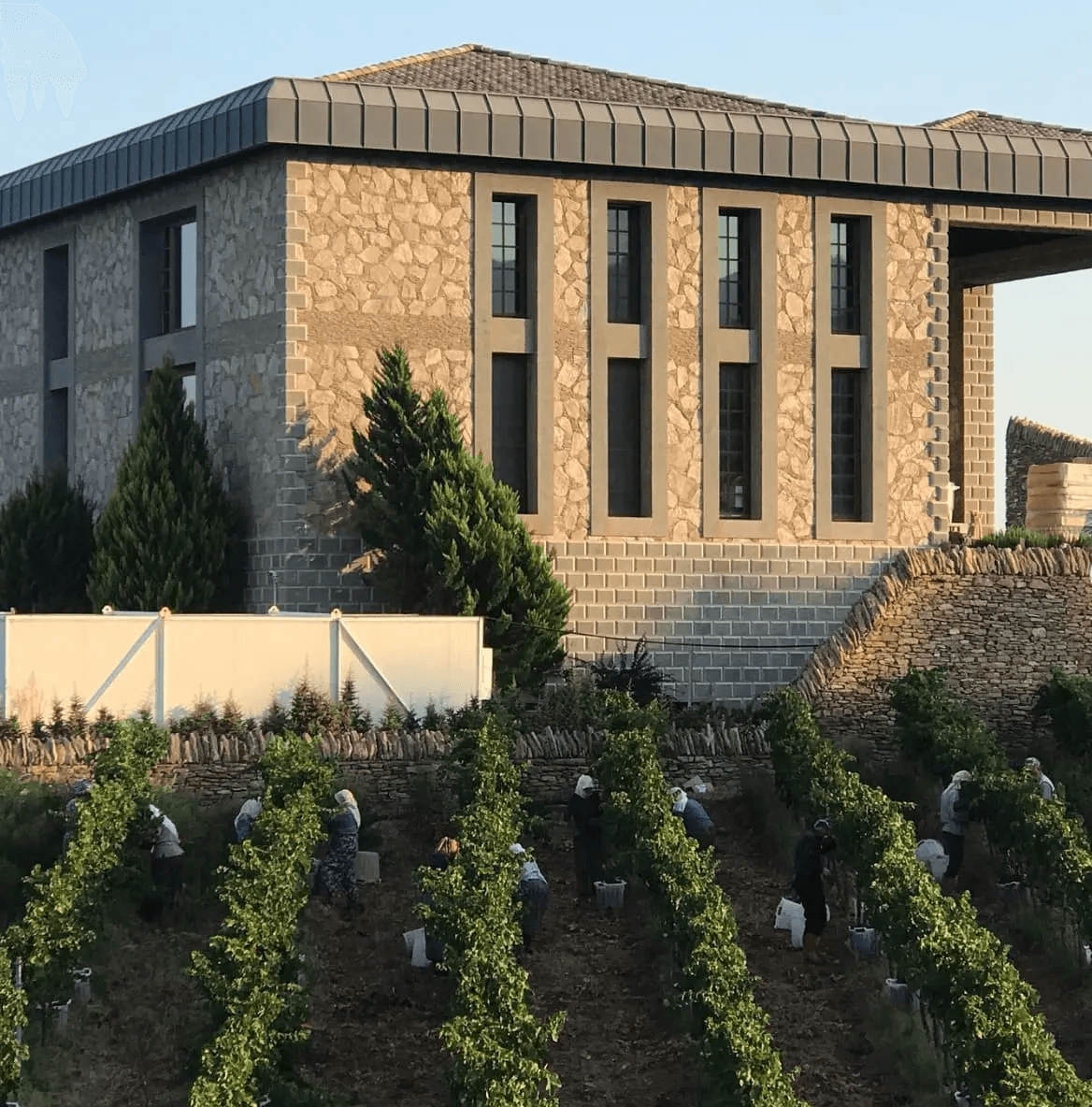
Perched on a hill overlooking the Akhisar plain, Kastro Tireli sits at the heart of its vineyards, enjoying sweeping views of the surrounding countryside. Environmental considerations have played an important role in its design.
Passive ventilation in the fermentation hall and the reuse of rocks excavated from the site as construction materials are among the simple yet effective measures employed to reduce its environmental impact.
The result is a boutique winery where functionality and aesthetics find a thoughtful balance, demonstrating that sustainable architecture need not rely on grand gestures.
Kuzubağ, Çal, Denizli
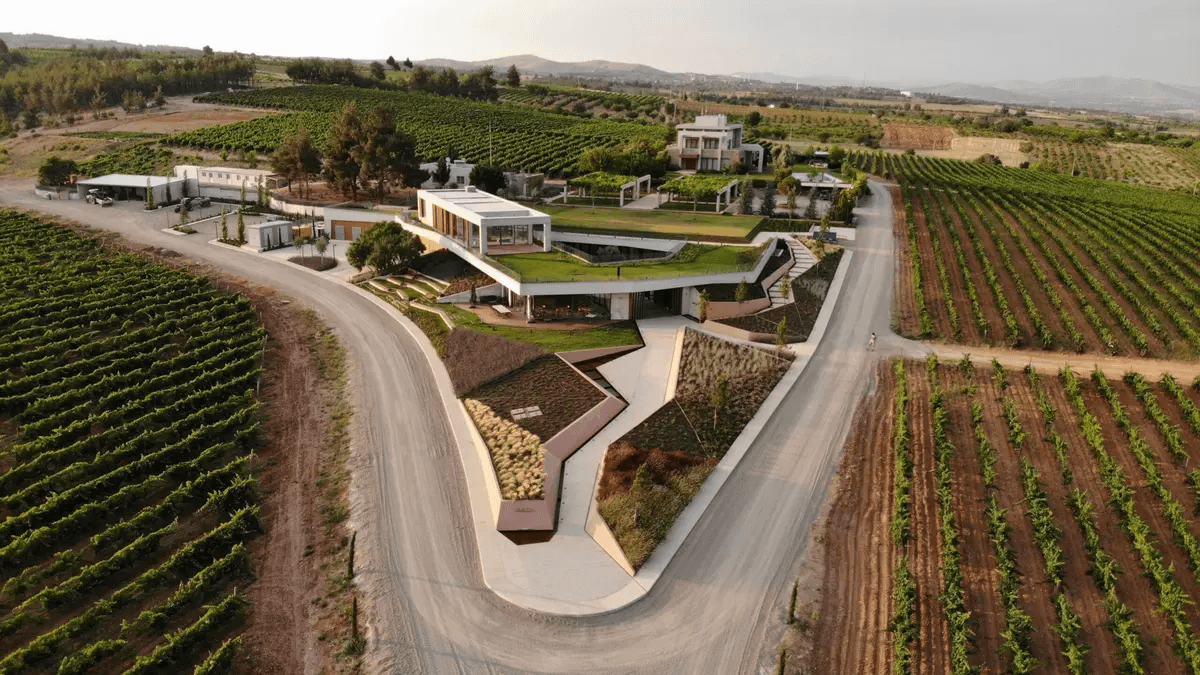
From a distance, Kuzubağ reveals remarkably little about its true scale or architectural character. It is only when visitors approach the building — or view it from above — that its distinctive design becomes apparent. Nestled among the vineyards, the exposed-concrete structure seems deliberately concealed within the landscape. Alongside its production facilities, the winery incorporates spaces for tastings and events.
One of its most compelling features is the opportunity it offers visitors to observe the entire winemaking process through a glass partition. From the moment the grapes enter the facility to their transformation into wine, every stage becomes part of the experience.
Likya, Elmalı, Antalya
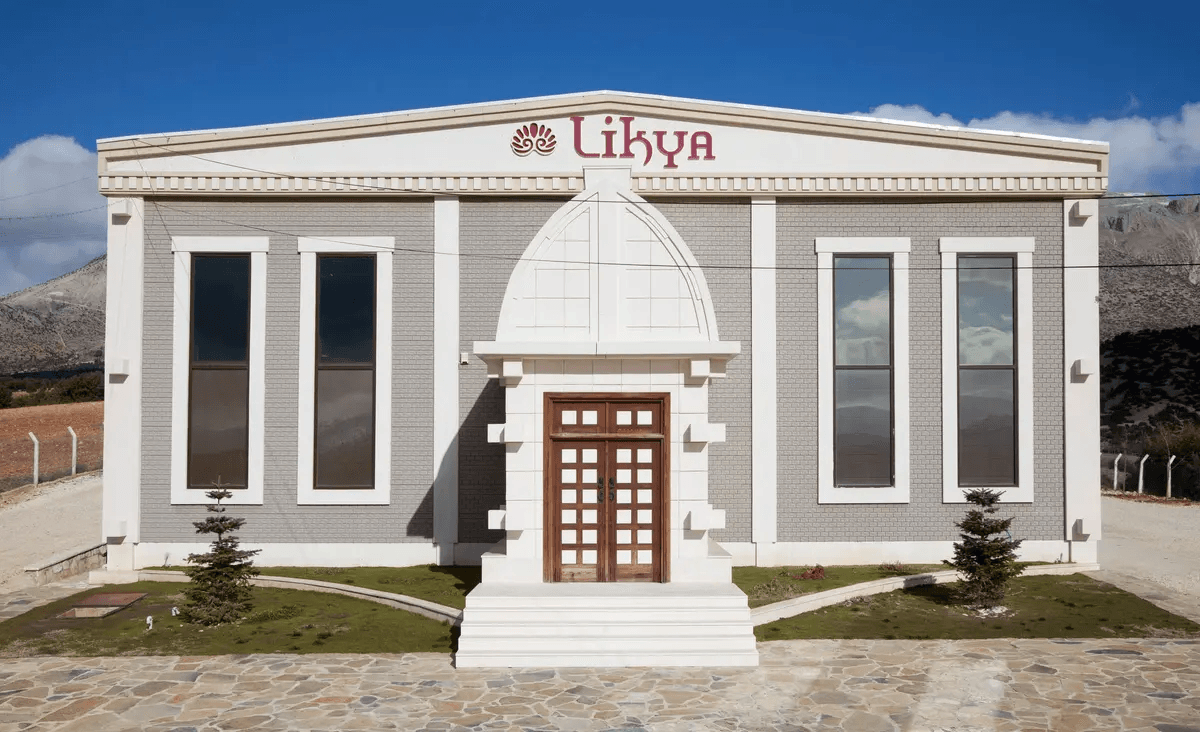
Drawing inspiration from ancient Lycian rock-cut tombs, the winery’s distinctive façade gives the building an unmistakable sense of place. Situated between the estate’s various vineyard parcels, the winery is ideally positioned for a château-style approach to winemaking, in which production takes place close to the source of the grapes.
The scenery is equally memorable. Snow-capped peaks of the Taurus Mountains rise on one side, while uninterrupted vineyard views unfold on the other.
With a restaurant and vineyard hotel accompanying its production facilities, Likya has evolved into a destination for wine tourism, offering visitors an opportunity to experience the region’s landscape, architecture and winemaking traditions together.
Vasbos, Ayvacık, Çanakkale
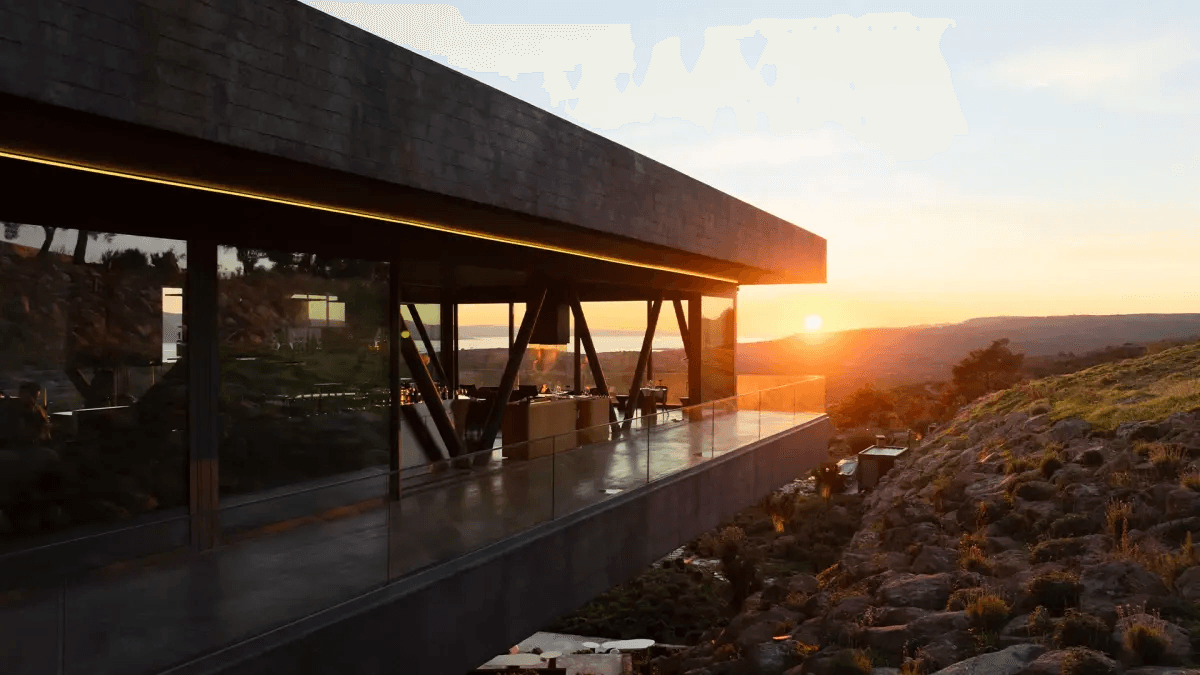
Partially embedded in the hillside, Vasbos projects dramatically outwards into open space, creating the impression of a concrete structure suspended in mid-air. It is the kind of building that inevitably makes visitors stop and stare.
On closer inspection, the steel framework supporting the monolithic concrete form becomes visible, revealing the engineering ingenuity behind its seemingly impossible appearance.
The winery’s design also takes advantage of the site’s natural changes in elevation. Gravity allows the wine to move through the production process without the need for pumps, while the entire facility is arranged along a continuous route. Visitors can therefore follow the winemaking journey from beginning to end without interruption — an elegant marriage of architectural drama and practical intelligence.
Cover Photo: Marc Goodwin