

From Duke Ellington to John Coltrane, jazz classics in Haruki Murakami’s novels stir memories of love and bring strangers together.
In Haruki Murakami’s novels, anything can happen at any moment. A cat might disappear, two moons might appear in the sky, or two people who have not seen each other for years might meet somewhere unexpected. Anything is possible. Yet amid all this strangeness, one thing never changes: somewhere in the scene, music will be playing.
Nor does Murakamis musical world stop at a handful of popular songs. From the Beatles to Beethoven, from classical music to rock, his repertoire is remarkably wide. But as most of his readers know, jazz holds a special place. In some of his novels, a jazz record becomes the key to a character’s past; in others, a few bars of melody express what two people could never put into words, however long they talked. Sound familiar? Anyone who loves listening to music will surely recognise the feeling.

This passion for jazz has its roots in Murakami’s youth. An Art Blakey and the Jazz Messengers concert he attended in Kobe at just 15 became a defining moment in his relationship with the genre. In 1974, he and his wife, Yoko, opened a jazz club called Peter Cat in Tokyo. With coffee served by day and jazz records spinning by night, the club remained at the centre of his life for years. He even began writing his first novel, Hear the Wind Sing, after finishing his shifts there.
There is also an amusing anecdote from Murakami’s Peter Cat years. In a 2022 interview, he recalled feeling that, while running the club, he had talked to enough people to last a lifetime. When he closed it, he even wanted to spend the rest of his life without speaking to anyone. His former customers, however, remember things differently: the Murakami they knew was hardly talkative to begin with. It seems that even then, the writer preferred to let the music do most of the talking.

South of the Border, West of the Sun: Duke Ellington – The Star-Crossed Lovers
In Murakami’s 1992 novel South of the Border, West of the Sun, jazz is almost a character in its own right. The protagonist, Hajime, runs two jazz clubs in Tokyo. He is married, has two children and, from the outside, appears to have his life in order. That is, until his childhood sweetheart, Shimamoto, reappears after many years.
One of the pieces accompanying their renewed intimacy is Duke Ellington and Billy Strayhorn’s The Star-Crossed Lovers. It appears on the 1957 album Such Sweet Thunder, which takes its inspiration from Shakespeare’s works. This particular recording evokes the ill-fated lovers of Romeo and Juliet.
Johnny Hodges’s alto saxophone and Paul Gonsalves’s tenor seem to call to one another like two characters. Given Hajime and Shimamoto’s story, the choice is particularly telling. In Murakami’s world, old loves rarely belong entirely to the past; sometimes, they simply fall silent, like a record left sitting on a shelf for years.
The novel’s real musical surprise, however, lies in its title. Shimamoto remembers listening to Nat King Cole sing South of the Border as a child. Yet in real life, no such recording by Cole exists.
Murakami was under this mistaken impression when he wrote the novel. Although the recording he remembered as Nat King Cole’s never actually existed, he leaves the error in place. For a writer who continually blurs the boundaries between what happened and what we remember, it is hard to imagine a more fitting mistake.

Kafka on the Shore: John Coltrane – My Favorite Things
Turning a Broadway song into one of the most recognisable recordings in jazz history is no small feat. Yet John Coltrane did just that with My Favorite Things. Written by Richard Rodgers and Oscar Hammerstein II for their 1959 musical The Sound of Music, the song acquired an entirely different identity in Coltrane’s 1960 recording. Long improvisations built around the soprano saxophone transformed the familiar tune into an almost hypnotic cycle.
In Murakami’s 2002 novel Kafka on the Shore, 15-year-old Kafka Tamura tries to whistle Coltrane’s soprano saxophone part as he walks deep into the forest, hoping to break the silence. He knows perfectly well that his whistling comes nowhere near the recording’s fast, intricate melody. He slips in a few extra notes to bring it closer to the sound in his head and keeps walking. That is part of the scene’s beauty. Amid the forest’s unsettling silence, Kafka’s weapon is a jazz tune—and he cannot even play it perfectly. Reproducing Coltrane note for note in a whistle would, admittedly, be an ambitious undertaking.
Interestingly, Murakami’s admiration for Coltrane comes with reservations. In one interview, while naming Stan Getz and Gerry Mulligan among his favourite jazz musicians, he was more cautious about Coltrane, suggesting that his music sometimes pushes too far, too insistently.
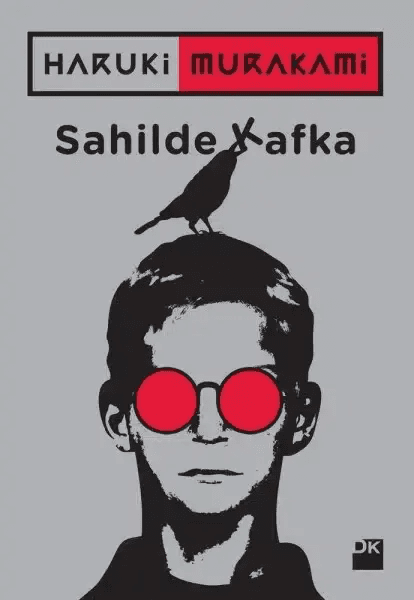
After Dark: Curtis Fuller – Five Spot After Dark
It is past midnight, and you are sitting in a Tokyo restaurant. Across the table is someone you have only just met, and the conversation finds its way to jazz records. In Murakami’s After Dark, this seemingly ordinary encounter shows how music can close the distance between two strangers. Takahashi, one of the novel’s characters, is a young trombonist. While talking to Mari Asai, he explains why he chose the instrument. His story eventually leads to Curtis Fuller’s album Blues-ette.
It was Five Spot After Dark, a Benny Golson composition on the album, that set Takahashi on the path to playing the trombone. When he hums its opening bars, Mari can carry on the melody. There is no need to spell out the romance of the scene. Sometimes, a lengthy round of introductions is entirely unnecessary. Two strangers can find their way to one another through a shared tune.
Curtis Fuller also holds a special place in Murakami’s own story. Fuller was among the trombonists in the Art Blakey and the Jazz Messengers line-ups the writer listened to in his youth. A musician who helped forge one of Murakami’s earliest connections with jazz thus resurfaces, years later, through the record that changes a young character’s life.
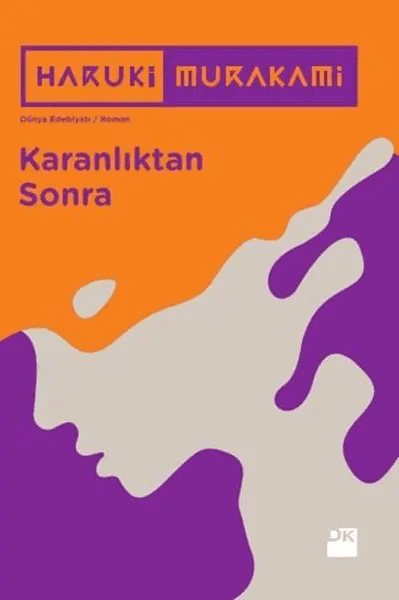
Norwegian Wood: Bill Evans
Mention Norwegian Wood, and the Beatles are usually the first to come to mind. After all, the novel takes its name from the band’s song. Yet jazz quietly finds a place in Murakami’s 1987 novel, too.
In one scene, Toru Watanabe comes across a Bill Evans record where Naoko is staying. It is the recording they listened to together on her birthday six months earlier, and it takes him straight back to that night. Its real power lies less in its technical qualities than in the memories it carries. The music is the same, but the person listening is not.
Does that stir any memories of your own? Sometimes, you listen to a song hundreds of times, perhaps feeling much the same way each time. Then one day, you hear it again, and it feels as though you are listening in an entirely different life, almost as if for the very first time. Murakami captures such feelings beautifully.
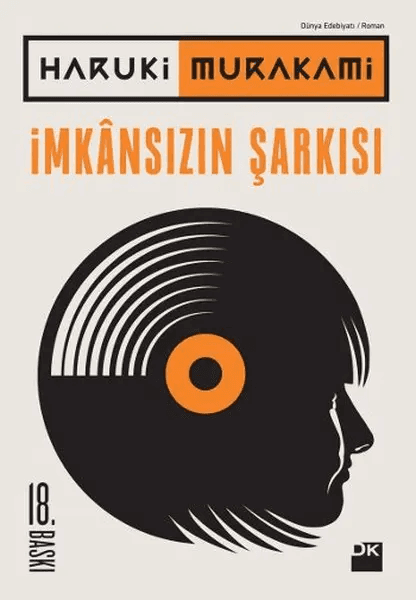
Hard-Boiled Wonderland and the End of the World: Miles Davis
Murakami’s 1985 novel Hard-Boiled Wonderland and the End of the World moves between two separate realities. On one side lies a world of advanced technology, data processing and a strange adventure beneath Tokyo. On the other is a mysterious walled town where people are separated from their shadows. In so peculiar a universe, listening to Miles Davis feels surprisingly normal.
In one passage, the narrator and the woman with him prepare their drinks and choose some music. They have Jackie McLean, Miles Davis and Wynton Kelly on cassette, and go on to listen to Davis’s recordings of Bags’ Groove and The Surrey with the Fringe on Top.
The two tracks reflect different sides of Davis’s 1950s hard-bop period. Bags’ Groove was composed by vibraphonist Milt Jackson, and Davis’s 1954 recordings are among its best-known interpretations in the jazz repertoire. The Surrey with the Fringe on Top, meanwhile, is a song from Rodgers and Hammerstein’s musical Oklahoma! that became a jazz standard.
Murakami does not make a dramatic point of the jazz here. No one picks up a record and launches into a lecture on music history. Amid drinks, pizza and conversation, the music plays the part of an extra—albeit one that steals the scene. Perhaps this is the most convincing aspect of the way Murakami draws on jazz. Rather than placing music at centre stage, he lets it settle into everyday life. Even as the end of the world approaches, might someone still feel like listening to Miles Davis? We certainly think so.

1Q84: Louis Armstrong – Atlanta Blues
For music lovers, 1Q84 tends to bring Leoš Janáček’s Sinfonietta to mind first. An important presence from the novel’s opening pages, the composition is one of the best-known examples of Murakami’s relationship with classical music. Yet there is a small jazz treasure hidden in its pages, too.
Tengo’s older lover has a taste for old jazz records. Among the recordings they listen to together is the 1954 album Louis Armstrong Plays W. C. Handy. On Atlanta Blues, it is clarinettist Barney Bigard who particularly catches her attention. Nor is it simply a matter of his solo. She believes his real mastery emerges when he accompanies the other musicians, and explains his restrained, subtle playing to Tengo almost as though she were giving him a lesson. As Tengo listens again and again, he begins to hear details he had never noticed before.
This is a particularly rewarding detail for a jazz listener. Bigard was, after all, a distinguished clarinettist who spent many years in the Duke Ellington Orchestra before joining Louis Armstrong’s All Stars.
Here, Murakami does more than tell us which record was playing. He makes listening itself part of the story. Two people listening to the same recording may not hear the same things; sometimes, someone else’s ear reveals a detail you have overlooked for years.
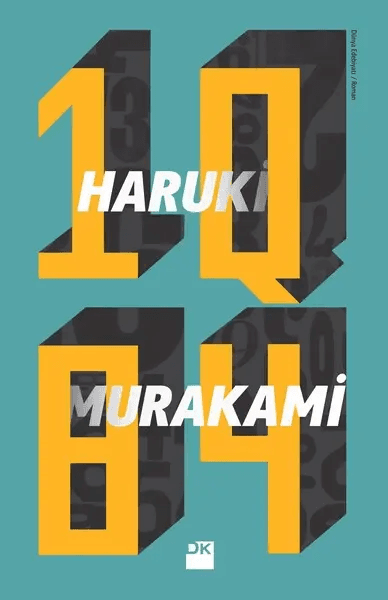
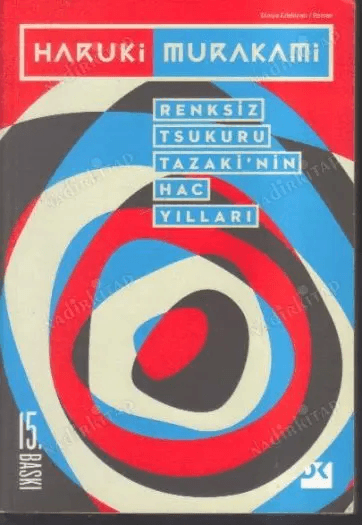
Colorless Tsukuru Tazaki and His Years of Pilgrimage: Thelonious Monk – ’Round Midnight
In Murakami’s 2013 novel Colorless Tsukuru Tazaki and His Years of Pilgrimage, music opens the door to a rather unsettling story. Haida, Tsukuru’s friend from university, tells him about a jazz pianist named Midorikawa whom his father met in his youth. This mysterious man, staying at a hot-spring hotel, is an extraordinarily gifted musician. But he makes a claim one would hardly expect from an ordinary pianist: he says he knows he will die soon and can pass his death on to someone else. He also carries a small bag with him at all times. For a Murakami reader, this is where the alarm bells will already be ringing.
Thelonious Monk’s ’Round Midnight plays an important role in Midorikawa’s story. The pianist performs it in the music room of a school near the hotel. One of Monk’s most famous compositions, ’Round Midnight is among the most frequently interpreted ballads in the jazz repertoire. Yet beautiful melodies alone cannot account for Monk’s appeal. With his unexpected harmonies, use of silence, sharp accents and distinctive piano language, he seems first to break the rules of music and then to rewrite them.
Murakami’s choice of this piece is no accident. In an interview, he described Monk’s music as mysterious, explaining that harmonies that seem illogical at first make perfect sense within the musician’s own world.
It is hard to imagine a more fitting musician for Midorikawa’s story. Here is a world in which things that seem inconceivable from the outside obey a perfectly coherent internal logic. That, of course, is precisely where Murakami’s world begins.
Although Franz Liszt’s Le mal du pays provides the novel’s principal musical thread, ’Round Midnight shows that jazz is never merely decoration in Murakami’s fiction. Sometimes, the spirit of a piece and a character in a novel meet in the same midnight hour.
Murakami’s relationship with jazz is, of course, far broader than these few novels and records. Bring together the music scattered throughout his writing over the years, and something approaching a discography in its own right begins to emerge.
For jazz listeners, part of the pleasure lies in the fact that his choices are not always the most obvious ones. Sometimes, a clarinet solo that might otherwise go unnoticed on a Louis Armstrong album, Monk’s unusual harmonies or a Coltrane melody that is practically impossible to whistle becomes the scene’s defining detail. It is surely no coincidence that, while reading Murakami, you occasionally find yourself reaching from your book to your phone, thinking, “Let me listen to this one, too.”
For the Love of Sound: Listening Bars
The Haven of Rebellion: The World’s Best Jazz Clubs
The Memory of a Century: 25 Archival Records from the History of Jazz