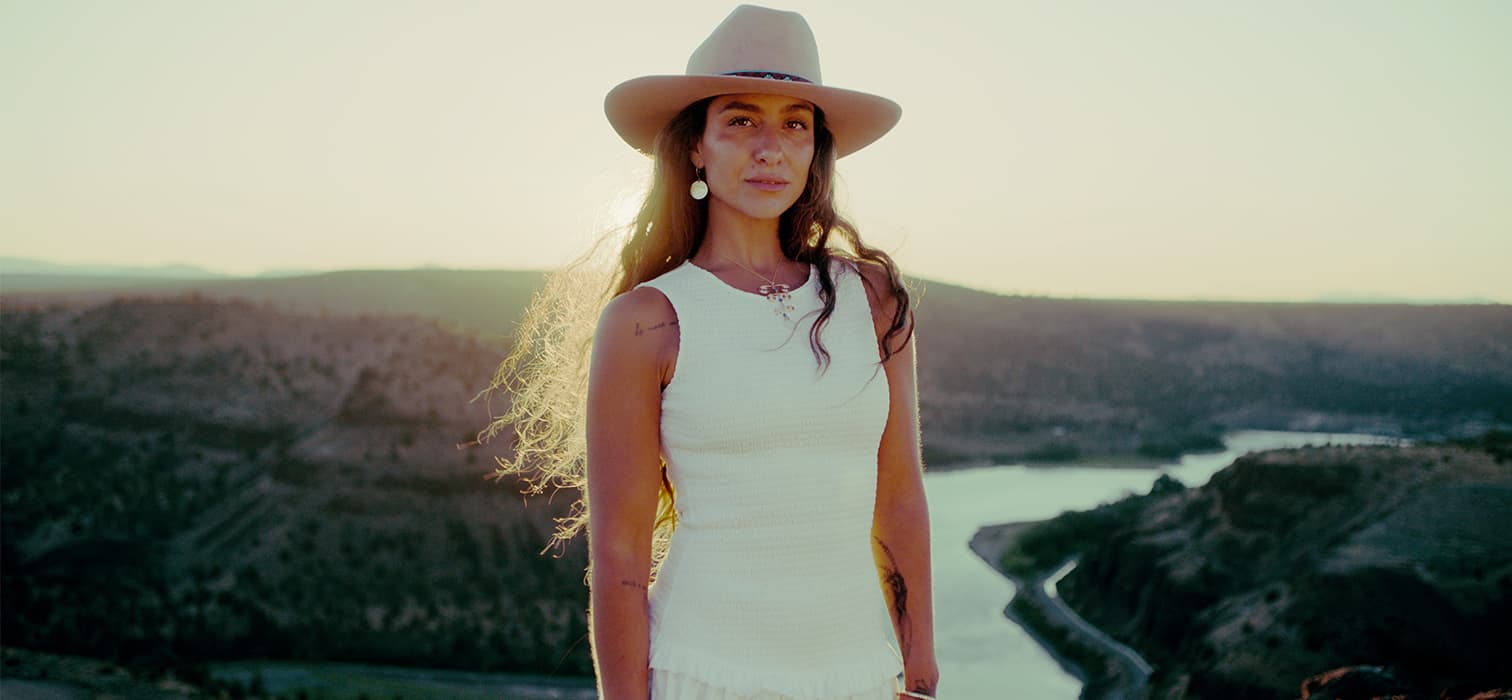
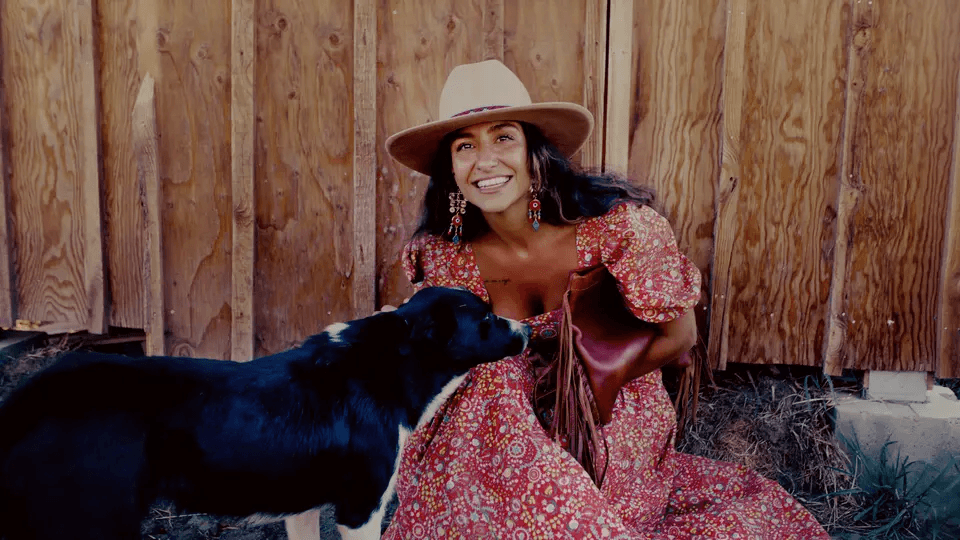
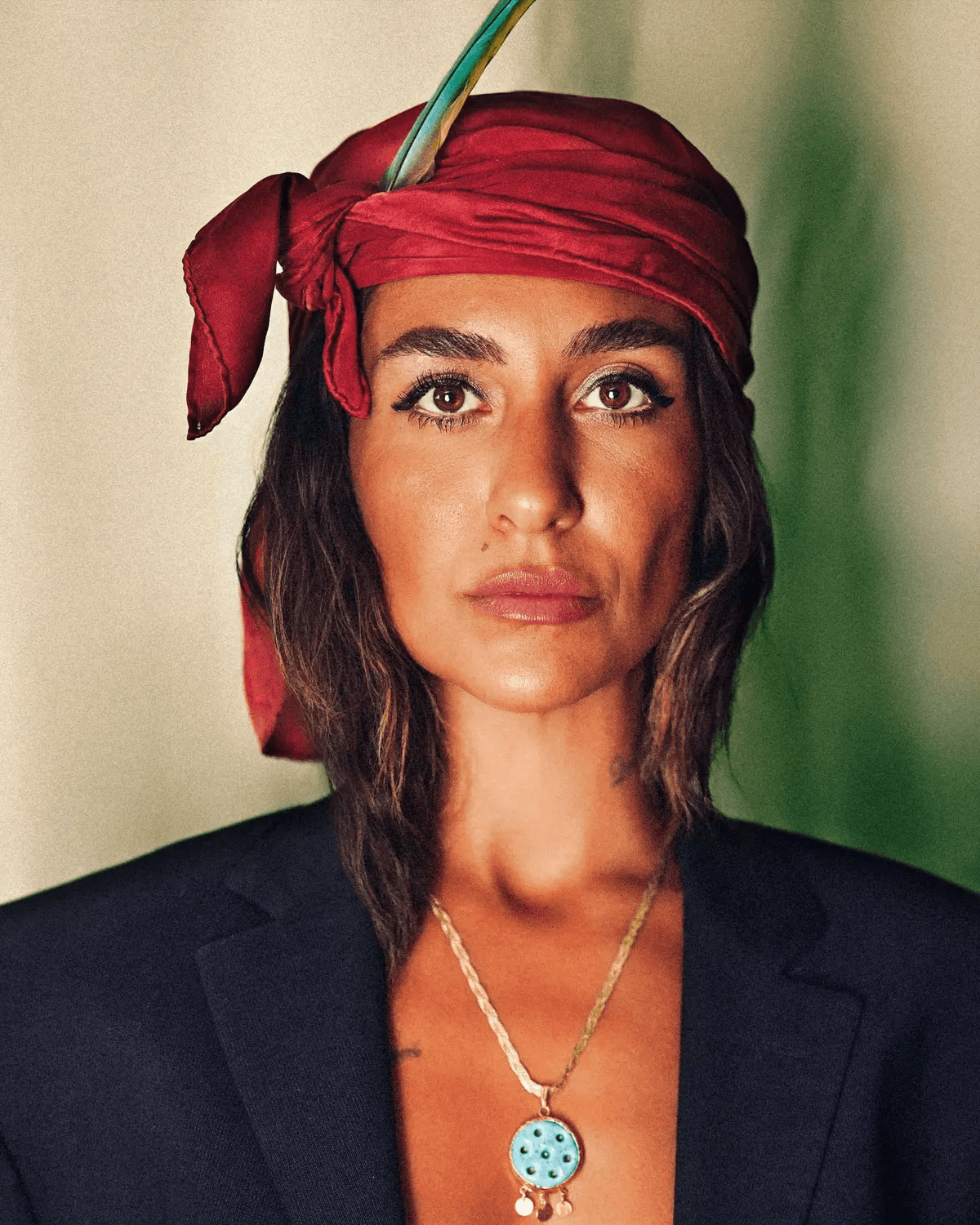
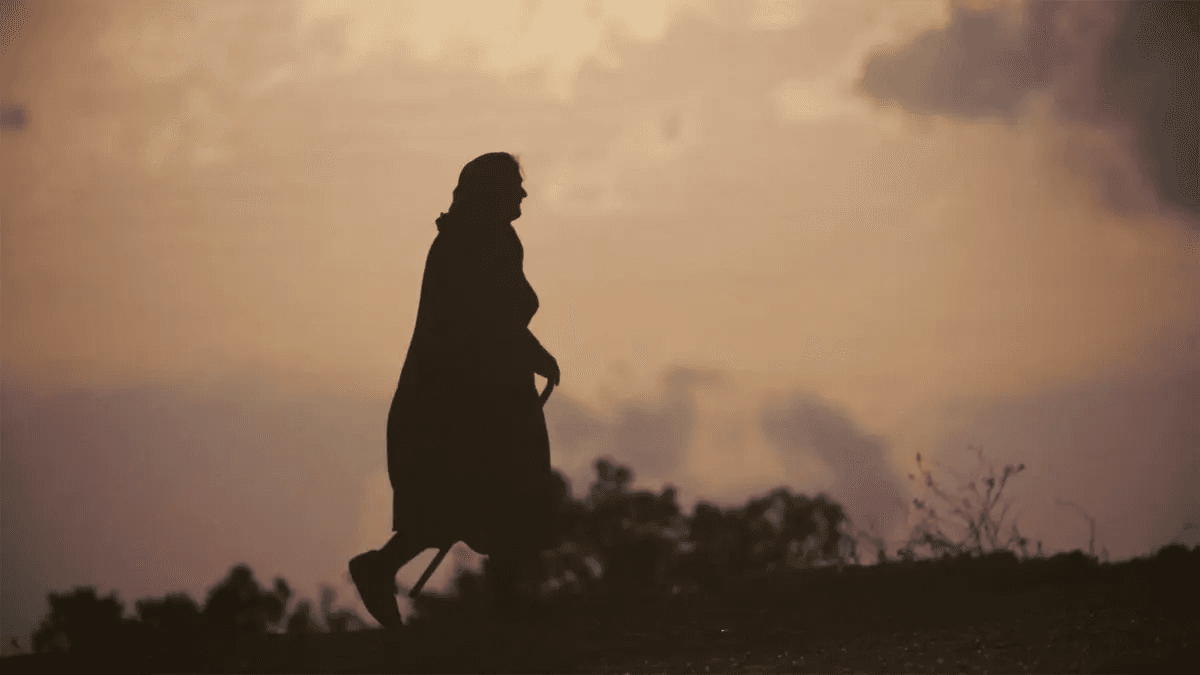
With Elif Koyutürk Hazen, we set out from the women of Anatolia in search of belonging, traces of the past and the knowledge carried in the body from one generation to the next.
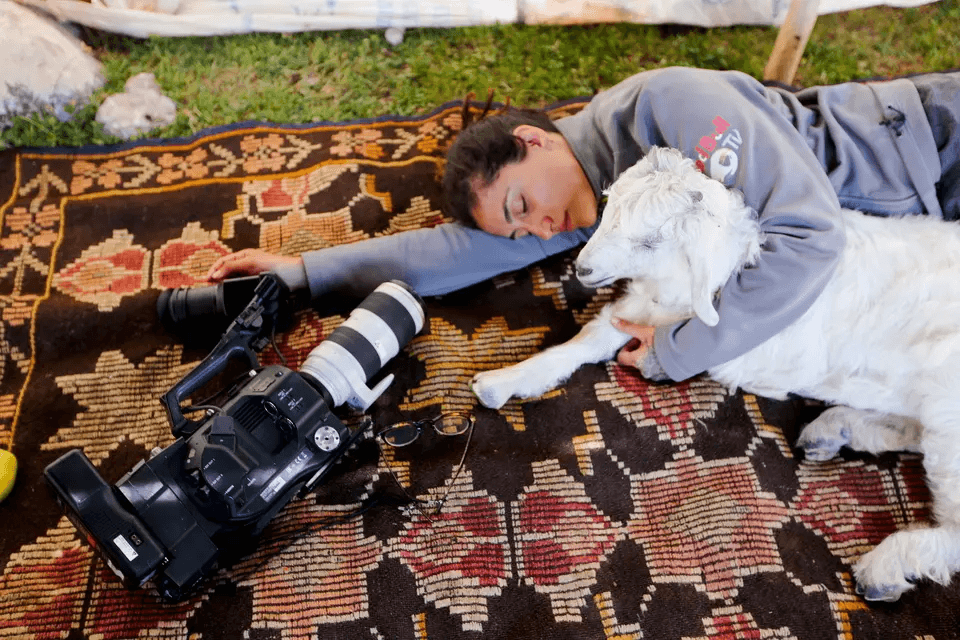
History does not record every detail. Especially not what women know. To understand a place, you can turn to its maps, archives and books. Elif Koyutürk Hazen looks instead to its women: to their hands and bodies, to something worn on the head, to the paths they have walked. This is how she absorbs a landscape. The true story of a society often lies in the small details no one ever thought to document. Hazen’s camera follows those details.
In her world, women are the ones who carry, transmit and transform knowledge. They know when it is time to migrate, how to read the land; through a coin on a headdress they reveal their wealth, through a mirror their means of protection, through embroidery where they come from. Their names may not appear in written history, but they have another alphabet: the body, movement, motif, ritual and intuitive knowledge passed from one generation to the next. Hazen seeks to read this language not as folklore belonging to the past, but as a living language still spoken today.
It is perhaps no coincidence that the farther she has travelled around the world, the closer she has come to her own roots. The first Turkish filmmaker to receive Mountainfilm’s Emerging Filmmaker Fellowship, Hazen went on to win the Audience Award at the Nevada City Film Festival with Guardians of Anatolia, which was also screened at a number of festivals across the United States. Whether following a Yörük migration, the turning body of an Iranian woman or the tiny mirror set into an old Anatolian headdress, she is searching for the same trace. From stories held within women’s bodies to belonging, from lost goddesses to hasretlik—that particular ache of longing—this journey ultimately touches Hazen’s own story, too.
That is where our conversation with Elif Koyutürk Hazen begins: with the unwritten histories of women, and with the question of how we remember what belongs to us, and where we belong.
You grew up between Istanbul and the mountains of southern Turkey and have lived in different parts of the world. Looking back now, where in your childhood do you see the first trace of what keeps drawing your stories back to Anatolia, to the land and, especially, to women?
My paternal grandmother was an Anatolian woman through and through. I grew up with her and learned so much from her; she was a great source of inspiration. The same is true of my mother. Our connection to our land and to family was a value that existed long before I was born. I grew up half in a farmhouse, half in Istanbul. My family were curious travellers, and from a very young age they would take me to villages in Turkey that hardly anyone knew. They would say, “This is where you buy peppers, this is where you buy tomato paste. Elif, look, this is the history of this place. Come, let’s talk to the people in this village and understand how they live.” That curiosity wasn’t something I acquired later; it was always there. In the hand-embroidered headscarf my grandmother wore, in the smell of the tomatoes we grew, in the long tables where history was talked about.
Your professional life first took you into entirely different landscapes, into extreme sports and adventure stories. Looking back at the period when you began working in cinema as a camera operator, how did the shift towards telling your own stories happen? And where were women’s stories within that journey?
I studied journalism because I wanted to become a war correspondent. By the time I graduated, journalists were becoming among the first people targeted in wars, so I made a different decision. I thought there must be other ways of telling stories that could have an impact on humanity. I’m a very active person. I love adrenaline, and I’ve always been interested in cars and motorsports. The first door that opened for me happened to be in that world, so I began my professional life working in extreme sports.
As I travelled to every corner of the world for productions, I was also learning about the cultures around me. It wasn’t simply about shooting extreme sports in a studio. I might be dropped into the Amazon in Brazil for a shoot, or be in Turin, Italy, closing down streets for a commercial. The travel that came with my work gave me the chance to encounter very different cultures.
I don’t see it as a transition to women. It was always something I was working on and creating around. As my eye matured, my projects became more deeply rooted and more varied in the way they approached the subject. I am a woman, and if I don’t reflect the culture of the women of my own land, who will?
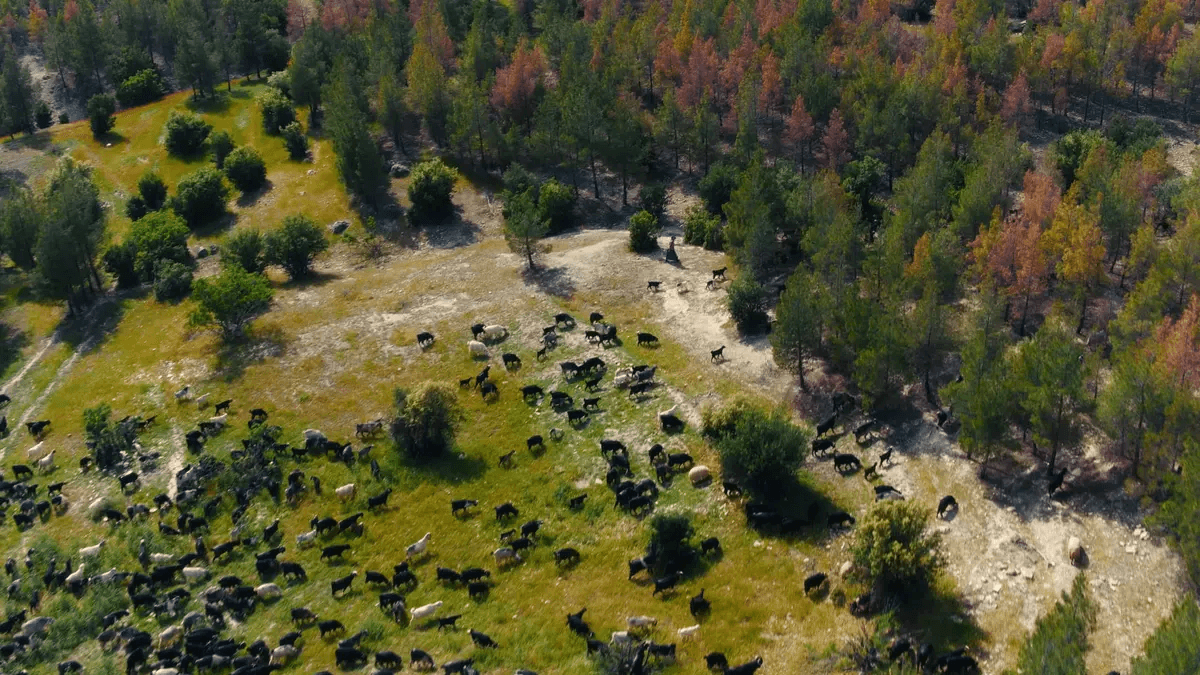
Perhaps one of the clearest expressions of this isGuardians of Anatolia. In 2018, you joined a Yörük family living in the Taurus Mountains on their seasonal migration of roughly 400 kilometres, living in tents with a crew consisting only of your mother and father. How was the Elif who returned from that journey different from the one who set out?
She was an Elif who wanted to protect more. It impressed upon me how important it is for these cultures to live not in museums, but within people’s everyday lives. A feeling that was already there became much stronger: the desire to protect the colours of my land.
To be honest, I’ve been on the road for the past 11 years. Yes, I have a life now that stretches between America and Istanbul, but if you are a storyteller, you are always on the road. Whether it’s the Amazon, the Taurus Mountains, New York, Oregon or Morocco doesn’t really matter. You follow the story that calls to you, giving it time and effort, working it stitch by stitch. Every story changes the person telling it.
Among Yörük women, there is also a kind of knowledge that lives through these codes, passed from one generation to the next without ever being written down. Living alongside women who know the timing of migration, the land and the animals, what did you recognise in their experience of womanhood that you think we may have lost in modern life?
The knowledge women hold is never written down, yet somehow it never disappears. It was often the women who made the decision to migrate; they knew when it was time to leave. That knowledge lives in their bodies. We have reached a point where we struggle to accept knowledge as real unless it is written down and validated. For them, knowledge is validated through living it.
There is another striking idea inGuardians of Anatoliathat sits alongside this: “You don’t need to own something in order to belong to it.” In a world where belonging is so often defined through property, borders and permanence, what did the constantly moving Yörüks teach you about what it means to belong?
Rather than teaching me something new, they confirmed something I already knew. Belonging has nothing to do with owning a place. They have no title deeds, yet perhaps no one belongs to this land more deeply than they do. I have also lived in different countries for the past 11 years, and each of them has become part of me. Belonging is not about possessing a place. It is about knowing it.
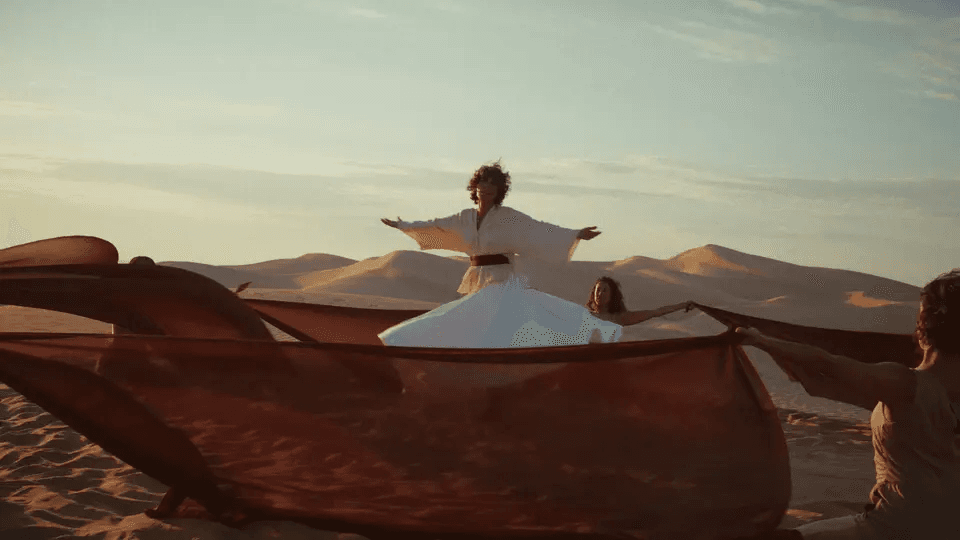
You have spoken about how, in Yörük life, the boundary between people and nature never really disappears. In your work, the boundary between the body and the story seems to dissolve too. InShaereh, you explore freedom, loss and the reclamation of the body through an Iranian woman’s movement inspired by Sufi whirling. For your camera, when does the female body stop being something observed and become a storyteller with a language of its own?
The body, and the traces of what has been lived upon it, can tell an entire story. And some traces can be felt through nothing more than a reflection in someone’s eye; they can flow like poetry, if you know how to knock on the door.
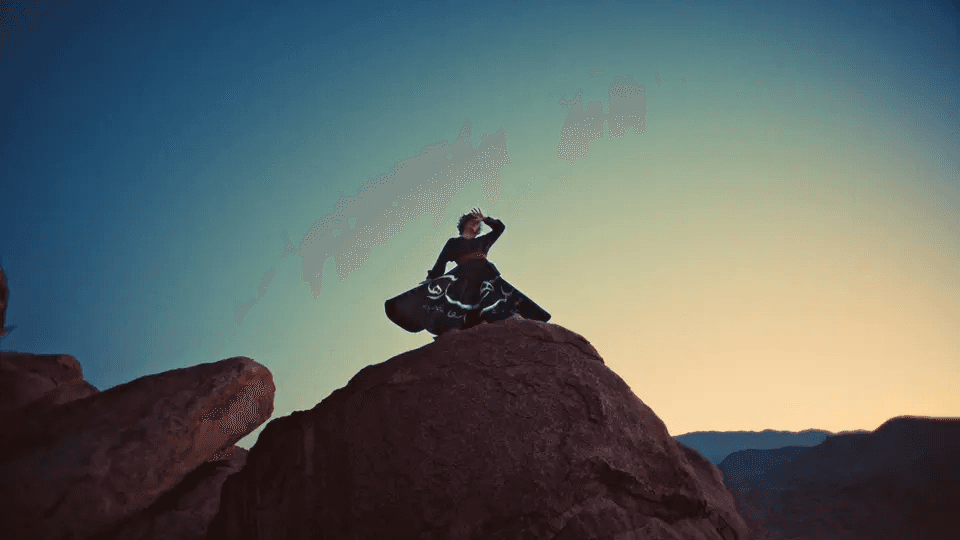
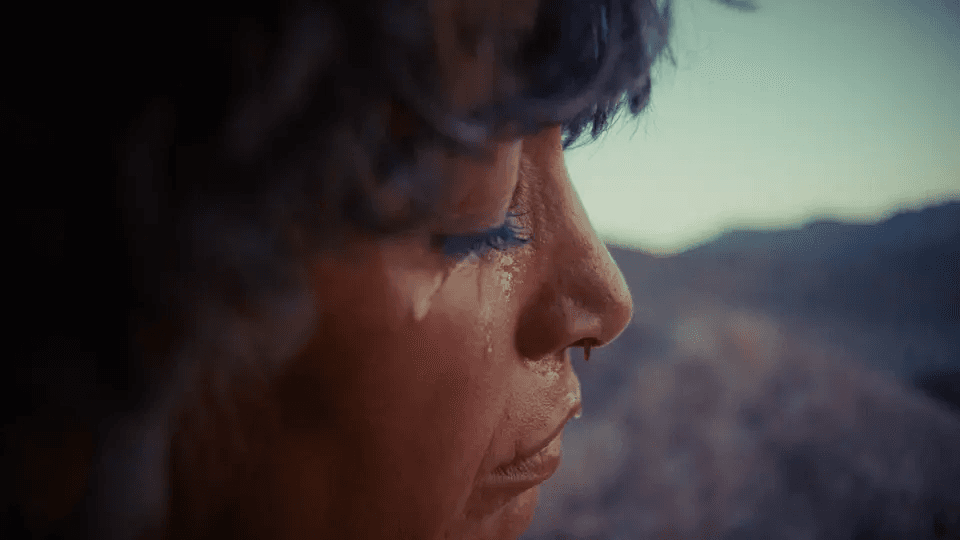
In Shaereh, a woman’s body speaks of freedom, loss and reclaiming herself without the need for a single word. Her turning is not a performance; it is grief transformed into breath. Through it, she heals herself and becomes a symbol of hope for other women through the movement of the body. Healing is not a straight line, and that is why the camera traces its own path around her, moving with the story. In these more poetic, art-driven films of mine, everyone can find something of themselves, because the film leaves that space open, like a door for the viewer to enter and complete.
On one side there is the Yörük woman carrying knowledge as she migrates; on the other, an Iranian woman reclaiming her body through turning. Their geographies and stories are very different, but do you see a place where these women meet?
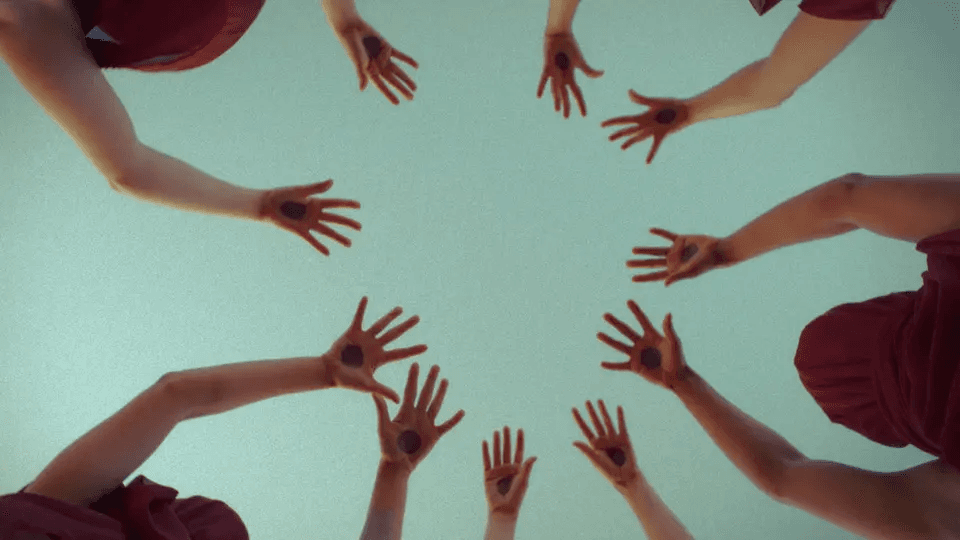
Yes. They both know something through their bodies, rather than through words. One carries knowledge as she migrates; the other reclaims her freedom as she turns. Their geographies are completely different, but both showed me the same thing: sometimes a woman’s body is the only archive capable of carrying what history could not write. Something that can flow like poetry, something that can inspire.
From Çatalhöyük and Cybele to different belief systems and traditions that still survive today, you have been exploring the ways in which the sacred feminine has been transformed over time. What was the first question that led you into this much larger story?
This project didn’t appear all at once. It was the maturation of research I had accumulated over 15 years on the road. Female figures dating back to the Palaeolithic have been one of my longest-standing preoccupations. I have spent years thinking about a line that stretches from Venus figurines to the seated woman of Çatalhöyük, from Mater Kubileya to Cybele and Artemis of Ephesus. I felt a wound I couldn’t name, a wound carried by women. I’m not trying to reclaim something. I’m trying to understand the distance between what was once sacred and what we are allowed to imagine for ourselves today.
InStory of the Lost Goddess, you also look at the ways female authority has been fragmented, reshaped or made invisible throughout history. Do you think many of the questions we debate today around “a woman’s place” are rooted in a historical narrative far older than we tend to imagine?
Absolutely. Many of the things we debate today are questions that were, in some sense, resolved thousands of years ago, only to have new layers placed over them. Female authority was not always destroyed throughout history; often it was reshaped, made invisible. Today’s debate is another face of that ancient question. The question for our generation is whether, by looking back while also looking ahead, we can begin to repair it.
And this is where the past appears not only in archaeological remains, but in traditions that are still alive today. The thread you follow inStory of the Lost Goddessreaches the headdresses worn by Anatolian women in yourCrownedproject. How can a woman’s headdress, the fabric she wears or a ritual she performs tell us what written history leaves unsaid?
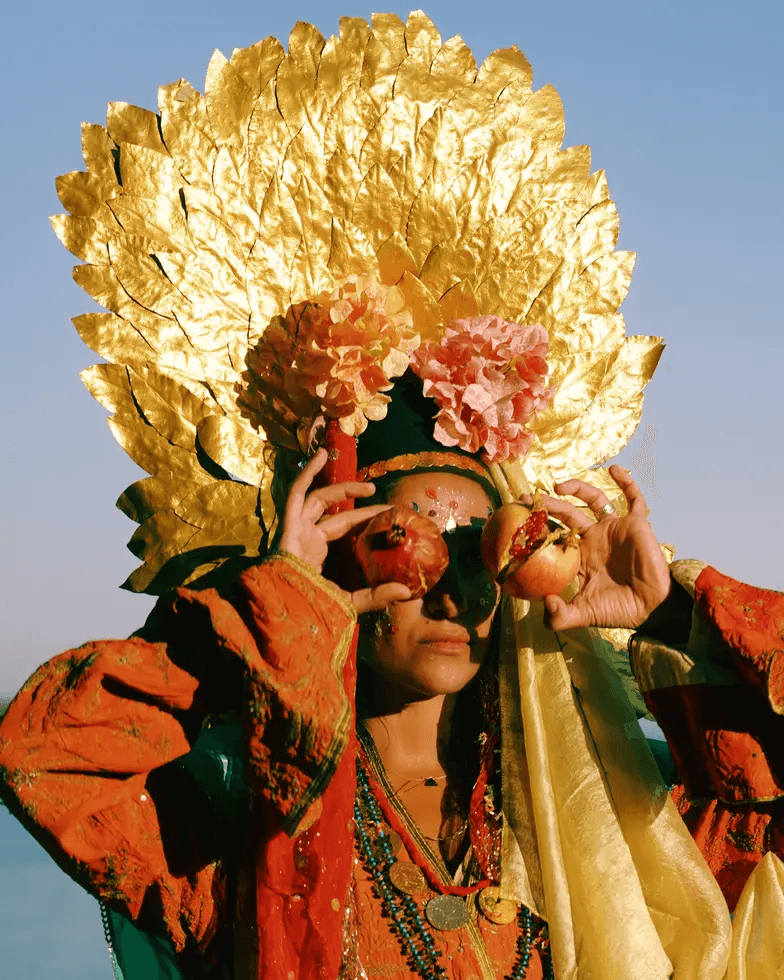
That is exactly what I’m working on now with my project Crowned. Together with Bademler Art Village, I’m photographing between 30 and 44 Anatolian headdresses collected over a lifetime by Sabiha Tansuğ, across eight villages and four different regions, from the Aegean to Sivas.
Every coin, mirror and piece of embroidery on these headdresses carries meaning. A coin represents wealth and protection; it is a woman’s own capital, placed not in a bank but on her head. A mirror wards off the evil eye, carrying light like armour. Embroidery makes the identity of a village legible from a distance. All of these form a language that speaks not in words, but in codes. We are working with eight academics so that every image is grounded in ethnographic fact.
Even if these women could not read or write, they expressed themselves through the language they carried on their bodies. Written history often passed them by, but they were already carrying their own language with them. When we look at one of these headdresses, we can see sorrow, joy and grief together. Motifs are like a book, if you know how to look and how to read them.
There is a strong sense in your filmmaking of recording something before it disappears. Yet in trying to preserve a culture through the camera, there is also the risk of turning it into a frozen folkloric object belonging to the past. How do you negotiate that boundary?
By filming them not as something belonging to the past, but as something still alive. The women I place within my frame are not models. They are real women, on their own land, within their own lives. The danger of turning something into folklore begins when you lock it inside a museum. I show these women while they are still moving, still making decisions.
As a photographer and cinematographer, what ultimately determines the right frame for you: aesthetics, instinct or the trust you establish with the person in front of your camera?
Trust. Trust comes first. Aesthetics and instinct are built on top of it. Before I begin filming, I wait for a long time. I listen to movement, to breath. The right frame doesn’t come until the person in front of me trusts me.
That is why my projects tend to unfold over long periods of time. It is never a matter of arriving, making something and leaving. I want to understand the emotions that have settled into the very bones of the person in front of my camera. If I can’t understand them, I can’t connect either.
From Yörük women to Iranian women, from lost goddesses to rituals that are still alive today, the same question seems to run through your work: how does a woman remember what belongs to her? Where does the next women’s story you want to follow with your camera begin?
The question of how a woman remembers what belongs to her has never really closed for me. I have been asking the same question across different geographies for years. Now I’m looking for it in the headdresses of Anatolian women, in Crowned. After that, I’ll look for it among women working with the land in America, Brazil and Mexico. The geography changes, but the question remains the same.
And although I am behind the camera, in every story I search for and find, I find something of myself too. I found myself most clearly in my grandmother’s garden, in the wisdom of my grandmothers, in my mother’s touch. And I began searching for those feelings, in different textures, all over the world.
Emotion is ultimately the key that allows the artist behind the camera to connect universally with the person in front of it. The colours may be different, but the emotions are the same. I follow emotions. I follow colours.
Before we finish, I’d like to talk about your forthcoming book,The Sky Holds All of This. Bringing together your poetry and scientific essays, it seems like another way of exploring many of the themes we’ve been discussing: belonging, the body, memory and the search for the self. How did the book come about, and when will readers be able to discover it?
The Sky Holds All of This will be published in the spring. It is a 170-page collection of my poetry and scientific essays, bringing together the research I have done through my own search for belonging and my journey towards finding myself.
When I left Turkey, I took my notebooks, my camera and questions I did not yet know how to answer. I moved first to Europe and then to America. It felt less like a plan than a pull. And I realised that in my work, in my writing and in the way I move through the world, I keep returning to the same place: the space in between. Between where you come from and where you arrive. Between who you are and who you are becoming. Between the story you carry and the story you have not yet learned how to tell.
There is a word in Turkish: hasretlik. Three syllables for the ache you feel for the people and places that made you who you are. This book is a record of what that ache became, because after a while I began to realise that the land understood, too. The wind moved like my mother’s voice. The birds laughed like my brother. I began to understand that what I thought was longing was actually something older: the body already knowing what the mind has yet to accept.
The book is divided into four sections: Separation, Contact, Dissolution, Return. For me, they form the map of both a personal and a scientific journey. Alongside the poems are essays exploring how the body carries memory, the frequencies through which forests “speak”, and beauty as a form of knowing. I wanted to place what I felt emotionally alongside what science could tell me about it.
The book is also a love letter to my grandmothers, Neyyir and Selma; to my mother, Şule; my father, Cengiz; and my brother, Cengizhan. To the Skype calls my mother would leave open while I slept, so I could hear the sounds of home. And to a connection I could never have found without first leaving.
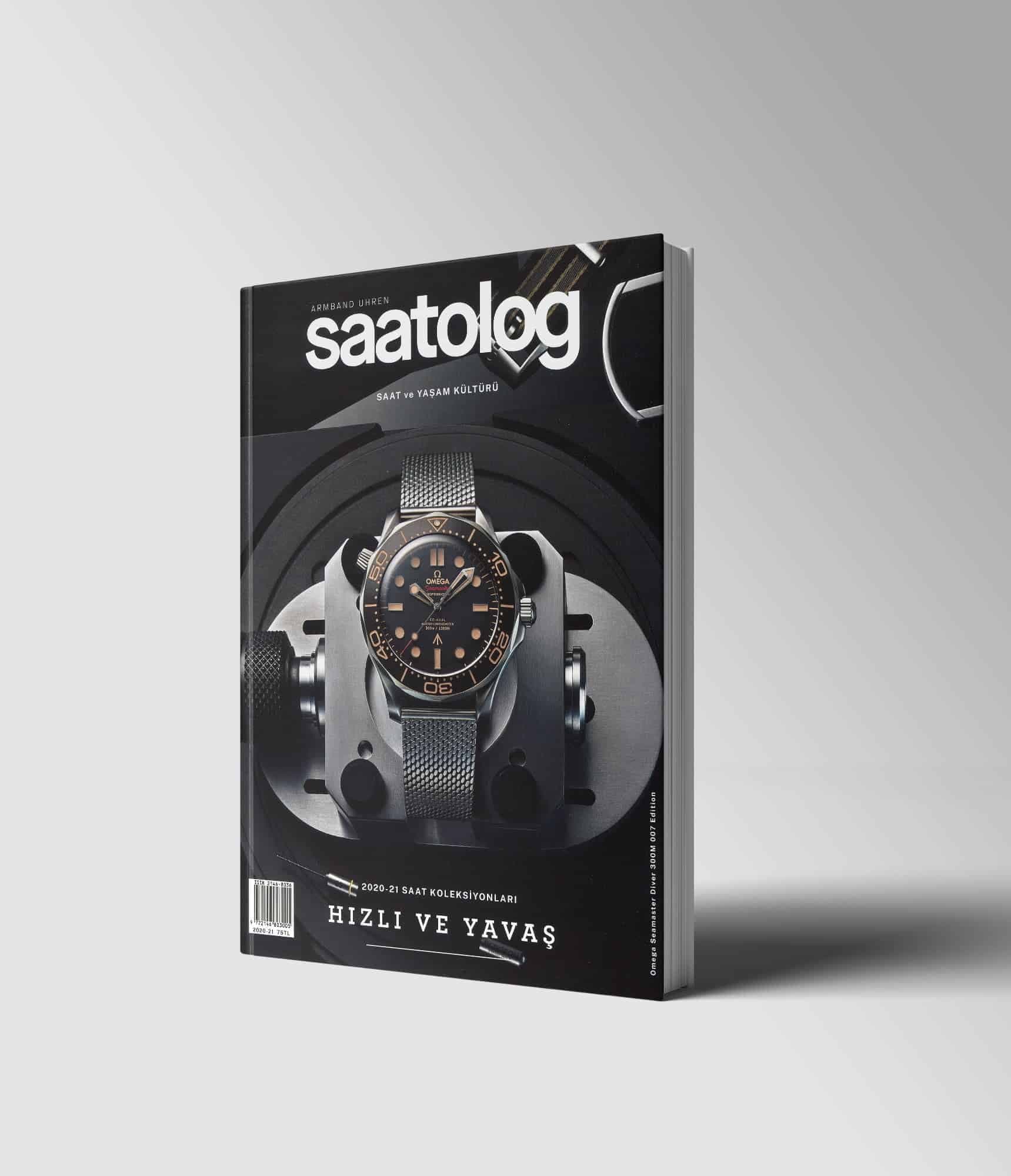
Saatolog Yıllık Saat Dergisi Saatolog’un yeni sayısı, 2020’nin yarattığı bu dönüştürücü etkiden ilham alarak hazırlandı. Dünya dijitalin etkisiyle her zamankinden de hızlı bir şekilde ilerlerken yavaşlamanın da önemini sonunda kavramış bulunuyoruz ve bu tezatlık hayatlarımızın her anına etki ediyor. Biz de bundan yola çıkarak Saatolog 2020/21 sayısını ‘‘hızlı ve yavaş’’ teması altında hazırladık.