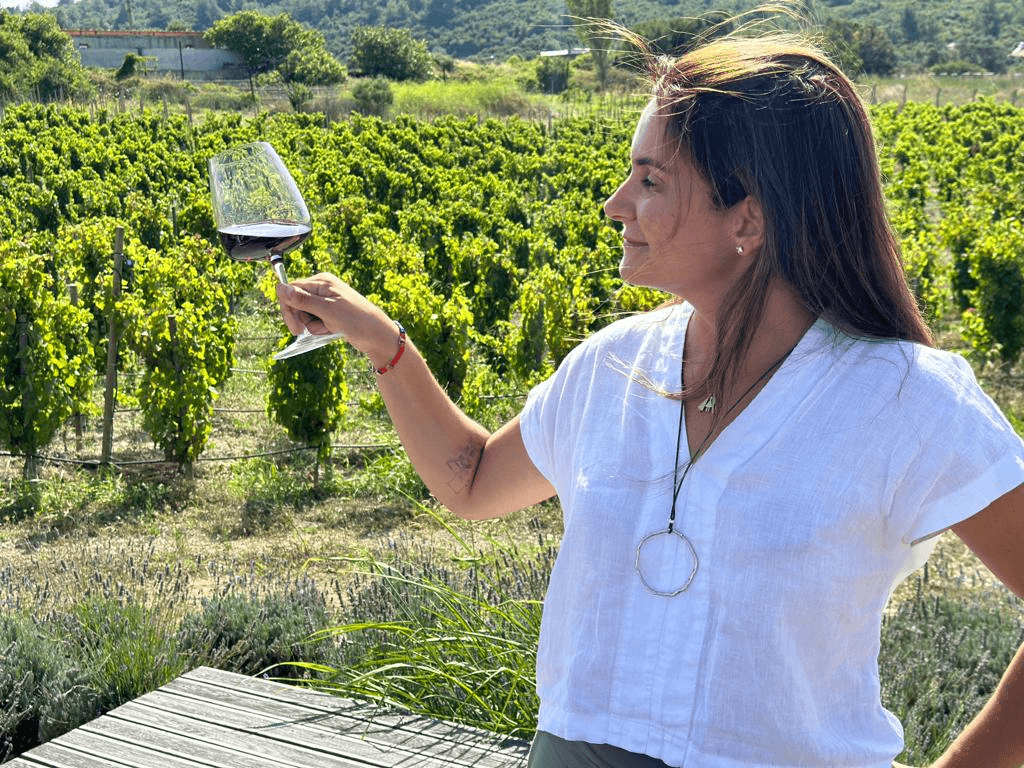
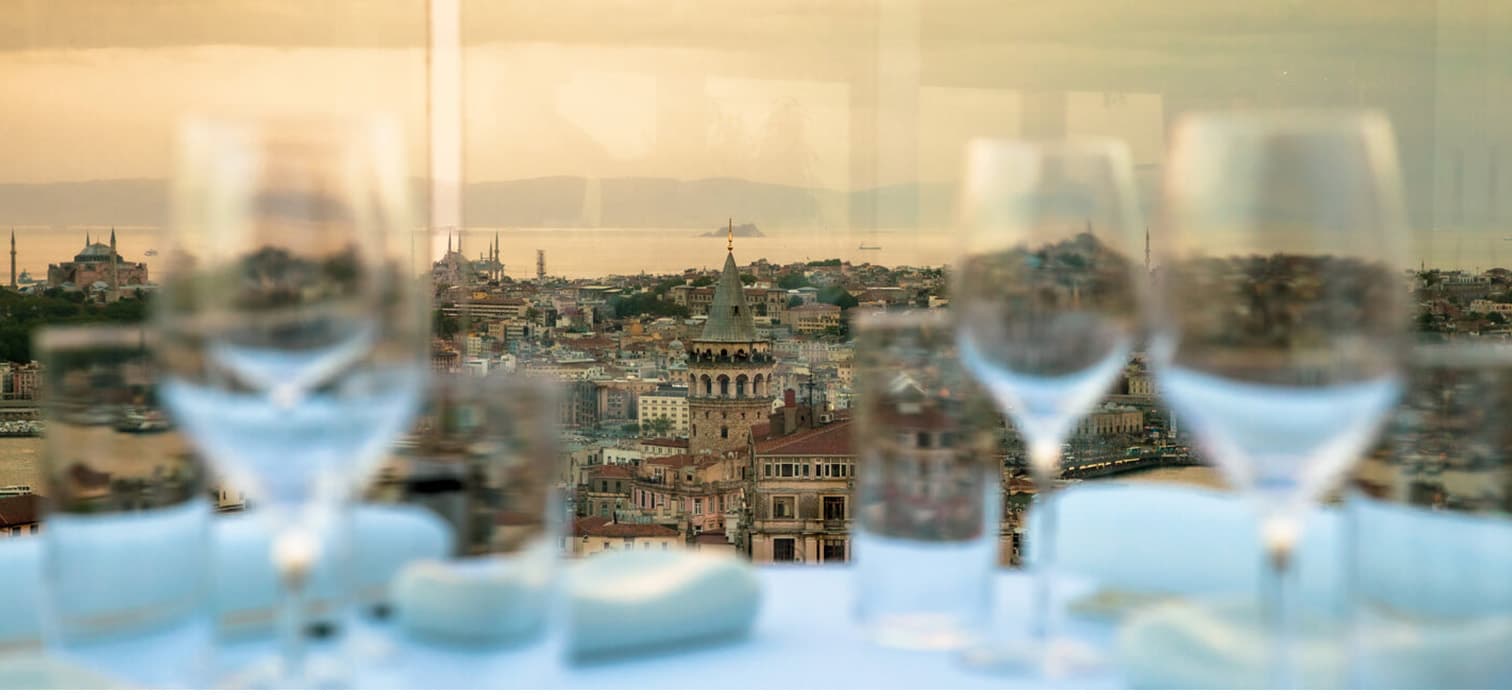
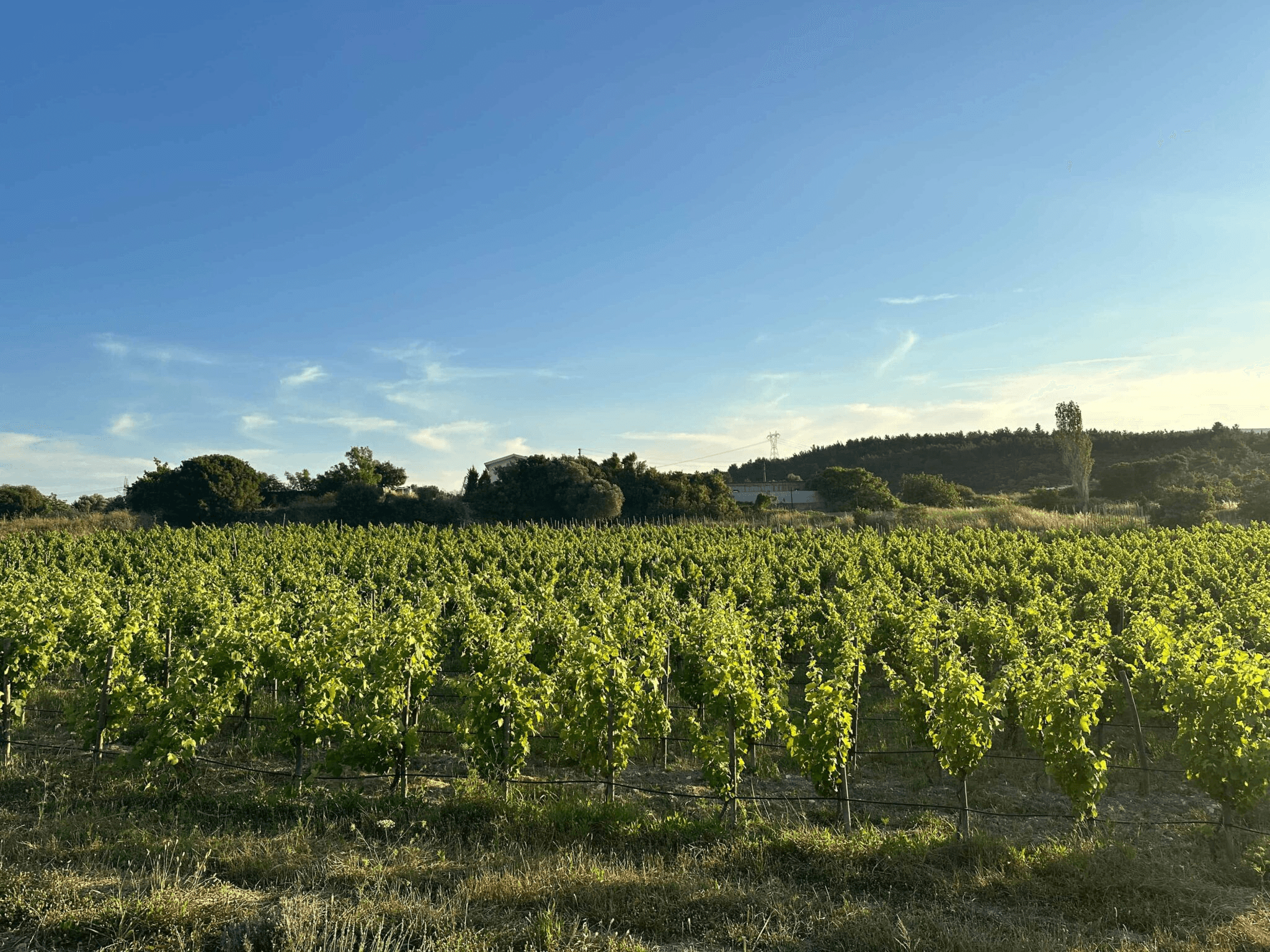
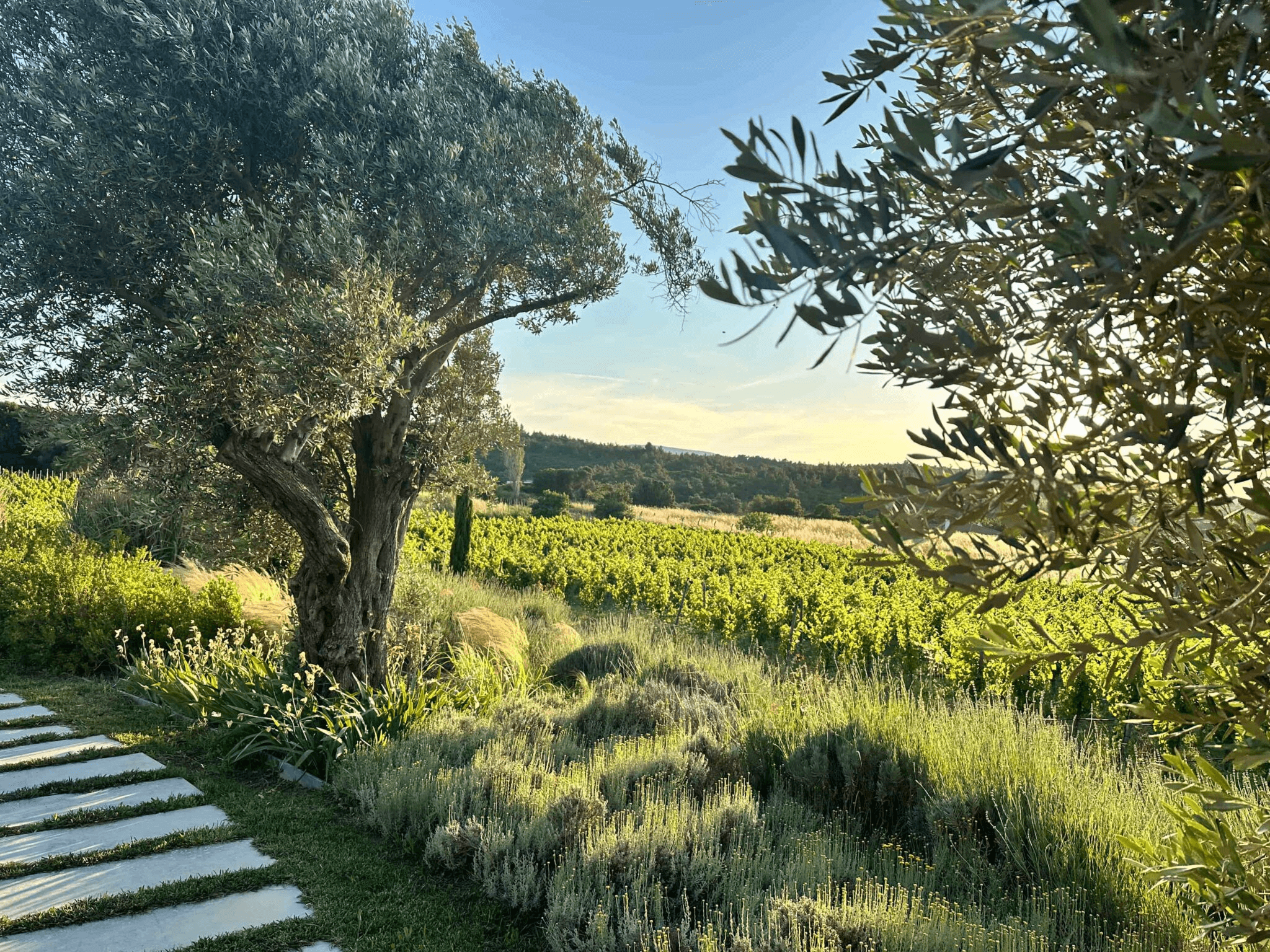
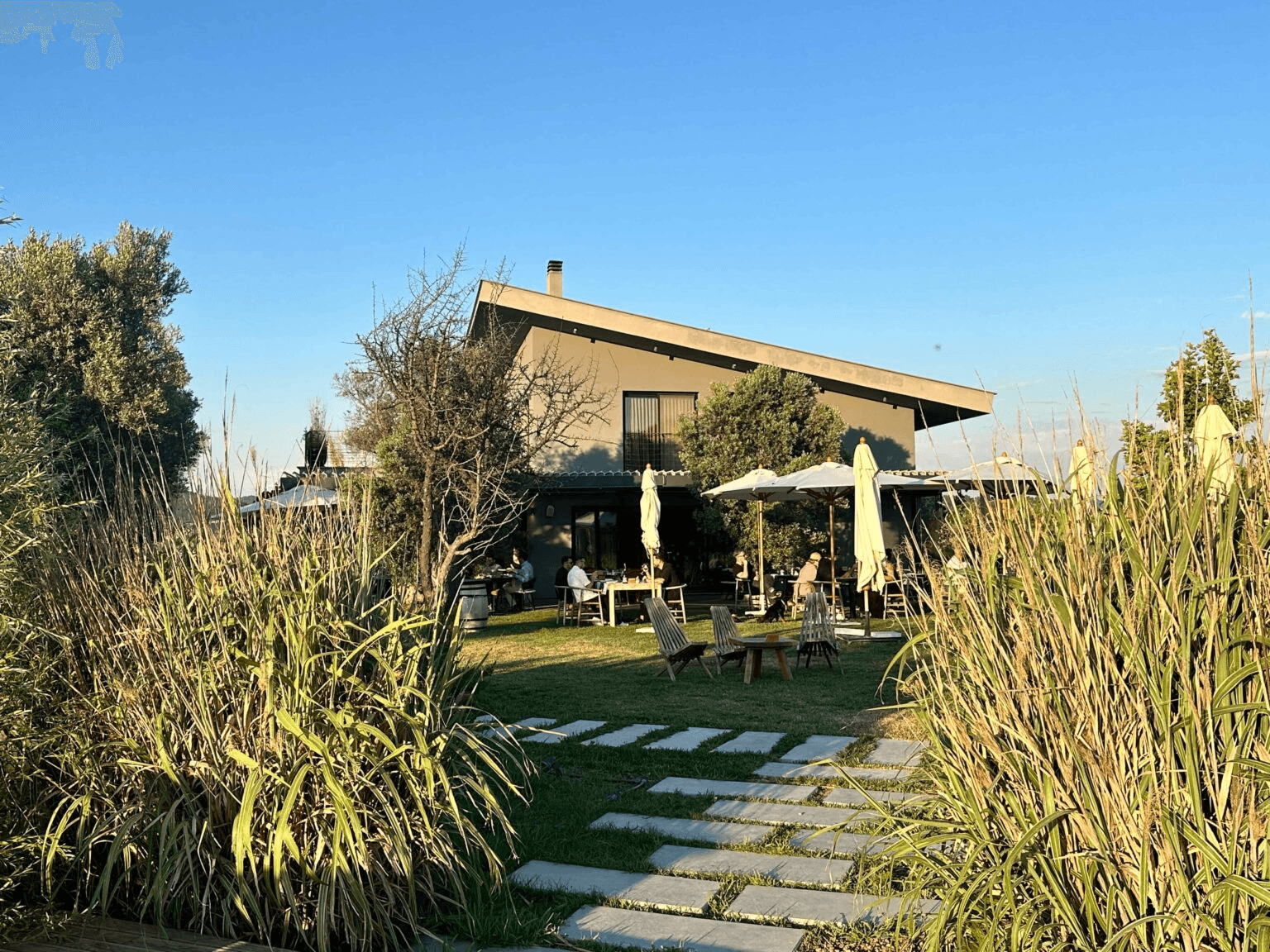
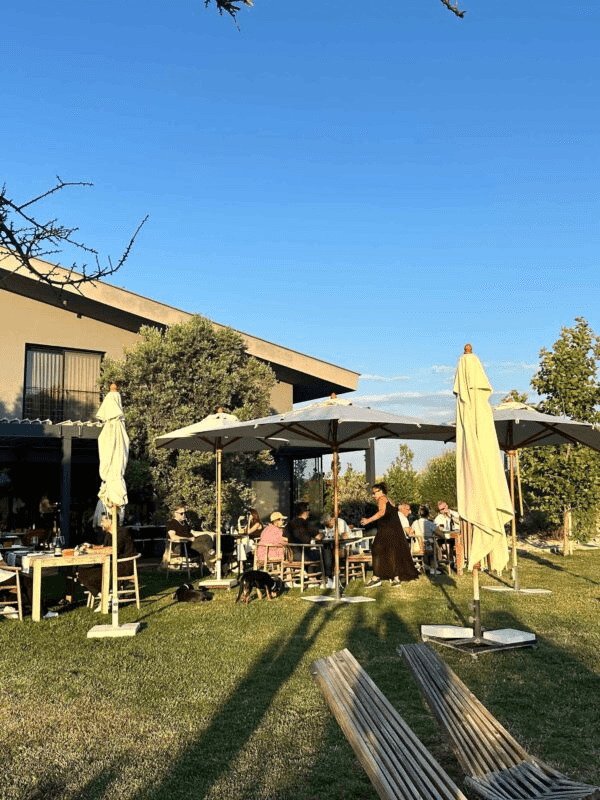
We sat down with Ceylan Ertörer Diaz Leon, the founder of Hus Wines —whose vineyard restaurant has earned a spot on the 2025 Michelin Guide’s “Recommended” list— at a table overlooking the estate’s stunning vines.
Tucked away in the dreamlike vineyards of Kuşçular Village in Urla, a Michelin-recommended destination awaits: Hus. What began as a romantic dream has transformed into a labor of love, with winemaking and viticulture carried out in meticulous detail. Today, Hus Winery is both a proud part of the Urla Vineyard Route and a respected name in gastronomy. We spoke with its founder, Ceylan Ertörer Diaz Leon, to hear the story behind this exceptional endeavor.
How did the Hus Wines journey begin?
It all started in 2018 as a shared venture between my husband, Juan Pablo Diaz Leon, and me. We met in Montreal, Canada. He’s Chilean, and I was there briefly to study language, while he was traveling and working. Shortly after we met, I returned to Turkey. When my mother fell ill, I left my job in Istanbul and moved back to İzmir. Juan came to visit for a while and eventually enrolled in a master’s program here. I was caring for my mother and pursuing a master’s degree in business administration. After my mother passed away, we supported each other through that difficult period. We often visited this land—my family’s land, where we are now.
I’m a third-generation resident of Urla. My grandmother came here from Crete during the population exchange. This property used to be a cherry orchard. My parents, passionate about viticulture, had planted some vines here, but with their demanding work schedules and my mother’s illness, the vineyard was neglected. Then one day, Juan and I started asking: Should we do a project here? Could we make something meaningful of this place? There was already a promising development in the region—the Urla Vineyard Route—and great potential for winemaking. Inspired by the vines my mother once planted, we began to dream about joining that vibrant scene.
At what point did the dream become a reality?
First, we replaced some of the weaker vines and expanded the vineyard area. We kept a section of the original vines in memory of my mother. That’s when our story truly began—in 2018, with those new plantings. Around that time, our daughter was born. She was just approaching her first birthday while we were preparing the land. Suddenly, we had two babies to care for: our daughter and the vineyard.
We had a growing desire to build a small winery. One opportunity led to another, and by early 2019, we had started construction. Everything moved incredibly fast. During the 2019 harvest, we produced our first wine.
Our journey has been shaped by a chain of meaningful events and serendipity—meeting my husband, losing my mother, choosing to settle in Urla, and ultimately building a life here together. That’s how Hus came to life. Just as everything was beginning to settle, and we were on the verge of enjoying the fruits of our labor, we experienced a heartbreaking loss—my husband passed away in 2021. Since then, I’ve been running the business on my own. This year will mark our seventh harvest.
May he rest in peace. How did you choose the name Hus? What does it signify?
While researching the history of Urla, we came across a mythological figure named Hus Klazomenai. Klazomenai is the ancient name of Urla. Hus was said to be a winged boar—a creature from a local myth. It’s a symbol that even appeared on ancient coins from the region. We were intrigued by this unique mythology and decided to name our brand Hus in its honor.
How did you get started in winemaking?
We began with the help of consultants—people with professional training in viticulture who had made wine in different parts of the world. Our oenologist, José Hernandez, is from Spain. He worked incredibly well with my husband, whose native language was Spanish. They had great synergy and collaborated closely. As for the process itself, wine is truly made in the vineyard. To produce a quality wine, you need healthy vines and quality grapes. If the vineyard is well cared for throughout the growing season, the fruit will reward you. Once the grapes are harvested, they are transported to the winery as quickly as possible.
The method we use is fairly traditional: For red wines, grapes are destemmed, gently crushed, and placed in tanks. Then comes the maceration process, where the juice sits with the skins and seeds for 20–30 days. Afterward, the grapes are pressed, and the wine is transferred to barrels, tanks, or vessels such as egg-shaped or concrete tanks—we use those, as well as terracotta containers. After 10 to 15 months, bottle aging begins. For white wines, maceration with the skins is either skipped or kept very short. The grapes are pressed directly, and after the must ferments, the wine follows a similar maturation process. Whites are generally ready for bottling much sooner. For instance, the whites we produce are usually ready for sale four to five months after harvest.
Is there a method in your production that distinguishes Hus from others?
Yes, absolutely. First, we avoid using pumps to transfer the grapes. Instead, we rely on gravity. This reduces stress on the grapes and prevents seed breakage, preserving both flavor and structure. We even designed our winery building with this method in mind. Another detail is that we start fermentation on some of our grapes with native, wild yeast rather than commercial strains. Additionally, we age a portion of our wines in amphorae. Our aim is to interfere as little as possible with the natural character of the grapes. We use minimal additives and keep sulfur levels low. At Hus, we are committed to crafting wines that are honest reflections of our land, our care, and our story.
Can you tell us about the grape varieties you use in your wines? We had two guiding principles when selecting our grape varieties and determining our winemaking style. The first was a commitment to working with local, indigenous grapes. We began by researching what naturally thrives in the region—what grows well, what’s already planted, and what we might source nearby. For white wines, we chose Emir from Cappadocia and Bornova Misketi, a variety native to İzmir and the peninsula. For reds, we initially experimented with Öküzgözü and Boğazkere, and today we continue working with Boğazkere. Our second principle involved exploring surrounding regions and villages. That’s how we discovered Carignan and Alicante vineyards in Beyler Village, Seferihisar. These varieties have been grown in the region for decades, but they were mostly used by large-scale producers to increase wine volume—never really considered for crafting high-quality wines. This was due in part to consumer preferences, limited awareness, and the general unpopularity of these grapes. We decided to focus on their potential.
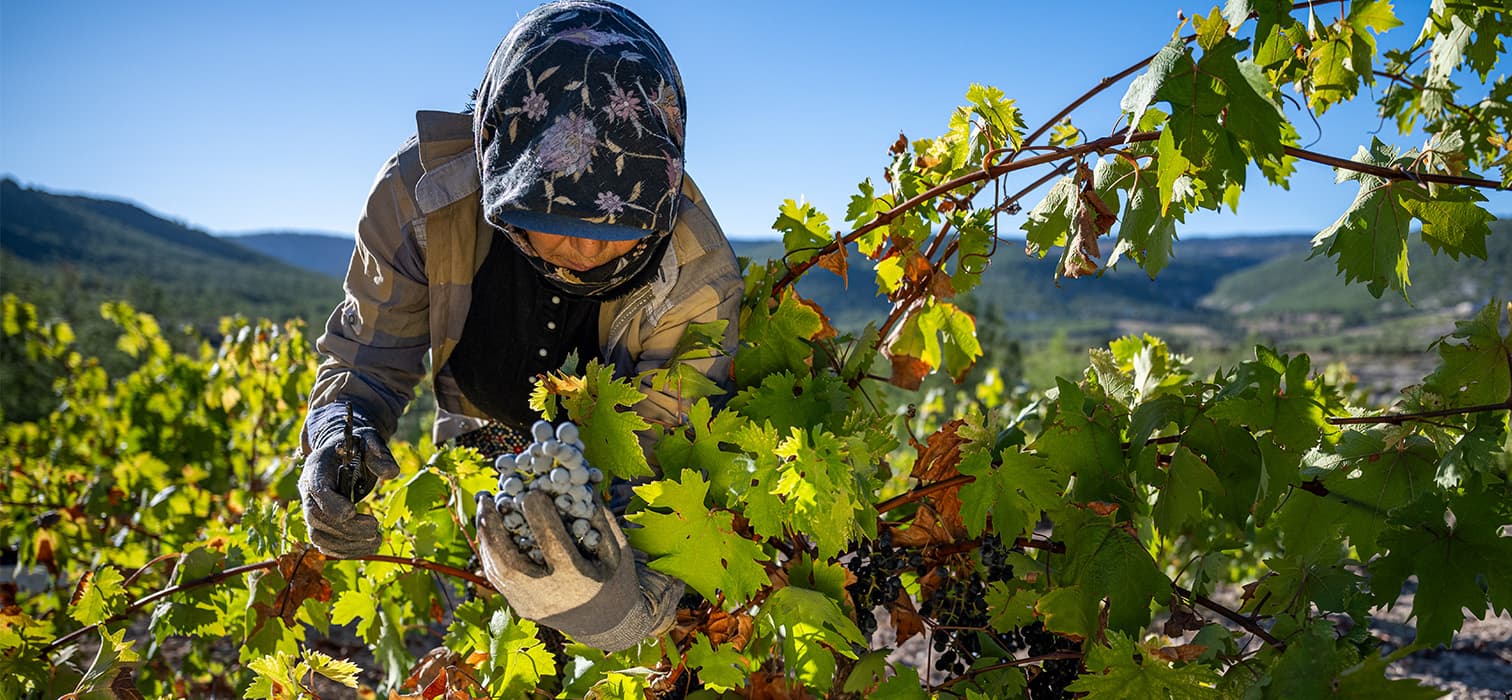
We took over the care of those vineyards, striving to grow high-quality fruit. We started by asking, How can we better care for these vines? What practices do they need? We made agreements with the vineyard owners: “We’ll handle the maintenance to ensure grape quality, cover your farming costs, and pay you above market price at harvest, so you can continue this work.” Because in reality, the prices set for grapes often don’t reflect the labor and expenses involved. Many of these vineyards were on the verge of being abandoned or uprooted. Our goal was to protect them and help them realize their potential. As part of this effort, we focused on Carignan and Alicante, while also planting Syrah and Grenache in our own vineyard, as these varieties are well-suited to our warm climate.
Are those the red grapes you mentioned earlier? Yes—Syrah and Grenache are both red grape varieties. In our vineyard in Kuşçular, we grow Syrah, Grenache, and Bornova Misketi. As I mentioned, we also source Carignan and Alicante from Seferihisar. This year, we grafted Urla Karası cuttings—shared by Urla Şarapçılık with the Urla Vineyard Route producers—onto a section of our vineyard, and we’re excited to see how they develop.
What is your approach to sustainability? In the vineyards we manage, we use only organic products. Although we aren’t certified organic, we avoid systemic pesticides that penetrate the plants and damage the soil over time. We aim to farm ecologically and apply biological control methods wherever possible. Another key sustainability practice is dry farming. The Carignan and Alicante vineyards are not irrigated at all—there is no irrigation system. This means they don’t consume any water, which is excellent not only for the environment but also for the concentration and character of the grapes.
I believe you’ve also invested in solar energy? Yes, that’s a recent investment we’re very proud of. I can now say that our entire facility—our tasting room, restaurant, kitchen, and production area—runs on solar energy.
How would you describe your wine style? We try to produce wines that express the authentic character and typicity of the grapes, while also being enjoyable to drink. We currently produce only dry wines, which I’d describe as elegant and complex—wines that reflect the essence of our soil and climate..
Have any of your wines won awards? We only entered competitions in our first year of production, just to gauge where we stood. Two of our wines received bronze and silver medals at the Decanter World Wine Awards.
You’ve created a beautiful and welcoming setting among the vineyards, now featured in the 2025 Michelin Guide’s Recommended list. How did this side of the project evolve? From the very beginning, as we were designing Hus Winery, we wanted to offer a complete experience. A place where people could not only enjoy our wines, but also relax in a thoughtfully designed space—surrounded by nature, with good music and, of course, delicious food. As we approached the launch of our wines, we started asking: What kind of menu will we offer? What should we serve our guests? That’s how we found our culinary consultants. Together, we developed what we call a casual fine dining kitchen. Through this collaboration, we also met the young chefs who now run our kitchen.
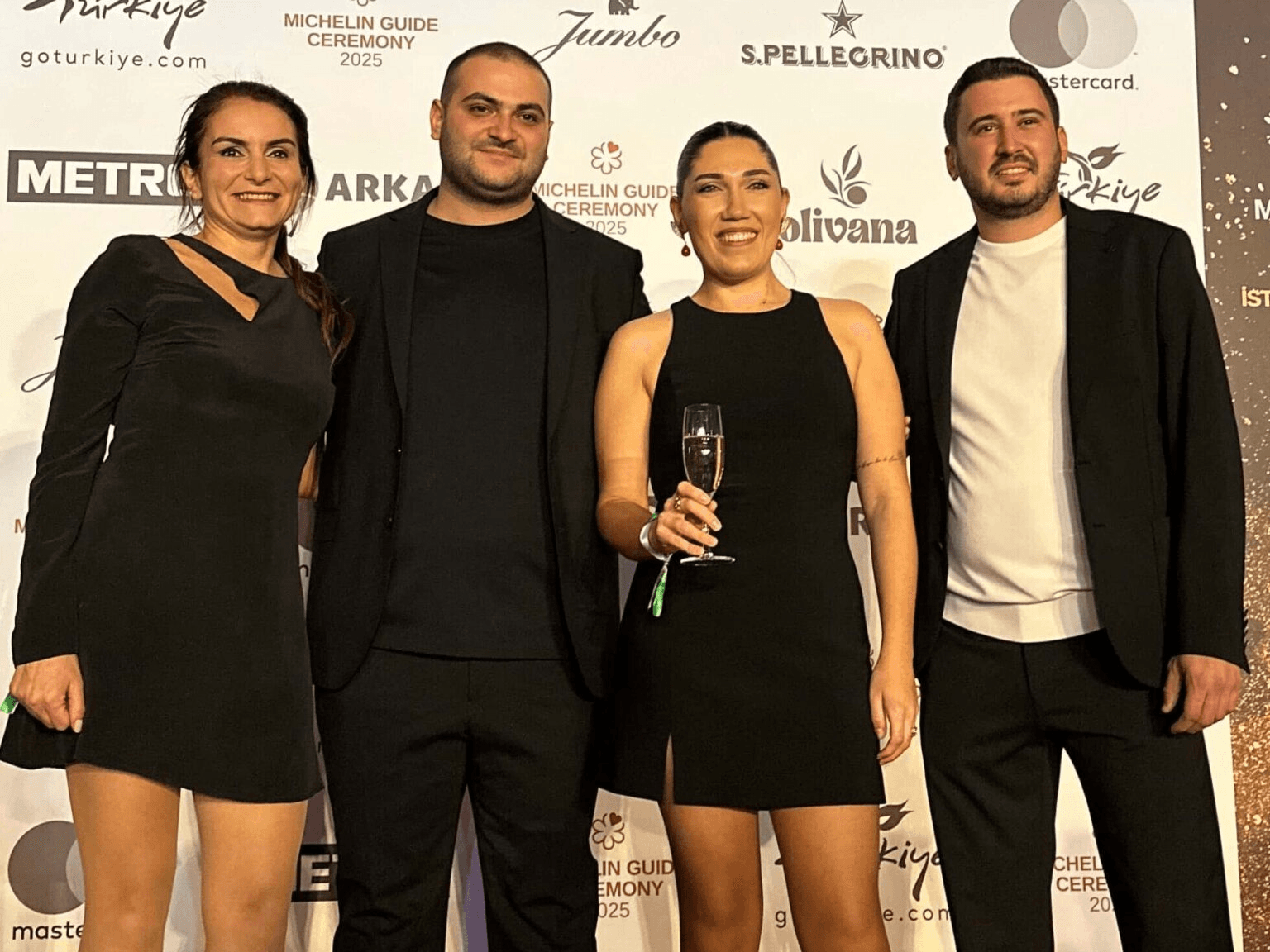
For the past two years, these talented young chefs have been in full creative control of the menu, which changes seasonally. They produce well-thought-out, refined dishes carefully paired with our wines. When we set out to make good wine, we never imagined we’d one day be recognized by Michelin…
To what do you attribute your place on the Michelin list? Quality ingredients, above all. Just as good wine begins with good grapes, good food begins with good ingredients. This land we work on is incredibly generous. We’re fortunate to have access to excellent produce—from seafood to vegetables. But I also think it’s thanks to the creativity and passion of our chefs. I try to support them by giving them freedom, space to explore, and room to grow professionally. That collaborative spirit, combined with great service and a warm atmosphere, is probably why we caught Michelin’s attention. They look at the overall experience—not just taste, but also hospitality, setting, and consistency. I believe our happy team and thoughtful details make a difference.
What are the biggest challenges of winemaking in Turkey? There are several. The restrictions on marketing and advertising can be very frustrating. When we launch a new wine, we’re not even allowed to share its image or promote it.
Legally, there are always shifting rules and challenges beyond the high taxes. A recent example is the “guarantee” law passed last year, which requires producers to provide a financial guarantee based on production capacity to cover possible future taxes or debts. This places an enormous burden on small producers. Culturally, we also face challenges. Turkey does not have a deeply rooted wine culture, and consumption remains low. The market is small. That said, there’s been encouraging growth. More small producers are entering the scene, and more consumers are becoming curious about lesser-known grapes and wineries.
Have you observed the effects of climate change since you started? Yes, absolutely. Every year brings surprises. Sudden shifts in weather, extreme heat after heavy rainfall—these conditions can trigger fungal diseases. A couple of years ago, many producers lost their entire harvest. Urla is already a hot region, and it’s getting hotter. Grapes need cooler nighttime temperatures to ripen properly. Thankfully, the sea breeze helps us here in Kuşçular and at higher elevations, but we still face challenges. Drought stress is becoming more common, and sometimes we do have to irrigate.
What happens when a vineyard goes into stress? The plant essentially shuts down. It stops growing, stops developing. The leaves stagnate, and the vine shifts into survival mode. At that point, fruit development and quality are compromised.
Do you export your wines? We’ve exported to the U.S. twice so far, but our primary market is Turkey—mainly wine and gastronomy tourism in Urla. Most of our customers are visitors who come specifically for the experience.
You’re part of the Urla Vineyard Route. How did that come about? When we started this journey, Urla Bağ Yolu (Urla Vineyard Route) was our biggest source of inspiration. Honestly, if it hadn’t existed, we may not have pursued this dream at all. We wanted to honor my mother’s memory and become part of this collaborative effort. We visited the other producers often, and we admired what we saw—a community that worked together rather than competing. That shared commitment to Urla, to wine, and to doing something meaningful made us want to join. It’s been a beautiful partnership.
Beyond mapping the route, what else does Urla Vineyard Route team do? We constantly share knowledge and resources. If there’s a vineyard disease or a weather threat, we notify one another. For example, Urla Şarapçılık conducted a muscat clone selection and shared the results with us, which allowed us to graft a healthier Bornova Misketi. They also reintroduced the Urla Karası grape after years of work and shared cuttings so we could propagate it. We’re working together with wine consultant Turgut Tokgöz to have Urla recognized in the World Atlas of Wine through terroir studies. We co-host and join events, and there’s a true sense of synergy.
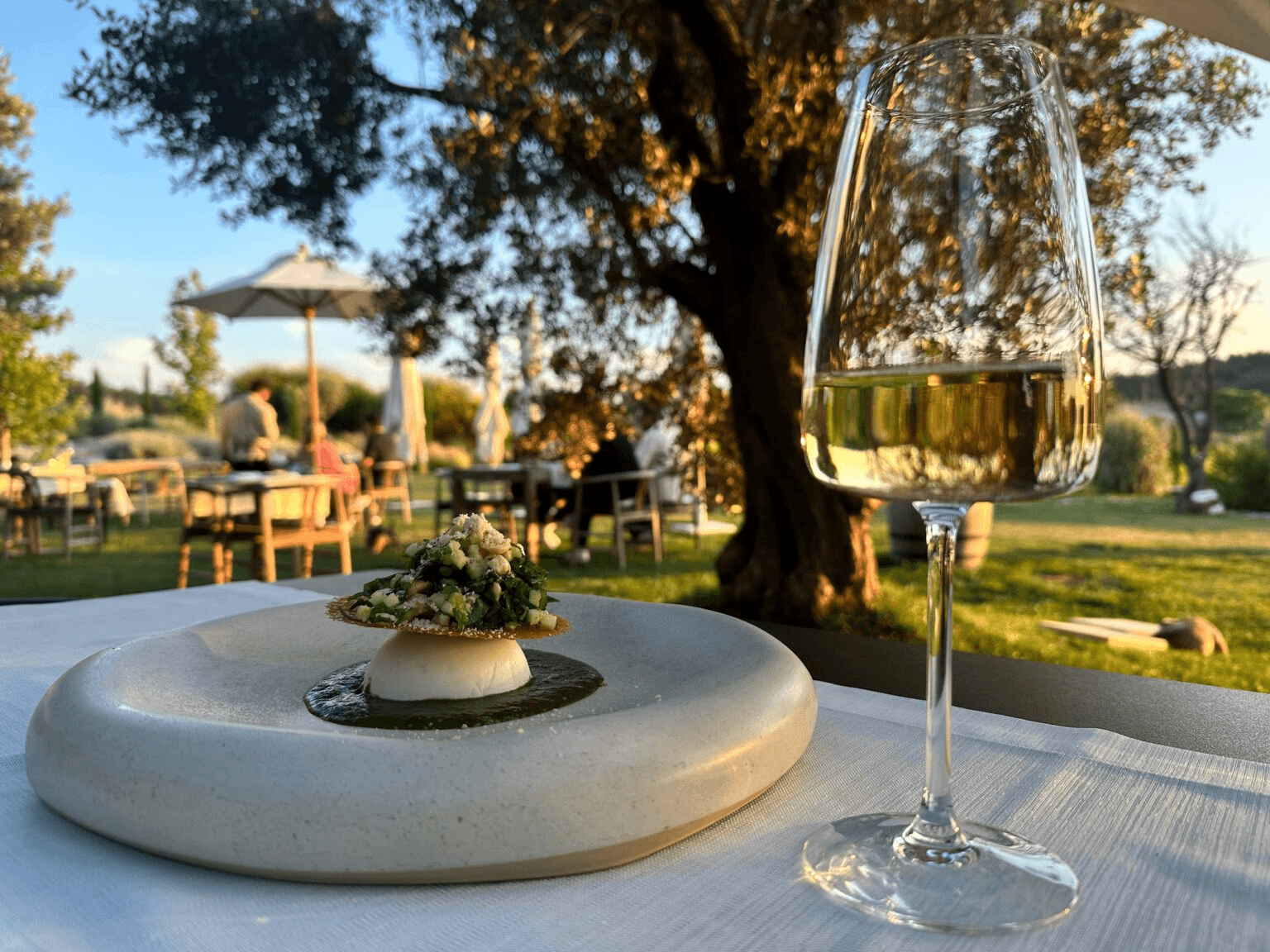
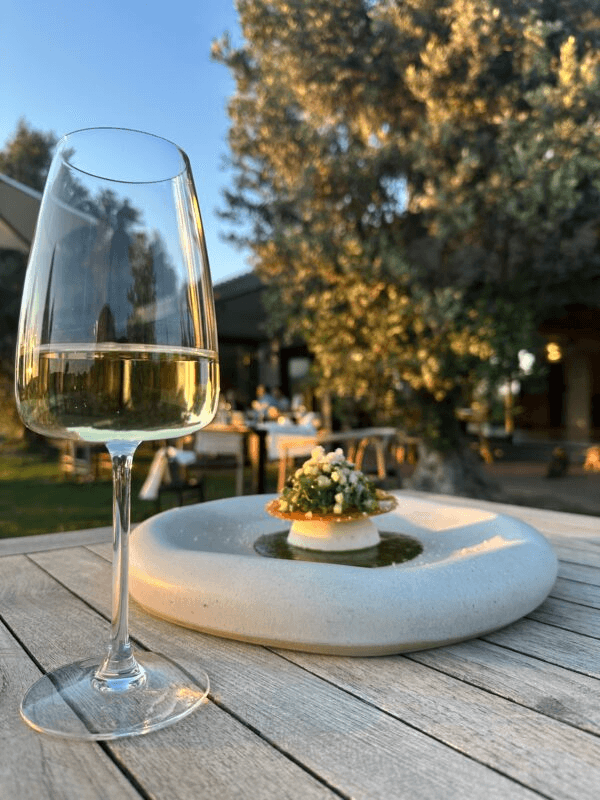
Do you have a favorite Hus wine and food pairing? Our Emir white holds a special place in my heart. We’ve been producing it since 2019 with grapes from Cappadocia. It has truly helped us make a name for ourselves. Another is Cariñena Juan, a red wine named after Juan. The vineyard is in Beyler Village, and it was a risky investment at the time. But Juan believed in it deeply, so we named the wine in his honor. We released the first vintage in 2023, and every year we wait in anticipation to see how it turns out. As for food, our menu changes regularly, but I currently love our Ezine cheese and sorrel salad, and I’m always excited when we have artichoke dishes in season.
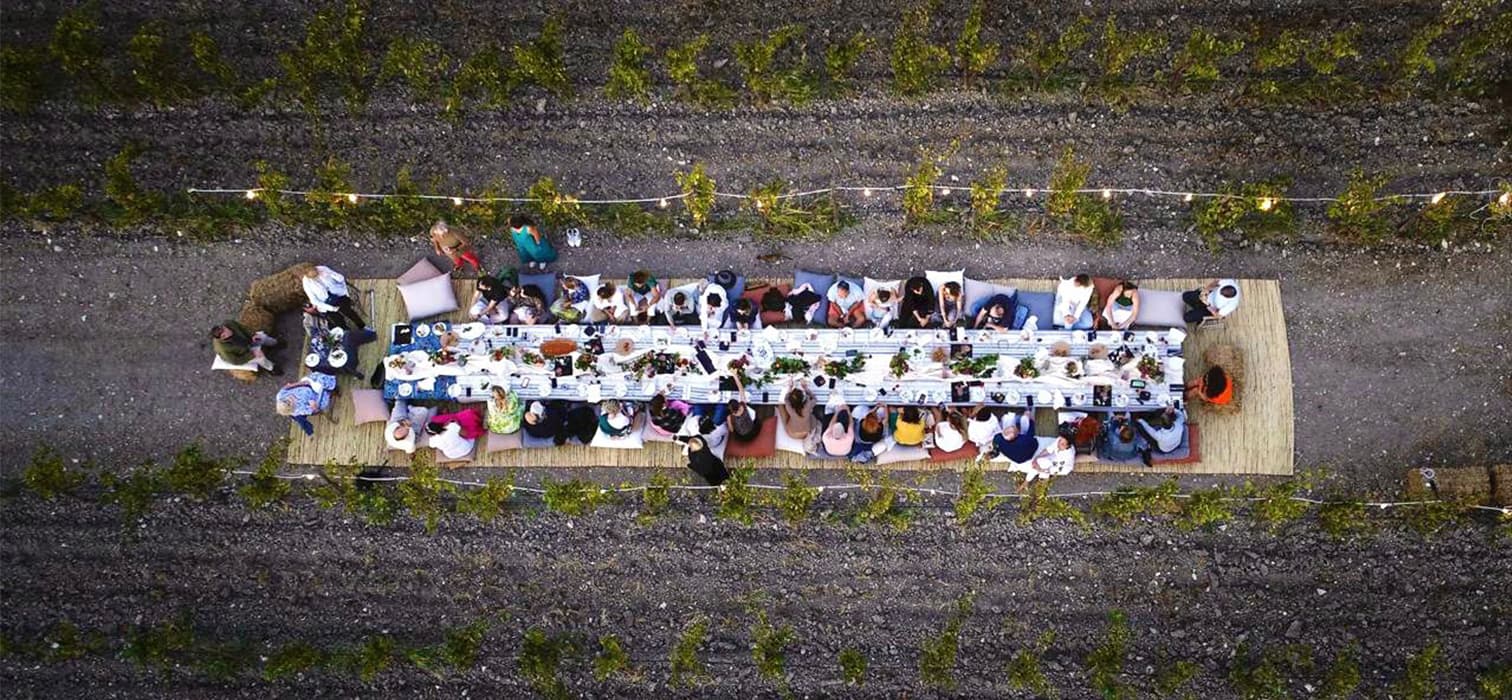
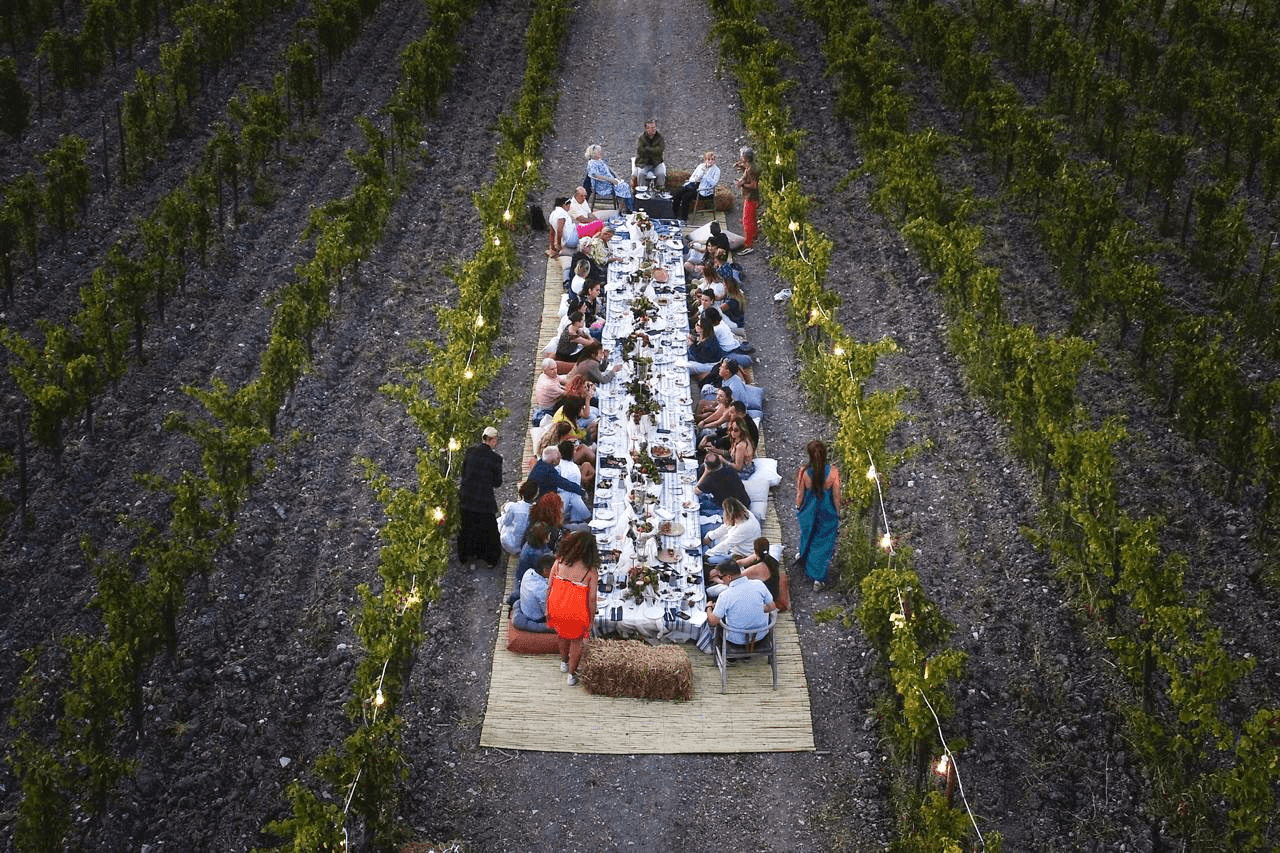
Is there a moment at Hus that you’ll never forget? One of the dreams Juan and I had was to host a long banquet table right in the middle of the vineyard, bringing together people who didn’t know each other. We even designed one row of vines to be extra wide for that purpose.
Last September, that dream came true. We set up a long table between the vines, served shared plates, played good music, and gathered with a lovely group of Hus regulars. We drank wine and ate paella—it was unforgettable.
Another memory was during our first harvest. The winery building was nearly finished, but the machines hadn’t arrived yet. The grapes had been kept in cold storage for days. When everything finally came together and we were ready to start, we pressed the button—and nothing happened. The machine didn’t work. At midnight, we had to load the grapes back onto the truck and return them to storage.
There was also a power outage the first time we hosted a large group at the winery. It was chaotic, and we felt helpless—but now we laugh about it.
Do you have any long-term projects? We’d love to explore different wine styles—perhaps something sweet or fortified. We also want to refine our grape selection around local varieties, focusing on Bornova Misketi, Carignan, and Alicante. There won’t be any drastic changes, but we’re always open to thoughtful evolution.
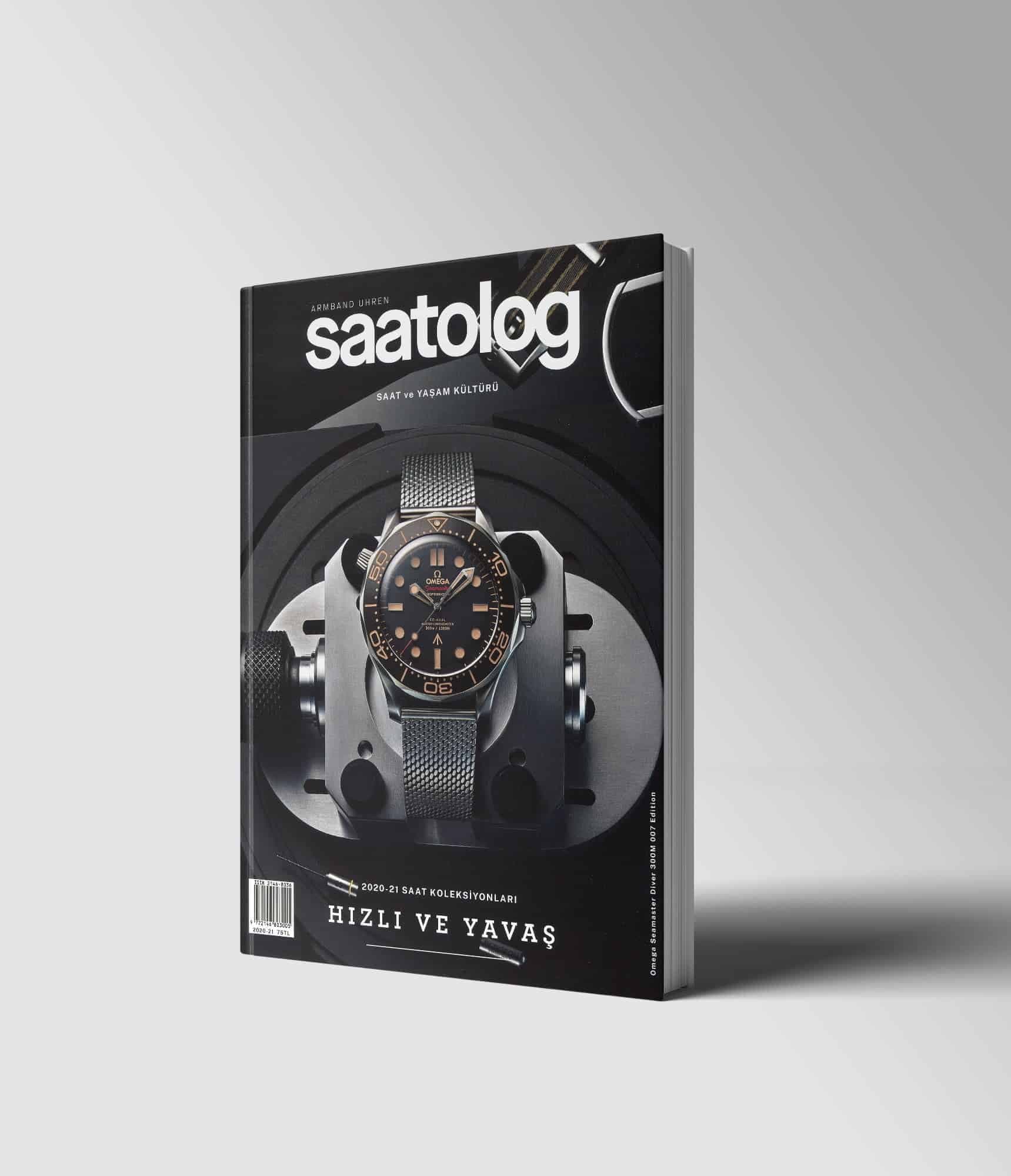
Saatolog Yıllık Saat Dergisi Saatolog’un yeni sayısı, 2020’nin yarattığı bu dönüştürücü etkiden ilham alarak hazırlandı. Dünya dijitalin etkisiyle her zamankinden de hızlı bir şekilde ilerlerken yavaşlamanın da önemini sonunda kavramış bulunuyoruz ve bu tezatlık hayatlarımızın her anına etki ediyor. Biz de bundan yola çıkarak Saatolog 2020/21 sayısını ‘‘hızlı ve yavaş’’ teması altında hazırladık.