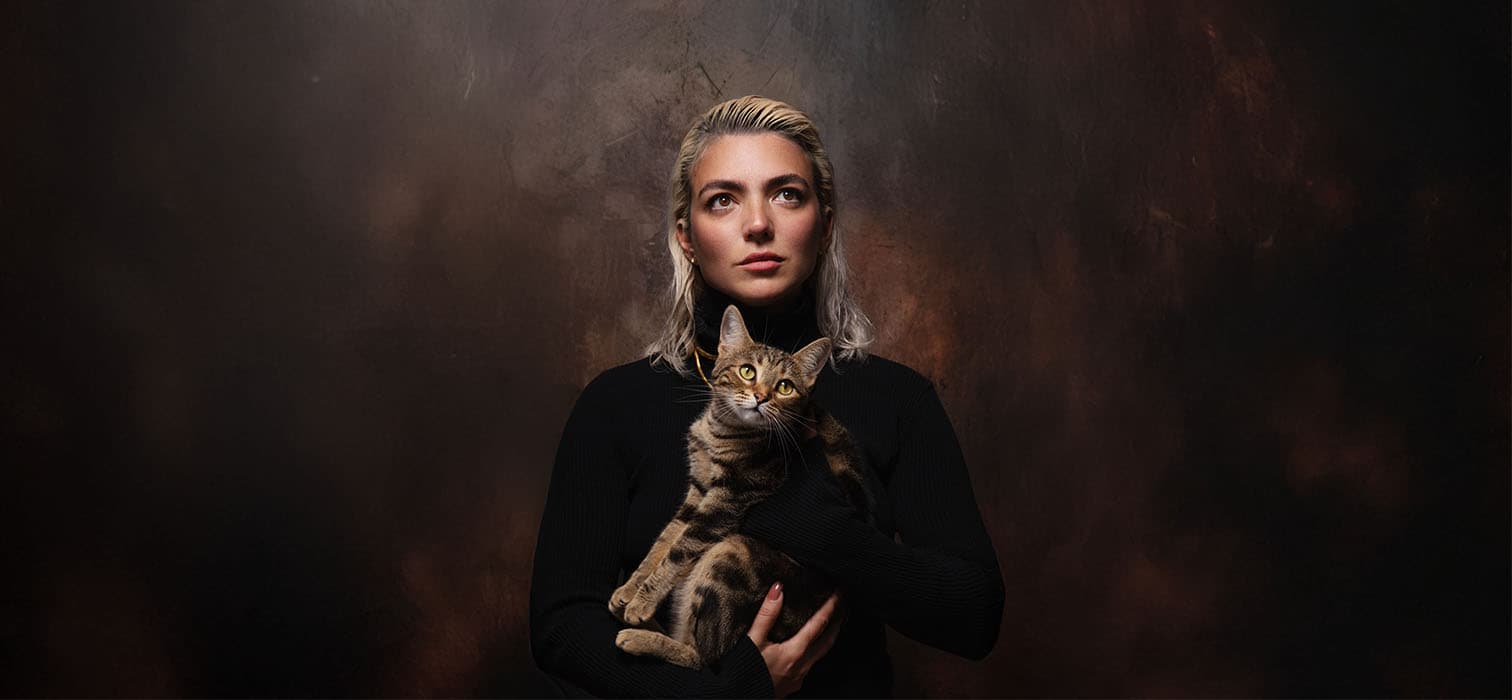
A black cat, an old rug, an unfinished idea… Seda Gazioğlu reveals the worlds hidden behind the seemingly ordinary.
Seda Gazioğlu is interested in what everyone looks at but often fails to see. People’s small habits, beliefs carried over from childhood, and fears passed down through generations take on new meanings in her art. Old Anatolian rugs sometimes carry these stories; at other times, they become the stories themselves. With her latest exhibition, Do Not Feed the Artist, the familiar direction shifts. An artist who has sought to understand other people’s behaviour now turns to her own life, her changing identities, and the transformation she is undergoing. Born out of a period of creative block, the exhibition tells a story of getting to know oneself again, finding a different relationship with the past, and allowing change to happen.
The human mind, fears, beliefs, and patterns of behaviour occupy an important place in your work. You are particularly drawn to habits we often accept without question in everyday life. What is it about human behaviour that makes you so curious?
I think an extraordinary event attracts our attention precisely because it is extraordinary. We do not need to make any particular effort to notice it. What really interests me is the opposite: the things we have stopped even looking at because they are in front of us every day. And what interests me most is repetitive behaviour. The mesmerising rhythm of repetition always draws me in. Beneath the behaviours and habits we maintain without question, almost by rote, there are sometimes deeply rooted truths, taboos, and social relationships. I like approaching the things we look at every day without seeing from another perspective, getting to know them all over again.
You have spoken about the influence of childhood observations on your work exploring superstition. What place did these beliefs have in your childhood?
My mother was an extremely modern, rational person who relied on scientific knowledge and did not take abstract things particularly seriously. Yet this highly predictable, even somewhat rigid person would take a step back the moment she saw a black cat in the street and ask me to do the same. It was as though she stepped out of the reality I knew for a second and then returned. She also never once took a sharp object, such as a knife or scissors, directly from my hand. As a child, I would devise little games to catch her off guard, trying to put a pair of scissors into her hand unexpectedly. But I never succeeded.
What truly fascinated me was that these behaviours did not align with anything else I knew about my mother. I think I have spent my life trying to discover those places that do not fit the maps I thought I knew.
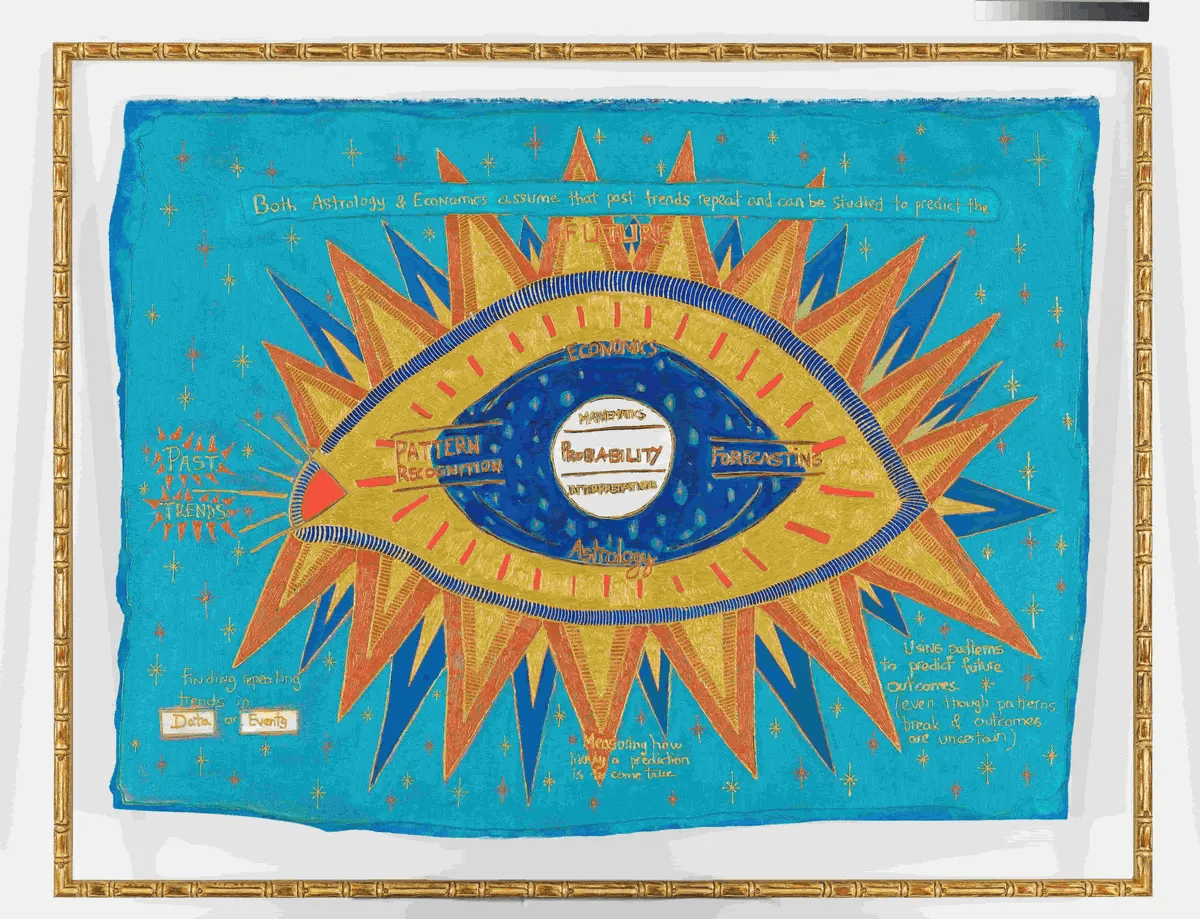
Beliefs surrounding the evil eye, bad luck, and protective rituals are passed down through generations. Why do you think people today still feel the need to believe in invisible forces, in an age when scientific knowledge is so readily accessible?
I think that, however far science advances, superstitions will continue to exist in every society, each in its own language. Because science still cannot answer all our questions about what comes after death and the unknown. And we humans are not particularly comfortable with uncertainty. I think we all have certain beliefs inherited from the environment we grew up in, which we turn to especially in moments of fear and helplessness.
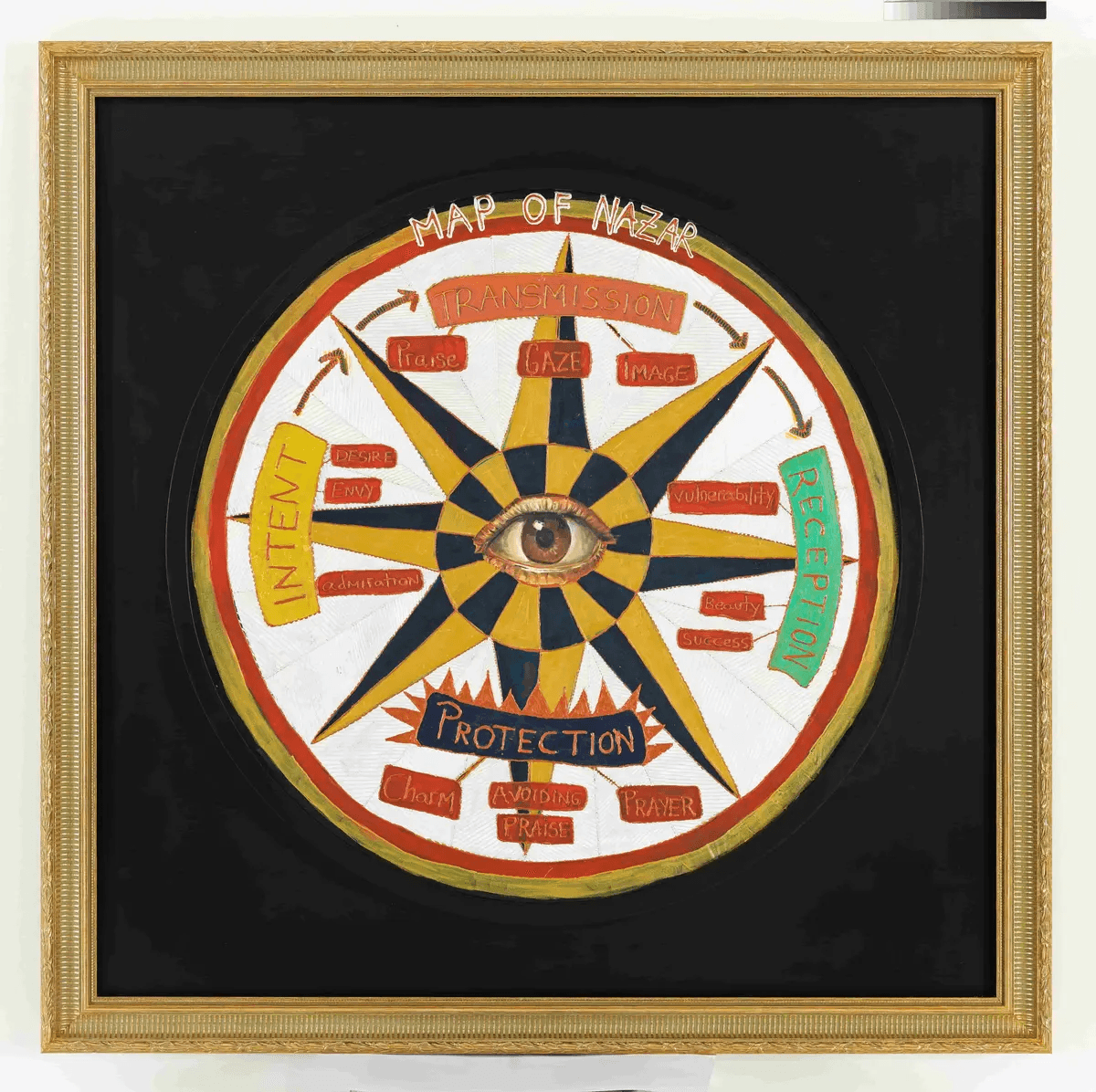
In your exhibitions Was That Cat Black? and The Book of the Evil Eye, you approached superstition from different angles. In particular, you considered the evil eye not only as a cultural belief but also through the effects that looking and being observed have on people. Do you think another person’s gaze can really change our behaviour, or even the way we perceive ourselves?
Absolutely. In fact, sometimes the mere possibility of being watched, even without anyone actually looking at us, is enough to change our behaviour. Looking, being looked at, watching, and being watched have always been subjects of fascination throughout human history. Every era has approached this subject from a different angle, through its own beliefs, ancient knowledge, or scientific discoveries, giving it new meanings. What interests me is that new knowledge does not always eliminate the old. Sometimes, as science advances, ideas passed down through generations centuries ago without any concrete evidence can even find scientific parallels in different fields.
That is also why I find belief in the evil eye so interesting. What have we been told for centuries? Do not be too visible, do not attract attention, do not provoke envy, do not show yourself too much. At its core, there is the idea that looking is not merely a passive act, that it may have an effect on the person being looked at. On the one hand, we want to be seen; on the other, we fear the consequences of being seen.
I cannot help wondering: could things we cannot yet explain or prove today, but somehow believe to exist, have a scientific explanation in the future? Perhaps some of the things we call superstitions today are realities whose language we have yet to decipher.

The Memory of a Rug
Old Anatolian rugs have become one of the most distinctive materials in your art. What is more, you often use their usually unseen reverse sides. I am curious: what draws you to these old rugs? When choosing one, do you look at its pattern, its past, or the feeling it evokes in you?
I am actually very instinctive when choosing rugs. I am always collecting old Anatolian rugs with central medallion patterns from second-hand dealers. Behind this is a personal connection rather than a technical or conceptual preference. When I was growing up, those medallion rugs were always there, both in our home and in the homes of older family members. They have a very strong presence in the visual memory of my childhood.
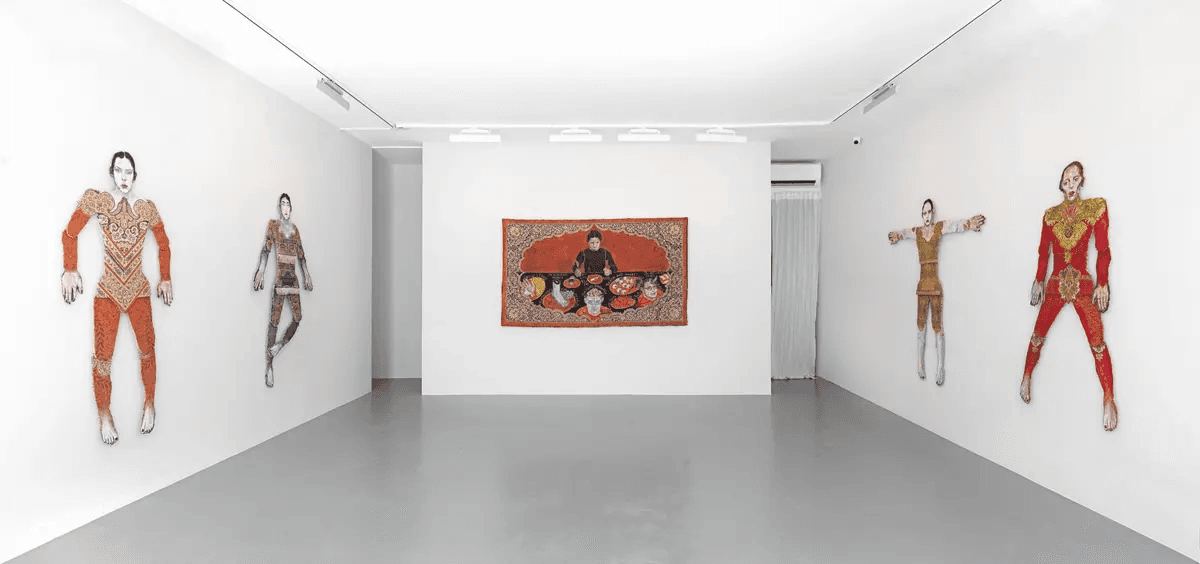
You paint on rugs, cut them, and sometimes join them back together with brass wire. What does it feel like to intervene in an object that has been used for years and may have witnessed the lives of several generations?
If a rug is torn or damaged, I prefer not to repair it by restoring it to its original state. Because repairing often feels to me like trying to recreate a past condition. I am more interested in taking an object into another dimension than in turning it back.
The moment a rug enters my studio, it becomes a new material for me. When it comes together with art, it leaves its everyday function behind. The rug may still belong to you, it may remain in your home, and it may sometimes even serve as a status symbol, but once it has become part of an artwork, it is no longer a product to be used. It becomes something that can only be viewed.
In your exhibition, we see rugs that have been cut, fragmented, and stitched back together. You do not conceal the stitches; you deliberately leave them visible. Yet we so often try to hide our wounds and carry on with our lives as though nothing has happened. Do you think repairing something means making it as it was before, or accepting that it will never be the same again?
Trying to return something to its original state feels to me like accepting that its past condition was the best it could ever be. But I do not believe in a single “good state” frozen in time. Every period, every moment, can have its own version of good. If we are always going to stay the same, what is the point of accumulating all these experiences, happiness, anger, and sadness? If everything we live through changes us, I think we also need to believe in the power of that change. That is why I am more interested in transforming than repairing.
That is also why I do not want to hide the stitches, the joins, or the interventions. I like a material to bear the traces of its transformation. In handmade work, I prefer the marks left by the human hand to a flawless, sterile finish. Moments when concentration falters, a hand slips, an idea changes, or unplanned mishaps occur give a work a rhythm and vitality that could never have been designed in advance. Isn’t originality hidden in precisely those details?!
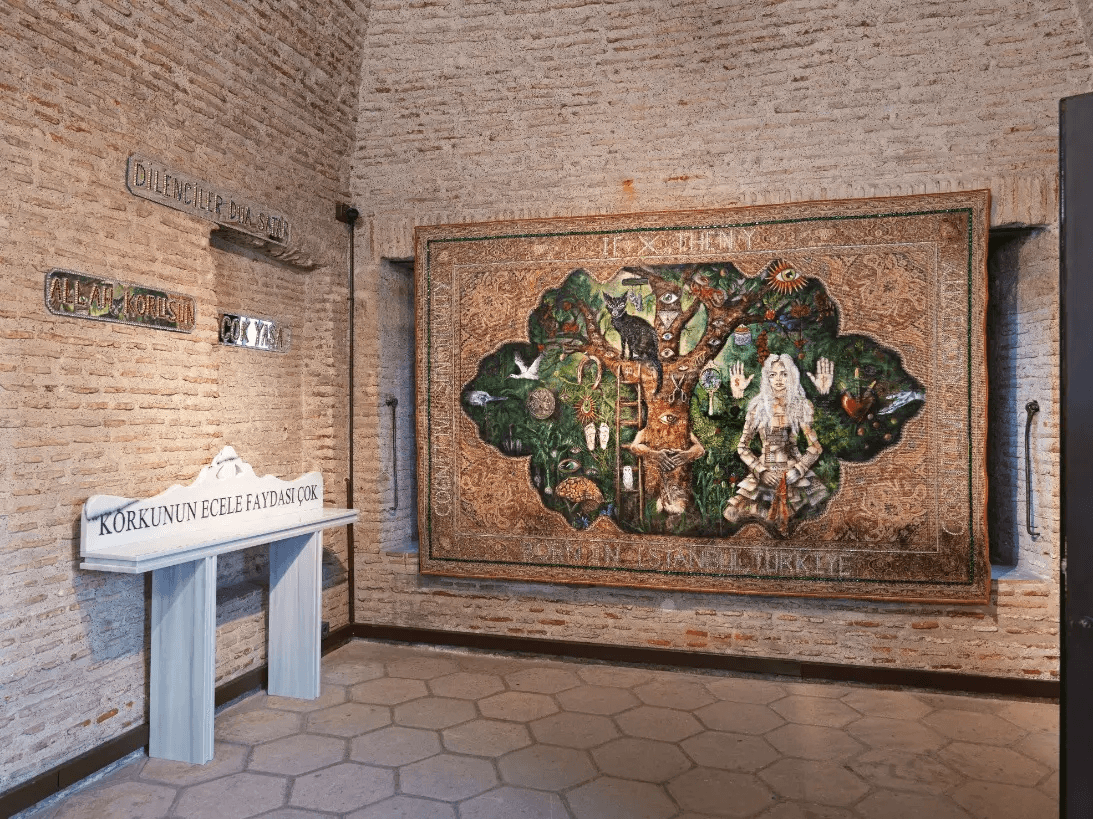
This Time, She Looks Inward
With your latest exhibition, Do Not Feed the Artist, you have turned your gaze towards yourself. While your earlier work explored people’s beliefs, fears, and behaviours, we now encounter your inner world. What led you to make such a personal exhibition?
The timing was actually completely unexpected. I had absolutely no intention of making an exhibition about myself. At the time, there was another project I was working on with great excitement and conviction. But for the first time, despite all my efforts, I could not bring that project to a conclusion that satisfied me. I had never experienced that kind of block before. The creative system I had trusted for years had unexpectedly failed to work. So I stopped and began writing to understand why. It was a kind of journalling, even a form of self-therapy.
At first, my aim was entirely pragmatic. It was as though, if I wrote enough, I would find the problem, fix the machine, and carry on creating in my familiar way from where I had left off. But of course, the process unfolded very differently from what I had planned. I realised that I had been trying to carry on with my life using the methods I already knew, without giving myself time to absorb the new identities that had become part of my life and sense of self in quick succession over recent years—motherhood, migration, being an independent artist, and so on. As I wrote, other questions emerged; as I examined myself, I began making new work. And as I made work, I healed.
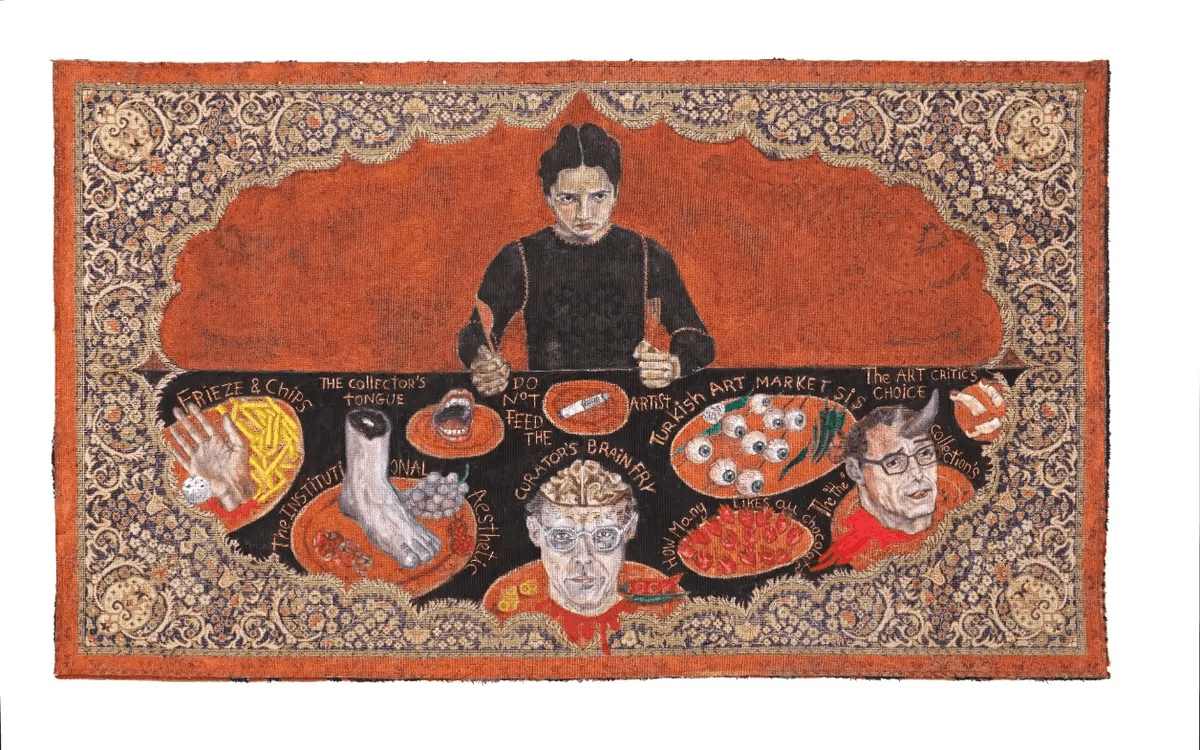
I love the exhibition’s title: Do Not Feed the Artist. It is both ironic and thought-provoking. Is it also a reference to a world that expects artists to keep producing, explaining themselves, and remaining visible?
I see artists as independent metabolic systems. An artist’s real work is the way they live, and what they produce in the course of that life represents projections of its different periods.
For these people, anything can become material at any moment. That is why one must be very careful when feeding an artist any subject, piece of information, moment, feeling, or interaction. Because that metabolic system will one day digest it and inevitably give it back to you, but you can never know when or in what form. This is by no means a straightforward, linear structure or process; it is highly unpredictable. So, too, are the things artists produce and scatter into the world. In today’s world, this has turned the artist into something of a feared threat. Protecting their existence and their space has therefore become quite difficult.
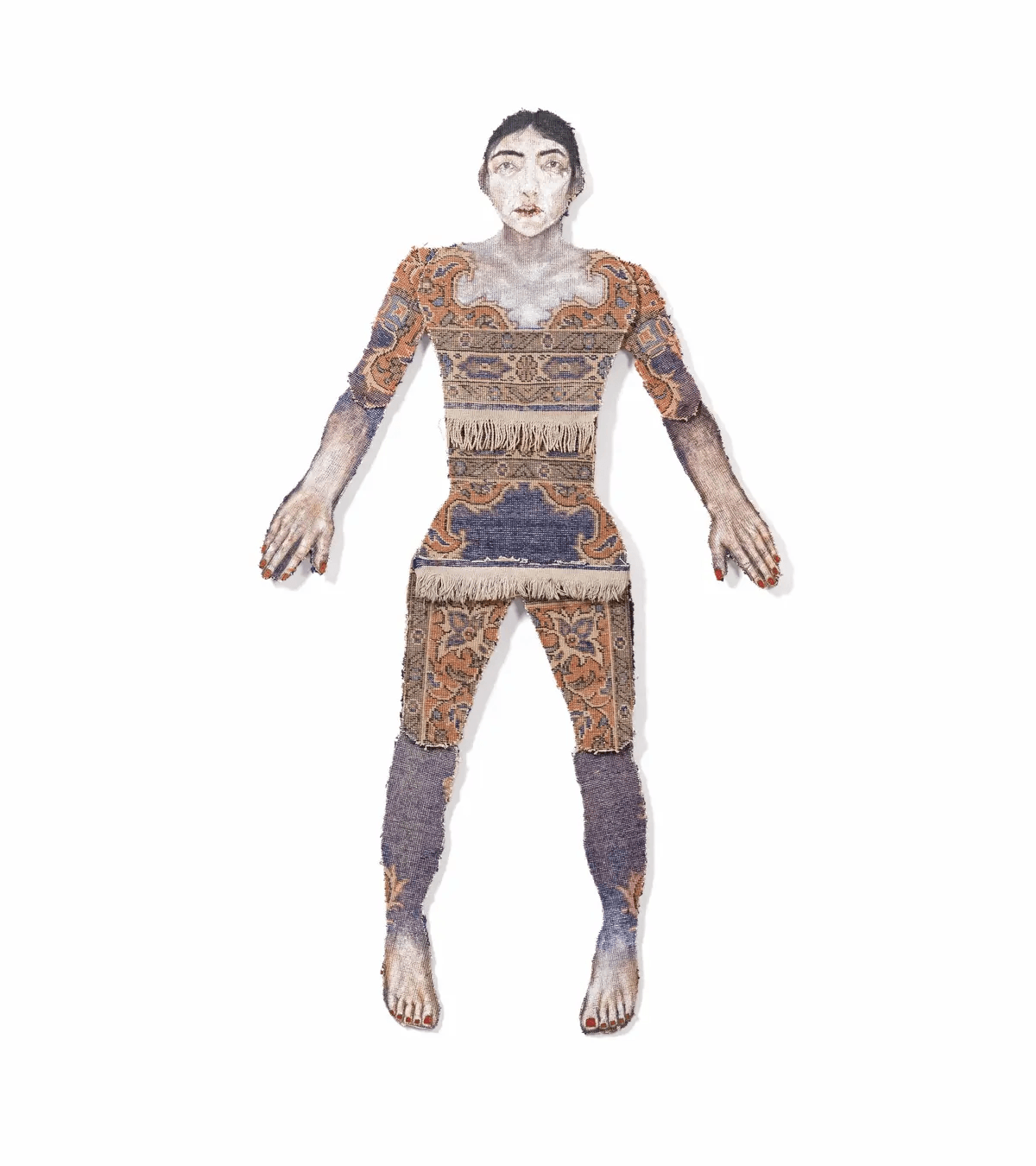
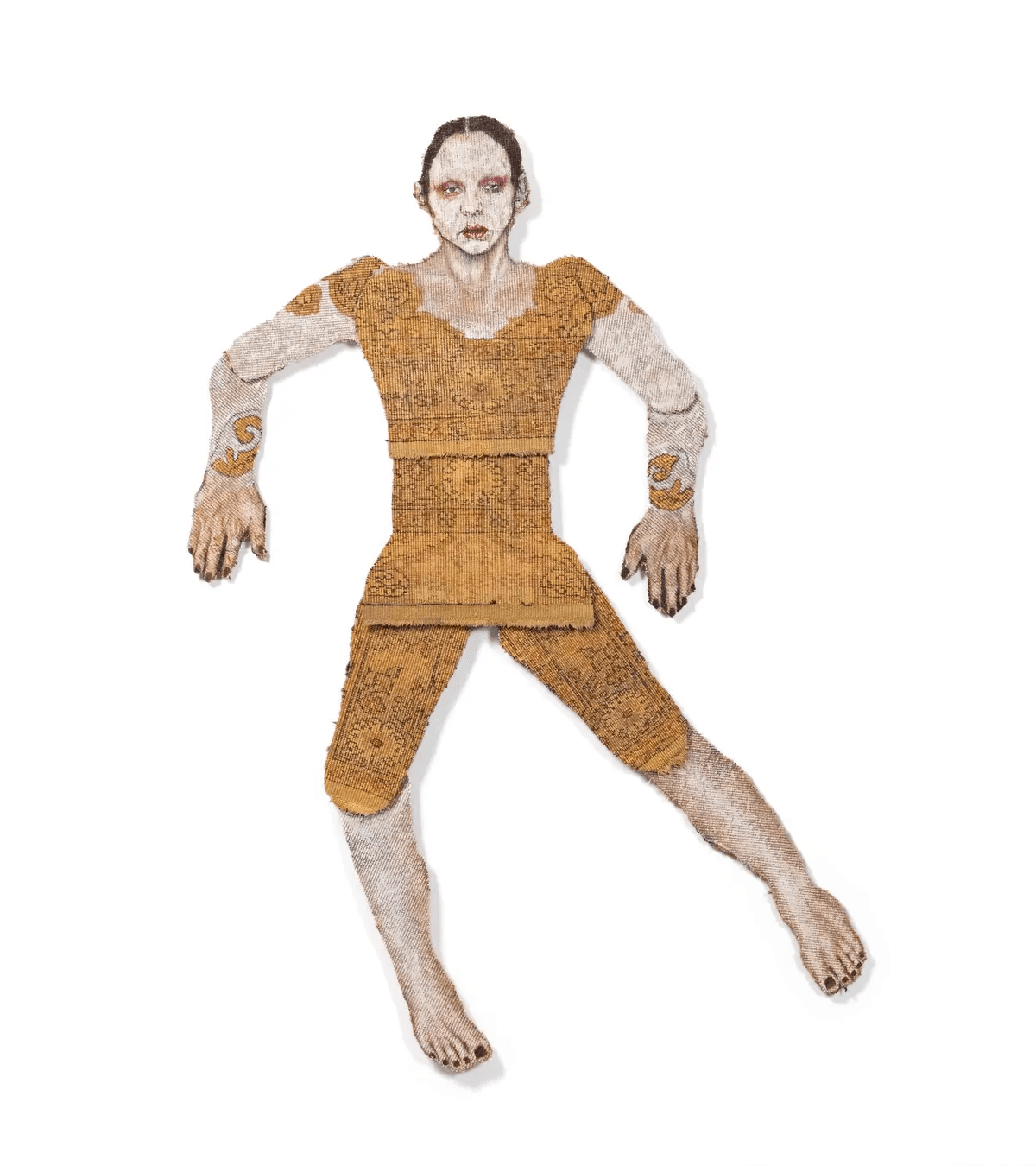
Your latest exhibition also includes self-portraits and puppets. Puppets inevitably bring to mind control, manipulation, and free will. As an artist, how do you find a balance between keeping everything under control and allowing yourself to go with the flow?
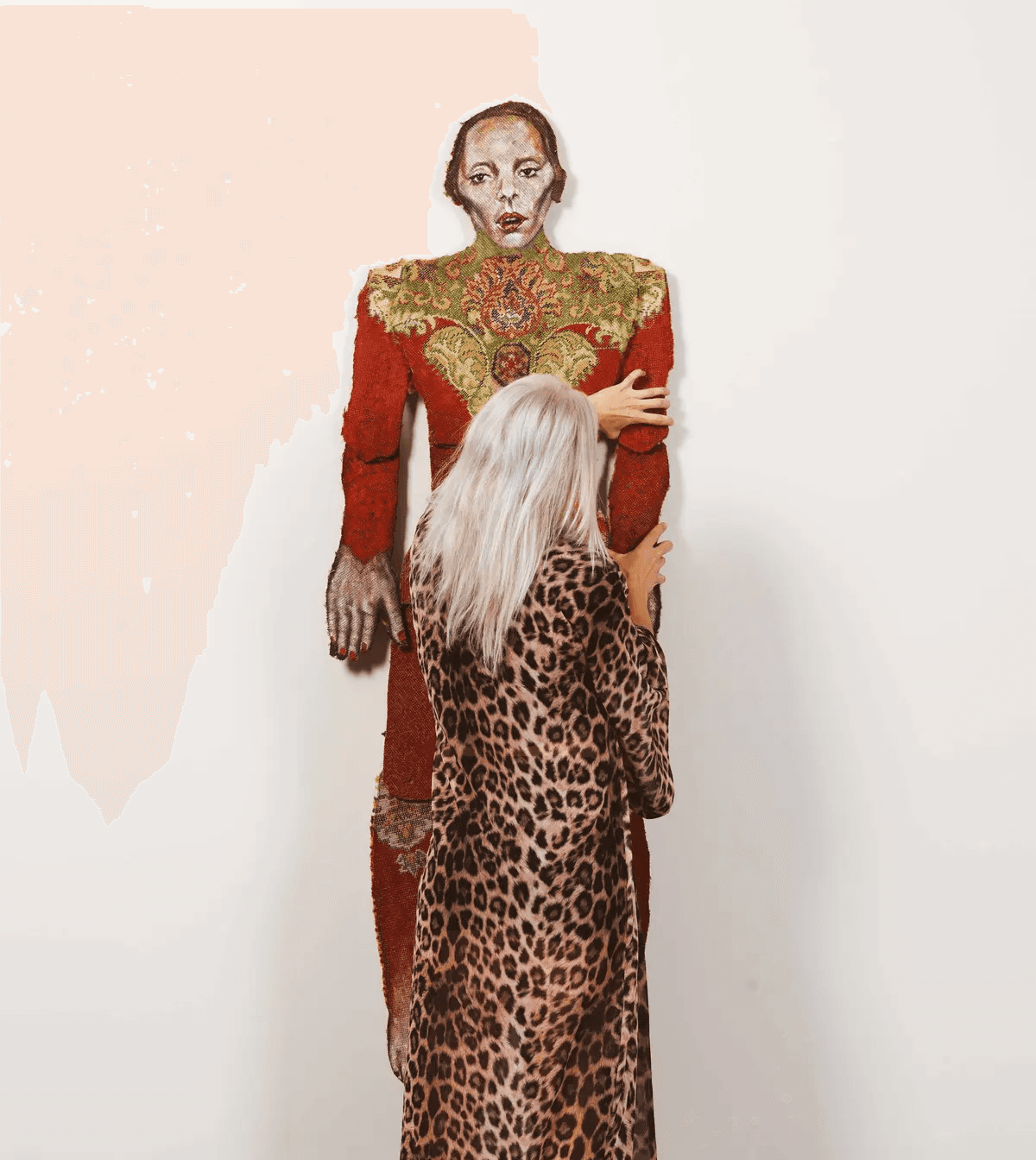
The four puppet-like works in the exhibition all have the same name: Self-Portrait. During the period when I began writing about myself, I realised that I had lost faith in my own existence—a kind of surrender—and had then spent a long time trying to control even surrender itself. In response to those two simple words, surrender and control, I wanted to depict myself as something like a puppet’s control mechanism, while also being a self in a state of surrender. So I found myself lying on a rug, tracing my silhouette in chalk. That was how the self-portrait series came into being. You can arrange the stringless puppets into any shape you like on the wall. By hanging those versions of myself from that period on the wall, as symbols of the illusion that surrender can be controlled, I feel as though I have released them from within me.
Seda, looking at your work from its beginnings to today, I see a journey from an artist trying to understand the outside world to one who can also turn inward. What has art changed in your life over all these years? What questions do you ask yourself today that you never asked when you first began your art education?
The birth of my son opened up a new dimension in the way I look at my own work. Previously, I worked much more with the questions of the moment I was living in. I respected the unknowability of the future; rather than probing it, I would say I focused on more timeless subjects. Now, I sometimes find myself asking questions about the future that I had never considered before. It is as though having my son brought with it an anxiety about the future that I had not previously felt.
Will he one day be able to find in my work the things I wanted to pass on to him but could not? Years from now, what will remain of his mother’s life today? Through which works will he come to know my present world, my thoughts, my fears, and my curiosities? Which pages will outlive me?
With motherhood, for the first time, I began approaching my work not only from the perspective of the present, but also as traces that someone might return to in the future. Before becoming a mother, this perspective would have felt like attaching too much importance to myself, so I always avoided it. But today, I think of it this way: even if it matters to no one else, every work I create will be a trace of his mother left behind for Puma. And somehow, whether he wants it to or not, it will become part of his life.
I do not yet know exactly how this has changed my artistic practice, or even whether it has changed it at all. But I am aware that a new filter has been added to the way I think.
Bee Goddess: Anatolia, An Endless Source of Inspiration
Cem Sağbil on Sculpture, Shifts in Direction, and Mythology
Elif Koyutürk Hazen: The Archive of What History Couldn’t Write