It has been 32 years since the Christina Stambolian design Diana kept unworn for three years became the “revenge dress”. Ever since, we have looked for echoes of it in the wardrobes of celebrities navigating break-ups, infidelity or an evening at the same party as an ex.
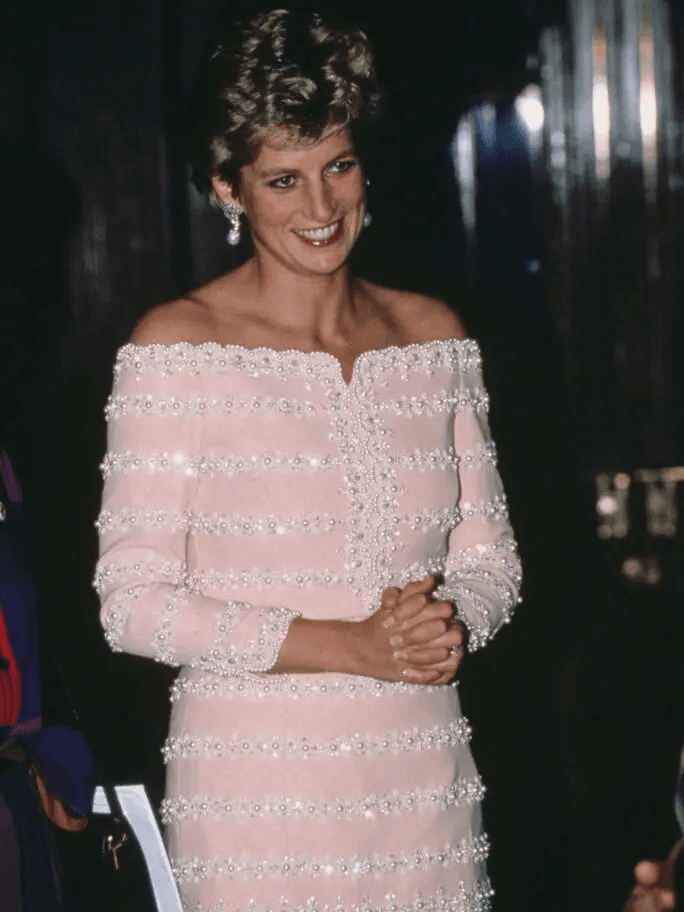
On the evening of 29 June 1994, Diana had plenty of reasons to stay at home. The interview in which Prince Charles admitted to being unfaithful during their marriage was due to air on television that night. The couple had been separated for almost two years; there was little left unsaid about their relationship, but this time the admission came from Charles himself. Diana, meanwhile, attended Vanity Fair’s charity gala at London’s Serpentine Gallery. When she stepped out of the car, she was wearing a short, figure-hugging black dress that left her shoulders bare. The press had its photograph to run alongside Charles’s words.
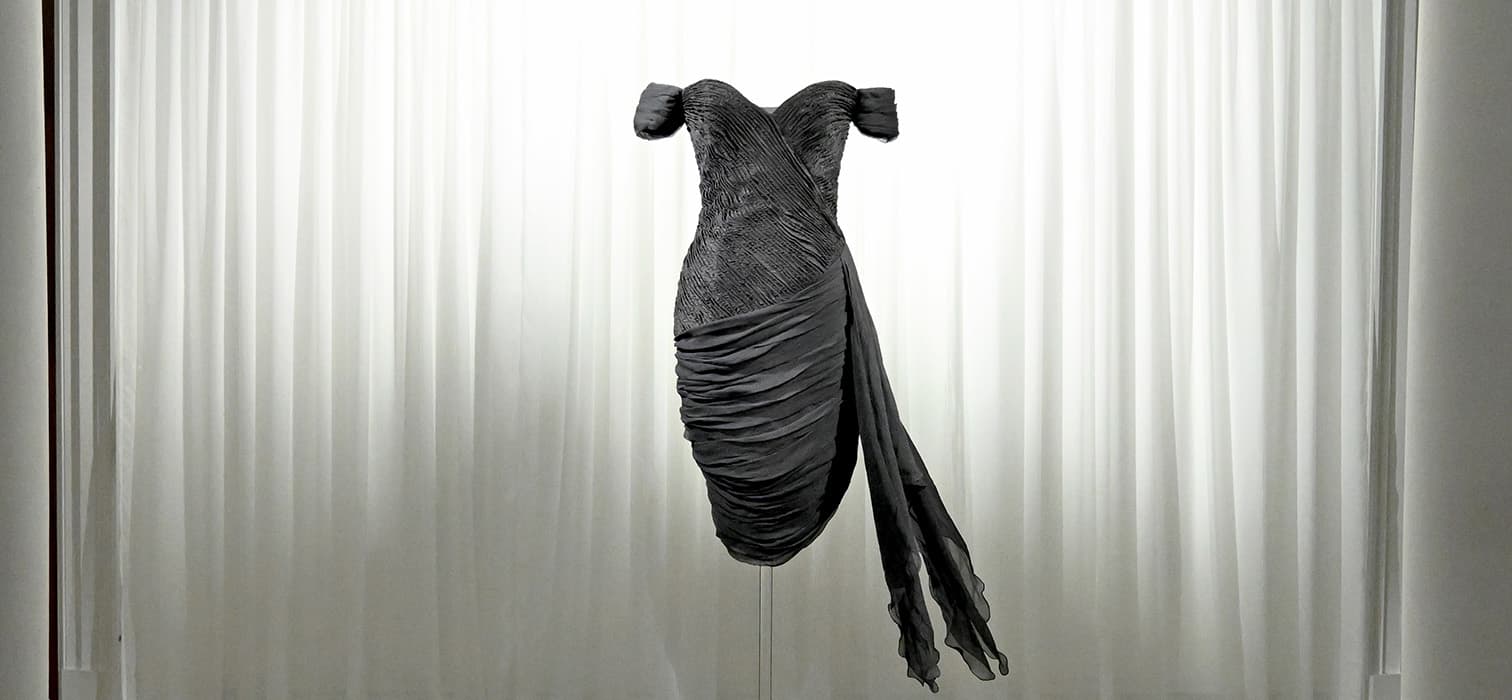
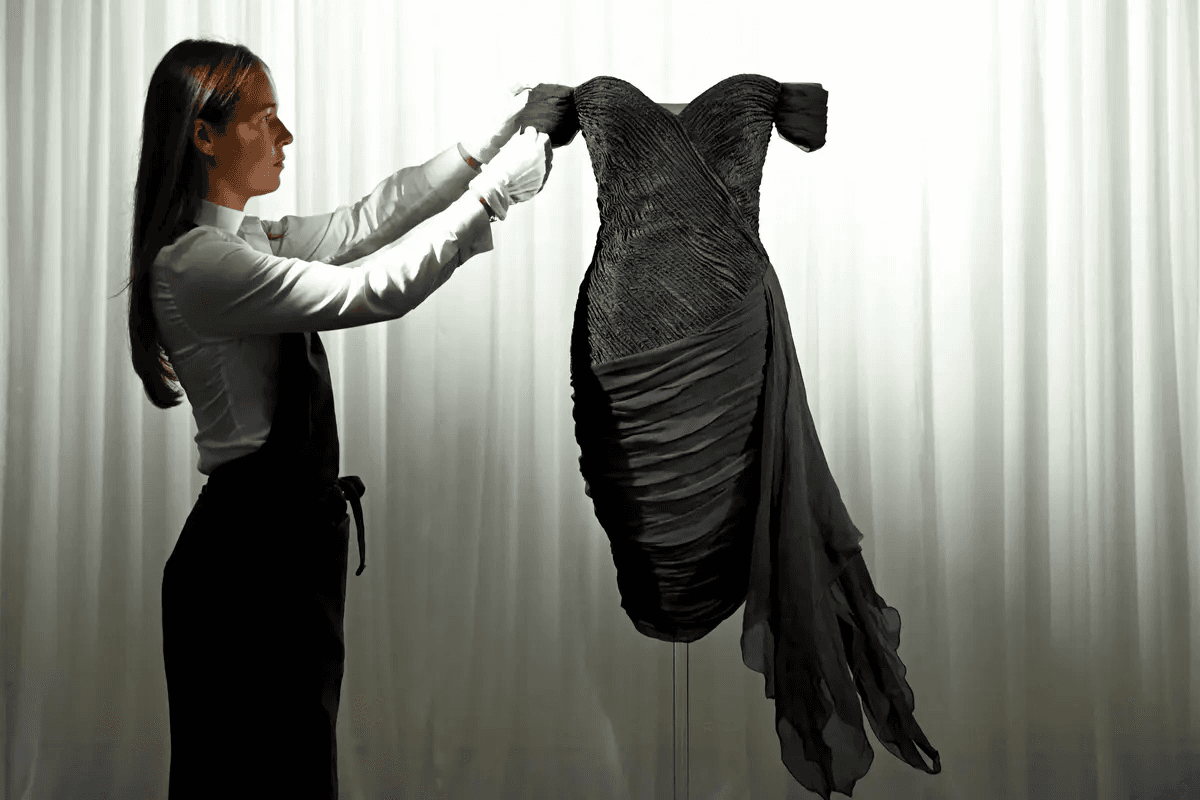
The Christina Stambolian dress Diana wore that night goes under the hammer at Sotheby’s New York on 9 December 2026. Estimated at $150,000–$300,000, it appears in the catalogue as “Princess Diana: The Revenge Dress”. Even people who do not know the designer’s name recognise the dress—a slightly sad truth for its creator. Often, simply saying “Diana’s revenge dress” is enough; there is no need to show a photograph.
Three Years in the Wardrobe
That an outfit worn at such a perfect moment had spent three years in a wardrobe is our favourite detail of the story. After all, we all have clothes we bought for reasons we cannot quite explain, then left unworn for a while. Diana’s reason for waiting was that she thought Greek designer Christina Stambolian’s dress was too daring. She had another plan for the Serpentine evening, too: Valentino. But, as she explained in a later interview, she changed her mind after the fashion house announced her choice to the press in advance. And so the black dress whose moment had never quite arrived finally came out of the wardrobe.
Her decision about attending the event also changed at the last minute. In The Diana Chronicles, former Vanity Fair editor-in-chief Tina Brown recalls that Diana initially declined the invitation. But after excerpts from Charles’s interview appeared in the press, she called one of the organisers two days before the event to say she would be coming. According to Brown, when the organiser, an old family friend, asked what she had planned, Diana replied, “You’ll see.” Reading that now, knowing what followed, it is hard not to wish we could have overheard the call.
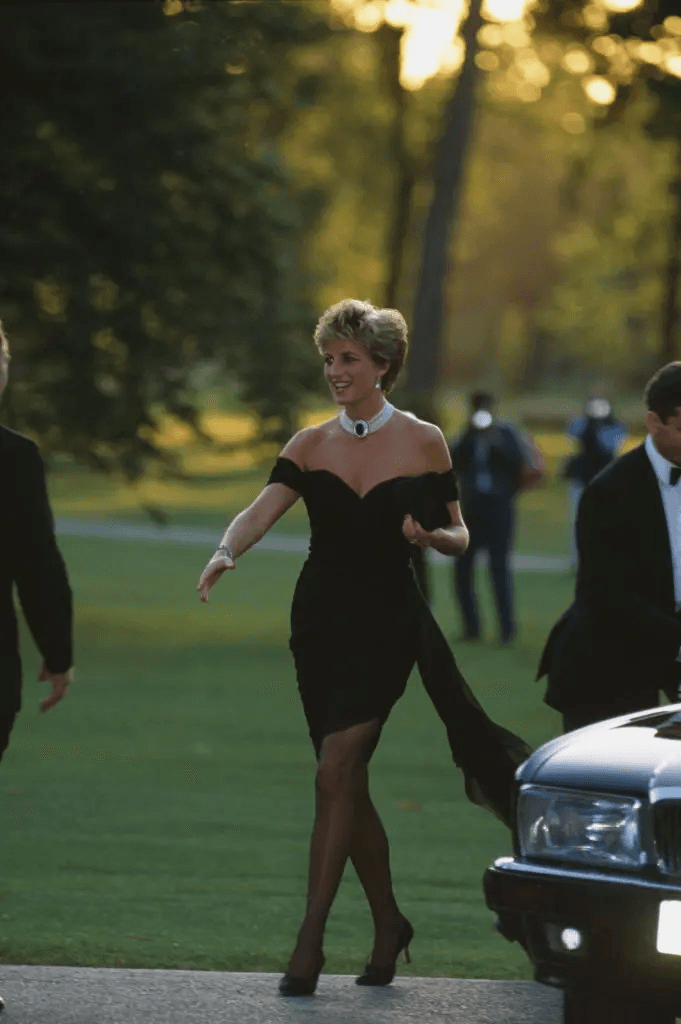
We know the dress from the photographs, but rarely talk about its details. According to Sotheby’s, it is made from black silk crêpe. Pleats cross over one another on the bodice, and the neckline sits below the shoulders. The chiffon skirt wraps around the body in diagonal drapes, with a light train extending from one side of the asymmetric hem. In photographs, the top of the dress hugs the body while the chiffon moves freely. The short skirt, bare shoulders and train that unfurls as she walks all complement one another within the same frame. Diana completed the look with black heels, a small black bag and red nail polish. Around her neck was a multi-strand pearl necklace. Its central sapphire-and-diamond piece had been converted from a brooch given to her by the Queen Mother as a wedding present. That detail deserves a moment, too. She paired an outfit that would be read as a response to her marriage with a piece of jewellery she had received for her wedding. Every detail had been calculated.
Vogue editor Anna Harvey, who worked with Diana for many years, said of that evening, “She wanted to look fabulous. And she did.” For an outfit that has inspired pages of commentary, it is a remarkably straightforward explanation. The Diana Harvey remembered was also a woman who cared about what she wore and wanted to look good.
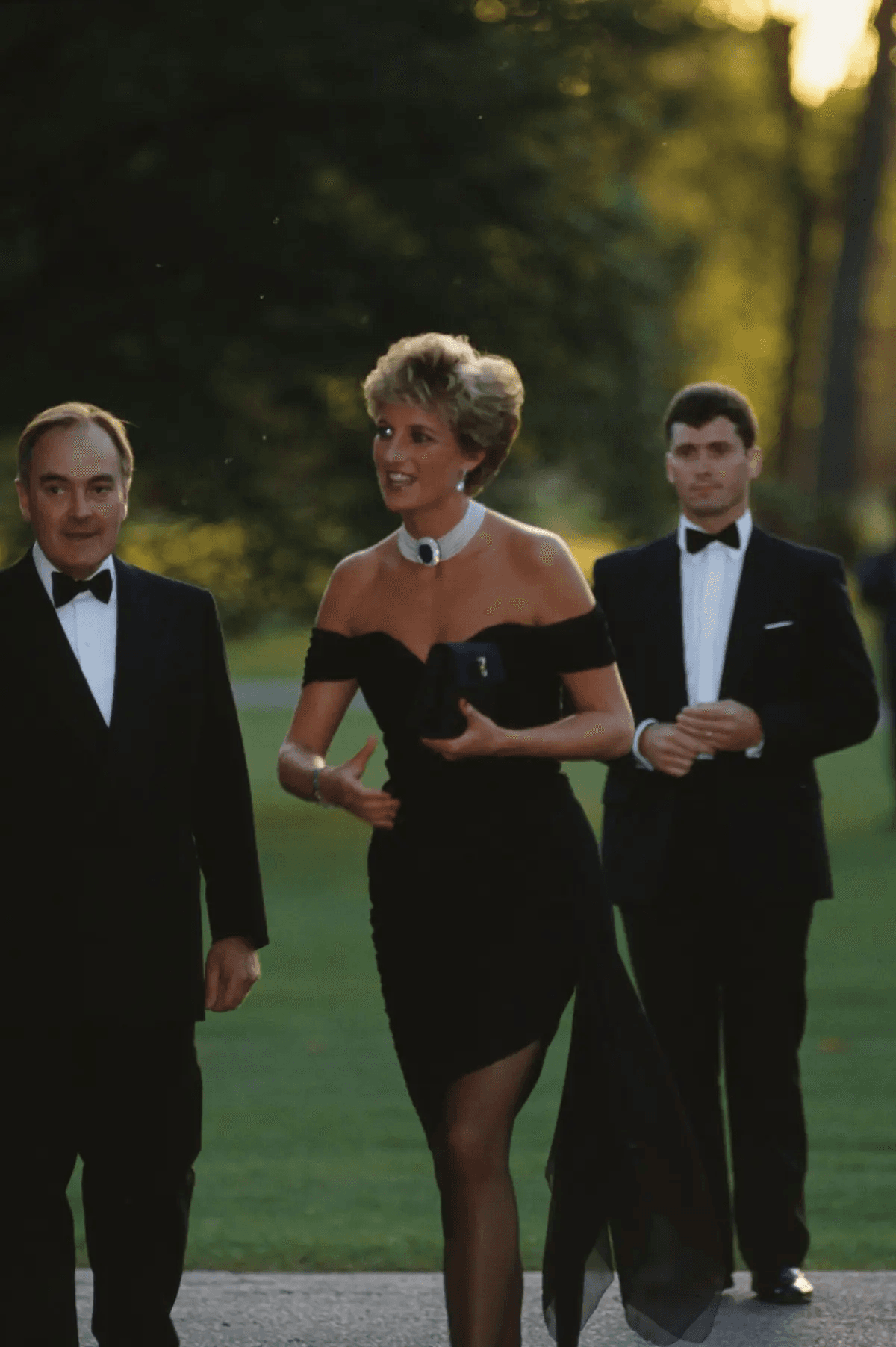
The name “revenge dress” came from the press. The interview and the party falling on the same evening made it easy to turn the dress into a symbolic reply to Charles. Had Diana stayed at home, the papers might have claimed she was too upset to go out. Once she attended, everything from her outfit to the way she walked would be scrutinised. The photographs showed Diana out for the evening, looking beautiful and enjoying other people’s company. She was giving anyone inclined to pity her very little to work with. That is why the dress’s fame cannot be explained by its neckline or hemline alone. Even in 1994, a short black cocktail dress was hardly a new design idea. Nor was it the first time Diana had attracted attention at an evening event. But the fact that she was being photographed while Charles spoke on television determined how the outfit would be remembered. We still begin with that interview when we tell the story of the dress today. Worn on another evening, it might have been remembered through a few photographs as just another beautiful choice from Diana’s wardrobe.
Speaking Without Words
Eleri Lynn, curator of the exhibition Diana: Her Fashion Story at Kensington Palace, said in an earlier interview that Diana “understood the language of clothes”. Lynn was referring to the princess’s ability to communicate silently through what she wore. This was a woman whose outfits at public occasions had been scrutinised for years. She knew how photographs would be interpreted and that even a small change to her clothing would be noticed. Her Serpentine look needed no accompanying statement to make the papers. Morgane Halimi, Sotheby’s global head of handbags and fashion, also says that, through the dress she wore that night, Diana intervened in the story others were telling about her life. The dress’s current owner puts it more simply: “In the time it took to be photographed, it went from a cocktail dress to a statement.”
It is understandable that an auction house preparing to find the dress a new owner would emphasise this story. That photograph, after all, goes a long way towards explaining the interest in the sale.
Over the years, “revenge dress” has stopped being the name of a single garment and become one of fashion journalism’s favourite phrases. If a celebrity makes a slightly bold choice for her first outing after a break-up, the headline practically writes itself. The dress might be black, it might be sheer, or it might not even be a dress. What matters is that people looking at the photograph think, “She looks great.” Imagining her ex seeing the same photograph completes the tabloid story.
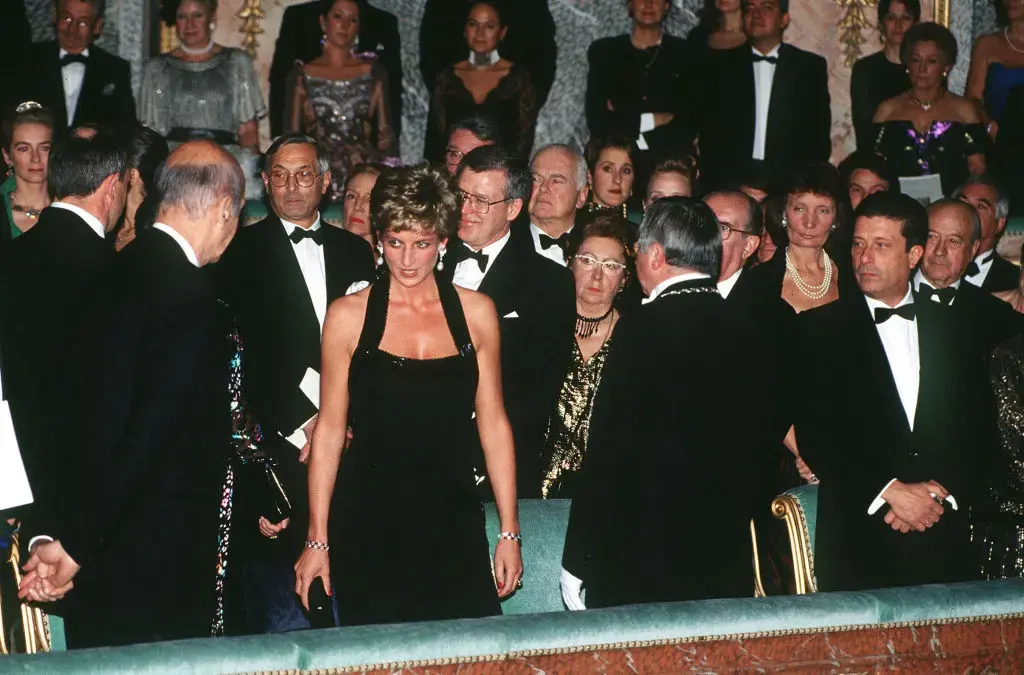
That is why Mariah Carey’s cropped black top and high-slit skirt at the 1997 MTV Video Music Awards have become a fixture in articles about “revenge dressing”. She had separated from Tommy Mottola, and her outfit that evening presented a more relaxed, more revealing image than the Mariah the public was used to seeing. The photograph offered an easy way to explain what had changed in her life after the break-up. Bella Hadid’s embellished black Alexander Wang catsuit at the 2017 Met Gala was interpreted in much the same way. Her ex, The Weeknd, attended the same event with Selena Gomez. We do not know whether Hadid had that in mind when she chose her outfit, but the photographs from the evening were more than enough to keep the gossip columns busy. Twenty-three years after Diana’s dress, we were once again discussing what a woman wore in terms of where her ex was and who he was with.
There is something a little tiresome about the phrase, too. When we immediately link a woman looking good after a break-up to her ex, we forget that she might have dressed up simply for her own pleasure. Not every low neckline is a message to someone else. Nor is anyone obliged to look fabulous after a relationship ends. Still, there is something satisfying about Diana’s photograph: on an evening when other people are feeling sorry for you and talking about your life, you have gone out in a beautiful dress. For that one night, that might be enough.
When the fifth season of The Crown recreated the Serpentine evening with Elizabeth Debicki, everyone already knew which dress they were going to see. Debicki said that when her casting as Diana was announced, most of the messages she received from people around her were about this dress. Preparing to watch such an eventful life unfold on screen, we found ourselves waiting for those few seconds of her stepping out of a car. The pressure on the costume team was immense. Viewers already had the photograph they would use as a point of comparison.
One Dress, Thousands of Memories
When celebrity clothing goes to auction, that familiarity is one of the things that drives up the price. The very first Hermès Birkin, made for Jane Birkin in 1985, sold for around €8.6 million at Sotheby’s Paris in July 2025. For the person who paid that sum, whether the bag was new or in pristine condition was not the priority. What mattered was that it was the first example, used by Jane Birkin herself. Signs of wear that might count as flaws in an ordinary second-hand purchase become, in this context, a way of seeing the bag’s history.
One of the black Givenchy dresses created for Audrey Hepburn for Breakfast at Tiffany’s also sold for £467,200 at Christie’s in 2006. It was one of three identical dresses made for the film. Yet we can scarcely see it as just fabric on a mannequin: Holly Golightly, the early hours of the morning and the window at Tiffany’s immediately come to mind. Before considering whether we like the design, we remember the scene.
With the Jean Louis design Marilyn Monroe wore to sing “Happy Birthday” to John F. Kennedy in 1962, the image comes with a soundtrack. The nude-coloured, crystal-covered dress sold at Julien’s Auctions in 2016 for $4.8 million to Ripley’s Believe It or Not! Edward Meyer, who made the purchase, said he could think of no other object that told the story of the 1960s so well. That is quite a responsibility to give a dress, but it also explains why someone paid millions of dollars for it.
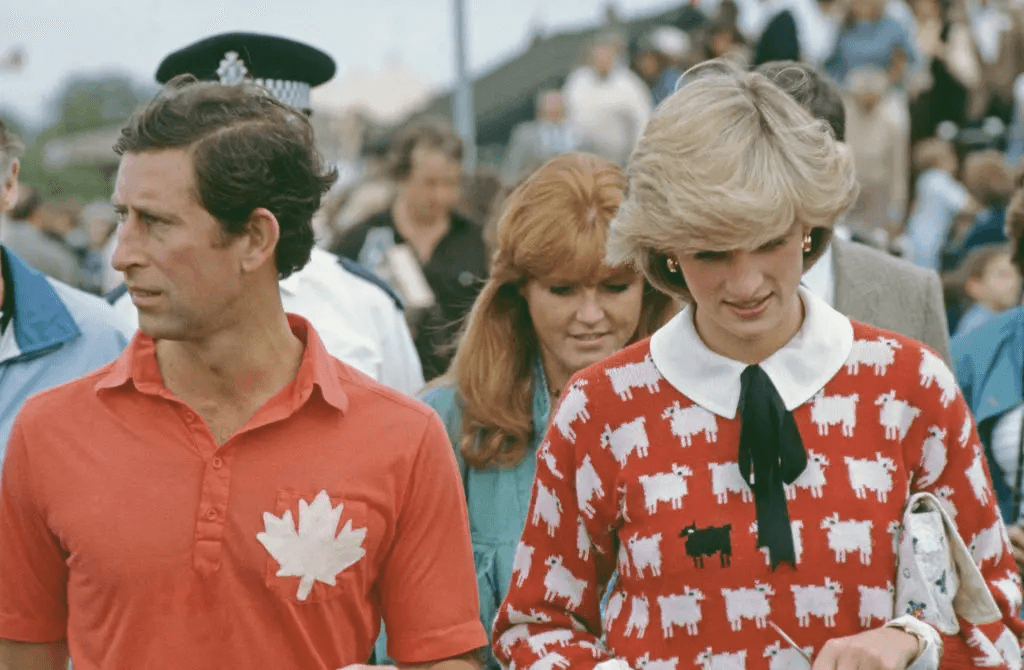
A sweater from Diana’s wardrobe attracted similar attention. The red Warm & Wonderful knit she wore in 1981, with a single black sheep among the white ones, sold at Sotheby’s in 2023 for $1.143 million. Its high estimate had been $80,000. Today, it is difficult to see that black sheep without thinking of Diana’s place within the royal family. But what we learned later plays a part in that reading. Because we know how Diana’s life unfolded, we search even a sweater she wore before her wedding for hints of what lay ahead. The Stambolian dress first went to auction in 1997, among the 79 dresses Diana sold to support cancer and AIDS charities. It is now returning to auction from the collection it entered at that sale. It will be accompanied by the original auction catalogue, signed by Diana and Stambolian; a portion of the proceeds will be donated to NHS Lothian Charity in support of the Royal Edinburgh Hospital.
After December’s sale, the dress will pass into another collection. Its new owner will be able to examine the texture of the silk crêpe, the pleats and the seams that are difficult to make out in photographs. For most of us, though, its image will barely change: Diana has just stepped out of the car, her chiffon train trailing behind her as she faces the photographers. Even after 32 years, it is hard to picture it on a hanger.
From Chanel to Dior: This Autumn’s Fashion Books
The Desire to Be Carolyn: The 90s’ Quietest Icon and the Eternal Myth
Princess Sirivannavari’s Collection Dedicated to Eternal Love