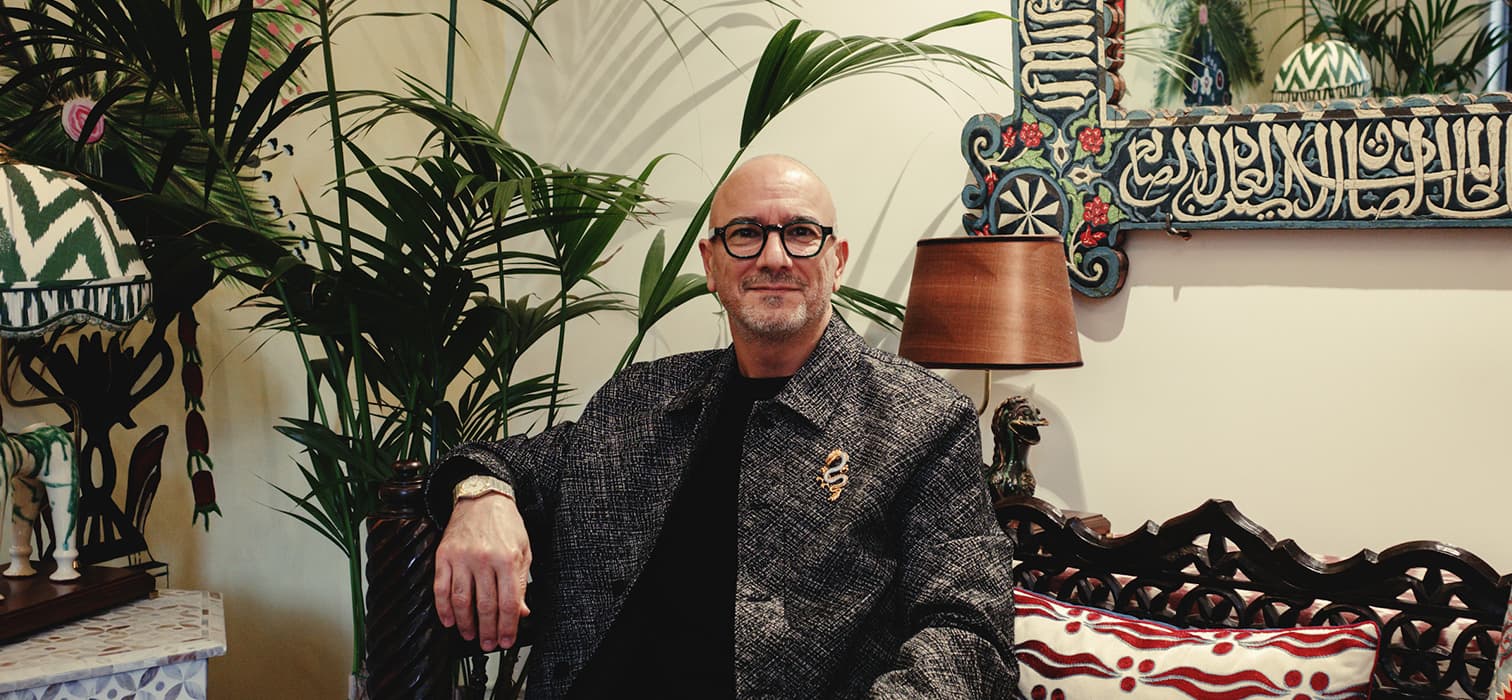
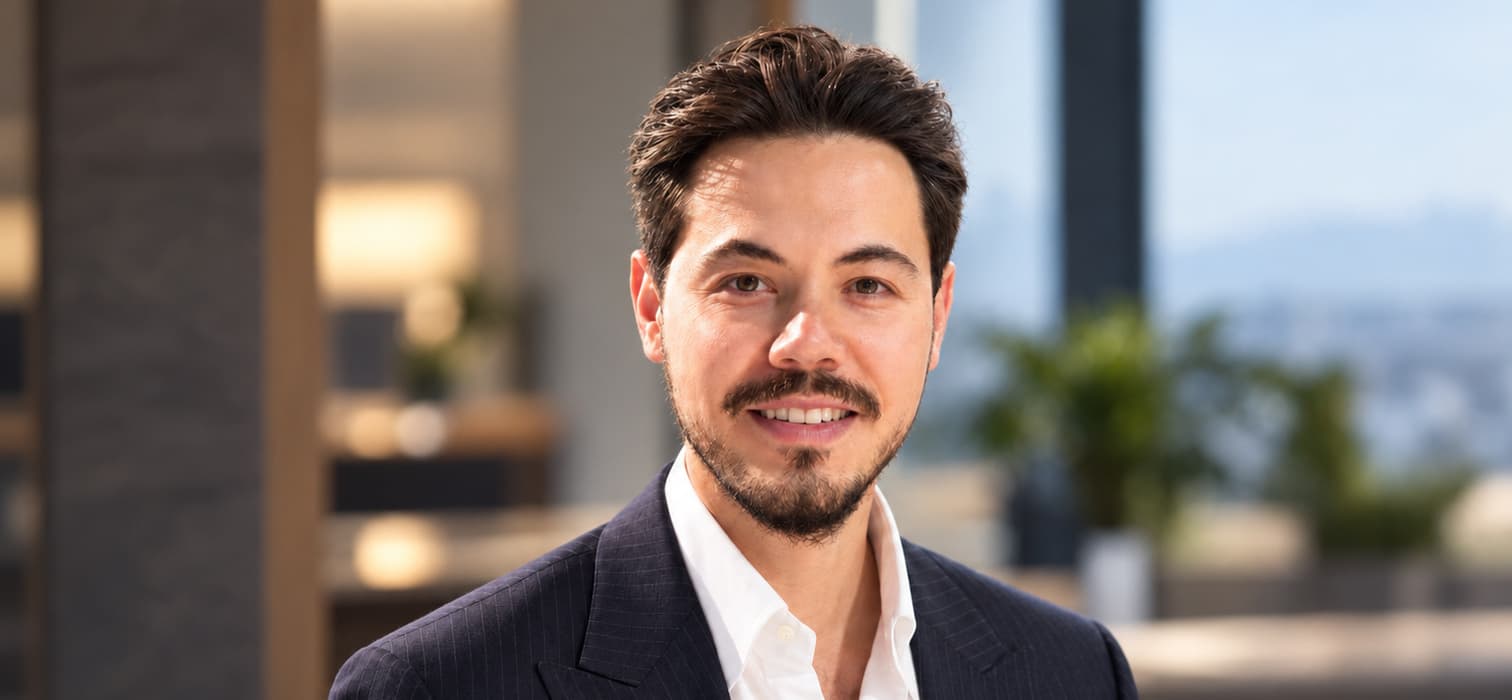
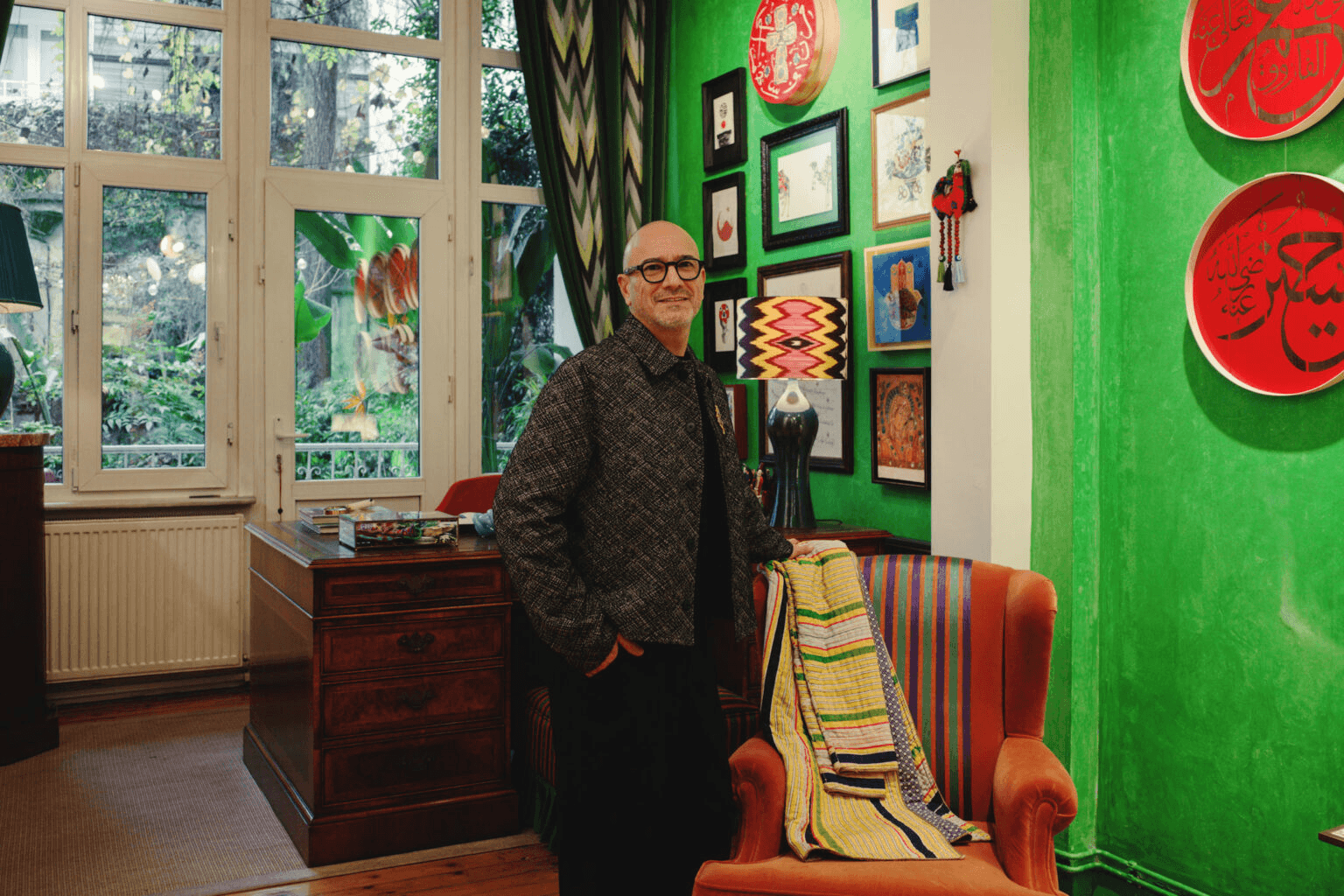
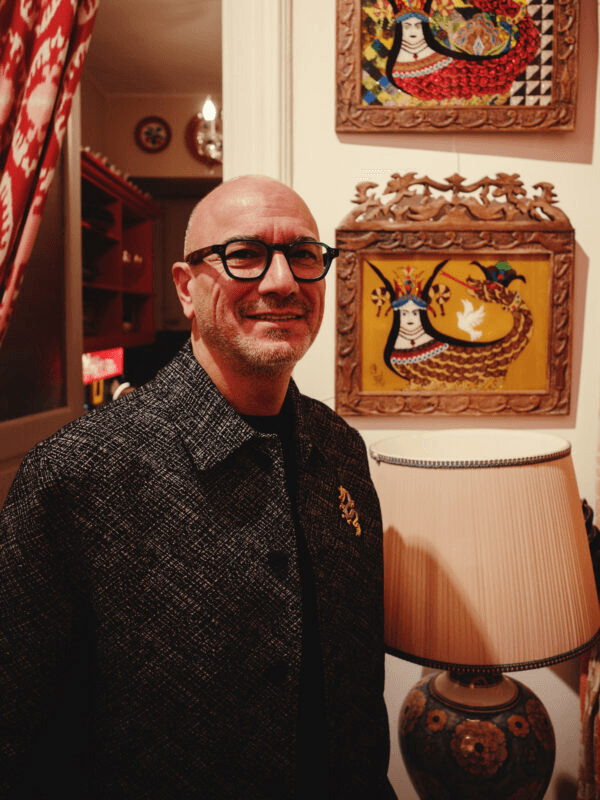
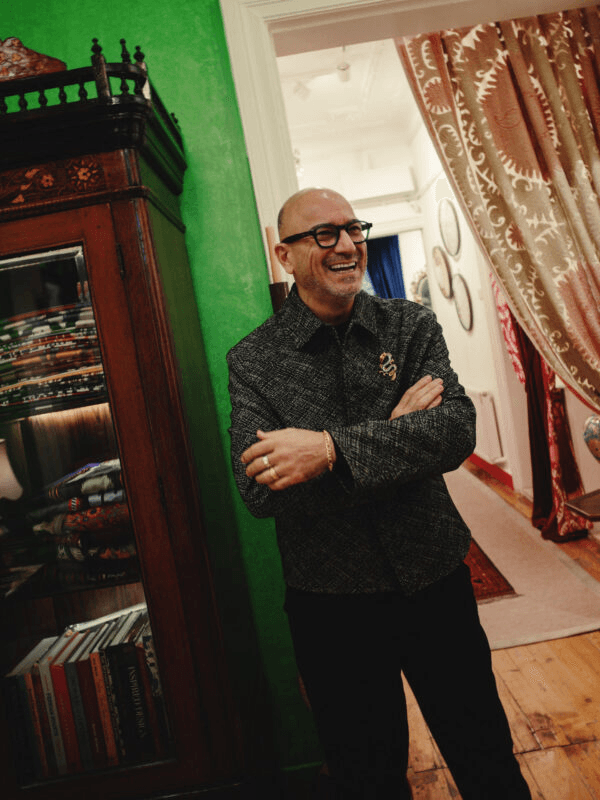
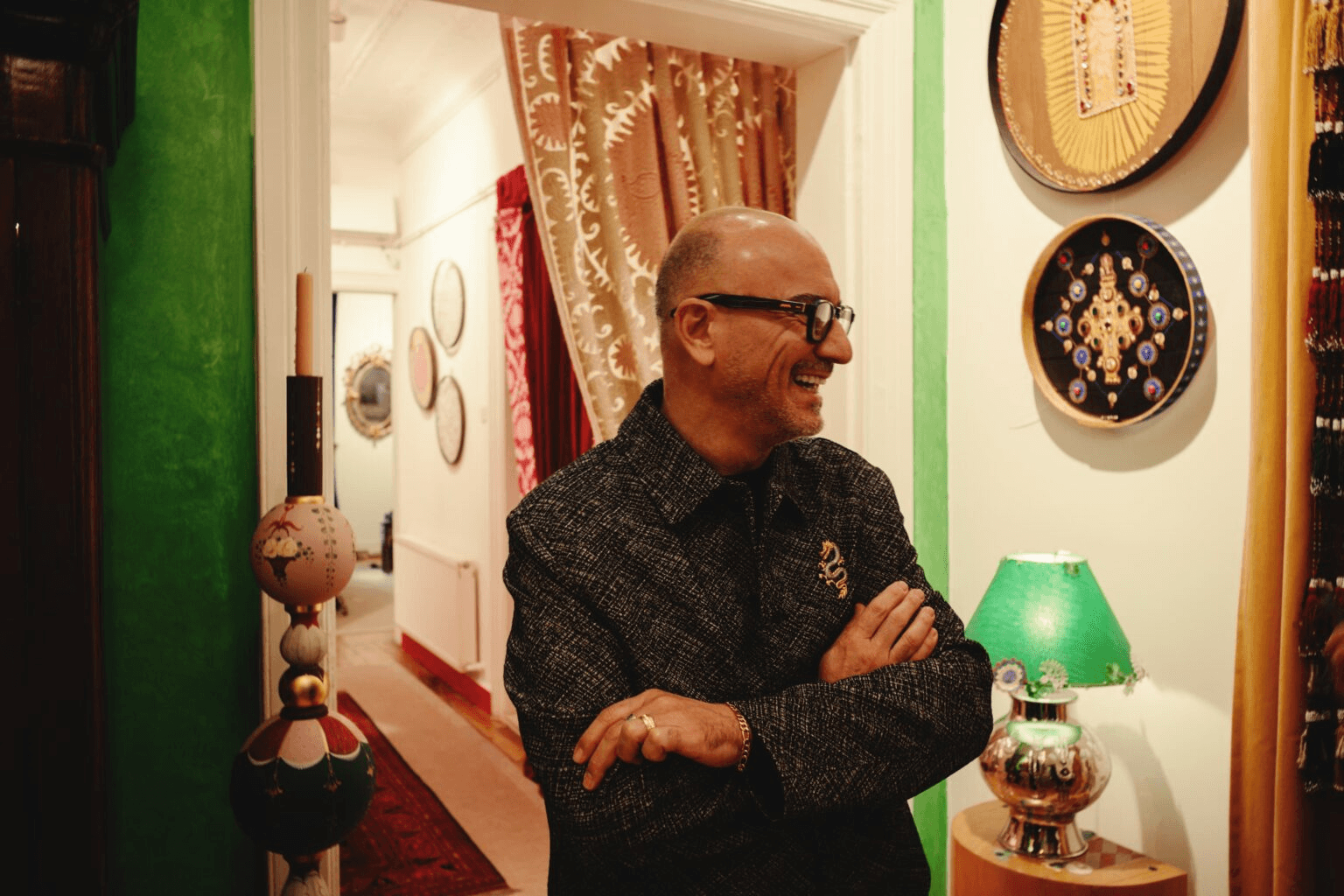
In a design world where craftsmanship, cultural memory, and elegance converge, Omar Baban forges a bridge between the future and its deepest roots.
Photos By Yiğit Şişmanoğlu
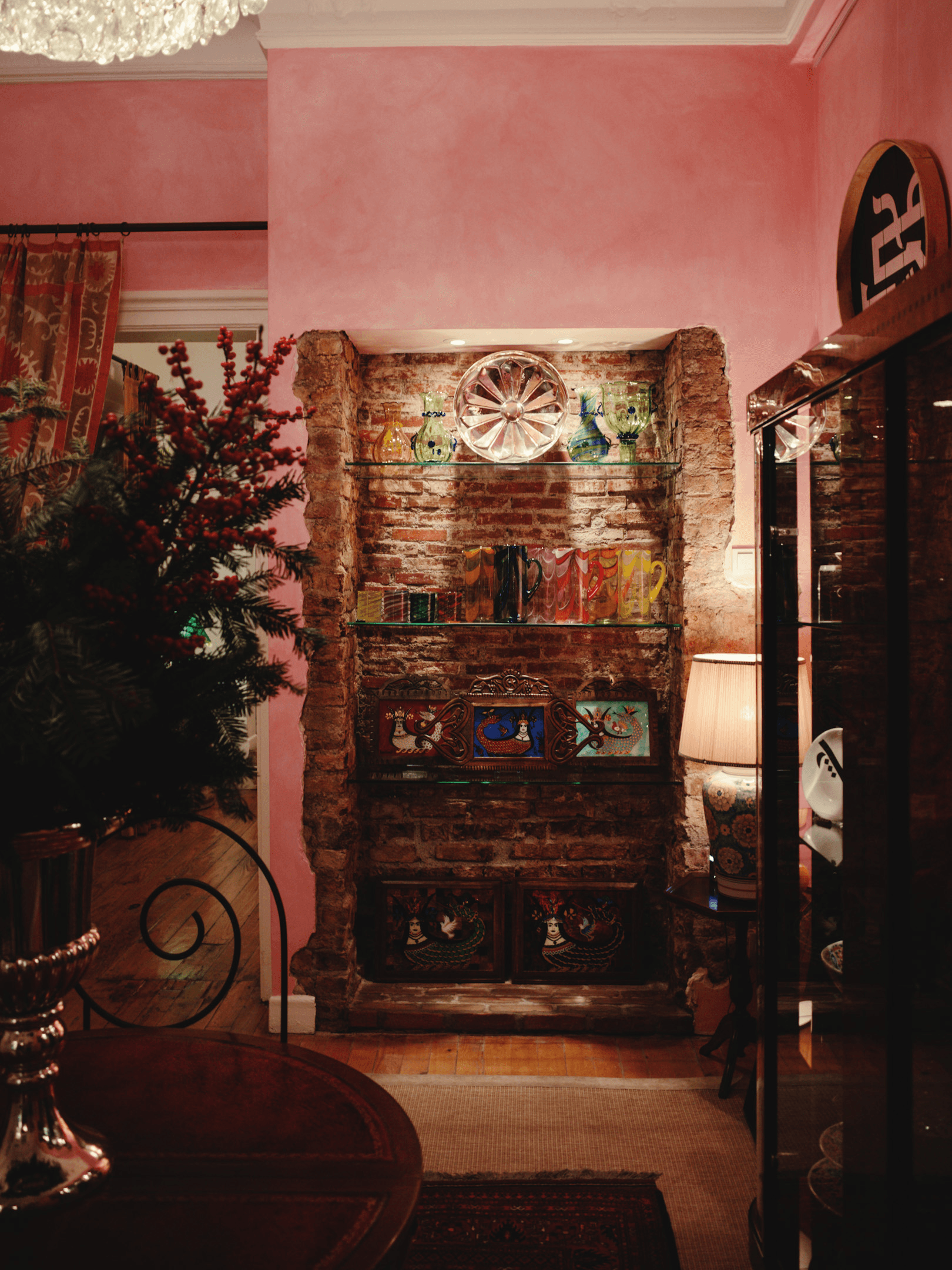
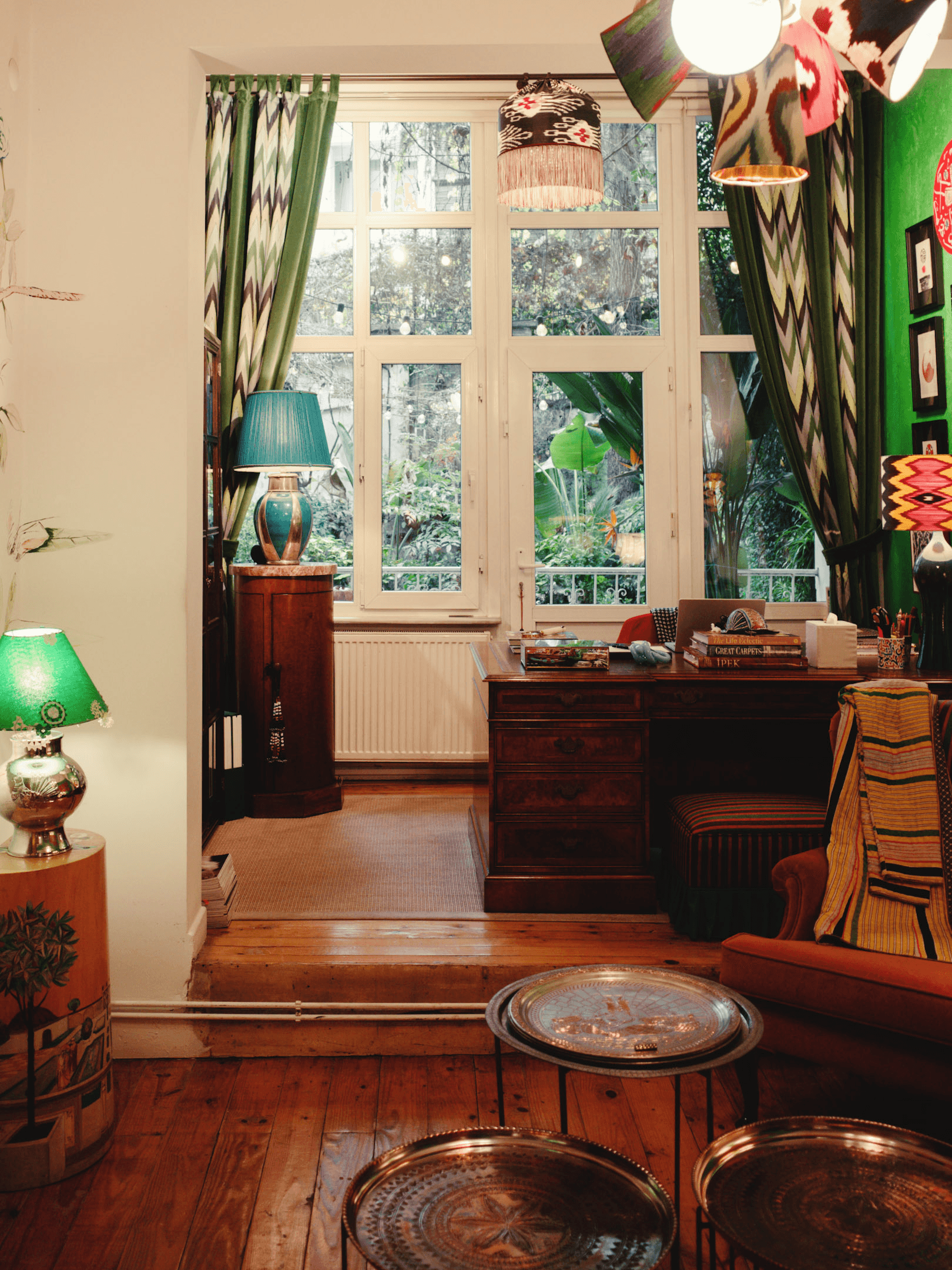
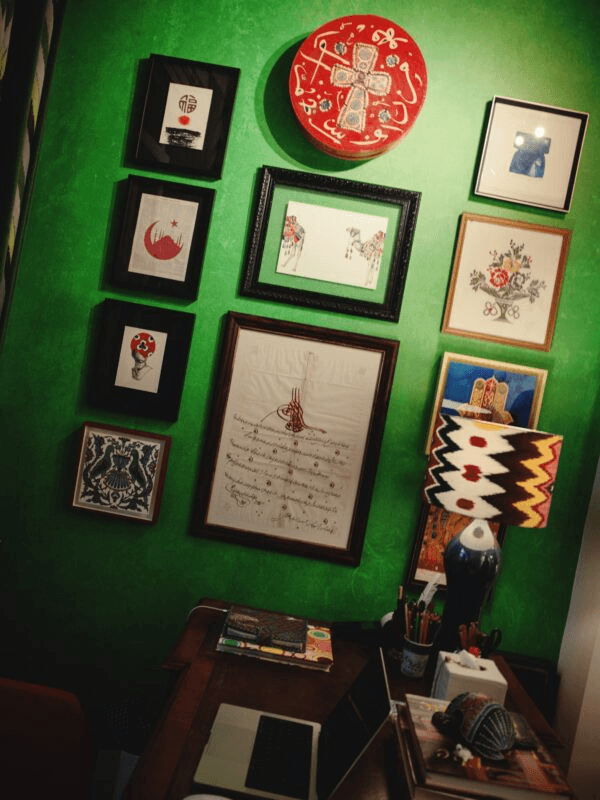
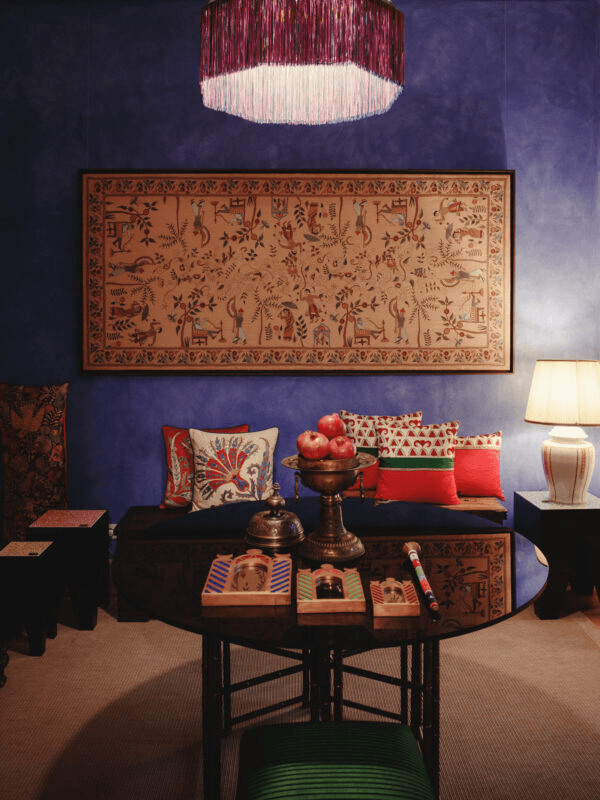
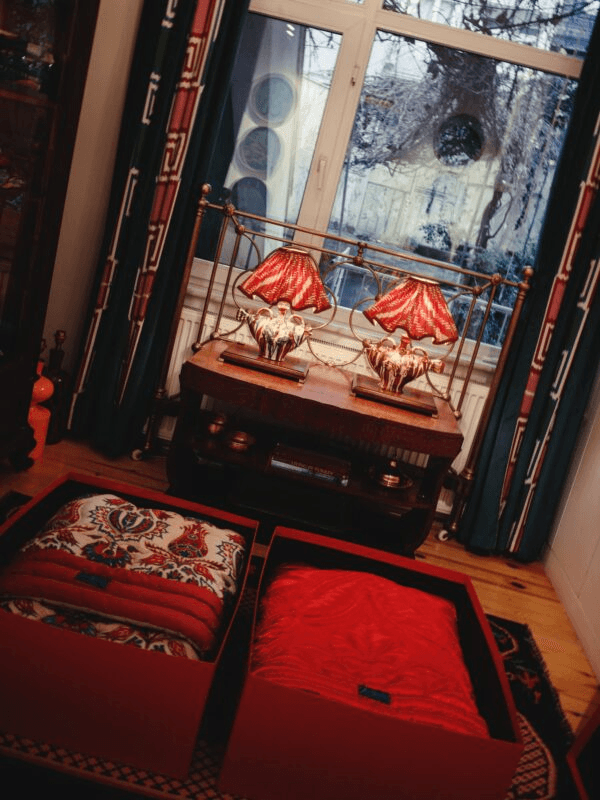
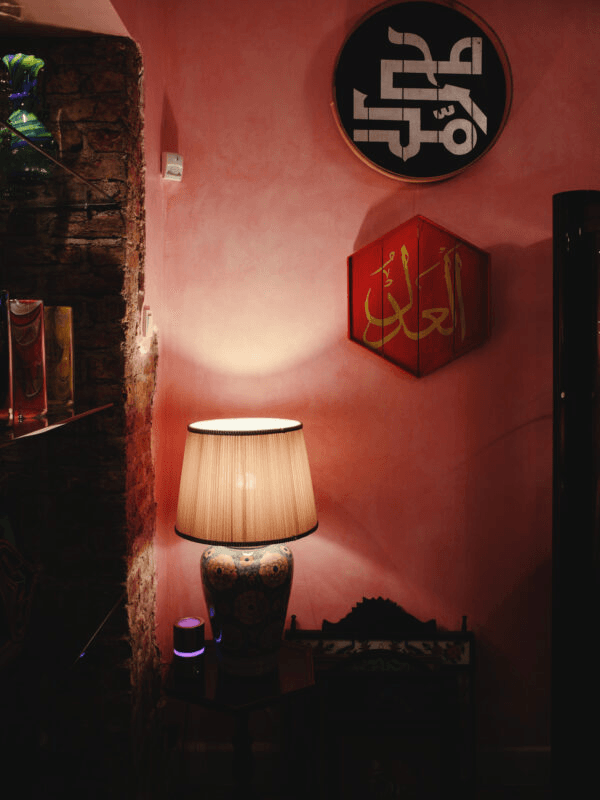
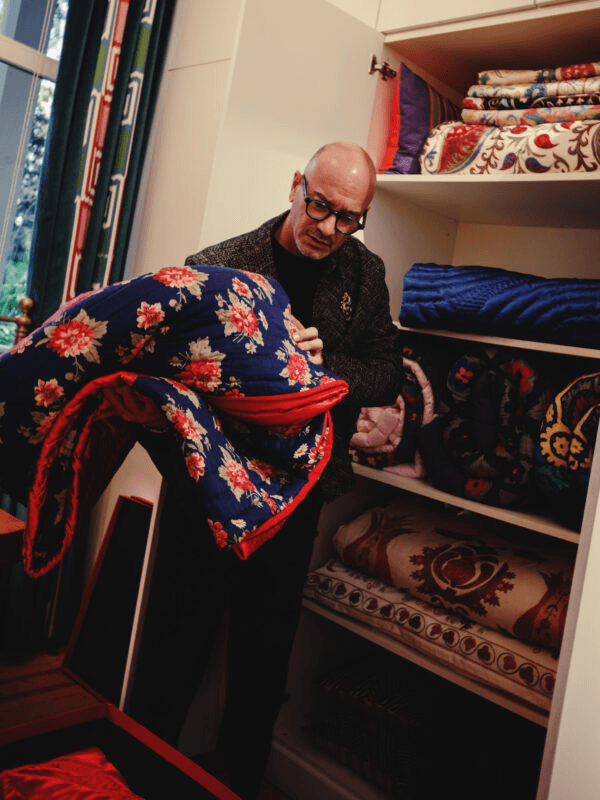
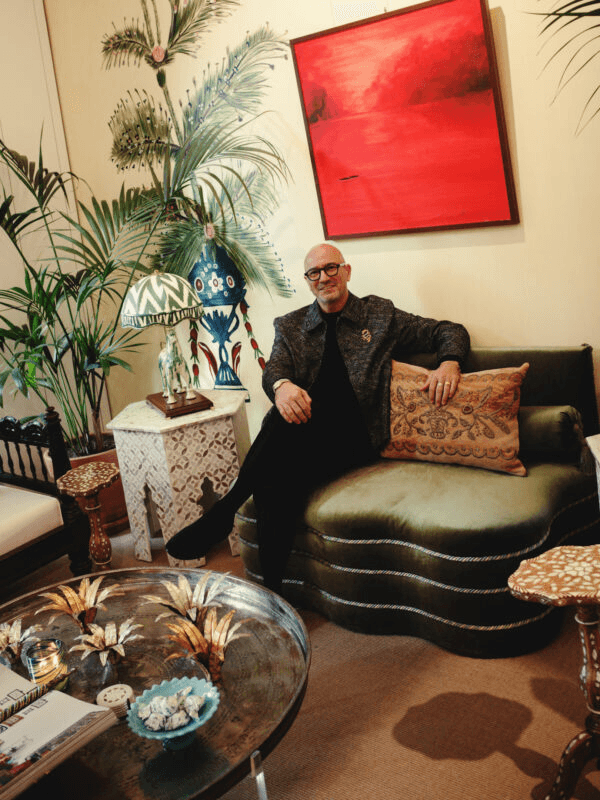
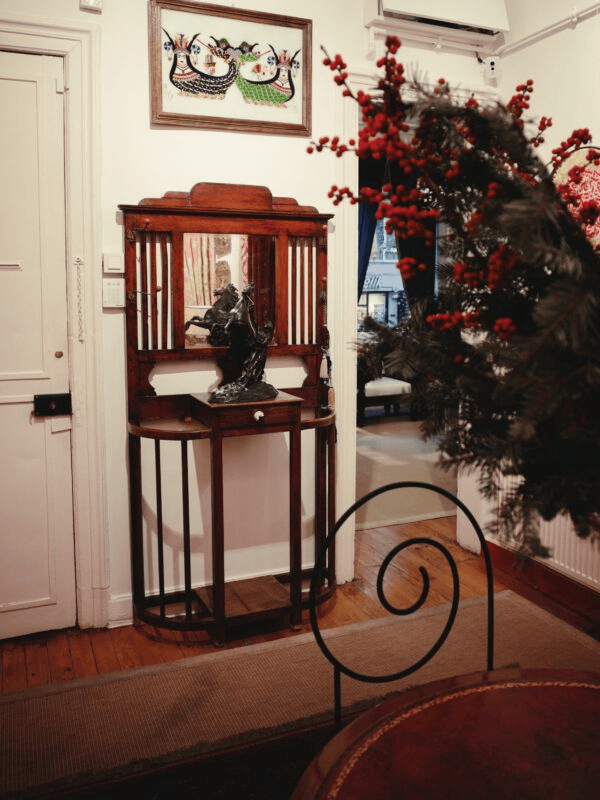
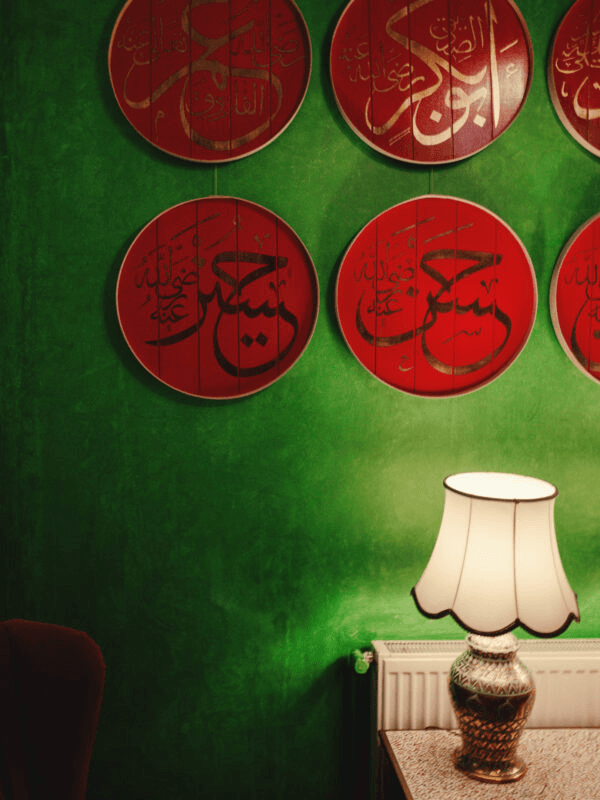
While the shifting dynamics of contemporary design draw many creatives toward fleeting trends, designers like Baban choose instead to construct narratives that endure—stories anchored in tradition and enriched by cultural remembrance. In his hands, whether a chair, a wall object, or a small weave, an object is never merely an aesthetic form; it is an inherited memory shaped by labour and time. Inside his serene Kuzguncuk showroom, the artisan memory of Anatolia stands harmoniously beside the disciplined design ethos he cultivated in London. Just as the handmade textiles, silver and brass objects, and oil paintings that filled his childhood home molded his aesthetic sensibilities, London’s multicultural vitality, aristocratic elegance, and the balanced lines of English architecture now merge seamlessly with that early consciousness.
For Omar Baban, sustainability extends far beyond environmental responsibility. It is the duty to carry a craft, a technique, a handmade tradition into the future. This is why he regards each of his designs as a living work of art.
His most exciting current project—the transformation of the 1901 Industrial School in Konya into a boutique hotel—embodies precisely this philosophy: translating the memory embedded in the building’s stones into a contemporary language and making Mevlânâ’s spiritual atmosphere resonate alongside the craftsmanship of Anatolia.
In this interview, we embark on an elegant and thoughtful journey with Omar Baban, spanning his family heritage, his formative years in London, his ties to circles close to royalty, and his mission to introduce Turkish craftsmanship to the world. It is the story of a designer who honours the past while envisioning the future.
Omar, in your story, culture, design, and identity are intertwined. First, I would like to ask you this: what was the first image or touch that drew you into the world of design? Was there a moment shaped by your family or your past?
In every home I lived in with my family, and later in my own home, I was always surrounded by the world of art and design. Our living space reflected our culture, identity, and personal tastes in a way that felt wholly unique. Like every child, I absorbed my surroundings with all my senses wide open. Every piece in our home had a story—most were objects shaped by the patience of handiwork, objects with a soul. They were not short-lived items, but pieces that lived and aged alongside us. Growing up with them, studying their craftsmanship closely, touching them, taught me the value of permanence, simplicity, and the warmth of the human hand. This awareness—understanding that a space can carry identity and an object can carry memory—profoundly shaped my approach to design in the years that followed. When I founded Omar Baban Design ten years ago, I was, in truth, reinterpreting that sensory and emotional legacy from my childhood world.
What was the object, fabric or pattern that most influenced you in your childhood home, neighbourhood or family? Do you still feel that atmosphere in your designs today?
In fact, it is difficult for me to identify a single object or motif that influenced me most. I was a child who observed my surroundings with great care, who grew up in a world of small details, shaped by countless impressions. Everything in our home—the colour language of the oil paintings on the walls, the hand-woven fabrics, the embroidered antique textiles, the hand-woven rugs and kilims, the copper and silver objects, the ceramics, and much more—collectively formed an aesthetic memory that influenced me as a whole. I still feel the spirit of that era in my designs today. The refined craftsmanship I sensed in those childhood homes forms the foundation of every design I create.
What does your family’s vision mean to you? Did they leave you an aesthetic legacy, or are you a generation that reinterprets this legacy?
My family’s vision was always more than an aesthetic stance; it was a way of life handed down to me. In our home, beauty was defined not by ostentation, but by simplicity, elegance, and meaning. Their vision became a quiet guide for me—a compass showing what should be preserved and what should be transformed. The legacy I inherited is not limited to objects or fabrics, but lives in the respect for detail, the value placed on labour, and the patience to let things mature with time. I see myself as someone who reinterprets this legacy. Cultural heritage survives into the future not only by being preserved, but also by being re-created—redesigned to meet the needs of the present.
How did your years in London—its multicultural structure, its traditional British design discipline, and its balance of modernity and aristocracy—combine with your Eastern roots to transform you? How did you synthesise these two worlds?
London was not simply a city I lived in; it was a period in which I redefined myself. Its multilayered character, the interplay of cultures, and its subtle creative energy shaped me in profoundly positive ways. My years there taught me the beauty of mixtures. London carries both the weight of the past and the freedom of the present, and inhabiting that coexistence broadened my thinking. One of the most valuable insights I gained as a designer was the realisation that thought and aesthetics can speak a universal language. The measured, material-conscious, detail-oriented nature of traditional British design combined with my intuitive, emotionally rooted Eastern sensibilities—and together they formed a distinctive harmony. I came to see these two worlds not as opposites but as complements. Building a bridge between the introspective depth of the East and the analytical order of the West became the essence of my design philosophy. London taught me both how to read the times and how to preserve one’s identity amid diversity.
We know you have been in contact with circles close to the Royal Family. How did this relationship influence your aesthetic approach or your way of working? What surprised you most there?
Designing for royal circles naturally demands a heightened level of craftsmanship, aesthetic discipline, and flawless proportion. In that environment, you quickly understand that beauty does not arise from extravagance but from precision and refinement—everything has its rhythm, its logic, its discipline. Elegance reveals itself most clearly in silence. What has always struck me is that this world, which can seem rigid or distant from the outside, is actually woven with humility and an enduring sense of continuity. Tradition is not treated as a rule, but lived as a ritual. This perspective inevitably influences my own work: timelessness, durability, and high craftsmanship remain at the core of everything we create at Omar Baban Design.
When you established the Omar Baban Design brand, did you receive support from your family or guidance from their vision? Or was it entirely an individual endeavour?
My family taught me about my roots, my culture, and the importance of being tolerant toward different cultures and beliefs, as well as how to look at my surroundings with fresh, curious eyes. From them I learned that beauty is never created in haste; it matures slowly, gaining meaning over time. When I established my brand, I wanted to find my own voice and build my aesthetic journey independently—yet always guided by this vision. For this reason, Omar Baban Design is a story that reflects both the spirit of my family and my own search for meaning in today’s world. It is a story rooted in tradition, speaking the language of time, and nourished by the intention of permanence.
While placing such importance on craftsmanship, did the refined understanding of craftsmanship you were immersed in, involved in, and encountered influence you?
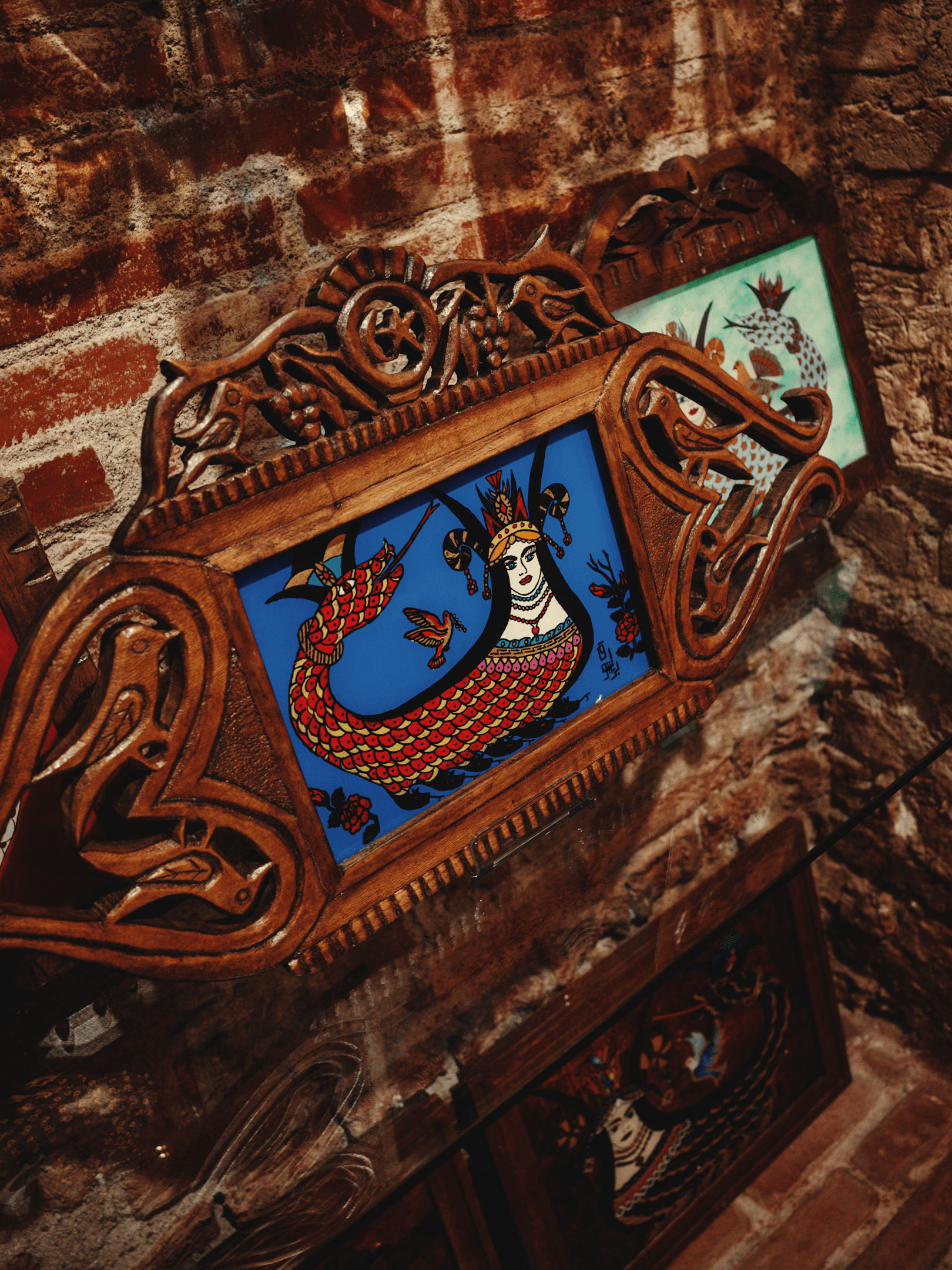
For me, craftsmanship is not merely a form of production—it is a matter of character. Every moment I spend with artisans reminds me of the value of patience, repetition, and the quiet elegance hidden within imperfection. That silent dialogue between the artisan and the material, the slow transformation of labour into form, enchants me every time. The refined craftsmanship I encountered in Istanbul, in Anatolian workshops, and in various parts of the world taught me one essential truth: true elegance lies not in perfection, but in the subtle traces of humanity, in the warmth left by labour. In my designs, I always seek to convey that warmth, that unmistakable touch of the human hand.
Omar Baban Design is a story rooted in tradition, speaking the language of time, and nourished by the intention of permanence.
What guides you in your choice of materials? Is it texture, colour, history, or the cultural memory that the material carries?
My approach to selecting materials is never bound to a single formula. Sometimes I am drawn to the story a material holds, sometimes to its texture, cultural codes, or its relationship with light. At times I follow the feeling it evokes, and other times it is a historical resonance or an intuitive association that guides me. Because every material carries its own spirit, memory, and energy. What matters to me is being able to hear that voice—and allowing the material to speak for itself.
Does your sense of symmetry and balance come from nature? How does the emotional chaos of Istanbul and the cool architectural discipline of London create a balance in you?
My sense of symmetry and balance indeed comes from nature; the golden ratio, fractal structures, and spiral forms are already the universe’s architecture. Nature is never excessive or lacking—everything appears exactly as it should. London’s measured aesthetics and architectural discipline taught me structural balance, while Istanbul’s multicultural dynamism brought spirit, emotion, and movement into that balance. In truth, both British culture and Anatolia have a strong tradition of layering in decoration. In English homes, this depth emerges through objects, fabrics, and textures accumulated over generations; in Anatolia, it appears through the ageing of materials, the traces of craftsmanship, and the meaning carried by objects. I love bringing together the layers of these two worlds: one offers elegant order, the other emotional intensity.
We know you collaborate with different cultures. How influential were the connections you made abroad in this process?
Completing my academic education in London and travelling across different continents allowed me to come into direct contact with many cultures. Through the projects I undertook in various geographic contexts, I did more than simply observe cultures from afar—I learned their rhythms, materials, and everyday aesthetics from within. Each culture gave me a new sensitivity, a new point of reference, enriching my design language. Yet the one constant in all these experiences has been my connection to my own roots. What defines me is my belief that, while nourished by the diversity of the world, I can always find my essence in my own soil.
In your collections, you sometimes flirt with architecture, sometimes with fashion or object design. How does this fluidity satisfy you and your spirit?
My creative process flows naturally between disciplines—architecture, fashion, object design. For me, they are interconnected fields, because design in its entirety is a language of life. I therefore keep my references as broad as possible. In architecture, symmetry, natural light, spatial flow, and material selection influence me deeply; these details may later take shape as an interior concept, an object form, or a fabric texture. Fashion, meanwhile, is one of the most powerful reflections of its era—a dynamic world where shifts between periods, styles, textures, and colours dance together. To me, a person’s clothing choices also reveal the kind of space they wish to inhabit. The colours they gravitate toward, the fabrics they enjoy touching, their relationship with natural or synthetic materials—all of these guide me in understanding the chemistry of someone’s living space. I see a space not merely as decoration, but as a personal portrait. Our living spaces are extensions of our character, much like the clothes we choose. Thus, when designing a home, I am in fact designing an identity, a spirit, a way of life. This fluidity is the most natural source of motivation—constantly nourishing me and keeping my creativity alive.
“…what defines me is my belief that, while nourished by the diversity of the world, I can always find my essence in my own soil.”
What do you think someone looking at an Omar Baban piece should feel? A traditional warmth, or universal elegance?
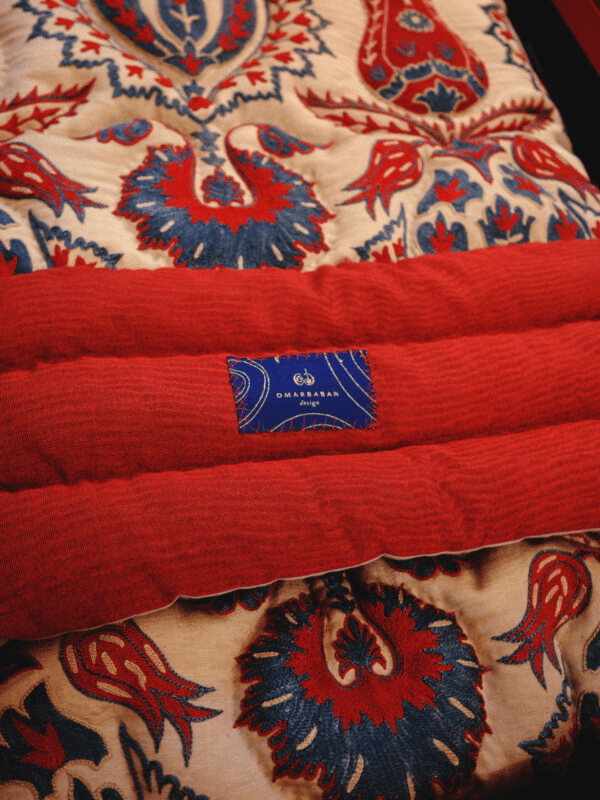
The first thing I want someone to feel when they encounter my designs is an awareness that they are looking at the product of high craftsmanship—something made by human hands. I want them to perceive the traces of labour, the refined imperfections, the rhythm of handiwork on the surfaces of natural materials. In each collection, the pieces are designed individually or in pairs; because they are entirely handmade, each carries its own identity, each design its own uniqueness. This is why I see them not as mere objects, but as living works capable of being passed down through generations. I consider those who connect with them—who bring them into their living spaces—not simply as customers, but as custodians, companions, connoisseurs, and lovers of art who carry value into the future.
Do you listen to music during the design process? Have any musicians inspired you?
I have a deep admiration for the universal language of music. Music is always present in my design process and in the showroom—sometimes Miles Davis’ Blue in Green or a melancholic Chet Baker solo plays in the background; other times it’s the calm piano melodies of Ludovico Einaudi or Chopin’s nocturnes. And when I listen to Dhafer Youssef’s mystical tones or Anouar Brahem’s oud, I feel that enchanting bridge between East and West. Music is not only a source of inspiration for me; it is also an invisible connection I build between rhythm, balance, and emotion—just like in design.
Earth tones and golden reflections stand out in your colour palettes. Where does this warmth and elegance come from?
When using colour, I approach it boldly and without hesitation—just as nature does—and I draw my inspiration from nature’s abundance and diversity. I have always found the harmony between the warmth of earth tones and the subtle radiance of gold to be inherently elegant.
“…I see a space not just as decorative, but as a personal portrait. Our living spaces are an extension of our character.”
Is sustainability and permanence just an environmental issue for you, or is it also part of cultural continuity?
For me, sustainability is not merely an environmental responsibility—it is also cultural continuity. Passing on a pattern, a technique, or a form of craftsmanship from one generation to the next is one of the most meaningful expressions of sustainability. It is about preserving memory, carrying it into the future, and ensuring its transmission.
You seem to have a personal mission to make Turkish craftsmanship more visible on the international stage. How does the London scene approach this endeavour?
These lands hold an incredible accumulation of manual labour, patience, and craftsmanship—yet it often does not receive the visibility it deserves. For me, highlighting this has become a personal responsibility. My aim is to carry the depth and subtlety of Turkish craftsmanship to the world through a contemporary design language. Because manual labour is not only an aesthetic value; it is also an expression of culture and identity. My circle in London embraces this approach with great respect, as craftsmanship, originality, and sustainability have once again become globally cherished values. I try to build a bridge in this sense—a bridge linking the mastery of the past with the vision of today, extending from the local to the universal. Each piece carries the spirit of these lands and finds new meaning in different parts of the world.
Brand visibility in the digital world is everything now. Is Instagram a shop window for you, or is it a space where stories are displayed, like a modern palace hall?
Since its inception, Omar Baban Design has welcomed its clients exclusively in its Kuzguncuk showroom, offering a unique and intimate experience. As a brand, we see Instagram not merely as a shop window, but as a living, breathing archive. We share our collections, our stories, the craftsmanship of our artisans, and the spirit of our brand there.
What advice would you give to young designers on how to survive and maintain their identity in big cities like Istanbul, Paris, and London?
I always tell young designers: protect your identity. It is easy to get swept up in trends, but true longevity comes from the bond you forge with your own values. The key to surviving in big cities—whether Istanbul, Paris, or London—is not forgetting your roots. In a world that changes rapidly, what truly sets you apart is being able to preserve your own voice. Originality is the greatest luxury today—and this luxury cannot be bought; it comes from within. When you know your own story, your own soil, your own rhythm, your designs carry an identity that remains unmistakably yours, wherever you are in the world.
Where do the concepts of ‘elegance’ and ‘honesty’ meet in design for you? Does the aesthetic language of royal protocol make you think about this?
For me, elegance and honesty are not separate values; they converge on the same line. True elegance is never ostentatious—it is quiet and measured, much like honesty. What moves me in an object, a space, or even a behaviour is its understated yet meaningful presence. The aesthetics of royal protocol have always inspired me in this sense, because there beauty arises from discipline and simplicity. Every detail has a purpose; every gesture carries meaning. In my designs, I aim to blend that refined restraint with sincere honesty. Because, in my view, elegance does not emerge from flamboyance—it arises from sincerity, from the natural radiance created by care and quiet effort.
What project excites you the most these days?
My project to transform the 1901 Konya Industrial School into a boutique hotel is currently what excites me most. For me, this project is not only an architectural transformation—it is also a cultural responsibility. We aim to make visible once again the labour, devotion, and elegance still felt within the building’s walls. Every stone, arch, and texture whispers its own memory, and we are reinterpreting that memory through a contemporary language. This project, bringing together Konya’s spiritual fabric, Mevlânâ’s serenity, and the elegance of Anatolian craftsmanship, seeks to create a living space where the past meets the present. For me, this process is like a poem that restores not only architecture but also time—a silent yet profound transformation.
Finally, years from now, when someone hears your name, what would you like them to think of: a world designer faithful to his roots, or a bridge of elegance between East and West?
I would like to be remembered as a designer who is faithful to his roots yet possesses a universal outlook. My most valuable legacy, I believe, is the bridge of elegance I strive to build between East and West—a quiet but enduring balance that brings together the aesthetic sensibilities, depth, and spirit of two worlds. This bridge reaches not only across cultures, but also across time—between past and present, tradition and modernity, craftsmanship and contemporary design. I enjoy walking that line, because for me, true elegance lies in that delicate balance where contrasts meet and opposites transform into harmony.
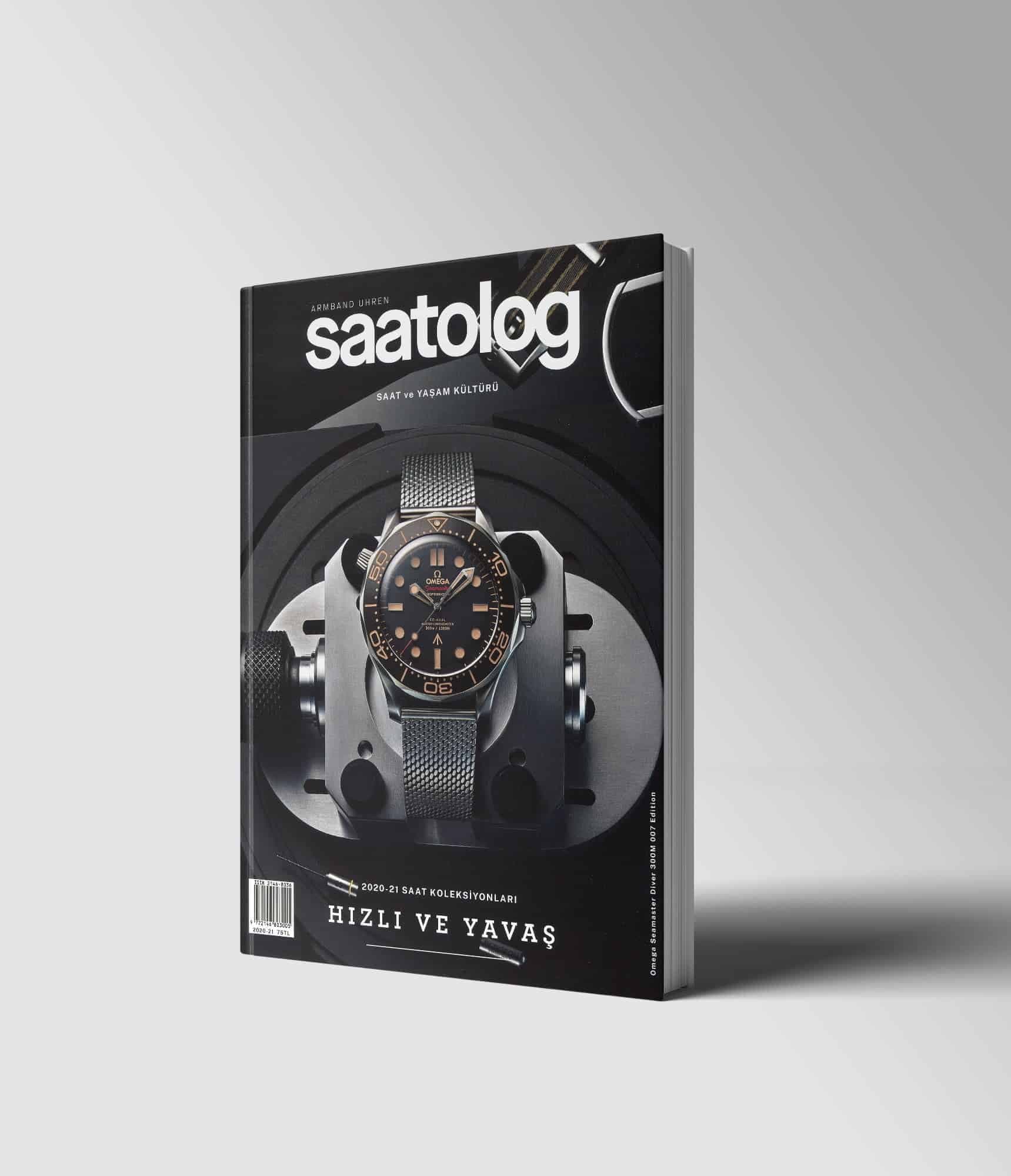
Saatolog Yıllık Saat Dergisi Saatolog’un yeni sayısı, 2020’nin yarattığı bu dönüştürücü etkiden ilham alarak hazırlandı. Dünya dijitalin etkisiyle her zamankinden de hızlı bir şekilde ilerlerken yavaşlamanın da önemini sonunda kavramış bulunuyoruz ve bu tezatlık hayatlarımızın her anına etki ediyor. Biz de bundan yola çıkarak Saatolog 2020/21 sayısını ‘‘hızlı ve yavaş’’ teması altında hazırladık.