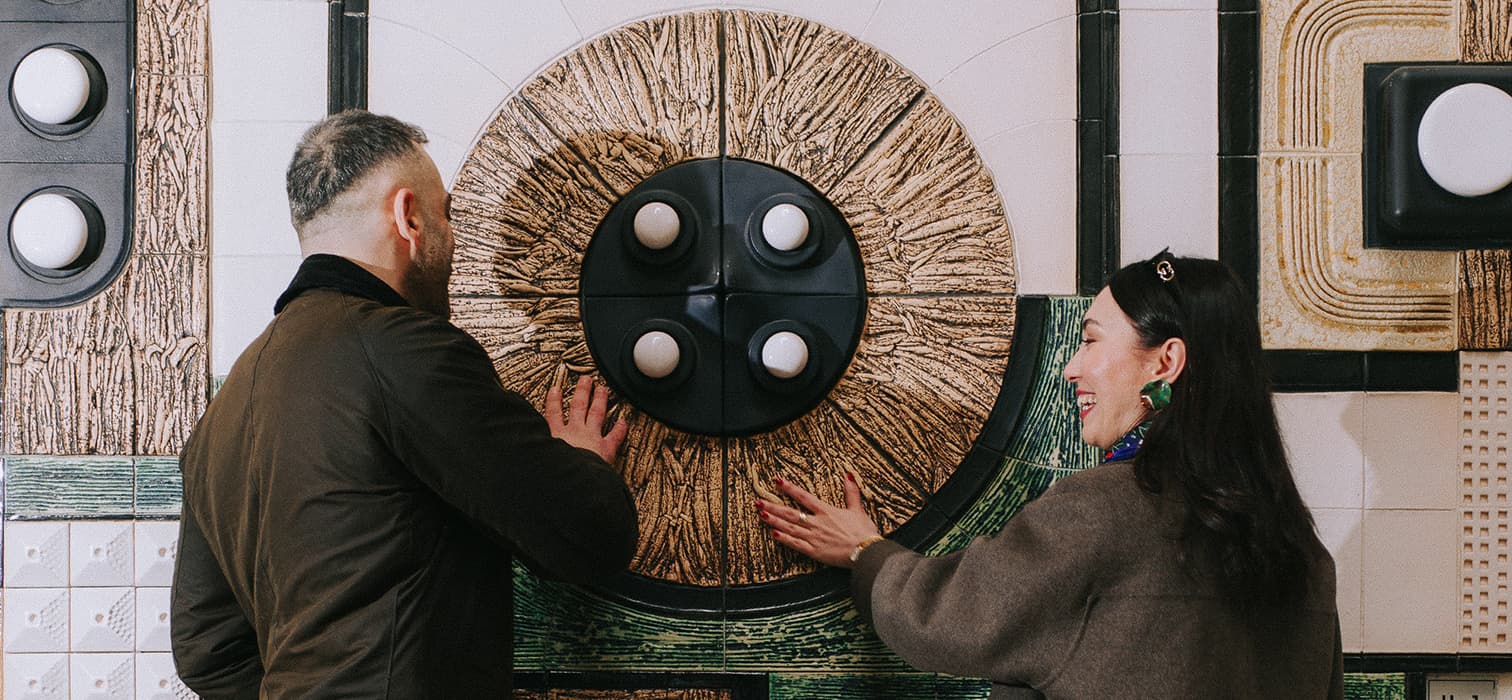
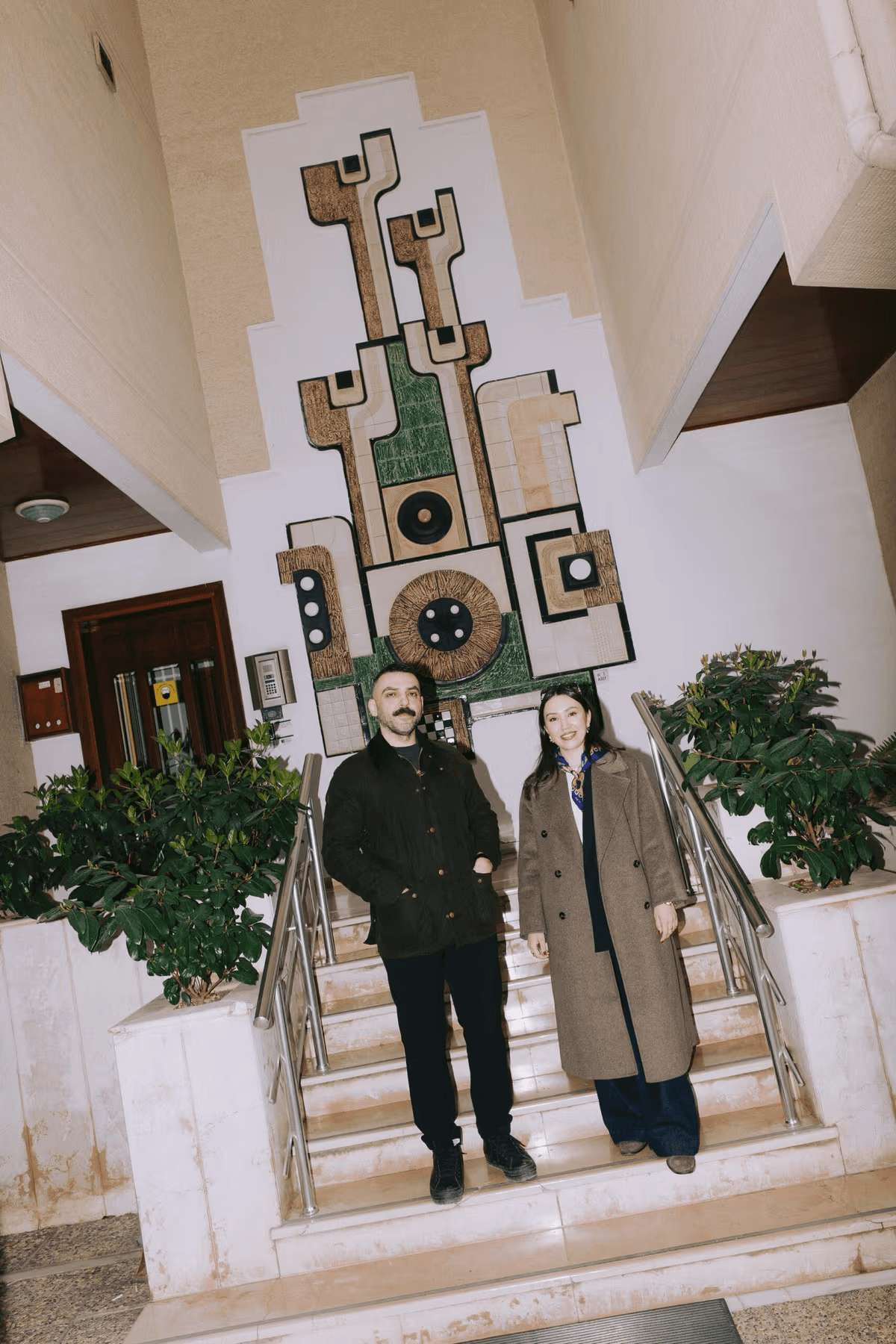
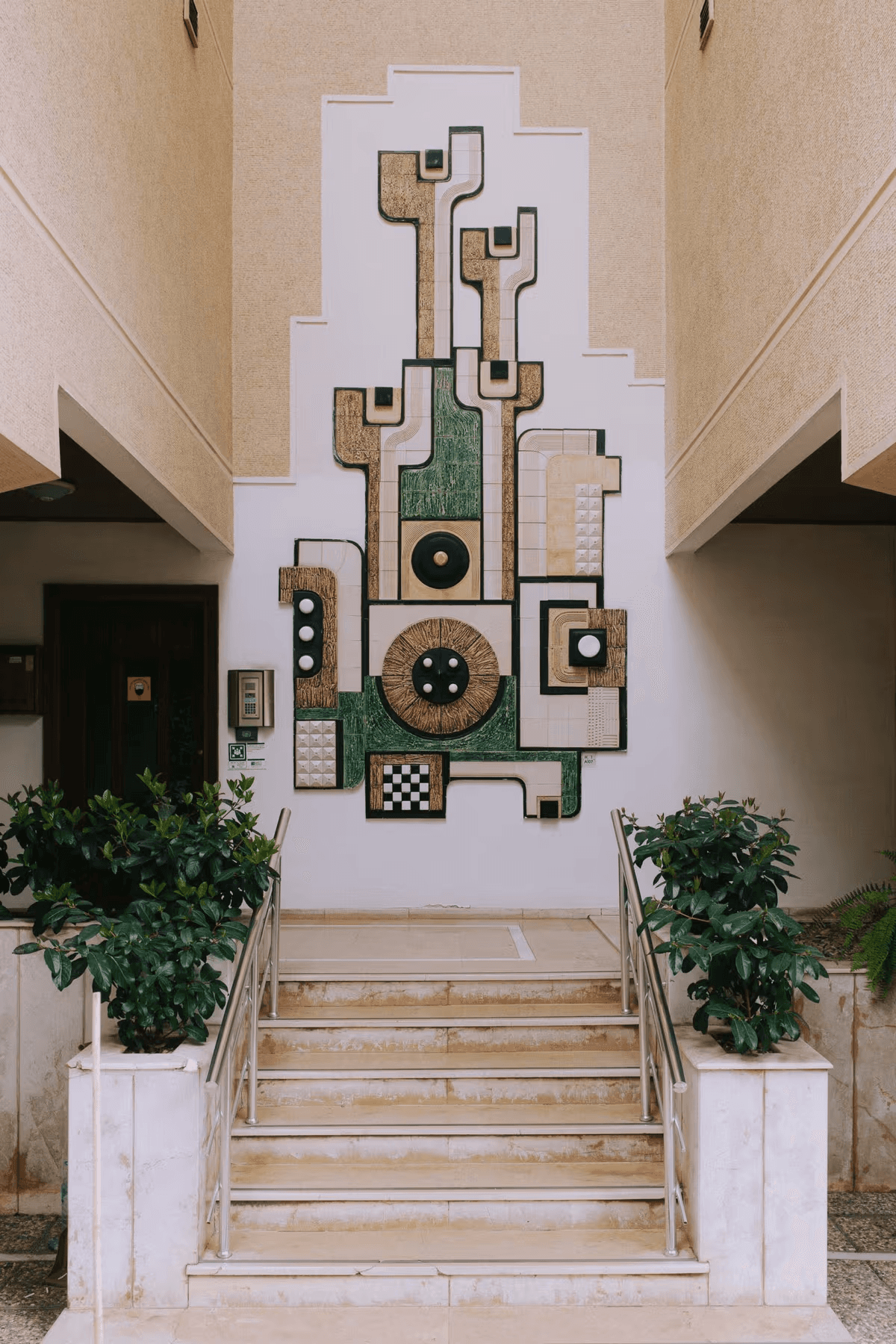
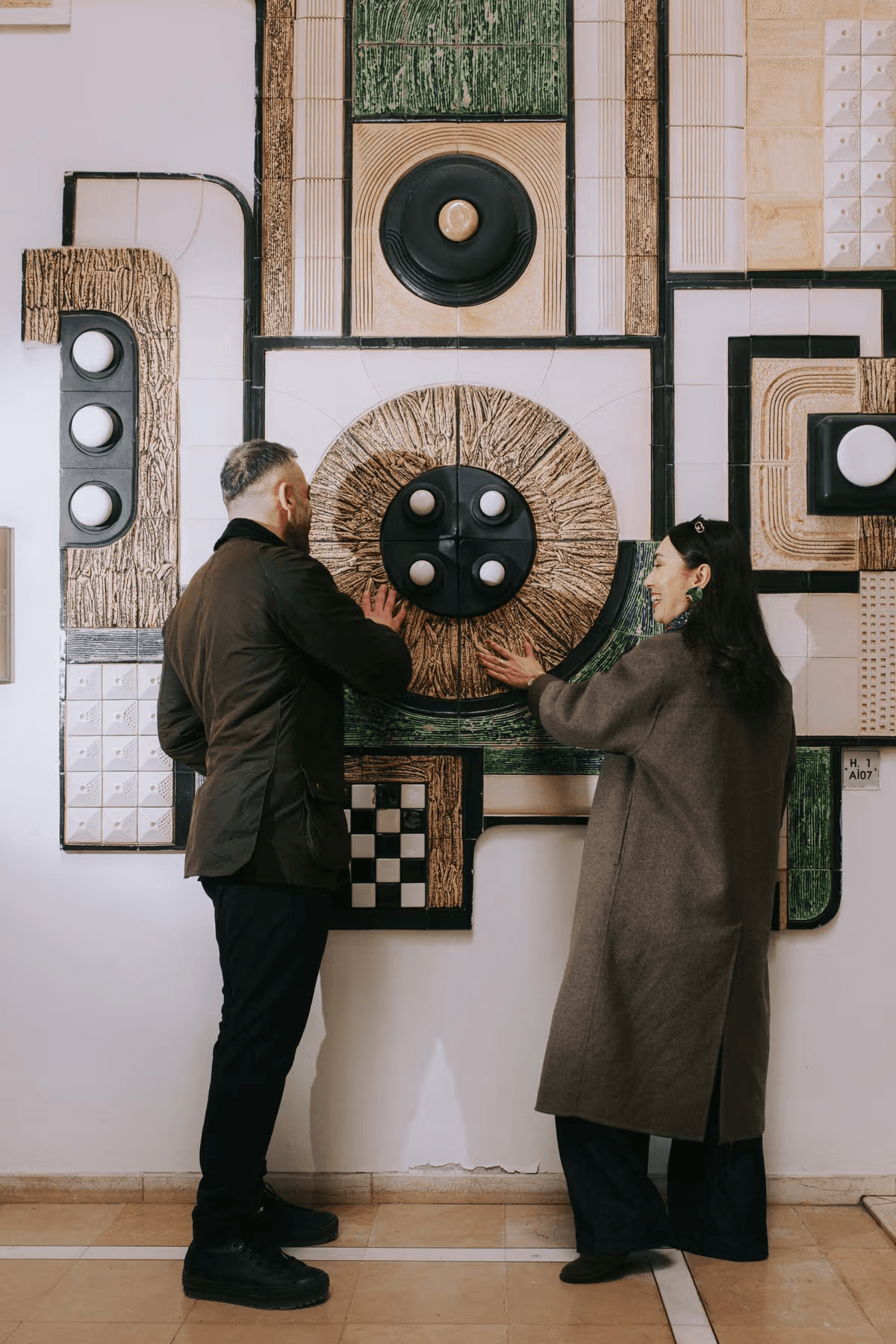
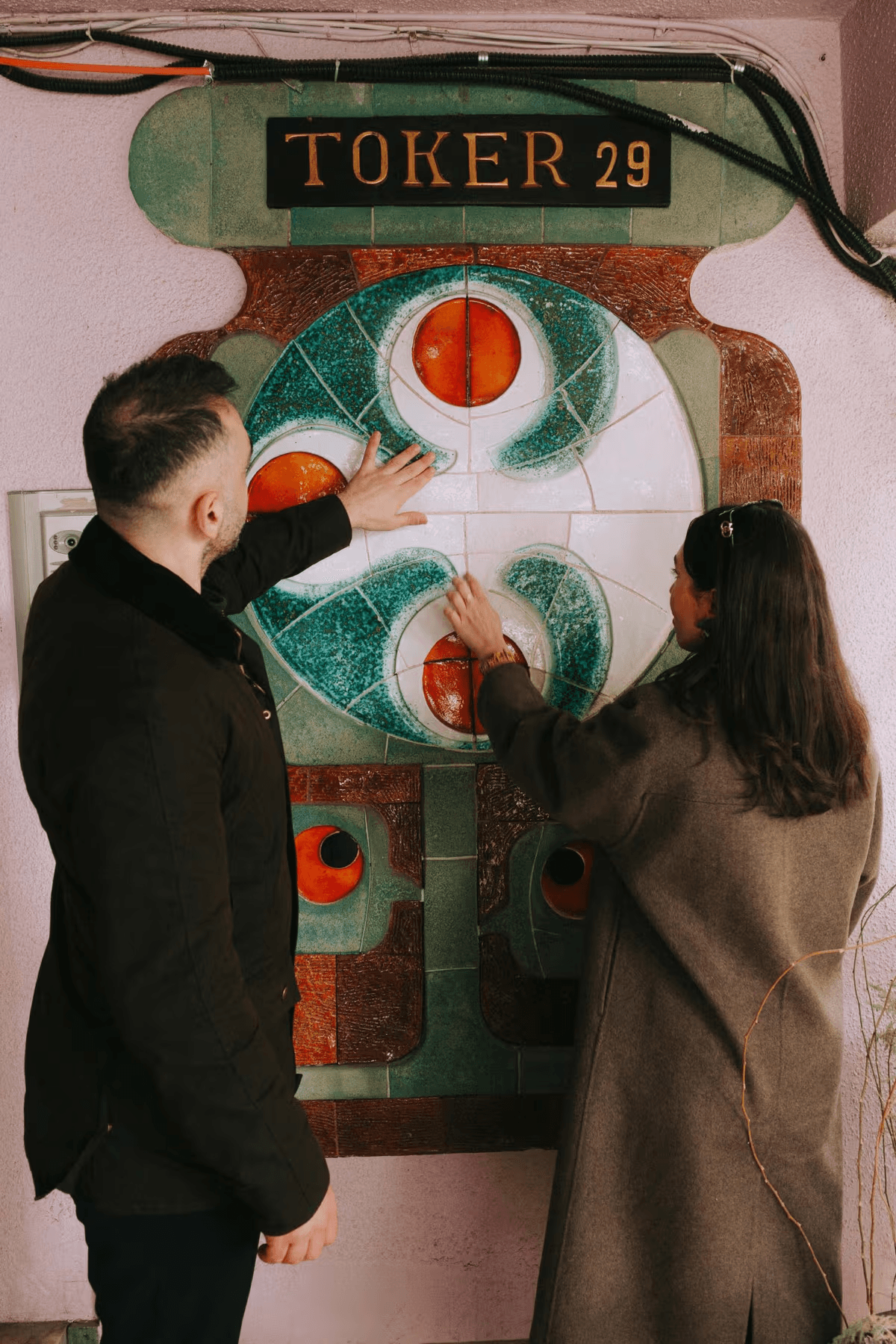
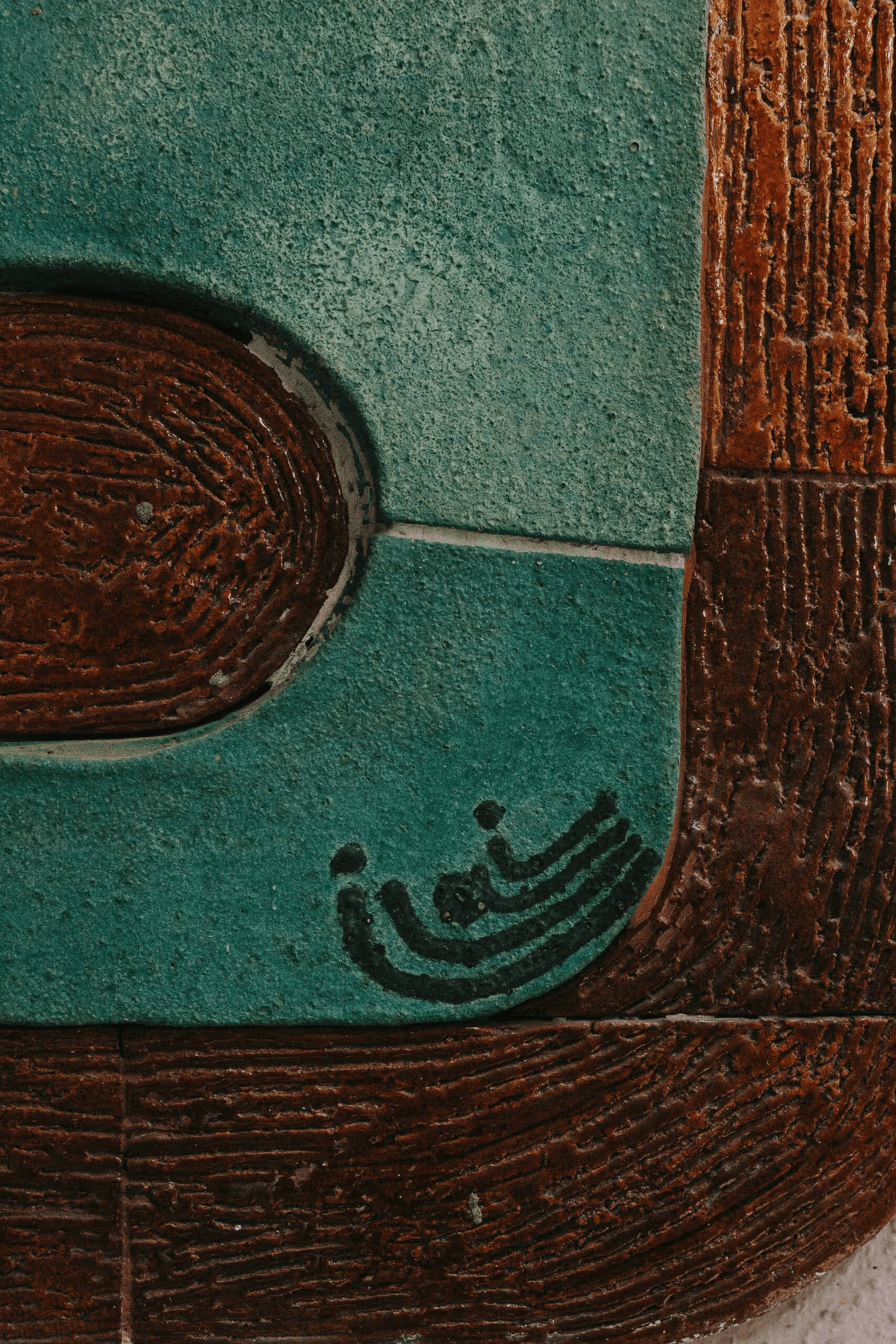
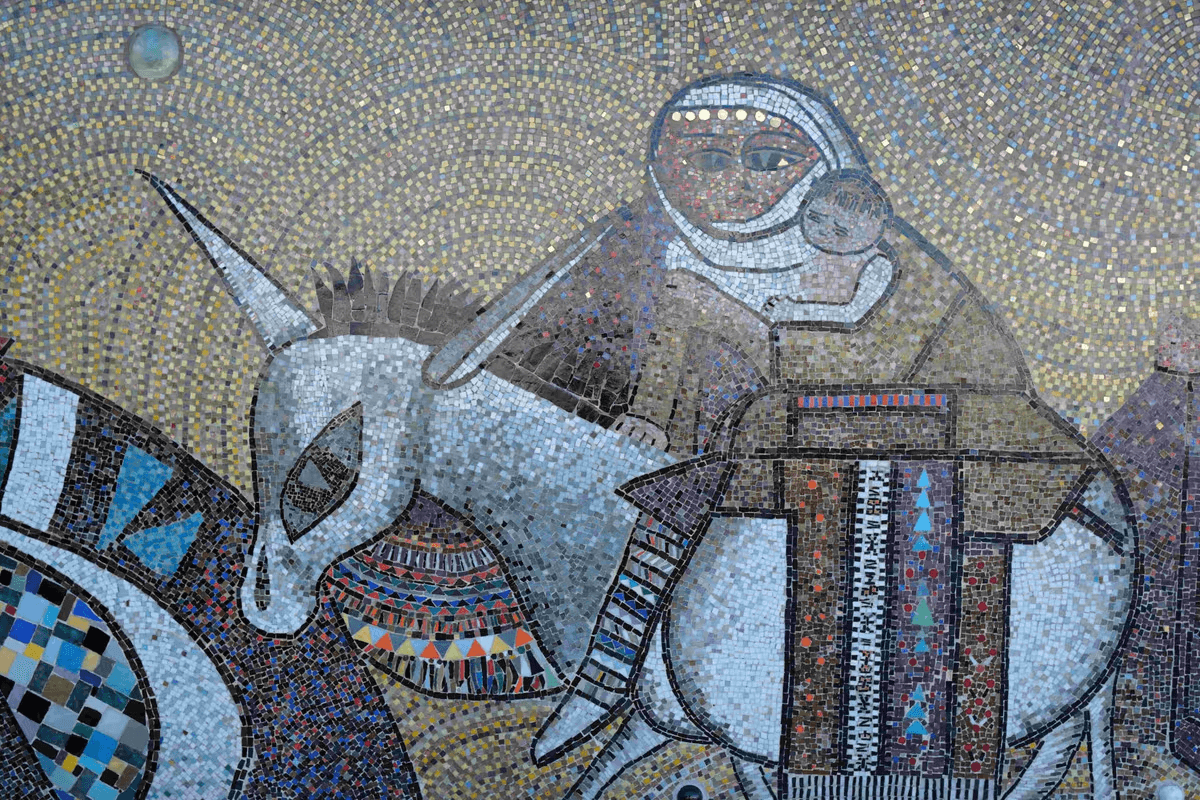
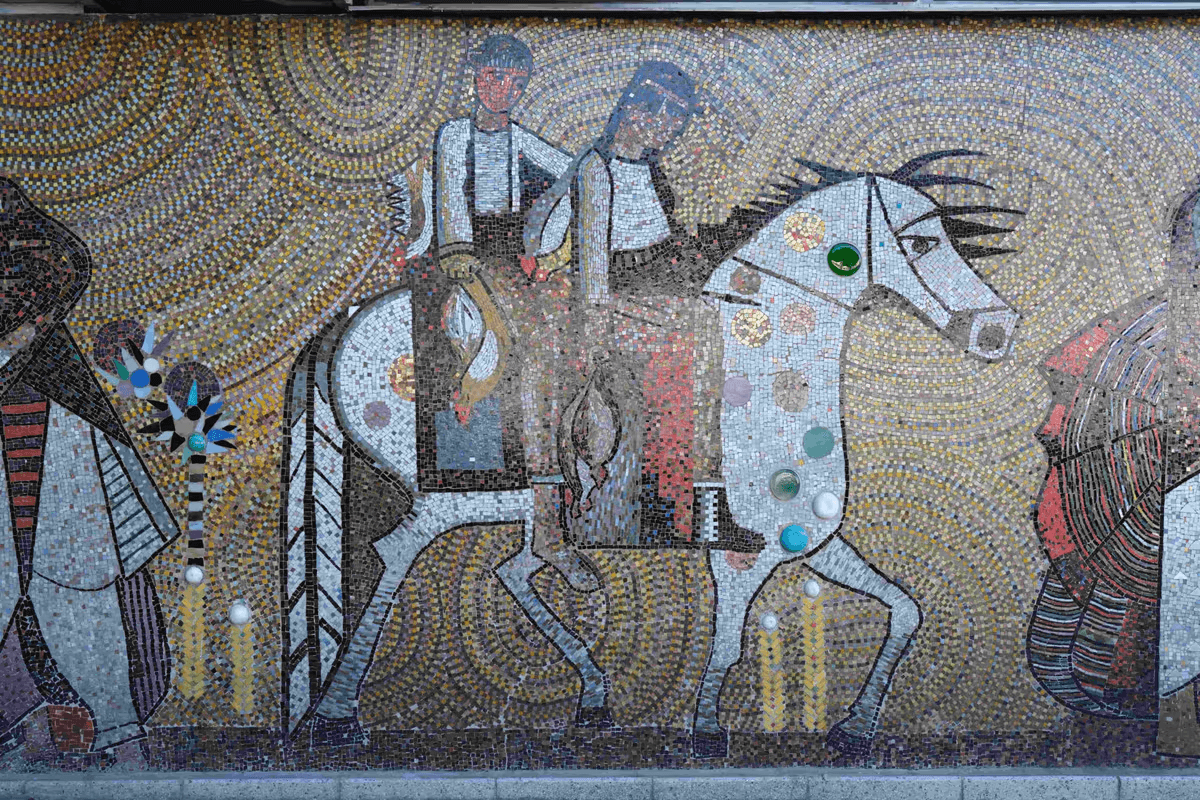
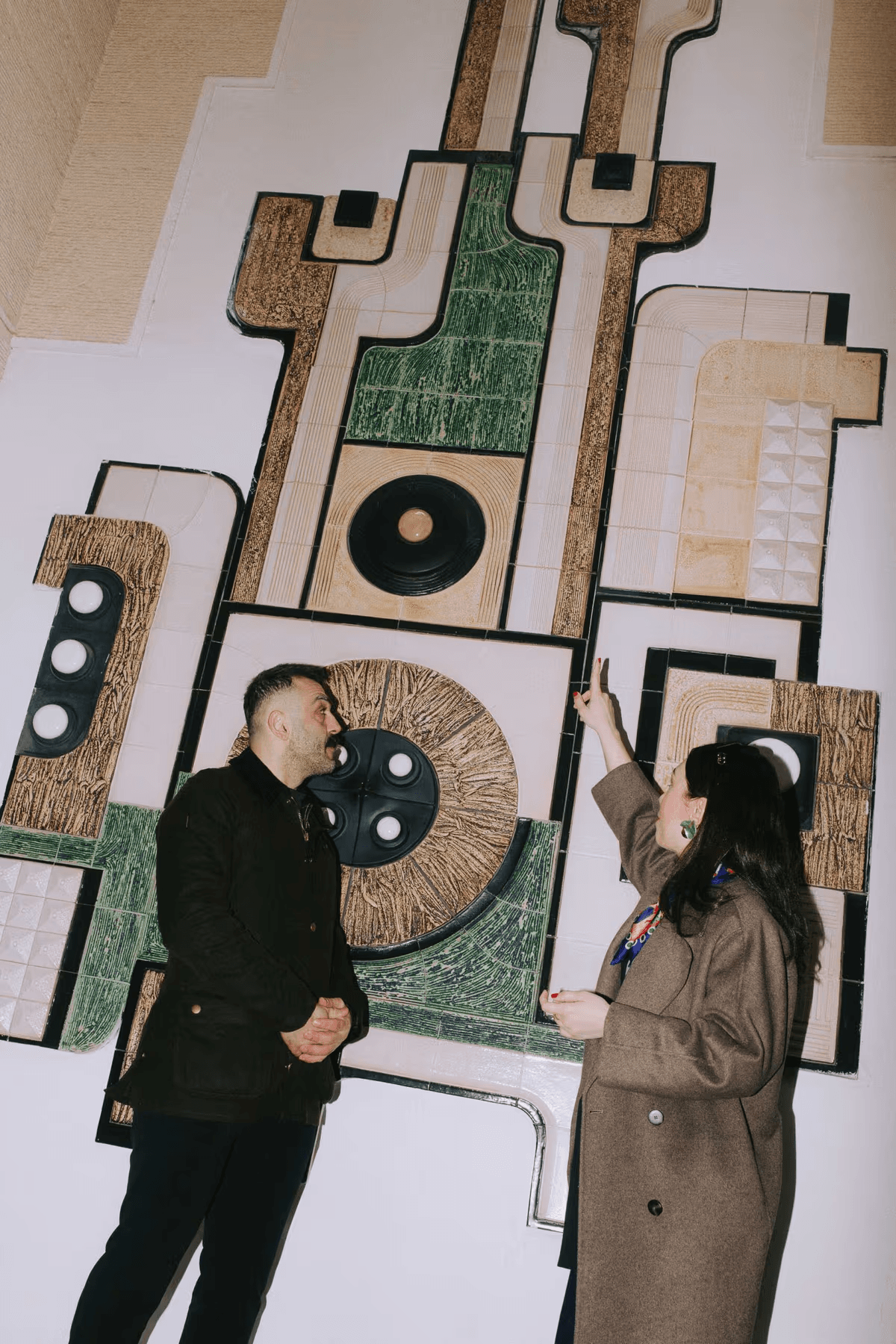
Ceramic panels that we encounter at the entrance of an apartment building in Suadiye, on the façade of Doğu Bank, or once on the walls of Cerrahpaşa Medical Faculty are, in fact, fragments of an unseen art history. Şehrin Panoları reconstructs the memory of contemporary Turkish ceramic art by documenting this silent heritage.
For an editor, writing is rarely an issue; it is almost an instinctive reaction. The real challenge, I believe, lies in the distance one establishes with the subject at hand. Sometimes you need to step back like a therapist and set aside the personal. However, before moving on to this interview, I need to open a small parenthesis. It would feel incomplete to proceed without sharing how my path crossed with Şehrin Panoları and what this project means within my own story.
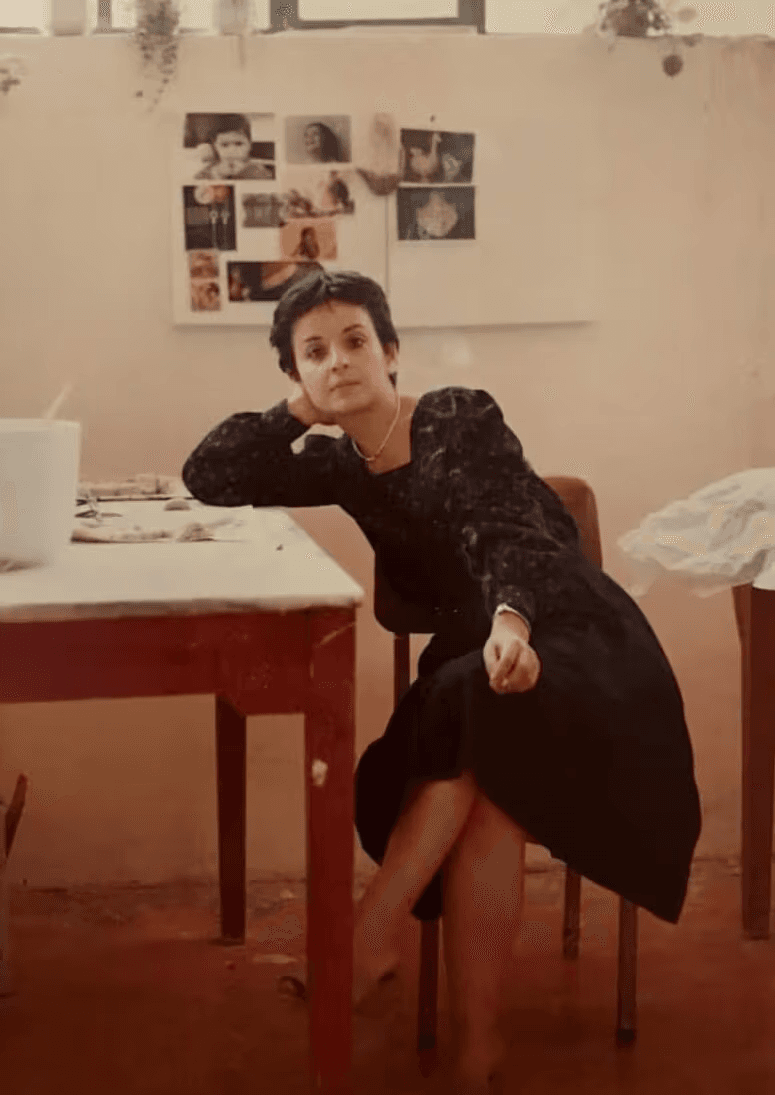
I am Zeynep Yayınoğlu. I am the daughter of a woman who graduated from Marmara Faculty of Fine Arts, Department of Ceramics in 1978, and spent most of her life in workshops—kneading clay, handling tools, sometimes working on a panel laid out on the floor, sometimes focusing intently on a piece turning on marble tables. My childhood passed in these ateliers —mostly among women artists—surrounded by affection. These artists, seated in groups of three or four at closely placed tables—who never referred to themselves as artists—worked like a “factory.” My share was making masks out of small pieces of clay placed in my hands, carving with tools, sometimes gilding a vase with a tiny sponge, sometimes waiting with them in front of a kiln. Now I realize that I witnessed the most genuine, most unadorned moments of a production process. I learned then how unpleasant the smell of gold can be. How thinner can make you dizzy… The heat of the kiln, how the disappointment of broken pieces is consoled, the pleasure of Turkish tea after lunch, the warmth in the eyes of people who became friends, the invisible sense of collectivity…
Ayşe Armutçu Güler
Of course, it is not easy to look at a story about one’s mother from a distance—especially when you are wrapped in it with infinite love. Today, as I write this text at a cluttered table, I look at the pieces that make my house a “home.” Pieces made by my mother, her friends, those singular creators. That made by people who never called themselves artists, and never referred to their creations as “art.”
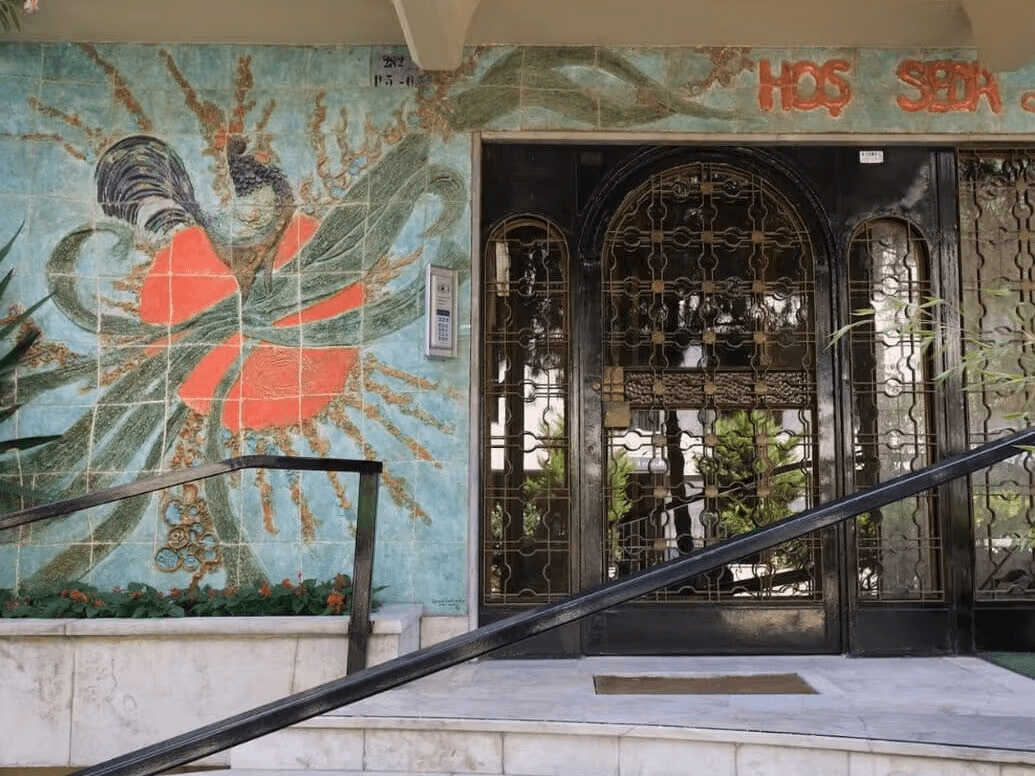
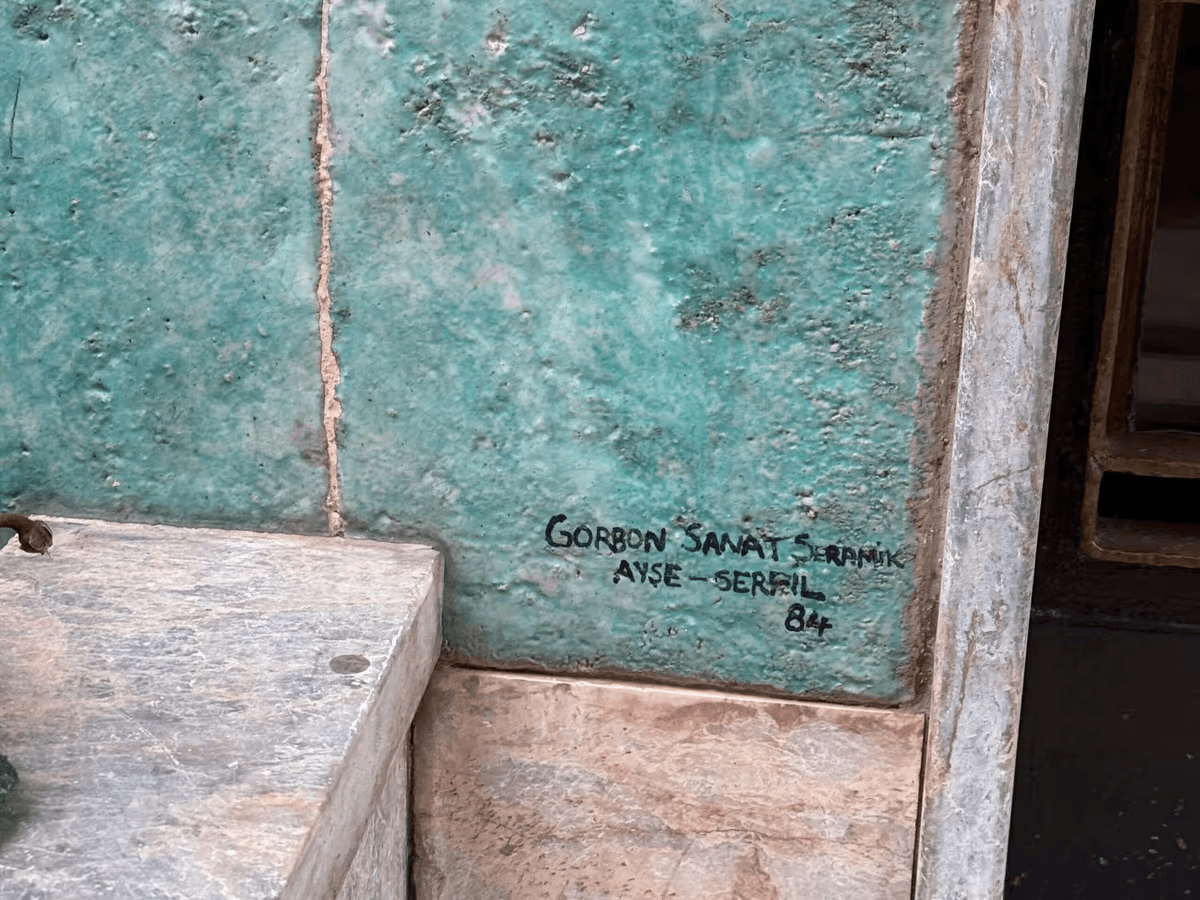
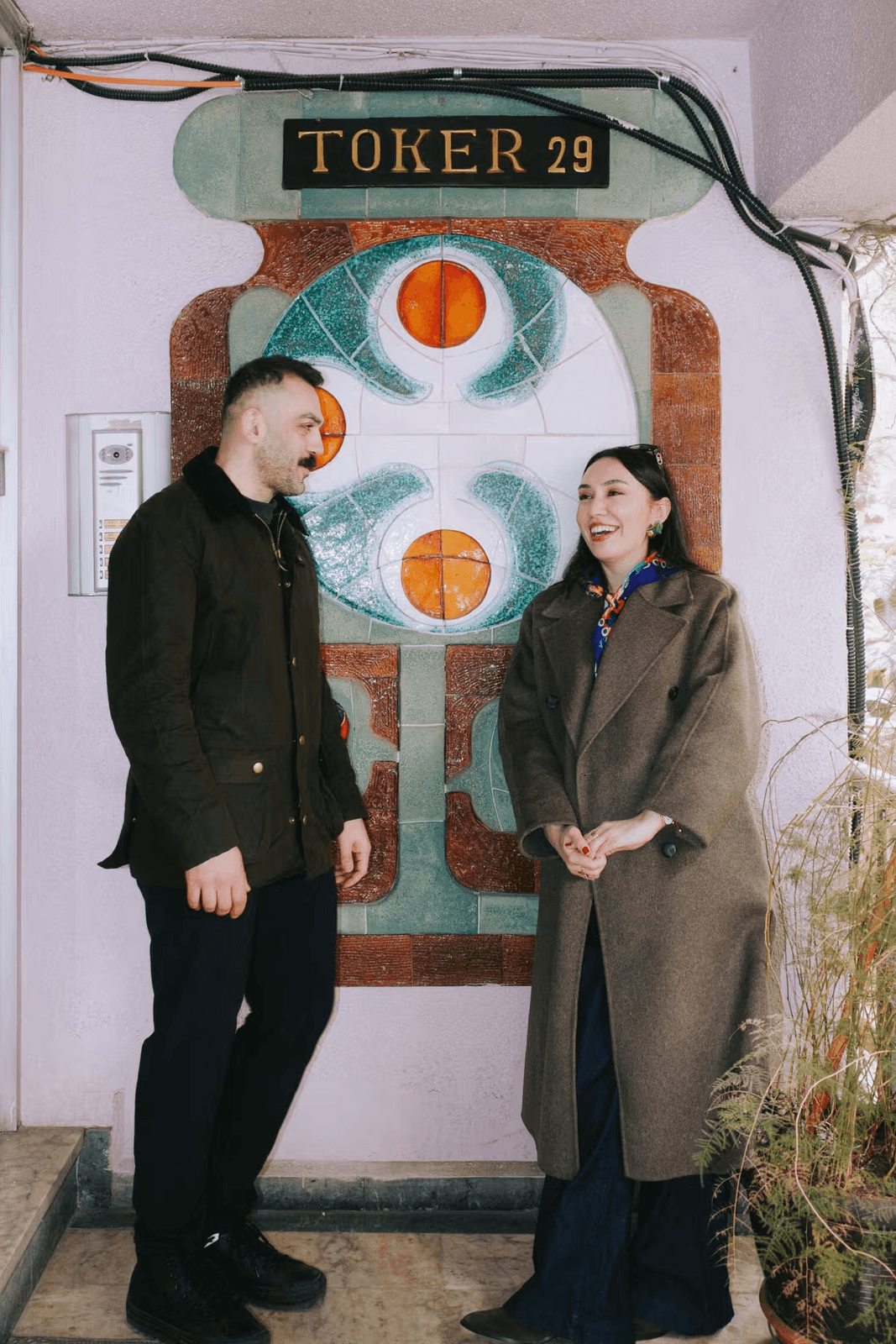
Everything began a few months ago with a post I came across on Instagram. The account was called … It shared an image of a ceramic panel at the entrance of Hoş Seda Apartment in Suadiye, Istanbul. I set aside the fact that I had passed by this panel countless times, and realized I had only just noticed the tiny signature beneath it. “” One of those two artists who didn’t even feel the need to include their surnames was my mother, Ayşe Armutçu Güler; the other, her dear colleague and friend, Serpil İpekçi Köle.
Only a few minutes passed between realizing that the mysterious signature belonged to my mother and sending a message to the Şehrin Panoları account. Their response came just as quickly. What followed unfolded like a thread being pulled. Within hours, dozens of messages, phone calls, and then meetings. I attended a couple of their artist gatherings held in small groups. Conversations lasting for hours, stories told in one breath, countless photographs… all recorded. As they spoke, I listened. And the pieces fell into place.
Art is not something the human mind can easily define. What do we call art, who is it for, in what form… Does it have a time? These are all questions that demand reflection and mental effort. Yet through this entire process, one thing became clear for me: the ceramic panels we encounter today in the backstreets of the city, on apartment façades or hospital walls, are not merely surfaces—they are traces of a period, a culture of production, and often invisible labor.
When I step back now, I see more clearly the value of Şehrin Panoları, a project created by Nurtaç Buluç and Mustafa Ergül. It is a work of memory that reveals hundreds of names who contributed to artistic production in Turkey but often remained unseen. Continuing its journey in collaboration with Kale Design and Art Center, the project has now archived nearly 700 public artworks. Moreover, through collaborations with local administrations, it contributes to the preservation of many works under threat due to urban transformation.
At this point, I invite you into the world of Şehrin Panoları and extend my gratitude to all those artists—whose names I could not mention here, who are no longer with us, or whose works have yet to be documented.
Şehrin Panoları
Let’s start from the beginning. How was Şehrin Panoları founded?
Mustafa Ergül: The origin of Şehrin Panoları dates back to 2019. At the time, I was living in Kozyatağı and would see these panels while walking. Since I was also interested in ceramics, I became curious about who made them. When did placing panels on apartment façades begin, what tradition did it belong to—I started researching. Both Nurtaç and I graduated from the Art History department of Istanbul University. We both worked at SALT Archive, albeit at different times. That was partly what brought us together. We wondered if we could document these panels, create a digital archive, and see how many existed in Turkey. Initially, we thought production was concentrated in Kadıköy, based on what we observed. Most examples in our research were monumental works by well-known artists. But as we dug deeper, we saw that these panels were spread across a much wider area. We identified many panels from Suadiye to Kadıköy. The pandemic also made things easier in terms of walking around, and we turned this into a digital archive.
Nurtaç Buluç: Until then, there were scattered posts on Twitter and Instagram. We started thinking about how to build an archive, how to turn it into an inventory, how to transform it into a collection—and began working. Once we grabbed one end of the thread, the rest followed. First the website, then Instagram.
M.E.: We had three main goals. First, of course, documenting these panels. Second, there was urgency due to urban transformation. Many of these buildings—especially those with panels—were facing demolition. Panels without names, or dismissed as “no name,” are not seen as artworks and are likely destroyed quickly. Even if we couldn’t intervene directly in demolition processes at first—though now we have evolved towards that—we wanted to document and record them as soon as possible. The third goal was mapping them, allowing people to create their own art routes.
Şehrin Panoları
Şehrin Panoları
How did the process evolve?
N.B.: After we started documenting, we began reaching out to artists. First İlgi Adalan, who then directed us to other names. That’s how we crossed paths with many ceramic artists, including your mother. Through oral history, a digital ceramic archive, public tours, and a collection of ceramic ephemera, we adopted a mission that embraces contemporary Turkish ceramic history. Now we feel like we are taking responsibility for that entire field.
You certainly are… When you look at the map that has emerged, what do you see?
N.B.: We see the richness of public artworks in Turkey. In Europe and the US, this starts in the 1940s and 50s. In Turkey it begins later but is incredibly rich. There are still works we haven’t mapped yet, but from a distance, we see a strong presence in the east, the Mediterranean, and the Black Sea regions. We live intertwined with artworks in many cities. Works in museums carry identity and representation, but those in our daily environment shape both our cities and our collective memory. We should also highlight the value of collaborations with local administrations. Their interest in what they can do has been a major motivation for us, and we have started developing projects for them as well.
Your increased visibility must have contributed to this.
N.B.: Absolutely. Sometimes we can’t even believe it. Especially in the last 2–3 years, our visibility has increased significantly. Despite being a niche field, people see it as part of their cultural memory. They say, “That panel I saw in the hospital reminds me of something.” There are many such stories. People have also started to wonder about the artists behind these panels and the stories of the works.
Can we say that documenting public works provides more objective and refined data compared to curatorial approaches in museums?
M.E.: We are actually producing knowledge. Which artists made panels in Turkey, in which years, on which buildings… These building types vary—markets, residences, airports, hospitals. How many were used in residential architecture, how many in public buildings? In which years did production intensify? To understand all this, we need an archive. Because an archive doesn’t just show material—it also holds data. Revealing that data was our main motivation. But to do that, we needed to reach artists and understand their motivations—whether they worked through public commissions, private sector demands, financial needs, or artistic intent. As these emerge, knowledge takes shape.
Şehrin Panoları
Şehrin Panoları
So we can say the archive has a dynamic structure.
M.E.: Rather than a book, we wanted a medium where we could reflect up-to-date information, so we established a digital archive.
N.B.: Every new piece of information brings an update. That’s what makes our archive unique. Unlike museum or exhibition practices, we don’t present a single narrative and expect viewers to read it. We go beyond introductory texts or labels. We present what exists, transparently with its information. For example, artist İlgi Adalan, produced by Sadıkoğlu Construction. This company used an “S” signature to highlight its brand value at the time. Or that an artist created a panel upon a specific request from a construction firm. Looking at the whole, we can read across periods. Early panels were made for certain purposes, with certain motifs. In the 1980s, as artists distanced from the state and moved toward private work, they reflected more of their personal artistic practices. We try to convey all these readings in the most refined way during tours. It’s a multi-layered reading—architects interpret one way, artists another. We offer open data that anyone can approach from different angles.
The project began with Istanbul’s panels but evolved into something much broader, right?
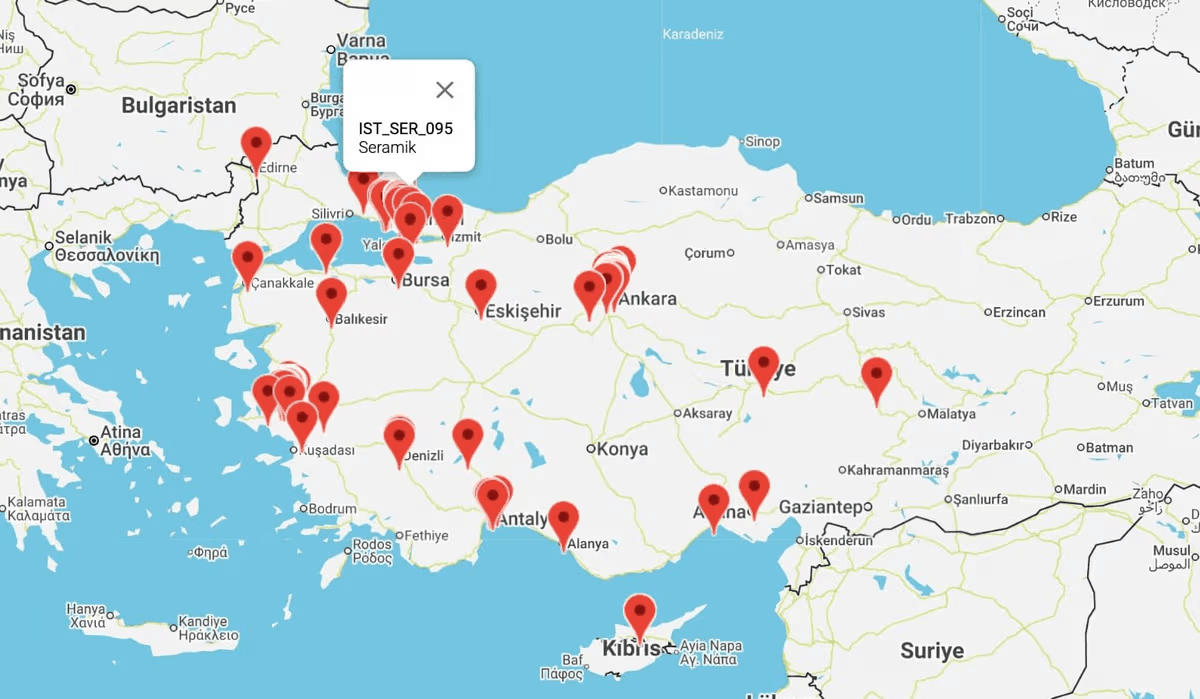
M.E.: Istanbul is where we saw the most density, followed by Ankara and İzmir. But as Nurtaç said, we also see works in other cities. Our visibility on social media helped us reach them.
N.B.: With examples from Denizli, Antep, and Artvin, our map keeps updating and becoming more vibrant. Works appear in places we never expected, and often we learn about them from our followers.
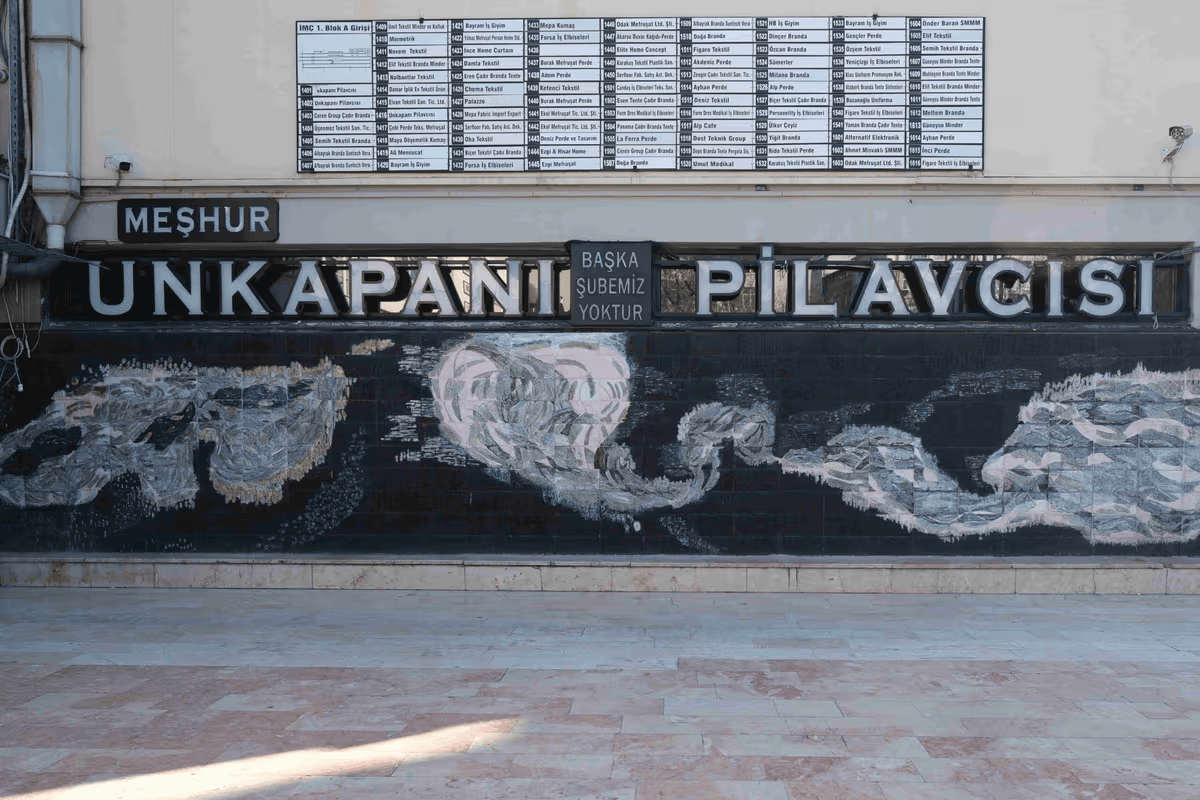
İmç Istanbul – Eren Eyüboğlu
İmç Istanbul – Eren Eyüboğlu
Which region surprised you the most?
N.B.: Malatya, for example. And Adana, which has many early works. Sadi Diren made ceramic panels there in the 1960s. This expansion is often due to connections with architects. A factory is built in Adana, and the architect collaborates with Sadi Diren. Or competitions are held. Or an artist is invited to Artvin to create a piece. Another example is a Gorbon factory panel in a bazaar in Antep.
M.E.: Ceramics is an expensive and demanding field. It requires equipment and is closely tied to industry. So it’s not surprising to see it in large cities, where ceramic schools exist and it is part of academic training.
Let’s talk numbers. In how many cities have you identified panels?
N.B.: The website is not fully updated, but we know of 20–23 cities so far, and this number will increase. We have documented nearly 700 ceramic mosaic panels.
Map of ceramic panels around Turkey
How do you categorize them?
N.B.: We classify them as public artworks and those located inside or outside private residences. Even those inside private homes are considered public art because they stem from the same tradition.
M.E.: We found ceramic panels inside homes as well—covering walls or even fireplaces. The same story lies beneath. That’s why we include interior panels in our inventory. The types of structures hosting these panels are also diverse: apartments, factories, banks, hospitals, universities, hotels, shopping centers, bazaars, museums, theaters, and more.
Historically, how far back have you traced them?
Şehrin Panoları: 1953.
Let’s talk about historical phases.
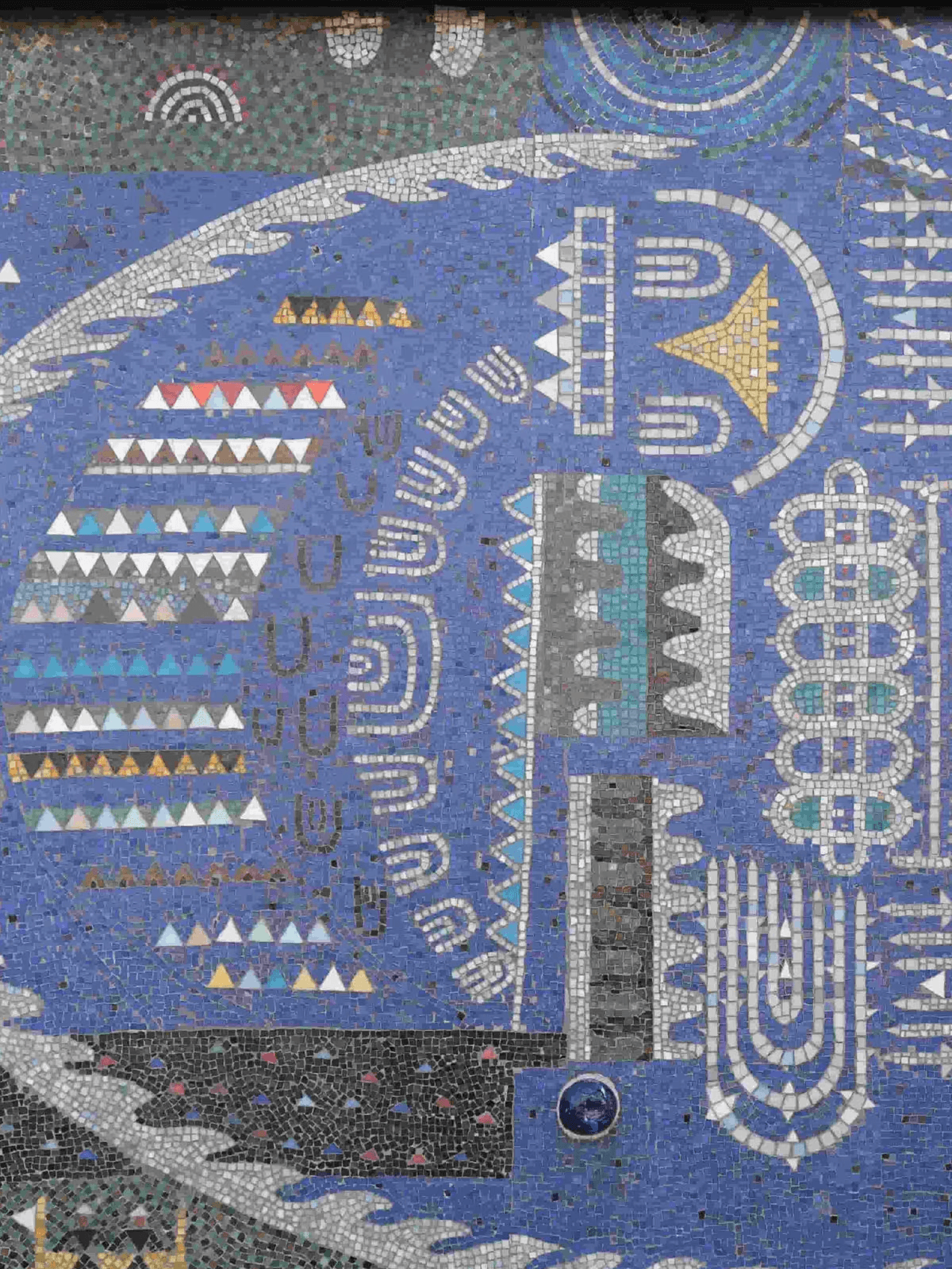
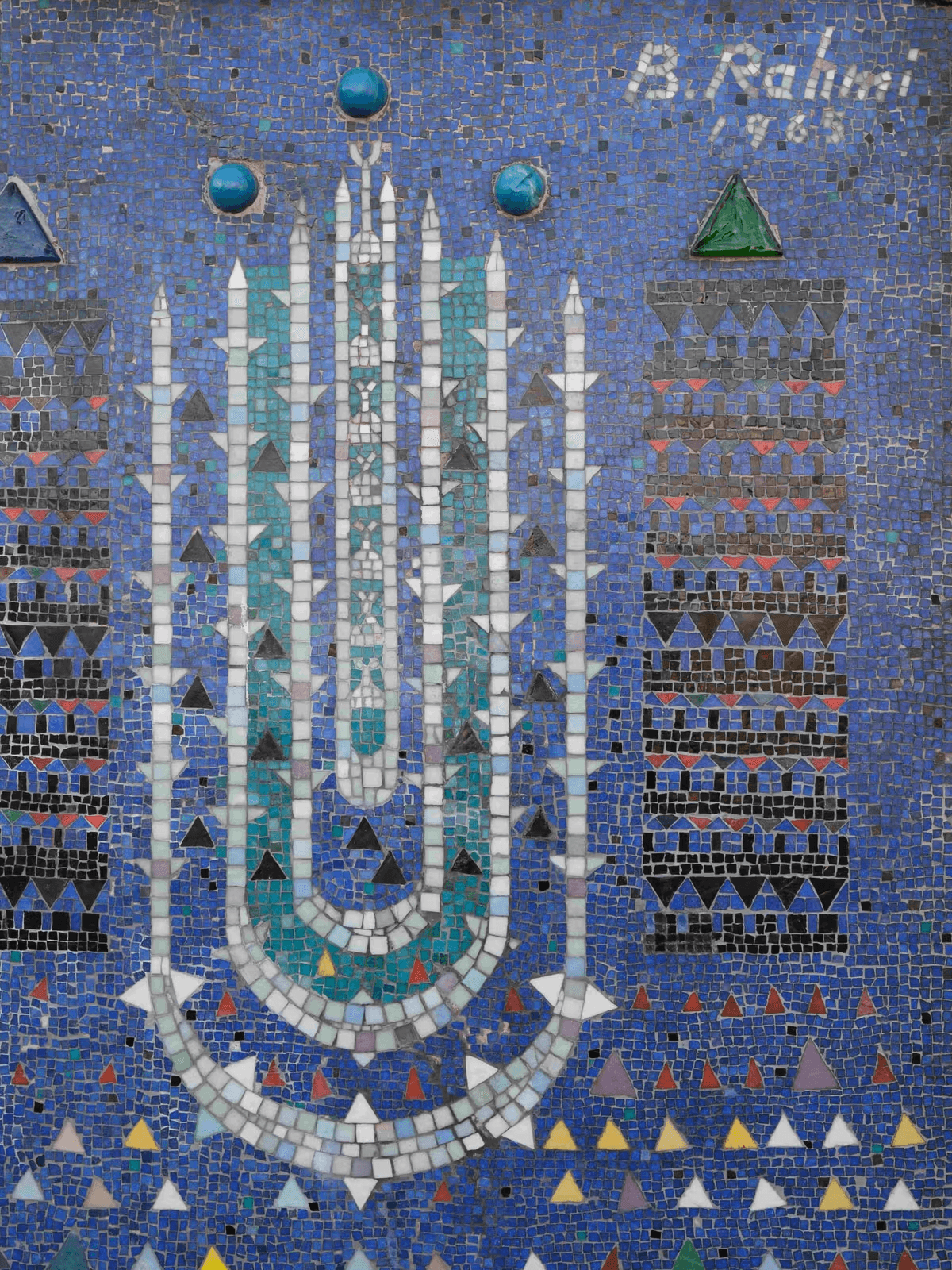
M.E.: The earliest panels we encountered are mosaics. This is tied to material realities—ceramics require kilns, clay, labor. We know this begins with Bedri Rahmi. In this sense, he is like Turkey’s Picasso. He uses different materials in different works. In 1953, he creates the mosaic panel on Doğu Bank’s façade. After the 1960s, we see the industrialization of ceramics. Companies like Kalebodur, Taylan Seramik, Gorbon, and Eczacıbaşı supported artistic production. Between 1960 and 1980, we see production arising from architect–artist collaborations.
N.B.: Ceramic production in Turkey has also been a challenging process. In the 1930s, artists repeatedly wrote about this. Fikret Mualla, for instance, complained: “In France, architects include painters in their buildings. Why don’t we?” Later, Namık İsmail wrote a report in 1938 emphasizing that artists’ works should be part of architecture. He underlined how this could open new income streams for artists. Bedri Rahmi continued to advocate for this from the 1950s onward.
İmç Istanbul – Bedri Rahmi Eyüboğlu
İmç Istanbul – Bedri Rahmi Eyüboğlu
You mentioned that industrialization boosted production between 1960–80.
N.B.: Absolutely. The late 1950s were the golden age of ceramic industry in Turkey. Large factories opened their doors to artists and students. Those lacking equipment could produce large-scale works there. Without this support, ceramic art might have remained limited to small-scale production.
So while ceramic departments existed earlier, the infrastructure was lacking.
M.E.: Three names stand out: İsmail Hakkı Oygar, Vedat Ar, and Hakkı İzzet. But ceramics were seen more as functional objects than artistic production at the time.
When does artistic production begin?
M.E.: There were artistic works within academia, but continuity points to Füreyya Koral.
N.B.: Ayfer Karamani, Füreyya Koral… Bingül Başarır too, who I see as one of the first conceptual ceramic artists. İlgi Adalan is also significant, though she does not consider her panels as artworks.
İmç Istanbul – Füreya Koral
What do they consider as art?
N.B.: Their sculptures. Perhaps it’s about scale.
M.E.: It also reflects the tension between craft and art in ceramics. Works made for financial purposes are not always embraced as “art.”
What happens after the 1980s?
M.E.: With YÖK reforms, changes occur in art and architecture education. Previously, architects and artists shared the same environments, influencing each other. After the 1980s, that connection weakens.
What about recent works?
N.B.: There are contemporary artists like Ertuğrul Güngör and Faruk Ertekin.
M.E.: Today’s artists draw from both tradition and contemporary expression. Hüseyin Özçelik continues the ceramic wall panel tradition. There are also metro projects.
Şehrin Panoları
Şehrin Panoları
Finally, where is Şehrin Panoları heading?
M.E.: We aim to document all panels in Turkey. We’ve also begun focusing on artist archives, starting with İlgi Adalan. This allows us to explore not only the works but also their processes, materials, and unrealized projects.
N.B.: I imagine that in 5–10 years, ceramic art will gain recognition in literature like other art forms. We want to narrate its evolution from Ottoman and Byzantine traditions to today. Şehrin Panoları aims to bring this together under one roof. Our goal is to reveal invisible artists—just as your mother and Serpil Hanım were once unknown to us. There are many such unsigned artists. Our aim is to make them visible. In short, to become the memory of contemporary Turkish ceramic art.
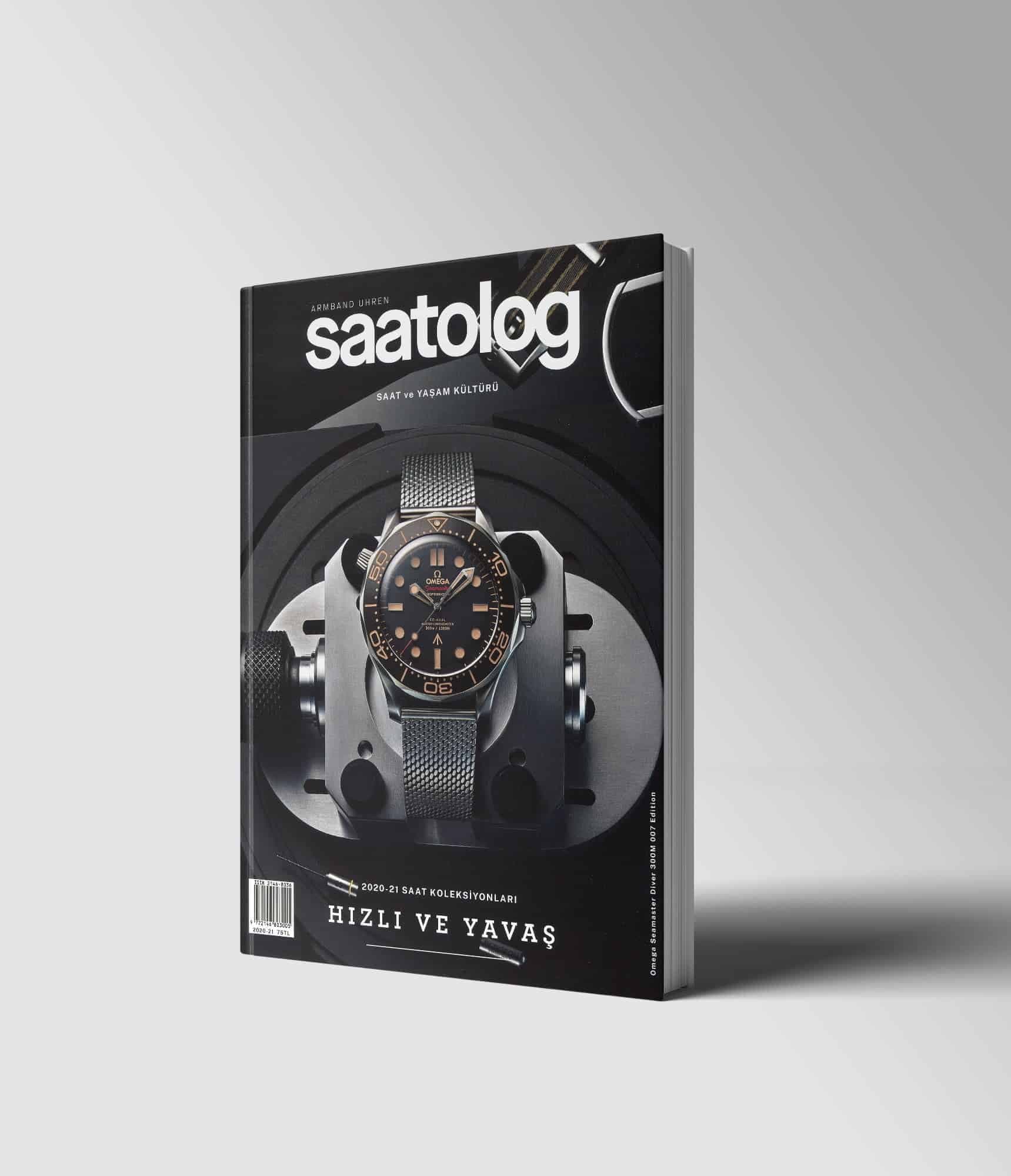
Saatolog Yıllık Saat Dergisi Saatolog’un yeni sayısı, 2020’nin yarattığı bu dönüştürücü etkiden ilham alarak hazırlandı. Dünya dijitalin etkisiyle her zamankinden de hızlı bir şekilde ilerlerken yavaşlamanın da önemini sonunda kavramış bulunuyoruz ve bu tezatlık hayatlarımızın her anına etki ediyor. Biz de bundan yola çıkarak Saatolog 2020/21 sayısını ‘‘hızlı ve yavaş’’ teması altında hazırladık.