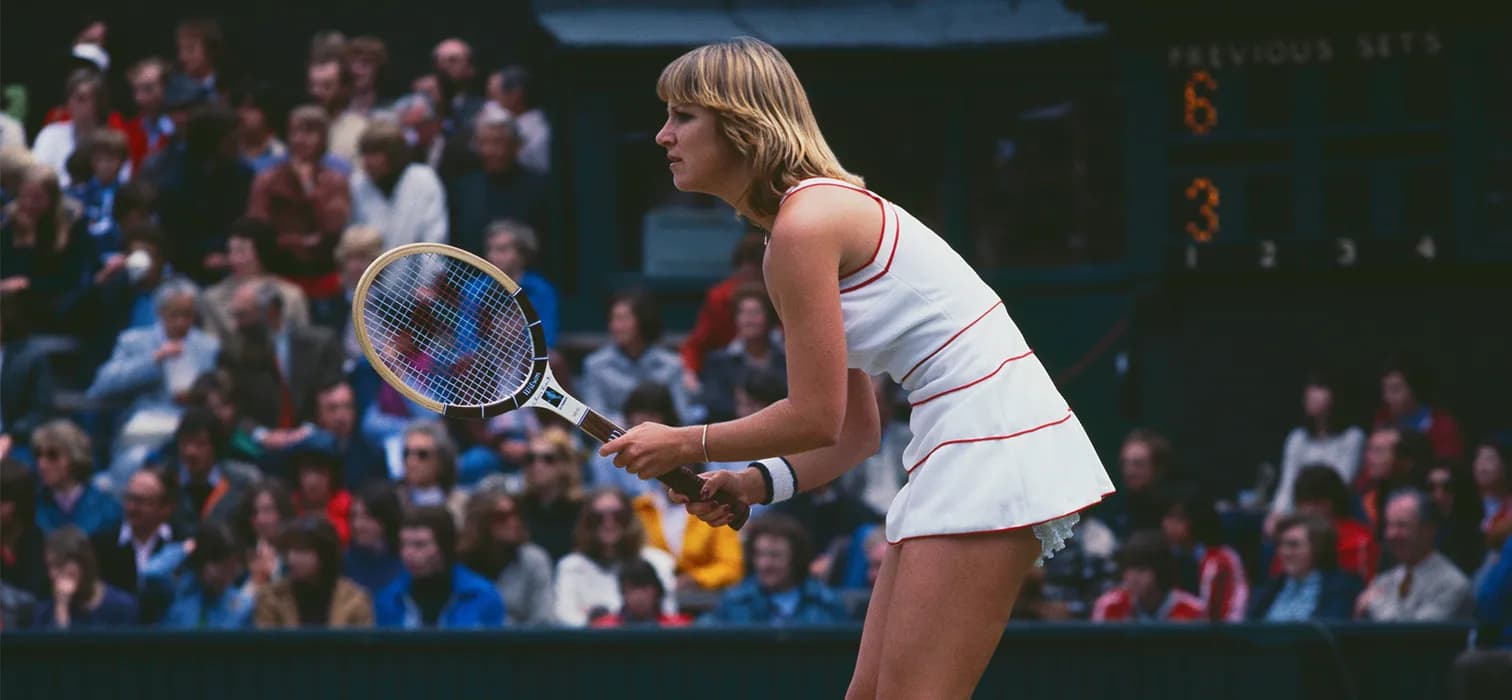
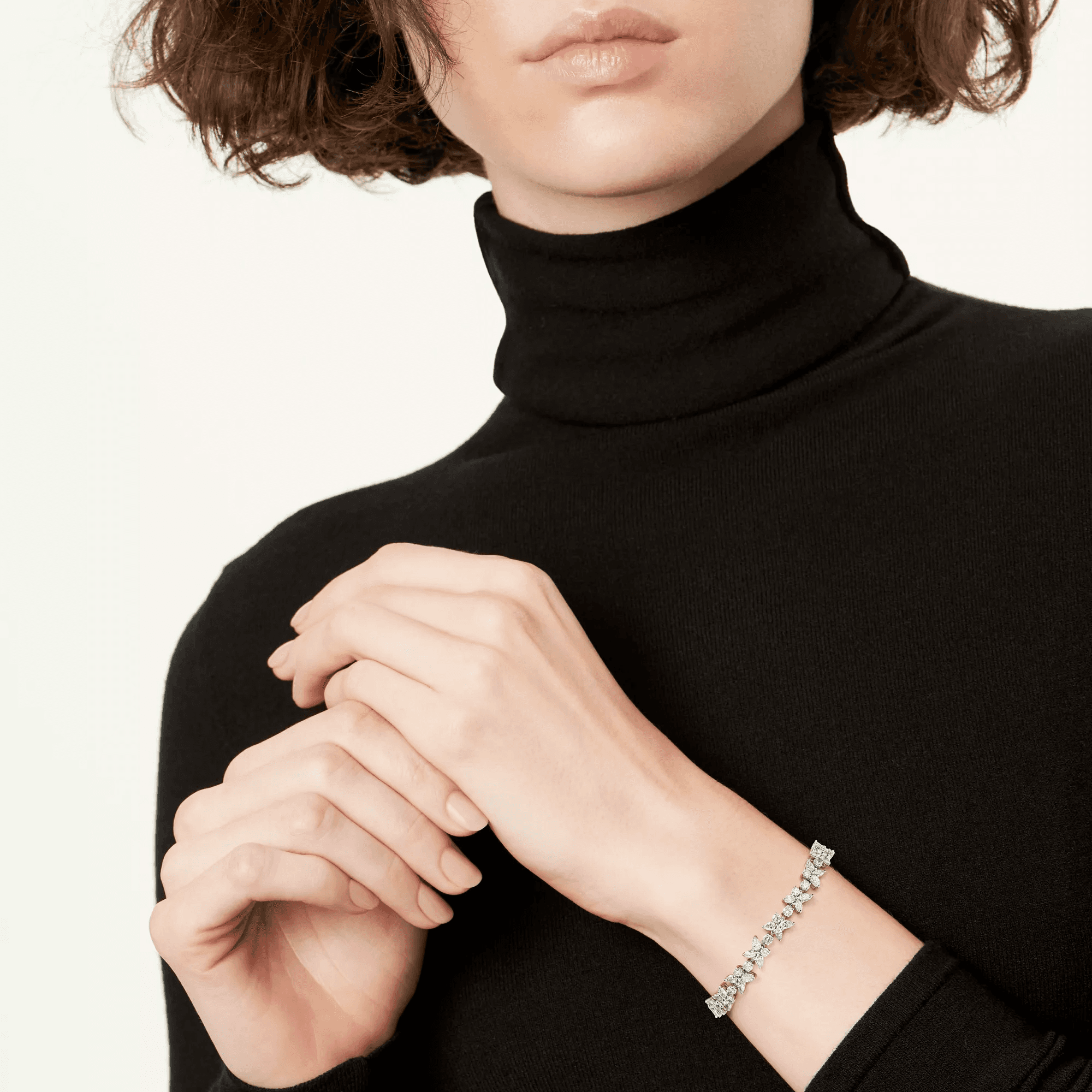
In 1978, Chris Evert’s diamond bracelet famously halted play on the court, yet decades later, it remains a fixture on the wrist with that same unmistakable aura: quiet, effortless, and eternally relevant.
Some jewelry transcends mere aesthetic appeal; it serves as a manifesto for a specific way of life. These pieces quietly defy the passage of time, acting as the signature of “conscious simplicity”—a form of lasting luxury that remains miles away from overt ostentation. The tennis bracelet stands as one of the most compelling embodiments of this philosophy. It relies neither on hyperbolic glamour nor the fleeting whims of trends. Instead, its worth is derived from more than just the stones it carries; it is rooted in meticulous, labor-intensive craftsmanship and a form that never goes out of fashion. In this regard, it remains one of the most refined and distinctive artifacts in the world of fine jewelry.
What, then, defines the essence of a tennis bracelet? Why did it earn such a specific moniker, and what fuels its magnetic appeal in the modern era? Let us re-examine the heritage of this rare piece through its aesthetic nuances and cultural significance.
Photo by Gareth Cattermole (Getty Images For Bfc)
Defining the Tennis Bracelet
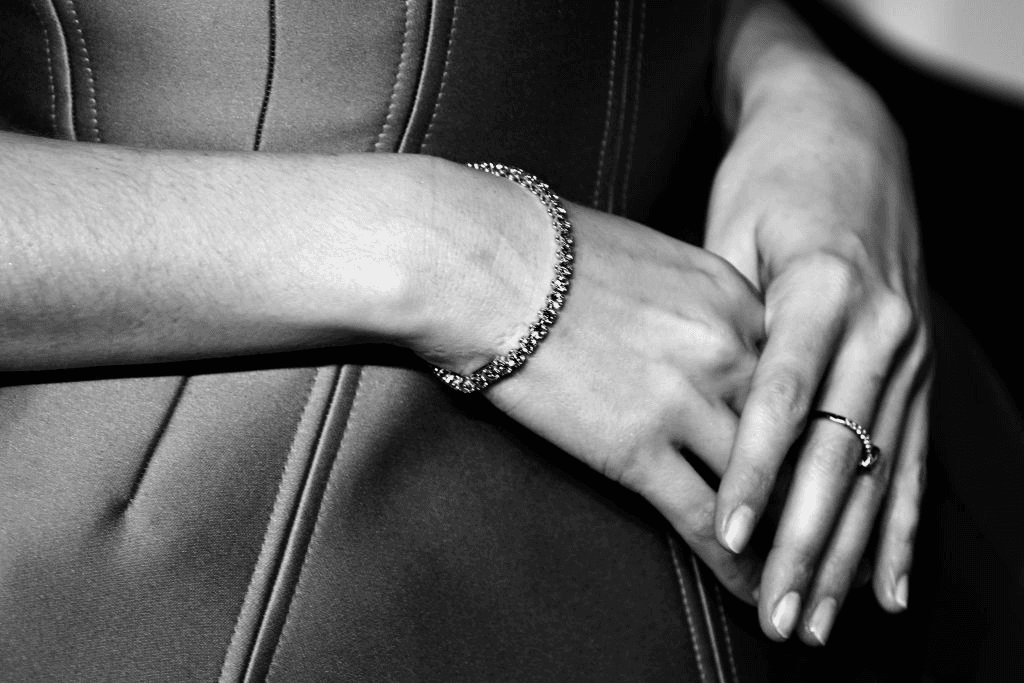
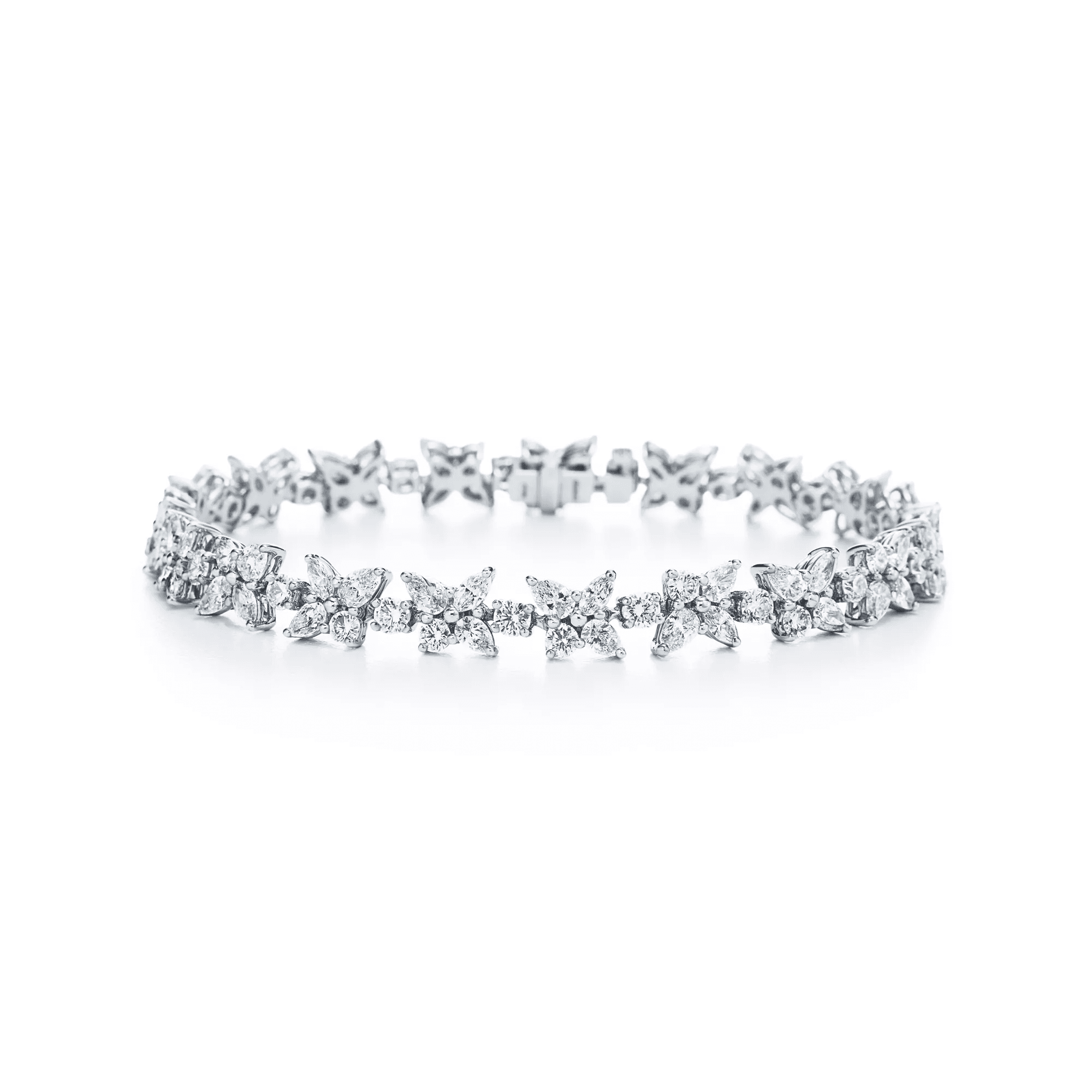
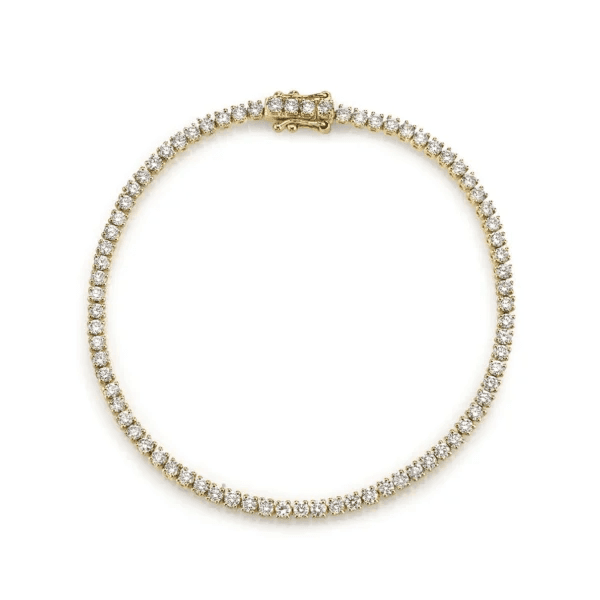
A tennis bracelet is a continuous strand of diamonds or precious gemstones, meticulously set in a single, unbroken row along a slender, flexible chain. The secret to its immortality lies in a design that draws its strength from absolute minimalism. Symmetrical lines, formed by an arrangement of harmoniously matched stones, encircle the wrist in a seamless loop of light. There is no structural excess, no heavy volume, and no superfluous decorative flourish. What remains is a perfectly measured, architectural form.
The classic architecture of the tennis bracelet is fundamentally built upon the principles of symmetry and equilibrium. The controlled brilliance of the stones, the specific luster of the precious metal, and the fluid, kinetic structure of the setting work in concert to create a unified effect. Thanks to its clarity and light-reflecting properties, the bracelet asserts its character with quiet confidence, even when worn entirely alone.
Historically, metals designed to withstand the rigors of time—such as gold or platinum—are the primary choices for the mounting. This durability ensures the tennis bracelet remains a legacy piece, retaining both its physical integrity and its market value over generations.
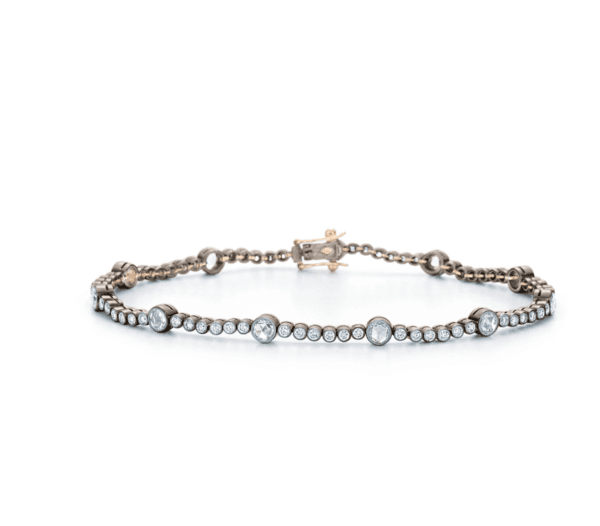
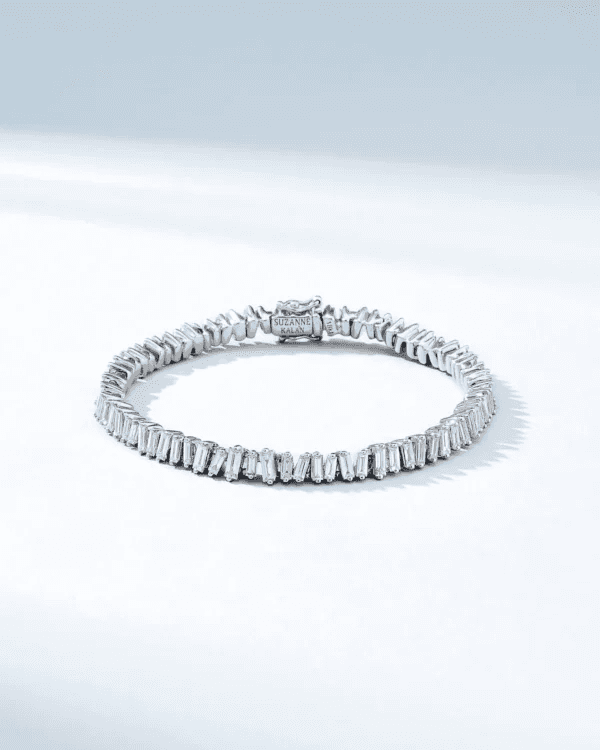
Today, the scope of tennis bracelet design has widened significantly. While classic interpretations remain anchored in simplicity, contemporary iterations experiment with diverse stone cuts, varied scales, and vibrant color palettes. Modern collectors can choose from baguette or emerald-cut diamonds, vintage-style round stones, striking black-and-white contrasts, or vivid arrays of colored gemstones. Yet, regardless of these stylistic evolutions, every design speaks the same core language: balance, simplicity, and continuity.
The Origin of the Name
In the context of Turkish jewelry, the tennis bracelet is often referred to as the “waterway bracelet,” reflecting its status as a favorite across both historical and modern eras. During the 1920s, it flourished as a hallmark of Art Deco aesthetics, then known as the “diamond-studded bracelet” or the “infinity bracelet.” However, its transition to the “tennis bracelet” occurred during an unexpected, high-stakes moment that intersected with one of sports history’s most iconic scenes.
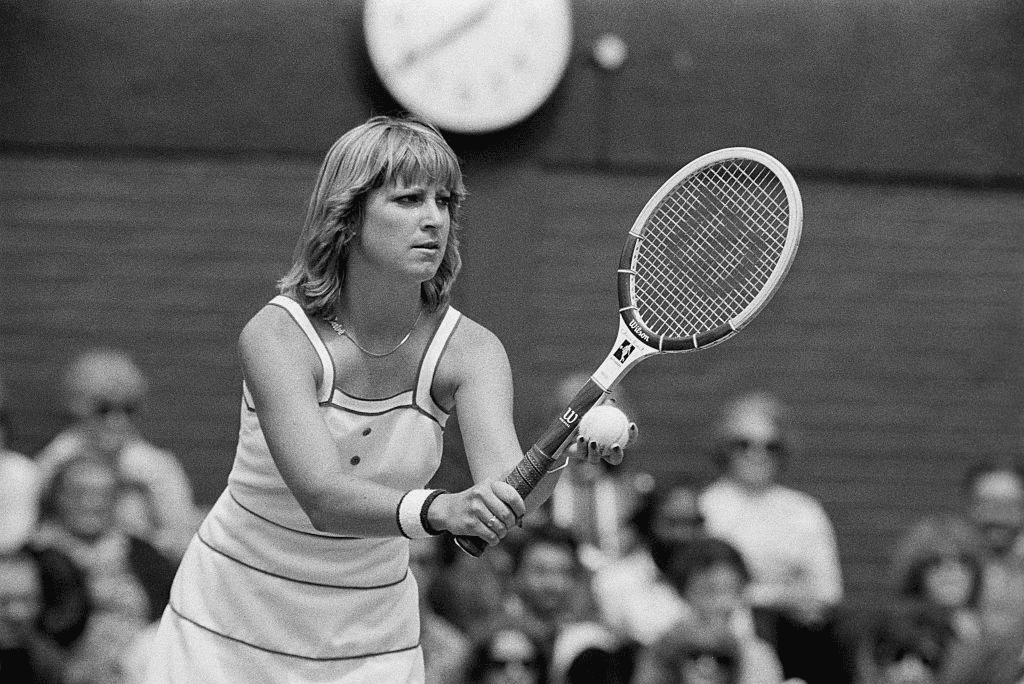
American tennis star Chris Evert was as famous for her championship titles as she was for her polished on-court presence. During a 1978 tournament match, a powerful swing caused the clasp of her diamond bracelet to snap, sending the jewels scattering across the court. Play was immediately suspended. The live broadcast froze as spectators, opponents, and officials waited for Evert to retrieve her stones. That brief hiatus became a small but indelible cultural moment witnessed by millions.
The bracelet was recovered and the match resumed, but the event had already been etched into the annals of fashion history. The media and the style world instantly adopted the story, rebranding the diamond-studded strand as the “tennis bracelet.” Crucially, this event shifted the jewelry’s social context. It was no longer strictly an accessory for galas or formal dinners; it proved that high luxury could be a natural companion to movement, athletic performance, and the rhythm of daily life. At this juncture, the tennis bracelet broke free from traditional constraints, becoming a symbol of how elegance can coexist with comfort.
The Tennis Bracelet in the Modern Wardrobe
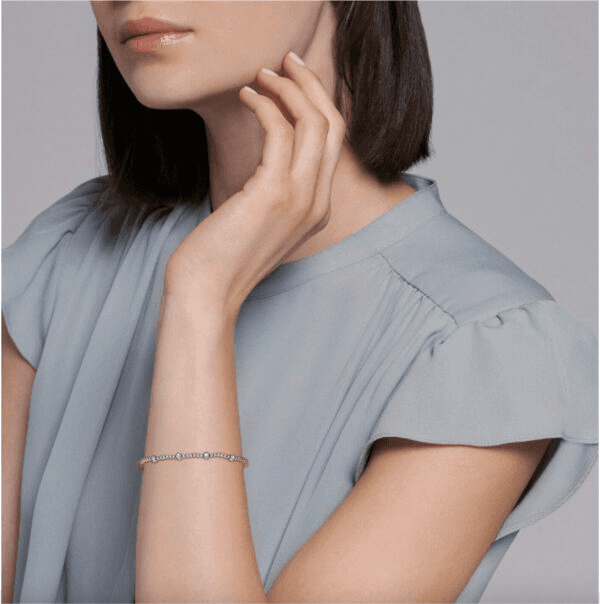
In the contemporary landscape, the tennis bracelet is less a “special occasion” piece and more of a personal style signature—one that transitions seamlessly from the early morning hours to the end of the night. It is among the rare accessories capable of complementing the stripped-back nature of sportswear as easily as the sophisticated silhouettes of evening attire. This inherent versatility makes it a cornerstone of the modern wardrobe.
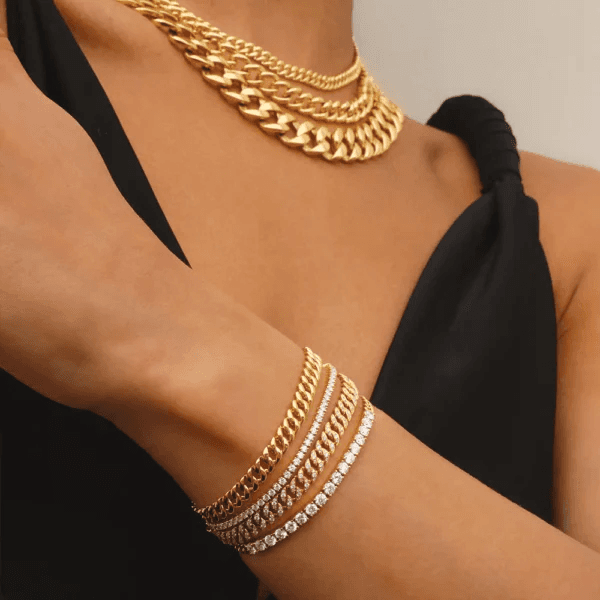
When styled with denim, it provides a relaxed yet elevated polish; when paired with silk or satin, it acts as a subtle, refined detail that completes the ensemble. Its balanced design also makes it a perfect candidate for “stacking.” Worn alongside a watch, it creates a purposeful contrast between utility and luxury, and when mixed with different metal tones, it adopts a more avant-garde, contemporary expression.
Furthermore, the tennis bracelet has become a key player in the blurring of gender lines within jewelry. Its form is no longer tethered to a single identity—it is feminine in its delicate sparkle and masculine in its clean, geometric simplicity. It offers a universal language of adornment that supports individual expression and fluid styling.
Understanding Value and Craftsmanship
The valuation of a tennis bracelet is a complex equation involving stone selection, total carat weight, metal purity, and the caliber of craftsmanship. Regarding stones, particularly diamonds, the “Four Cs”—clarity, color, cut, and carat—drastically influence the price. Two bracelets with identical carat weights can vary wildly in value depending on the rarity and quality of the individual stones. Furthermore, the inclusion of rubies, sapphires, or emeralds can shift the perception of the piece into a more artisanal or eclectic category.
The choice between natural and lab-grown diamonds is another pivotal factor in modern pricing. Lab-grown diamonds possess the identical physical and optical properties of mined stones but are available at a more accessible price point, allowing for high-impact aesthetics across various budgets.
The metal used is vital for both the structural longevity and the intrinsic value of the piece. While 18-karat gold and platinum are the standards, platinum typically occupies the highest tier of luxury. Even within gold models, the specific alloy—whether white, yellow, or rose gold—can influence the final character and cost.
Finally, there is the indispensable element of craftsmanship. The process of hand-selecting stones that are perfectly matched in color and size, and then setting them so they harmonize in a fluid, sequential line, is incredibly labor-intensive. The quality of the cut determines how light flows across the wrist, demanding a high level of expertise.
In essence, the tennis bracelet harmonizes all these elements without ever needing to shout; it suggests luxury rather than proclaiming it. This is why it remains the choice of both serious collectors and those who appreciate restraint. Its status as an icon is rooted in its quiet power and its ability to remain impressive through understatement—standing the test of time without ever needing to chase a trend.
Saatolog Yıllık Saat Dergisi Saatolog’un yeni sayısı, 2020’nin yarattığı bu dönüştürücü etkiden ilham alarak hazırlandı. Dünya dijitalin etkisiyle her zamankinden de hızlı bir şekilde ilerlerken yavaşlamanın da önemini sonunda kavramış bulunuyoruz ve bu tezatlık hayatlarımızın her anına etki ediyor. Biz de bundan yola çıkarak Saatolog 2020/21 sayısını ‘‘hızlı ve yavaş’’ teması altında hazırladık.