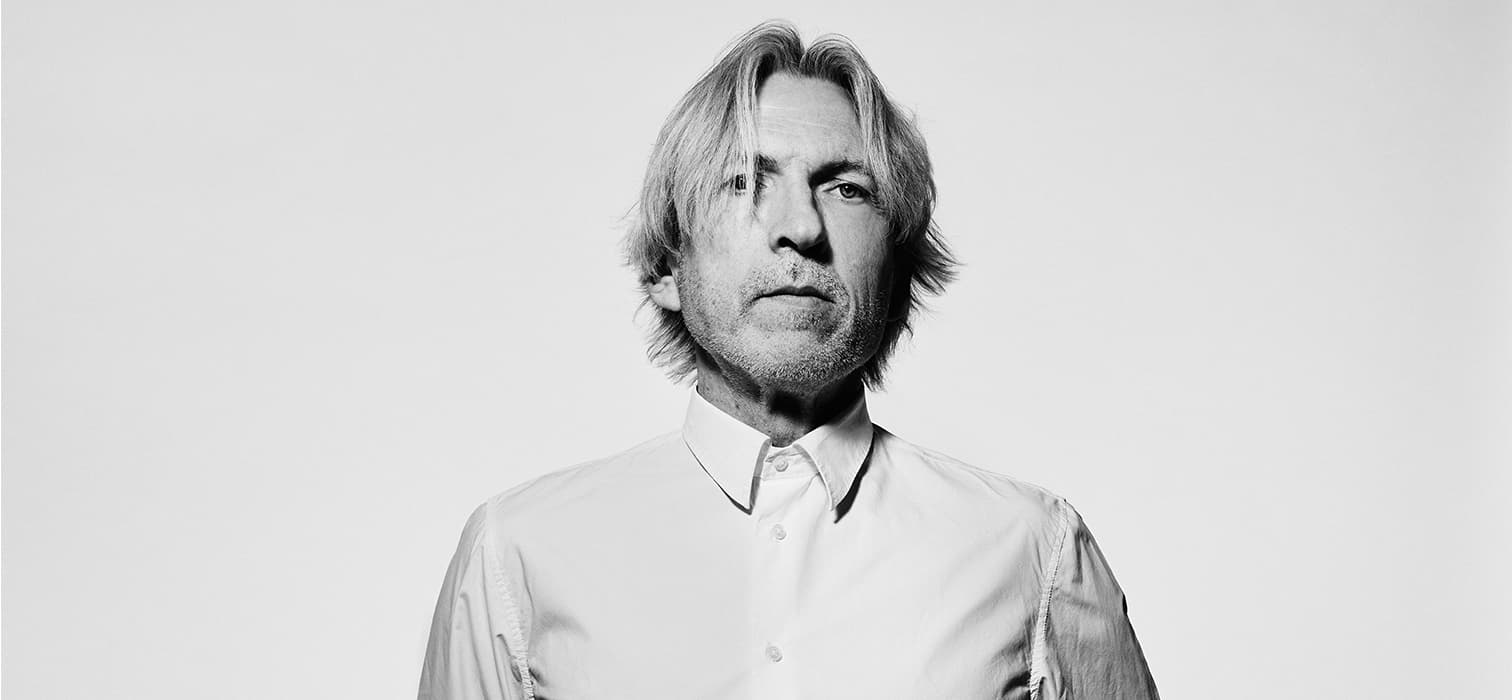
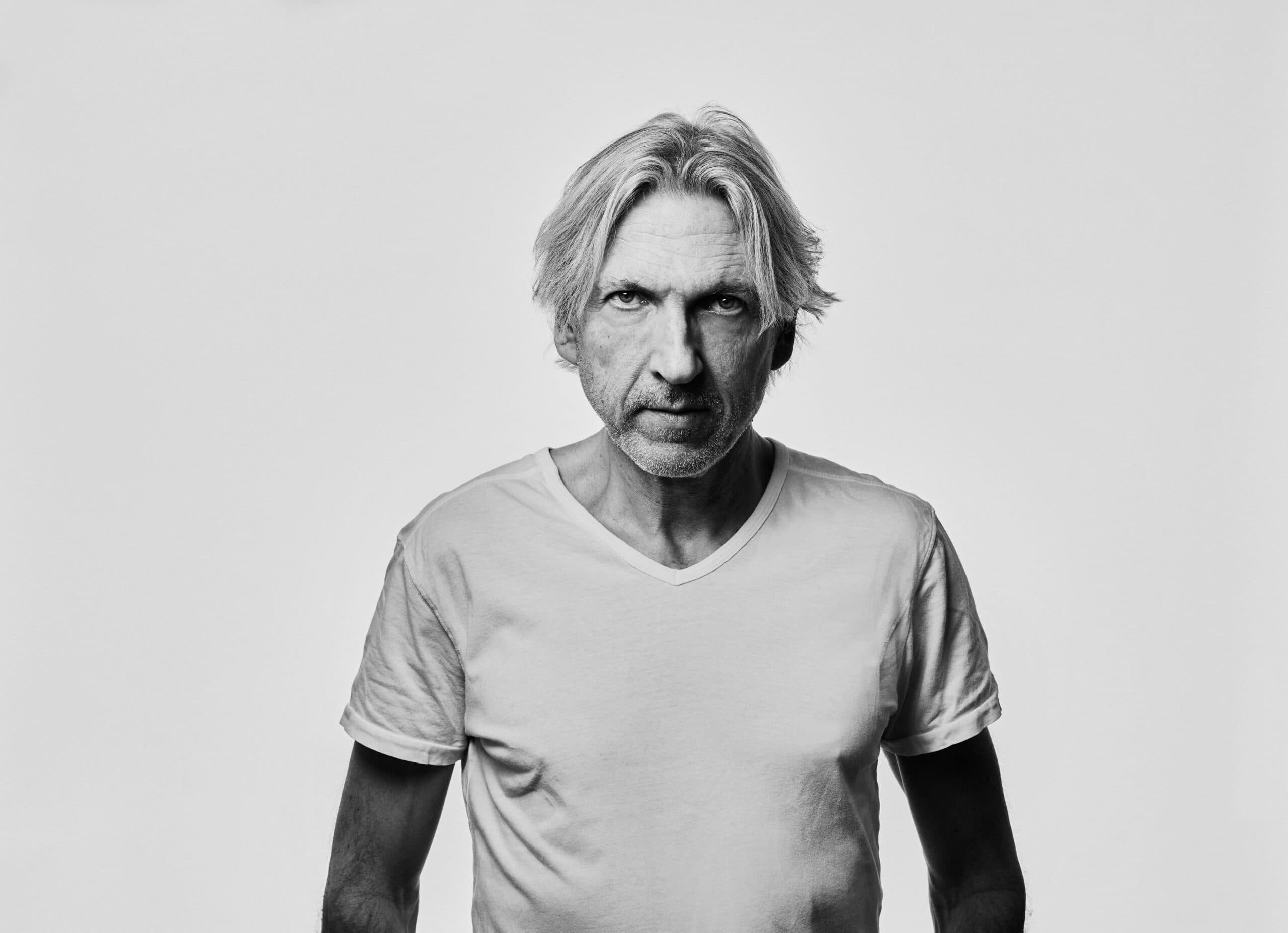
Nearly half a century in music. The defining years of e.s.t., one of the cornerstones of Scandinavian jazz. Countless live performances. Dozens of albums… We step into the spellbinding world of Magnus Öström, one of the most distinctive drummers of Nordic jazz.
Writing about the magic of time may sound like a cliché. Like love, time is one of those subjects that invites endless reflection. You can spend hours talking about it, dressing it up with ornate language and exaggerated ideas. At some point, it becomes difficult to tell where truth ends and indulgence begins. Emotions that take us to the edge rarely come with firm ground beneath them. Does everything really need to feel grounded? Perhaps not.
Sometimes it helps to leave clichés about time behind and focus instead on its quiet magic. Give things enough time and they heal, deepen, settle into place. Think of your own life. The emotions that eventually found their balance. Storms that slowly turned into calm seas. Old heartbreaks that no longer carry the same weight. The things you once dreamed of as a child suddenly taking shape and standing before you, vivid and unmistakably real. And of course, perhaps all of this only applies if you are lucky enough.
Magnus Öström, perhaps more than anything, evokes exactly that feeling. I could tell you that I have been listening to him for more than twenty years; how many times his drumming left me melancholic, exhilarated, how many times it made me throw myself onto the road. But those belong to a personal story. His story is something else entirely.
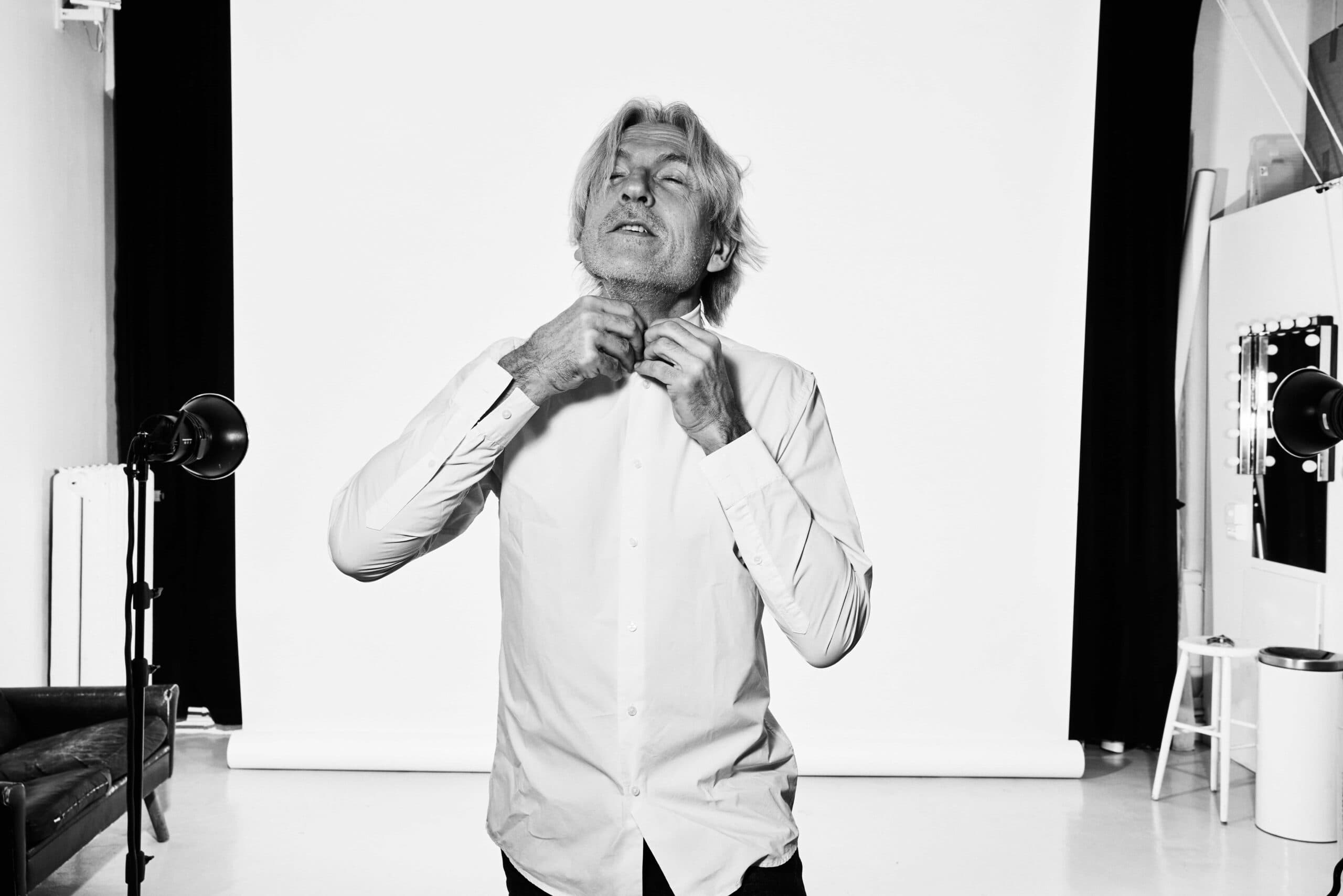
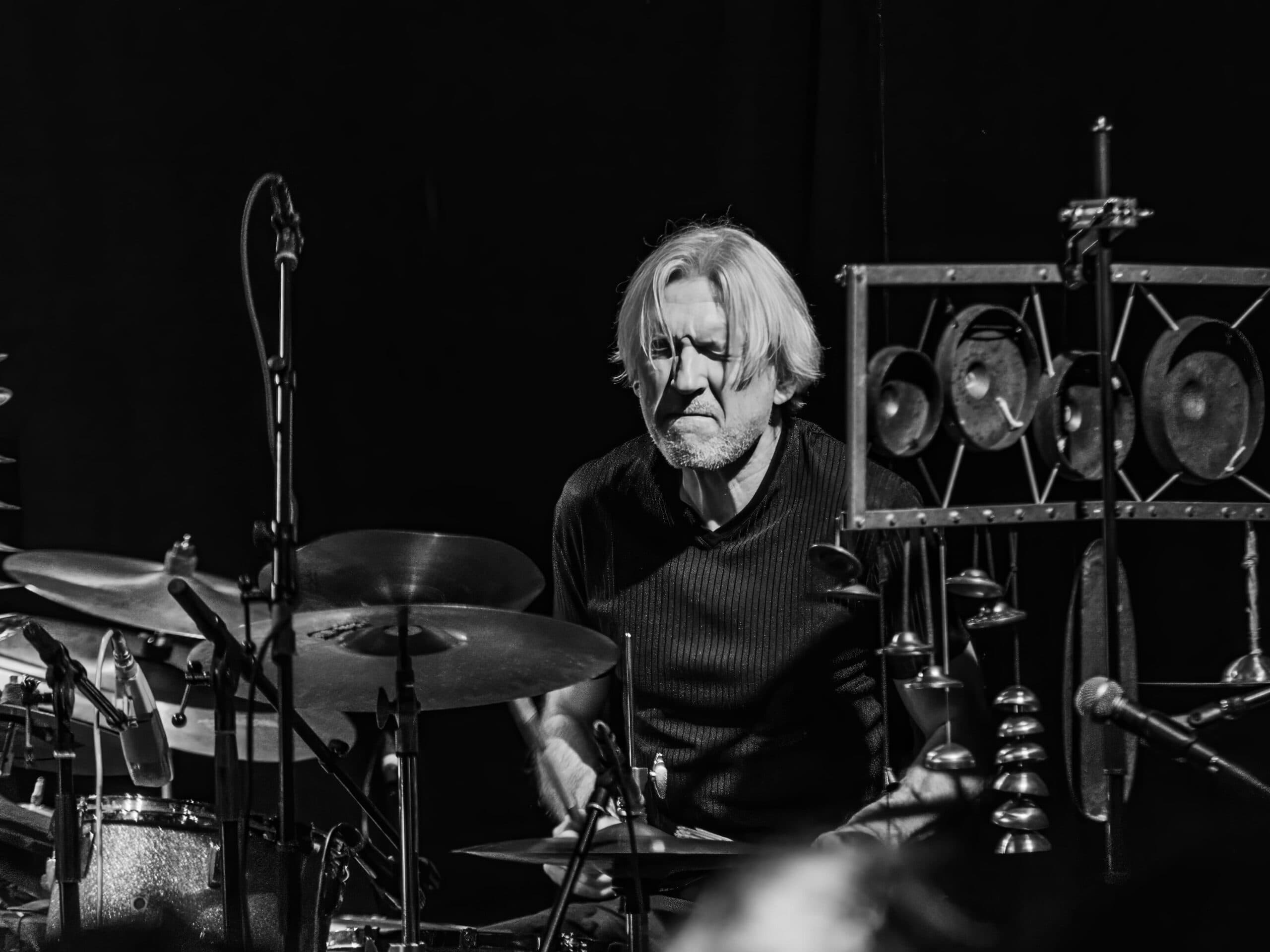
The drums he first tried to learn on paint cans at the age of six seem to have become one with him today. Once he closes his eyes, it becomes impossible not to see it. The music rises not from his ears, but from somewhere much closer to the heart. His hands seem to move beyond even his own control. And while witnessing these moments of quiet magic, one cannot help but wonder.
Dozens of albums. The e.s.t. legacy that introduced Scandinavian jazz to the world. His own solo records. Rymden. Lars Danielsson and Liberetto. Countless compositions. Countless unforgettable moments on stage. Whatever created all of it first took shape atop those paint cans.
What Magnus himself carries with such modesty is perhaps the hardest thing to define. Because creating something this magical while remaining completely real feels almost impossible. Perhaps that is what stands out most about him.
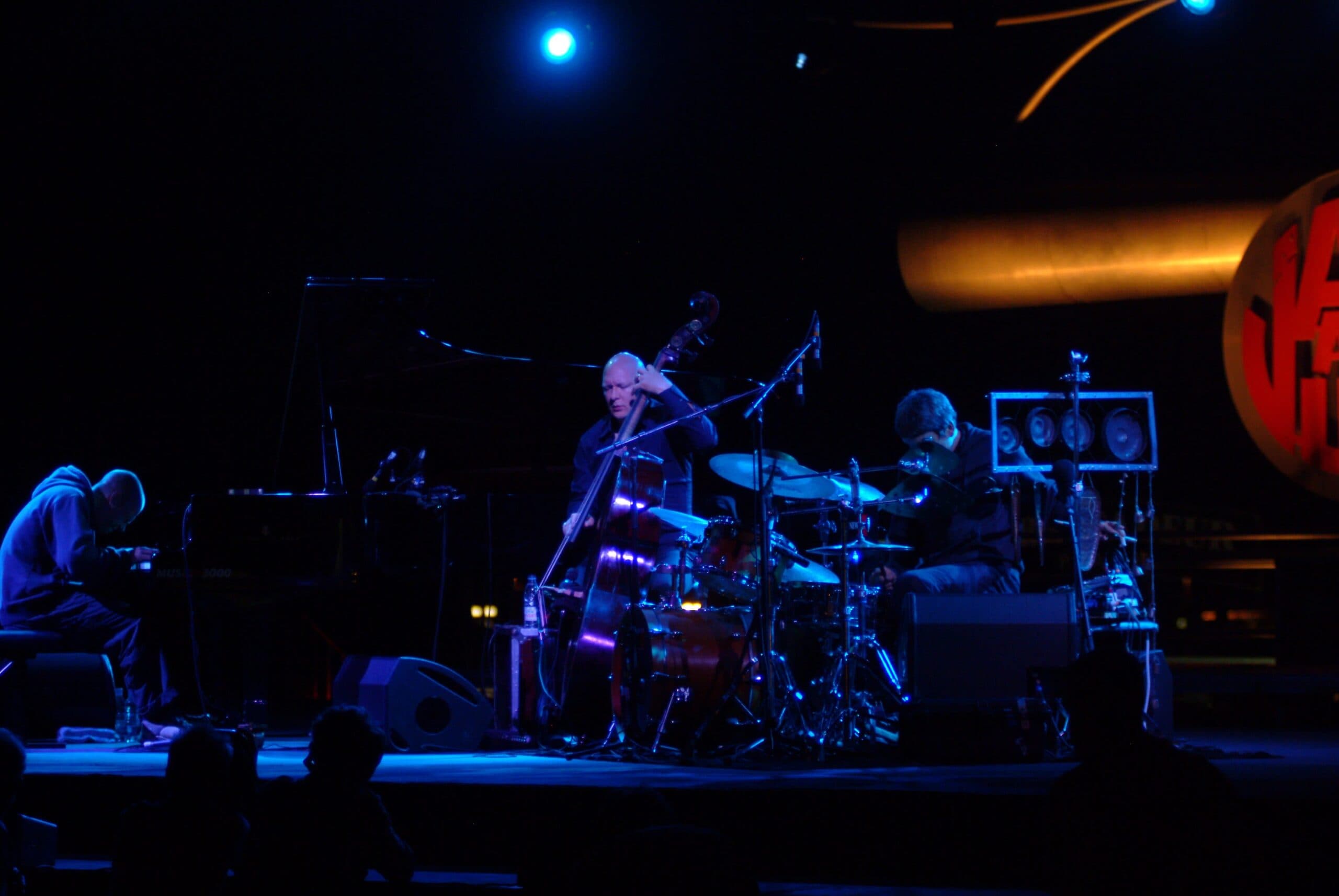
After your concert in Istanbul, I couldn’t help thinking about something — so let me start with this. When you walk on stage, there is always a moment just before the music begins… The room is quiet, the audience is waiting, and the musicians are looking at each other. In those first seconds, what usually goes through your mind?
Usually nothing, just trying to be in the moment, trying to be open for whatever is going to happen. Usually, we start with a free, totally improvised thing, and I love to start like that. It’s a way to feel the room, the energy from the audience, to say hello to each other on stage, to connect.
So after your concert in Istanbul with Lars Danielsson how was that experience for you? What kind of energy does the Istanbul audience bring to the stage?
I must say it was a marvelous experience! The audience was fantastic, so warm and welcoming, and so many! I can’t really point out what makes the Turkish audience stand out from any other, but I have always felt that they give a lot of themselves to us on stage, and it’s heartwarming!
You’ve been on stage for many years now. I’m sure some concerts stay with you more than others. When you walk off stage after a performance, what makes you feel that it was truly a great concert?
Difficult to say, what the people have heard and their experience, can be super different from my own. It’s more than once through my life where afterwards people are coming forward and give expression to their experience, and it can be totally opposite from my feeling inside, especially when I was younger. Then it could be very “black and white”, so to speak. People could say it was the best concert they ever heard, but inside me I thought I’ve never played worse in my life, or the music didn’t happen. And the opposite when someone said it was quite good or “ok”, but inside I thought it was the best concert we ever played, so it’s very psychological, and it’s a lot about which state you are in that day or in your life.
But the short answer for me is when I feel truly connected with my feelings during the concert, which can mean that right after the concert, I have to run to a corner for myself because the energy from the stage continues to swirl inside me, like the concert is not over, the energy and feelings overwhelm me and I can stand there jumping up and down, or start to cry or whatever. It’s a very strong, and emotional experience.
Credit: Bosse Holmdahl
As a drummer, you are essentially the person shaping time in the music. Hasyour sense of time changed over the years? Do you feel rhythm and time differently today than you did when you were younger?
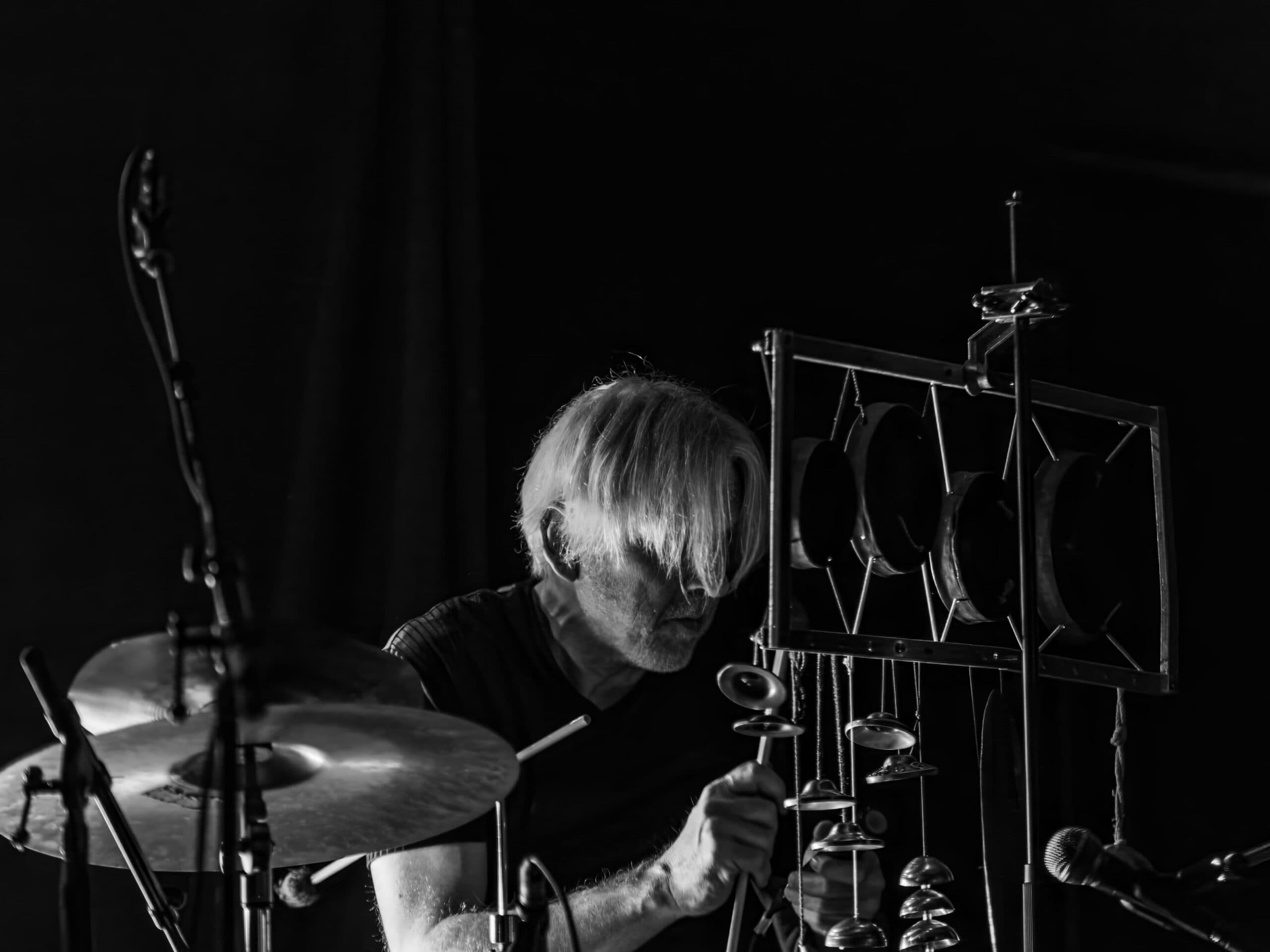
Hm, interesting question. For the first, everyone in the band is responsible for the time and timing, but it shows probably the most through the drums. I think I have the same sense of time or timing as before, but I think the time has become to be more liquid by the years. Usually the time is there, but nowadays I might focus more on the overall picture instead of focusing on trying to keep the beat, even though I play a lot of grooves. I’m more “one with my instrument”, so it’s more talking with it than me playing it. It’s not so easy to explain, but the other day for example my hands surprised me many times during the concert when they started to play something on their own and I just sat there and watched and said, yes why not? And I let myself follow myself if that make sense at all. When this happens it’s like magic.
Many musicians say that before learning how to play well, you first have to learn how to listen well. How important is listening for you as a musician?
For me the ear, or the listening comes first, no discussion. If you don’t listen to each other, it will become very difficult. Even though a song is written out and you know what will come, you still need to be aware of your fellow musicians. And when it comes to improvisation, even more so. To listen is to be open and respectful, both to the music and your fellow colleagues on stage. It’s like a conversation. No one likes someone who makes a dialogue into a monologue, at least not me. It kills the energy and the flow. When there are more people on stage than only one, the music and energy must have a possibility to stream through all of us, freely. It needs to have a chance to connect us. The same goes for the connection between us on stage and to everyone in the audience. We all give energies, and we share tha energy in the room. We make the concert with each other, not against each other. It’s humanism in one of its purest forms, I think.
Credit: Bosse Holmdahl
When you’re not on stage, what kind of music do you find yourself listening to? An artist people wouldn’t expect Magnus Öström to be listening to?
At home it’s mainly the “talking” channel, politics, history programs, news etc, but every evening when I’m home I put on the classical channel before bed, and it’s so relieving to hear everything from Mozart to Reich or Pärt, to Hildegard von Bingen or Lili Boulanger, you never know what will come, and I like that. When it comes to specific artists it might be everything from Neil Young, Jobim, Elton John, Bruno Mars, Lura Mvula, to these days, Raye. Also, some Swedish artists such as Amanda Bergman, a big favorite! It depends in which state I am. Some jazz as well, but usually older jazz, could be anything from Jimmie Lunceford to Coltrane. I have quite a collection of 78’ records.
Are there still musicians who make you feel a little nervous — or inspire a special kind of respect — when you share the stage with them?
I remember when we, e.s.t., met Pat Metheny for the first time at the rehearsal before the first concert we made together. I was totally starstruck and in awe. For the first couple of minutes, I became sixteen years old again, went back to the moment when I heard the album Bright Size Life for the first time. But very soon you end up on the same floor, leveled. You suddenly find yourself being friends and colleagues, which is so beautiful. We are all humans in the end. But of course, you keep your huge respect for that hero musician of yours for your whole life I suppose. And we always must remember that we all are standing on the shoulders of giants, the ones that have been there before us and shaped us into who we are. I’m so incredibly thankful to have had those experiences through my whole life. There are more names to mention but this is a great example.
In one concert, while you were introducing Mathias Eick, you jokingly said: “Why do the best trumpet players always seem to come from Norway?” Do you think there is something special about the Scandinavian music scene? Are there other musicians from that region who stand out to you?
Well, first we have to say that taste in music is very subjective, but when it comes to my taste, I like the airy, atmospheric, lyrical, almost mysterious sound a lot of the Norwegian trumpeters have. Of course, for instance I like such a player as Verneri Pohjola a lot, and he’s from Finland, but he’s playing in kind of the same vein. Ibrahim Malouf is another one. And then of course we have all the Americans which are amazing players and who I also like. I haven’t heard every trumpeter in the world so I shouldn’t fix my focus, but as it is now, I love to work with such players as Arve Henriksen, Mathias Eick and others. Until now I have never worked with Nils Petter Molvaer, but I hope to do some day.
I don’t really know what is special about Scandinavian music and the music scene. It’s not easy to see, or explain, when you are in the middle of it. I think Norway has been very strong in setting the stage, or the sound for it, with their “Four Greats”, Terje Rypdal, Jan Garbarek, Arild Andersen and Jon Christensen. In Sweden we have names like Lars Gullin, Jan Johansson and others. For me, Sweden always has been a little more traditional than Norway, and Denmark even more so, more looking at USA, but of course you have islands of independent, Scandinavian rooted music and musicians in all these countries. Unfortunately, I don’t have as a clear picture of Finland, but of course they also have a lot of fantastic musicians and composers.
I’m kind of bad at checking out new music and new artists, so I don’t know if I should say any names here. There are so many new musicians and bands that are fantastic, I mean the level they play on these days is incredible. But when it comes to the actual music it can be a different story. I’ve always liked when the music moves you, so for me it’s not so much about skills, it’s about emotions. But again, all this is very subjective.
We always must remember that we all are standing on the shoulders of giants, the ones that have been there before us and shaped us into who we are.
Credit: Per Kristiansen
In one interview you said, “People wonder how I compose music, after all, I’m a drummer.” Drummers are often the subject of jokes in the music world. Do you think they are sometimes not taken as seriously as “full musicians,” or is this just a small conspiracy by other musicians?
Haha, well yeah, “- the drummer is the musician’s best friend”, we all heard that! I think it was much tougher back in the days, but I think there are still some of it left in the music business. I wonder, for instance, what the fellow musicians and critics said about such a giant as Max Roach, when he presented his compositions for the first time back then. Of course, we have many more examples, Tony Williams, Paul Motian and Jack De Johnette for instance. And later on, Terry Lyne Carrington and other great “drumming” composers up to date.
I think it’s different these days, because a lot of drummers these days are also composers, but I think it’s still some skepticism to a drum led ensemble. The problem is that if people know who the bandleader is, no matter which instrument, it’s easy to focus on that person, conscious or unconscious, and because of the nature of the instrument, in this case drums, where you can’t follow any melody or harmonies, the picture in a listener’s head can be very unbalanced. So even if we drummers write music as everyone else, it’s easy for audiences to say that when a drummer is the leader of a band, it’s all about the drums, but it’s not I would say, it all happens in the mind of the listener, I think.
The Humble Hero Of Nordic Jazz: Magnus Öström
When you first started playing the drums, what was the thing you disliked, feared, or found most frustrating? And what does that same thing mean to you today?
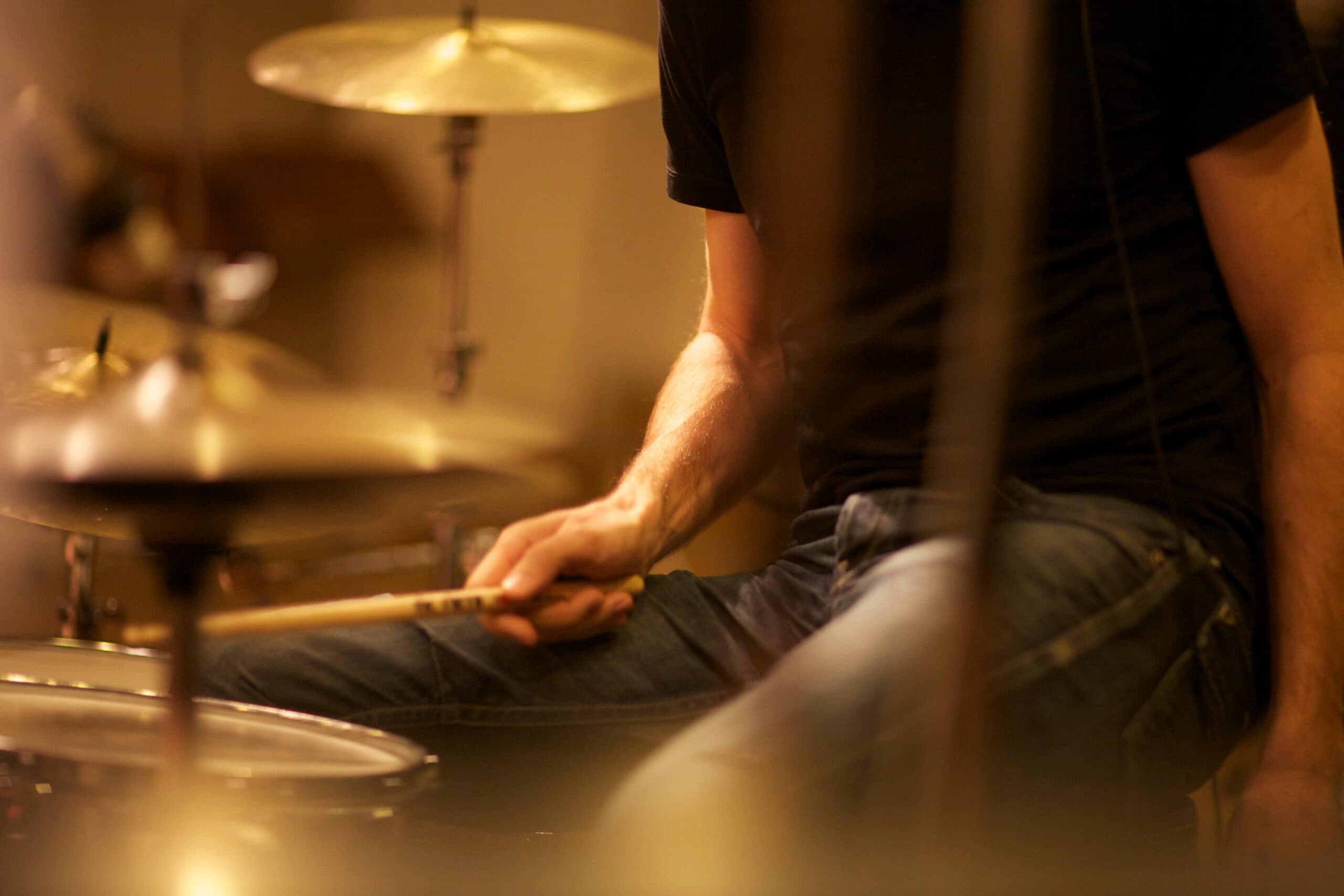
When I started out playing drums, it was not actually a real drum set, it was my father’s empty tin cans where it had been paint, he was a painter. Back then I mostly played the melody on the drums because I didn’t know anything else. Of course, I tried to keep a beat, but mainly probably the melody. I remember trying to play the intro of The Sweet’s “Ballroom Blitz”. Would have loved to have a recording of that, or maybe not…
Later, when I got my first real drum set, the difficulty was of course the coordination, to make my hands and feet do different things. But somehow, I got it together quite fast so I could play a backbeat. I don’t know how it happened, but it did. I’ve never been good at practicing a lot on my own, I mean practicing like 6-8 hours a day which some drummers do or have done. My way has been to play a lot with other musicians, so today I might have some “holes” in my instrumental education, but I have gotten good at taking advantages of my limitations. I know there are zillions of drummers that are better, faster, more coordinated than I am, but the important thing is that I have come to realize that I’m the best in the world to be me, to play like I do, and if people like it I’m happy, if not I can’t do much about it.
Many drummers try to fill every space with rhythm, but in your playing silence sometimes feels just as powerful as the notes themselves. How do you think about silence when you play? Is not playing sometimes also part of the music?
Silence is very important to me; I think silence can be even more powerful than playing. The silence is the canvas for you to fill with sounds, so when you make a sound, you are painting so to speak. Then it’s up to you how many colors, or how thick you want that paint to be. If you have filled the canvas totally, a pause or a silence can kind of wipe that canvas clean, and you can start to fill it again.
For me contrast is a key word, fast-slow, loud-soft etc. If you play fast and loud, with a lot of notes all the time, then you will not hear that fastness and loudness after a while, but if you after that suddenly play really slow, soft and airy, or if you go totally silent for a while, the fast and loud playing would sound even faster and louder, and the slow playing would sound even slower and softer, and this I mean in a very positive way. Not playing is as important to me as playing.
I know there are zillions of drummers that are better, faster, more coordinated than I am, but the important thing is that I have come to realize that I’m the best in the world to be me, to play like I do…
The Humble Hero Of Nordic Jazz: Magnus Öström
As a drummer, you’ve almost always played in bands, which means you are rarely truly alone on stage. How does that delicate balance of playing together develop? How does that musical telepathy happen?
I don’t really know to be honest; I think we must go back to your question about listening, about the ears, the perception of sound. Hopefully we are all on stage for the same reason, to make music together and to listen to each other. Already there we are halfway, I think. If we come with that intention, that we are there to create something together as a group, and hopefully everyone respects that, then magic can happen. For me it’s all about supporting the music, and the fellow musicians. It’s built on humanity, trust, and even love I would say.
We usually think that music telepathy is built on years playing together. Of course, it is in many ways, but sometimes you can play with a musician for the first time, and it still happens. I can’t really explain that, but I think it’s about openness to the moment we share.
I cannot move forward without asking this… You and Esbjörn Svensson knew each other since childhood. When you were kids and making music together, what was the biggest dream you shared at the time?
When we were like 7-8 years old, we made “radio programs”. We had a cassette recorder where we recorded interviews with each other like we were big stars. I remember clearly when I got asked about where we were going on our next tour, and I said Mexico. Then we realized, during the interview, that we wouldn’t be able to bring the drums, so we couldn’t go there.
Then in early 2000 we finally traveled to Mexico with e.s.t. and played concerts, and I think that was a big moment for both me and Esbjörn, it had come full circle.
When people think of Magnus Öström, it’s almost impossible not to think of e.s.t. Later you began releasing albums under your own name rather than under the band’s name. How did that feel for you? What went through your mind the first time you saw your own name on an album cover?
Well, this was, and is, very double-edged for me. One part of me was very proud that I could even get an album together, and even more so with my own compositions. I hadn’t written music for years due to that Esbjörn wrote all the songs for e.s.t., so I didn’t know if I was able, but it turned out that I actually was. For me to see my own name, as a leader, on a cover was in some ways unreal, and in some ways very natural. But when I did my first record, I was still so affected by Esbjörn’s passing so I don’t know if I was at the full use of my senses. The other side was about shame, I think. Because if Esbjörn hadn’t passed away, my own music and my records might never had happened, this is a very difficult subject for me, which I still try to come to terms with.
Credit: David Redfern / Getty Images
It’s impossible not to mention him of course. Looking back today, nearly 18 years after Esbjörn’s passing, how do you reflect on his absence and the place he still holds in your life?
I think it took me ten years to come to terms with his passing, I of course live with this every day, but something lifted from my shoulders then. I felt that he was there, and he still is, but all the positive memories became stronger, and I will forever be incredibly thankful for our journey together, from the basement in my childhood home, to all the big stages around the globe, it’s like a fairytale in many ways.
You once said that after his passing you couldn’t even touch your drums for a while. What eventually changed? What brought you back to the instrument?
Well, from Esbjörn’s passing in June 2008 I didn’t touch my instrument until December the same year, or January 2009. What happened was that in mid-December I started to sit by the piano at home, fiddling around, just laying my hands on it and listening to the notes. Suddenly one day there was this melody floating out through my fingers on to the piano, and it was what later became the song Ballad For E, my dedication to Esbjörn, which you can hear on my first solo album, in a beautiful arrangement of Pat (Metheny), who is also plying it together with me and Dan Berglund on the record.
I also knew that I had a possibility to record a solo album due to our deal with our record company ACT Music, so there was this possibility at the horizon, but at that moment I didn’t know how to get there. In January, as I remember it, I was asked to be the co-producer for an album with an artist I’ve known for decades, Jeanette Lindström, a great Swedish singer and composer. That record, Attitude & Orbit Control, later won a Swedish Grammy, which I’m very proud of. I was also supposed to play the drums on that recording so suddenly there was an opportunity to get up in the saddle.
Later, in February 2009, I got a phone call when I was driving the car one day, and it was the bass player Lars Danielsson asking me if I would like to play a concert with him in Poland in March. I remember getting very emotional and I told him I had to phone him back. My then wife Maria, was in the seat beside me and when I told her, she just said: – You have to say yes. She knew that I had to start over again, to be out there in life. I called Lars back and said yes, and I have been playing with him ever since, and I will always be utterly thankful to Lars for making that phone call.
I will forever be incredibly thankful for our journey together, from the basement in my childhood home, to all the big stages around the globe, it’s like a fairytale in many ways.
Credit: Per Kristiansen
I hope this isn’t an uncomfortable question, but you and Esbjörn shared such a long musical journey together. Do you ever find yourself wondering where your music might have evolved if he were still alive today?
Well, I’ve had those thoughts. We already had experimented with totally improvised recordings, which then became the albums Leucocyte and 301, and we were discussing how we would bring that music on stage, if we would have that music as a source, or go on stage and just improvise for the whole concert. Esbjörn had also written some new songs which we were rehearsing just days before his passing. So, who knows where it would have ended up.
People change in every aspect of life. Looking back today, how has your music — and the way you play — changed over the years?
Hm, I don’t know really. It sometimes feels like I’m still in that basement in my childhood home trying to figure out how to play the drums, but of course I have evolved my playing since then, I hope. But a big part is still with me, the kind of melodic playing that people say I have. It’s difficult to see for yourself. I think I also have become braver and more confident over the years, but the core is still there. When it comes to composing, it’s still the same intuitive writing since my first compositions back in the days when Esbjörn and I started out writing songs together, when we were 10 and 11 years old.
I’m actually very happy and grateful to feel that connection still, the connection to when we started our trial-and-error journey, when I got my first real drum set, a bass drum, snare, and hi-hat, and I carried it across the street over to Esbjörn’s home and into the living room where they had a piano, and neither of us knew how to play. It’s still such a vivid memory in me, and I carry it with me like a treasure.
Saatolog Yıllık Saat Dergisi Saatolog’un yeni sayısı, 2020’nin yarattığı bu dönüştürücü etkiden ilham alarak hazırlandı. Dünya dijitalin etkisiyle her zamankinden de hızlı bir şekilde ilerlerken yavaşlamanın da önemini sonunda kavramış bulunuyoruz ve bu tezatlık hayatlarımızın her anına etki ediyor. Biz de bundan yola çıkarak Saatolog 2020/21 sayısını ‘‘hızlı ve yavaş’’ teması altında hazırladık.