Food & wine pairing is not a multiple-choice test with rigid rules; it is a journey of discovery that deepens pleasure as you search for the right match. In this selection—ranging from local dishes to indigenous grapes—we explore the chemistry of pairing together.
In this article, we will reflect on the harmony between food and wine. But remember: pairing is not an exam where only one answer is correct. No one will tell you, “Unfortunately, you picked option A, but the correct answer was C. Your wine doesn’t go with your food.” Think of it more like a classic exam in which simply writing your name earns you 70 out of 100. Achieving a 7/10 pairing is quite easy; with a bit of thought, you can even push that score to 8 or 9 out of 10. Here, we will explore how to enjoy food and wine together in the most satisfying way by paying attention to a few key details.
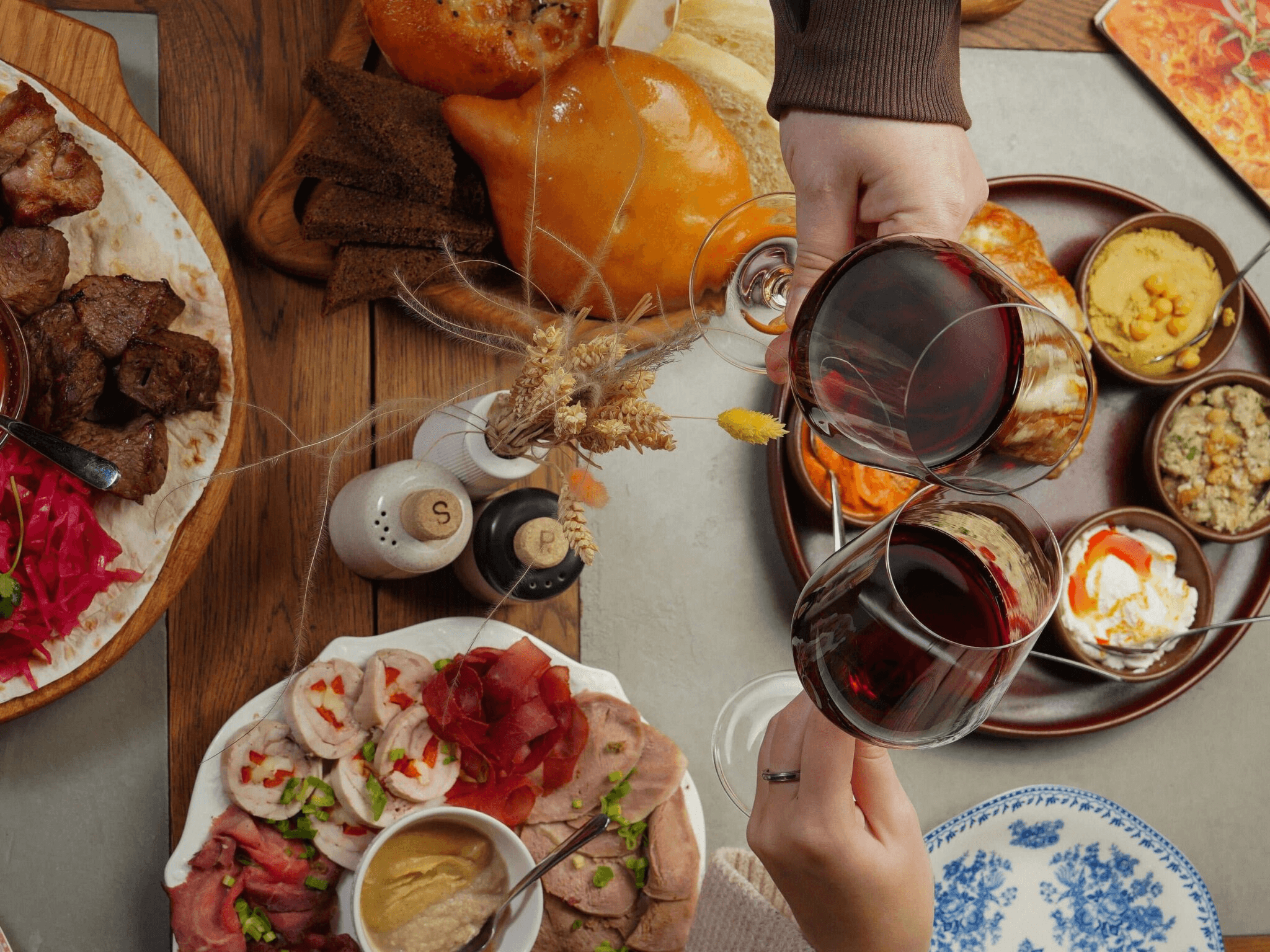
Before diving in, it’s important to note that just as “good wine” varies from person to person, so does a “good pairing.” Each of us takes pleasure from what we eat and drink in different ways and values different aspects of flavor. So what I am sharing here are general principles—rules that apply to the average palate and the basic chemistry of taste. Discovering what you enjoy, and how much, requires exploring your own palate.
At its core, food and wine pairing begins as a mental exercise. It is theoretical before it is sensory. We deconstruct the food in our minds, then the wine, considering how their components might interact and whether those interactions will be pleasurable. Will the gears mesh, or will they grind?
Let’s go a bit deeper by considering a few pairings that may surprise you.
Kuymak & Sparkling Wine
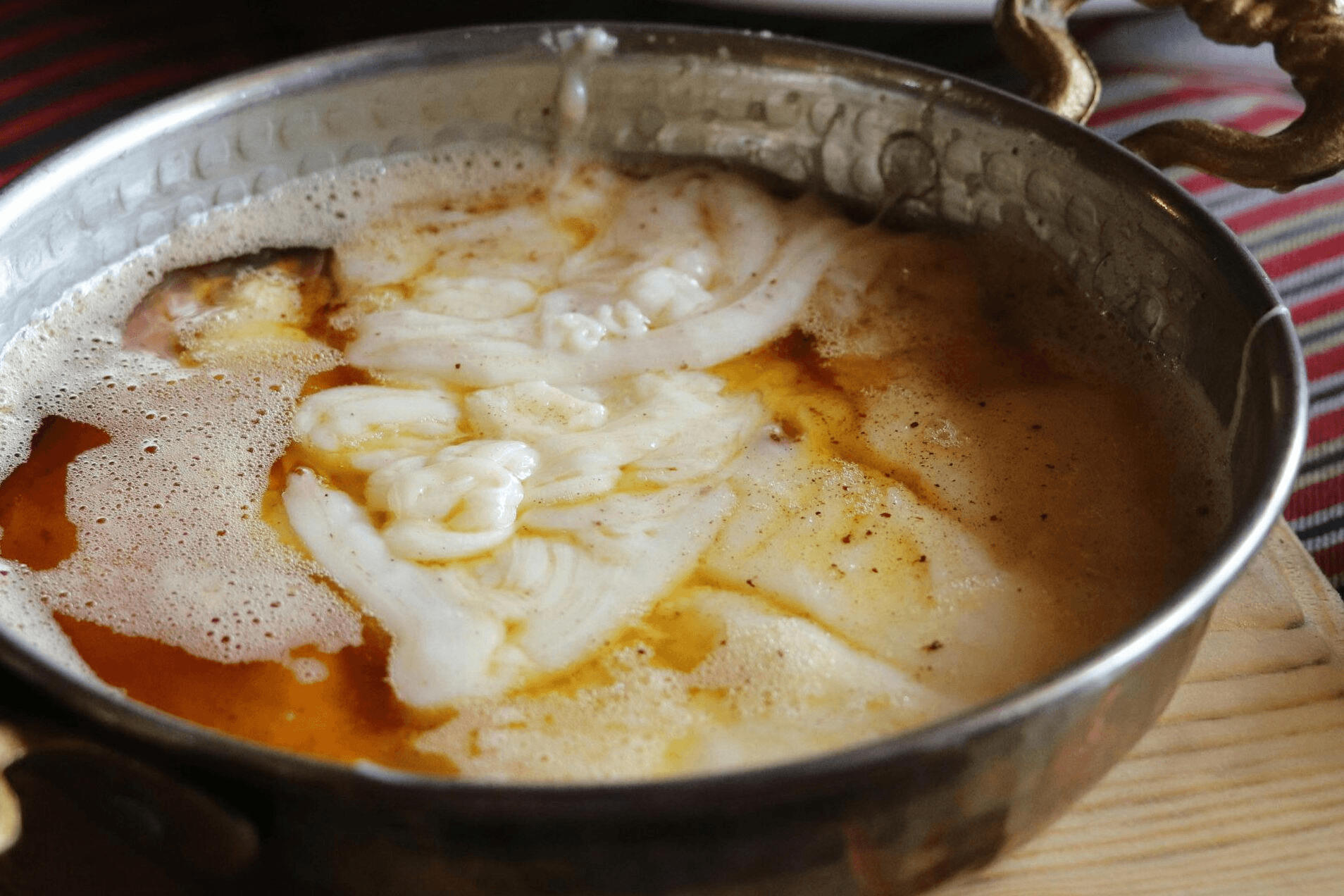
When we talk about kuymak—also known as “mıhlama” or “muhlama”—the image that immediately comes to mind is that glorious mixture of cornmeal, butter, and cheese stretching sky-high as it’s lifted onto bread. Some dishes stimulate the appetite through appearance alone; kuymak is certainly one of them. The defining feature of this dish is its richness. And here comes the first clue: when your food is rich, look for acidity in your wine as a counterbalance. This is the basic logic of pairing—an instinctive search for equilibrium. It’s the same reason we squeeze lemon onto fatty dishes for brightness.
When we talk about acidity, think about how much a wine makes your mouth water. A classic white sparkling wine, with its lively bubbles and naturally high acidity, is an excellent match. It cuts through the richness, refreshes the palate, and resets each bite. If you’d like to learn more about the types and flavor profiles of sparkling wines, I invite you to read my other article, Choosing Wine for Your New Year’s Table.

Lakerda & Emir
I am a devoted fan of lakerda. Although it is typically associated with rakı, it actually pairs beautifully with wine. Good lakerda is made from fatty torik and has a perfectly calibrated saltiness. Earlier, I mentioned that richness (fat) softens acidity, and here comes the second clue: acidity also balances salt. This is why Emir—one of our most naturally acidic grape varieties—pairs so well with lakerda.
Emir and certain other grapes share an additional characteristic: they produce wines with a pronounced sense of minerality. Without diving too deeply into minerality—a concept hotly debated in the wine world—I want to describe how it feels.
If you notice a faint saltiness on the palate, or if you sense that lingering mineral tingle similar to what remains after drinking sparkling water… these are signs of minerality. Minerality is found almost exclusively in white wines, though on rare occasions it appears in pale, low-bodied, “light” reds. Wines with strong minerality pair wonderfully with dishes that have a “sea-like flavor,” such as lakerda, or with foods where “freshness” is the defining quality.
Grape Leaves with Olive Oil & Narince
There is a specific silence that falls when “Grape Leaves with Olive Oil” is mentioned; it is a dish that commands absolute respect. What is it about this food that makes it so remarkable? It is delightful when freshly prepared, yet it possesses the magical quality of becoming even more delicious after resting for a few days, once the rice has fully absorbed the fragrant olive oil and spices. Every version is simply mind-blowing—a dish so enticing you just want to finish the whole plate in one sitting. I have a particular ritual with this dish: I specifically ask my wife, Süray, who is incredibly skilled at crafting these delicate rolls, to let them cook just a little longer than usual. I have a deep love for the ones that get slightly burnt and caramelized on the bottom of the pot. Much like when I eat a Neapolitan pizza—where the more charred the edges are, the more I enjoy it—that touch of fire adds a layer of flavor that is uniquely mine.
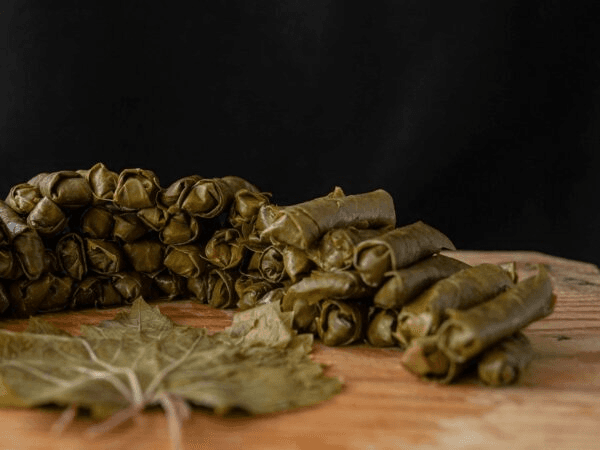
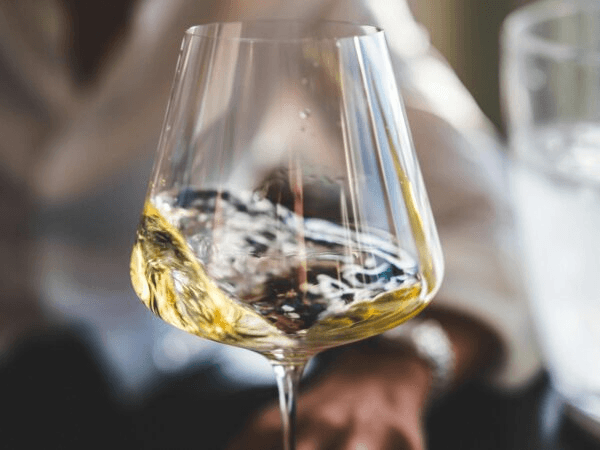
When selecting the leaves, those from the Narince grape are the undisputed ideal. They are famously thin, veinless, hairless, and exceptionally flavorful. It is no exaggeration to say that the pickled leaves of this grape, which finds its soul in the soil of Tokat, are perhaps even more famous than the grape itself.
There is a fundamental method for pairing wine and food that is quite easy to keep in mind: follow the path of similarities. Therefore, Narince grapes, which provide the very leaves for the dish, are the perfect partners for the meal they enclose. Similar aromas, textures, and flavor profiles naturally gravitate toward one another. For instance, if you were serving a grilled meat dish with a wild berry sauce, you would look for a wine with prominent black fruit notes. By seeking out these common threads between the bottle and the plate, you can unlock incredible culinary harmonies.
Raw Meatballs & Rosé
Before discussing this pairing, I must emphasize a vital rule: the spiciness of the Çiğ Köfte (raw meatballs) should be kept to the absolute minimum. This is because high levels of spice and wine are fundamentally incompatible. If you consume something truly fiery, that heat will hijack your palate and linger there for a long duration. Should you try to drink wine while your taste buds are under the influence of that spice, you won’t be able to perceive the wine’s character at all—it would be a total waste of a good bottle. Therefore, the strategy is to pair a raw meatball of very low spiciness with Rosésthat are slightly darker in hue and possess a structure that can truly be felt on the palate.
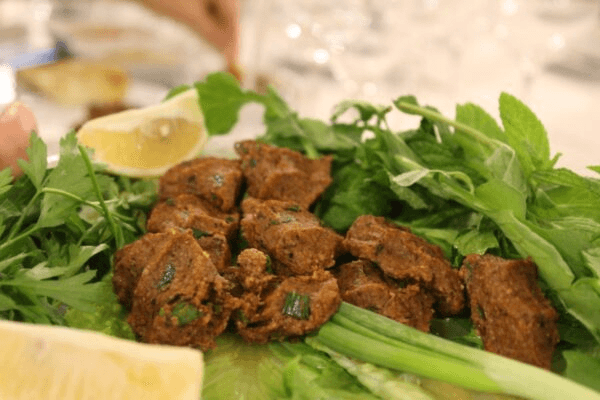

Raw meatballs are an incredibly aromatic food, rich with spices and sometimes prepared with meat or left vegetarian. While complex, they aren’t necessarily “heavy” or overpowering in weight. Consequently, a dark-colored Rosé that balances both spicy and fruity aromas becomes our savior, effortlessly complementing the nuanced spices of the meatballs. The guiding principle here is clear: the more aromatic richness present in the food, the more aromatic richness we demand from the wine. We want the elements of the pairing to exist in a state of balance where they complement rather than dominate one another.
Kokoreç & Karasakız
In this pairing, we must explore the concept of “body” and how it influences the marriage of food and drink. When we speak of a wine’s body, we are referring to the perceived weight and intensity it leaves on the palate. To visualize this, think of water as a neutral, light element. In comparison, tomato juice is a much more intense liquid that feels significantly heavier in the mouth. Similarly, if you compare low-fat, half-fat, and full-fat milk, you can feel the physical weight and “body” increase as the fat content rises. In the wine world, we categorize these sensations as light, medium, or full-bodied.
My preference leans heavily toward Izmir-style Kokoreç. The pieces are cut larger, allowing the true flavor of the offal to shine through without being masked. The spices—typically just a touch of paprika, thyme, and cumin—are added with restraint so they don’t drown out the meat. However, this pairing logic remains valid even for the finely chopped versions served with tomatoes and green peppers.
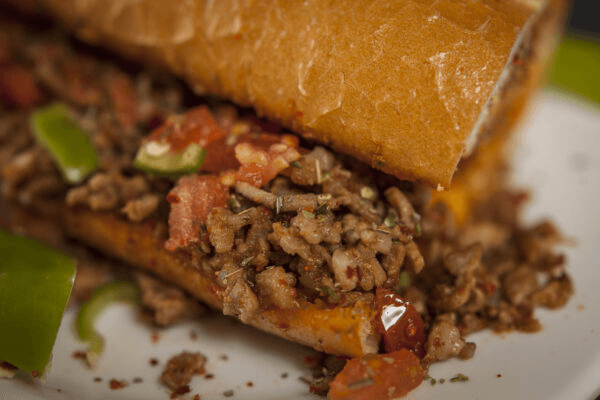
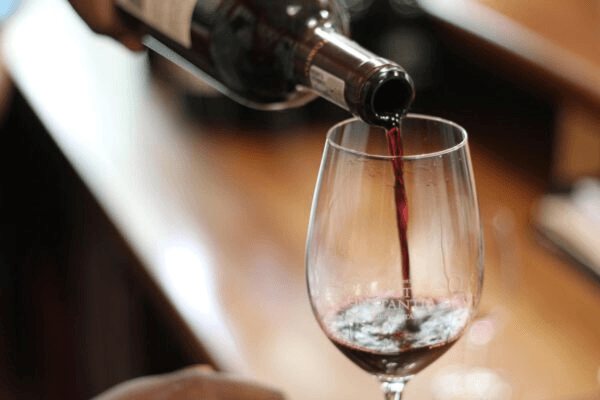
Kokoreç and most offal meats possess very delicate, nuanced flavors. This is the most critical factor to consider: you must pair the dish with a wine that has the appropriate “body” to match the intensity of the meat. Because Kokoreç is delicate, it requires a wine that is light-bodied, featuring soft tannins and a profile of spice and fruit to mirror the seasoning. Most importantly, the wine must be lively and high in acidity to cut through the fatty richness of the dish. Karasakız more than fulfills these requirements, and I particularly recommend examples from “old vines.” If you stick to the Izmir style with minimal spice, a crisp, acidic white wine like a Riesling can also serve as an exceptional accompaniment.
Lahmacun & Kösetevek
While we use the word “Lahmacun” as a singular term, there is a vast world of variation within the dish. They can be prepared with lamb, beef, or a blend of the two, and the ingredients change based on the season and regional methods. For instance, in the Antep region, during eggplant season, Lahmacun is traditionally enjoyed with söğürme (smoked eggplant purée). For those truly interested in the history and craft of this dish, I highly recommend the article “Lahmacun and Lahmacun Making” by Musa Dağdeviren, the visionary behind Çiya, in the third issue of Food and Culture magazine.
Lahmacun isn’t quite as delicate as offal, but it isn’t as heavy as many meat-heavy main courses either; this is why it is often served as a magnificent appetizer before a kebab feast. The dominant forces here are the meat and the spices.
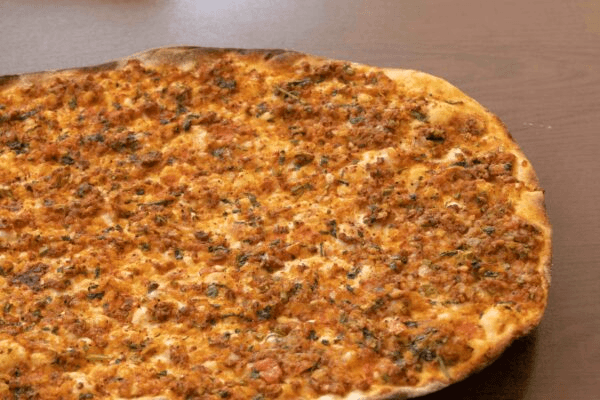
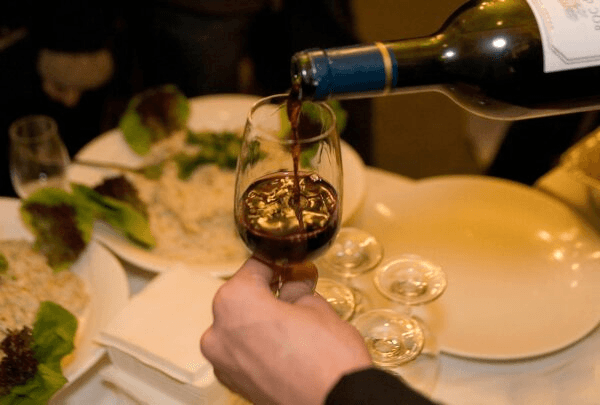
Let’s break it down step-by-step: We don’t need the ethereal lightness of a Kokoreç wine, nor do we need a massive, full-bodied red. A medium-bodied red wine is the “sweet spot.” Why red? Because the tannins in red wine—that slight bitter, puckering sensation—have a natural affinity for protein. Furthermore, choosing a wine with red fruit aromas beautifully enhances the spice and savoriness of the meat. Finally, to handle the oiliness of the Lahmacun, the wine’s acidity needs to be in the medium-to-high range. While many grapes fit this profile, I have a special affinity for the local Kösetevek grape. I have tested the Kösetevek and Lahmacun pairing many times, and the result is consistently perfect.
Adana Kebab & Öküzgözü
I am a great lover of the Adana Kebab, but I must admit that finding a truly exceptional one is no easy task. The quality of the meat, the precision of the cooking method over the coals, and even the quality of the bread or lavash it rests upon—every single detail of the preparation and presentation is vital. I hold restaurants that can master the Adana Kebab in very high regard. Unfortunately, such places are few and far between, and even fewer of them offer a wine list that does the food justice.
Now we arrive at the main course. A full-bodied Öküzgözü wine, particularly one that has been aged in barrels to develop a distinct character, is the perfect partner for a high-quality Adana Kebab that melts in the mouth with its rich flavors. As the intensity of the food has increased, we have scaled up the body of the wine accordingly. By the way, if you want more complexity, barrel-aged blends of Öküzgözü and Boğazkere are also highly recommended for this meal.
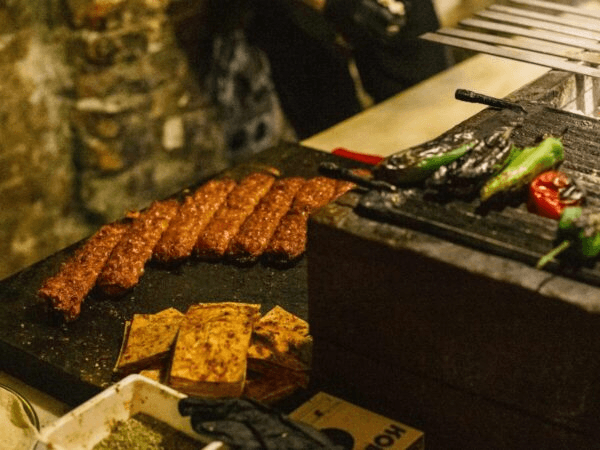

I want to emphasize that you should not miss out on this experience. Whether at home or at a restaurant, try this: take a piece of Adana with your fork, place it on your lavash, and add a bit of tomato and some sumac-rubbed onions to your liking. Wrap it all up, and as you chew that flavorful morsel, take a sip of your wine. There is truly nothing more enjoyable than that moment of harmony!
Rice with Dried Beans & Çalkarası
In an article I wrote about a year ago, I described my “Dream Wine Bar.” But I have another dream: I want a high-quality, local “esnaf” restaurant to open where you can enjoy wine, even if it’s just by the glass. It would be the kind of place that closes at 5 PM, but when you visit at noon and see the array of dishes behind the glass, your mouth begins to water. You’d order a “chef’s platter”—a little of this, a little of that—sit down, and just as you get settled, a glass of wine would arrive. Wouldn’t that be a wonderful way to spend an afternoon?
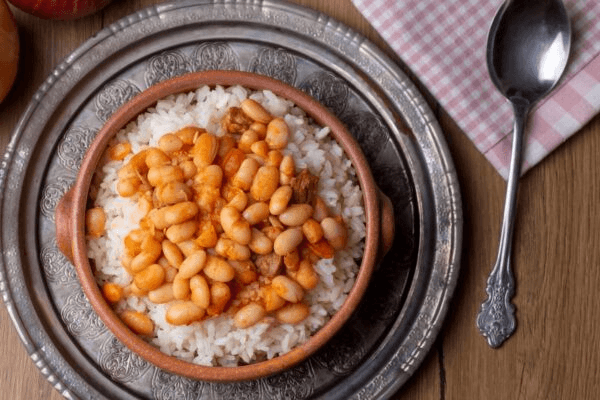
When I judge the quality of a local restaurant, I look at their Kuru Fasulye (dried beans). I am looking for beans that are cooked to perfection—neither mushy nor hard, but slightly firm to the bite before melting on the palate. The sauce and oil must be in perfect proportion. I almost always prefer them served over a bed of rice.
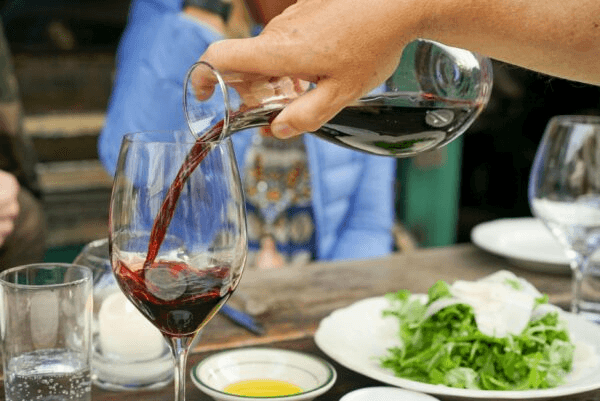
Alongside this comfort food, I want a Çalkarası that is light in color, vibrant, and bursting with fresh, lively fruit aromas. It must be served chilled. Since this is a lunchtime pairing and the day is still young, I chose Çalkarası because it doesn’t tire the palate or the mind; it goes down incredibly smoothly. Its high acidity and liveliness act as a reset button, cleansing the palate of the fats and flavors of the beans after every bite, ensuring the next one is just as enjoyable. If there is good conversation at the table, this wine is the perfect silent partner. This shows that when pairing, you should always consider the setting and the company.
Karnıyarık & Karaoğlan
Eggplant is my “red line”—my absolute favorite. Whenever I see it on a menu, I crave it. When the season arrives, my thoughts turn immediately to eggplant kebabs and home-cooked eggplant classics. Karnıyarık holds a very special place in my heart; a bed of tender eggplant filled with minced meat seasoned with tomato paste, garnished with tomatoes and peppers, and browned to perfection in the oven.
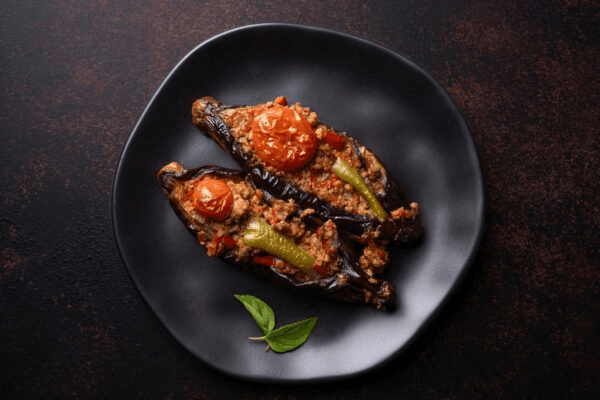

The grape that brings this pairing to life is Malatya’s Karaoğlan, a variety that is just starting to earn the recognition it deserves. Since the dish is oven-baked and browned, a medium-bodied Karaoğlan that has been barrel-aged to acquire smoky notes is the ideal support for those roasted flavors. You can apply the same logic we used for Lahmacun and Adana here: because of the acidity in the tomatoes and tomato paste, the wine needs a corresponding acidity to match. If Karaoğlan is unavailable, a good Merlot would also be a very fitting choice.
Iskender & Red Pét-Nat
This pairing occurred to me while writing this piece, and the thought of it immediately made me exclaim, “Oh my!” I have no doubt it will be an incredible combination, and I cannot wait to try it myself. (If you know an Iskender restaurant that is wine-friendly, please let me know!)
Many of you may be unfamiliar with Pét-Nat (Pétillant Naturel), but it is currently one of the most popular styles of sparkling wine globally. For more details on this style, you can refer back to the “Wine Selection for Your New Year’s Eve Table” article mentioned earlier.
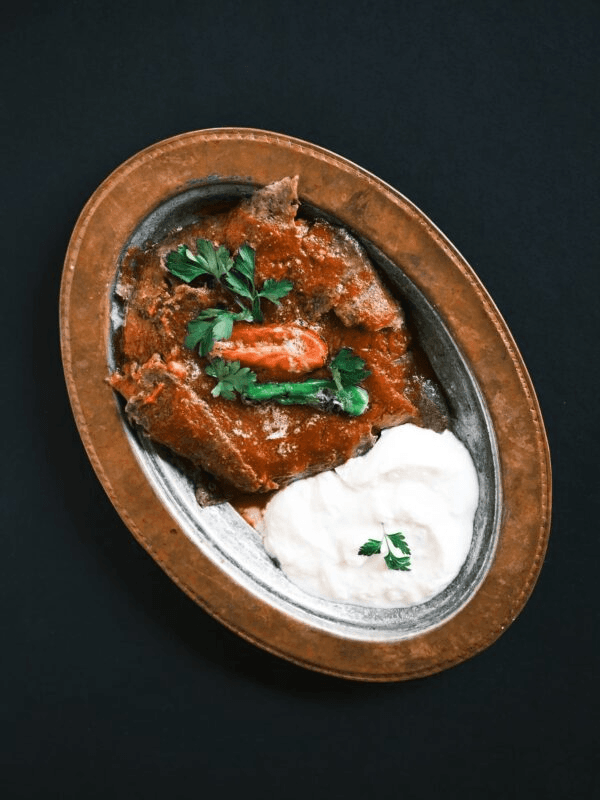
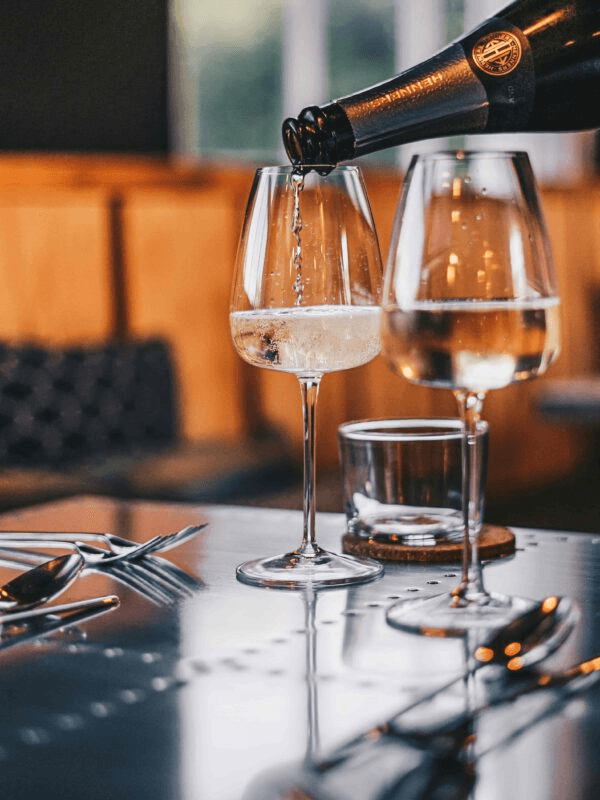
My inspiration for this pairing comes from the traditional Turkish habit of drinking grape juice with Iskender. A Red Pét-Nat provides those same wonderful fruit flavors, and the refreshing tartness found in artisanal grape juice is a hallmark of good Pét-Nats. (You can even opt for one that is slightly off-dry/sweet). However, Pét-Nat has a secret weapon that grape juice lacks: those wonderful, lively bubbles! The acidity and effervescence of the wine perfectly balance the richness of the browned butter poured over the Iskender, while the fruit supports the magnificent tomato sauce. There is even a hint of tannin to complement the tender döner meat. A piece of buttery pide, a slice of meat, and a sip of Red Pét-Nat—it’s a perfect cycle. The only thing that doesn’t fit is the yogurt; I suggest eating that separately so it doesn’t clash with the wine!