Through photography’s enduring memory, jazz’s improvisational rhythm and the tactile beauty of the analogue world, Merih Akoğul reflects on a life shaped by images, music and words.
Photographic artist, poet and writer Merih Akoğul sees photography as both a witness to time and a way of thinking that carries human stories into the future. Long before I began writing and working as an archivist of jazz music, I followed the photographs Akoğul took on the jazz scene with great interest. Because of the affinity I feel with him, throughout this interview I will address him as “Merih Abi,” an affectionate Turkish form of address that literally means “Brother Merih.”
Born in 1963, Akoğul graduated from the Photography Department of Mimar Sinan University’s Faculty of Fine Arts in 1985. He completed his postgraduate studies at Marmara University and taught at both institutions for many years. He has held numerous solo exhibitions and participated in countless group shows. A former member of the Photography Advisory Board at Istanbul Modern and the long-standing editor of the Eczacıbaşı Photography Artists Series, Akoğul continues to write for a variety of publications, particularly the İFSAK Blog and Gezgin Foto magazine. He has published 15 books spanning photography, poetry, essays and children’s literature.
Alongside photography, Akoğul has cultivated a deep connection with poetry and literature, consistently placing curiosity and the search for meaning at the heart of his work. In this interview, we embark on a wide-ranging journey from the beginnings of his photographic adventure in childhood to his passion for jazz; from Keith Jarrett and John Coltrane to the magic of black-and-white photography; and from vinyl records and hi-fi culture to artificial intelligence and the changing face of Istanbul. Reminding us that photography is not merely a single frame but also a powerful form of testimony, we now leave the floor to Merih Akoğul.
Merih Abi, first of all, thank you for accepting this interview. It is a great pleasure for me to speak with you. Many of the fields in which you work, and many of the subjects that interest you, are also close to my heart. I am certain that both I and Saatolog’s readers will learn a great deal from this conversation. Let us go back to the beginning. When you think about your first encounter with photography today, what motivated you to pursue this art form? Do you remember the first photograph you took or the first moment of great excitement?
The magnificent photographs I saw in magazines, books and calendars made me think, “Why shouldn’t I take photographs like these too?” Ever since childhood, the images I saw and the music I heard created an indescribable excitement within me. I could take those photographs myself; all I needed was a camera.
I loved aeroplanes. I watched them glide across the sky in fascination. I knew I could not become an aeronautical engineer or a pilot, but I could photograph them. Two or three days a week, I would go to the airport simply to watch the planes.
At the age of 14, I began taking the kinds of photographs I admired with a Praktica Super TL2 camera that my aunt had brought from Germany. It was not only aeroplanes that interested me, but also sunsets, flowers, landscapes and historical buildings. However, I ruined the photographs on my first roll of film because I did not know how to rewind it. Those photographs have always remained a mystery in my life. Perhaps I have been searching for them in every photograph I have taken since.
What a wonderful anecdote this “mystery” has left in your life. Is photography, for you, a means of documenting reality or a narrative form through which reality is reinterpreted?
For me, the most important aspect of photography is that it keeps our memories alive, allowing us to remember, each time we look at an image, the moments we witnessed with a camera in our hands.
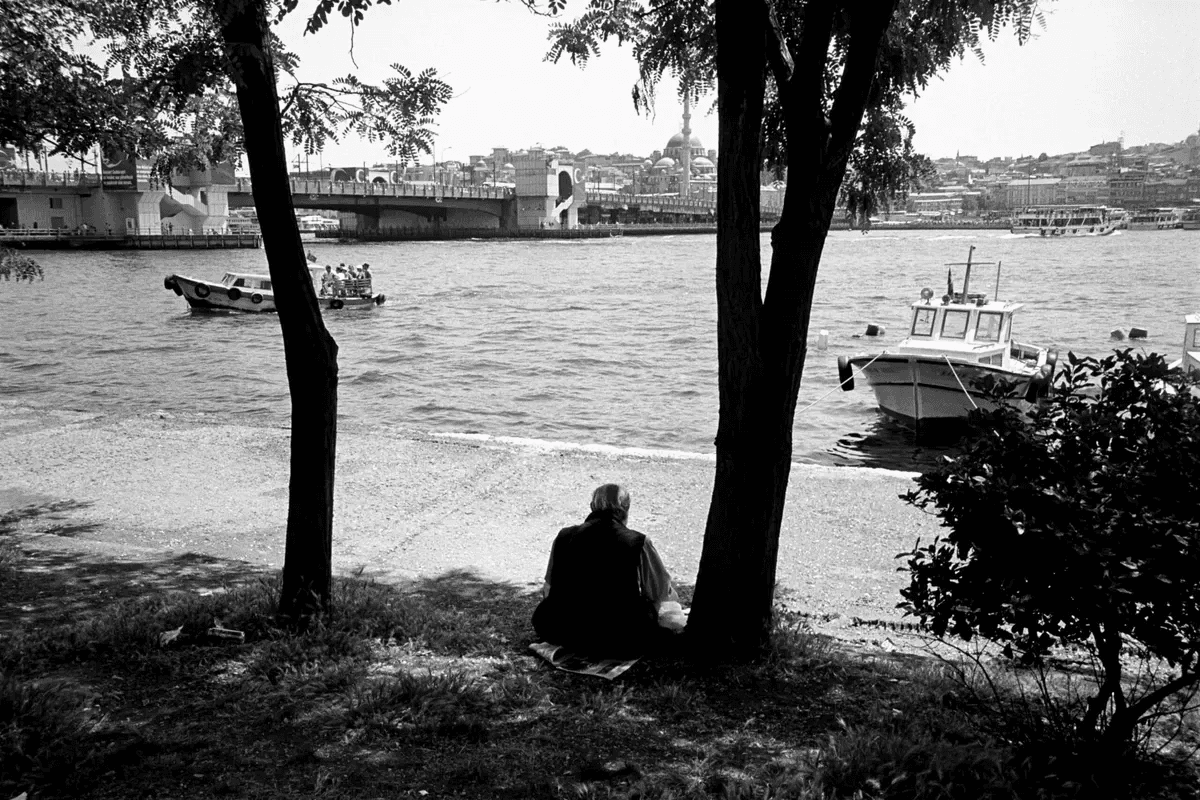
When I passed the entrance examination for the Photography Institute of the Istanbul State Academy of Fine Arts, Türkiye’s most important and well-established art school, on my second attempt in 1985, no one could have been happier than I was. I celebrated with my friends over tea beneath the old Galata Bridge, which was then enjoying its golden age before it later burned—or was burned—down.
At the time, I was more drawn to the creative dimension of contemporary photography, and I had developed a distinctive point of view that has not changed greatly even today. I enjoyed reflecting details not only in life but also in my photographs. What we might describe as an artistic approach was central to my perspective. After all, we had been guided by Şahin Kaygun, a great master of photography and a remarkably original and industrious artist. Literature was also progressing alongside photography during that period; an important poet such as Hilmi Yavuz was our lecturer in the History of Civilisation.
As I grew older, particularly over the past 30 years, I became increasingly aware of the importance of the documentary approach in photography. A document gains significance and ages more slowly when it is made lasting through an appropriate artistic sensibility, an original perspective and carefully considered compositions. Today, when billions of photographs are being taken, images of this kind have become even more important.
You need to reach a certain maturity to understand some things. By slightly adapting a line by Behçet Necatigil, I might put it this way: “Because the true photographs wait for certain ages.” Both to look and truly see, and to take those photographs.
Poetry and photography are the two art forms that most closely resemble one another. They are instantaneous, intense and reveal themselves successfully over time.
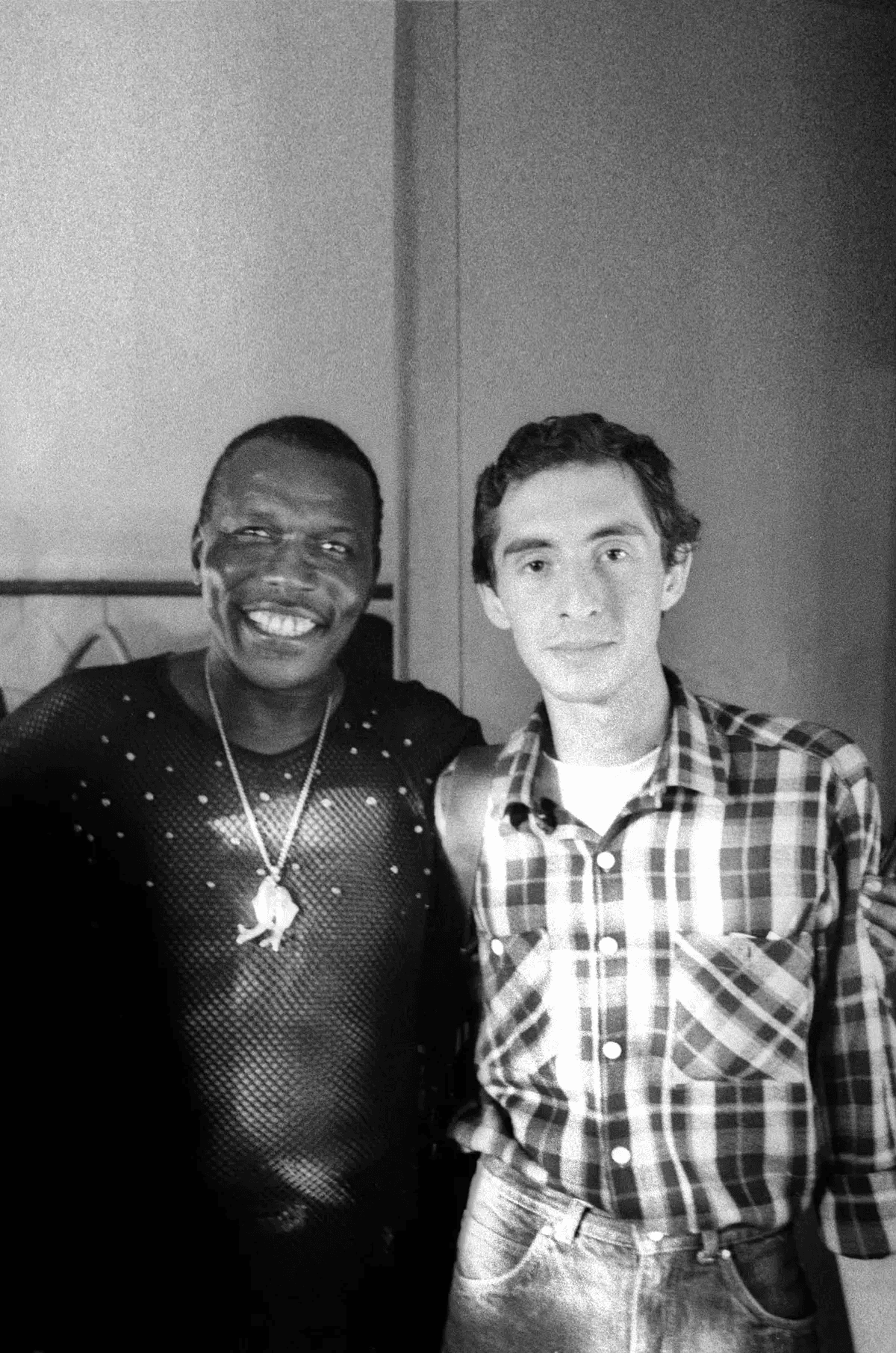
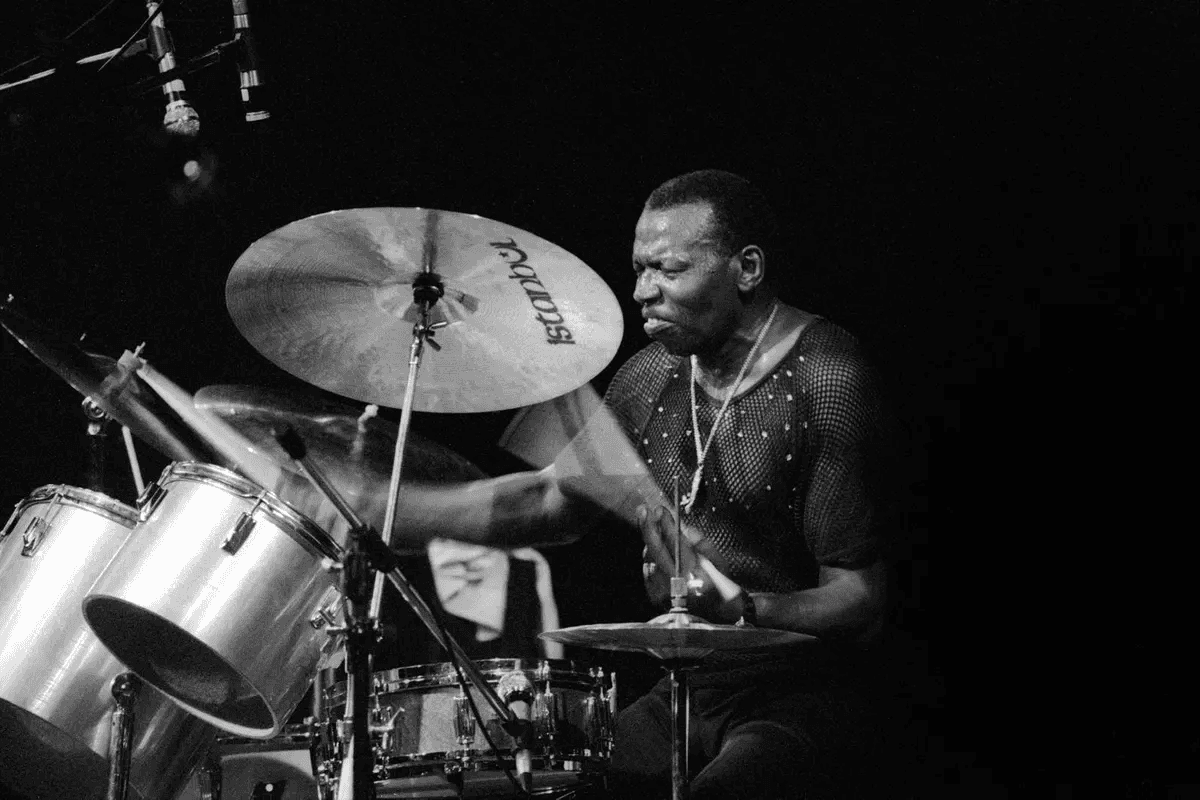
Elvin Jones, 1985 1. Bilsak Caz Festivali
How do your identities as a poet, writer, curator, academic and photographer nourish one another? If one of these identities were absent, what would change in your work?
Poetry is like the very essence of the world. It can absorb and preserve everything. Even thousands of years after it has been written, you can reconstruct a prehistoric creature from the genetic material preserved within that fossil.
Being a poet is the most difficult profession in the world. Without expecting anything in return, you transform what you have lived and felt into words and lines. And, if you are fortunate, sometime near the end of your life someone reaches you through one of your poems and calls you a poet. The phrase “There is life after death” generally suits this situation perfectly.
Whether prose or poetry, writing is one of the most important human acts. But reading is even greater. Whatever we have learned, we have learned through reading. That is why the most useful object in the world is the book. You can only learn the subtleties of a language by reading books.
I have been teaching for more than 30 years. Sharing what I know has always given me great happiness. It is deeply rewarding to have reached thousands of people from different age groups and backgrounds through lessons, conferences, panel discussions and the hundreds of articles I have written over 42 years.
I have always believed that practical work must be supported by theory, because you cannot explain a discipline solely through its own components. Since the beginning of my academic career, I have continued to teach courses on “reading photography” without interruption. In these classes, I have tried to fill an important gap in the theoretical field by bringing photography together with other disciplines such as aesthetics, art history, philosophy, anthropology and psychology.
Above all, I believe in the necessity of giving meaning to photography. We are surrounded by people who hold cameras in their hands and assume that what they are doing is photography. And, naturally, there are audiences who respond to them. This happens because knowledge is not consulted.
Photography brought my existence along with it. I arrived at where I am today through photography. I formed my relationships through photography and found my friends through it. I cannot describe in words the pleasure of taking photographs and being out in the field.
What you see, what you photograph and the resulting image exist on three different planes, and they are always different from one another. When the viewer’s interpretation is added, photography becomes a field with four stages. The fact that it can contain surprises invisible to the eye, occurring within 1/125 of a second, is profoundly exciting.
Charles Lloyd
Turning to a subject I have been especially curious about, how did you first encounter jazz? Which musicians affected you most deeply during the early years when music entered your life?
While I was listening to rock music, particularly symphonic rock, the first jazz album I came across was John Coltrane’s Alternate Takes, from my father’s collection. The track “Cousin Mary” affected me deeply. That was also when I first felt the desire to play the saxophone. Years later, when I began taking lessons, the first piece I studied with my teacher Tahsin Ünüvar was “Equinox.”
In the beginning, I followed much the same path as many people who fall in love with jazz. Louis Armstrong’s “Hello, Dolly!” and “What a Wonderful World,” Ella Fitzgerald’s “Summertime,” the Duke Ellington Orchestra’s “Take the A Train,” the Dave Brubeck Quartet’s “Blue Rondo à la Turk” and “Take Five,” and the Glenn Miller Orchestra’s “In the Mood” were among the unforgettable melodies by extraordinary jazz musicians that I first heard during childhood.
You have brought many great names before your lens, from Keith Jarrett and Oscar Peterson to Stan Getz and Charles Lloyd. Which concert surprised you most, or remains the most unforgettable for you?
The first international jazz concert I attended was a performance by the group Steps at the 1982 Istanbul Festival. I was 18, and the line-up was extraordinary. Michael Brecker took me on a journey into another world.
It was quite a year. I also saw Omega, the progressive rock band I admired. They performed their songs in Hungarian, but that did not matter. We only had a limited amount of money in our pockets, and I used my other opportunities to see the Giselle ballet, featuring Nureyev as principal dancer with the London Festival Ballet, as well as the Azerbaijan State Dance Ensemble.
Of course, I still have the black-and-white photographs I took of all these performances with my Praktica camera. This is why the documentary dimension of photography is so important.
The year before that festival, Paco de Lucía had also appeared before me with his legendary ensemble. I was introduced to flamenco jazz and came to understand yet another extension of jazz music around the world. One of my earliest photographs, which remains both widely admired and one of my personal favourites, is also of Paco.
In truth, it is impossible to transfer what you feel during a concert directly into photographs. Photography is an autonomous, two-dimensional field of its own. When the impressions you experienced during the concert begin to approach what you feel while looking at the resulting image, you understand that you have succeeded.
Naturally, the most important element here is the interpretation of those who look at your photographs. In the 1980s, we worked under much more difficult conditions than today. There were neither high ISO capabilities nor the powerful and aesthetically designed stage lighting we now have. The greatest problem was therefore technical.
You had a single roll of black-and-white film containing no more than 36 frames. Despite everything, we still tried our luck. And whenever we forgot, we looked back at the photographs and remembered the past.
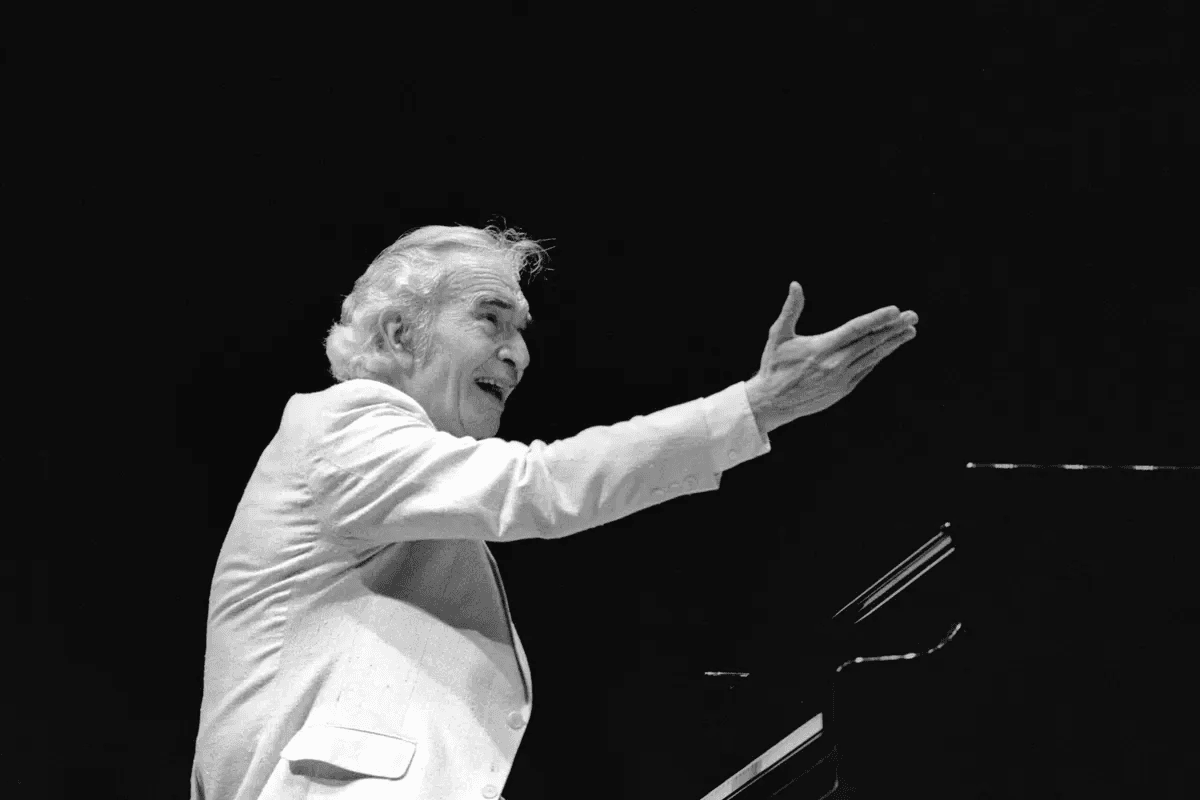
Dave Brubeck
What distinguishes jazz photography from other forms of stage photography? Can a strong jazz photograph make the spirit of the music visible, beyond simply capturing the right moment?
Photographing any of the performing arts is difficult. You must either create images that directly convey the essence of the event and enlighten the viewer, or produce iconic scenes in accordance with your own perspective, conveying the performance through individual moments.
Every photograph we take has an equivalent somewhere in the history of the world. Inevitably, it is compared with similar images through association. That is why taking photographs is a genuine responsibility and requires great care. The play, concert or performance will eventually be forgotten; only a few photographs will remain.
You succeed when moments prevail in photography, figures and colours prevail in painting, and words prevail in literature. The process is complete at the moment when you say, “That is enough,” when you surrender and decide you will go no further.
It is certainly possible to transform improvisation into photography through the emotion you are experiencing at that moment. There are magnificent stage performances that carefully murder the melody. You leave the concert asking yourself, “What did I just watch?” Powerful photographs distinguish themselves from ordinary moments in much the same way; like a thrilling horse race, they overtake their rivals, break away from the field and emerge ahead.
Perhaps the most difficult task in the world is to compress a continuous stage performance into one or two unforgettable frames. The greatest achievement of the most important names in photographic history lies in their efforts to close the gap between the moment witnessed and the photograph that ultimately emerges.
I feel that there is a natural kinship between black-and-white photography and jazz. Do you feel the same? Do emotions that cannot be expressed in colour become more visible in black and white?
Yes, jazz and black-and-white photography seem almost related to one another. Photography was invented in black and white and only later developed into colour. The history of jazz, too, has largely reached us through black-and-white photographs.
To me, jazz seems to belong to the night. How beautifully the black of the film corresponds with the darkness of both the stage and jazz itself.
Bertrand Tavernier’s Round Midnight, filmed with an extraordinary group of musicians, successfully brings these elements together through the character of Dale Turner, drawing on the story of Lester Young and Dexter Gordon’s remarkable performance. The film is in colour, incidentally, yet it has a dark background in which melodies are arranged like notes on a stave, and the exhilaration of jazz is intertwined with tragedy.
I also love Monk’s masterpiece, the standard “Round Midnight,” and the film of the same name. Let us turn to records. What similarities do you see between the patience required by analogue photography and the culture of listening to vinyl?
I find them very similar. Both involve meticulous, painstaking labour.
We would load the film into the camera, take the photographs, develop the film, make a contact sheet, select the images and enlarge them in the darkroom. Sometimes we would repeat the printing process several times before achieving the correct result. We spent much of our photographic lives in the darkroom.
To play a record, you need a turntable. For me, the turntable is the most beautiful mechanical marvel in the world. I would not exchange the sound made by the mechanical friction of the needle touching the record for anything.
Naturally, a record wears down as it is played. It gathers dust. It crackles and may even skip. The record can become scratched; the needle can break. The analogue world is like a universe inhabited by living organisms. It reminds us that objects have souls.
Most important of all are the record-cover designs, the photographs, the information printed on them, the song titles, the year and the producer. We learned so much from records. Their covers were like textbooks from a school we had never attended. With their large lettering, they are also kind to our gradually deteriorating eyesight.
When you keep your records clean and well preserved, you acquire a magnificent collection not only through the music they contain but also through their covers.
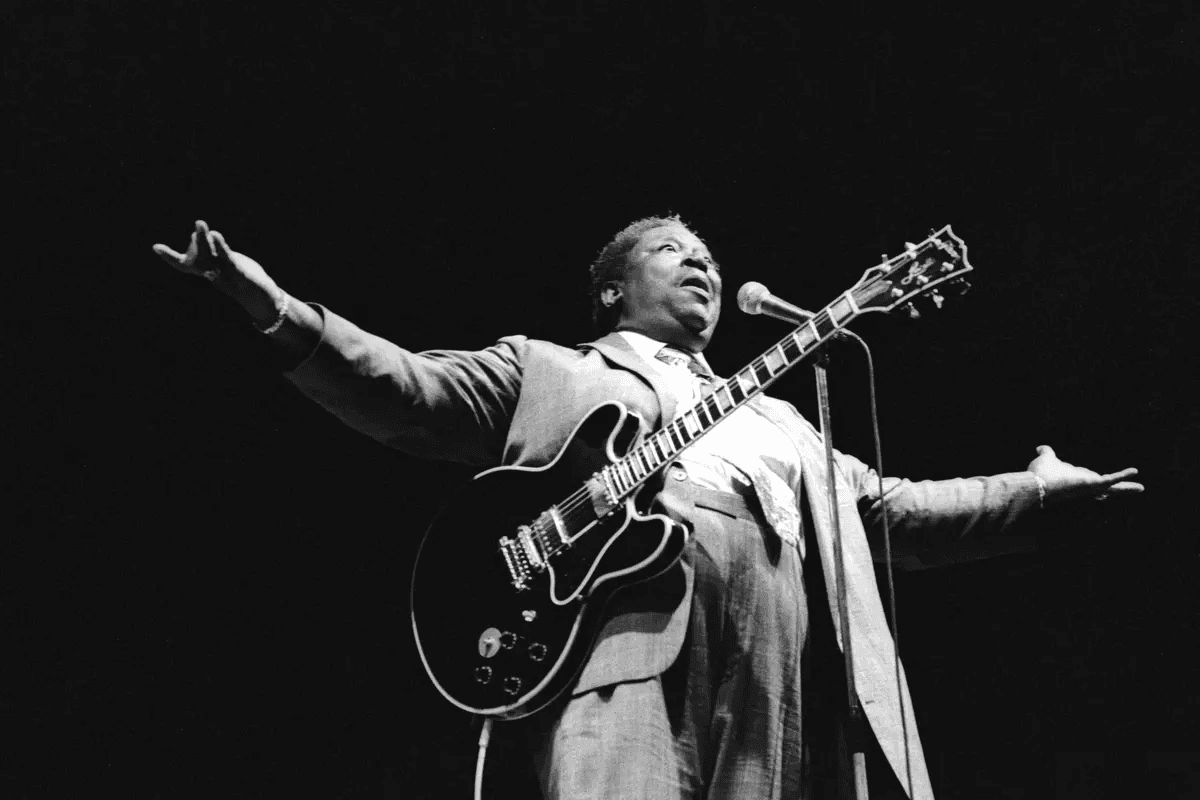
Bb King
You are also deeply interested in hi-fi culture. A good sound system truly changes the way we listen to music. But is this perhaps a somewhat romantic approach? Between the convenience offered by today’s digital platforms and the experience provided by vinyl records and high-quality sound systems, which do you find more meaningful?
Yes, it is a romantic approach, but an enormous hi-fi industry has been built around it. People said, “Vinyl is dead,” yet despite all the digital possibilities of our age, records have risen from their ashes.
Turntable manufacturers are producing turntables at a frantic pace, and extremely expensive ones at that. I have seen one priced at $450,000. There are millions of cassette players and cassettes around the world, and they have now become valuable again. Enthusiasts continue to preserve their reel-to-reel tape recorders. Today, major companies manufacture reel-to-reel machines and tapes and sell them at astronomical prices.
CD production continues, and CD players are being equipped with brand-new DAC technologies. Meanwhile, digital platforms allow us to listen to music that we could not previously access. Devices known as streamers, which play music over a network, have become very fashionable. Through the internet and our chosen platforms, using systems such as Bluetooth and Wi-Fi, we can gain access to an immense archive.
The entire aim of hi-fi is to reproduce sound in a form as close to the original as possible, allowing you to hear even the finest details as though you were attending a live concert. Beyond that, it becomes a matter of hearing and budget. At recent hi-fi fairs, we have even seen equipment worth €3 million or €4 million.
Ultimately, analogue and digital coexist peacefully. The one truth that must not be forgotten is simply this: music is music.
Most good things are built upon technology. Photography is, above all, an invention. Every innovation in mathematics, physics, optics, chemistry and digital technology has been applied to photography. Photography now determines the future of computers, tablets and mobile devices as well.
As for the second part of your question, I can say that wherever the music I am looking for happens to be, that is where I will be. But when it comes to my particular area of interest, regardless of the source, I love listening to music through what we now call vintage sound systems from the 1960s, 1970s and 1980s: amplifiers, loudspeakers and reel-to-reel tape machines.
I do not find it particularly logical, however, to listen on vinyl to an album that was digitally recorded and mastered. Original period pressings remain the decisive reference in this respect.
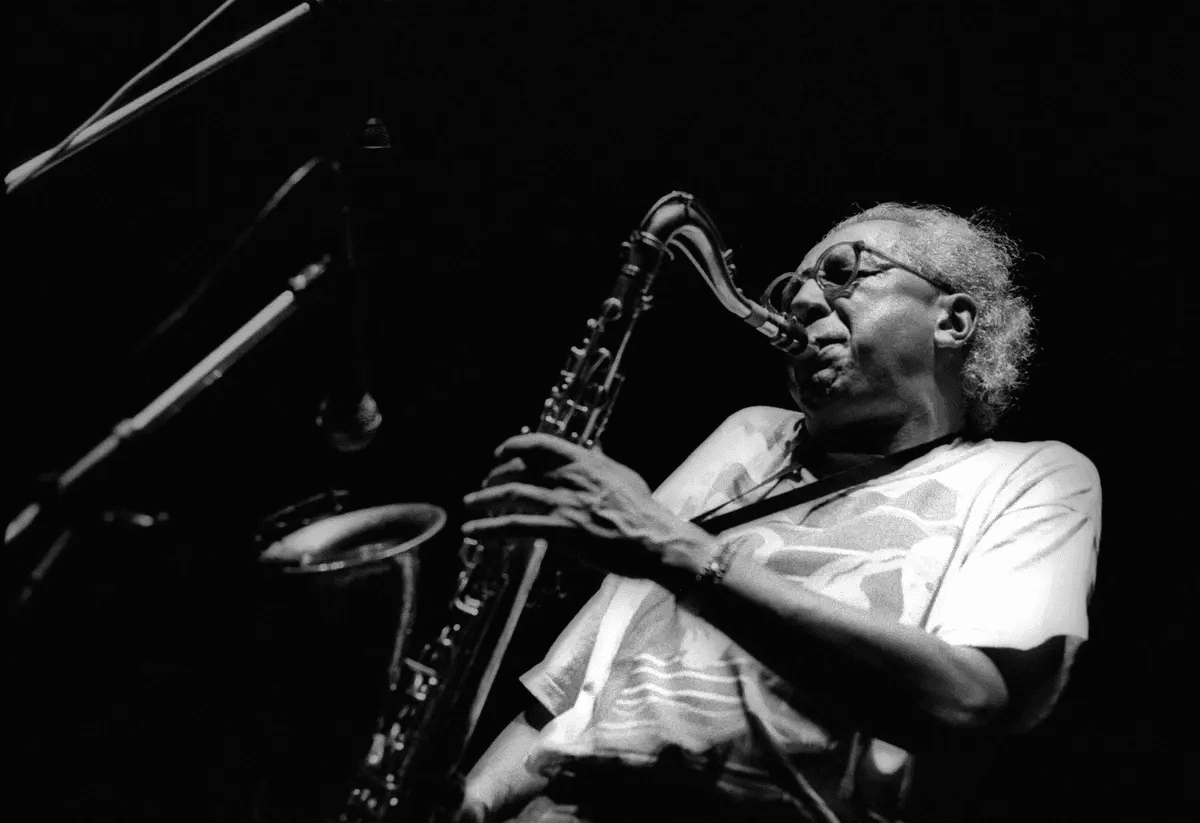
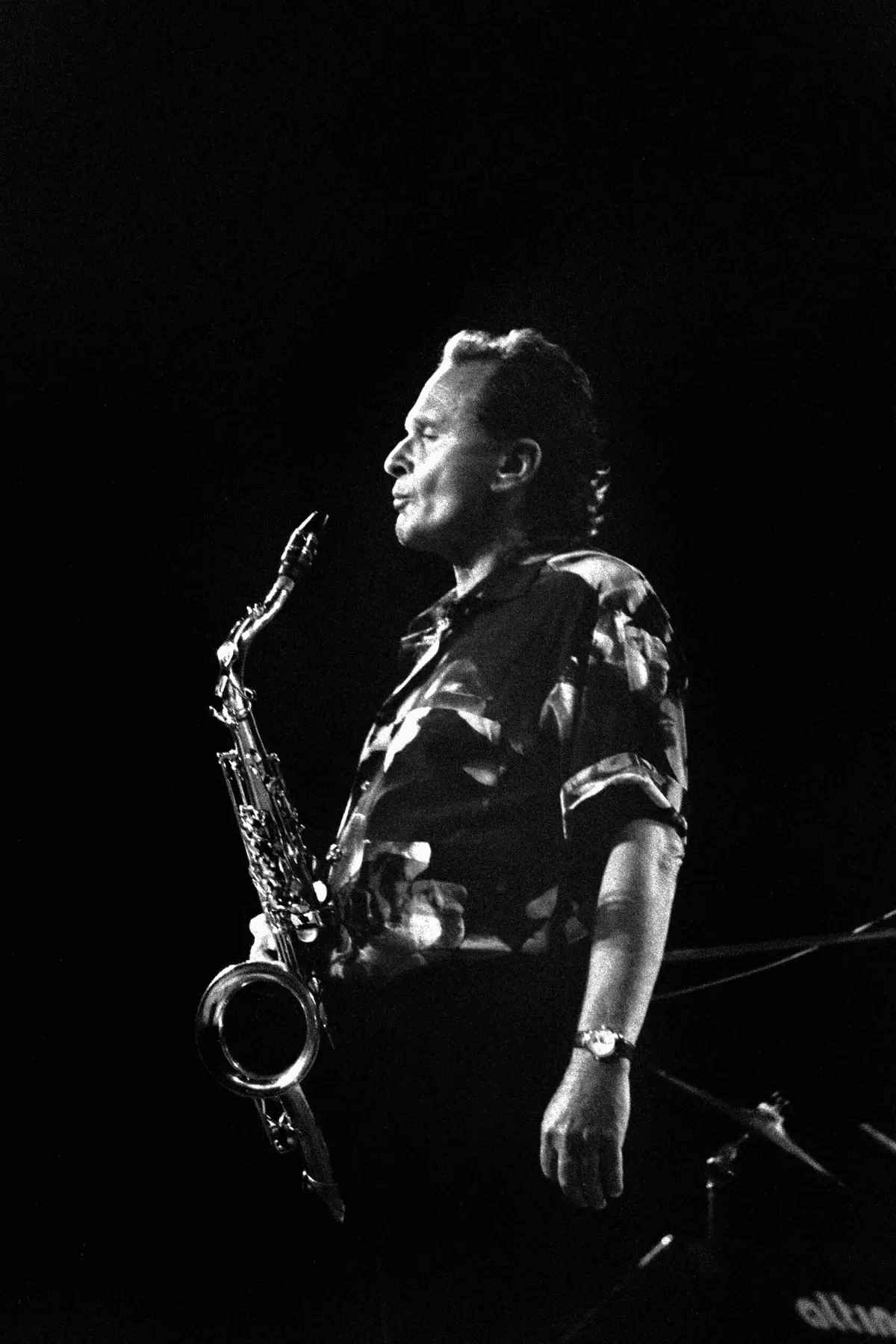
Stan Getz
At the Yeniköy Jazz Days, you both presented your Jazz Time photography exhibition and held a conversation with Adnan Arduman on “Hi-Fi and Jazz Culture.” What kind of impact do you think events like these have on audiences and viewers?
It was a wonderful experience for us. Four years ago, on 29 May 2022, Adnan Arduman and I had a delightful conversation about jazz culture during our neighbourhood’s jazz festival. Photographs I had taken at jazz concerts between 1980 and 1990 were also exhibited under the title Jazz Time at the Austrian Cultural Centre in Yeniköy.
I believe that the quality of music finds its true value not only through the musicians but also through the environment in which the concert is presented and the audience that experiences it.
Still, we must remember that even if we attend the finest concert of our lives, something will always be missing from the recording. We can only compensate for that absence through our imagination, set in motion by the inspiration music gives us.
Music is the most effective medicine for every illness in the world. I know this from experience.
You are right. Photography and music are both art forms concerned with memory. In your opinion, which preserves time more effectively: a photograph or a melody?
One travels through the eye and the other through the ear, carrying us back to memories of the past.
Music contains continuity. It unfolds across a particular span of time, progressing through melody and rhythm. Using sound and instruments, music finds its way and fulfils its function even when our eyes are closed.
Photography, however, requires an open and attentive eye. That gaze seems to have sworn to decipher the mystery of time frozen within individual moments. For this to reach us, a camera is required.
By freezing time, photographs shape our memory of the past for the future. Ultimately, just like smells and tastes, photography and music leave traces in our memories. Time, which we use like a trampoline, will propel yesterday into tomorrow through photographs and music. They will become our gateway to the stars.
Elvin Jones
You have organised exhibitions, worked as a curator and taught photography for many years. Which tendencies among today’s young photographers excite you most, and which concern you most?
I do not divide photographers into young and old, but there is a chaos created by the uniformity and rapid production brought about by the internet and social media platforms. Because the water is never still, we cannot see what lies at the bottom.
In particular, the tendency that the Western world calls “street photography,” along with the obsession with taking selfies, has begun to overshadow everything else. Photography enthusiasts who hide behind the possibilities offered by technology without possessing the necessary foundation produce images that closely resemble one another.
I would summarise the greatest problem today as the production of photographs that all look alike, age quickly and are created solely to be consumed on social media platforms.
At a time when AI-assisted image generation is becoming increasingly widespread, do you think the definition of photography is being rewritten?
We can evaluate photography’s 200-year journey through three major periods. First came the invention of photography. Then came the discovery of the negative-positive process, which made it possible to reproduce photographs. Finally, chemical processes were removed from the darkroom and replaced by digital technology.
Anyone can use artificial intelligence and its possibilities as much as they wish. I believe, however, that human beings, particularly when producing art, should work with their own intelligence.
Have you noticed how many photographers, painters and novelists have suddenly appeared recently? They will disappear into this turmoil just as quickly as they emerged. Technology is wonderful when it is your servant. But when you become its servant and begin carrying out its commands, then heaven help you.
Look at photographs and at the advertisements in which photographs are used. Look at their styles, genres and tones. It is as though they were all produced by the same advertising agency and designed by the same group of people.
Look at the music being made. With every new song we hear, we find ourselves crying out, “Déjà vu!” Everything seems more closely related than we imagine. Perhaps this is the true Origin of Species in today’s prevailing understanding of photography.
Cities change over the years, and so do people. As someone who has photographed Istanbul for decades, which change have you watched with the greatest sadness?
You look out from the top of a hill. You return 10 years later, and then again 20 years later. The green hills opposite you have gradually turned grey, transformed into masses of concrete.
Then you find the same viewpoint in an old postcard and see what even the place where you first stood looked like 100 years ago. Your relationship with time and space begins to disappear.
The most tragic aspect of all this is the transformation that spreads throughout society and takes place because people turn a blind eye to what is happening. Were the changes we were taught about in books not always directed towards progress? Yet they are constantly replaced by something worse.
Hills that were covered with trees 100 years ago have now become concrete wastelands. Change is anonymous; it acquires its body through acts of brutality before which even the most oppositional people remain silent. There is a terrible progression from raw material to material.
Change is not only what shapes life; it is also the most important element that makes photography what it is. Yet one sometimes wishes certain things would never change, even if that meant we could not take the photographs we wanted.
Everything will change. Everyone will complain about those changes. And when the time comes, people will find themselves longing, in a future they dislike even more, for a past they once disliked.
Today, I console myself with the photographs I still possess of landscapes as they once were, before they changed. What else can I do? If you were beginning again today as a young photographer, would you choose the same path? Or would another art form call to you?
No one has ever asked me this question before. I am thinking about it and answering it for the first time.
I think I would choose music. I would study music theory or pursue composition. I would write essays and give lectures on the relationship between music and the other arts. Perhaps I would write librettos for operas.
But literature would still be part of my life. I love revealing the connections between universal values through words. Nearly 500 of my articles are about music.
If you had the right to leave only one photograph from the thousands you have taken throughout your life to the future, which would you choose, and why?
I would like whichever photograph the majority prefers to be chosen. After all, I have witnessed millions of moments and photographed hundreds of thousands of them. They are waiting side by side in my archive to be brought into the light.
Most of them never will be. They will never have the chance. That is the greatest tragedy of photography.
The photographs we manage to take, the ones we succeed in creating and the ones that are eventually presented to the public are nothing more than a limited selection from among them. Photography, after all, is less the art of taking pictures than the art of choosing them.
A photograph’s value may increase over time or it may become insignificant. As time passes, the visual dynamics of both the photographer and the art viewer may change. Depending on such transformations, photography is a mechanism that lives forever.
It is important to me that The Hand with the Trumpet, a photograph I took early in my career that received several awards and was used as a book cover, has not aged. In the end, once we have all left this world, each of us will be remembered through no more than four or five photographs.
Finally, Merih Abi, for Saatolog readers who would like to experience both photography and jazz more deeply, which jazz albums, photography books or artists would you recommend for them to watch, listen to and reflect upon? What would be your first piece of advice to those taking their first steps into these fields?
In the arts, I like to champion simple and ordinary works that remain close to nature while still being treated with sensitivity, works that contain the qualities of being human and have not lost their connection with their essence.
These are the works I read. These are the films I watch, the music I listen to and the photographs I look at. Excessive make-up, too much aestheticisation and flirtation with artificial intelligence make me uncomfortable. We must not lose sight of the purpose of life. Who knows—perhaps if we did not think, we would not exist at all.
Music is extremely important to me. Let me mention some names I deeply love, who have supported me throughout every period of my life and whom I have never managed to exhaust. I will not recommend a particular album or track; everyone should discover their own: Yes, Pink Floyd, Tom Waits, Bob Dylan, Leonard Cohen, John Coltrane, Bill Evans and Keith Jarrett.
In photography, I would recommend Bill Brandt, Henri Cartier-Bresson, W. Eugene Smith, Saul Leiter, Ernst Haas, Josef Koudelka, Ara Güler and Şahin Kaygun.
As for writers and painters, among the writers at the top of my list are Thomas Mann, Michel Tournier, Raymond Carver, Emil Cioran and Yusuf Atılgan. I would summarise my painters as Gauguin, Matisse, Modigliani, Edward Hopper, Mübin Orhon and Cihat Burak.
Let us not overlook poetry. Alongside music, poetry also brought me to where I am today: Federico García Lorca, Bertolt Brecht, T. S. Eliot, W. B. Yeats, R. M. Rilke, Pablo Neruda, William Carlos Williams, Behçet Necatigil, İlhan Berk, Edip Cansever, Ece Ayhan and Hilmi Yavuz are among the poets I would place at the forefront.
Thank you for this beautiful conversation and for giving me the opportunity to look back over my life once again.
Saatolog Yıllık Saat Dergisi Saatolog’un yeni sayısı, 2020’nin yarattığı bu dönüştürücü etkiden ilham alarak hazırlandı. Dünya dijitalin etkisiyle her zamankinden de hızlı bir şekilde ilerlerken yavaşlamanın da önemini sonunda kavramış bulunuyoruz ve bu tezatlık hayatlarımızın her anına etki ediyor. Biz de bundan yola çıkarak Saatolog 2020/21 sayısını ‘‘hızlı ve yavaş’’ teması altında hazırladık.