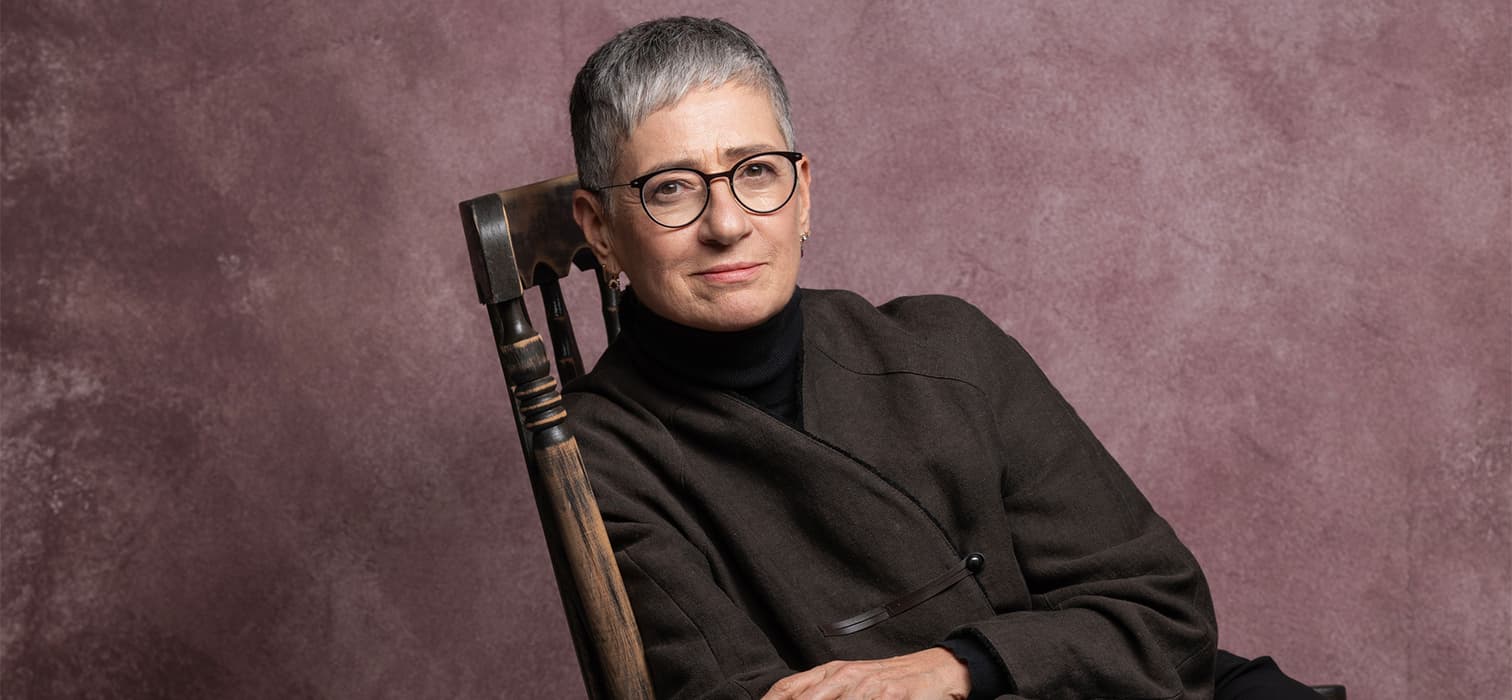
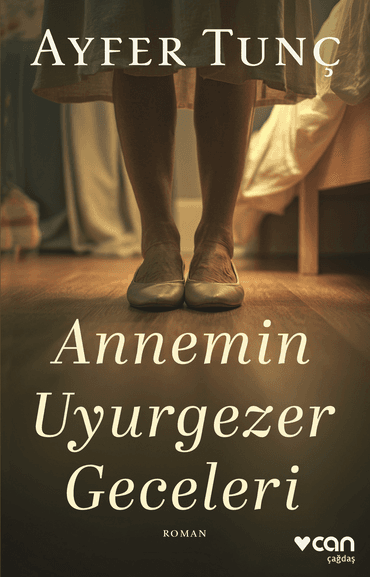
Ayfer Tunç, in her latest novel Annemin Uyurgezer Geceleri (My Mother’s Sleepwalking Nights), traces how the wounds inflicted by patriarchy travel across generations, quietly carried and concealed by women.
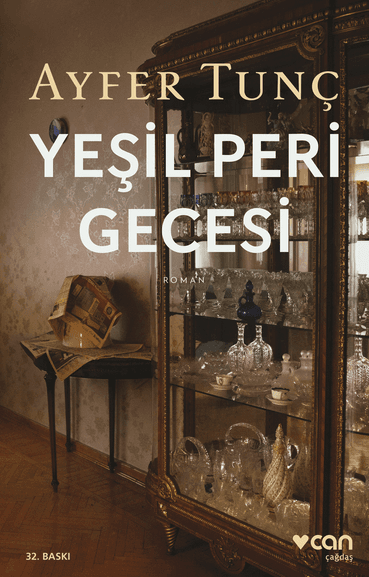
I am not a literary critic, yet I consider myself a devoted and attentive reader, and Tunç is one of the authors whose work I follow most closely. Years ago, on a friend’s recommendation, I read my first book by her: Yeşil Peri Gecesi. The novel, which the author herself describes[1] as being “written in the rhythm of a high-energy character who seeks to burn herself out with that very energy,” immediately captivated me with its language and narrative pace. The story of its protagonist—a young woman whose coming-of-age and passage into adulthood are marked by a string of “misfortunes”—reveals how life’s breaking points can, when viewed from a social perspective, transform into questions of morality and power. It made me reconsider many things I thought I understood.
The novel’s precursor, Kapak Kızı, and its companion work Osman expand this universe, foregrounding the stories of different characters woven into the same life. Together, they produce an effect similar to that of a well-crafted television series—one that keeps you perpetually curious about how the storylines will intertwine and conclude. The books that followed—Dünya Ağrısı, Aşıklar Delidir, and Kuru Kız—have, in contrast, neither attained the same level of reader enthusiasm as the aforementioned trilogy nor sparked the same depth of admiration. In this sense, they mark what might be called a “loss of momentum.”
Ayfer Tunç is a distinguished author with a devoted and demanding readership, and her posts, sketches, and comments across social media and other platforms regularly spark debate. Her newly published novel, Annemin Uyurgezer Geceleri (My Mother’s Sleepwalking Nights), has been no exception; it has stirred considerable discussion online. Some disliked it outright, others proclaimed, “I’ll read anything Ayfer Tunç writes,” while still others asked, “Who are you to criticize Ayfer Tunç?” I must admit that when I read Kuru Kız (The Dry Girl) and Aşıklar Delidir (Lovers Are Crazy), I was deeply disappointed; to be frank, I was so frustrated by the time I finished them that I practically slammed the books down. I found the characters weak, even somewhat shallow. Annemin Uyurgezer Geceleri, however, is not a work in which Tunç “outdoes herself,” but I can say that both the theme she tackles and the psychological depth she offers kept me almost as engrossed as Yeşil Peri Gecesi once did. At this point, I want to highlight this ability to “pull the reader in,” because I am convinced that it is directly tied to Ayfer Tunç’s professional background and her history as a writer.
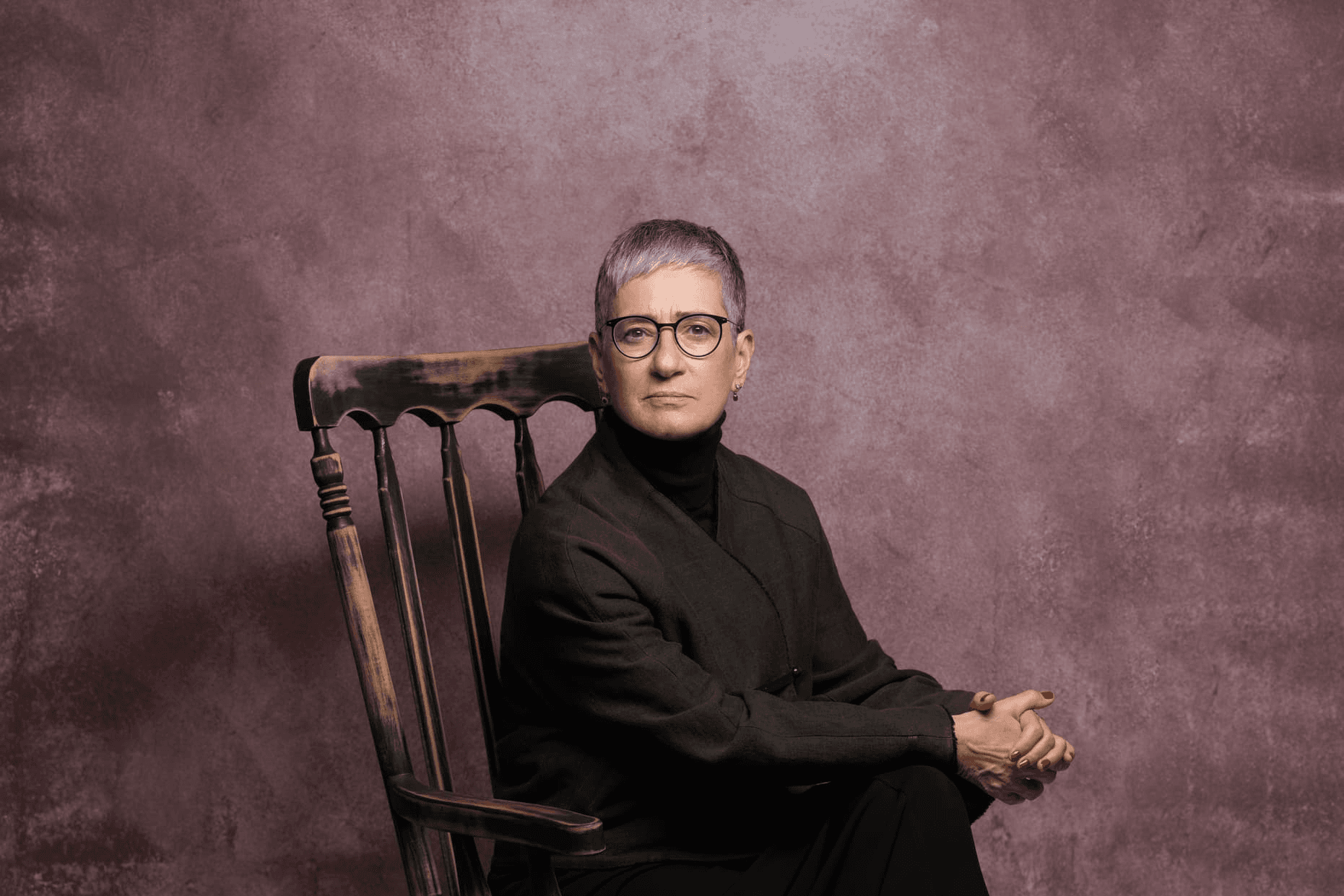
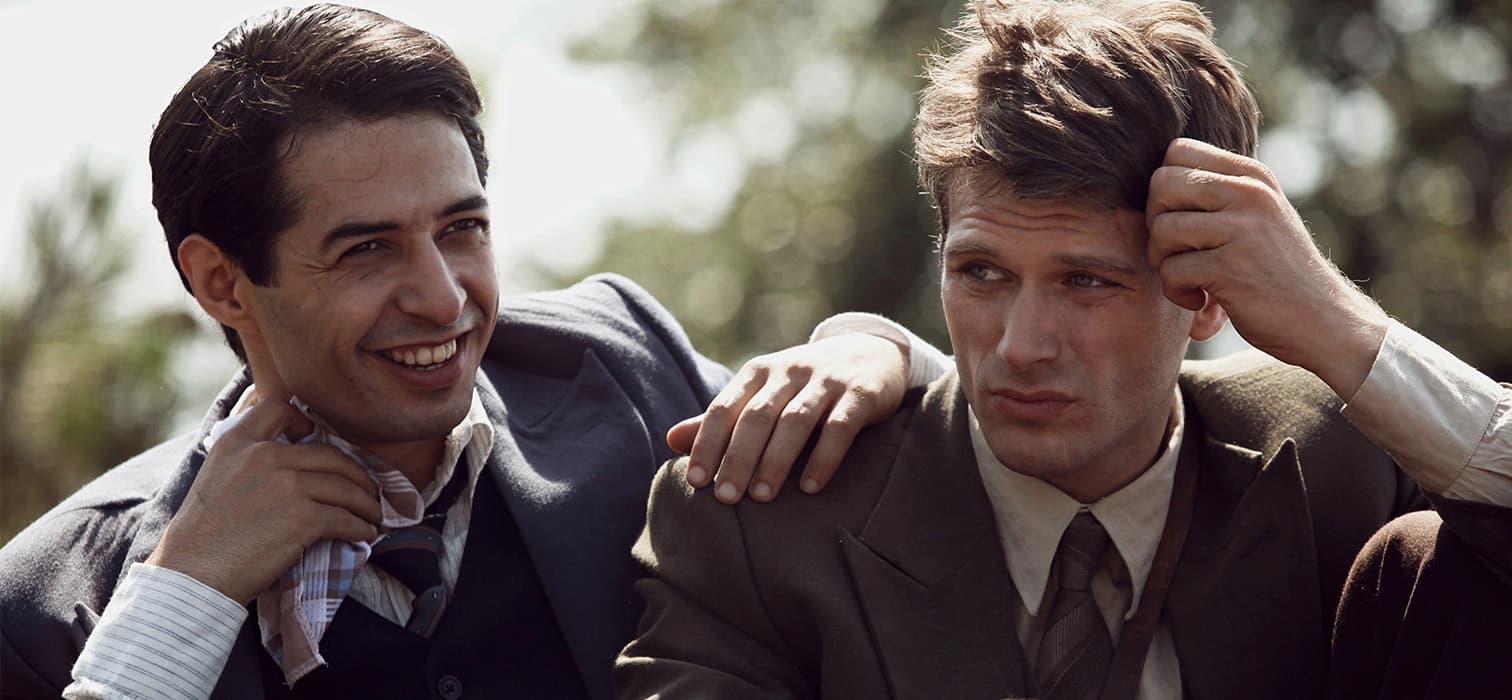
In the 1990s, Tunç adapted literary works for TRT and even wrote screenplays for her own stories, though she was not always satisfied with the outcomes. Among the stories she adapted were Mahmut Şevket Esendal’s Ev Ona Yakıştı and Reşat Nuri Güntekin’s Bahçeli Lokanta, to name just a couple. Her best-known work in this field is Havada Bulut, adapted from Sait Faik’s book of the same name and broadcast as a mini-series in 2002. Thanks to Tunç’s years of journalism experience and her command of intertextual techniques and screenwriting conventions, her novels offer readers not only literary pleasure but also the kind of curiosity, anticipation, and sense of discovery inspired by a well-crafted television series. Despite often centering on social issues in which the cause-and-effect relationships can be simple, weak, or even reductive, her novels manage to draw the reader in through characters who slowly unfold and deepen, opening a door to their emotional worlds. The psychological analyses constructed through their experiences, combined with the strategic use of flashbacks, create a distinctly visual narrative.
Annemin Uyurgezer Geceleri satisfied me in this regard; it “pulled me in” far more effectively than Kuru Kız or Aşıklar Delidir. In this novel, we witness the personal reckoning of Şehnaz—the main character and narrator—who has lost what she calls her “ability” to forget. Observing her mother’s sleepwalking episodes and uncovering long-buried truths about her past through the words spoken during those moments enables us to make sense of Şehnaz’s present. An economics professor, she falls in love with her married advisor and remains with him for thirty years (until his death), forming what Tunç calls a “dependent relationship”: Şehnaz is dependent on her professor-lover E.; E., in turn, is dependent on Şehnaz’s dependence on him.


The turbulence of mother–daughter relationships—reflected both in Şehnaz’s bond with her own mother and in her mother’s fraught relationship with her grandmother, shaped largely by the pressures of a patriarchal order—forms one of the novel’s central threads. Şehnaz’s obsessive love for an authority figure (her university professor) and her equally obsessive resentment toward his wife (a reaction that, in many ways, mirrors her own deep-seated insecurities) are among the other themes the novel explores. Yet beneath these personal narratives lies another concern for Tunç: the gradual impoverishment of her peers and classmates—the highly educated, culturally enriched segment of society—and, in particular, the erosion of academic life.
In an interview, Tunç remarks: “Regardless of whether the world needs academia in the 21st century, academia has been reduced to ruins by the blows it has suffered. People who have devoted themselves to science, art, and intellectual knowledge are being brutally impoverished and cast out of life. People who could serve the world of thought are being left idle, and the efforts to weaken cultural life are horrific. This is not only the case in Turkey, but also in the Western world: in many parts of the world, universities’ social sciences faculties are being closed or downsized.”

The revelations Şehnaz’s mother uncovers about her own mother’s past—key turning points in the narrative—also illuminate the knots in her own life. These revelations involve systemic harassment, rape, and violence. I found Tunç’s framing of male power within the patriarchal system, and the sexual violence deployed through that power, somewhat reductive. As I mentioned earlier, while Tunç excels at portraying the unruly, non-linear complexity of human psychology, the novel ultimately exposes its major secrets in a way that attempts to resolve that very complexity and eliminate any lingering questions for the reader. This recalls the tendency seen in some recent Turkish TV series (such as Magarsus), where power dynamics painstakingly developed over seasons are reduced in the finale to a simple formula—“X killed his father, so Y took revenge”—flattening broader social issues into purely psychological motives.
Nevertheless, and despite these reservations, the atmosphere the novel creates, the depth of Şehnaz’s character, the fraught dynamics of her relationship with E., its treatment of the “mothers and daughters” theme, and its insider portrayal of academic life are, for me, enough to make this novel worthwhile. Before reaching its conclusion, the journey we take through Şehnaz’s mind—and through her relentless, unforgettable memory—may also serve as a journey toward understanding Ayfer Tunç herself. As she reflects in a recent interview: “Texts that emerge from the complex labyrinths of the unconscious do not have a single truth or meaning. Moreover, many of these intricate texts are not fully formed; they carry seeds that will find their true nature in the author’s future writings or develop later. The author herself cannot know what these are, because the author is not fully aware of the labyrinths of her own mind; her writings are, at best, an attempt to understand her own dark side, her mysterious side.”
[1]: Published by Can Yayınları in 2014, Words in the Dark with Ayfer Tunç is an interview collection that traces Tunç’s development as a writer and offers a portrait of her literary life over the past twenty-five years. This article will draw on excerpts from the book—and therefore from Tunç herself.