French illustrator and graphic novelist Fabien Toulmé, known for addressing contemporary issues in his works and capturing the diversity of human experiences through his art, shared the intricacies of his craft with Saatolog readers.
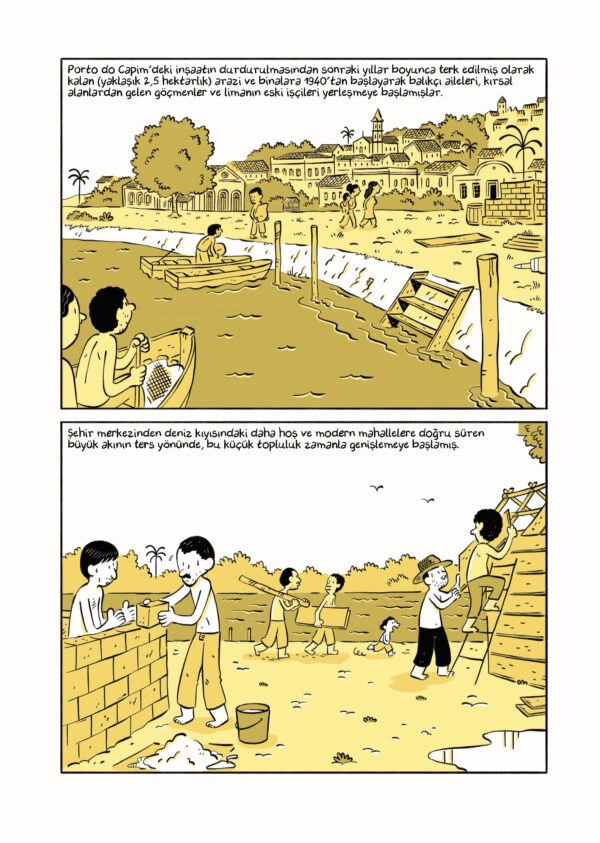
When you pick up a comic book or a graphic novel, what draws you in most is often the way it reveals the vast spectrum of human experiences through its drawings. Toulmé is one of those illustrators and storytellers who does this exceptionally well. As a reader, I would describe him above all as diligent. When a question sparks his curiosity, he does not hesitate to travel—sometimes within his own country, sometimes across the world—to observe firsthand how people live and what they endure. His Reflections from Around the World series, published by Desen Yayınları, consists of two fluid, thought-provoking, and entertaining works: Mücadele and Yaşamak ve Çalışmak.
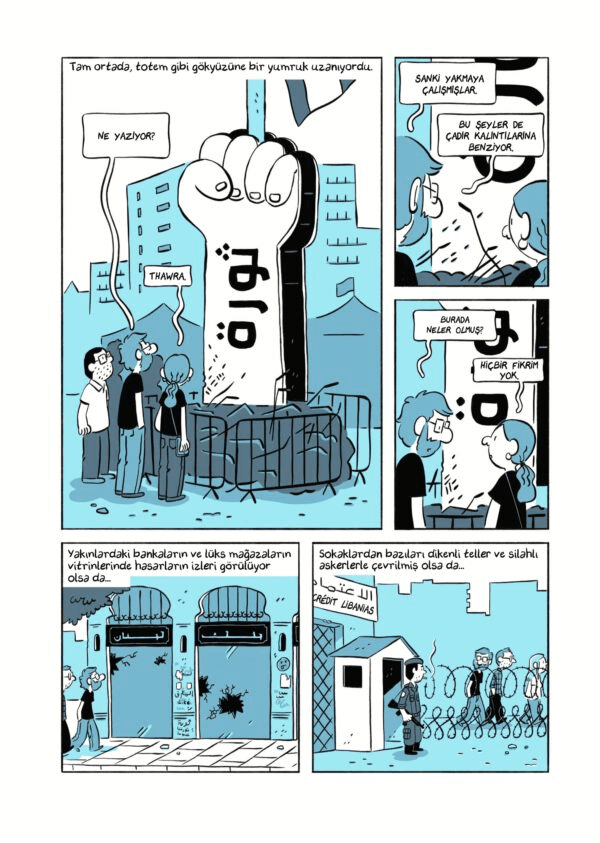
An artist who both advocates for his own rights and gives voice to others struggling under difficult conditions, Toulmé listens directly to the subjects of his stories instead of centering himself in them. Through his pages, readers encounter the voices of those at the heart of a Lebanese popular uprising or couriers navigating grueling working conditions in South Korea. Now, let’s hear from Toulmé himself as he shares his story.
Fabien Toulmé
Can you tell us about your journey? How did your path toward becoming an illustrator begin? I actually loved reading comic books as a child. For instance, I would try to copy drawings from Tintin or Lucky Luke. At a very young age, I wanted to tell stories and create my own characters—and comic books became the way to do that. I must have been around seven or eight when I started drawing my own comics. As I grew older, I told myself, “I’m going to become a comic book artist,” but when it came time to choose a career, I decided it might be too difficult. I didn’t think I had any special talent, so I became an engineer instead. I worked as one for about fifteen years, though I never really enjoyed it. The thought of “one day trying to make comics and fulfilling my childhood dream” was always at the back of my mind. Eventually, in my thirties, I took that leap.
Can you describe your daily routine? How often do you draw, how many hours a day, and how do you structure your work?For me, this job is just like an office job—I work an average of eight hours a day. I either work from home or in a shared studio with other artists. I usually juggle several projects at once, though there is always one I focus on. My rhythm is roughly one book per year. In addition, I create smaller illustrations for the press, short stories, or brief comics for collaborative anthologies. But my main focus always remains that central project.My process is divided into two distinct phases: first, I dedicate one to two months entirely to writing, developing the script. Then I move on to transforming that script into drawings, again working eight-hour days. Alongside this, I frequently travel for book signings or interviews.
How much do you revise your work? It’s hard to quantify. During the writing phase, the script gradually takes shape until it reaches a form I’m satisfied with. By the time I begin drawing, most of it is already set, so I rarely make major changes. Occasionally, I’ll refine some dialogue to make it sound more natural. I’m not a perfectionist—I accept that my work will have imperfections. What matters to me is progress, the effort to do a little better each time. I believe that excessive editing eventually loses its meaning.
Can you make a living from this work? Yes. My goal from the beginning was to turn this into a profession—to earn a living through it. But I wasn’t sure it would be possible. My initial ambition was simply to publish a book, and if I could make a living doing that, it would be wonderful. Today, I see that while some artists manage to live entirely off their work, others struggle and must take on additional jobs. Passion is absolutely essential, but it isn’t sufficient on its own. Still, my own experience shows that it ispossible.
Fabien Toulmé
Fabien Toulmé
After traveling to various parts of the world for Living and Working, and as someone who has deeply reflected on, written about, and illustrated this subject, how do you view your relationship with work and your profession today? Has this journey changed you? After becoming a comic book author, my perspective on work became much more relaxed. I’m fortunate now to be doing what I truly love, and that’s a rare privilege. What I do each morning still brings me genuine joy. Yet, as I also mention in Working and Living, work can be both fulfilling and, at times, all-consuming. I’ve learned the importance of setting boundaries—of not working incessantly and making sure to leave time for myself. If you ask whether this journey has transformed me, I’d say not dramatically; I’ve simply become more balanced.
Do you see your artistic practice as a “job” in the traditional sense, or as an activity that doesn’t quite fit that definition? As I explained in Working and Living, the concept of “work” is a complex one. But for me, it is indeed a job—something I do every day and the way I make my living. Still, I would add this: it is a labor of love. I would probably continue even after reaching retirement age, simply because I genuinely enjoy what I do.
Fabien Toulmé
You are an artist with a deep interest in Turkey and the Middle East. Could you share your thoughts and feelings about this region? It is a historically intricate region, one that the West has sought to influence and intervene in for centuries. Its layered past stretches from the Ottoman era to the present day. Many of today’s diplomatic tensions, to me, feel like echoes of that history. Things aren’t going particularly well in the world in general, and when I think of this region, what I mostly feel is sadness. I wish it could be a calmer and more peaceful place.
Who are your favorite graphic novel authors? As a reader, I have two distinct periods. As a child, I devoured the classics—Tintin, Red Kit, Astérix—and admired artists like Hergé, Morris, Uderzo, and Goscinny. Later, while working as an engineer in Brazil, I rediscovered comics through the French publishing house L’Association. It was there that I encountered artists such as Emmanuel Guibert, Lewis Trondheim, Guy Delisle, Marjane Satrapi, and David B. They revealed to me that comics could take on entirely different forms, that each author could have a unique and personal style. This realization encouraged me to take the plunge into the world of comics myself.
In terms of drawing, my greatest inspiration is Tintin—I read it so much as a child that it inevitably left its mark on my style. Later on, Persepolis, The Burmese Chronicles, and the works of Joe Sacco influenced the way I tell stories. There’s also a lesser-known Brazilian artist, Flavio Collin, whose brushwork I greatly admire; he has also been a source of inspiration for me.
Fabien Toulmé
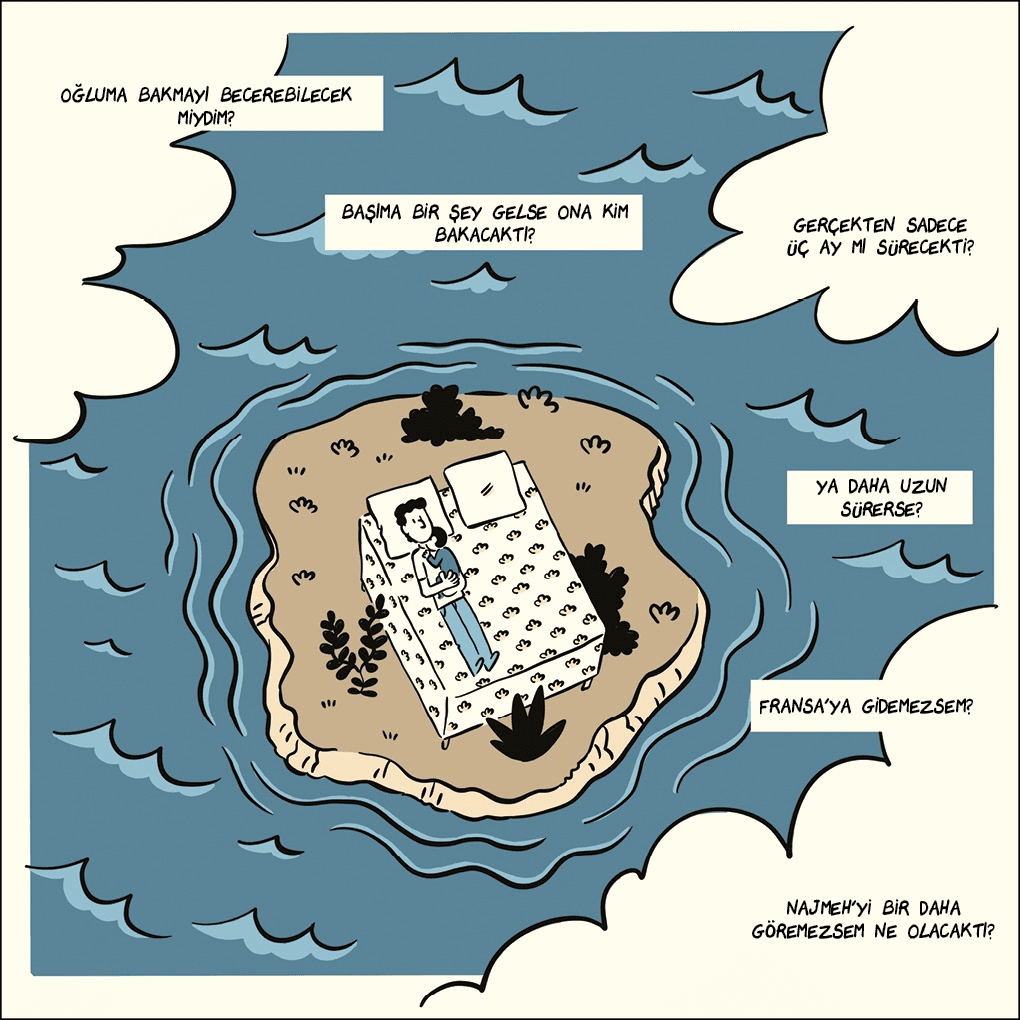
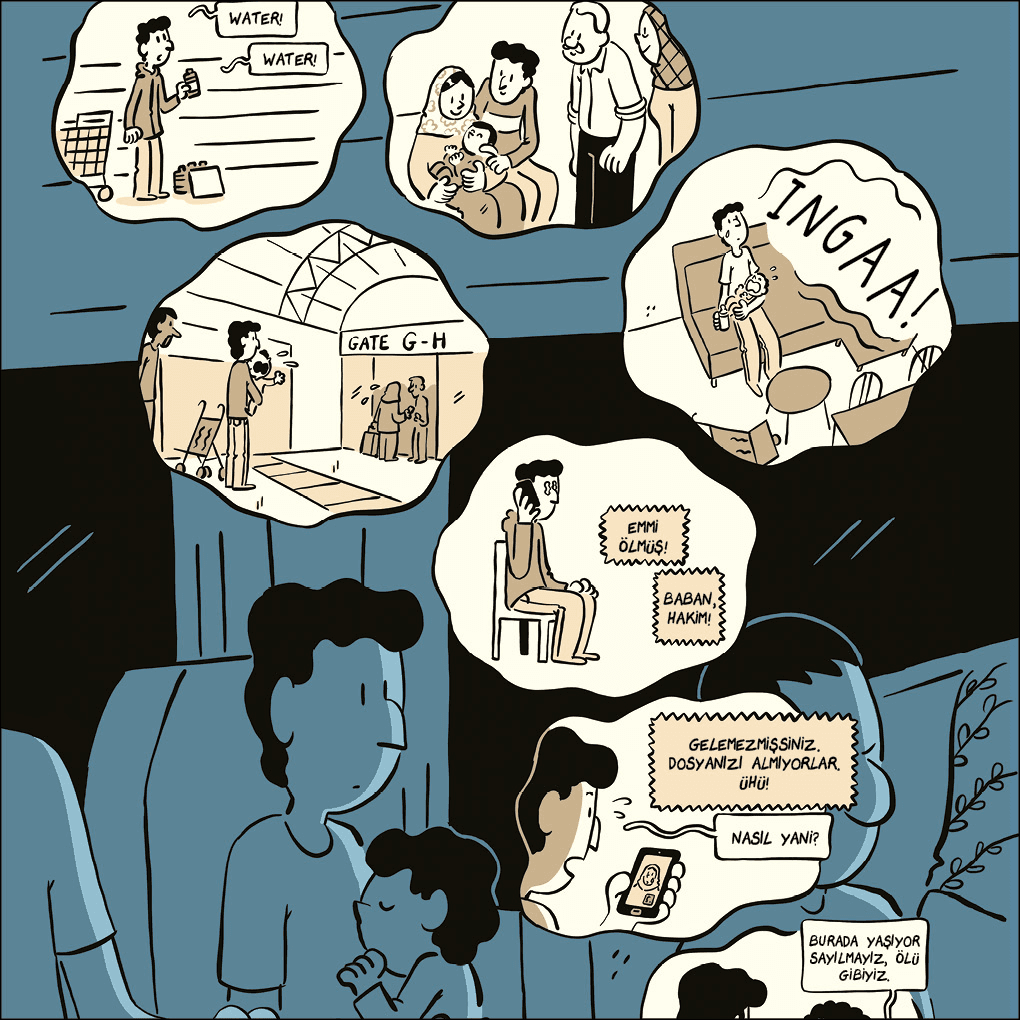
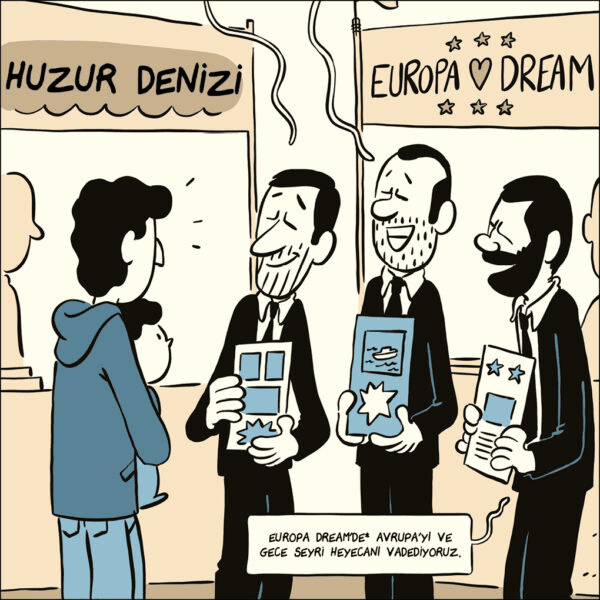
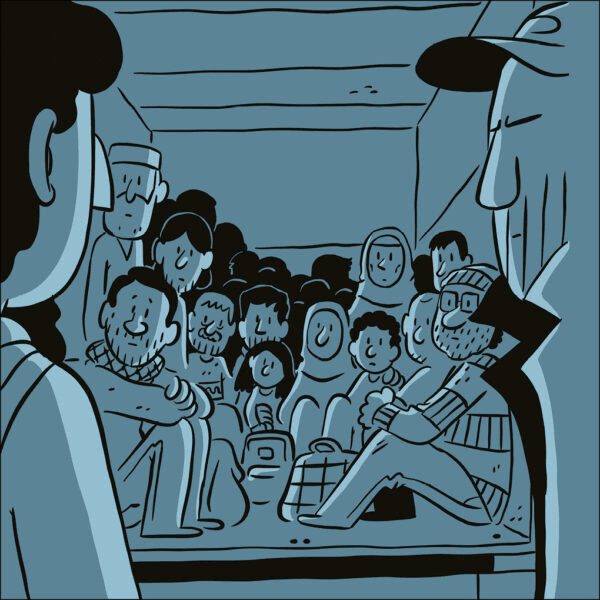
Empathy plays a central role in your storytelling—especially in L’Odyssée d’Hakim. What kind of research or emotional preparation do you undertake to bring someone else’s experience to life? My books are largely based on human stories. The testimonies of those who have lived through events are my primary material. If I’m unfamiliar with the places they mention, I either ask highly detailed questions or conduct visual research through books and the internet to depict them accurately. As for emotional preparation, there’s nothing formal about it—it’s more of a dialogue. I chat with the people who share their stories with me; it’s not like a rigid, structured interview. This approach fits my personality and the way I naturally connect with others.
Do you think graphic novelists tend to be more collective or community-oriented than other artists? What are your thoughts on collectivity? Or do you view art as an individual act? That’s a very interesting question, but to be honest, I don’t have a definitive answer. I’m not deeply familiar with other art forms, but my sense is that comic book creators are generally solitary individuals. Perhaps their choice of medium stems from a certain shyness or introversion. Of course, there are instances of collaboration—between writers and illustrators, for example—but this can arise both from a desire to share and from necessity, since many writers can’t draw. So, collaboration in comics is often both a creative choice and a practical need. I think the sense of community and collective creation tends to be stronger in art forms like music or theater. When it comes to community, I have mixed feelings. I value both solitude and belonging. I like the idea of community, but for it to be truly fulfilling, everyone involved must share the same spirit of generosity and openness. There’s a French song—I can’t recall the exact words—that says something along the lines of: it’s wonderful to be part of a small community, but once it grows beyond a certain point, the collective intelligence and empathy begin to decline. I share that sentiment. I prefer small communities—those where everyone acts with empathy and genuine energy. I’m not fond of hierarchical or command-driven structures. And even though art may appear to be an individual pursuit, in reality, a comic book is always the product of collective work. In my case, colorists, editors, and marketing teams all contribute to the final result. So even though I draw alone, the book comes to life thanks to all the people who support it. They might not be considered “artists,” but they are essential to making my work possible.
Fabien Toulmé
Fabien Toulmé
Has your understanding of success as an artist changed since you started drawing? It has definitely evolved. I think people are always searching, and their expectations rise with time. At first, success for me was simply having one of my drawings published in a magazine. Then it was publishing a book. Then two, three, and so on—selling more, reaching a wider audience. But the danger in that mindset is never feeling satisfied. That’s why I often remind myself: just having the opportunity to create comics, to tell stories, and to be read by even a few people is already a form of success. I try to hold onto that thought with every book I make.
Saatolog Yıllık Saat Dergisi Saatolog’un yeni sayısı, 2020’nin yarattığı bu dönüştürücü etkiden ilham alarak hazırlandı. Dünya dijitalin etkisiyle her zamankinden de hızlı bir şekilde ilerlerken yavaşlamanın da önemini sonunda kavramış bulunuyoruz ve bu tezatlık hayatlarımızın her anına etki ediyor. Biz de bundan yola çıkarak Saatolog 2020/21 sayısını ‘‘hızlı ve yavaş’’ teması altında hazırladık.