Forget beige coats and perfect minimalism. Copenhagen Fashion Week Spring/Summer 2027 is redefining what “Scandi style” looks like now.
If there is one product or idea that will linger from Copenhagen this summer, it will probably be a pair of Havaianas. Not, however, the classic flip-flops familiar from the beaches of Rio and embraced by seemingly everyone in the city this summer. The version that appeared on the runway of Swedish label Studio Constance for Spring/Summer 2027 came with a slim, asymmetrical heel and a strange rubber protrusion covering only the big toe. Available in black, off-white and acid green, it is Havaianas’ first heeled rubber flip-flop. Within days, it had become one of the most talked-about objects of the season.
In fact, it is a rather perfect symbol of the city’s approach to fashion. There may be no better object with which to begin understanding the spirit of a fashion week that found its way onto everyone’s radar before Tokyo did. In capitals such as Paris and Milan, the fashion industry still tends to create desire by keeping fantasy just out of reach. Copenhagen is pursuing almost the exact opposite: making the ordinary interesting. Adding a heel to one of the world’s most democratic summer staples is a very different fashion instinct from turning an expensive object into a status symbol. It is part joke, part design experiment, part fuel for internet meme culture — yet still familiar enough to be something people might genuinely want to wear.
Havaianas has been moving beyond the beach over the past few seasons through collaborations ranging from Gimaguas to Jean Paul Gaultier and Saint Laurent, while heeled flip-flops, worn by the likes of Hailey Bieber and Kylie Jenner, had already moved beyond simple 1990s nostalgia. Havaianas’ peculiar leg-warmer-like collaboration with Gimaguas was named 2025’s coolest product by Lyst. The Studio Constance version feels like the logical next step in this entire wave of “freaky footwear.”
In capitals such as Paris and Milan, the fashion industry still tends to create desire by keeping fantasy just out of reach. Copenhagen is pursuing almost the exact opposite: making the ordinary interesting.
Noor U Nisa Khan
Noor U Nisa Khan
Contents
Not a Smaller Paris
What began in 2006 with Eva Kruse’s ambition to make Copenhagen the “fifth fashion city” after New York, London, Milan and Paris marked its busiest season yet 20 years later. That rise would be difficult to imagine without the popularity built over the years by brands such as Ganni, Cecilie Bahnsen, Stine Goya, Rotate, Baum und Pferdgarten and OpéraSport.
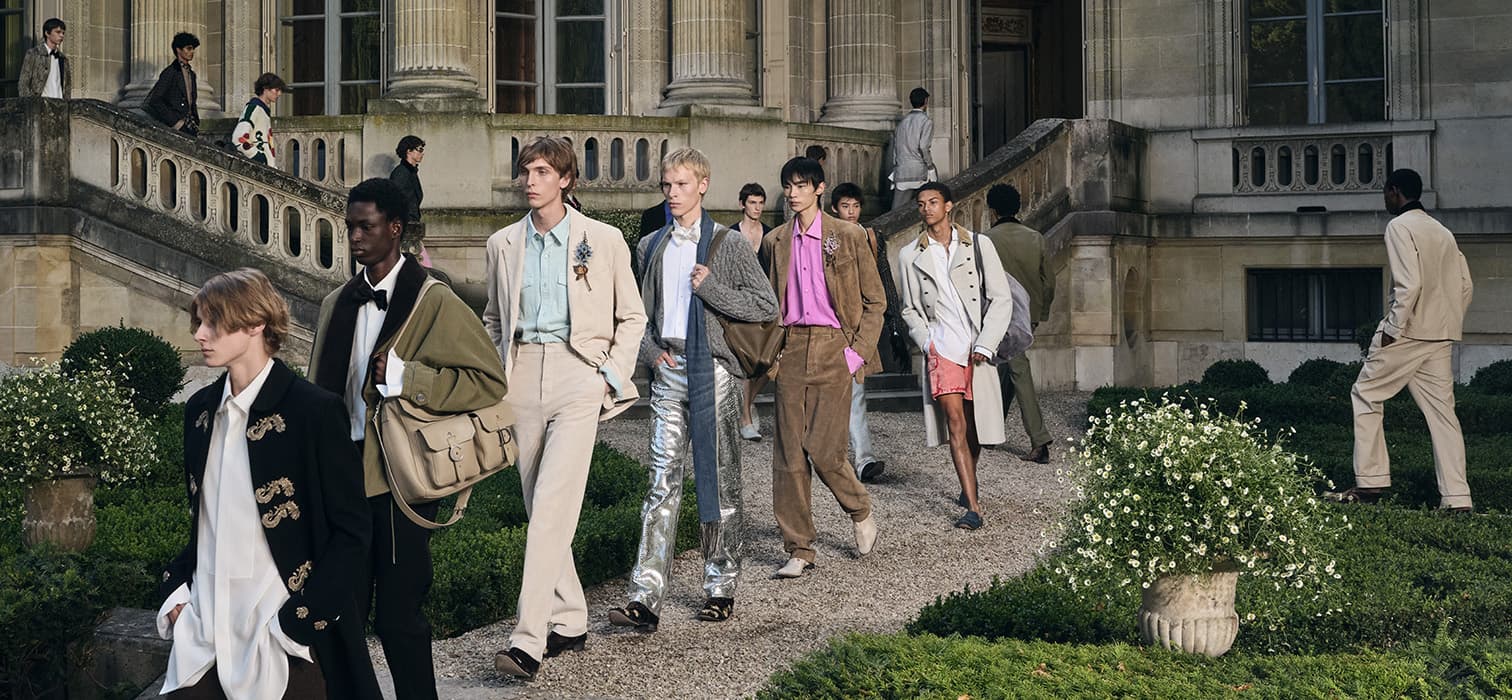
Yet the definition of the “fifth city” is slightly misleading. Copenhagen became important not by resembling the other four, but by growing according to a different scale altogether. It still does not have fashion shows where giant conglomerates compete with one another through multimillion-euro sets. Shows were often staged in gardens and parks. Could we say the Spring/Summer collections were inviting us to a picnic? Guests travelled between shows by bicycle. One presentation might take them to an art gallery, another to a park, an old water tower or the garden of a family home.
Copenhagen Fashion Week introduced its sustainability framework in 2020, and since January 2023, brands wishing to join the official schedule have been required to demonstrate that they meet a set of minimum standards. Today, the framework includes 19 minimum requirements spanning everything from production to social responsibility, with applications reviewed by an external team. It is also worth noting that for Spring/Summer 2027, two of those standards were temporarily suspended because of international uncertainty around material definitions. In other words, the system does not regard itself as a completed moral manifesto, but as a mechanism that continues to evolve alongside changing industry conditions.
Noor U Nisa Khan
Noor U Nisa Khan
More importantly, Copenhagen does not leave the issue of young designers to the romance of “discovery” alone. For SS27, Anne Sofie Madsen, Stem and Studio Constance took part in the NEWTALENT program, while Sson, Renè and Taus received One to Watch support. The program provides funding, mentorship, PR, showroom opportunities and industry connections, supporting brands over three seasons. At a time when the luxury industry is increasingly debating why it has become so difficult for independent labels to survive, Copenhagen offers a lesson: discovering a designer matters, but so does making sure they are still around the following season.
Copenhagen does not leave the issue of young designers to the romance of “discovery” alone.
Nor does the system collapse when it loses its own stars. Cecilie Bahnsen and Ganni moved to Paris, while Saks Potts and (Di)vision closed. Yet rather than withdrawing completely from Copenhagen this season, Ganni gave Stem unused fabrics from its archive. Sarah Brunnhuber created seven looks from the materials, while Pandora continued to finance the NEWTALENT program. In other words, Copenhagen’s success lies not in keeping a brand on its schedule forever. It lies in creating an ecosystem strong enough to let a growing brand leave, put a new one in its place and still maintain a connection between the old and the new.
Noor U Nisa Khan
What Happened to Scandi Minimalism?
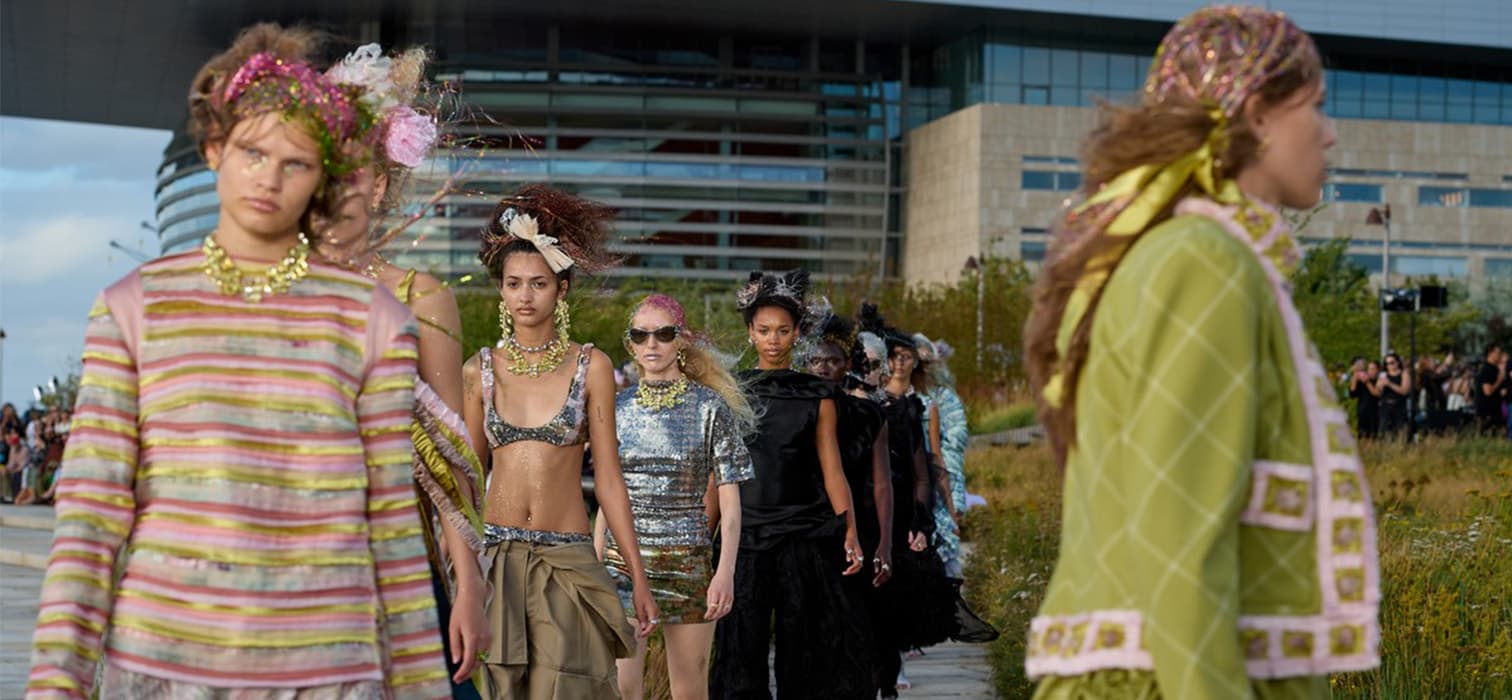
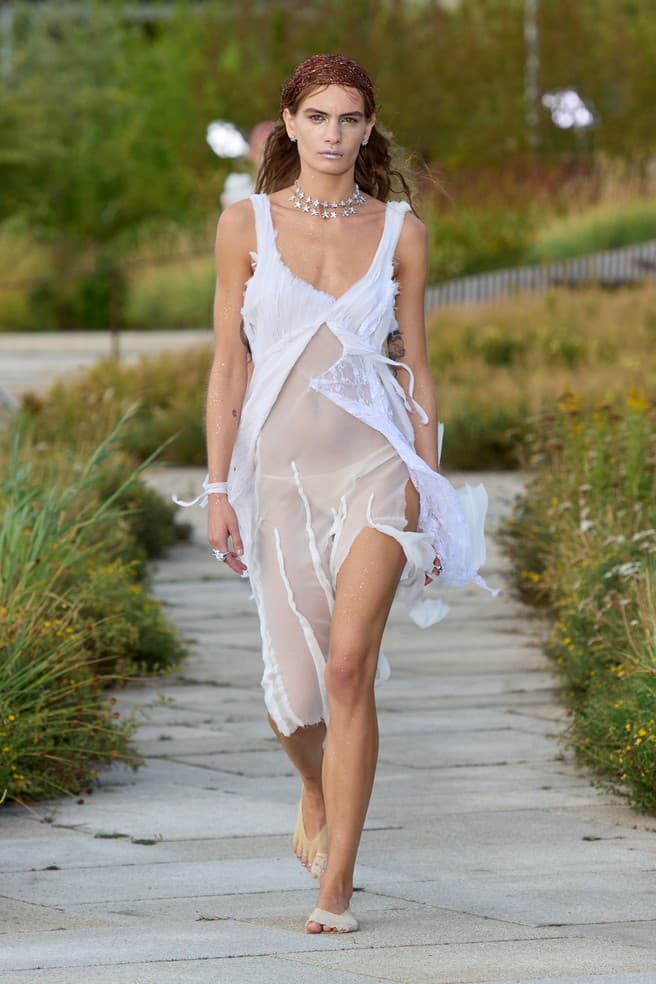
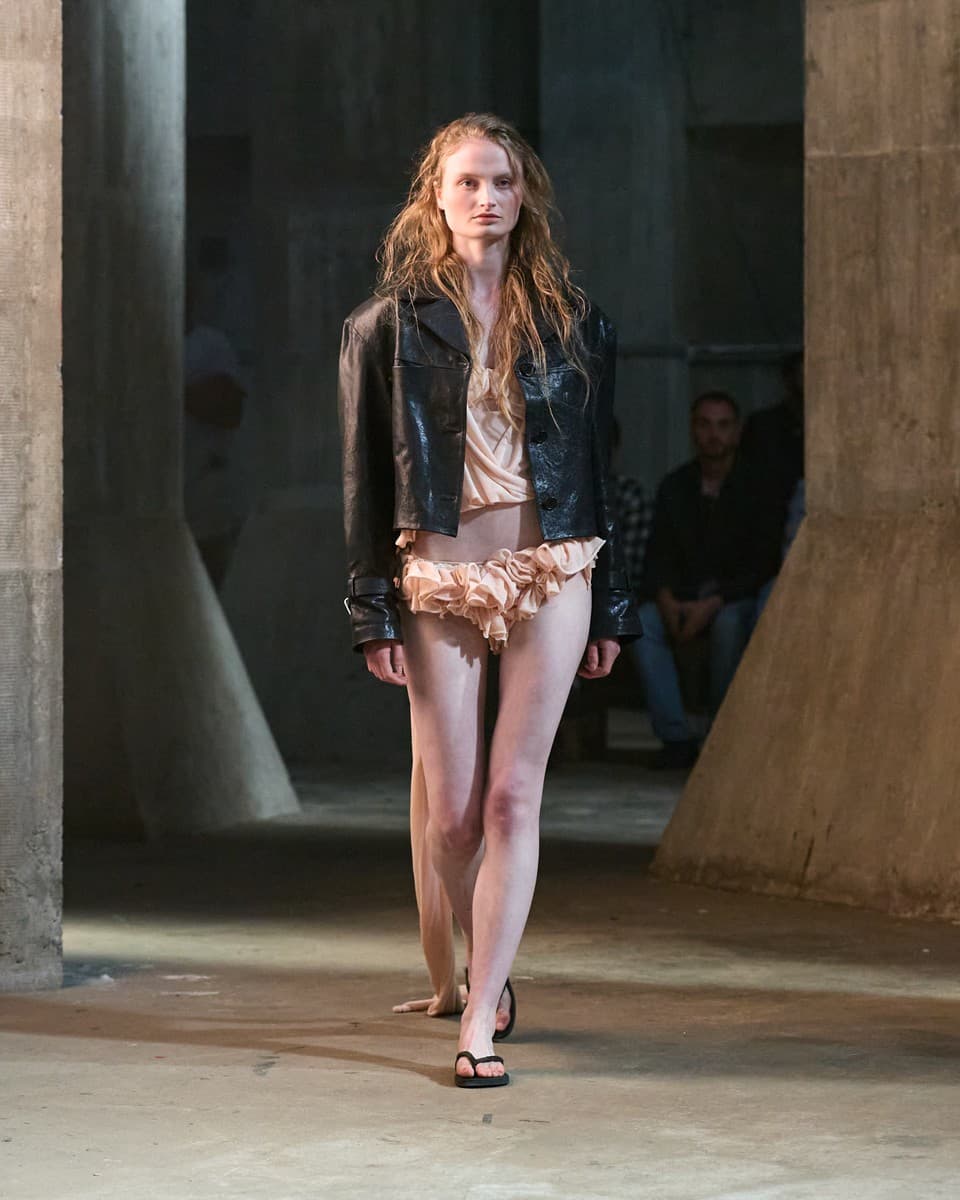
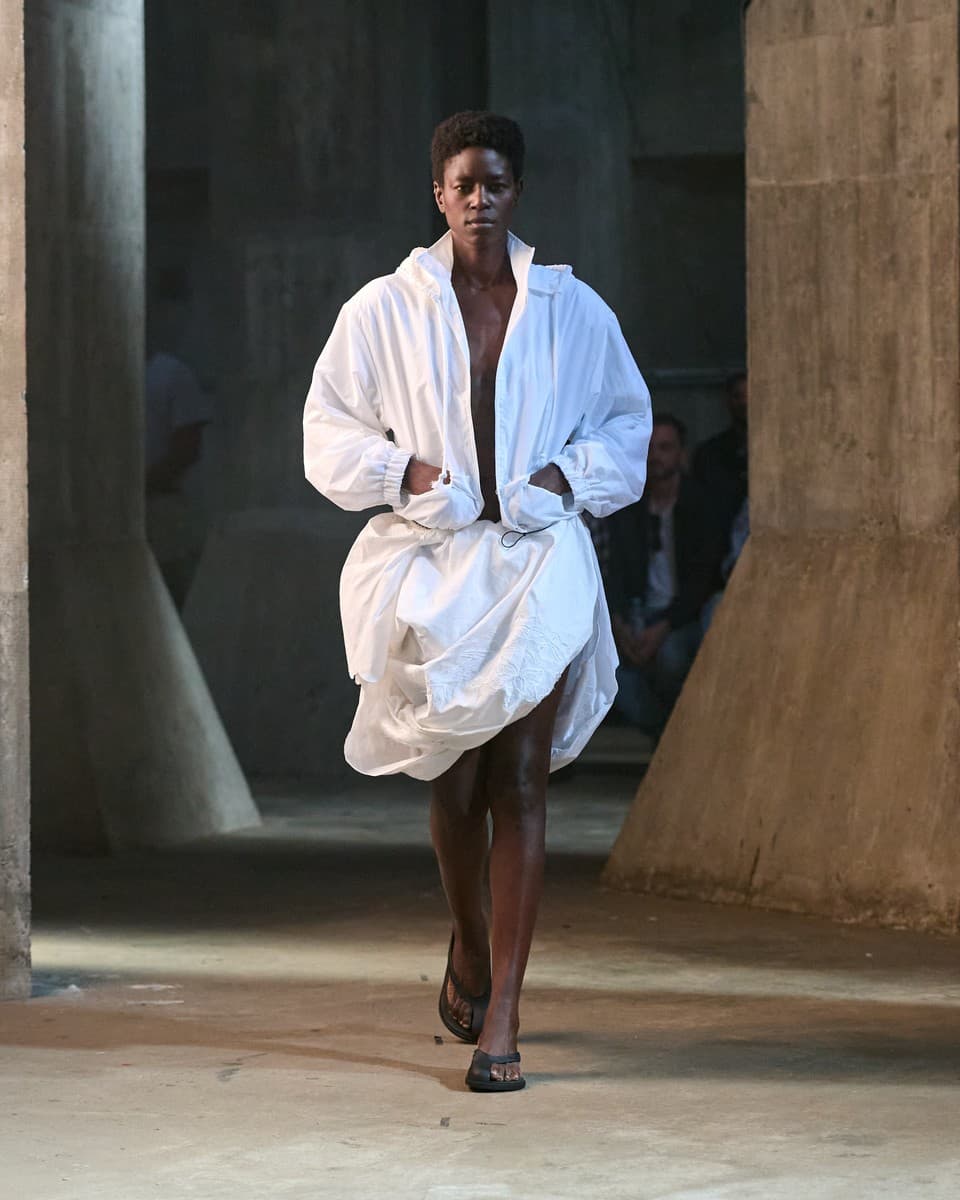
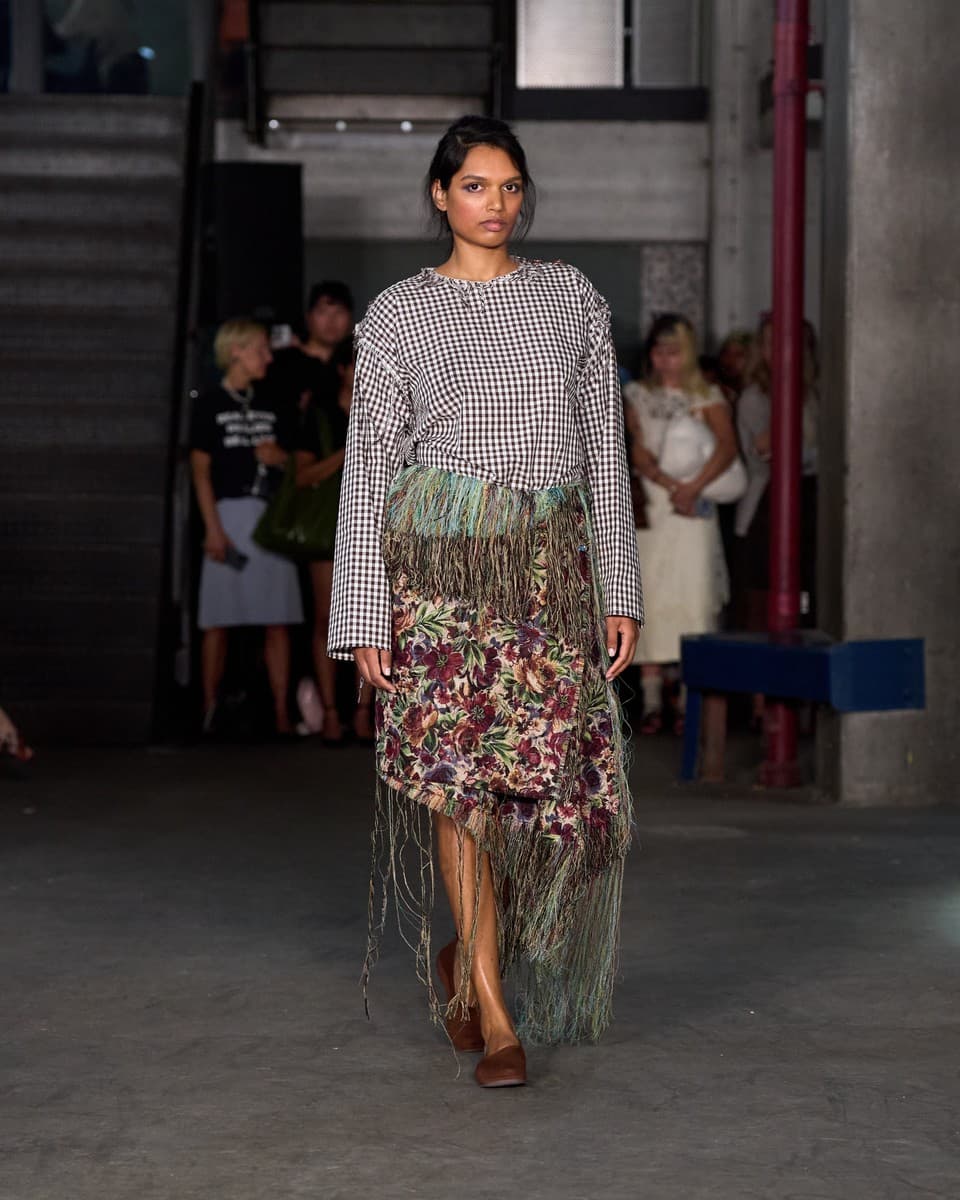
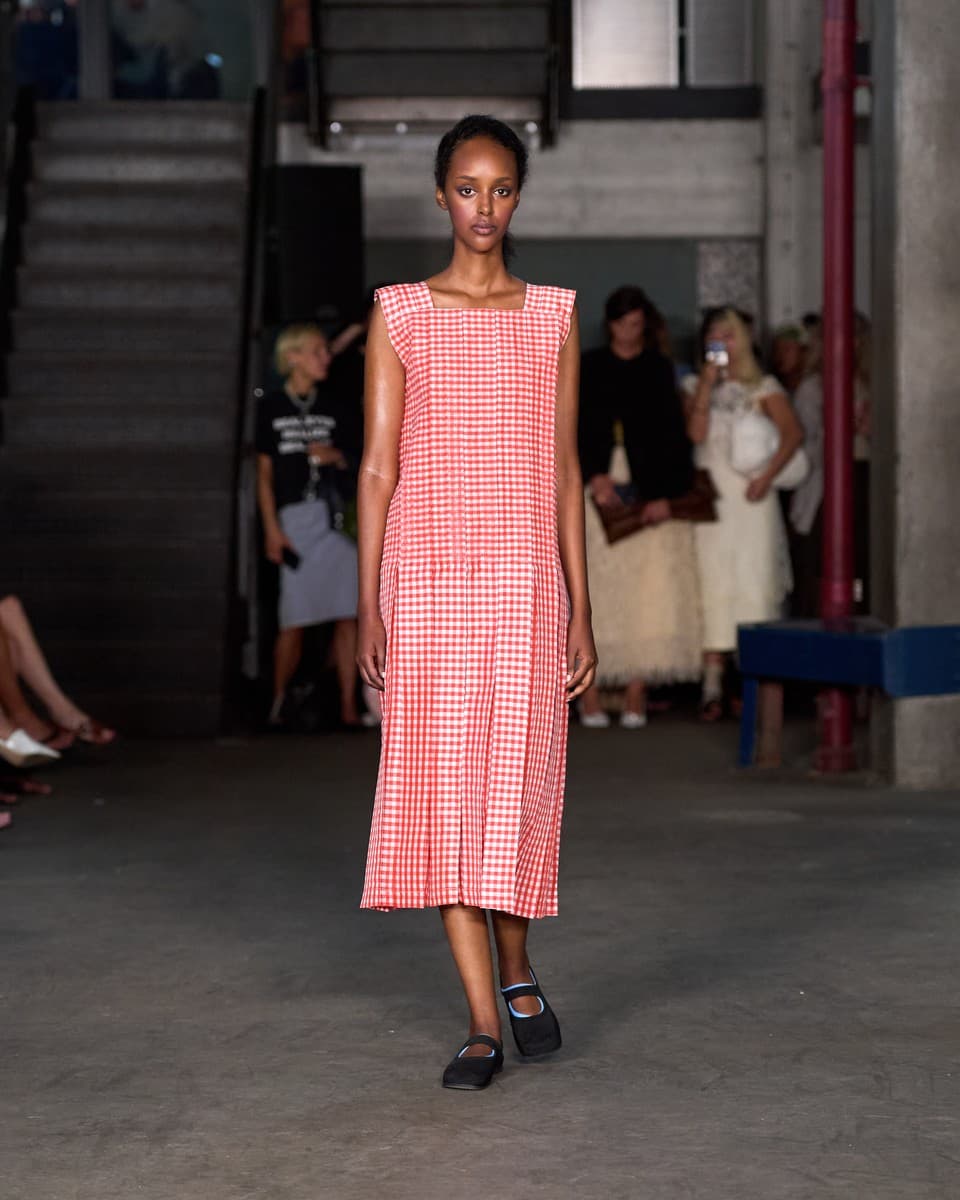
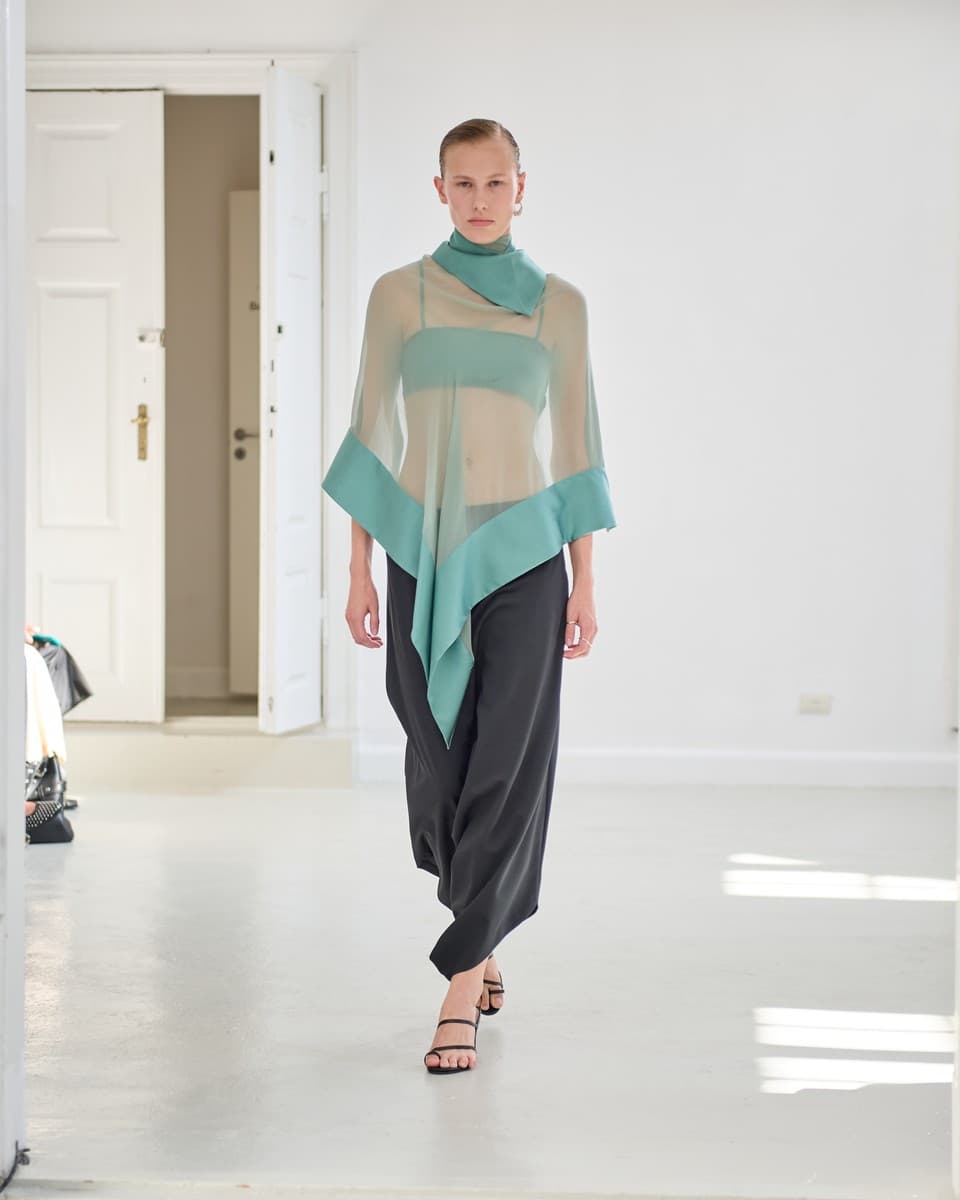
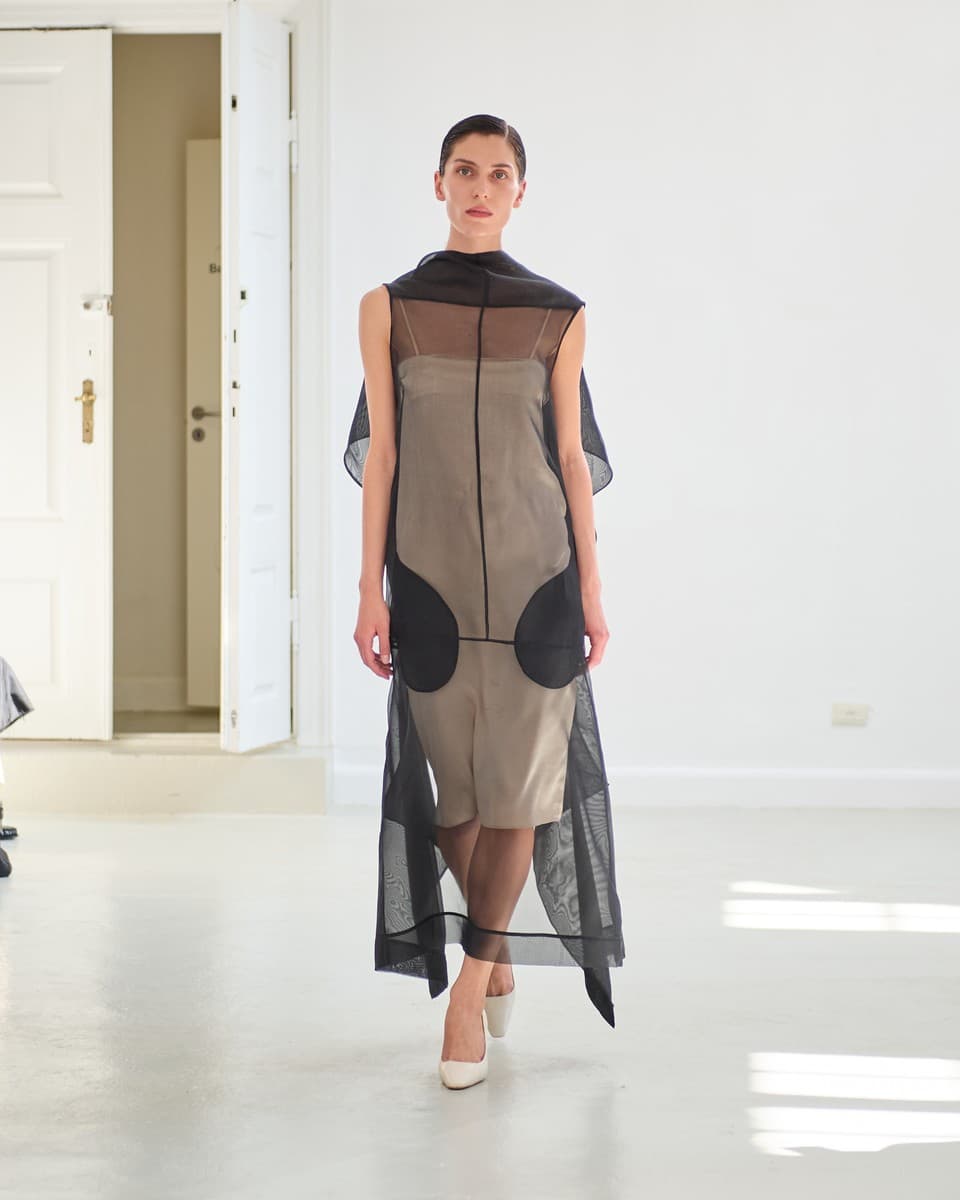
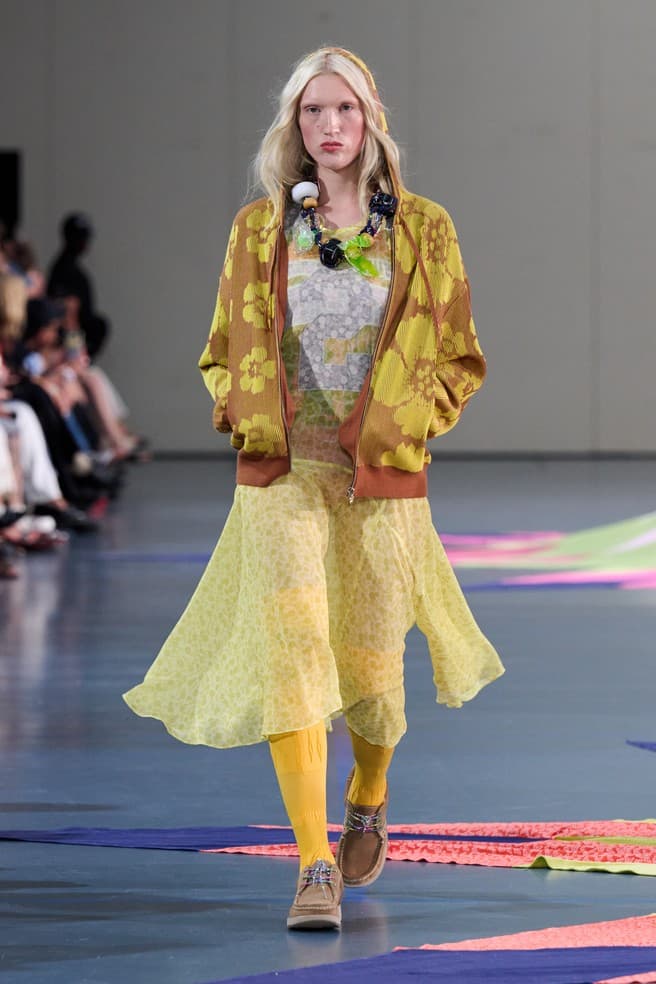
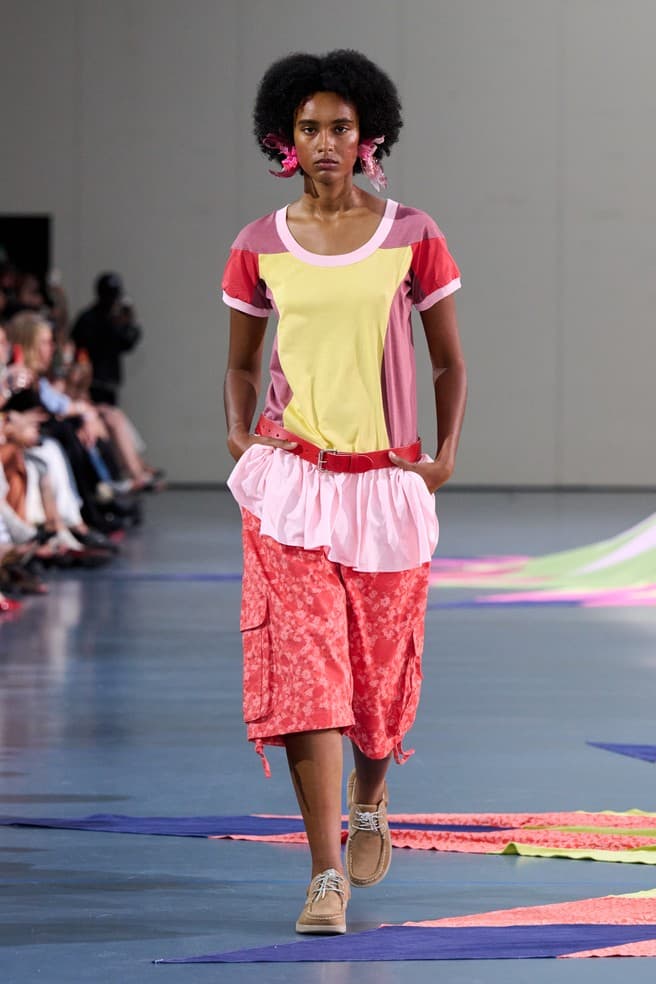
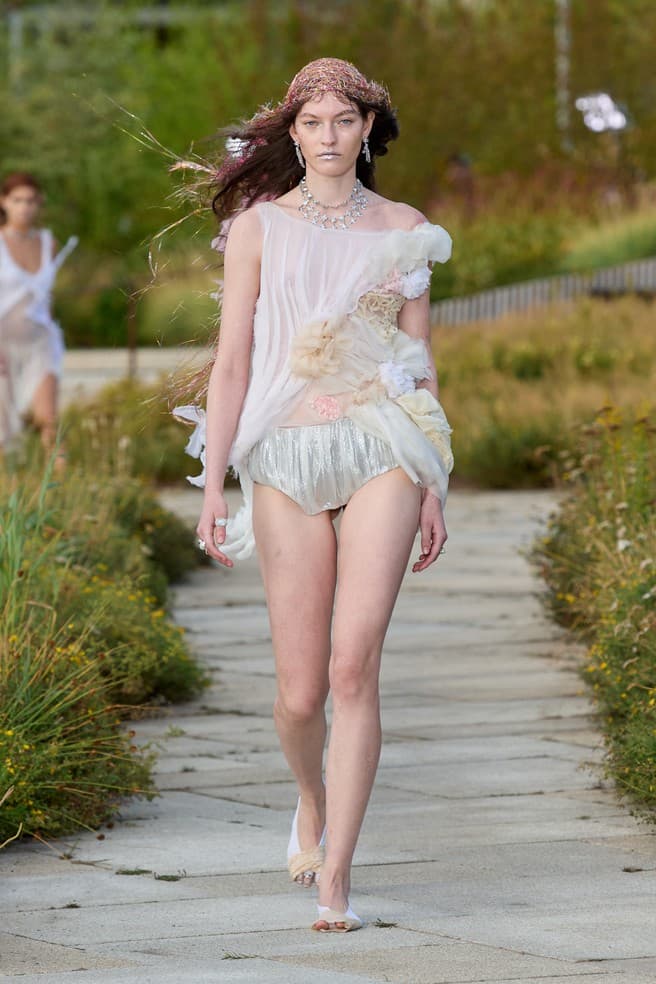
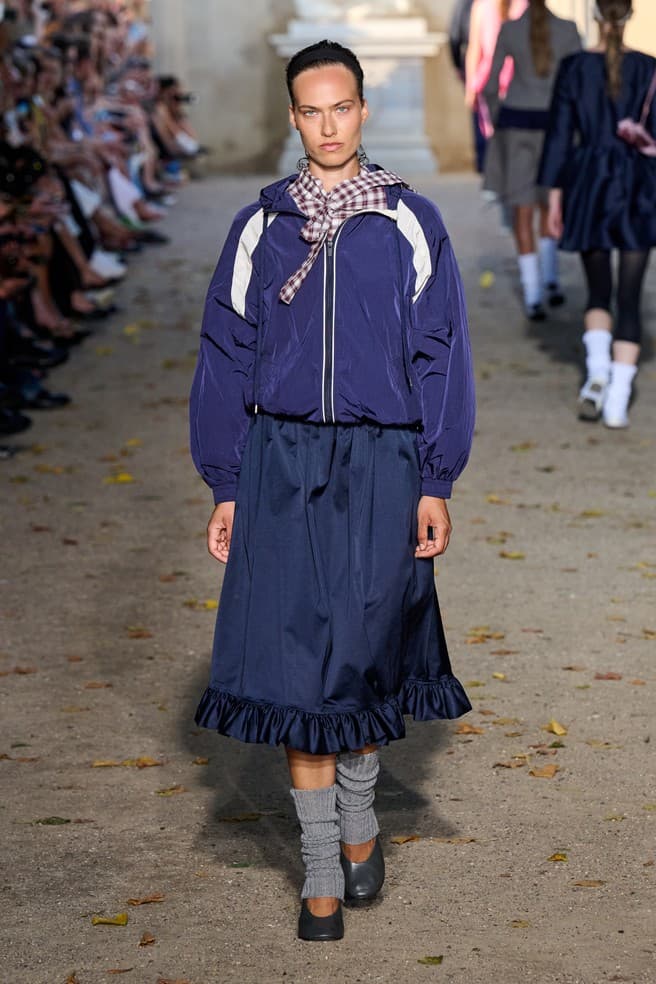
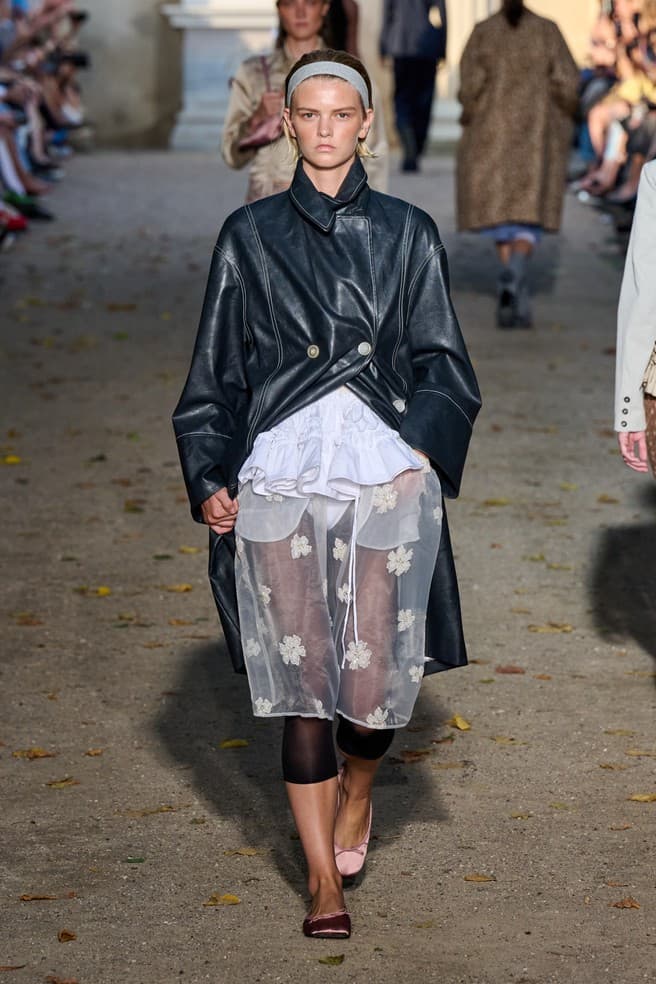
The “Scandi girl” cliché created by social media had become synonymous with neutral tones, clean lines and expensive-looking simplicity. This season, however, lace appeared almost everywhere, from The Garment to OpéraSport; semi-sheer knits, colorful translucent dresses and exaggerated textures found their way into otherwise restrained silhouettes. At Baum und Pferdgarten and Skall Studio, voluminous dresses were paired with sporty outerwear, while delicate pieces met technical footwear.
What has replaced minimalism is not exactly maximalism either. It is more about putting together pieces that would not ordinarily be expected to coexist. Capri trousers resurfaced at labels including Mfpen, The Garment, Caro Editions and OpéraSport, while Studio Constance, Institution and Taus played with shapes that widened the silhouette at the hips, recalling historical panniers. On one side were head-to-toe white looks and ruffles; on the other, almost fluorescent slime greens at Stine Goya and Gestuz. None of these elements is particularly new on its own. Copenhagen’s approach lies in combining them in ways that feel slightly “wrong.” A romantic dress with technical shoes, sports shorts next to a tailored jacket, or an aggressive color inserted into a delicate silhouette. The result looks as though it has not been overthought — and that is precisely what makes it feel current.
Noor U Nisa Khan
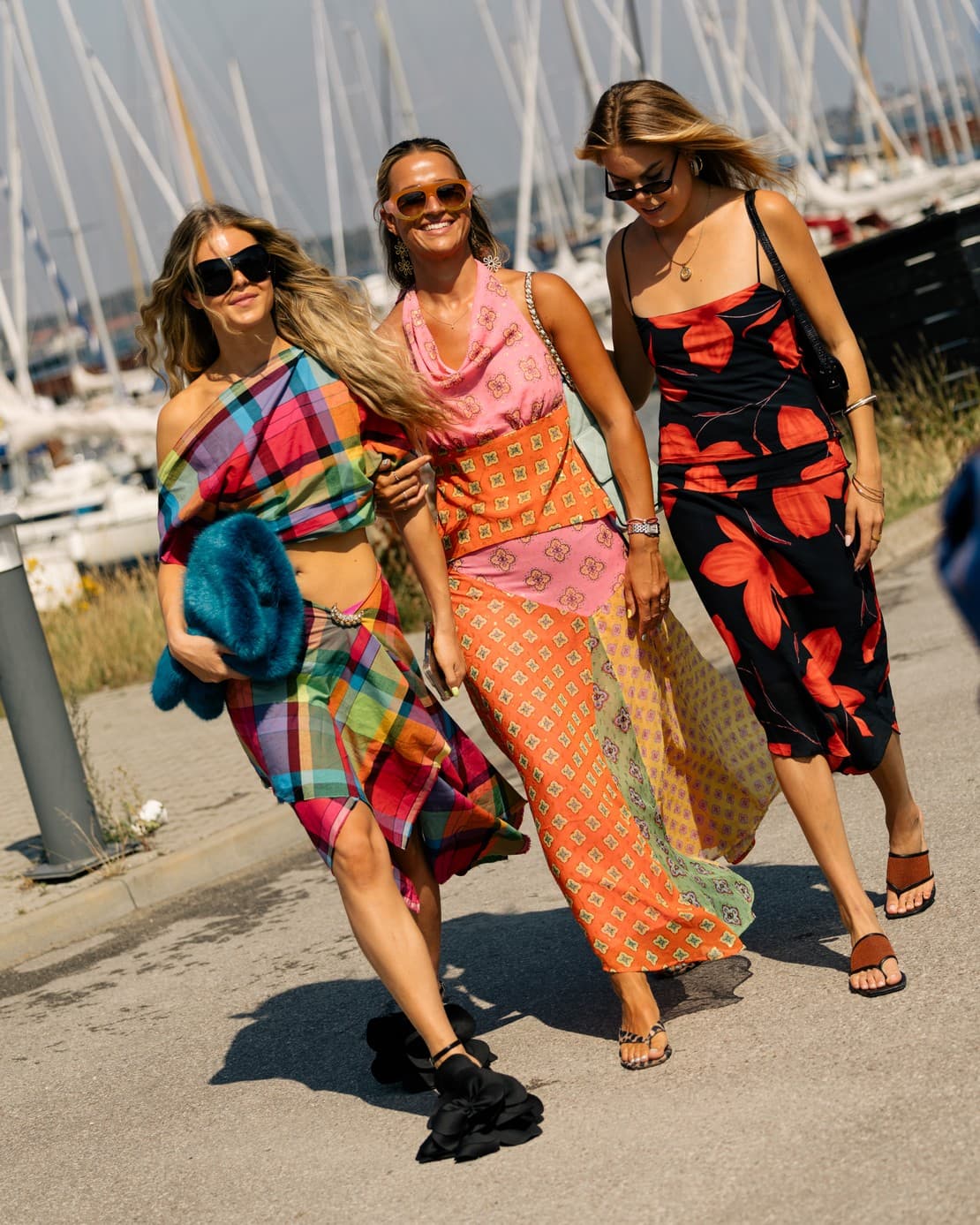
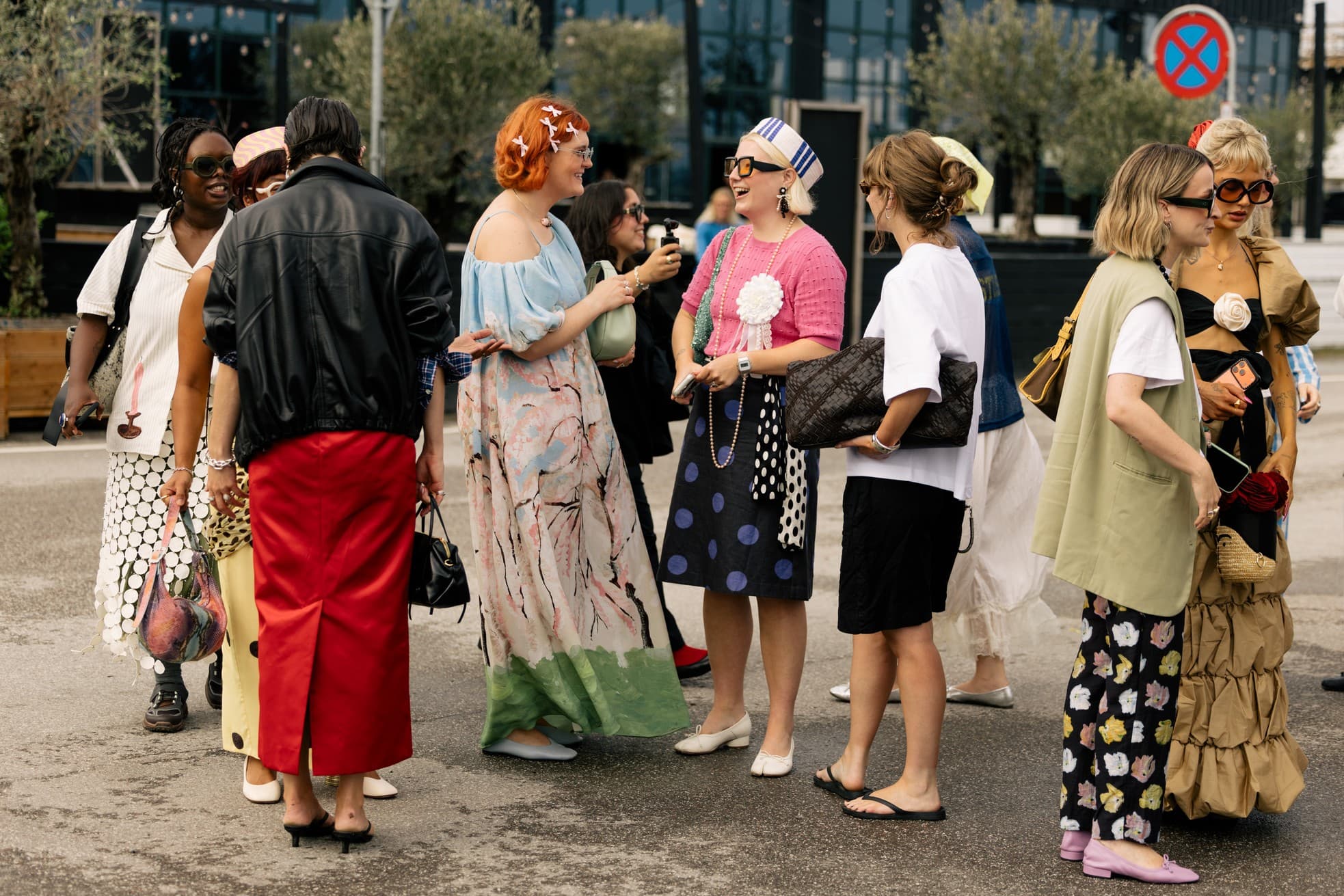
On the streets of Copenhagen, these contrasts become even more visible. Nike Dri-Fit shorts are worn with heels and belts, romantic dresses with technical shoes, silk pieces with Havaianas. Scarves appear not only around necks but in hair, around waists and tied to bags. Shield sunglasses, belt bags and wedge sandals are back. On one side are ruffled, floral dresses verging on cottage romance; on the other, sportswear that looks as if it came straight out of a running club in the 2000s. On the same street, both seem perfectly natural.
This freedom is part of what makes Copenhagen street style so influential. The relationship between runway and street is not one-directional here. Designers put forward an idea and people turn it into something else in their own wardrobes. Sometimes, a combination that emerges on the street spreads faster than the collection itself. Cecilie Bahnsen dresses worn with Salomons, vintage skirts paired with football jerseys, or an elegant dress with flip-flops have almost become signatures of Copenhagen style.
James Cochrane
James Cochrane
Who Is the New Copenhagen?
Studio Constance: Disrupting Scandinavian Simplicity
Studio Constance is one of the labels that best embodies this new Copenhagen mood. Founder Rebecca Dovenryd Almberg has Acne Studios, Proenza Schouler and Toteme on her résumé, but in her own label that experience moves somewhere far messier, sexier and slightly more unsettling. Low waists, sheer fabrics, raw finishes, shearling and pieces that expose the body disrupt the simplicity traditionally associated with Scandinavian fashion. The brand’s term “feral luxury” comes from exactly this idea. Studio Constance’s version of luxury is neither immaculate nor overly polished; it is a little dirty, a little grunge and a little wrong. No wonder the heeled Havaianas work so well with the label. They are everyday and strange, sexy and slightly funny at the same time.
James Cochrane
James Cochrane
Stem: Turning Sustainability Into Design
What sets Stem apart is that sustainability is not treated as a story added after the collection has been completed. Founder Sarah Brunnhuber is a weaver and textile designer, so her process begins with fabric. In the zero-waste system she developed, fabric is not produced first and cut afterwards; the shape of the garment is considered during the weaving process itself. This allows the brand to generate as little cutting waste as possible.
James Cochrane
James Cochrane
Anne Sofie Madsen: The Second Act
Anne Sofie Madsen’s return to Copenhagen is a slightly different story. After working at Alexander McQueen and Dior during the John Galliano era, Madsen founded her own label in 2011, before eventually stepping away from the fashion calendar to focus on art and education. Since returning alongside Caroline Clante, she has been rebuilding her former world from a more playful and contemporary perspective. The rat-shaped bags that spread rapidly across the internet last summer were one of the first signs; for SS27, Nike joined the story as well. Madsen cut apart, reconstructed and reworked familiar pieces from the sportswear giant, pulling them into her own language of craft and deconstruction. The result landed precisely in that slightly strange territory Copenhagen currently loves.
James Cochrane
James Cochrane
Paolina Russo: More Than a Fashion Show
Paolina Russo is one of the names showing that Copenhagen Fashion Week is no longer a stage reserved solely for Danish brands. The London-based label presented its SS27 collection in front of an audience of around 600 in a “battle of the bands” format between Grace Ives and Copenhagen’s Haloplus+. Sports jerseys, knitwear, gaming culture and folklore are already central to Paolina Russo’s universe, as are music and youth culture. Turning the show into a concert therefore felt less like a calculated stunt and more like a natural extension of the brand. Rather than celebrities in the front row, it was the energy of the crowd that became the talking point; fashion show, concert and fan gathering blurred into one another.
James Cochrane
James Cochrane
Institution: From the Caucasus to Copenhagen
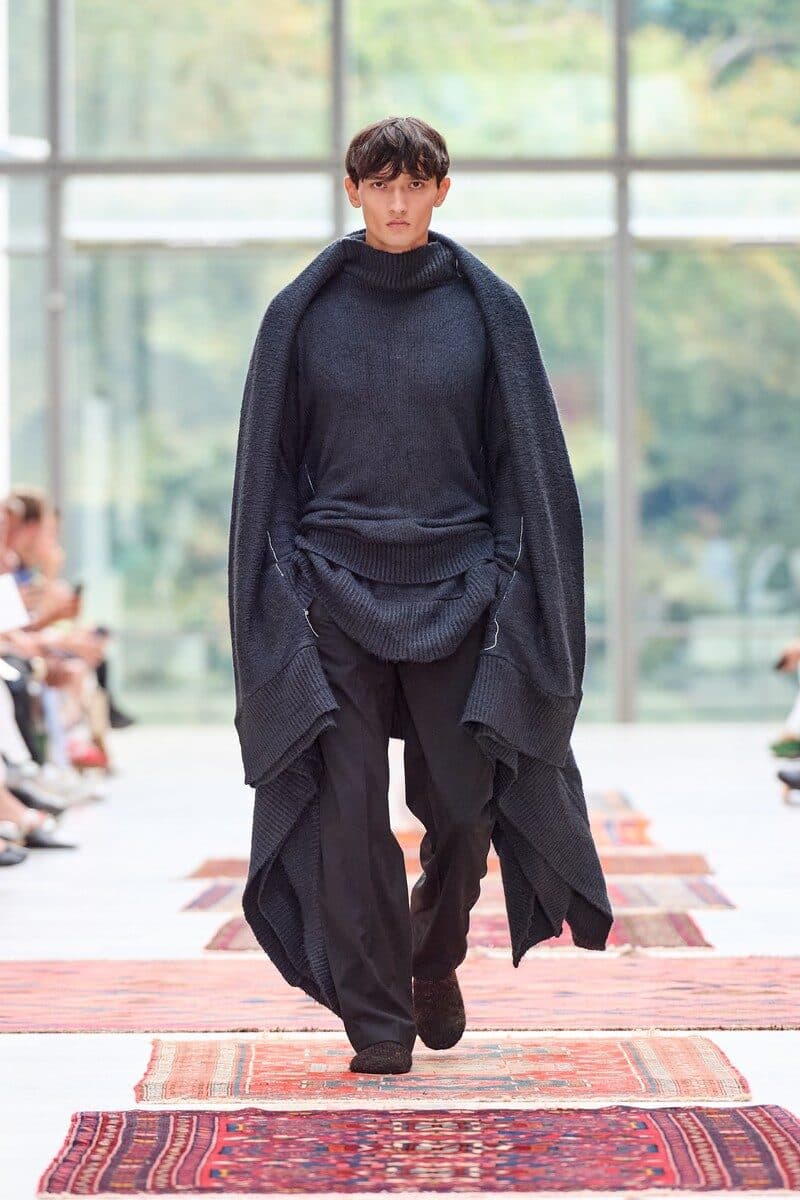
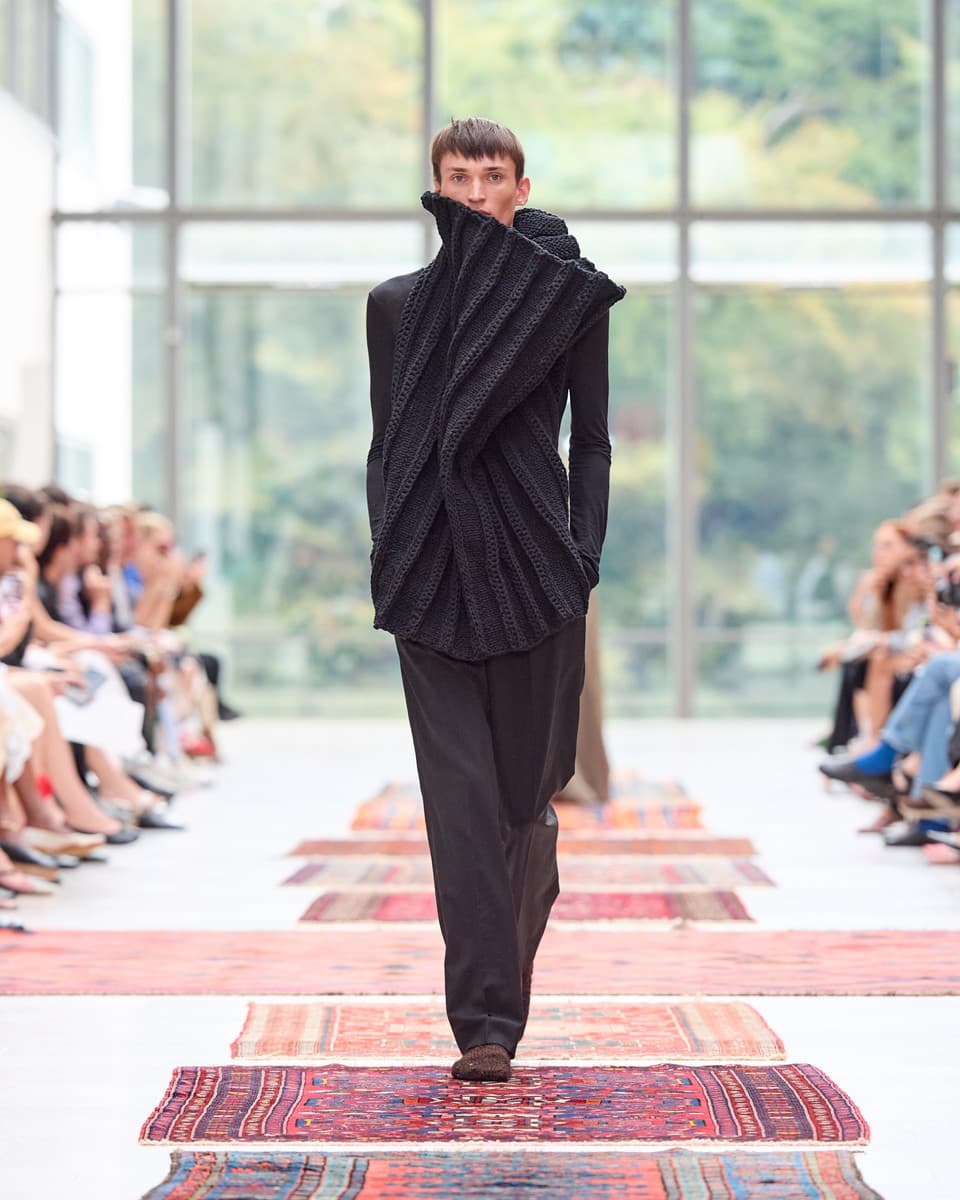
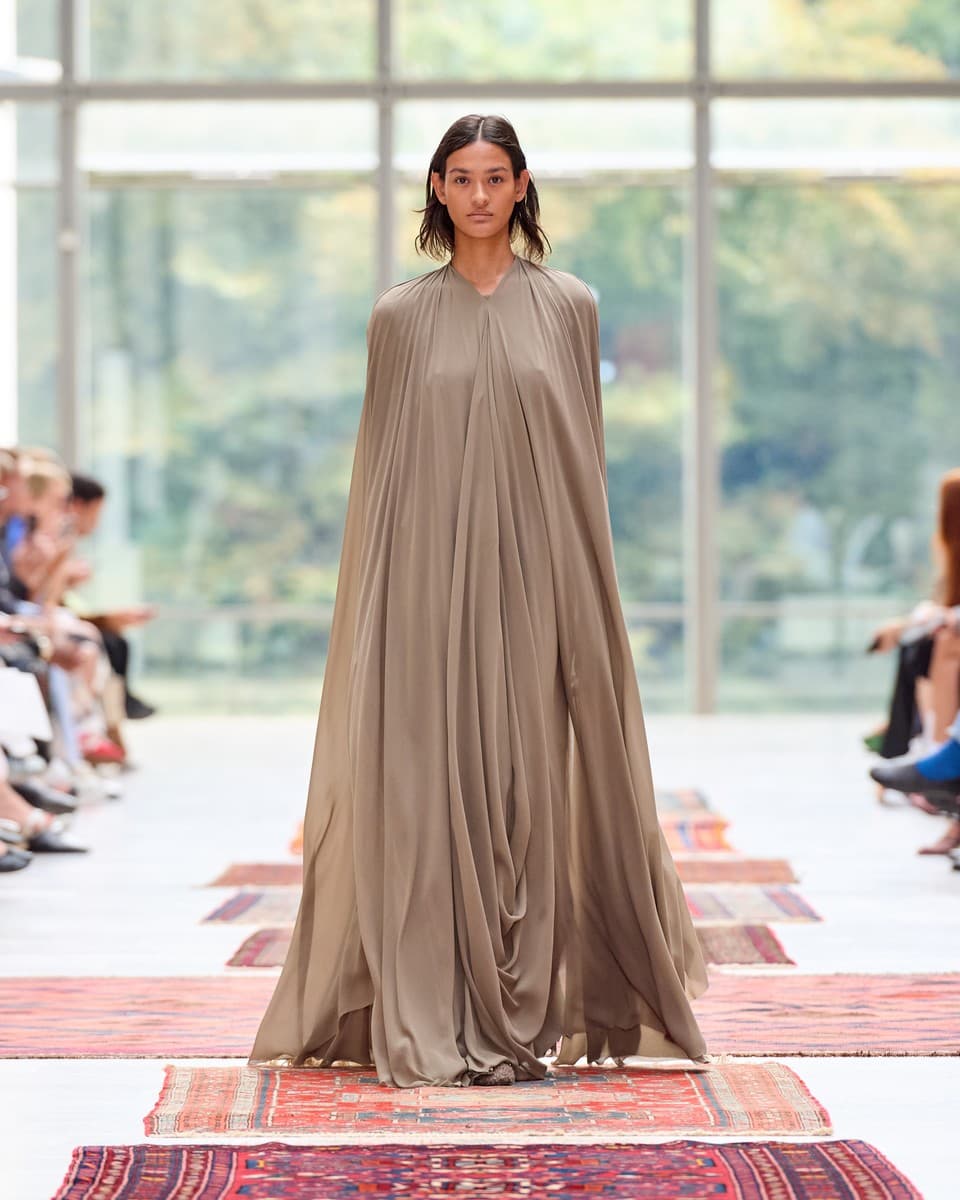
Institution by Galib Gassanoff revealed another side of the week. Born and raised in Georgia and of Azerbaijani heritage, Gassanoff sees his label less as a conventional fashion company than as a social and artistic project. He works with artisans in Georgia and Azerbaijan, bringing hand-weaving, carpet-making and increasingly endangered local techniques into contemporary silhouettes. Institution’s aim is not to use these as decorative “heritage” details, but to make them a direct part of the production process.
For the SS27 show, the vast atrium of Statens Museum for Kunst was covered with rugs brought from the Caucasus, Anatolia, northern Iran and Central Asia. The collection itself also returned to Georgian and Azerbaijani craftsmanship. Seeing a show like this in Copenhagen is particularly meaningful. After years of being associated with a very specific “Nordic” aesthetic, the fashion week is becoming a broader platform where designers from outside Scandinavia can bring their own cultural worlds without having to dilute them.
James Cochrane
James Cochrane
Collina Strada: Looking at Copenhagen From the Outside
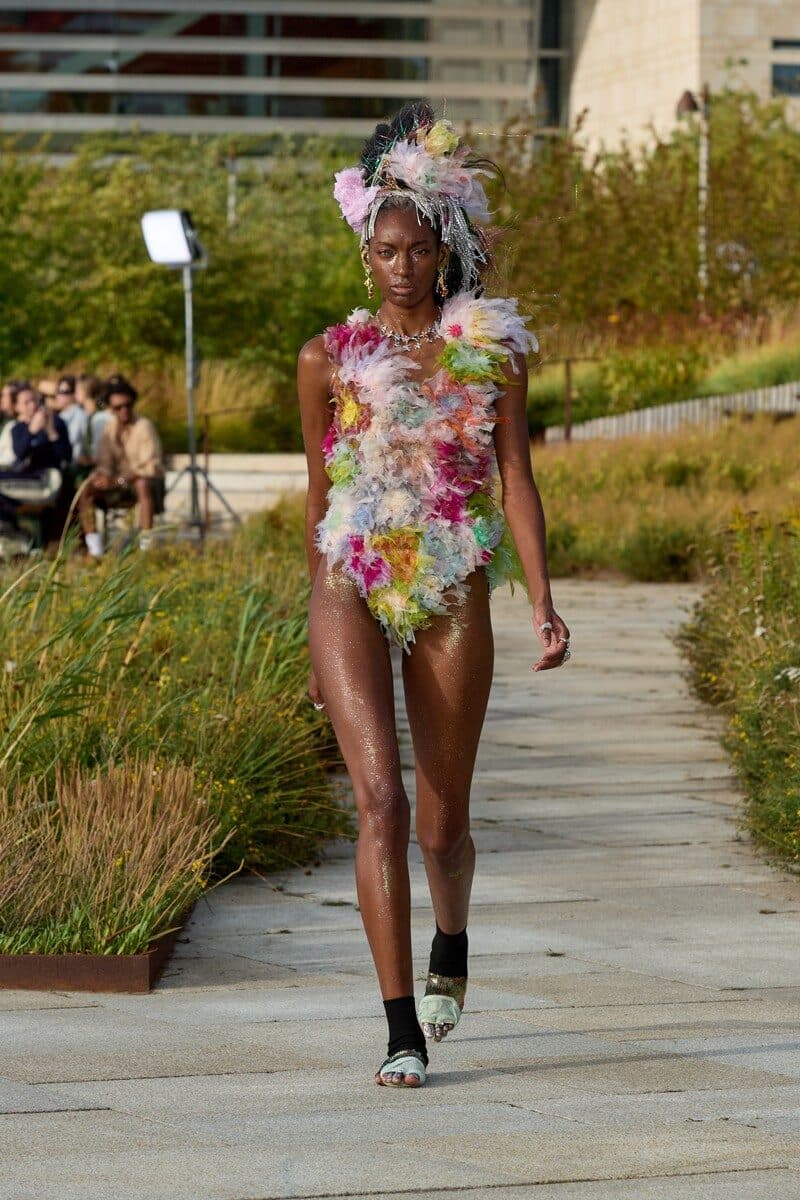
And then came Collina Strada. Hillary Taymour’s New York-based label became Copenhagen Fashion Week’s first international guest designer. For the occasion, Taymour created a special collection of one-off pieces made from leftover fabrics in the brand’s archive, none of which would be offered for sale, and presented the show at sunset by the canal to the accompaniment of a string quartet. The fact that a brand like Collina Strada, with an already established following in New York, would come to Copenhagen to create a project specifically for the city is another sign that it has become an attractive fashion platform beyond Scandinavia.
James Cochrane
James Cochrane
Skall Studio: The Quiet Side
Skall Studio represents Copenhagen’s quieter but equally distinctive side. Founded by sisters Julie and Marie Skall, the label focuses less on chasing trends and more on good fabrics, natural materials and pieces designed to be worn for years. References ranging from Danish writer Karen Blixen to Jane Birkin appear as small stories within this understated wardrobe.
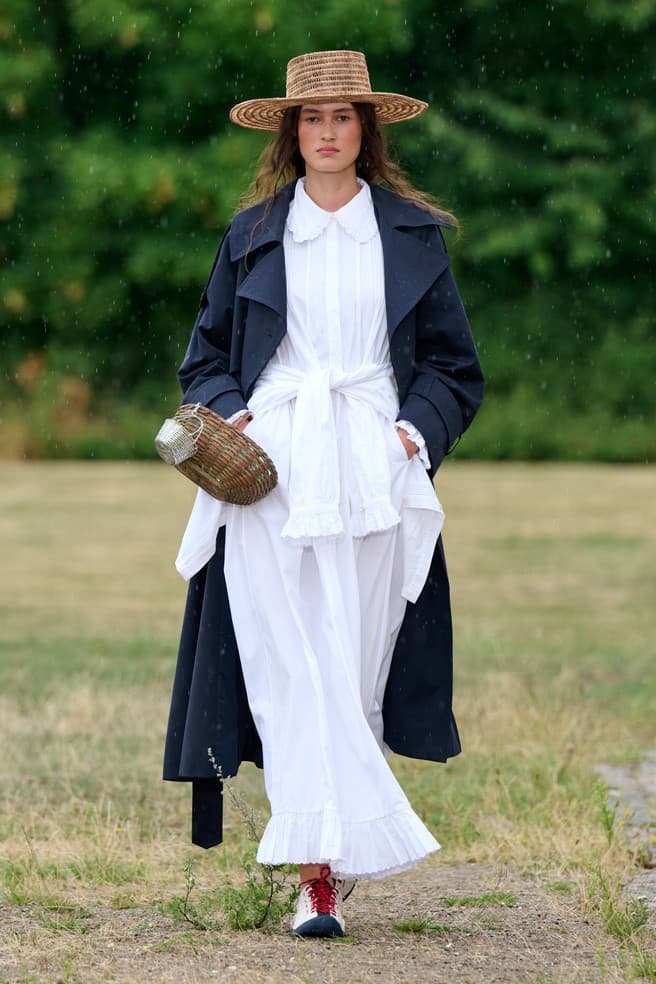
For SS27, the cottage romance became slightly more visible: whites, tie-front blouses, straw hats and pastoral details all appeared. Skall Studio also happened to stage the only outdoor show of the week to be caught in the rain — an almost overly appropriate finishing touch for Copenhagen. Skall’s proposition is simple: sometimes a good shirt, a good coat and a dress someone genuinely wants to wear are enough.
James Cochrane
James Cochrane
Stine Goya: Color Is Back
Stine Goya has long been one of the clearest proofs that Copenhagen is not limited to beige and grey. Founded in 2006, the label is known for hand-painted prints, strong colors and the way it mixes feminine pieces with more masculine tailoring; in a sense, it has always offered a more joyful alternative to Scandi minimalism.
SS27 also marked a special return, as Goya came back to the Copenhagen Fashion Week runway after a three-season hiatus. One of the season’s almost unsettling slime greens appeared here too. More color, more pattern, a little more personality.
Baum und Pferdgarten: Mismatched in the Best Possible Way
Founded by Rikke Baumgarten and Helle Hestehave in 1999, Baum und Pferdgarten has in fact been practicing Copenhagen style’s much-discussed eclecticism for years. In the brand’s world, a tailored blazer can sit beside lace, a masculine striped fabric alongside a romantic dress, or a classic shirt with a sequined skirt. The point is not for everything to match perfectly, but to leave a small element of friction within the look.
The fact that the SS27 show took place in the King’s Garden, with the space overflowing with local spectators, also captured the brand’s connection to Copenhagen rather beautifully. As a new generation of labels moves toward more experimental extremes, Baum und Pferdgarten continues to remind us of one of the city’s most familiar formulas: never wear serious clothes too seriously