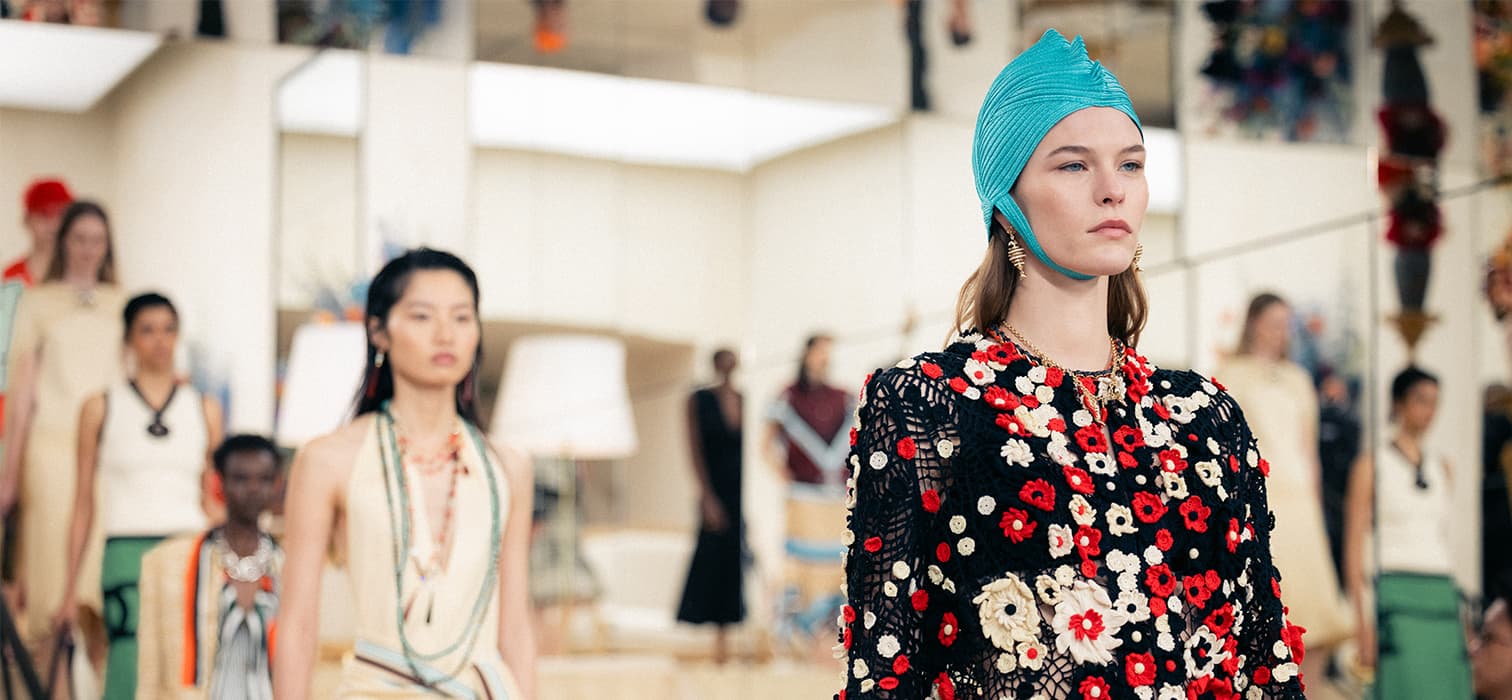
From Los Angeles to Times Square, fashion houses not only presented their Cruise collections, but also drew a new cultural map of power.
Let’s begin by asking an important question. What is Cruise, and why do we take it so seriously?
Cruise — or Resort, whichever name you prefer — remains one of fashion’s strangest categories. We are all familiar with the “this meeting could’ve been an email” meme; well, fashion’s translation of that idea is essentially: “this show could’ve been a lookbook.” Yet a lookbook cannot invite you to faraway destinations, often exotic places or locations that are not easily accessible to ordinary consumers or tourists. Of course, this also means more fabric waste, a bigger carbon footprint simply so we can enjoy the spectacle, but let’s not ruin the mood with that for now.
Originally created to fill the gap between fashion’s two major seasons — Spring/Summer and Fall/Winter — these collections initially lived up entirely to their name. Practical yet elegant capsule wardrobes designed for affluent clients spending time on Caribbean yacht decks (perhaps you remember Leonardo DiCaprio missing the Golden Globes this year because he was stranded on a yacht — Cruise was made precisely for those kinds of journeys), along the shores of St. Barth, or inside the grand hotels of the French Riviera. In the early twentieth century, long transatlantic voyages already posed a wardrobe challenge of their own for wealthy travellers. Deck lunches, walks at port, evening dances… Every stop required different clothing. Cruise collections emerged directly from that way of life.
So what changed?
Everything.
Cruise collections are no longer designed for yacht decks, nor are they presented through intimate previews for a small clientele. Beginning in the early 2000s, and especially throughout the 2010s, these collections transformed into some of the biggest productions in luxury fashion.
When Chanel closed Grand Central Station for its 2007 Cruise show, or Louis Vuitton began taking guests from Kyoto to Rio and into contemporary art museums around the world, Cruise took on an entirely different meaning.
From Versailles to the streets of Havana. Seoul’s contemporary museums. Barcelona through Gaudí’s vision. Ancient temples in Athens. Every season, the question of which brand would show where became one of fashion’s most anticipated conversations. (Yes, the clothes increasingly became secondary.)
Nicolas Ghesquière, Louis Vuitton’s Creative Director for nearly thirteen years, often argues that Cruise collections revolve around storytelling more than any other format. Why that destination? What can a fashion house bring to the place it visits? How can it absorb inspiration from local culture and translate it across boutiques stretching from Los Angeles to Tokyo?
And no Cruise conversation is complete without one of fashion’s favourite rumours. The long-standing story suggests Louis Vuitton once consulted a shaman to determine dates and locations according to weather conditions. The rumour resurfaced loudly after heavy rain disrupted the brand’s Isola Bella presentation in 2024.
Commercially speaking, Cruise collections arrive in stores around November — that awkward retail moment when winter pieces already begin feeling old while Spring/Summer remains far away. Jonathan Anderson’s first Dior collection reached boutiques immediately after New Year’s. Matthieu Blazy’s first Chanel collection, which reportedly created queues outside stores, arrived in March.
Culturally, Cruise remains fashion’s most liberated space: no Haute Couture pressure, no official seasonal calendar restrictions. A house can build any atmosphere it wants, anywhere it wants.
Today, Cruise collections reportedly account for a substantial share of luxury houses’ annual revenue. Some analysts estimate that for certain brands, Cruise represents as much as forty percent of yearly sales.
Describing Cruise merely as “holiday clothing” no longer reflects reality.
Contents
THE SEASON’S FOUR BIGGEST SHOWS
Chanel — Biarritz, April 28
Matthieu Blazy chose Biarritz for his first Chanel Cruise show. Why does it matter? Because it is Chanel’s birthplace. Considering Karl Lagerfeld’s shows stretching from Istanbul to Cuba, it hardly seems believable that he skipped this destination. (Lagerfeld only photographed campaign imagery here in the 2000s.)

Gabrielle Chanel opened an atelier in this Basque seaside town in 1915; away from Paris’ rules and hierarchies, inside one of Europe’s freest and most creative environments, she found her own voice. Igor Stravinsky, Jean Cocteau and Pablo Picasso all spent time on this coastline. Picasso painted Les Baigneuses here.
Blazy had both personal and institutional reasons for choosing this location: he has known Biarritz since childhood and grew up around its beaches.
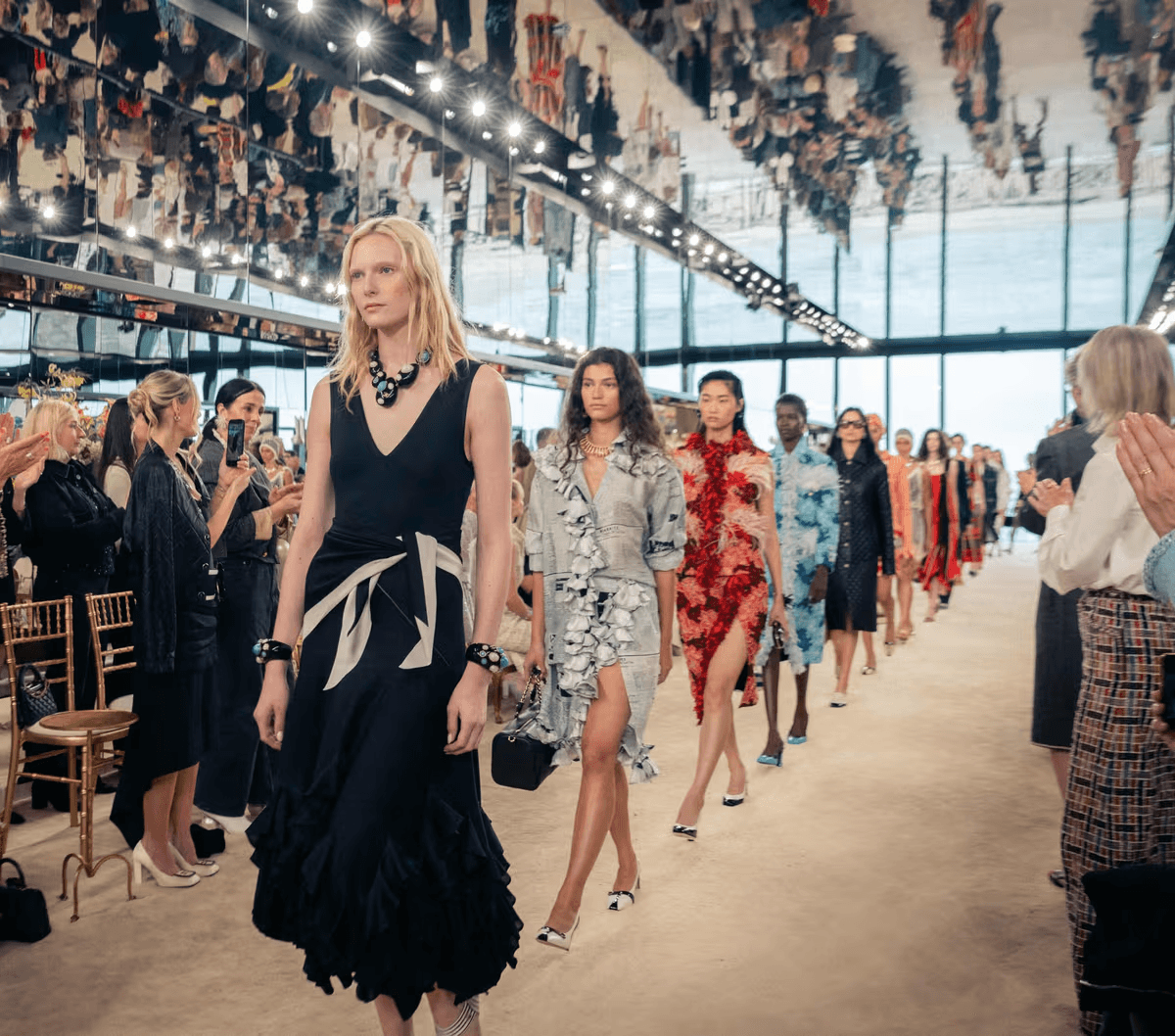
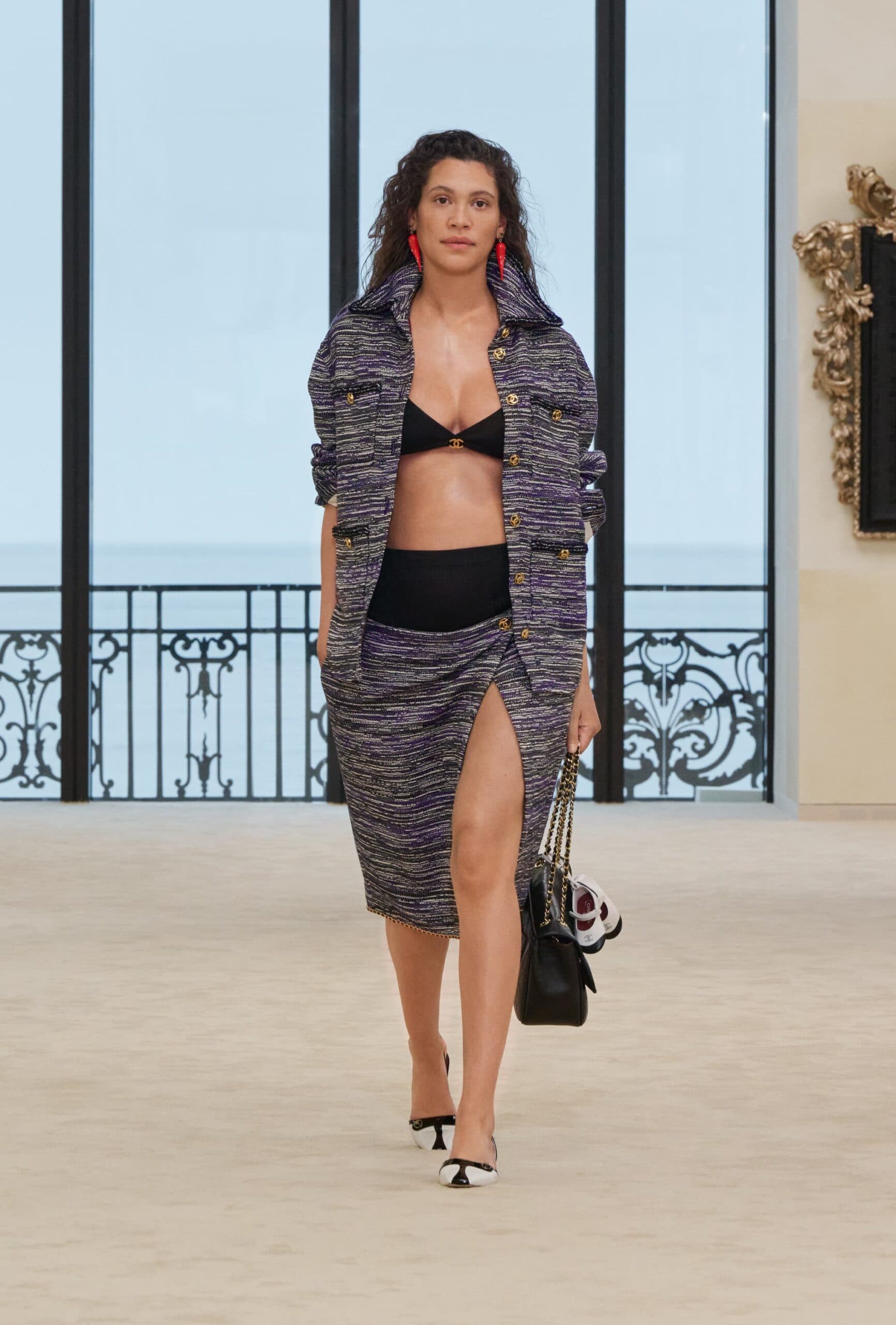
The show took place at Villa de Larralde, purchased by Coco Chanel in 1918 and recently restored by the house. The runway was covered in beige carpeting reflecting coastal colours.
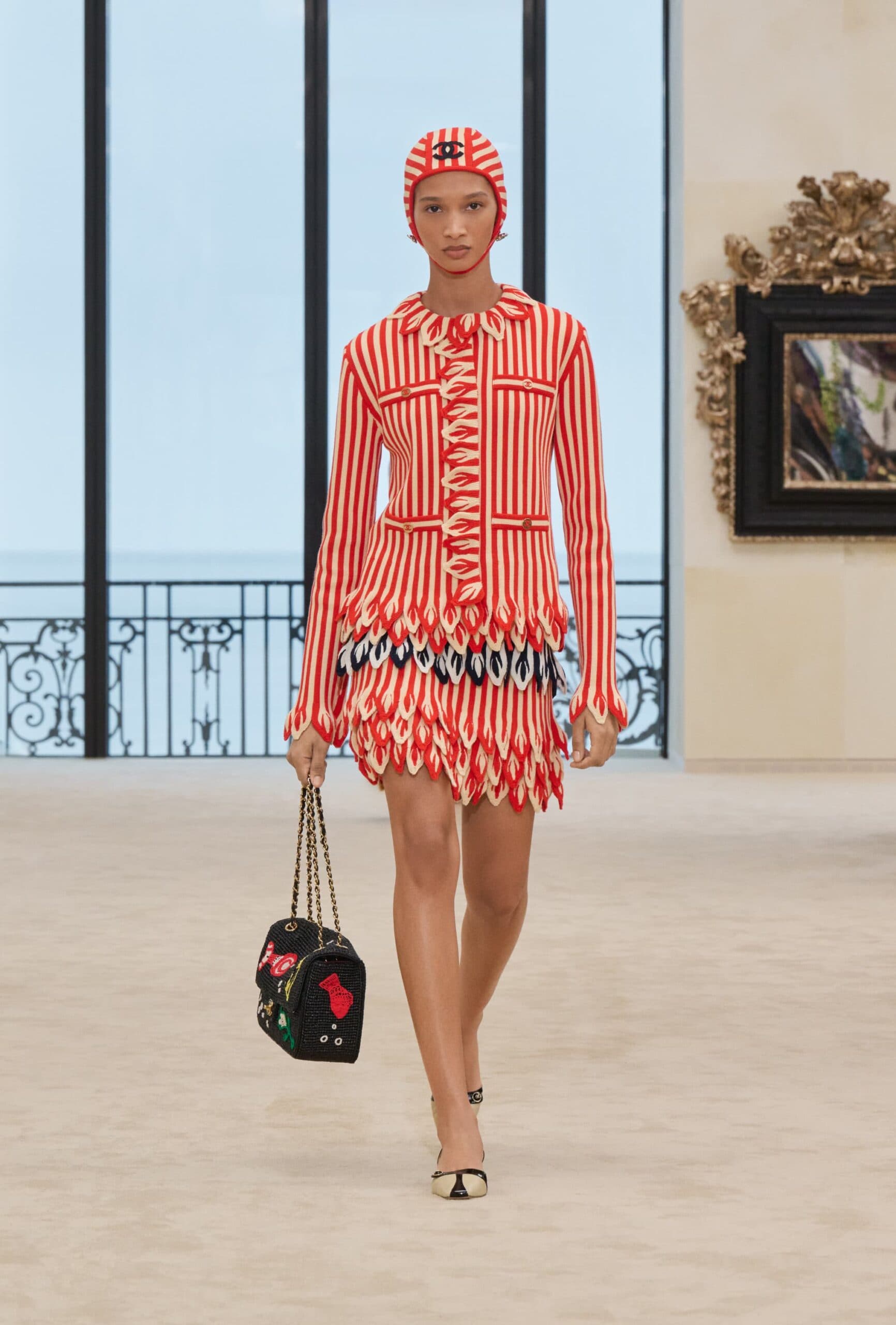
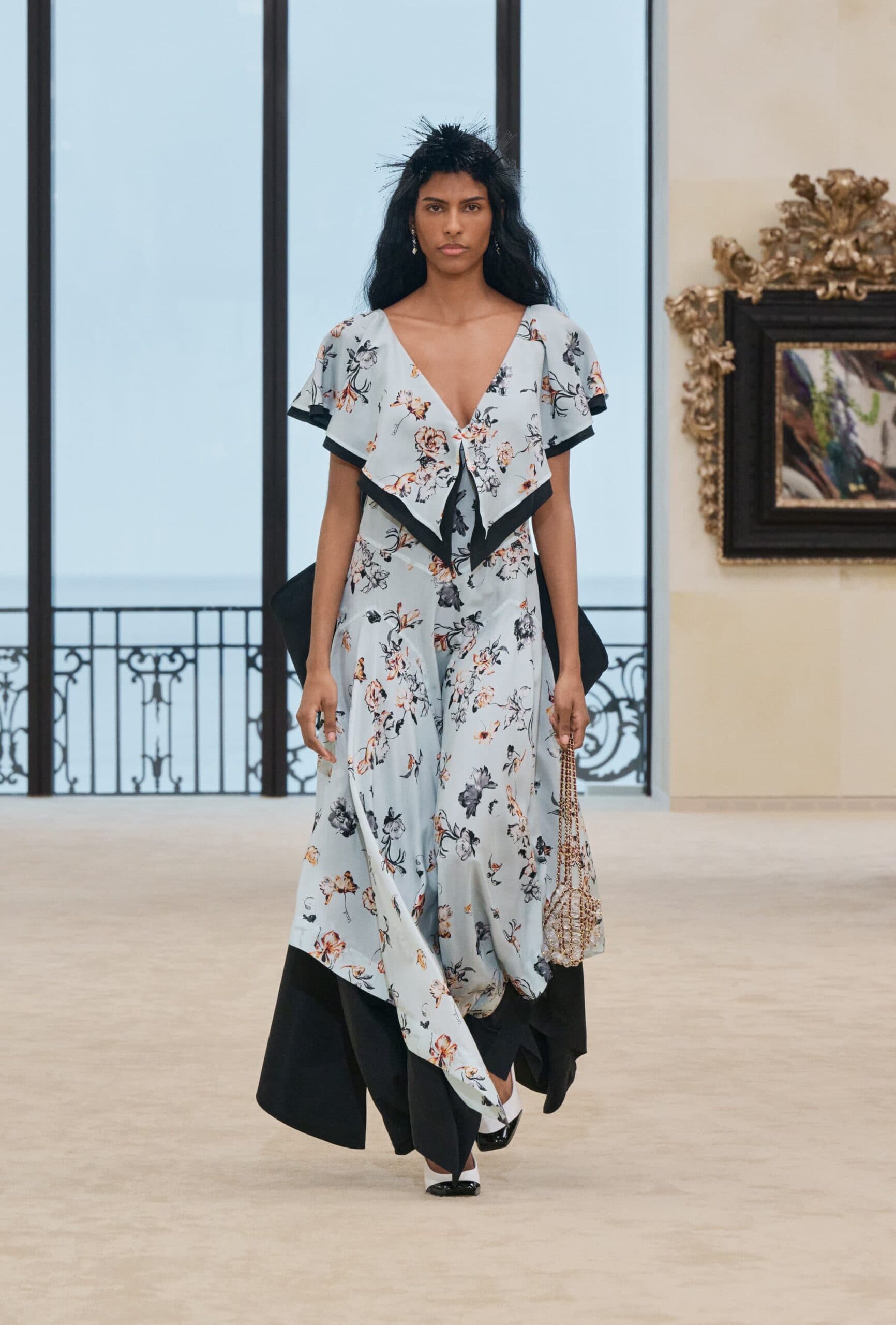
As for the collection itself: Blazy opened the Cruise collection with an oversized bow borrowed from an original 1926 sketch — this time transformed into a handbag. Throughout the collection, retro swim silhouettes moved between light layering, relaxed shapes, classic tweed and sailor-inspired workwear.
The accessories world was perhaps the boldest element: shell earrings, coral-like hat embellishments, sunset-coloured suits covered in fish-scale sequins and oversized striped Chanel bags carried across models’ shoulders.
Some of the shoes were not worn as part of the looks at all — models carried them in their hands.
“In Biarritz, Chanel found movement and freedom away from Parisian salons — another way of existing and seeing,” Matthieu Blazy said.
Nicole Kidman, Tilda Swinton, A$AP Rocky and Sofia Coppola sat front row.


Dior — Los Angeles, May 13
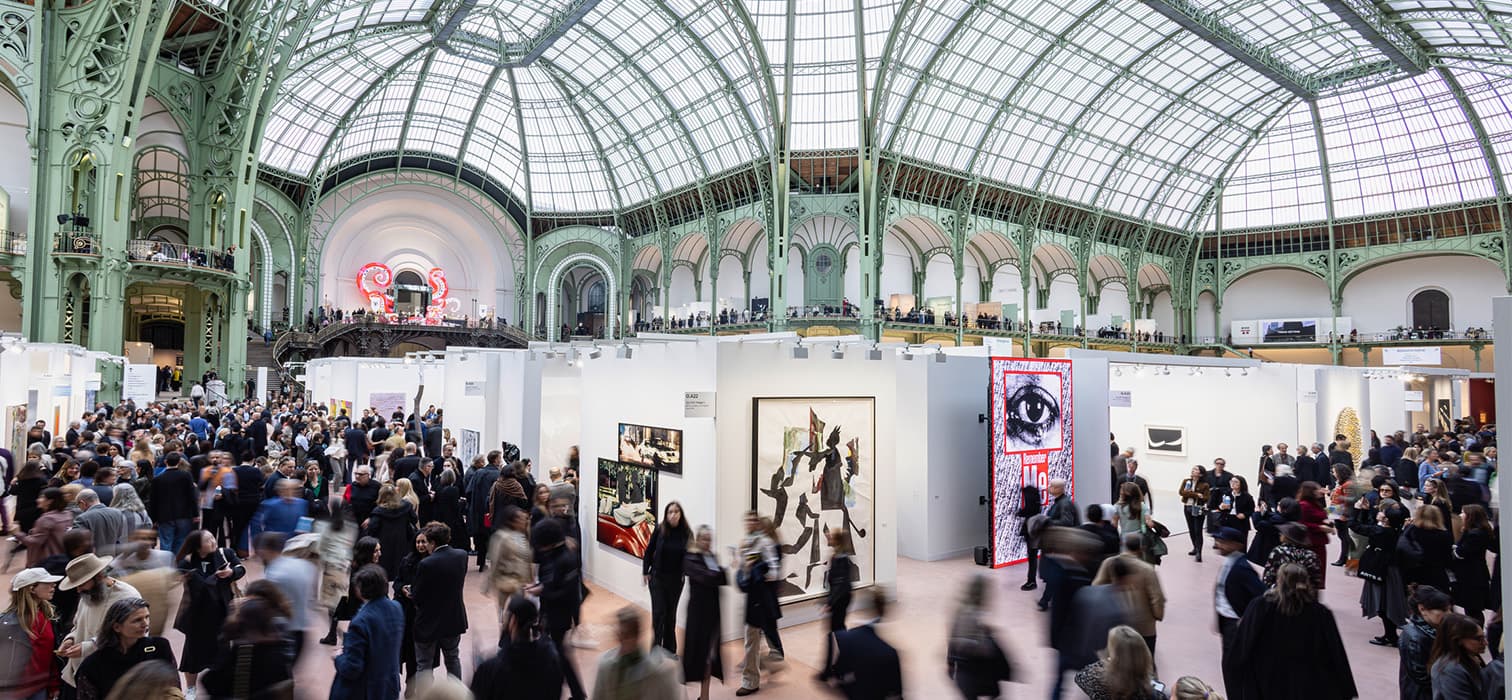
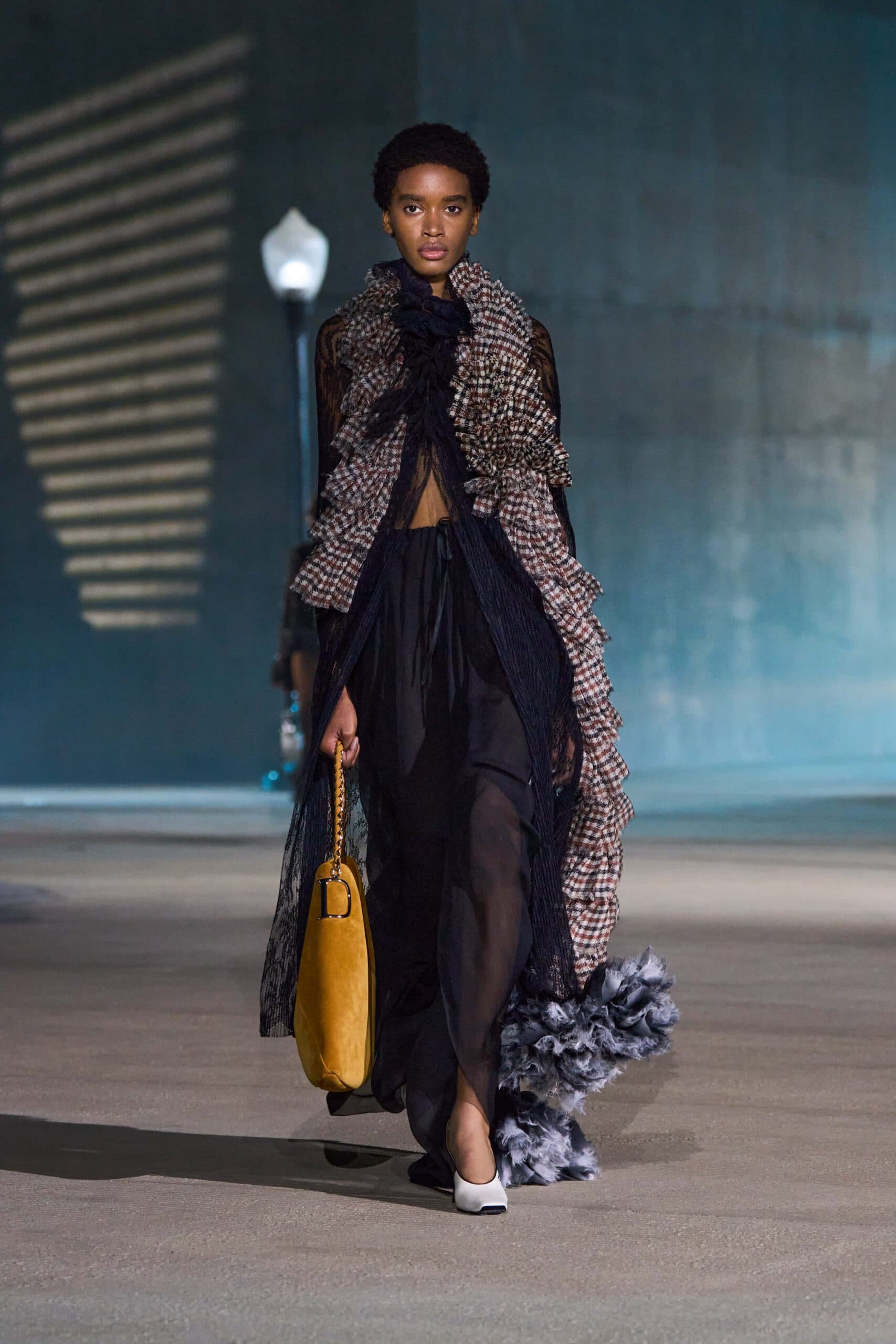
Jonathan Anderson’s first Cruise collection for Dior became the season’s most talked-about show, both in terms of its choice of venue and the collection itself. The stage: the new David Geffen Galleries at the Los Angeles County Museum of Art, Swiss architect Peter Zumthor’s long-awaited and much-debated concrete structure, LACMA’s new permanent collection building that opened in April, and Zumthor’s first project in America.
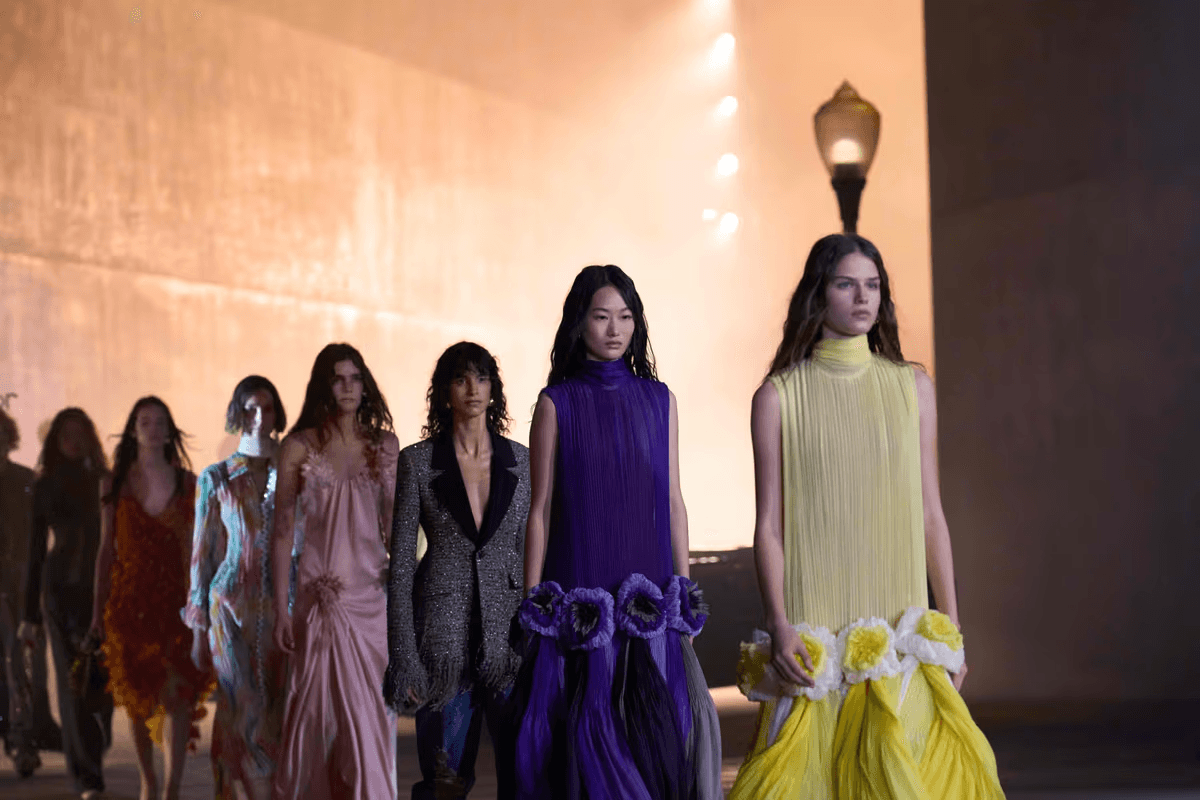
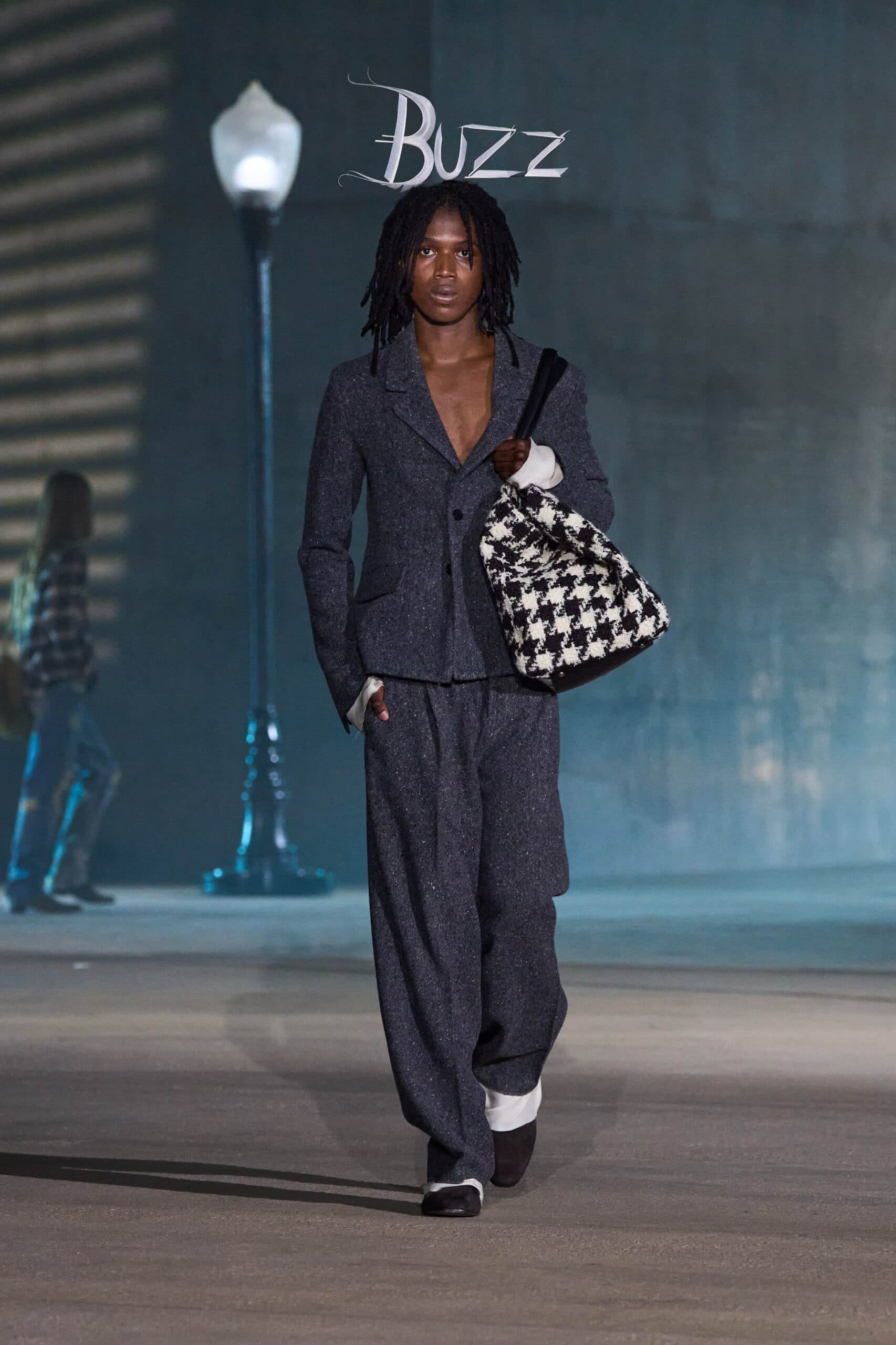
Vintage convertible cars parked along the runway, street lamps evoking 1950s Los Angeles, headlights falling onto glittering dresses… The show felt like a film set; Jonathan Anderson already loves cinema, and even the show notes had been prepared in the form of a screenplay.


The story of the collection was dedicated to Dior’s century-long relationship with Hollywood. It took its starting point from the story of Marlene Dietrich insisting on having the note “No Dior, no Dietrich” written into her contract. For this reason, Anderson chose as his point of departure the 1949 Haute Couture jacket worn by Dietrich in Alfred Hitchcock’s Stage Fright. The collection was built around this cinematic framework. It opened with yellow and purple chiffon dresses inspired by California poppies (one was even worn by Sabrina Carpenter, who was among the show’s guests), then moved into wool jackets with fringe details, beaded lace nightgown dresses and glitter-covered suiting pieces. We also saw reinterpretations of the Bar Jacket and the Saddle Bag. But one of its most striking elements was the Ed Ruscha collaboration. Ruscha’s practice, so deeply associated with Los Angeles, was embroidered onto shirts. Philip Treacy, meanwhile, was responsible for the hats. This marked a first for Dior, as that role had belonged to Stephen Jones for years.
In the front row sat Miley Cyrus, Sabrina Carpenter, Anya Taylor-Joy and Jisoo, and of course Hollywood’s new and rising stars and directors, including Greta Lee and Gus Van Sant.


Gucci — New York, Times Square, May 16
New York has been at the centre of the fashion world for the past six months. And all the collections seem to underline the same thing: individuality. Last December, Chanel travelled to the centre of the world for its first Métiers d’Art collection — in other words, its Pre-Fall collection. The show took place inside the New York subway. At the time, Blazy described the mood as the people you encounter when stepping off the train at the station. Different clothes, different characters, different styles. Chanel’s show took place downtown. In other words, in the southern part of the enchanting island called Manhattan. (Remembering this show again matters for the final section of this story.)
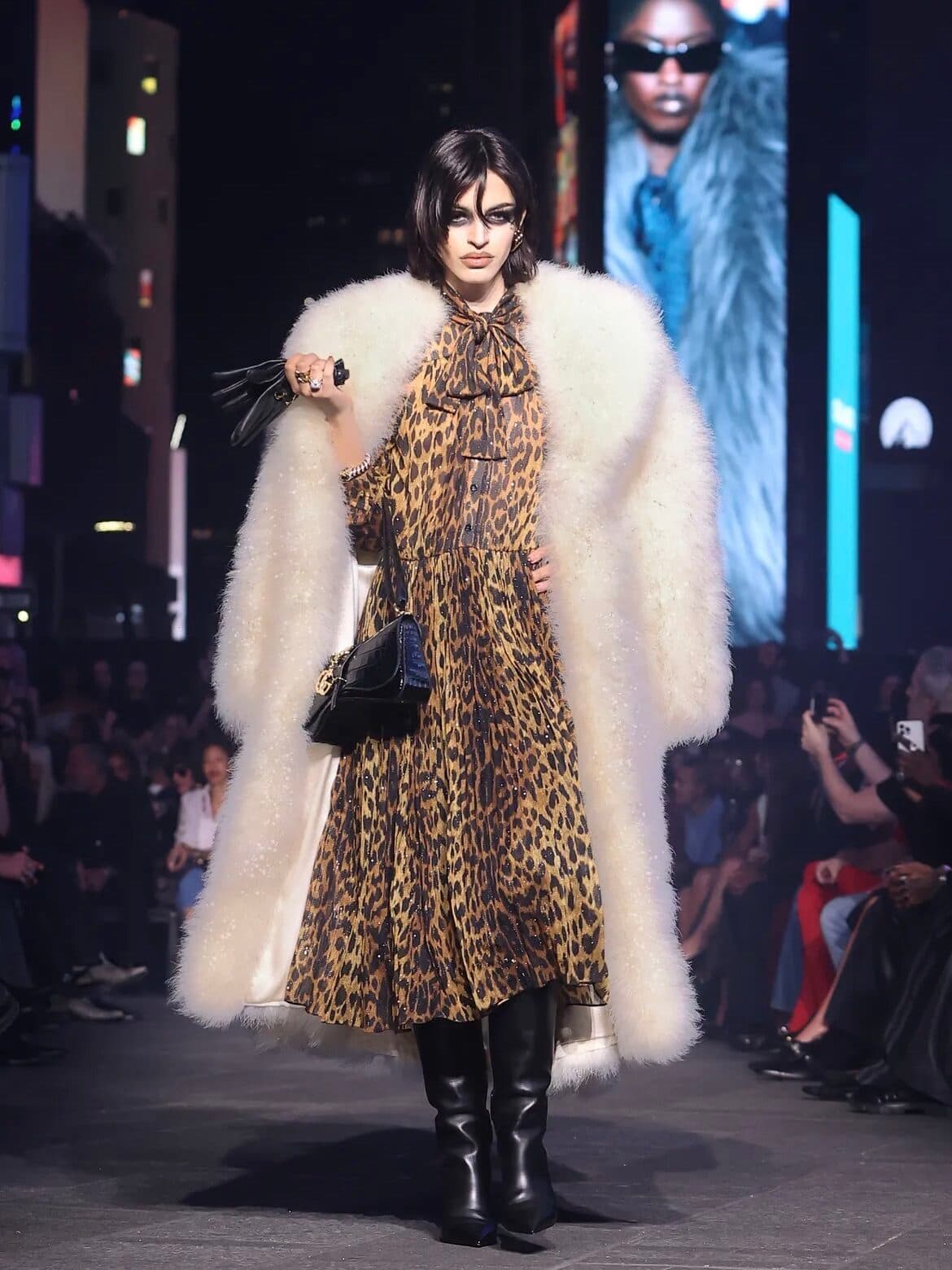
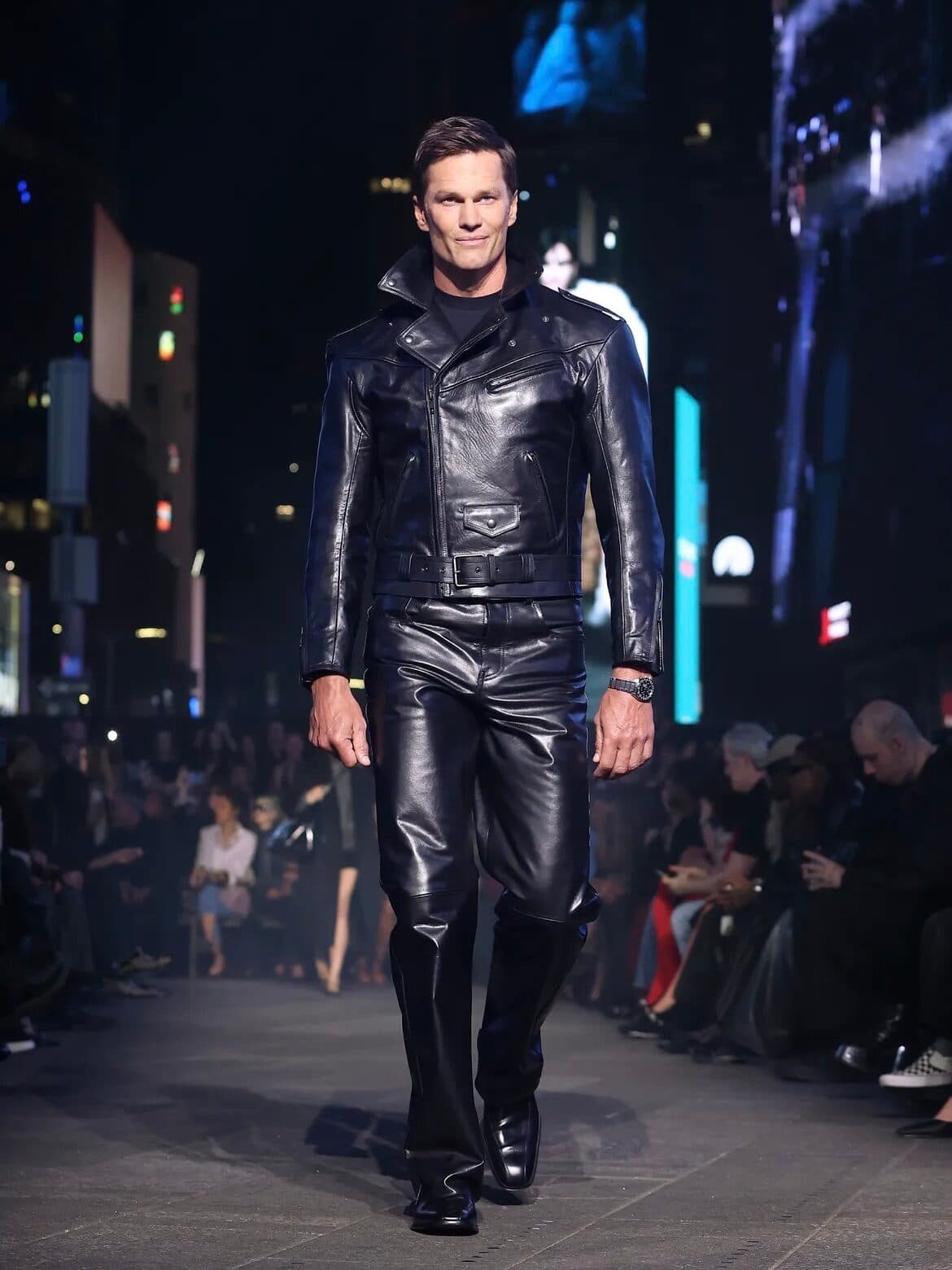
This time we moved slightly further up the map and arrived in the middle of the island. Gucci’s Cruise 2027 show — perhaps slightly — stole attention away from the clothes. Demna shut down the stretch of Broadway between 46th and 48th Streets in the very centre of Midtown Manhattan; Times Square’s iconic giant screens were covered with real and fictional Gucci advertisements: Gucci Acqua, Gucci Gym, Palazzo Gucci Hotel… Demna was once again making fun of capitalism and consumption in his own universe — or perhaps he was not making fun of them at all but believed he was making a statement.
The collection itself, however, was surprisingly ordinary — or perhaps simple would be the better word — in contrast to all that spectacle. Demna created a manifesto of wardrobe essentials for Gucci: perfect buttoned coats, classic trench coats, tailor-made suits. All of them reflected Italian tailoring. Cindy Crawford and Paris Hilton walked the runway, Tom Brady made an appearance in a leather jacket and trousers (or perhaps his tense expression prevented that impression). The collection was good; the entertaining part was seeing it presented in the centre of New York, with Mariah Carey and Kim Kardashian sitting front row. The disappointing part was the absence of Demna’s shock factor so familiar from Balenciaga.

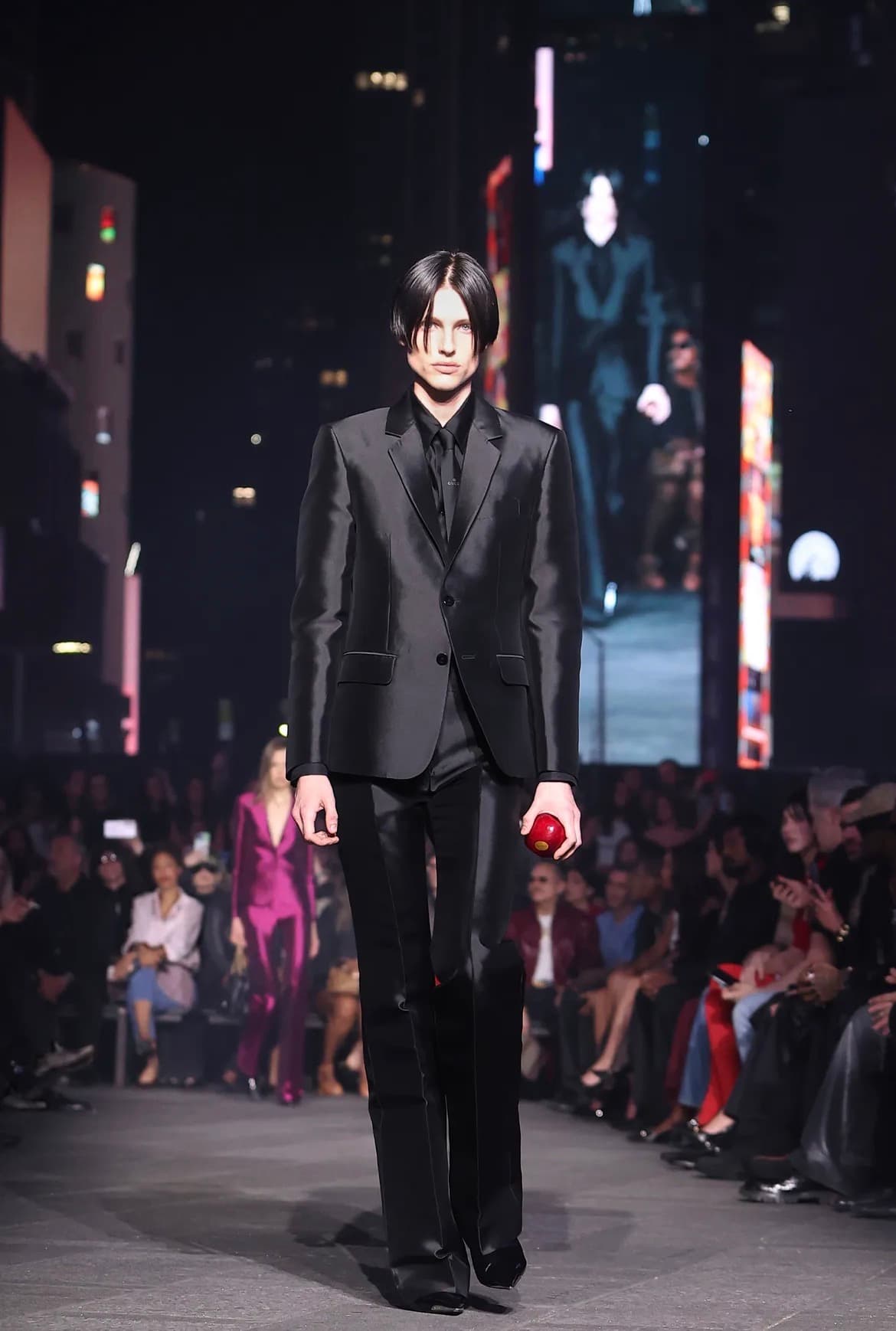
Perhaps he thought Cruise collections do not necessarily require dazzling ideas after all — they are wardrobe foundations in the end. The strongest aspect of the collection lay in the surprisingly essential wardrobe idea hidden beneath all the chaos of Times Square. Particularly the oversized backpacks carried by male models in suits created one of the strongest images of the collection: the city dweller leaving the financial district and rushing to catch the subway.
Ahead of the show, Gucci published a series of Instagram content recalling Robert Longo’s Men in the Cities series: dramatic movements in urban settings, figures losing balance inside suits. The series Longo began in 1979 represented not only the corporate aesthetic of the Wall Street era but also the fragility of modern urban life trapped in a state of constant performance. In Demna’s own words, the idea was to build a collection around “people you might encounter on the street.”
Louis Vuitton — New York, Frick Collection, May 20
This time, we move a little further uptown in Manhattan. To the Upper East Side. Nicolas Ghesquière constructs Cruise collections as an architectural dialogue. The Palais des Papes in Avignon, Park Güell in Barcelona, the Miho Museum in Kyoto, the TWA Terminal at JFK… Every season, the setting itself becomes as much a part of the narrative as the collection. This time, the destination was the Frick Collection on Manhattan’s Upper East Side: Henry Clay Frick’s Beaux-Arts mansion, which reopened last year following a major $220 million restoration. According to Ghesquière, during a visit to New York in November, he walked into the building and immediately added it to his Cruise “wishlist.”
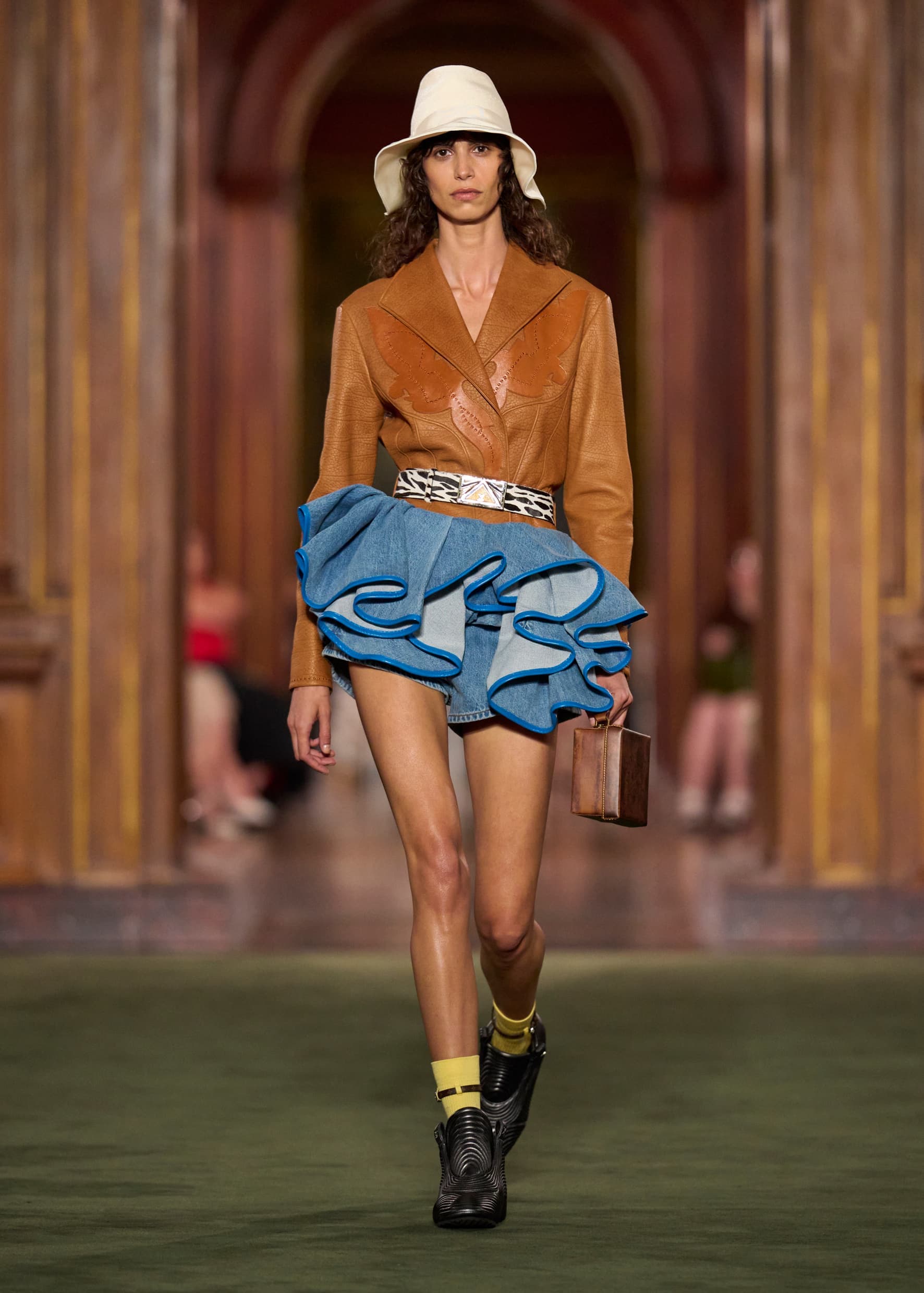
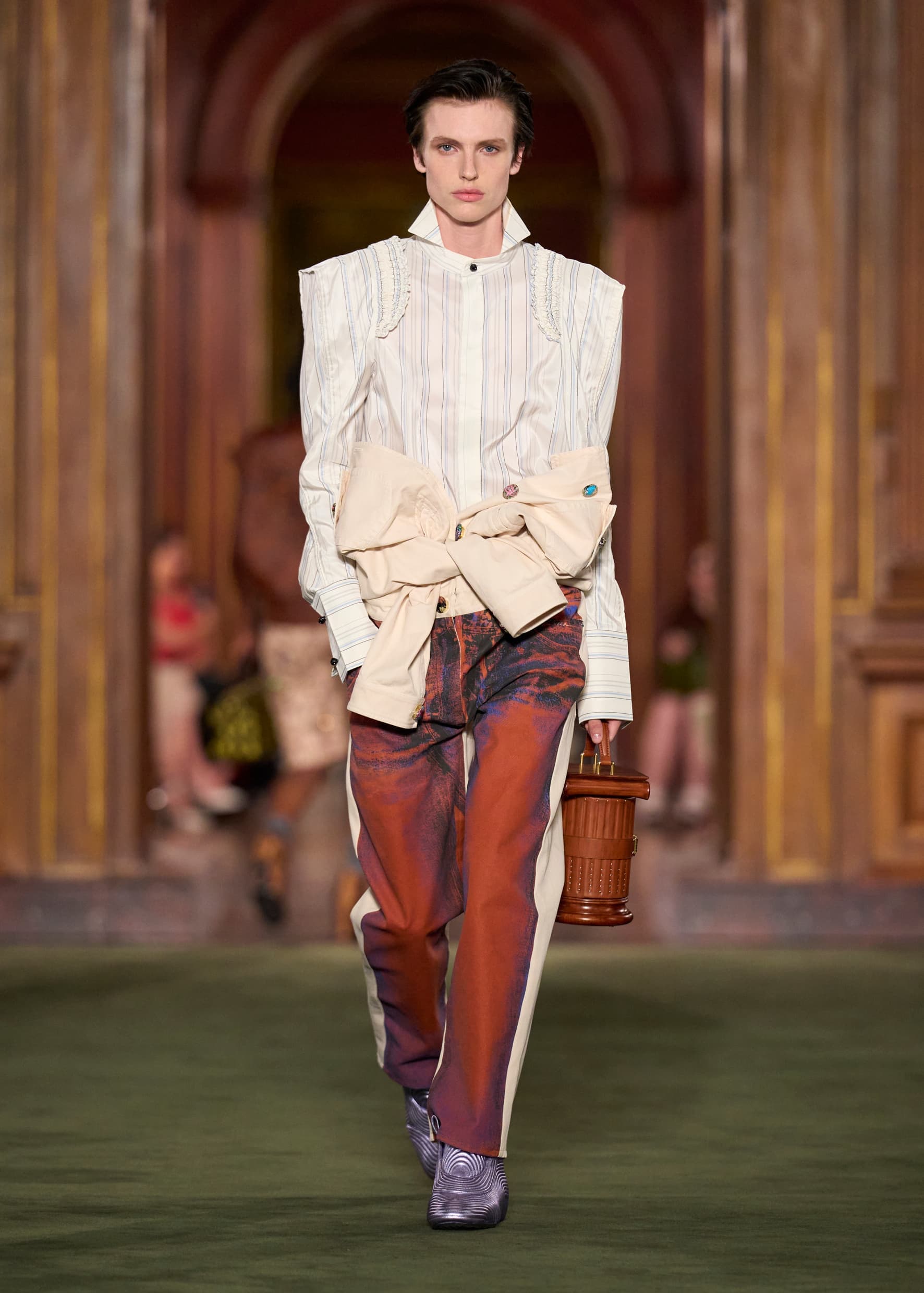
The show took place inside Frick’s first-floor galleries — a first in the museum’s history. Louis Vuitton also entered into a three-year cultural partnership with the Frick Collection. As part of “Louis Vuitton First Fridays,” the museum will open free of charge on the first Friday of every month; three major exhibitions will also take place with sponsorship from the house.
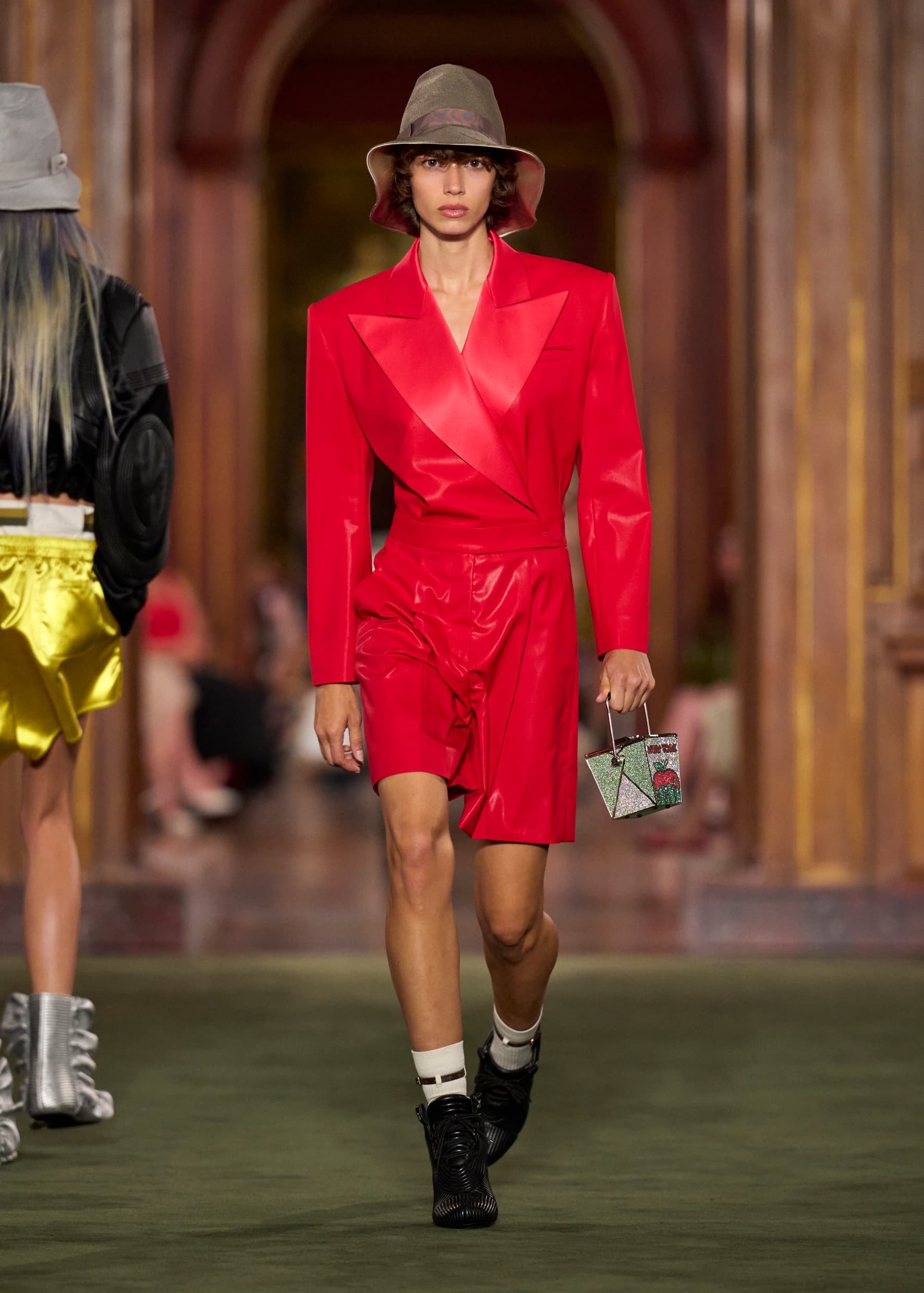
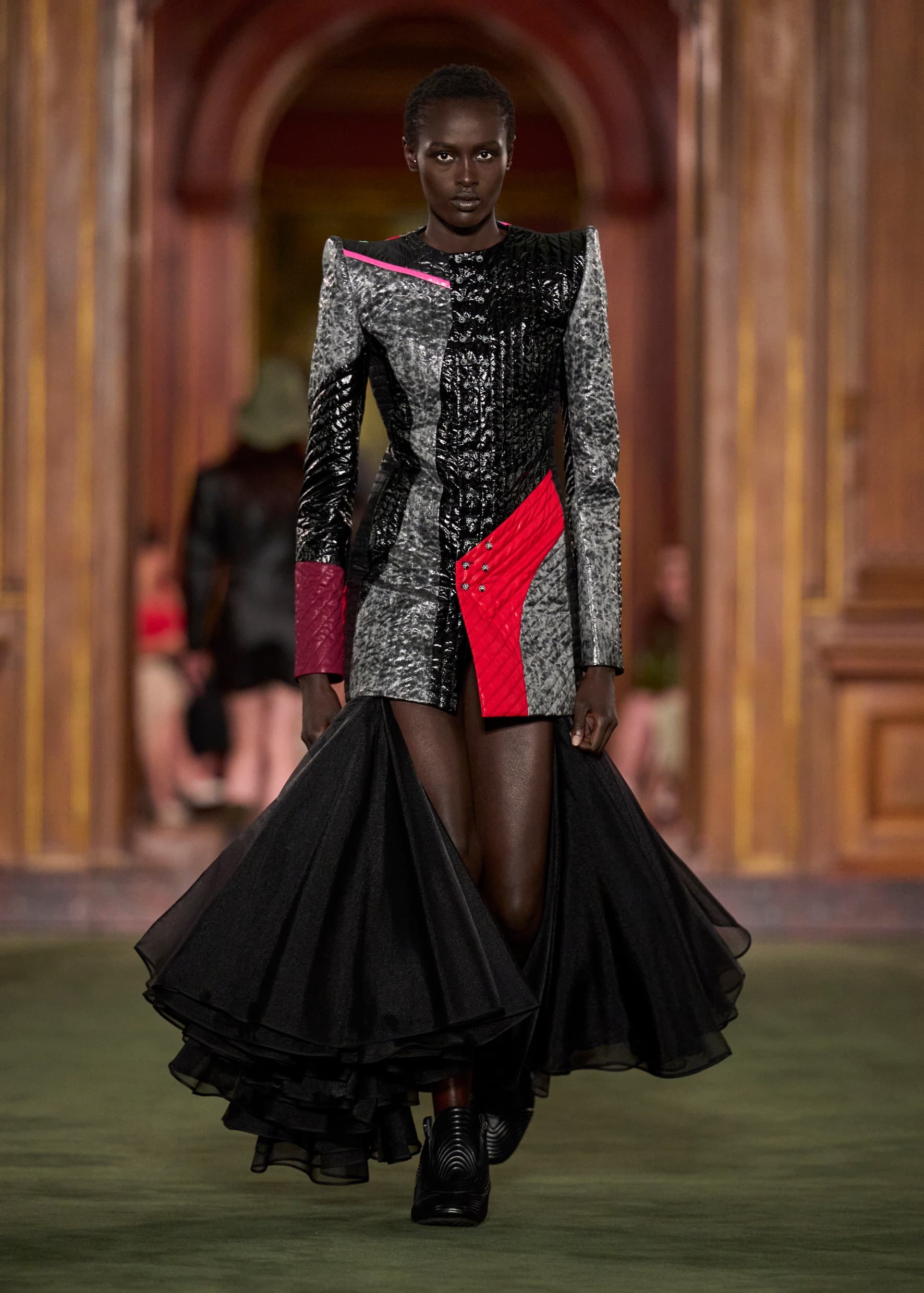
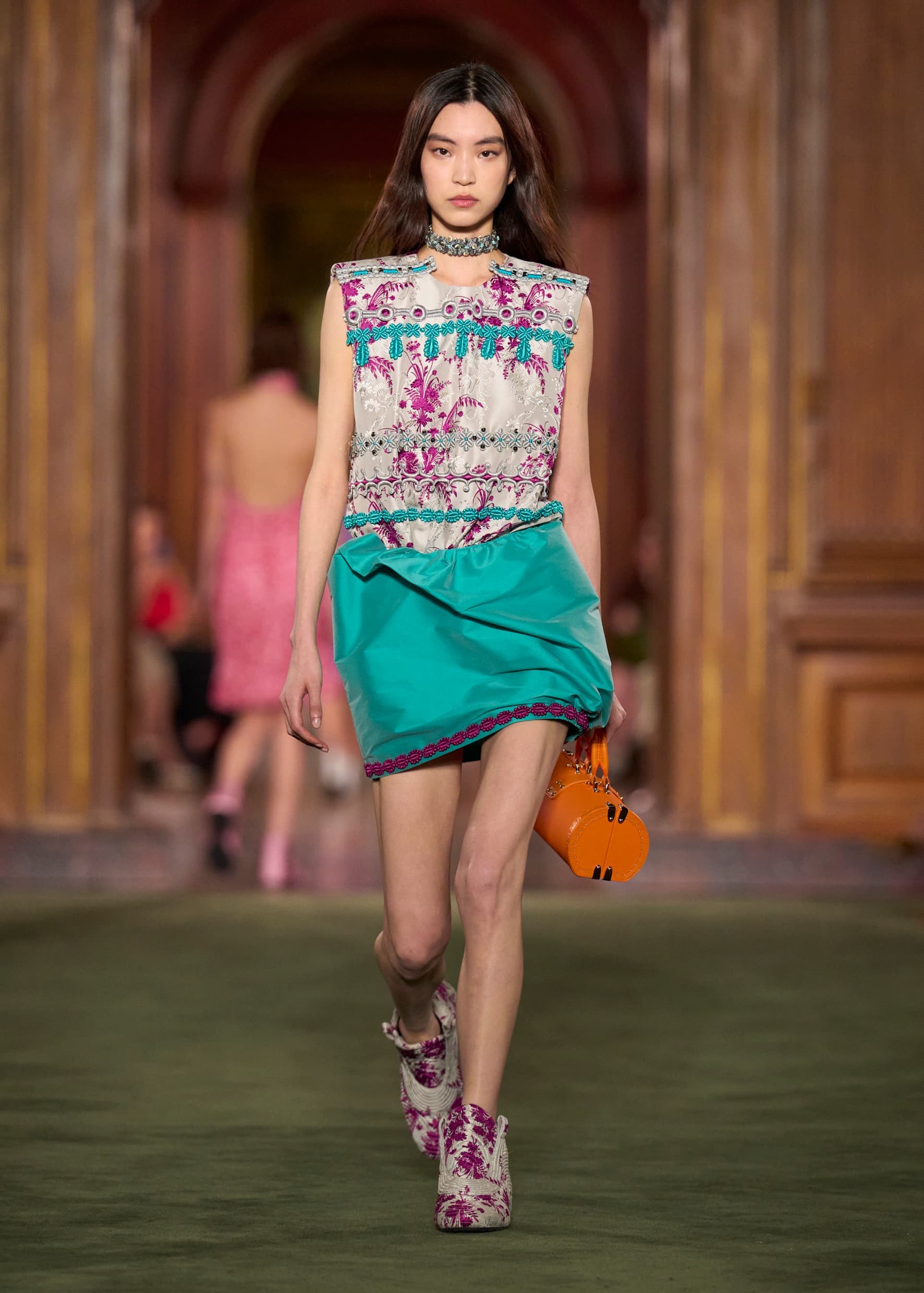
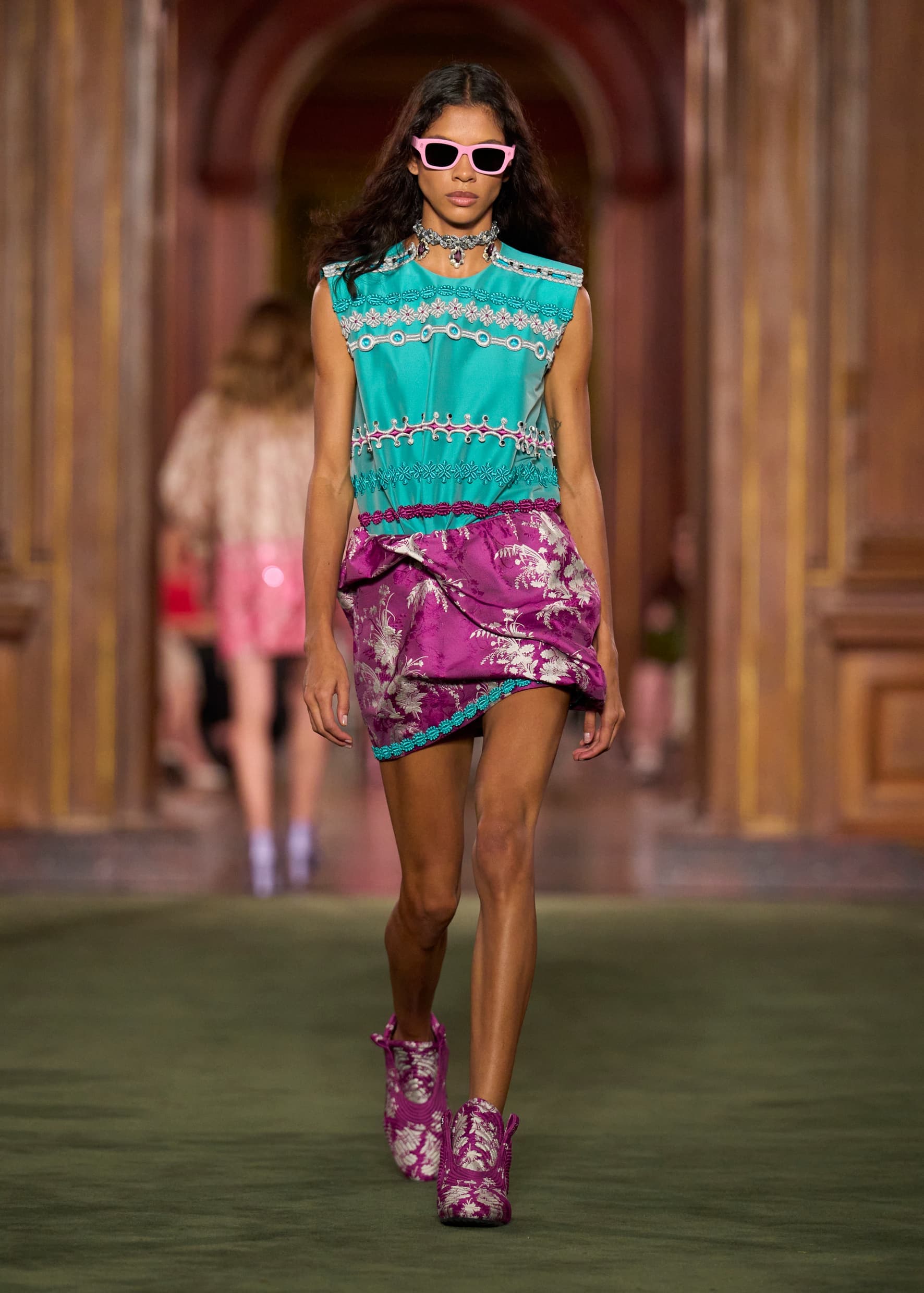
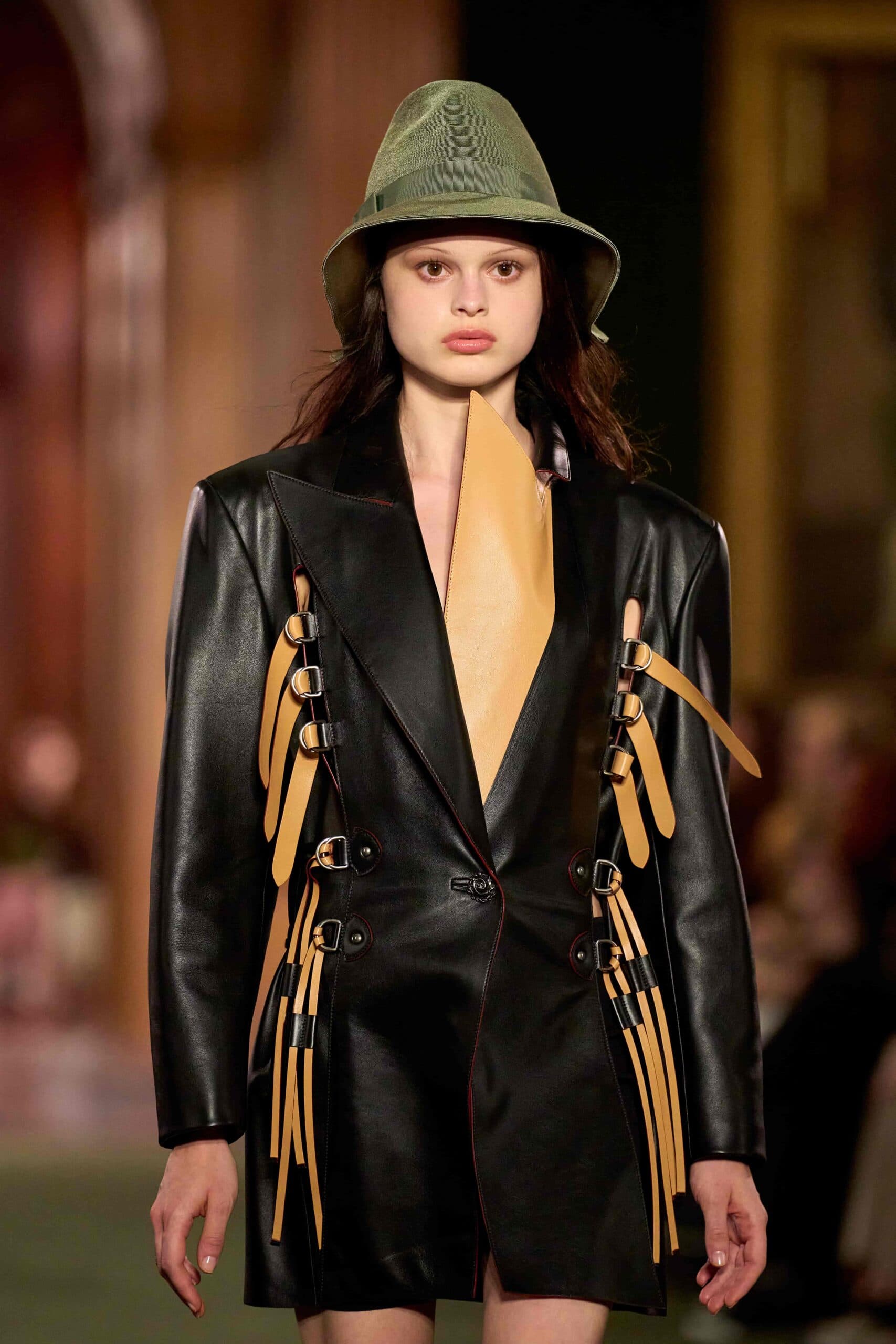
At the centre of the collection was Keith Haring. Ghesquière’s starting point was a simple Louis Vuitton trunk dating back to the 1930s: a real piece that Haring drew on with Sharpie in 1980 before giving it to a friend as a gift. Trunks and travel have always remained central to Vuitton. Uptown aristocracy and downtown’s chaotic art scene, Gilded Age seriousness and East Village punk spirit all came together within the same looks. This is what Ghesquière does best. His ability to combine different periods and styles within a single look. Leather bags inspired by Ionic columns from Frick’s decorative arts collection, mini Haring trunks, record bags and boxing glove-shaped accessories… The boxing inspiration in particular established the rhythm of almost the entire collection.
Adventure-Filled America! Why America?
When Chanel, Dior, Louis Vuitton and Gucci determined their show locations this season, geography was not a coincidence. Hermès will also present a large-scale show in Los Angeles on June 4. Moncler, meanwhile, tested fashion’s relationship with nature, sport and American lifestyle culture last winter by bringing its Grenoble collection to Aspen as part of The City of Genius project. This synchronicity offers a lens through which to understand how fashion’s biggest business decisions are being read today.
For some time now, the same thing has been repeated throughout the fashion world: China is no longer the “guaranteed growth story” it once was. Particularly in the post-pandemic period, between 2021 and 2022, Chinese consumers significantly eased the pressure weighing on the luxury sector. But that exceptionally rapid growth momentum slowed down. One point repeatedly underlined in analyses published over the past year by Business of Fashion and Financial Times is precisely this: the major “China comeback” Western brands were expecting never fully materialised. Consumers turning towards local brands, economic slowdown and government rhetoric discouraging excessive consumption shifted the balance. Even in the latest financial results from LVMH and Kering, there is a sense that the old optimism surrounding the Chinese market has faded.
America, meanwhile, is projecting the exact opposite energy. Luxury spending among affluent American consumers remains remarkably strong. As Financial Times has noted in several different analyses, wealth generated through stock markets and technology has made luxury spending in America more resilient than expected. Today, many major fashion houses already derive a substantial portion of their revenue from North America. Which is why Dior going to Los Angeles, Gucci shutting down Times Square or Louis Vuitton establishing itself inside the Frick Collection are not interpreted simply as aesthetic decisions. They are also, in part, a message saying: “we are here to stay.”
There is also the cultural dimension of it all. Particularly since the Trump years, discussions around higher tariffs and pressure on European imports have been a growing concern for the luxury sector. Yet fashion houses do not seem interested in responding merely through price increases. Instead, they are attempting to appear more rooted in America itself: sponsoring museums, building partnerships with cultural institutions, establishing genuine relationships with cities. This is partly why Louis Vuitton’s long-term partnership with the Frick Collection matters. Why Dior transforming LACMA’s opening into a Cruise show matters. And meanwhile, Chanel also became a sponsor of the Dia Art Foundation.
This is also why Tokyo, Seoul and Shanghai — once essential stops of Cruise season only a few years ago — slipping slightly into the background is not a coincidence. At the end of the 2010s, Asia represented fashion’s most exciting playground thanks to economic growth and the global influence of K-pop and Japanese culture. Now, the direction seems to be turning back towards America.
All of this serves as a reminder that show locations in fashion are no longer simply “beautiful backdrops.” Where you stage a show increasingly communicates where you are investing, which cultural story you want to become part of and which consumer relationship you are trying to strengthen. Cruise season is therefore becoming increasingly economic and increasingly strategic. When major fashion houses arrive in America today, they are positioning themselves as lasting parts of that cultural ecosystem.
Cover Photo: Chanel
The Fashion Industry’s Uncomfortable Truth