Who will take home the Palme d’Or this year? Which film will get the longest standing ovation? Who will walk out of a midnight screening in tears, and which film will explode out of nowhere? There’s only one place to have these conversations: Cannes Film Festival 2026.
The Poster Question: Freedom, Yes — But for Whom?
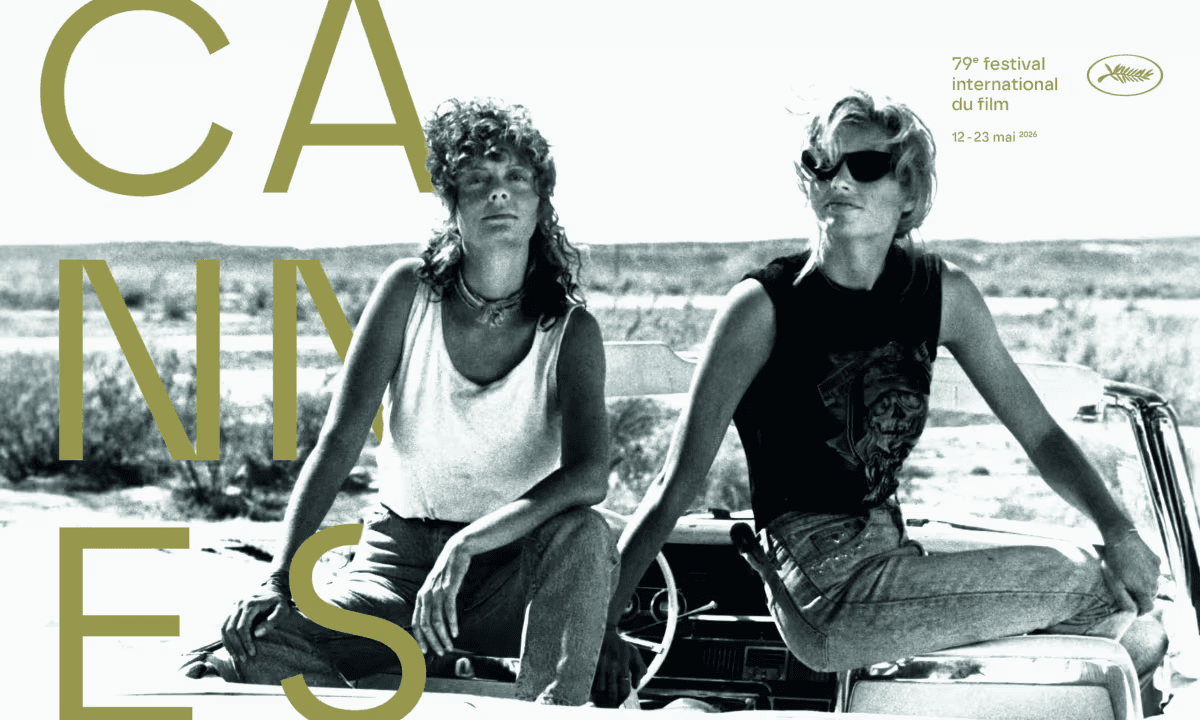
Let’s start with the poster, because this year’s choice is both beautiful and slightly troubling. The official poster, designed by Hartland Villa, features a black-and-white photograph from Ridley Scott’s Thelma & Louise set. Geena Davis and Susan Sarandon standing on a 1966 Ford Thunderbird convertible. The film premiered at Cannes exactly 35 years ago, on May 20, 1991, as that year’s closing film. You can’t deny the power of the image. Two women, a car, that gaze. Without question, one of the most iconic frames in cinema history.
But it’s worth asking: is the festival celebrating women-centered cinema with this poster, or easing its conscience? Just look at this year’s main competition. Twenty-two films, five female directors. The remaining seventeen are men. Thierry Frémaux presents it as “a selection from three continents,” while placing feminist cinema’s crown jewel Thelma & Louise on the poster. Isn’t this a kind of freedom being celebrated by looking backward rather than forward? Under festival president Iris Knobloch, there’s progress in rhetoric, but not quite in practice yet. Still. The poster really is beautiful.
Everything You Need To Know About Cannes Film Festival 2026
Jury: Park Chan-wook’s Table
South Korean director Park Chan-wook has been appointed jury president. Oldboy, The Handmaiden, Decision to Leave… his filmography alone is already an argument. His history with Cannes is equally solid: the Grand Prix for Oldboy, Best Director for Decision to Leave. It’s not hard to understand what Park’s presidency means. The Palme d’Or this year will probably not go to something comfortable or easily digestible. Formal daring, moral complexity, that anxiety of “what happens in the next scene?” A table has been assembled for people who love exactly those things.
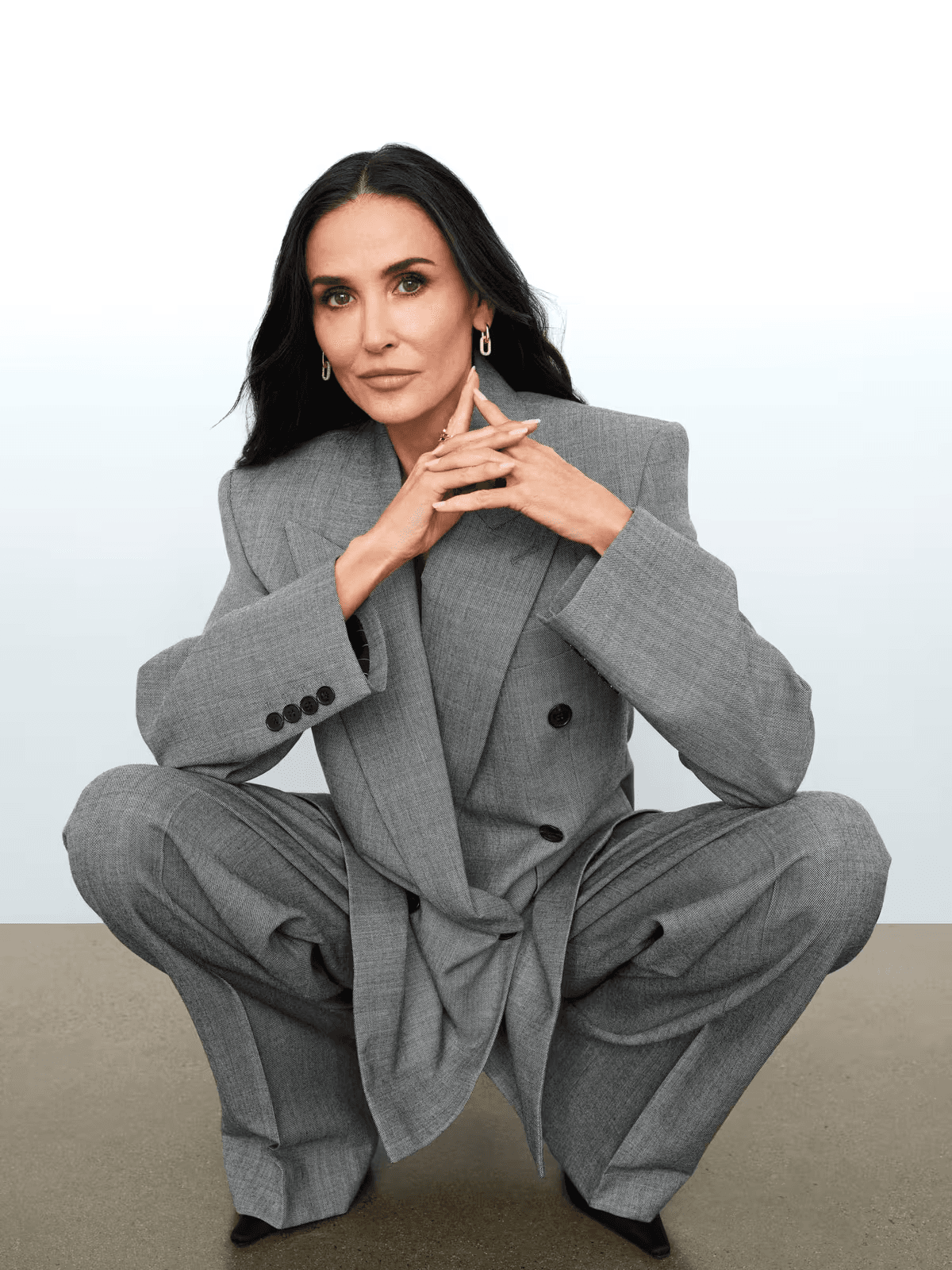
Demi Moore: Everything changed for her after The Substance. The photographs from that film’s Cannes premiere in 2024 are still vivid in memory. After starring in Coralie Fargeat’s wild bodily manifesto, sitting in the jury chair feels like exactly the kind of cycle this festival adores.
Chloé Zhao: An Oscar for Best Picture and Best Director with Nomadland, another Oscar for Jessie Buckley with Hamnet… probably the quietest yet most striking name at the table.
Stellan Skarsgård: Last year he shook Cannes with Joachim Trier’s Sentimental Value and earned an Oscar nomination. He’s been a Croisette man ever since Breaking the Waves.
Ruth Negga: With Loving in 2016, she reached both Cannes and the Oscars. Even in red carpet photographs, she always carries that feeling of “I’m here for the right reasons.”
Isaach De Bankolé: Claire Denis, Jim Jarmusch, Chocolat, Ghost Dog. Part of the festival memory itself.
Paul Laverty: Ken Loach’s screenwriting partner for thirty years. The writer behind Loach’s two Palme d’Or-winning films, The Wind That Shakes the Barley and I, Daniel Blake. The social cinema compass at the table.
Laura Wandel and Diego Céspedes: Both left Un Certain Regard with awards, both represent Cannes’ new generation.
Nine people, four continents, vastly different cinematic languages. If Park can hold them together, an interesting Palme d’Or debate awaits.
The Electric Kiss
Opening, Closing, Honorary Palmes
French actress Eye Haïdara will host both the opening and closing ceremonies.
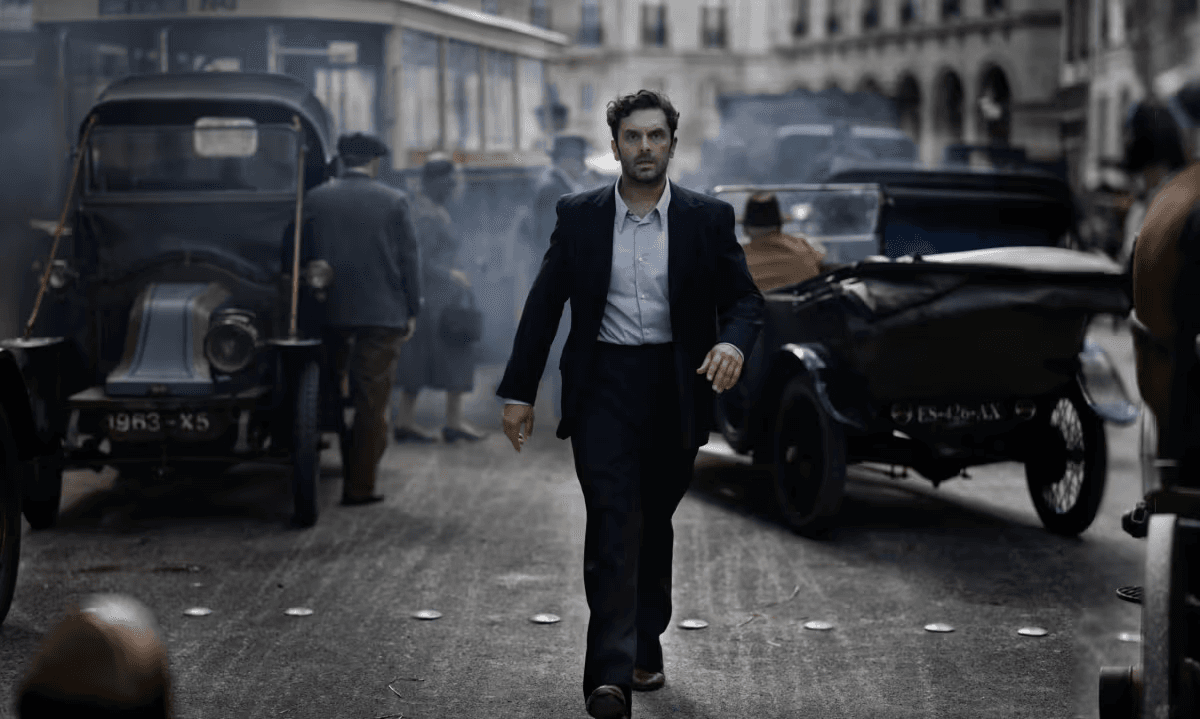
The opening film is Pierre Salvadori’s The Electric Kiss (Venus Electrificata). A French-language period comedy. Cannes traditionally opens with a local film; tradition remains intact.
Honorary Palme d’Or — Peter Jackson: On opening night, May 12, the master of The Lord of the Rings trilogy will receive the award. Jackson doesn’t have deep roots with Cannes, but his contribution to the history of popular cinema is undeniable.
Honorary Palme d’Or — Barbra Streisand: An EGOT winner — one of the few artists to have won an Oscar, Emmy, Grammy and Tony. She will receive the award at the closing ceremony on May 23 and will attend Cannes for the first time. Frémaux described her as “the legendary synthesis between Broadway and Hollywood.” Not a single wrong word there.
Special screening: Guillermo del Toro’s Pan’s Labyrinth (2006) will screen in a new 4K restoration at Théâtre Debussy on May 12. The twentieth anniversary of the film’s Cannes premiere.
Main Competition: Who Gets the Palme d’Or?
This year, 2,541 feature films were submitted. Compared to ten years ago, that’s exactly 1,000 more. Submissions came from 141 countries, and only twenty-two were selected. The absence of major American studio films stands out. Frémaux brushed it off by saying “studios no longer make this kind of cinema,” but in reality, Cannes’ era of chasing stars is fading while film criticism moves to the forefront. Still, American independent cinema remains present in Un Certain Regard and parallel sections.
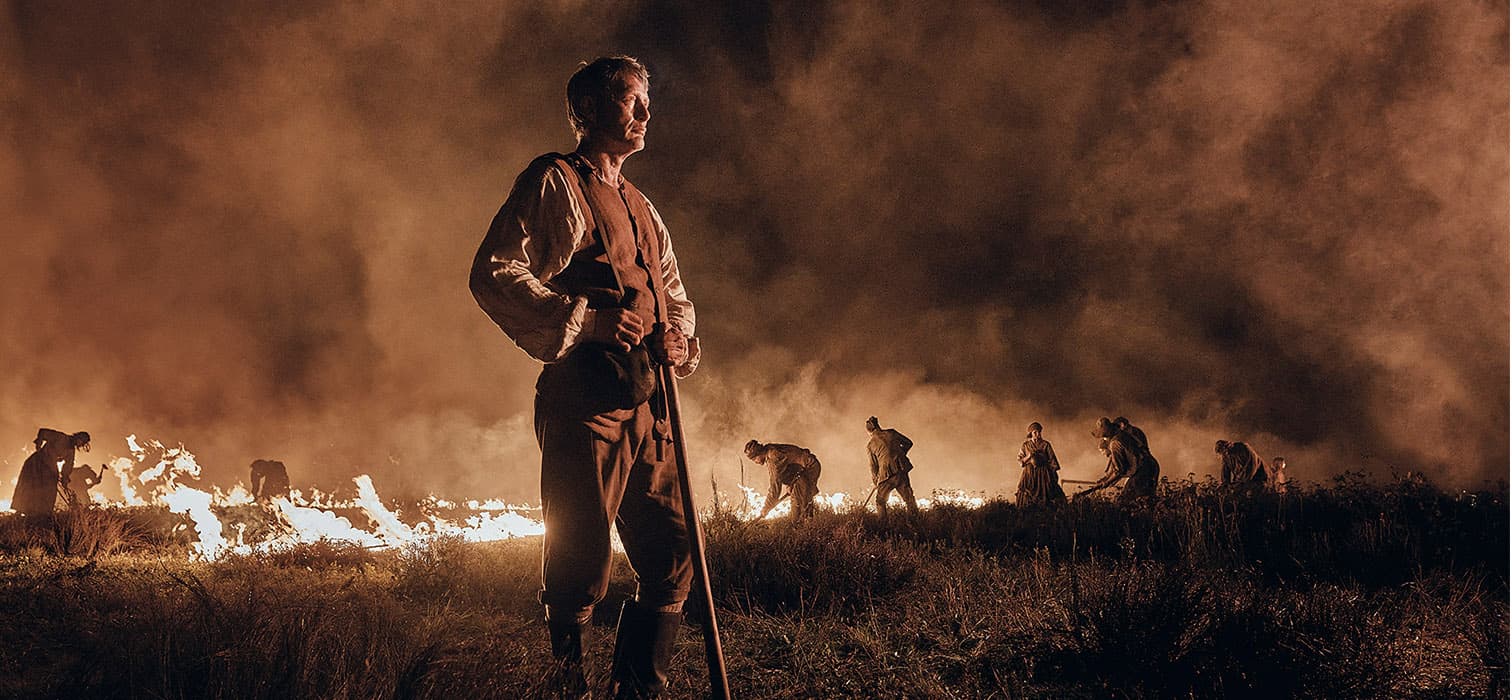
Bitter Christmas
Names to Watch in Competition
Pedro Almodóvar — Bitter Christmas (Amarga Navidad): The only competition film to premiere before the festival. A Queer Palm contender. Every Almodóvar arrival at Cannes is an event in itself.
Ryusuke Hamaguchi — All of a Sudden: He won an Oscar with Drive My Car, and the world discovered him through it. Even the title of the new film feels like the essence of Hamaguchi cinema: suddenly. This time, the cast also includes a French actress: Virginie Efira.
Asghar Farhadi — Parallel Tales: The Iranian master returns to competition. In Farhadi films, we watch judgment, guilt, family secrets. This time through a multilayered narrative structure.
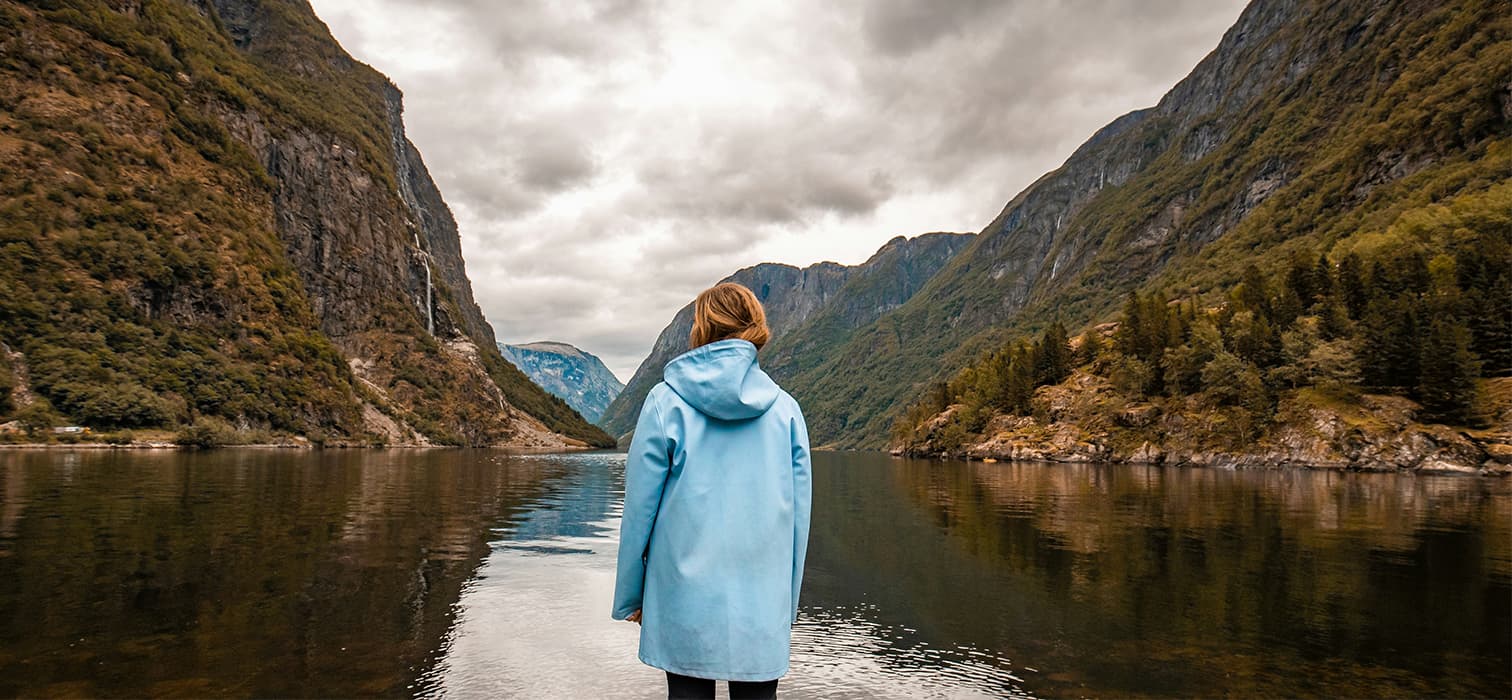
Cristian Mungiu — Fjord: After 4 Months, 3 Weeks and 2 Days, knowing this director’s name feels almost like a responsibility. A co-production stretching from Romania to Scandinavia. Intriguing, especially with Renate Reinsve and Sebastian Stan together.
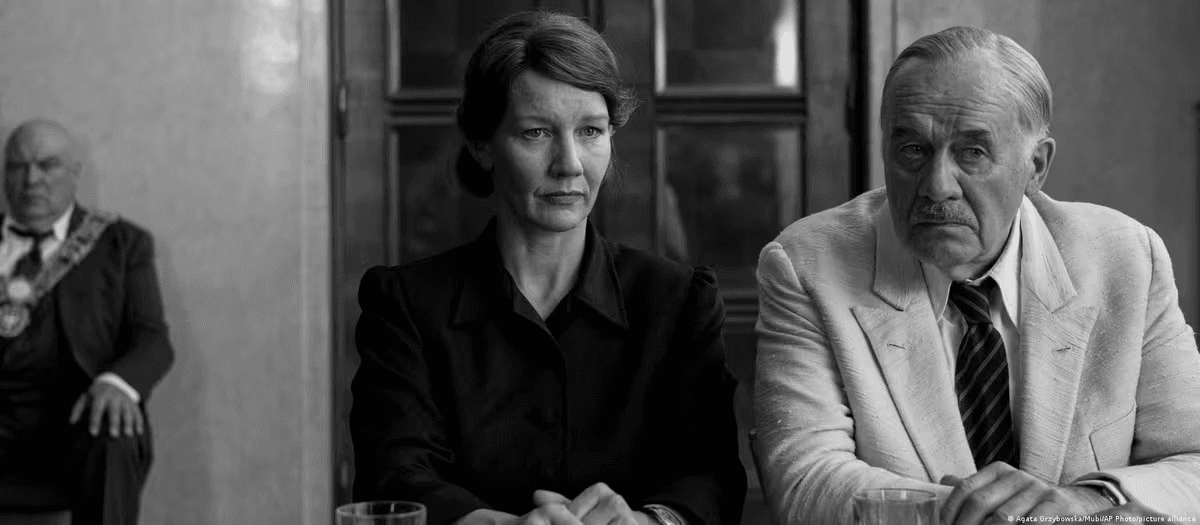
Paweł Pawlikowski — Fatherland (Vaterland): The master of Ida and Cold War. The title alone feels like a statement. Sandra Hüller stars in the latest film from the director known for his devotion to black-and-white aesthetics. Her name is already circulating in Oscar conversations for Best Actress.
All Of A Sudden
Na Hong-Jin — Hope: Ten years have passed since The Wailing. What did he do in those ten years? Almost nothing — which only made him more mysterious. Plot details remain tightly secretive. The irony or sincerity of the title could change everything depending on the tone of the film. The cast is incredible: Alicia Vikander, Jung Ho-yeon, Taylor Russell and Michael Fassbender.
Hirokazu Kore-eda — Sheep in the Box: A Kore-eda film beginning with the metaphor of a box — about family and confinement.
Andrey Zvyagintsev — Minotaur: A France-Latvia-Germany co-production from the exiled Russian director. After Leviathan and Loveless, now comes the theme of labyrinths and sacrifice… one of Cannes’ favorite directors.
Lukas Dhont — Coward: After winning the Grand Prix in 2022 with Close, he remains one of Belgium’s greatest gifts to cinema. Another Queer Palm contender.
László Nemes — Moulin: The Hungarian director who won an Oscar with Son of Saul. Moulin Rouge or a mill? Considering Nemes’ relationship with dark history, both carry serious weight.
James Gray — Paper Tiger: Frémaux first implied it wasn’t on the list, then confirmed it. Gray seems to continue the Ad Astra and Armageddon Time line — autobiographical, heavy, honest.
Valeska Grisebach — The Dreamed Adventure: With Western (2017), she achieved so much with so little. The phrase “dreamed adventure” hovers somewhere between reality and fiction. Exactly Grisebach territory.
Fatherland
Los Javis — The Black Ball (La bola negra): Javier Ambrossi and Javier Calvo shook Spanish television multiple times with Veneno and La Mesías. This will be their first appearance on the big screen. Another Queer Palm contender.
Ira Sachs — The Man I Love: Sachs’ Queer Palm contender is a U.S.-France co-production. Familiar territory for the director: city, connection, separation, delayed regret. Rami Malek stars.
Marie Kreutzer — Gentle Monster: The Austrian director, who earned a Best Actress nomination at Cannes 2022 with Corsage, returns with Lea Seydoux in the lead role. One of the festival’s rare female directors.
Arthur Harari — The Unknown (L’Inconnue): The first solo directorial feature from the co-writer of Onoda – 10,000 Nights in the Jungle, Anatomy of a Fall and Diamant Brut.
Un Certain Regard: The Real Surprises Are Here
Un Certain Regard is usually the festival’s true gem because risk finds shelter there. If you want to discover great directors and films, this is the section to watch.
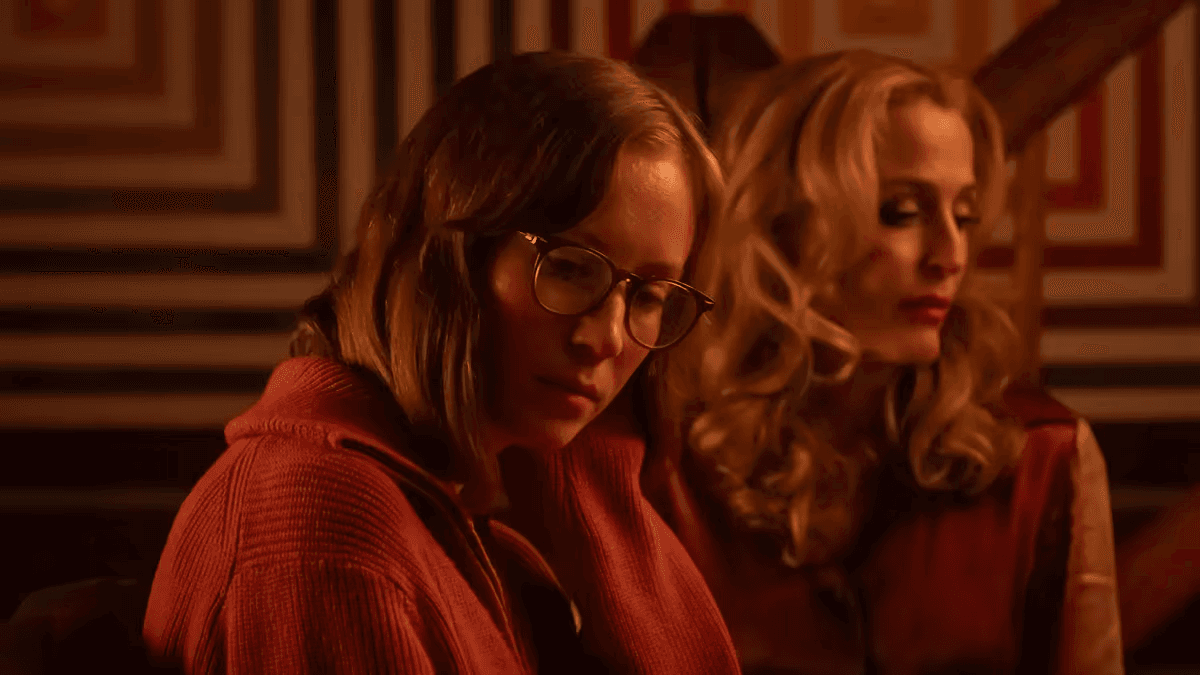
Jane Schoenbrun — Teenage Sex and Death at Camp Miasma: The opening film of the section. After bringing a completely new voice to queer horror cinema with I Saw the TV Glow, Schoenbrun returns with Hannah Einbinder (Hacks) and Gillian Anderson (Sex Education). Even the title is a manifesto.
Jordan Firstman — Club Kid: The director also stars in his own film. Cara Delevingne, Diego Calva, Eldar Isgandarov. First feature-length film.
Judith Godrèche — A Girl’s Story (Mémoire de Fille): Possibly one of the heaviest moments of this year’s Cannes. After publicly sharing her experiences regarding sexual abuse within the French film industry, Godrèche arrives with her first feature film. Both personal and political.
Teenage Sex And Death At Camp Miasma
Out of Competition: The Unexpected
John Travolta is sitting in the director’s chair at Cannes Première this year. Propeller One-Way Night Coach marks his first feature-length directorial effort. Yes, you read that correctly.
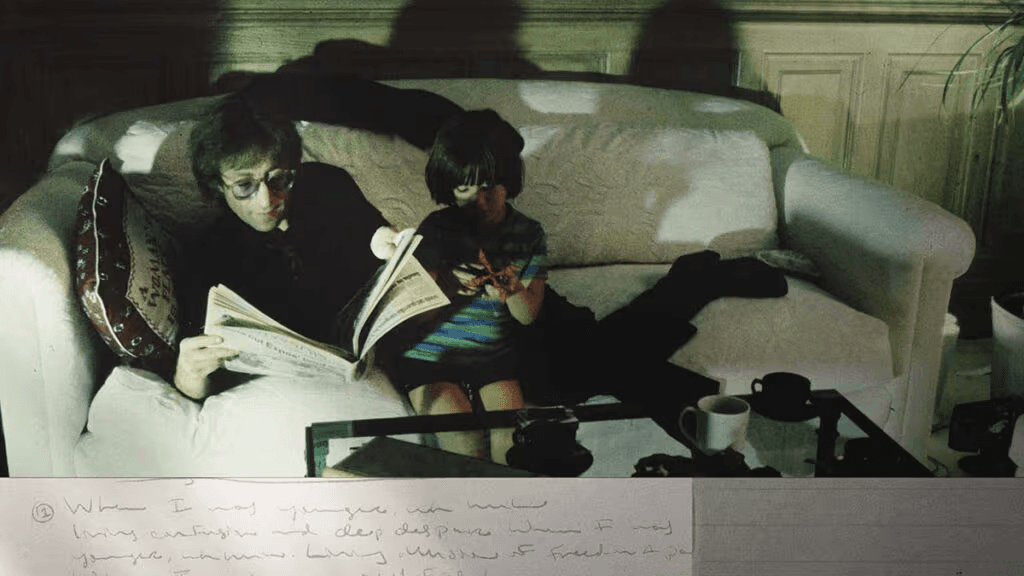
Steven Soderbergh’s John Lennon: The Last Interview appears in Special Screenings. It focuses on Lennon’s final interviews before he was murdered in 1980. How unconventional Soderbergh’s documentary approach will be remains a point of curiosity. Ron Howard’s Avedan — about the famous French photographer — is also in the same section.
Among the midnight screenings: Yeon Sang-ho’s (Train to Busan) new horror film Colony and Quentin Dupieux’s Full Phil. Cannes has always been at its most entertaining after midnight.
Nicolas Winding Refn’s Danish-American co-production Her Private Hell, Andy Garcia’s directorial effort Diamond and Guillaume Canet’s Karma will also screen in this section.
John Lennon: The Last Interview
Cannes Classics: The Memory Section
This year’s Classics selection is dedicated to production designer Dean Tavoularis.
As a special screening, del Toro’s Pan’s Labyrinth (2006) arrives with a new 4K restoration print. Andrzej Wajda’s Man of Iron (1981) and Chen Kaige’s Farewell My Concubine (1993) — both Palme d’Or-winning classics — will screen in restored versions. Meanwhile, “The Peleshyan Project,” which gathers five silent short films by Soviet-Armenian filmmaker Artavazd Peleshyan, is a discovery opportunity in itself.
And yes, Fast and the Furious (2001) is screening in the Classics section as a midnight special presentation. For its 25th anniversary. We’re still trying to figure out whether Cannes is making fun of itself.
Kering Women in Motion: Julianne Moore, Forty Years, One Award
On the evening of May 17 comes Kering’s Women in Motion ceremony — one of the festival’s brightest side events.
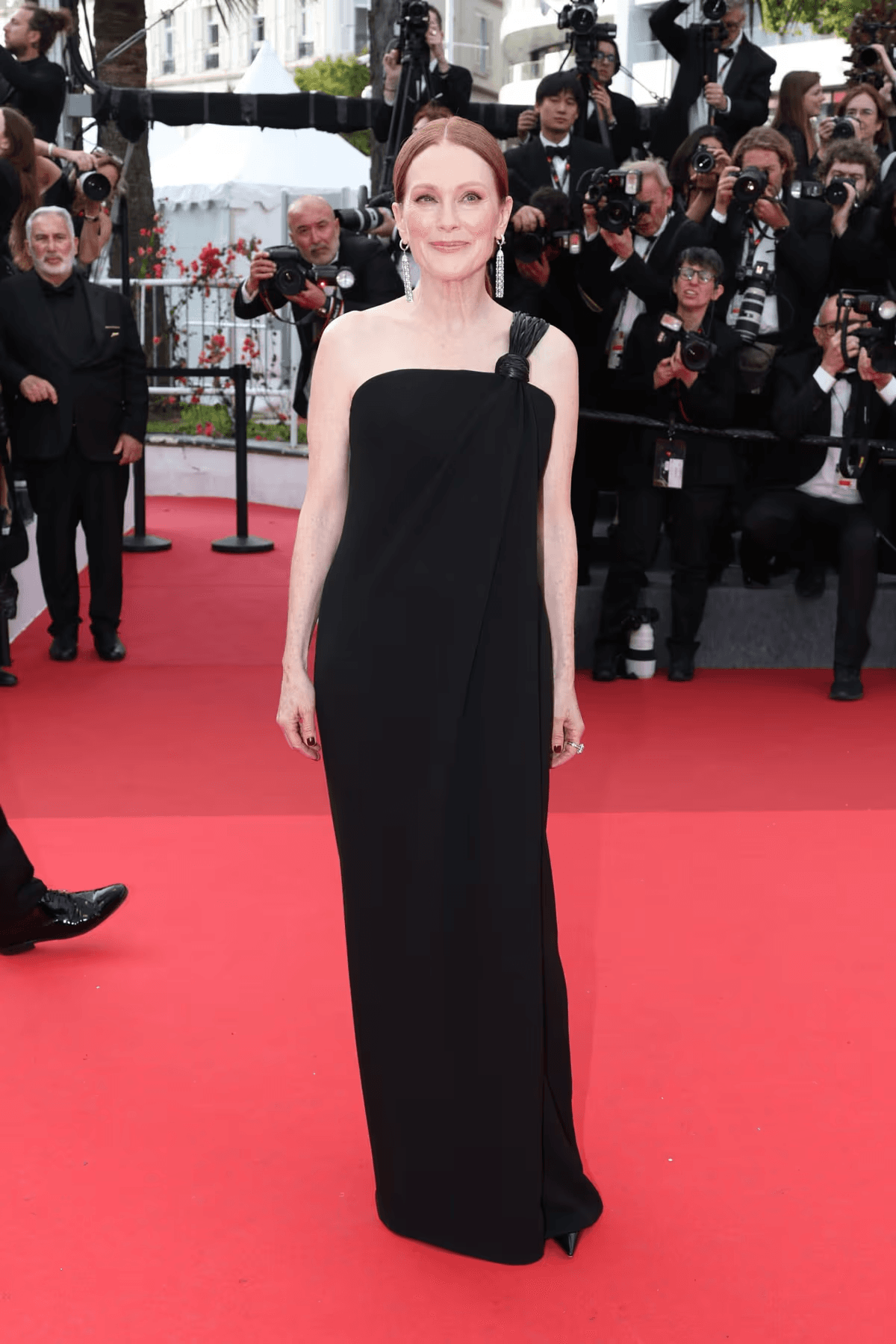
This year’s award goes to Julianne Moore. And this is not one of those meaningless honors handed out for the sake of it.
Moore is the first American woman to win Best Actress awards from Berlin, Venice and Cannes. Berlin for Far from Heaven, Venice for The Hours, and Cannes for Maps to the Stars in 2014. To conquer all three major European festivals — that’s an extremely rare natural phenomenon. Outside Moore, maybe only one or two others have done it. Juliette Binoche, for example.
Cannes president Iris Knobloch summarized it perfectly: “For forty years, she has chosen troubled, unresolved characters in pain. She demanded a space on screen that did not previously exist.” Moore’s career choices are not accidents; they are a position.
Julianne Moore
Recent films include Todd Haynes’ May December, Pedro Almodóvar’s The Room Next Door and Apple TV+’s Echo Valley. Next comes Jesse Eisenberg’s A24 musical. She simply doesn’t stop.
Italian director Margherita Spampinato will also receive the Emerging Talent Award. She returned from Locarno with two awards for her debut feature Gioia Mia. The €50,000 grant attached to the prize will support her next project.
Through this ceremony, Kering also ties the fashion world directly to the Croisette. Gucci, Saint Laurent, Bottega Veneta — for the group’s brands, this night is not just an awards ceremony but a declaration of the season opening.
High-Value Trivia
The kind of details that might come in handy at a dinner party:
• Last year’s Palme d’Or was awarded by Juliette Binoche’s jury to Iranian director Jafar Panahi’s It Was Just an Accident.
• Paul Laverty has been working with Ken Loach for exactly thirty years. He wrote both of Loach’s Palme d’Or-winning films.
• Even though Thelma & Louise screened out of competition at Cannes, it received six Oscar nominations. Callie Khouri won Best Original Screenplay.
• Critics’ Week celebrates its 65th edition this year and, for the first time in its history, opens with an animated film: Phuong Mai Nguyen’s In Waves.
• The Immersive Competition arrives this year at the Carlton Hotel with a new structure designed for groups of 200 people. A format that has already moved beyond virtual reality.
• Jacob Elordi withdrew from the jury at the last minute due to a foot injury.
• Previous recipients of the Honorary Palme d’Or include Agnès Varda, Marco Bellocchio, Jodie Foster, Meryl Streep, Robert De Niro and Tom Cruise.
Fashion: What Will the Croisette Wear?
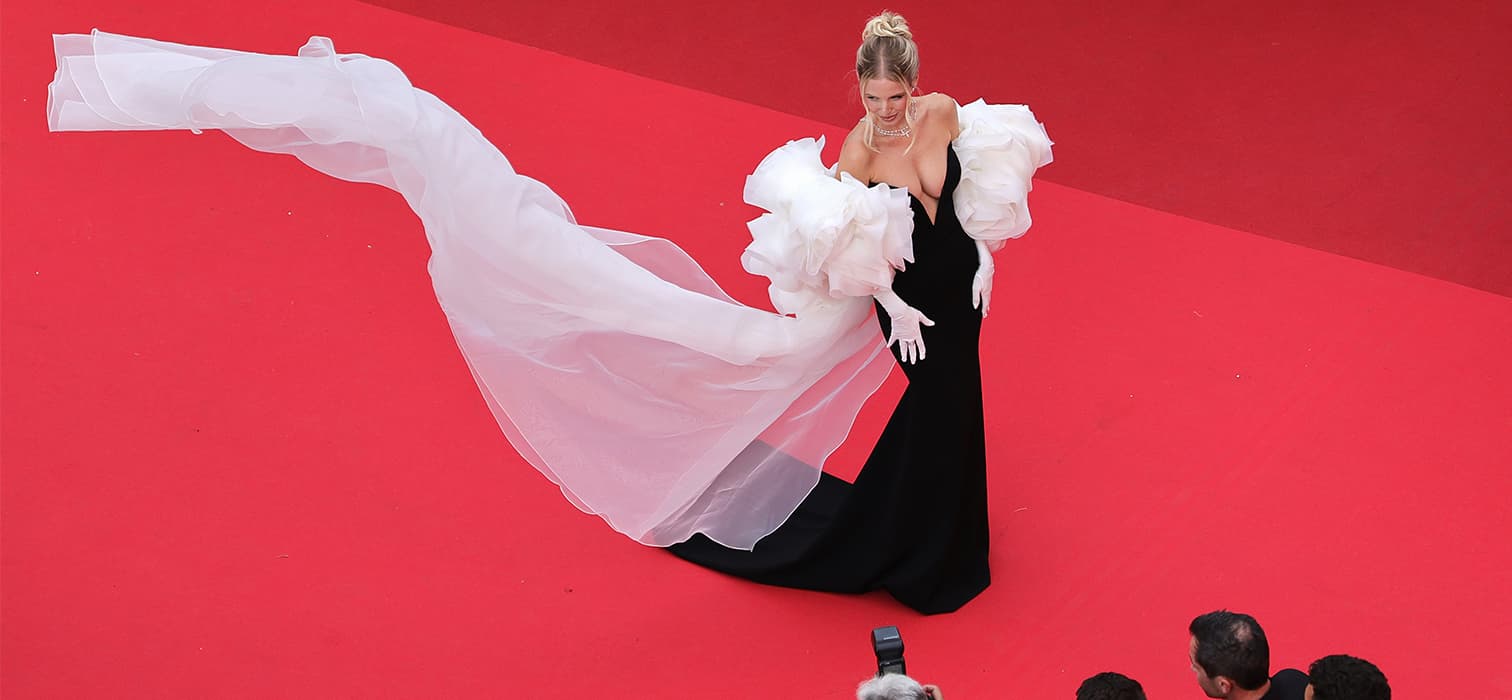
Cannes’ red carpet continues to be one of the grandest fashion stages among film festivals. This year’s visual language clearly takes inspiration from the poster: black-and-white contrasts, road movie freedom and second-wave feminist aesthetics. Looking at the jury lineup, Demi Moore’s post-The Substance red carpet choices are already highly anticipated. Chloé Zhao, meanwhile, always leans minimalist despite her academic elegance, while Ruth Negga continues to stand out as one of the red carpet’s most consistent aesthetic risk-takers.
Kering’s presence adds another layer to the fashion dimension: the Women in Motion ceremony has become a moment where the group’s brands — especially Gucci, Saint Laurent and Bottega Veneta — fold their clients into the Cannes narrative through clothing choices. If the expected ’90s revival — from Thelma & Louise-style denim to cropped leather jackets — truly materializes, predictions are already circulating that Demi Moore will be the first to confirm it on the red carpet.
It’s no coincidence that fashion houses schedule their cruise shows so close to the Cannes calendar. The Croisette functions like a living lookbook. A look seen on the runway reappears on the red carpet just days later.
This time, the excitement is even bigger because everyone is waiting to see whether Matthieu Blazy’s first couture pieces for Chanel will appear on the Croisette. The same goes for Jonathan Anderson’s first couture era at Dior, now at the center of Cannes speculation. Especially considering the internet’s obsession with “fashion x cinema,” it feels highly likely that the first major red carpet moment for these new couture eras will happen at Cannes. In today’s fashion world, the true destination of a collection is no longer the runway anyway; it’s that one red carpet photograph shared millions of times online.
Let’s see who surprises us this year the way Greta Gerwig’s Margiela Artisanal or Bella Hadid’s sculptural Schiaparelli once did.