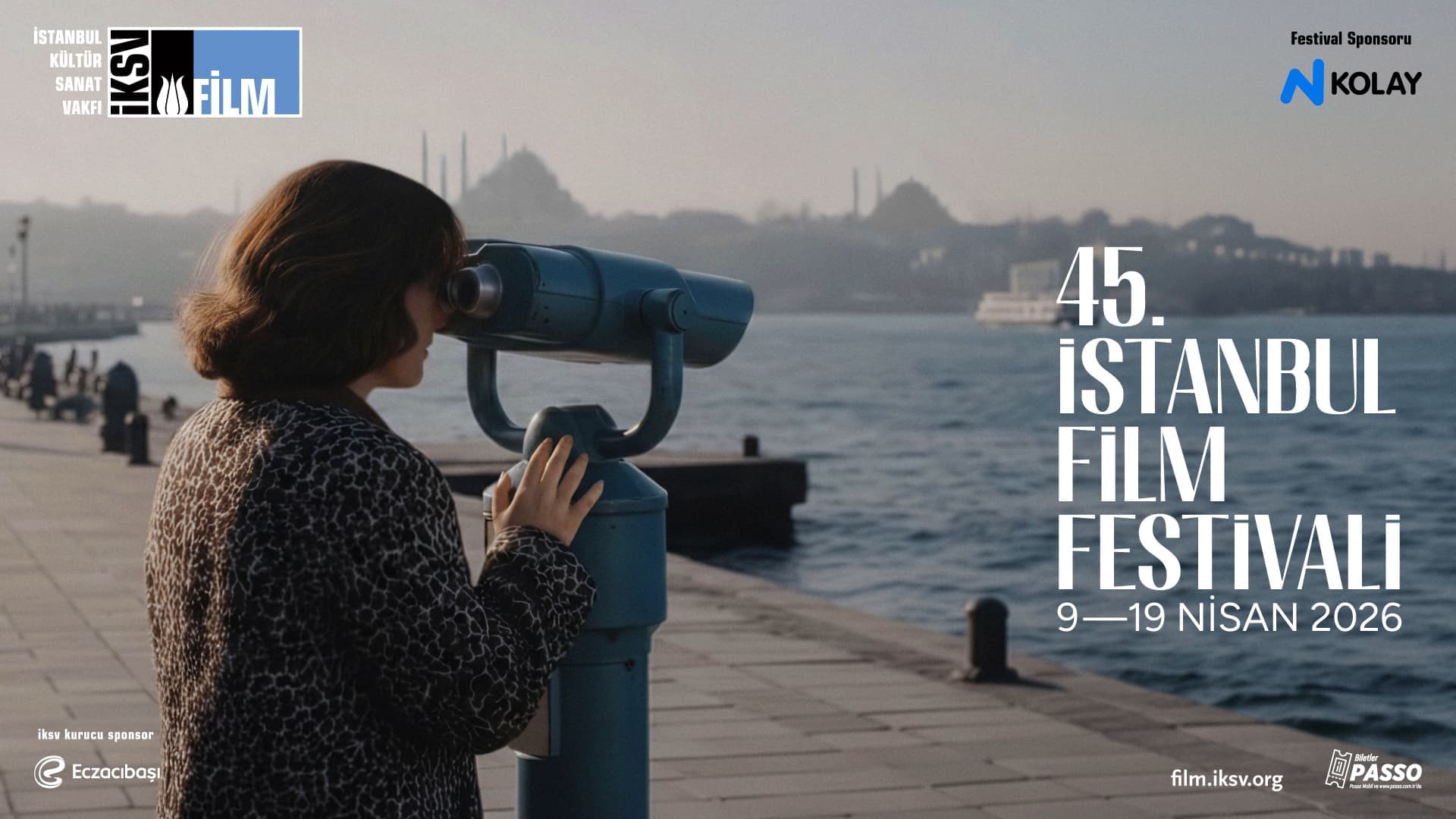
As the media sponsor, the 45th Istanbul Film Festival, Turkey’s largest international cinema event, meets its audience between April 9–19.
Istanbul is the city of this festival… And of course, cinema feels different in the first months of spring. Setting out with a perspective that places this city—where two continents meet—at its center, the 45th Istanbul Film Festival brings not only films but the city itself onto the stage this year with the slogan “A City Like a Film.” Drawing inspiration from Istanbul’s cinematographic power, this approach salutes the enchanting Yeditepe of the 1960s through films where Istanbul plays the leading role, such as From Russia with Love, Tintin in Istanbul, and Bitter Life. At the same time, a special exhibition consisting of 34 illustrated posters spanning from the 1920s to the 1970s makes the city’s traces in cinema history visible.
Bringing together acclaimed and award-winning films from Turkey and around the world, special screenings, star actors, and master directors, the comprehensive selection of the 45th Istanbul Film Festival consists of 127 feature films and 13 short films. This year’s screenings will take place across seven venues: Atlas 1948 and Beyoğlu Cinema in Beyoğlu; CineWAM Premium+ City’s Nişantaşı (Hall 3 and Hall 7) in Şişli; and Kadıköy Cinema, Kadıköy Municipality Sinematek/Cinema House, and Paribu Cineverse Nautilus in Kadıköy. All screenings at Sinematek/Cinema House will have unnumbered seating.
You can access all details about the Istanbul Film Festival at film.iksv.org.
45Th Istanbul Film Festival
What to Watch at the Istanbul Film Festival?
Three Goodbyes / Tre Ciotole (Isabel Coixet)
Italy, Spain
The festival opens with the latest film by Catalan director Isabel Coixet, which had its world premiere at the Toronto International Film Festival. Starring Alba Rohrwacher and Elio Germano, the story of Three Goodbyes is briefly as follows: After a meaningless argument leads to her lover leaving her life, Marta struggles to cope with his absence and gradually loses her appetite. At first, she assumes this is a natural extension of the breakup—until she realizes that the issue runs deeper, reaching a more physical dimension than heartbreak. This realization creates not only a physical but also an existential rupture: the taste of food, the echo of songs, the way she desires, and the decisions she makes all begin to change. Because she now knows that time is limited.
Focusing on the essence of love and the value of small yet profoundly human moments left behind, Three Goodbyes is adapted from the autobiographical text of Italian playwright and novelist Michela Murgia, who passed away in 2023. First presented in Toronto, the film leaves a mark with its fragility as much as its sincerity. As director Isabel Coixet puts it: “Within farewells, there is grace; even within sorrow, a joy that reminds us of life.”
45Th Istanbul Film Festival
American Doctor (Poh Si Teng)
USA, Palestine, Malaysia, Qatar
One of the most anticipated films of the festival is American Doctor, directed by Poh Si Teng. Premiering at the Sundance Film Festival, the film marks Teng’s feature debut, bringing her journalistic perspective into cinema. The film not only explores the challenges of being a doctor in the midst of war but also questions the limits of conscience.
45Th Istanbul Film Festival
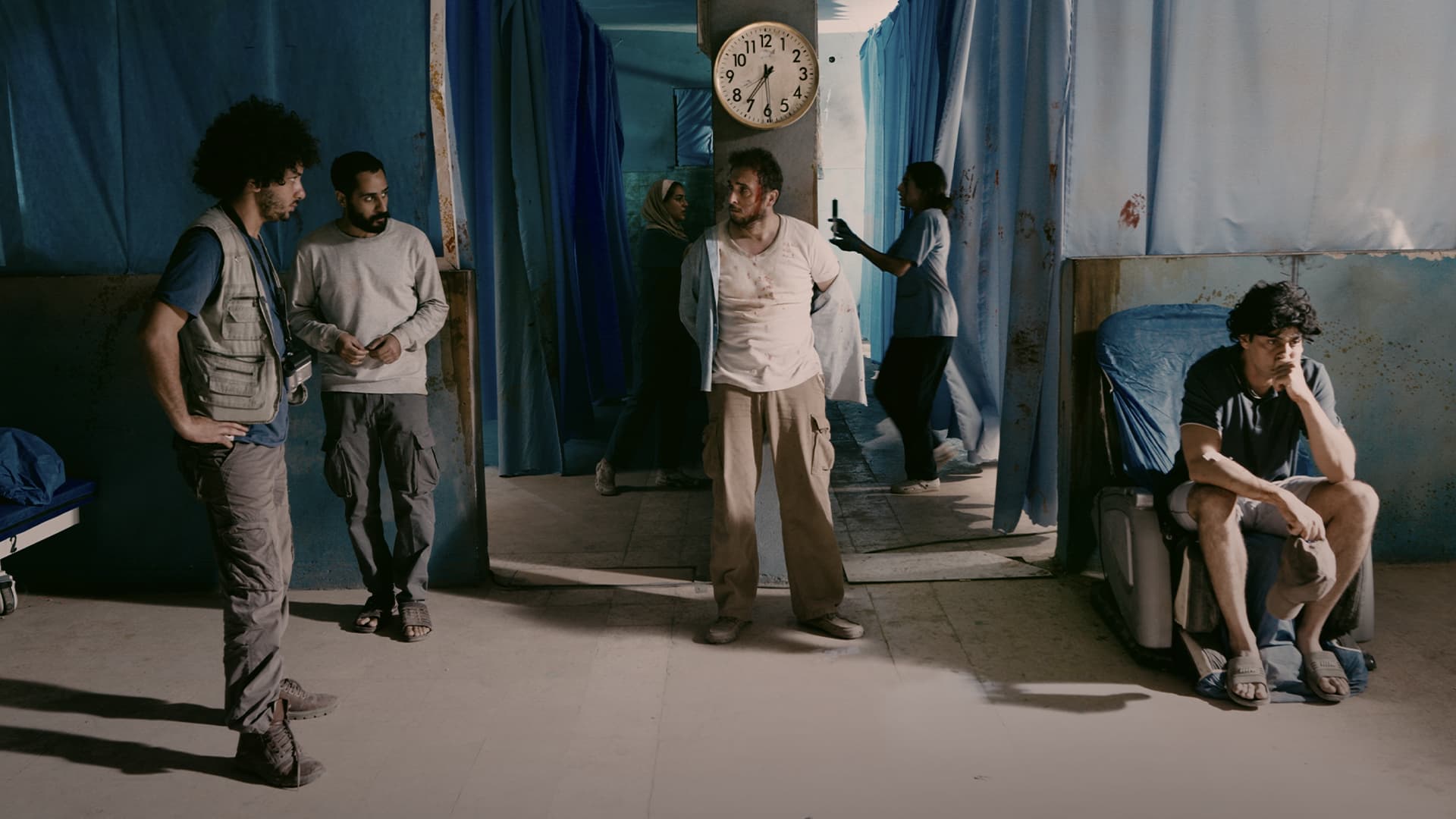
There are three doctors: one Palestinian, one Jewish, one Zoroastrian. Their identities differ, but the oath they took is the same: to save lives. Dr. Thaer Ahmad’s cautious and strategic approach intersects with Dr. Mark Perlmutter’s direct yet compassionate manner, while Dr. Feroze Sidhwa adds another dimension with his productivity. Their differences become a shared ground that binds them more tightly rather than separating them. Their paths cross in the operating room of a besieged hospital in Gaza. While treating the wounded brought in from Israeli bombardments, they face not only medical but also ethical and human trials. The story does not end there; it extends from the operating table to the corridors of the U.S. Congress, where they try to make their voices heard. Amid the noise of politics, they strive to make visible the reality they have witnessed.
45Th Istanbul Film Festival
Couture (Alice Winocour)
France, USA
Premiering in the Special Presentations section at the Toronto Film Festival, Couture stars Angelina Jolie in the lead role. As Fashion Week unfolds at full speed, the lives of three women intersect in Paris. Each is caught in her own rush while carrying the weight of her life. American horror film director Maxine learns she has cancer. Young South Sudanese model Ada faces the possibility of being discovered and changing her destiny. Angèle, a French makeup artist working behind the scenes of the runway, dreams of leaving this world behind to become a writer.
45Th Istanbul Film Festival
The film looks not at the glamorous surface of fashion but at what lies beneath: intense pace, pressure, invisible labor, and the inner struggles everyone carries. There is also an interesting detail about the production: this is the first fictional film ever granted permission to shoot inside Chanel’s Paris atelier. Director Winocour constructs these three characters as different ages of a single woman—her 20s, 30s, and 40s. In this sense, the film also revolves around time, choices, and the question: “Could there have been another life?”
45Th Istanbul Film Festival
Pompeii: Below the Clouds (Gianfranco Rosi)
Italy
Winner of the Special Jury Prize at the 2025 Venice Film Festival, Pompeii: Below the Clouds bears the signature of Italian documentary master Gianfranco Rosi. Over three years, Rosi roamed the slopes of Vesuvius, capturing not only a geography but also layers of time. Watching the steam rise from the Phlegraean Fields, he sought to collect what is unseen and unheard. A teacher running an alternative education program after school, police tracking grave robbers, ships unloading grain from Ukraine at the port of Torre Annunziata, Japanese archaeologists excavating for twenty years… Each is part of a different time, a different rhythm. Pompeii, one of history’s most intriguing geographies, demands to be seen through this lens as well.
45Th Istanbul Film Festival
Rose (Markus Schleinzer)
Austria, Germany
Rose, which earned Sandra Hüller the Best Performance award in Berlin this year following her widely discussed role in The Zone of Interest (2023), presents a remarkable story. In 17th-century Europe, as the devastation of the Thirty Years’ War spreads, a mysterious soldier arrives in a remote Protestant village in Germany. Silent, withdrawn, marked by the traces on his face, he claims to have inherited an abandoned farm. While trying to gain the villagers’ trust with his documents, he opens the door to a deeper game.
45Th Istanbul Film Festival
Over time, he establishes himself as a disciplined man guided by the fear of God. The initially suspicious villagers gradually accept him into their community. Yet this sense of belonging is built upon a carefully constructed deception; beneath the apparent order lies another truth. Rose is the third feature film by Markus Schleinzer, known for Michael (2011) and Angelo (2018).
45Th Istanbul Film Festival
Habibi Hussein (Alex Bakri)
Palestine, Germany, Saudi Arabia, Sweden
A forgotten structure in the shadow of destruction: Jenin Cinema. Its doors have been closed for twenty years, its memory entrusted to dusty seats and silent machines. When a German NGO arrives in the city to restore this ruin, a figure from the past emerges: Hussein, the cinema’s last projectionist. Trying to return to his old job and life, he attempts to prove himself again with the craftsmanship accumulated over the years. But the world he faces is entirely different now. His antique toolkit appears almost naive against the speed and cold precision of contemporary technology. Among foreign engineers, he struggles to speak today’s language with the knowledge of the past. Yet time may have already left his craftsmanship behind. A craft that remained valid for forty years is now neither sufficient nor perhaps even necessary. Habibi Hussein questions the real impact of development aid reaching Palestine while tracing the fading traces of a disappearing cinema culture.
45Th Istanbul Film Festival
The Wizard of the Kremlin (Olivier Assayas)
France
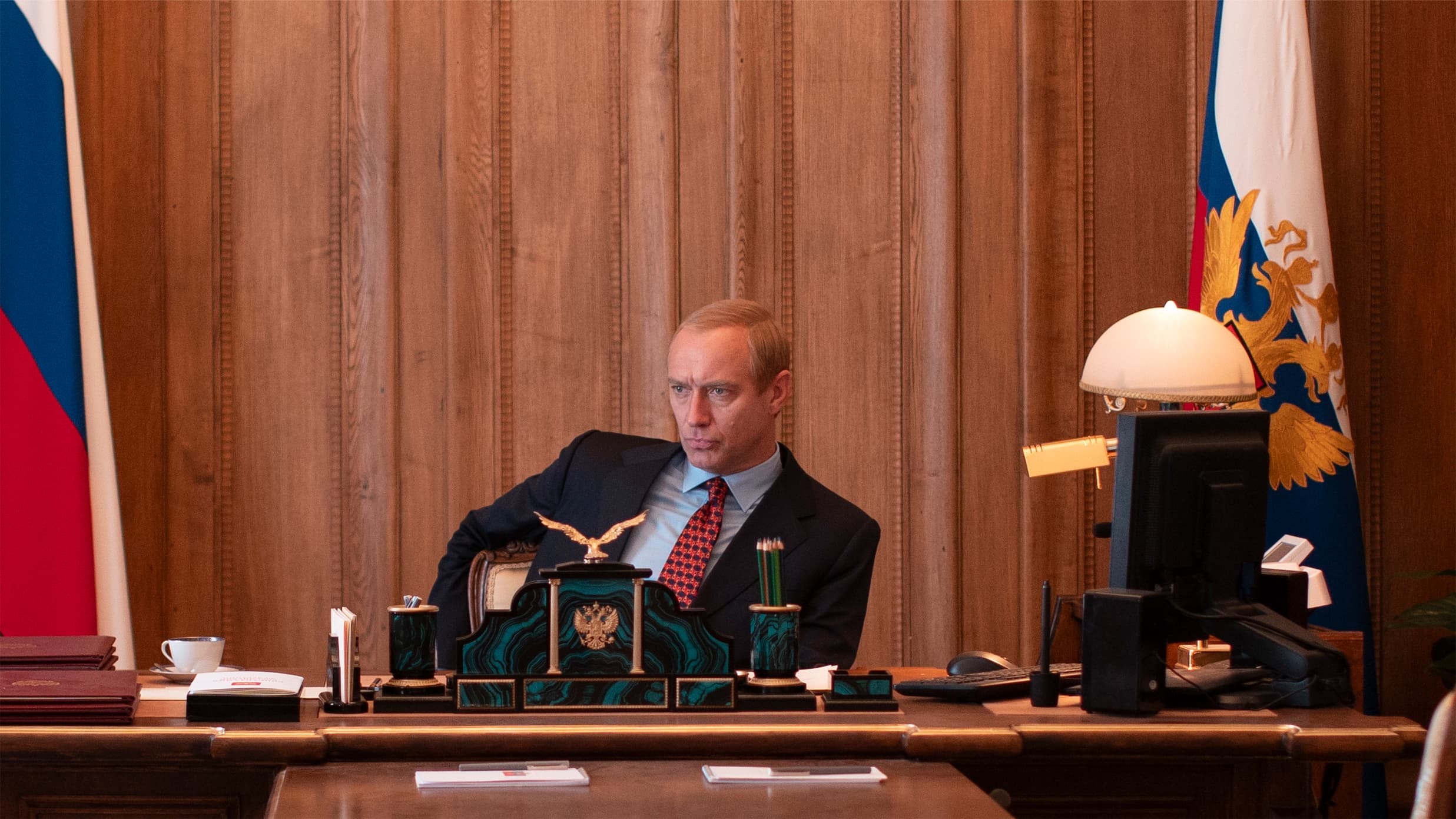
With its star-studded cast, The Wizard of the Kremlin presents a dark narrative of power shaped in the shadow of Putin. Watching Jude Law portray Putin promises to be particularly intriguing. The story begins in the early 1990s, in a country reshaped after the collapse of the Soviet Union. Vadim Baranov, a sharp and opportunistic figure transitioning from theater to television, enters the inner circle of a rising KGB agent—Putin.
45Th Istanbul Film Festival
Over time, he becomes not only an advisor but also a kind of architect; his relationship with power evolves into a tool that rewrites the system itself. Baranov’s path unfolds in a space where reality and fiction blur, and belief turns into manipulation. Over the years he spends at the center of power, he plays a decisive role in the construction of the new Russia and the entrenchment of authoritarian structures. The film, which had its world premiere in Venice, also features Paul Dano, Alicia Vikander, and Tom Sturridge.
45Th Istanbul Film Festival
Resurrection (Bi Gan)
China, France
It is difficult to describe Bi Gan’s latest film in a single sentence because it transforms depending on where you look. At times it feels like a love story spanning a century, at times like a love letter written to cinema. It evokes a sense of film history nourished by dreams, while also turning into a strange epic about life and death. The film consists of five chapters, each pursuing a different sense. At its center is an intriguing idea: in a world where dreams have almost disappeared, a “creature” stubbornly continues to dream. The narrative does not follow a linear path. It moves across genres, making you feel as if you are transitioning into another film within a scene. Colors, atmosphere, and storytelling style constantly change, yet the film manages to hold your attention throughout. Resurrection functions more as an experience than a conventional narrative. It is clear: we will either love it or hate it.
45Th Istanbul Film Festival
Chronicles from the Siege (Abdallah Alkhatib)
Algeria, France, Palestine
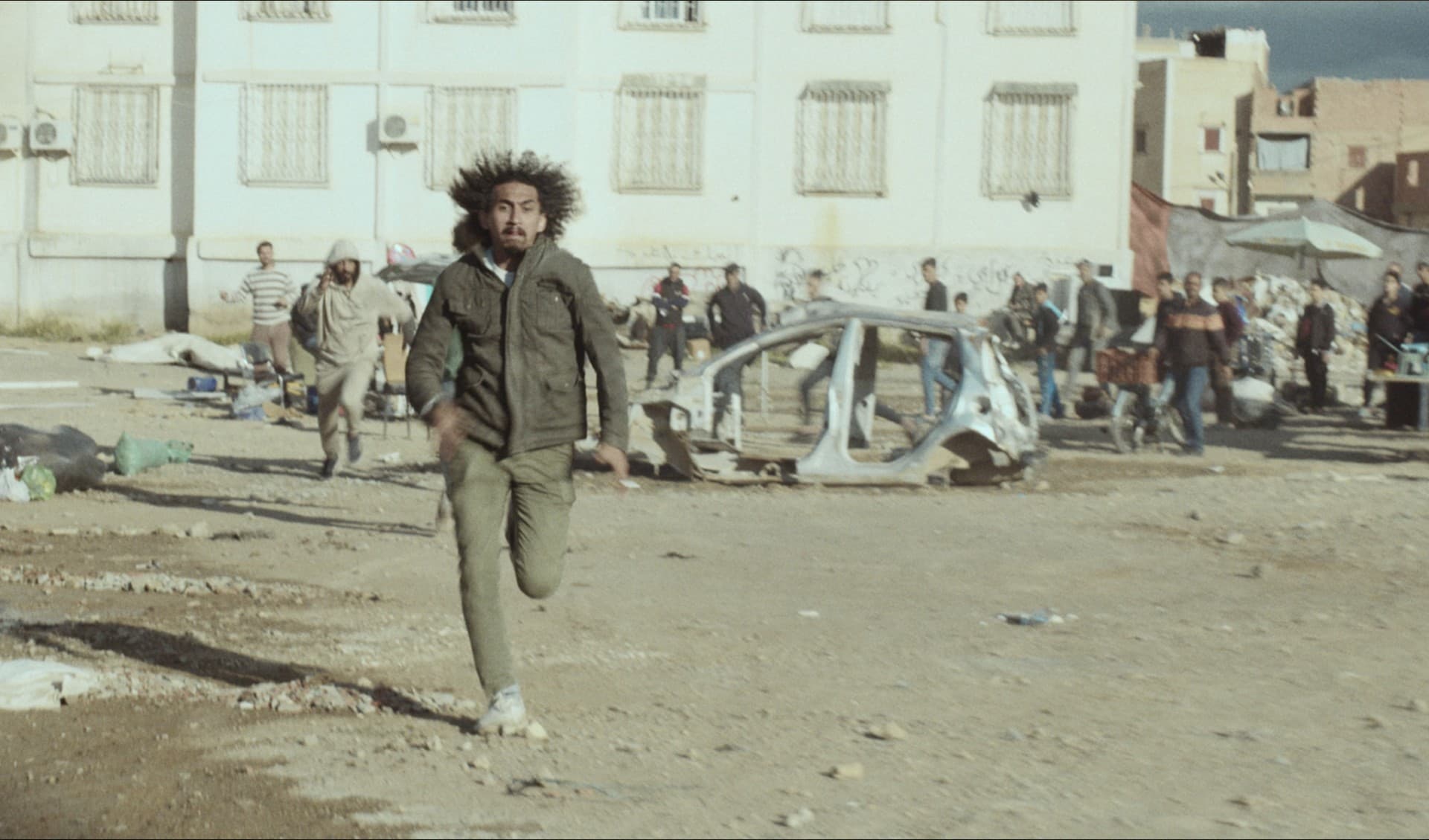
Winner of the Best First Film award in the Perspectives section at the 2026 Berlin Film Festival, this film closely observes the daily lives of people trying to survive amid war. People trapped between snipers and bombardments… Yet the story is not only about survival. People still hold on to each other, love, and try to breathe in small moments. Because in such an environment, even the simplest things—a bite of food, a bit of warmth, a glance—become vital.
45Th Istanbul Film Festival
The film shows that siege is not only physical but also psychological. Living under constant pressure changes a person’s decisions, values, even identity. Hunger, cold, desire, and survival instinct intertwine; what we call ordinary life gradually disappears. This first fiction feature by Palestinian-Syrian director Abdallah Alkhatib draws from events in Yarmouk Camp. Alkhatib previously gained attention with Little Palestine (Diary of a Siege). Here, he tells the same reality through a more direct and striking fictional lens.
45Th Istanbul Film Festival
Only Rebels Win (Danielle Arbid)
France, Lebanon, Qatar
Premiering as the opening film of the Panorama section at the Berlin Film Festival, the production carries a striking reality behind it as compelling as the film itself. Although originally planned to be shot in Lebanon, the film could not be realized there due to bombardments; filming was completed in a studio in France. This situation directly mirrors the story’s background: the state of the world determines not only the stories told but also how and where they are told.
45Th Istanbul Film Festival
Only Rebels Win follows the story of two lonely individuals whose paths cross in Beirut: Suzanne, a Palestinian-origin widow in her sixties with two children, and Osmane, a young Sudanese worker. Despite differences in age, class, and life experience, an unexpected bond forms between them. Yet from the very beginning, this relationship is surrounded by external pressures: Suzanne’s children, the neighborhood, religious authorities, and the reality of the country they live in constantly intervene. Hiam Abbass, who brings Suzanne to life, is one of the film’s strongest elements. With a performance that is emotionally restrained yet deeply impactful, she makes this seemingly impossible love believable. The film stays precisely here—following a small but intense emotion without making grand statements.
45Th Istanbul Film Festival
Mother Mary (David Lowery)
Finland, Germany, USA, Ireland
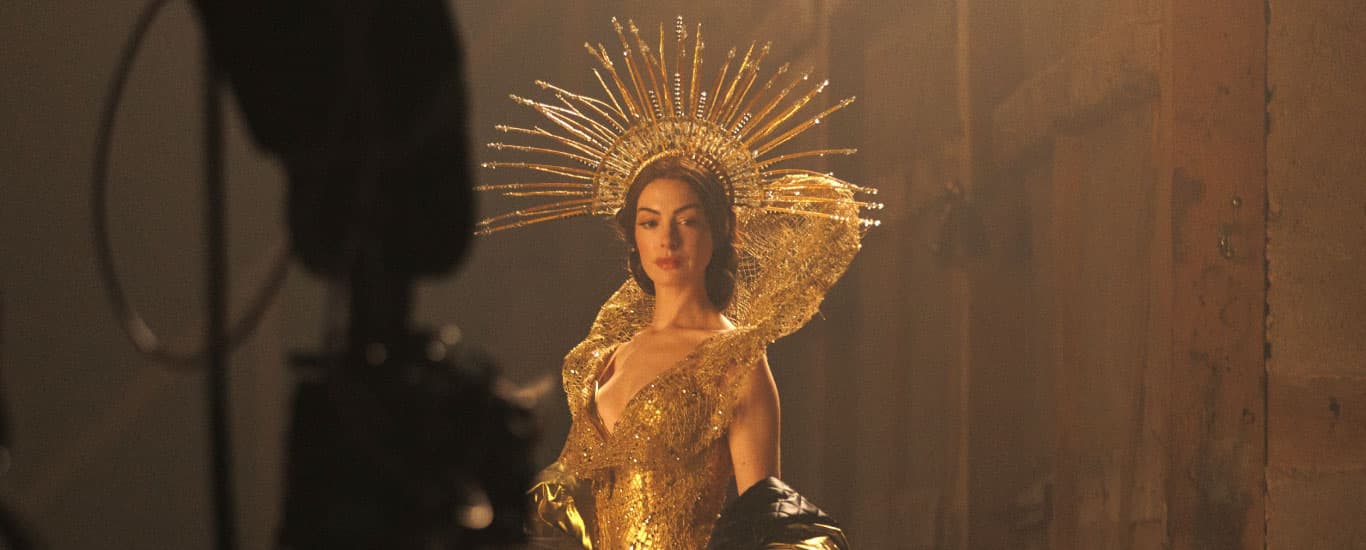
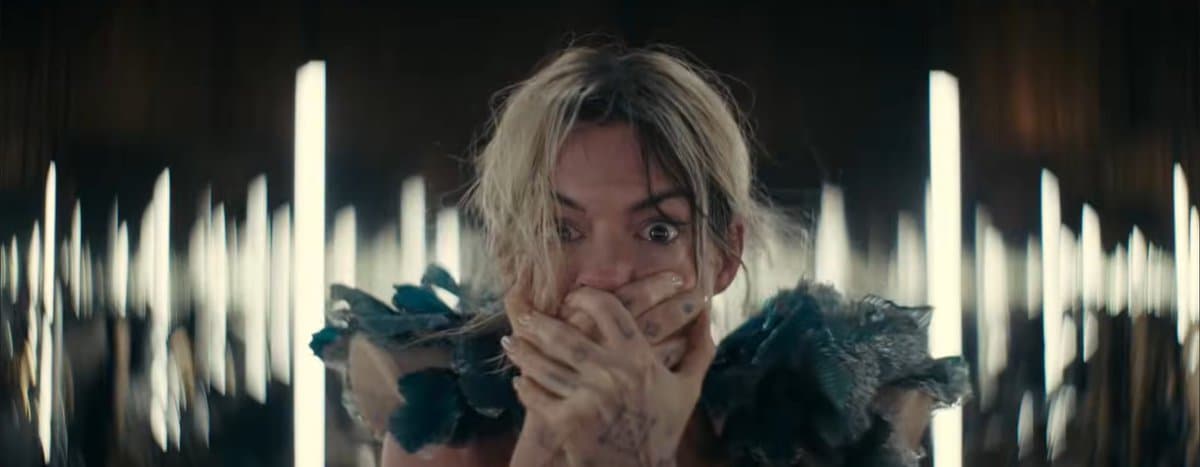
Finally, another highly anticipated film of the festival: Mother Mary, starring Anne Hathaway. The story unfolds as follows: just hours before a major comeback performance, global superstar Mother Mary suddenly disappears and turns toward her past. She reunites with Sam, her former best friend and costume designer, with whom she has not spoken for some time. But this encounter turns not into a nostalgic reunion but into a confrontation where long-suppressed resentments resurface. Some things never truly stay in the past.
45Th Istanbul Film Festival
Described by director David Lowery as a “pop thriller,” the film focuses on the cracks beneath the glittering surface of fame. Michaela Coel stars alongside Hathaway as Sam. Their scenes together form the emotional tension that sustains the film. Another element that makes the film special is its music, composed by Grammy-winning artist Charli XCX and British musician and actor FKA Twigs. It is also worth noting that the film’s festival screening coincides with its U.S. release.
45Th Istanbul Film Festival
Beyond the Screen: The Festival’s Presence Across the City The Istanbul Film Festival is not limited to films; it expands into a broader cultural space through side events spread across the city.
Cinema Honorary Awards This year’s honorary awards are presented to Nilüfer Aydan and Gianfranco Rosi—one a rooted figure in Turkish cinema, the other one of the most powerful voices in contemporary documentary filmmaking. The festival brings these two different generations and approaches together within the same frame.
Meetings on the Bridge One of the most important stops on the industry side, Meetings on the Bridge takes place between April 14–16 at Pera Museum, Borusan Music House, the French Cultural Center, and Yapı Kredi Culture Arts. Featuring 23 projects this year, the platform creates a strong space for production and networking for producers and filmmakers.
“A City Like a Film” Poster Exhibition Held at Borusan Music House, the exhibition can be visited free of charge between April 7–17. It brings together illustrated posters of 34 films in which Istanbul serves as a backdrop, spanning from the 1920s to the 1970s, offering a nostalgic look at the city’s relationship with cinema.
45Th Istanbul Film Festival
45Th Istanbul Film Festival
Panels in Collaboration with SenaristBir Three panels to be held on April 13 at Yapı Kredi Culture Arts focus on the creative process of cinema: “Is Independent Cinema Truly Independent?”, “Do We Have to Be an Auteur? Being a Screenwriter in Independent Cinema!”, and “The Journey of a Script” open up both the theoretical and practical aspects of production for discussion.
Şile Children’s Directors Film Festival The festival also includes films from the selection of the 1st Şile Children’s Directors Film Festival. These works, in which children tell their own stories from the director’s chair, represent an important step in creating space for young creators. The application deadline is April 10, 2026.
Creative Editing Workshop for Youth Organized by İKSV Alt Kat, the workshop is aimed at ages 14–16 and 17–19. Following the online closing event on April 11, the short films created by participants will be shared on digital platforms throughout April.
Festival Talk: Andrzej Wajda Linked to the screening of Ashes and Diamonds in the Classics section, a festival talk on Andrzej Wajda is also included in the program—an essential stop for those wishing to revisit cinema history.
How Much Are Istanbul Film Festival Tickets?
Festival tickets, recently released, are available for general sale via passo.com.tr, the Passo mobile app, and Passo retail outlets.
As in the previous year, weekday daytime screenings will have an unlimited quota for Eczacıbaşı Young Tickets (limited by venue capacity). Weekday daytime sessions (11:00, 13:30, 16:00) are 250 TL full price, and only 50 TL for students with the Eczacıbaşı Young Ticket.
Weekday 19:00 and weekend sessions (11:00, 13:30, 16:00, 19:00) are 350 TL full price, and 50 TL for students with the Eczacıbaşı Young Ticket. All 21:30 sessions are 350 TL.
Audience members aged 65 and over receive a 25% discount for all sessions, while disabled viewers are entitled to a 50% discount.
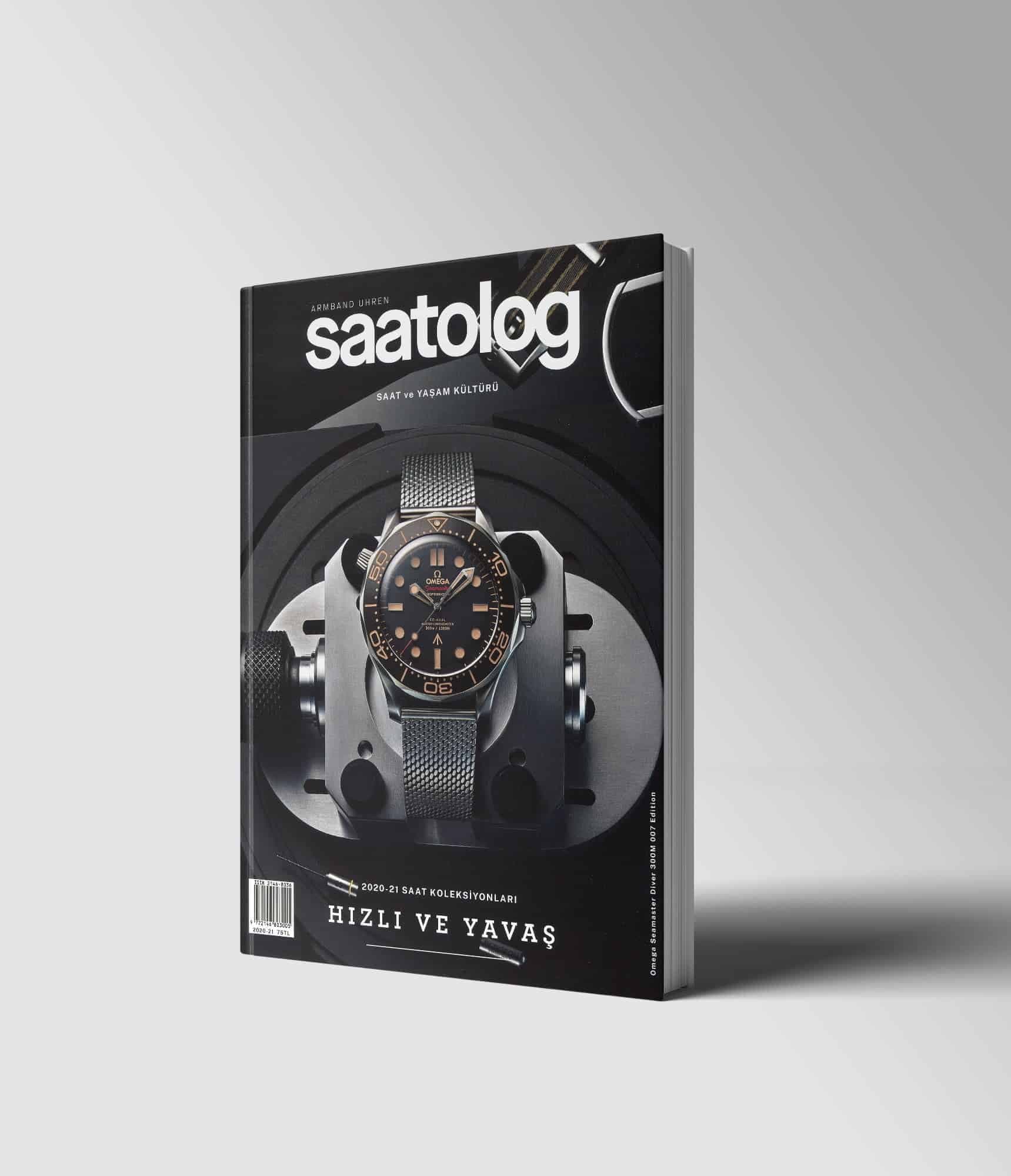
Saatolog Yıllık Saat Dergisi Saatolog’un yeni sayısı, 2020’nin yarattığı bu dönüştürücü etkiden ilham alarak hazırlandı. Dünya dijitalin etkisiyle her zamankinden de hızlı bir şekilde ilerlerken yavaşlamanın da önemini sonunda kavramış bulunuyoruz ve bu tezatlık hayatlarımızın her anına etki ediyor. Biz de bundan yola çıkarak Saatolog 2020/21 sayısını ‘‘hızlı ve yavaş’’ teması altında hazırladık.