Marco Van Basten’s story is a journey that began with the grace of a swan and ended in the silence of pain.
“For me, culture is watching Van Basten,” said Diego Armando Maradona. He bore an extraordinarily graceful nickname, one rarely heard on a football field: The Swan. And indeed, Marco van Basten resembled a swan — tall, long-limbed, and astonishingly elegant. Despite his height, his ankles possessed a rare delicacy, enabling him to perform miracles with the ball. Though his career — one that should have lasted far longer — was cruelly cut short by a devastating injury, he still managed to fill those brief years with trophies, championships, and unforgettable goals. Above all, he left behind a timeless benchmark: the expression “like Van Basten” became the measure of excellence for every striker who followed.
Marco van Basten was born on October 31, 1964, in Utrecht, the Netherlands. From his earliest years, every touch of the ball revealed signs of an unrelenting pursuit of perfection. During his youth at local clubs EDO, UVV, and Elinkwijk, the ball seemed almost magnetically attached to his feet; it was clear from the start that he stood several steps ahead of his peers. For Van Basten, football was never just a game — it was a form of art. That art took on new meaning when, at the age of sixteen, Ajax scouts discovered him and ushered him into the club that would shape his legend.
The Ajax Years: The Mathematics of Goals
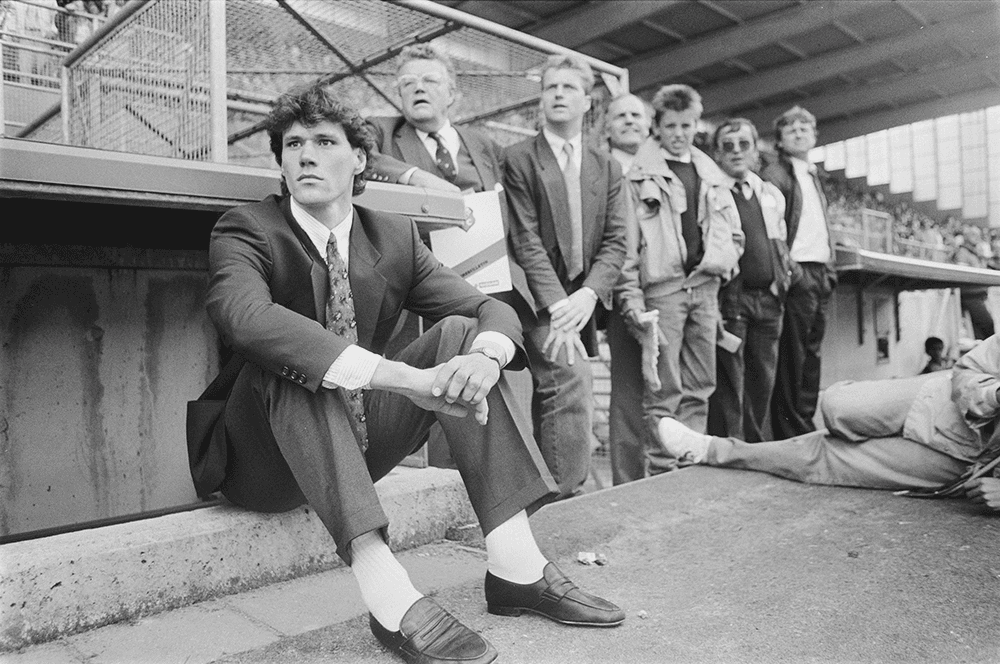
Van Basten joined Ajax’s youth academy in 1981 and swiftly advanced to the first team. He made his professional debut on April 3, 1982, against NEC Nijmegen — scoring in his very first match. That goal marked the beginning of a scoring streak that would define an era.
Between 1983 and 1987, he virtually redefined Dutch football:
● He scored 128 goals in 133 official matches.
● He became the league’s top scorer four consecutive times.
● In 1987, he led Ajax to victory in the UEFA Cup Winners’ Cup.
In those years, his football was not merely about scoring — each goal was as immaculate as a mathematical equation, a study in precision and beauty. Yet, this constant quest for perfection came at a price. The persistent pain in his ankle emerged as an early warning of the nightmare that would one day end his career.
The Red and Black Era: AC Milan and the Peak of Football
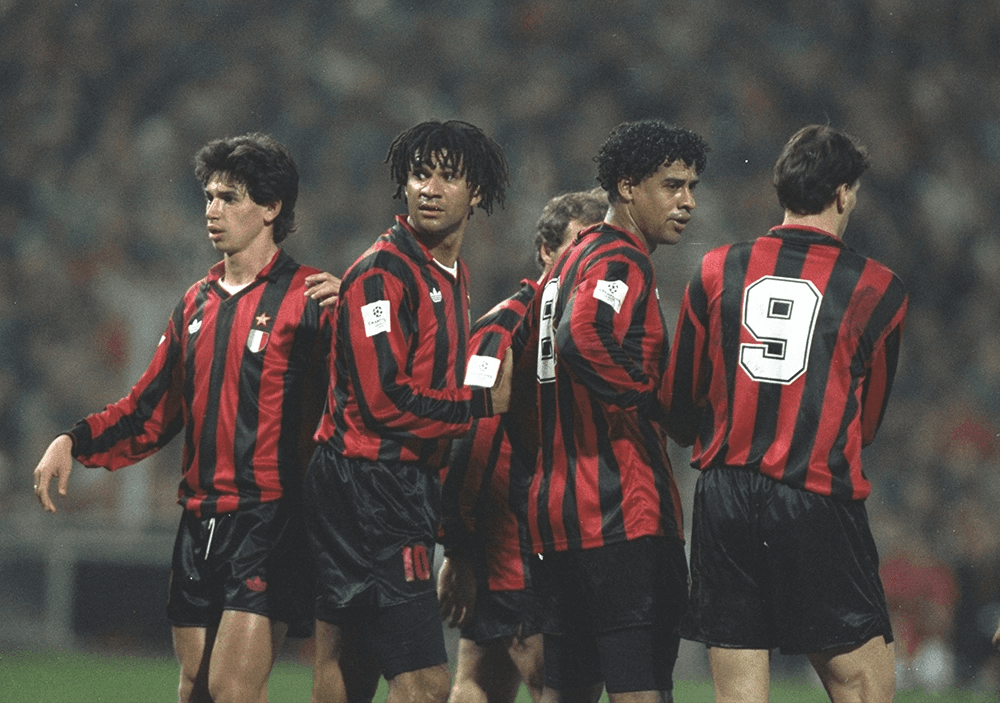
In the summer of 1987, at the age of twenty-two, Van Basten transferred to AC Milan. Under Arrigo Sacchi’s revolutionary tactical vision, he became part of European football’s legendary “Dutch Trio,” alongside Ruud Gullit and Frank Rijkaard. Italian defenses were notoriously unyielding and the game’s rhythm heavy, yet Marco confronted this reality with effortless grace — his every movement a kind of dance.
Between 1988 and 1992, wearing Milan’s red and black, he achieved the pinnacle of football glory:
● 3 Serie A Championships
● 2 Champions Leagues (then known as the European Champion Clubs’ Cup)
● 2 UEFA Super Cups
During this same period, he claimed the Ballon d’Or in 1988, 1989, and 1992 — an achievement that crowned his dominance.
But even in these golden years, the pain in his ankles grew relentless. Surgeries, injections, and endless rehabilitation sessions became part of his daily existence, a shadow cast across the brilliance of his art.
National Legend: Holland at the Top of Europe
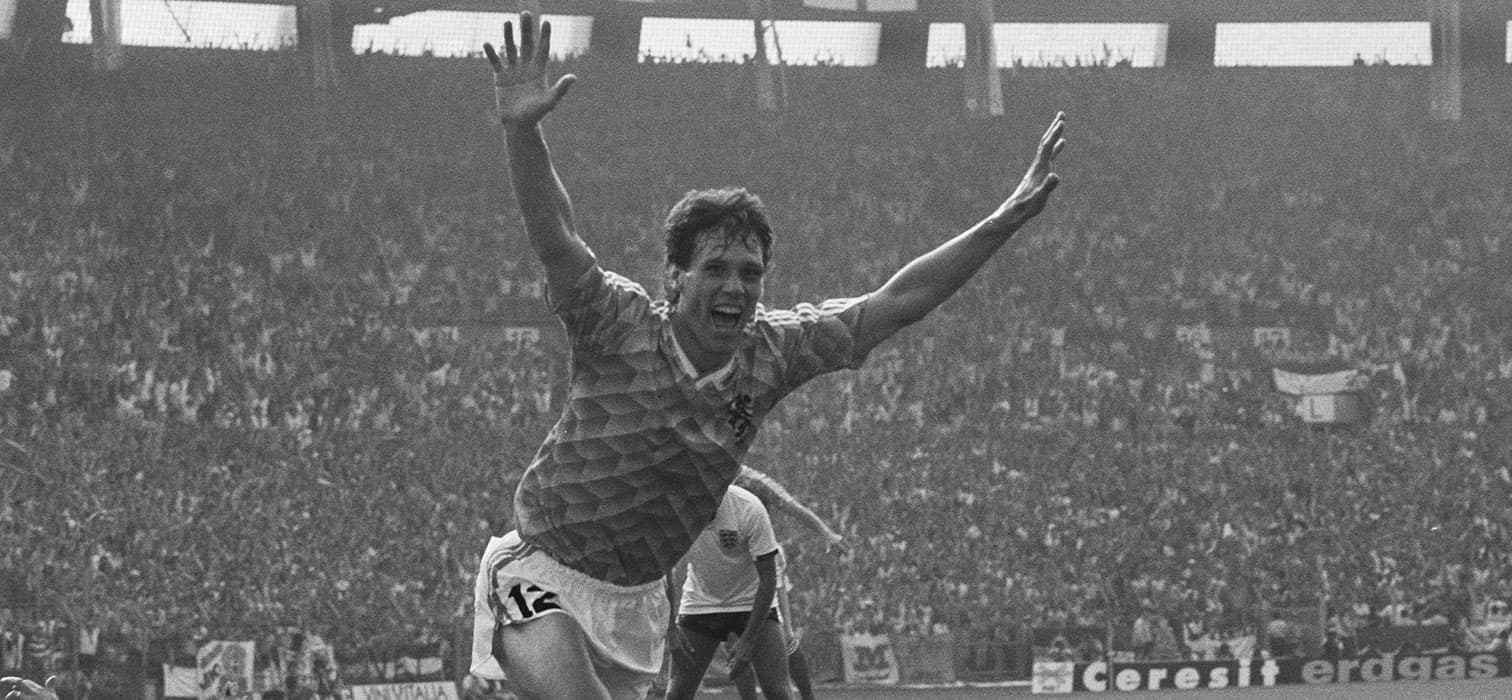
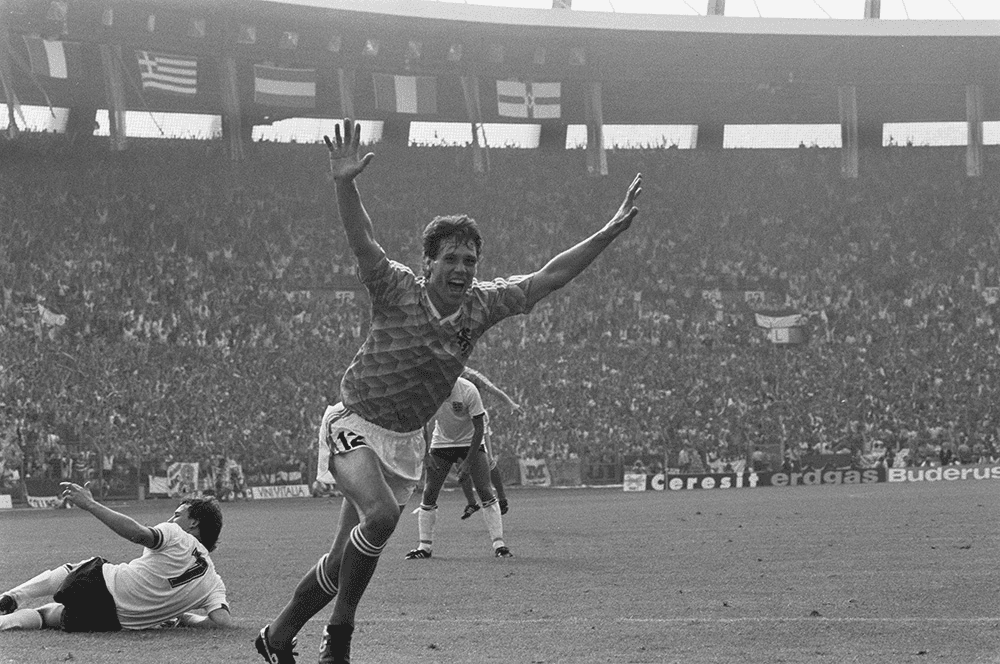
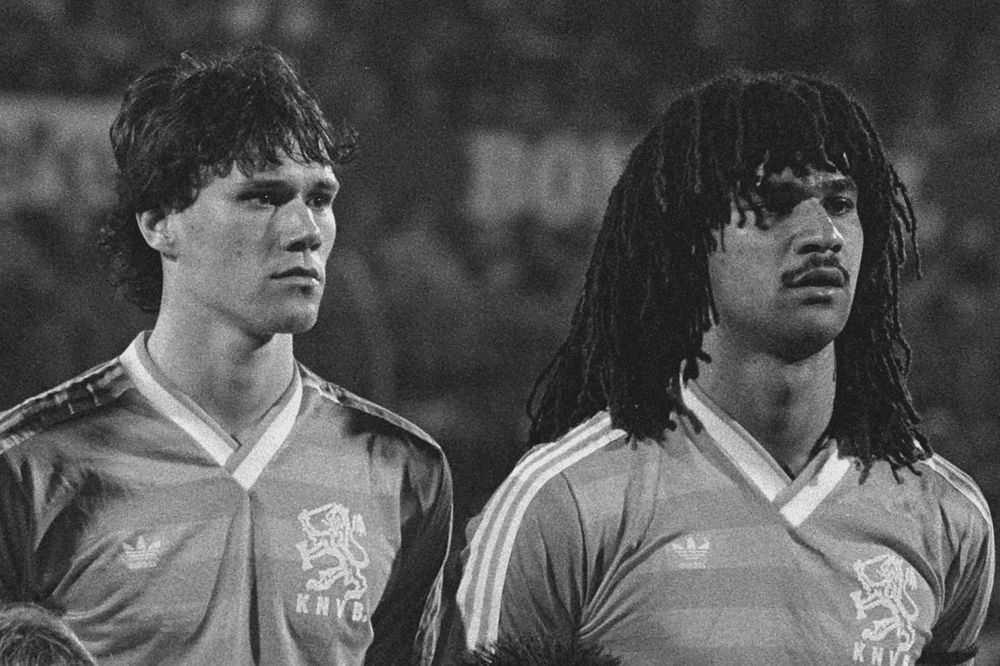
Marco van Basten first donned the Dutch national team jersey in 1983. Yet his true breakthrough came five years later, at the 1988 European Championship in Germany. Beginning the tournament as a substitute, Van Basten seized his moment of destiny with a stunning hat-trick against England in the second group match — an explosion of brilliance that announced his arrival on the grandest stage. And then came that moment:
June 25, 1988, Munich – The Legendary Goal Against the USSR
In the 54th minute of the final against the Soviet Union, Van Basten met Arnold Mühren’s cross from the right flank with a seemingly impossible volley. The ball soared through the air at an improbable angle before crashing into the far top corner. For a brief instant, even he could not believe what he had done — he buried his face in his hands, overwhelmed. He was not alone in disbelief. Every spectator, whether in the stands, on the pitch, or watching from home, shared that stunned awe. To score from such a narrow angle, against Rinat Dasaev — one of the greatest goalkeepers in history — was simply unthinkable. Yet Van Basten had done it. The goal instantly entered football’s collective memory as one of the sport’s most beautiful, most graceful moments.
That volley symbolized more than a goal — it embodied the spirit of an era when elegance defined football. It crowned the Netherlands’ first-ever European Championship and elevated Van Basten to the status of a national hero. Finishing the tournament as top scorer, he became the new icon of European football. But beneath the glory, his body was already betraying him.
The Shadow of Pain: The Beginning of Injury
Even as he raced from triumph to triumph with Milan in 1989, Van Basten was fighting an invisible battle. The pain in his right ankle had grown unbearable. Doctors discovered that the cartilage in the joint had nearly dissolved. After every match, he would plunge his foot into a bucket of ice, desperate to numb the throbbing pain.
This relentless torment followed him into the 1990 World Cup, where he played without scoring a single goal. By the time of the 1992 European Championship, his movements had lost their old fluidity — the effortless agility that once defined him was gone. That tournament became his final appearance on a major stage for the Netherlands. The Swan, once gliding so freely across the field, was slowly fading from view.
A Fan’s Donation Offer: Football’s Most Beautiful Gesture of Humanity
Van Basten’s suffering moved not only Milan supporters but the entire Italian public. For many, watching him play had been like witnessing a living artwork. During this time, a 21-year-old Milan fan named Paolo Simonetti wrote a letter to the club that would become part of football folklore:
“If it’s not possible for me to run on the same field as him, at least let a part of me run with him. I am willing to donate part of my cartilage to Marco.”
These words captured more than the devotion of a fan; they expressed a nation’s collective affection for a man who had brought beauty to their game. Though doctors explained that such an operation was medically impossible, the gesture became immortal in Milan’s history — proof that one player’s artistry could inspire love deep enough for someone to offer a piece of themselves.
Silent Farewell
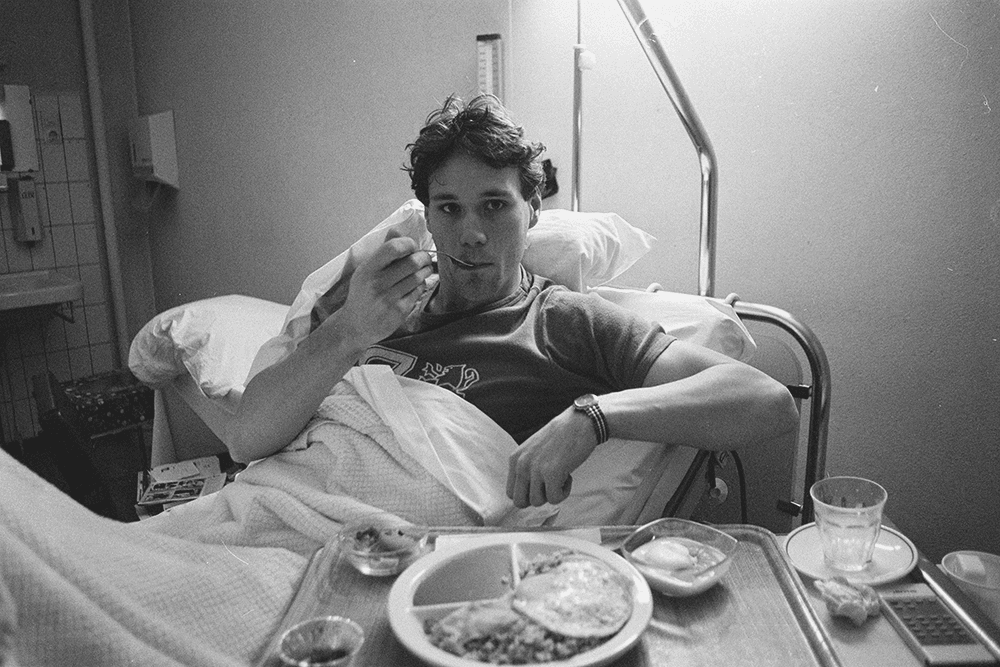
Van Basten’s final official match came in 1993 — the Champions League final between Milan and Marseille. After that night, he never returned to the field. For two years he fought to come back, enduring rehabilitation and surgeries, refusing to surrender hope. But on August 17, 1995, he faced the press and spoke the words that ended an era:
“Walking is now harder than playing football. My body won, but my heart lost.”
He was only thirty years old. Yet in that brief span, he had achieved what few could in a lifetime — three Ballon d’Ors, a European Championship, countless goals, and a style of play that fused precision with poetry.
Legacy: The Legend of Grace
Marco van Basten’s story is not merely the biography of a footballer; it is the tale of an artist who transformed the game into an art form. His 1988 volley against the USSR remains one of the purest expressions of beauty ever seen on a football pitch — a dream rendered in motion. The irony of his story lies in its brevity: his body failed him only a few years after he created his masterpiece, turning him into something mythic, almost otherworldly.
Even today, when commentators or fans describe a footballer as elegant — whether it’s Messi, Benzema, or any player graced with effortless artistry — there is a quiet, inevitable comparison whispered through generations:
“Like Van Basten…”
The Worst 20 Minutes of My Life
The Most Expensive Winter Sport: Heliskiing
Ancient Strategy, Cosmic Balance: Go Game