We explore the best books on female friendships that shape women’s lives with their commitment, sincerity, and emotional depth in literature.
March 8, International Women’s Day, is not only a time to reflect on women’s roles in the public sphere but also an opportunity to examine their relationships with one another. Like mother-daughter bonds, female friendships defy simple definitions—marked by profound emotional intensity, occasional tensions, and an unparalleled closeness.
Unlike male friendships, which often revolve around shared activities, competition, or professional networks, friendships between women provide space for vulnerability and deep emotional connections. These relationships serve as mirrors, reflecting both who they once were and who they are becoming.
Formed in childhood, adolescence, or adulthood, these friendships often carry an emotional weight that is difficult to articulate—closeness and distance, attachment and detachment are deeply intertwined. Moreover, in many societies where women are expected to prioritize romantic relationships and family, female friendships create an alternative space for self-definition beyond these roles. Unlike romantic love, which tends to follow a familiar trajectory of passion, conflict, and resolution, friendships between women are fluid, evolving over years or even lifetimes through moments of reconciliation, rupture, and reunion.
Literature has long depicted female friendships as spaces where women challenge, mirror, and shape one another, playing a fundamental role in identity formation. The rich body of fiction and non-fiction exploring these bonds highlights their complexity, endurance, and transformative power. Women writers, in particular, have masterfully captured these intricate dynamics, demonstrating that friendships between women can be deeper and more defining than any love story.
For Saatolog readers, we’ve curated a selection of books that capture the raw, unfiltered nature of female friendship—reminding us how these bonds sustain and transform us.In each of these stories, one friend stands out as a charismatic, rule-breaking figure who defies societal norms and, in doing so, profoundly shapes the other’s journey of self-discovery. Lila in The Neapolitan Novels, Sula in Sula, Tracey in Swing Time, Isora in Summer Dogs, and Andrée in The Inseparables all embody an unpredictable energy that both fascinates and unsettles their more reserved, introverted counterparts. These characters challenge conventions, reject the security of their comfort zones, and often flirt with self-destruction. Yet, it is precisely this defiance that forces their friends to confront their own identities. Through these rebellious figures, the narrators either follow them into uncertain territory or distance themselves in search of their own paths. The tension between admiration and apprehension—wanting to embody their friend’s boldness while fearing the consequences—shapes the emotional core of these novels.
In My Rock ’n’ Roll Friend, this dynamic reaches its peak through Lindy Morrison’s confident, outspoken presence, which compels Tracey Thorn to find her own voice and agency in the music industry. Across these stories, the compelling and disruptive female characters who openly defy social norms become an intoxicating force—one that both shapes and haunts their friend’s journey toward selfhood.
Contents
Elena Ferrante – The Neapolitan Novels
Ferrante’s four-part series—beginning with My Brilliant Friend, which was ranked first on The New York Times’ list of the 100 best books of the 21st century—centers on the exuberant yet turbulent friendship between Elena (Lenù) and Lila, who grow up in a poor neighborhood in Naples. Their bond, forged in childhood, is far from an uninterrupted source of support; instead, it ebbs and flows through admiration, rivalry, resentment, and deep affection. Lila’s sharp intelligence and fearless defiance of the powerful make her an irresistible force in Lenù’s life. Yet, the harsh realities of her circumstances prevent her from realizing her full potential. As Lenù escapes their neighborhood and builds a life beyond it, she often questions whether her achievements are truly her own or if she remains, in some way, Lila’s shadow.
Published in Turkish by Everest Publishing in Eren Yücesay Cendey’s translation, Ferrante presents female friendship not as a fixed emotional bond but as a dynamic, ever-evolving force. The relationship between Lenù and Lila, spanning from childhood to old age, becomes the foundation of both their lives. They expand each other’s minds, reflect each other’s possibilities and limitations, and define themselves in relation to one another—eclipsing even their romantic relationships. With remarkable depth, Ferrante explores how female friendships can be both intimate and contentious, inspiring yet wounding, and capable of shaping a woman’s identity in ways that last a lifetime.
Toni Morrison – Sula
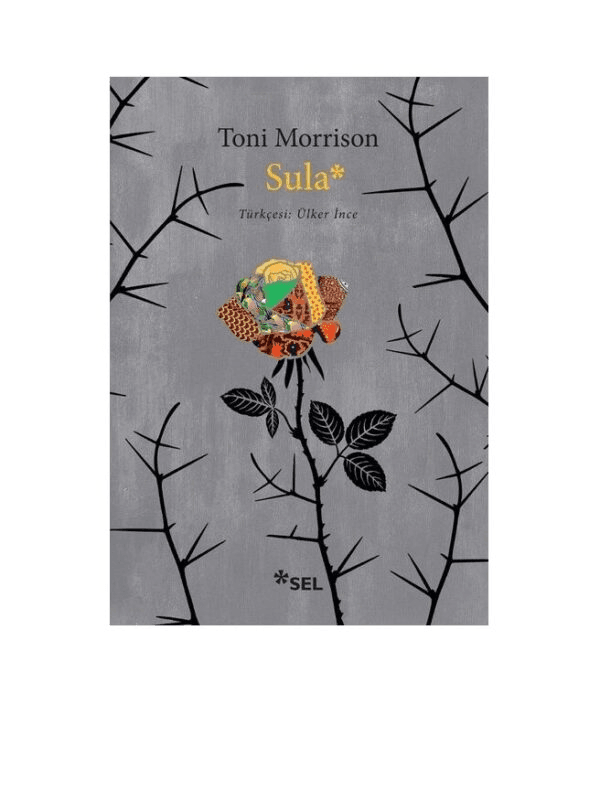
In Sula, Toni Morrison explores the deep yet fraught friendship between Sula Peace and Nel Wright, two Black girls growing up in a segregated town. As children, they create a private world of their own—an escape from the racist and sexist constraints imposed on them. Their bond gives them a sense of wholeness, as if they are two halves of the same self. Morrison captures this closeness with the words: “They relaxed in each other’s presence, talking and not talking, laughing and not laughing.” Yet, as they grow older, their paths begin to diverge.
Sula rejects societal expectations—leaving town, embracing sexual freedom, and refusing to conform to traditional roles—becoming an outcast in the process. In contrast, Nel chooses marriage, family, and “respectability,” aligning herself with the community’s norms. When Sula returns years later, her mere presence unsettles Nel, forcing her to confront the ways she has confined herself. The rupture in their friendship reaches its peak when Sula has an affair with Nel’s husband, exposing the fragility of their bond. But Morrison makes it clear that the true betrayal is not just about a man—it lies in the deeper, existential choices each woman has made. In the end, they have betrayed themselves.
In Sula, translated into Turkish by Yeşim Seber and published by Sel Publishing, Morrison crafts a layered portrait of female friendship, positioning Sula and Nel’s relationship as a study in contrasts. While Sula embodies freedom and Nel represents stability, neither is complete without the other. Their friendship becomes more than a personal connection—it symbolizes Black women’s struggle for autonomy in a world determined to confine them.
Simone de Beauvoir – Les Inséparables
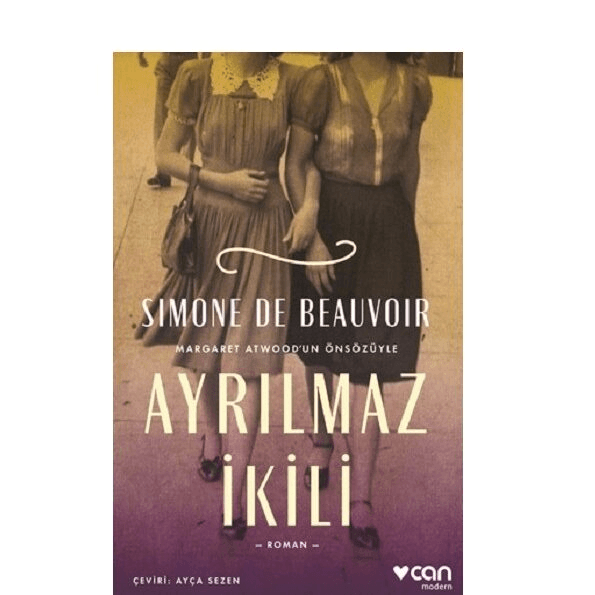
Written in 1954, five years after The Second Sex, Les Inséparables is a semi-autobiographical novel by Simone de Beauvoir—one she chose not to publish, finding it too personal. Recently rediscovered, the novel offers an intimate yet tragic portrait of a friendship shaped by intellectual awakening, desire, and power imbalances. Based on Beauvoir’s adolescent relationship with her childhood friend Zaza Lacoin, the book has been translated into Turkish by Ayça Sezen and published by Can Publishing. Narrated by Sylvie, the story follows her intense bond with Andrée, a girl whose intelligence, vitality, and free-thinking spirit immediately captivate her.
Andrée embodies contradiction: while outspoken and intellectually daring, she remains deeply tied to the rigid religious and patriarchal structures of her family. For the more reserved and directionless Sylvie, Andrée represents freedom—a figure who challenges the constraints imposed on young women. Yet, as their friendship deepens, it becomes clear that Andrée is, in many ways, even more trapped than Sylvie. Despite her rebellious spirit, she cannot escape the expectations surrounding marriage, family, and religious duty.
Beauvoir presents their friendship as more than just a childhood connection—it is central to Sylvie’s journey of self-discovery. Andrée’s struggle against the forces that confine her compels Sylvie to question not only her friend’s fate but also her own place in a world determined to limit women’s freedom. As Sylvie mourns Andrée’s loss, the novel highlights the lasting impact of female friendships, particularly those formed in youth, showing how they continue to shape our choices long after they have ended.
Zadie Smith – Dans Zamanı
Swing Time, translated into Turkish by Özlem Gayretli Sevim and published by Everest Publishing, examines female friendship through the lens of race, class, and ambition. The novel follows two Black girls growing up in London—one naturally talented, the other fiercely determined. Their shared love of dance cements their bond in childhood, but as they grow older, their paths take unexpected turns. The unnamed narrator enters a dazzling yet isolating world as an assistant to a global pop star, while Tracey, the more gifted dancer, struggles against the hardships of her circumstances. Zadie Smith, one of contemporary literature’s most acclaimed voices, deftly explores the complexities of female friendship—the silent tensions, the fine line between admiration and rivalry, and the ways inequality can fracture even the deepest connections.
Though the narrator and Tracey share a past, adulthood reveals the unspoken hierarchies that have always existed between them. The narrator’s employer, Aimee, represents white privilege and global capitalism, wielding her wealth to shape the lives of those around her. In contrast, Tracey, who refuses to conform, is cast aside by society. Torn between these two worlds, the narrator constantly negotiates her identity, all while being haunted by thoughts of Tracey.
Rejecting simple resolutions, Swing Time invites readers to reflect on their own past friendships, leaving them with a lingering, uneasy sense of emotional afterthought.
Andrea Abreu – Dogs of Summer
Set in the Canary Islands, Dogs of Summer captures the raw, almost primal intensity of childhood friendships—where closeness teeters on the edge of obsession. Taking place in a working-class neighborhood in Tenerife, the novel immerses readers in the world of two inseparable girls, an unnamed narrator and her best friend Isora, over the course of one sweltering summer. Translated into Turkish by Seda Ersavcı and published by Siren Publications, the novel paints an unflinching portrait of class, sexuality, and desire. One of the novel’s most striking elements is its visceral language, which vividly conveys the physicality of adolescence. Abreu does not romanticize girlhood; instead, she presents it in its raw reality—sweat, blood, dirt, and desire. The narrator is consumed by her fascination with Isora—her scent, her movements, her defiant attitude. Through this intense physical awareness, Abreu highlights the ways young girls’ experiences of their bodies and desires are often overlooked, particularly in societies where sexuality is repressed.
Unlike conventional coming-of-age novels, Dogs of Summer refuses to offer a sentimental portrayal of female friendship. Instead, it presents it as something visceral, consuming, and at times violent—a force that shapes identity as much as it leaves scars. Abreu’s lyrical, stream-of-consciousness prose mirrors the narrator’s chaotic emotions, pulling readers into the feverish, all-consuming world of their friendship.
Tracey Thorn – My Rock ‘n’ Roll Friend Unlike the other books on this list, My Rock ‘n’ Roll Friend is an autobiographical account of a real-life friendship. Written by Everything But The Girl frontwoman, musician, and author Tracey Thorn, the book tells the story of her longtime bond with Lindy Morrison, the drummer of the Australian band The Go-Betweens. Through her friendship with Morrison, Thorn explores the challenges of being a woman in a male-dominated industry, the gendered nature of cultural memory, and how female friendships can serve as both personal support and political resistance.
Thorn’s narrative, which has not yet been translated into Turkish, highlights how friendships between women provide confidence and solidarity in spaces where their contributions are often overlooked. At the same time, she doesn’t idealize these relationships; she examines how admiration can turn into frustration, how distance can create fractures, and how even friendships that fade remain integral to our personal histories. My Rock ‘n’ Roll Friend is as much about music as it is about the complexities of connection, offering an intimate and sharp reflection on what it means to be seen, valued, and remembered.