Umami, Deconstruction, and Dada: The Maritime World of Koca Rifo
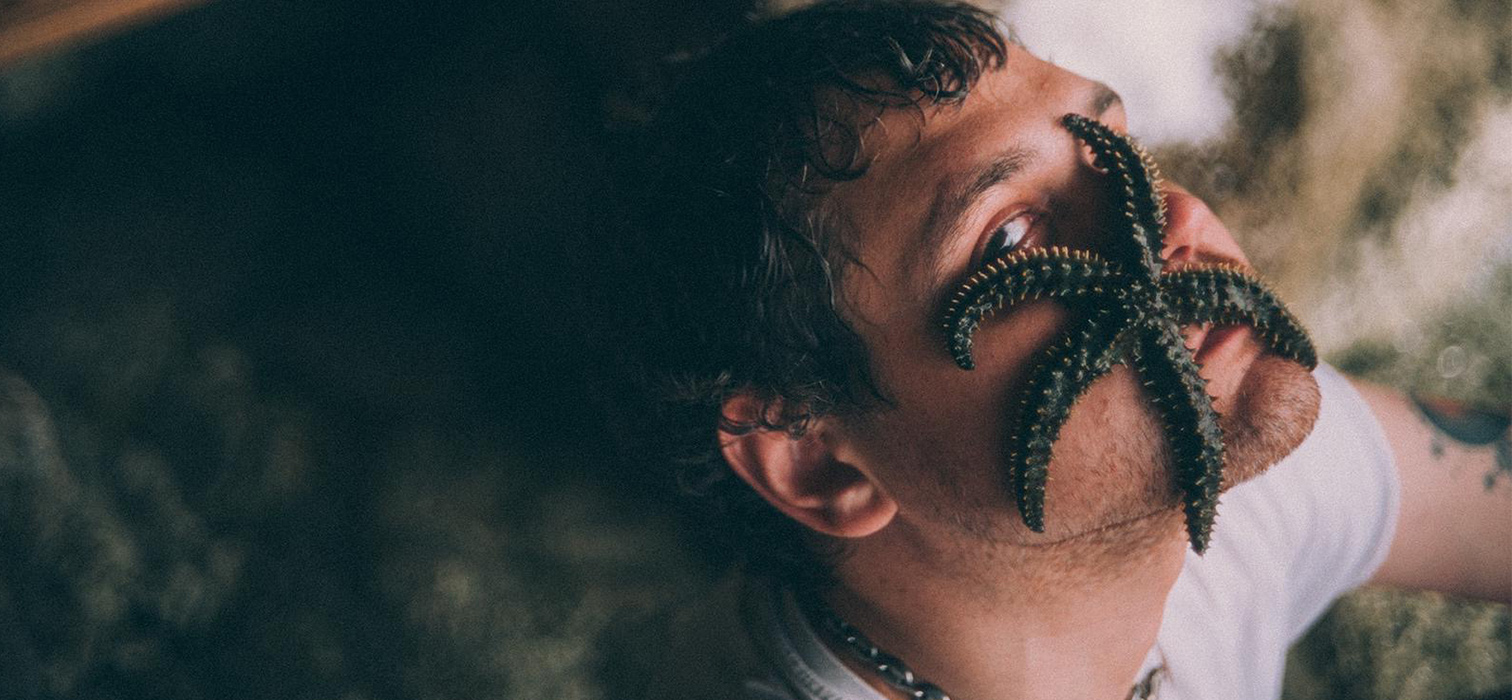
He isn’t in the business of selling fish, nor is he interested in building a conventional brand. Instead, he processes seafood,masters intricate techniques, reconstructs the fragmented, and makes a deliberate choice to inhabit the space between fine art and manual craft.
Koca Rifo is neither a standard gastronomic enterprise nor a singular art project. It represents the narrative of an individual striving to bring craftsmanship and artistry to the same table—someone who remains deeply reflective while refining his technical skills. While we have long been familiar with Fırat İtmeç through his visual arts practice, he has recently shifted his creative energy toward a more physical, sensory, and material engagement with the sea. His focus prioritizes the process over the transaction, experimentation over public visibility, and technique over titles. This is precisely where Koca Rifo emerges: not as a form of escapism, but as a profound transformation.
This trajectory—spanning seafood processing expertise, R&D initiatives, pop-up events, and conceptual production—largely ignores the traditional boundaries separating art from gastronomy. It views being “caught in between” not as a state of crisis, but as a fertile ground for inspiration. We joined him in this exploration, engaging in a dialogue that meandered through childhood nicknames and deconstruction, as well as umami-inspired sculptures and Dadaism.
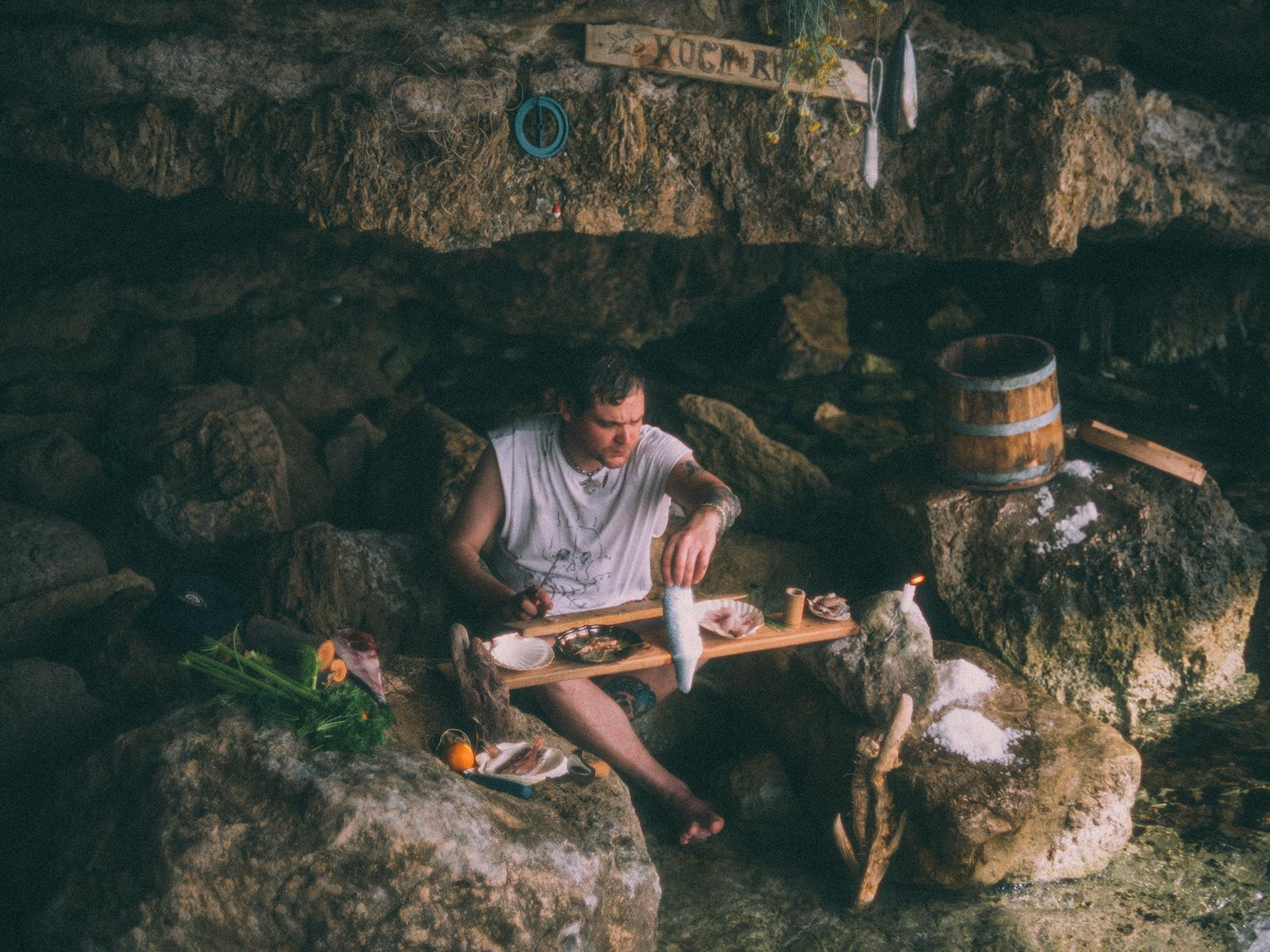
Fırat, I want to start by saying how much I genuinely enjoy following your journey. I’m curious: where did the name “Koca Rifo” originate? Was it a sudden realization one morning, or is it a character that has been living within you for years?
Thank you very much, Mine. I should start by saying that nicknames have always held a particular weight for me and those in my circle. Since childhood, we’ve assigned nicknames to one another, to places, and to people. I believe this process crafts a character that is far more vibrant than a name given to an embryo before its identity is even formed. Since my high school years, people have called me Rıfo—despite my name being Fırat. I’m not entirely sure why; “Fıro” would have been the more logical derivative, but Rıfo is what stuck, and I never felt the need to question it. It simply stayed with me over the years.
Around 2016, I was working on a comic book with a friend, Ali Ünal, and at that time, I was drawing stories centered around a character named Rıfo. I tend to gravitate toward semi-autobiographical work. When I began working with seafood, adopting this name felt appropriate—a way to simultaneously mask myself and reveal more, acting as a sort of “cover” character. Occasionally, due to the size of my hands and feet, descriptors like “big,” “bear,” or “animal” were tossed around, and I think “Koca Rifo” (Big Rıfo) evolved naturally as a fitting pseudonym for a man of the sea. Beyond that, my mother was raised by her grandfather in an old Istanbul family. My great-grandfather was a magnificent character, deeply enamored with the Bosphorus, who was constantly cooking and eating seafood. His name was Rıfat. It brings me great joy to share these traits with an extraordinary man whom my mother viewed as a father figure. When people unknowingly call me Rıfo today, perhaps they are catching a glimpse of that legacy coming full circle.
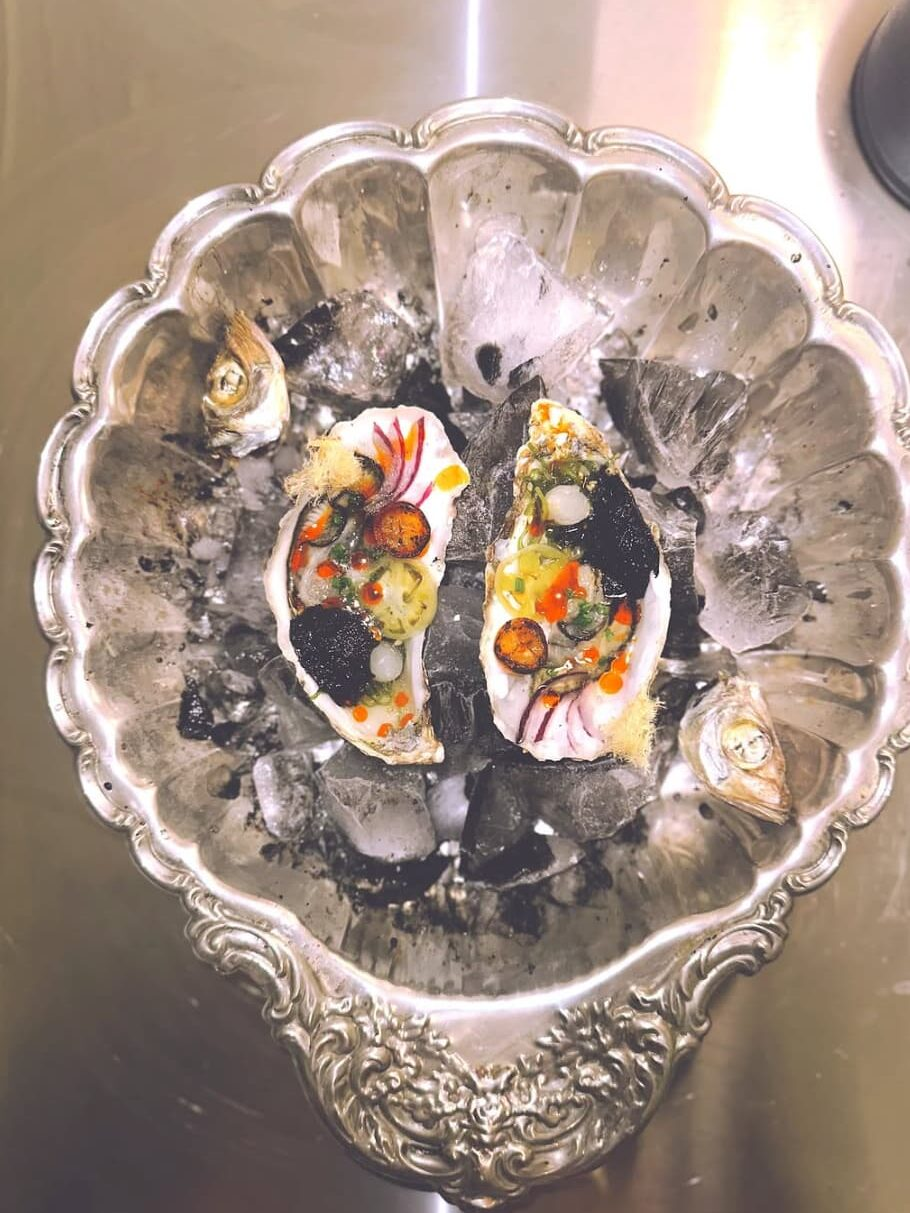
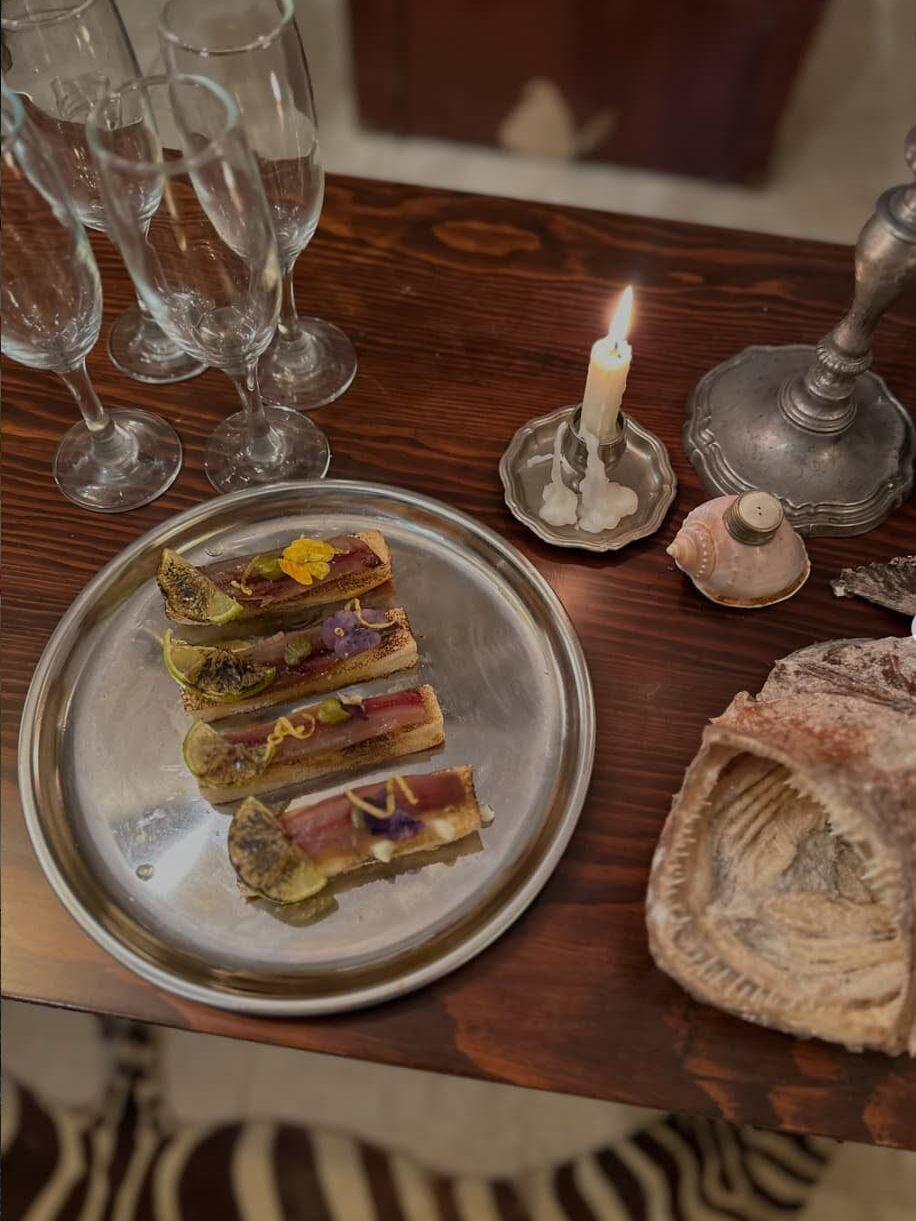
You were immersed in the visual arts for a long time. How did you develop such an intimate relationship with seafood and gastronomy? Was it a form of escape, pure curiosity, or a path you were already subconsciously walking?
My transition into seafood processing was actually solidified by a search for supplemental work, born from the economic challenges of being an artist today. I won’t dwell on the details of that crisis, as it’s a reality everyone is familiar with. It began strictly as a financial side job. In fact, my initial intention was to keep the artistic side of my life entirely separate from it. Of course, that didn’t last long…
Let me ask you directly: What exactly is the function of Koca Rifo? To an observer, it appears to fluctuate between art, gastronomy, and something else entirely.
I am simply continuing to live within the boundaries of my craft, my labor, and my interests. To answer you clearly: my primary discipline is seafood processing. I do everything I can within that realm. I am accustomed to cities where every road leads to the water; when I take the sea as my route, I simply do what I know. I blend all these elements together and bring the final result back to the sea. If that still feels a bit vague, let me try again: I am a seafood processing master—using “master” as a noun for the trade, not an adjective for status—who has apprenticed in the craft and reached a point where my formal knowledge has almost been exhausted. We host pop-up events periodically; sometimes I experiment with packaged products, and other times I produce conceptual, plastic works within that same framework. It still might not fit into a neat box, but that’s alright. I think the essence of what I’m trying to say is clear.
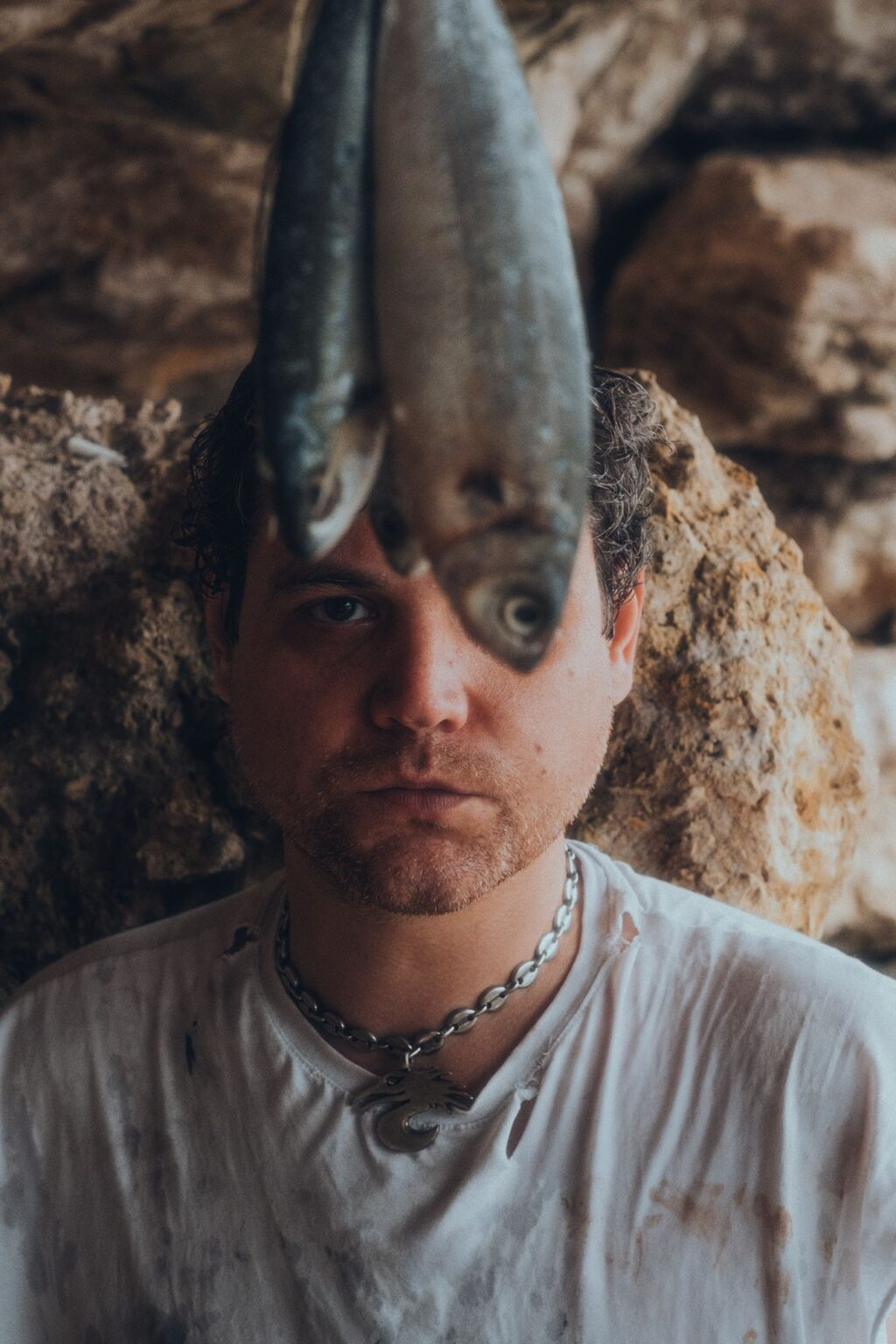
Is your emphasis on production, processing, and conceptualization—rather than sales—a conscious decision? Does this perspective distance you from the traditional world of gastronomy?
I don’t really know the world of “classic” gastronomy. My focus on aspects other than sales comes from a deep-seated desire to experiment. There are a million things left to try; I’ve established consistent practices for some, while I am still in the learning phase for others. I try to handle every detail myself, from the actual processing to the packaging design. Making a sale is actually the easiest part of the chain. More importantly, I don’t want to lose the sense of enjoyment. The moment you prioritize making money, there is a price to pay in terms of creative liberty. Right now, I am freer than anyone else. Of course, that freedom comes with its own costs, but I am enjoying this current stage. I am in a state of constant preparation. While the preparation itself may never truly end, there will eventually come a point where I begin to share what I’ve built with the world.
Where does your connection to the sea originate? Is it a bond rooted in childhood, geography, or perhaps memory?
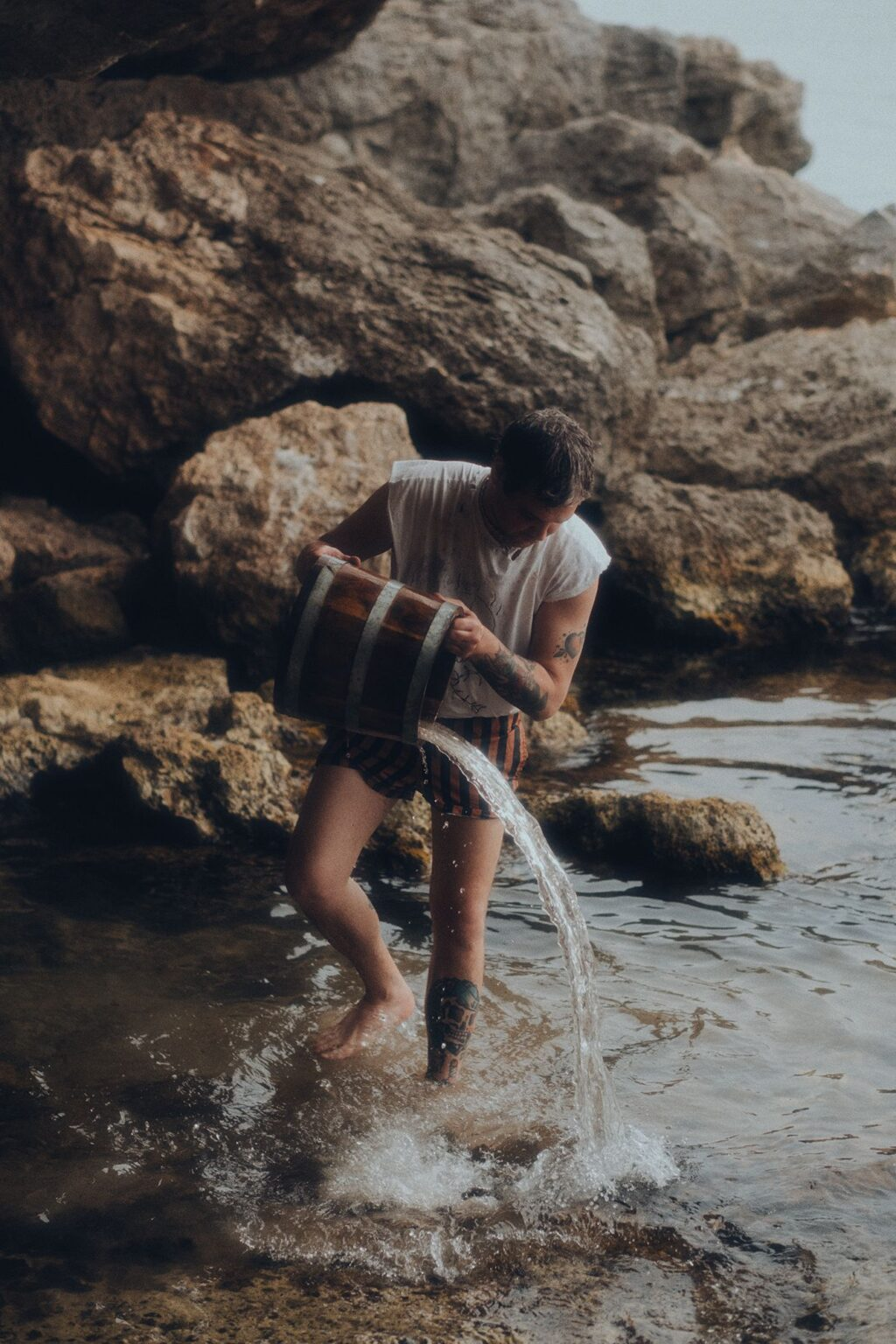
Naturally, being from Izmir plays a foundational role; there is an inherent connection that stems from that geography. I’ve been diving since I was a child, observing seashells, fish, and the life beneath the surface. I truly grew up by the water. We jumped into the polluted waters of the Izmir bay countless times—we were the quintessential coastal town kids.
Working with seafood is intensely physical. The scent, the texture, the passage of time, the decay… did those elements ever intimidate you, or were you drawn to them?
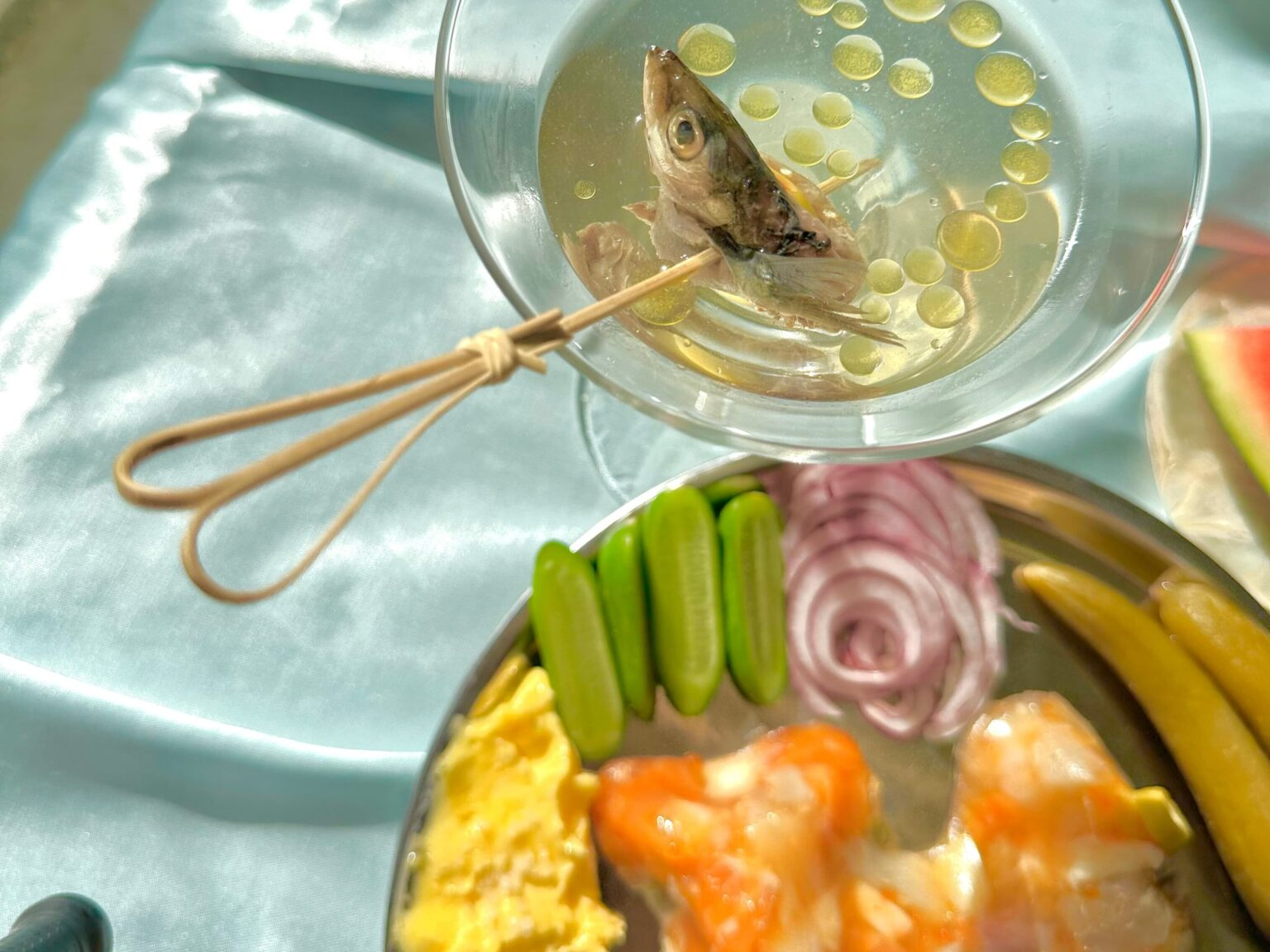
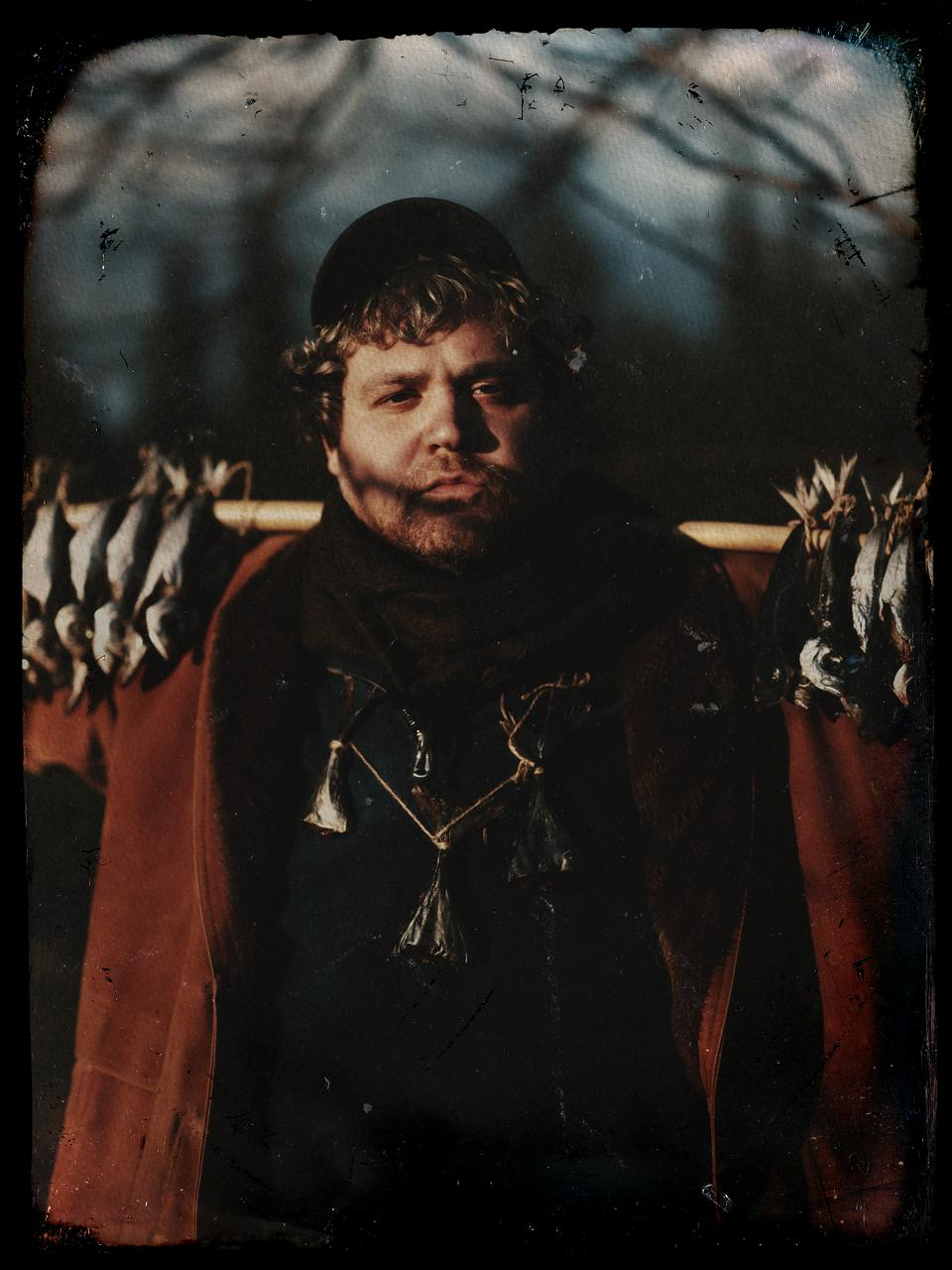
I was deeply attracted to them. I always say that I get a particular thrill out of taking a highly perishable product and applying various techniques to ensure it lasts for a long time. It’s like creating edible sculptures using primitive resources and methods. At one point, I even had two dried fish hanging from my car’s rearview mirror; knowing I could eat them whenever I wished was a fantastic feeling. I have an aversion to fragility and “hot” products—those that cool down and become unappealing after only three minutes. I prefer to “spoil” a product so thoroughly through processing that it can no longer decay. When you think about it, it’s a wonderful concept. I believe this desire originates from my background in the plastic arts. I even have framed edible products at home that I can consume whenever I like. What could be better? I want to create products that remain with me even if the power fails or the world ends. The smell, texture, time, and decay—as you mentioned—it is amazing to understand all those characteristics and manipulate them at will. Playing with those variables to create sculptures, potions, or muds with high umami values is incredibly rewarding.
Do you view Koca Rifo as a “brand,” or is it more of a “production character”—a way of carving out a specific creative space?
Initially, I did think of it as a brand. However, as time passed, I realized it was something else entirely. My own existential quest manifested here as well. Now, the things created by my hands and expressed through my words have become my guide. Viewing the world as a seafood artisan fueled by his own philosophy—essentially, seeing it as an extension of myself—provided me with a healthy, focused perspective. It has become a bridge that starts at the sea and connects with every facet of emotion and creation. Much like a haiku, I now see that every simple action I take leads to a much broader conceptual idea. This is entirely internal, mind you; the outside world may not even be aware of this depth.
How do you believe your audience, collaborators, and the brands you work with perceive Koca Rifo?
I believe everyone perceives the external world only to the extent that they understand it. What you see often has very little to do with the person standing in front of you; rather, everyone finds a reflection of themselves in the work. That’s the beauty of it. I notice that everyone I interact with is trying to understand, and that makes me very happy. Even I struggle to answer the question, “What exactly are you doing?”, so the fact that others put in the effort to find out is wonderful. That effort is actually a journey toward finding oneself. I receive many messages saying, “We love your work, but we don’t quite understand what it is you do.” I can’t fully explain it myself, but it’s a pleasant thing to contemplate. They think about it, and I think about it.
Are you Koca Rifo, or is he your more liberated, unfiltered, and unrestrained self?
I think it is entirely me. In fact, Koca Rifo is actually more filtered and restrained. Because people are about to eat, I tend to conduct myself with a bit more calm.
How does navigating between the worlds of art and gastronomy affect you? Which do you find more insular, and which feels more honest?
I have a specific take on this. I have countless artist friends whom I admire greatly; we get along well, and no one hides anything. Everyone shares the same underlying concerns. However, observing the gastronomy world—which I feel is starting to decline—I see a contrast. People often label artists as arrogant or pretentious, but compared to some chefs and gastronomes, the artists I know are incredibly naive, generous, and helpful. I can say that quite plainly. I see certain figures in gastronomy as having strange complexes that I can’t quite make sense of, from delicatessen owners to high-end chefs.
Was entering the culinary world a challenge for you? Did you feel a need to prove that “Art isn’t just for white walls”?
No, actually, I appreciate the “white cube” gallery space as well. To be honest, I started this primarily as another way to generate income. I know how to “dirty” those white walls—I’ve done plenty of guerrilla exhibitions in the past—so that environment never felt restrictive to me. As I said, I entered this field for purely financial reasons.
Events, sponsored projects, collaborations with liquor brands… how much freedom of movement does this industry provide?
In truth, it doesn’t provide an immense amount of freedom. When there is money involved, it acts as a commodity for freedom, which is important. Beyond that, the real satisfaction comes from meeting the few people who truly love my work and being able to treat them to a meal. If I can host tables that I wouldn’t have the budget to create on my own, I am happy.
I was particularly struck by your recent R&D work with a factory in Adana regarding processed seafood. How did that collaboration come about?
Ah, my dear Adana. It happened like this: a friend attended a dinner we hosted in Istanbul and mentioned that his family was in the business. We connected, and it evolved into something I’ve always wanted. It’s an old family that has managed the Karataş Akyatan Lagoon for over 120 years. They are innovative, successful, and wonderful people. They invited me to their seafood processing factory to conduct R&D, and things are going exceptionally well. Having the freshest, cleanest fish and crabs at my disposal is like a dream. I always wanted a friend who was a diver from Adana; what more could I ask for? I hope my partner, Meltem Kaygan, is also enjoying our Adana adventures. We have more surprises coming from there soon, though I won’t reveal them just yet.
What exactly are you pursuing there? Is it taste, form, method, or an entirely new product language?
Taste and form are simply the results of technique. I operate on the principle that deconstructionists must first master the construction of the structure. In the plastic arts, you cannot be a deconstructivist without first building the structure using the best possible technique. Currently, I am in the phase of learning those techniques. Once I have mastered them, I can begin truly innovative experiments. This requires calculating and testing every product against every technique while considering all variables. It’s an endless journey, which is where the fun lies.
Does the R&D aspect excite you? How do you handle the slowness, the trial and error, and the inevitable failures?
Those are actually the things that excite me the most. Unfortunately, I ruined a vast amount of fish while apprenticing with my master at the time, which I still feel bad about. But I get up and try again. I push myself just as hard as I push the product. The results continue to improve. Sometimes I get frustrated or sulk, but the next day I carry on. It’s a never-ending cycle; I wake up every day ready to attempt something new.
Do people ever tell you, “That’s not art” or “That’s not gastronomy”? Does existing in this limbo bother you or nourish you?
On the contrary, this limbo is exactly what nourishes me. I think it’s better for some things to remain unnamed and unknown. If concepts are forced into rigid definitions, they often lose their purpose. Baudrillard’s Why Hasn’t Everything Disappeared Yet? has several passages that reflect my thoughts on this perfectly. Regarding whether it is art or not—no one has really challenged me on that. In fact, whenever people call it “art,” I am the one who warns them: “No, this is craft; I can show you my art separately.” I don’t want to offend anyone, but not every plate is art—it is a craft. I’ll be the one to tell you which parts are actually art.
In the language of Koca Rifo, are you intentionally playing with themes of masculinity, power, mastery, and kitchen hierarchy?
Masculinity and its traditional roles have never appealed to me. On the contrary, I view production as a female-oriented field. Hierarchy isn’t my style either; you could even consider me a bit of a loose anarchist. In a sense, I’m a “brave woman” who happens to be a foul-mouthed, rough-around-the-edges character. I find the traditional concept of masculinity quite foolish. Is that the impression I give off? I wonder why you asked that.
Perhaps it’s just your imposing presence. Let’s move on… if a major restaurant group or global brand offered to “expand” your project, where would you draw the line? Do you have any “red lines”?
If I said “yes,” I’m sure it would eventually happen to me, which is why I don’t have them in that sense. However, I wouldn’t want someone else to manage a massive project under my name. I want the chaos, the comfort, and the freedom to be unfiltered. I want my hands to be dirty and for those who truly love the work to come directly to me. Brands generally don’t want that; they have their own red lines, not mine.
Has Koca Rifo transformed you? Are there ever conflicts between Fırat the artist and Rıfo?
He has absolutely transformed me. I’ve started approaching concepts more from the Koca Rifo perspective. It’s both my existential identity and my livelihood. We argue occasionally, but since I have two distinct paths to escape through, we always reconcile. I’m a restless person; I can’t always do the same thing. Having the freedom to choose between these two identities is fun—it makes the arguments and the fuss worth it.
If one day Koca Rifo evolves into something else—a product, a book, or even nothing at all—what would you want to remain?
I would want it to evolve regardless. There is a saying attributed to Muhammad: “He whose two days are equal is at a loss.” That makes a lot of sense to me. I would want something like a Dadaist manifesto to remain—a dedication to a sense of anti-seriousness.