The figure of the vigilante — those who take it upon themselves to pursue justice outside the boundaries of law — has long captured the public imagination. In recent years, such characters have appeared in countless forms on screens across the world and in Turkey, becoming a familiar and fascinating presence in popular culture.
The allure of stories where justice is achieved by breaking the rules has grown steadily. Iconic global examples such as Batman, The Punisher, Dexter, and Joker have left their mark, while Turkish productions, both on digital platforms and television, are equally captivating audiences with their own renditions of vigilante figures.
Why do we return to these stories time and again? Because they offer an antidote — a dramatic answer to the injustices, corruption, and social decay we witness daily. They promise viewers that what seems lost in life — fairness, accountability, order — can still be found, at least on screen. Within this rich tapestry, Turkey’s television landscape has also created unforgettable vigilante characters. Let’s take a closer look at five of them, beginning with one of the most striking: Chief Inspector Suna from Behzat Ç.
Chief Inspector Suna: Behzat Ç.
Aired between 2010 and 2013, Behzat Ç.: An Ankara Police Storyquickly became one of the most-watched and talked-about series in Turkey. Adapted from Emrah Serbes’ novels, the show resonated because it didn’t merely tell stories of murder and crime; it examined them through the lens of everyday injustice. It wove real-life events and tragedies into its fictional fabric — from the assassination of Hrant Dink to the murders of trans individuals and the exposure of shadowy state structures — transforming crime drama into a mirror of society.
Yet the series’ enduring appeal cannot be explained by subject matter alone. It was its vivid, complex characters — from homicide detectives to ordinary people caught up in crime — that drew viewers in with authenticity and grit. Among them, Chief Inspector Suna stood out. She was not just a police officer who recognized injustice; she embodied the determination to fight it, even when doing so meant clashing with the very system she served.
Behzat Ç. is remembered as a turning point in Turkish television, not only for its gripping crime narratives but also for its fearless critique of the system from within. While Behzat himself remains the central figure, Suna offers an equally compelling case study for understanding the vigilante archetype. Despite being part of the state apparatus, she frequently acted outside — and against — its authority. This tension made her particularly fascinating: she lived at the fault line between legitimacy and illegitimacy, between official duty and personal morality.
Suna’s vigilante qualities become even more striking when considered through her identity as a woman. On Turkish television, female characters are often relegated to victimhood or supporting roles. Suna broke this mold by taking an active, often violent, role in a genre dominated by men. Her use of violence was not gratuitous but purposeful, a tool in her struggle to impose a justice that the official system consistently failed to deliver.
In this sense, she was both a representative of the state and a rebel against its corrupt face — carrying out justice “on behalf of the state” with one hand, while carving her own moral path with the other. This duality set up a compelling conflict between the justice of the state and the justice of conscience, forcing viewers to grapple with uncomfortable questions: Which form of justice is more legitimate? Which would we choose?
The answer resonates deeply with audiences who themselves live amid corrupt bureaucracy, political interference, and fragile institutions of justice. Suna’s defiance of these failures, and her insistence on seeking justice at any cost, gave viewers more than entertainment. It gave them a reflection of their own frustrations, and a cathartic vision of what justice might look like — even if won by unlawful means. Watching her on screen, audiences were not merely following a fictional detective; they were watching their own yearning for justice take shape.
Fatma: The Visibility of the Invisible
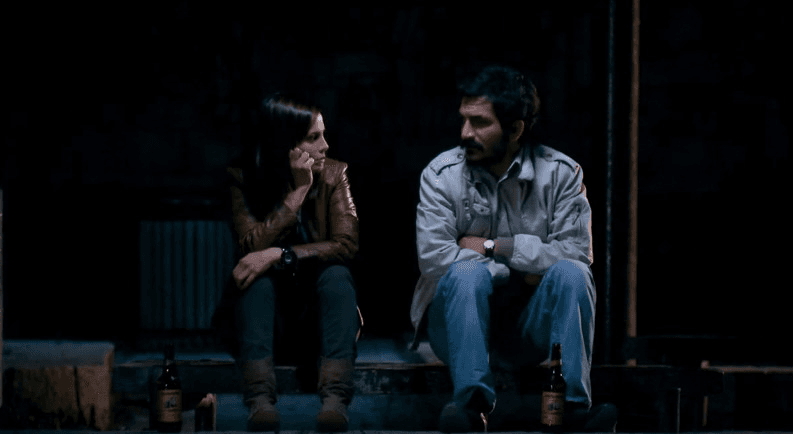
Netflix’s Fatma offers one of the most compelling recent portraits of a vigilante figure in Turkey. At first glance, Fatma is the least likely heroine: a middle-aged, quiet cleaning woman who seems to blend into the background. Those around her either overlook her existence or deliberately ignore her. Yet it is precisely this invisibility — shaped by her class position and the daily exclusions of being a woman — that gives rise to her extraordinary transformation.
Fatma’s journey begins with a single, purposeful act of violence. What might seem like a shocking rupture is, in fact, the culmination of years of silent endurance. Her first murder, committed with startling clarity of intention, becomes the doorway to her awakening. Unlike Chief Inspector Suna of Behzat Ç., Fatma has no institutional power, no badge, no official authority. She is ordinary — painfully ordinary — the kind of character whose struggles mirror those of countless women in Turkey. And yet, through her defiance, she becomes extraordinary.
Her quest for justice is deeply personal, yet also universal. While searching for her missing husband, she collides head-on with male violence, economic exploitation, and the relentless humiliations of class inequality. Each killing, while shocking, functions as an act of reparation — not just for her own suffering, but symbolically for women whose lives have been dismissed or destroyed by similar injustices. A particularly poignant dimension of the series emerges in her relationship with a young woman who appears privileged but whose own traumas run deep. Their dialogue underscores the layers of invisibility that different women, regardless of class, endure in Turkish society.
In this sense, Fatma’s violence is not simply the eruption of private anger. It becomes a collective expression of silenced pain, a protest born from invisibility. Her story highlights an essential truth: systemic injustice in Turkey is not only about state corruption or mafia-like structures but also about gender inequality and class discrimination embedded in daily life. Fatma’s message is clear: the justice system does not work for women.
Thus, Fatma transcends the boundaries of a revenge tale. She is not only avenging her own wounds but carrying the weight of many. Within her invisibility, she emerges as a powerful figure of resistance — a vigilante who forces society to see what it prefers to overlook.
Saygı: Ercüment “Çözer” and the Question of Respect
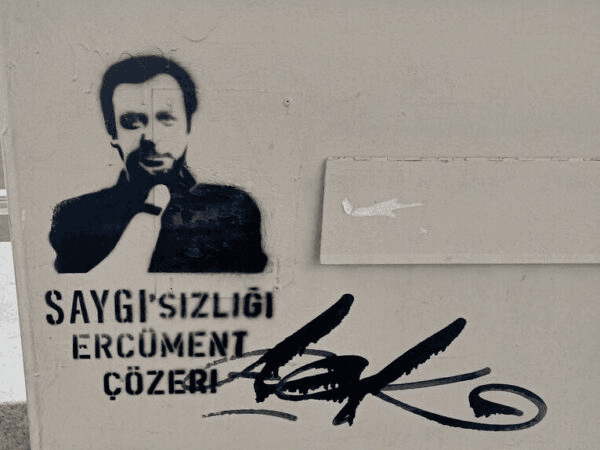
Saygı (Respect), a spin-off of Behzat Ç., turns the spotlight on one of that series’ most enigmatic figures: Ercüment Çözer. If Fatma represents the invisibility of the oppressed, Ercüment embodies the opposite — justice as a spectacle of power.
In Saygı, disrespect itself becomes a symbol of corruption. For Ercüment, every slight, every act of moral decay justifies punishment. His violence is not random or vengeful but framed as absolute retribution, rooted in his conviction of being “right.” He takes this to extremes, building his own “prison” on the outskirts of the city, positioning himself not as an enforcer of justice but as justice incarnate. Ercüment is not simply a man dispensing punishment; he is the concept of punishment.
His path intersects with two young lovers, Helen and Savaş, whose lives spiral out of control after they kill someone in self-defense. Confronted with the system’s failures, they become reluctant outlaws — voices of conscience for a disillusioned public. Soon, their actions ignite debates across social and mainstream media. To the authorities, they are dangerous criminals. To the public, they are heroes correcting wrongs the state refuses to address.
When Helen and Savaş meet Ercüment, the tension is electric. For Helen, justice can only be achieved through immense power in a corrupt world. Savaş, however, senses the paradox: that such power-driven justice risks creating new injustices. The series masterfully balances this tension, leaving viewers questioning not only who is right but whether justice and violence can ever truly be separated.
Unlike Fatma or Suna, Ercüment is not driven by deprivation. His privilege, wealth, and cultural capital grant him the tools — and the arrogance — to impose his own order. This makes him deeply contradictory: both a fearless challenger of corruption and a disturbing figure whose authoritarian violence unsettles the audience. His appeal lies precisely in this contradiction. He is the vigilante who forces us to ask: when does the fight against injustice become injustice itself?
Şahsiyet: Agâh Bey
If Fatma and Saygı highlight invisibility and power, Şahsiyet (Persona) explores the relationship between justice and memory. Starring Haluk Bilginer — who won an International Emmy Award for his performance — the series struck a chord with audiences for its philosophical depth as much as its gripping story.
Agâh Beyoğlu, an elderly former court clerk, learns that he has Alzheimer’s. His diagnosis brings a paradoxical liberation: soon, he will forget everything. But before he loses himself entirely, he feels compelled to act on the injustices that have haunted him for years. Conscience, memory, and fear of forgetting fuse into a radical decision: to kill.
Unlike younger vigilantes, Agâh is old, frail, and outwardly powerless. He does not fit the image of a killer. Yet the injustices he has witnessed — unpunished crimes, silenced victims, corruption buried by time — push him into action. Each murder becomes both a rebellion against forgetting and an act of social remembrance. Through crime, he preserves memory.
What makes Şahsiyet extraordinary is its ability to transform a crime series into a meditation on philosophy. Themes of justice, mortality, memory, and responsibility intertwine. It asks: Is justice the duty of the state, or the responsibility of the individual? Does justice live on only when memory survives?
Agâh’s murders are not simply personal vendettas. They are reminders of truths society has collectively chosen to suppress. By killing, he refuses to let memory die. In doing so, Şahsiyet becomes not just a story of an old man’s rebellion, but a mirror of a nation’s reckoning with its own past.
Gaddar: Justice in the Neighborhood
The most recent addition to Turkey’s vigilante canon is Gaddar (The Cruel), which aired in 2024. Unlike its predecessors, it is not remembered for critical acclaim but for its gritty, street-level portrayal of everyday injustices.
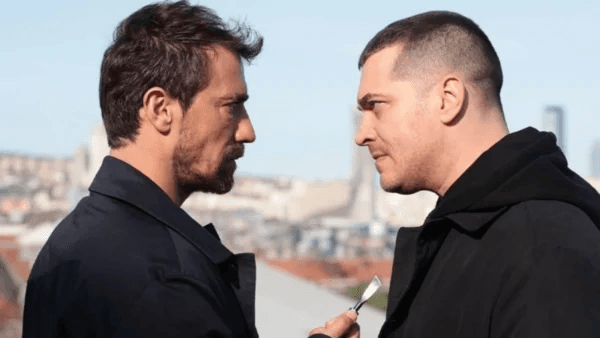
At the center is Dağhan, played by Çağatay Ulusoy, a former soldier struggling to adapt to civilian life. Haunted by his traumatic military past and disillusioned by the absence of solidarity and brotherhood in society, Dağhan discovers a harsher truth: in ordinary life, honesty and hard work rarely lead anywhere. Corruption, dishonesty, and exploitation are not confined to institutions but permeate neighborhoods and communities.
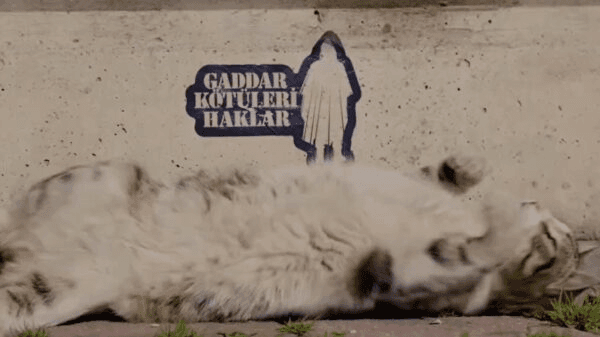
When Dağhan meets a figure dedicated to confronting these everyday injustices, he evolves into Gaddar, the neighborhood’s protector. Each episode addresses a different wrong, from animal cruelty to the murder of taxi drivers, grounding its stories in real-life incidents that had previously outraged the public. For audiences, these moments offered catharsis: justice, denied in real life, finally served on screen.
Neighborhood culture lies at the heart of the show. Dağhan is not a lone wolf; his legitimacy comes from the community’s acceptance. Neighbors know of his violence and endorse it, transforming him into a folk hero. His justice is not abstract but rooted in unwritten communal codes.
This sets Gaddar apart: its vigilante is not battling the state or personal demons but embodying the collective frustrations of ordinary people. His actions reflect a communal longing for order in a society where official justice consistently falls short.