Zenith, one of Switzerland’s most storied and enduring watchmakers, celebrates its 160th anniversary this year. To mark the occasion, we take a journey through the history of Zenith —exploring its heritage, milestones, and the vision that carried it from a small Swiss town to global renown.
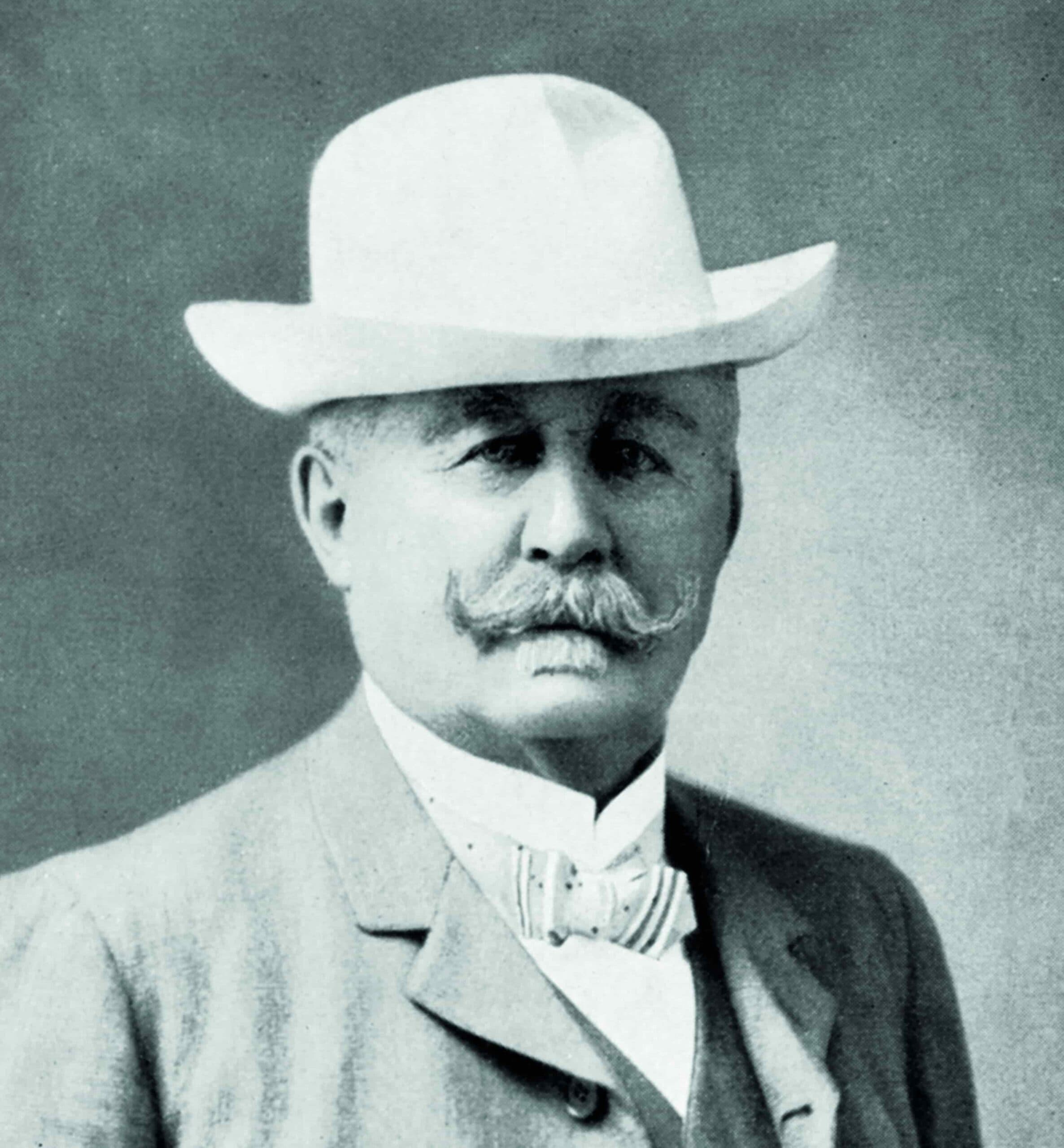
We begin in the early 1800s, in the Jura Mountains, home to some of Europe’s greenest forests. At the foot of these mountains lies Le Locle, one of Switzerland’s smallest towns, yet a heartland of watchmaking at the time. In 1750, just 77 watchmakers plied their craft in the region; by 1800, that number had surged to over 800. Nearly half a century later, in 1843, a local son named Georges Favre-Jacot would breathe new life into Le Locle’s watchmaking industry.
Georges Favre-Jacot
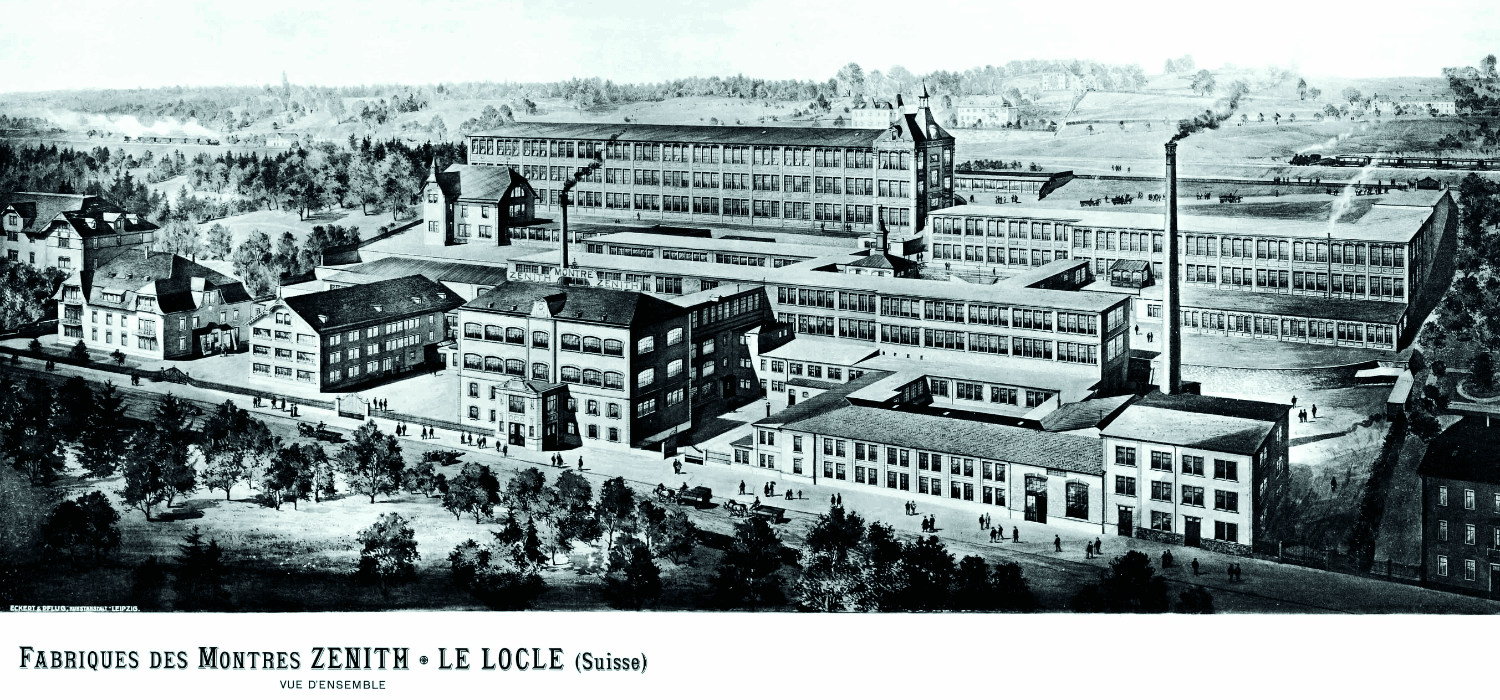
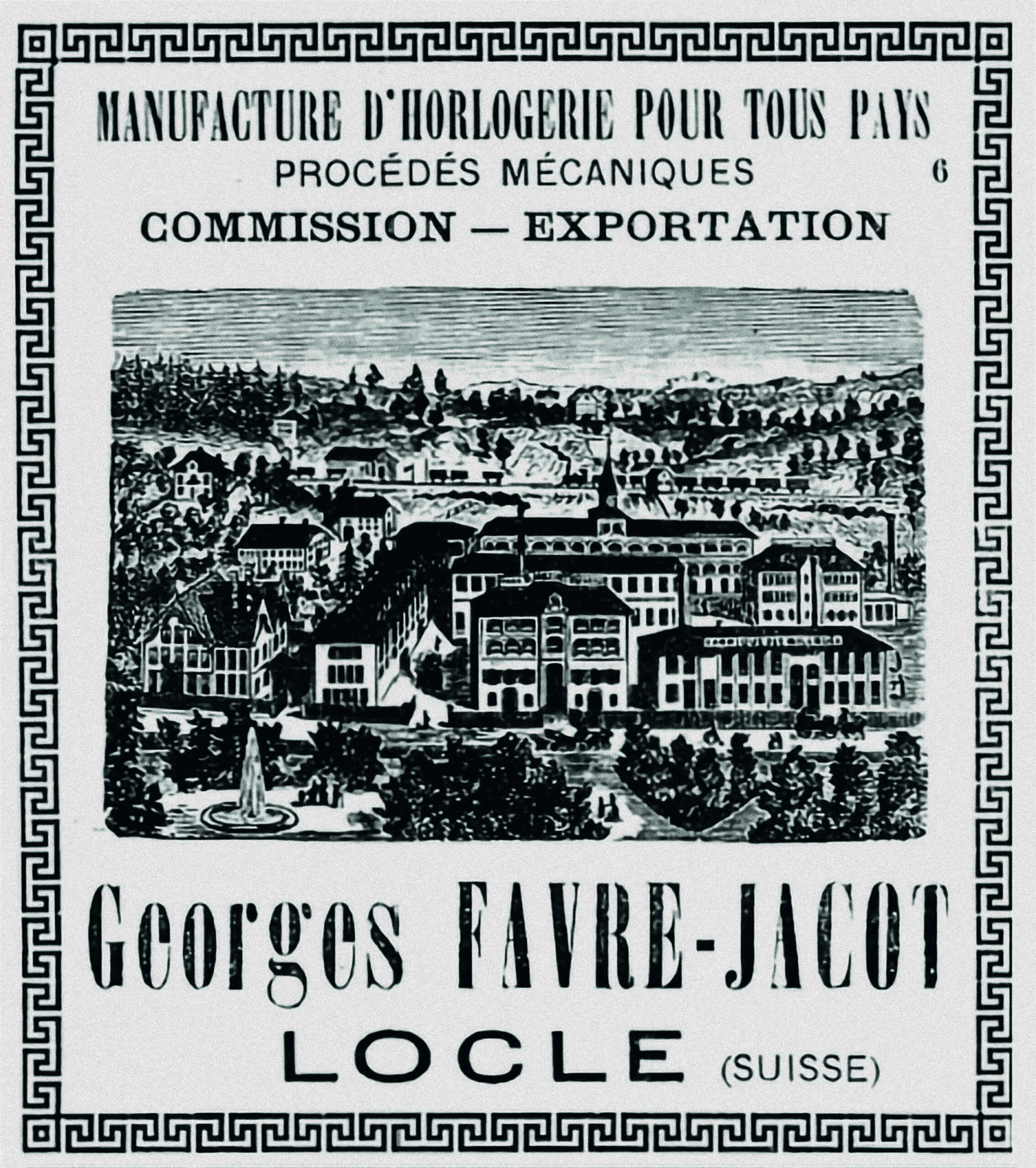
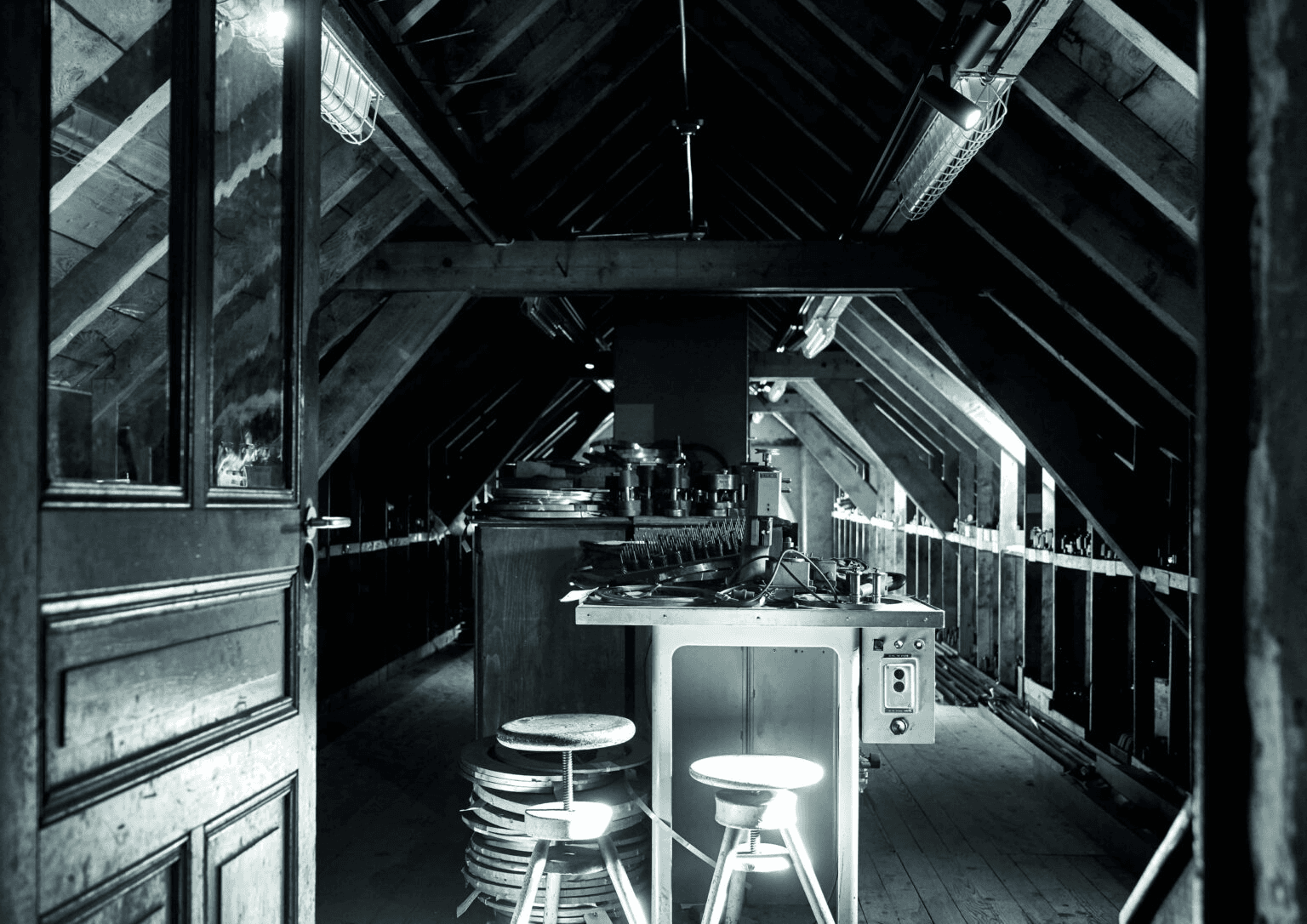
A visionary from the outset, Favre-Jacot was deeply inspired by the American factories he encountered during travels abroad in the Industrial Revolution era. Dreaming of creating the world’s most accurate timepiece, he broke away from the traditional établissage system—where production was fragmented among small workshops—and instead united all the trades under one roof. In 1865, he laid the foundations of his groundbreaking brand by building a factory on a 17,000-square-meter site connected directly to the Le Locle train station, ensuring steady access to raw materials. Soon, his vast facility comprised 18 buildings and became one of the largest watch production sites in the region. The first watches, produced under the initials “GFJ,” marked the beginning of a new era.
But Favre-Jacot was more than a watchmaker. He also owned a hotel, a quarry, and a brickworks, and his broad vision drew inspiration from the architecture and artistic movements of his time. Just as he modernized production, he also innovated in marketing—expanding into European and American markets and extending his brand’s reputation far beyond Switzerland. In 1900, the caliber he christened “Zenith” won the Grand Prix at the Paris Universal Exhibition. After this triumph, the company took on the name Zenith.
The name itself has poetic origins. “Zenith” (or Zenit), derived from Arabic through centuries of linguistic transformation, means “the highest point in the sky.” According to legend, on the very night Favre-Jacot completed the caliber that would compete in Paris, he stepped outside his workshop, gazed at the stars, and felt he had reached the highest point of his own sky. In that moment, he decided to name both the caliber and his brand Zenith.
The award in Paris was not just for technical mastery but also for design. In the early 1900s, Zenith collaborated with leading Art Nouveau masters such as Alphonse Mucha and René Lalique to create exquisite pocket and miniature watches, proving its daring in design as well as mechanics. The company even commissioned Le Corbusier—then a rising pioneer of modern architecture—to design a villa for Favre-Jacot, built near the factory. Today, this villa remains one of the architectural landmarks of Le Locle.
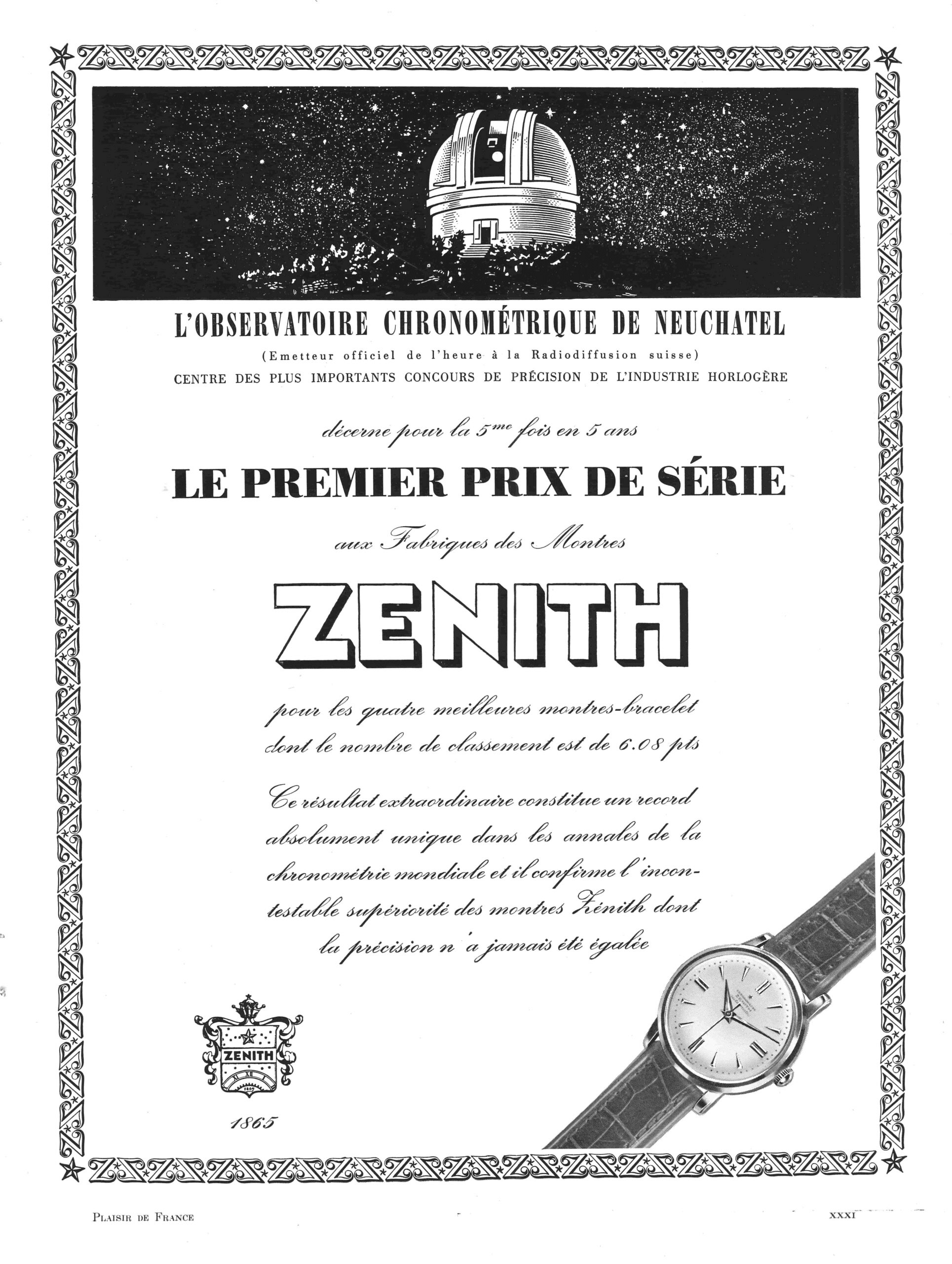
By the early 20th century, Zenith had become synonymous with precision. Its mechanisms were trusted by astronomical observatories, post offices, and public institutions around the world. In 1949, the brand unveiled the Calibre 135, which would go on to secure the Neuchâtel Observatory chronometry awards for five consecutive years, cementing Zenith’s reputation for unrivaled precision.
Gandhi’s Zenith
Zenith began exporting watches internationally in 1914, extending into Asia as well as Europe and America. Among its most famous wearers was Mahatma Gandhi. A gift from his friend Indira Nehru, Gandhi’s Zenith alarm pocket watch became one of his few prized possessions. Although known for shunning luxury, he relied on the timepiece daily—until it was stolen during a journey. Six months later, the thief returned the watch, full of remorse and seeking forgiveness. After Gandhi’s death, the watch passed to his grandson before eventually entering the auction world. In 2009, it was sold for $1.8 million to an Indian billionaire, securing its place as one of the most storied Zenith watches in history.
A Turning Point: El Primero
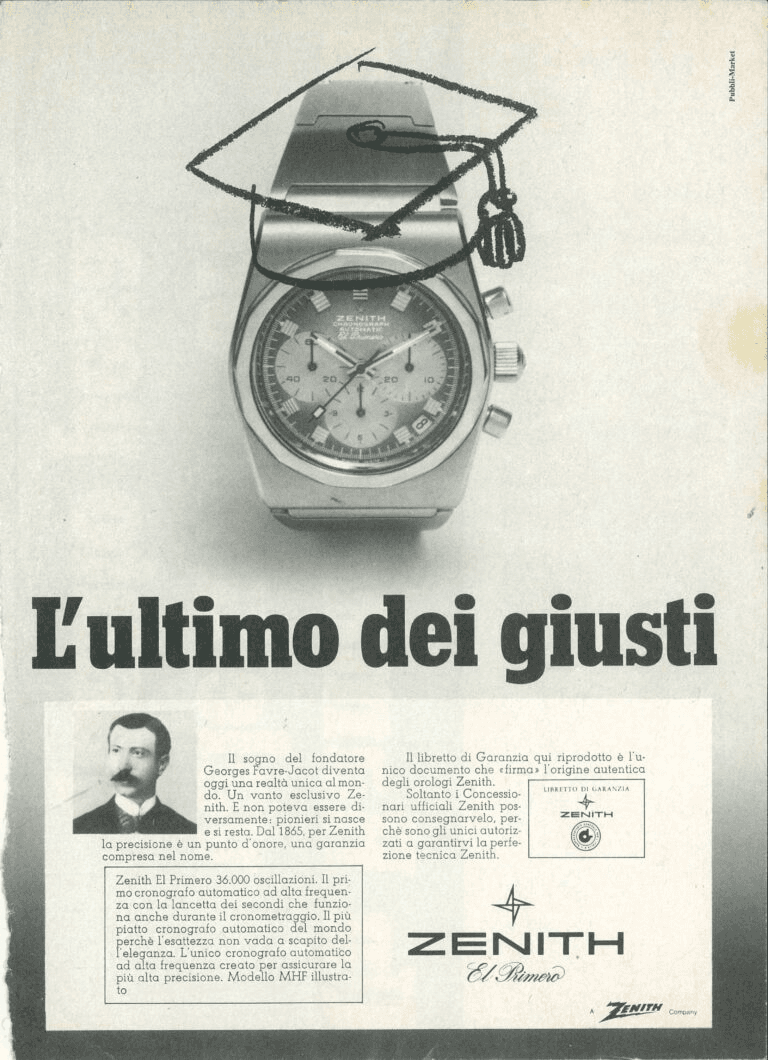
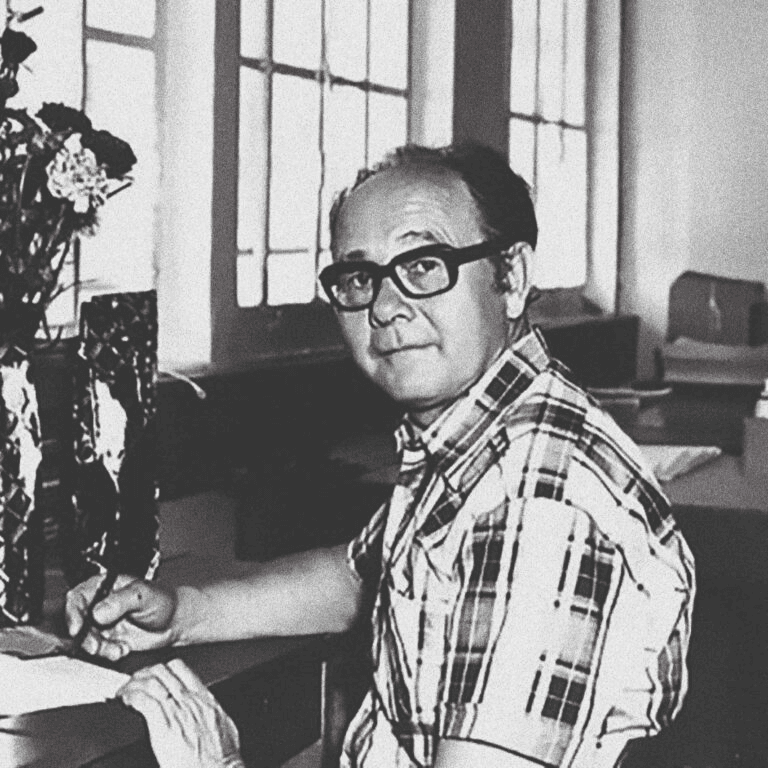
As Zenith’s centenary approached in 1965, the brand prepared to mark the milestone with a bold innovation. Work began in 1963 in Les Ponts-de-Martel, led by a team including René Gygax and Raoul Pellaton. Their project took longer than anticipated, but on January 10, 1969, Zenith unveiled the world’s first automatic chronograph caliber: the 3019 PHC, better known as El Primero.
Operating at an extraordinary frequency of 36,000 vibrations per hour, the movement offered unparalleled accuracy and included 12-hour and 30-minute chronograph counters, a date display, and a 50-hour power reserve. Its high oscillation rate, coupled with its longevity between winds, made El Primero one of the most advanced calibers ever created—an icon that instantly earned its place in watchmaking history.
The first Zenith watches equipped with El Primero, including Ref. 384, Ref. A385, and Ref. A386, debuted later that same year, laying the foundation for today’s Chronomaster Original collection. Yet the quartz crisis of the 1970s nearly extinguished this achievement. In 1975, Zenith’s management halted production of El Primero and ordered the destruction of its manufacturing equipment. One man, Charles Vermot, refused to let the movement disappear. Working in secrecy, he preserved the plans, tools, and parts in a hidden area of the factory. Thanks to Vermot’s foresight, El Primero was revived in the 1980s, its legacy intact—and both the caliber and its guardian became legends.
Towards the Millennium
Following El Primero’s rebirth, Zenith continued to innovate. In 1994, the brand introduced the Elite caliber 670, a thin, automatic movement less than 4 mm thick, boasting a 55-hour power reserve. Over time, the Elite family powered many of Zenith’s most elegant timepieces, including models from the Pilot and Defy Classic collections.
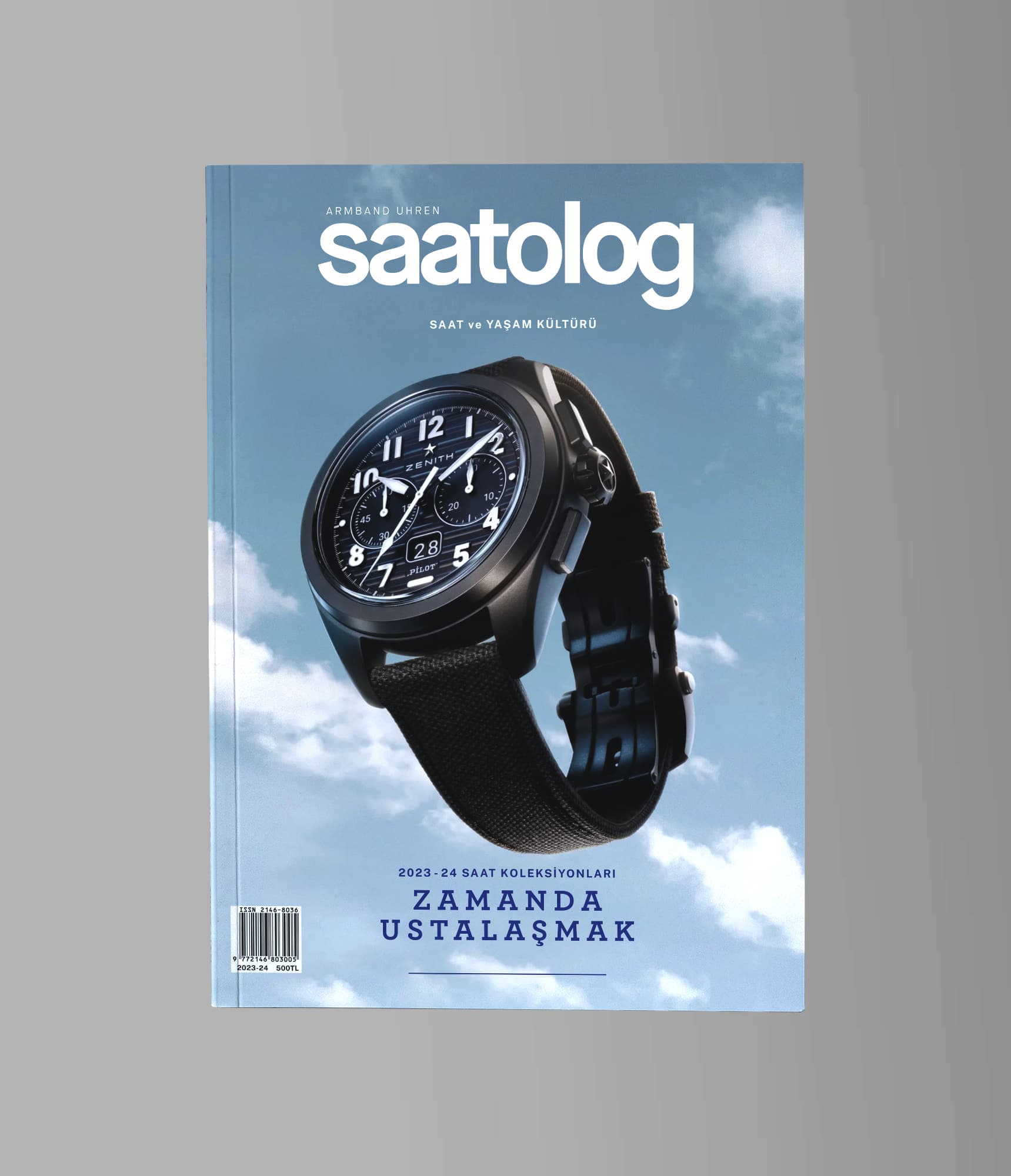
A major chapter began in 1999, when Zenith was acquired by the French luxury group LVMH. Under this new stewardship, Zenith has flourished for more than 25 years, continuously refining its collections while remaining true to its heritage. Today, key lines include the Chronomaster Sport, Chronomaster Open, Defy Extreme, Defy Skyline, Pilot Automatic, and Elite Moonphase.
Each watch embodies the brand’s motto: reach for your own star. That ever-present star on Zenith dials recalls the one Favre-Jacot saw nearly 150 years ago, shining at the zenith of the sky—a reminder of both origins and aspirations.
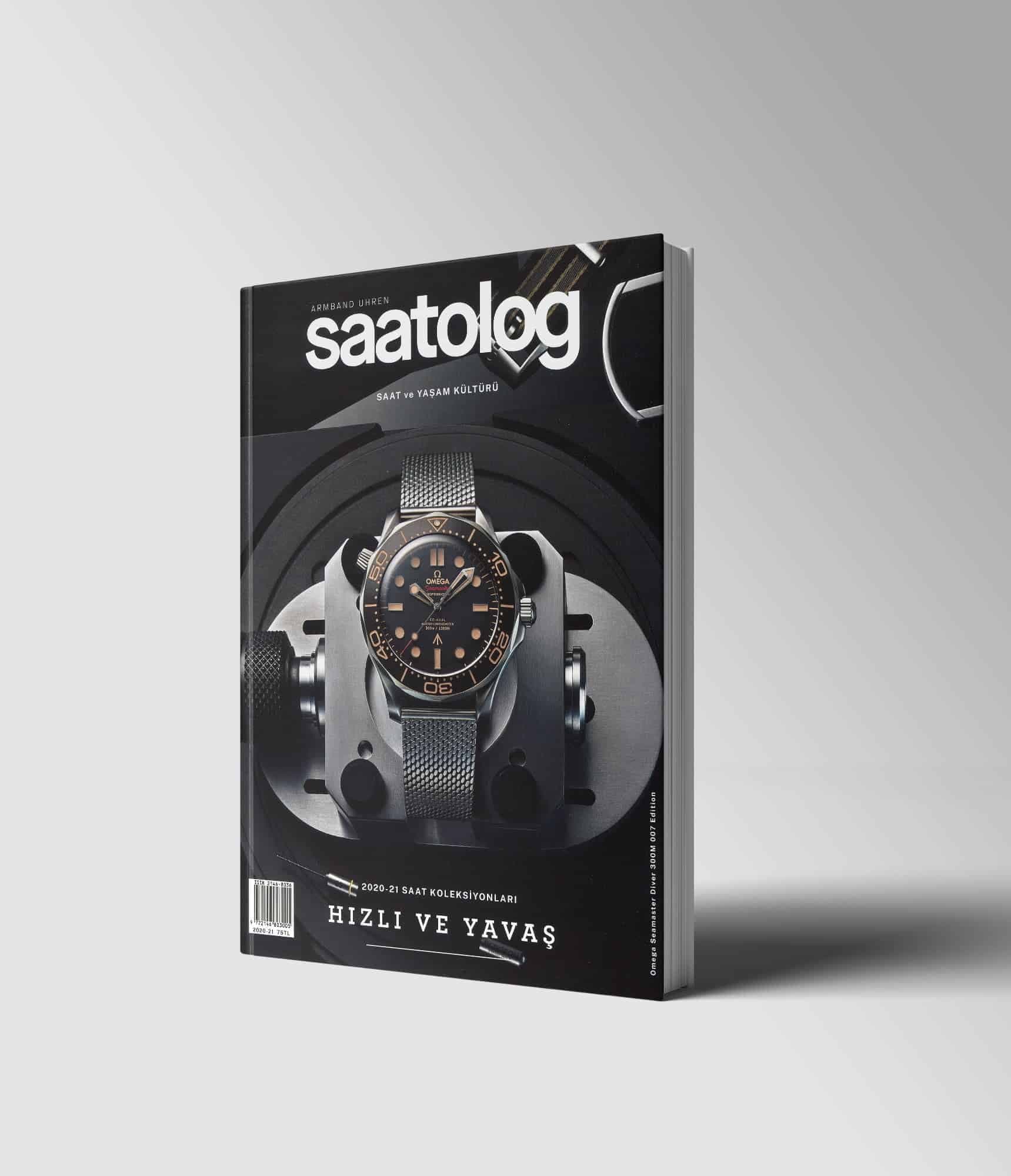
Saatolog Yıllık Saat Dergisi Saatolog’un yeni sayısı, 2020’nin yarattığı bu dönüştürücü etkiden ilham alarak hazırlandı. Dünya dijitalin etkisiyle her zamankinden de hızlı bir şekilde ilerlerken yavaşlamanın da önemini sonunda kavramış bulunuyoruz ve bu tezatlık hayatlarımızın her anına etki ediyor. Biz de bundan yola çıkarak Saatolog 2020/21 sayısını ‘‘hızlı ve yavaş’’ teması altında hazırladık.