Elvis Presley, John Lennon, Duke Ellington, even Pharrell Williams… what thread ties these musical legends together? Beyond their genius, they all shared a taste for Rolls-Royce — that quiet symbol of elegance and glamour.
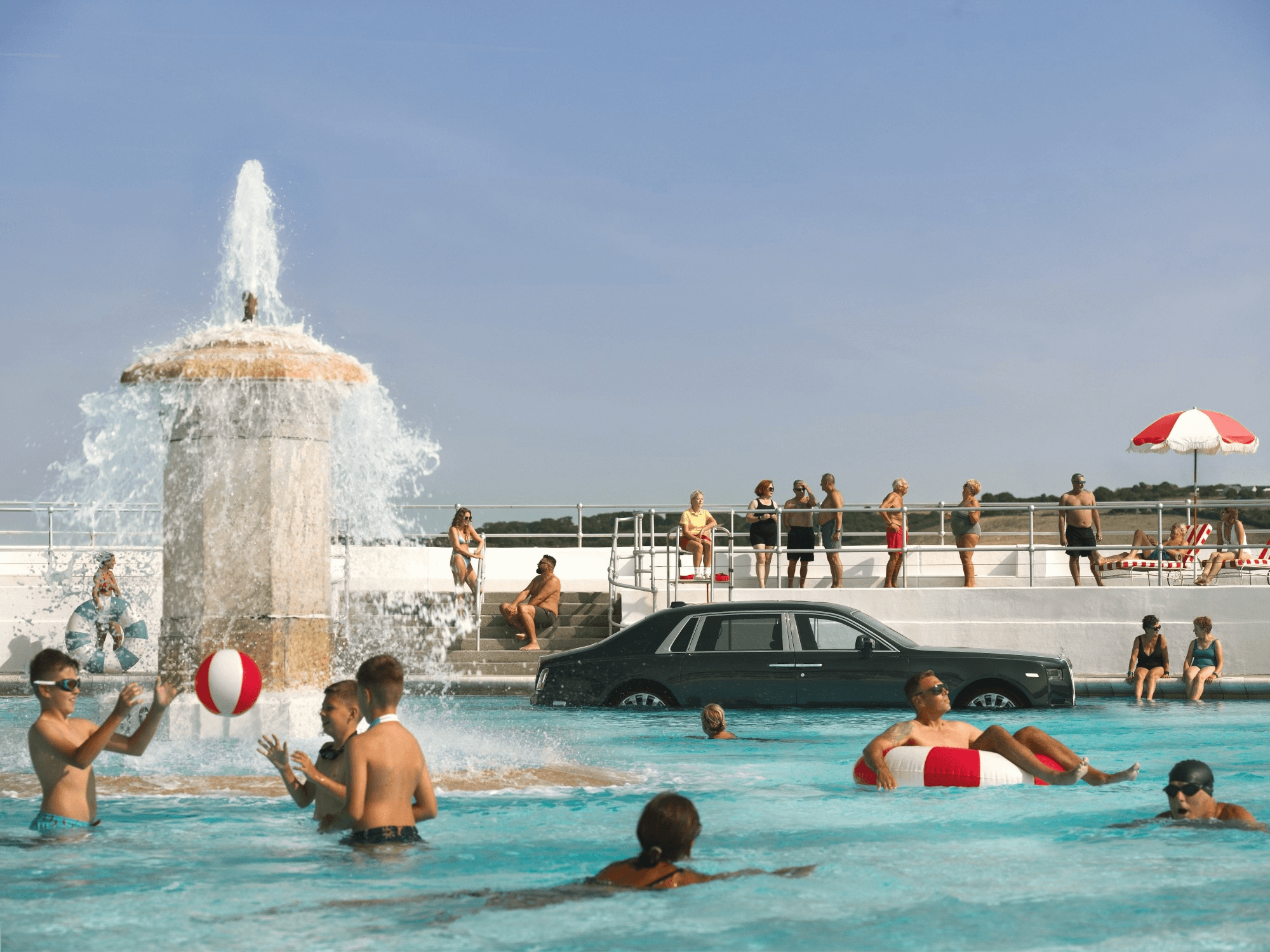
In 1967, Keith Moon, the wild drummer of The Who, marked his 21st birthday at the Holiday Inn in Flint, Michigan. Amid the chaos of celebration, Moon reportedly forgot to pull the handbrake on his Rolls-Royce, sending the luxury car rolling into a half-finished swimming pool, where it slowly disappeared beneath the water.
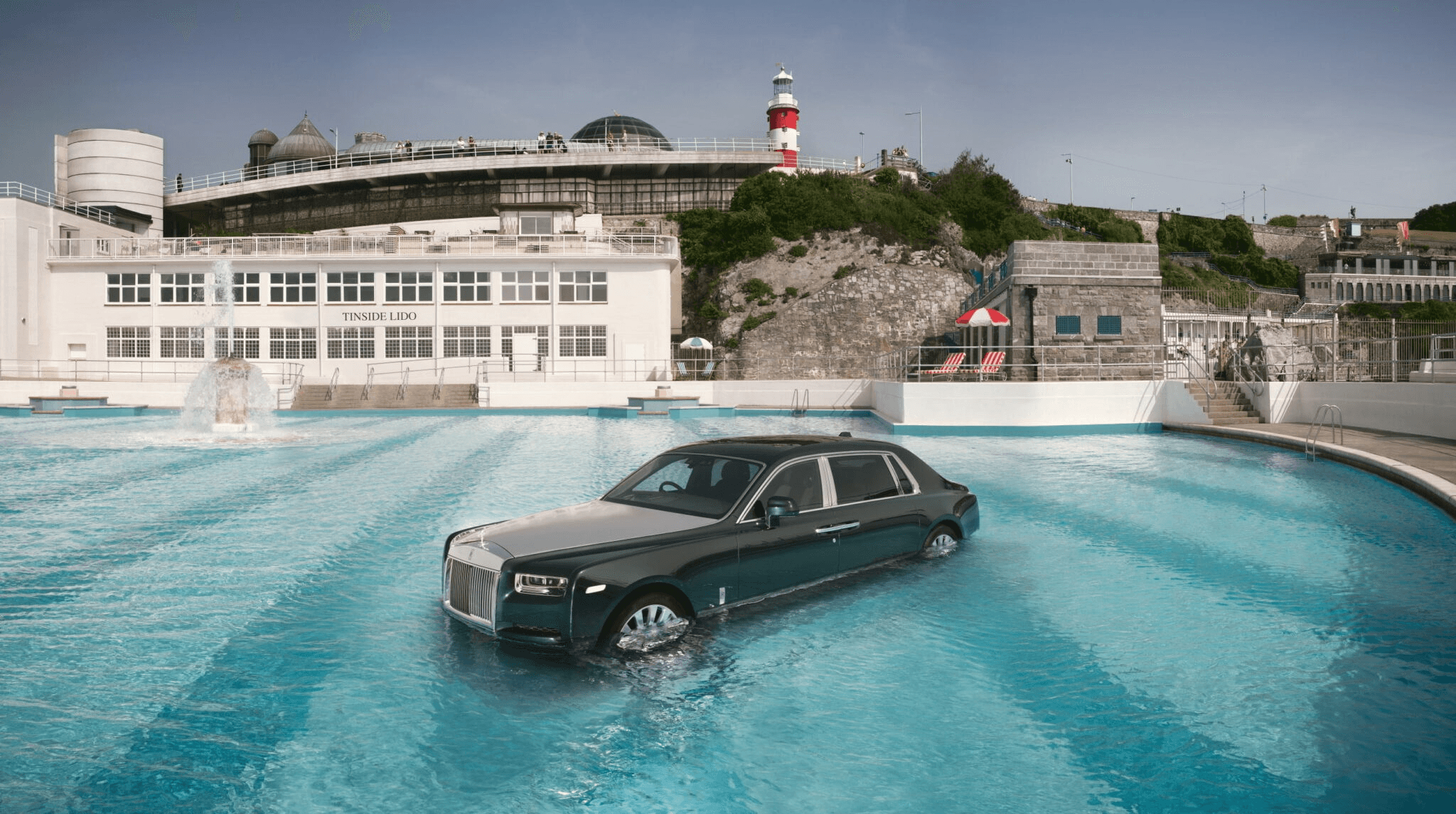
Whether this outrageous tale is fact or rock ‘n’ roll folklore remains uncertain, but its place in music history is undeniable. Decades later, Rolls-Royce leaned into the legend with a bold homage: on what would have been Moon’s 79th birthday, the brand staged a recreation by sinking a Phantom — its flagship model — into a pool to celebrate the car’s centennial. The chosen stage was the Tinside Lido in Plymouth, England, an Art Deco gem perched along the English Channel. The setting carried its own resonance in music history: it was here, in September 1967, that The Beatles posed for a now-iconic photo during the filming of Magical Mystery Tour.
A PASSIONATE UNION: CARS AND MUSIC
The bond between automobiles and music has always been electric — a passionate affair fueled by speed, freedom, and style. In the world of rock, particularly American rock, cars are more than machines; they are metaphors for rebellion and self-discovery. Long roads, midnight drives, beers stashed in the trunk, a lover in the passenger seat — the car becomes the ultimate vessel for youth, escape, and raw energy.
Just think of Bruce Springsteen’s Racing in the Street, The Doors’ Moonlight Drive, or AC/DC’s Highway to Hell. Rock’s pulse often matches the rev of an engine, its defiance echoing the thrill of slamming the pedal down, shifting gears, and surrendering to the road. In this world, the car isn’t just transportation — it’s liberation, adrenaline, and identity all rolled into one.
Rap, however, plays a different tune in its love affair with cars. Within hip-hop culture, vehicles take on the role of status symbols, seamlessly fitting into the genre’s braggadocio — the unapologetic culture of boasting. Here, cars aren’t just about the open road but about presence: gleaming chrome, luxury interiors, speed, and exclusivity become metaphors for success and resilience. Flaunting a Rolls-Royce, a Maybach, or a Lamborghini is a way of saying I’ve arrived.
This show of luxury is more than surface shine — it’s rebellion of a different sort. Unlike rock, born from garage rehearsals and suburban angst, rap emerged from the streets. To drive a Rolls-Royce or rap about cruising in one is not simply indulgence; it’s a declaration against systemic barriers, a reclamation of visibility and power. Through cars, rap artists don’t just show wealth — they demand recognition.
ROLLS-ROYCE ALSO TAKES THE TOP SPOT IN SONG LYRICS
Naturally, when it comes to brag culture, nothing represents status more vividly than a luxury car. And in the music world, the finest automobiles are immortalized in lyrics. A 2015 study analyzed rap tracks to uncover which car brands artists name-dropped the most. The winner? Mercedes-Benz. And as for the single most sung-about model, it wasn’t a European luxury car at all but the classic 1964 Chevy Impala, a lowrider that has become an enduring icon of American car culture.
Bloomberg conducted a similar study a few years later, analyzing the Billboard Hot 100 between 2014 and 2017. This time, Rolls-Royce emerged as the champion — the most-referenced brand among the elite group of Porsche, Lamborghini, and Ferrari.
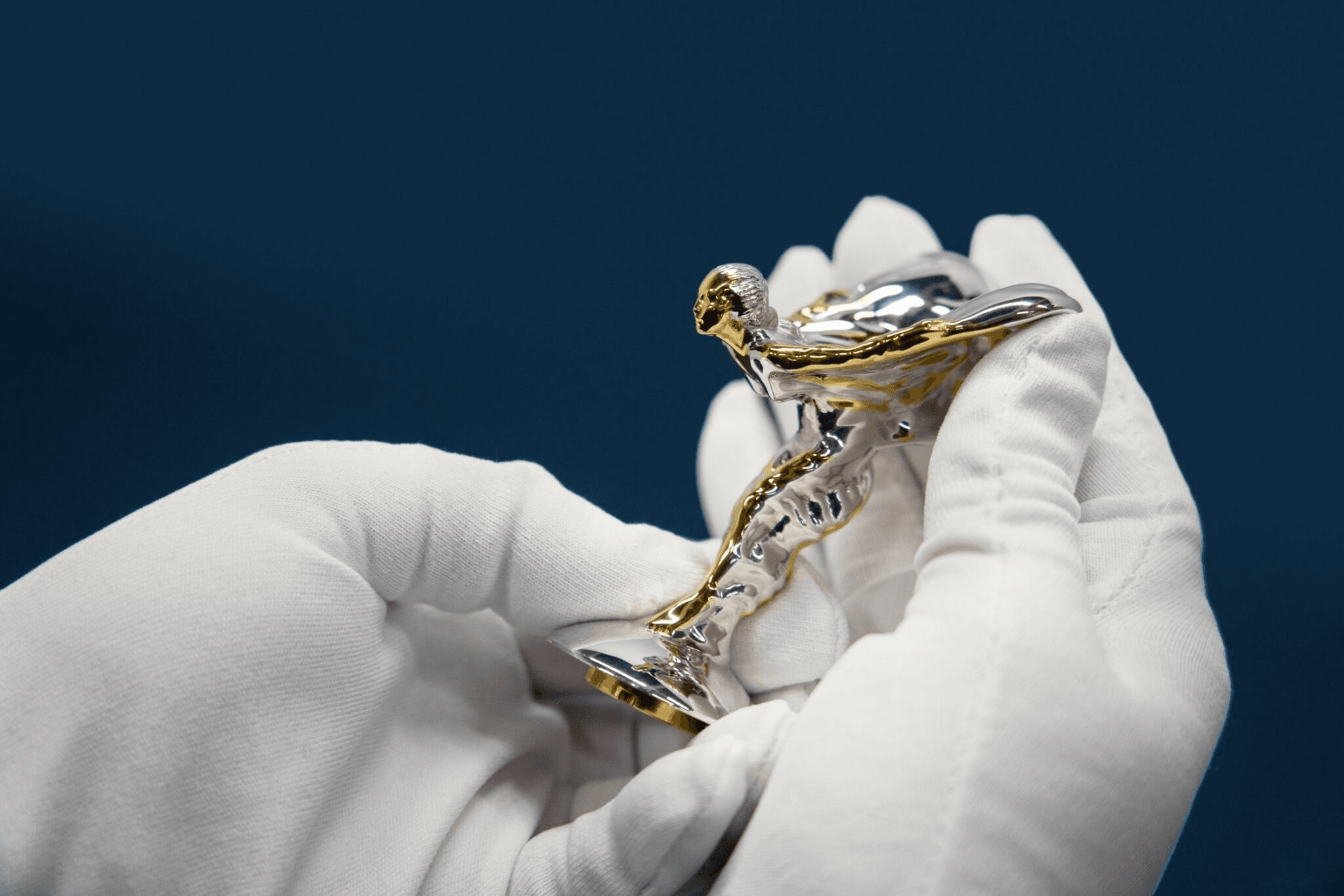
So what makes Rolls-Royce stand apart, adored by royalty, movie stars, aristocrats, industrialists, and musicians alike? Perhaps it is the entirely bespoke production process, where every detail is crafted to order. Or maybe it’s the whisper-quiet V12 engines, engineered to deliver unmatched smoothness. For some, the allure lies in the “Spirit of Ecstasy,” the graceful figurine that crowns every hood, elevated to near-sacred status over the decades. But the truest answer is simpler, more subtle: understated power. A Rolls-Royce doesn’t shout; it radiates prestige.
In a 2022 interview, Anthony DiNardo, automotive editor at Business Insider, traced Rolls-Royce’s entry into the hip-hop vocabulary back to the early 1980s. He noted an especially important milestone: Grandmaster Flash & The Furious Five’s Superrappin’ (released shortly after the 1979 hit Rapper’s Delight, often considered hip-hop’s first commercial breakthrough). In one verse, the car appears as both aspiration and status: “I will-a dog my grill in a new Rolls Royce / And if my Royce break down, I’ll be out in the rain…” Even in these early days, the Rolls-Royce was woven into hip-hop’s imagination — a symbol of arrival and luxury in a genre born from the streets.
A SYMBOL OF QUIET LUXURY THROUGHOUT MUSIC HISTORY
By 1988, Rolls-Royce had cemented its symbolic role in the hip-hop universe. The moment was immortalized on the cover of Eric B. & Rakim’s second studio album, Follow the Leader. There, the duo posed in front of a Rolls-Royce — not just as owners of a luxury vehicle, but as artists staking a claim to legitimacy and visibility. The car became a physical declaration of transformation: from the grit of the streets to the pinnacle of cultural influence. The message was unmistakable — we’ve made it.
Yet Rolls-Royce’s presence in music history stretches far beyond rap. Across eras and genres, the marque has been the favored choice of legendary names. Duke Ellington glided in one. Fred Astaire, the epitome of elegance, did too. Count Basie, Ravi Shankar, Edith Piaf, and Sam Cooke all found in Rolls-Royce not only comfort, but also a traveling stage for their prestige.
The same can be said for music’s power brokers. Brian Epstein, the visionary manager behind The Beatles, owned one. So did Berry Gordy, the genius founder of Motown, and Ahmet Ertegün, Atlantic Records’ co-founder and the man who discovered The Rolling Stones, Led Zeppelin, and AC/DC. For these figures, a Rolls-Royce was not simply transportation — it was an extension of their cultural authority.
Across changing decades, shifting genres, and evolving cultural landscapes, one truth has remained constant: Rolls-Royce is music’s ultimate companion. A symbol not of noise or ostentation, but of quiet, timeless grandeur — a signature that rides alongside creativity, innovation, and success.
WHEN CHICKENS PECKED AT ELVIS’S LEGENDARY PHANTOM…
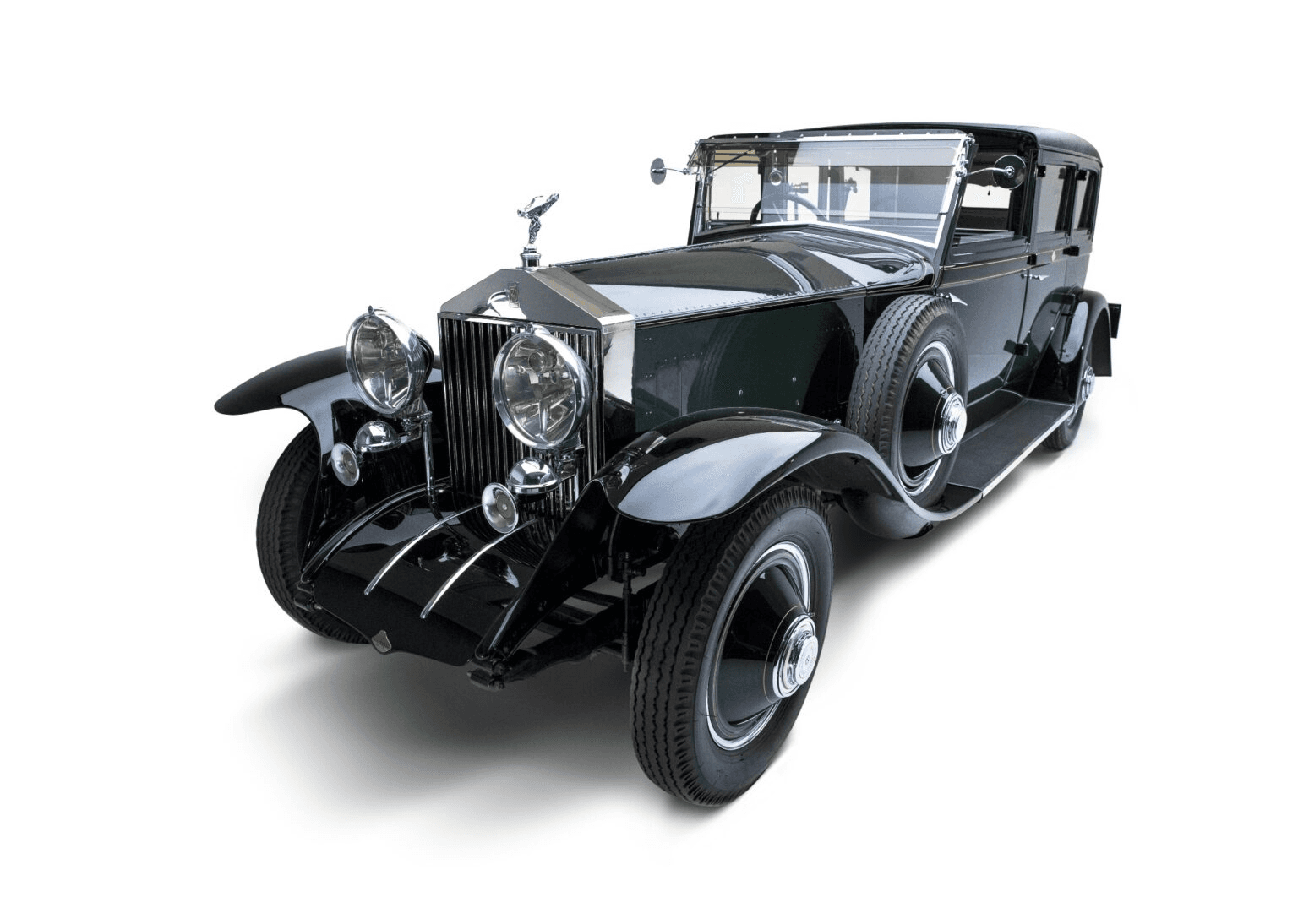
Among the many legendary models in the Rolls-Royce lineup, the Phantom occupies a singular, almost mythical place. First launched in 1925, the Phantom series has long stood as an engineering marvel, offering a unique approach to luxury defined not by ostentation, but by substance, refinement, and attention to detail. When Marlene Dietrich arrived in Hollywood in 1930, Paramount Studios greeted her with a green Phantom I—a gesture that both acknowledged her rising star power and cemented Rolls-Royce’s early connection to the worlds of cinema and music.
Fast-forward to 1956: Elvis Presley’s debut album ascended to the top of the Billboard charts for ten consecutive weeks, demonstrating rock ‘n’ roll’s commercial might. Less than seven years later, at the peak of his fame, the King made a choice that would immortalize his personal style off-stage: a Midnight Blue Phantom V, customized to suit every need of his dynamic life. Elvis’ Phantom was more than a car—it was a mobile dressing room, equipped with a hidden writing board in the backrest for spontaneous song ideas, a microphone, a mirror, and even a clothes brush.
Every detail reflected the discipline of being perpetually ready to perform. Yet life has its quirks: his mother’s chickens occasionally pecked at the car’s polished exterior, which led to the adoption of a light Silver Blue paint to conceal scratches while maintaining elegance.
“HOW COULD YOU DO THIS TO A ROLLS-ROYCE?!”
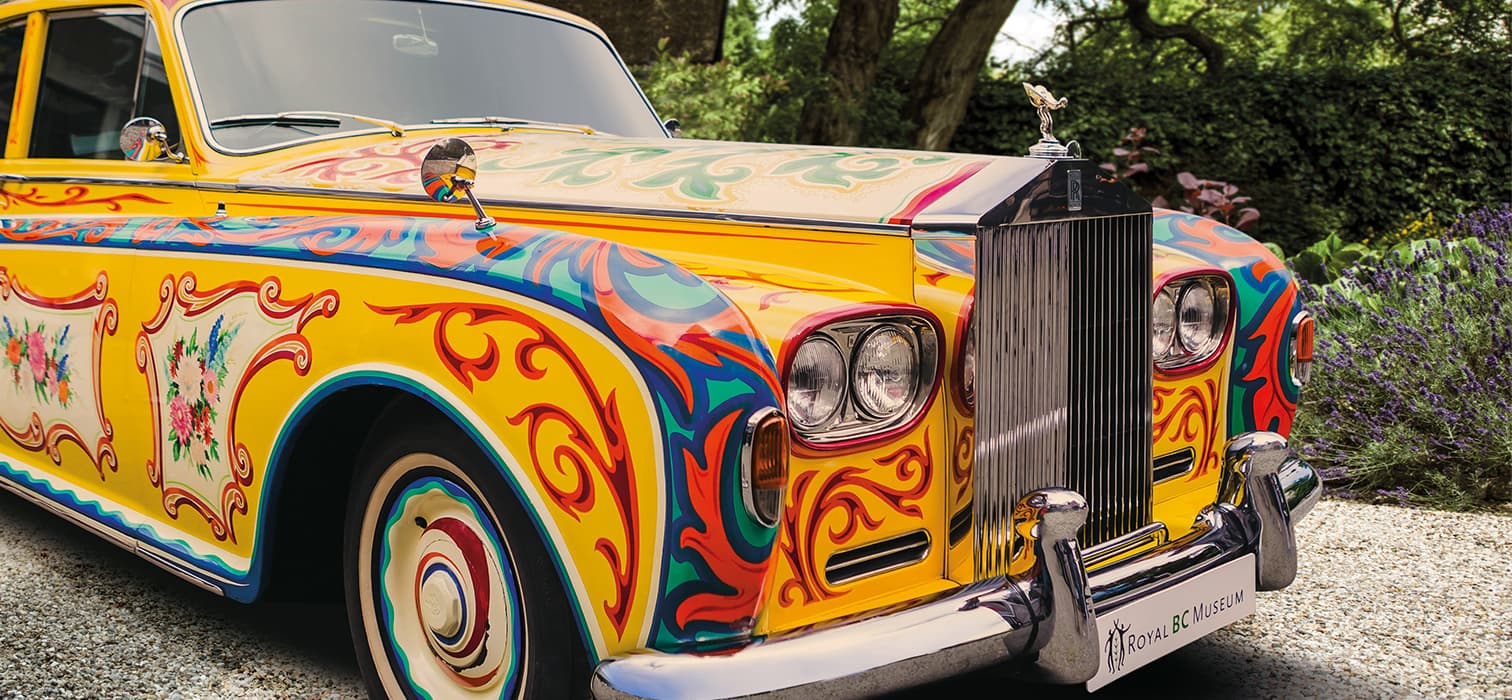
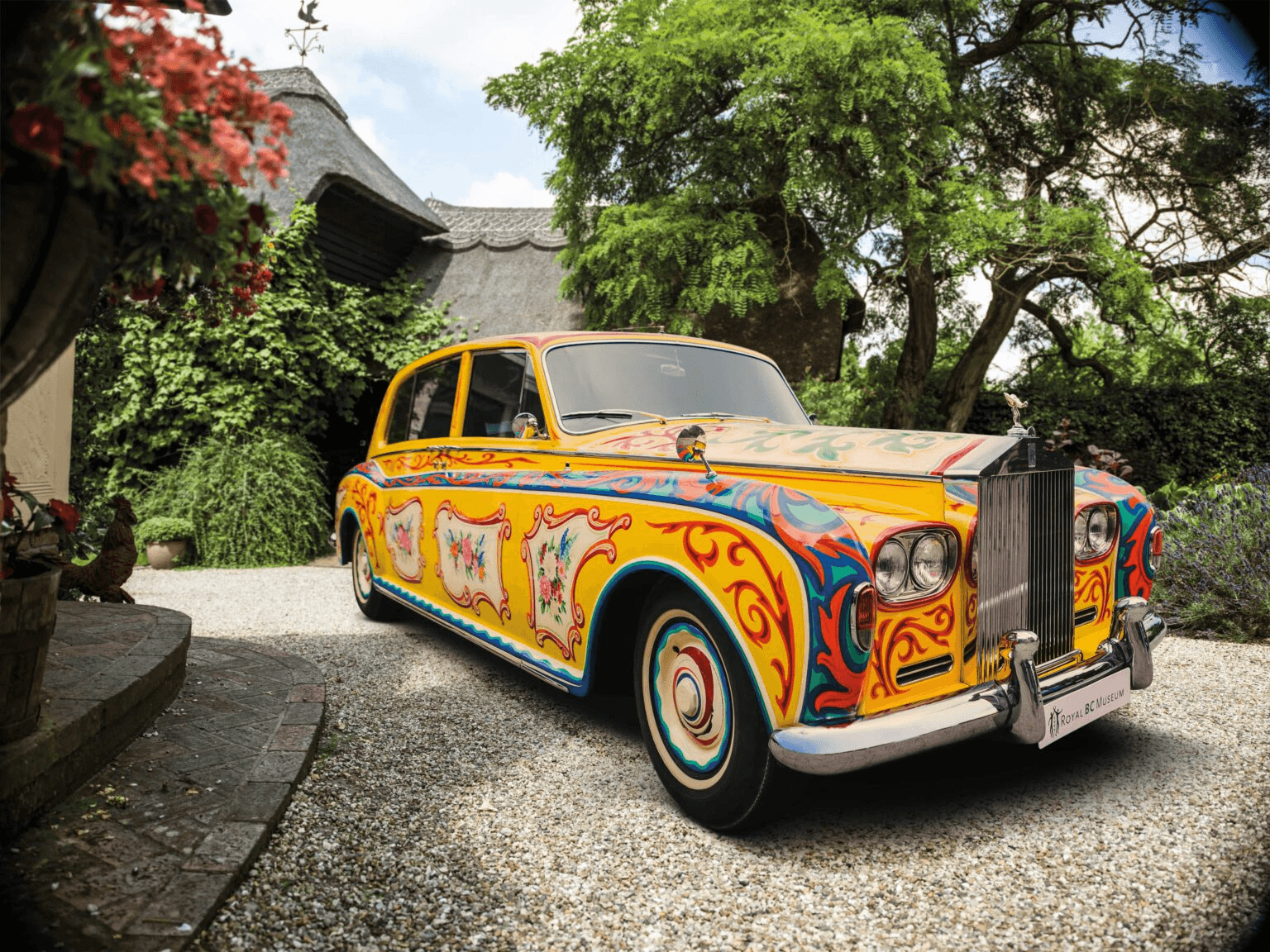
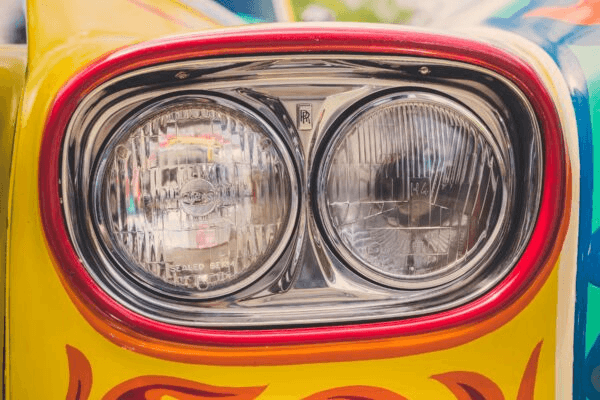
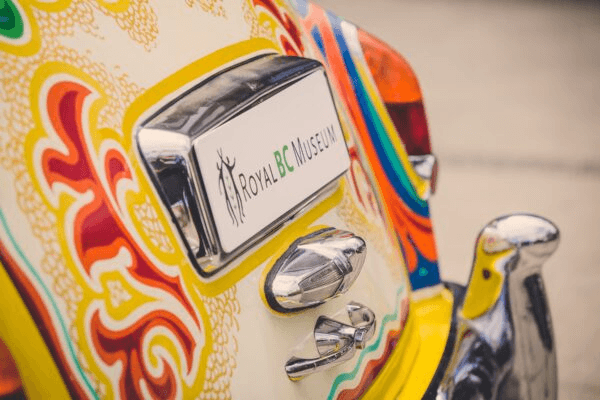
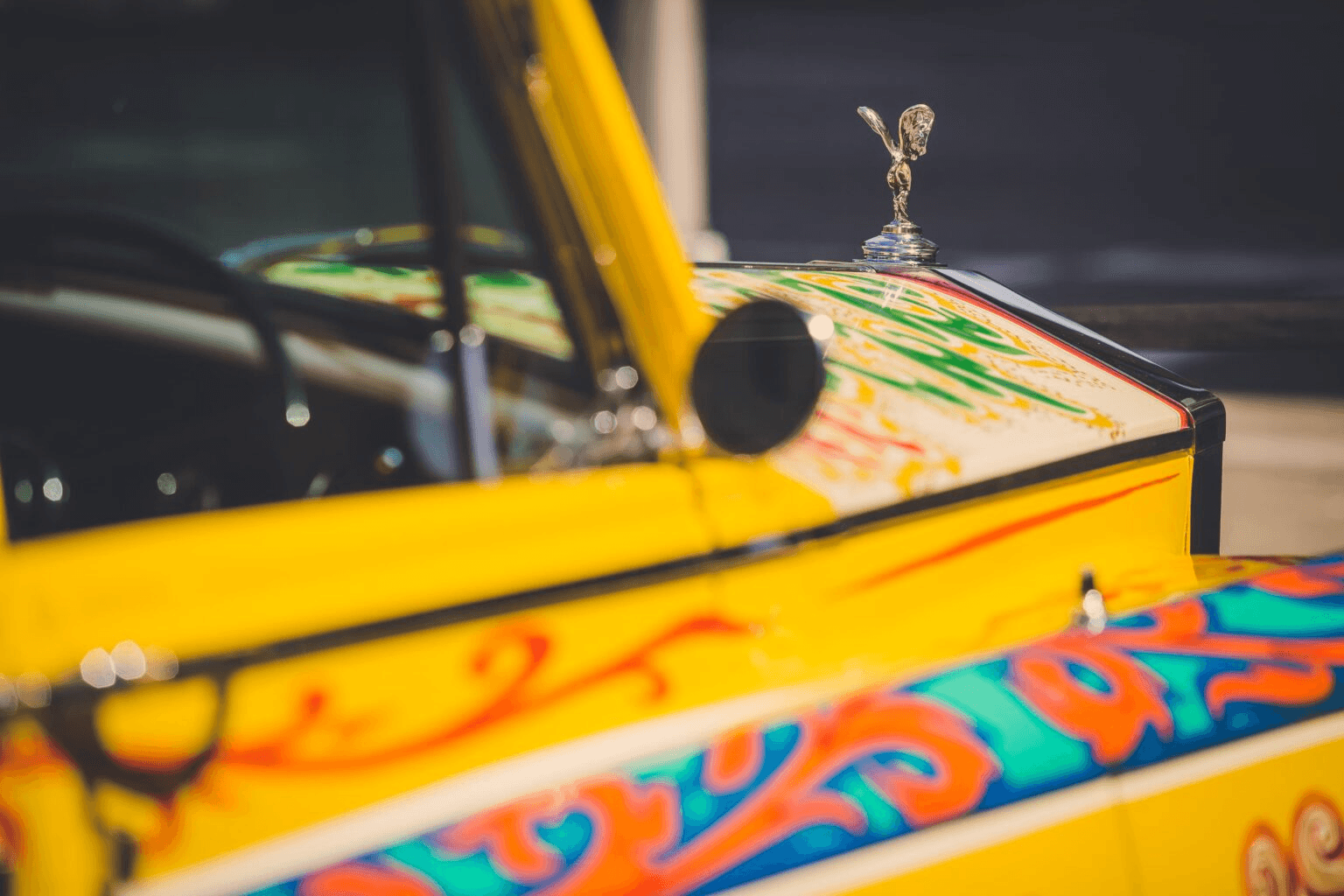
If Elvis made the Phantom a symbol of readiness and refinement, John Lennon transformed it into a canvas of cultural rebellion. In 1964, Lennon ordered an all-black Phantom V to celebrate the success of A Hard Day’s Night. A few years later, ahead of the release of Sgt. Pepper’s Lonely Hearts Club Band, he had the car repainted yellow with vibrant red, green, blue, and orange spiral patterns, adorned with flower panels and the Libra zodiac sign—a psychedelic four-wheeled manifesto of 1967’s counterculture.
Not everyone shared Lennon’s enthusiasm: an elderly woman on Piccadilly Street once struck the car with her umbrella, exclaiming, “How could you do this to a Rolls-Royce?!” The clash of generations was immediate and unmistakable. Yet the car’s legacy endured: when it sold in 1985 for over $2 million, it achieved the highest price ever paid for rock ‘n’ roll memorabilia.
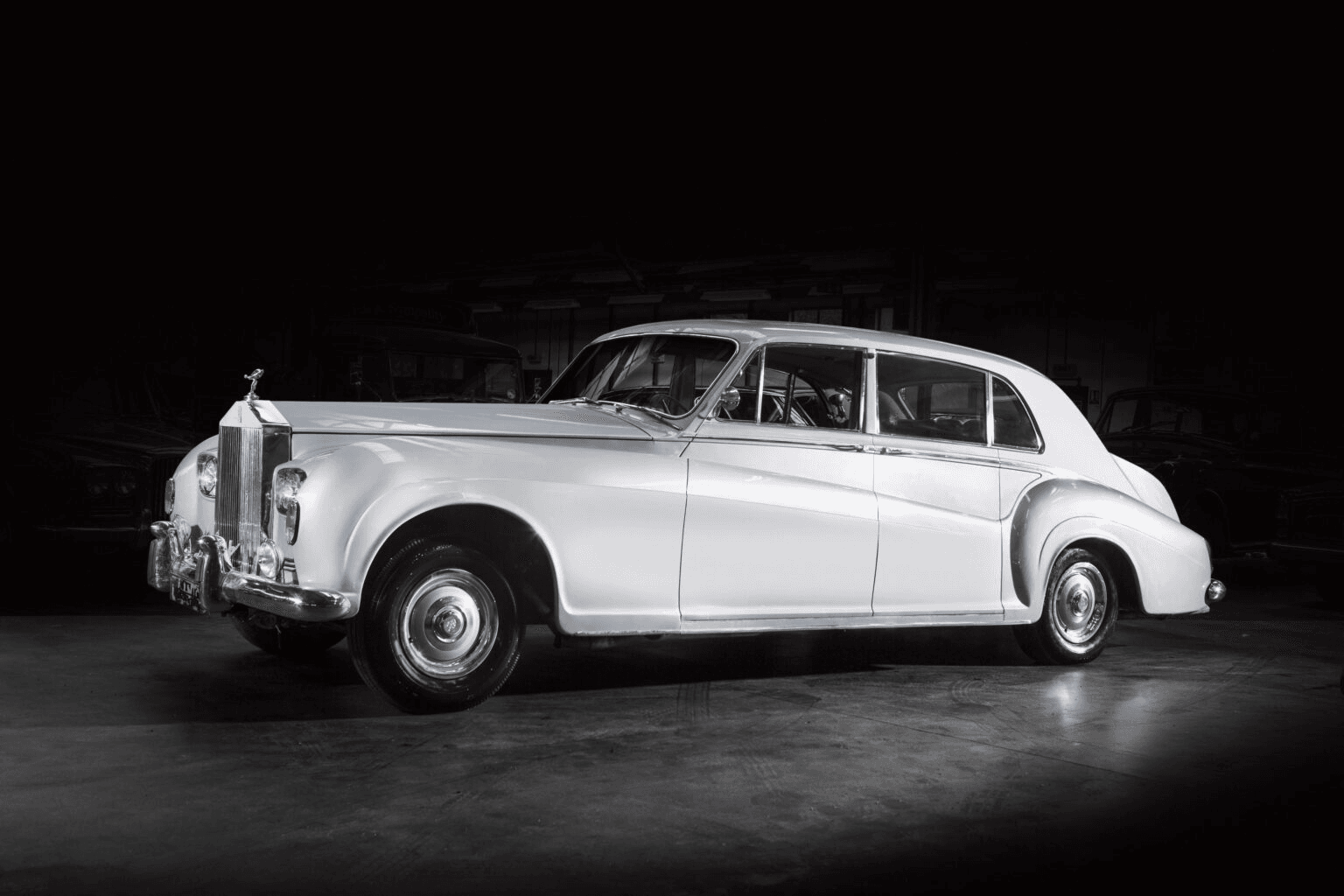
Lennon’s Phantom story did not end there. In 1968, as he entered a new chapter alongside Yoko Ono, he purchased a completely white Phantom V—matching his white-clad lifestyle and minimalistic home. The car, formerly black and green, was repainted inside and out, a transformation costing nearly as much as a house. This white Phantom appeared in the film Let It Be and other productions like Performance, and even after Lennon sold it to Beatles’ manager Allen Klein in 1969, its cultural resonance continued to grow.
FROM THE PINK PHANTOM TO PHARRELL
The Phantom’s allure is not confined to historical icons. Sir Elton John made models like the Phantom V and VI integral to his stage persona, music videos, and public image. His pink-and-white Phantom inspired Damon Albarn and Gorillaz in their song The Pink Phantom, harking back to an era when Elton John would chauffeur a young Albarn from school, fostering the next generation of music legends.
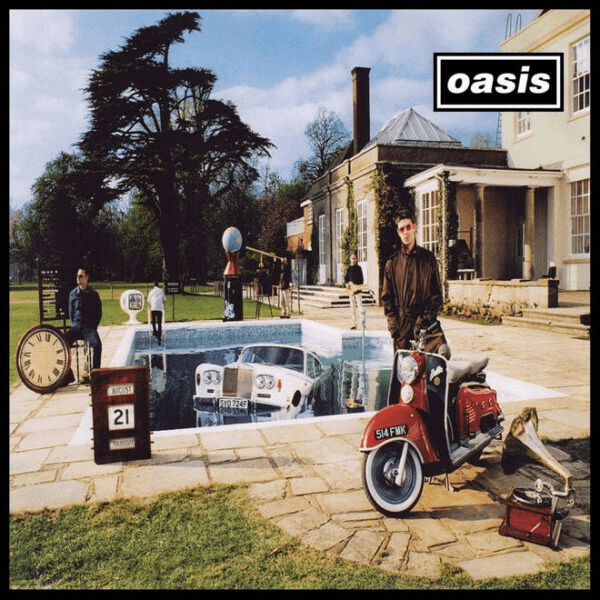
In the 2000s, contemporary stars embraced the Phantom as both status symbol and artistic accessory. Pharrell Williams, Snoop Dogg, 50 Cent, and Lil Wayne featured the modern Rolls-Royce Phantom VII in music videos, album covers, and performances. In 2004, the video for Drop It Like It’s Hot showcased the Phantom VII, rewriting the brand’s visual language in music. 50 Cent appeared in Entourage driving a Phantom VII Drophead Coupé, while Lil Wayne’s Tha Carter II album prominently featured the car on its cover. Even Oasis’ 1997 album Be Here Now depicted a sunken Rolls-Royce—though it was a 1972 Silver Shadow rather than a Phantom.
Rolls-Royce, true to its understated ethos, rarely seeks the spotlight. Yet in music, it occupies multiple roles: sometimes a prize at the pinnacle of success, other times a rebellious icon defying convention. Across roads, genres, and decades, it leaves an indelible mark—appearing in pools, on album covers, and under stage lights. Its constant whisper is clear: true power lies not in ostentation, but in the quiet elegance that endures.
Saatolog Yıllık Saat Dergisi Saatolog’un yeni sayısı, 2020’nin yarattığı bu dönüştürücü etkiden ilham alarak hazırlandı. Dünya dijitalin etkisiyle her zamankinden de hızlı bir şekilde ilerlerken yavaşlamanın da önemini sonunda kavramış bulunuyoruz ve bu tezatlık hayatlarımızın her anına etki ediyor. Biz de bundan yola çıkarak Saatolog 2020/21 sayısını ‘‘hızlı ve yavaş’’ teması altında hazırladık.