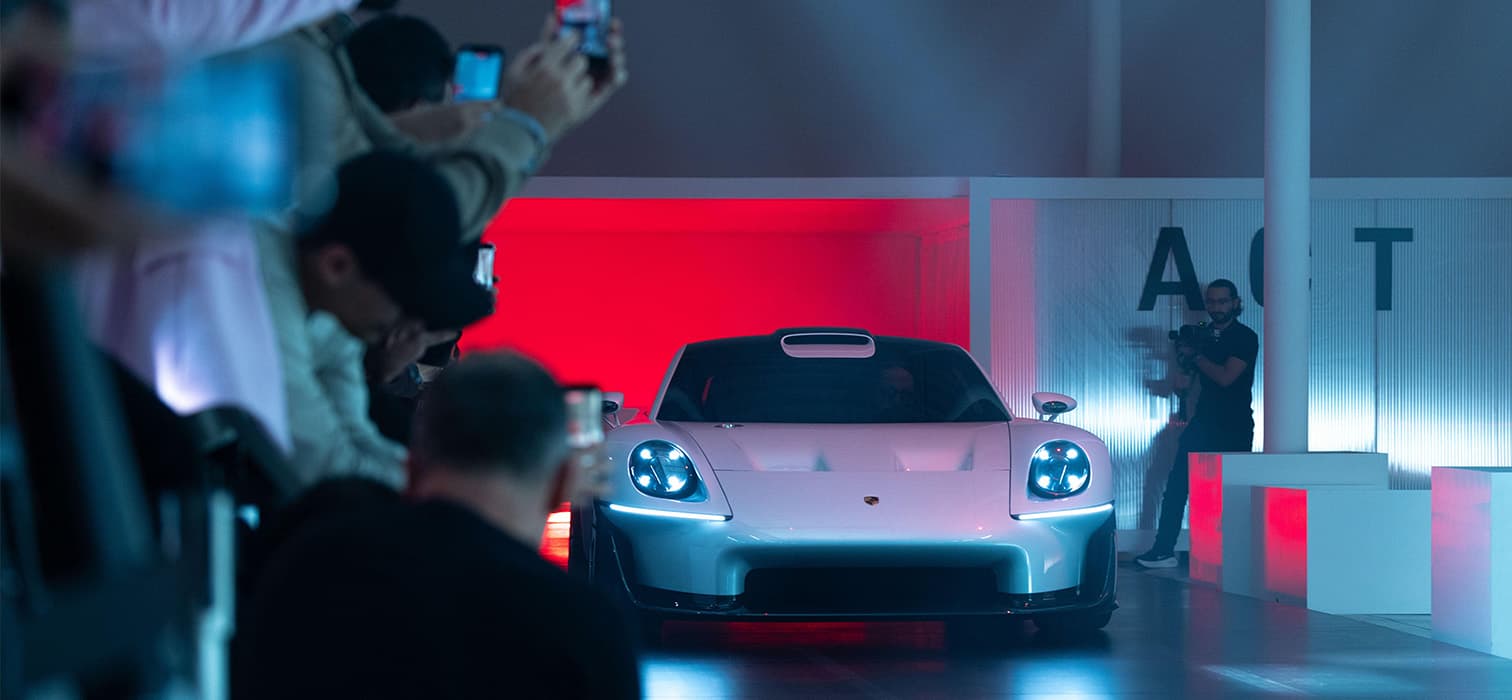
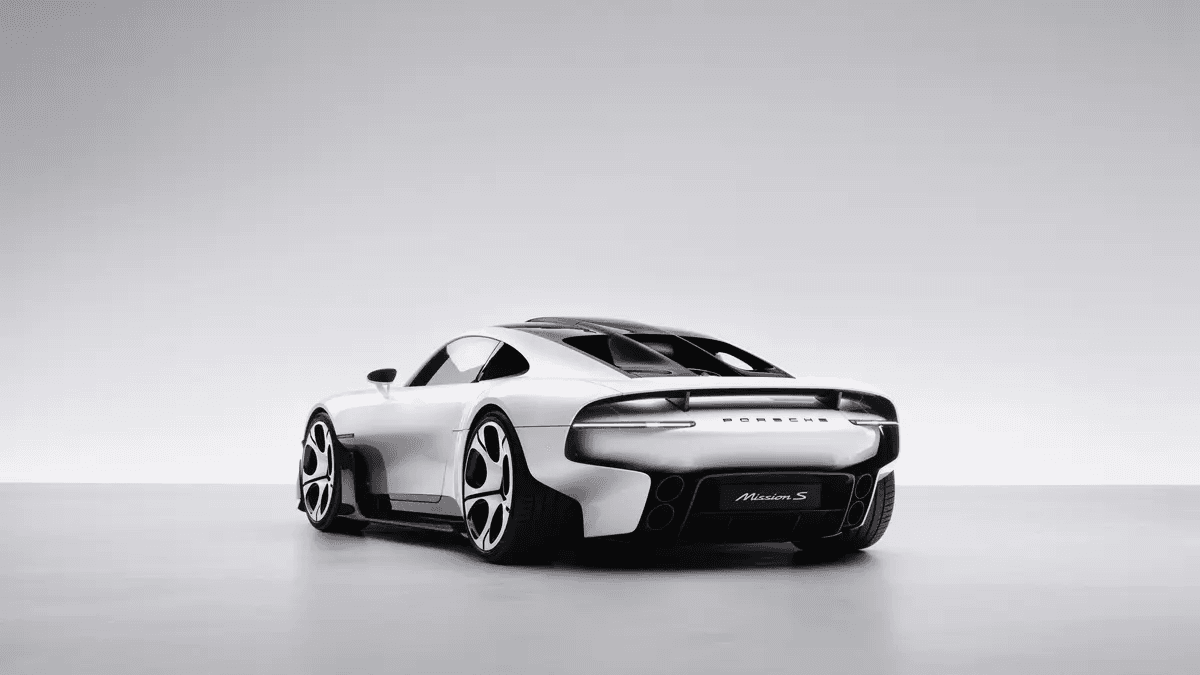
Porsche has offered the first glimpse of its new flagship with the Mission S Concept. Drawing inspiration from the brand’s past, the concept attracts attention as much for its design as for the questions it leaves unanswered.
Porsche could hardly have chosen a worse time to unveil a new car. Revealed on the same day as Tesla’s much-hyped “flying” Roadster, the Mission S Concept managed to attract attention without resorting to its rival’s theatrical showmanship. Offering important clues about what Porsche’s new flagship will look like in production form, the concept also incorporates numerous details from the brand’s past. Yet while Porsche has been remarkably open about its design direction, it is still keeping its cards close to its chest when it comes to the technical specifications.
Unveiled in New York
The Porsche Mission S Concept made its world premiere at a location of historical significance to the company: a pier in Queens, New York, overlooking the Manhattan skyline. The first photographs of the rear-engined Porsche 550 Spyder were taken at this very pier and published in 1953, marking the beginning of the brand’s journey in the North American market.
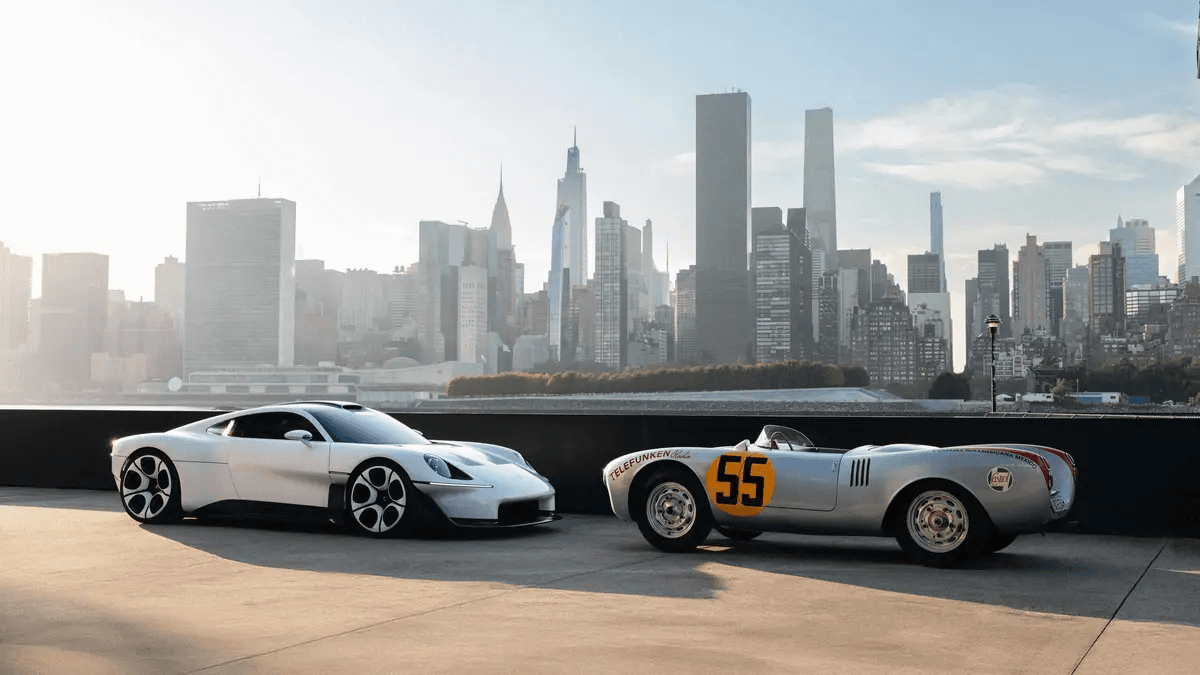
Keen to preserve the identity of the 550 Spyder, Porsche has traditionally favoured special locations or occasions for the unveiling of the most exceptional models in its production range.
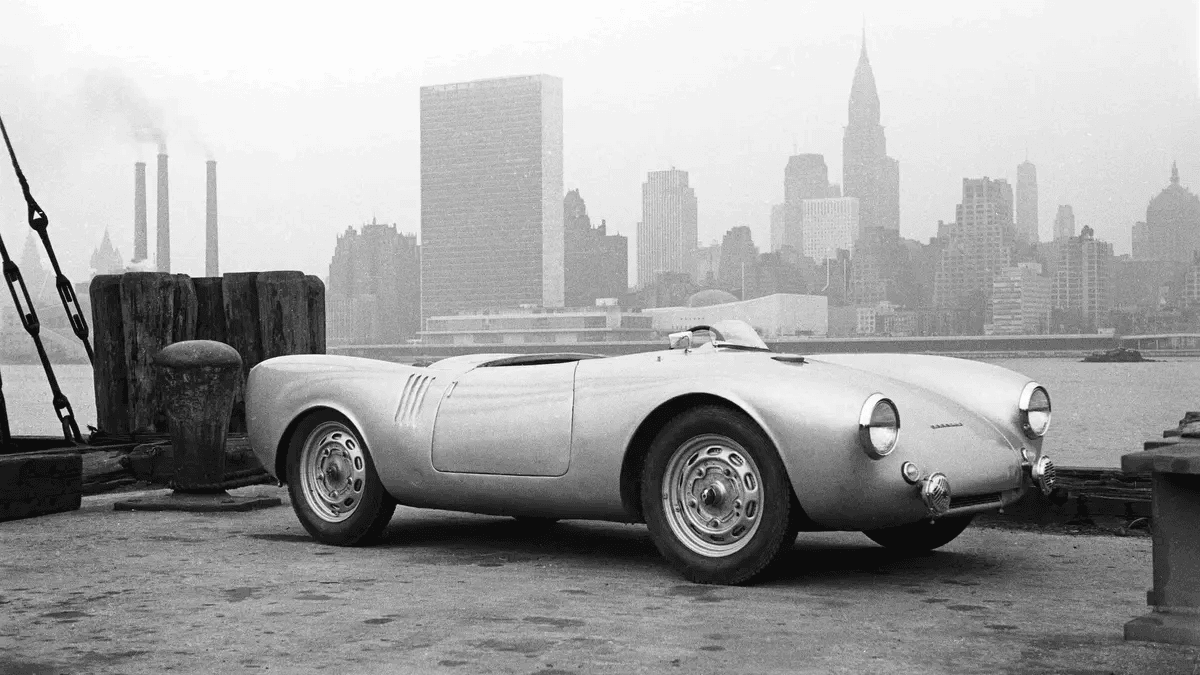
A New Automotive Icon
Following the 550 Spyder, models such as the 959, GT1, Carrera GT and 918 Spyder became the ultimate expressions of Porsche’s technological and design capabilities, bringing the brand’s most ambitious innovations into production. The Mission S represents the next chapter in this tradition. Following the Mission X concept and the one-off 963 RSP, the Mission S Concept appears to fit more naturally into this lineage, offering a clearer picture of the brand’s evolution.
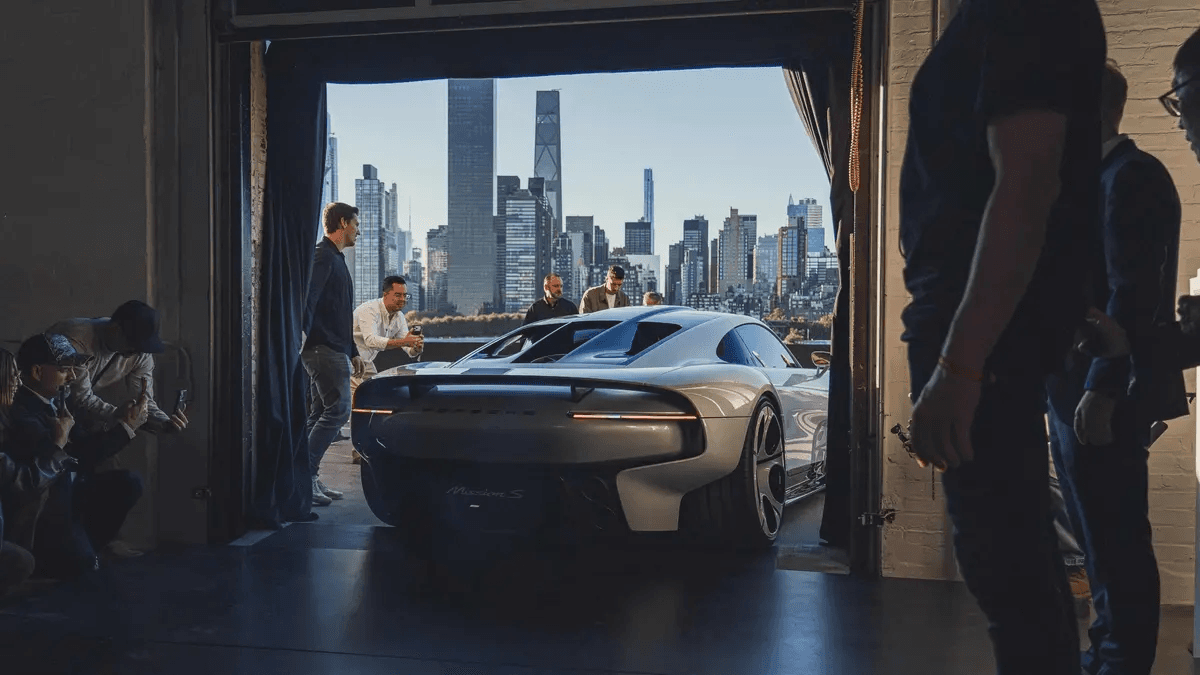
The “Car Giving Birth to Another Car” Design Continues
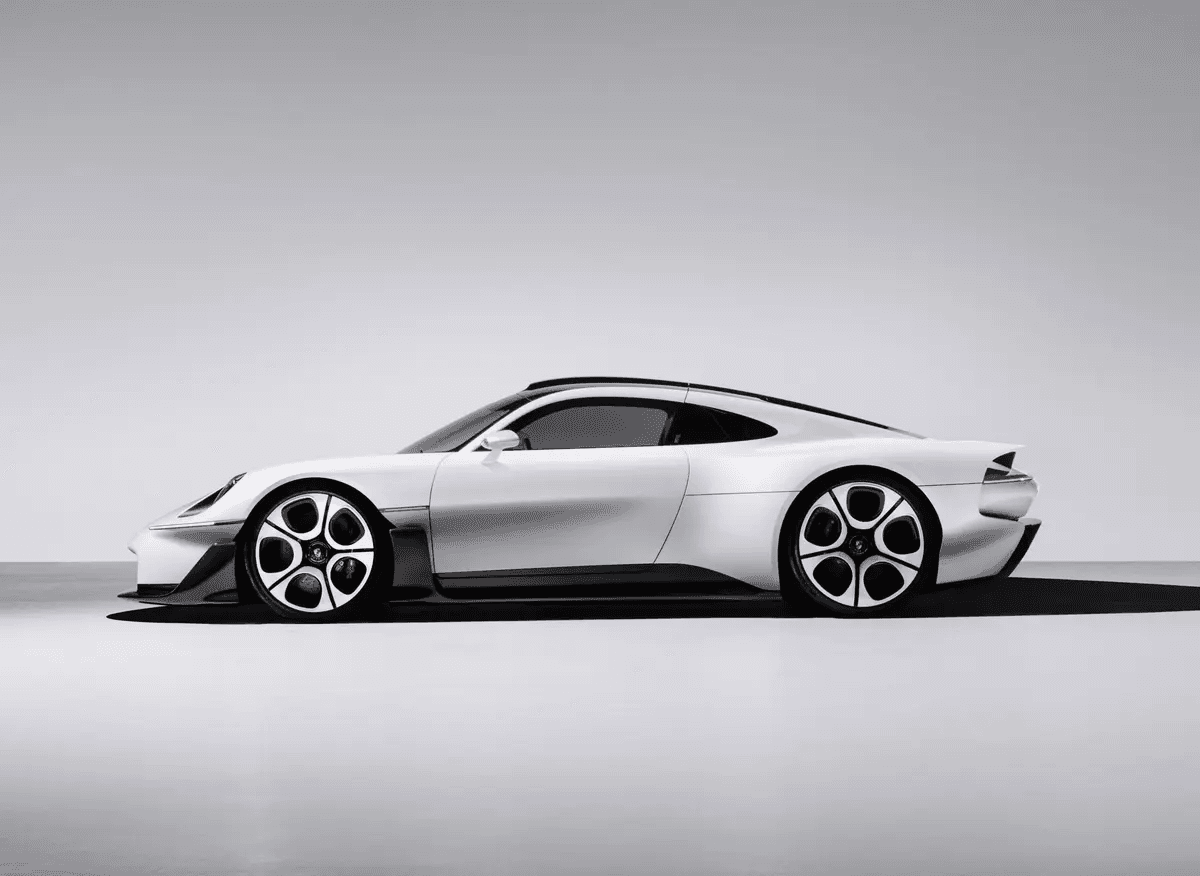
The proportions of the Mission S Concept leave little doubt that this is a Porsche. Its flowing lines, pronounced wheel arches, balanced height-to-width ratio and sharply tapering rear section, made possible by its mid-engined layout, create a design that bridges the worlds of sports cars and hypercars.
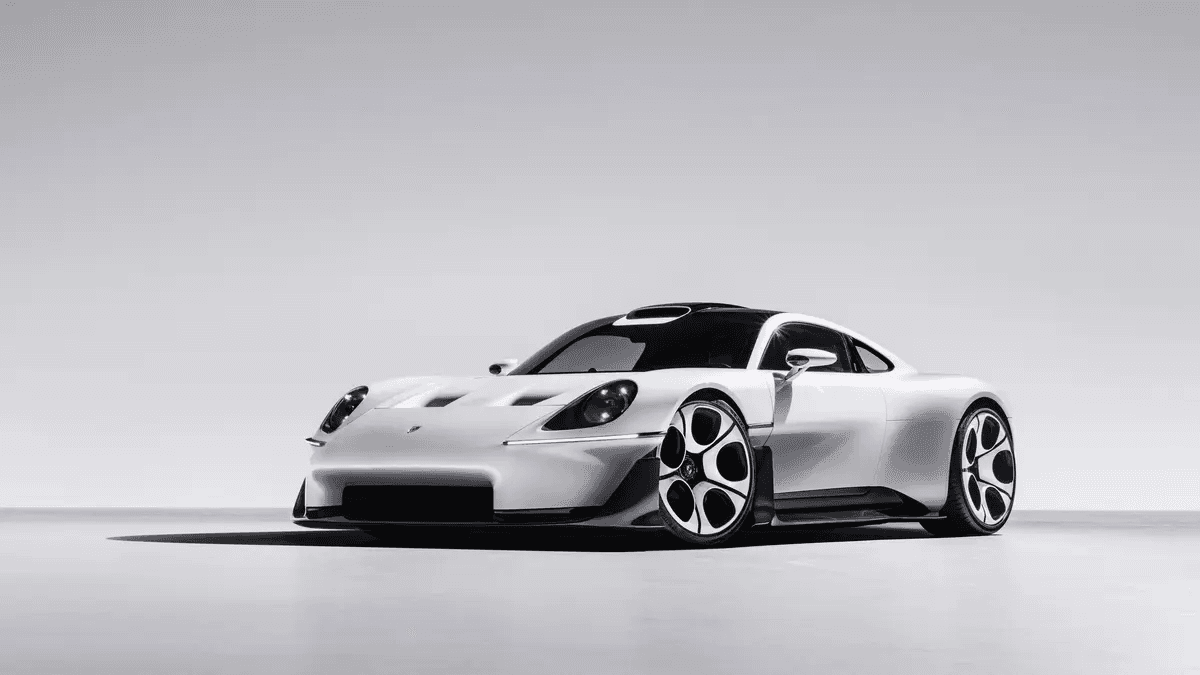
The theme of “two cars nested within one another” has been a recurring feature of Porsche’s flagship models since the 959. Viewed from certain angles, it is almost as though a larger car has been designed around the silhouette of the current Porsche 911. So much so that enthusiasts continue to describe this distinctive approach as a “car giving birth to another car”, a design idea that was also particularly evident in the GT1.
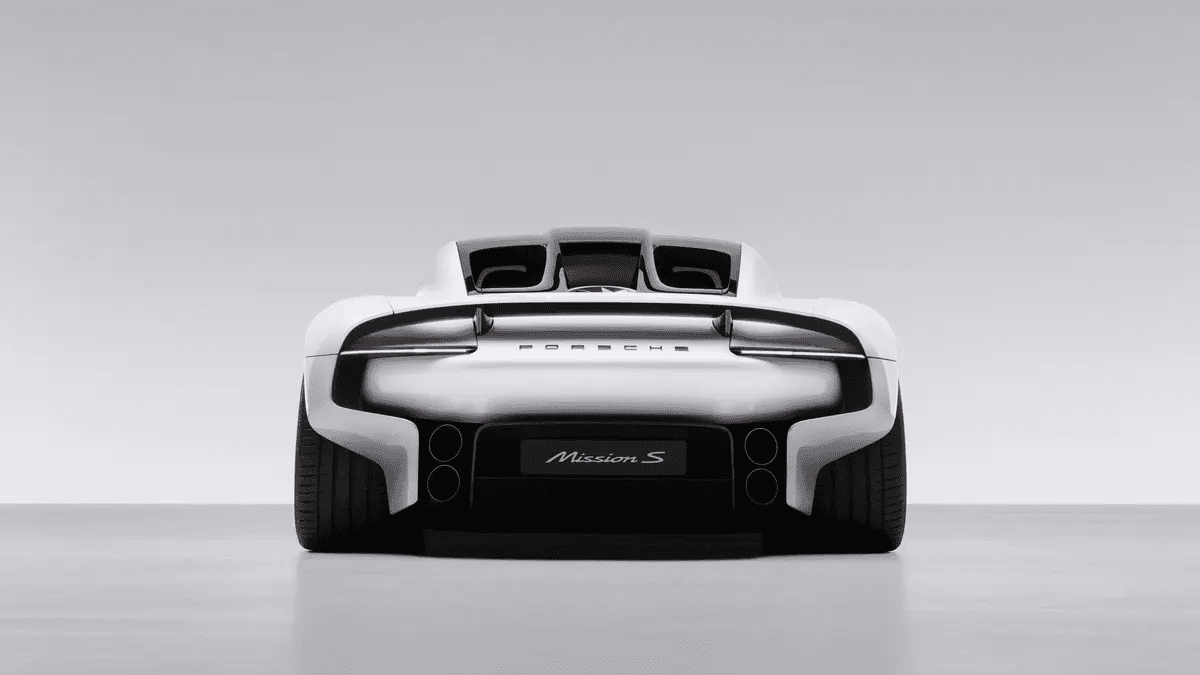
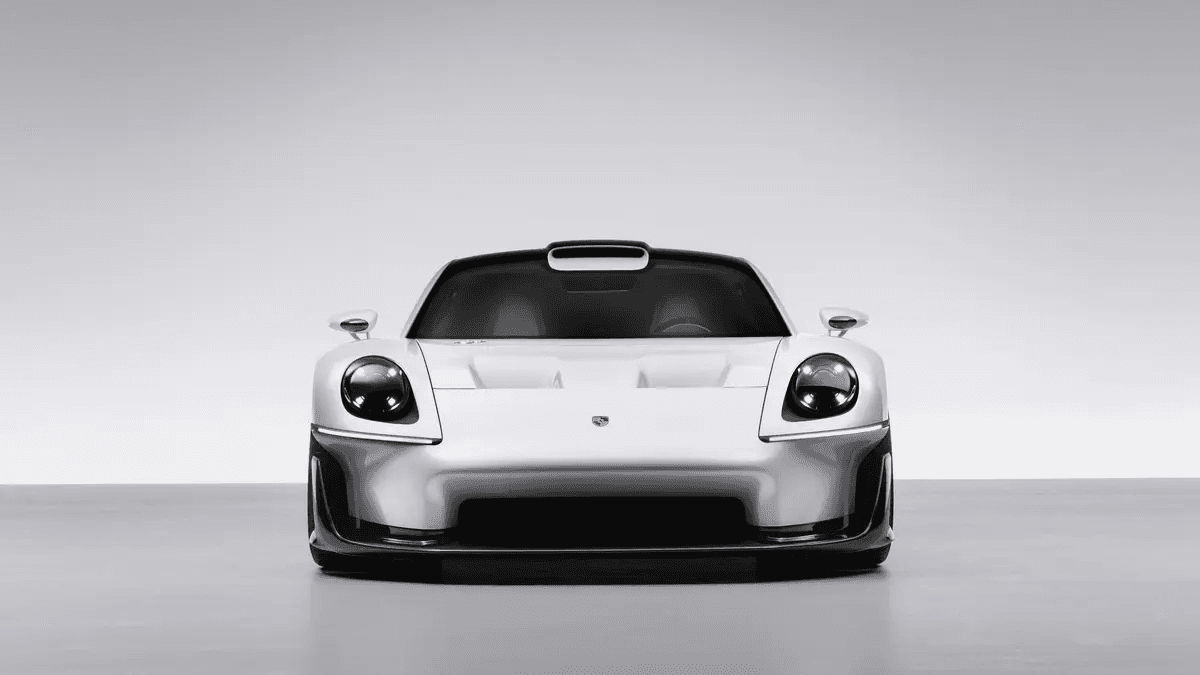
At the front, the enclosed nose and carefully sculpted air channels reference the GT1, while the rear spoiler wrapping around the bodywork draws inspiration from the 959.
Details from the Le Mans-Winning 917 and the Legendary 928 GT
One of the first details to catch the eye on the Mission S Concept, whose technical specifications have yet to be revealed, is the fan positioned above its mid-mounted engine. Borrowed from the legendary Porsche 917, celebrated for its Le Mans victories, this feature was originally used to improve engine cooling. Fans are also employed in modern road-going cars such as the Gordon Murray Automotive T.50 and McMurtry Spéirling, although in these cases they serve to increase downforce. The underlying concept can be traced back to the Brabham BT46B Formula 1 car, which raced just once in 1978 before being banned following its overwhelming victory.
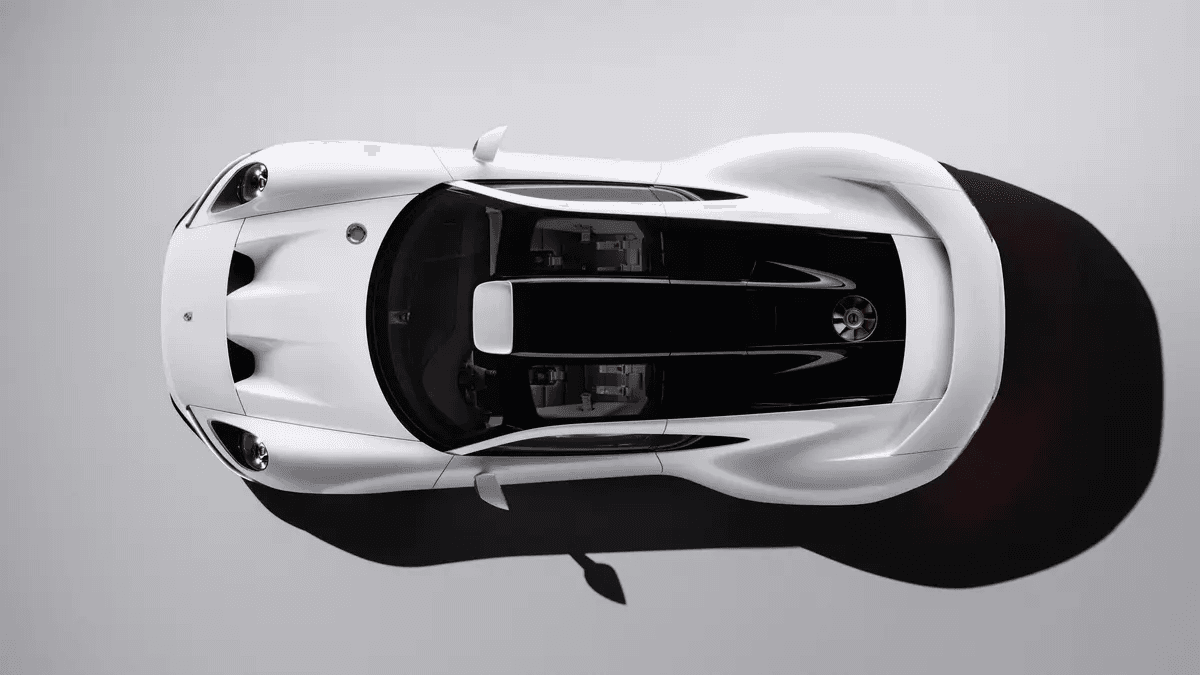
Porsche, however, has suggested that the fan may serve a different purpose in the Mission S Concept, potentially cooling a flat-eight engine rather than generating additional downforce, although official details remain unclear. Meanwhile, the five-hole wheels, with their distinctive “telephone dial” design, take inspiration from the original Porsche 928, a model once intended to replace the 911 but which ultimately failed to match its predecessor’s commercial success.
A Minimalist Cabin
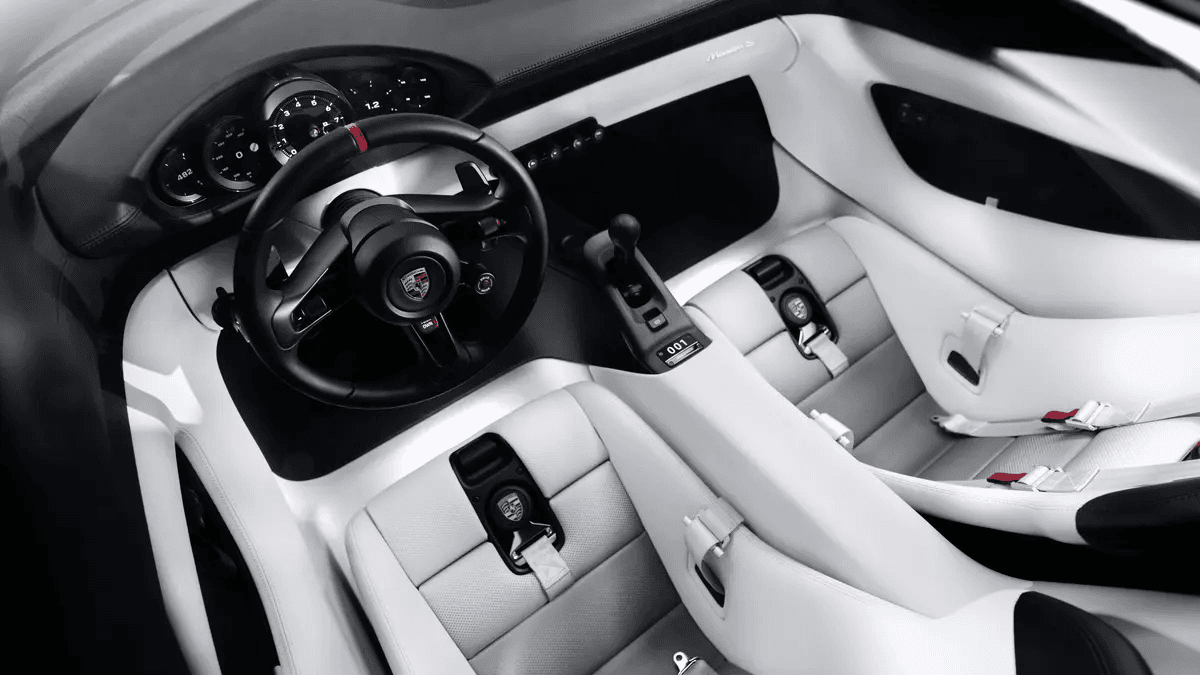
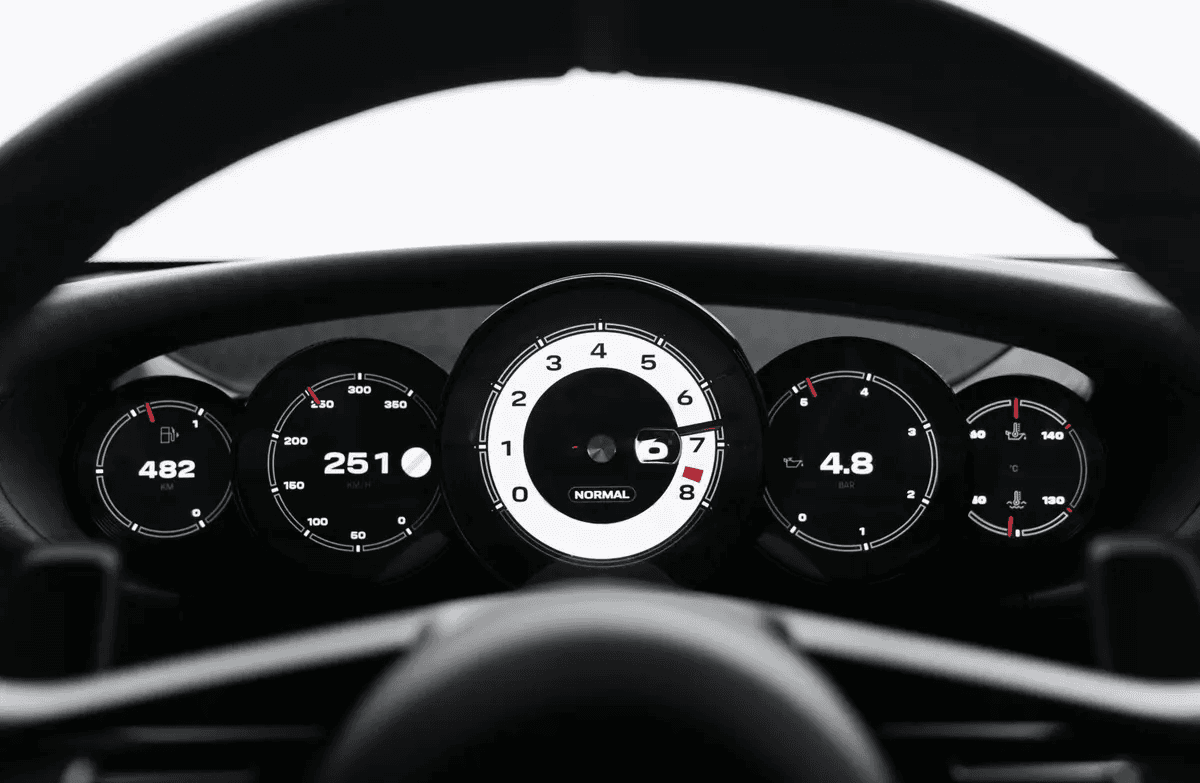
As with many other aspects of the Mission S Concept, the interior brings tradition and the future together. The minimalist cabin recalls some of Porsche’s purest sports cars, including the 550 Spyder and 356. Behind the steering wheel, five circular instruments, with the tachometer occupying the central position, dominate an otherwise uncluttered upper dashboard. Interestingly, the two outermost gauges are normally concealed behind the others and extend outwards when the car is started. At the centre of the dashboard, Porsche’s signature Sport Chrono clock combines analogue character with digital precision, while a specially designed ignition key remains faithful to another longstanding Porsche tradition, slotting into its familiar position to the left of the steering wheel.
No Screens, Just a Phone Holder
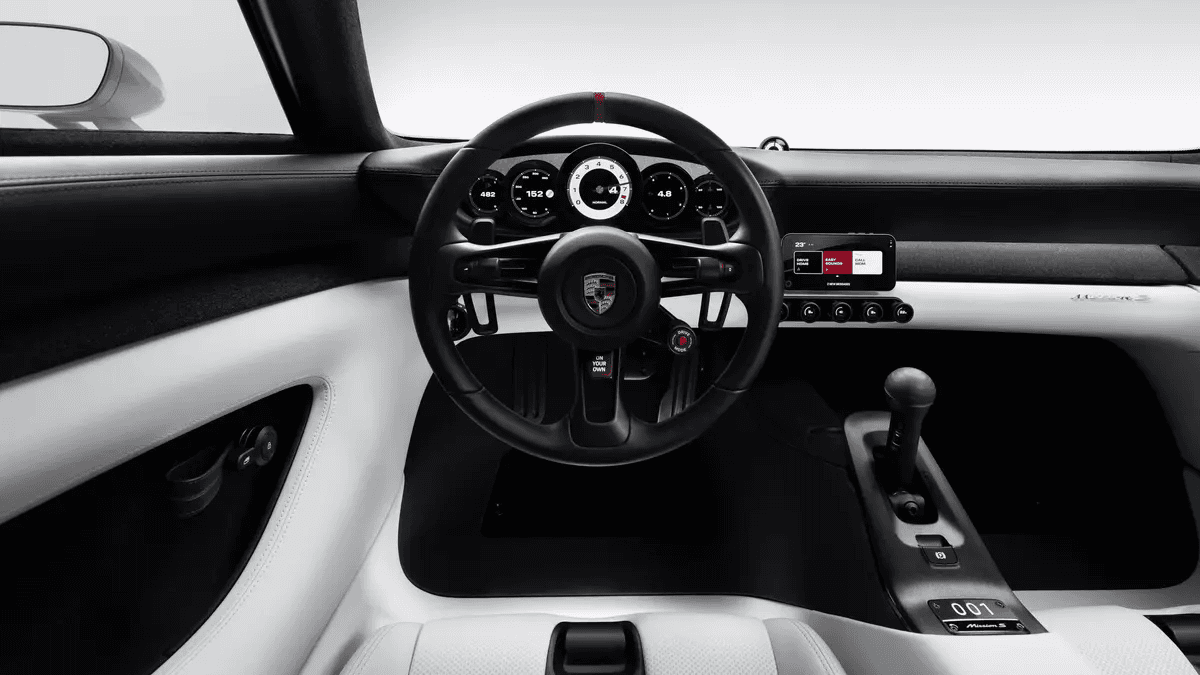
Step inside and you find yourself almost enveloped by the cockpit. In the two-seat cabin, the occupants sit exceptionally low, surrounded by the car’s structural elements, while multi-point safety harnesses emerging directly from the seats reinforce the sensation of being inside a racing car. Behind the analogue climate controls, gear selector and steering-wheel buttons lies a sophisticated digital architecture, allowing Porsche to embrace modern technology without compromising the pure driving experience for which the brand is known. There are no oversized touchscreens anywhere in the cabin. Instead, a magnetic MagSafe phone mount sits above the climate controls, with vehicle information, navigation and music functions controlled through the My Porsche app on the driver’s smartphone.
The “You’re On Your Own” Joke
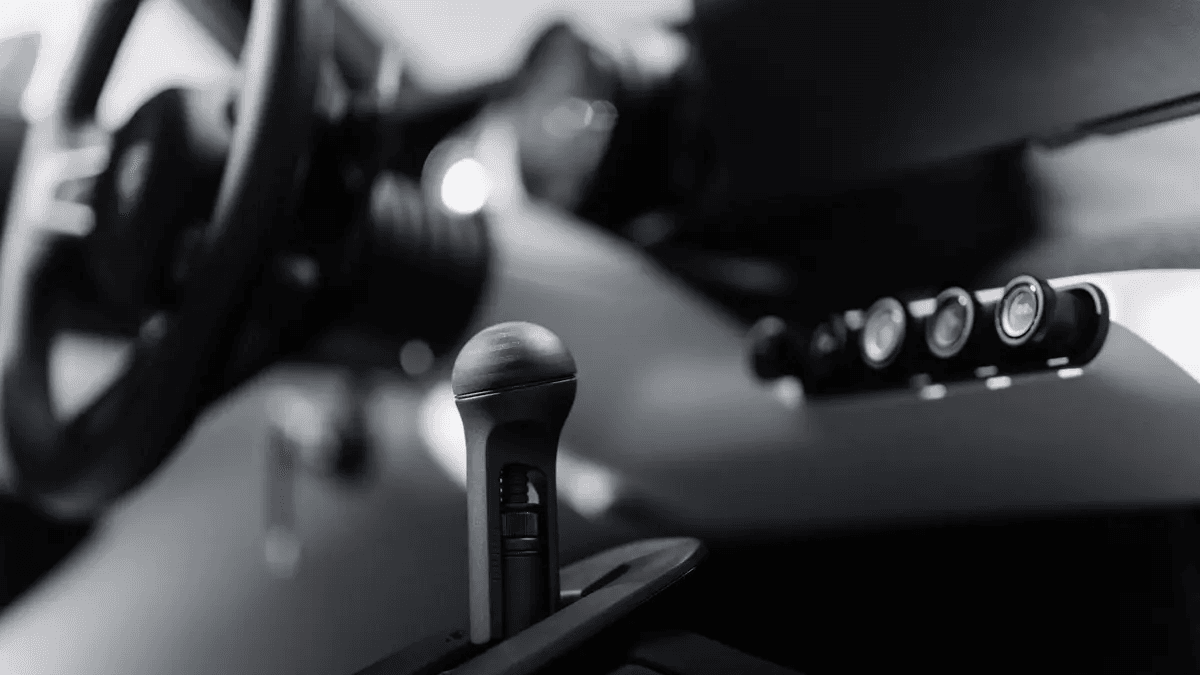
At first glance, the gear selector in the centre console might raise hopes of a manual transmission, but the letters P, R, N and D quickly reveal that the Mission S Concept uses Porsche’s PDK automatic transmission. The paddle shifters behind the steering wheel offer another clue.
A red button beneath the steering wheel, bearing the words “On Your Own” in white lettering, allows all driver assistance systems to be switched off, effectively telling the driver: “From this point on, you’re responsible.” You know what German humour is like…
Neither the Engine Nor the Price Is Known
There is still far more we don’t know about the Porsche Mission S Concept than we do. First and foremost, Porsche has yet to reveal what will power the production car. Following a series of contradictory decisions in recent years, several possibilities remain on the table, including a pure petrol engine, a hybrid or a plug-in hybrid powertrain. The new platform, also expected to underpin the next Boxster, is designed to accommodate all these technologies, giving Porsche the flexibility to make its final decision according to the direction of the market. Most likely, the company has already developed several of these options and is keeping them ready, allowing it to choose whichever configuration promises the greatest profitability when the car enters production.
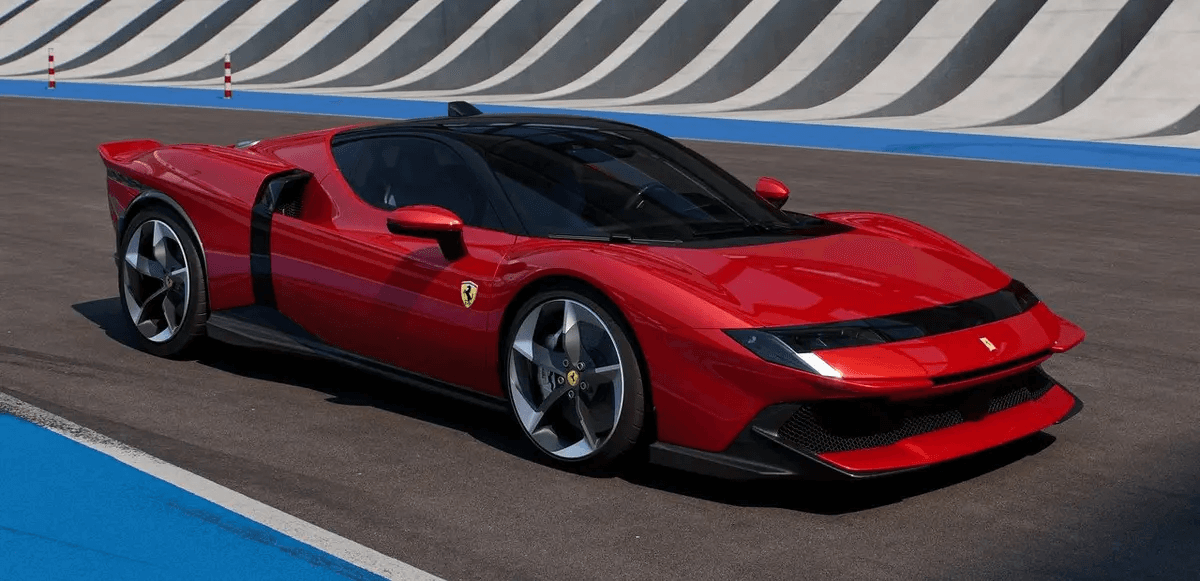
Porsche plans to begin deliveries of the Mission S in 2030, with a price tag expected to exceed that of every other model in its current range. Considering rivals such as the Ferrari 849 Testarossa and Lamborghini Revuelto SV, with power outputs exceeding 1,000 horsepower and prices approaching $1 million, it becomes easier to see the territory Porsche is preparing to enter.
28 Standout Models from the 2026 Paris Motor Show