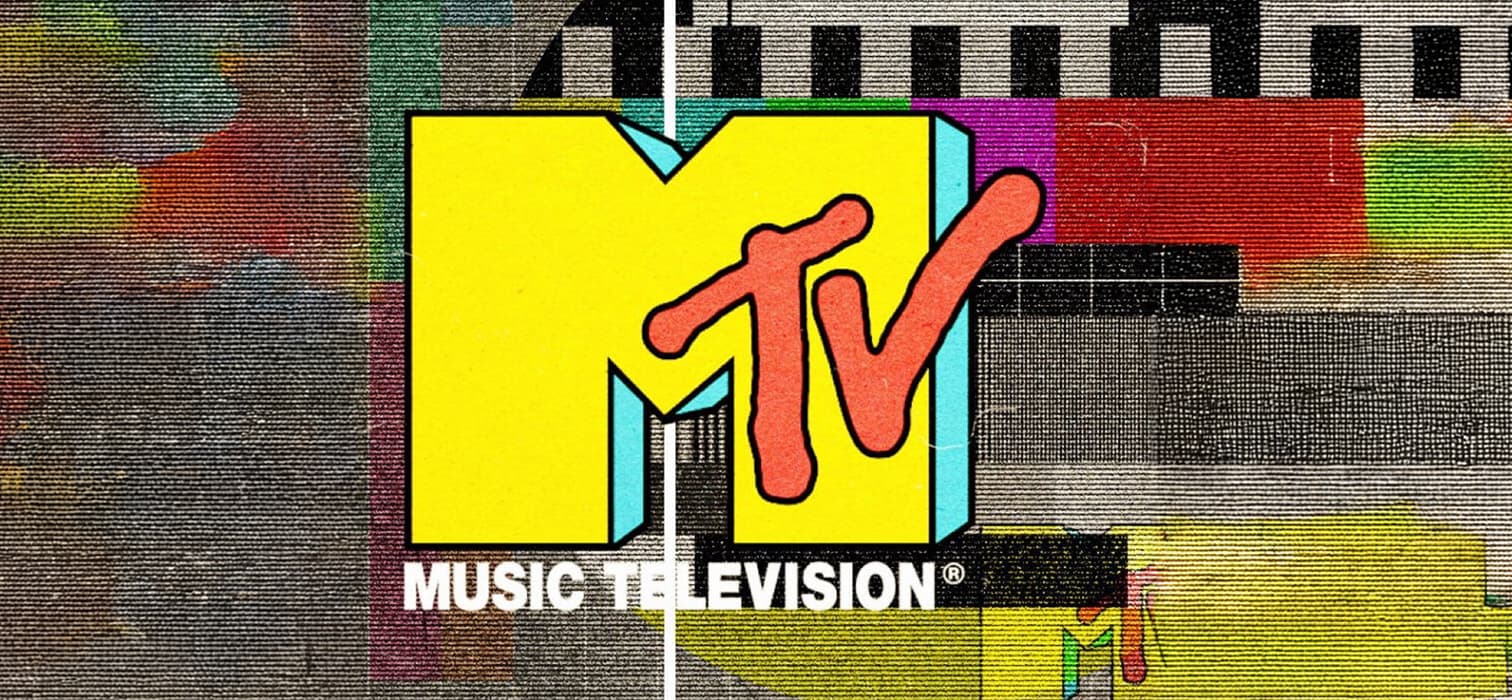
The world’s most influential popular music channel for over 40 years has been defeated by digital platforms. The channel is ending its broadcast life, fading into the dusty pages of history.
Back in the ’90s, when I was a high school student, the ways to access music were clear. I would grab a Blue Jean magazine, tune in to my favorite radio hosts on private stations, and visit cassette stores every week to check out new albums. And of course, I would spend hours in front of the TV watching my favorite videos on MTV, which was available on cable back then. This ritual remained unchanged during my university years. I simply added global music magazines—becoming easier to find by then—to my routine and explored the CD stands tucked away in the side streets of Beşiktaş, where my school was located. When I got home, I would start my routine in front of MTV again.
The Fortress Of Music Has Fallen: Mtv Shutting Down
Years later, when I started working as one of the editors at Billboard Turkey, the ways of accessing music had already begun to change. Around that time, MTV Turkey had also started broadcasting. It launched with a major promotion in 2006 and sponsored the first and only indie festival, Radar Live, in 2007. However, things didn’t go as planned. MTV Turkey’s story, which began with high hopes, came to an end in 2011. That same year, music magazines began to close one by one. Then came the turn of local music channels…
Recently, MTV—the world’s largest music channel and a cornerstone of popular culture—announced its decision to close. Launched in 1981 with the introduction “Ladies and gentlemen, rock and roll!” and The Buggles’ Video Killed the Radio Star—a song that barely made it onto the charts—the channel fell victim to the rules of algorithms and the digital world, as if fulfilling its own prophecy. MTV’s first broadcast included footage of Apollo 11’s moon landing, symbolizing how, in the 1980s, music television had an impact comparable to that historic moment—a revolution in its own right. Forty-four years later, we have now witnessed the death of television itself, just as we once saw the death of radio. No one turns on MTV anymore to listen to music. Culture has already transformed, reshaped by digital platforms and social media.
MTV’s parent company, Paramount Global, plans to shut down five MTV-branded music channels in the UK and parts of Europe by December 31, 2025. The affected channels include MTV Music, MTV 80s, MTV 90s, MTV Live, and Club MTV—all of which have long broadcast hit songs, classic tracks, and live performances around the clock. Paramount will continue its operations with a focus on reality shows on its flagship channel MTV HD, including Naked Dating UK and Geordie Shore. However, it is anticipated that MTV channels in other European regions will also cease broadcasting in the long term.
A Youth Culture: “I Want My MTV!” Ads
Back in the 1980s and ’90s, before the internet, MTV was not merely a music channel—it was a transformation that defined an entire youth culture. Young people would sit in front of the screen after school and spend hours watching MTV. Programs like MTV Unplugged, Beavis and Butthead, Jackass, Pimp My Ride, and Headbangers Ball created their own icons. In a music world dominated by metal and rock, the hip-hop scene was slowly beginning to assert its influence. The MTV Music Awards, where pop music intertwined with politics and fashion, were eagerly discussed every year. Music was going through one of its most chaotic, noisy, and dazzling periods. MTV, which began broadcasting in the US in 1981, attracted such tremendous interest that it expanded to Europe in 1987 and to the UK in 1997.
A similar process unfolded in Turkey, though with its own dynamics. Kral TV was launched in 1994, and in the 2000s, channels such as Dream TV, Genç TV, Numberone TV, and Power TV brought music television culture to the country.
MTV’s rise to cult status gained momentum with the “I Want My MTV!” campaign launched in 1982. The campaign was inspired by a cereal commercial from the 1950s. Advertising legend George Lois attempted to adapt the idea for MTV; however, his proposal to have rock stars like Mick Jagger cry in front of the camera while saying the slogan was rejected by the channel’s executives—and likely would not have pleased Jagger either.
The campaign took a different turn when Lois’s partner, Dale Pon, stepped in. With Pon’s strategic and creative approach, it gained an energetic and humorous tone. From that moment on, “I Want My MTV!” became more than a slogan—it was a rallying cry, encouraging viewers to call their TV providers and demand MTV on their screens. Even those without cable subscriptions now wanted their own MTV. The ads, produced by the Buzzco Productions team, featured icons of the era such as Pete Townshend, Pat Benatar, David Bowie, The Police, Kiss, Culture Club, Madonna, Cyndi Lauper, and Mick Jagger—each turning to the camera to declare, “I Want My MTV!” The slogan quickly became embedded in pop culture. It was heard in Sting’s voice in Dire Straits’ Money for Nothing, became the first video aired on MTV’s European branch, and left a legacy that echoed through the music and imagery of the channel’s production logo.
Iconic Moments on MTV: MJ, Nirvana, Live Aid and More
As MTV rose to prominence, one unforgettable moment after another began to etch itself into the history of music. Among them, Michael Jackson’s Thriller music video stands as a milestone. When it premiered on MTV on December 2, 1983, it proved to be far more than just a music video—it was a cinematic masterpiece that redefined the entire format. The video became so immensely popular that MTV had to air it twice an hour to meet viewer demand. By broadcasting high-production-value works like Thriller in its early years, MTV broadened its vision and elevated music videos from mere promotional tools to a new form of visual storytelling. Interestingly, despite its massive success, Thriller did not win the Video of the Year award at the MTV Video Music Awards.
MTV also played a pivotal role in bringing Nirvana and the grunge movement to global attention. When Smells Like Teen Spirit hit MTV screens in 1991, glam rock had already faded, and a new era was beginning. Nirvana’s MTV Unplugged in New York performance, recorded on November 18, 1993, and aired on December 16, became one of the most memorable acoustic concerts of its time. During this performance, the band set aside their biggest hits and performed lesser-known songs and covers, including their haunting rendition of David Bowie’s The Man Who Sold the World. The stage design and Cobain’s expression gave the concert an intimate, melancholic tone. After Cobain’s death, MTV frequently re-aired the performance, transforming it into both a tribute and a symbol of Nirvana’s fragile legacy. The news of Cobain’s passing was also announced on MTV through a special broadcast. For the youth of that era, April 8, 1994, became an unforgettable and devastating day.
The Live Aid concerts on July 13, 1985, proved to the world that MTV was not merely a music channel but a global stage. Live broadcasts from London’s Wembley Stadium and Philadelphia’s JFK Stadium reached millions of viewers through MTV. On that day, the world listened to the same songs at the same time. Freddie Mercury’s legendary Radio Ga Ga performance, where he led the audience like a single living organism, became not only one of Queen’s most iconic moments but also one of television history’s most powerful images. With that broadcast, MTV demonstrated how music could unite humanity. Organized as a charity concert, Live Aid cemented the channel’s global influence and social impact. Music was no longer just something to be heard—it was something to be seen and shared.
MTV’S Power, Corruption, and Strict Policies
MTV’s early years coincided with a period when diversity in music was rapidly expanding—but that diversity was not always reflected on screen. Between 1981 and 1984, the few Black artists featured on MTV included Michael Jackson, Prince, and Tina Turner. Controversy erupted when Rick James’s Super Freak video was rejected. Artists like James and David Bowie publicly criticized MTV for excluding Black musicians. Although channel executive Carolyn B. Baker later described these decisions as “research based on ignorance,” the era had already exposed the racial boundaries of music television.
By the mid-1980s, MTV had evolved from a simple music channel into a global cultural force—one capable of shaping norms, aesthetics, and even morality. This power, however, gradually turned into a kind of aesthetic and moral “dictatorship.” The channel censored, delayed, or outright banned hundreds of music videos, citing nudity, drug use, sexuality, violence, weapons, racism, homophobia, or commercial content as reasons. Concerned parents accused MTV of corrupting youth with “Satanic” or “immoral” themes. Music videos like Soundgarden’s Jesus Christ Pose and Incubus’s Megalomaniac faced heavy criticism. In response, MTV adopted stricter content policies, though these rules were applied inconsistently. Provocative figures such as Marilyn Manson continued to appear in the main rotation, highlighting that MTV’s censorship line was guided more by control than by coherence.
Music, by nature, thrives on freedom, rebellion, and pushing boundaries. MTV, however, became a mechanism that shaped, contained, packaged, and resold that very freedom. The punk scene reacted fiercely. San Francisco’s rebellious voice, Dead Kennedys, directly attacked the channel in their 1985 song MTV Get Off The Air: “This is the future of rock and roll / MTV get off the air! / How far will you go, how low will you sink / To calm our minds with your sugar-coated drink?”
Lead singer Jello Biafra explained in an interview, “My songs weren’t written to be cute. They weren’t written to be used in commercials. The goal wasn’t to soothe, but to provoke.” The band’s critique wasn’t mere outrage—it was a manifesto against the domestication of music by corporate power. As Biafra pointed out, the music industry was increasingly “run by accountants instead of fans,” and MTV had become the driving force of that transformation.
And in 2025, the Algorithm Killed MTV
Today, control over what we watch and listen to no longer comes from a central broadcasting office—it comes from the invisible mechanics of algorithms. MTV once had a committee deciding which videos were “appropriate.” Now, an unseen network of artificial intelligence determines which sounds, faces, and trends rise to prominence. In the 1980s, a song couldn’t appear on screen without the channel’s approval; today, millions of tracks remain undiscovered without the algorithm’s consent.
In truth, what we listen to, sing along with, or admire has always been determined by someone—or something. From the dominance of rock in the 2000s to the reign of rap and digital producers today, there has always been a gatekeeper: sometimes a TV channel, sometimes an algorithm. MTV once packaged music, polished it, and sold it back to us. It domesticated rebellion, curated freedom, and turned spirit into spectacle. Yet, to be fair, access to music was not as effortless as it is now. Watching a music video then was like opening a window to another world—a rare chance to see new faces, sounds, and styles. MTV wasn’t just a channel; it was the global common language of youth. It shaped a generation’s style, language, and imagination. Through its videos, it told stories, created stars, and expanded our horizons. It gave us the thrill of anticipation—the joy of waiting to hear a song we loved—and in doing so, it slowed down time.
And so, MTV fulfilled its mission. Just like music magazines, our favorite record stores, and beloved venues that have disappeared one by one, it completed its story. A generation’s heartbeat pulsed within that famous colorful logo. We must acknowledge that MTV played a monumental role in shaping the collective memory of music. The history of an era was written through it—and its memory will live on in our hearts.
Saatolog Yıllık Saat Dergisi Saatolog’un yeni sayısı, 2020’nin yarattığı bu dönüştürücü etkiden ilham alarak hazırlandı. Dünya dijitalin etkisiyle her zamankinden de hızlı bir şekilde ilerlerken yavaşlamanın da önemini sonunda kavramış bulunuyoruz ve bu tezatlık hayatlarımızın her anına etki ediyor. Biz de bundan yola çıkarak Saatolog 2020/21 sayısını ‘‘hızlı ve yavaş’’ teması altında hazırladık.