Lace is no longer a romantic relic of the past; it has evolved into a confident, composed, and highly effective style language within the context of modern silhouettes. It offers a sense of effortless elegance that transitions seamlessly from day to night.
In the history of fashion, certain materials acquire significance not merely through seasonal trends, but through the profound cultural values they embody. Whether one is captivated by its intricate craftsmanship or its illustrious heritage, lace remains one of the most enduringly timeless materials. It is a rare fabric that has transcended social classes, genders, and shifting aesthetic movements over the centuries, consistently managing to redefine its identity.
Its presence is felt across the spectrum of human experience: from the intricate collars of royalty to iconic bridal gowns, from unforgettable gala ensembles to the delicate intimacy of lingerie, and from the solemnity of mourning veils to the domestic charm of home textiles. While it was long relegated to a symbolic, nostalgic, or ceremonial role, lace has been breaking free from these traditional constraints in recent years. Today, rather than serving as a mere echo of bygone elegance, it functions as a deliberate element of contrast within contemporary fashion.
How did this perennial textile marvel reach this stage of evolution? What ensures its status as an indispensable component of modern dress? In what forms do its contemporary interpretations manifest? Let us pull back the veil and explore the mystery behind the enduring allure of lace.
A Brief History of Lace
The emergence of lace aligns with a pivotal era when clothing transitioned from purely functional necessity to a medium for labor-intensive aesthetic expression. In 15th-century Europe, garments were no longer designed solely for warmth; they were crafted to broadcast status, power, and cultural identity. In this environment, lace was conceived as a symbol of authority that extended far beyond simple decoration.
In its nascent stages, lace was not exclusively “feminine” by modern standards. Men and women of the aristocracy alike displayed this painstaking handiwork on their collars, cuffs, and ceremonial attire. For the monarchy and the clergy, lace served as a silent yet potent signifier of wealth, intellectual refinement, and social privilege.
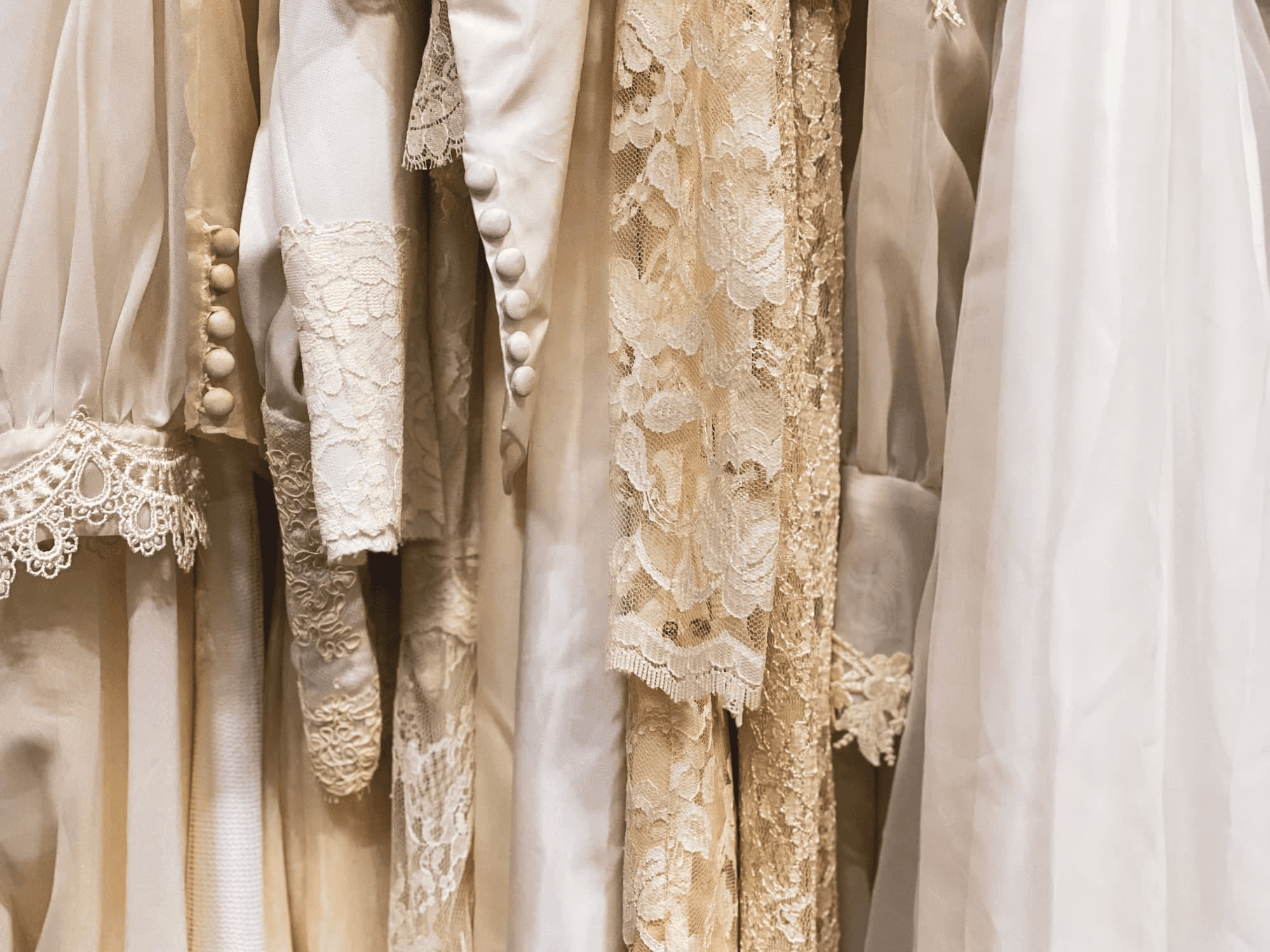
By the 16th century, production became centralized in hubs of excellence. Venice and Flanders (now part of modern-day Belgium) gained international acclaim for their mastery of this delicate art. Each fragment, birthed from hours—or even days—of meticulous needle or shuttle work, was among the most precious luxury commodities of the age. Lace was considered so valuable that it was often detached from garments before laundering and frequently treated as a cherished family heirloom.
During the 17th century, lace became a definitive marker of prosperity for affluent families across France, Spain, England, and Italy. Various styles, often named after their city of origin, held immense economic and aesthetic value. This fragile fabric became a prestige asset in international trade.
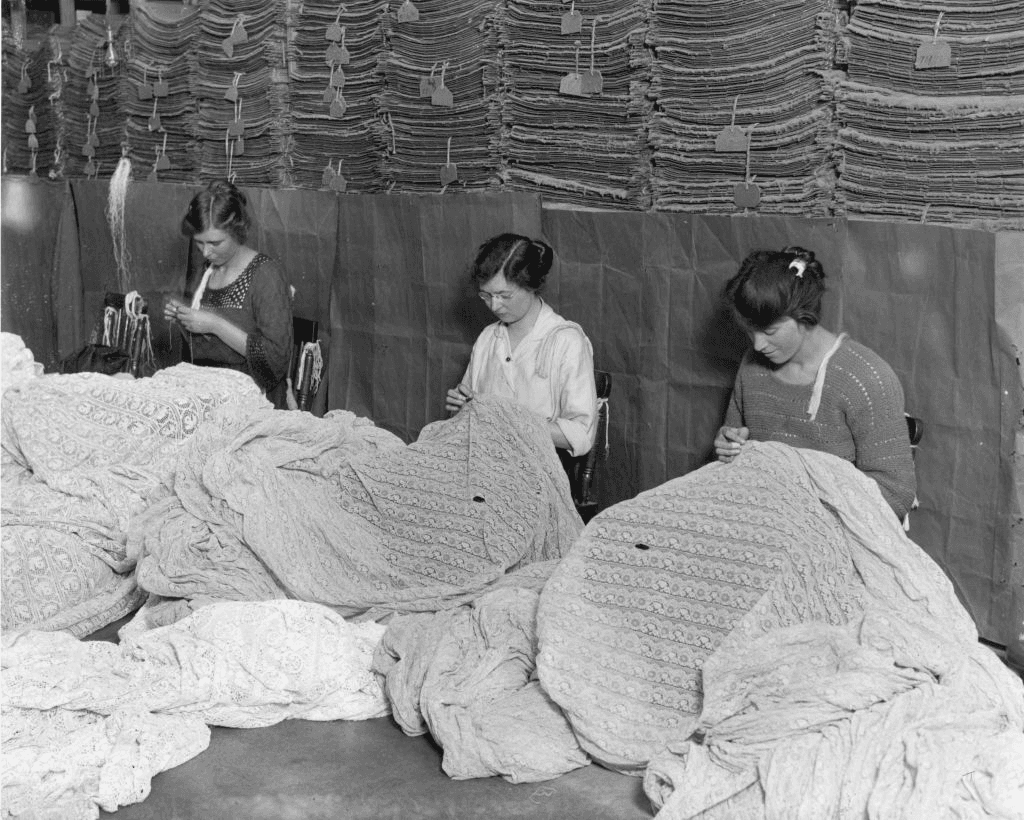
As time progressed, the semiotics of lace shifted. From the 18th century onward, its prevalence in menswear diminished, while its use in women’s attire—particularly in undergarments—surged. This transition infused lace with a more sensual and private subtext, especially within the conservative framework of 19th-century Victorian society. This legacy persists today, as lace remains the most ubiquitous decorative element in intimate apparel.
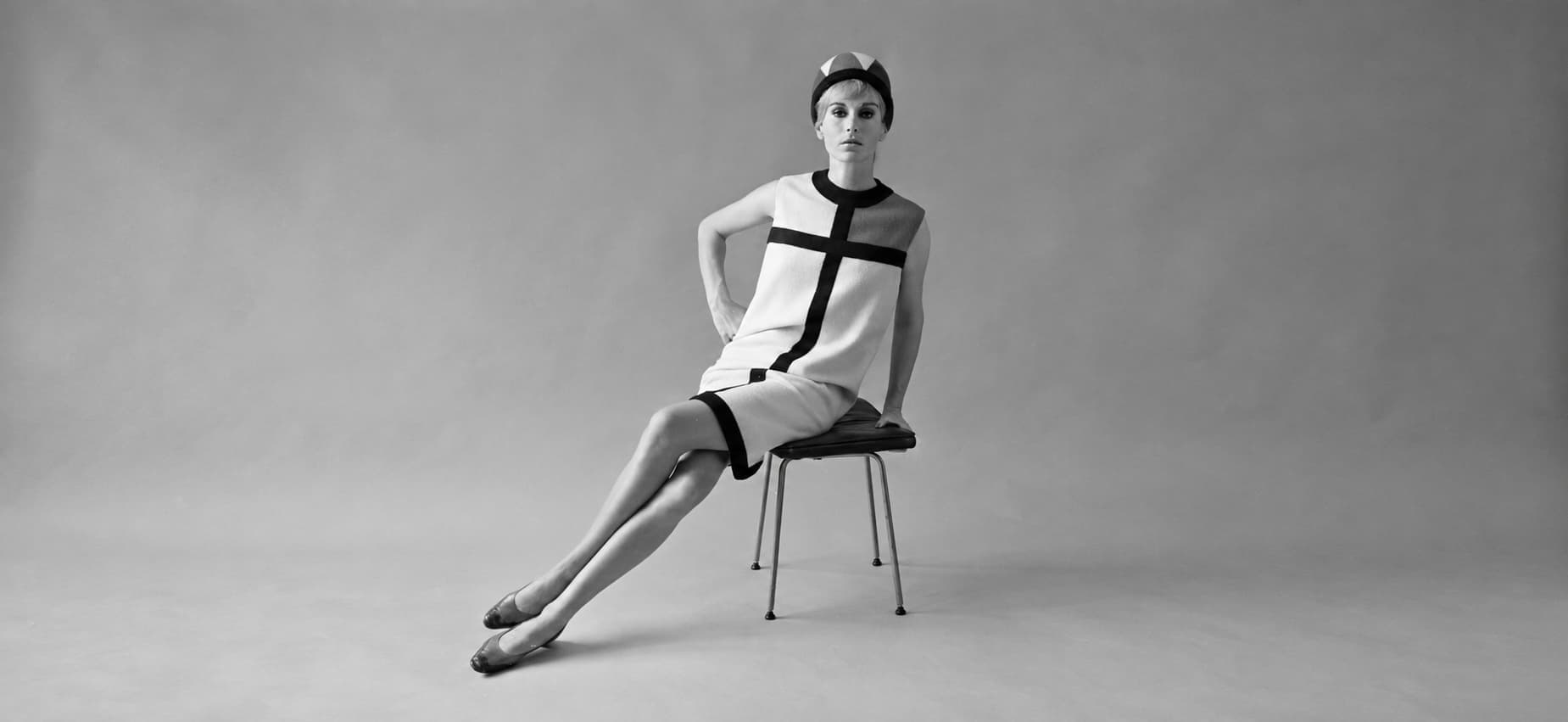
Photo:Topical Press Agency (Getty Images)
The Industrial Revolution stripped lace of its exclusive, handmade status, allowing for mechanical production. This shift democratized the fabric, making it accessible to the burgeoning middle class for everything from everyday dresses and gloves to veils and domestic items.
While increased accessibility altered its social standing, lace never lost its artistic or emotional resonance. Its historical ties to delicacy and manual labor remained intact, even as the Victorian era solidified its cultural coding as a “feminine” textile.
By the 20th century, lace adopted a versatile character that mirrored the spirit of each passing decade. Reimagined by visionary designers, it moved past formal applications to breathe life into rebellious, theatrical, or minimalist ready-to-wear and evening collections.
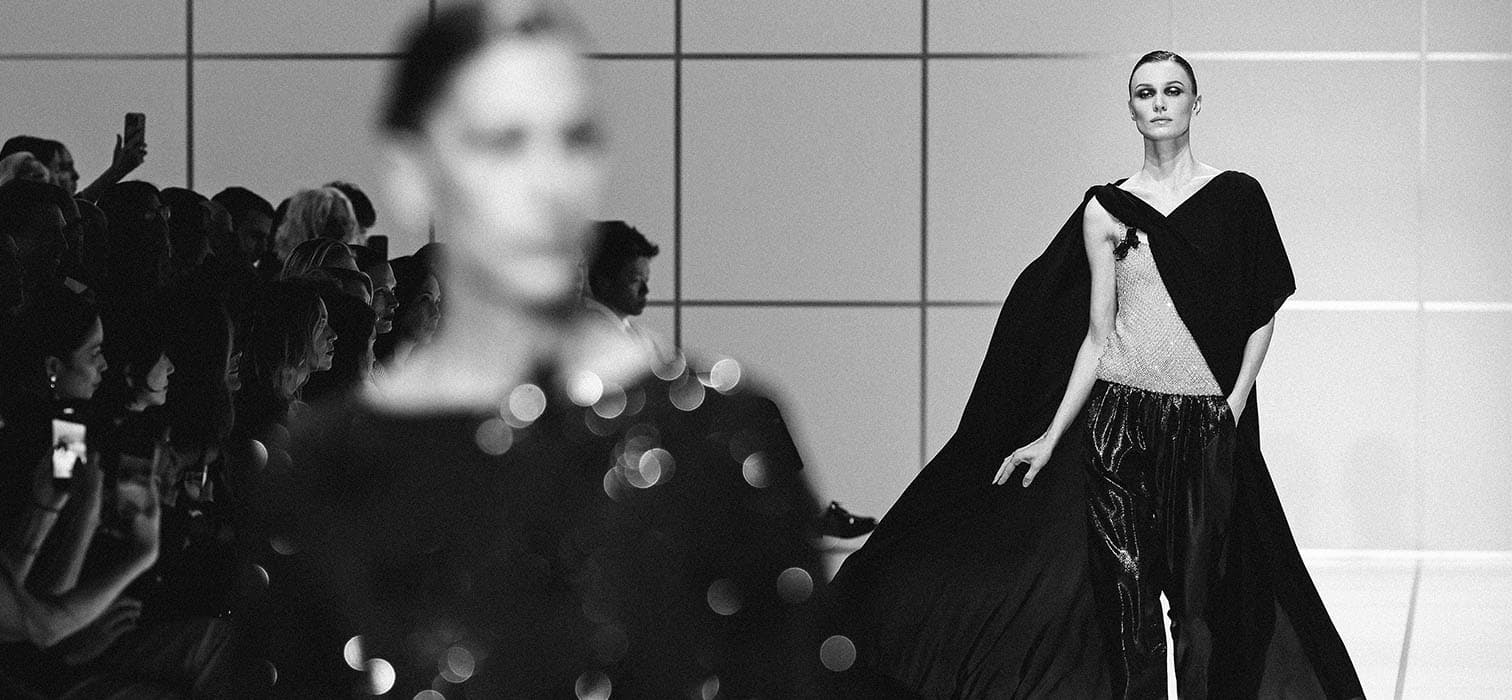
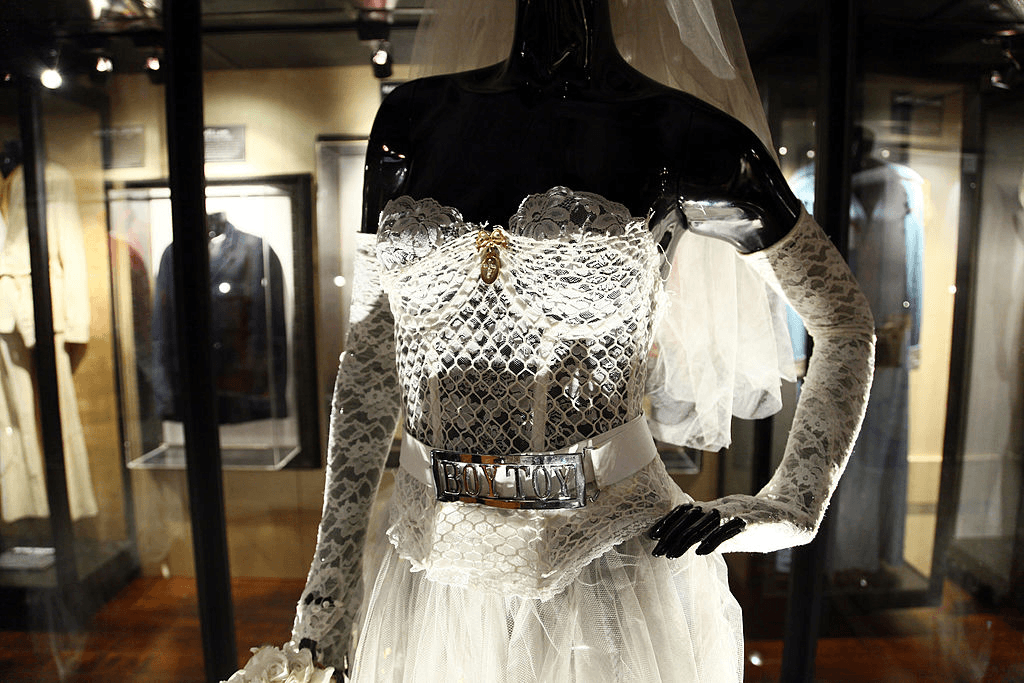
Photograph: Neilson Barnard (Getty Images)
This evolution was not solely the work of houses like Chanel or Chloé. Popular culture icons brought lace into the global spotlight, transforming it from a nostalgic detail into a modern medium of expression. Madonna’s lace-trimmed gloves and bridal-inspired “Like a Virgin” look at the 1984 MTV Video Music Awards, along with Naomi Campbell’s striking lace bodysuit on the 1994 runways, remain etched in fashion history as catalysts for this contemporary shift.
From Elegance to Structure: The Contemporary Interpretation of Lace
In current fashion, lace has shed the romantic burden of the past. This heritage is now filtered through a more conscious, measured aesthetic. Today, lace is rarely treated as mere ornamentation; instead, it serves as a subtle detail that dictates the rhythm and equilibrium of a silhouette. The luxury houses defining modern fashion are currently masterfully integrating this material into their seasonal narratives.
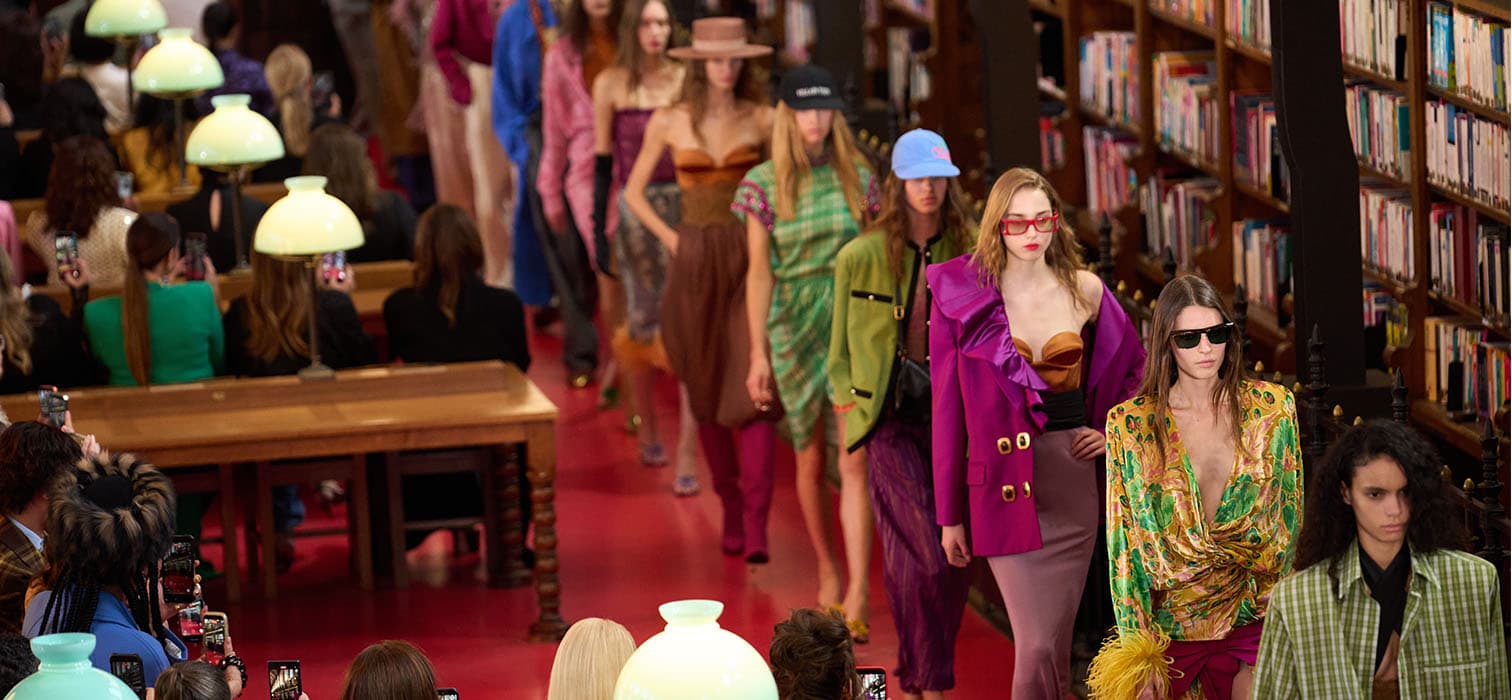
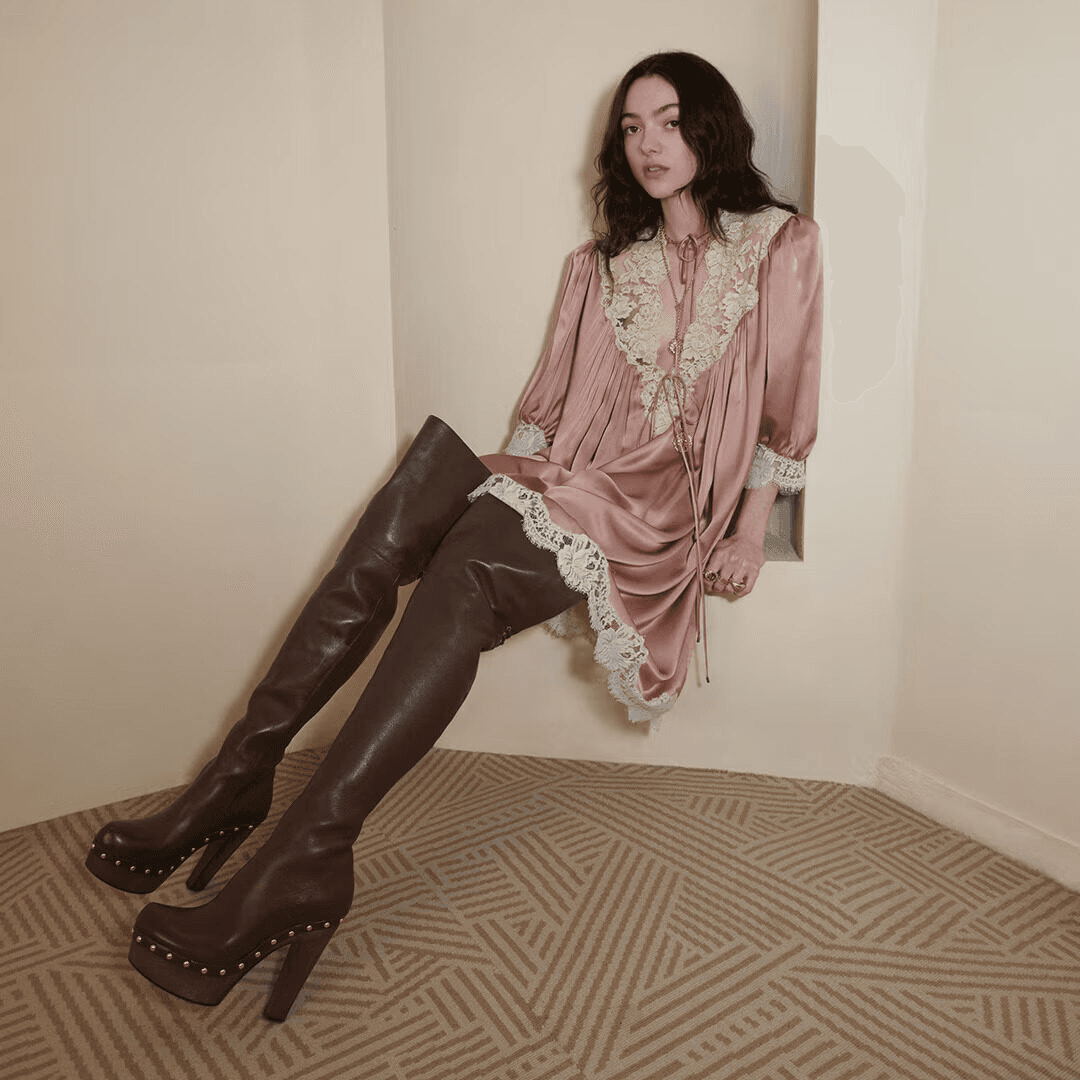
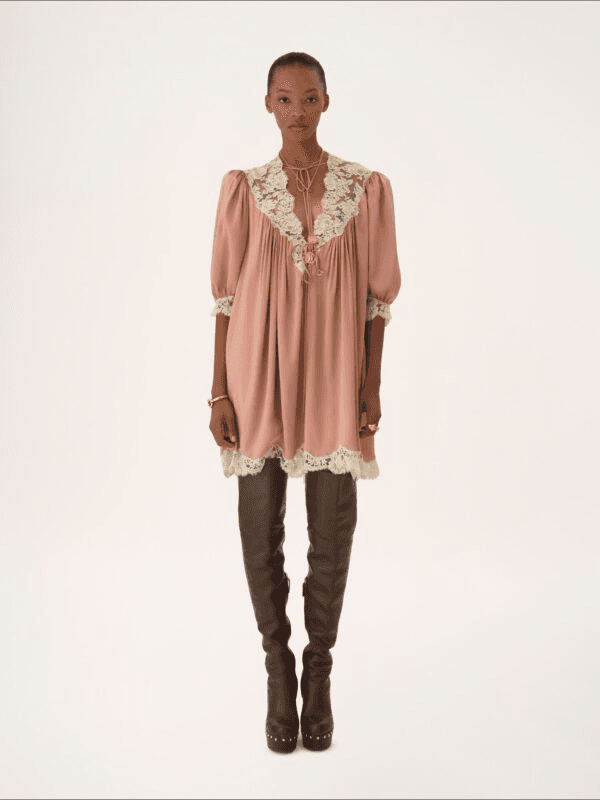
Chloé is a prime example of a brand utilizing lace not as decoration, but as the foundational language of its collection. In the Spring/Summer 2026 line, lace is paired with fabric-covered buttons, voluminous sleeves, and ruffles to create a sophisticated homage to the stylized aesthetic of 1980s cinema.
The interplay between structure and ease—sentimentality and strength—gives these pieces the aura of a modern heirloom. The result is nostalgic yet current, romantic yet functional. Chloé’s use of lace on fluid silk satin bases demonstrates how the brand has refined and lightened the concept of romanticism this season.
Deep V-necklines and metal-tipped laces provide a modern counterpoint to more traditional looks. Floral lace and high necklines emphasize femininity through a theatrical yet disciplined lens. The integration of puffed sleeves and lace inserts demonstrates an ability to be expressive without being clamorous.
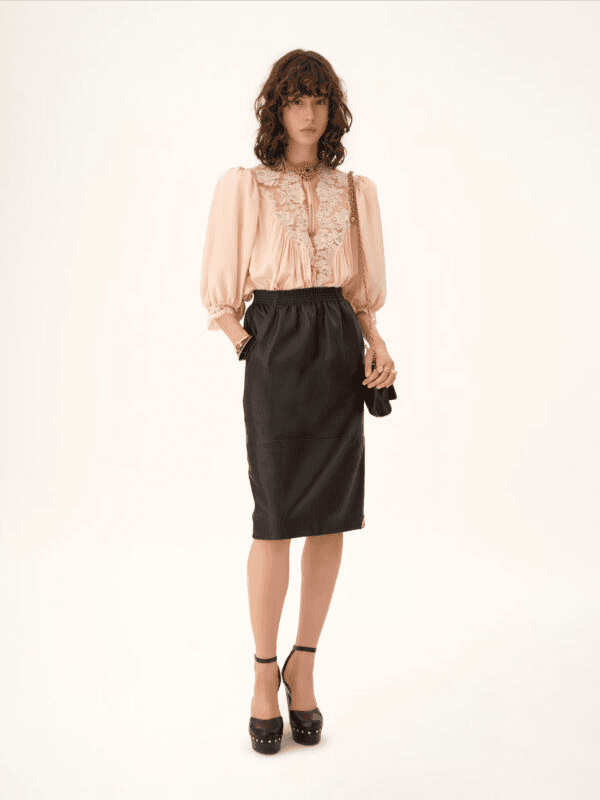
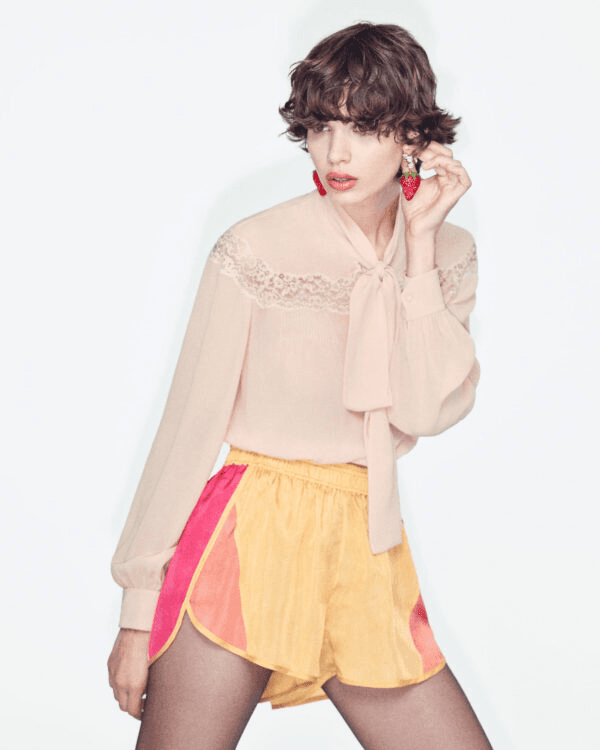
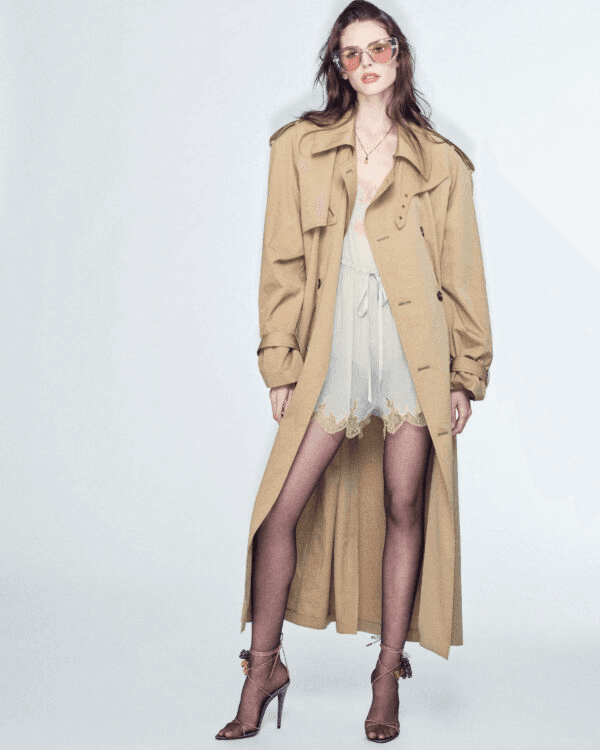
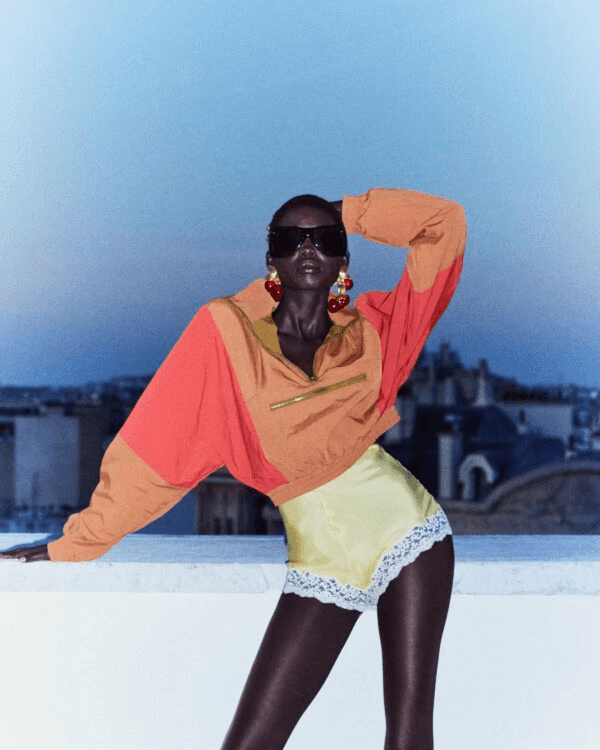
A similar mastery of style is evident in the Saint Laurent Spring 2026 collection showcased in Paris. Here, lace appears in minimalist forms, merging with rich palettes and oversized silhouettes to project an aura of self-assuredness. This approach serves as a modern mirror to the Parisian bourgeois sophistication of the 1980s.
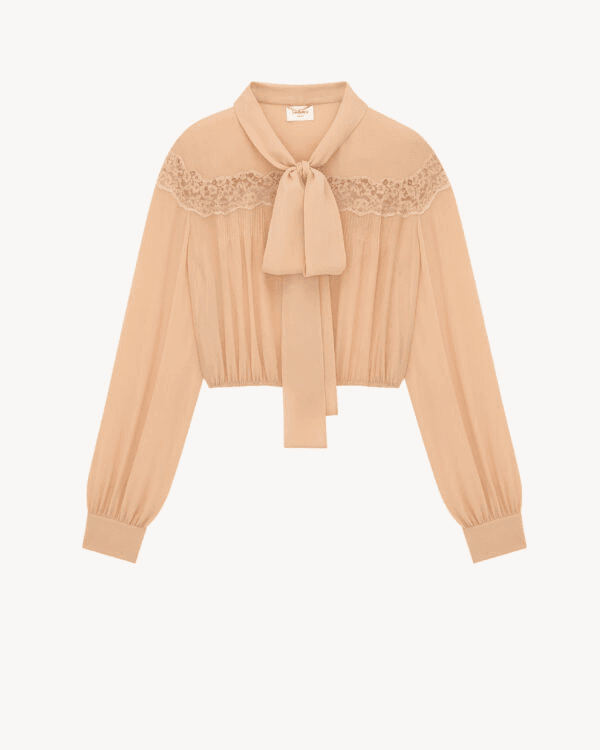
Silk blouses featuring lace collar inserts and lavallière ties revisit the 1980s Rive Gauche aesthetic with refined discipline. Lace edging on sheer silk illustrates how the house elevates lingerie influences into daytime high fashion.
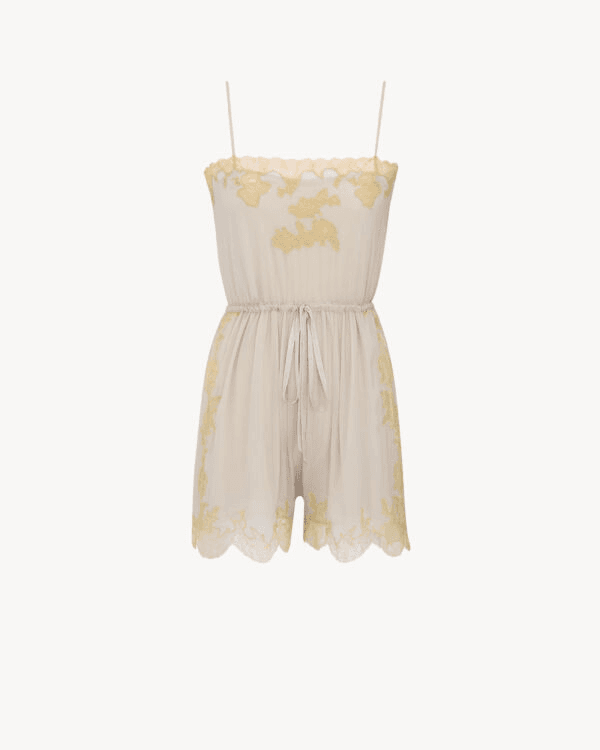
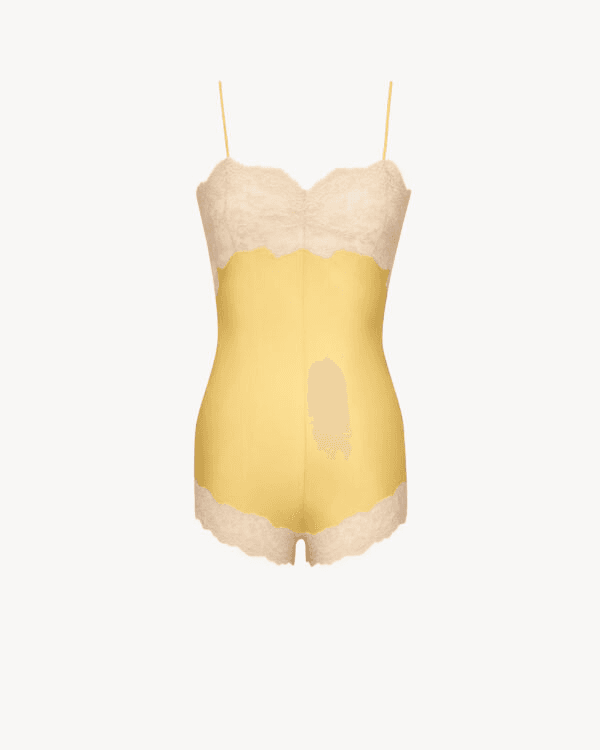
Silk jumpsuits finished with delicate lace create a sophisticated, controlled sensuality by playing with the intimacy between the fabric and the skin.
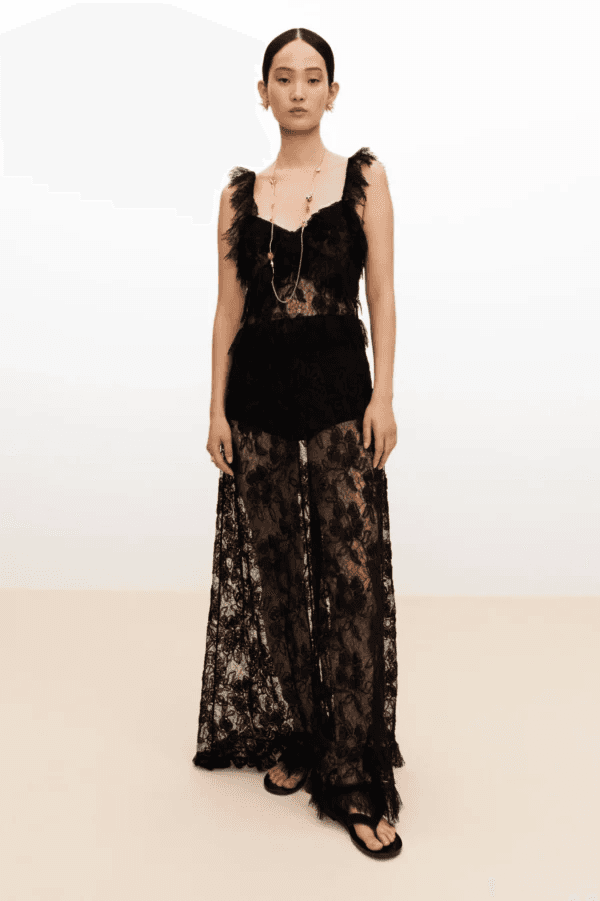
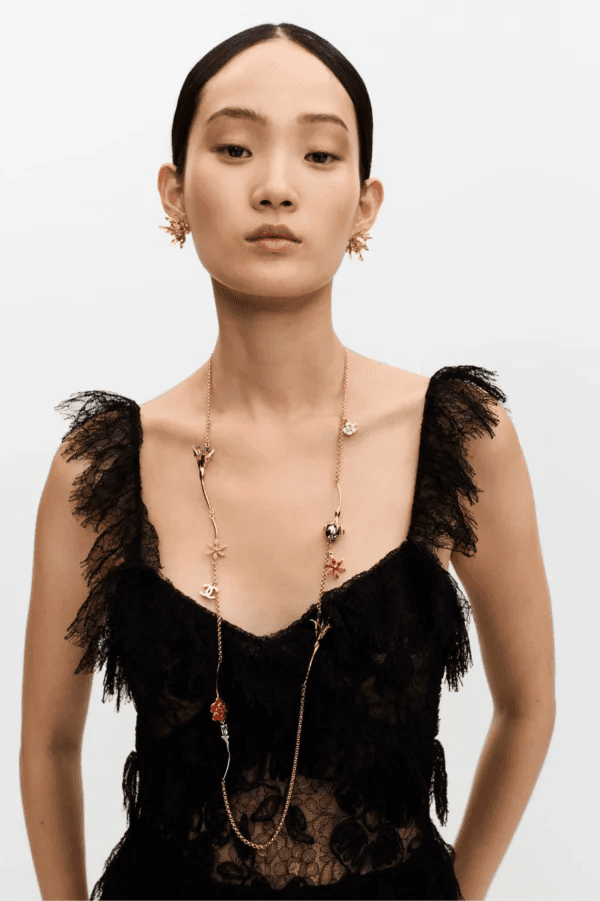
In Chanel’s Spring 2026 pre-collection, lace takes center stage in an all-over black maxi dress. By extending across the entire garment, the transparent material is transformed from a decorative accent into the primary structure of the silhouette, resulting in an assertive and profound elegance.
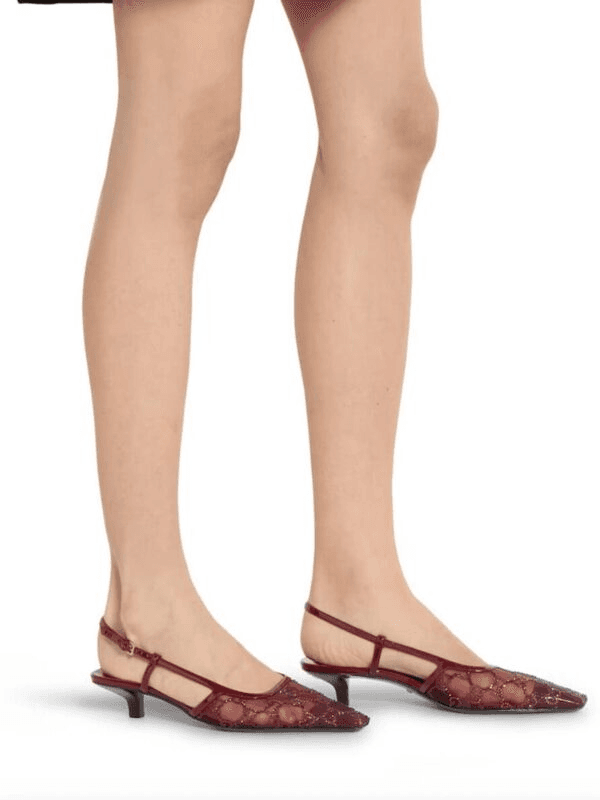
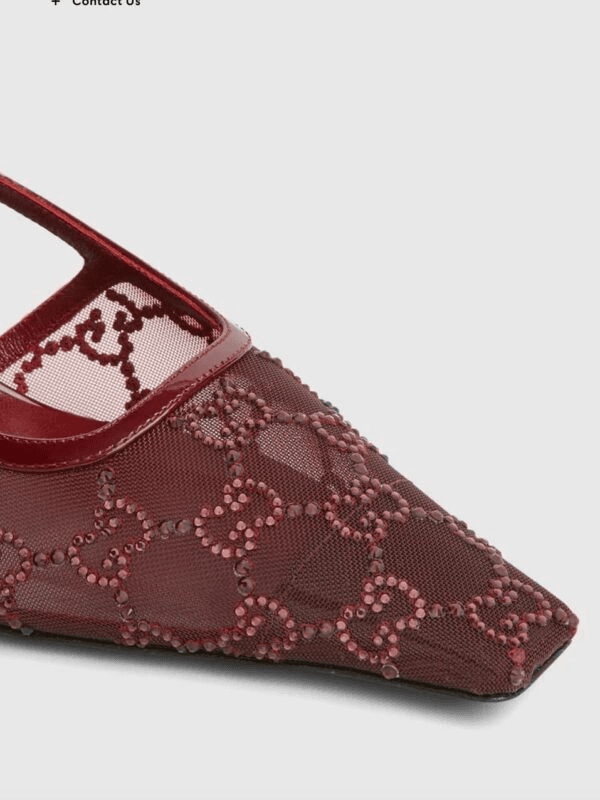
The evolution of lace extends beyond apparel and into the realm of accessories. Gucciincorporates lace into its Rosso Ancora-toned slingbacks, treating it as a building block of modern femininity rather than a romantic trope. The house’s iconic GG monogram and crystal embellishments are embroidered onto transparent mesh, redefining the lightness of lace with a graphic, intentional aesthetic. The sharp toe and low heel provide a grounded contrast to the delicate surface.
As evidenced by these collections, lace manifests in diverse forms: adorning hems, circling collars, or enveloping entire surfaces and footwear. This versatility allows each designer to craft a unique narrative. When paired with rigid forms, lace adds softness; on neutral palettes, it provides depth; and within clean silhouettes, it establishes a perfect feminine equilibrium.
The modern transformation of lace is not a loud or forced comeback. It is a quiet, discerning rebirth. It does not demand attention at first glance; rather, its impact is felt through closer observation. Perhaps this is why lace is more compelling today than ever—it no longer merely represents history, but flawlessly carries a rich, filtered culture into the aesthetic consciousness of the present.
Saatolog Yıllık Saat Dergisi Saatolog’un yeni sayısı, 2020’nin yarattığı bu dönüştürücü etkiden ilham alarak hazırlandı. Dünya dijitalin etkisiyle her zamankinden de hızlı bir şekilde ilerlerken yavaşlamanın da önemini sonunda kavramış bulunuyoruz ve bu tezatlık hayatlarımızın her anına etki ediyor. Biz de bundan yola çıkarak Saatolog 2020/21 sayısını ‘‘hızlı ve yavaş’’ teması altında hazırladık.