How much can a chair really say? From Barcelona to Monobloc, this selection invites us to rethink the relationship between culture, comfort, and aesthetics through one of design’s most familiar objects.
Don’t underestimate the chair. We spend at least a few hours on one every day—sometimes while working, sometimes resting, sometimes simply thinking. A good chair can even become a small source of happiness at the end of a long day. It may seem ordinary, but its impact is far greater than we tend to assume.
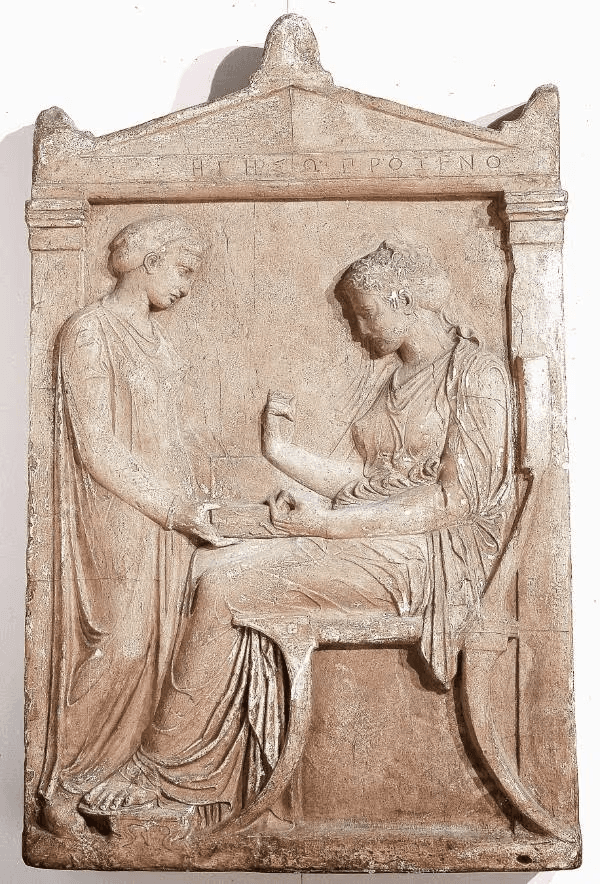
Let’s take a brief step into history—don’t worry, it won’t take long. In Ancient Egypt, thrones belonging to pharaohs were adorned with gold and ivory, while in Ancient Greece, the klismos chair offered an early example of aesthetics meeting ergonomics. In the Roman Empire, curule chairs symbolized political authority. Throughout the Middle Ages, chairs remained a privilege reserved for nobility and clergy; for ordinary people, seating was largely limited to stools. With the Renaissance, however, the growing importance of individual comfort transformed the chair into an integral part of daily life.
The Industrial Revolution radically changed the fate of the chair. Mass production techniques and new materials democratized this object. It’s remarkable that something once reserved for kings is now found in every home. While Michael Thonet’s steam-bent wooden chairs paved the way for modern industrial design, early 20th-century movements such as Bauhaus and De Stijl turned the chair into an experimental field of architectural thinking. From that point on, the chair became a manifesto for new ways of living and aesthetic ideals. Steel tubing, molded plywood, plastic, and composite materials functioned as laboratories for designers to explore their creativity.
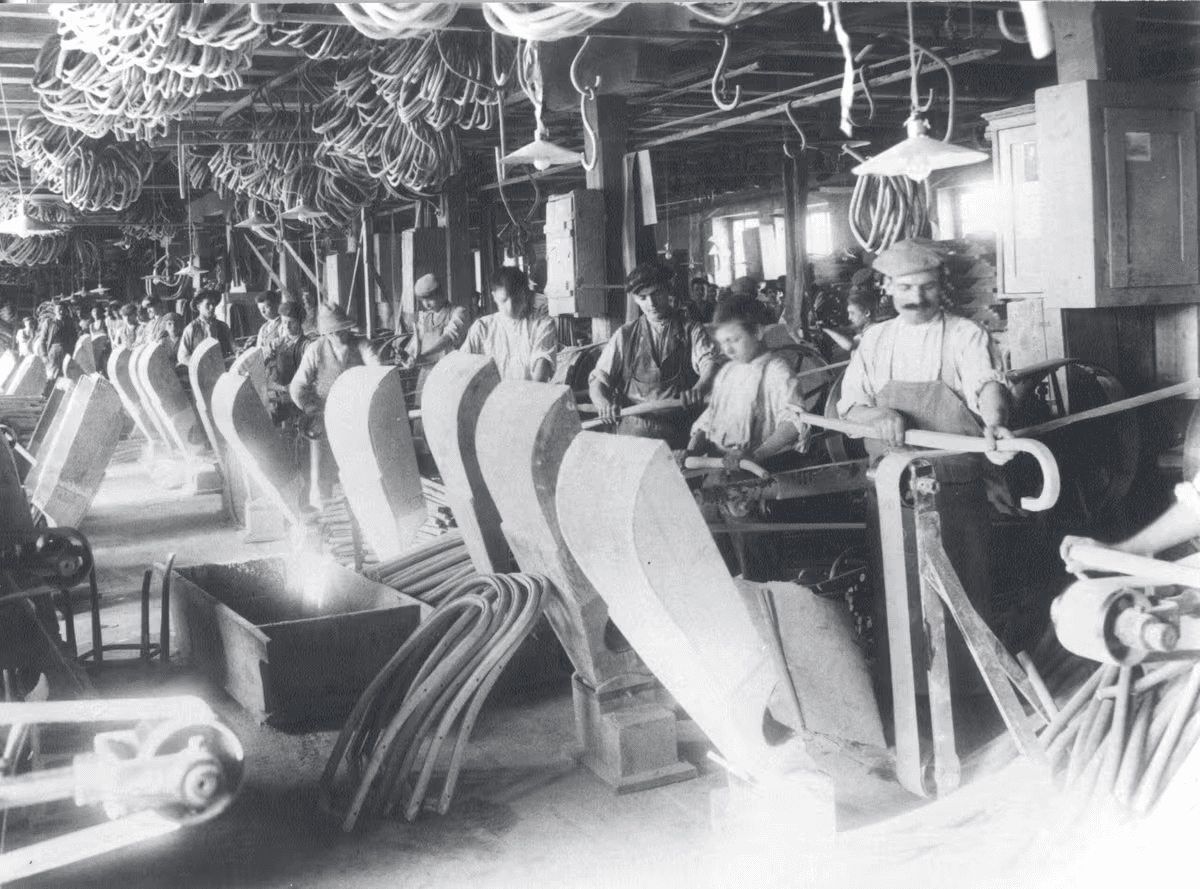
In this context, the chair has always been an attractive starting point for designers. Architects and industrial designers often used chairs to test their ideas. For figures like Ludwig Mies van der Rohe, Le Corbusier, Marcel Breuer, and Charles and Ray Eames, the chair functioned as a small-scale prototype of their architectural philosophies. A successful chair depends not only on aesthetics, but on the delicate balance between ergonomics, engineering, material knowledge, and production techniques. For this reason, the chair is considered both one of the most fundamental and one of the most challenging objects in design.
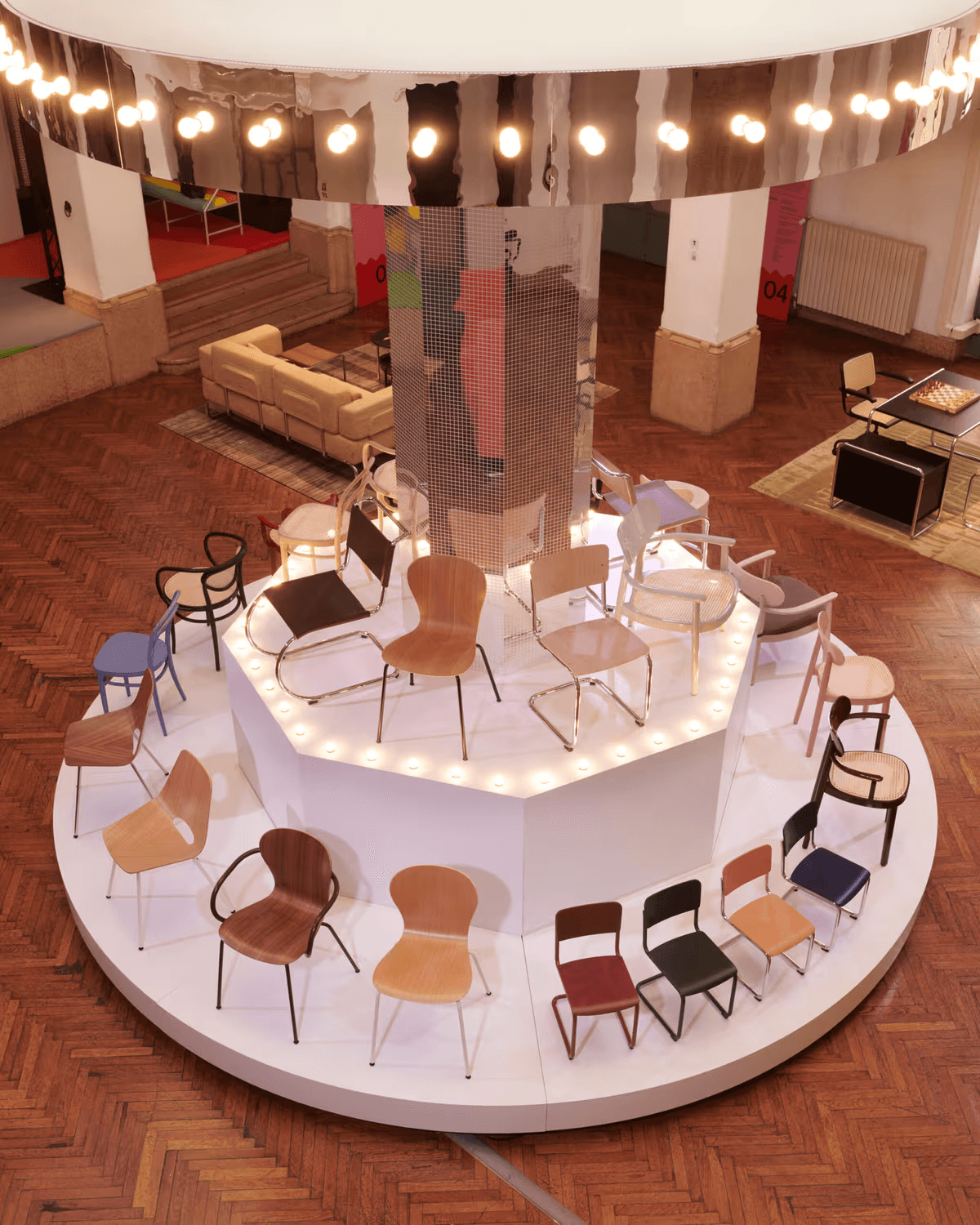
Within this selection, the Barcelona Chair, Wassily Chair, Eames Lounge Chair & Ottoman, and Zig-Zag Chair represent different faces of modernism; while the Cesca Chair and LC14 Tabouret Cabanon stand out as timeless examples of functionality and simplicity. The Masters Chair offers a conscious homage to design history, the Ergon Chair symbolizes the ergonomic revolution, the Vilbert Chair reflects postmodern playfulness, and the Monobloc chair represents design in its most democratic form.
It’s easy to attribute great meaning to such an ordinary object—much like love. Ultimately, a chair is not just a chair; it represents the dialogue between the needs of the human body and the aesthetic and technological progress of society. From the earliest thrones to today’s plastic Monobloc, this journey offers a concise yet fascinating summary of design history.
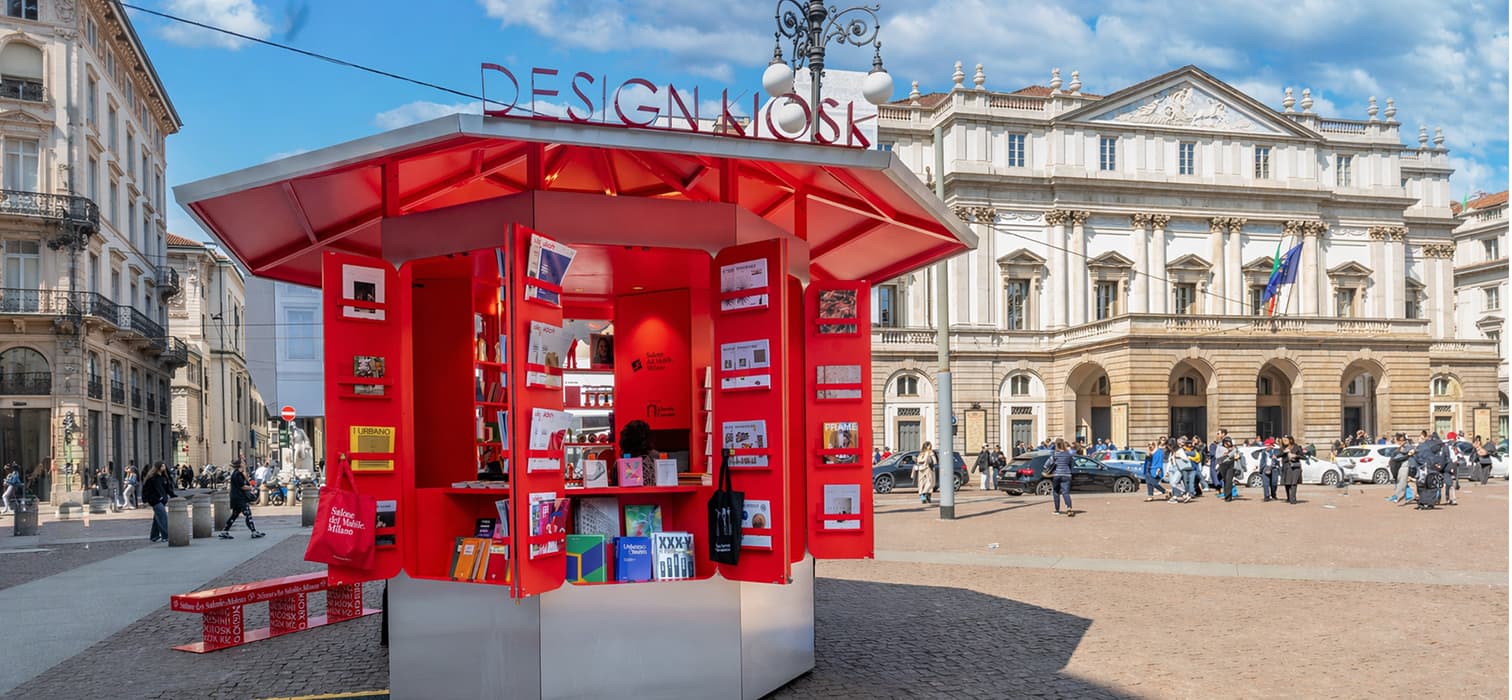
And that is precisely why the story of the chair is far from over. On the contrary, it is rewritten every year. During Salone del Mobile Milano (April 21–26, 2026) and Milan Design Week (April 20–26, 2026), you can hardly look anywhere in Milan without encountering a new chair. Some experiment with materials, others push form, and some simply ask: “How can it be more comfortable?” Coincidentally, watching By Design is also on the agenda. Starring Juliette Lewis, the film explores identity, desire, and our relationship with objects through a woman’s unusual bond with a chair.
Contents
Barcelona Chair (1929) — Ludwig Mies van der Rohe & Lilly Reich
The Barcelona Chair was designed for the German Pavilion at the 1929 International Exposition in Barcelona. Its form is based on an X-shaped frame reminiscent of the Roman curule chair, yet reinterpreted with an almost abstract modernist simplicity. This is precisely why it remains one of the clearest expressions of the “less is more” philosophy in furniture. It is widely regarded as one of the most recognizable objects of modernism.
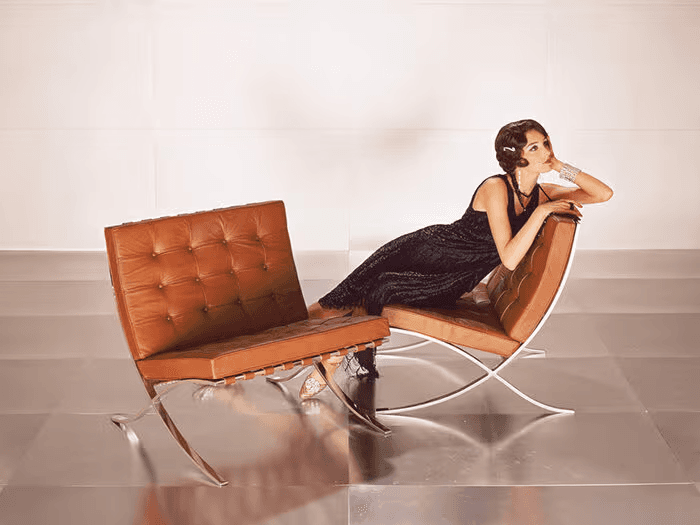
Its significance lies in establishing modernism not only through functionality but also through representation. Rather than symbolizing democratic mass production, the Barcelona Chair is known for representing the official face of modernism—its institutional elegance and exclusivity. It has become a visual shorthand for executive offices, galleries, luxury residences, and interiors that claim “good taste.” Journalist Tom Wolfe famously described it as a kind of sacred object within architectural culture.
Wassily Chair (1925) — Marcel Breuer
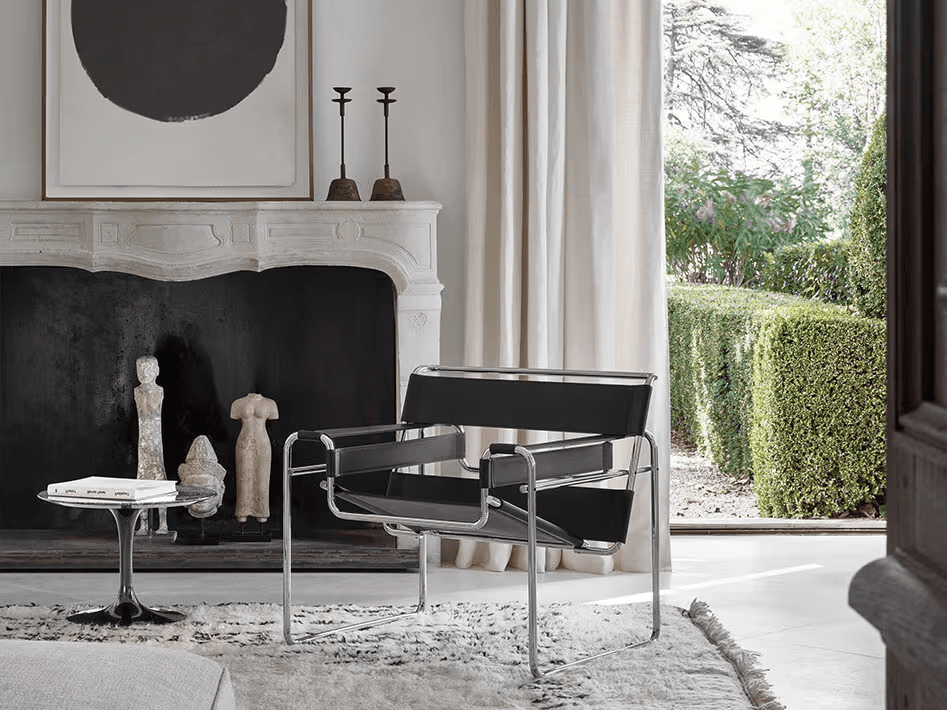
The importance of this design lies not only in its appearance but in its radical answer to the question, “How should furniture be made?” The Wassily Chair is one of the most striking outcomes of Breuer’s Bauhaus years, when he introduced steel tubing into the language of furniture. Inspired by the handlebars of his bicycle, Breuer adapted steel tubing as a flexible, lightweight, and industrial material—creating a turning point in 20th-century design.
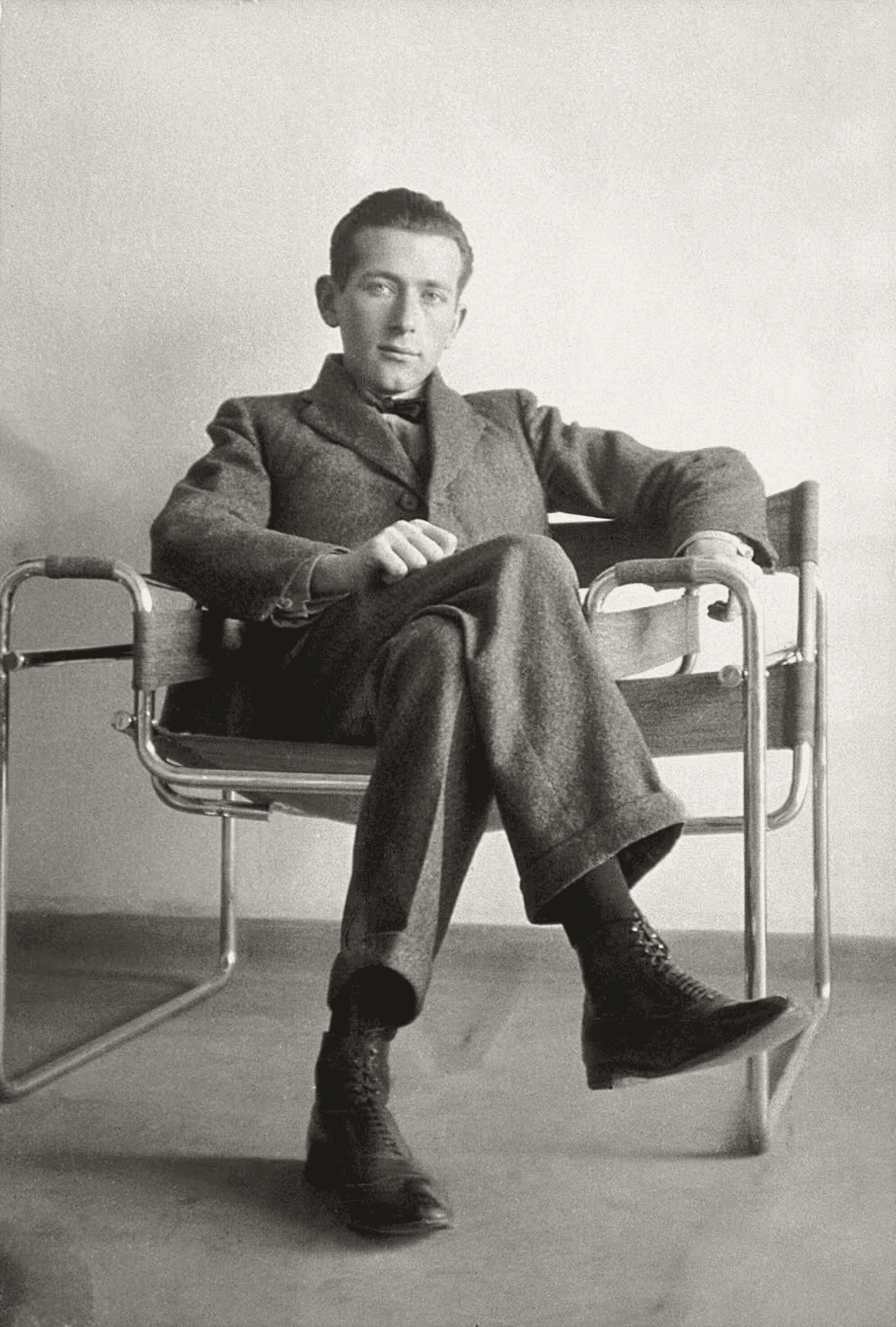
Originally named B3, the chair later became known as “Wassily” through an anecdotal association with Kandinsky. Many design histories describe it as one of the foundational stones of modern furniture thinking, replacing heavy, carved, traditional wooden furniture with something light, open, linear, and almost machine-like.
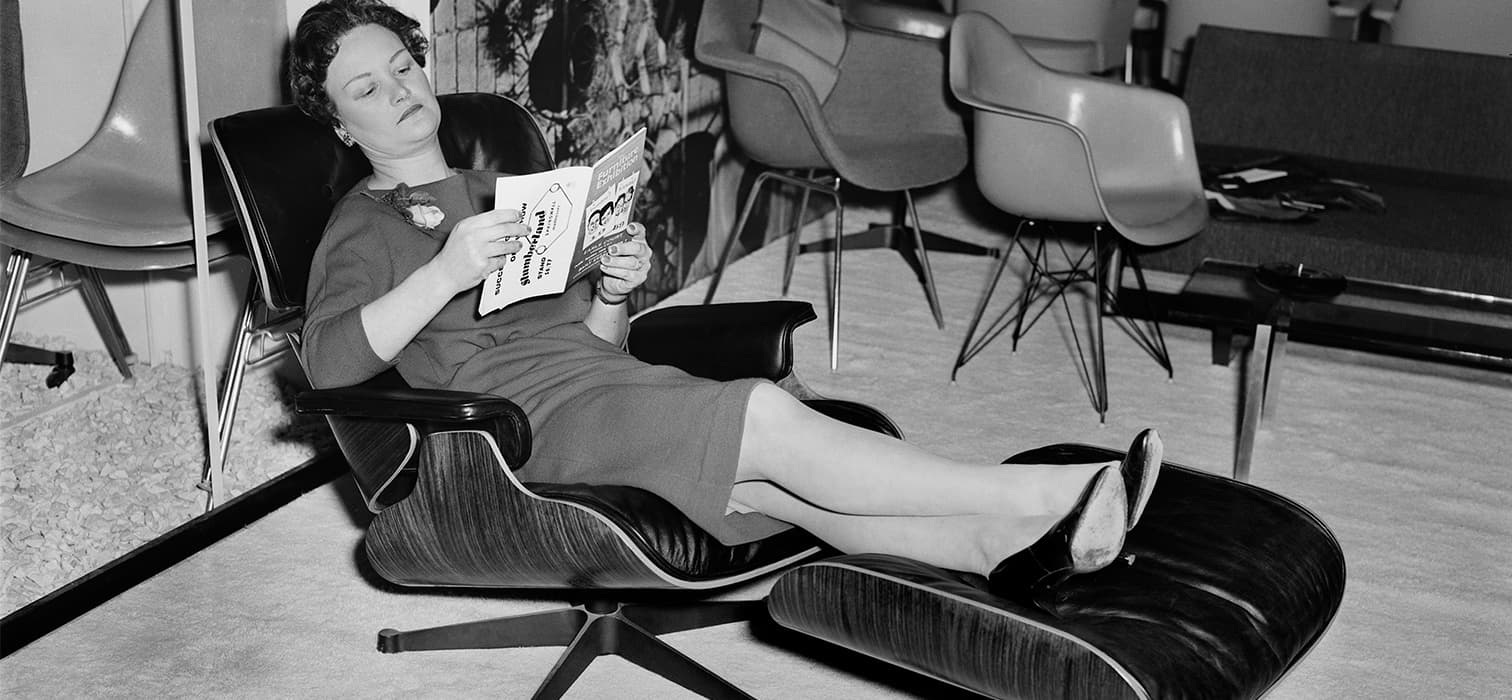
Eames Lounge Chair & Ottoman (1956) — Charles & Ray Eames
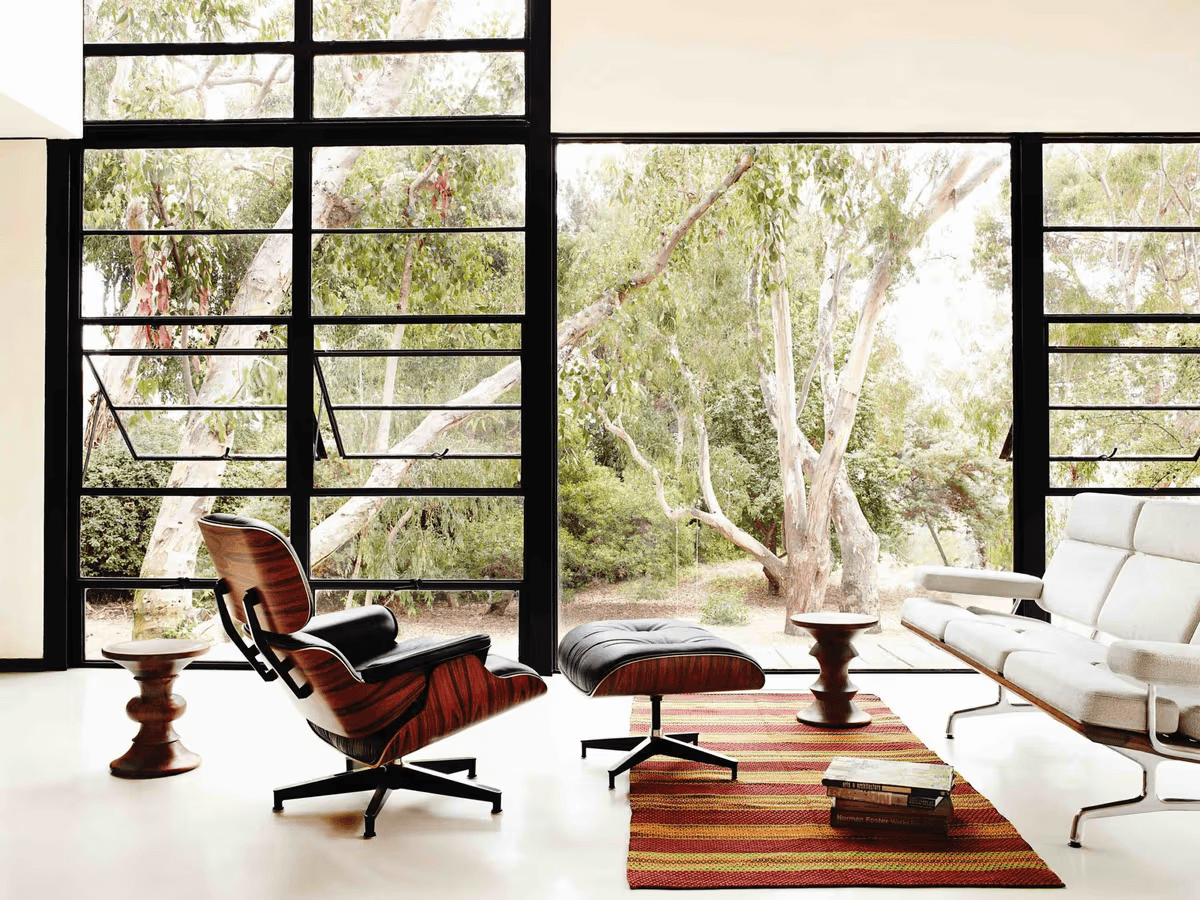
The origin story of the Eames Lounge Chair & Ottoman is one of modern design’s most beloved myths: the Eameses envisioned a chair as soft and enveloping as a baseball glove, yet refined in appearance.
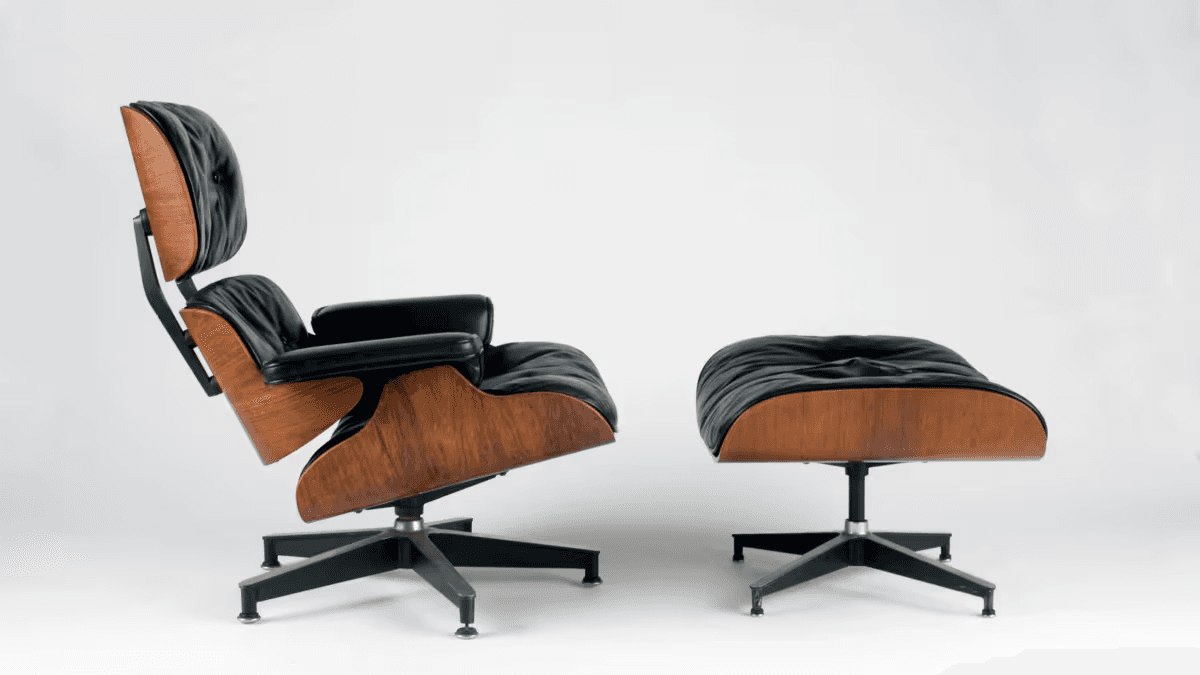
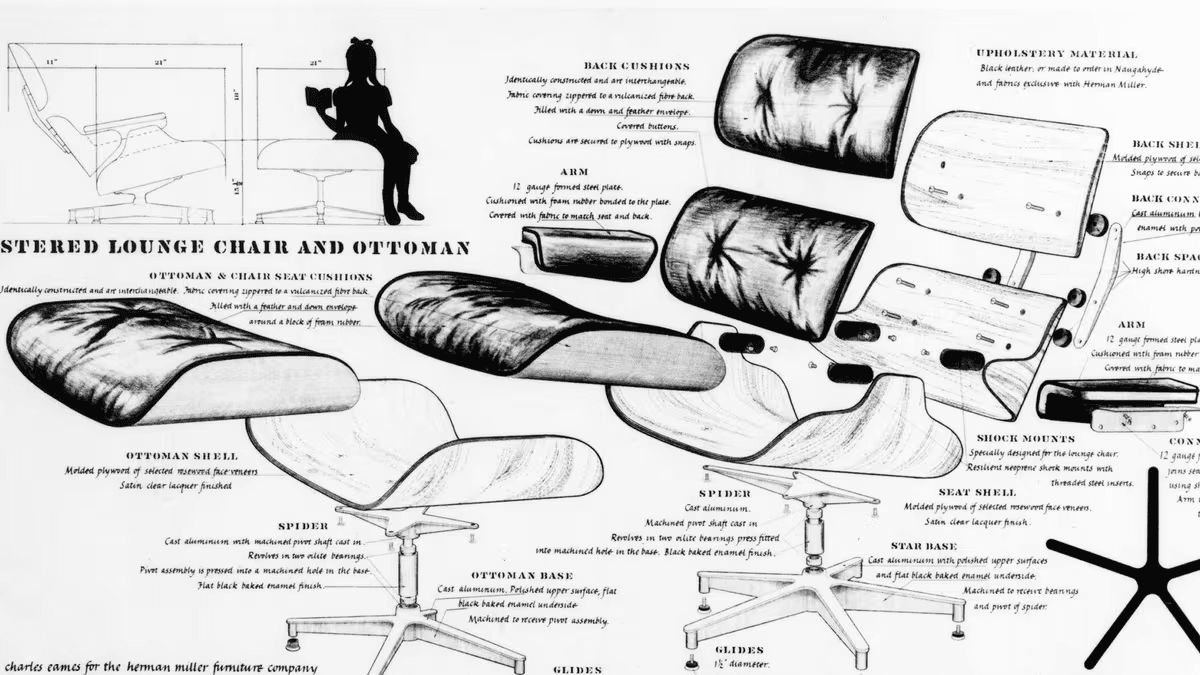
Introduced in 1956 on NBC’s Home program, the design—with its molded plywood shells, leather upholstery, and accompanying ottoman—softened American modernism into something warmer and more livable. The Museum of Modern Art includes it in its collection as a pinnacle of both comfort and craftsmanship.
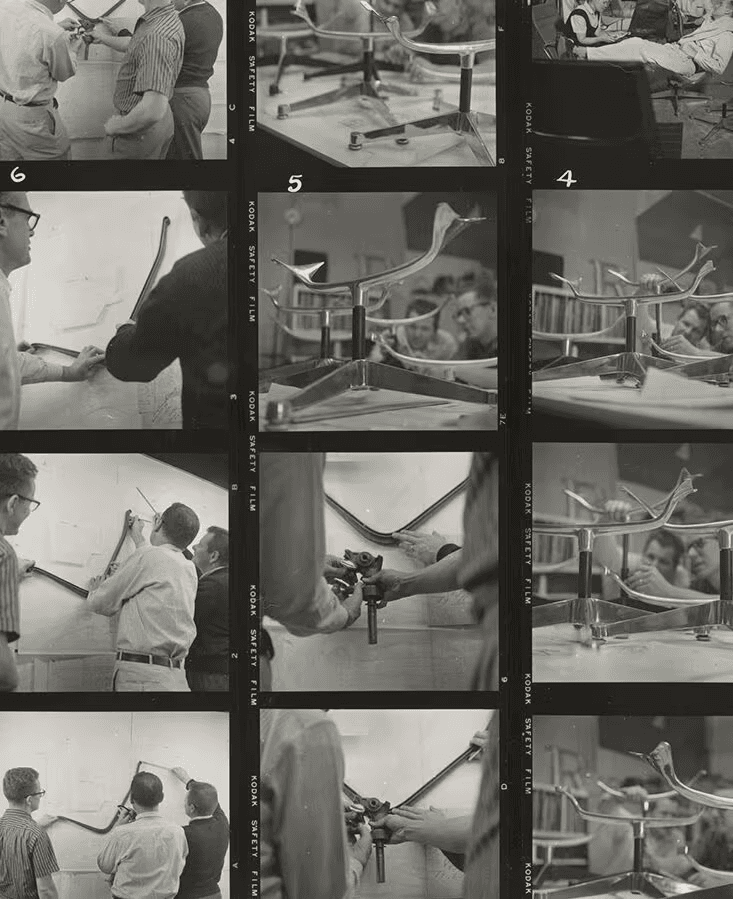
Its historical weight lies in transforming modernism from something “cold” into a desirable form of everyday luxury. Replacing rigid Bauhaus geometries, it offered comfort and prestige simultaneously. Its appearances in Sunday in New York and especially the TV series Frasier turned it into a symbol of intellectual taste and upper-middle-class sophistication.
Zig-Zag Chair (1934) — Gerrit Rietveld
Rietveld’s Zig-Zag Chair turns the very idea of a chair into an engineering puzzle. Composed of four flat wooden planes, it rejects the traditional four-legged structure entirely, transforming sitting into a surprisingly simple yet bold form. According to Cassina, it is among the first cantilever chairs made of solid wood, and its presence in MoMA’s collection confirms its iconic status.
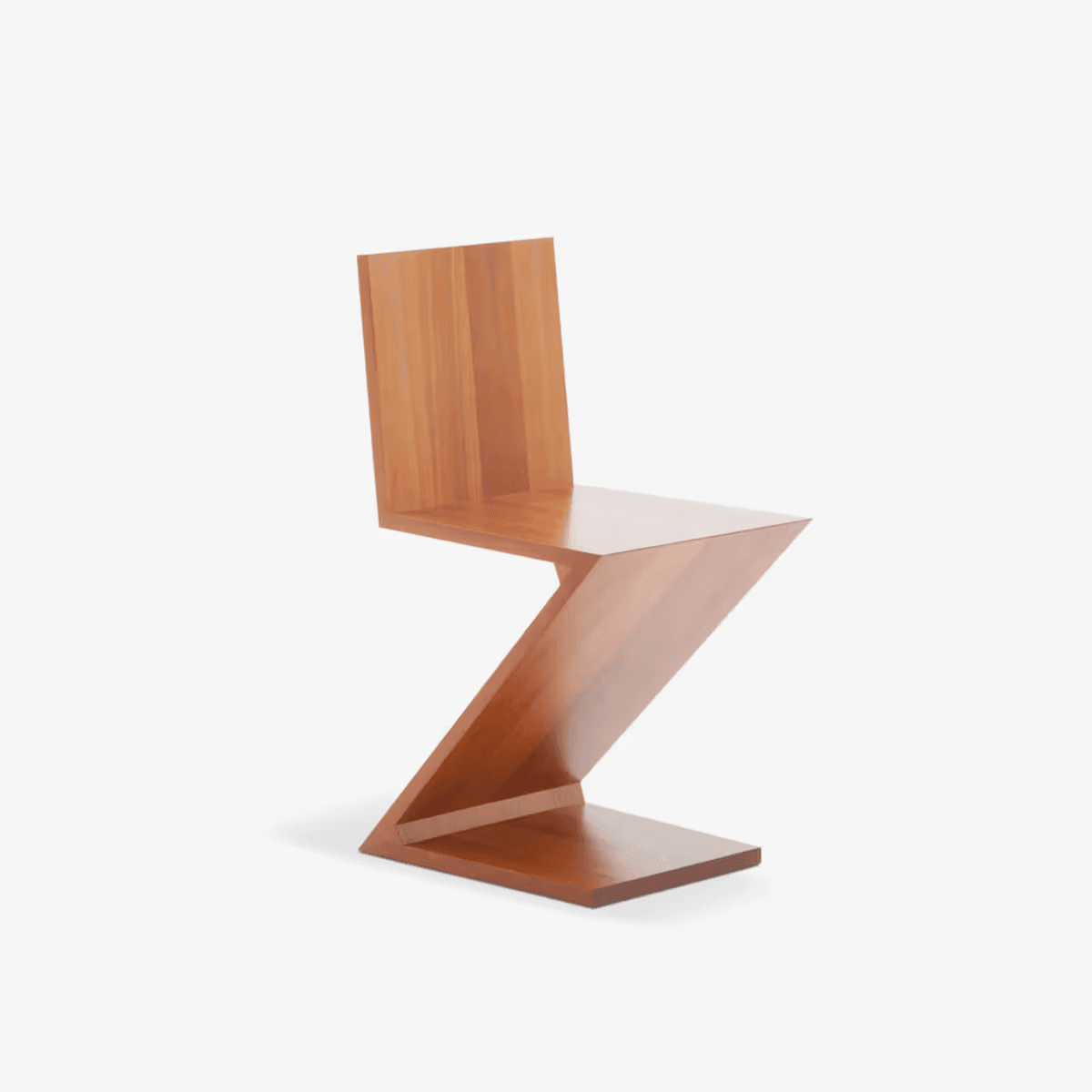
It also poses a question: “Does a chair have to look familiar?” Rooted in De Stijl’s philosophy of geometry and reduction, it blurs the line between furniture and sculpture—an object that seems to invite thought as much as sitting.
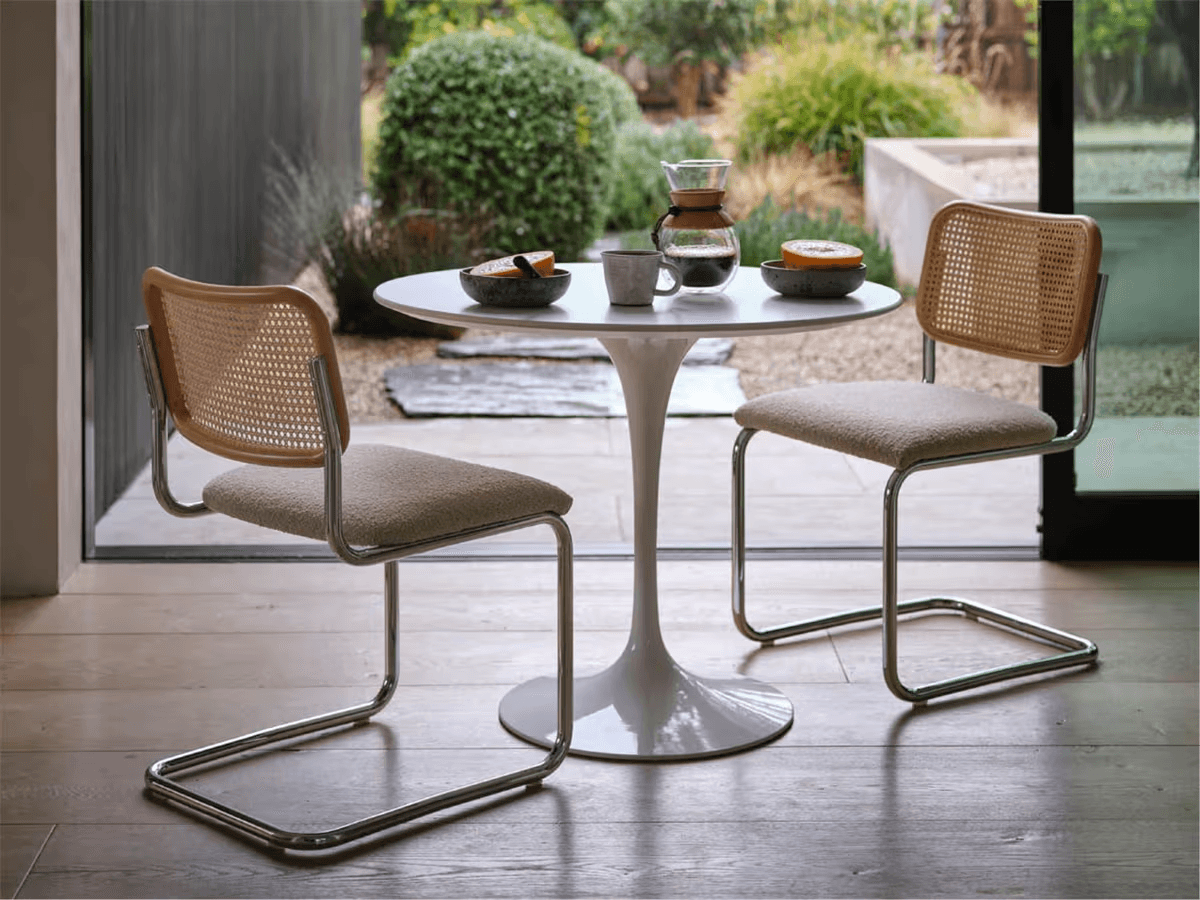
Cesca Chair (1928) — Marcel Breuer
The Cesca Chair is one of Breuer’s most iconic designs, translating his steel tubing experiments into a warmer, more domestic form. Combining a chrome-plated frame, wooden structure, and cane seat, it merges industrial material with craftsmanship. This was intentional—Breuer sought to unite Bauhaus rationalism with the intimacy of home life. The result is a chair that feels both modern and timeless. Versions B32 and B64 in MoMA’s collection further confirm its importance.
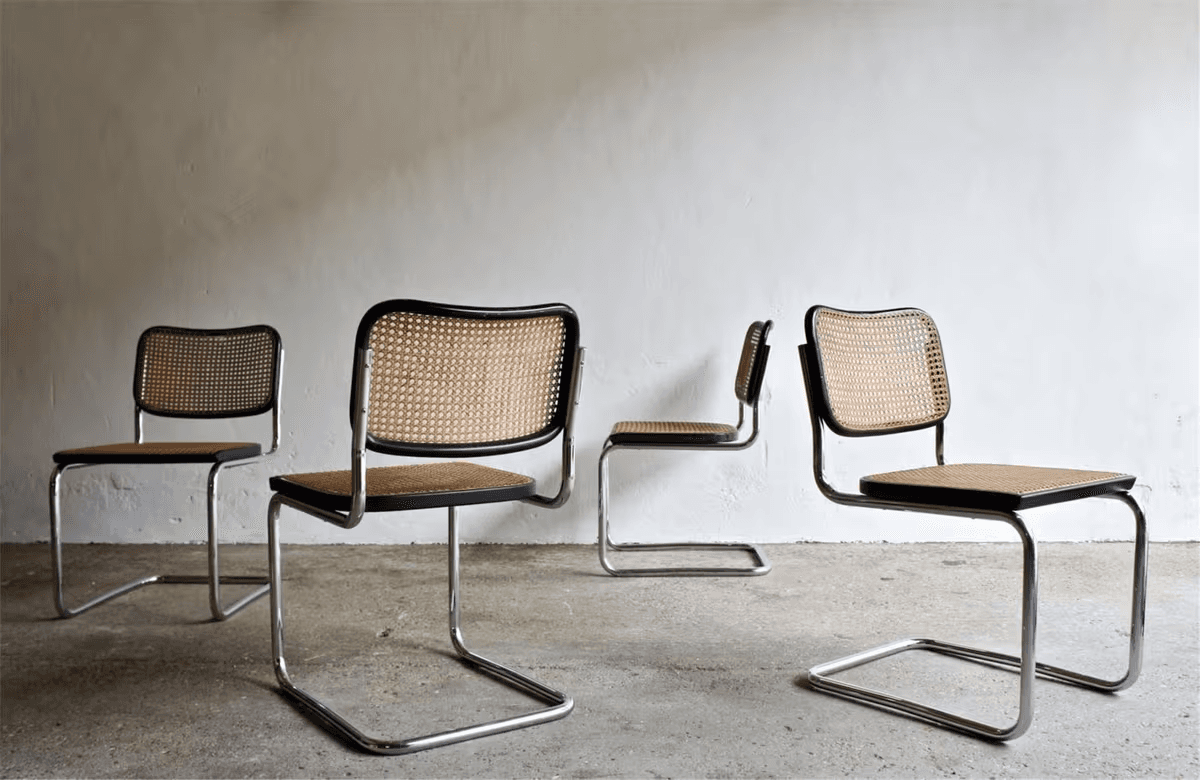
The Cesca popularized the cantilever concept, introducing a slightly flexible seating experience that makes it surprisingly comfortable. This is why it appears in dining rooms, offices, and cafés alike—a true design classic that has seamlessly integrated into daily life for nearly a century.
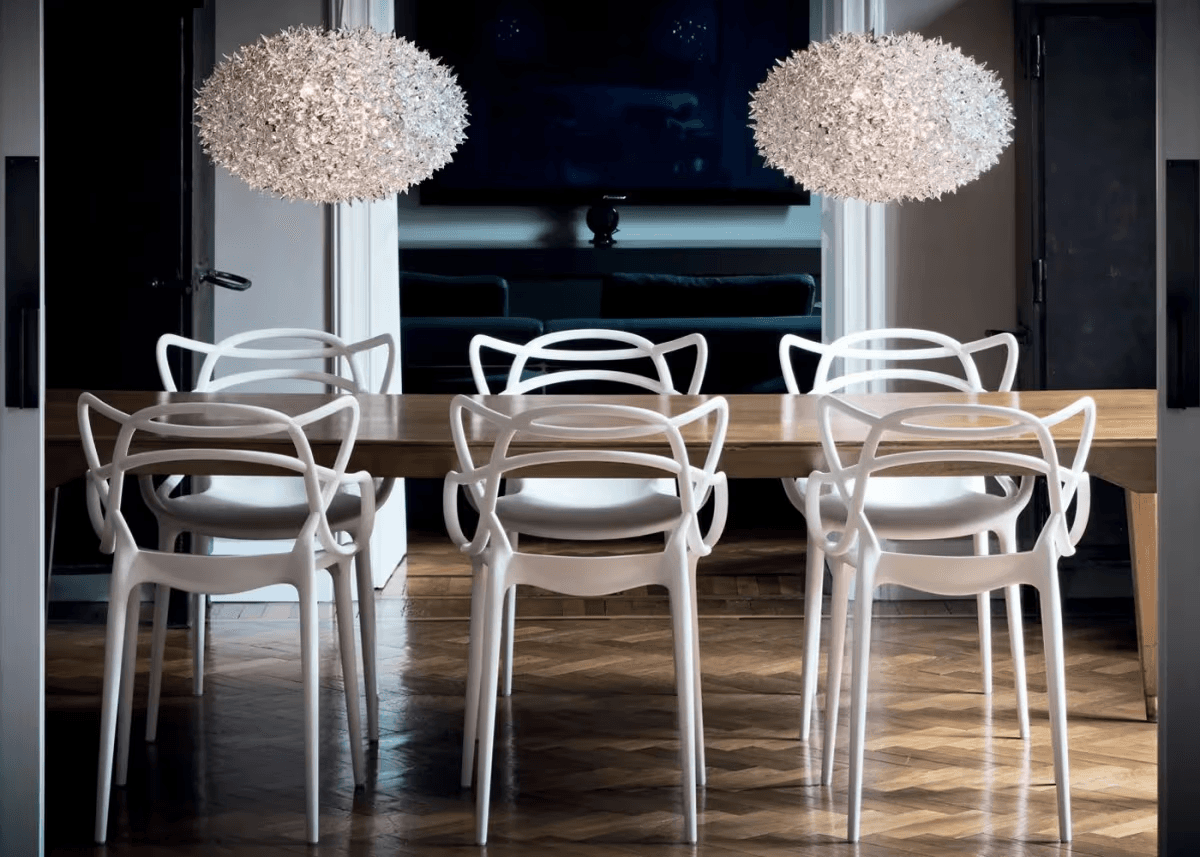
Masters Chair (2010) — Philippe Starck & Eugeni Quitllet
The Masters Chair is essentially a collage of design history. It combines the silhouettes of Arne Jacobsen’s Series 7, Eero Saarinen’s Tulip Armchair, and Charles Eames’s Eiffel Chair into a single continuous line. In doing so, it reintroduces three iconic forms in a new plastic iteration. Its lightweight, stackable, and outdoor-friendly nature transforms this playful reinterpretation into a functional success.
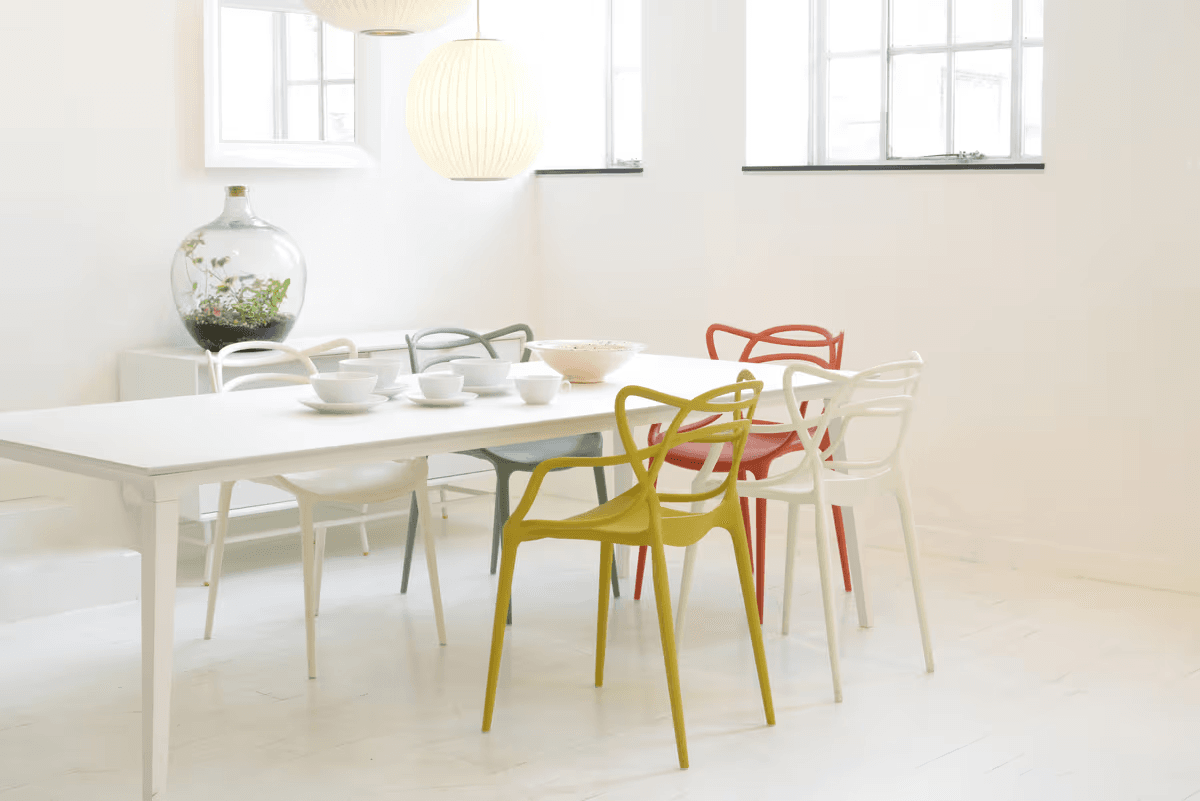
Its postmodern attitude is key: rather than rejecting originality, it acknowledges design as a network of references. Its recognition with awards such as the 2010 Good Design Award and Red Dot is therefore no surprise.
LC14 Tabouret Cabanon (1952) — Le Corbusier
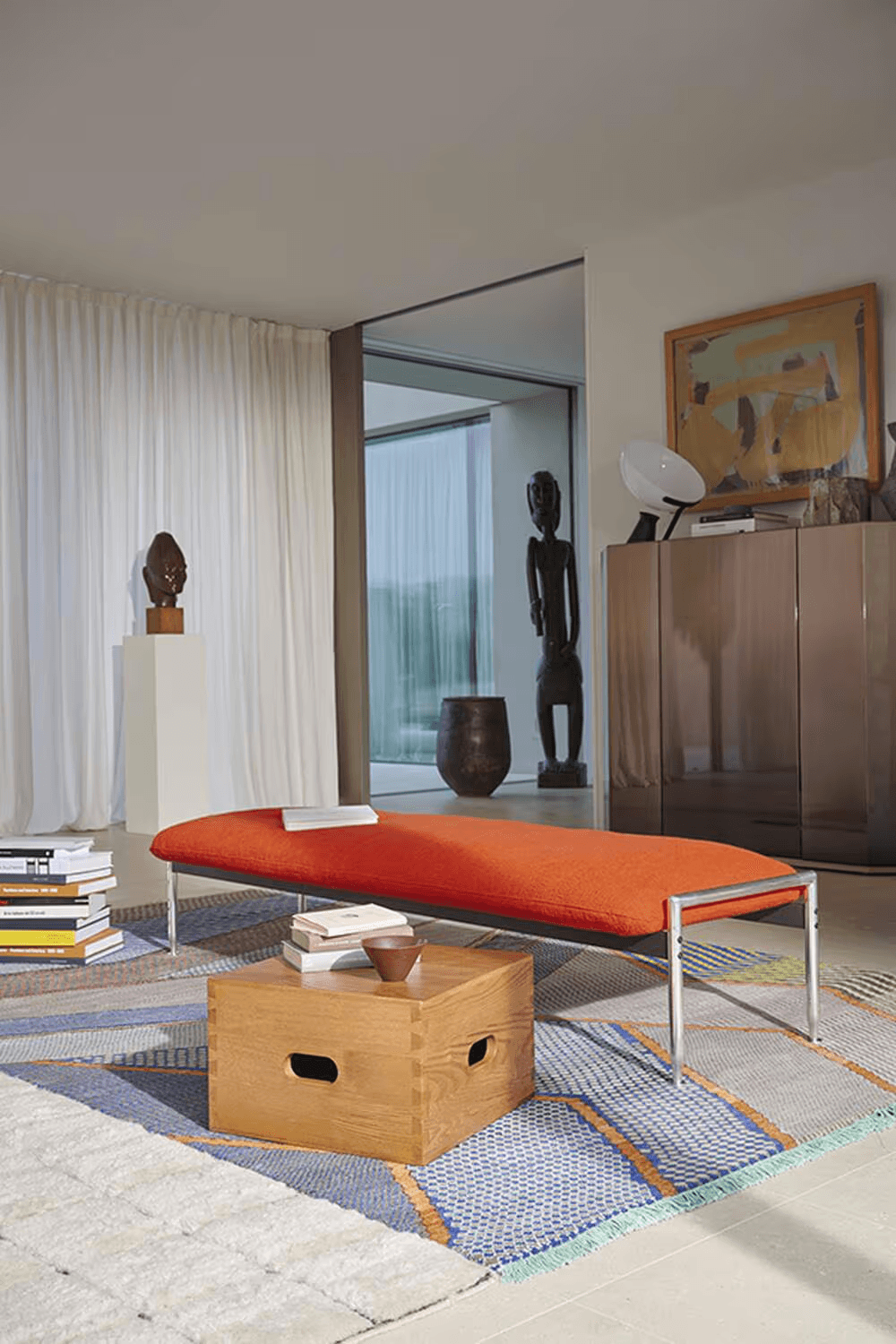
The LC14 Tabouret Cabanon is one of the most archetypal pieces designed by Le Corbusier for his small holiday cabin in Roquebrune-Cap-Martin. Conceived as a box, it functions simultaneously as a seat, table, carrying object, and storage unit. Openings on its sides make it easy to handle. Though it appears as simple as a primitive wooden block, it reveals refined craftsmanship upon closer inspection. Some sources suggest it was inspired by a whiskey crate, symbolizing how an everyday object can evolve into a timeless modernist icon.
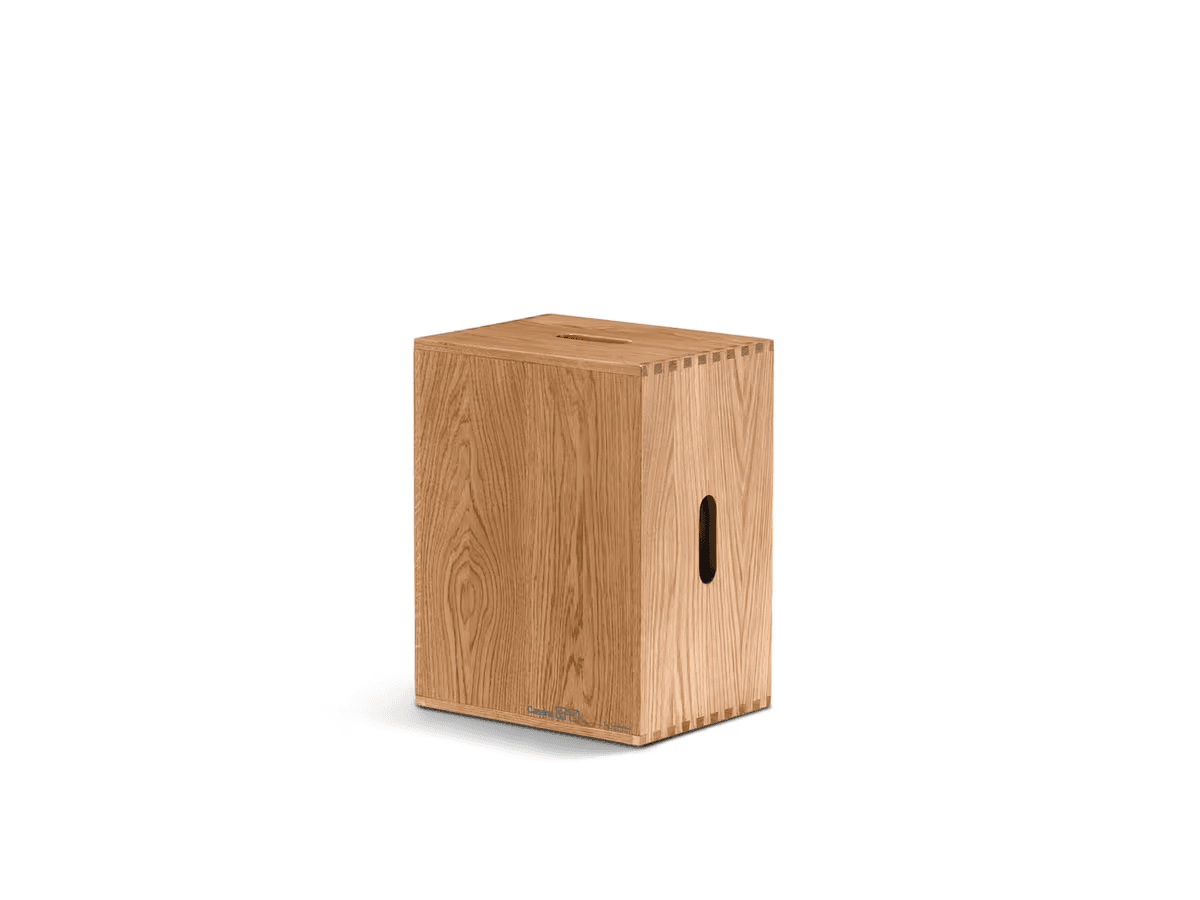
It stands as an ode to understatement. In contrast to the representational Barcelona Chair, the LC14 embodies modernism’s most distilled everyday form: minimal shape, maximum function. Its recent revival—especially through the collaboration between Bottega Veneta and Cassina—has brought it back into contemporary cultural visibility.
Ergon Chair (1976) — Bill Stumpf
The Ergon Chair represents a paradigm shift in office seating. According to Herman Miller, Bill Stumpf spent nearly a decade studying how people actually sit, working with orthopedic and cardiovascular specialists. Released in 1976, Ergon became one of the first office chairs shaped by scientific data rather than intuition.
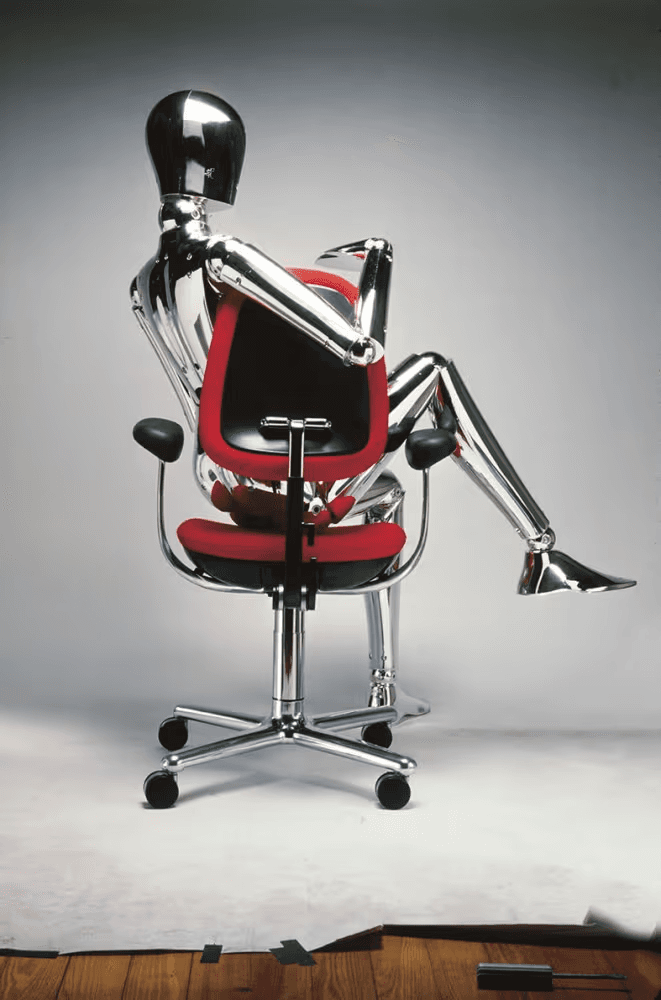
As its name suggests, it defines the mental template of what we now call the “ergonomic office chair.” It laid the groundwork for later icons like the Aeron and the broader aesthetic of modern tech offices. The visual language of open offices, creative industries, startups, and computer-based work culture stems from the human-centered seating philosophy initiated by Ergon.
Vilbert Chair (1992/1993–94) — Verner Panton
The Vilbert Chair is a surprising late-career project by Verner Panton for IKEA. Produced between 1992 and 1994, it consists of four melamine-coated MDF panels screwed together and was released in two color variations. Unlike Panton’s earlier organic plastic forms, this design features flat surfaces, bold color blocks, and a graphic, almost cartoon-like construction.
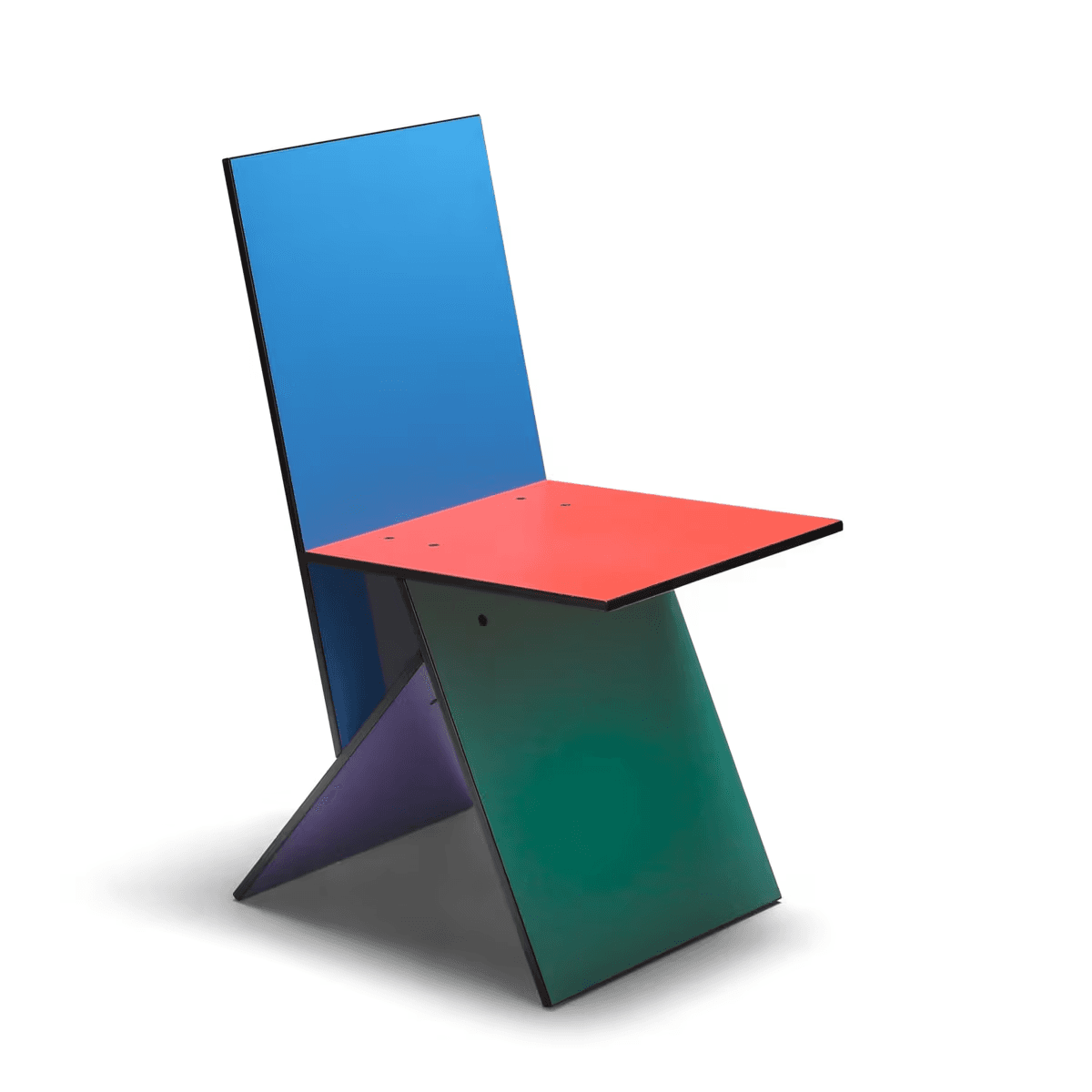
It represents an early and bold intersection between high design and mass retail. Considered too avant-garde for IKEA at the time, it remained on sale only briefly before becoming a cult object—now seen as a symbol of 1990s postmodern playfulness.
Monobloc Chair (1970s, anonymous/industrial typology)
When you think of the Monobloc chair, a familiar image comes to mind: the ubiquitous white plastic chair on a summer balcony. From childhood holidays to outdoor weddings, seaside cafés to picnics, this modest design is everywhere—and its story is far bigger than it seems. Its strength lies in its lack of a single designer. While the idea of a one-piece chair dates back to the 1920s, it was the development of plastic technologies after the 1950s and injection molding in the 1970s that made it globally viable.

The result was a lightweight, affordable, stackable design found almost everywhere in the world. The Monobloc brings “good design” out of elite circles and into everyday life. Yet it is also a paradox: as democratic and functional as it is, it remains part of discussions around environmental impact and overconsumption. The two white Monobloc chairs on the cover of Debí Tirar Más Fotos by Bad Bunny transformed it into a symbol of nostalgia, collective memory, and everyday Latin American life. Once dismissed as a “summer house chair,” it is now reconsidered as one of the most recognizable icons in global design history.

Cover Photo: Ron Case (Getty Images)
Salone del Mobile Milano 2026: A Stage Where Memory Takes the Lead