The major wildfire that broke out in Gömeç in recent months severely affected Ma’adra vineyards and its 2026 harvest. We spoke with Ma’adra producer Didem İlter about what the fire left behind, the future of the vineyards and the challenge of rebuilding.
Ma’adra is a small, warm and welcoming family winery in Gömeç, neighbouring Ayvalık. Its story goes back to the early 2000s. Fikret Özdemir had long been a regular visitor to Ayvalık. Even though he did not live there, he returned often; one foot was always in the region. As time passed, he began thinking about the future and his retirement years, eventually deciding to buy land in the area. Soon, another idea followed: what if they made wine?
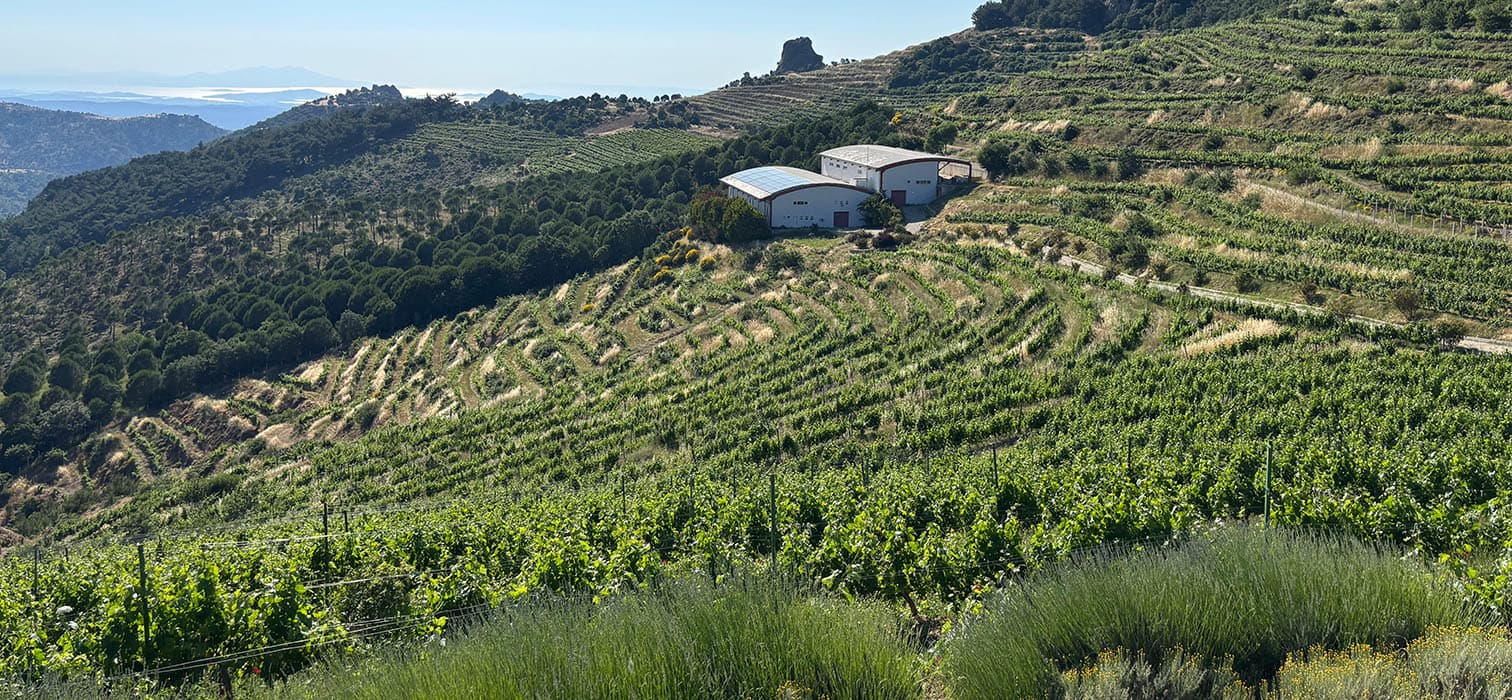
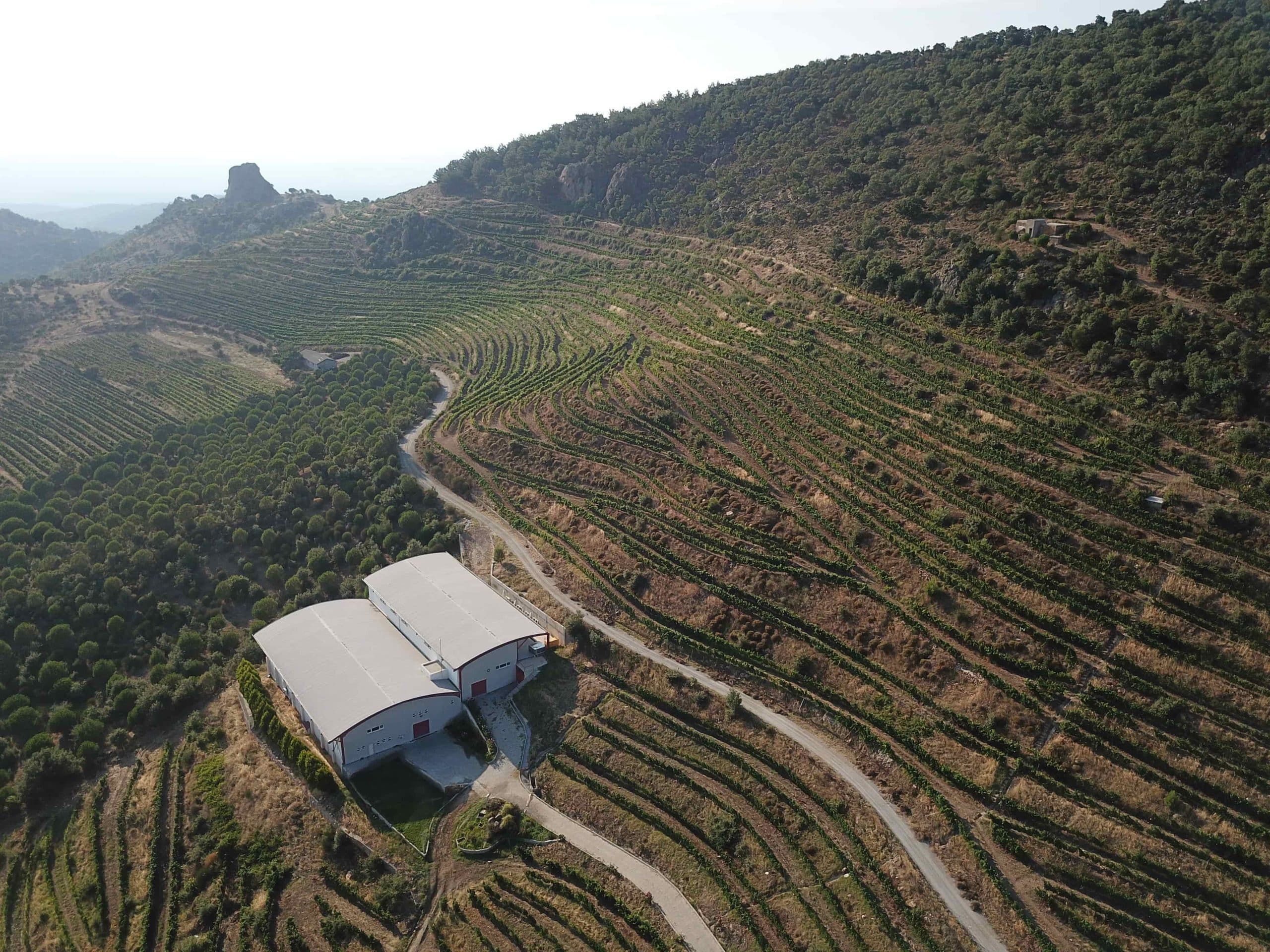
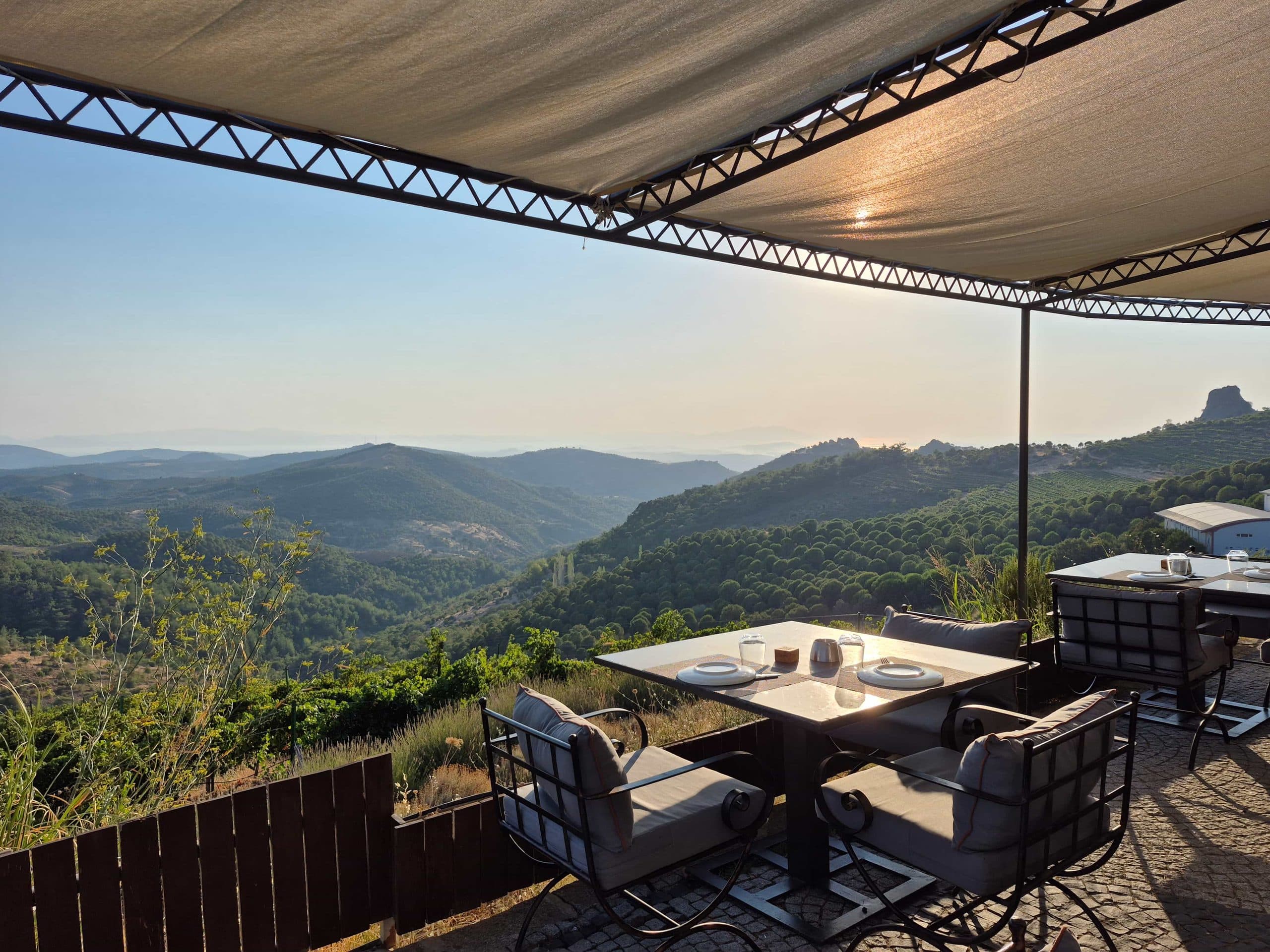
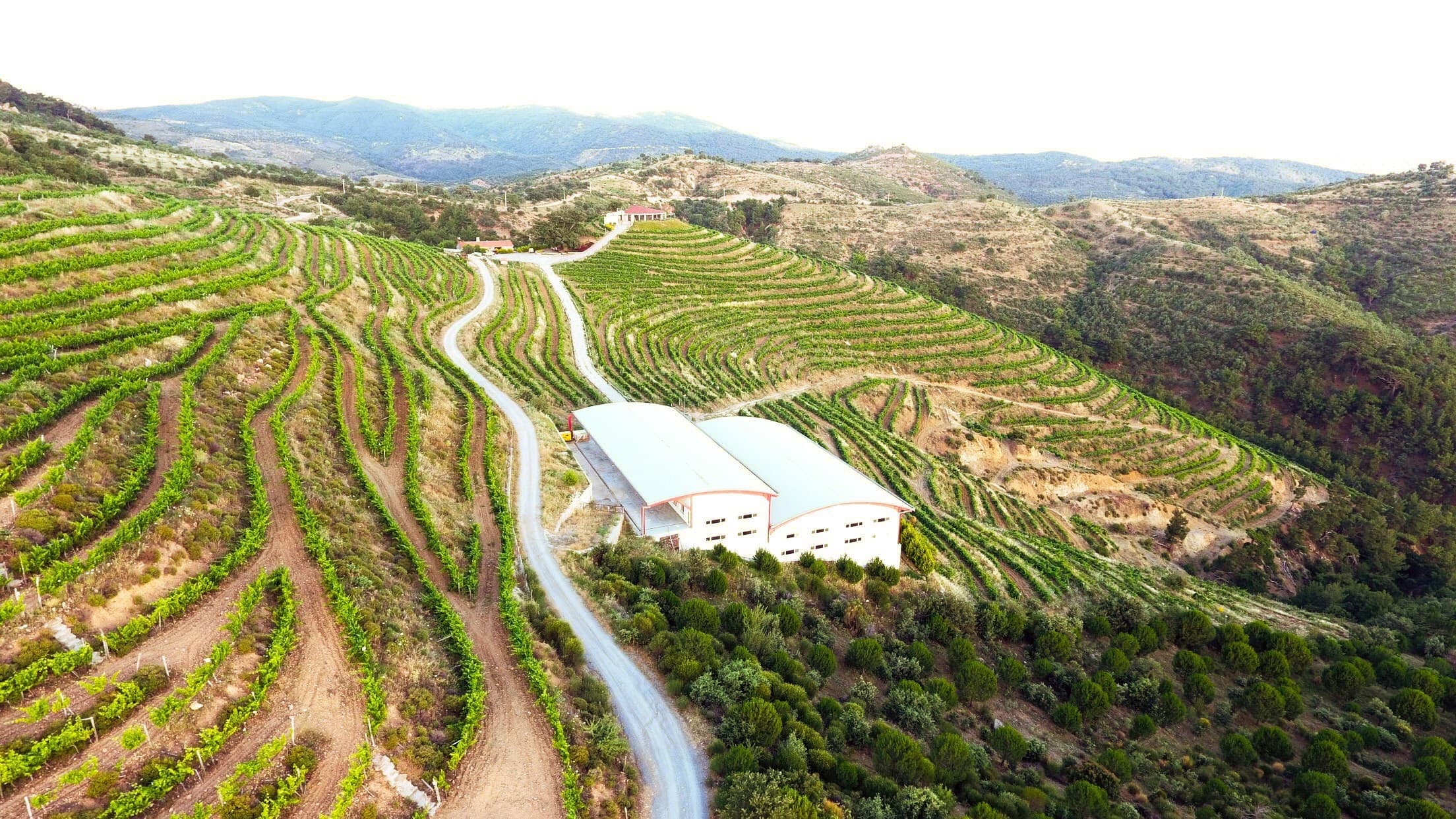
With the idea gradually taking shape in his mind, one day he came across a sloping plot of land in Kobaşlar, a village in Gömeç, and thought, “This is what I’ve been looking for.” Of course, the story was not driven by romance alone. Soil analyses were carried out, rainfall and temperature data were studied, and research was conducted to determine whether the land could produce high-quality wine grapes. Only after they were convinced of its potential did the family begin gradually purchasing plots from local villagers, eventually assembling a 300-decare estate by 2005. The following two years were spent terracing the land, located at an altitude of 550 metres, and planting the vines — a demanding undertaking in itself.
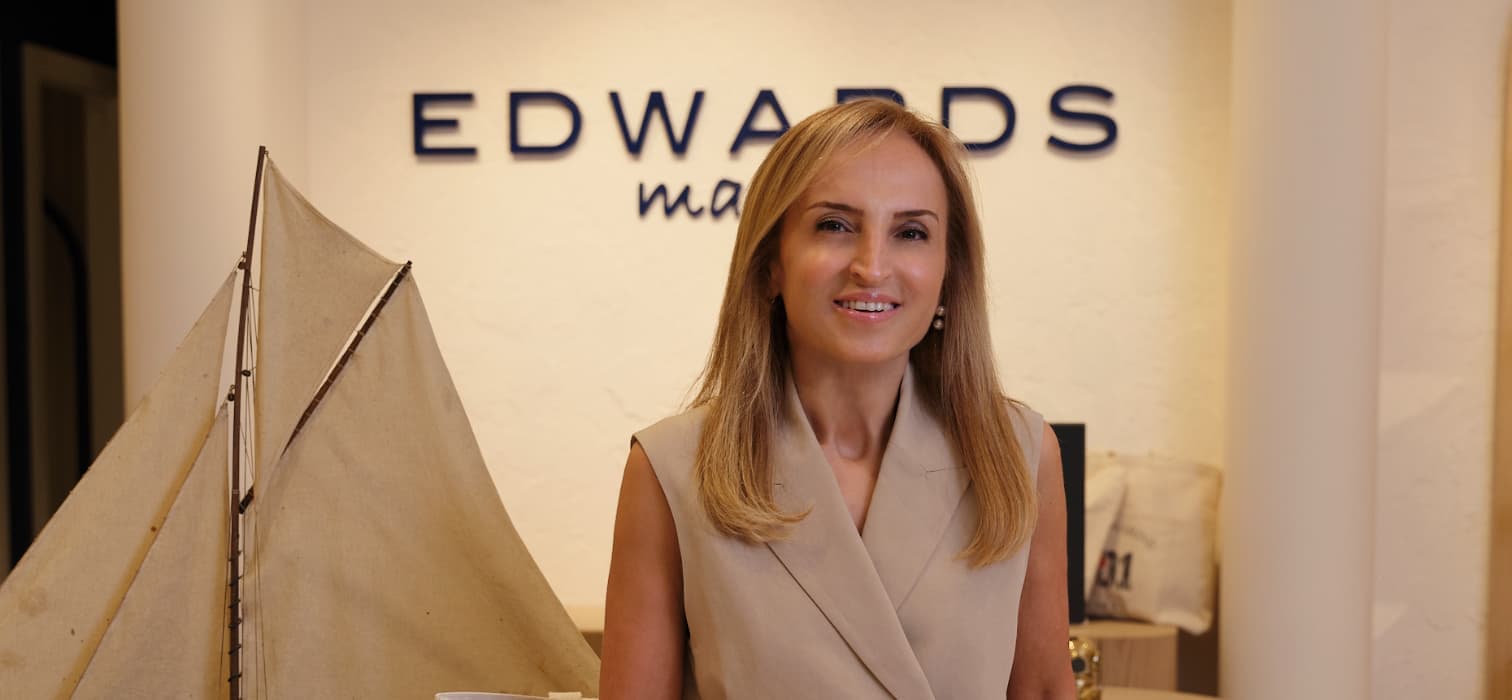
Once the vineyards and winery were ready, another member of the family stepped in: Fikret Özdemir’s daughter, Didem İlter. After graduating from Istanbul Technical University, İlter left corporate life behind to work with the land. She studied winemaking in the UK before taking charge of the business. Her closest partner in the operation is her husband, Afşar İlter, who oversees sales and marketing. Ma’adra produced its first wine in 2012, although the wines were not released commercially until 2015. Another important milestone came in 2017, when the vineyard house opened its doors and began welcoming guests.
Ma’adra is, in the truest sense, a close-knit family business. Everyone contributes, working tirelessly to make delicious wines and to ensure that visitors feel like part of the family. Just a few weeks ago, however, they were confronted with disaster. A major wildfire swept through Gömeç and the surrounding area, leaving its mark on Ma’adra’s vineyards, production facility and the spirit of the team. We spoke with Didem İlter about what they went through.
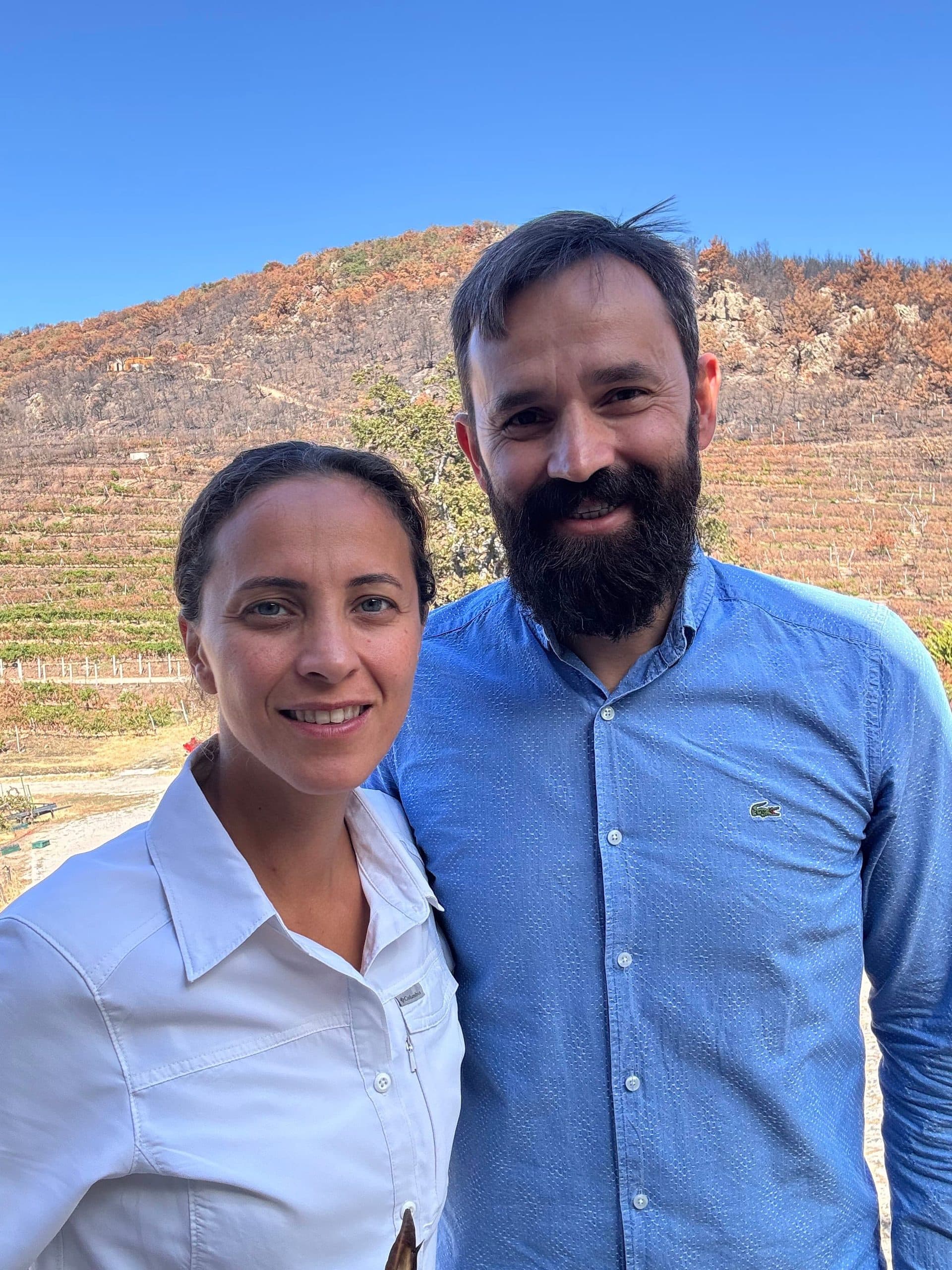
First of all, we are very sorry for what you have been through. Could you tell us how the fire started and how events unfolded?
Didem İlter: On the day the fire started, we had gathered at the house below the vineyards for a meeting and were waiting for my husband to arrive so we could begin. While we were there, we looked across towards the Kaz Mountains and saw that there was also a fire there, that Ahmetçe village was burning. We had barely begun to process what we were seeing when we heard from my husband, and that was how we learned that another fire was advancing towards our vineyards.
We are on a high hill here, and from this position we can see the surrounding landscape, the nearby hills and the forest for a considerable distance. We have a very open horizon. That means we can usually notice what is happening around us quite easily, and small fires are not unusual in this area. Every now and then somewhere starts smoking or a plume appears. We are used to it. In fact, whenever we see something like that, we immediately inform the villagers and forestry workers and try to help in any way we can. Before the fire brigade is even called, local villagers, forestry workers, people like us — whoever can reach the area — usually try to do something and intervene.
When we heard that there was a fire threatening the vineyards, we immediately decided to go up, assess the situation and do whatever we could. Our team members had already left and gone home, so we called them back to help. We have water tanks mounted on trailers, and we positioned those along the boundary of the vineyards.
By the time we arrived, the fire was already very close to the vineyards and the vines were feeling the heat. We later learned that the fire had started in one of the mountain villages below us because of sparks from a welding machine being used during the construction of a house. It was human-caused. They had called the fire brigade, but because they managed to extinguish the flames around the house before the firefighters arrived, they sent them back. I assume, however, that they failed to completely contain some of the flames that had spread beyond the house. From there, with the wind, the situation escalated.
The wind was extremely strong that day and the flames spread very quickly. Within a short time, the fire had engulfed the area. Apparently, the Gömeç fire was one of the largest wildfire disasters of the year. But I should stress again that the poyraz, the northeasterly wind, was exceptionally strong that day, reaching speeds of around 70 kilometres per hour.
Doğuhan-Süray Atış: This brings to mind something we wrote about Ma’adra in our book Soil and Wine: Turkey’s Vineyards and Wines. Let us quote it directly:
“The high altitude, combined with the regularly blowing northeasterly wind, allows sun-soaked grape bunches to cool down and undergo a long ripening period. This is one of the fundamental conditions for making good wine. Strong winds also prevent excessive humidity, protecting the vineyard from pests and disease.”
There is a certain irony in the fact that the same wind that is one of the keys to making good wine fanned the fire almost like someone blowing on the coals of a barbecue, intensifying its heat and flames.
Didem İlter: I am still amazed by the strength of the wind that day. Even we could barely stay on our feet. It definitely was not a normal wind. And as the fire climbed uphill towards our vineyards, it encountered no real obstacle because the entire stretch I mentioned is forest. There is no road or anything similar in between.
The fire first hit our Öküzgözü parcel and destroyed almost all the vines there. Our main vineyard parcel is about one kilometre away from the Öküzgözü vines. By the main parcel, I mean the area where all our other grape varieties are planted side by side. We do not have another vineyard elsewhere. We tried, with our own efforts, to prevent the fire from reaching the main parcel, but what we could do was not enough. There were fire engines waiting down in the village, which is a residential area, but because they belonged to the municipal fire service, apparently they were not authorised to intervene in a situation like this, while the forest and vineyard were burning. These kinds of fires fall outside their area of responsibility. Forest fires are handled by the forestry fire service, and they were unable to reach us in time.
As I said, we sprayed some water and tried to do what we could, but at one point we were facing walls of flame more than 20 metres high, several times taller than I am. That was when things became truly frightening. Our surroundings are dominated by pine forest, and the Kozak plateau where we are located is home to stone pines. When the pine cones came into contact with the fire, they effectively turned into bombs. They exploded and flew several metres through the air, spreading flames into the surrounding area. As a result, the fire reached different locations very quickly.
While we were trying to fight the fire, people from the village began calling me. They said, “Ms İlter, the fire has started coming towards you from the other side of the vineyard as well. If it continues like this, the flames will surround you and you will be trapped. You need to leave immediately.” After that warning, the first thing I did was evacuate the interns working at the winery.
My employees and I could fit into roughly two tractors, and the villagers who had come to help were in another two. Things became somewhat chaotic during the evacuation, and at one point we almost found ourselves surrounded by flames. We started escaping through whatever openings we could find — corridors where there was no fire and where we could still tolerate the smoke — and moved towards the buildings.
When I later raised my head and looked towards the main vineyard, I saw patches of Syrah vines burning and smoke increasingly covering the vineyard. The fire was not advancing as a single continuous front; it was moving in separate clusters, which surprised us. Imagine there are 20 vineyard rows: fires might suddenly appear separately in the third, fifth and ninth rows. We later understood that this was because the wind was carrying burning material from one place to another.
To sum it up, the fact that our winery and vineyards sit directly on the forest boundary, and that much of the surrounding land is not connected by roads, made it impossible for vehicles to intervene effectively. The extraordinary wind that day intensified the fire and left us helpless. Eventually, there was no longer any point in remaining near the winery and its surroundings because the fire had become so strong that even leaving by car was becoming difficult. So we left the area and went down to the village.
Of course, at the moment you are forced to leave, a thousand thoughts run through your head: “What will I find when I return?”, “What should I take with me?”, “What is the most valuable or important thing here?”, “How much of it could I possibly get out?” All of those questions kept running through my mind. In the end, we moved the tractors to safety and transferred some of the vineyard machinery and equipment to a relatively protected stony area away from the trees.
We continued watching the fire from the village, but at one point Ma’adra was completely covered in smoke and we could no longer see what was happening from a distance. As time passed, the fire began threatening the village as well. That was when the fire brigade intervened and aerial firefighting operations began, but by then it was already towards evening.
Doğuhan-Süray Atış: If we understand correctly, there was no firefighting intervention in your vineyards or winery. You tried to fight the fire yourselves, but otherwise received no direct support from the fire brigade.
Didem İlter: By the time the aerial firefighting operation began, it was already too late for us. The fire had reached the vineyards and winery, caused whatever damage it was going to cause and then continued onwards. It was essentially a process that ran its own course.
Doğuhan-Süray Atış: When the fire was finally extinguished and you were able to assess the damage, what did you find?
Didem İlter: When we returned to the winery, the first thing we noticed was our 400-year-old oak tree at the entrance. It was still burning. The fire brigade came to extinguish it, but the tree continued to smoulder for three days. Once a tree that old catches fire internally, it is not easy to extinguish. The wind that kept feeding the flames also continued at the same intensity for those three days. Fortunately, by the end of the third day we managed to put the oak tree out completely, although the fire brigade had to remain there on watch during the first night.
We had solar panels installed on the lower roof of the winery, and those burned. But as far as we could see, the fire had not entered the winery itself and there was no damage inside. Our stock — the bottled wines — was stored in the cellar and was completely unaffected. Because it is underground, the cellar was not impacted by the fire at all. Repairs to the winery roof are currently under way.
I was worried that if the temperature inside the winery had risen too much, the wines resting in the tanks might have been affected. But when I entered the winery that night, I saw that the tanks were not hotter than they should have been. Everything was normal.
We also have a separate building that we use as a tasting house. The landscaping in front of it burned, causing some of the nearby exterior glass to crack and the windows to be damaged. The awning protecting that area was also damaged. We cleaned everything up and carried out the necessary repairs and renovations. Around ten days after the fire, the tasting area reopened. Anyone who would like to visit us can come. Our doors are open.
Doğuhan-Süray Atış: What about the vineyards themselves, which have grown and developed through years of work? How much did you lose? Even where the flames completely destroyed the surface growth and shoots, is there a possibility that some of the deeper roots survived underground?
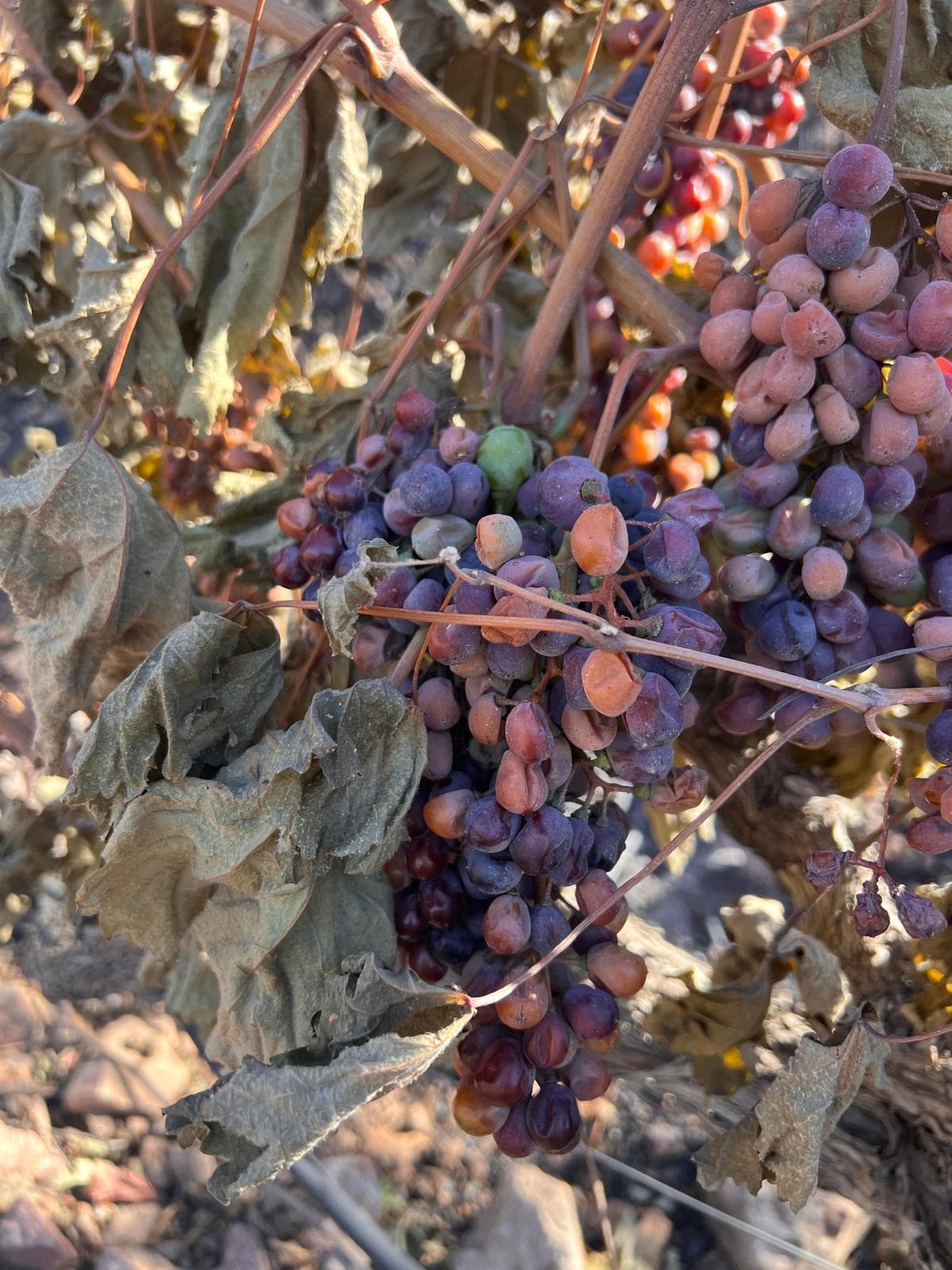
Didem İlter: We had a drip irrigation system in the vineyard. Its pipes and irrigation components were completely damaged. The first thing we had to do was repair them and get the system running again, because after a fire, essentially the only thing you can do to preserve the vitality of the roots is get water back to the vines. We spent ten very intensive days working in the vineyard to restore the system as quickly as possible. People from nearby villages also came to help. In fact, many friends, supporters and wine lovers came to our aid or visited us during that period. I would like to thank all of them again.
Doğuhan-Süray Atış: Will you be able to harvest grapes from the vineyards and make wine in the 2026 vintage?
Didem İlter: Unfortunately, no. We lost this year’s harvest. At the moment, we are continuing to irrigate the vineyards and trying to keep the vines alive. In doing so, we are trying to maintain a certain level of moisture in the vineyard so that the plants do not experience any more stress.
We did have some Bornova Misketi vines. They were at the very bottom of the vineyard, in the most sheltered area. I checked them after the fire and simply could not bring myself to leave them. Those were the only grapes we harvested, around one tonne in total. At this point, I have no idea what kind of wine they will make or whether it will eventually be released commercially.
One thing I realised after the fire is that, thankfully, Turkey has not experienced many vineyard fires, and as a result there is very little accumulated knowledge on the subject. Vineyard owners do not have experiences they can pass on to one another. I suspect a vineyard fire on this scale may have happened to us for the first time in the country.
In France, California and Australia, however, vineyard fires have occurred many times and there is much more experience. France in particular suffered considerably last summer and again this summer. We decided to follow the French approach and contacted producers in regions affected by vineyard fires, as well as officials responsible for agricultural production there, to understand what kind of path we should follow. Before doing that research, everyone around us had a different opinion and people were suggesting so many different things — all of which sounded reasonable — that it inevitably became confusing.
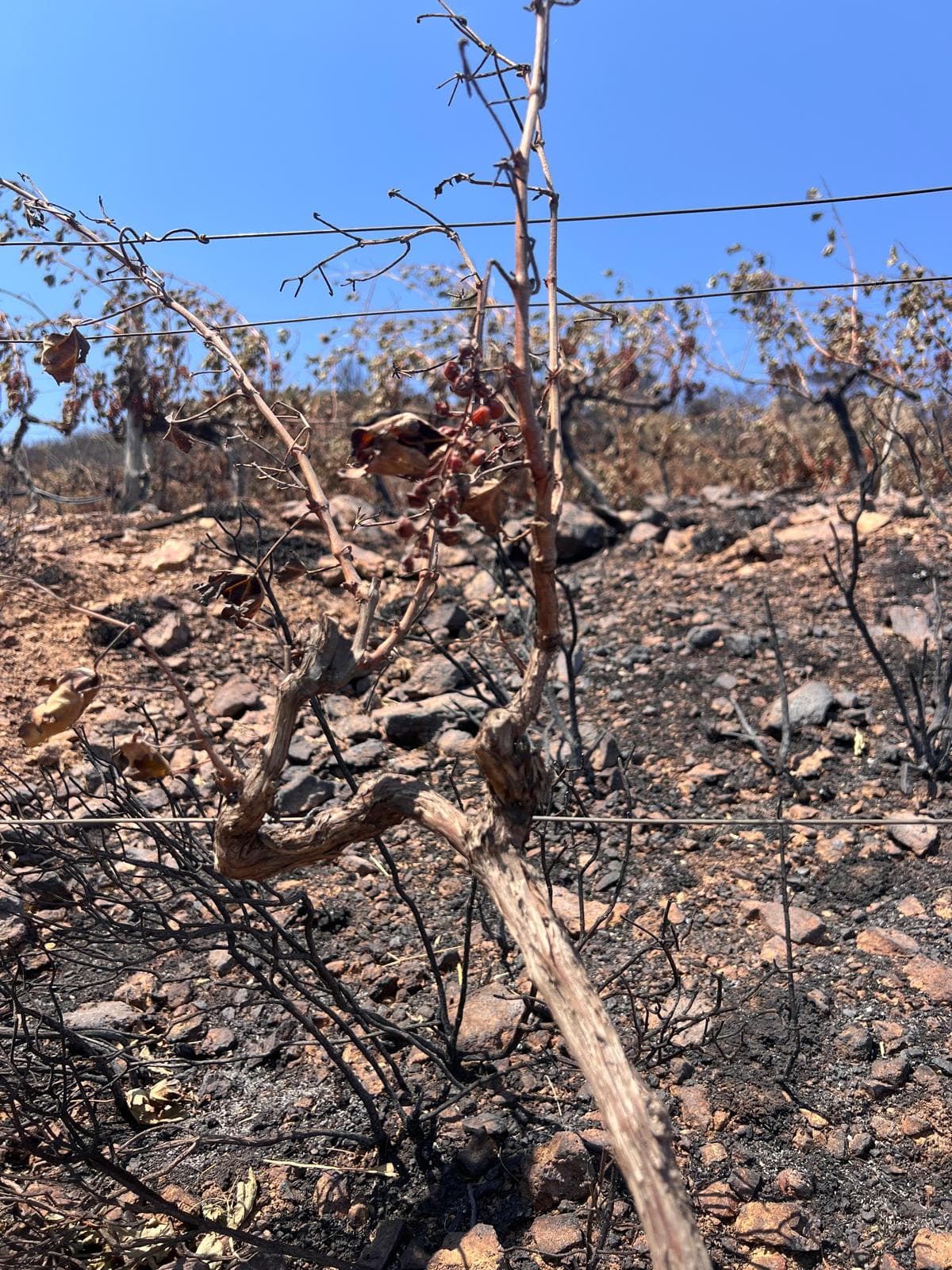
In the end, we followed the French model. They too had experimented with many different methods to revive vineyards after fires, but they could only see the results of what they had done after a year. It was a slow process. Eventually, the French developed a classification based on the severity of the burns on the vines and identified four main categories. For example, they define a first-degree burn and say that this vine will wake up again and has a high probability of recovering without problems. If there is a second-degree burn, they recommend certain treatments and advise you to monitor the vine closely. By the time you reach the fourth degree, the vine is burned and charred — in other words, dead. There is no possibility of bringing it back.
Because our vineyards are located on uneven terrain, they were established on terraces, with paths created between the terraces to make movement and work easier. Stone pines and oak trees naturally appeared in these intermediate areas, but in the past we did not allow them to grow. Three years ago, we changed that strategy and allowed the trees to develop. We wanted them to cast shade over the vines and offer them at least some protection from the heat, because in recent years we have begun experiencing genuinely extreme temperatures. But during this fire, we saw that those trees between the terraces caught fire very quickly and then burned the vines around them as well.
For the past two years, we had also stopped completely removing the grasses between the vineyard rows as we used to. We would cut them but leave them in place, effectively covering the soil with a blanket of vegetation. This helped keep the ground cooler. The technique, known as “cover cropping”, has become increasingly popular and has now proven its value. But the sources recommending it consistently highlight one disadvantage: if you are in a fire-prone region, those grasses will burn very quickly and accelerate the spread of fire through the vineyard. We had simply never considered that possibility. But sometimes what never crosses your mind is exactly what happens.
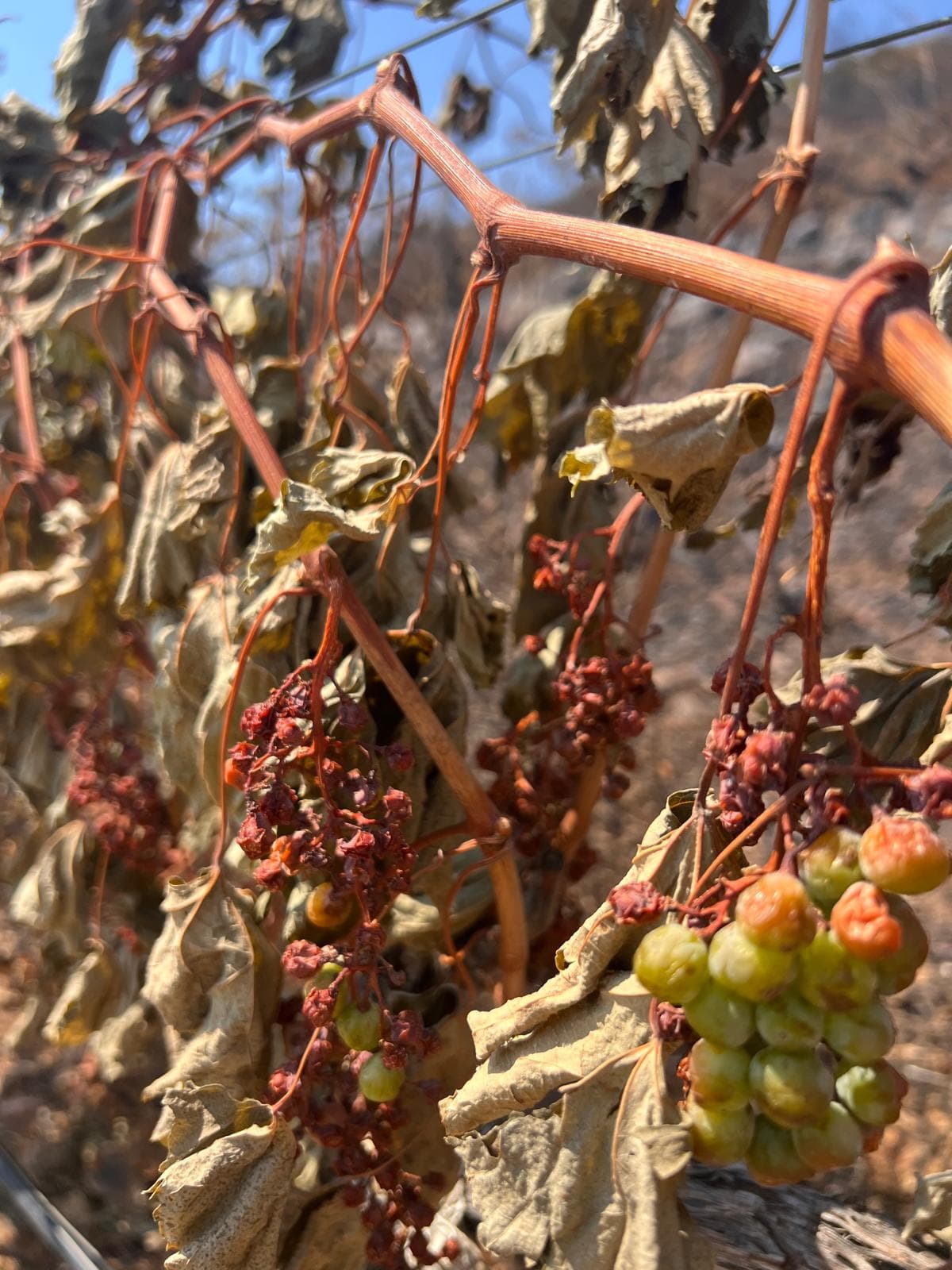
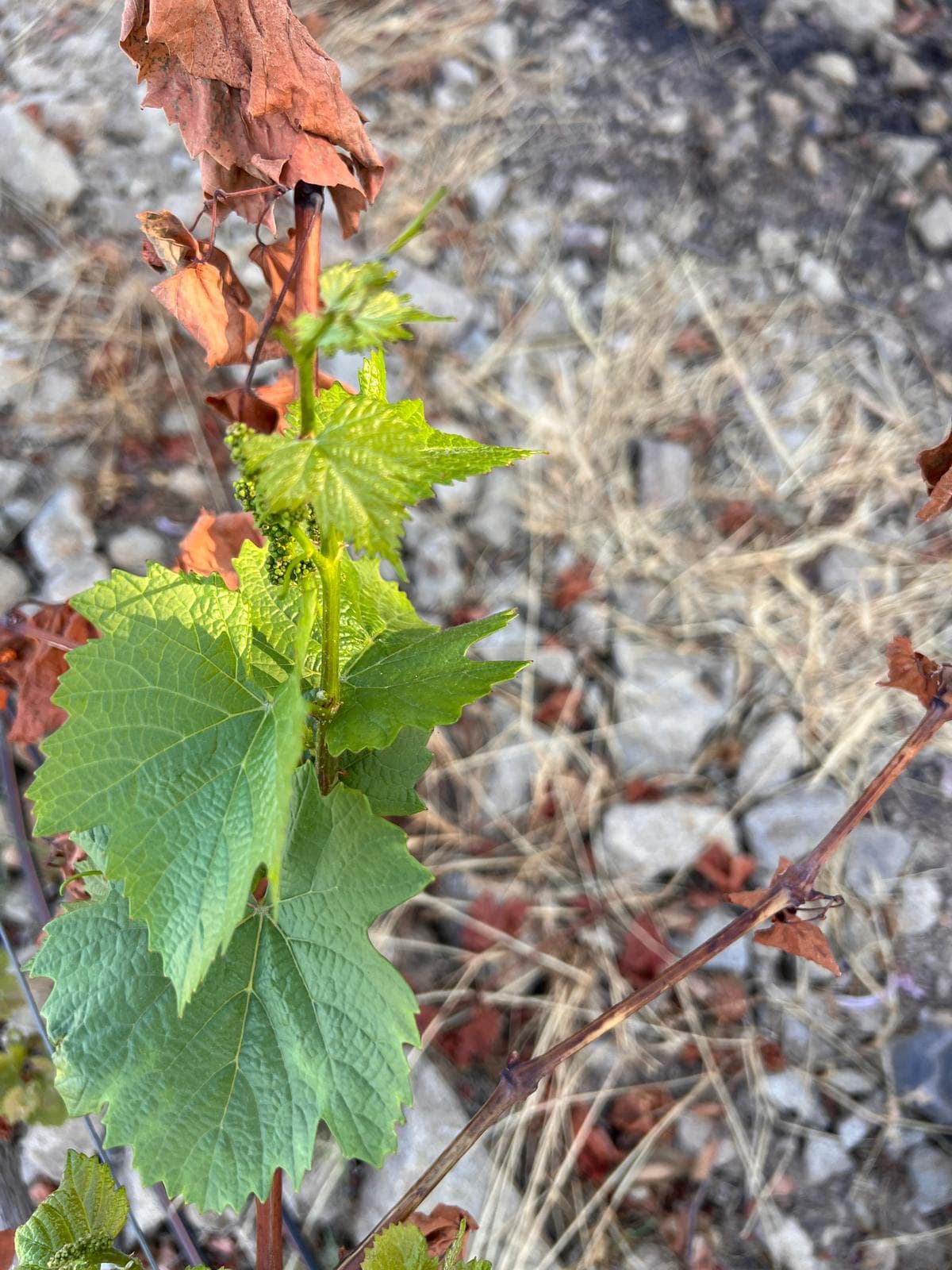
When all these factors came together, we saw that the vines in different parts of the vineyard had been exposed to different levels of heat. Of course, we had no way of measuring this precisely. But as we observe the vines and see their condition, we are gradually beginning to understand and make sense of what happened. How high the temperature became and how long each vine was exposed to that heat will determine its future. The vine is an extremely resilient plant and can survive a great deal. In fact, even though very little time has passed, we are already seeing new growth on some vines.
Still, I can say that the vines in areas where there was a lot of dry grass, and those along the forest boundary that were affected by burning trees, are in the worst condition. Most of the remaining vines correspond more closely to second- and third-degree burns. In other words, they appear capable of recovering. As I mentioned, when we look at the second-degree vines, we can already see signs of regrowth.
Our main concern is how the third-degree vines will recover, whether they will produce fruit in the coming years and, if they do, what that fruit will be like. Inside a vine there is a major vascular channel that transports water from the roots to the leaves. If that channel is exposed to high temperatures, it can be damaged and cracks can develop. Over the coming years, we will have to see how functional those vessels remain and whether they can continue nourishing the plant. It is not something you can easily determine from the outside. Even if those vines survive, it will take time for them to return to their previous level of performance. Recovering from this kind of stress is not easy.
If I were to give you an overall assessment, the vines that we have completely lost and will have to replant account for around 10 per cent of the total. Then there are vines whose roots remain healthy but whose trunks have suffered varying degrees of damage and whose vascular systems we believe may have developed cracks. We will need to treat those almost like “baby vines”, caring for them very carefully, and it may take at least three years before they produce grapes again. They will not return to normal immediately. Those damaged vines represent around 40 per cent of the entire vineyard.
So, roughly speaking, I would say that 50 per cent of our vines are in good condition and should perform normally next year. The remaining 50 per cent will require work, care and, where necessary, replanting.
Another difficulty is that the damaged or completely burned vines are not concentrated in a single area. There are isolated burned vines scattered among different vineyard rows. On steep, terraced land like ours, tending to individual vines between the rows with almost surgical precision requires tremendous care and labour. That will make things difficult for us, but we will of course do everything we can. Filling gaps in a vineyard like this is not an easy task.
In March 2027, when the vines begin to wake up, we will finally be able to understand the full extent of the damage. That is when we will accelerate the work. Some vines will be replanted and perhaps some areas will be left empty. Those decisions will all be taken when the time comes.
I should also mention that studies carried out abroad tend to focus less on direct fire damage and more on a phenomenon known as “smoke taint”, which we might translate into Turkish as a smoke or soot aroma. What this means is that grapes exposed to fire and smoke develop a kind of layer, an oily structure, on their skins. You cannot simply wash or clean it off completely because it starts at the skin and penetrates into the grape itself.
Since grape skins are also part of the winemaking process — particularly in red wine, where the juice, or must, is kept in contact with the skins to extract colour and flavour — you can understand that smoke and soot flavours and aromas can inevitably be transferred into the wine. It is an important problem. These effects may be noticeable immediately after the wine is made, or they may emerge later even if they are not initially apparent. Treating such wines or removing those effects is not really possible.
Since we are not producing anything this year apart from the Bornova Misketi, smoke taint is not a problem for us in that sense, but it is certainly one of the critical aspects of the subject. We will see what happens when we turn the Bornova Misketi into wine. Since the skins are removed before fermentation in white winemaking, I think we may experience fewer difficulties. Making wine from grapes like these will be a different experience in itself.
Doğuhan-Süray Atış: Will what happened inevitably lead to certain changes? Your Chardonnay, for example, always sells out. As you rebuild, are you planning to devote more space to that grape?
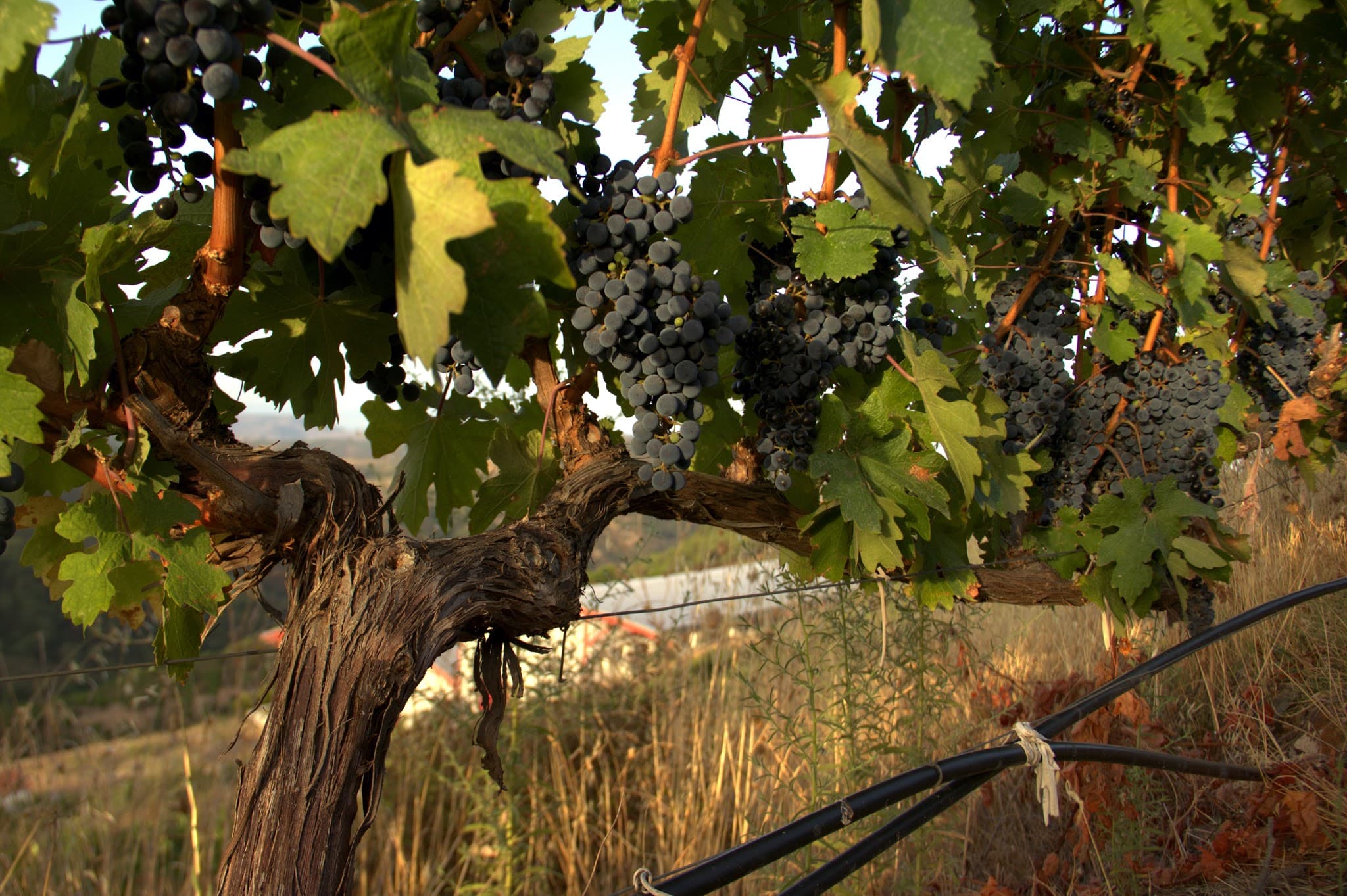
Didem İlter: Increasing our Chardonnay plantings was already one of our projects before the fire. We also wanted to do more work with Bornova Misketi. Our vineyard is predominantly planted with red varieties, and as demand for white wine increased, we were struggling to keep up. We had already been planning certain adjustments within the vineyard. So as we renew it, we will do a few things differently and increase the area devoted to white wine grapes.
But one thing should not be forgotten: boutique wineries, particularly producers like us who use only grapes from their own vineyards, cannot simply follow “trends”. Demand for white wine may rise very quickly, but by the time I plant the vineyard, wait for the vines to grow and then become productive, that trend may already have passed. So we try to remain true to what we know, while responding to changing market dynamics to the extent that we can adapt our own structure and way of working.
Doğuhan-Süray Atış: As far as we know, you do not normally purchase grapes from outside and produce wine exclusively from your own vineyards. Are you considering buying grapes from elsewhere this year?
Didem İlter: This year, we purchased white grapes from Denizli, but we will use them for an entirely separate and independent project, not under the Ma’adra name. Ma’adra’s identity will remain limited to grapes grown in our own vineyard. Nothing has changed in that respect.
Doğuhan-Süray Atış: The loss of surrounding vegetation will undoubtedly alter the vineyard’s wind corridors and the differences between daytime and nighttime temperatures. What kind of impact could this ecological transformation have in the future?
Didem İlter: What happened here was an ecological devastation. Animals and plants were all destroyed together. Even now, when I drive towards the winery and look around, it makes me sad. Almost a month has passed and I still cannot get used to the view. Everything is black here. It is painful to see.
This is nature, so perhaps it will eventually recover on its own. But there are also privately owned plots, and whether those will ever be restored is another question for me. There is a woman here who is around my age. She had a beautiful grove, but she lost it. She told me, “I planted those trees with my father. I raised them with him. I cannot plant them again.” Of course, she could now plant new trees with her own daughter and create a new memory together. But that thought simply does not take root in her mind. I think it is unlikely that we will see many of those privately owned woodland areas or olive groves restored.
Taking all of this together, I can say that our surroundings have changed and will continue to change. We will see what is replanted and how nature responds to the destruction. In short, we will only understand the ecological transformation and its effects over time. I cannot say anything definitive at this stage. If the area had been officially declared a disaster zone, perhaps government support could have been provided and certain losses compensated. I do not know whether something like that will happen. Without state support, however, I do not think people will be able to do very much on their own.
We already had the broader issue of climate change. Seasonal transitions had begun disappearing and it sometimes felt as though we were living through only summer and winter. Temperatures were rising and we were already seeing signs of drought. If the barren landscape created by the fire is not rehabilitated, the region may become even hotter. A genuinely vast area was damaged by the fire. We are only one small part of it.
Doğuhan-Süray Atış: From the outside, we observed a very strong sense of solidarity. At the same time, we also have this impression: winemaking is an extraordinarily difficult business. Producers have to deal with advertising and promotional restrictions and numerous other challenges that many other industries simply do not face. Yet despite all of these difficulties, it sometimes seems that there is less solidarity among producers than one might expect. And there is clearly a need for it. Coming back to the question, could you tell us about the support you received after the fire?
Didem İlter: We are essentially a business that has always managed on its own. For a long time, there were no other wineries around us. We are not part of any vineyard or wine route. Because we do not buy grapes from outside, we do not really follow the market in terms of what quality of grapes is available in a particular region or what prices are being asked.
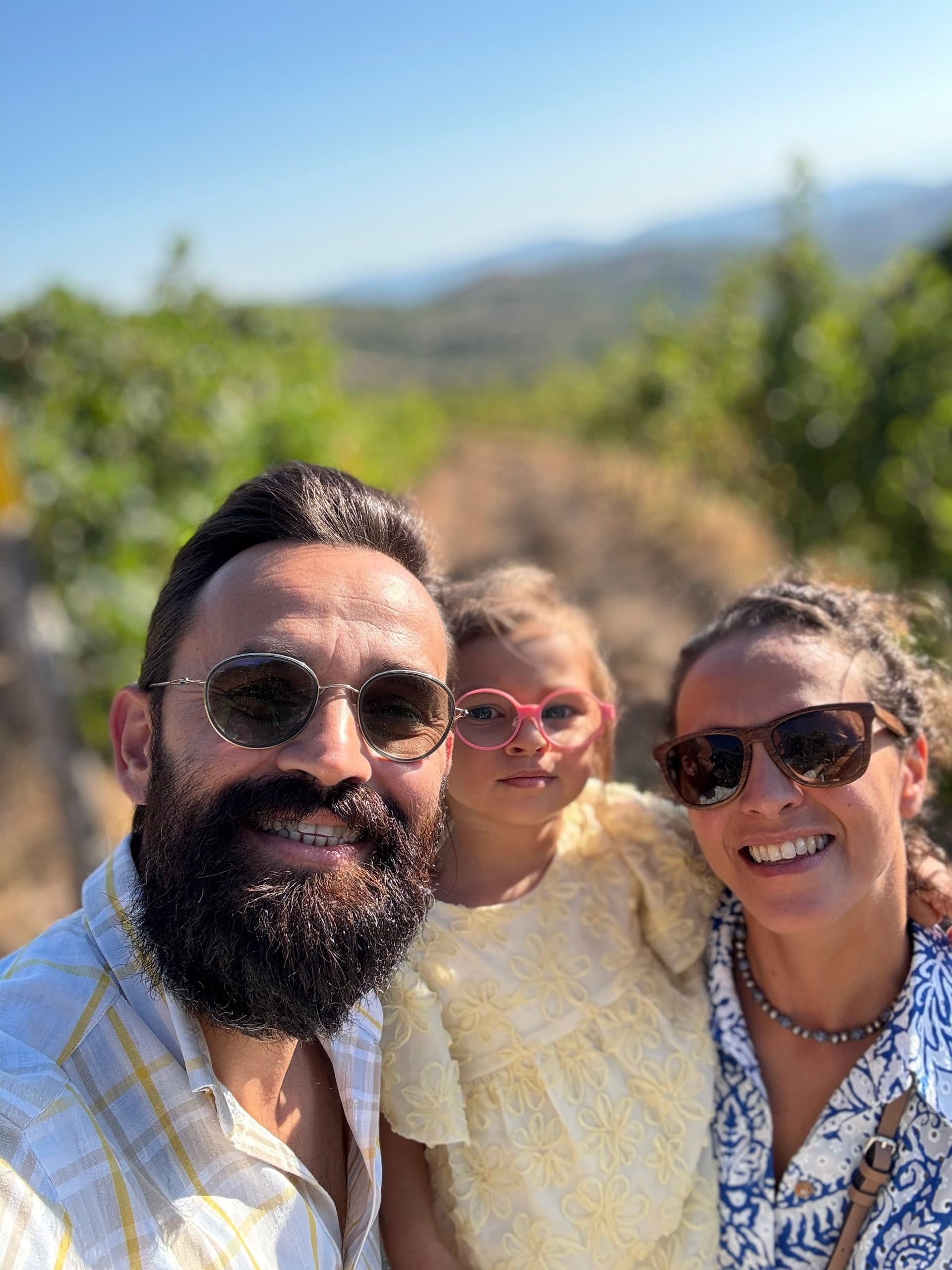
I also spend most of my time here. I look after the vineyards, make wine, and I have a three-and-a-half-year-old daughter whom I am raising at the same time. Inevitably, most of my life is spent in the winery and vineyards. I do not really have the time to go out and visit other producers. As a result, I have met many producers only if they have come here to visit Ma’adra and we have had the opportunity to sit down and talk.
If you ask me, producers used to be even more disconnected from one another. But recently — at least among boutique producers — there has been a growing sense of community because our problems are similar. We have realised that if we act together, we can deal with those problems more easily. Last year, for example, we were unfairly asked to provide a financial guarantee. It was a difficult issue that affected all small producers. We sat down together, discussed it, got to know one another better and managed to act collectively.
After the fire, I realised that there was in fact an enormous amount of solidarity within the industry. It was absolutely not superficial. People genuinely withheld nothing from us. Some said, “We can send you grapes for free and cover all the costs.” Others said, “Whatever machinery, equipment or manpower you need, we are here and we can provide it.” We genuinely received support from them.
Because after a disaster like this, you go into shock. You are disoriented. You are trying to repair the damage on your own, but there are so many things that need to be done that you do not know which one to deal with first. It is incredibly difficult, exhausting and emotionally draining. When support arrives while you are in that state of mind, it keeps you standing. When you realise, “I am not alone. There are so many people behind me and beside me who care about me and want to support me,” you begin to feel calmer. You become capable of dealing with the difficulties. You become braver.
I received messages of support from almost every winery owner. As I said, they did not leave us alone. And the support was not limited to wineries. Many people from across the industry called, checked in on us and told us they were ready to help in any way they could. Wine lovers did the same. Their support made us extremely happy.
After everything that happened, I found myself thinking that if we can truly achieve solidarity, there is no obstacle we cannot overcome together. We can close ranks incredibly quickly and come together almost instantly. The problem is that we seem to need some kind of event or reason to make that happen. When everything is going well, we do not take action. Something has to hit a nerve, something has to hurt us before we come together. I suppose our resilience is strong.
A 5,000-Year-Old Trace in Midin