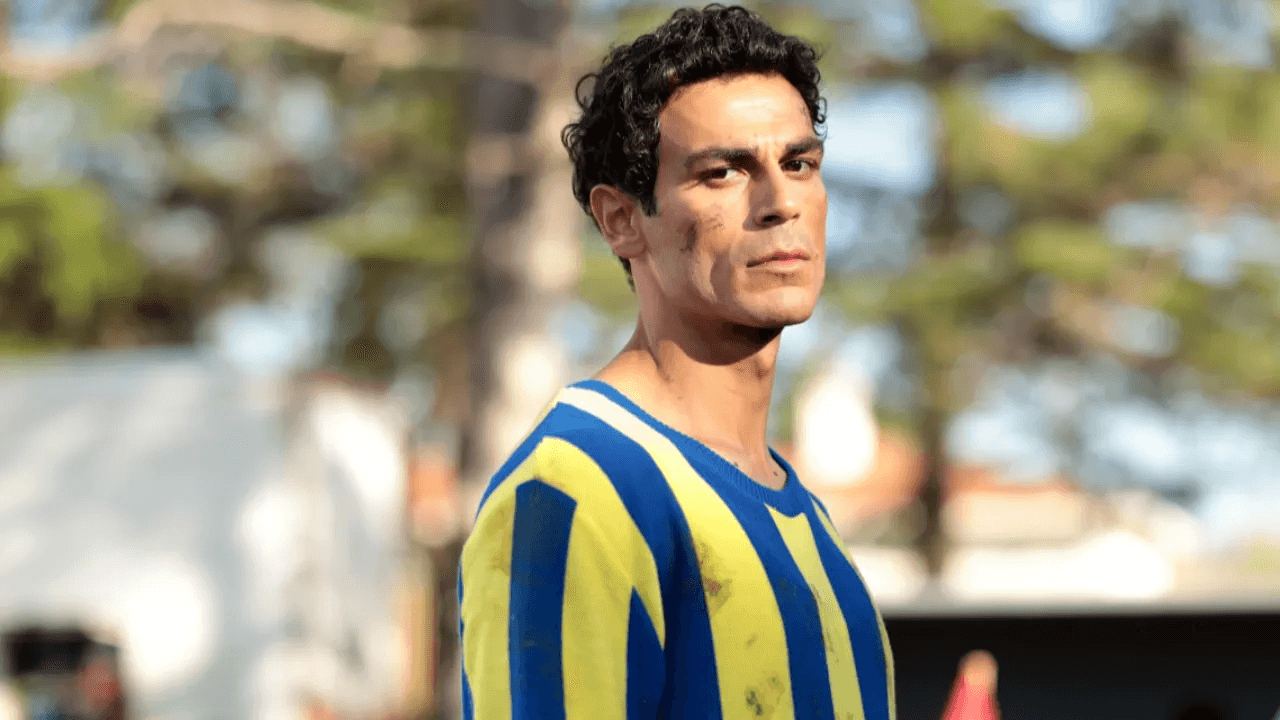
Elefterios’s family in Büyükada wanted him to study hard and become a successful doctor. He never became a doctor, but he became a football legend.
He was the Turk chased by the Greek left back during the Greece–Turkey match, the man who was insulted with cries of “Filthy Turk!” And he was also the Greek whose home on Büyükada was attacked during the tragic events of September 6–7, one of the darkest stains on our collective conscience, amid shouts of “Filthy Greek!” Elefterios —the second son of fishermen Hristo and Agiro— signed his first professional contract, joined the army two years later, and served his country for a full four years. His name, in Greek, means “free.”
He is the hero of verses written with pens and notebooks—one of the greatest goal scorers in the history of Turkish football. The pen is finished, the notebook is full; how should we explain you to Passolig users now, Lefter?
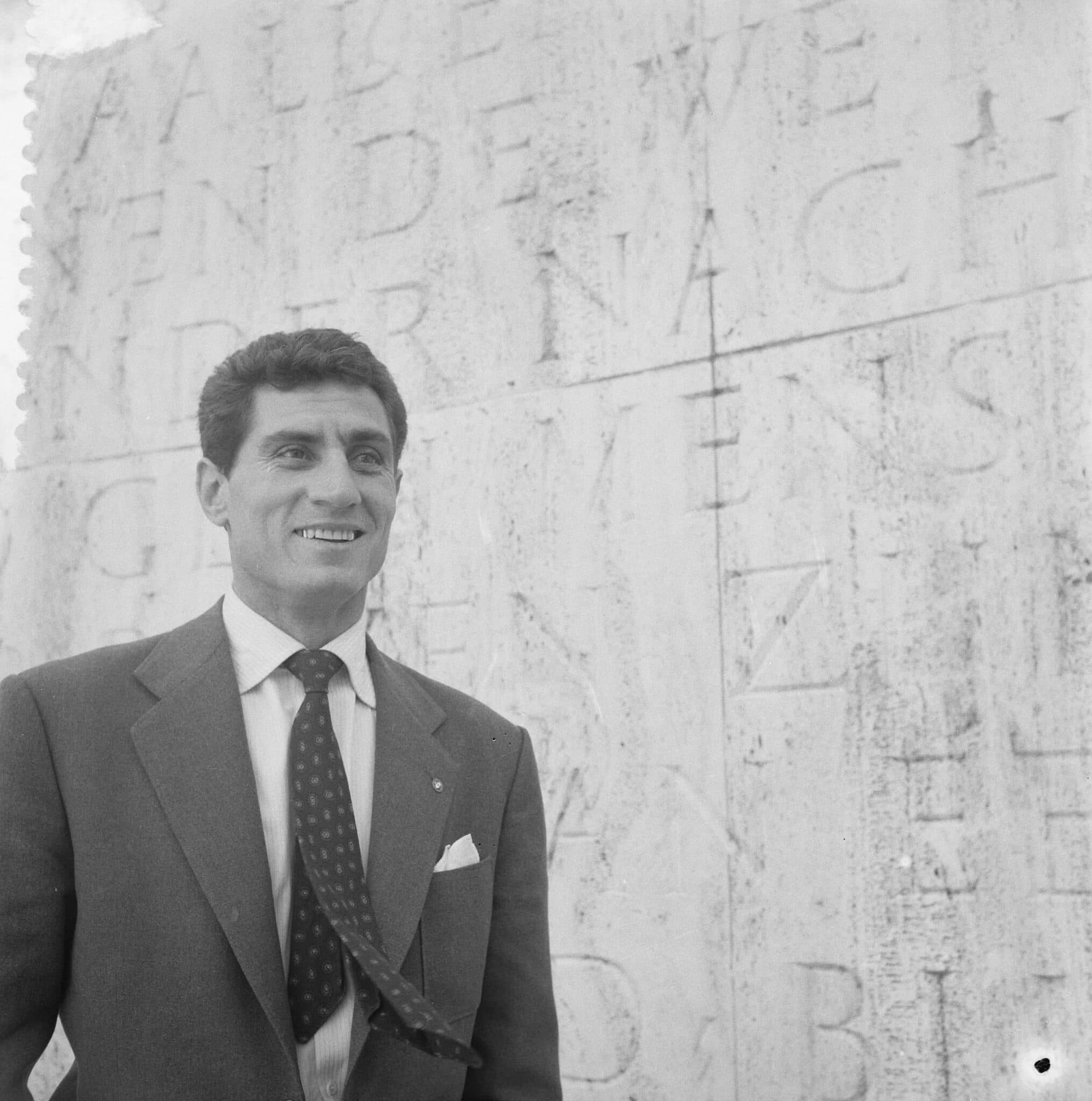
Lefter was born on December 22, 1925, on Büyükada, into a poor fisherman’s family. They managed to keep the ball away from him only until he turned seven. His family dreamed of him becoming a doctor. Instead, without formal education, he became an “ordinary professor.” He earned only an elementary school diploma—and that only after he quit football. Stubborn as ever, he never abandoned his passion for the game. Fans called him “ordinary professor” for his unmatched intelligence on the pitch and the clever goals he orchestrated. His chase after the ball took him from Taksim to Fenerbahçe and later to Europe, continuing until the age of 45. Yet he always proclaimed, “After God, Fenerbahçe comes first for me.” He honored every jersey he wore with respect and professionalism, but he kept Fenerbahçe closest to his heart. “I carried the Fenerbahçe jersey not on my back, but on my head,” he said. Years after his retirement, as he toured the museum beneath the Şükrü Saraçoğlu Stadium with tears in his eyes, he whispered his will to his grandchildren: “I am donating all my assets to Fenerbahçe.”
When he met Brazilian Alex de Souza—the captain who later wore the iconic number 10 shirt—he gently kissed Alex on the forehead. Just as Beşiktaş legend Baba Hakkı once kissed Süleyman Seba. Alex, who received the Liyatak Medal from Lefter with that kiss, was later dismissed by then-Fenerbahçe president Aziz Yıldırım after the remark: “I walked in, he was sitting there with his legs crossed, holding his phone. Is that right, Samet!?” Alex was sent away. Today, Alex’s statue stands just 50 meters from Lefter’s in Yoğurtçu Park. I’m sure they sometimes find a ball there and dribble past the passersby—but I can’t prove it. When Alex retired in 2014 wearing the Coritiba jersey, the Fenerbahçe flag was on the field. It was the same flag that draped Lefter’s coffin on its final journey to Şükrü Saraçoğlu Stadium.
Lefter was more talented than most players of his era. In an Ankaragücü match, he blasted a free kick from nearly 40 meters straight into the top corner. But there was a problem: the referee hadn’t yet whistled for play to start. Lefter didn’t flinch. He calmly retrieved the ball, placed it back in the exact same spot, and scored the exact same goal again. Even if the referee had disallowed the first strike, Lefter would have scored it one more time.
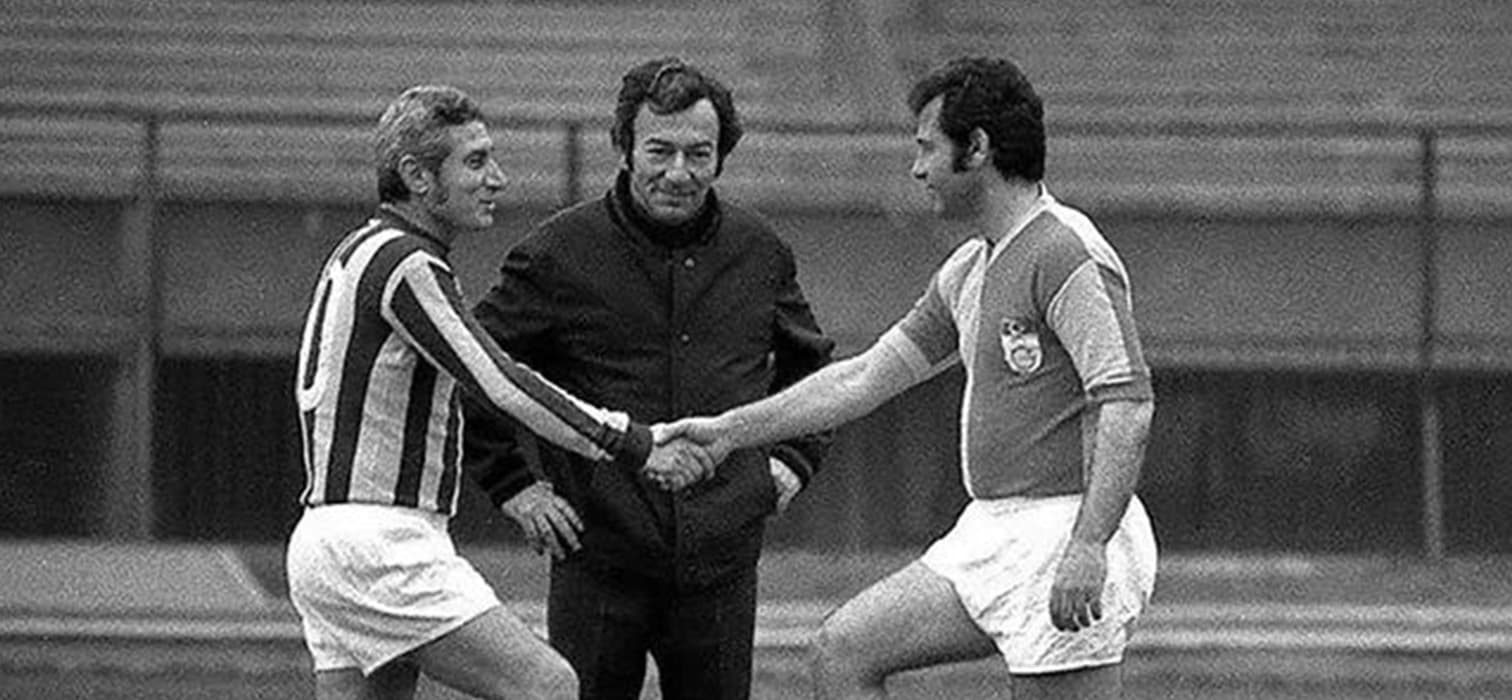
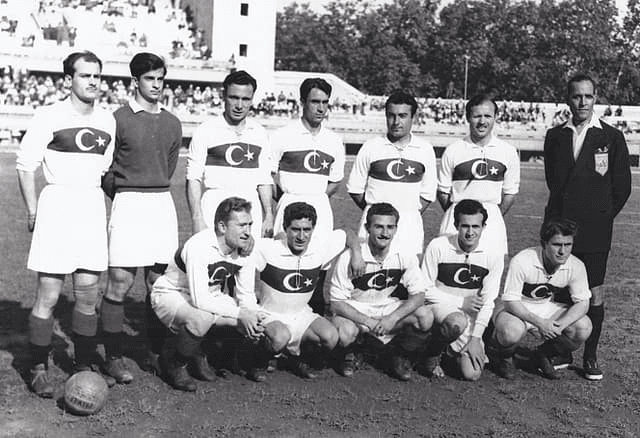
He wore the national jersey 50 times. One of his most unforgettable matches was on April 23, 1948, away against Greece. Assaulted with foreign objects and insults, he responded, “I don’t understand what you’re saying. I’m Turkish. Speak Turkish.” He scored a goal in that match as well. After the final whistle, with the score 1–3 for Turkey, he was chased off the pitch by Greek left back Muratis, who shouted “Filthy Turk!” Seven years later, during the events of September 6–7, vandals attacked Lefter’s home on Büyükada. News had spread that Atatürk’s house in Thessaloniki had been set on fire by a racist group of Greeks, and mobs targeted non-Muslim citizens throughout the country. Lefter was among those affected. Outside his home, they shouted, “Filthy Greek!” and “Kill that filthy infidel!” That night, his neighbors, friends, and a boatful of Fenerbahçe supporters who came from Kartal formed a protective circle around his home. They begged him for hours to name his attackers. Government officials intervened. He remained unshaken. He refused to give a single name and never spoke about what happened that night. He only confessed later that he cried for days afterward. In an interview shortly before his death, when asked, “What kind of life did you lead, were you happy?”, he replied: “Don’t ask. I had an interesting life.” It was his only complaint.
He played alongside the world’s greatest footballers. He became the first Fenerbahçe player to be transferred abroad for a fee. And not just to any club—he joined Fiorentina, one of the powerhouses of the era. His journey, which began on the streets of Büyükada chasing a worn-out ball, continued with some of the greatest teams of the world. Lefter earned every bit of fame that surrounded him. People adored him. Italians called him “El Turco.” Watching him from the stands, seeing him on TV, commentating on his matches, or photographing him after scoring a goal was never enough. Bedri Rahmi Eyüboğlu immortalized him in verse while he was still alive:
“When I say Istanbul, the stadium comes to mind /
I feel my blood warming /
I want to be close to the people of my homeland /
I shout with them as loud as I can /
Chest out /
Give it to Lefter, write it down in the book…”
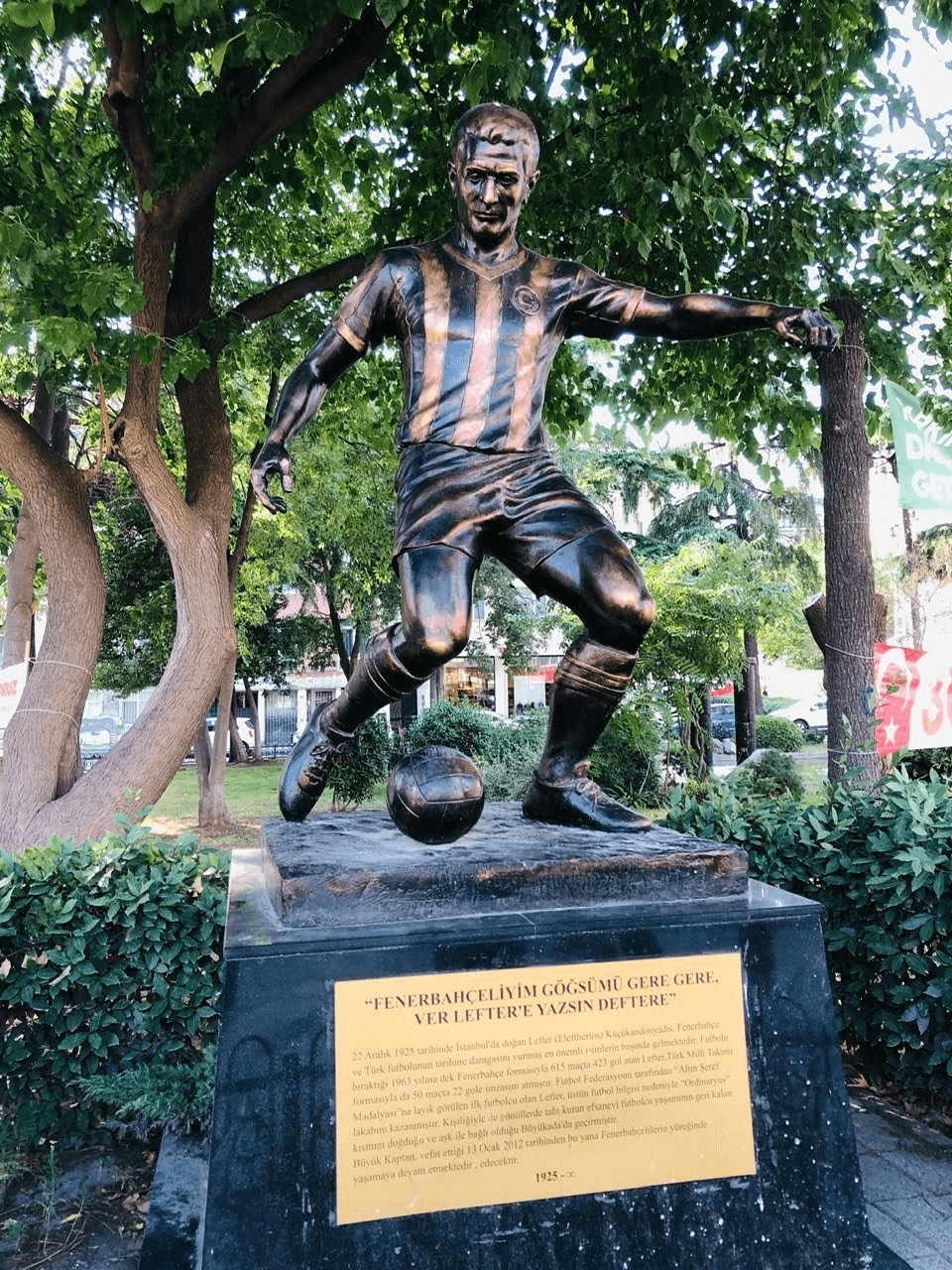
In 2010, he fell ill in Athens and slipped into a coma. When he awoke, his first words were, “If I’m going to die, I want to die at home. Take me to Turkey. I want to die in my homeland.” That was Lefter’s homeland. He captained the national team nine times. Today, many children are named after legends—Metin (Oktay), Can (Bartu), Hakkı (Yeten), Feyyaz (Uçar), Vedat (Okyar). But no child was ever named after Lefter. Fans later raised money to erect his statue in Yoğurtçu Park. Fenerbahçe, too, never forgot him: they named facilities after him, inscribed his name onto jerseys, and honored him before 50,000 supporters.
Lefter, who at age 17 watched relatives and acquaintances sent to concentration camps because of the Wealth Tax; who remained in Turkey only because his family was too poor to have assets seized; who volunteered for the army and served his country for four full years—was only accepted as a member of Fenerbahçe Sports Club in the 1980s. Despite being named in the club anthem, despite being one of the most prolific scorers in Fenerbahçe history, despite being the first player they transferred abroad for a fee, countless obstacles prevented his membership. And though he wore the national jersey 50 times, he was never awarded the customary medal given to such players. When he retired in 1964, many citizens—including Istanbul’s Greek community—were forced to leave the country in tears. Overcome by sorrow, he went first to Greece to work as a coach, and eventually to South Africa. Yet none of the injustices—the missing medal, the blocked membership, the vandals—were what defined Lefter.
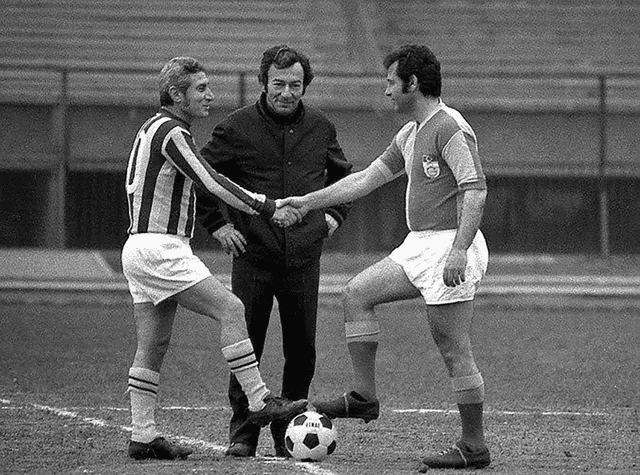
What made Lefter Lefter were the people who insisted on living together as brothers in this land. About Baba Hakkı, who discovered him at Taksim Stadium and tried to take him to Beşiktaş, Lefter said: “I was afraid of Baba Hakkı’s authority. That’s why I couldn’t go to Beşiktaş. If I had played on his team, my hands and feet would have gotten tangled on the pitch.” In a way, what made Lefter Lefter was also Galatasaray legend Metin Oktay swapping jerseys with Can Bartu in his 1969 farewell match and wearing the Fenerbahçe jersey for ten minutes. Lefter was Lefter with Metin Oktay, with Can Bartu, with Baba Hakkı. Thanks to those beautiful men who upheld a spirit of brotherhood through football, Lefter became who he was.
When he passed away on January 13, 2011, the entire football world fell into mourning. His coffin—covered with the yellow-navy Fenerbahçe flag and the Turkish flag—was carried onto the pitch at Şükrü Saraçoğlu Stadium by the Fenerbahçe A Team. But no one ever apologized to Lefter. Not for the attack on his home, not for keeping him out of the club he was a legend of, not for withholding the medal he earned by wearing the national jersey 50 times. And yet, had he been alive, he would have brushed it aside. He would have said, “No need,” and walked away lightly—just like one of his elegant dribbles.
After a lifetime of wearing the Fenerbahçe and Turkish national jerseys—whose names he could never quite spell correctly—our Lefter now rests under a tombstone marked Elefterios Küçükandonyadis in Büyükada Cemetery. A beautiful documentary is on TV these days. Perhaps he is watching it, smiling with that familiar ache in his heart. Maybe someday we will go and apologize to Elefterios—for not letting someone whose name meant “free” feel truly free in his own homeland. And even if his gentle voice were to rise from the earth to say, “Why apologize, children?”, we should still do it. Thank you for everything you gave us, Elefterios—and forgive us for some of what we put you through.
Rest in peace. The songs of brotherhood will always echo on these lands. And the story of the free and stubborn son of poor fisherman Hristo, who chased a ball through the streets of Büyükada, will be told for generations to come.
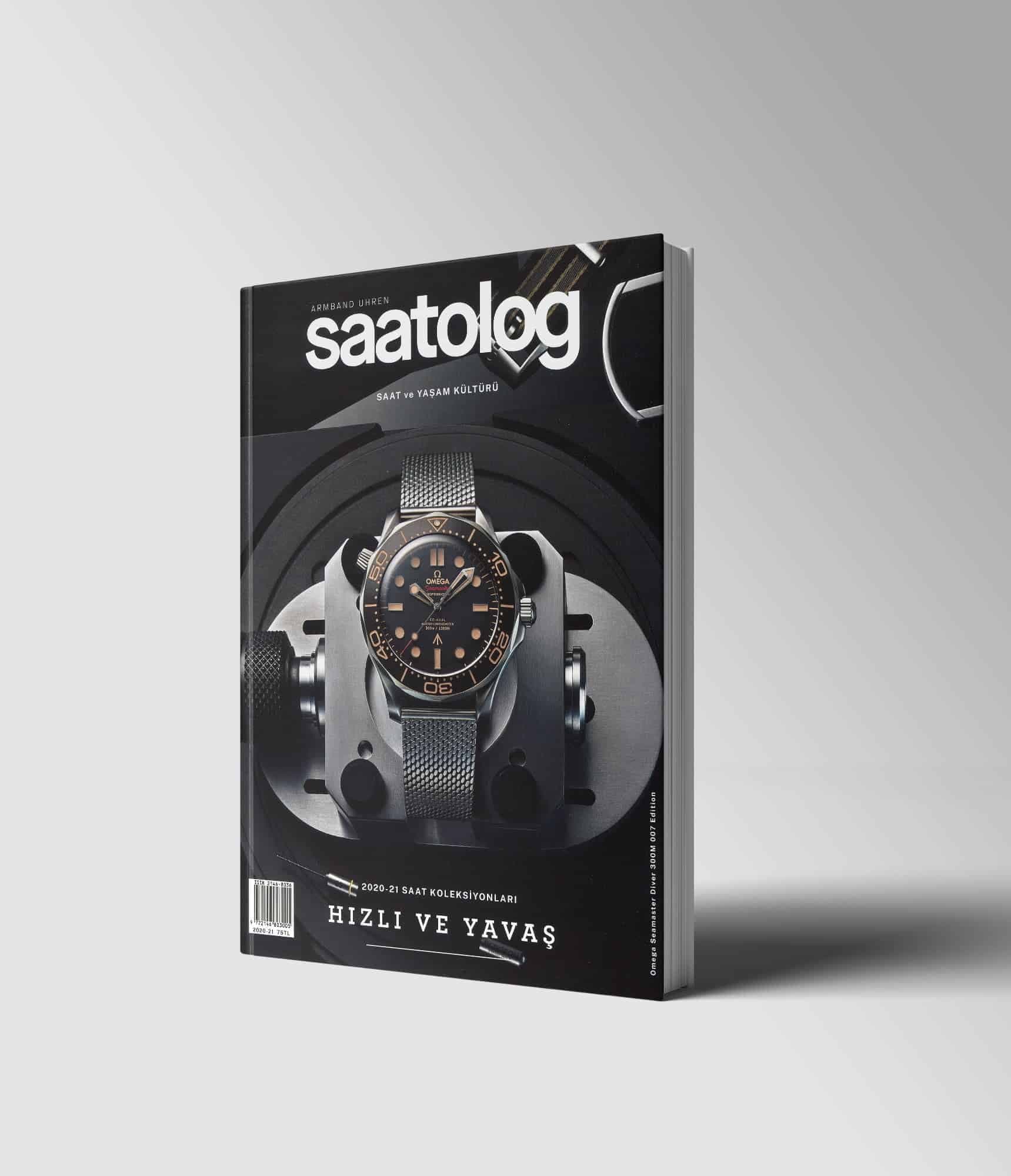
Saatolog Yıllık Saat Dergisi Saatolog’un yeni sayısı, 2020’nin yarattığı bu dönüştürücü etkiden ilham alarak hazırlandı. Dünya dijitalin etkisiyle her zamankinden de hızlı bir şekilde ilerlerken yavaşlamanın da önemini sonunda kavramış bulunuyoruz ve bu tezatlık hayatlarımızın her anına etki ediyor. Biz de bundan yola çıkarak Saatolog 2020/21 sayısını ‘‘hızlı ve yavaş’’ teması altında hazırladık.