
What Exactly is Hi-Fi Music Experience?
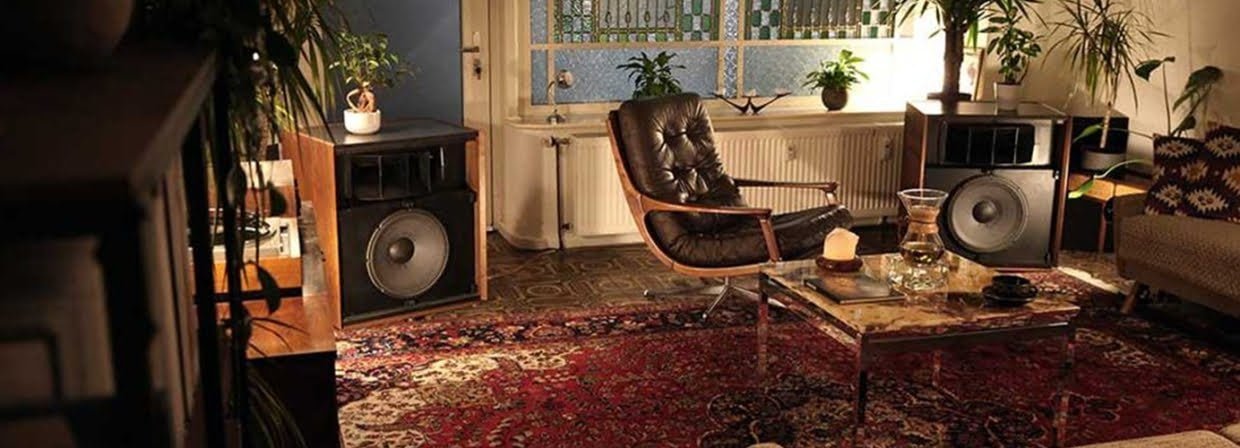
We set out on a journey that doesn’t just hear the sound but feels every nuance of the original recording—seeking the answer to one question: What exactly is the Hi-Fi music experience?
Magic Johnson, Frank Sinatra, Haruki Murakami… All these legendary names share a curious addiction: high-quality sound. And no, you didn’t misread that—we’re not talking about casually listening to music. These figures aren’t simply music lovers; they are part of a rare breed of listener. They’re drawn to the sound itself, driven by its purity, and utterly devoted to the equipment that can deliver it.
Audiophiles—often considered the elite among music listeners—may not undergo formal training, but make no mistake: there’s a kind of education involved. Beyond the emotions a piece of music stirs, there’s a craft to evaluating sound quality, like an engineer listening for micro-details. It’s about catching the breath Miles Davis leaves between trumpet phrases. To hear like this takes more than ears—it takes knowledge, investment, and a certain devotion to the sonic world.

For audiophiles, there’s one guiding principle: Hi-Fi. Short for High Fidelity, the term carries far greater weight in these circles than its casual use in pop culture. Hi-Fi equipment aims to reproduce the original recording as faithfully as possible, and for those who live for sound, it can become nothing short of an obsession.
Of course, even the most immaculately recorded track is shaped by the space in which it’s heard. A pair of headphones that can’t shut out external noise won’t do Jim Hall any justice. And sometimes, you’ll find yourself enjoying a genre you never thought you liked—simply because you’ve experienced it on a great system. Hi-Fi equipment is built on a single goal: to reproduce the sound with minimal loss, as close as possible to the moment it was recorded. Picture Ella Fitzgerald singing Ev’ry Time We Say Goodbye, and being able to almost see the vibration in her voice.

A great sound system can unlock an entire sonic world—chords, melodies, the performer’s voice, and everything in between. Reaching that peak listening experience requires effort, investment, and care. If you want to begin without getting lost in the details, experts recommend starting with products that carry the Hi-Fi label. But even then, there are certain non-negotiables.
If you’re carving out a personal listening space at home, you’ll want to think beyond the gear. Room size, flooring, lighting, temperature, and humidity all matter. The dimensions of the space should guide your choice of speakers, and you can’t ignore how environmental factors like humidity affect delicate equipment.

It’s no secret that speakers are the cornerstone of any Hi-Fi system. But the options are plentiful. You can opt for an active system with built-in amplification or assemble a more customized setup with passive speakers and a separate Hi-Fi amplifier. In larger rooms, a subwoofer can add depth and presence where the speakers alone might fall short.
Once you’ve settled on your amplifier and speakers, the next stop is the DAC—the digital-to-analog converter. A DAC tailored to your room’s acoustics can make all the difference, delivering cleaner, more natural sound. And if you’ve invested in a multi-room music automation system, an additional DAC unit will almost always improve the sonic quality.

And then there are headphones—the audiophile’s constant companion. Even before the word “audiophile” existed, serious listeners were connecting headphones directly to amplifiers, chasing an intimate experience. Today’s technology offers models that block out nearly all external noise and reproduce the recording with astonishing accuracy. Over-ear designs dominate, often offering three-dimensional sound and expansive staging that make you feel as if you’re sitting in the recording studio. They don’t come cheap—but then again, what else could replicate the feeling of being in the room with B.B. King or Mark Knopfler?