From Troy and Ephesus to Sagalassos and Olympos, discover 12 of Türkiye’s most fascinating ancient cities, where mythology, architecture and history come together.
Few places reveal the layers of human history as vividly as Anatolia. Across Türkiye, roads travelled today once echoed with the footsteps of philosophers, merchants, rulers and gladiators, while temples, theatres and great trading cities shaped the civilizations of the ancient Mediterranean.
Some of these settlements became centres of science and medicine; others grew wealthy through maritime trade, textiles or agriculture. Several inspired myths that continue to resonate thousands of years later. Today, remarkably preserved theatres, temples, monumental streets and archaeological remains offer a glimpse into the worlds that once flourished here.
From the blue shores of the Aegean to the mountains and hidden valleys of the Mediterranean, these are 12 of the most fascinating ancient cities and archaeological sites to visit in Türkiye.
Contents
Troy – Çanakkale
When it comes to a legendary city that witnessed one of history’s most iconic epic conflicts, Troy is among the first places that comes to mind. Immortalized in Homer’s Iliad, Troy occupied one of the ancient world’s most critical positions in both geopolitical and economic terms. As a port controlling maritime trade routes between the Aegean and the Black Sea, the city accumulated extraordinary wealth over the centuries—wealth that, unfortunately, also brought relentless invasions. Its exceptional universal value was officially recognized when Troy was inscribed on the UNESCO World Heritage List in 1998.
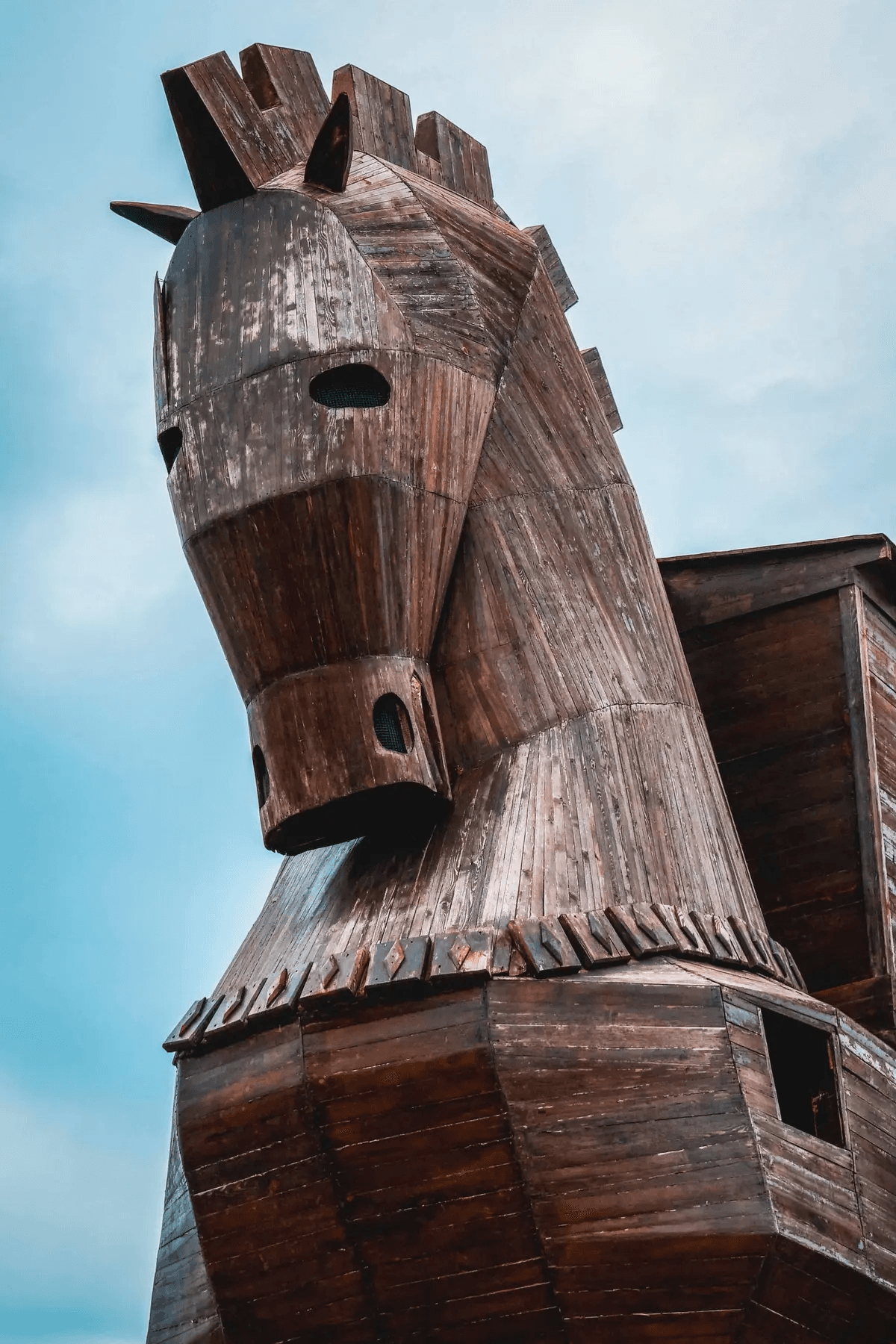
What makes Troy truly extraordinary in the world of archaeology is its nine successive layers of settlement. Together, they document nearly 3,000 years of architectural and socio-cultural development, from around 3000 BC through the Roman period. Destroyed and rebuilt repeatedly following earthquakes, fires and wars, each new city rose on top of its predecessor, eventually creating an artificial mound. Today, visitors can see the famous wooden Trojan Horse, examine monumental fortification walls from different eras intertwined with one another, and witness some of the ancient world’s most sophisticated defensive engineering.
Ancient Cities in Türkiye
Assos – Çanakkale
Picture the northern Aegean from above and mark the southern coast of Çanakkale on the map. There, perched on a volcanic hill, lies Assos, once one of the most strategically protected military and commercial strongholds in the northern Aegean. Thanks to its commanding position overlooking the Gulf of Edremit, the city was home to the region’s only major and secure harbour during its heyday. As merchant ships crossing the Aegean were effectively obliged to stop here for rest and customs, the port brought considerable wealth and economic power to the city.
What turned Assos into something of a global brand in the ancient world, however, were its sarcophagi made from locally quarried volcanic andesite. The chemical properties of the stone were believed to cause bodies placed inside to decompose unusually quickly, earning the Assos sarcophagi worldwide fame. These so-called “flesh-eating sarcophagi” became luxury commodities exported across the ancient world to places including Lebanon, Syria, Greece and Rome.
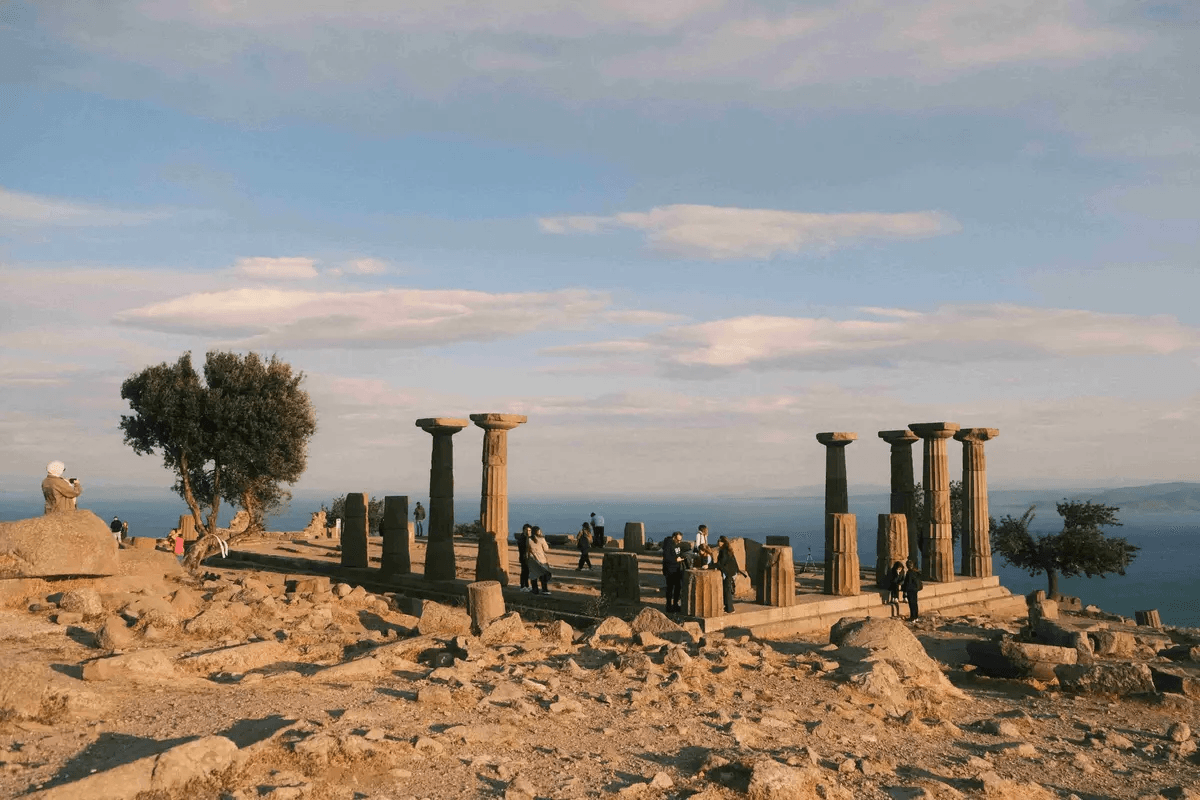
Yet the city’s intellectual life was every bit as remarkable as its trade: the philosopher Aristotle lived here and founded a school of philosophy. Today, visitors can admire the Temple of Athena overlooking the blue waters of the Aegean and explore the city’s monumental defensive walls.
Ancient Cities In Türkiye
Aizanoi – Kütahya
Rising on the banks of the Penkalas River, today known as Kocaçay, in the Çavdarhisar district of Kütahya, Aizanoi takes its name from a mythological legend. According to ancient sources, the city inherited its name from Azan, the mythical son of the water nymph Erato and the legendary King Arkas, as well as from the Phrygians who inhabited the region. Initially a city-state associated with Phrygia, Aizanoi prospered during the Roman era thanks to grain production, winemaking and the wool trade, eventually becoming one of the region’s principal centres.
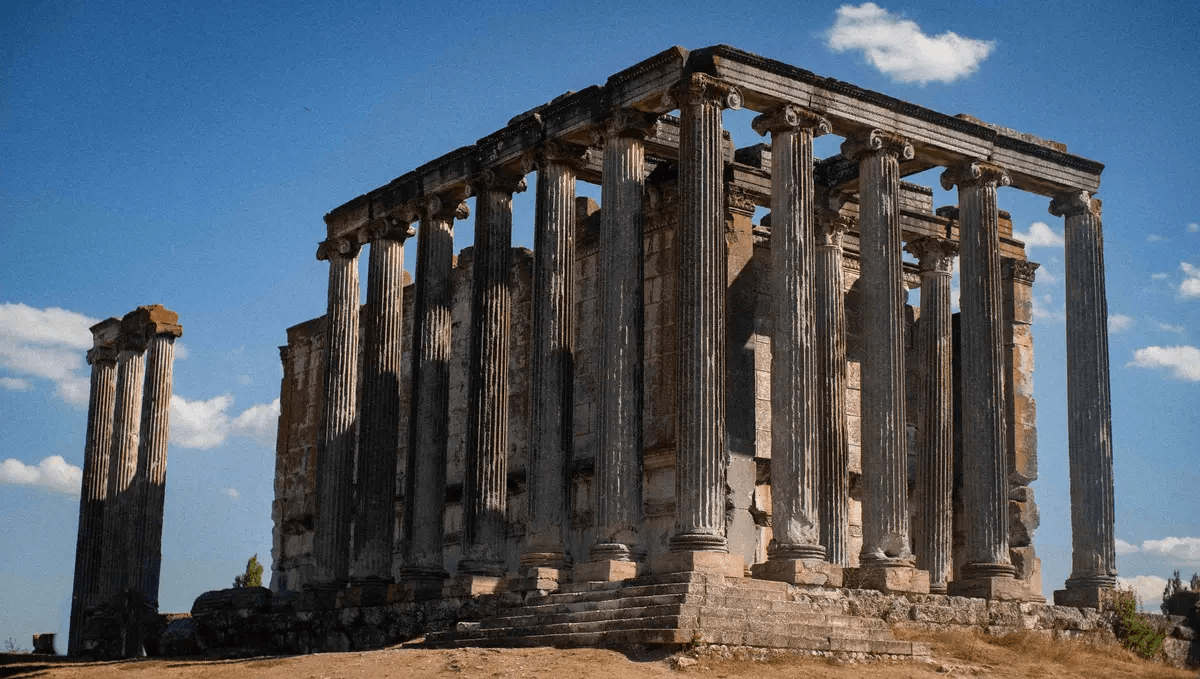
The structure that makes Aizanoi truly exceptional on a global scale is the Temple of Zeus, one of the best-preserved examples of its kind in Anatolia. Beneath the temple lies a unique subterranean sacred chamber dedicated to the Mother Goddess Cybele and integrated into the building’s architecture.
The city is also notable for its remarkable ancient bridges and an unusual architectural complex in which the stadium and theatre were constructed directly adjacent to one another. Aizanoi was equally important economically: its Macellum, where regulations intended to combat inflation were carved into stone, is regarded as one of the world’s earliest examples of a stock-exchange-like marketplace.
Ancient Cities In Türkiye
Ephesus – İzmir
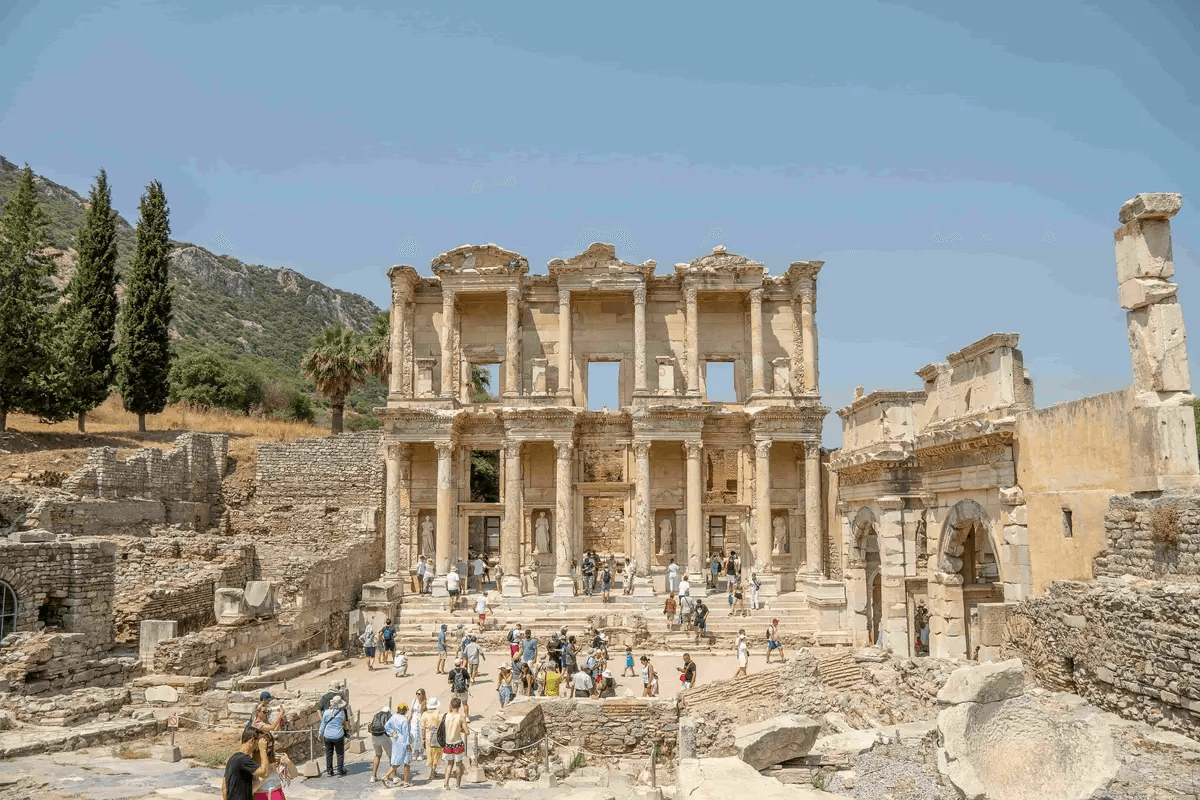
When talking about Ephesus, modesty can be set aside. This was an extraordinary Mediterranean metropolis whose origins stretch back to around 6000 BC and whose identity evolved continuously over the centuries. Inhabited throughout the Hellenistic, Roman and Byzantine periods, the city flourished as a strategic port connecting the riches of the East with the West and as the capital of the Roman province of Asia.
Yet geography ultimately shaped its fate. As alluvial deposits carried by the Küçük Menderes River gradually filled its harbour and separated the city from the sea, this magnificent commercial centre slowly slipped into silence.
Today, much of UNESCO-listed Ephesus remains underground—and this is, in many respects, a deliberate archaeological choice. Because the city consists of multiple overlapping layers, revealing one period can mean sacrificing evidence from another. Modern archaeology also often chooses to preserve structures underground until adequate conservation resources are available, protecting them from deterioration once exposed to the open air.
Among the wonders visible today are the monumental Library of Celsus, the vast ancient theatre with a capacity of around 24,000 people, and the Terrace Houses, whose mosaics offer a glimpse into the luxurious lives of the city’s elite.
Ancient Cities In Türkiye
Pergamon – İzmir
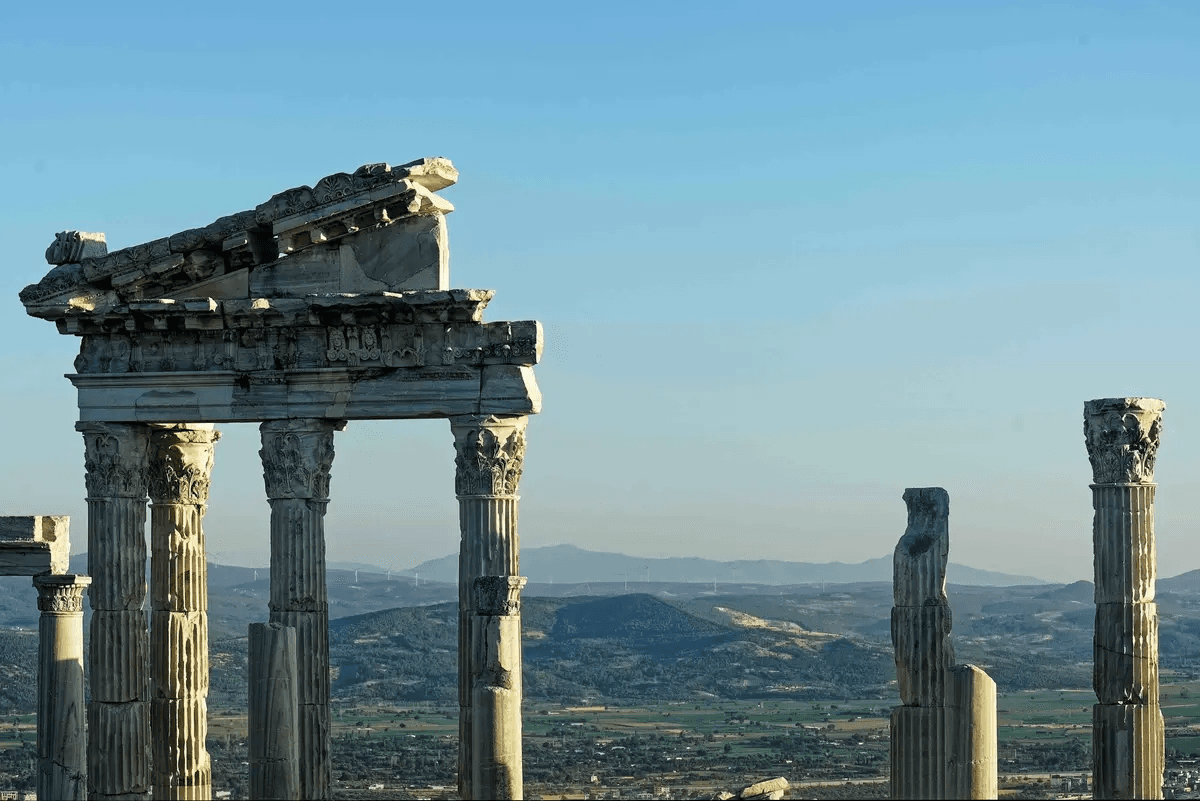
Rising dramatically above the plain on a steep hill in Bergama, İzmir, Pergamon was far more than an ancient city. It was one of the most visionary centres of culture, science and government in the ancient world.
As the capital of the Kingdom of Pergamon, the city distinguished itself through vertical architecture and sophisticated urban planning adapted to its steep terrain. This remarkable settlement model, together with architectural layers from the Hellenistic, Roman, Byzantine and Ottoman periods, led to its inscription on the UNESCO World Heritage List in 2014 as the “Pergamon and its Multi-Layered Cultural Landscape.”
One of the developments that elevated Pergamon to the summit of intellectual history was parchment, produced from goat and lamb skin as an alternative to papyrus following restrictions on Egyptian papyrus supplies. Thanks to this innovation, the Library of Pergamon grew to a collection of some 200,000 volumes, becoming the ancient world’s second-largest library after Alexandria.
The city also played an exceptional role in the history of medicine. The Asclepion, one of the world’s earliest comprehensive healing centres, was established here, while Galen, one of the fathers of modern medicine, was raised in Pergamon.
Visitors can still admire the ancient theatre, dramatically set into the hillside at an angle of around 80 degrees, as well as the monumental temples of the Acropolis and countless traces of the city’s extraordinary past.
Ancient Cities In Türkiye
Temple of Apollo – Didim, Aydın
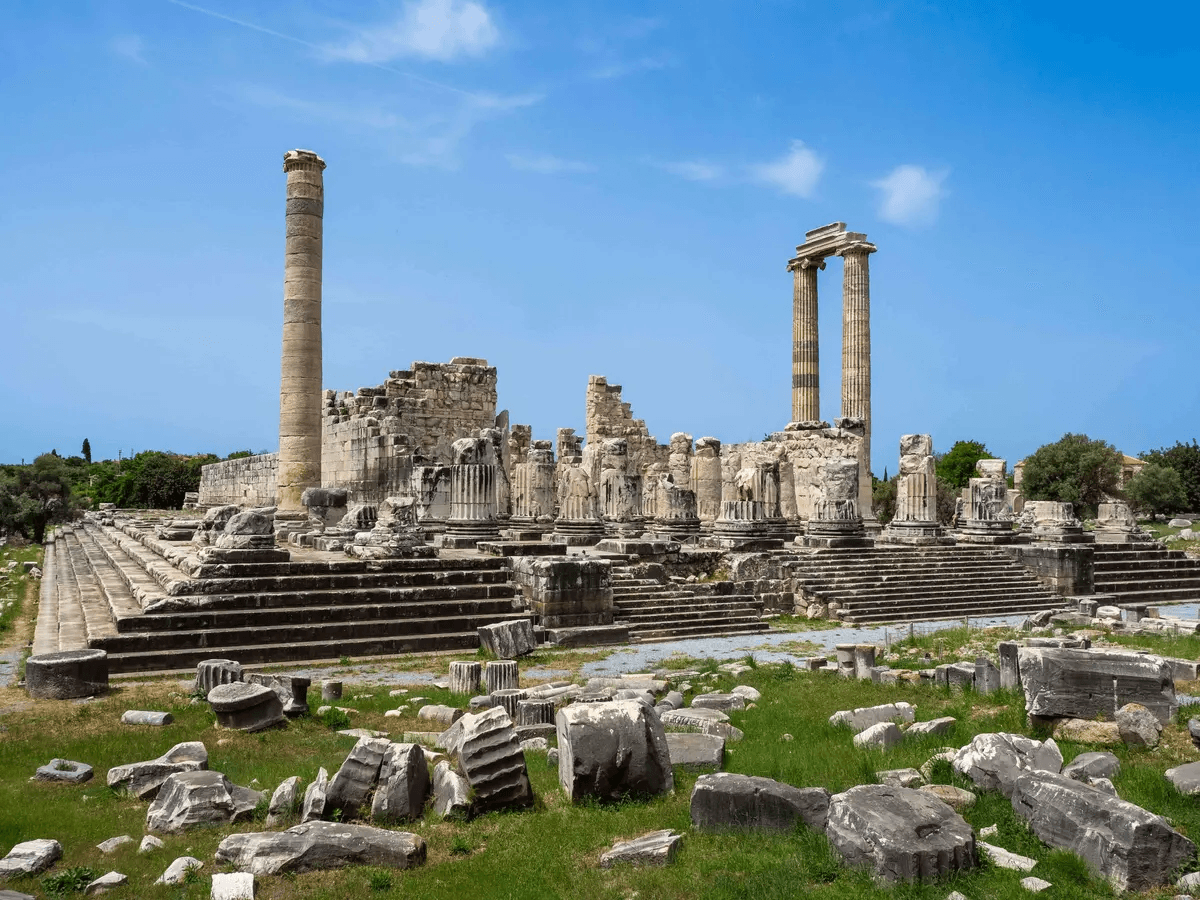
Unlike the other sites on this list, the Temple of Apollo was not an independent city. It was a sacred sanctuary and oracle located around 18 kilometres south of Miletus, one of the great maritime trading centres of its age.
The two centres were connected by the monumental avenue known as the “Sacred Way,” once travelled by pilgrims and kings. Ranked among the four largest temples of the ancient Greek world, this colossal sanctuary was both a centre of religious ritual and an important political institution, consulted by rulers before making decisions about war or trade.
Considered the second most important oracle of antiquity after the famous sanctuary at Delphi in Greece, the Temple of Apollo remains astonishing in scale. Its monumental Ionic columns transformed the city’s economic and social power into an extraordinary architectural statement.
During a visit, look closely at the famous Medusa relief—with snakes for hair and the mythical power to turn anyone who met her gaze to stone—which was carved here as a protective symbol against evil. The finely worked bases of the colossal columns and the deep inner courtyard, or adyton, where prophecies were delivered are equally impressive.
Ancient Cities In Türkiye
Hierapolis – Denizli
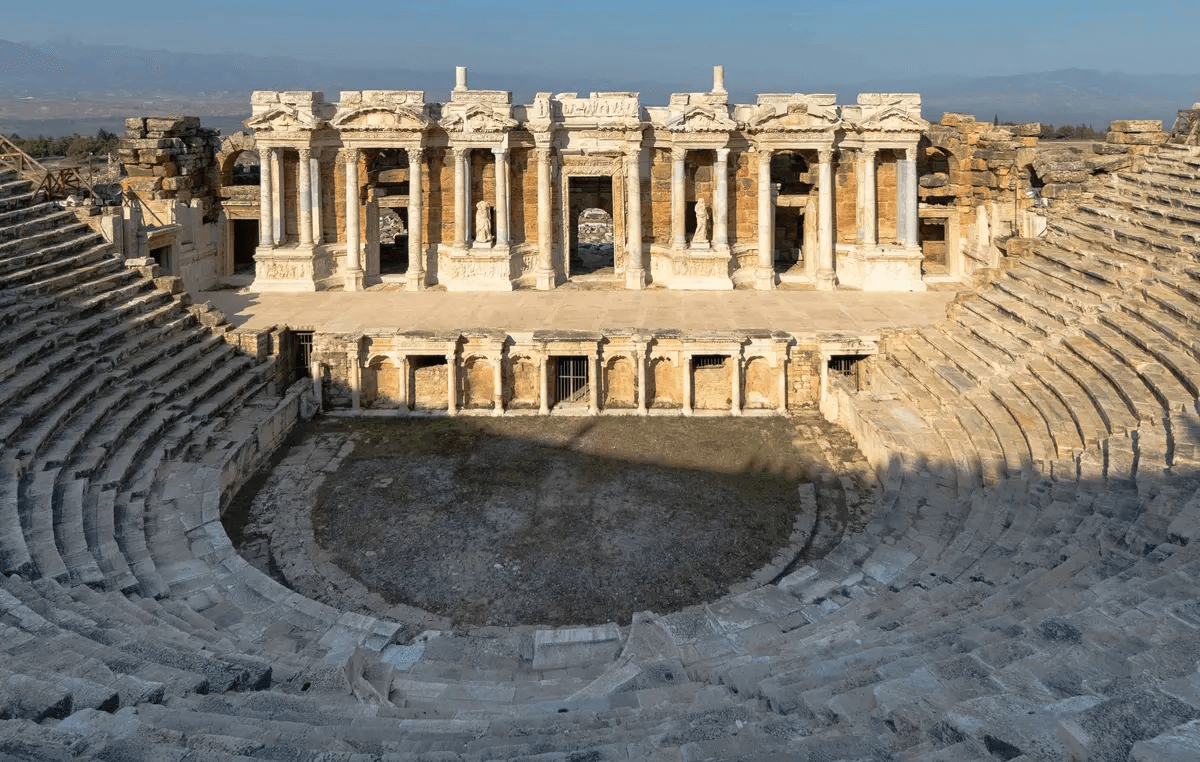
Rising beside the white travertine terraces of Pamukkale, Hierapolis was one of the ancient world’s most luxurious and popular thermal health resorts. Its healing thermal waters and the brilliant white cascades they created made the city a centre of purification, treatment and religious devotion throughout history.
This exceptional union of culture and nature earned Hierapolis and Pamukkale a place on the UNESCO World Heritage List in 1988, making it one of the world’s most distinctive protected landscapes.
An early example of rational urban planning, Hierapolis was laid out according to a regular grid of intersecting streets. Its monumental main avenue, approximately one kilometre long, divided the city and formed the heart of commercial and social life.
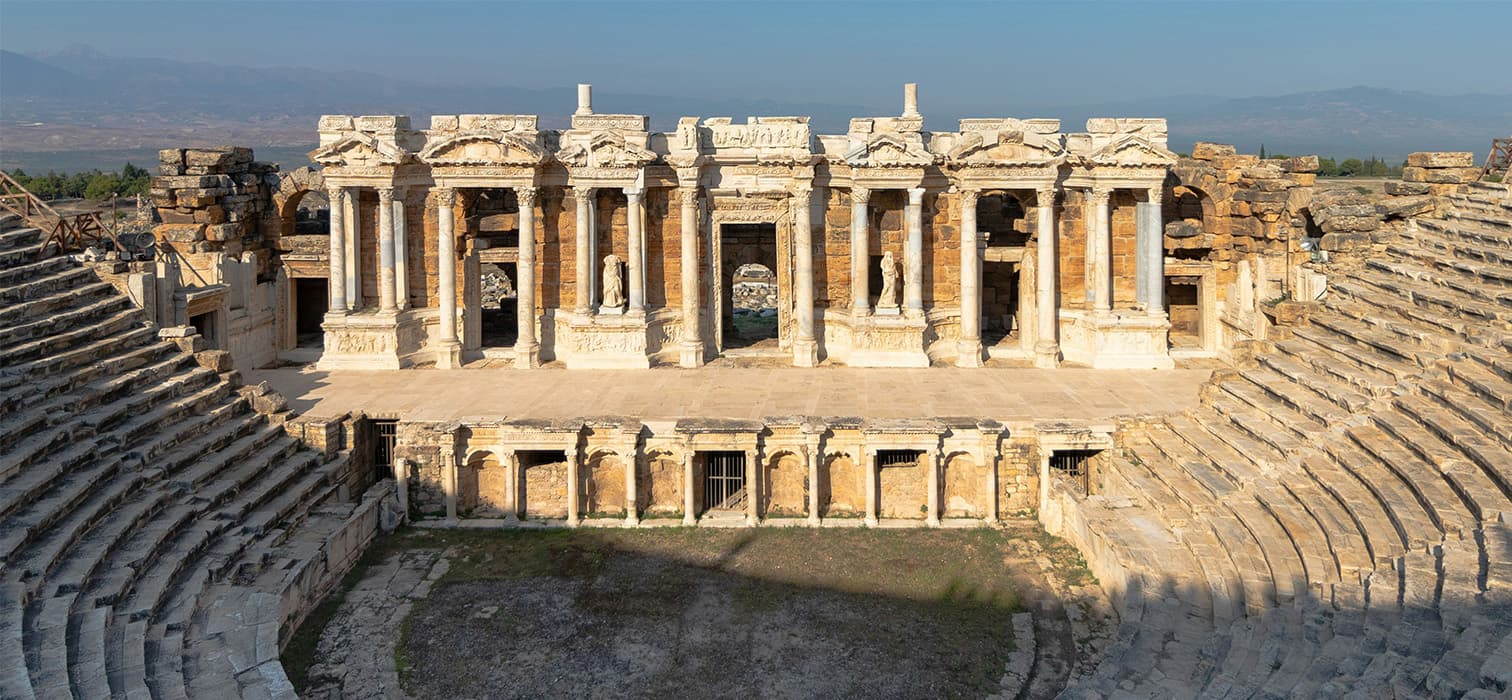
Most of the surviving remains date from the Roman period, and several structures stand out. The magnificent Roman theatre is among the best preserved in the ancient world, while the Northern Necropolis became one of Anatolia’s largest ancient cemeteries, partly because many visitors who came seeking healing ultimately died here.
Perhaps most striking of all is the Ploutonion, or “Gate to Hell,” believed in mythology to be an entrance to the underworld.
Ancient Cities In Türkiye
Laodicea – Denizli
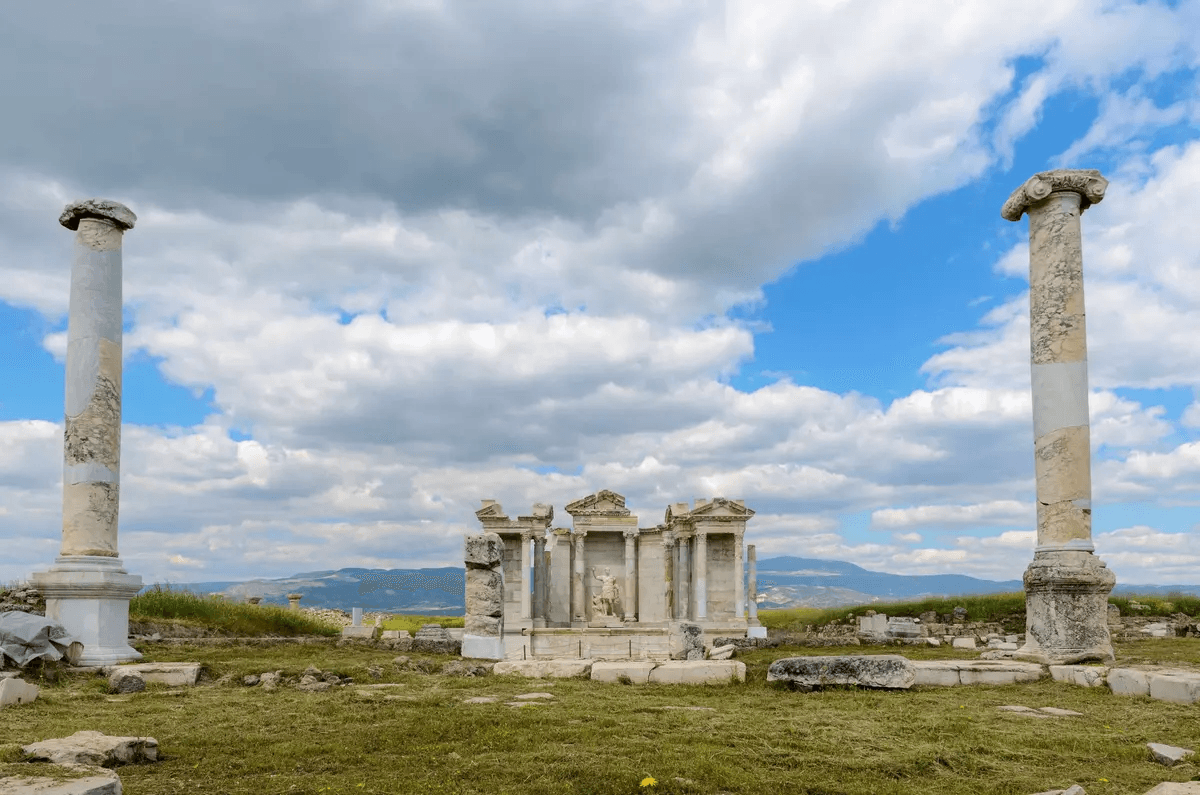
Located near modern-day Denizli at one of the most strategic points in the Lycus Valley, Laodicea was among the wealthiest and most luxurious commercial cities of antiquity.
Its extraordinary economic power rested largely on a textile industry producing soft black wool from the region’s renowned sheep and on a medical school famous for eye ointments exported throughout the Mediterranean.
The city was so prosperous that after a devastating earthquake in AD 60, it reportedly declined financial assistance from the Roman Empire, declaring that it was wealthy enough to rebuild itself—and then reconstructed the city using its own resources, on an even grander scale.
Laodicea also holds major significance in the history of Christianity. Mentioned in the Bible and home to one of the Seven Churches of early Christianity, the city became an important sacred centre.
Excavations across the vast archaeological site have uncovered monumental fountains, two enormous ancient theatres built side by side and one of Anatolia’s largest stadiums. Walking along the colonnaded Syrian Street, once the commercial and administrative heart of the city, you can still sense the confidence and wealth of this proud, independent metropolis in its mosaics, monumental columns and urban scale.
Ancient Cities In Türkiye
Sagalassos – Burdur
Built at an elevation of roughly 1,450 to 1,600 metres above sea level, Sagalassos was one of the most important cities of ancient Pisidia. Its remote location on steep mountain terrain, difficult to access geographically, became a major military advantage and made the city exceptionally difficult to conquer.
In 333 BC, Alexander the Great reportedly faced one of the fiercest resistances of his campaigns while taking Sagalassos. Despite its altitude, the city prospered during the Roman era thanks to abundant water sources, fertile land and the production of high-quality red-slip ceramics exported throughout the Mediterranean.
What makes Sagalassos particularly remarkable today is the way it was preserved after being abandoned following a major earthquake and a plague epidemic in the seventh century AD. Buried beneath layers of erosion, the city survived almost like a mountain version of Pompeii.
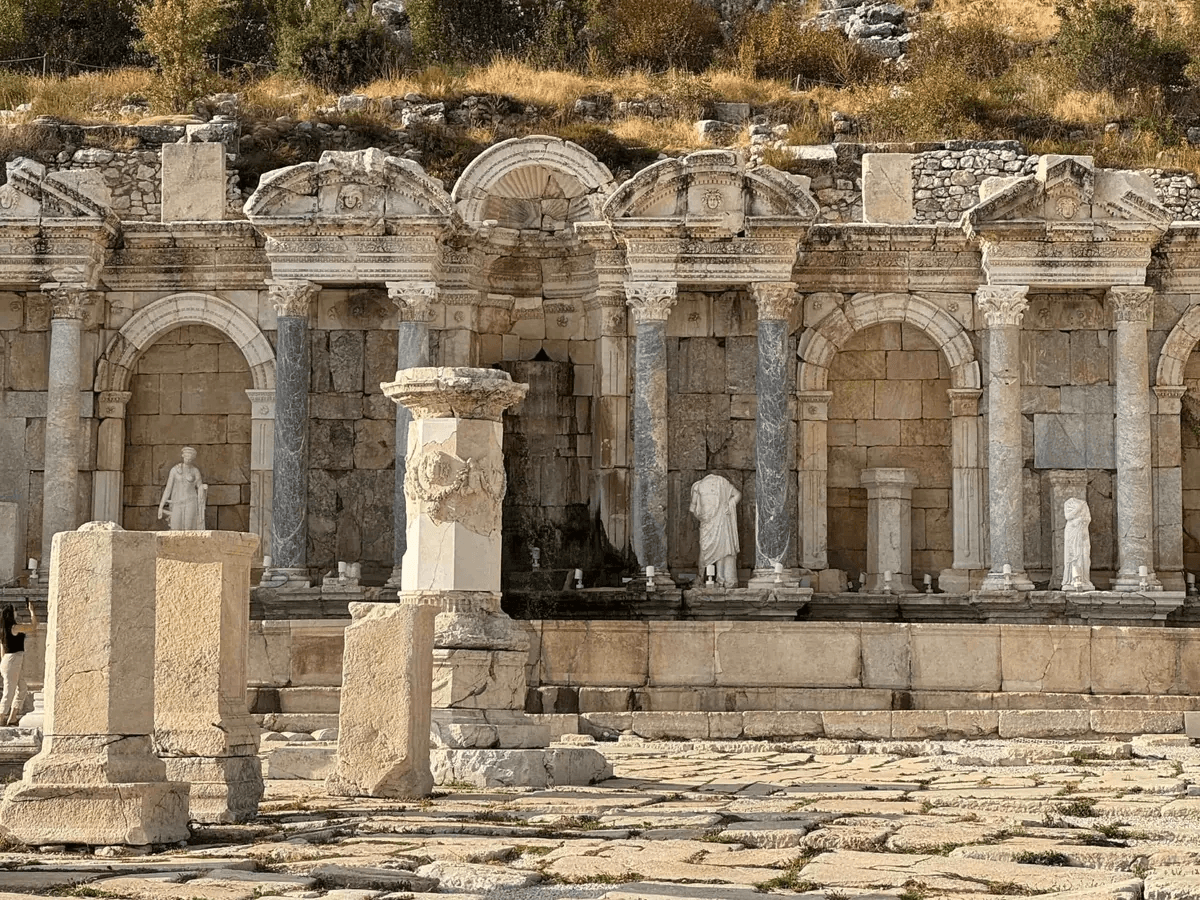
At its heart, the Antonine Fountain has been reconstructed using original fragments recovered during excavations, and nearly 2,000 years later, fresh spring water from the surrounding mountains still flows through it.
Home to one of the highest-altitude ancient theatres in the world, Sagalassos also invites visitors to explore its Roman baths, where monumental imperial statues were discovered, and its agora, creating the extraordinary impression that time itself has stood still.
Ancient Cities In Türkiye
Knidos – Datça, Muğla
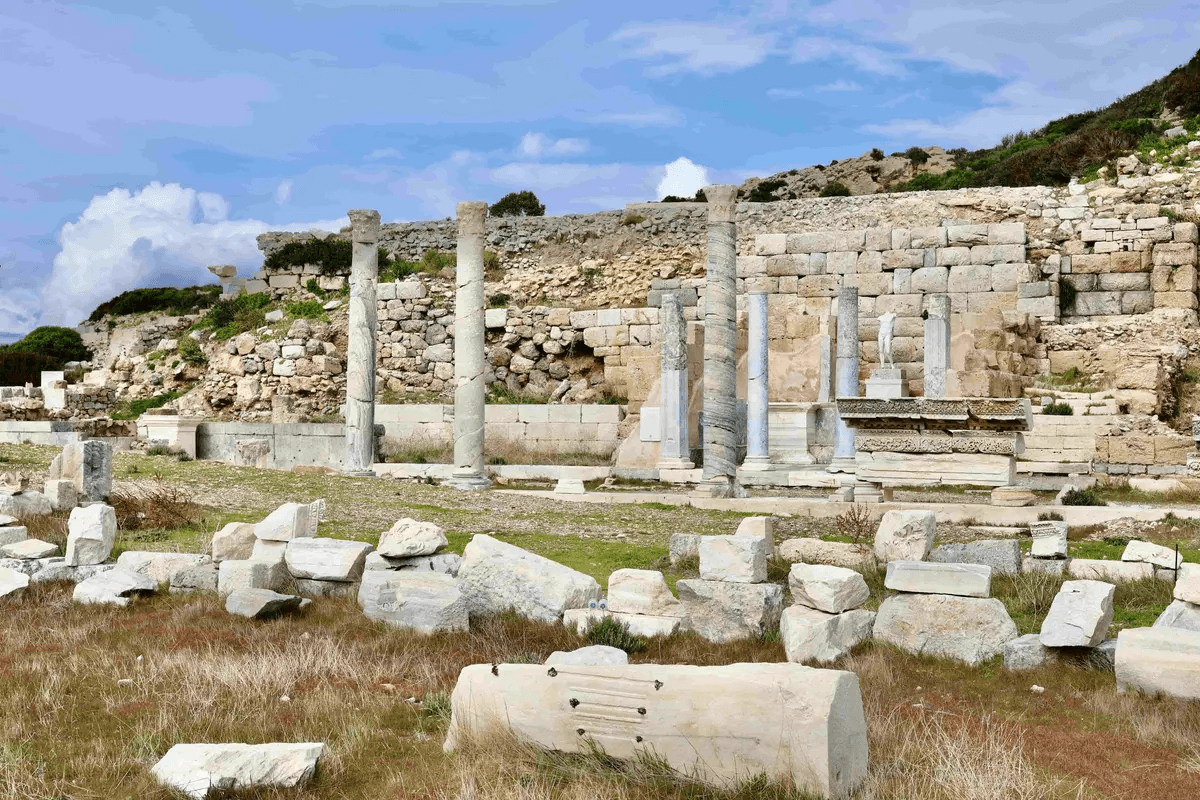
At the point where the Aegean meets the Mediterranean, on Cape Krio—today known as Tekir Burnu—lies Knidos, one of antiquity’s most important centres of culture, art and maritime trade.
Its geopolitical position at the far end of the peninsula placed it directly on major Mediterranean shipping routes, making it a natural passage and refuge for vessels. The people of Knidos turned this geographical advantage into a masterpiece of engineering by constructing two artificial harbours: a northern military harbour and a southern commercial harbour. Together, they helped the city become one of the key centres of Mediterranean maritime commerce.
Like many great ancient cities, Knidos was celebrated not only for trade but also for its contributions to science and art. It was home to one of antiquity’s most famous medical schools, where the physician Euryphon and his students contributed to the foundations of medicine. The celebrated astronomer and mathematician Eudoxus also worked here and developed a sundial.
Knidos made art history as well: the city was home to Praxiteles’ celebrated Aphrodite of Knidos, one of the earliest monumental sculptures in the ancient world to depict a goddess completely nude.
Today, visitors can explore the city’s two theatres overlooking the harbour, remains associated with its maritime infrastructure and, at sunset, one of the most captivating views across the ancient ports and surrounding blue waters.
Ancient Cities In Türkiye
Myra – Demre, Antalya
Built on a fertile plain, Myra was one of the six most prestigious cities of the Lycian League, each of which held three votes in the federation.
The city’s destiny and economic strength were shaped by water. Its inland settlement was connected to the sea through a natural channel west of the Myros River, today known as Demre Çayı, while the Port of Andriake at the end of this route transformed Myra into one of the Mediterranean’s busiest centres for maritime trade and grain distribution.
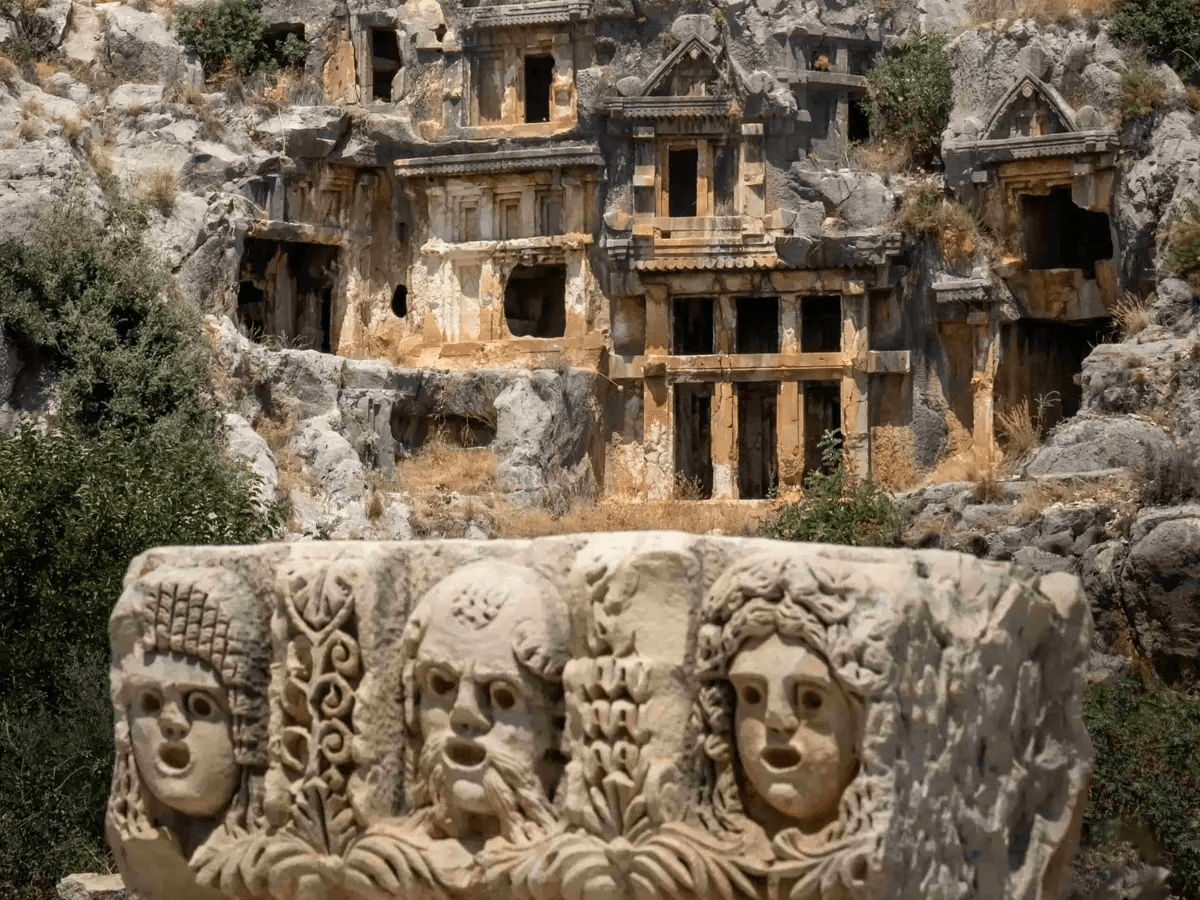
Visually, Myra is perhaps best known for its spectacular Lycian rock-cut tombs, carved into the steep cliffs like a monumental apartment complex. Their reliefs and house-shaped façades reflect the Lycian belief that placing the dead closer to the sky would also bring them closer to the gods.
Directly in front of them stands the region’s largest Roman theatre, with seating for approximately 11,000 spectators, testament to the city’s cultural and social grandeur.
Beyond all this, Myra also holds global importance in religious history: Saint Nicholas, known throughout the world as Santa Claus, served as bishop here, and the city is home to the Byzantine church built in his name.
Ancient Cities In Türkiye
Olympos – Kumluca, Antalya
Hidden in a valley where steep mountains meet the Mediterranean, Olympos was, like Myra, one of the six most prestigious cities of the Lycian League with three voting rights.
The city takes its name from the ancient Anatolian word meaning “high mountain,” a reference to nearby Tahtalı Mountain. The Akçay, or Olympos River, flowed through the centre of the settlement, allowing it to function as a river port and making it a popular stopping point for sailors and merchants in antiquity.
Yet this strategic position also brought danger. In the first century BC, Olympos became one of the strongholds of the Cilician pirate leader Zeniketes and was repeatedly exposed to pirate incursions.
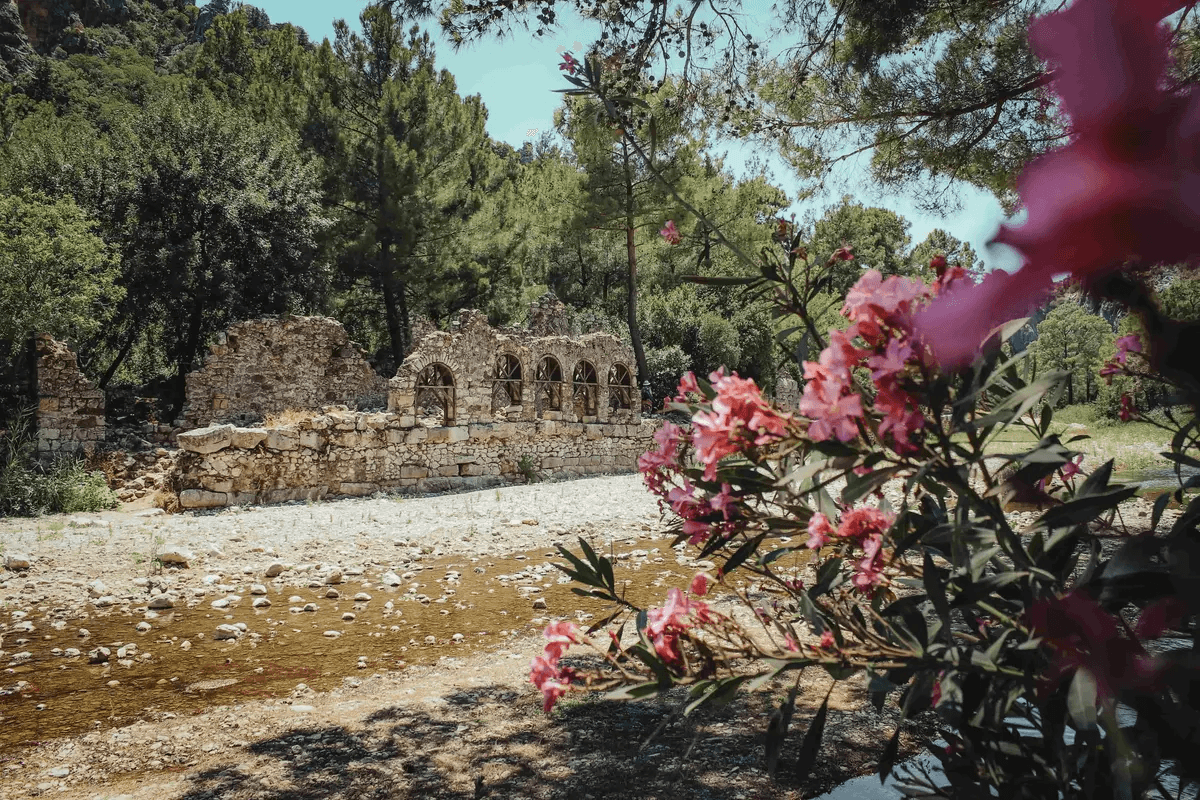
What distinguishes Olympos from many other ancient cities today is the way its ruins remain completely entwined with Mediterranean vegetation and laurel trees, hidden like archaeological jewels in the heart of nature.
Spread across both banks of the river, the city contains a monumental Roman-period temple gateway, harbour tombs built along the waterfront and bath complexes reflecting its rich water culture.
As you walk through Olympos, you can follow the icy river to the point where it meets the sea, discover an ancient theatre hidden among the reeds and, just a few kilometres away, experience the mystical atmosphere of the legendary Chimaera at Yanartaş, where flames have burned from the earth for centuries. At the end of the route, the magnificent beach of Çıralı awaits.