Marc Newson is a designer who understands how to shape time. Having left his mark on the world of horology through the Jaeger-LeCoultre Atmos and Ikepod, he now transforms glass, steel, and engineering into a seamless whole at sea with Lürssen’s NAUSICAÄ.
What truly makes a designer exceptional is not merely leaving a signature on an object, but on a way of thinking. Marc Newson is one of those rare figures. Whether designing watches, furniture, aircraft interiors, luggage, desk clocks, or superyachts, he has always pursued the same goal: creating perfect harmony between form, material, and function. Today, that philosophy finds its expression on the water with Lürssen’s new 114.2-metre superyacht, NAUSICAÄ.
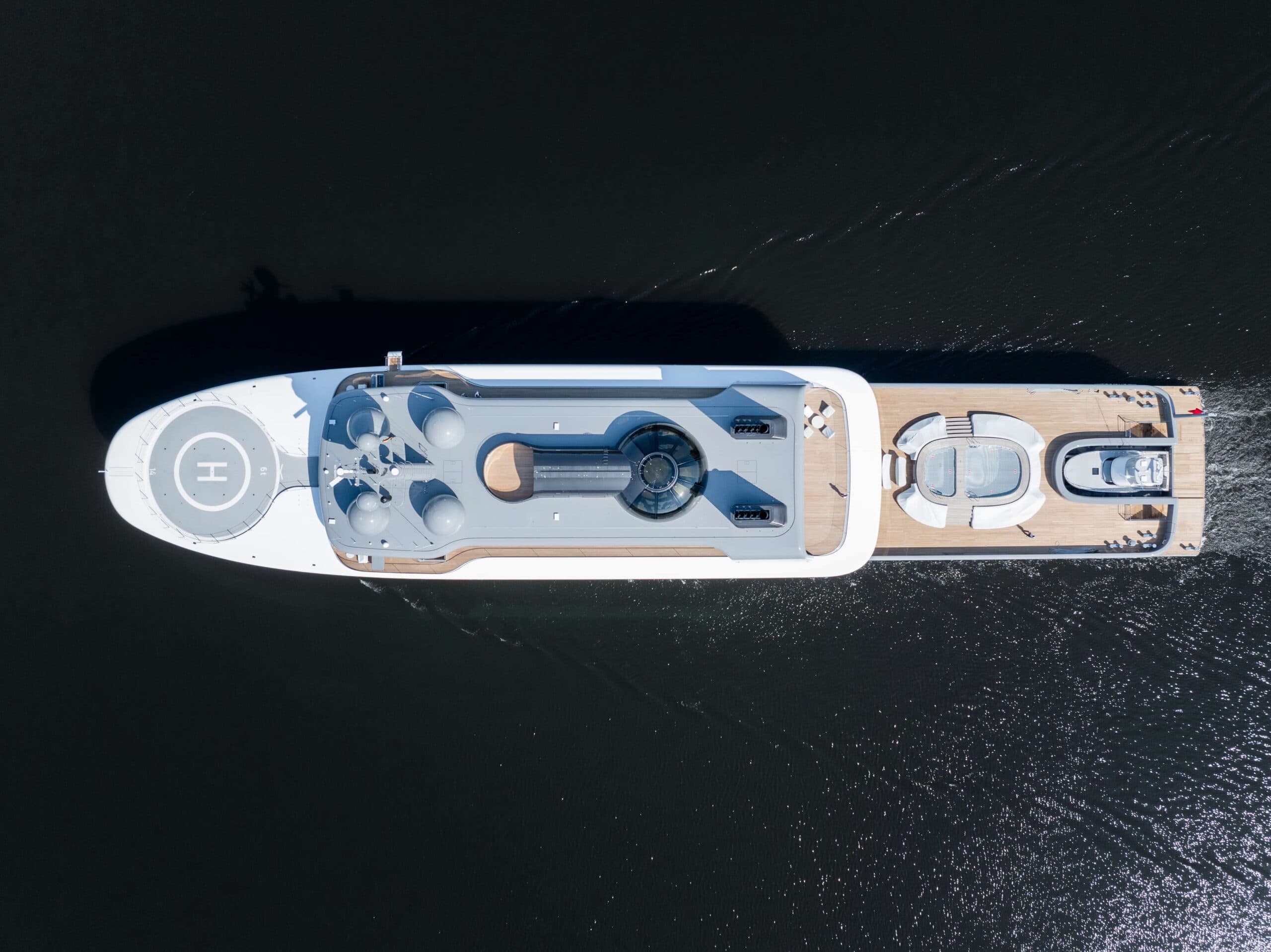
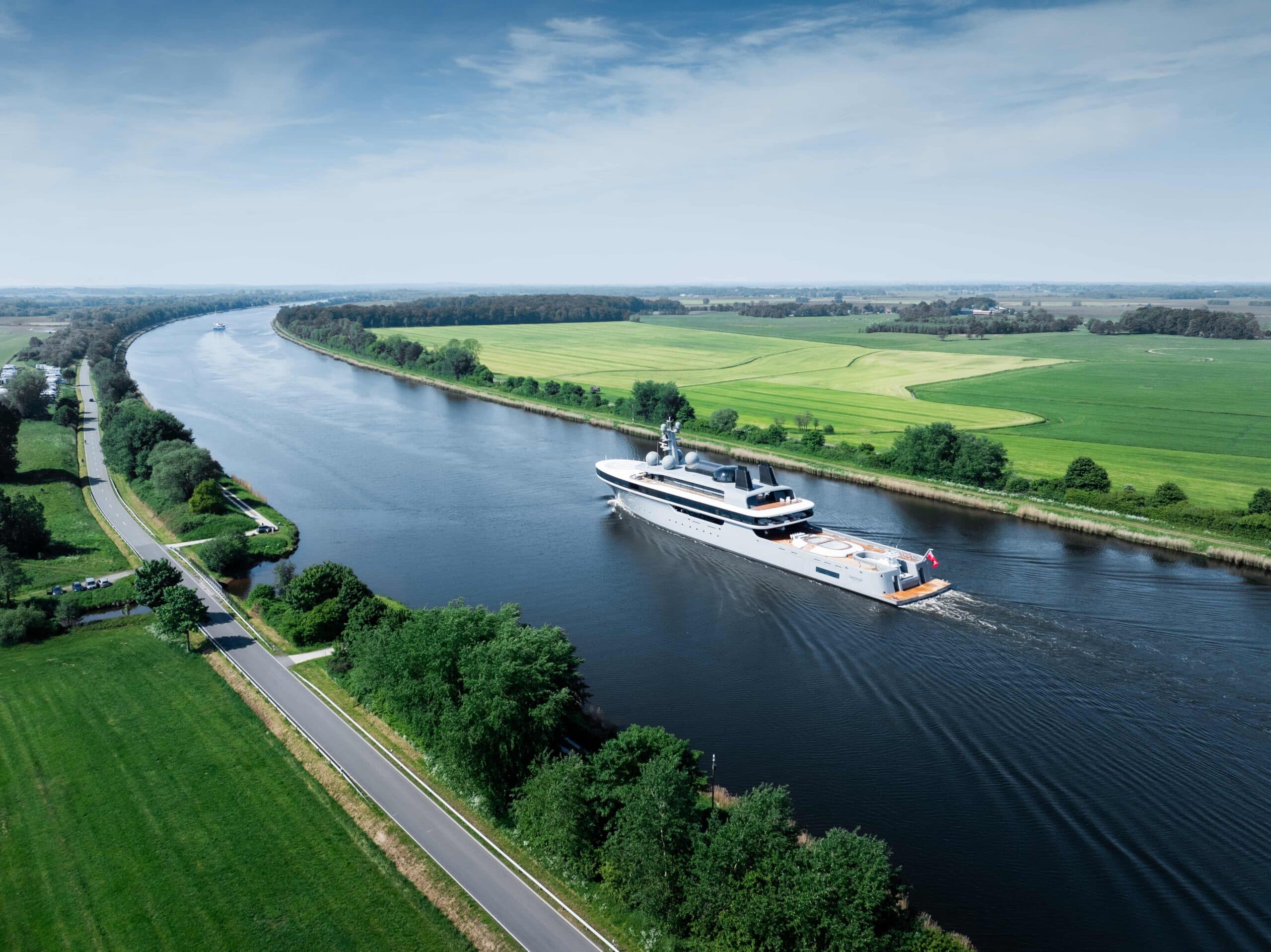
Built under the project name COSMOS, NAUSICAÄ stands out not only because of its scale but also because of the design vision behind it. Every aspect of the yacht—from its exterior styling and interior architecture to its smallest details and overall silhouette—bears the signature of Marc Newson. As a result, it transcends the conventional definition of a superyacht and becomes a monumental design object moving across the sea.
From Watches to Superyachts
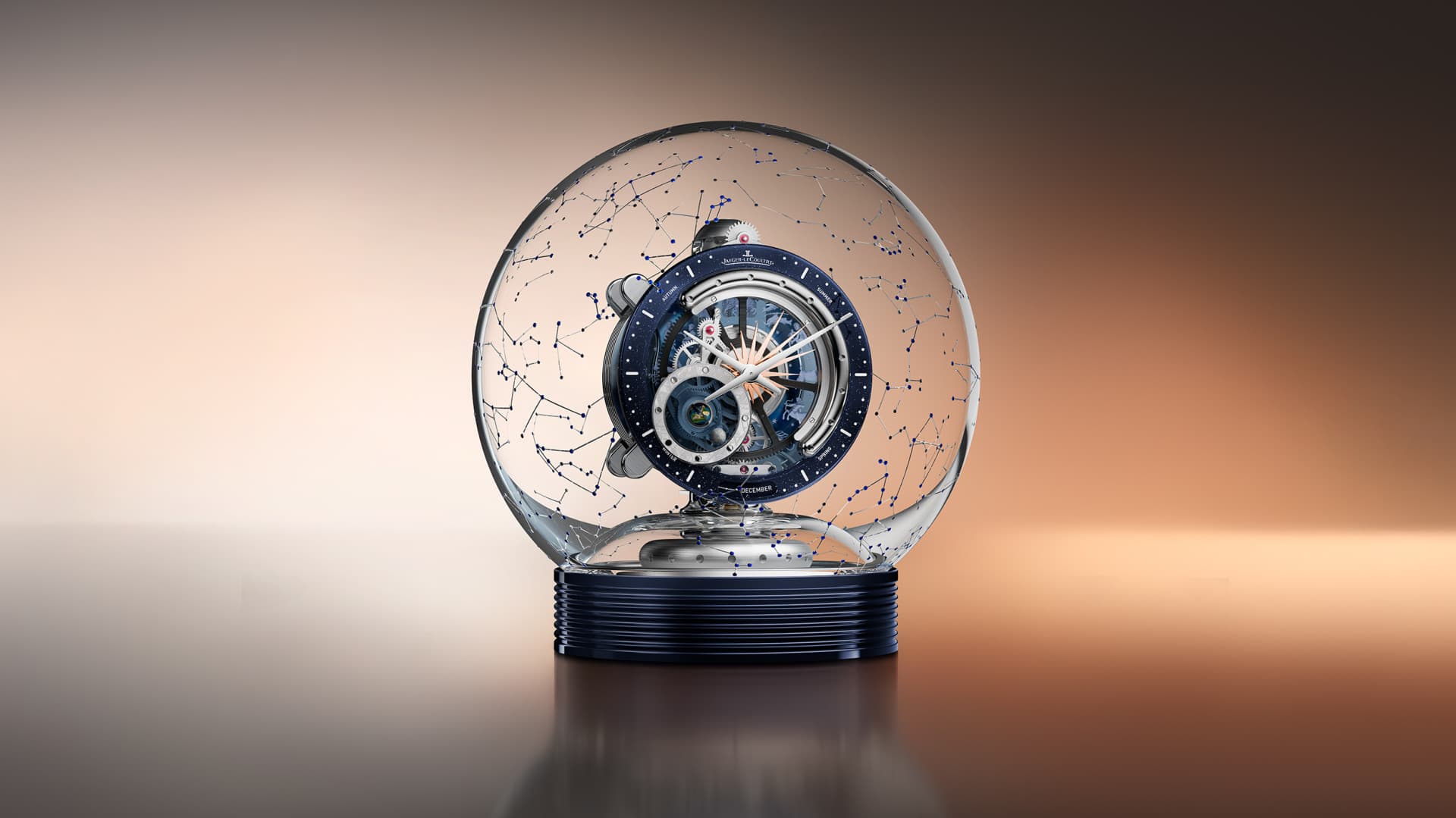
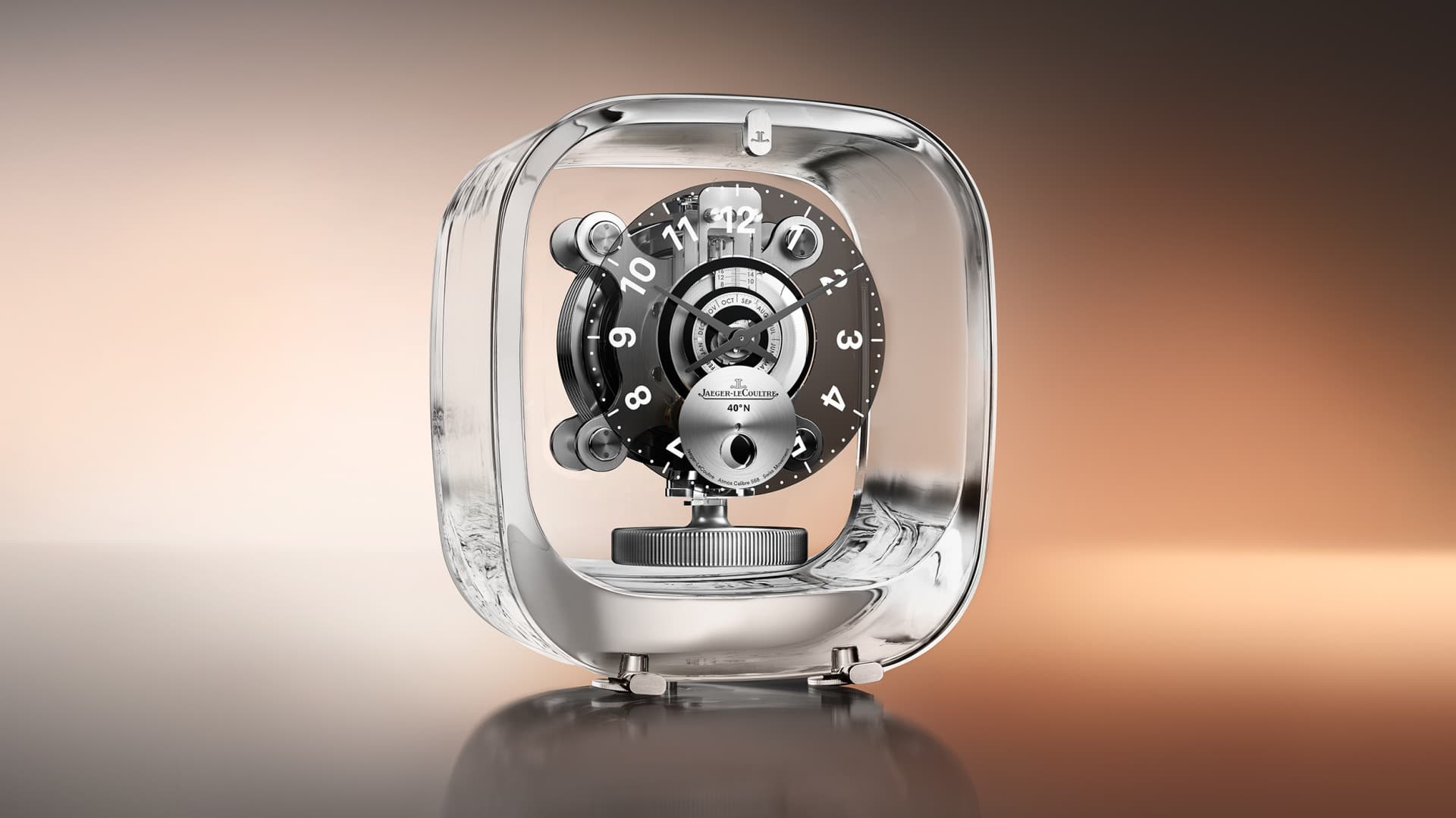
Marc Newson is no stranger to the watch world. His Atmos clocks for Jaeger-LeCoultre and his own brand, Ikepod, have left a lasting impact on contemporary horology. The transparency, lightness, and simplicity we see in Atmos offer an ideal starting point for understanding Newson’s design language.
For Newson, design is not simply about creating an attractive form; every component, every surface, and every empty space must serve the same idea. In a watch case, this philosophy reveals itself through the curvature of the crystal, the balance of the dial, the placement of the movement, and the feeling it leaves on the wrist. In NAUSICAÄ, that same thinking expands across a volume measuring 114 metres in length.
A New Definition of Luxury: Not Excess, but Coherence
For years, the superyacht industry focused on larger decks, more expansive social areas, and increasingly extravagant details. Today, however, the language of luxury is changing. The real question is no longer how much a yacht offers, but how harmoniously all those elements come together.
This is precisely where NAUSICAÄ distinguishes itself.
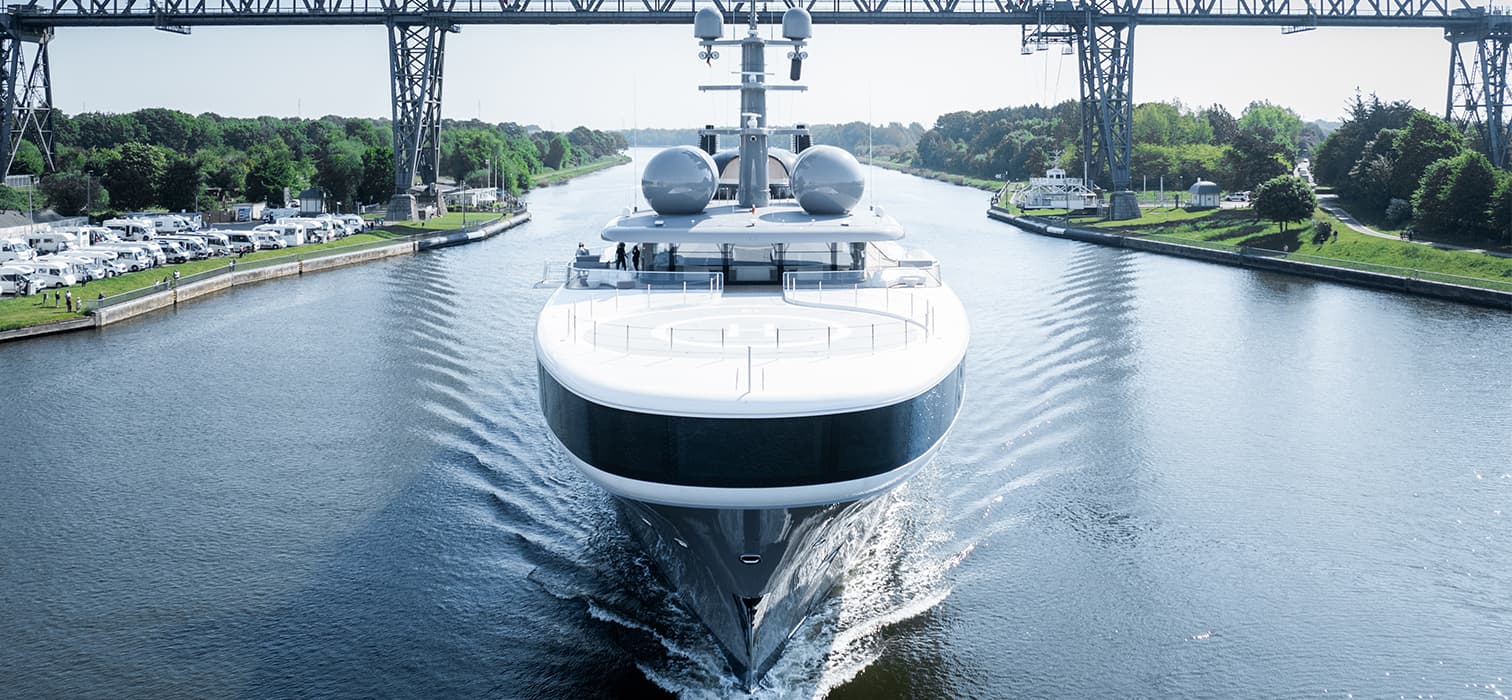
According to information shared by Lürssen, there are almost no flat architectural surfaces aboard the yacht. Curves, louvred details, organic forms, and steel surfaces shaped with geometric precision define its character. Repeating cylindrical steel elements—from the stern deck and main entrance to exterior doors and the exhaust mast—demonstrate that design is not merely decorative but forms the vessel’s fundamental language.
This approach evokes a feeling familiar to anyone passionate about high watchmaking. In a finely crafted timepiece, no component exists by chance. The case, crystal, dial, indices, crown, and movement must all work together as one. In NAUSICAÄ, that same level of precision appears on a scale measured not in millimetres, but in metres and tonnes.
Glass, Steel, and Creative Engineering
One of the most remarkable aspects of NAUSICAÄ is that engineering plays just as important a role as design. Lürssen describes the process as “creative engineering.” While the term may sound highly technical, it actually captures the essence of the yacht.
Creating natural, fluid, and organic forms from rigid, uncompromising materials is never easy—especially not at this scale. The vast glass surfaces and cylindrical steel forms used throughout NAUSICAÄ are not merely aesthetic choices; they are the result of highly sophisticated engineering.
Consider the sapphire crystal of a watch. It must integrate flawlessly with the case, refract light correctly, and provide durability without compromising the form. The glasswork aboard NAUSICAÄ reflects a similar level of precision, albeit on a dramatically larger scale.
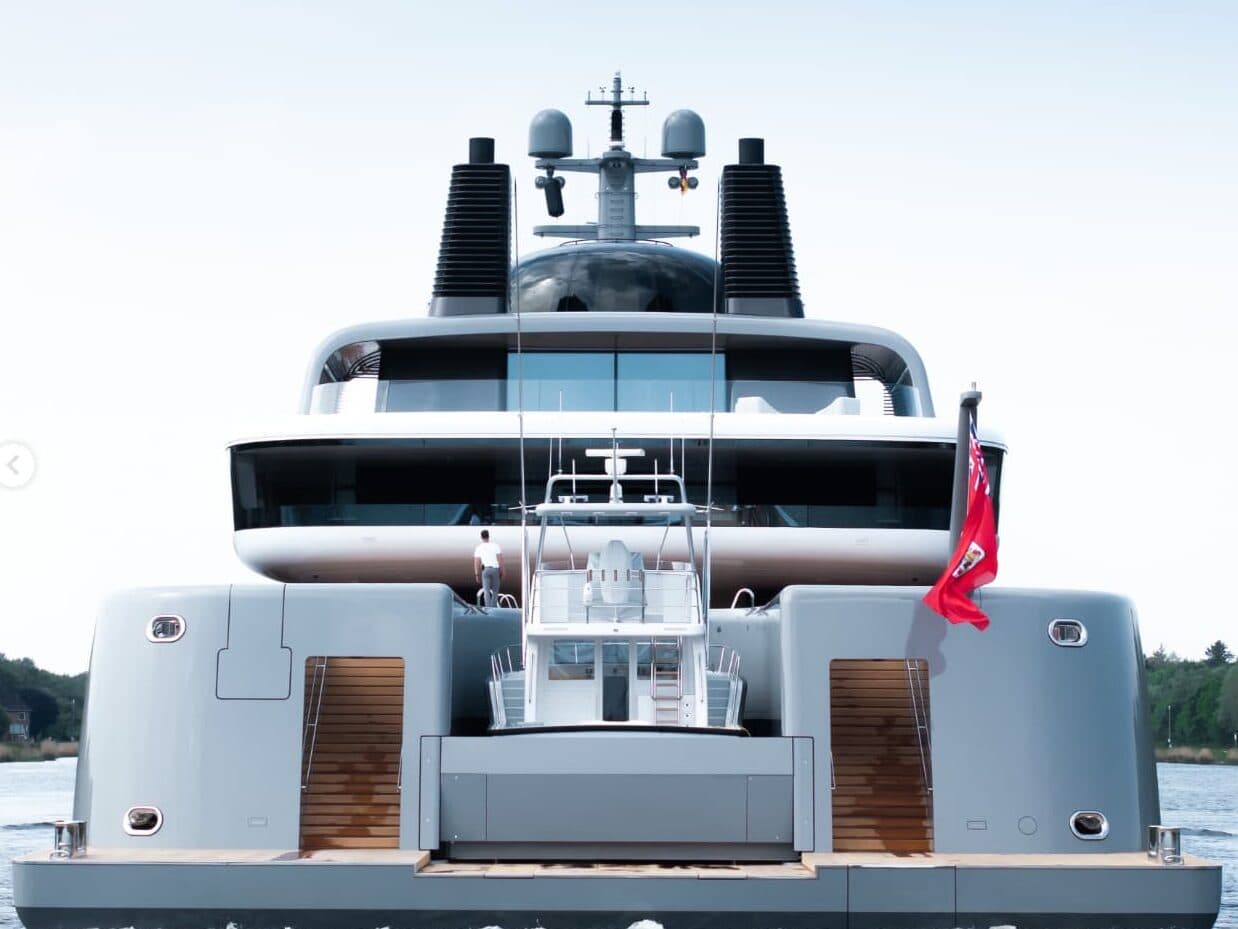
Skydome: The Ultimate Vantage Point
One of the yacht’s most impressive spaces is the Skydome, located at its highest point. Surrounded by glass, it transforms the sea from a distant view into an integral part of the environment. Its owner’s office is far more than a traditional workspace. Carefully controlled natural light, panoramic horizons, and a direct connection to the adjacent sky terrace make it one of the yacht’s most exclusive retreats.
Behind this calm and seemingly effortless atmosphere lies extraordinary craftsmanship. The glass panels forming the Skydome were hot-bent under carefully controlled conditions using gravity. Before production began, full-scale prototypes underwent extensive bending and lamination testing.
Just as the flawless integration of a sapphire crystal into a watch case requires invisible engineering and craftsmanship, glass aboard NAUSICAÄ is treated with the same level of care. Here, glass is not merely a transparent surface offering a view—it is one of the defining elements of both the yacht’s design and engineering.
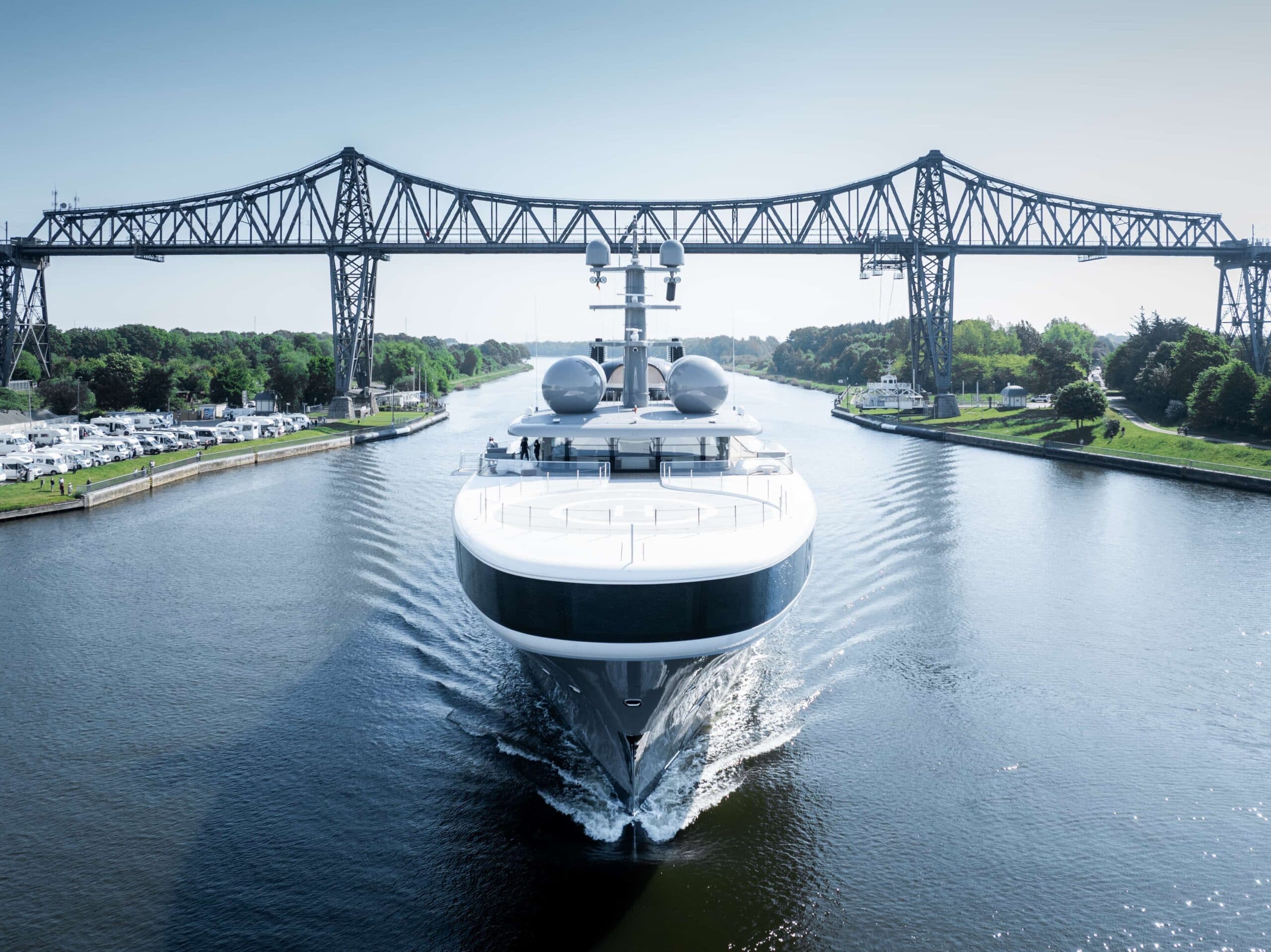
A Continuous Ribbon of Glass
NAUSICAÄ’s relationship with glass extends far beyond the Skydome. A continuous glass band running the length of the upper deck serves as one of the yacht’s most distinctive visual signatures. Its impact comes not only from transparency. Because the doors, technical spaces, and bulwarks are finished in the same material language, the exterior appears as a single uninterrupted ribbon of glass.
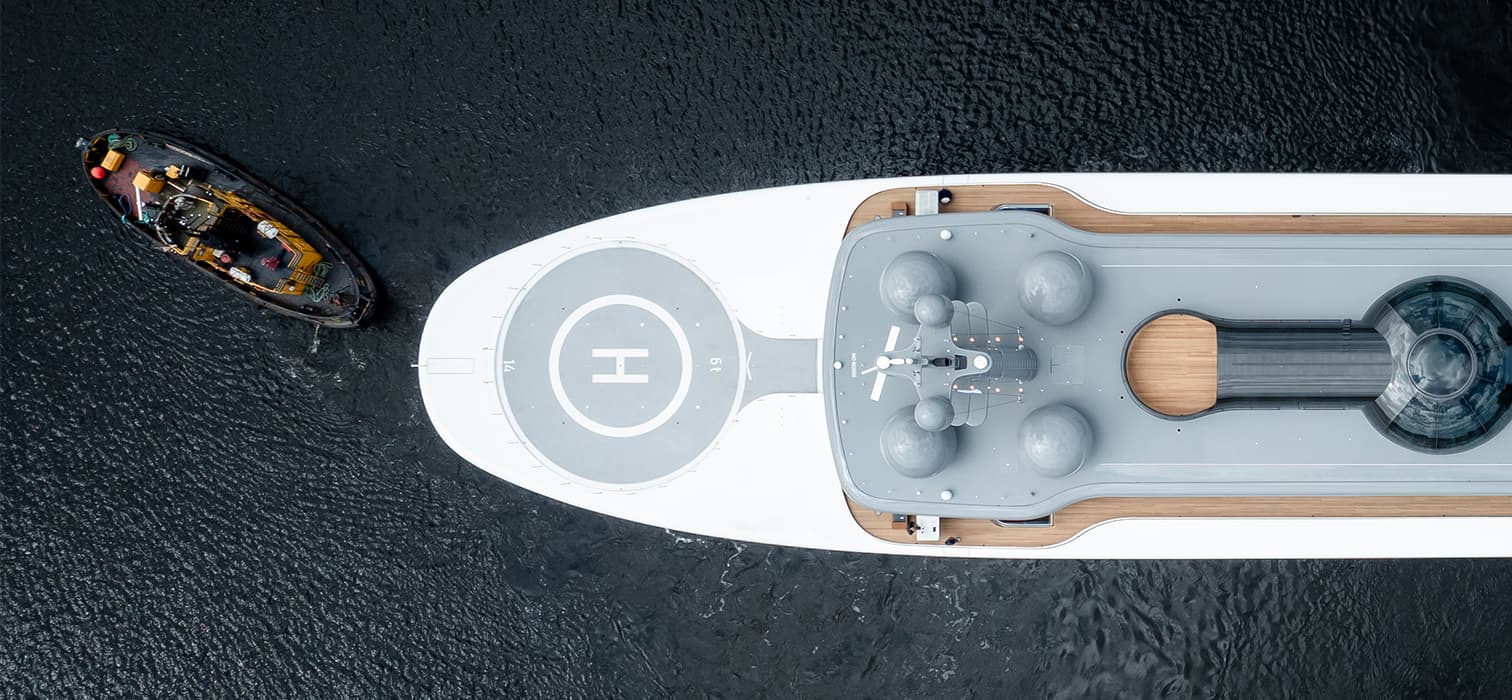
This effect reaches its peak in the 19-metre-wide observation lounge located at the bow. Positioned directly beneath the helicopter landing area, the space offers an extraordinary visual connection to the surrounding seascape while reinforcing the yacht’s striking architectural identity.
A Contemporary Art Gallery Instead of a Traditional Main Salon
Lürssen NAUSICAÄ’s interior is every bit as unconventional as its exterior.
Rather than the traditional main-salon arrangement expected aboard most superyachts, the vessel features a two-storey atrium and an art gallery. The main deck has been conceived almost like a contemporary exhibition space. At its centre stands a large-scale sculpture, while additional artworks can be displayed around the open-plan environment. A circular balcony on the upper deck overlooks the gallery below, functioning as a viewing platform from which guests can experience the space from a different perspective.
The upper aft atrium takes on a more social character, featuring a sushi bar, a table tennis area, and built-in lounges that create a lively, welcoming atmosphere. Yet even here, every detail has been custom-designed by Marc Newson.
This approach transforms NAUSICAÄ into something more than a luxurious residence at sea. It becomes a floating contemporary art venue. Rather than simply being a superyacht that contains art, it feels like a work of art in its own right.
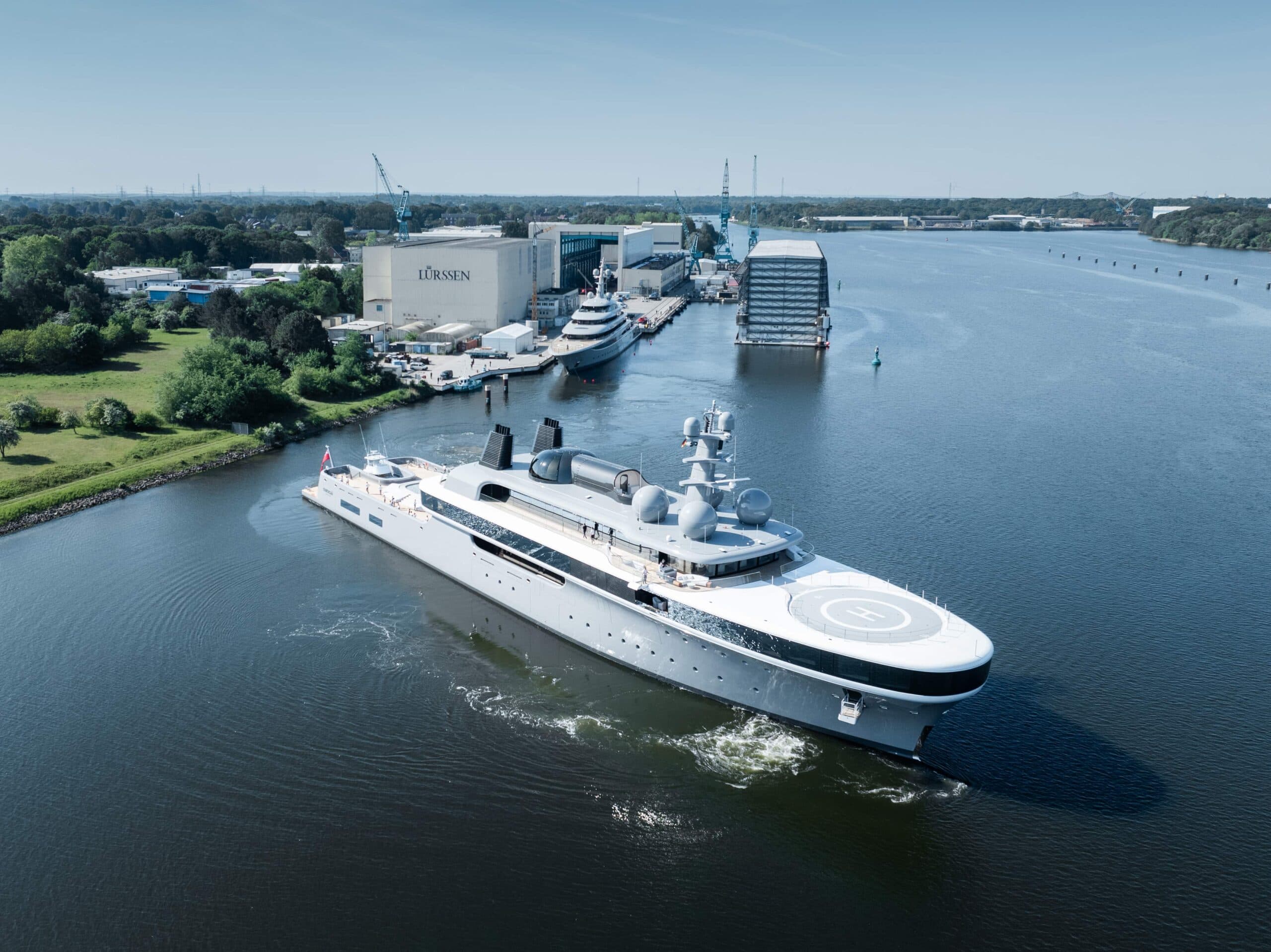
From Tropical Waters to Polar Seas
NAUSICAÄ’s Ice Class 1D hull ensures that it is not limited to calm Mediterranean anchorages or tropical cruising grounds. Designed to navigate safely through light ice conditions, the yacht offers the freedom to travel from warm waters to polar regions.
This capability reinforces its spirit of exploration. NAUSICAÄ was not designed merely to be admired in glamorous marinas; it was built to reach some of the world’s most remote destinations. Perhaps that is one of the qualities that makes it so compelling. On one hand, it embodies exceptional craftsmanship and refined design. On the other, it possesses the technical confidence required to venture into the unknown.
A Design Philosophy Scaled Up
It would be easy to view NAUSICAÄ simply as a 114.2-metre Lürssen superyacht. But that would tell only a small part of the story.
The real significance lies in how Marc Newson’s design language—developed over decades across multiple disciplines—has evolved and expanded here. The sense of coherence found in his watches, clocks, objects, and transportation projects has been translated into a vast structure moving across the sea.
The value of a fine timepiece is often hidden in places that go unnoticed: the inner curvature of the case, the way the crystal sits against the bezel, the silent operation of the movement, and the seamless connection between countless details.
NAUSICAÄ creates a similar impression.
At first glance, its sheer scale may capture attention. Yet its true strength lies elsewhere—in the fact that every element serves the same design philosophy.
When Lürssen’s engineering expertise meets Marc Newson’s design language, the result is far more than a new superyacht. It is a floating masterpiece that brings together time, space, light, and material within a single expression.