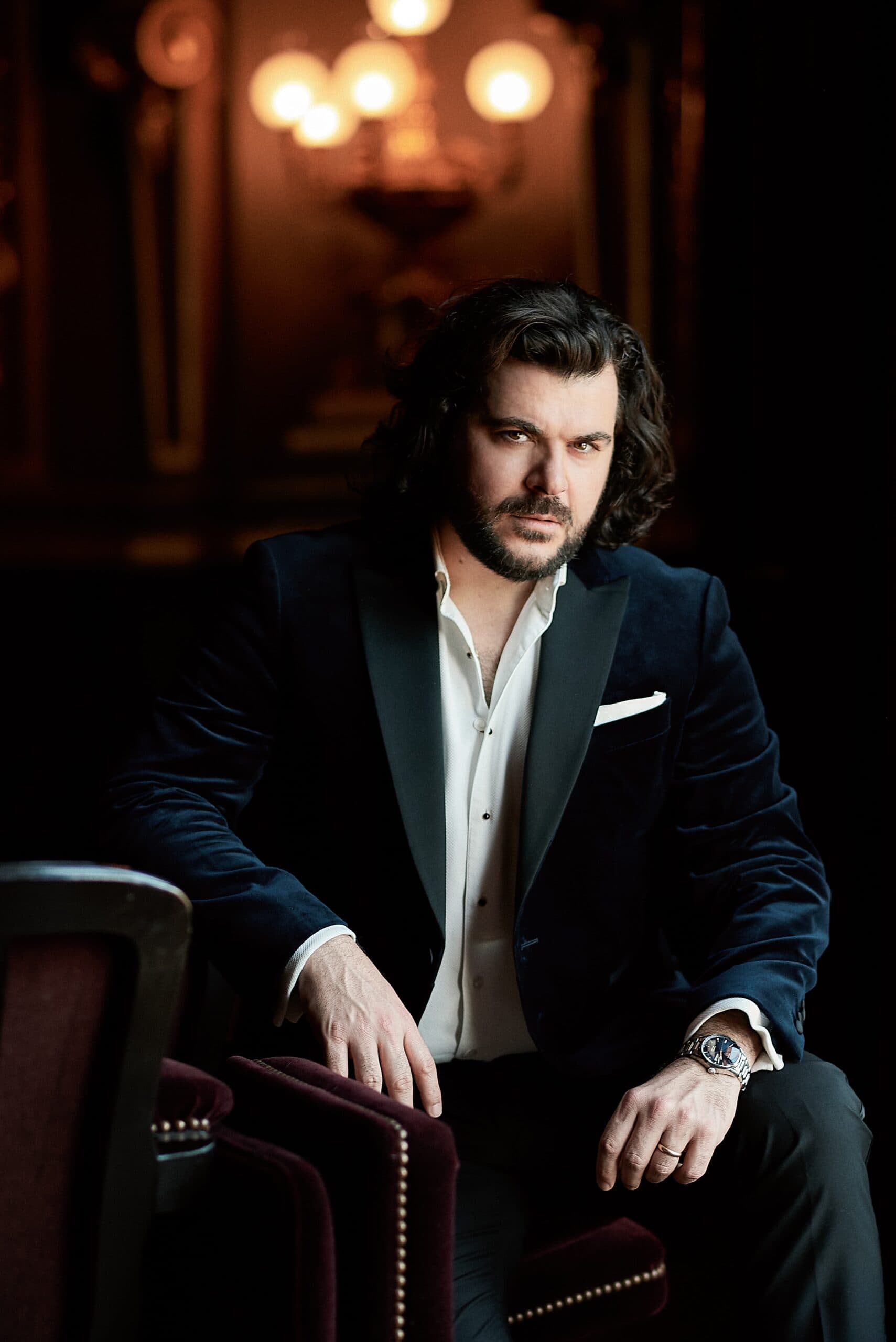
Kartal Karagedik, an internationally recognized Turkish artist currently residing in Germany, invites his audience on a journey into the timeless essence of music.
Kartal Karagedik’s latest album, Prometheus, recorded with Helmut Deutsch, was recently released under the Prima Classics label. More than just a musician, Karagedik is a storyteller, shaped by his education from Izmir to Bologna, his collaborations with world-renowned masters, and an artistic vision ignited by the fire of Prometheus. He considers music the most precious gift to illuminate people’s lives. We spoke with Karagedik about the profound impact of music and art on the human soul, the influence of cultural differences on art, and how music resists the cruelty of time.
As a Turkish artist living in Germany, how has the experience of cultural differences influenced your career? What do you miss the most when you return to Turkey?
Living in a large, multicultural city like Hamburg and traveling frequently has led me to feel more connected to the culture of classical music itself than to any specific country. The artists I collaborate with come from all around the world, which makes me feel more like a cosmopolitan artist than someone rooted in a particular European country. However, whenever I perform in Turkey, I can clearly feel the emotional intensity and dedication of the audience. The energy and devotion of the people in Turkey are more special to me than anywhere else in the world.
Kartal Karagedik – Credit: S. Triacca
You completed your education at Izmir Conservatory and Accademia dell’Opera Italiana in Bologna. How do you think this education has shaped your art?
I began my studies in Izmir, then moved to Istanbul University for my master’s degree. My first teacher at Izmir D.E.U State Conservatory was Prof. Alper Kazancıoğlu, and at Istanbul Conservatory, I studied under Prof. Güzin Gürel. Both provided me with a solid technical foundation and a strong pedagogical approach, which have been crucial to my career development. This education has been a guiding force from the beginning of my journey to its highest points. Music is an ongoing process of learning in our profession, a lifelong journey.
Later, I continued my studies at the Accademia dell’Opera Italiana in Bologna, where I had the opportunity to work with legendary masters. I perfected my Italian and deeply internalized the language of Italian opera. My first significant stage experiences occurred in Italy, which was a pivotal moment in my artistic development.
When you look back, is there anything you wish you could say?
There is almost nothing I wish for in life. Both music and life have guided my path so well that I’ve never had the thought, “If only…”
“My desire as an artist is to light a light in people.”
Helmut Deutsch – Kartal Karagedik
What was it like working with a world-renowned pianist like Helmut Deutsch? What did you learn from him?
Helmut Deutsch is an extraordinary master, possibly the greatest living legend when we think of “Lied”—a song from the German tradition typically sung with piano accompaniment. With his immense knowledge and experience, he explains the meaning behind every note and every word in a piece so profoundly that sometimes, even while singing a song on my iPad during rehearsal, I feel as though I’m living that moment of Schubert’s. It’s as if I’m beside Schubert himself, writing notes with a quill on yellowed paper under dim candlelight.
The most important aspect of Helmut’s approach to music is to remain as faithful as possible to what the composer wrote—capturing every nuance, every pause, every comma. He treats music as a story, not just a sound, and strives to interpret it exactly as the composer intended, without altering it. Working with him has taught me to listen more deeply, to focus more on the style and the details. There is no end to what I can learn from Helmut.
Prometheus steals fire from the gods and gives humanity a great gift, but at a great cost. As an artist, do you see any of yourself in Prometheus’ choice?
Prometheus is the Titan who defies Zeus and brings fire to humanity. Fire represents not only warmth and light but also creativity, knowledge, and freedom. He paid a heavy price, being chained and having his liver eaten by an eagle every day. That fire symbolizes human creativity—and, by extension, art. As an artist, my desire is to ignite a light in people and inspire them through storytelling. Music is the greatest gift I have received on this journey. I didn’t steal fire from the gods, nor did I bring it to humanity. My contribution is simply to help spread that fire.
Kartal Karagedik
In Schubert’s “An Schwager Kronos,” you discover a different side of time. What does this discovery mean to you?
Watches always remind me of the Titan Kronos, the embodiment of time itself. Words like “chrono,” “chronograph,” “chronometer,” “chronology,” and “synchronized” all derive from this Titan’s name. The Titans, the first giants of the universe, pushed the limits of everything with their power. But Kronos, the Titan of time, was the most terrifying and powerful of them all. His darkest trait was that he devoured his own children, illustrating how ruthless time can be—relentless, always moving forward, always flowing.
In the last song of the album, “An Schwager Kronos,” Schubert explores a different side of Kronos. In Schubert’s music, life flows like a journey. The first steps represent the uncertain beginnings and search of youth. Over time, an ascent begins—reaching the peak of youth, power, and passion. But this journey is like climbing a mountain: as you reach the summit, a decline begins. Time passes, and aging is inevitable. Yet Goethe and Schubert remind us that accepting the passage of time is not a loss, but a victory.
“Schubert’s music still reflects the anger and sense of freedom in us today”
Kartal Karagedik
You emphasize that Schubert’s music and mythological themes should be told and sung over and over for centuries. What do you think are the universal messages of these works that have stood the test of time? How do you think these messages resonate with modern audiences?
Schubert’s music and mythological themes convey messages that appeal to fundamental human emotions—the search for freedom and the struggle for life. These works have endured because these universal emotions have never changed. The drama we hear in Schubert’s music reflects not only the inner world of human beings but also the anger against social issues and the longing for freedom.
Today, these themes and this music continue to resonate because people in every era experience similar emotions and challenges—freedom, the search for identity, justice. That’s why Schubert’s music, along with the mythological figures, always takes the listener on an inner journey. They establish a universal connection that has survived for centuries and continues to be relevant today.
Helmut Deutsch – Kartal Karagedik
The friendship between Franz Schubert and Johann Mayrhofer shows how two different characters and mindsets can come together to create an artistic interaction. The power of teamwork, in a way… Do you have a teammate who supports, encourages, and makes you feel good during your production process?
The preparations for this album were intense; the repertoire and program preparation took over two years, and it was a big team effort. The relationship between Mayrhofer and Schubert was complex, chaotic, and even traumatic. But for me, it’s the opposite. My wife, Maria, who is also a musician, gave me tremendous support in the decision-making process. During the most challenging times of the work, everything became much easier with her musical ideas and unwavering support. Having her by my side throughout this entire process gave me strength.
“Music has always opened beautiful doors for me.”
Helmut Deutsch – Kartal Karagedik
As a young and talented artist, what are your future goals, and what do you want to achieve in your music career?
Thank you so much for still considering me young! I’m actually 40, but since Schubert died at 31, I’m quite a bit older than him. I don’t really focus on future goals. Success is important, of course, but for me, success means being able to reach the emotions of even a few people in the hall, to inspire them, and perhaps evoke that “goosebumps” feeling. Music has always brought good things and opened wonderful doors for me, and I hope it continues to do so.
What do you like to do outside of music? Or, let me ask it this way: What kinds of things in your life feed your music and inspire you?
Outside of music, photography plays a significant role in my life—I consider it my second career. I had two solo exhibitions this year and am preparing for another. I find the parallels between photography and music fascinating. I use light and shadow as the main elements in photography, just as I do in music. These contrasts are essential in my life, and I feel them when I take photographs, just as I do when I sing.
I’m also deeply interested in Jung’s archetypal psychology, which is central to my life. Friendships, art, my wife, and my daughter all inspire me, both in music and in life. The time I spend with them is one of the most nourishing things in my life. Everything in my life is reflected in my art.
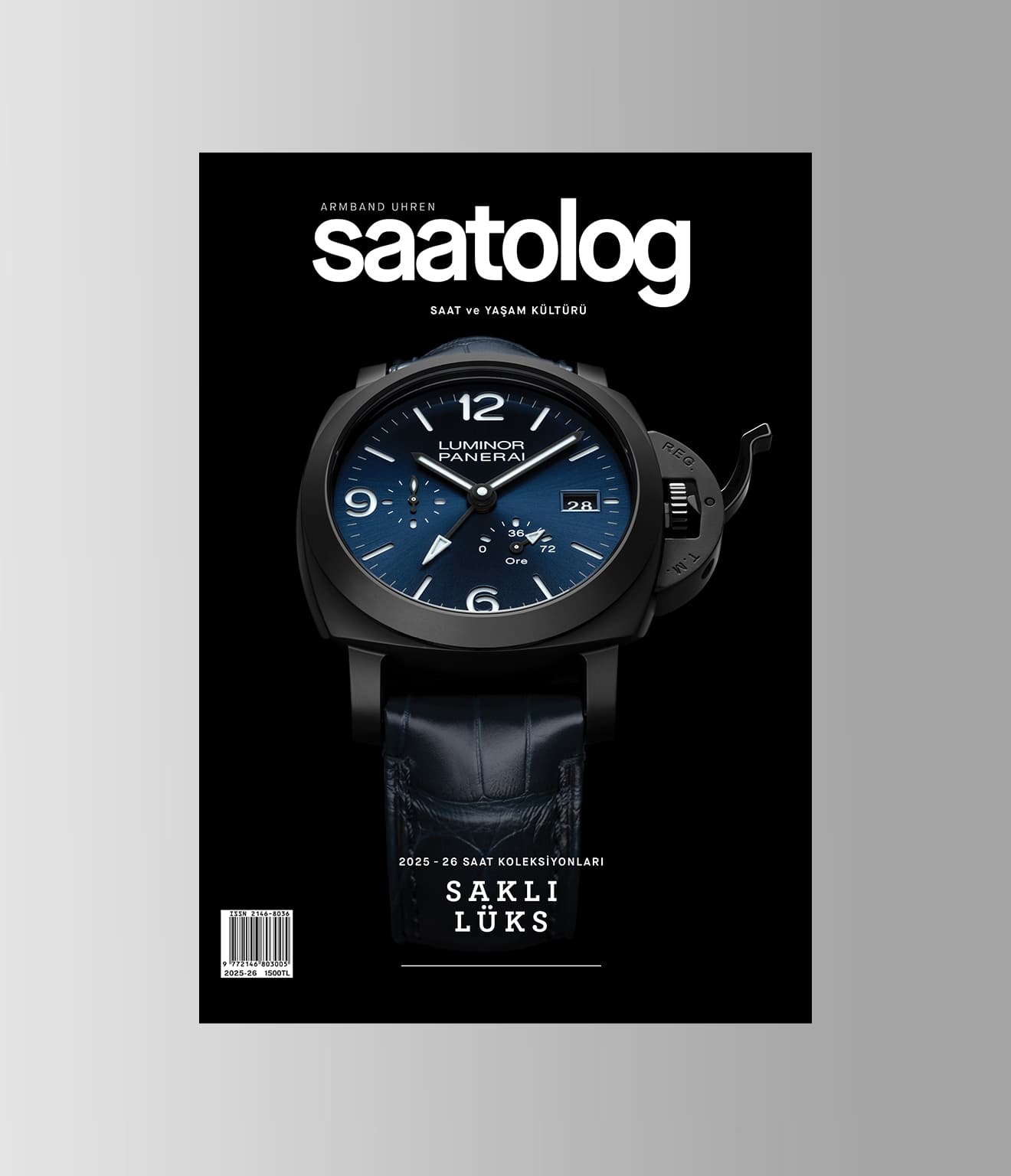
Saatolog Yıllık Saat Dergisi Saatolog’un yeni sayısı, 2020’nin yarattığı bu dönüştürücü etkiden ilham alarak hazırlandı. Dünya dijitalin etkisiyle her zamankinden de hızlı bir şekilde ilerlerken yavaşlamanın da önemini sonunda kavramış bulunuyoruz ve bu tezatlık hayatlarımızın her anına etki ediyor. Biz de bundan yola çıkarak Saatolog 2020/21 sayısını ‘‘hızlı ve yavaş’’ teması altında hazırladık.