From the Gérald Genta-designed King Midas to the Prince Brancard known as the “doctor’s watch,” discover the most extraordinary Rolex watches ever made.
Think of a Rolex watch: Daytona, Day-Date, Submariner, or Oyster Perpetual. One of these models probably comes to mind immediately. With its groundbreaking innovations in watchmaking, every Rolex collection enjoys worldwide recognition and a reputation that transcends borders. The brand can be found on the wrists of movie stars, athletes, and even heads of state. But how familiar are you with a gold Rolex housed in a rectangular case? Or a Rolex watch fitted with a gold bracelet composed of oversized circular links?
Between the 1950s and the 1970s, alongside the models that would eventually become icons, Rolex produced a number of unconventional designs distinguished by their cases, dials, and, in some instances, their bracelets. The “Cocktail” watches produced from the 1950s through the 1970s and the substantial Montre de Dame Or models are among the most notable examples. Rolex’s archives are also home to dozens of rare references featuring stone dials, Arabic numerals, and rectangular-cased watches known as the “Doctor’s Watch.”
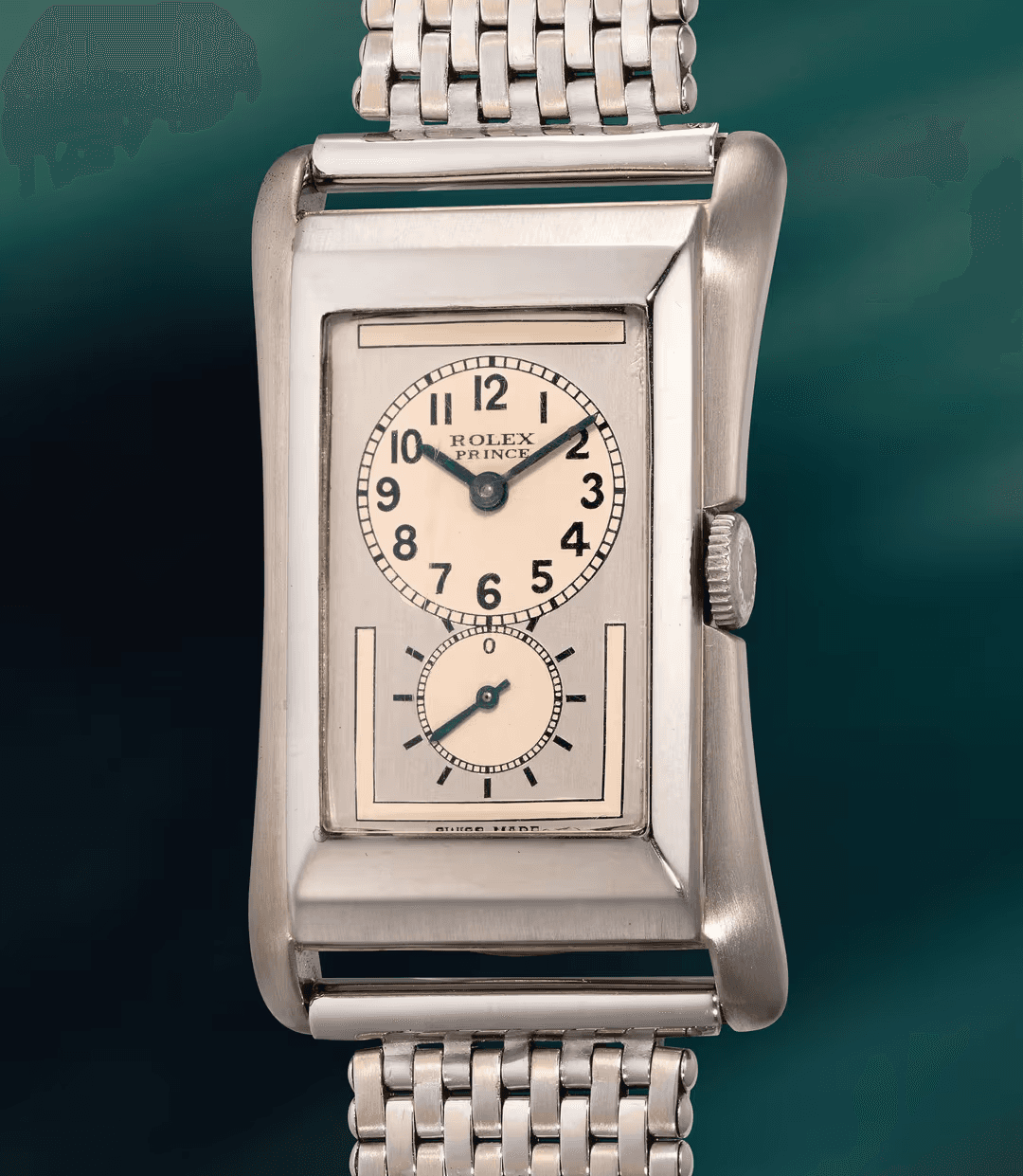
Rolex Prince Brancard (Ref. 971)
With its rectangular case that gently flares outward and its small seconds display positioned at 6 o’clock, the Rolex Prince, also known as the “Doctor’s Watch”, was first introduced in 1928. Considered one of the most precise wristwatches of its era, the Prince earned its nickname because physicians used it to measure pulse and respiration rates. As a result, Rolex actively marketed the model to professionals in the medical field. The example featured here is the Prince Brancard, distinguished by its softer, rounded profile. Another variation of the Prince, known as the Classic, features sharper and more angular lines. This particular Ref. 971 is fitted with a two-tone silver dial and is believed to have been produced in 1935. The Rolex Prince Brancard remains one of the rarest and most desirable references for collectors interested in early Rolex watches.
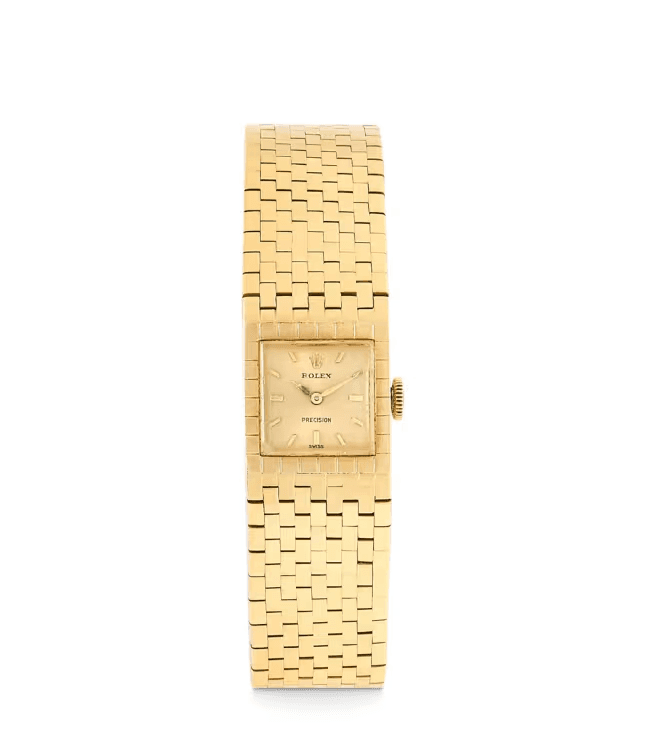
Rolex Montre de Dame Or
Another unconventional Rolex design is the Montre de Dame Or. Offered at auction by Christie’s, this rare Rolex features a square dial and case paired with an integrated gold bracelet finished with a distinctive brick-pattern motif. Measuring just 12 x 12 mm and weighing approximately 65 grams, the watch comes from the personal collection of world-renowned actress Claudia Cardinale.
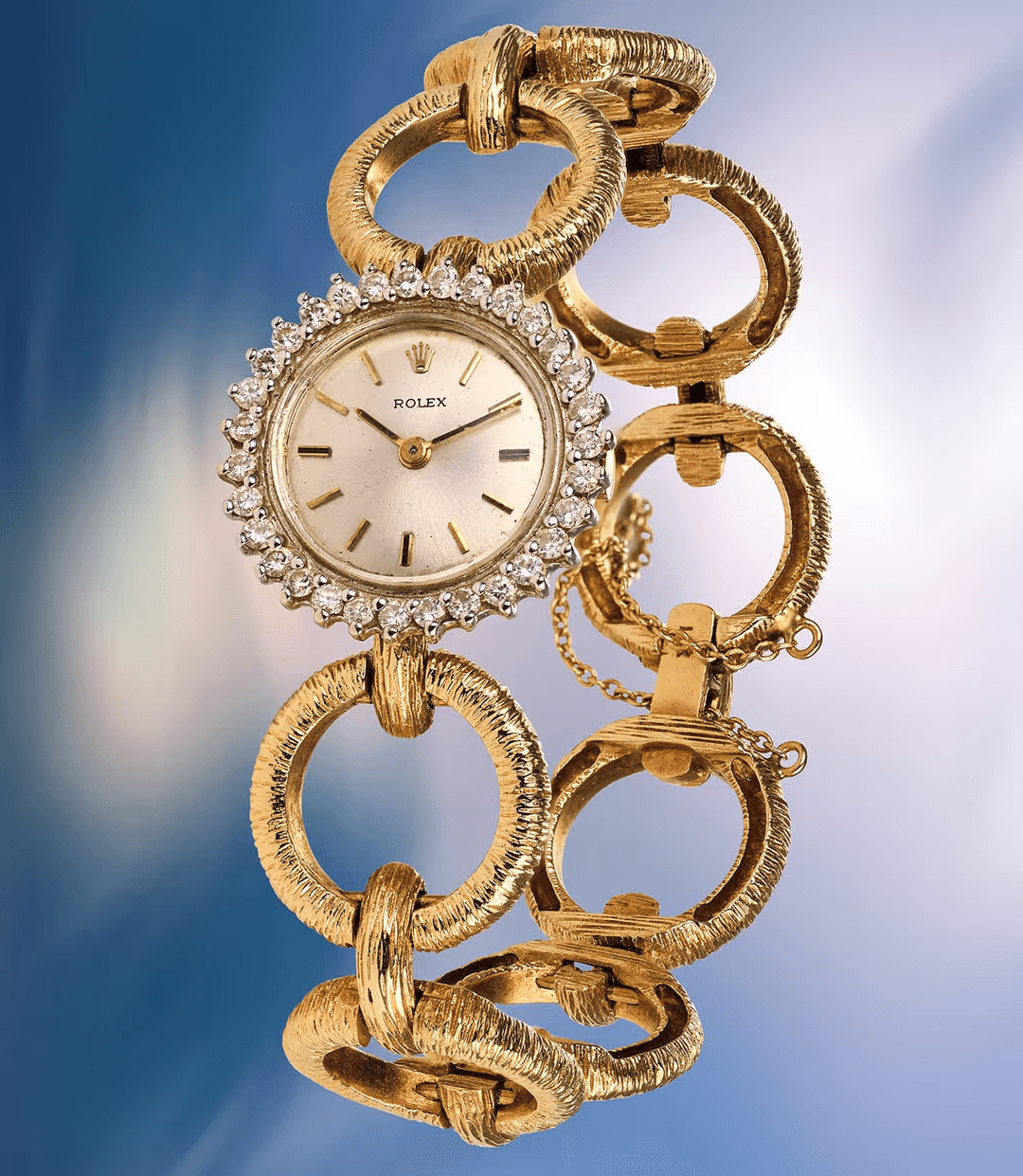
Rolex Cocktail (Ref. 1400)
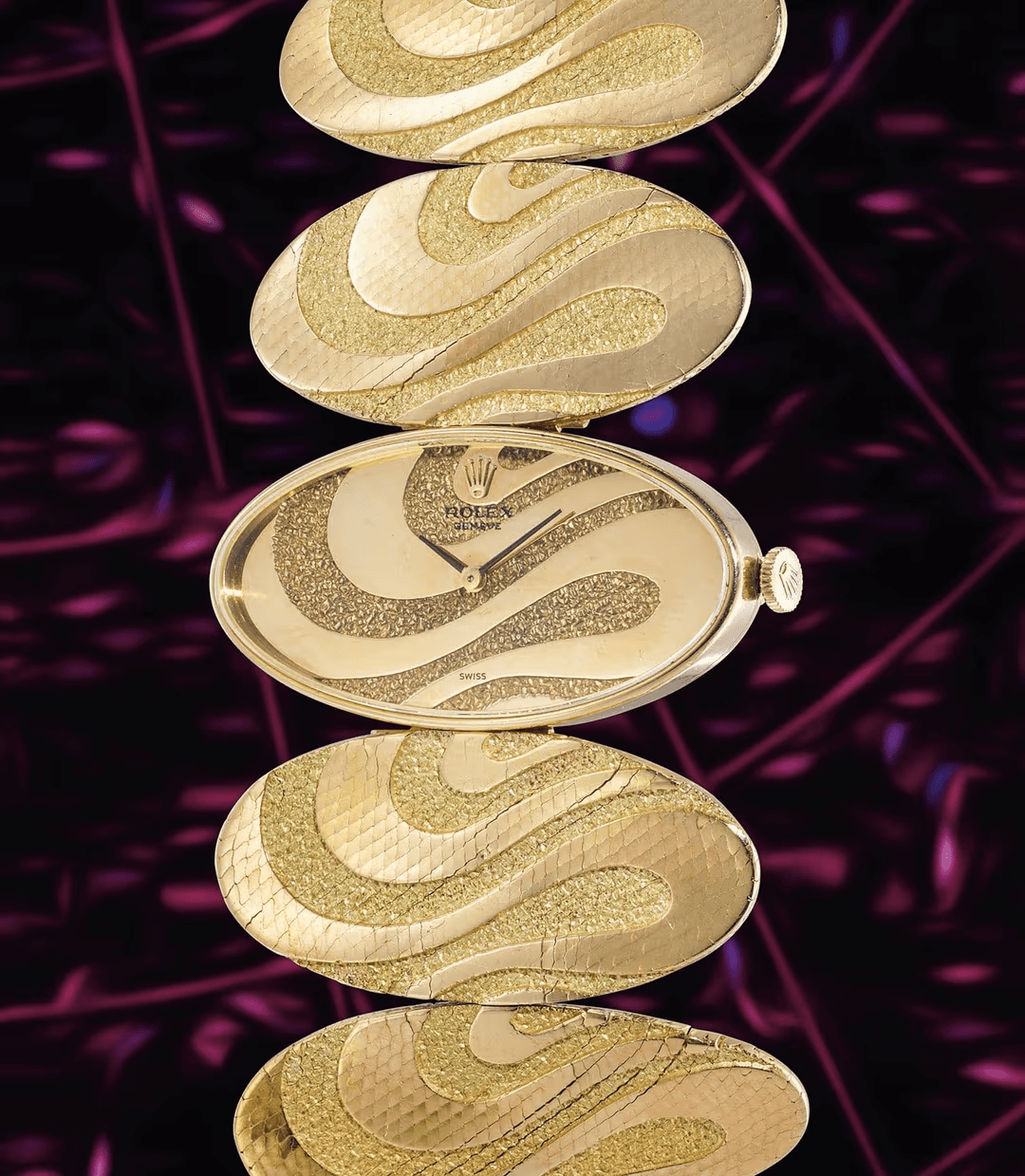
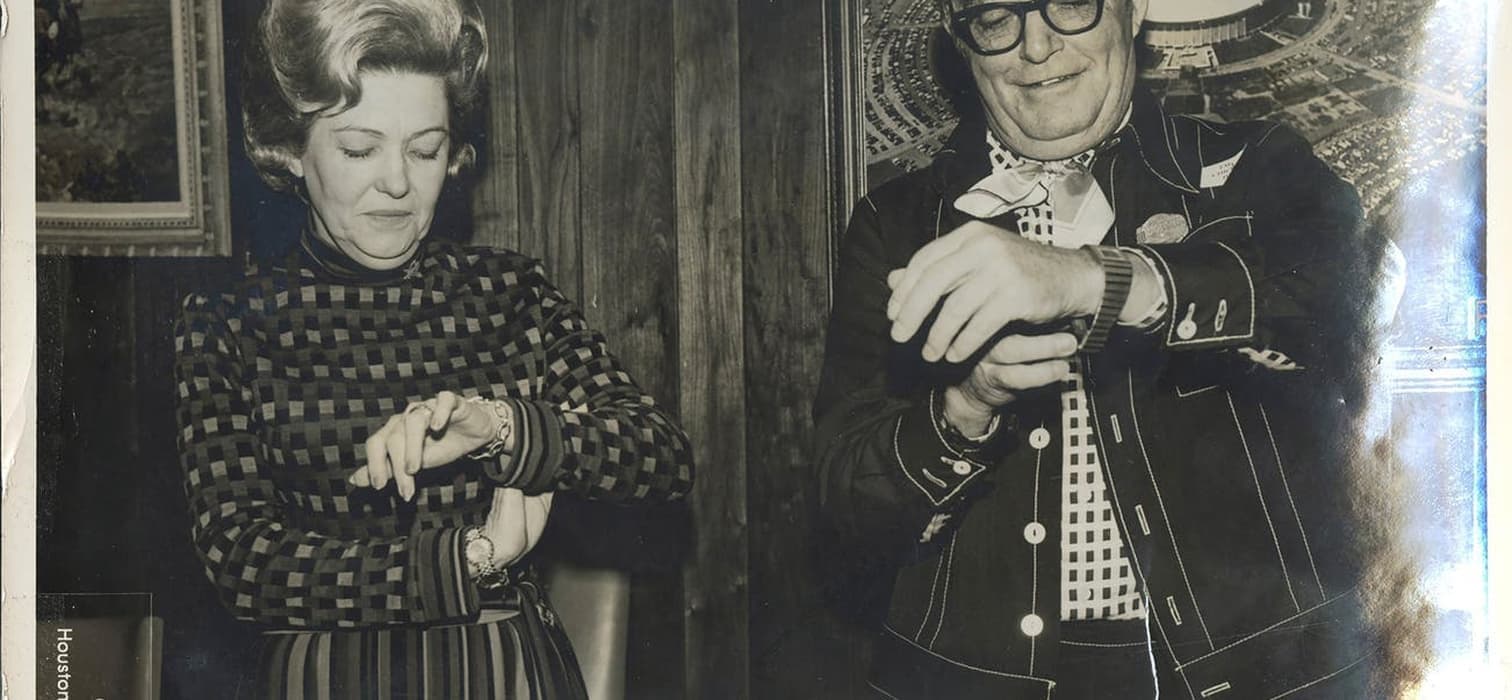
Produced from the 1950s through the 1970s, Rolex Cocktail watches were true jewellery watches, characterized by extravagant case, bezel, and bracelet designs. Intended for formal occasions and evening events, these timepieces often featured diamond-set halo-style bezels. The true highlight of this reference, however, is its gold bracelet composed of oversized circular links in what is known as a “hoop” design. The bracelet is finished with a bark-like texture reminiscent of linen, one of the signature decorative motifs of the 1960s. The example sold at Phillips once belonged to Elsie Ray “Bo” Bray, wife of “Buddy” Bray, the promoter who signed the agreement for Elvis Presley’s six sold-out performances at the Houston Astrodome in 1970. The watch was reportedly presented to Bray as a gift during an event.
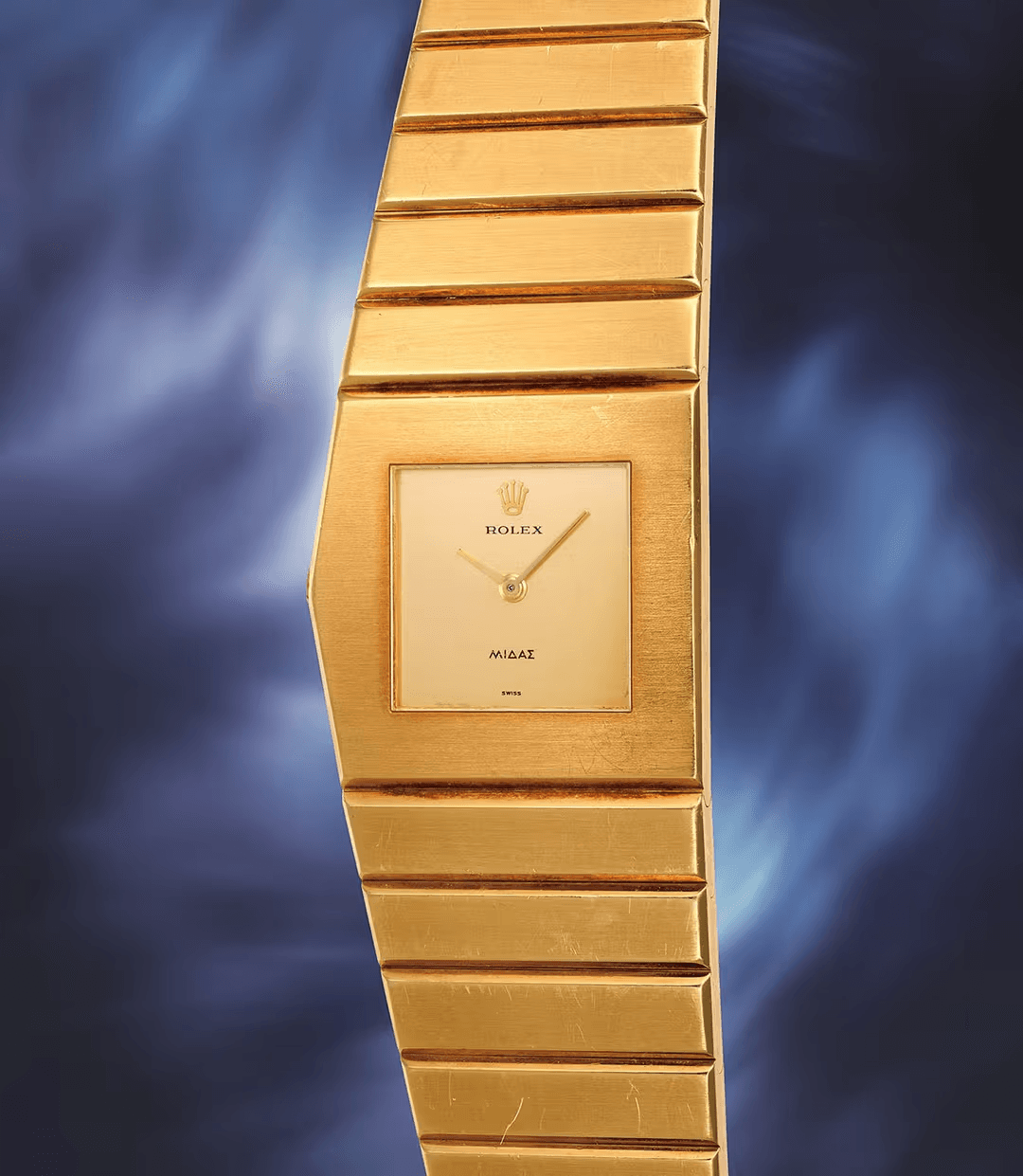
Rolex King Midas “Buddy Bray” (Ref. 9630)
The King Midas, designed by legendary watch designer Gérald Genta, was first introduced in the early 1960s. Named after the mythological King Midas, the watch draws inspiration from Ancient Greek architecture, most notably the Parthenon. Machined from a single block of 18-carat gold, the King Midas was regarded as both one of the heaviest and one of the most expensive wristwatches of its era. The model is instantly recognizable thanks to its asymmetrical case and matching asymmetrical bracelet. One of the most famous examples is the watch owned by Elvis Presley.
Rolex Ref. 3236
Another jewellery-inspired Rolex from the 1970s is the Ref. 3236. Designed by celebrated jewellery designer Georges Lenfant, the model is believed to have been produced as part of a special collaboration in a highly limited run of approximately ten pieces. Its oval dial is seamlessly integrated into a bracelet composed of oval links matching the shape and proportions of the dial itself. The matte-textured surfaces of both the dial and bracelet contrast beautifully with polished gold wave motifs, creating a striking visual effect. Crafted entirely from 18-carat yellow gold, the watch exemplifies the bold and expressive jewellery aesthetics of the era. Originally designed in 1970, the Ref. 3236 was sold at a Phillips auction in 2025.