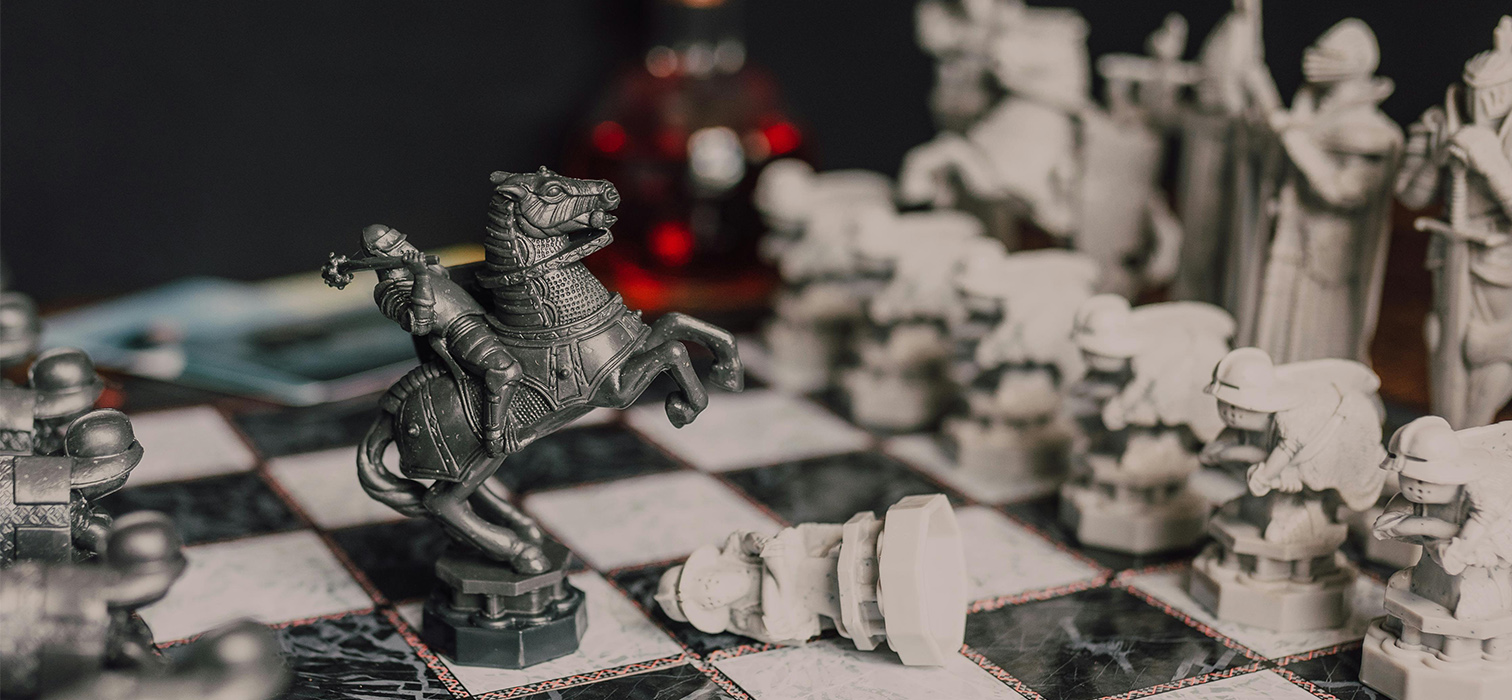
On a 64-square board, the same question through the ages: What’s your next move? Some thoughts on chess — a game that mirrors the very strategies of life.
On September 12, 2025, during the 9th round of theFIDE Grand Swiss 2025in Samarkand, our 16-year-old grandmaster (GM) Ediz Gürel achieved a remarkable victory against the reigning world champion, GM D. Gukesh. This triumph was celebrated as one of the defining moments in the youth-driven rise of Turkish chess in recent years. We extend our heartfelt congratulations to him. On this occasion, let us take a closer look at the deep-rooted history of chess, its cultural significance, and the boundless mental horizons it offers.
The Infinite Possibilities of the Game
Chess! According to Dutch computer scientist and artificial intelligence researcher Victor Allis, the number of possible chess games is estimated at approximately 10¹²⁰—a number that vastly exceeds 10⁸⁰, the estimated total number of atoms in the universe.
While many of us may feel accomplished for mastering openings like the Queen’s Gambit, Spanish Opening, Sicilian Defense, or King’s Indian Defense, this staggering statistic reminds us of the immeasurable depth and infinite possibilities contained within the 64 squares. Yet, chess is far more than numbers or strategy—it is a way of thinking, a lifelong discipline, and a cultural inheritance that has shaped minds and civilizations for centuries.
Çaturanga on the Stage of History
The story of chess begins in 6th-century India, where it was known as Çaturanga—a Sanskrit word meaning “four divisions of the army.” The game symbolized a battlefield composed of foot soldiers, cavalry, elephants, and chariots. From India, Çaturanga’s fame spread across continents, reaching the Persian Empire, where it became known as Chatrang, and later entered the Arabic-speaking world as Shatranj. Through these transformations, chess began its long journey as both a game and a mirror of human intellect.
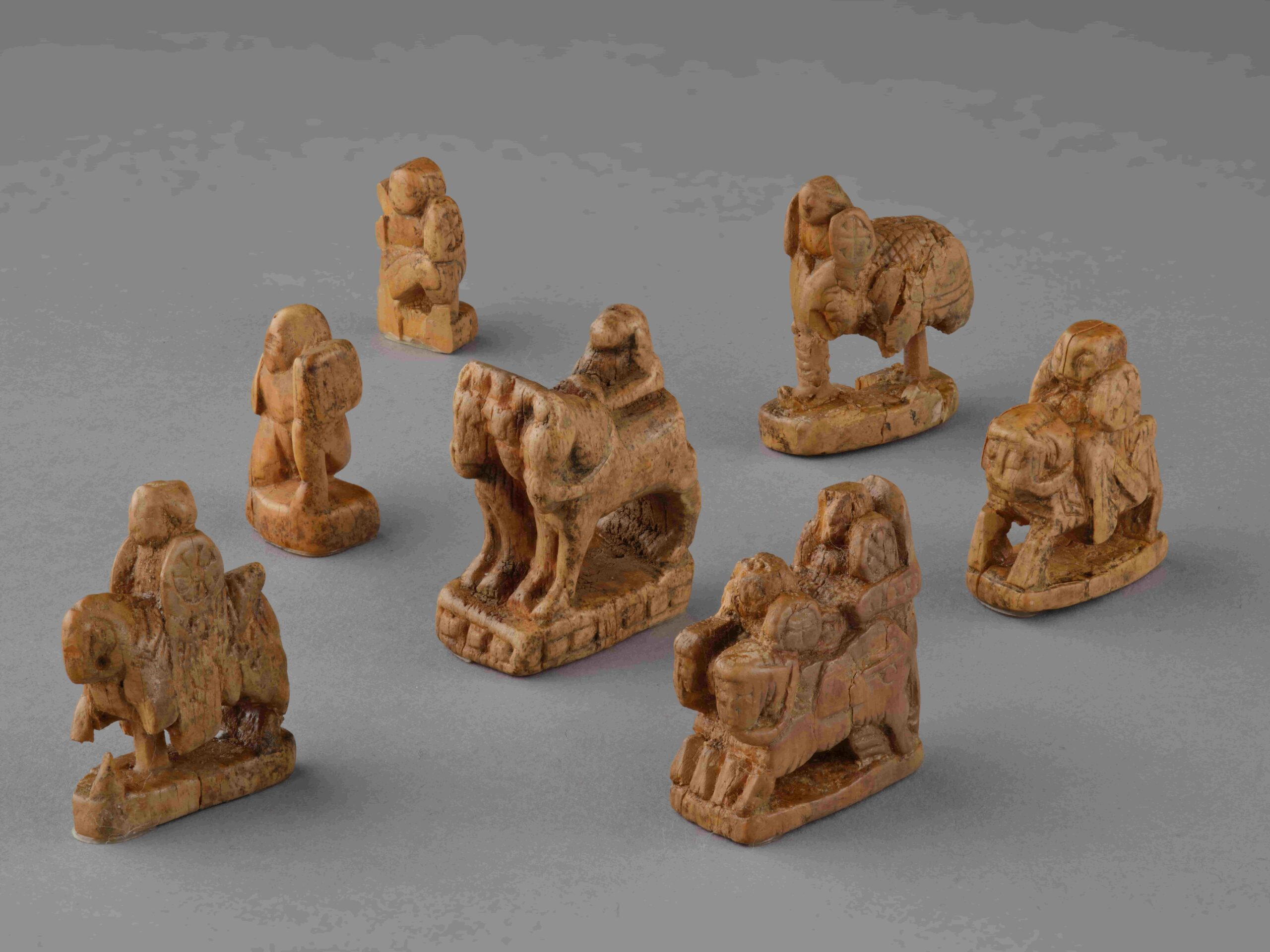
Seven ivory pieces unearthed during the 1977 Afrasiab (Afrosiyab) excavations in Samarkand are now recognized as the world’s oldest known chess set. These pieces were displayed at the British Museum’s “Silk Roads” exhibition in 2024–25.
As we move into the Middle Ages, chess—carried to Southern Europe through the Arab conquests—found new life in royal courts and noble households. By the 15th century, the game had become a favored pastime of the European elite, and its rules began to take their modern form. The queen and bishop acquired their far-reaching mobility; pawns were granted the right to move two squares forward on their first move and to be promoted upon reaching the opposite end of the board. Innovations such as castling and en passant were also products of Renaissance Europe’s fascination with strategy and refinement.
History records that Napoleon Bonaparte carried a chess set into exile, and even faced off against the famous mechanical automaton known as The Turk.
Joseph Racknitz – Humboldt University Library
Let us pause here for a moment to recall this curious invention: the Mechanical Turk, built in 1770 by Wolfgang von Kempelen for Empress Maria Theresa, was an automaton shaped like a turbaned, mustachioed “Turkish” figure. To the amazement of audiences, it managed to defeat many opponents of its time. The mysterious machine, which signaled its moves by shaking its head, became the subject of widespread speculation and newspaper intrigue. It famously sat across from luminaries such as Napoleon and Johann Maelzel (a friend of Beethoven). Even Edgar Allan Poe attempted to unravel its mystery in a published essay. Descriptions from the era tell us:
“Before winning the game, it shakes its head triumphantly, glances around with a smug expression, then draws its left arm back farther than usual and rests its fingers for a moment.”
Another great mind fascinated by chess was Benjamin Franklin—American philosopher, scientist, and statesman—who authored “The Morals of Chess,” a reflection on the game’s virtues and its lessons for life and conduct.
Building A Throne On The Board: A Few Words About Chess
Though occasionally condemned by some as haram, chess enjoyed remarkable popularity in the Ottoman Empire. Historical sources suggest that nearly every sultan and prince was familiar with the game. The famous tale of Yavuz Sultan Selim, who is said to have played chess in disguise with the Persian ruler Shah Ismail, remains a favorite anecdote. Even Murad IV, at the age of thirteen, referenced chess as a metaphor for military strategy in a gazel written to his pasha during the Baghdad campaign: “You said, ‘I am skilled,’ to checkmate the enemy. Now, is there no soldier who can play the knight against the foe?”
By the 20th century, the game had evolved into a symbol of ideological rivalry during the Cold War—most notably embodied in the legendary 1972 Bobby Fischer–Boris Spassky world championship match. In an era where art and science intertwined, chess also captured the imagination of great minds such as Albert Einstein, Stanley Kubrick, and Marcel Duchamp, who all shared a passion for the game’s blend of creativity and intellect.
The Silent Army
Let us take a closer look at the long historical journey of chess and the intricate logic of its rules. Imagine the strategic dance of two armies across a 64-square battlefield. Each side commands sixteen pieces—an army composed of a king, queen, two rooks, two bishops, two knights, and eight pawns—each with its own unique movement and purpose.
The king is both the most vital and the most vulnerable figure. Able to move only a single square at a time, he rules the board with fragile authority; his capture—checkmate—ends the battle. The queen, by contrast, is the most powerful of all, a symbol of modern chess’s evolution. With her ability to move any number of squares in any direction—vertically, horizontally, or diagonally—she stands as the army’s commander-in-chief, and every pawn dreams of becoming one.
The rooks, moving along straight lines, resemble the sturdy walls of a fortress, while the bishops, sweeping diagonally across the board, lend the game its dynamic depth. The knights, with their leaping L-shaped moves, embody surprise and imagination; they can jump over any piece, creating threats that defy easy calculation. (They also happen to be my personal favorite.) And then come the pawns—humble soldiers who advance slowly but hold immense strategic power. Though they move cautiously, step by step, a single pawn that reaches the far end of the board can transform into a queen, altering the course of the game entirely.
Chess
The opening of a chess match is like the overture of a symphony. It sets the tone, establishes structure, and lays the foundation for what is to come. Opening theory, which studies these early moves, is based on several timeless principles: controlling the center, developing pieces to effective squares, and ensuring the king’s safety—often through castling. Classical openings such as the Italian Opening and the Spanish (Ruy López) Opening have been played for centuries, each anticipating the harmonious coordination of knights and bishops toward the center. As the saying goes, every move in the opening writes the story of the game to follow.
And finally, the endgame—the poetic finale of chess. With few pieces left on the board, clarity replaces chaos. Pawns rush to become queens; kings abandon their shelters and march into battle. A well-known adage captures it perfectly: “The opening requires knowledge, the middlegame requires creativity, the endgame requires mathematics.”
Chess
Indeed, in this final stage, precision reigns supreme. Players must recall fundamental checkmate patterns, calculate accurately, and avoid the ever-looming trap of stalemate. Certain strategic principles have long been regarded as the cornerstones of chess: control the center, develop your pieces, safeguard your king, and never make a move without purpose. Every piece should serve a plan—advancing one’s own goals or thwarting the opponent’s. Chess is an ocean of infinite combinations, deeper than any one mind can fully grasp. Yet its essence remains eternal: balance—the constant negotiation between attack and defense, material and position, risk and safety.
“AlphaZero conquered the chess world; it almost solved the game, turning us humans into its pets.”
Digital Moves
Chess has entered a new era—an era shaped by modern technology. (My dear chess teacher, my father—if he could see these days, he would sit across from me with that quiet, sly smile he used to wear when it was my move, the one that always broke my concentration—and he’d say, “What’s wrong? You don’t have any pieces left to lose; they’re all digital now.”)
Chess
Indeed, in this new world, we no longer need to carry a chess set in our bags, and people like me can no longer lose pieces one by one under the table. The game has found its home in the digital realm. And perhaps one of the greatest comforts of this transformation is that, if you’re in the mood to play but no one around you shares that enthusiasm, you no longer have to plead, “Come on, let’s play a game.” Wherever we are, at any hour of the day, thousands of opponents wait for us on the other side of a glowing screen.
And no, I’m not exaggerating. Today’s online chess platforms host millions of players around the world. Chess.com, for instance, surpassed 100 million members in the 2020s, while the open-source platform Lichess sees millions of games played daily. You can even play a few lightning-fast bullet games—sixty seconds of pure adrenaline—while waiting for the subway.
The global fascination with chess reached unprecedented heights in 2020, following the release of Netflix’s The Queen’s Gambit. After the series aired, chess set sales reportedly rose by 87%, while chess book sales skyrocketed by 603%. Online platforms saw an explosion of new players, and personalities such as Levy Rozman (GothamChess), GM Hikaru Nakamura, and the Botez Sisters (Alexandra Valeria and Andrea Botez) became internet sensations, turning chess into a form of entertainment as much as a sport. Yet, technology’s role in chess runs far deeper than streaming platforms or mobile apps. The first great technological turning point came in 1997, when IBM’s Deep Blue famously defeated Garry Kasparov, the reigning world champion. That match marked the dawn of an age in which machines began to outthink their human creators.
Chess
Two decades later, in 2017, Google DeepMind’s AlphaZero program revolutionized the chess world once again. After just four hours of self-learning, it taught itself the game from scratch and went on to crush Stockfish, the most powerful chess engine of its time. Even more astonishing was the way it played—creating brilliant, unconventional moves that no human had ever imagined. Chess master Simon Williams summed it up memorably: “AlphaZero conquered the chess world; it almost solved the game, turning us humans into its pets.”
As impressive as that sounds, I’ve always found the “pet” analogy unsettling. There’s something chilling about imagining a machine not only mastering the game we love but redefining it entirely. Doesn’t that thought give you pause, too? After all, as the saying goes:
“Not every artist is a chess player, but every chess player is an artist.”
The Renaissance of Chess and the Global World
Welcome to the 21st century — the age of chess’s renaissance. Thanks to digital platforms and social media, chess has become more visible, accessible, and vibrant than ever before. Livestreamed tournaments, YouTube tutorials, and online matches have made the game not only global but also fashionable among younger, fast-paced generations. We have already mentioned the impact of The Queen’s Gambit series, but the resurgence goes even deeper. During the pandemic, millions turned to chess as both a pastime and a way to keep their minds sharp. Today, it is estimated that over 600 million people worldwide either know how to play chess or have played it at some point — transforming what was once considered a niche intellectual pursuit into a truly mainstream hobby.
Credit: Magnus Carlsen
The influence of digital publishing and e-sports culture cannot be overstated. On Twitch, we see grandmasters like Hikaru Nakamura and Magnus Carlsen playing live, analyzing moves, and interacting with thousands of viewers. Content creators such as the Botez sisters, Alexandra and Andrea, have brought a new, entertaining dimension to the game, blending humor and skill in ways that attract audiences far beyond traditional chess circles. On YouTube, creators like Agadmator have introduced legendary matches — from Paul Morphy to Mikhail Tal — to new generations, with videos viewed by millions.
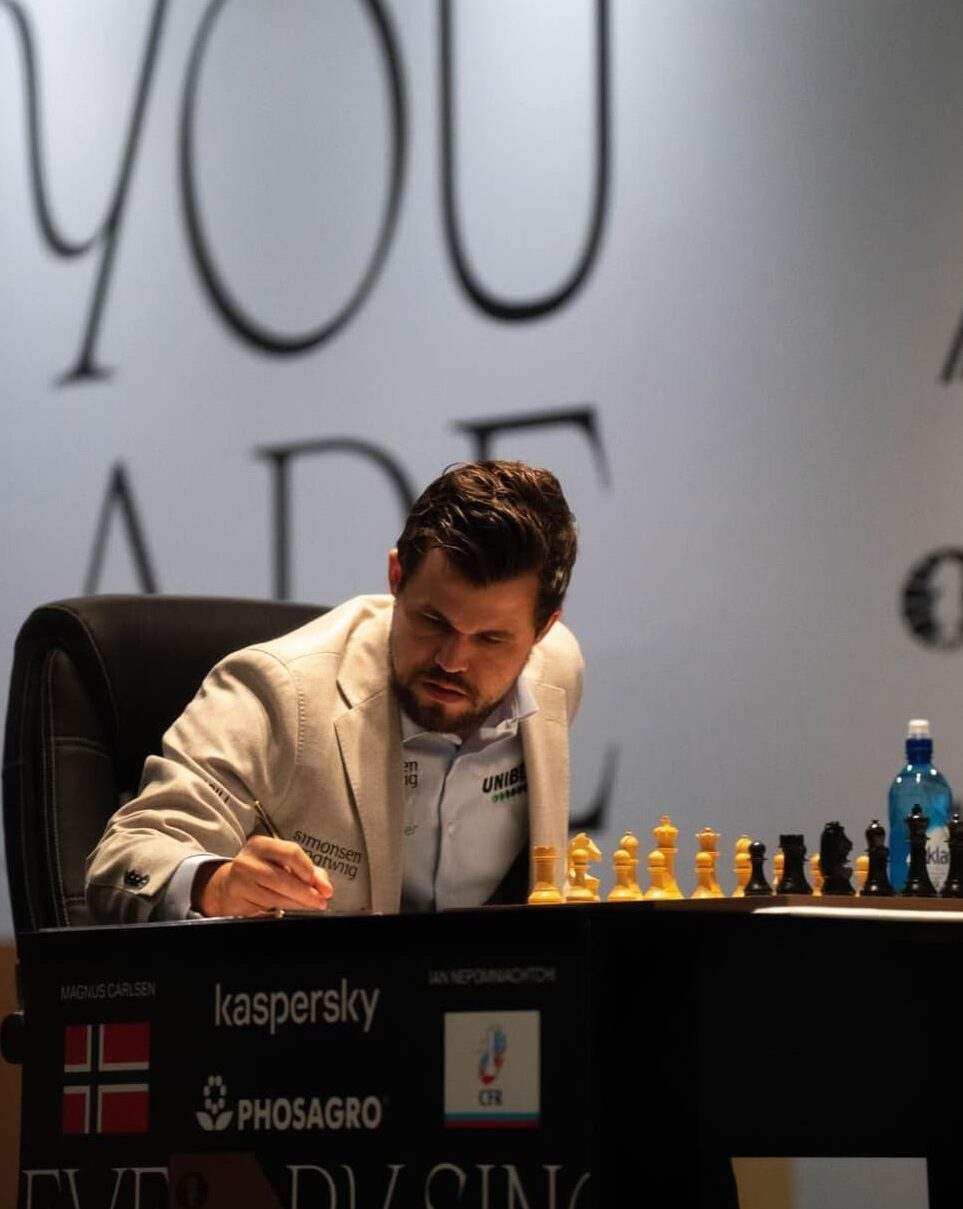
At the top levels, chess has never been more competitive — or more global. The reigning star of the past decade, Norwegian GM Magnus Carlsen, has become nothing short of a rock star. Beyond his brilliance on the board, Carlsen has turned chess into a modern brand through ventures like his Play Magnus company and mobile apps, drawing countless young players into the game. In 2023, Chinese GM Ding Liren made history by becoming the first player from China to win the world championship, marking a milestone for both chess and global diversity. Female grandmasters, too, are claiming their place in the spotlight: Hou Yifan dominated the women’s rankings for years, while rising star Bibisara Assaubayeva became the world blitz champion at a young age. Importantly, most major tournaments today are open to all players — men and women compete on equal footing.
Credit: Magnus Carlsen
Chess federations and organizations remain highly active today. The World Chess Federation (FIDE) not only organizes World Chess Day events each year but also undertakes initiatives to integrate chess into school curricula across the globe. In Turkey, the Chess Federation engages in a wide range of activities, from inter-school tournaments to inclusive chess projects designed for individuals with disabilities. In many countries, chess has now been incorporated into the education system—either as a formal subject or as an extracurricular club activity. This growing institutional support stems from the recognized pedagogical value of chess, which fosters intellectual development, strategic thinking, and character building—benefits that educators increasingly see as essential for students’ overall growth.
Turkey’s younger players are now climbing the global ranks with impressive speed. In a 2024 episode of the C-Squared Podcast, GM Fabiano Caruana commented on prodigy Yağız Kaan Erdoğmuş, saying: “While it’s always difficult to predict, what Yağız Kaan has achieved at this age is truly impressive. I see no obstacle to him reaching the highest levels of chess in the future.” As his rating approaches the 2600 mark, Erdoğmuş’s progress is closely followed by the international chess press — a sign of Turkey’s growing presence in the global chess arena.
Credit: Yağız Kaan Erdoğmuş
Like Life…
For those who wish to begin their journey in chess, the first step is simple: learn how the pieces move. Once you understand the basics — promotion, check, checkmate, castling — the rest unfolds between you and your opponent. Like life itself.
For centuries, chess has spoken to humanity through the silent language of its pieces. Look closely at a chessboard, and you will see a reflection of life in miniature: strategy and intuition, patience and risk, triumph and defeat. Sometimes, despite all our careful planning, an unexpected move upends everything — much like the surprises life throws our way. At other times, we take a daring risk, sacrifice something valuable, and discover a greater opportunity waiting beyond the board.
Chess
Some of us win, some lose, but all of us learn. Anyone who wants to understand life should spend a moment at the chessboard — there, you’ll find struggle and cooperation, intellect and humility, and that quiet handshake at the end of every battle. Perhaps that inner journey is the greatest reward of all.
Global Balance: FIDE
The heart of world chess beats within FIDE, an organization uniting over 200 countries. It establishes the rules, awards titles, maintains rating systems, and connects players across continents. In many ways, FIDE is the United Nations of chess — the institution that makes it possible for players around the globe to speak the same strategic language.
Credit: Michal Walusza / Fide
The Chess Ecosystem in Turkey
Founded in Ankara in 1954, the Turkish Chess Federation (TSF) continues a tradition that dates back to the Turkish Sports Associations Alliance (1922–1936). It joined the FIDE family in 1962 and has since evolved into a vast organization with more than 2,000 clubs, 185 training centers, and tens of thousands of referees and coaches.
Credit: Fide
The TSF not only oversees competitions but also runs educational programs for children, youth, and teachers nationwide. At the grassroots level, clubs are the living cells of this ecosystem — not just places of competition but spaces of learning, mentorship, and community. Sometimes, all it takes is a table and two chairs in a school basement or a corner of a library to ignite a lifelong passion for the game.
Among Turkey’s leading clubs are Fuby Academy Sports Club, Adana 1907 Chess Sports Club, Beyoğlu Chess Sports Club, Manisa Chess Center, and Altınkale Chess Sports Club. Fuby Academy, in particular, has drawn attention in recent years for its strong performances in club championships. In youth categories, Güzelbahçe Altyapı, Lion Chess, Elbe Chess Online Education, and Satranç İstanbul stand out as training grounds for the grandmasters of tomorrow.
On the silent squares of the board, every piece depends on the support behind it. Even a pawn cannot advance without a solid foundation — a nurturing club, dedicated management, and fair governance. These elements — clubs, federations, and institutions like FIDE — form the invisible structure that makes the game whole.
Because chess, despite its solitary appearance, is ultimately a shared story — written through the coordinated moves of thousands of minds across the world.