
As one steps into the enchanting world of horology, one of the first distinctions to grasp is between automatic and quartz watches. For newcomers fascinated by timepieces, the question often arises: which should I choose?
At the heart of watchmaking lies the mechanism, grouped broadly into two categories as automatic and quartz. The most fundamental difference between them is that quartz movements are powered by a battery, while automatic movements draw their energy from the motion of the wrist.
Quartz movements, which are relatively new compared to automatics, first appeared in 1969. On December 25 of that year, Seiko unveiled a revolutionary chapter in watchmaking with its limited-edition Astron, 100 pieces that marked the world’s first quartz-powered wristwatch. At the 1970 Basel Fair, Seiko and other brands presented their quartz innovations, and the technology rapidly gained ground. So disruptive was this invention that it triggered what came to be known as the “Quartz Crisis,” challenging the centuries-old tradition of mechanical watchmaking. While automatics never disappeared, quartz firmly secured its place in the beating heart of the industry.
The key to quartz is the quartz crystal itself. When electrically charged, the crystal vibrates at a precise frequency, regulating the movement and powering the motor that drives the hands. Unlike automatics, which consist of hundreds of intricate parts, quartz movements follow a far simpler principle, making them easier and faster to produce—resulting in greater affordability. Their reduced number of components also contributes to higher durability compared to automatics.
Advantages of Quartz Watches
- Accessibility: More cost-effective thanks to simplified production, yet lower price does not equate to lower quality.
- Accuracy: Quartz watches are remarkably precise, deviating only a few seconds per day—or even per week. Typical battery life spans two to three years.
- Durability: With fewer components, their structures are robust and resilient.
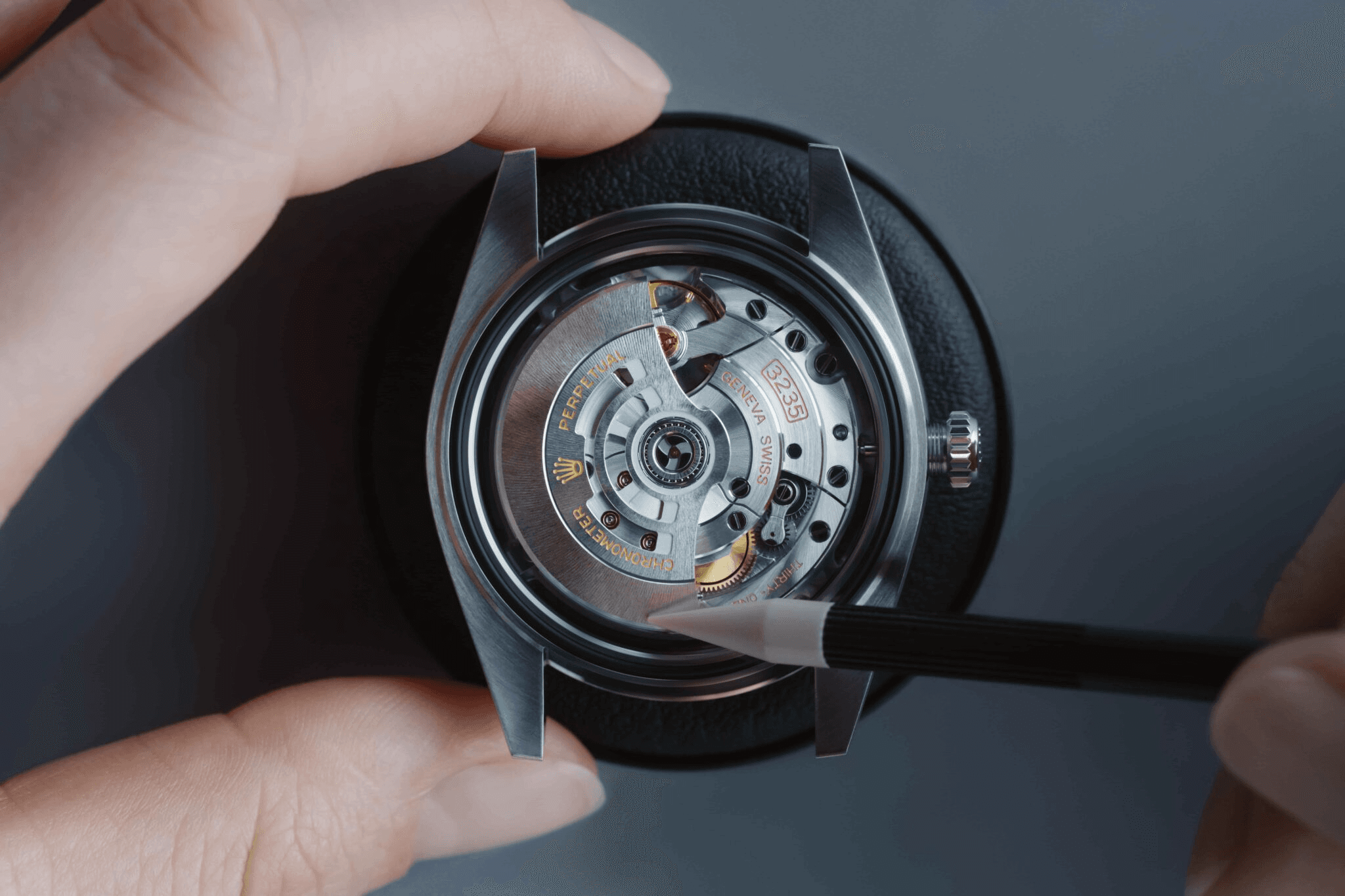
On the other hand, automatics, rooted in the very origins of watchmaking, are powered by wrist motion. As the wrist moves, the rotor spins, transferring energy to the mainspring. This spring winds, storing power and setting the movement in motion. As long as the watch is worn regularly, it runs continuously, though mechanical timepieces may drift by 15–30 seconds per day. Stored energy also provides a power reserve, allowing the watch to continue ticking for a period even off the wrist.