You’ve watched Emilia Pérez and you’re left utterly moved. If you’re ready for more, here’s a Golden Globe nominated watchlist available on digital platforms.
As 2024 slowly bids farewell, we’ve already begun selecting the year’s “bests.” What did we listen to, read, explore, or watch the most? The film industry isn’t excluded from this marathon, with the year’s most awarded works now shining at the Golden Globe Awards—a prelude to the Oscars. Just when we think we’ve chosen the year’s best, some films come along and make us question everything. Emilia Pérez is undoubtedly one of those.
Contents
Post-Emilia Pérez: Golden Globe Nominated Watchlist
French director Jacques Audiard, known for acclaimed films like Rust and Bone (2012) and Paris, 13th District (2021), continues his cinematic momentum with Emilia Pérez, which premiered at Cannes and took home the Jury Prize. Dominating the European Film Awards and leading the nominations for the 82nd Golden Globes, the film has garnered well-deserved attention.
And for good reason. Emilia Pérez delivers a tale of trans identity in the context of crime and violence through an unconventional musical lens, offering a unique visual and auditory experience. Before delving into the thematic depths of how it accomplishes this, it’s essential to note that the film’s ensemble cast of women collectively won the Best Actress award at Cannes. Karla Sofia Gascon, who plays both Emilia Pérez and her pre-transition identity, Manitas, became the first trans person in the festival’s history to win in this category. Gascon’s performance is a tour de force, holding the film together amidst an intense narrative flow that could easily unravel.
Post-Emilia Pérez: Golden Globe Nominated Watchlist
SPOILER ALERT
The first half of the film is narrated through the eyes of Rita, played by Zoe Saldaña—a determined lawyer struggling to achieve her career goals. As a Latina, Rita faces professional and societal discrimination while navigating a tough economy. Audiard’s opening sequence, set in Mexico’s dark and treacherous streets but filmed in Paris, immediately commands attention with its vivid storytelling. Unlike conventional musicals where synthetic performances interrupt the narrative flow, the musical numbers in Emilia Pérez are seamlessly integrated, enhancing the story’s tone and language and making the transition into this absurdly dynamic world much smoother.
Post-Emilia Pérez: Golden Globe Nominated Watchlist
When Manitas, a notorious Mexican cartel leader, kidnaps Rita one night, we expect events to spiral into something horrific. However, the film’s first major twist occurs here: Manitas’s sole desire is to undergo gender confirmation surgery, assume her true identity as a woman, and leave both her past life and the criminal underworld behind. Manitas hires Rita as her secret lawyer to arrange the surgery, fake her death, and financially secure her family. What unfolds is a breathless narrative flow as we witness Rita’s meticulous management of this process and the eventual emergence of Emilia Pérez.
Despite its high entertainment value, the limited time allocated to Emilia’s transition and adaptation feels inadequate. This brevity limits the emotional depth of the character’s development. Still, Karla Sofia Gascon’s outstanding performance largely compensates for this shortfall. Audiard seems to invite us to explore not just Emilia’s transformation but also Rita’s. Could this clandestine partnership serve as a way for both characters to navigate their respective identity crises? Possibly.
Post-Emilia Pérez: Golden Globe Nominated Watchlist
CRIME, VIOLENCE, AND MELODRAMA
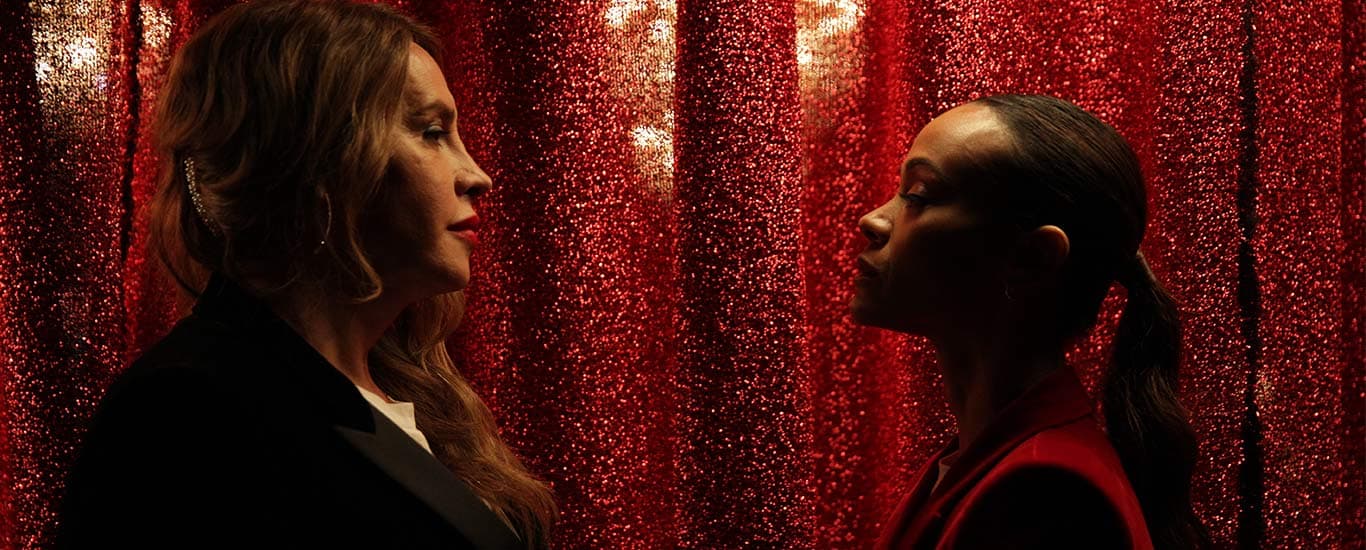
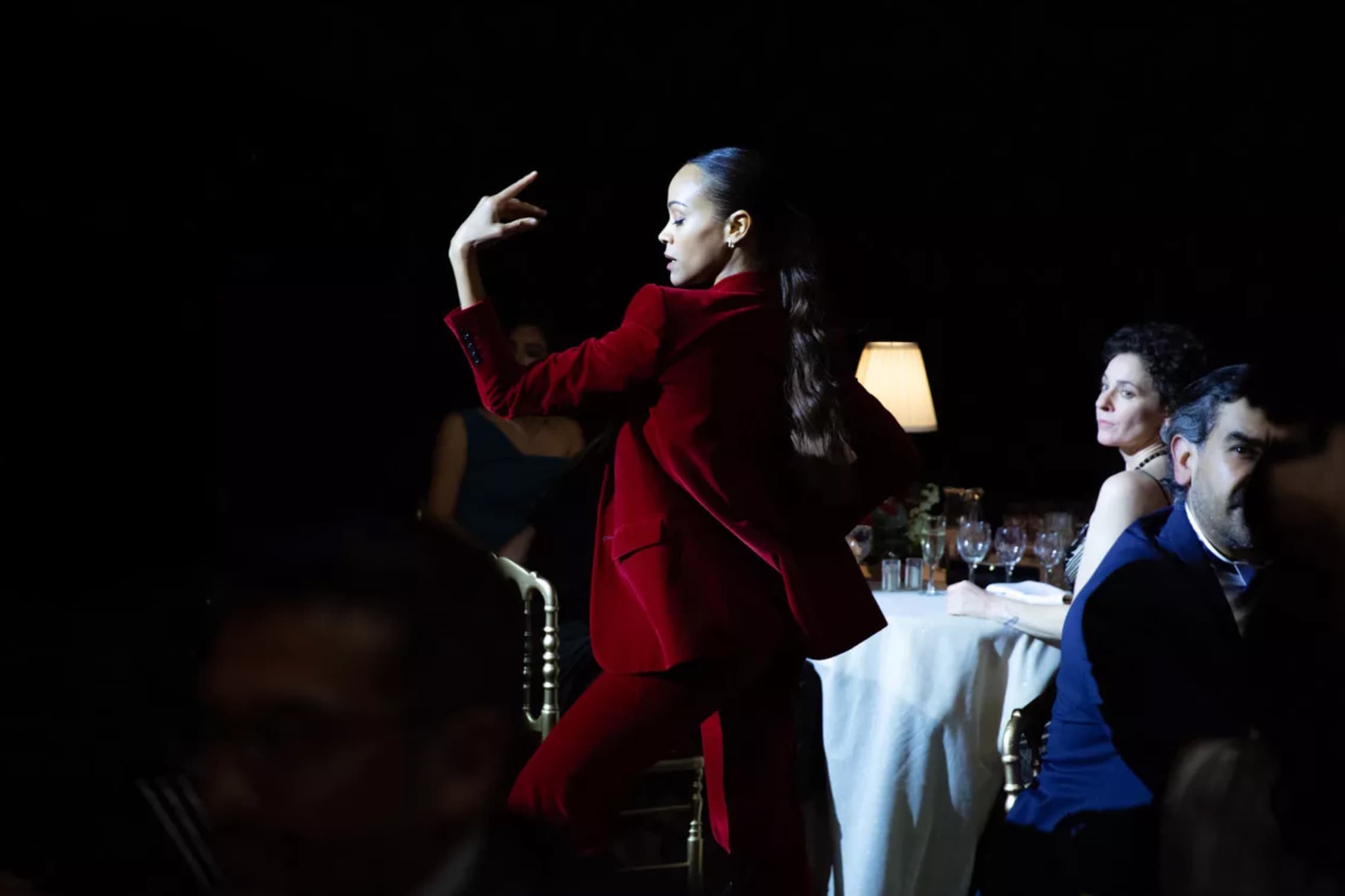
The second half of the film begins with a four-year time jump. Rita and Emilia cross paths again at an elegant dinner party in London—unsurprisingly, not by coincidence. Emilia, now unable to bear being separated from her children, enlists Rita’s help to reunite with her family. Disguised as the cousin of her former self, Manitas, Emilia returns to Mexico with her spouse and children. This marks the beginning of the film’s most complex—and at times problematic—section.
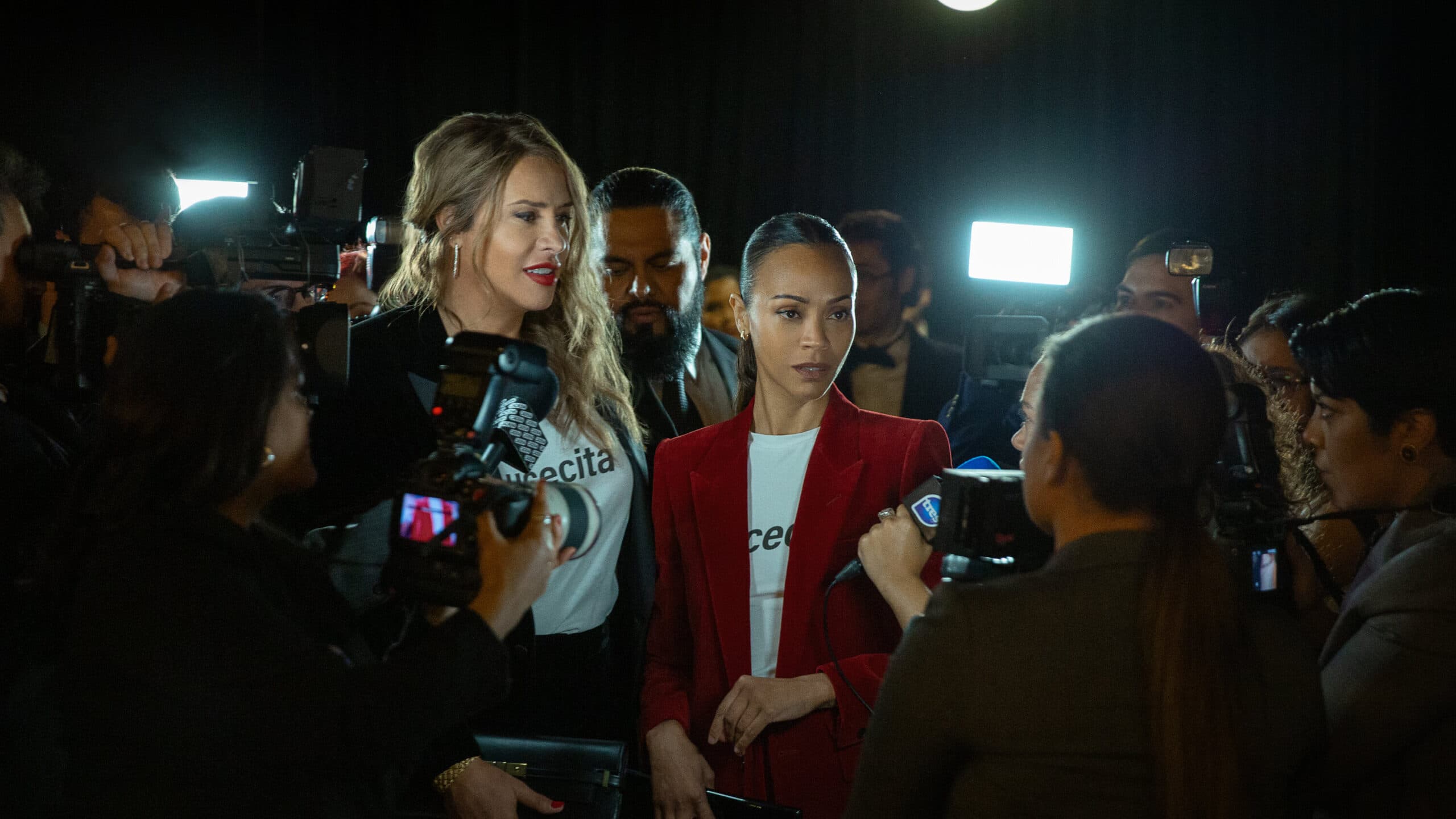
In Mexico, Emilia undergoes a seemingly miraculous transformation, becoming a benevolent force overnight. She establishes a non-profit organization dedicated to helping those affected by cartel violence or missing loved ones—people whose suffering she may have caused in the past. However, “remorse” feels like a flimsy justification for this sudden shift. Despite this, the film acknowledges its own inconsistencies, with Rita voicing criticisms that reflect the audience’s concerns. Some musical segments also effectively address these contradictions, preventing the unease from lingering too long.
Post-Emilia Pérez: Golden Globe Nominated Watchlist
The film then transitions into a broader exploration of societal issues in Mexico, including crime, violence, corruption, and gender-based violence. However, Audiard’s commentary on these topics is short-lived, with the final act reverting to a classic ransom-kidnapping narrative centered around family, betrayal, and anger.
While the film’s world remains compelling, the narrative complexity splits the audience’s focus, hindering deeper emotional resonance. Additionally, certain subplots feel unresolved, such as Emilia’s brief romance with Epifania, or the Bonnie-and-Clyde parody involving her ex-wife Jessi, played by Selena Gomez, and Jessi’s new love Gustavo.
Post-Emilia Pérez: Golden Globe Nominated Watchlist
With its highs and lows, Emilia Pérez promises a fresh cinematic experience that will linger in our minds. Attempting to weave numerous themes—each capable of anchoring its own film—under one narrative roof is no small feat, and achieving such resonance is an undeniable success. This triumph is driven by the film’s cohesive visual design, bold cinematic approach, captivating choreography, and the remarkable synergy between Karla Sofia Gascon and Zoe Saldaña. Despite its narrative flaws, Emilia Pérez is a must-watch and a strong contender this awards season.
Golden Globe Nominated Watchlist
Mubi
Emilia Pérez
Best Motion Picture (Musical/Comedy)
Best Foreign Language Film
Best Director (Jacques Audiard)
Best Screenplay (Jacques Audiard)
Best Actress (Musical/Comedy) (Karla Sofia Gascon)
Best Supporting Actress (Selena Gomez, Zoe Saldaña)
Best Original Song (“El Mal”, “Mi Camino”)
Best Original Score (Clément Ducol, Camille)
The Girl With the Needle
Best Foreign Language Film
The Substance
Best Motion Picture (Musical/Comedy)
Best Director (Coralie Fargeat)
Best Actress (Musical/Comedy) (Demi Moore)
Best Supporting Actress (Margaret Qualley)
Disney+
Inside Out 2
Best Animated Feature
Shōgun
Best Television Series (Drama)
Best Actor (Drama) (Hiroyuki Sanada)
Best Actress (Drama) (Anna Sawai)
Best Supporting Actor (Tadanobu Asano)
Abbott Elementary
Best Television Series (Musical/Comedy)
Best Actress (Musical/Comedy) (Quinta Brunson)
Only Murders in the Building
Best Television Series (Musical/Comedy)
Best Actress (Musical/Comedy) (Selena Gomez)
Best Actor (Musical/Comedy) (Steve Martin, Martin Short)
The Bear
Best Television Series (Musical/Comedy)
Best Actress (Musical/Comedy) (Ayo Edebiri)
Best Actor (Musical/Comedy) (Jeremy Allen White)
Best Supporting Actor (Ebon Moss-Bachrach)
Best Supporting Actress (Liza Colón-Zayas)
Agatha All Along
Best Actress (Musical/Comedy) (Kathryn Hahn)
La Maquina
Best Supporting Actor (Diego Luna)
Feud: Capote vs. the Swans
Best Actress (Limited Series/TV Movie) (Naomi Watts)
Amazon Prime Video
Challengers
Best Motion Picture (Musical/Comedy)
Best Actress (Musical/Comedy) (Zendaya)
Best Original Song (“Compress/Repress”)
Best Original Score (Trent Reznor, Atticus Ross)
Mr. and Mrs. Smith
Best Television Series (Drama)
Best Actor (Drama) (Donald Glover)
Best Actress (Drama) (Maya Erskine)
Hacks
Best Television Series (Musical/Comedy)
Best Actress (Musical/Comedy) (Jean Smart)
Best Supporting Actress (Hannah Einbinder)
Netflix
The Diplomat
Best Television Series (Drama)
Best Actress (Drama) (Keri Russell)
Best Supporting Actress (Allison Janney)
Squid Game
Best Television Series (Drama)
The Gentlemen
Best Television Series (Musical/Comedy)
Nobody Wants This
Best Television Series (Musical/Comedy)
Best Actress (Musical/Comedy) (Kristen Bell)
Best Actor (Musical/Comedy) (Adam Brody)
Black Doves
Best Actress (Drama) (Keira Knightley)
A Man on the Inside
Best Actor (Musical/Comedy) (Ted Danson)
Ripley
Best Limited Series/TV Movie
Best Supporting Actress (Dakota Fanning)
Baby Reindeer
Best Limited Series/TV Movie
Best Supporting Actress (Jessica Gunning)
Monsters: The Lyle and Erik Menendez Story
Best Limited Series/TV Movie
Best Supporting Actor (Javier Bardem)
Griselda
Best Actress (Limited Series/TV Movie) (Sofía Vergara)
BluTV
Dune: Part Two
Best Motion Picture (Drama)
Best Original Score (Hans Zimmer)
House of the Dragon
Best Actress (Drama) (Emma D’Arcy)
The Penguin
Best Limited Series/TV Movie
Best Actress (Limited Series/TV Movie) (Cristin Milioti)
The Regime
Best Actress (Limited Series/TV Movie) (Kate Winslet)
Saatolog Yıllık Saat Dergisi Saatolog’un yeni sayısı, 2020’nin yarattığı bu dönüştürücü etkiden ilham alarak hazırlandı. Dünya dijitalin etkisiyle her zamankinden de hızlı bir şekilde ilerlerken yavaşlamanın da önemini sonunda kavramış bulunuyoruz ve bu tezatlık hayatlarımızın her anına etki ediyor. Biz de bundan yola çıkarak Saatolog 2020/21 sayısını ‘‘hızlı ve yavaş’’ teması altında hazırladık.