The Desire to Be Carolyn: The 90s’ Quietest Icon and the Eternal Myth
She possessed the intuition of how to dress, yet she was equally adept at the art of disappearance. Carolyn Bessette Kennedy reigned as the most photographed yet least heard woman of the 1990s—a paradox that perhaps explains why her ghost continues to haunt the modern moodboard.
In the debut season of Sex and the City, Carrie Bradshaw and her newly married friend, Brooke, dissect the New Yorker’s vanity: “We think we’re Carolyn Bessette,” they remark. This aesthetic delusion has now migrated to Instagram, where the “desire to be Carolyn” manifests in a sea of floor-grazing black maxi coats, muted beige skirts, and the architectural simplicity of a black turtleneck.
Carolyn Bessette-Kennedy, known colloquially as CBK, was voted “the most beautiful” by her high school peers in 1983. She was the quintessential “people’s princess,” a PR maven who effortlessly inhabited the vacuum of American royalty that the United States had long yearned for. Her sartorial instincts were so sharp they felt like a natural law, earning her a spot as a definitive fashion icon in Newsweek by 1997. Consequently, she became the ultimate prey for the paparazzi; her face was as ubiquitous as Madonna’s, with flashes erupting whether she was browsing a boutique or simply having her nails manicured. Her untimely death halted these comparisons, instantly transforming her into a figure of global mourning and eternal fascination.
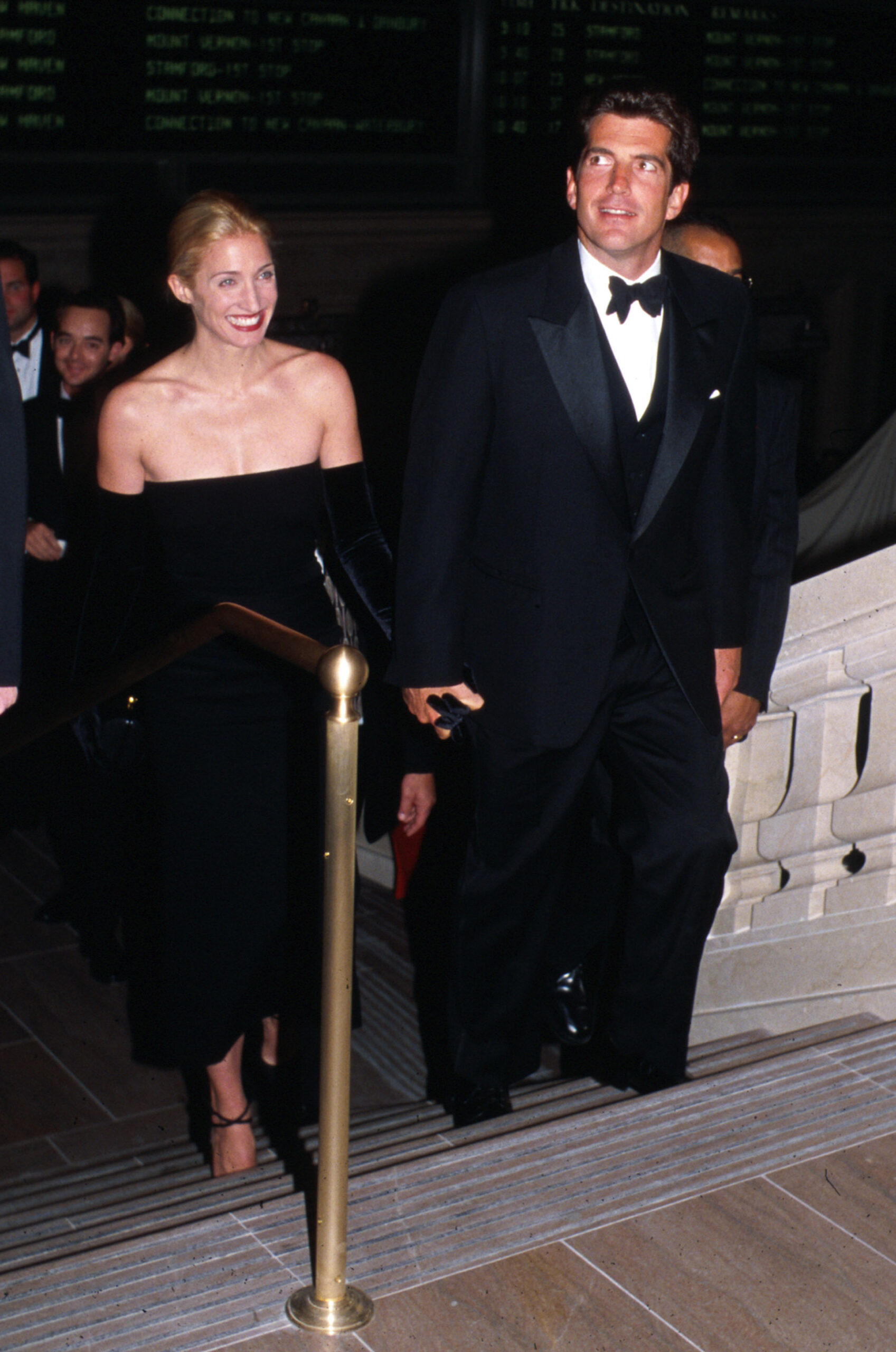
Yet, one must wonder: did a professional image-maker meticulously script her part in this myth? It is striking how little we truly know of CBK. She belongs to that rare tier of the “unreachable,” alongside names like Sade, Leonardo DiCaprio, or Mylène Farmer. We are familiar with the biographical skeletal frame—her upbringing, her education, her professional ascent at Calvin Klein. If one scours the digital archives or loses themselves in the depths of YouTube, one might even find testimonials from childhood acquaintances. However, nearly every fragment of our knowledge is filtered through third parties. They describe her as “normal,” witty, occasionally tomboyish, and prone to drying her hair via the wind of the New York subway. If these accounts are true, her “cool” factor stems from this very lack of artifice—a woman who became extraordinary precisely because she didn’t try to be. She commanded a social gravity, a magnetic distance. But was it sincere? A woman whose career was built on crafting images surely understood the mechanics of becoming an “It girl” or the architecture of a public persona.
As the tabloid frenzy intensified alongside her relationship with John F. Kennedy Jr., Carolyn became increasingly reclusive, retreating into a self-imposed bubble. She was caught in a classic mythological trap: a woman watched by everyone who had nowhere to go. We recognize this tragedy through the lens of figures like Princess Diana. The Kennedy marriage was as volatile as it was cinematic; the infamous arguments captured in Central Park shattered the pristine veneer of the “Camelot” legacy. There were also the whispered power dynamics—the rumors of her navigating simultaneous ties with JFK Jr. and model Michael Berg.
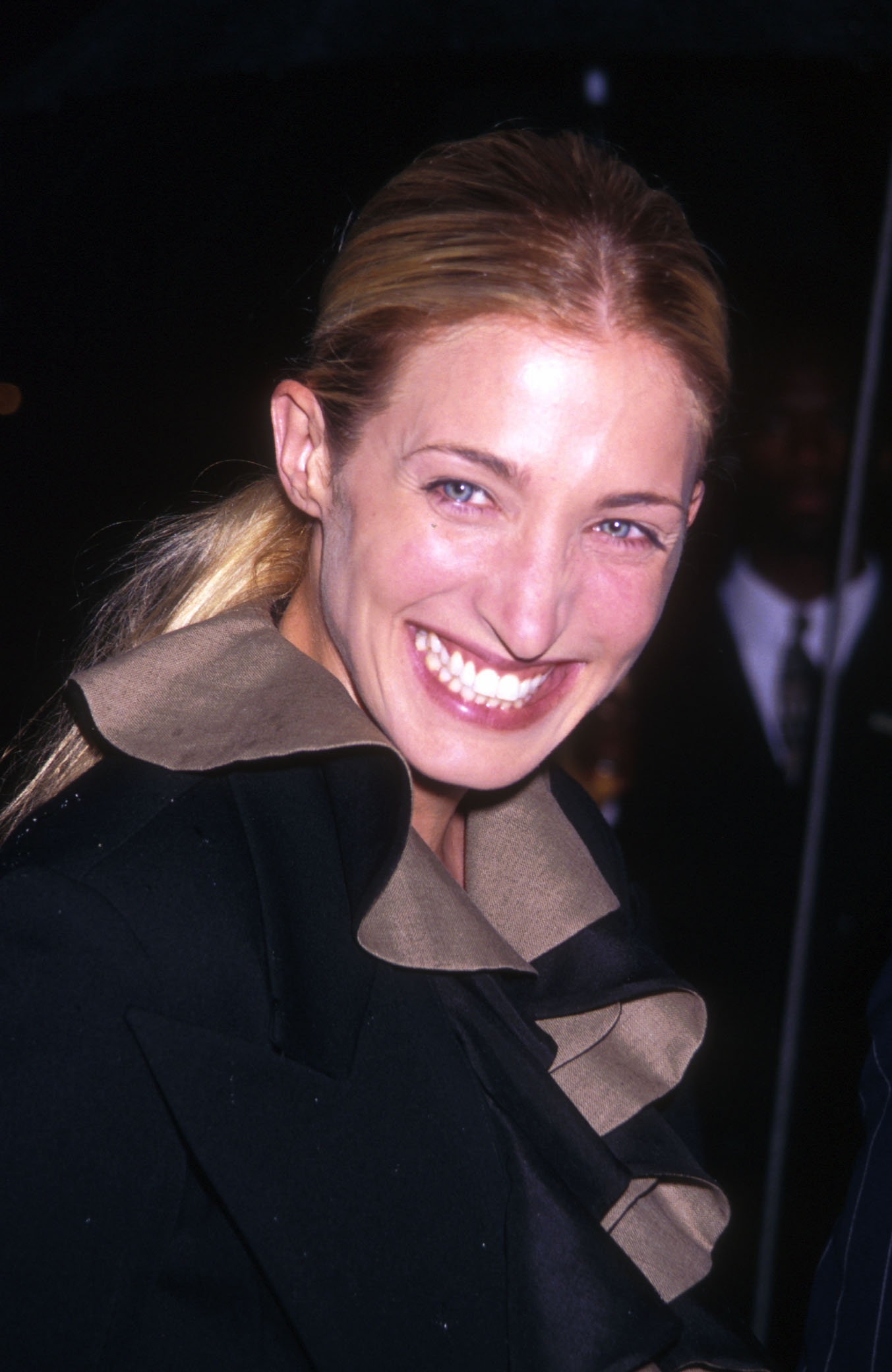
Photo by Diane Freed (Getty Images)
Alongside Gwyneth Paltrow (whom Carolyn reportedly disliked) and Cameron Diaz, she was a pioneer of the “effortless chic” that fashion magazines have spent decades trying to deconstruct. Hers was a world of soft-glam, minimalism, and hair that was intentionally disheveled yet perfectly managed—the blueprint for today’s “clean girl” aesthetic. But the silence remains. Despite her immense media presence and the gravity of her married name, she never sat for an interview. We don’t know why she favored Issey Miyake, or why she largely shunned maximalist textures in favor of neutrals, save for the occasional flash of tartan or graphic detail. We don’t know how she felt about her status as a style deity. In today’s landscape, brands would be clamoring for a “What’s in my bag?” video or a detailed beauty breakdown. Would she have succumbed to the digital age, or would she have remained a ghost in a Tribeca loft? Given her track record, the latter seems the only plausible conclusion.
The legendary Liz Tilberis of Harper’s Bazaar—the editor who reshaped the industry—frequently expressed her longing to put CBK on the cover. The magazine was a mirror of Carolyn’s philosophy: “Fashion doesn’t have to be beautiful. It has to make you feel good.” It feels like a cultural loss that we never saw a stark, black-and-white portrait of her captured by the lens of Peter Lindbergh.
Her influence extended far beyond Calvin Klein. At Ralph Lauren, designers were allegedly told to “create what CBK would wear.” In 1997, Giorgio Armani lauded her style as the archetype of the modern woman—angelic and innocent, yet possessed of a bold, contemporary edge—citing her as the muse for his haute couture.
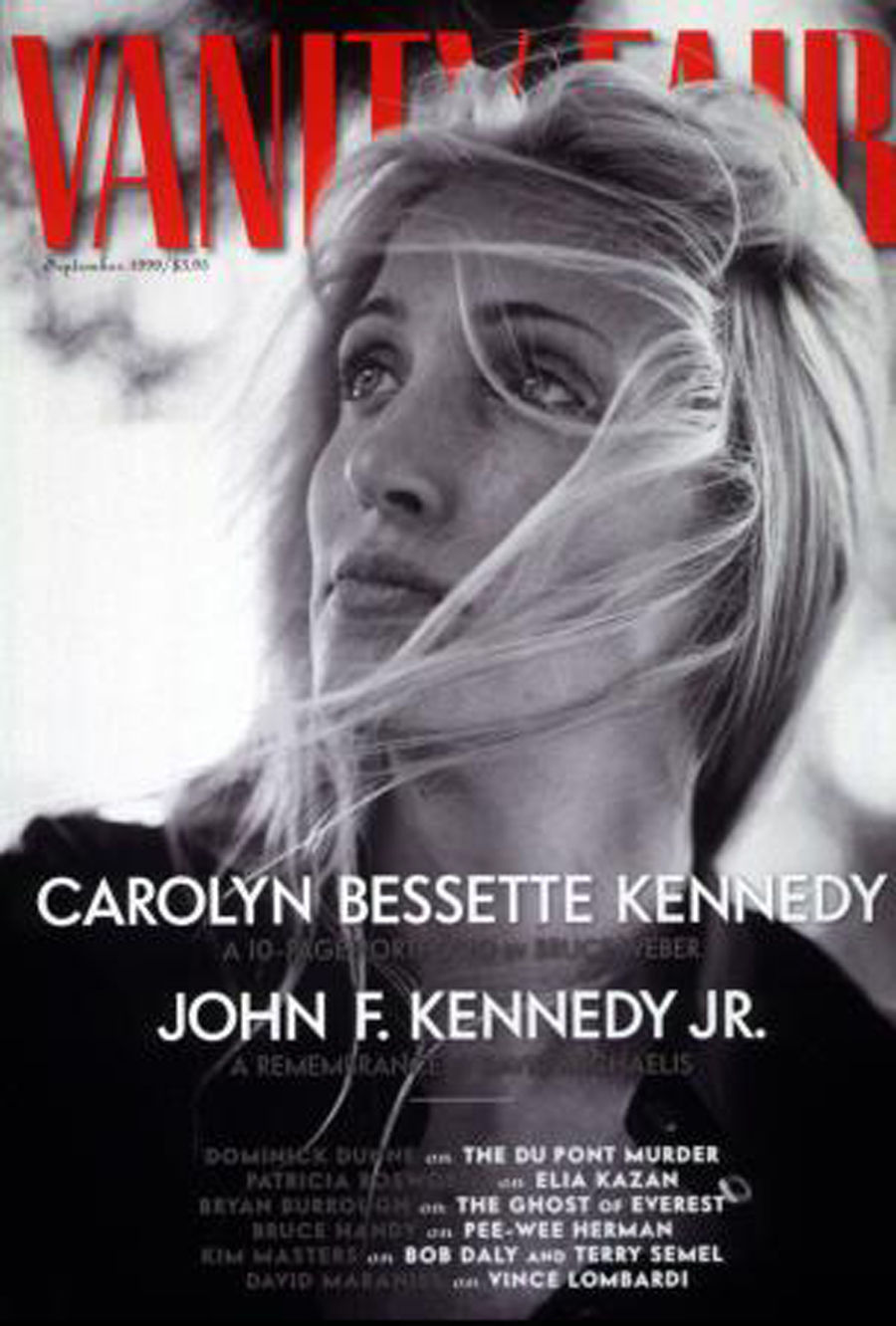
Photo: Getty Images
How does a woman from a pre-internet era maintain such a grip on the Instagram generation? Because there is so little footage of her in motion, we are forced to construct her image from the fragments of the Getty archive. We project our own aspirations onto these frozen moments, becoming collectively enchanted by a woman we’ve never heard speak. From morning until night, we scroll through “inspo” accounts featuring her on the streets of Manhattan, until her features feel as familiar as our own. Did she sell us a fantasy? Her marriage may have been fractured, but in death, it became a modern epic, a Romeo and Juliet for the 90s. It was the story of America’s golden son and a woman who cherished the “ordinary.” While calling it a Cinderella story might be overly saccharine, there was a poetic contrast in JFK Jr. cycling through the city while Bessette-Kennedy paired high-fashion Prada with simple plastic headbands.
The version of CBK that lives on moodboards helped launch Kate Moss and paved the way for contemporary “cool” brands like The Row and Khaite. The fundamental error made by those trying to replicate her look today is the belief that it is merely about “the right pieces.” Anyone can buy a white T-shirt and jeans, but few can wear them with that specific, defiant attitude. To borrow a line from Carrie Bradshaw: “You just don’t get it!”
It is here that the two iconic New York archetypes converge. Perhaps watching Love Story with the 90s as a backdrop makes this comparison inevitable. Carolyn and Carrie represent the two poles of 1990s New York womanhood. Carolyn was the avatar of minimalism and “quiet luxury,” while Carrie was the patron saint of maximalism and romantic experimentation. Carolyn’s palette was controlled and distant, perfectly aligned with the Calvin Klein ethos; Carrie was the rule-breaker in tutus and eclectic heels.
Their romantic lives also followed parallel tracks, both tied to high-profile men. Carolyn’s life was defined by the Kennedy orbit, just as Carrie’s revolved around the gravity of Mr. Big. Yet, in both instances, the women eventually transcended the men, establishing identities defined by their own singular auras.
However, their relationship with the spotlight was a study in contrasts. Carolyn viewed the media as an intruder, a source of anxiety to be avoided. Carrie used the public sphere as a canvas, turning her heartbreaks into a syndicated column. One was an icon defined by her absence; the other made her very visibility a form of art.

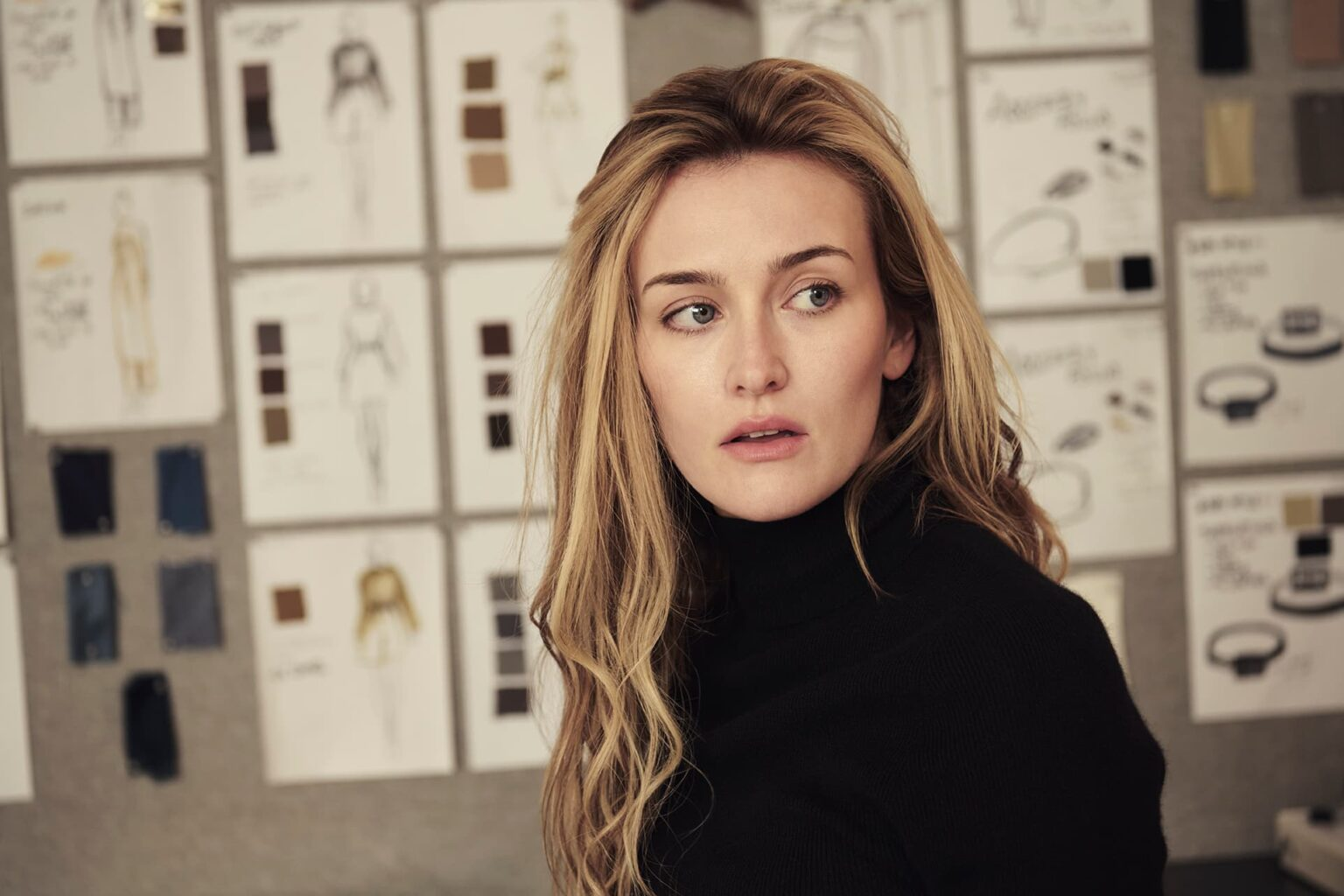
Still, the questions linger. Did actress Sarah Pidgeon study Carrie Bradshaw to find the rhythm of her role? CBK was only alive for the first season of Sex and the City. One wonders if she ever sat in her apartment, eating noodles with her friend Narciso Rodriguez, and watched the show that was essentially a love letter to her city.
Often, myths are destroyed not by tragedy, but by the slow erosion of time. Carolyn never had to navigate the 2000s, the noise of social media, or the pressure of over-exposure. She never had to explain herself or “humanize” her brand by claiming she was “just like everyone else.” She never became ordinary. Today, her style is a commodity, copied and pasted across a thousand moodboards. But what truly makes Carolyn timeless is her inaccessibility. It wasn’t just the clothes; it was the distance she kept. The real question is: if she were still with us, could she have ever maintained the mystery?