Behind the transparent shot clocks that the NBA has brought to European courts lies the centuries-old precision of Swiss watchmaking and the impeccable engineering of Tissot. What follows is a closer look at the invisible heart beating behind the glass of the 24-second revolution.
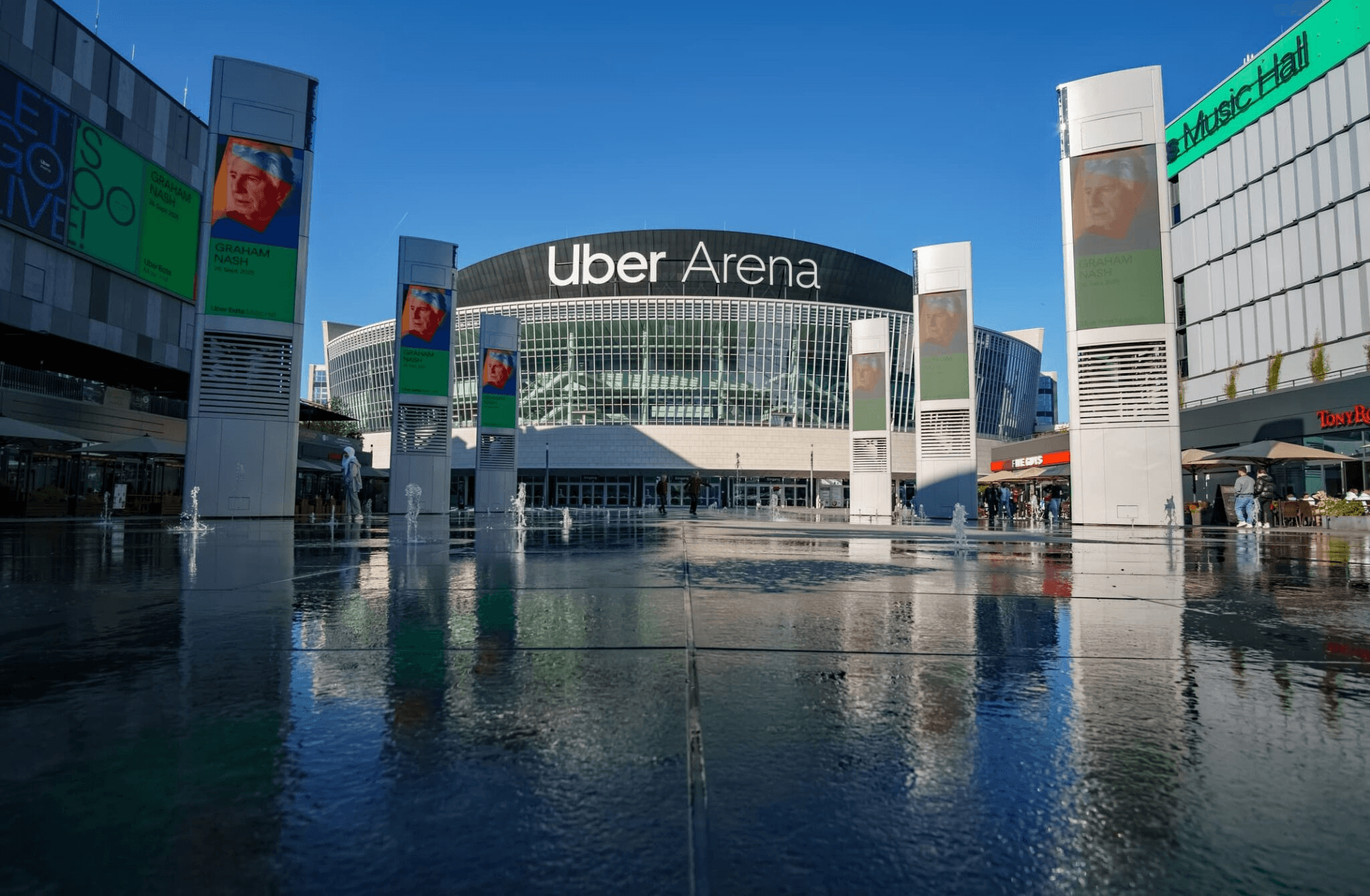
Would you like to stand at center court beneath the massive steel structure of Berlin’s Uber Arena, just a few hours before tip-off, and glance up at the transparent glass panels perched above the basket? Your instinctive answer is probably “no.” But once you finish this article, you might reconsider. For most fans, those panels are nothing more than red digits counting down. But for a horology enthusiast and watch editor, the LED arrays encased in that glass represent the final link in a pursuit of perfection that began in the workshops of Le Locle, the Swiss town synonymous with precision watchmaking. The NBA is not only bringing its star players to Europe —it is also transplanting the ultra-precise technology that decides the fate of every possession: Tissot’s “Timekeepers.” With the Orlando Magic and the Memphis Grizzlies set to face off at Berlin’s Uber Arena on January 15, 2026, one of America’s most beloved sports institutions is officially taking root on European soil.
We have, in fact, seen a similar endeavor recently with the NFL game hosted at Real Madrid’s Santiago Bernabéu Stadium. Yet the NBA has taken a far more radical step by deciding to hold select regular-season games in various European cities throughout the year. As a result, not only will the brightest stars in basketball display their skills on European courts, but they will also do so with the NBA’s spellbinding technological apparatus in tow.
From Chaos to Order: The Birth of the 24-Second Shot Clock
Looking back at basketball’s timeline, 1954 emerges as one of its most transformative eras. At that time, the sport bore little resemblance to the fast-paced spectacle we know today. When teams took the lead, they would often stall the game by endlessly passing the ball, effectively “killing” the action. Fans were bored, the game dragged, and the future of basketball appeared bleak. Enter Danny Biasone, owner of the Syracuse Nationals, who devised a remarkably simple yet genius mathematical solution: He divided the total game duration (2,880 seconds) by the average number of field-goal attempts taken in a game (around 120). The answer—24—became the number of seconds each team would have to attempt a shot. Fail to do so, and possession would be forfeited.
This number was not merely a rule; it was an engineering principle that rewired the sport’s DNA. From that moment on, basketball became a technological contest in which every tenth of a second carried strategic weight. When Tissot became the NBA’s official timekeeper in 2016, it elevated this 24-second heritage by fusing mechanical precision with digital responsiveness.
The Invisible Heart Behind the Glass
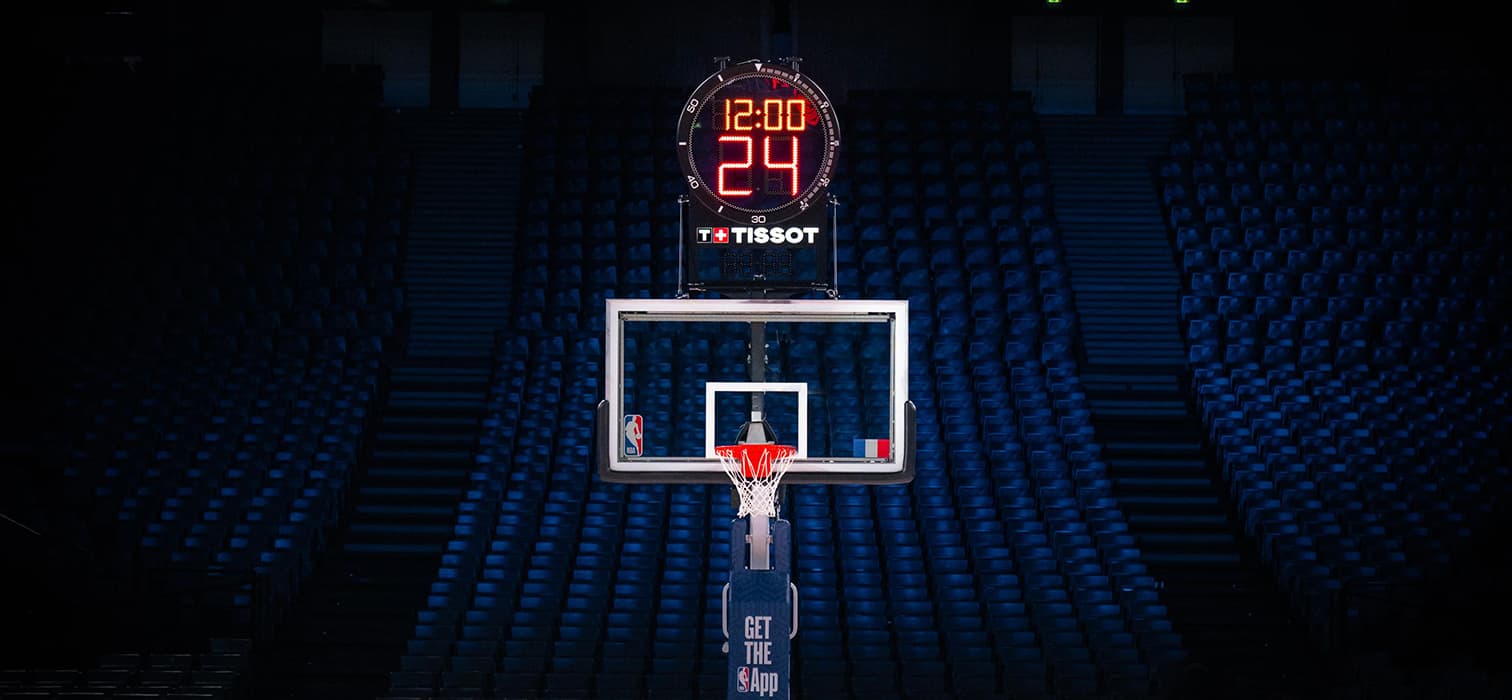
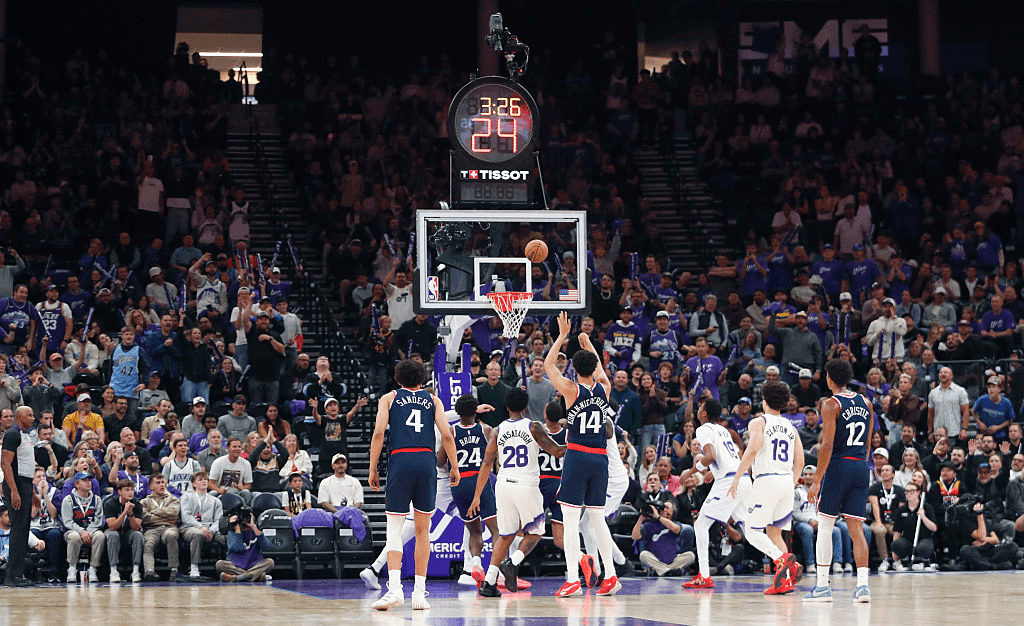
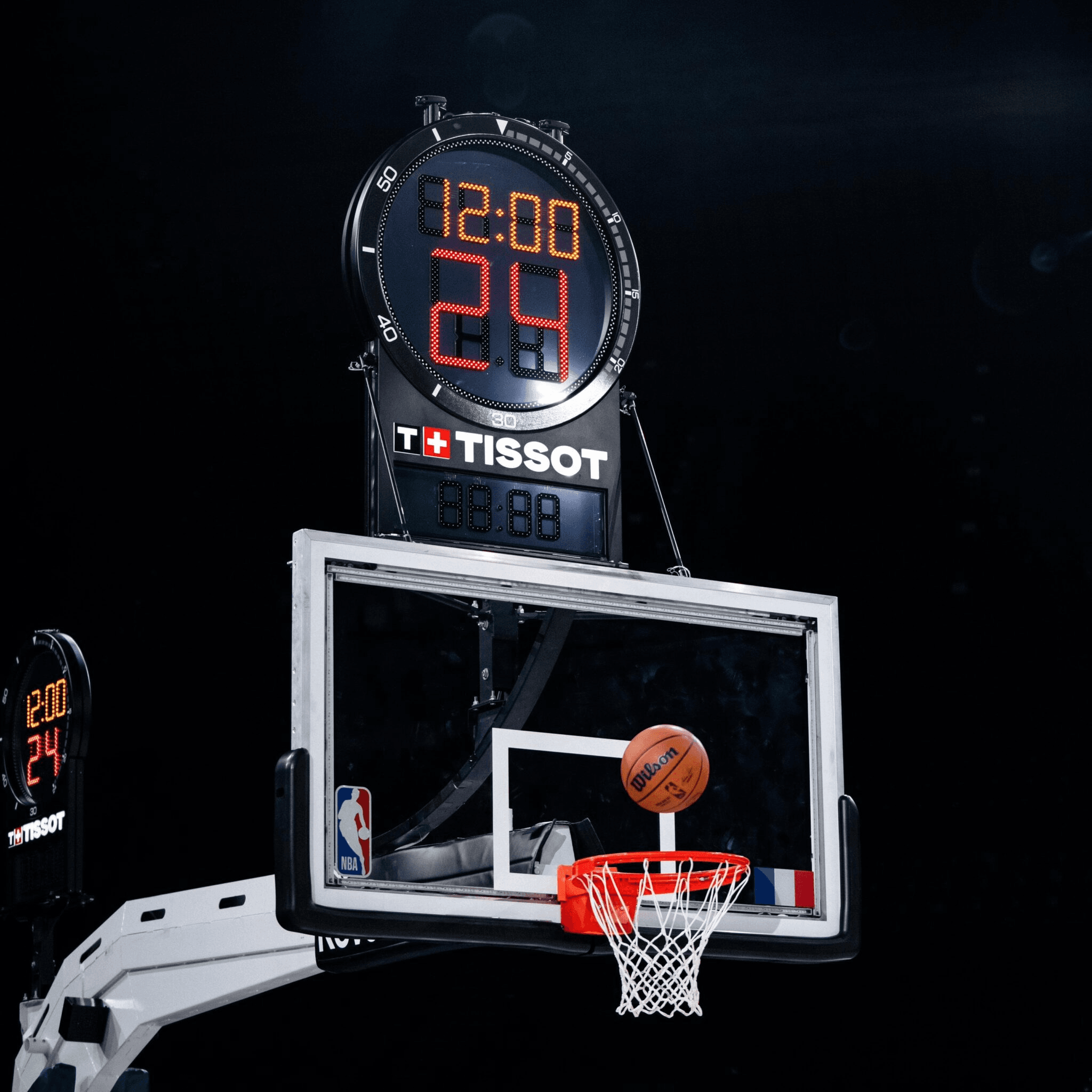
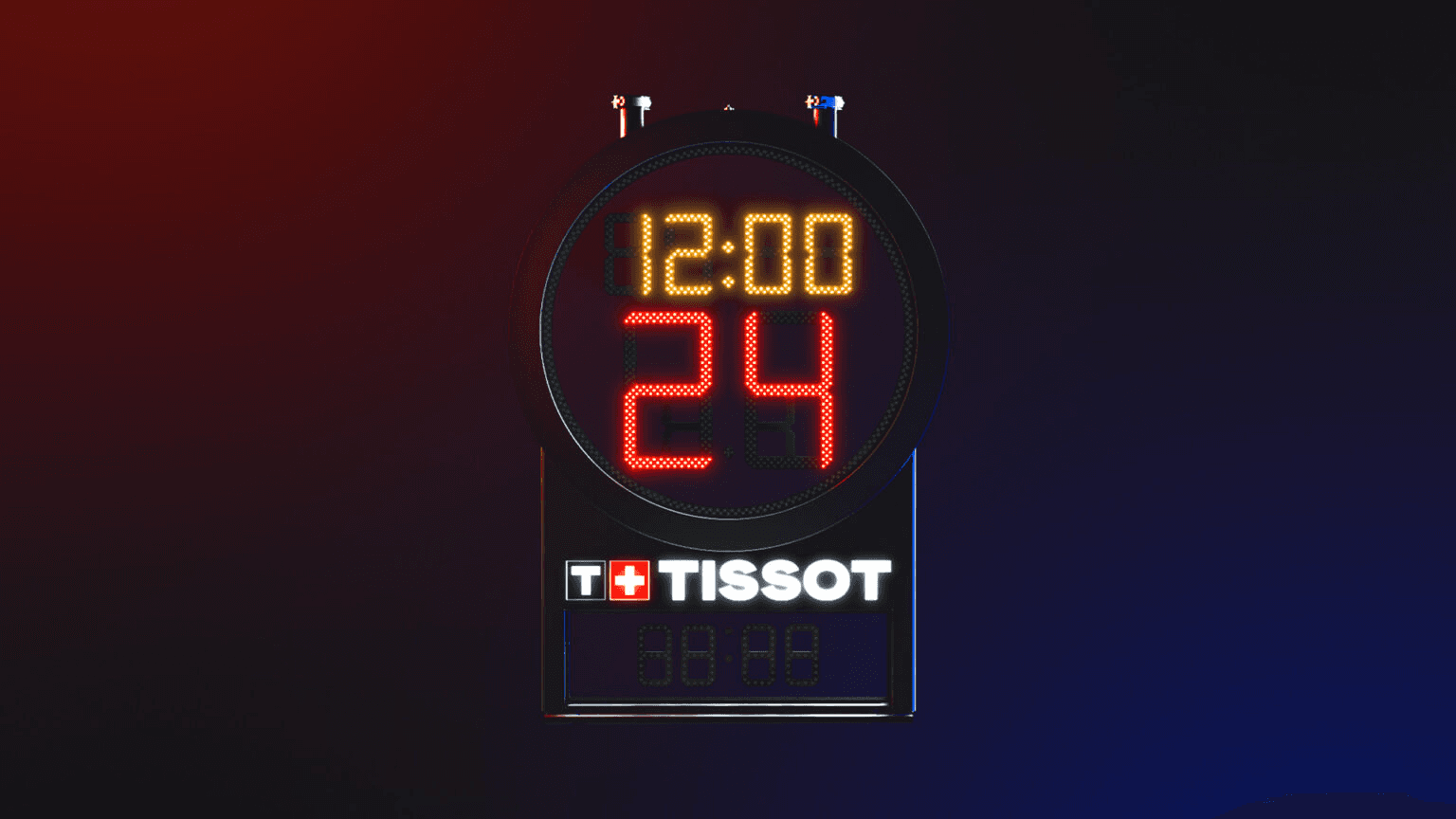
The new generation of shot-clock systems—now used in every NBA game in the United States and soon to illuminate the courts of Berlin and London—are, in essence, highly sophisticated supercomputers. Designed by Tissot, each system is built around a structure of fully transparent glass panels. This transparency ensures that even spectators in the farthest rows can enjoy an unobstructed view of the play unfolding behind the basket.
The technology behind these panels, however, is anything but simple. The LED lights embedded within them have a response speed capable of displaying one-tenth of a second with absolute accuracy. Why does this matter? In contemporary basketball, the millisecond separating the instant the ball leaves a player’s fingertips from the moment the clock expires can determine the outcome of championships worth millions.
Tissot’s engineers have also equipped these systems with sensors sensitive enough to react to the referee’s whistle in real time. The moment the whistle sounds, the clock stops faster than the roughly 0.2 seconds it takes for a human operator to press a button. In practice, this means that fairness is upheld with the unwavering consistency of finely tuned clockwork.
Data Transfer from Le Locle to London
Have you ever wondered how every second on the court is mirrored instantly on the graphics displayed on your television while you watch a game at London’s O2 Arena or Berlin’s Uber Arena? This is where Tissot’s “Timing Control Room” comes into play. Every shot, every stoppage, every fraction of movement on the court is transmitted to broadcasters around the world as thousands of data packets per second via purpose-built software.
This process works much like a chronograph. Just as the second hand of a precision chronometer moves without the slightest deviation thanks to perfectly synchronized gears, the NBA’s global data network operates with similar harmony. The latency—the tiny delay between a foul whistle in Berlin and a screen going dark in London—is optimized to near light-speed. It is proof that Tissot is not merely a watchmaker, but also an architect of digital time.
Design and Aesthetics: A Jewel on the Court
As watch enthusiasts, we cannot overlook the element of design. The timing systems Tissot has developed for the NBA stand as the pinnacle of “industrial elegance.” The rounded edges of the panels, the dynamic adjustment of LED brightness according to arena lighting conditions (ensuring players are not dazzled), and the complete elimination of visible cabling… The entire operation is executed with the same meticulous attention to detail one finds on a finely crafted watch dial.
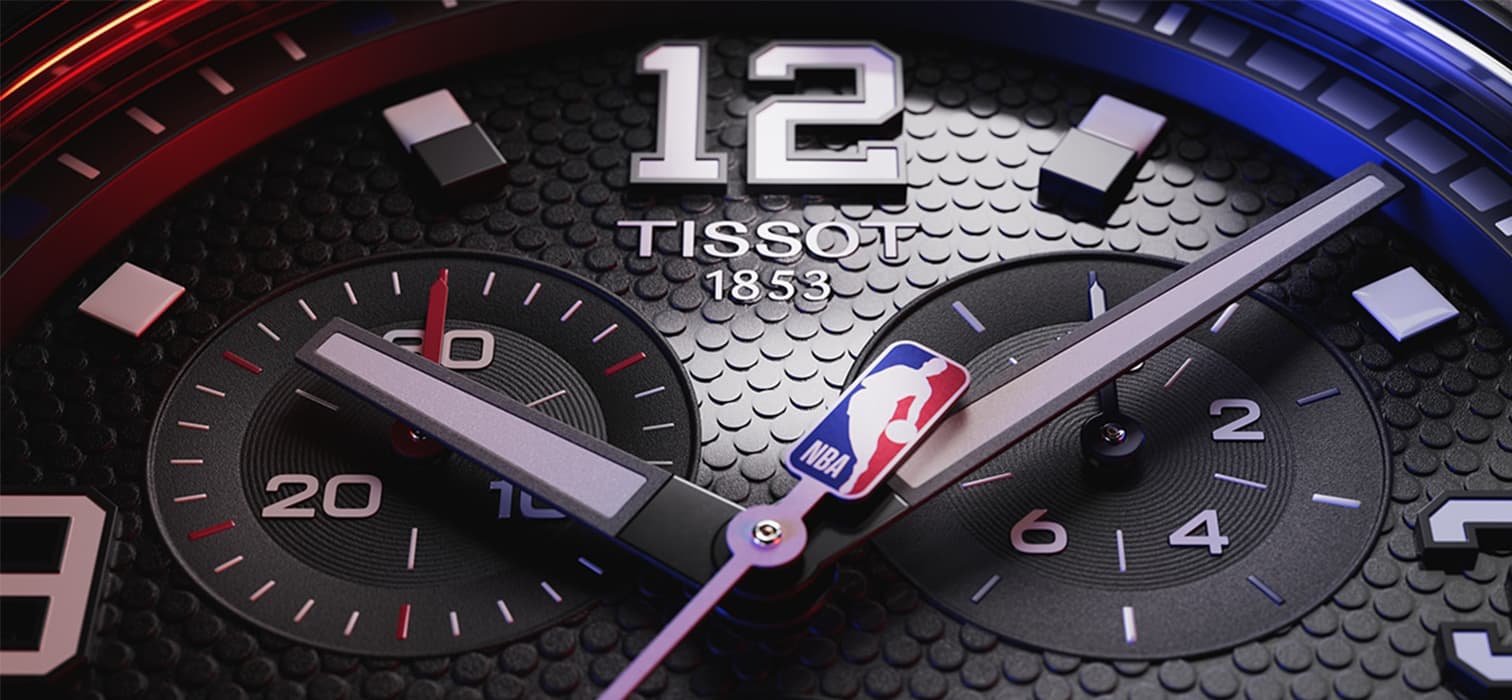
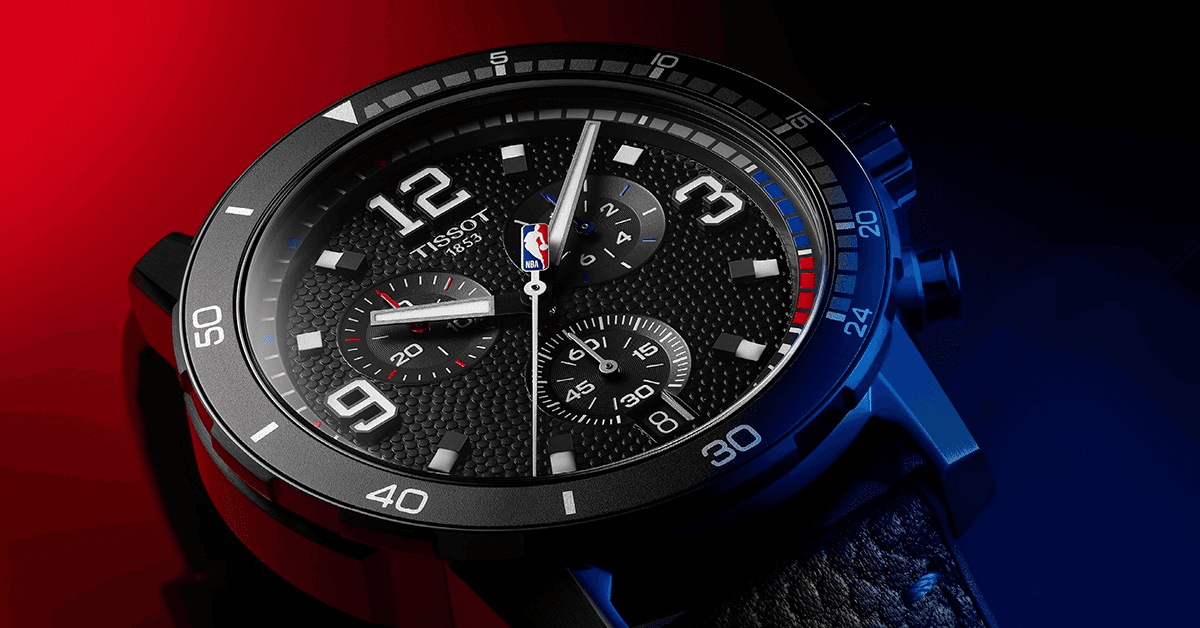
But aesthetics do not remain confined to the arena. The limited-edition Tissot PRX and Supersport models created for this event translate this engineering language directly to the wrist. Blending the bold red-and-black palette of the shot clock with the cool sophistication of stainless steel, these pieces serve as miniature monuments to the monumental systems that govern the court.
The Weight of the Last Second
The final possession of the game. The ball leaves a player’s hands. The red light ignites around the basket. In that split second, every eye in the arena is fixed on the Tissot display. Had that light flashed even a fraction earlier, the course of basketball history might have shifted entirely. This “guarantee of precision” transforms Tissot’s role in the NBA Global Games into something far beyond conventional sponsorship—it becomes an act of entrusting an entire brand’s prestige to the accuracy demanded by the world’s fastest sport.
When the games in Berlin and London conclude, the scoreboard will reveal who won. Yet behind that glowing board lie thousands of hours of R&D, countless lines of code, and the deep tradition of Swiss timekeeping. If basketball is a game defined by seconds, Tissot stands as the architect of its most advanced temporal technology.
Wearing Time on Your Wrist
As you stroll through the streets of Berlin or hurry to catch a game on the London Underground, pause and look at your watch. You’ll see that time does not simply pass—it is shaped, refined, and delivered through engineering and passion. The NBA Europe Tour demonstrates once again that basketball is more than a sport; it is a seamless choreography of time, technology, and elegance. And the next time you look up at those transparent panels above the hoop in a basketball arena, you’ll realize you are witnessing something far greater than a countdown, won’t you?