Millennia-old wisdom meets the intelligence of the modern age: Go makes you build a new universe with every move. In 2026, the heart of Go enthusiasts will beat in Ankara.
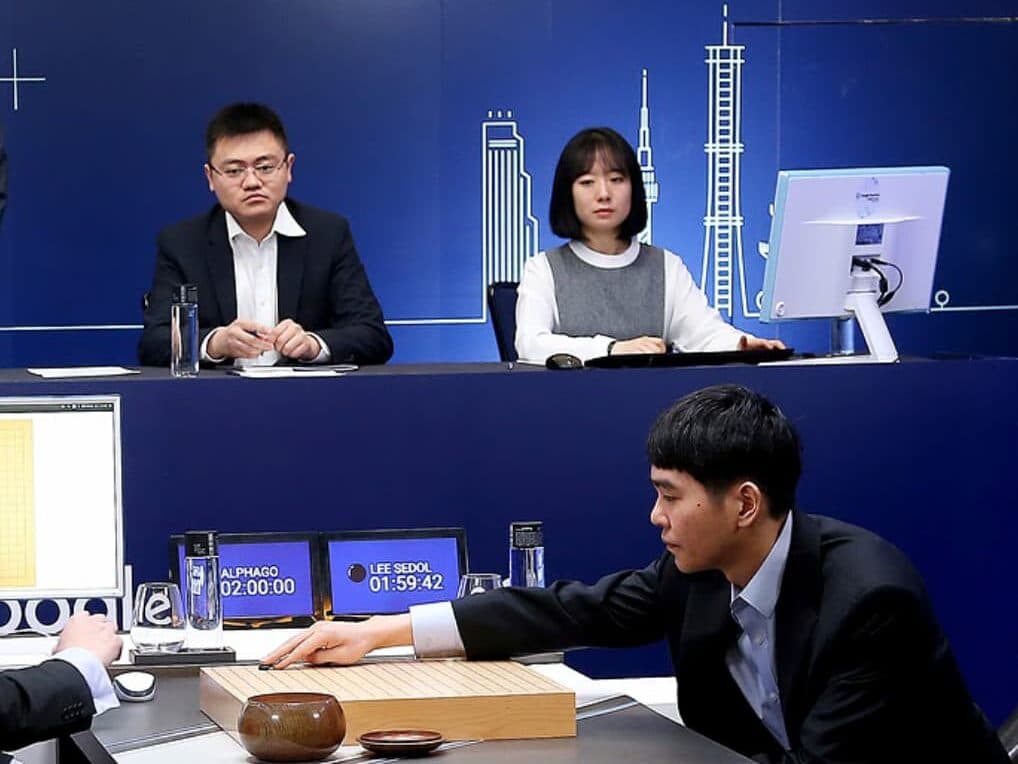
In March 2016, a historic challenge took place in Seoul, South Korea. One of the world’s best Go masters, Lee Sedol, faced Google DeepMind’s artificial intelligence program AlphaGo in a five-game series on a 19×19 board. The result? AlphaGo won the series 4–1, declaring that a new era had begun in this ancient game long regarded as the fortress of human intellect. This victory was considered one of the most sensational moments in which artificial intelligence surpassed humans in a game—after IBM’s Deep Blue defeated Garry Kasparov in 1997. In fact, a few years later, when Lee Sedol, the only person to win even a single game against AlphaGo, ended his professional Go career, he underlined the level AI had reached by saying, “Even if I were the world’s number one, there exists an entity that cannot be defeated.” Let’s take a close look at the game of Go—from its philosophical depths to its place in modern technology—and touch on its interesting differences with chess.
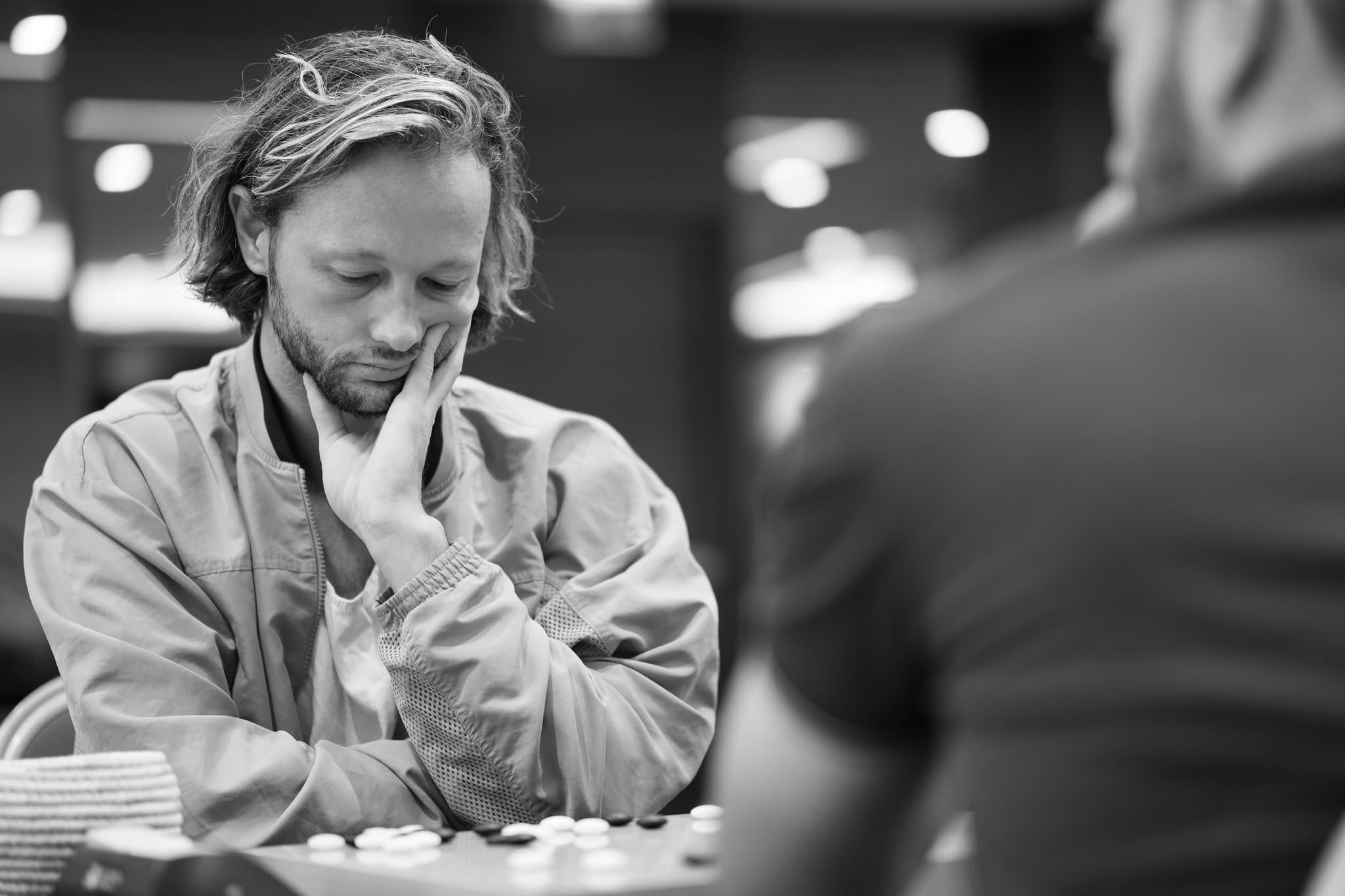
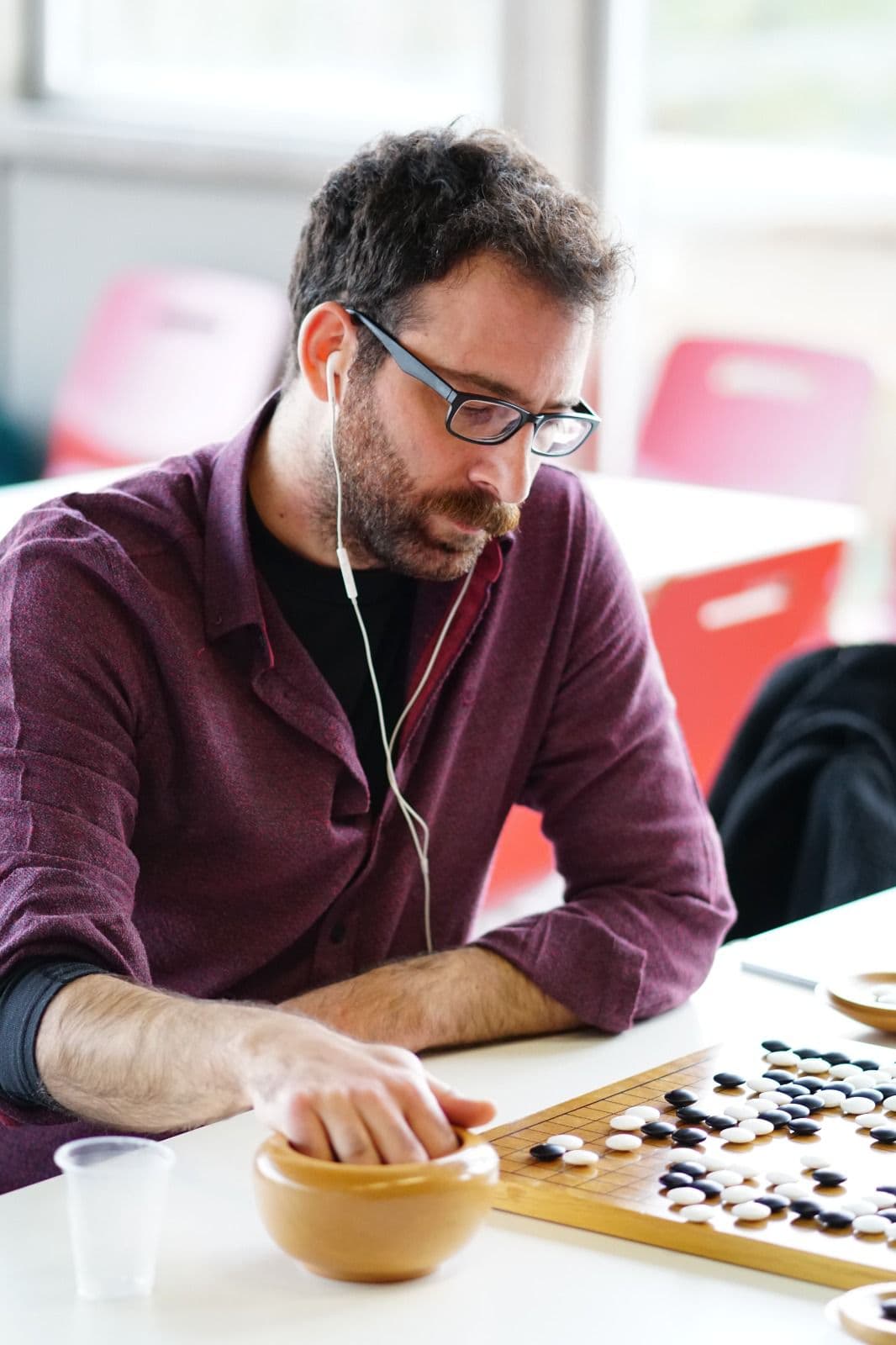
Credit: Harry Van Der Krogt
A Stage of Endless Combinations
It is said that the number of possible chess games is around 10^120 (10 to the power of 120), which far exceeds a figure such as 10^80, accepted as the total number of atoms in the universe. In Go, however, the possibilities are practically lifted to a higher dimension. In an average Go match there are roughly 250 options in each move, and games can last 150–200 moves. This brings the complexity of Go’s game tree to an almost inconceivable figure of about 10^360. Even the number of all possible stone arrangements—that is, legal positions—has been calculated as 10^170. By comparison, this is trillions of times greater than the possible positions on a chessboard and leaves far, far behind the number of atoms in the universe mentioned above! In short, Go is a stage of combinations so infinite that its sea of possibilities is deeper even than chess. These astronomical probabilities also explain why the game is associated with “ancient wisdom.”
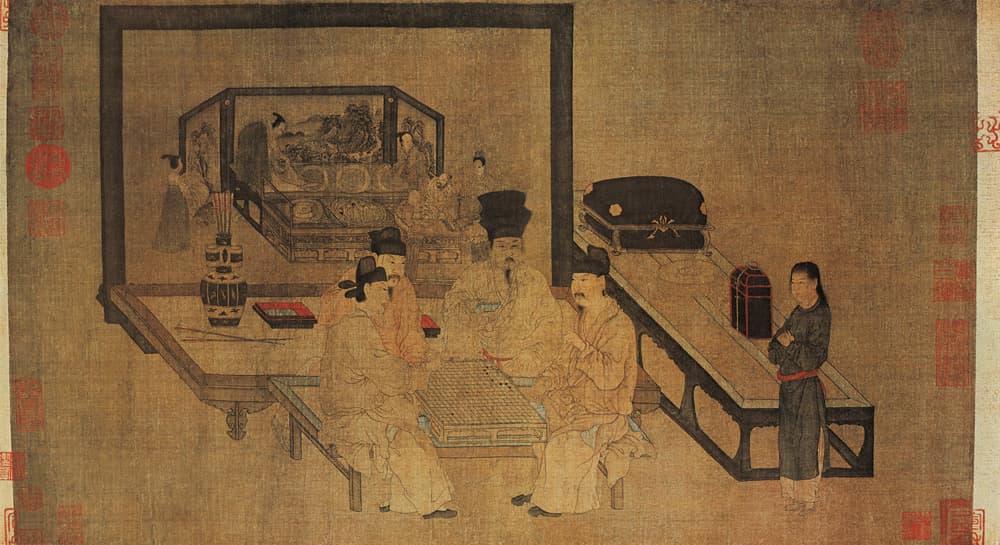
The origin of Go is accepted to date back to the 4th century BC, and that it emerged in China. According to legend, Chinese emperors used Go to teach young princes strategy and wisdom. In fact, in Ancient China, Go was considered one of the “four noble arts” along with calligraphy, music, and painting, and the elite were expected to be versed in these four arts. In Zhou Wenju’s 10th-century painting , court nobles are depicted playing Go.
“The number of possible games in Go is trillions of times the number of possible positions on a chessboard and leaves far, far behind the number of atoms in the universe.”
In Chinese, Go is known as weiqi, meaning “the surrounding game.” This name is said to capture the essence of the game. In Go, the goal is to conquer territory with stones, surround the opponent’s stones and capture them, and in the end bring a larger portion of the board under control.
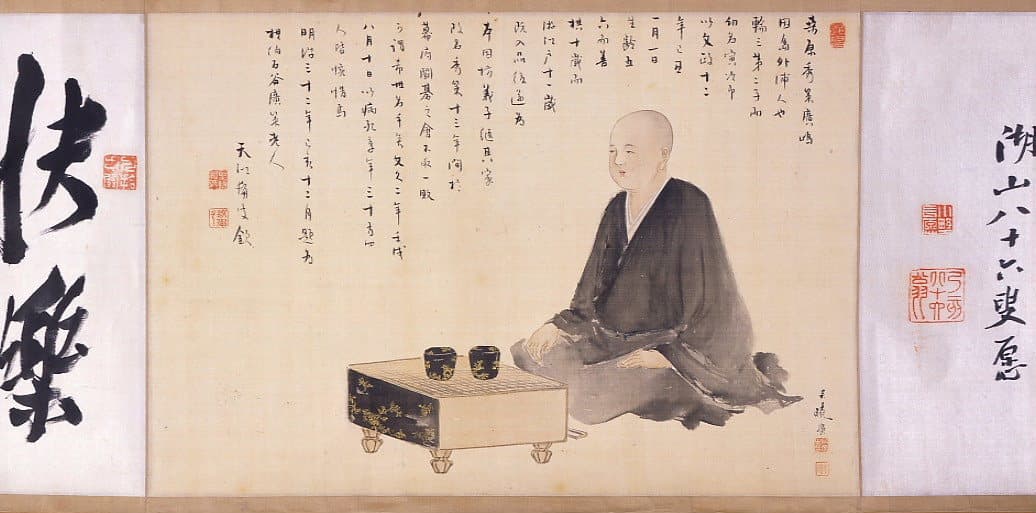
Reaching Korea and Japan in the 5th and 6th centuries AD, the game took the names go or igo in Japan and baduk in Korea, and became the mental pastime of a broad segment—from court members to samurai, from monks to philosophers. The presence of scenes of nobles playing Go in the famous Japanese literary work from the 11th century, The Tale of Genji, shows the game’s place in the aristocracy. In the Edo period of the 17th century, four major Go schools were established under the patronage of the Tokugawa shoguns, and master players were put on stipends, turning the game into a state art. The competition among these schools—Honinbo, Yasui, Inoue, and Hayashi—and for the title meijin (master player) accelerated the development of Go theory. Legendary masters such as Honinbo Dosaku, Jowa, and Honinbo Shusaku—known as “the Mozart of Go”—were trained in this period and left behind magnificent games.
Credit: Honinbo Shusaku
“If there are intelligent beings elsewhere in the universe, they are almost certainly playing Go.”
Go’s encounter with the Western world came much later than chess. In the late 19th century, through Westerners visiting Japan, the first Go clubs began to be established in Europe and America. Even the famous German chess world champion Emanuel Lasker took an interest in Go and introduced it in his work Go and Go-Moku published in the 1930s. Edward Lasker, his cousin and an international master, admired the simple and elegant rules of Go and said, “The baroque rules of chess could only have been invented by humans; but the rules of Go are so organic and logical that, if there are intelligent beings elsewhere in the universe, they are almost certainly playing Go.” Isn’t this statement, in your opinion, a beautiful summary of Go’s universal and timeless allure?
A Zen Garden of the Mind
The French thinker Blaise Pascal said of chess, “It is the gymnastics of the mind.” Go, on the other hand, is often seen in the Far East as the meditation of the mind. Beneath its simple rules lies an ocean of strategy that gives players patience, focus, and insight. Although Confucius considered Go “a small skill” beside moral education, he also threw a stone at his students by saying that this game that exercises the mind is better than idleness. The philosopher Mencius, a contemporary of Confucius, emphasized that “Go is a small skill, but without attention and determination one can never master it,” underlining that it is a serious mental pursuit requiring concentration. Indeed, it is said that when playing Go, a person’s creative and logical sides work simultaneously—almost like a harmonious dance between the brain’s right and left hemispheres…
Holding Go Object
“If chess is a battlefield, Go is a world.”
In the game of Go, all stones are of equal importance; all are placed on the board in the same modest, round form. In this aspect, it seems to symbolize the egalitarian balance of life and nature. When you look at a Go board, Chinese culture’s yin and yang may well come to mind. The black and white stones represent the harmony of opposing forces. The historian Ban Gu, who lived in the 1st century AD, wrote in describing Go: “The board should be square to symbolize the earth; the lines should be straight to show virtue; the stones should be black and white so that yin and yang are distinguished; the distribution of the stones should resemble the stars.” They say, “If chess is a battlefield, Go is a world.” Indeed, in chess two armies clash in the center and the goal is to checkmate the opposing king; whereas in Go the game begins in an empty world, two players gradually build their own civilizations, expand their territories, and in the end, coexisting, we look to see whose domain is larger. It is said that former U.S. Secretary of State Henry Kissinger drew attention to the difference in thought between the two games by saying, “In chess the aim is absolute victory or defeat; in Go the aim is to secure relative superiority. The game spreads across the entire board; what matters is to improve your position a little more with each move.”
Credit: Harry Van Der Krogt
Go players, like chess masters, gain much in terms of character training. In a Go match, recovering the price of an early mistake may require long patience; there is no place for haste. In this respect, it teaches cool-headedness, persistence, and long-term thinking. The famous Go proverbs are like life lessons in this sense. “If you try to take too much, you will be disappointed,” say experienced players, because in the game, behaving greedily and trying to claim an area larger than necessary can sometimes backfire. As in life, it is essential to proceed in a balanced and harmonious way. Another teaching is, “Lose your first 50 games quickly.” That is, don’t be afraid to make mistakes, because from each defeat you will take a lesson and improve. Indeed, Go masters review critical moves with their opponents after games; thus, mistakes turn into learning opportunities in a friendly conversation. We can say that this instructive aspect turns Go into a simulation of life.
Empty Board, Infinite Combinations
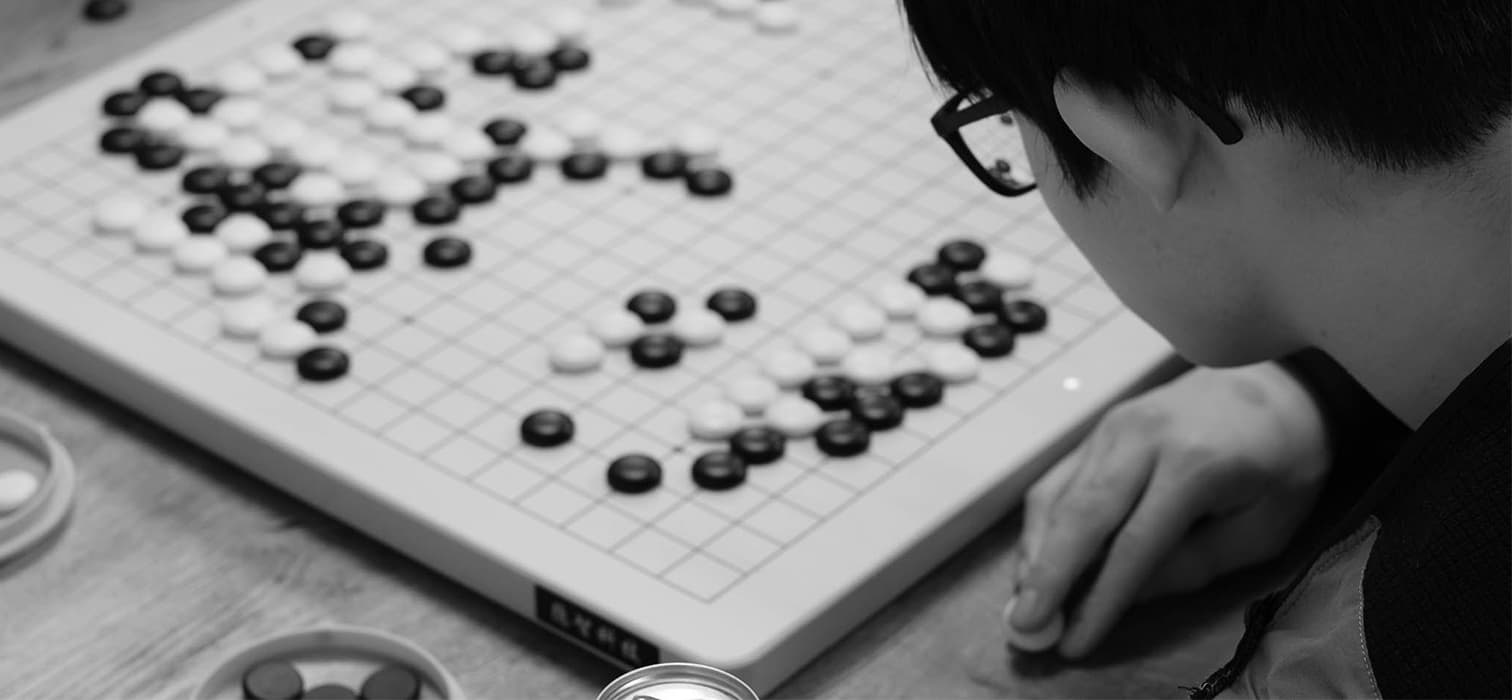
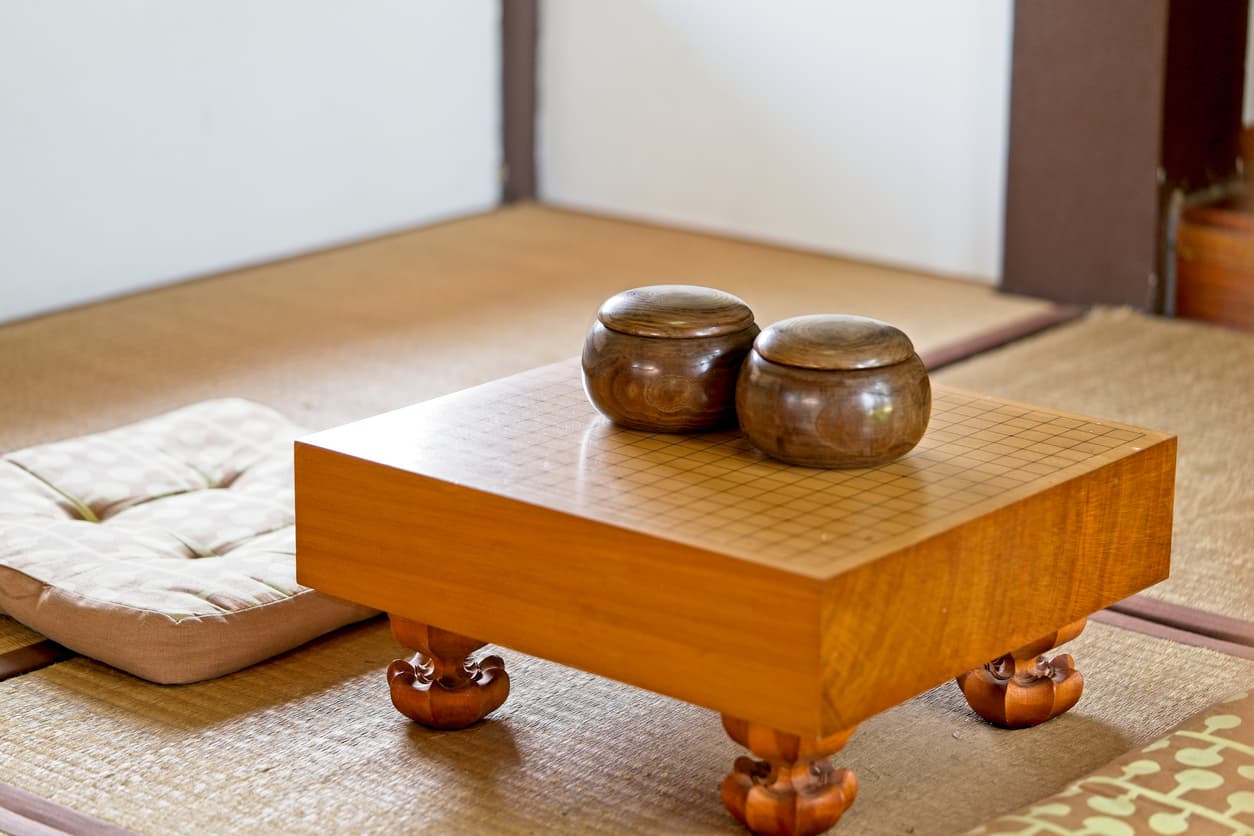
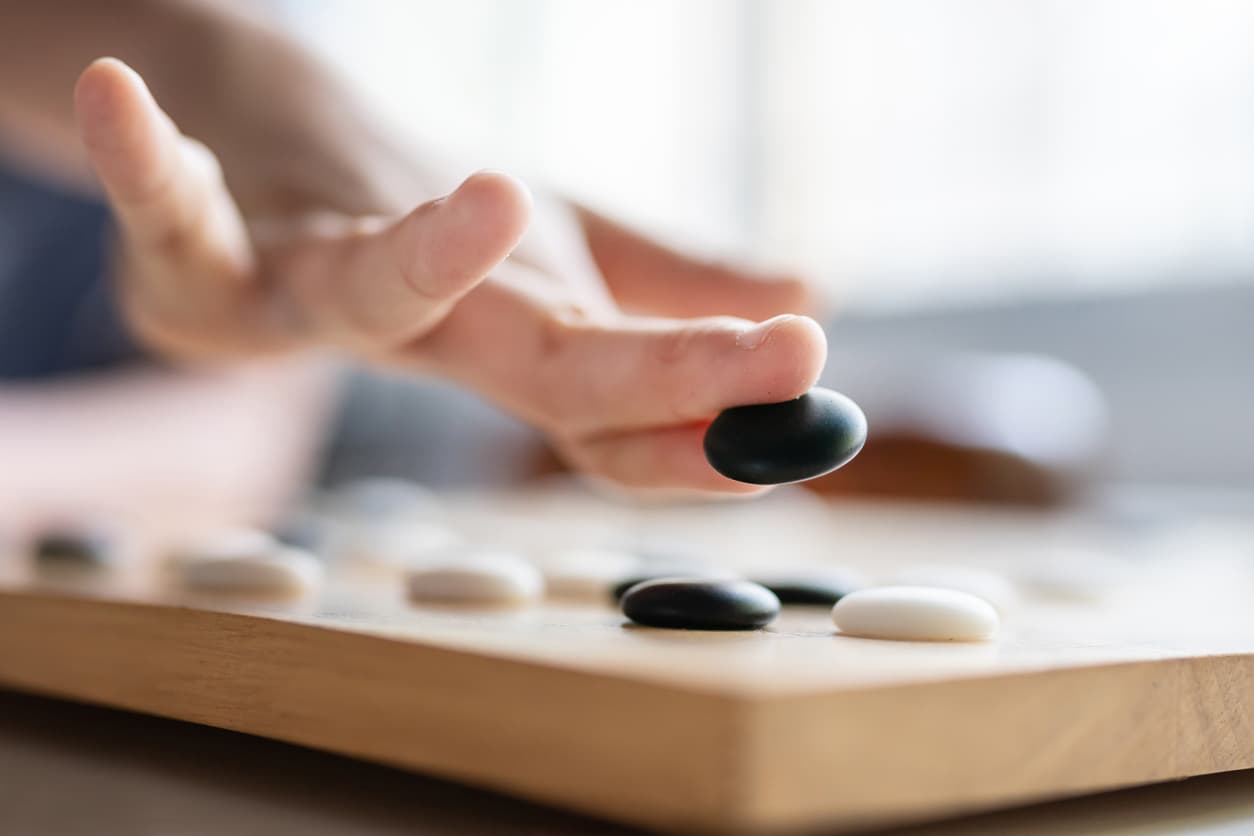
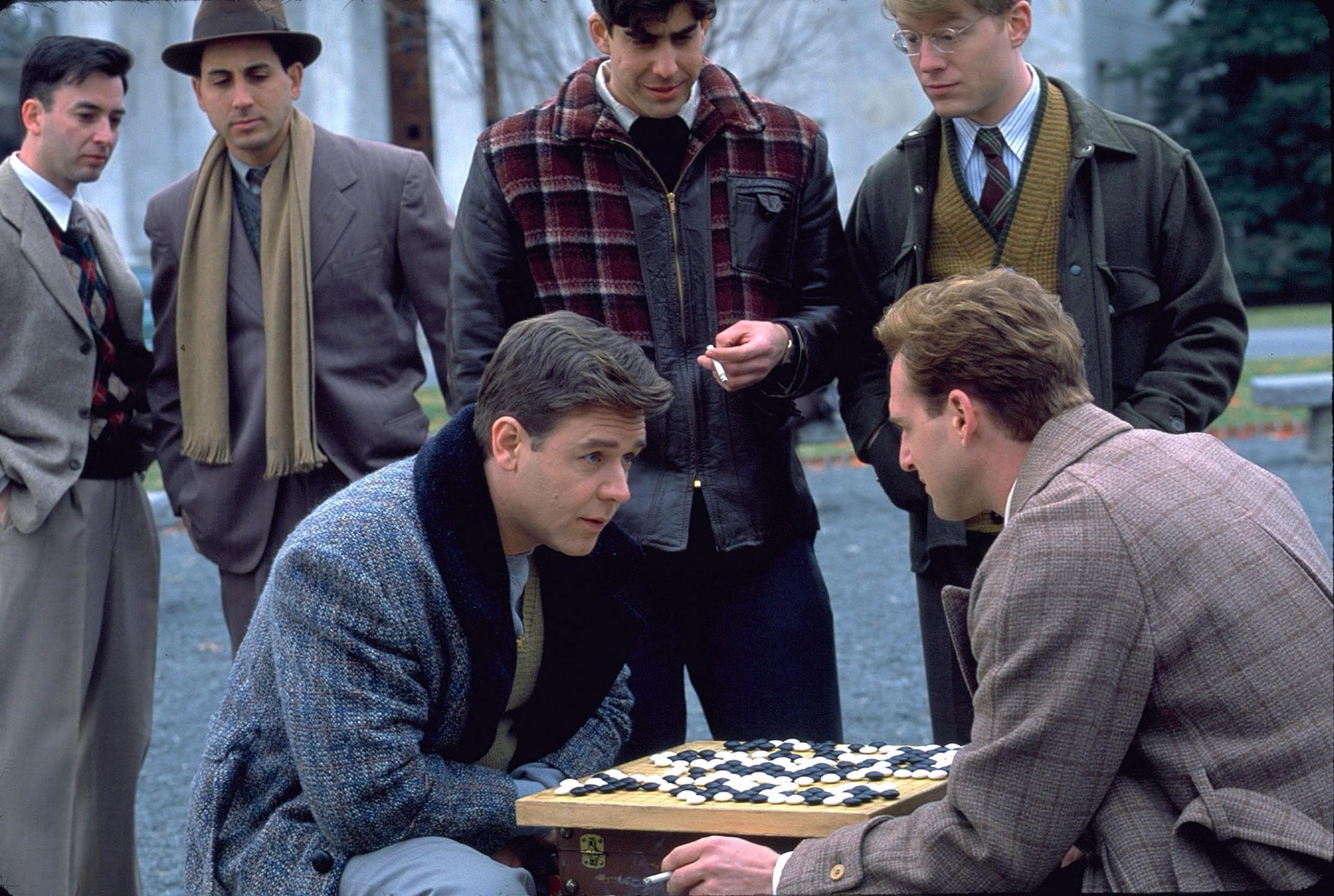
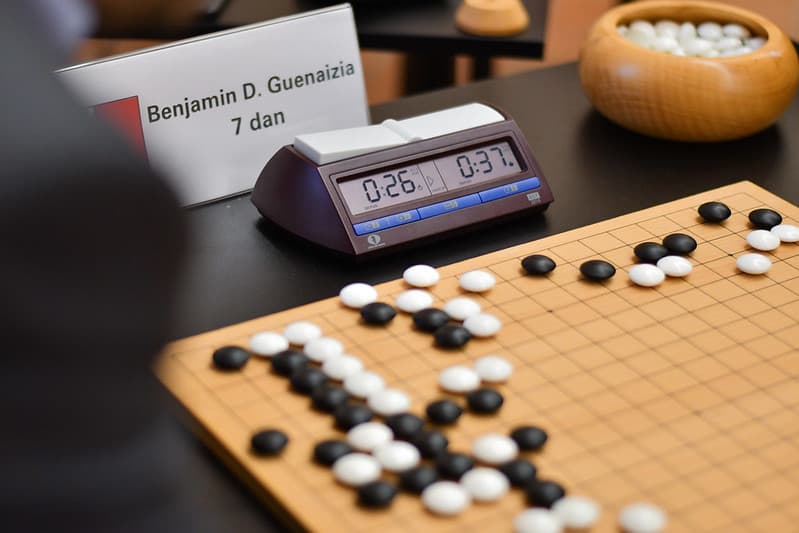
Go is played on a square 19×19 board (goban) on 361 intersection points. At the beginning of the game, the board is empty; the two players alternately place their black and white stones on these points one by one. The basic rule is that stones do not move once placed. There are no different movement patterns as in chess. A stone is removed from the board only if it is completely surrounded by the opponent. The goal is to control a larger region by surrounding more of the empty points than the opponent by the end of the game. There is no “king” in Go; thus it does not end in a single move; the struggle flows across different fronts on the board, and generally both sides complete the game by holding certain regions. The match ends when both players say “there are no meaningful moves left to play” and pass, and then territory is counted to determine the winner. The probability of a draw is almost zero (but if the points are exactly equal, a situation called jigo occurs). In this form, it shows us that it is a game not of absolute victory but of competitive coexistence.
Each stone has a small sphere of influence, but when they work together they become stronger. The concept of the group is at the heart of Go. Stones of the same color connect by orthogonal adjacency to form a group, and grouped stones defend one another. Groups have “liberties,” that is, breathing spaces; when all liberties are cut off, a group is suffocated and captured. For this reason, a Go player strives for their stones to form two “eyes” (internal spaces that cannot be filled), making an immortal group. Otherwise, if the opponent finds an opening, they can surround the group and collect all the stones. Winning or losing many stones in a single move…
Go’s opening strategy (fuseki) has an approach entirely different from chess. Because the board starts completely empty, the four corners and the sides are initially valuable, since in these places it is easier to make territory by benefiting from two boundaries. At the beginning of the game, players usually share the corners, then spread to the sides, and only then move toward the center. At this stage, knowing certain joseki (standard corner sequences) provides an advantage, but every game situation is different, and a master player can, when necessary, abandon standard sequences with an original move that breaks the mold. In Go terminology there is the concept of tenuki (not responding to the opponent’s last move and playing elsewhere on the board). In chess one generally has to respond to the opponent’s threat, but in Go, sometimes leaving a local skirmish and playing in a more important area can be profitable in the long run.
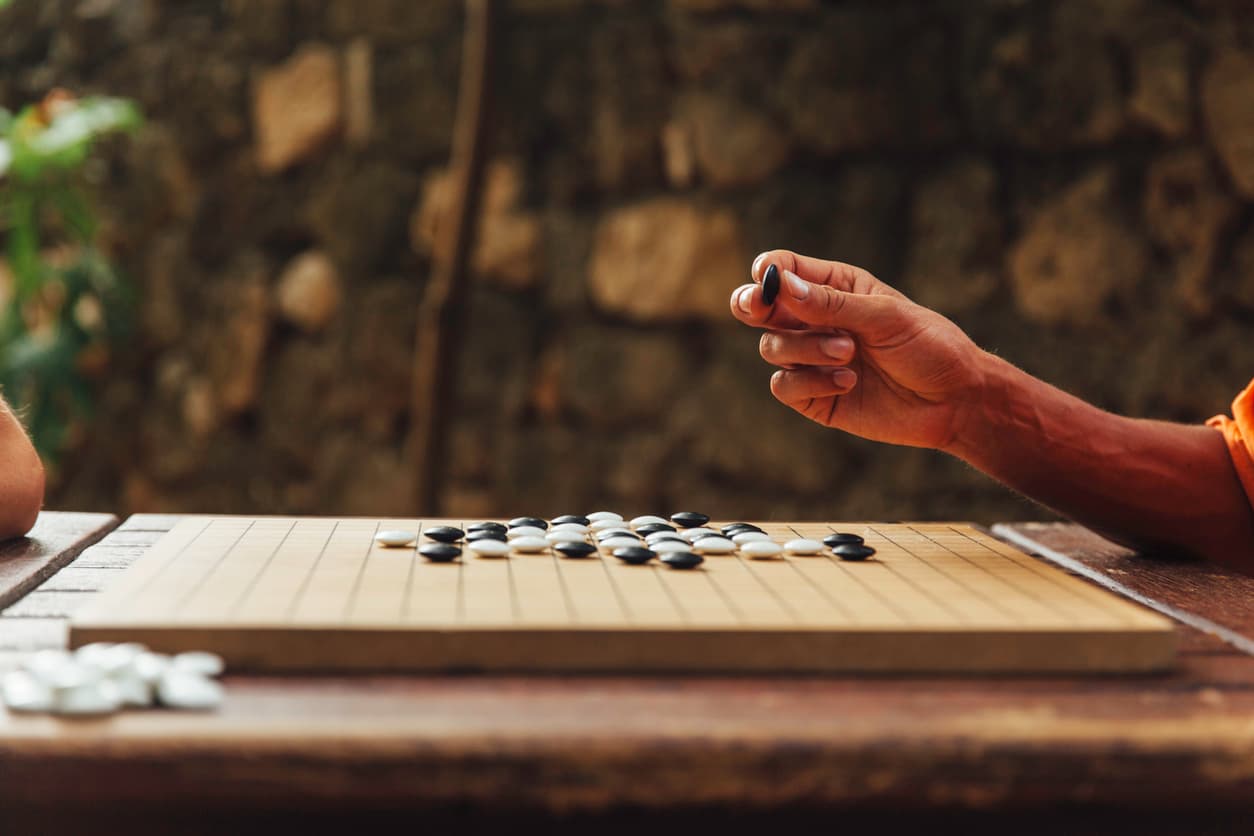
Chinese, Japan, Korean Board Game Go With Black And White Stone. Go Or Wei-Chi – Weiqi Traditional Asian Board Game
When the middle game (chūban) arrives, the board has almost turned into a black-and-white mosaic. Groups try to cut each other off (to sever connection points). When a repetitive capture situation called ko occurs, players make clever exchanges; in some places there are small stone fights, in others large territorial maneuvers take place. A good Go player, while fighting for life in one corner, may try to infiltrate the opponent’s area on the other side—that is, can fight on several fronts at once. I suppose it is because of this multi-focus struggle that Go seems more complex than chess. Since even a half-point advantage can determine the result, players pursue gains inch by inch—point by point. Mathematical precision becomes important in this phase. In Go they say, “The player who makes the last move wins”; that is, closing the last valuable empty point often determines the outcome of the match.
“It might take a computer 100 years to surpass humans at Go.”
Go in the Digital Age
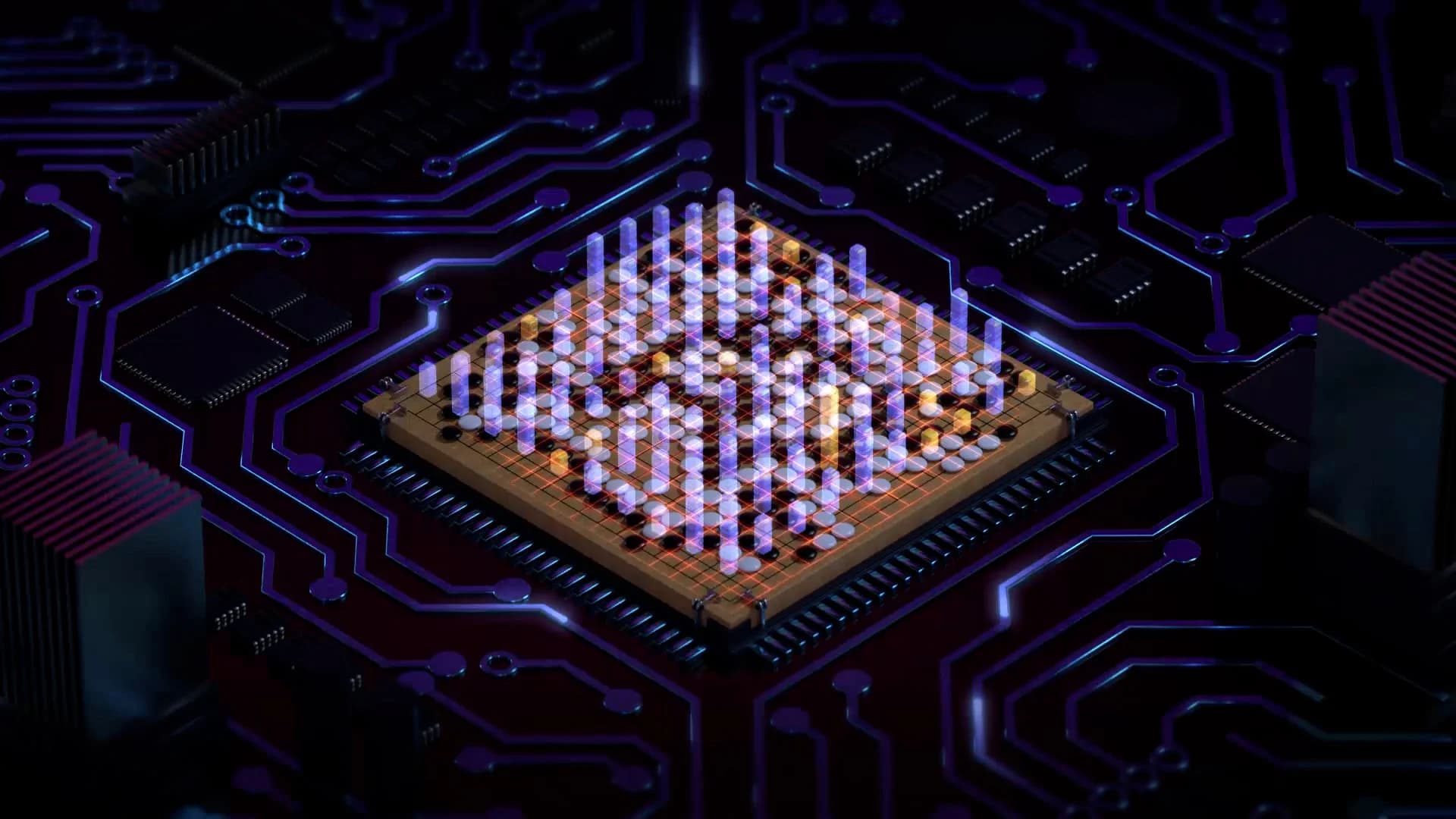
In the 1990s, no one believed that in the near future a computer could defeat the world’s best Go players. In fact, a specialist speaking to the New York Times in 1997 claimed, “It might take 100 years for a computer to surpass humans at Go.” Until that day, the strongest Go software could only play at an amateur level. But the revolutionary developments in artificial intelligence changed this perception from the ground up. The 2016 Lee Sedol–AlphaGo match was also a turning point in the history of technology. The program produced superhuman, intuitive moves. In the second game, AlphaGo’s 37th move was placed on such an unexpected point that professional commentators thought, “This must be a mistake”; yet this move would later be described as a stroke of genius. Even so, human creativity did not give up. In the fourth game, Lee Sedol’s 78th move set a trap that the machines could not calculate, surprised AlphaGo, and brought that single victory that saved human honor. At the end of the match, AlphaGo was declared an honorary 9-dan master by the Korea Baduk Association.
Credit: Lee Seedol
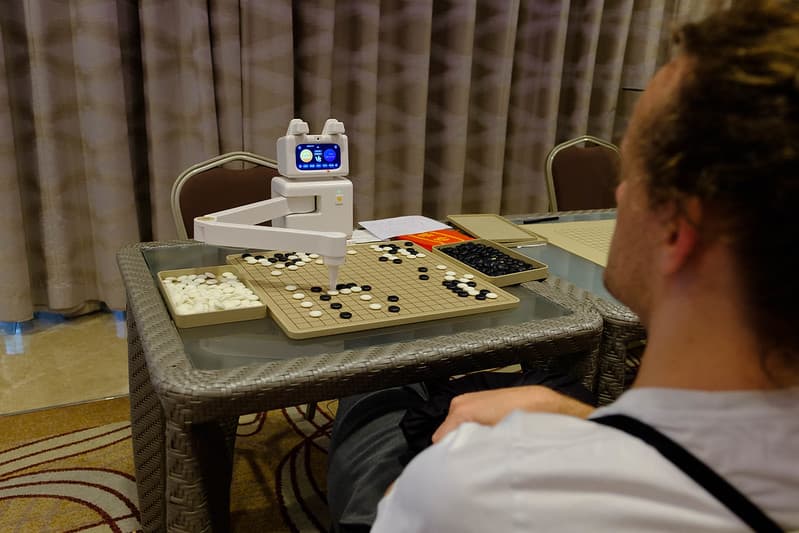
After AlphaGo’s success, artificial intelligence did not stop. In 2017, a version called AlphaGo Zero learned from scratch by knowing only the rules and playing millions of games against itself, and in just three days reached a level that could defeat the original AlphaGo 100–0. Then open-source programs such as Leela Zero and KataGo emerged. Today, any Go enthusiast can play against an AI opponent far stronger than themselves on a home computer or phone and can have their games analyzed.
Another impact of technology has been seen on online Go platforms. Servers like KGS, which have existed since the ’90s, became giant platforms such as Tygem and FoxWeiqi in the 2000s. Today anyone can find an opponent suitable to their level and play Go over the internet. People playing intercontinental friendly matches, thousands of enthusiasts watching professional games live and chatting… These are proofs that Go has now crossed borders and, like chess, has acquired an identity as a global mind sport.
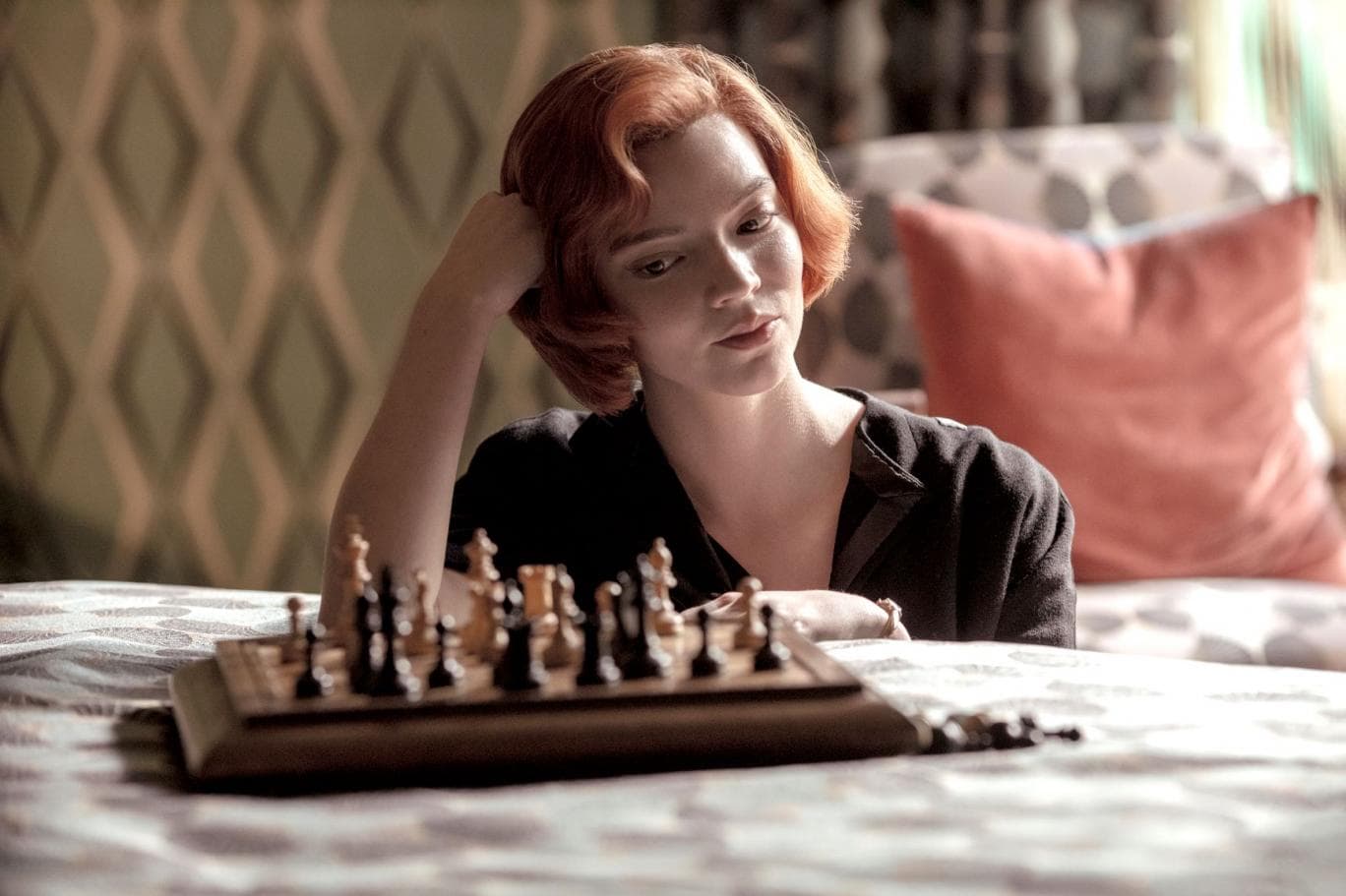
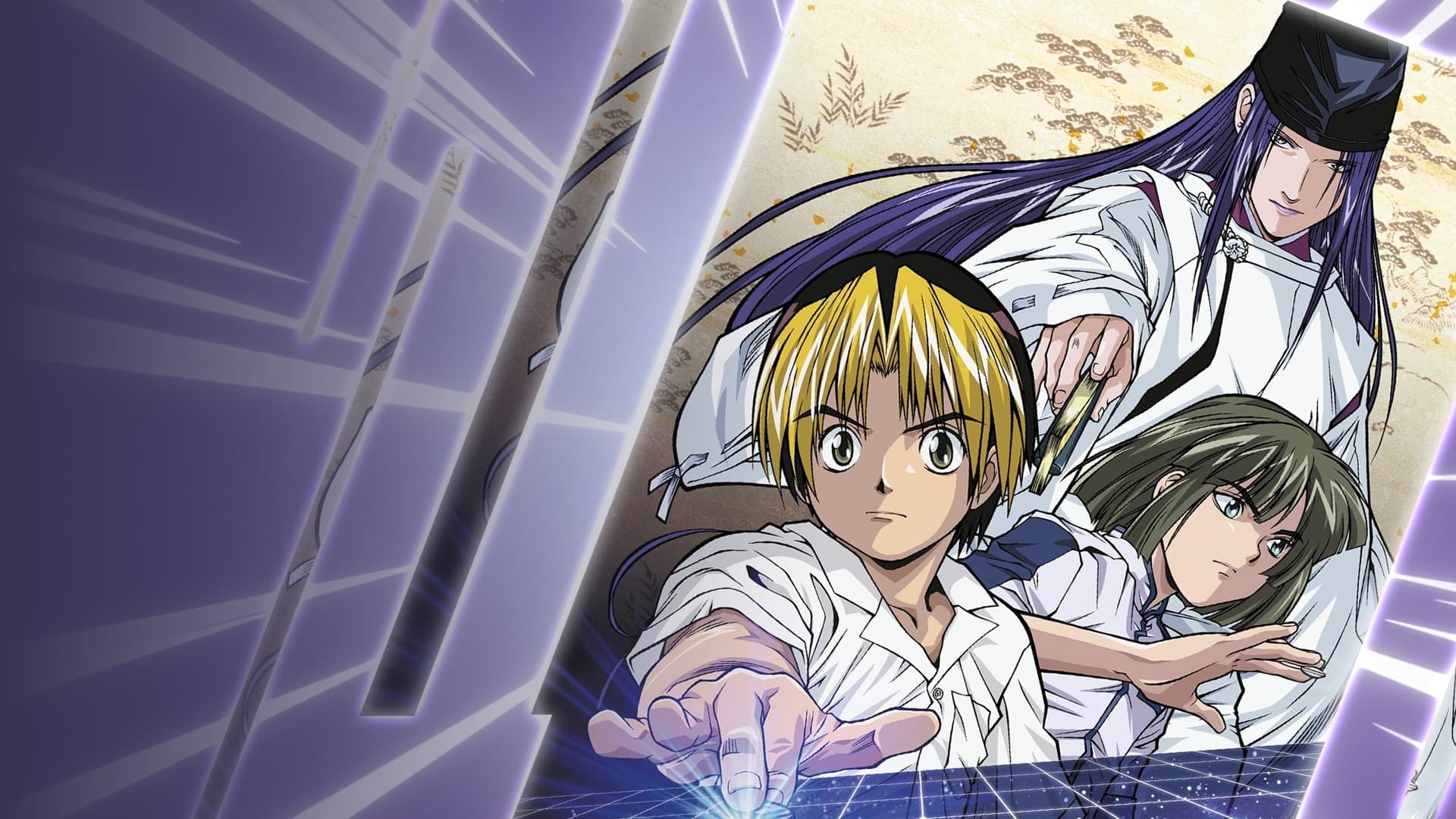
At the beginning of the 2020s, Netflix’s series The Queen’s Gambit boosted chess sales, while Go had a similar pop-culture momentum in the early 2000s: the Japanese manga and anime series Hikaru no Go introduced young people worldwide to Go. After this series aired, the number of Go clubs in Japan increased, and the number of children learning Go reached the hundreds of thousands. However, this effect remained mostly limited to Asia.
Credit: Hikaru No Go
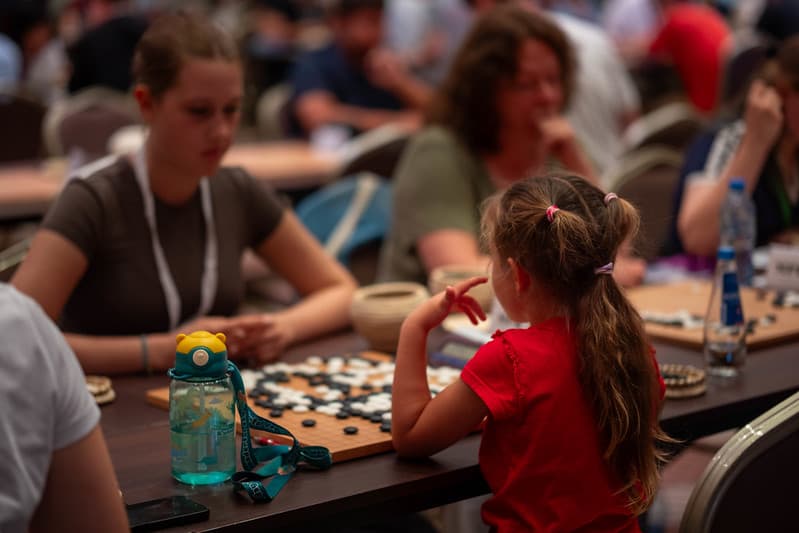
Even so, today there are Go communities in many countries, including Turkey. For example, it is estimated that one in four people in South Korea knows how to play Go. In China and Japan, millions know the game at least at a basic level. In Europe, the European Go Congress has been held every year since 1980, bringing together hundreds of players. In Turkey, the Go Association has been active since the 1990s; tournaments are held at various levels from university clubs to high schools. While Go is still not as widespread as chess, it is becoming more visible by the day. Moreover, since 2010, Go has officially been a competitive branch in the Asian Games (which we can call the Asian Olympics). In many countries it has been integrated into mind sports federations. In education, too, Go is encouraged in school clubs due to its contribution to attention and intelligence development in children. These are proofs that this millennia-old game remains vibrant even in the digital age and is being embraced by new generations.
A New Lesson in Every Game
For someone who wants to start playing Go, the first step is to learn a few simple rules: how stones are placed, how they are captured, how territory is counted… The rule set can perhaps be explained in five minutes, but the path to mastery can last a lifetime. They say, “You can learn Go’s rules in a day but you can’t unravel its strategy in a lifetime.” In this respect, it is like a journey of discovery without end. From the same starting position, trillions of different games can develop; this means that each time you will experience something different from the previous game. Like life, Go is an endless adventure; there is a new lesson in every game, a new world in every move.
Credit: Harry Van Der Krogt
“Nothing can stop Go” — Martin Stiassny
These days there are developments that delight Go enthusiasts in Turkey. Ankara, the city where the first club in Turkey’s Go history sprouted, is preparing to host Europe’s biggest Go gathering. To the European Go Congress to be held in Ankara in July 2026… On this occasion, we directed our questions to Martin Stiassny, President of the European Go Federation; Altuğ Çalın, Coordinator of the European Go Congress 2026; and Ahmet Eren Kurter, President of the Turkish Go Association.
Does Go, with its roughly 4000-year history, have rules that may have changed along this journey? If not, how do we know?
Altuğ Çalın: The rules of the game are actually very simple and very compatible with the physical world. For example, we define it as “a stone needs a liberty to remain on the board.” A stone that has no liberty is removed from the board. Because the game has no more rules than the fingers of two hands, perhaps minor changes may have occurred over time, but if we were transported 3,000 years back, we would still be able to play the same game. Eren Kurter: This may sound ambitious, but we have strong historical documents to support it. In texts from the 5th century BC in China, it is described that Go was played with rules largely the same as today. Of course, there have been small differences in some periods, such as the number of stones or the size of the board, but the fundamental game logic—territory encirclement, capture, and the concept of liberty—has remained the same for thousands of years. This makes Go a way of thinking that transcends times and cultures.
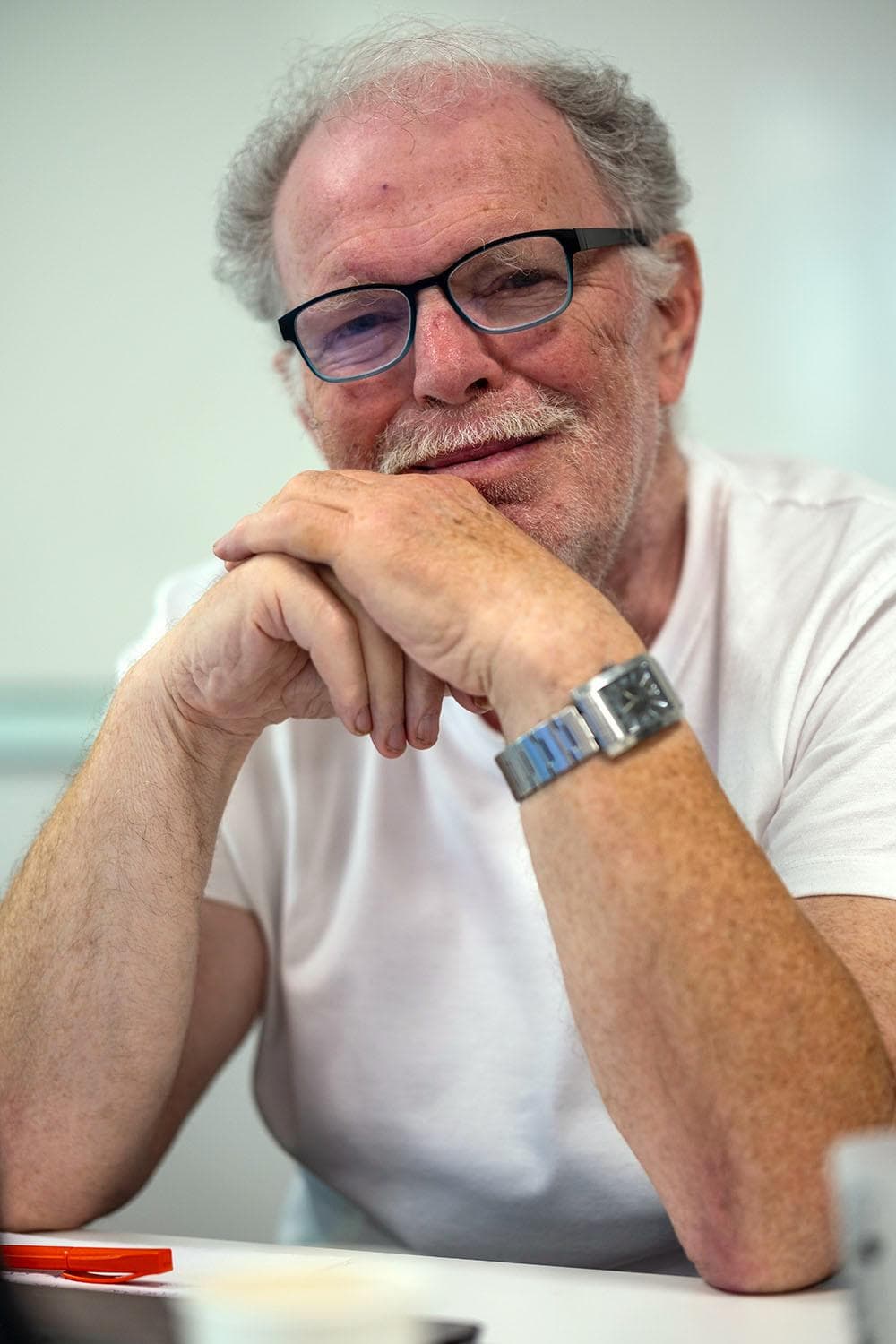
Ahmet Eren Kurter, Head Of The Turkish Go Association
From the Tang dynasty to the Edo period, it was played as a strategy in the court. Is Go a strategy game? In that case, is a good Go player also a good strategist in real life? Ahmet Eren Kurter: Historically, Go has been seen not just as a game but also as a tool for intellectual development. In China, especially during the Tang and Song dynasties, it was among the four traditional arts that a cultured person should know, along with painting, music, and calligraphy. In the courts, statesmen developed their strategic thinking skills by playing Go. In Japan, during the Edo period, Go was part of mental discipline for the samurai. This historical role clearly shows that Go is a strategy-based game. However, being a good Go player does not automatically mean being a good strategist in real life. Yes, Go develops these skills, but carrying them into life requires a separate process of awareness and practice.
As President of the European Go Federation, what do you think makes Go timeless? Which elements keep it alive like a “work of art”? Martin Stiassny: This is a difficult question. In my opinion, Go is a combination that will never end: First; it has only three rules, you can explain the game to everyone in 5 minutes, and if necessary you can easily produce the game materials from different materials; that is, it does not depend on money, place, expensive venues, or environments. Second; everything depends entirely on a person’s own creativity. Control of the game is always with you; there is no excuse related to luck. Third, anyone can learn to play Go; there is no age limit. The goal is not to destroy the opponent, but simply to gain one more point on the board. This ensures a balance of “give-and-take” throughout the game. Fourth; you can play the game without saying a single word. This by definition makes Go an international game; foreigners instantly find a basis for communication on the board. This creates friendly bonds in every direction. Fifth; Go is open to everyone. Young–old, women–men, everyone has the same chances and it is always fair. Sixth; Go’s long history shows that nothing can stop Go; not war, not earthquakes, nor political system changes. This is a typical mind sport. Your strength is in your mind and no one can take it from you. Perhaps this point is the most important element that carries Go from a sport to a culture, to a level where people can communicate with each other regardless of their individual origins and histories.
Martin Stiassny, Head of the European Go Federation
The European Go Congress is also an opportunity for cultural diplomacy. How would you define this bridge stretching from Europe to Asia? Martin Stiassny: For at least 20 years by definition the European Go Congress has been not only for Europeans but also a tournament for many Asian players. In some congresses, 30 percent of the players come from the Far East, and I expect a similar ratio in Ankara in 2026. As one of the few countries in the world that lie on two continents, Turkey will strengthen the bridge between Europe and Asia. I am sure that many players from Korea, Japan, and China will come to Ankara not only to play Go but also because of Turkey’s historical role, and they will see this event as an intercontinental bridge. Let us not forget the historical ties between Turkey and Mongolia and various political maneuvers in the Middle Ages. Turkey is a turning point between Europe and Asia. This is truly a great opportunity to support “better understanding.”
I have visited Turkey many times on private trips and have always been amazed by the hospitality of the Turkish people. Therefore I hope there will be many opportunities to come together outside the Go Congress next summer as well. Turkey has a very important history and culture; Go is also a culture, not just a sport. That is why I believe the European Go Congress to be held in Ankara will definitely be a turning point in international Go history and will offer a great opportunity to establish new friendly ties among many people.
Credit: Harry Van Der Krogt
“I don’t think artificial intelligence is a real rival to Go.”
Has Go’s global story changed after AlphaGo’s historic victory in 2016? Do you think artificial intelligence today is a rival, a teacher, or a magnifying glass for Go? Martin Stiassny: I don’t think artificial intelligence is a real rival to Go. Any computer program (I say this as someone who was the IT manager of a specialist and consulting group that worked at IBM uninterruptedly for 30 years) can never react like a human. For example, a player may change their strategy due to an unexpected external factor in the middle of the game and surprise their opponent. A computer program does not do this. It always tries to find the most “optimal” move. Therefore, two humans facing each other at a real board has a completely different quality than playing against a computer. Artificial intelligence can be useful for finding mistakes, but it can never stop people from playing Go with their own ideas.
Credit: Harry Van Der Krogt
“Go is the best game in the world”
“A stubborn seed breaking through a concrete ground and turning into a mighty plane tree” Mr. Eren, the adventure of Go in our country began in the 1980s. Could we hear its story from you? Ahmet Eren Kurter: Go’s adventure in Turkey indeed sprouted at the end of the 1980s. In fact, even earlier, in the early 1970s, there was an article mentioning Go in the magazine Bilim ve Teknik, but it did not attract much attention at that time. For a long time, Go was like a mystery left on the dusty shelves of libraries. Until in Ankara, with the efforts of Alpar Kılınç and his friends, the Go Community was established at METU in 1988. They used to say that at that time there was neither a proper board nor stones, and that they made their own Go sets with the materials they could find and placed stones on the board for nights on end.
Afterwards, this passion began to spread by word of mouth, and in the ’90s the first Go Club in Ankara was formed under the umbrella of the Turkish–Japanese Friendship Association. I was not yet part of this community in those years, but what I heard from our elders always came alive in my mind as a vivid story. A few people would meet in homes and cafés, play Go for hours, and patiently explain the game to curious onlookers. By 1995, the Turkish Go Association was officially established; unfortunately, shortly after the association was founded, we lost Alpar Kılınç in a tragic traffic accident. This painful loss deeply affected us all. But at the same time it spurred our desire to keep his dream alive. The Alpar Kılınç Memorial Go Tournament, which we hold every December today, is among the largest tournaments in Europe.
Thus, Go’s adventure in Turkey began with such difficult but passionate steps. From a tiny core team we have reached thousands of players across the country today. Now there are communities in universities, national and international tournaments, and as you know we are preparing to host the European Go Congress in 2026. Go’s story in Turkey is like that of a stubborn seed breaking through a concrete ground and turning into a mighty plane tree. I hope we can make those who planted the first seed proud.
Credit: Harry Van Der Krogt
Placing the first stone on an empty board is likened to creating a universe. How would you describe a moment in your own life when you “placed the first stone”? Ahmet Eren Kurter: Placing the first stone on an empty board is to decide without knowing everything but without doing anything randomly. You cannot see all possibilities, but you weigh as much as you can see and choose a direction with your intuition and accumulation. When that stone lands, you are no longer just an observer; you become part of the game, the bearer of responsibility. The same in life: the perfect time does not come; complete information never exists. But if the stone is in your hand, at some point you must let it go. That is the point where fear and clarity intersect, and the real beginning is there.
In an age where speed is the norm, how does Go’s slow and focused nature offer a counter-experience to modern people? Ahmet Eren Kurter: While modern life is built on speed and superficiality, Go is the exact opposite. There is no benefit to haste at the board; every stone demands patience and attention. In this process, the Go board becomes a mirror and you see your impatience, your greed, or your calmness. That is why Go is a counter-experience for modern people. It takes you out of the rush and offers a quiet space where you can get to know both yourself and the person opposite you.
Credit: European Go Federation
One of Go’s great lessons is “if you try to take too much, you lose.” How have you experienced this lesson in your own life? Ahmet Eren Kurter: I have never tried to take too much in my life; I have always pursued what is sufficient. But Go showed me that even if you don’t want more, sometimes you can lose control and, without realizing it, step outside balance. In the game and in life, a move made with the best intentions can turn into “too much.” I understood this principle better over the years not in the games I won but in the ones I lost by losing control. Moreover, seeing that even after 20 years I still sometimes make the same mistakes reminds me that this process is an endless state of learning. I do not strive to be perfect; I try to be a little better than the day before every day. Because being human means both accepting mistakes and seeking a way to constantly move your potential one step forward.
Mr. Altuğ, you are designing the congress as a festival beyond a tournament. What surprises await visitors outside the board? Altuğ Çalın: We are organizing our congress at a wonderful venue with abundant facilities, such as Hacettepe University. In addition to the sports competitions traditionally organized, we have the opportunity to hold tournaments in special areas such as swimming, orienteering, squash, and tennis. Of course, here the matter will also be shaped by what participants will want. Apart from the events we plan, there will also be spontaneous organizations planned by people on their own initiative.
Apart from sports activities, culinary tours and touristic trips within Ankara and its surroundings before and after the congress, film screenings and concerts are also planned. We plan to announce the program in October.
Altuğ Çalın, Coordinator of the 2026 European Go Congress
Emanuel Lasker said, “If there is intelligent life on other planets, they are playing Go.” In your opinion, what makes Go so universal? Altuğ Çalın: The rules of the game are very simple, understandable, and logical. When you ask “Why is this rule like this?” you can answer it with your logic. Because the alternative is not possible. To elaborate: first, when you place a stone on the board in the game, it never moves again. There is no hierarchy in Go; all stones are equal, and perhaps not endless but the game starts on a very large empty board like 19×19. The game takes shape as you play, and every single one of your games produces a unique result different from all the others. When the game ends, if both sides do not want to place more stones on the board, the game ends. All of these are explanations and analogies that are very simple to understand.
Credit: Harry Van Der Krogt
The patterns left by the black and white stones on the board almost resemble calligraphy. In your opinion, can Go also be read as an art form? Altuğ Çalın: Of course, as Go players we look at the whole board from a technical angle, so it is difficult to say this, but I think it is hard to liken it to known art forms. I could liken it more to a behavioral art form such as modesty, the self-confidence given by calmness, and attitudes that look simple but harbor very deep meanings.
Go’s arrival in Turkey began with small communities in the 1980s. Today it is at a completely different point. What is the secret of this growth? Altuğ Çalın: Today, with close to 4,000 players in total and 300 active Go players participating in tournaments, Turkey is one of the most active members in Europe. In the game of Go, the Kyu and Dan ranking system used in martial arts is used. The European Go Federation has a database where for years they have collected data from all local tournaments. If you play in a tournament anywhere in Europe or Turkey, your name and tournament result are entered on this website. This allows everyone to track their own level. There are achievements of Turkish players on the international stage, but as far as I can see, we still have some way to go.
Credit: European Go Federation
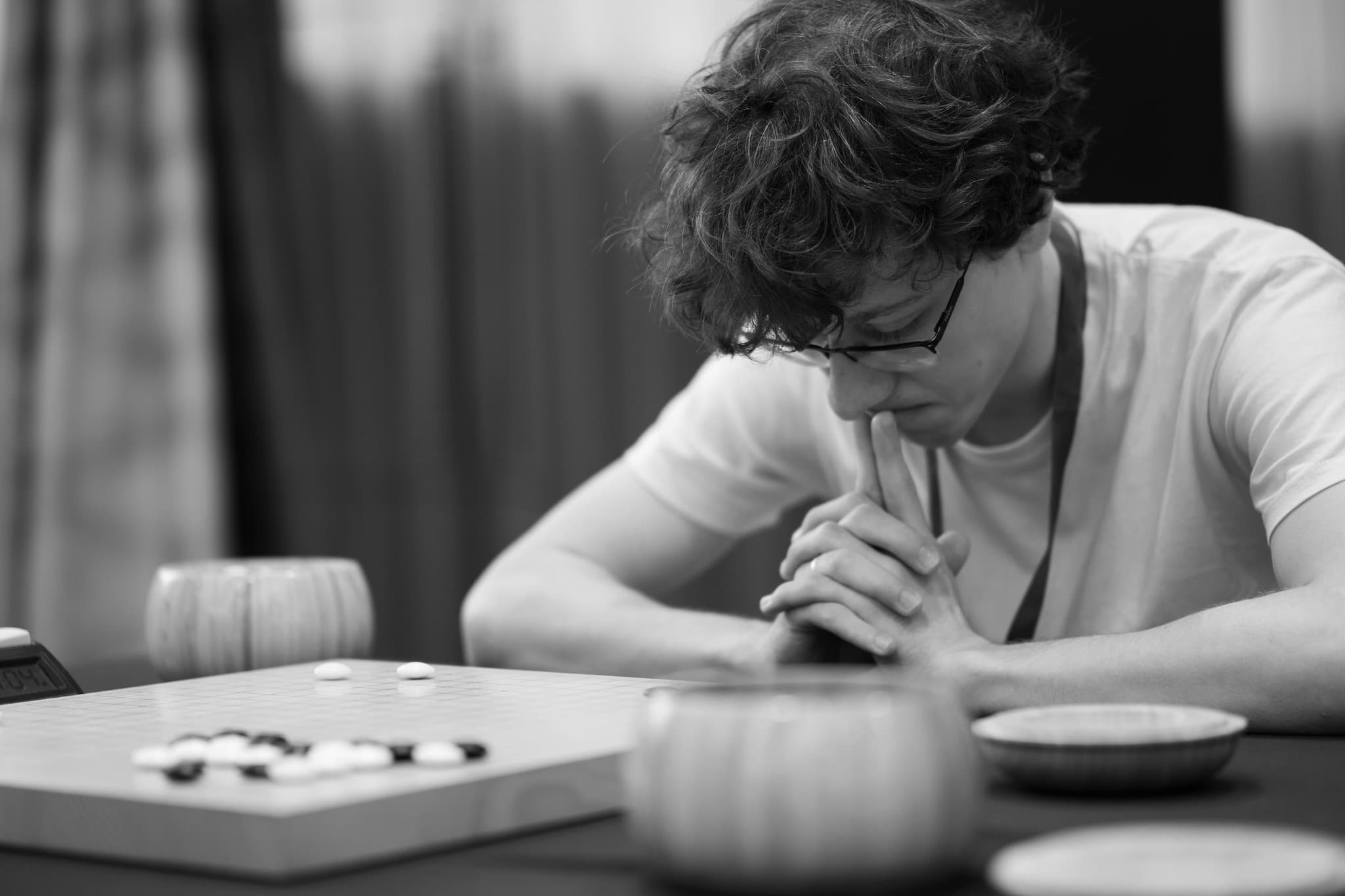
In your own experience, how do you feel time in Go? Does time speed up on the board, or does it slow down? Altuğ Çalın: When there are many alternatives, you can think about it a lot. Once you start the mental gymnastics you need to control yourself and make a decision. Although falling into overtime—byo-yomi—after using up your main time stresses players, the game has to end in some way. In the old days in the Far East, a game would last for days. To prevent both sides from cheating before going to sleep, the side to play the last move of the day would seal the move they were going to play in an envelope and hand it to the referee; in the morning, the seal would be broken for the first move and the stone would be placed. Fortunately, we now have clocks that can keep byo-yomi time.
The European Go Congress in Ankara will be open to visitors who have never placed a stone. If you were to invite someone who has never played Go before, what sentence would you say to them? Ahmet Eren Kurter: It’s not a problem that you’ve never played Go before. The real issue is to see with your own eyes why this game has not disappeared for thousands of years. Come; you’ll notice that even just by watching, something has already begun to change.
Saatolog Yıllık Saat Dergisi Saatolog’un yeni sayısı, 2020’nin yarattığı bu dönüştürücü etkiden ilham alarak hazırlandı. Dünya dijitalin etkisiyle her zamankinden de hızlı bir şekilde ilerlerken yavaşlamanın da önemini sonunda kavramış bulunuyoruz ve bu tezatlık hayatlarımızın her anına etki ediyor. Biz de bundan yola çıkarak Saatolog 2020/21 sayısını ‘‘hızlı ve yavaş’’ teması altında hazırladık.