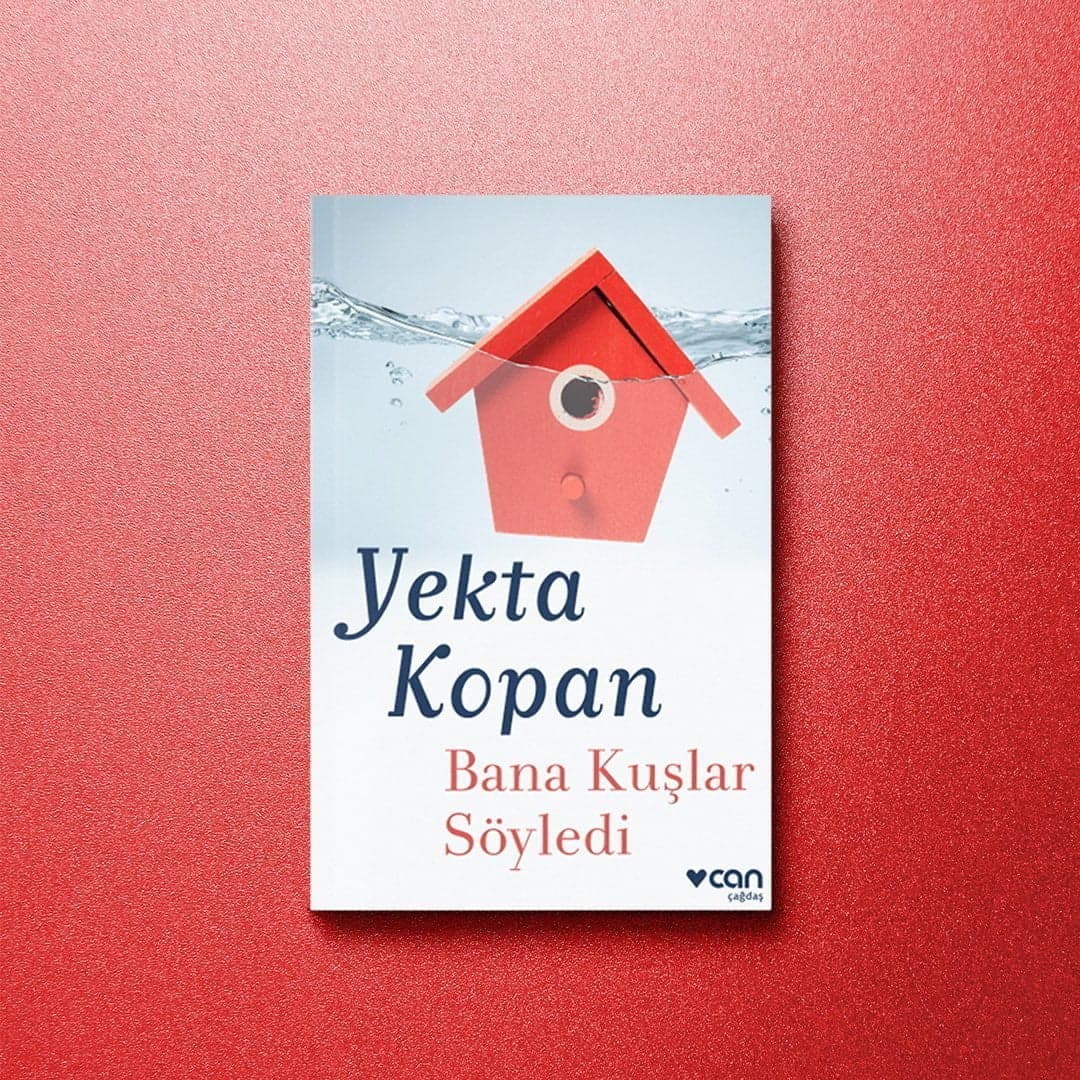
Yekta Kopan, the cornerstone of our sound memory, has taken a special place on the shelves of our libraries with his books as well as accompanying our lives in those movies we love for years. On the occasion of the author’s new story book, “Bana Kuşlar Söyledi,” (The Birds Told Me) we had a pleasant conversation about both his stories and time.
Bana Kuşlar Söyledi (The Birds Told Me) is a storybook mostly narrated by children. Thus, we sometimes look at the world of adults through the eyes of children in the stories. How did the idea of a child narrator come about? Besides, how would you define childhood?
We consume the world’s limited resources a little more every day. We wake up every day with news of death, massacre, depredation, and destruction. We say that “We are stealing from our children’s future,” but we never face the reasons for this theft. In the first days after the declaration of the pandemic, we pretended to be dealing with ecological problems, environmental disasters, and climate crisis, but at the first occasion, we discarded this information and clung to single-use plastics. Examples can be multiplied. It has been on my mind for a long time to look at this lack of reckoning and this hypocrisy of adults, through the eyes of children. In the past years, while working on the stories “Uyku Koyunu” and “Bızdık”, the idea of a storybook with children narrators has matured. The book was completed with the stories written during the pandemic period. As for my definition of childhood… Maybe I can say this; Childhood is a sentence too long to fit into a description.
As a reader, I think that the texts that affect and shape me the most come from my childhood. For example, I’m glad I grew up reading Samad Behrangi’s story “One Peach, A Thousand Peaches…” What are your childhood books?
I grew up in an environment surrounded by older people. My sister was seven years older than me. I would like to enter the world of those adults as soon as possible and to listen to what they listen to, to read what they read. Frankly, my childhood books were different because of this. When I remember some of the books I had in my library when I was in elementary school, I feel sorry for my own childhood. The Bridge on the Drina, In Dubious Battle, Martin Eden… Nobody never said that “What are you doing, son?”. As you can guess, I wouldn’t understand most parts, and worse, I would have misunderstood. I had also read Memleketimden İnsan Manzaraları at that age, and there were even parts that I memorized. The book that saved me from my futile efforts to grow up was Aziz Nesin’s Şimdiki Çocuklar Harika. I think I read it in the fourth grade of elementary school. Our class teacher would call me to the blackboard at the last hour of every day and ask me to read the book aloud to the whole class. I would read with laughter and the whole class would be happy. The first time I experienced the impact of the book on society was in those days when I read in the class. Then I read all the children’s books like I was swallowing. Cem Publishing’s Arkadaş Kitaplar series, Milliyet Publishing’s small hardcover children’s books, children’s novels from Altın Kitaplar and Jules Verne’s… In short, whatever comes to mind about the 70s. Some of these books are still in my library.
As for the song of my childhood… If I were to answer with the emotion of this story, I would say all the songs that can be sung freely, loudly, and joyfully.
I would like to ask the opening story of the book, “Şarkısı Çocukluğun”, in a temporal context. A dystopian story in which time is not very clear. Is there any reason why you want the stories to be timeless and spaceless, both in this story and throughout the book? And the title of the story made me wonder about this, is there a song from your childhood?
Thank you for this question. This was a subject I was particularly working on. Most of the stories in the book do not point out a definite time and a clearly framed place. Our characters, our plots can be anywhere, anytime. The bleeding wounds of the world are not belonging to a certain time period or to a single geography of the world. Injustice, massacres, depredation of nature, wars appear in every era and in every geography. I wanted most of the stories in the book to have a ubiquitous feeling and this uneasiness to influence the reader. “Şarkısı Çocukluğun” may be taking place in the near future, or today on an island in a corner of the world… Think about this pandemic period; five years ago, if we were talking about a world where everyone would be confined to their homes, we would have said “a dystopian scenario that could happen 50 years later”. As for the song of my childhood… If I were to answer with the emotion of this story, I would say all the songs that can be sung freely, loudly, and joyfully.
The Birds Told Me
I would like to ask about the story “Dancing Queen”. In the story, we meet a vivacious grandmother on her deathbed. This extraordinary woman is also her grandchild’s hero. Did you have such a vivacious hero or heroes who said you had to dance in life?
I grew up in a large and crowded family both on my mother’s side and my father’s side. They were all people who met frequently on holidays and special days, had fun, enjoyed eating and drinking together, sang songs, and shared their entertainment with children including me. Maybe none of them gave me advice on living life to the fullest but seeing their desire to live was enough for me. Many were also art-lover people; instrument players, composers, poetry writers, painters… However, now I think that their most important feature and most valuable contribution to me was that they were cheerful and hardworking people. Two features that we have lost for a long time in this geography: hardwork and vivacity. Now we want to earn without working and consume without producing. We also lost our joy. Think about that even the name of one of the films we took shelter in to remember those days is “Neşeli Günler”. But that “joy” remained only in memories. Today, we cannot even stand each other’s smile, happiness, and color. I am very sad about this.
When it comes to memories, let’s not forget that for us, they seem like a movie painting, a piece of music, or a novel. The way to deal with a loss is not to delete the past, but to record it through art.
I also want to mention the story “Geçmişi Silmek”. The story begins with a missing father figure. Undoubtedly, we all have missing pieces in our lives, perhaps we perceive the way to cope as “deleting the past”. What do you think about the way to deal with? Do you think literature is one of these ways?
Literature is one of the most reliable ways not only to deal with or come to terms with the past, but also to create a memory record. Literature and all art. The issue of “loss” is something I try to discuss in almost all my books. Even my children’s book “Burun” opens with a loss, the main character of the book Ali realizes one morning that his nose is lost. One of my readers reminded me of this; “There are losses even in your children’s books.” Disappearances, separations, being left behind, loneliness, coping and mourning processes have often found a place in my stories. Likewise, the issue of part-whole and missing parts… Let’s think about it this way; What do we shelter in when we have a loss? Either to memories that will remind us of that loss, or to a work of art that will enable us to relate to that loss in a different way. When it comes to memories, let’s not forget that for us, they seem like a movie painting, a piece of music, or a novel. The way to deal with a loss is not to delete the past, but to record it through art.
Were there any authors or texts that you re-read during the pandemic and thus discover a different side to them?
I did this especially in the first days of the epidemic. I started with Turgenev, rereading as many books as I could. When I read “Spring Torrents” years ago, I wasn’t that impressed, it was great. Likewise, I reread three or four books of Nabokov. He’s always an impressive writer anyway and made me feel good again. I reread “Disgrace” and then “Waiting for the Barbarians” by Coetzee. He’s a great writer, I discover something new every time I read him. I am currently reading “The Childhood of Jesus” by Coetzee. Starting to write for “Gazete Oksijen” during the pandemic period also enabled me to re-read many books. I have a column called “Rafta Kalmasın” in Oksijen. Articles that I write to revive the books that are still in print, that is, those that are still on the shelf. Therefore, I need to do “re-readings” just like you said.
I wish I had tens of watches. There are watches that I want to gift myself one day, even the dream is beautiful.
While talking about time, I would like to ask about your relationship with time. How is your relationship with watches, are you interested in them? Besides, how do you keep track of time, are you punctual?
We come to the most important topic: time. One of the most important things in life for me is time. In fact, it is the concept of time that determines my relationship with art. Creating the memory record that I have just mentioned is made possible by the ability of art to stop time. Time is a concept that I think about a lot and read a lot. However, now let’s talk about the practice of the issue in daily life. I try to be very punctual. I cannot stand someone being late for an appointment or not sticking to their schedule. Being punctual or not is a defining feature for me. You see, I have a problem with people who use time rudely. It is normal for someone who values time so much to be interested in watches. I adore watches. I do not use jewelry, just a watch is enough for me. I can’t do without it. I’ve been using smartwatches mostly in recent years. However still, I go on the internet occasionally and even if I can’t buy them, I look at the watches, like and examine them. I wish I had tens of watches. There are watches that I want to gift myself one day, even the dream is beautiful.
Do you have a special watch for you? Maybe it can be a souvenir watch from a family elder…
I used to look at my deceased father’s watch with admiration. It was one of the standard models of a known brand. A model of the 60s-70s. While my father was still alive, that watch somehow disappeared. I wish I had it today. Other than that, there are watches that I love, but I don’t have a watch that has such a memory.
What can nature and birds say other than screaming of “That does it, leave us alone, learn that this world is not just yours!”
Finally, do the birds have anything to say to you these days?
I would like to say that “Keep dreaming of a better world.” However, in the days, we are having this interview, news of the massacre of nature comes again. We have a talk in a day that thousands of baby flamingos died, or rather were killed, due to the dams built to draw water to the canals and fields flowing into Lake Tuz. What can nature and birds say other than screaming of “That does it, leave us alone, learn that this world is not just yours!”
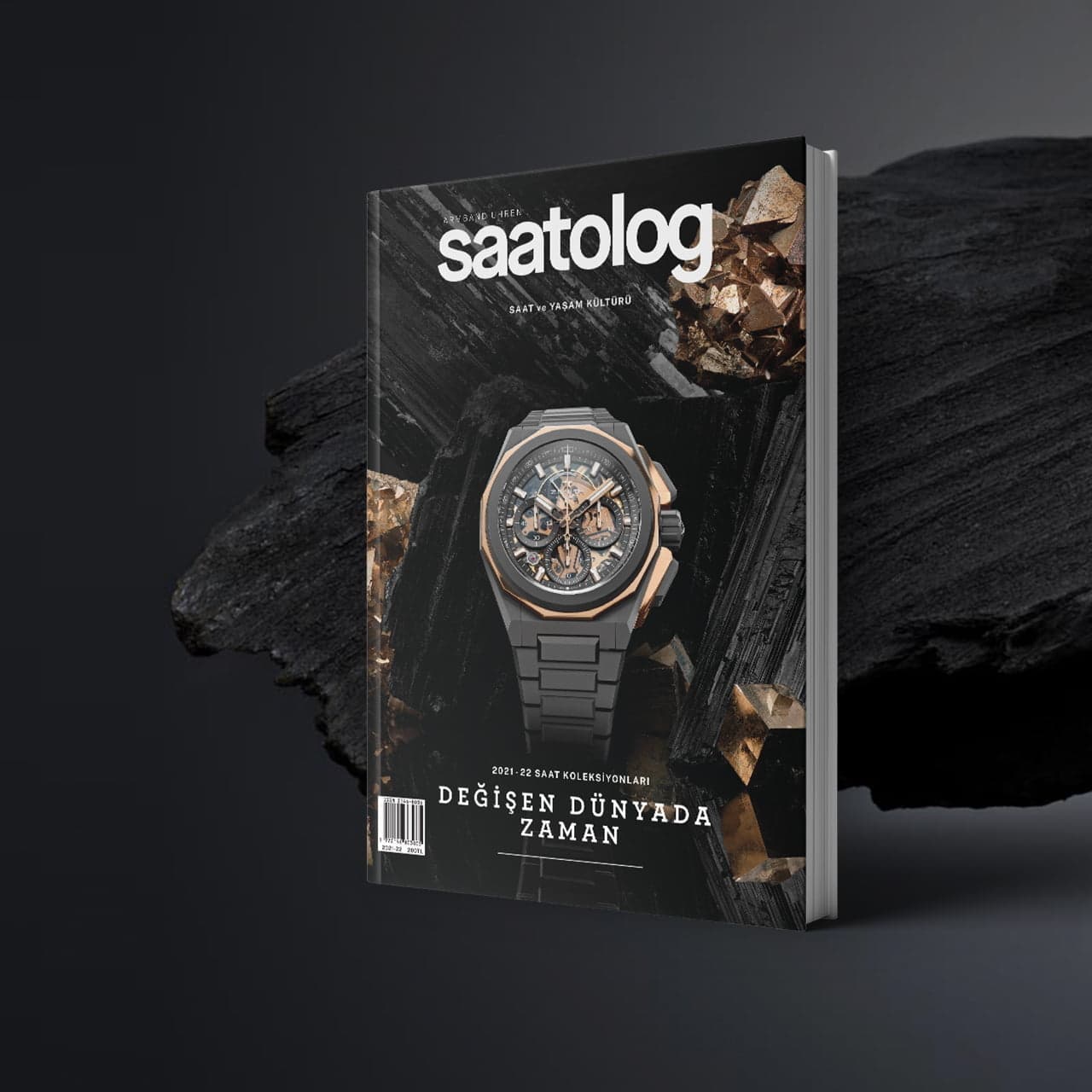
Saatolog Yıllık Saat Dergisi Saatolog’un yeni sayısı, 2020’nin yarattığı bu dönüştürücü etkiden ilham alarak hazırlandı. Dünya dijitalin etkisiyle her zamankinden de hızlı bir şekilde ilerlerken yavaşlamanın da önemini sonunda kavramış bulunuyoruz ve bu tezatlık hayatlarımızın her anına etki ediyor. Biz de bundan yola çıkarak Saatolog 2020/21 sayısını ‘‘hızlı ve yavaş’’ teması altında hazırladık.