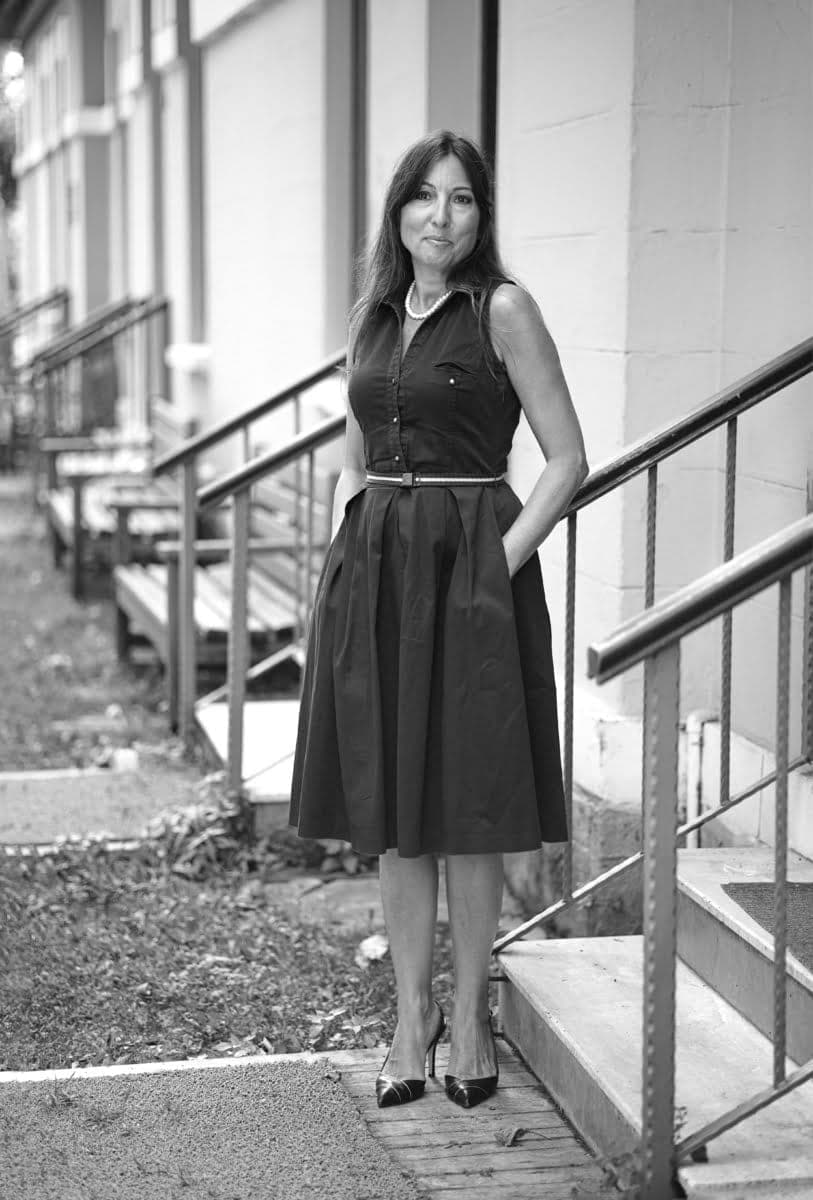
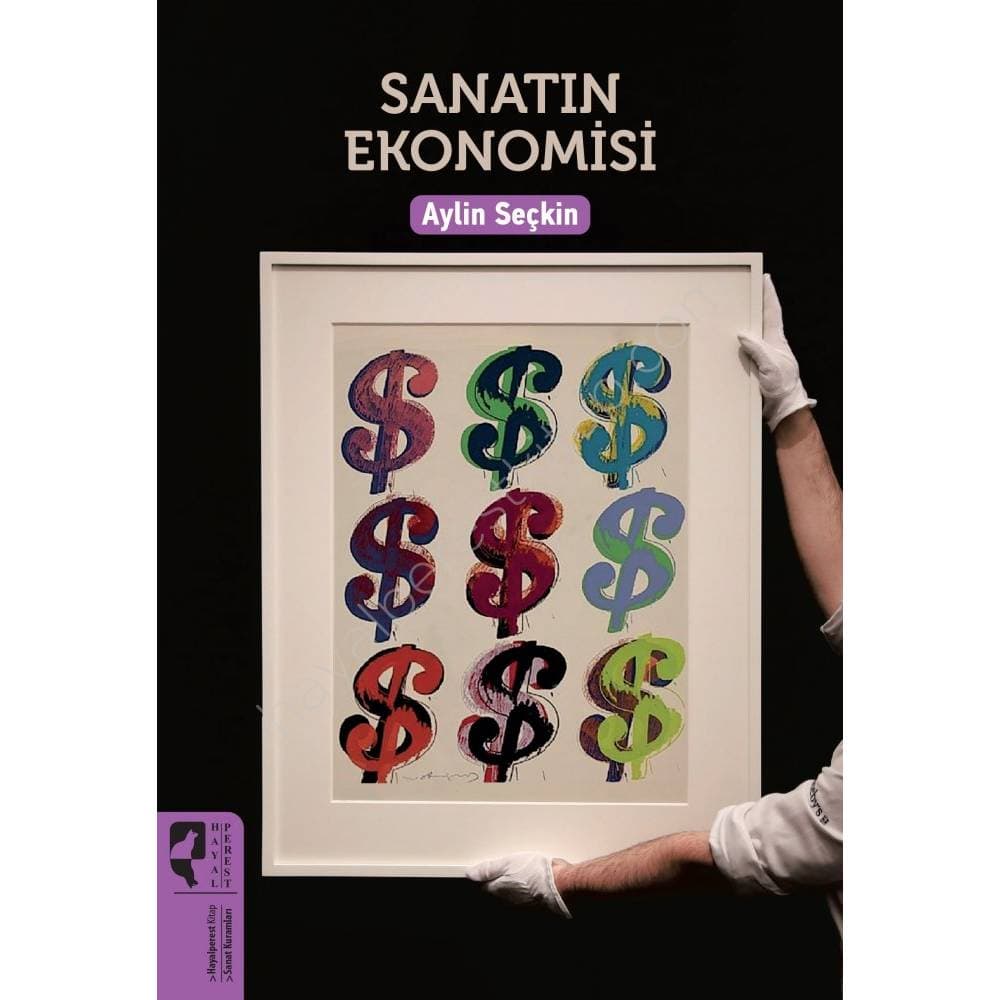
We talked with Prof. Dr. Aylin Seçkin about the valuation of art in Turkey and in the world, based on her new book, The Economy of Art.
Working on the relationship of economy with different disciplines, Aylin Seçkin’s path crossed with art for the first time during her 2006 travel to Paris. At that time, Seçkin was following an art student group in Pompidou, and when it was understood that there was an intruder in the group, her trip came to an end, but this last was the beginning of another journey for Aylin Seçkin. That night Seçkin, who looked at art from an economist perspective, escaped her sleep with questions such as “How much is the capital of the Louvre Museum, what is our cultural capital, how much is the artifacts in the museum?” When he returned to Turkey, he started to take his first steps in this field.
He quickly made academic readings, published the ARTSA Turkish Art Market Index with Erdal Atukeren, and this work made a lot of noise at that time. Within the scope of this study, many topics such as the differences between male and female artists in the sorting mechanism of the works of the auction houses, and whether some data of the Central Bank have an effect on the sales of the works of art were investigated. The art economy courses that Seçkin gives have evolved every year; So much so that they even had fun moments when they organized the virtual auction game. Moreover, his students made price predictions with up to 80 percent accuracy in this auction, which is a virtual game of an upcoming auction.
While collecting data such as who is following the art with the Contemporary Istanbul survey, they also examined the contribution of a museum to the shopkeepers around it with a research they conducted around Eskişehir Odunpazarı Museum. Seçkin founded the artificial intelligence project CroMagnon Art. The project that was accepted to ITU Çekirdek; an initiative involving two artificial intelligence engineers, a civil engineer and Aylin Seçkin.
Let’s come to the Economy of Art; Opening the cover of the book is like discovering a secret door in a corner of a painting that I admire in a museum and taking a step into a world I have never known, because banknotes flying behind works of art is an area I am quite unfamiliar with. In this journey, Aylin Seçkin takes her readers to a lively kitchen where art’s stakeholders such as galleries, auction houses, museums and collectors, especially artists, take the financial appreciation of art through the historical process. The book is not an academic article, but is written in a plain and understandable language that creates the feeling of having a conversation with the reader.
“The annual sales turnover of only plastic arts, auctions and galleries is about 50-55 billion dollars.”
I first ask Aylin Seçkin about the concept of the economy of art; Seçkin says that in terms of culture and arts economy in general, there is a very large sector in which entertainment, sports, cinema, music and performance arts are involved. According to Seçkin, in other words, all of the academic studies that look at, analyze and emphasize the annual volume that changes hands in this market can be called art economics. Explaining that the annual sales turnover of only plastic arts, auctions and galleries is approximately 50-55 billion dollars, Seçkin said that Turkey is in a very small part of this, but quite lively; He adds that it is a sector that sometimes grows fast and sometimes closes in. In the book quoted from Forbes magazine; It seems that there are eight billionaires and fifty Turks on the rich list announced by the magazine every year, with a fortune of half a billion dollars. Of course, among these names are people whose art collections are known around the world. Although it is an investment asset when talking about the financial dynamics of art, the primary purpose of a work of art is not actually an investment; Seçkin states that this purpose may also have purposes such as giving a message with the aesthetic values it contains, leaving a mark on the future, creating a face from the sum of those works, and being a part of the cultural heritage. In addition to these, one of the points he mentions is that the art economy is an area that we cannot ignore, because we can create a museum from these works, share an R&D collection with friends, use it for the promotion and marketing of the company, or create an image with it and attract public attention.
“When we say art economy, we mean who spends money on culture and art, who are the consumers-producers of the sector, who are the intermediaries, what are the dynamics, how is the production style, how is the competition in the sector.”
Saying that the visual arts come to the fore more when the culture and arts economy is mentioned, Aylin Seçkin adds that the works sold by big auction houses such as Sotheby’s and Christie’s create a big agenda. While mentioning that the accumulation defined as cultural or taste capital is formed through exhibitions, he states that this accumulation is another kind of accumulation that shapes people from their way of thinking to their lifestyles. She thinks that maybe the way art is consumed will change (according to Seçkin, there is another world that is progressing in digital today, for example), but as long as this transfer exists, that interest will always continue and will not go out of fashion.
I find it interesting that Aylin Seçkin, as an economist, crossed paths with the economy of culture and arts, as much as the concept of the economy of art or the banknotes flying behind the painting as I imagined it. Seçkin is a graduate of a French high school and says that it is not possible to remain indifferent to art after studying French. When she looked at many things that he missed while traveling as a tourist during a Paris trip, as an economist, it started to flash for her. When she looked at the work from this point of view, the following questions came to mind: Why is it exhibited there, what is the return to the owner, how long did the money given pay for itself, which works of artists gained value faster.
At this point, work has started to transform from visiting museums to analyzing art economy. Afterwards, seeing that there was an important literature, mostly from the publications of American and British artists, that started in the 70s, but nothing was done about this issue in Turkey, she kept a tally of what was going on, approached the works of art sold at auction with her own methods, as if they were the shares of companies in the stock market, applied financial methods and analyzed them. they did. she says that there is such a subordinate in the elite economy and that there is a group of about 100-150 people working in this field, and she is one of the economists in this small group.
“We approached the works of art sold at auction as if they were the shares of companies in the stock market, applied financial methods and analyzed them.”
Even without being a culture and arts economist, many art enthusiasts can easily guess that one of the main elements that make a work of art valuable is its uniqueness. It is not difficult to say that factors such as the period and artist of the work will also be effective; I also ask these factors to Aylin Seçkin. Seçkin answers that the artist’s name is very important on its own, and also states that from which geography s/he came, in which museums his/her works have been exhibited so far, in other words, some information about the artist in general is a factor in determining the value of his/her works. One of the things she added is the premium value of the gallery, and the gallery where the artist works is one of the factors that increase its price; This is called the “gallery effect”. According to Seçkin, besides these, the type of the work and the artist’s renewing themselves in time to respond to aesthetic concerns are also important. One of the examples given in the book is that there is only one work that is intended to be sold as a self-portrait of Vincent van Gogh, and it is likely to be on the market in the next 10 years. * Who wouldn’t want to have the only Vincent van Gogh self-portrait in existence? This brings us to the psychological pleasure of owning a work of art.
“A work of art is an object of desire, a passion of the people who can have it…”
The “Veblen effect” mentioned in the book refers to the collectors’ sense of satisfaction not only with the aesthetic benefit but also with the high price they pay; This satisfaction can also be achieved when a work with a high price is bought for a lower price. Aylin Seçkin explains this issue in her book as follows: “… The fact that the estimated price is higher than the price paid, that is, the feeling that the work was ‘bought for the duchess’ gives a special pleasure to the collector. For this reason, prices are kept high, prices on the list can easily be discounted by 30-40%.”* When we asked Aylin Seçkin about this psychological pleasure, she replied: “A work of art is an object of desire, a passion of people who can have it; It’s something people dream of. There is also the issue of competition and proportion. I must have this work of that artist so that my collection is complete or I bought it, but there are requests such as getting another one.” Seçkin continues to explain: As long as there are opportunities, adding to the art collection never stops. Therefore, the feeling of receiving, which we call burial, continues even after all the walls of the house are finished; warehouses are rented, maybe a museum will open after the warehouses are full. This desire is very strong and the pleasure it creates is just as strong. They feed off each other; As a matter of fact, works of art are something that do not have direct benefits, but we see that they live with people and create their own value to the extent that they stimulate the senses and imagination. It is necessary to be a part of that world, from the moment we wonder and look at a work of art, a dialogue begins; When this dialogue turns into passion over time, reception happens.”
Undoubtedly, the most lyrical part of our interview with Aylin Seçkin is the analogy of falling in love with the purchase of artworks she heard from collectors. For some collectors, the decision to buy is like love at first sight. Some of them thought long and researched before choosing the work and learned all the features of the work and then bought it. However, here, Seçkin says that those who liken art to “love” are stronger. Aylin Seçkin was one of those who approached the work more emotionally. The work had to impress her with a part of him and give her a feeling she didn’t know before. When she says that he needs to find a story in the work that I can adapt to my story, I already smell a story that I can follow. When I asked her if there was a work with a story in her house, she said: “I bought a painting by Mehmet Güleryüz called ‘In a Corner’ years ago. Then I learned that that painting was actually destroyed by Mehmet Güleryüz, so it was not the original painting; cut the table. The piece remaining from the original state of the painting was in one place. I pursued it, I had a dialogue with him, and he gave me the remaining piece as a gift. I bought a Mehmet Güleryüz painting, and I can say he received one as a gift. I am exhibiting those two pieces side by side in my living room. I bought the painting I am talking about when my daughter was two years old; to take care of her as she grows, to grow with it. It is a work with a memory and a story.”
Another story I followed in the interview is the place of women in the art market. As a matter of fact, Aylin Seçkin has dealt with this subject in a very detailed and explanatory way in the book. A very comprehensive analysis is offered with the tables and data used; Data such as the number of female artists handed down from generation to generation, the year-to-year price comparison of works by male and female artists, and the turnover of female artists for certain years provide an important source to see the place of women in the financial side of the culture and art market.
When I ask Aylin Seçkin about the place of women in the art market, I get a satisfying answer; She states that it is as if female artists in Turkey have come to the fore a little more, and that she cannot say that female artists in our country have not reached the same price as male artists. Although this is a satisfactory answer for our land, I find it sad for women of the world to hear that a woman like Picasso, who has a turnover of around 1 billion dollars, is still not an artist. Saying that we have very good female artists that she can count at once, Aylin Seçkin adds, “There is not yet a female artist whose painting of Burhan Doğançay’s ‘Blue Symphony’ has found buyers for a high price, but they will compete. Among the names that first come to Seçkin’s mind are artists such as Azade Köker, Canan Tolon, Selma Gürbüz, Alev Ebüzziya Siesbye and Füsun Onur.
“I dream of an art environment with the concept of accessible art, where a middle-class person like a teacher or student can buy an artwork they like when they visit an art fair.”
One of the issues we touched upon during our interview with Aylin Seçkin is the concept of accessible art. Seçkin repeats that, as she always says, a middle-class person like a teacher or student can buy an artwork s/he likes when s/he visits an art fair, and she dreams of an art environment, which is the concept of art. According to Seçkin, there should be an art environment where a middle-class person can buy a small but original work of art, which will spread the art to the base and allow the pleasure capital to accumulate rapidly. What she’s talking about here isn’t that every artist is world-class or everyone gets a floating artwork, it’s an art environment where people can get their favorite artworks whenever they want, at affordable prices.
Aylin Seçkin, who lived in San Francisco for a year, says that she saw that students could also buy works of art there. She has also observed that they buy and enjoy works of art such as pencil drawings and small canvas designs. In certain parts of the city, artists would open their workshops every weekend and people would visit those workshops and buy what they liked. Saying that there is no such infrastructure here, Seçkin states that young people prefer to buy a pair of sneakers or a second pair of sneakers for the same money. What Aylin Seçkin dreams about is a consciousness, interest, infrastructure and order that young people can choose to buy works of art; such an environment where students pick up a small canvas they like while passing by an artist’s workshop. “I want them to be both interested and able to afford it,” Seçkin adds. From this point of view, I find it appropriate to give a result from the Contemporary Art survey given in the book. According to the survey; Of the 632 visitors who stated that they did not buy artworks, 45 percent said that the prices were expensive. “How would you buy anything?” The answer to the question is 29 percent if the price is cheap.*
“Contemporary Art survey data given in the book displays that; it is concluded that Contemporary Istanbul, as well as exhibitions and other artistic activities held in all museums and galleries, act as a school, encourage and even increase the accumulation of pleasure and cultural capital. There is a large audience interested in the arts. Some of this group is potential buyers.” **
Inevitably, the issue also comes to the pandemic. Seçkin believes that local markets have become stronger with the pandemic; because international fairs are no longer sustainable in terms of cost and travel restrictions seem to stay with us. On the one hand, Seçkin also mentions that there is a very rapid development in digital during this process, and says that we need to follow and understand this as well; her prediction is that art will enter all forms of entertainment, such as the entertainment industry, digital games, and NFTs on the one hand. At this point, the entertainment industry adds that it has evolved into a world where different areas are intertwined, different collaborations are formed and are being formed, and that it has accelerated with the pandemic.
When we ask about NFT, which we hear frequently in the art world lately, Seçkin says that this field will continue to gain strength, but some artists and some works will burst like a bubble. What Seçkin said later is also very important for the sector: “This sector, which we see in the USA and around the world, called ‘collectible’, will grow, because we are talking about a figure of 500 billion dollars. If we imagine that it turns into digital, the work is already going there. Let’s imagine that the NFT of the values in all the museums of the world is sold, there is no limit to it. We are talking about the NFTization of all museums now…”
One of the current examples of NFT given in the book is the digital artwork titled “Everydays: The First 5000 Days”, which consists of drawings and images made by artist Tom Winkelmann, also known as Beeple, over five thousand days, at the Christie’s auction held in London in March 2021. Acquisition by Vignesh Sundaresan, owner of Singaporean NFT fund company Metapurse, for $69.3 million. ***
Among the works that Aylin Seçkin likes most recently are Günnur Özsoy’s exhibition at Gate 27 and Azade Köker’s works that exhibited in Artweeks.
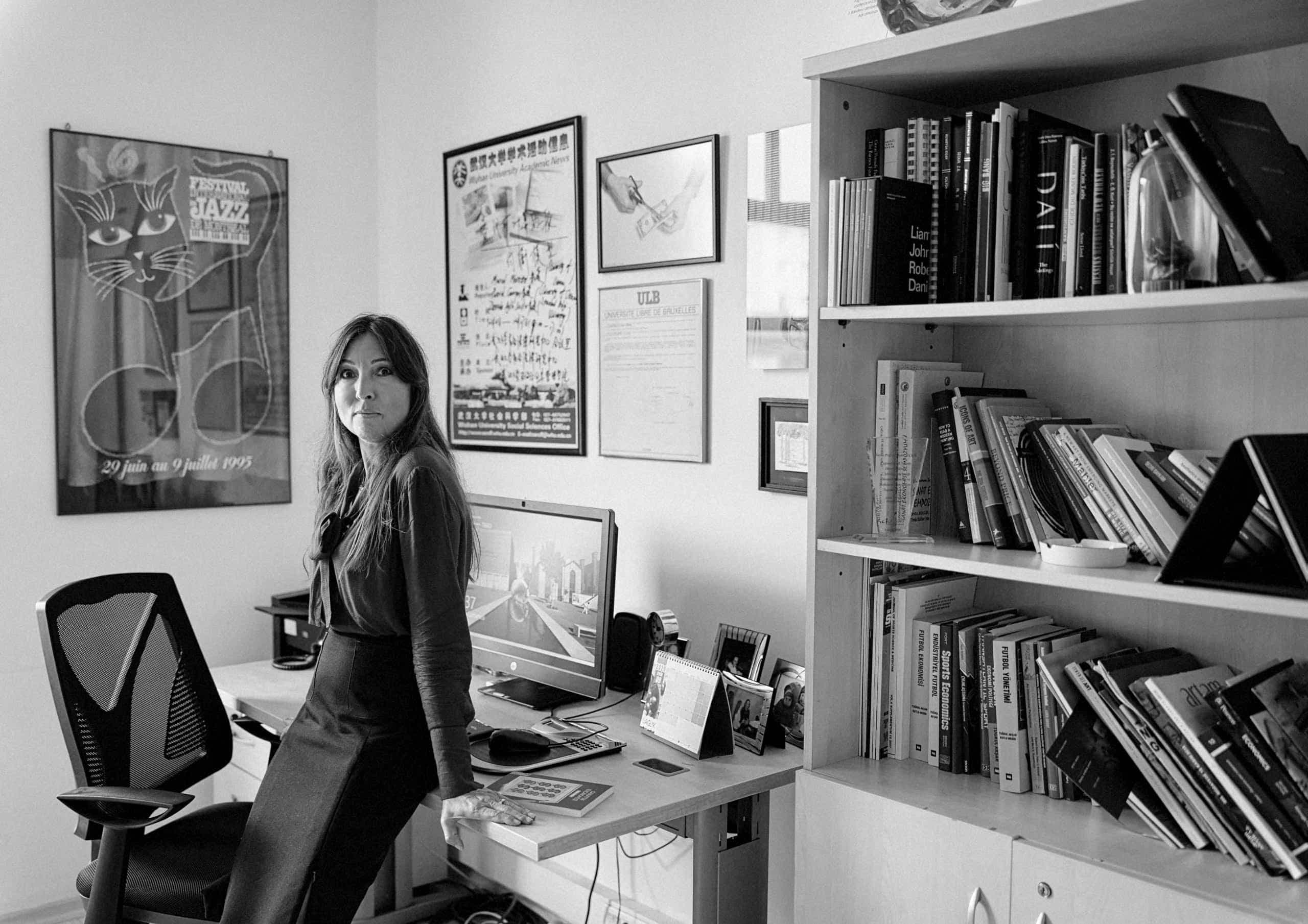
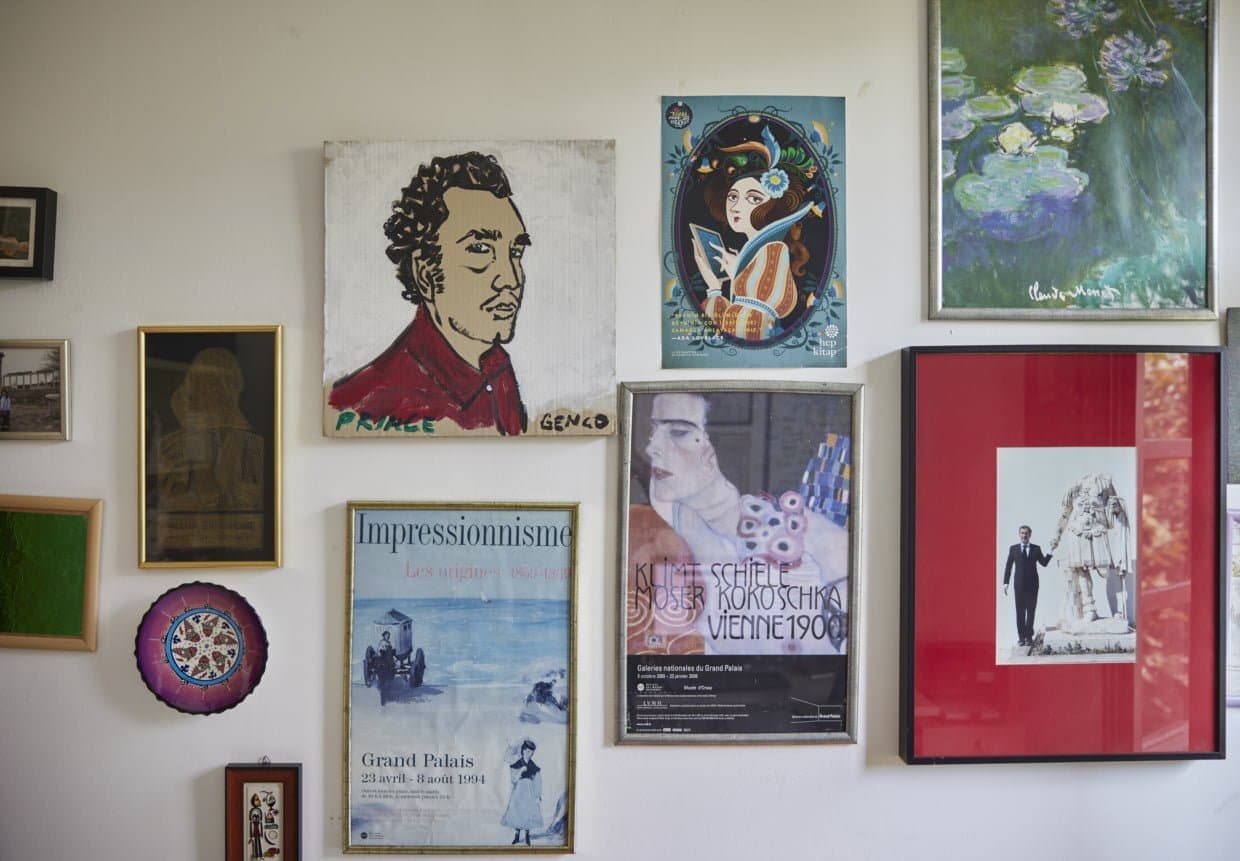
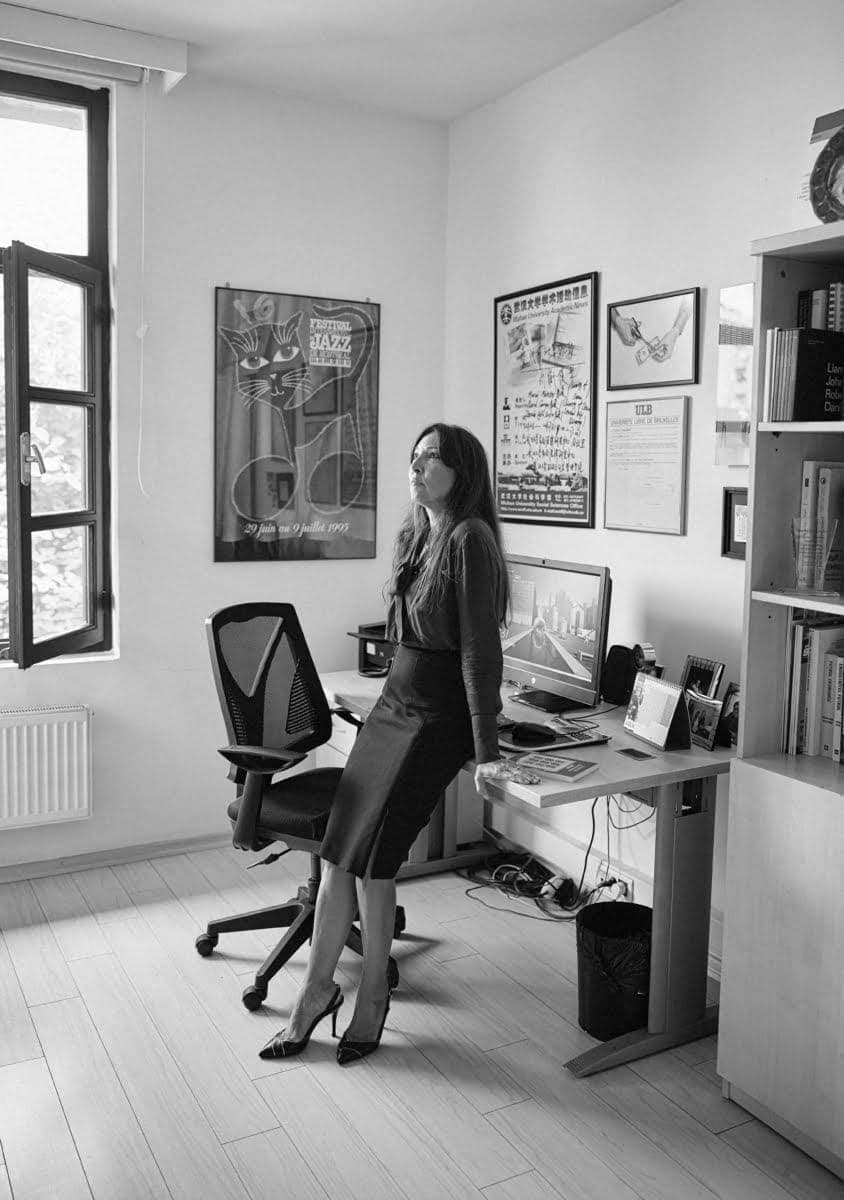
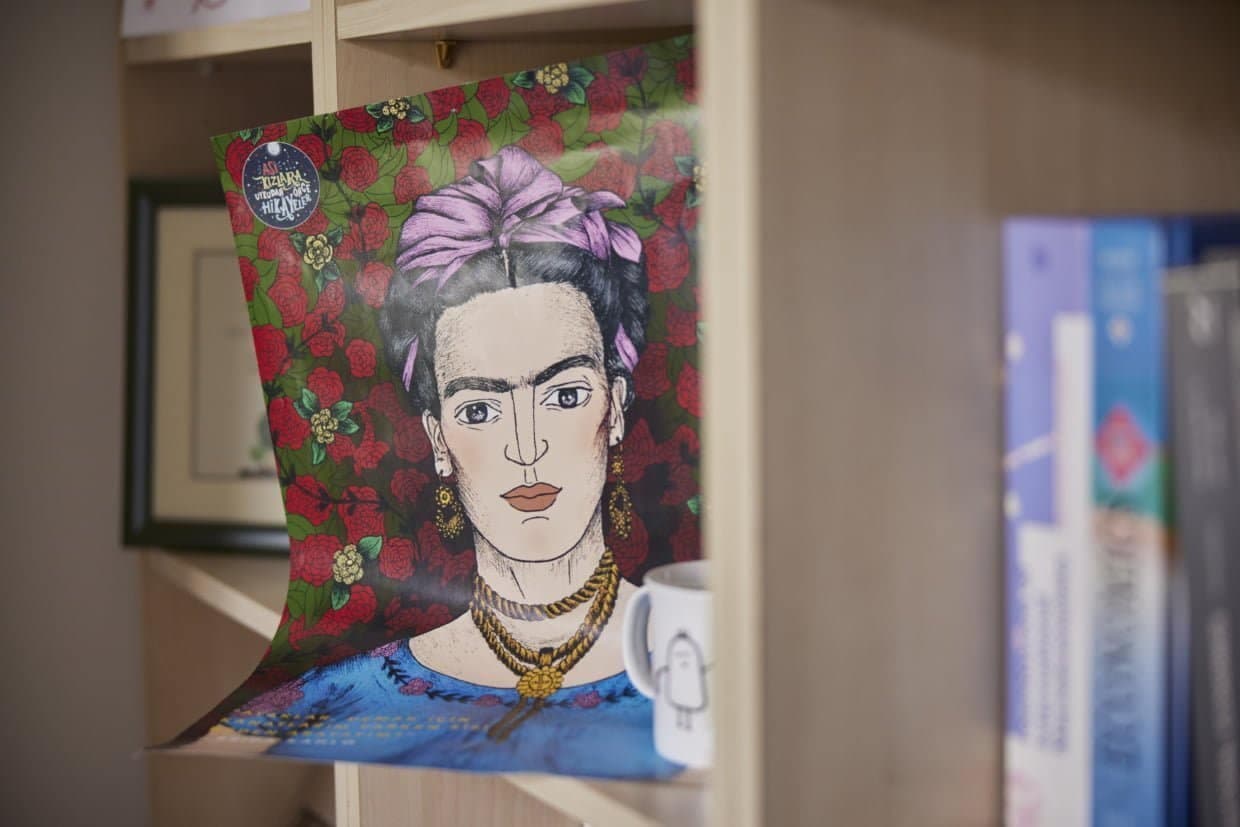
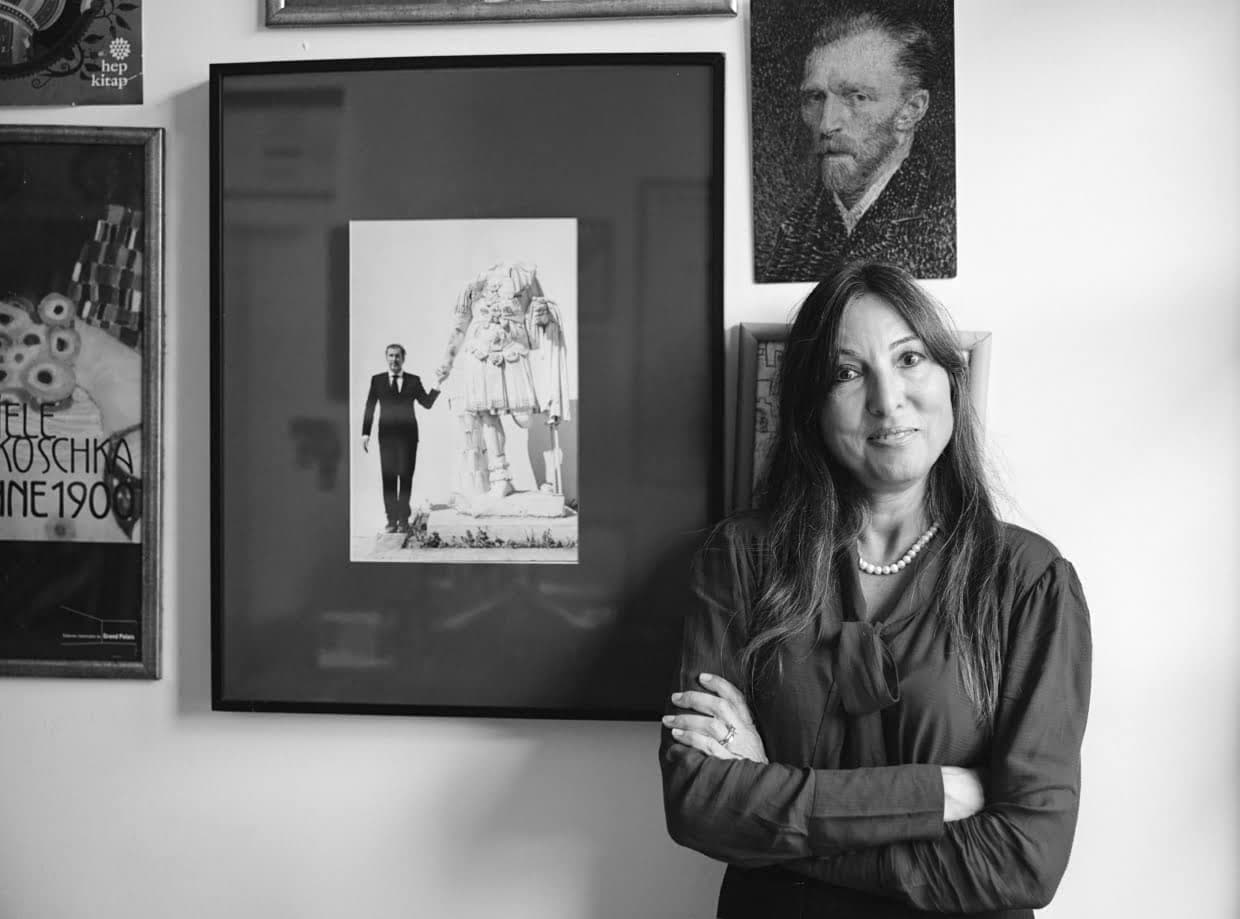
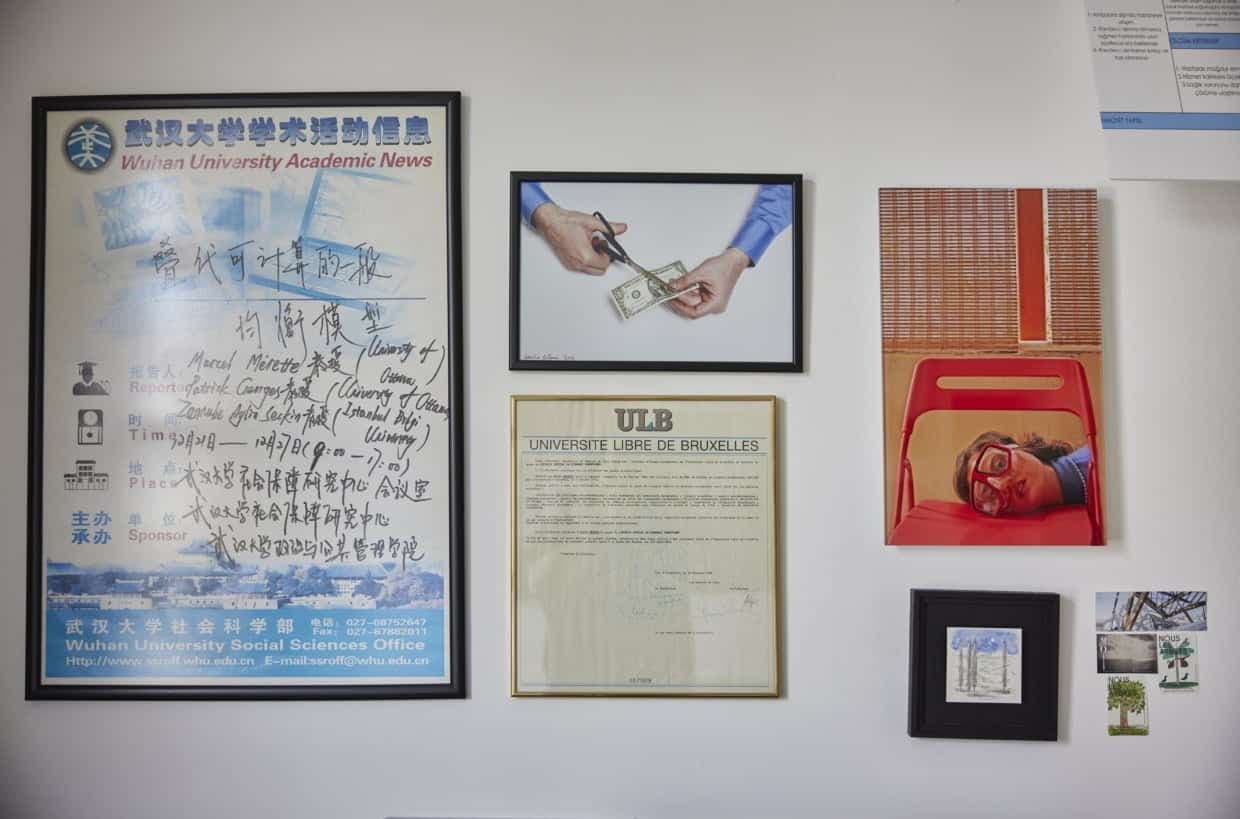
Before starting the interview with Aylin Seçkin, I would like to close the article by talking about a short time I spent in her office. Ms. Aylin has furnished her office with minimal and various works of art so that her students can be inspired when they visit. Before I start the interview, I notice a small and rather naive watercolor drawing on the wall: In the work, a rain-laden cloud is drawn quite close to the tree branches (my imagination is that the cloud is rain-laden), the yellowish leaves falling from the tree branches are blowing in the blowing wind. You must have wondered why I wrote my very brief moment of engagement with this little watercolor work. This naive work, which you can display on your wall with a relatively small amount, serves the purpose of furnishing Aylin Seçkin’s office and allows me to interact with a work of art in a short time. This naive watercolor work will now be a part of my memory from this interview and its story will continue with me. Who knows, I will be chasing the name of the artist who performed the work and collecting new stories with other watercolors. This small watercolor work shows once again how right it is to dream of an art market where everyone can buy works in one way or another, which Aylin Seçkin also mentioned during the interview. Thus, art, which is life itself, can become a rain-laden cloud and become an unexpected guest in our lives.
Saatolog Yıllık Saat Dergisi Saatolog’un yeni sayısı, 2020’nin yarattığı bu dönüştürücü etkiden ilham alarak hazırlandı. Dünya dijitalin etkisiyle her zamankinden de hızlı bir şekilde ilerlerken yavaşlamanın da önemini sonunda kavramış bulunuyoruz ve bu tezatlık hayatlarımızın her anına etki ediyor. Biz de bundan yola çıkarak Saatolog 2020/21 sayısını ‘‘hızlı ve yavaş’’ teması altında hazırladık.