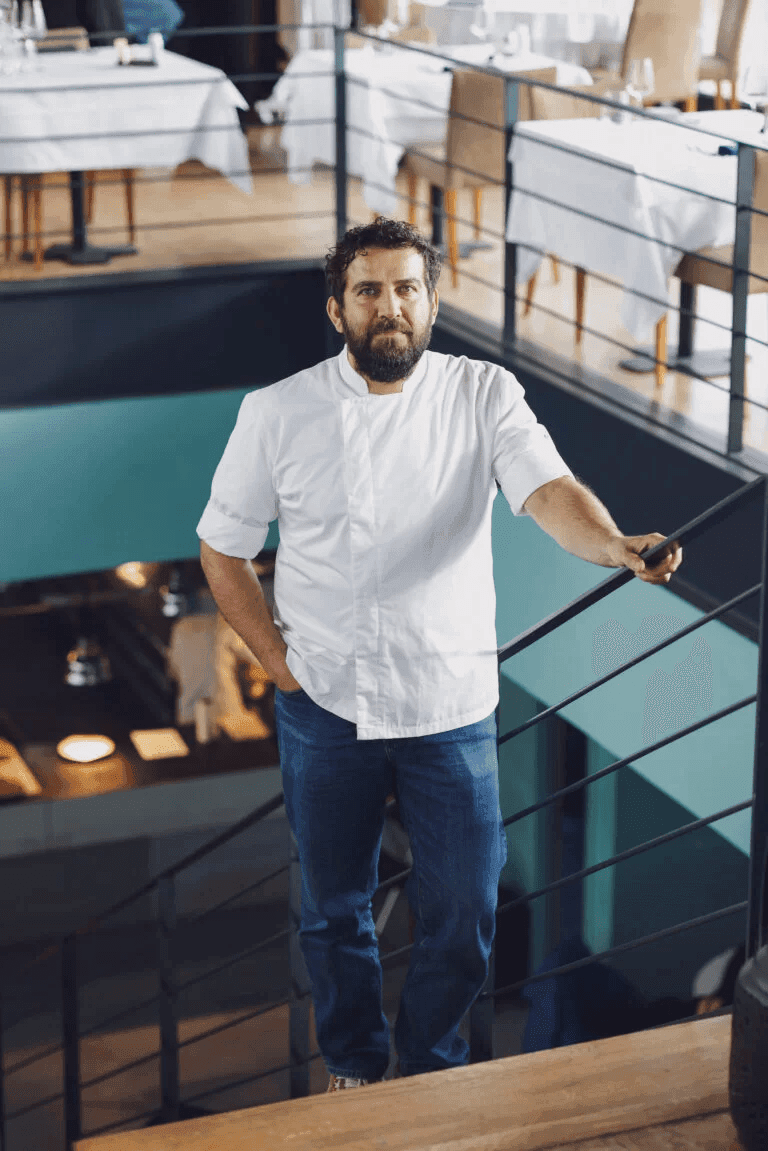
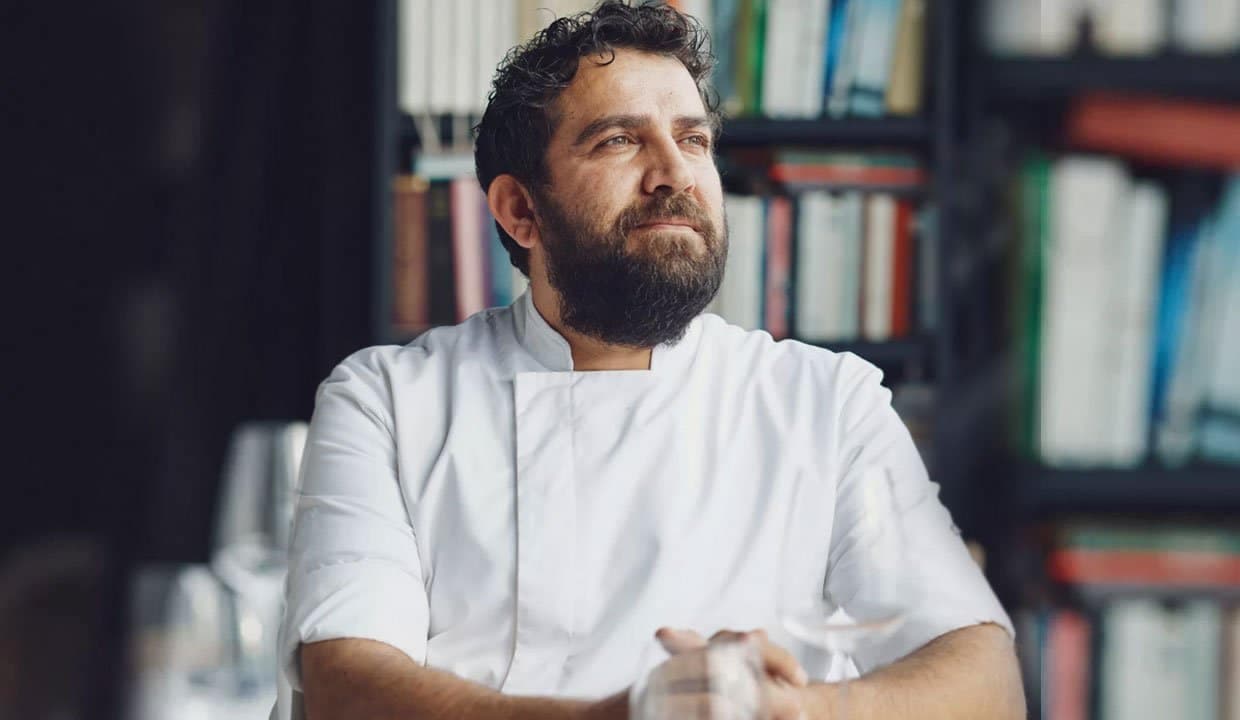
Anatolia is the starting point of everything. One of the most unforgettable traces left by this rich geography, where dozens of civilizations have passed, is undoubtedly its cuisine. Even though life changes in every way from past to today, that first taste that remains on the palate always preserves itself. We looked at the story of that first taste and the “timeless” world of cuisine through the window of Maksut Aşkar, who interprets traditional cuisine with original recipes.
You describe your restaurant as timeless, what does it mean to be “timeless” in the kitchen?
What does time mean? According to whom and according to what time should be said. In my opinion, we live in an eternal present, we create our present with the imagination of the future by learning from what we call the past. The future is just a dream. We know there is a future, but it actually gets old every day. Since those memories of the past are important to us, we look at how we have shaped our present from those memories. At Neolokal, every day is timeless for us. That’s why it’s still a newly opened restaurant for someone who has been coming for the first time since 7 years. Because we are the ones who are wasting time, someone who has not been to Neolokal for 7 years comes to a new place when they come today.
I guess you have a way of relating to the past with traditional tastes. What is the place of traditional flavors in your kitchen?
These are already written prescriptions. We copy our mother; we don’t do anything different. Of course, the point where we are most original is that we only copy our mothers; not other chefs, cuisines, or visions. Based on our past experiences, we take care to blend those recipes with an innovative perspective. This creates its own uniqueness.
Here, too, our inspiration is Anatolia, which is the starting and ending point… It is an endless point, because when we say Anatolian cuisine, we are talking about a vast ocean. Even though my childhood memories are from a very limited region, when I say I cook Anatolian cuisine, I have to feed off the childhood memories of others. I have to be able to understand and touch them; This is a difficult and stubborn job. When you start this job, you realize that you learn something new every day. You grow and develop in direct proportion to how open you are to learn something new.
“I don’t like the word organic; because what we call organic were food materials that we did not need to say organic 40 years ago.”
What is traditional?
It should not be thought of as a mere recipe. We are talking about the projection of a culture that once existed but has disappeared or is about to disappear, that is, a kitchen that is about to disappear. Maybe a kitchen that remains in our memories only. With the forced migrations in the Ottoman period, you could only carry one culture, one habit, and that is the cuisine. In your new home, you adapt and transform it according to what nature gives. For example, Sephardic cuisine is the cuisine of 500 years ago. They are still trying to adapt it to today’s conditions; this is an example of a culture trying to live. Therefore, when I put the flavors of this culture on the table, I make an effort to add value to it.