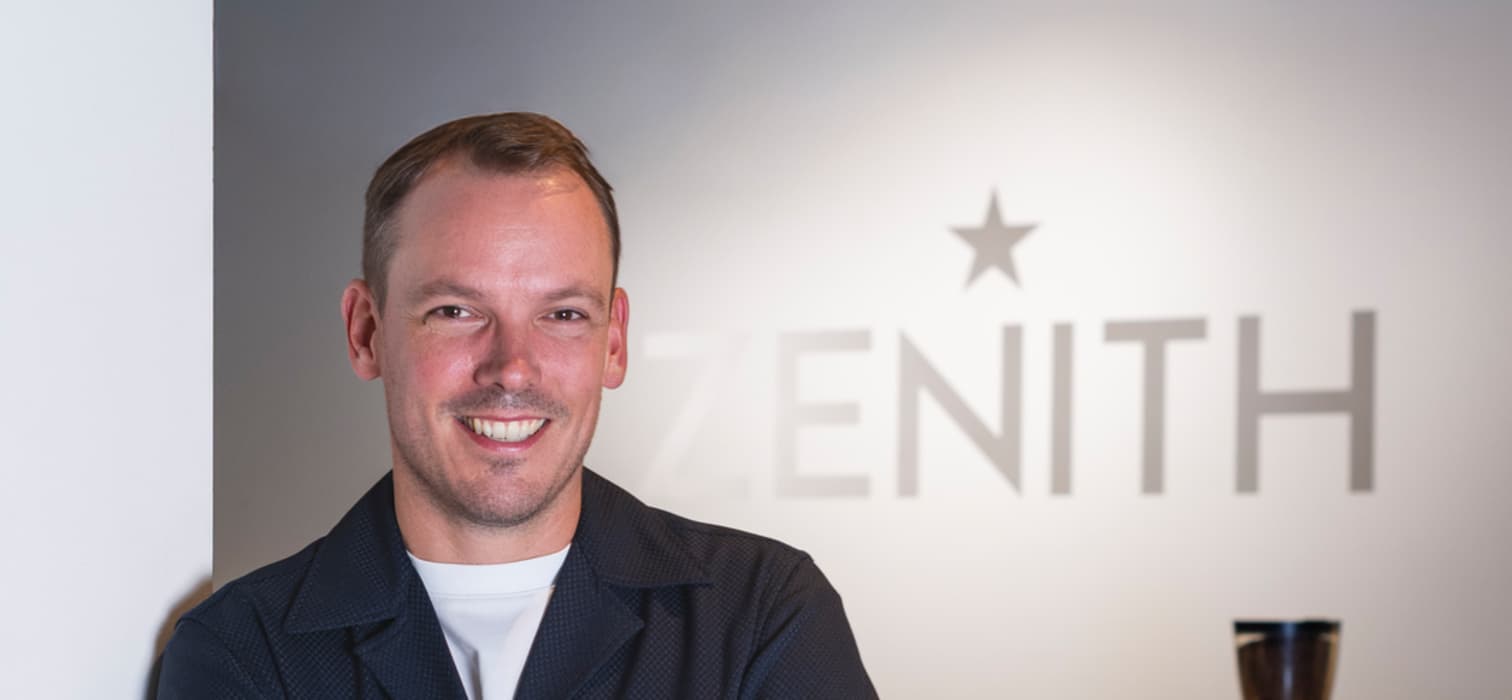
Zenith Chief Product Officer Romain Marietta discusses the brand’s latest novelties at Geneva Watch Days 2026.
We first had the opportunity to interview Zenith Chief Product Officer Romain Marietta in 2021. It was a year when the effects of the pandemic were still very much present: Watches and Wonders was held digitally, and at Saatolog, our interviews also took place online. It was one of my first interviews in the watch world, and what I remember most vividly from that conversation was the passion and enthusiasm with which Marietta spoke about Zenith watches. Several years later, Geneva Watch Days brought us together once again, this time to talk about Zenith’s latest novelties and its heritage. With the same passion for horology, Marietta took us through the latest Zenith timepieces and reflected on the role that the Manufacture’s rich history continues to play in its watchmaking today.
Looking at Zenith’s 2026 releases, there is a striking contrast between the contemporary, highly technical character of the Chronomaster Sport Skeleton and the more classical language of the G.F.J. What are your thoughts on bringing modernity and heritage together in watchmaking?
We are incredibly fortunate at Zenith to be able to draw inspiration from more than 160 years of history. And because the Manufacture has remained on the same site in Le Locle since 1865, we have an exceptional archive that gives us access to an incredible amount of designs, movements, documents and ideas from different periods of the brand. Not every watch brand has that opportunity. What is also quite unique at Zenith is that Heritage is integrated within the Product department, so there is a constant dialogue between the two. For us, heritage is not something we look at occasionally. It is part of the way we develop products. The G.F.J. and the Chronomaster Sport Skeleton may look very different, but both are ultimately built from very strong elements of Zenith’s identity and interpreted for today.
Could you tell us about the novelties you are presenting at Geneva Watch Days?
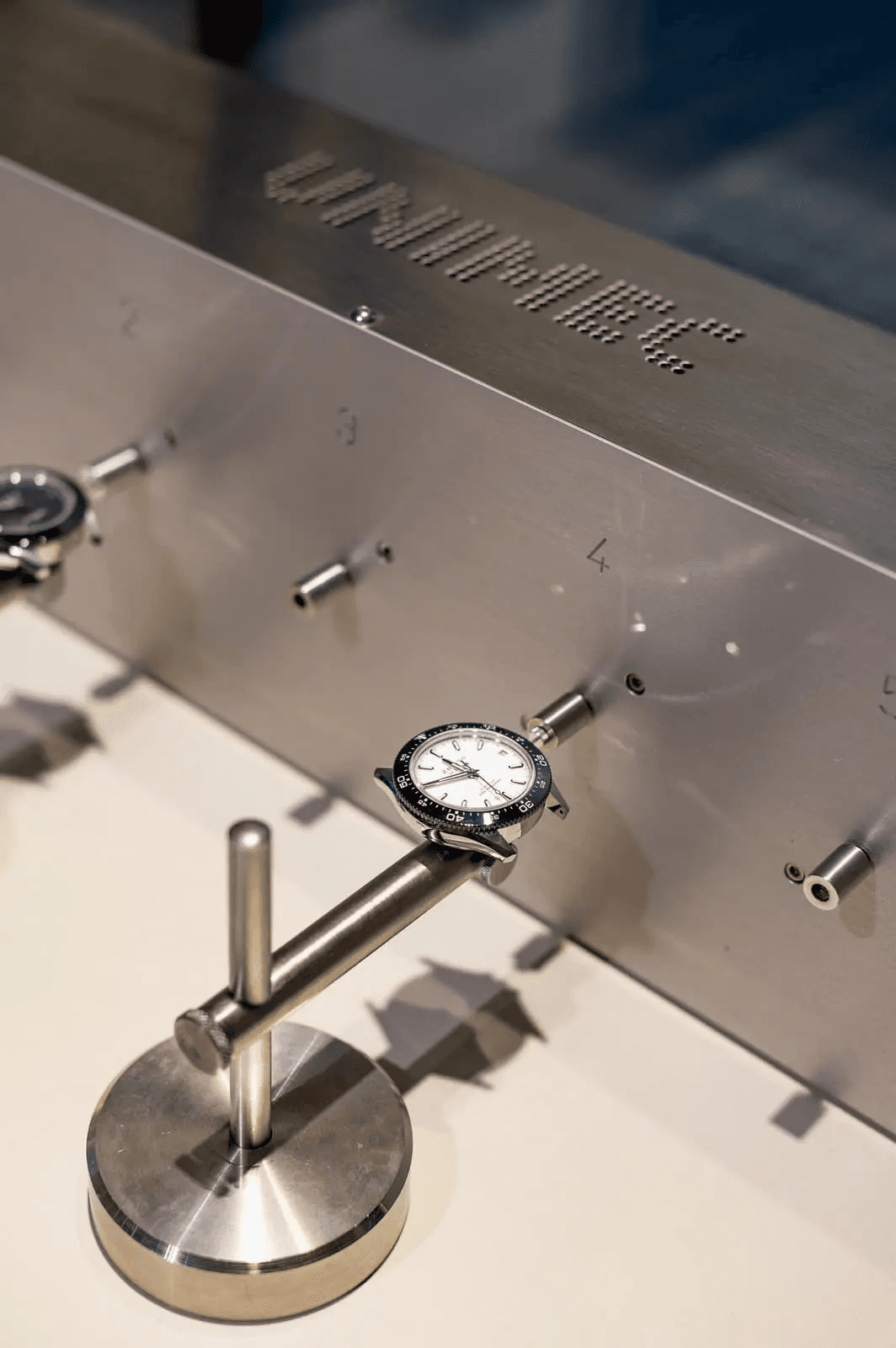
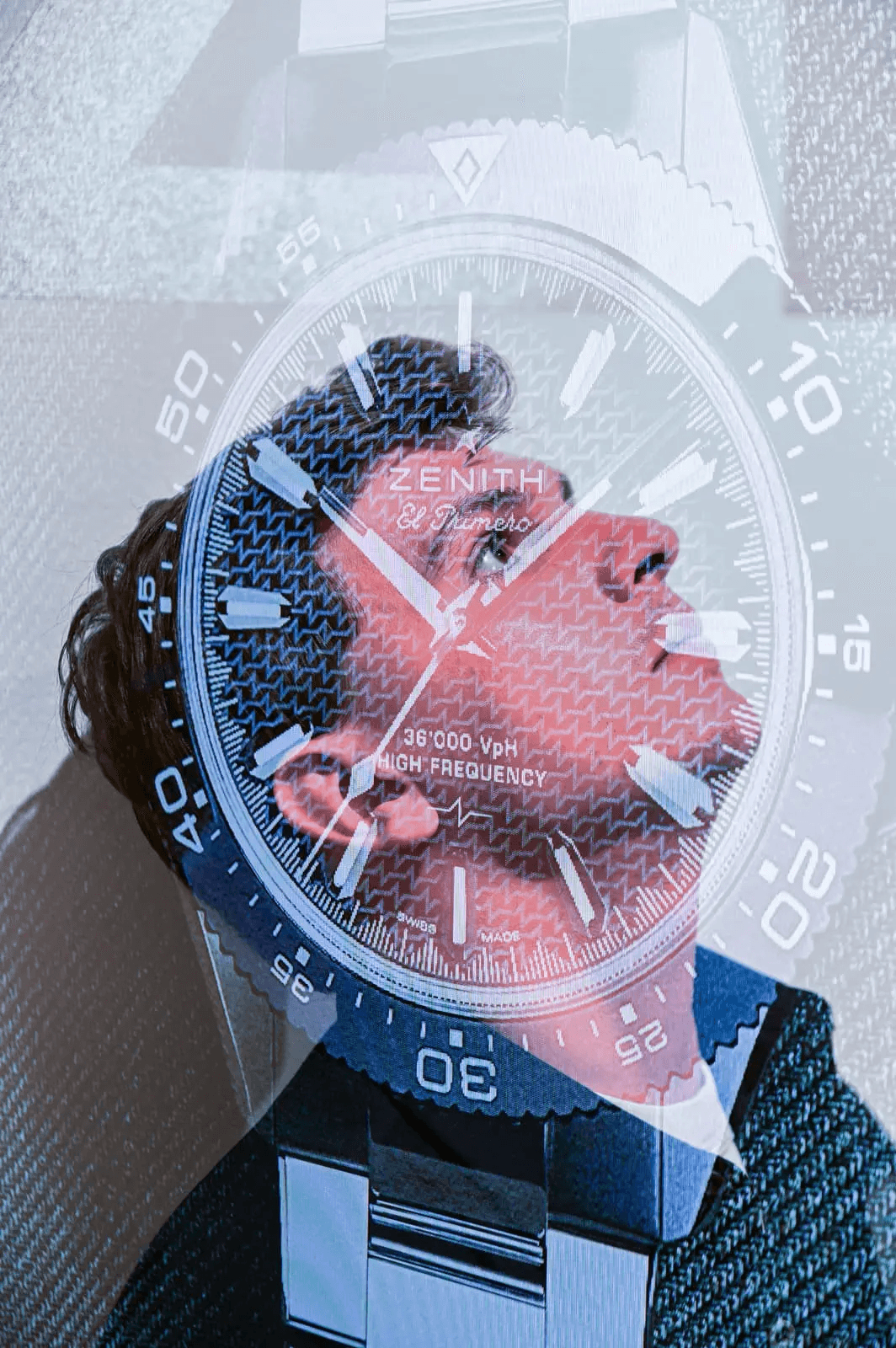
We are unveiling the Chronomaster Solo Sport, the first three-hand watch within the Chronomaster collection. When we looked at the collection, we felt there was room for a highly versatile three-hand watch, the kind of watch you can wear to the office, for sport or to a wedding without really having to think about it. We wanted to retain the strong codes of Chronomaster while giving the watch its own identity. So we worked on more compact proportions with a 40 mm case, a unidirectional ceramic bezel, a full ceramic dial featuring a new high-frequency pattern and a shark-tooth minute track inspired by the Auto Sport from 1964. We also pushed the functional side with 200 metres of water resistance and the new ZENCLASP. And of course, it had to be El Primero. The Solo Sport is powered by the calibre 3620, beating at 5 Hz or 36,000 vibrations per hour. The chronograph is an important part of Chronomaster, but so is high frequency. Solo Sport simply expresses that identity in a different, three-hand format.
What does Zenith aim to highlight with its latest novelties?
We wanted to show another expression of the Chronomaster identity. High frequency is fundamental to Zenith and goes beyond the chronograph function itself. Interestingly, El Primero was initially due to be launched in 1965, but the project was delayed to 1969 precisely to incorporate high frequency. That tells you how fundamental it has been to the movement’s identity from the very beginning. With the calibre 3620, we retain the 5 Hz frequency and the precision and stability that come with a high-frequency regulating organ, but use it in a simpler three-hand configuration. At the same time, the watch brings something we did not have before: a Chronomaster that is robust enough for a very active lifestyle while remaining easy to wear in more formal situations. Versatility and wearability were really at the heart of the project.
What is the importance of Geneva Watch Days alongside Watches and Wonders?
I see them as two very complementary moments. Watches and Wonders has become the major international rendezvous for the industry and naturally plays an important role in our launch calendar. Geneva Watch Days has a different format. It is smaller, more direct and gives us the opportunity to spend more time discussing the products themselves with press and collectors. From a product perspective, this is particularly valuable and GWD gives us the time to have those conversations.
How has 2026 been for Zenith so far, both in terms of the collections and the market?
From a product perspective, 2026 has been a very rich year because we have been able to show different facets of Zenith. The G.F.J., the Chronomaster Sport Skeleton and now the Chronomaster Solo Sport are very different watches, but each one has a clear role within the collection. We also introduced our Double Signed project with Naoya Hida, built around the calibre 135 and the idea of inviting independent watchmakers to reinterpret an important part of Zenith’s watchmaking heritage through their own craft and perspective. Naoya Hida was the first chapter, but there is much more to come. We will unveil other Double Signed creations later this year, and the project will continue in the years ahead with new collaborations. These are very exclusive pieces, but for us they are also a way to create a dialogue between Zenith’s history and contemporary independent watchmaking. This diversity is important to us, but it has to remain coherent. We don’t want to multiply products simply for the sake of novelty. Every new watch or project needs to bring something relevant to Zenith and strengthen the collection as a whole.
Are there any plans to introduce a new family to Zenith’s collection?
We are always looking at how the collection can evolve, but introducing a new family is not something we do just for the sake of novelty. It has to bring a new territory to Zenith and have a clear reason to exist alongside Chronomaster, DEFY, Pilot and G.F.J. There are of course a number of projects we are working on for the coming years, but it is still too early to reveal more. What I can say is that there are still many sides of Zenith, both from our history and from a more contemporary perspective, that we want to explore.
Watchmaking is a profession that creates a strong emotional connection. What do you enjoy most about being closely involved in product development?
What makes product development particularly interesting at Zenith is that we are a true movement Manufacture. Every one of our watches is powered by a movement that has been conceived, developed and manufactured within our Manufacture in Le Locle. This has been part of our culture for more than 160 years, so there is a very strong and natural dialogue between product, our technical department and our engineers. Our offices are actually just across from each other, which says a lot about the way we work. As a product team, we are constantly exchanging with the people who develop and manufacture our movements. For me, this is one of the most exciting parts of the job because you are not simply designing a watch around an existing solution. You can really think about the product and the movement together from the beginning, and that opens up a lot of possibilities.
After two decades at Zenith, has your definition of what a “Zenith watch” can be become broader or narrower? How would you describe a “Zenith watch”?
I would say broader in terms of what we can create, but probably more precise in terms of what makes a watch truly Zenith. After twenty years here, I have learned that our history gives us a lot of freedom. Zenith has never been defined by one particular shape or aesthetic. Of course, El Primero and calibre 135 each come with very strong codes and very specific elements of identity, but I don’t see those as constraints. On the contrary, they give us a fantastic foundation to build on, reinterpret and take in new directions. What has remained consistent is this culture of precision and a sense of mechanical integrity. A Zenith watch needs to have a strong idea behind it, but also real watchmaking substance. It can be inspired by our heritage or be completely contemporary, but it should always bring something meaningful from a technical or product perspective.