Amid the shadow of drought and heat, the 2025 harvest was marked by low yields but remarkable quality—while local grape varieties stood out as a source of strong hope for the future.
A few months ago, I found myself at 316 Meze & Wine with Binnaz Tozan and Dilara İlter, talking about “harvest.” But in this conversation, “harvest” referred not to vineyards or grains, but to what we each had personally sown and reaped. When it was my turn to speak, I said that I had left my field fallow. 2025, I confessed, had been such a strange year that I couldn’t find anything to plant or nurture. We often think of “harvest” as a smooth process—plant, tend, reap. Yet if you think more deeply, you realize that sowing is only the beginning, never a guarantee of outcome. Whatever you plant requires care, protection from disease, and the right kind of nourishment. Even then, success is never assured. The growth, fruiting, and eventual harvesting of what you’ve planted remain a mystical, almost sacred process—a form of creation. That’s precisely why each year’s fruit is awaited with such anticipation: it embodies the uncertainty that life itself brings.
In my earlier article “2024 Harvest: Hot, Dry, and Early,” I discussed the effects of global warming on viticulture—a topic that feels even more urgent today. Rising temperatures and severe drought conditions in 2025 have further strained vineyards, and the long-term outlook remains challenging. During a recent visit to Urla, I attended a panel organized by Urla Bağ Yolu (Urla Wine Road) titled “The Effects of Climate Change on Viticulture and Production Techniques and Changing Practices.” My dear friends on the panel, including Burak Özkan of Likya Winery and Yavuz Saç of Arda Winery, spoke about the need for adaptive strategies. They explained that while the overarching cycle of global climate change continues, smaller cyclical fluctuations within it also influence recent patterns—meaning that the past few years have coincided with one of the harshest sub-cycles. They expressed cautious optimism that conditions might stabilize slightly in the near term. Still, as they emphasized, the larger reality of global warming is irreversible. What we’re living through now is the painful transition into a new climatic order.
Speaking of Arda Winery and Yavuz Saç, based in Edirne, let me share some insights he offered. Yavuz began by stressing that Thrace should not be evaluated as a single homogeneous region. The coastal strip near Tekirdağ, for instance, benefits from a degree of humidity brought by the sea, which partially offsets the effects of drought. In contrast, Edirne and its surroundings suffered far more from aridity during the 2025 harvest. Yet, interestingly, vineyards around Tekirdağ experienced higher incidences of disease due to humidity, while Edirne’s drier climate spared them such problems. As Yavuz noted, viticulture is always about balance—each advantage carries a potential drawback. The key lies in finding the equilibrium that best suits both your terroir and the style of wine you wish to craft.
Yavuz also mentioned that he had begun to consider winter irrigation for his vineyards—something once unthinkable during a season when rainfall and water were typically abundant. Born and raised in Edirne, he reminisced with a nostalgic smile: “When I was little, I had a sled. Every winter, I would ride it. I even had skates—frozen lakes were my playground.” Today, however, Edirne hasn’t seen consistent snowfall in years. Snowmelt once seeped into the soil, replenishing underground water sources vital for vine development. If those winters still occurred, irrigation would never be necessary. But with drought now so severe, even age-old practices and assumptions must adapt. Tradition itself is being rewritten.
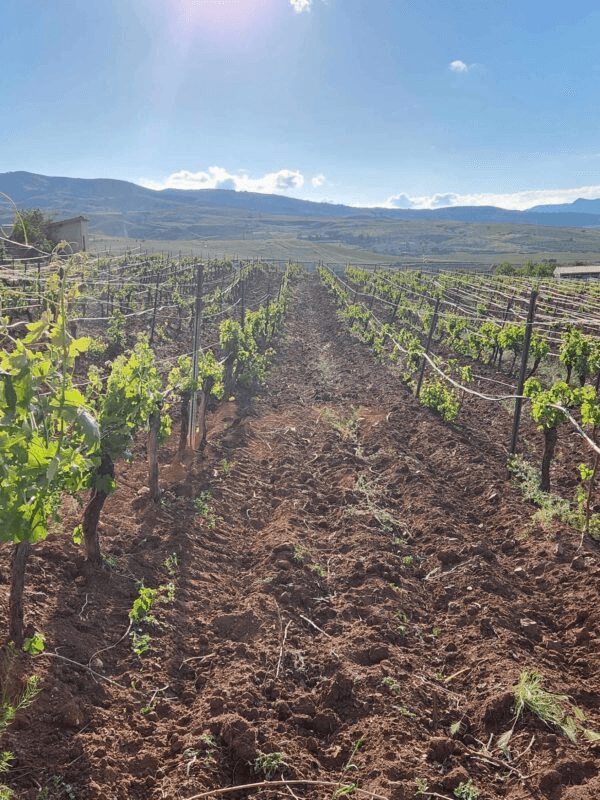
Yavuz also shared another fascinating detail: in times of water scarcity, vineyard weeds must be cleared more rigorously than ever. After all, weeds are plants too, and they compete with vines for precious moisture. When water is limited, every drop counts. Thus, controlling weeds has become a crucial adaptation strategy for preserving vineyard vitality.
2025 Harvest Panorama
2025 Harvest Panorama
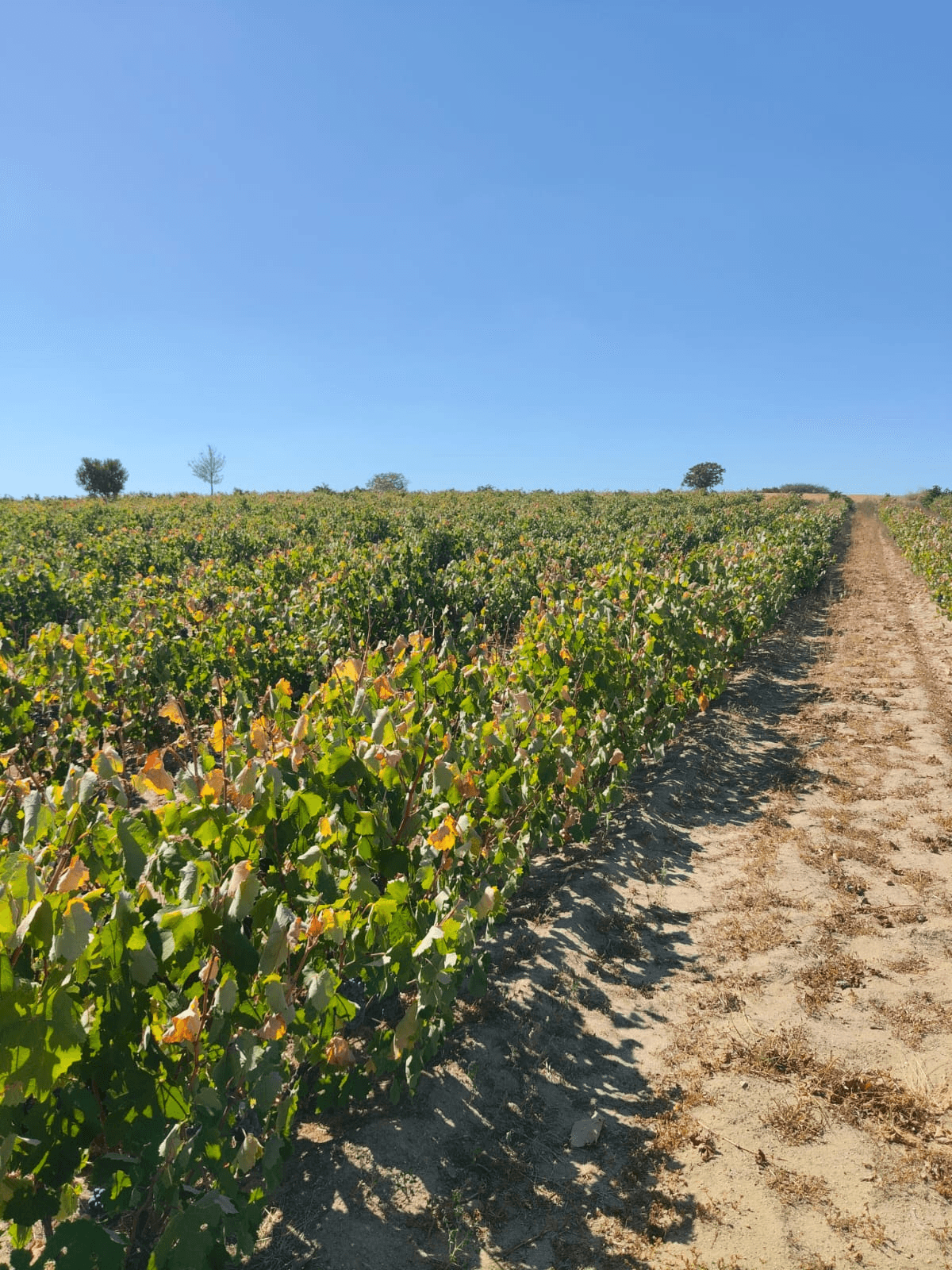
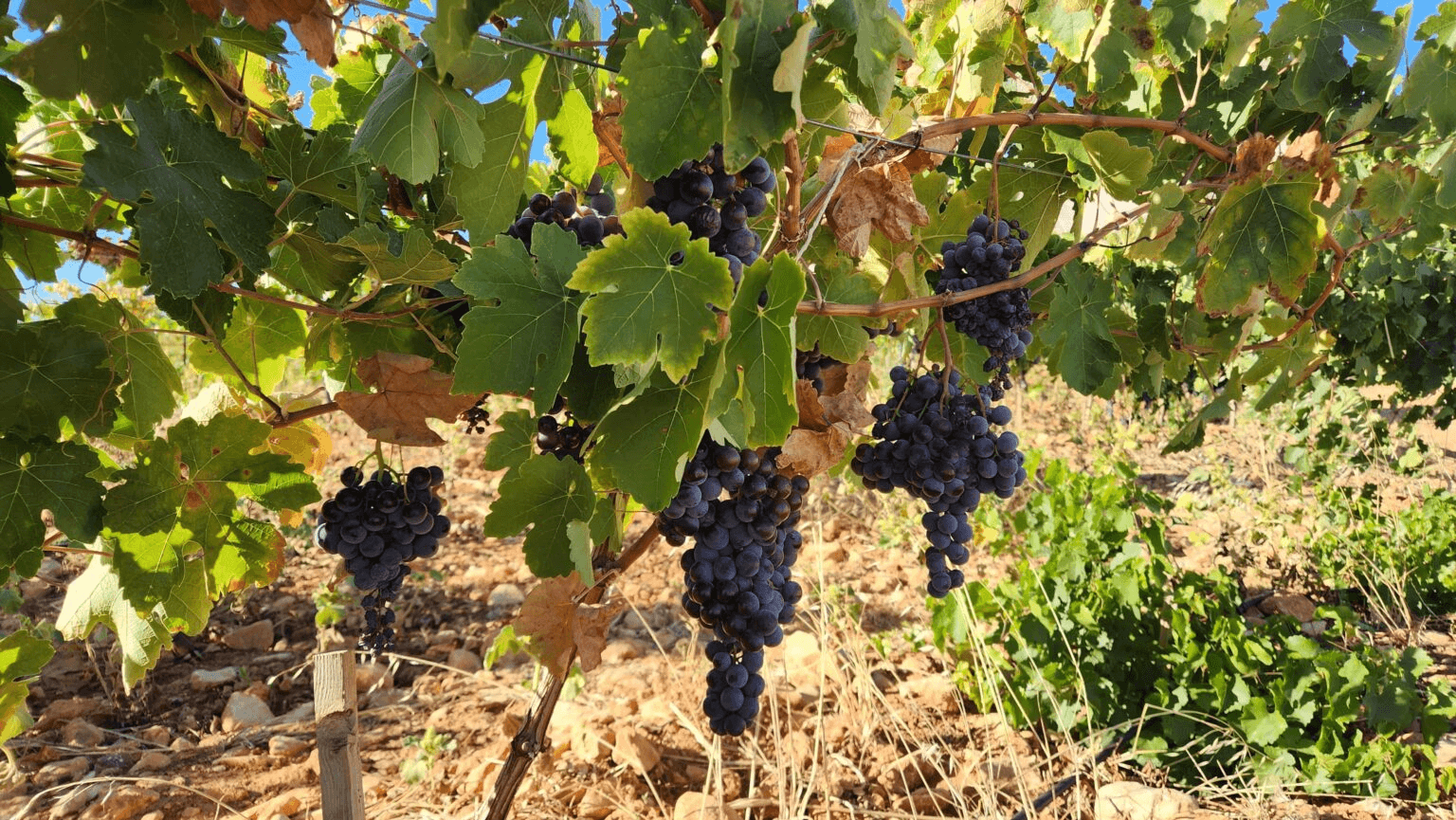
“Isn’t there any good news?” I ask this question hopefully—and fortunately, there is. The region’s native grape variety, Papaskarası (Papazkarası),has had a remarkably good year. Although yields have declined slightly, as with most varieties affected by the drought, the result has been grapes of concentrated flavor and exceptional quality. Papaskarası, in fact, offers valuable lessons in resilience. This local grape, which has been rooted in the region’s soil for centuries, seems to have adapted over generations to its environment. The drought of 2025 affected it the least. Its deep, age-old roots and the water-retaining sandy soil it grows in became its saving grace. Of course, this isn’t mere luck—being native to the land makes survival more intuitive. The grape knows its soil, its climate, and its hardships.
Moving on to Tekirdağ, we turn to Işıl Bulutsuz of Uçmakdere Winery, which produces wines under the Firuze label. What she shared echoes everything written so far. The year 2025 will undoubtedly be remembered for the devastating summer fires—a stark reminder that heat and drought go hand in hand. In addition, the late-April frost struck just as the vines were blooming, severely damaging them. While Işıl reported around a 20% loss in her own vineyards, she heard that neighboring producers suffered losses of up to 60%. This serves as a reminder that winemaking is, above all, an agricultural endeavor, vulnerable to nature’s fluctuations. Yet the growing severity of these fluctuations—driven by the climate crisis—is making life increasingly difficult for wine producers. Though unexpected rains at the end of August brought disease to some vineyards, strong winds fortunately helped to minimize the damage. Despite the low yield, Işıl remains optimistic: the grapes are ripe, healthy, and of high quality. She is especially pleased with her Chardonnay and Cabernet Sauvignon, which thrived in her calcareous soils. “We’ll see how these beautiful grapes express themselves in the bottle,” she adds with anticipation.
2025 Harvest Panorama
2025 Harvest Panorama
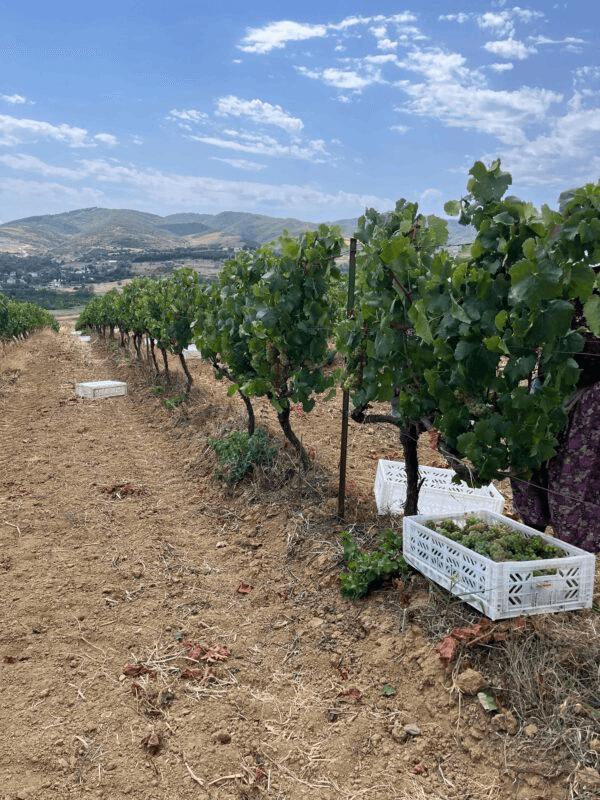
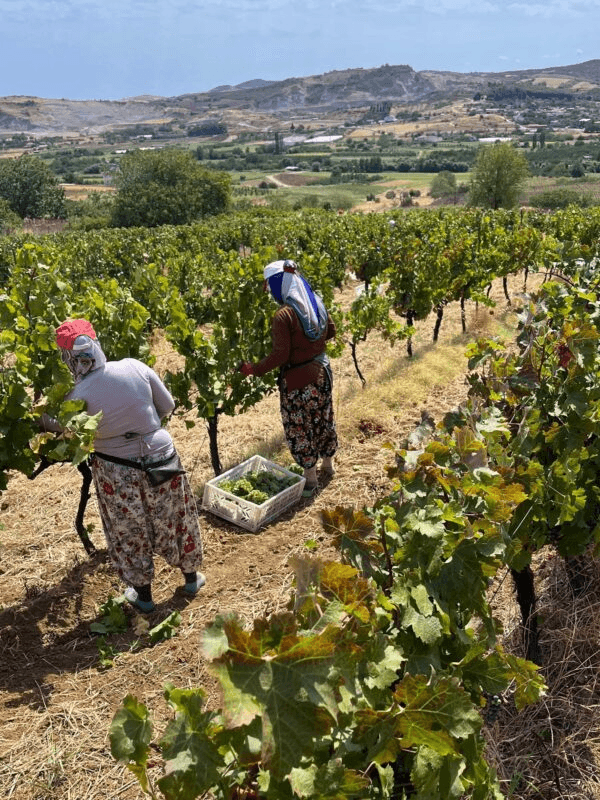
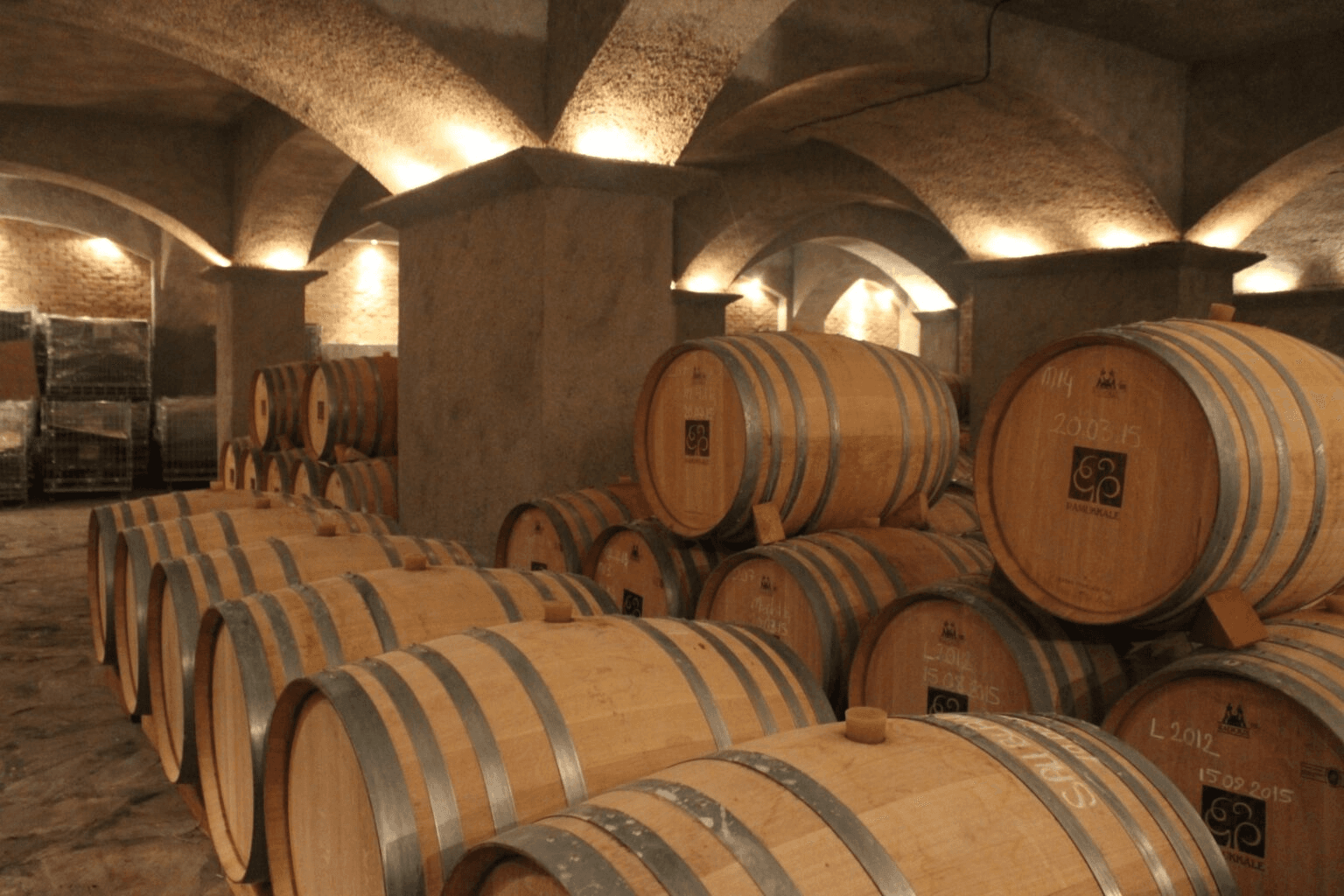
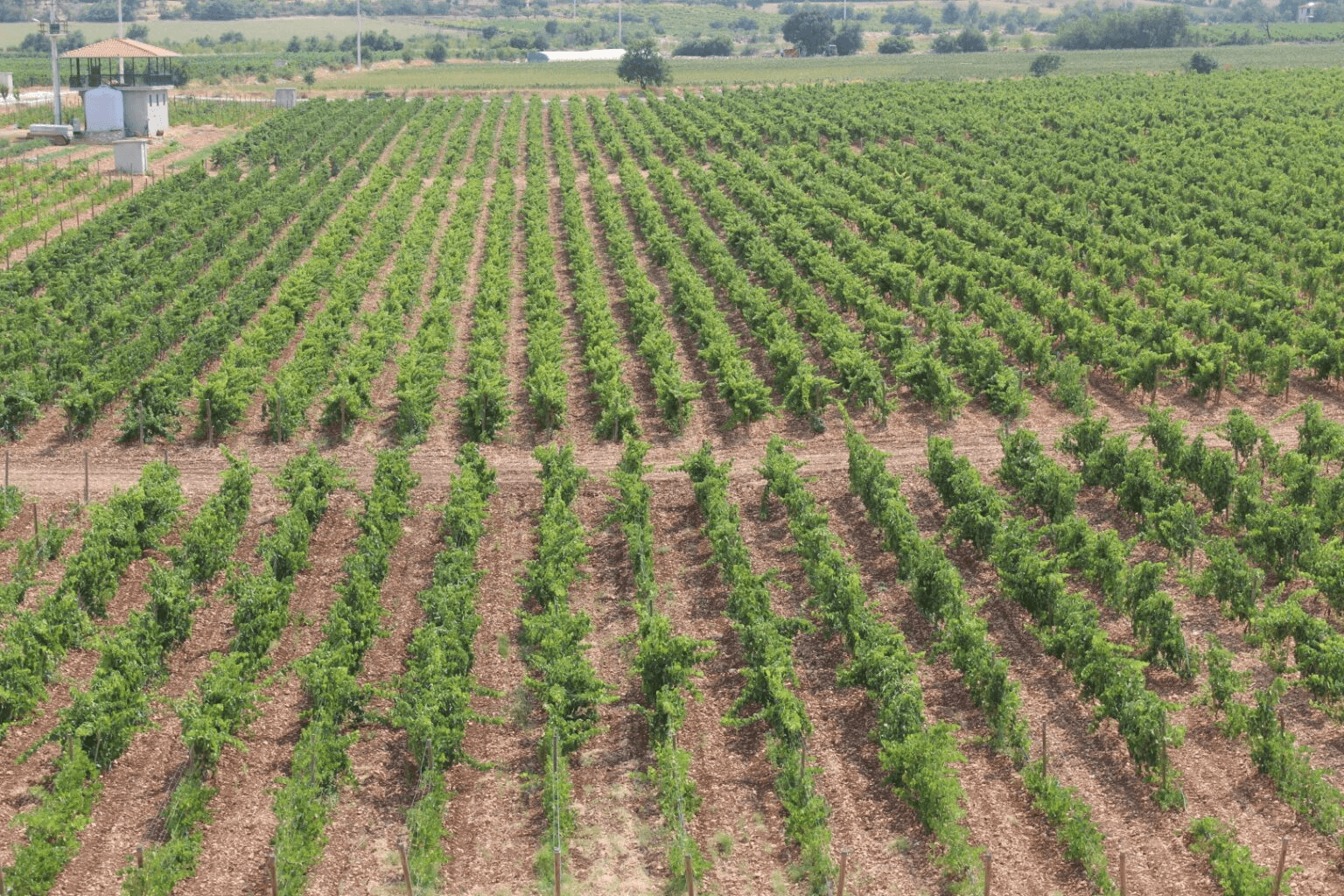
After completing our tour of Thrace, let’s move south to Denizli. Everyone I spoke with for this article was unaware of the others’ comments, yet Fevzi Tokat of Pamukkale Winery began his remarks in exactly the same way: “2025 was a dry year.” Compared to previous years, the harvest began 20 days earlier, with temperatures well above seasonal norms—a worrying sign, since early heat can cause all grape varieties to ripen simultaneously. That, in turn, poses serious logistical problems: when every grape is ready at once, there simply aren’t enough hands to pick them all. Fortunately, as the season progressed, temperatures fell, easing stress on the vines and allowing the harvest to proceed normally.
2025 Harvest Panorama
Fevzi reported slightly lower yields in southern vineyards but said the overall quality remained high. One interesting trend he noted is that the alcohol content of 2025 wines will be somewhat lower—a change he views positively, especially for certain grape varieties. As a small investment tip, he added that the white wines from Güney are more acidic and well-balanced this year than last, promising bright, lively results.
2025 Harvest Panorama
Next, we turn to Kalecik, where I spoke with Sabit Ağaoğlu of Tomurcuk Winery, producer of wines under the Trajanlabel and the proud owner of a new restaurant beloved by Ankara’s wine lovers. Sabit Bey explained that he had anticipated an early frost and taken preventive measures, yet even with such caution, the combined effects of heat and drought resulted in a 50% loss of Kalecik Karası grapes—a painful blow by any standard. However, he adds, the remaining grapes are small, intensely flavored, and deeply concentrated, holding great promise for elegant wines of depth and character.
2025 Harvest Panorama
2025 Harvest Panorama
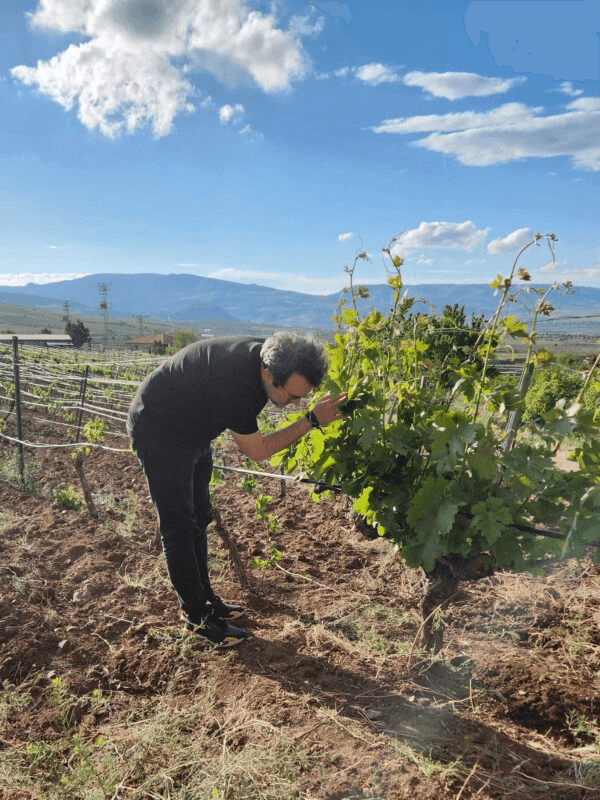
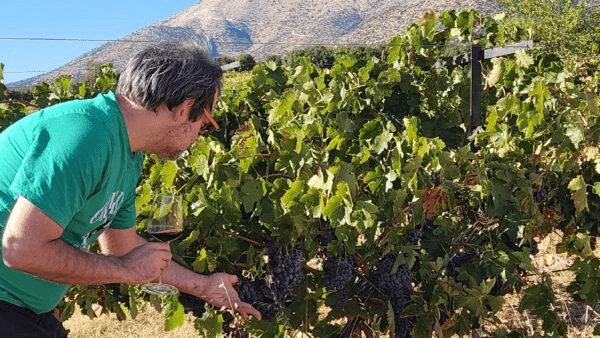
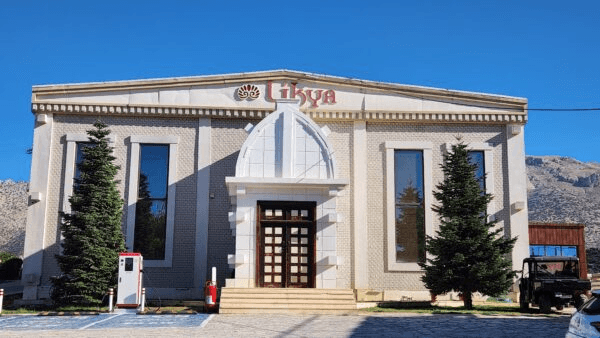
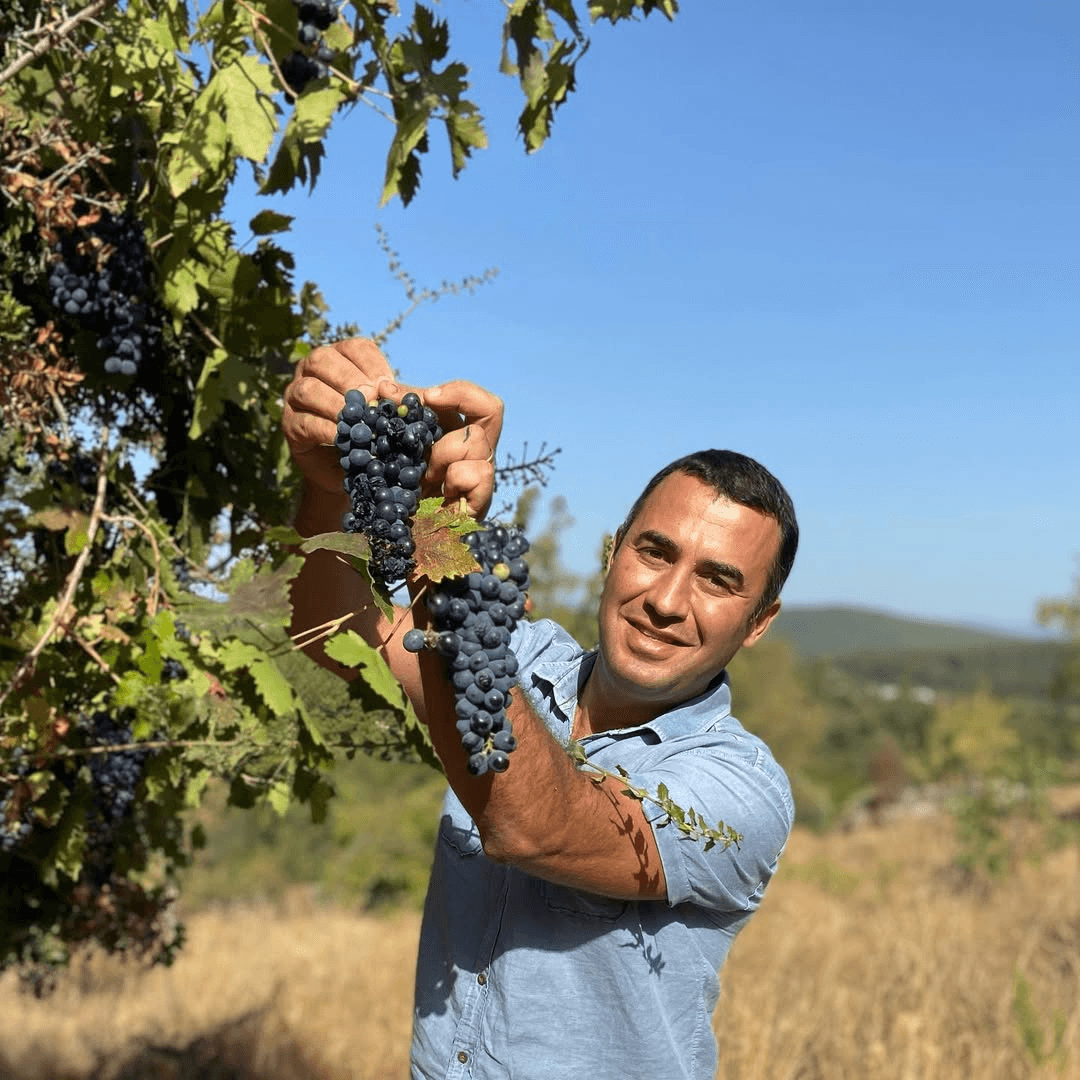
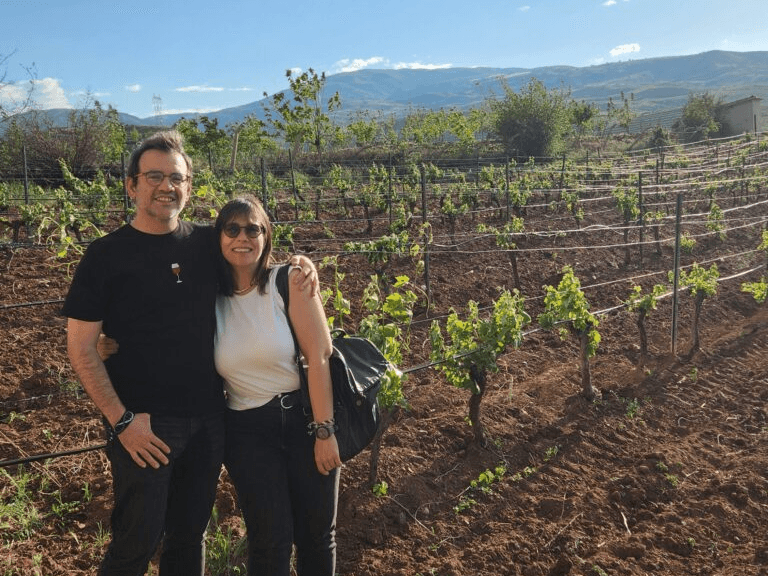
Up to this point, I relied on the experiences and insights of friends and producers. From here on, I share my own field observations. In September, Süray and I took a vacation that doubled as a wine-tasting journey. We set out from Istanbul by car, our first stop being Likya Winery (Likya) in Elmalı. Our plan was to stay at their newly opened Wiyana Wanda Hotel, taste their wines from top to bottom, and observe the harvest in person. I had mentioned Likya in last year’s harvest report, when I spoke with Doruk Özkan. This time, alongside Doruk, we met Burak Özkan, who oversees all strategic decisions in wine production. Together, we tasted grapes from various vineyard plots and listened as Burak shared his thoughts on when each variety was ready for harvest. For us, it was an incredibly instructive and eye-opening experience.
2025 Harvest Panorama
The Elmalı region, home to Likya, sits at an altitude of 1,100 meters, with the majestic Taurus Mountains stretching endlessly in the distance. Pointing toward the peaks, Burak remarked, “In winter, these mountains must hold snow. When the snow melts, it becomes groundwater that nourishes our vineyards. But for the past three winters, there hasn’t been enough snow. We can’t get enough water to the vines.” His words echoed those of Yavuz Saç in Edirne—both lamenting the vanishing snow and the deepening drought.
At Likya, the harvest began on September 1 with a grape variety the team discovered and revived themselves, naming it ‘Lycian Light.’ While they lost some fruit to the drought, the grape quality was excellent. Like many others, they described 2025 as a year of low yields but high quality. Burak noted that climate change is especially challenging for high-altitude vineyards, but producers are adapting—planting vines even higher, where the climate is cooler and ripening occurs more slowly and evenly. This is not merely a theory but an emerging trend: new vineyards across established wine regions are deliberately being founded at greater elevations. At the same time, rising global temperatures are creating opportunities in regions once considered too cold for viticulture. In short, while climate change continues to unsettle the old balance, it is also redrawing the map of wine itself—forcing adaptation, but also opening unexpected new horizons.
2025 Harvest Panorama
2025 Harvest Panorama
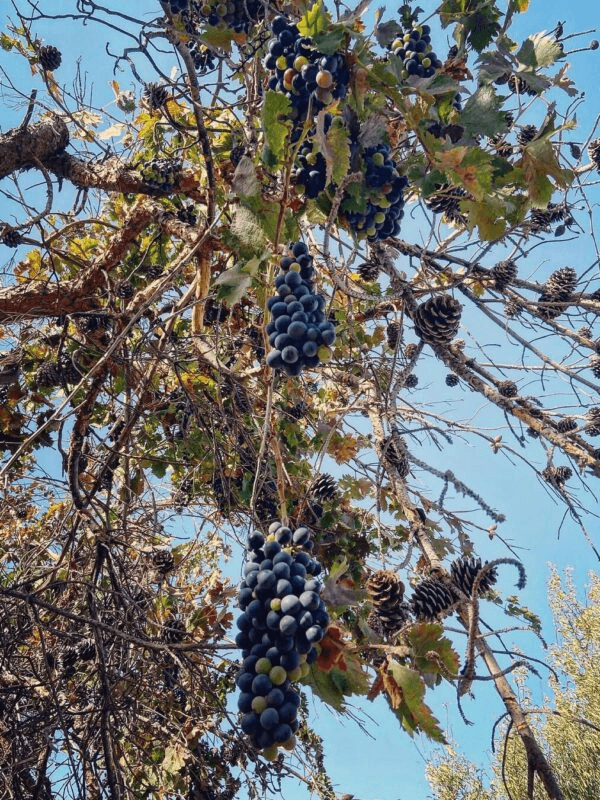
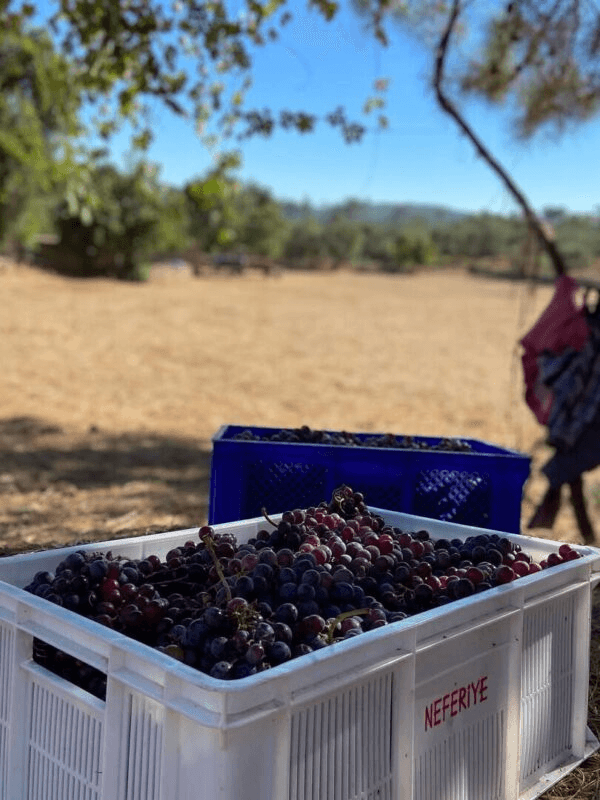
Our next destination after Elmalı in Antalya was Bodrum. And where else could we have gone but Orfoz? One of Turkey’s most distinctive restaurants, Orfoz is renowned for its unique seafood menu featuring delicacies such as shellfish and sea urchins. But one of the restaurant’s partners, Çağlar Bozçağa, has another remarkable talent—producing exceptional wines. Sold under the “Neferiye” label, these wines carry the designation “Agroforestry Wine,” a method so rare that only a handful of wineries around the world, let alone in Turkey, produce wine this way. In this approach, the grapes are harvested from wild vines that grow intertwined with trees. In other words, there is no cultivated vineyard, no orderly rows of vines—only grapes gathered from nature itself. Çağlar roams the mountain villages of Bodrum, seeking out old, resilient vines that have thrived for generations, some of which he believes to be over a century old. From these venerable vines, bearing lesser-known local varieties such as Kanlıkara, Panık, and Ak Üzüm, he crafts his distinctive wines.
2025 Harvest Panorama
Reflecting on recent years, Çağlar recalls 2023 as a particularly difficult season when disease devastated the vines and no harvest could be made. Yet, his outlook for 2025 is much brighter. He expresses his joy that local villagers have embraced his project, showing renewed interest in their vines and helping to increase yields. It’s worth noting that these villages sit at elevations of 800–900 meters, where dry farming is practiced, and the significant temperature difference between day and night enhances grape quality. The benefits of high-altitude viticulture are clearly reflected in the resulting wines.
2025 Harvest Panorama
2025 Harvest Panorama
Our final stop on this journey was USCA Winery in Urla, where we met our dear friend İklima Odabaşı, who completed her master’s degree in viticulture and winemaking in Italy. İklima, who also spoke at the panel “The Effects of Climate Change on Viticulture and Production Techniques and Changing Practices,” shares our concern about the shifting environmental realities. As rising temperatures and drought continue to affect vineyards across Europe, Urla is facing its own challenges. “We used to think that grapes needed full exposure to the sun to ripen properly,” İklima explains, “but now we try to protect them from it. Our entire perspective has changed, and this transformation affects everything—from vineyard management to planting direction. For instance, we’ve reduced leaf thinning to ensure more foliage remains to shade the vines. And instead of aligning the vineyards to face the sun directly, we now orient them east–west to lessen its impact.”
2025 Harvest Panorama
2025 Harvest Panorama
According to İklima, Urla continues to be an excellent region for Zinfandel, Syrah, and Muscat grapes, and she remains optimistic about the future. By integrating academic research with traditional knowledge, she believes winemakers can adapt to new climatic conditions. In fact, 2025 has been an excellent year for USCA. Alongside experimenting with new viticultural techniques, they are pleased with the freshness and aromatic depth of their red wines, which are now ready to be aged in barrels.
As seen across Turkey, 2025 was a year when climatic conditions pushed wine producers to their limits. Yields were lower, yet many took comfort in the fact that the grapes still achieved the desired ripeness and quality. Local grape varieties, in particular, showed remarkable resilience—thriving even under harsh conditions and sustaining minimal losses. This resilience may serve as a guide for the coming years, encouraging more producers to focus on indigenous varieties, especially those from old vines native to their regions. The value of water has also become unmistakably clear, and in response, we are likely to see more recycling and sustainability initiatives taking shape.
2025 Harvest Panorama
However, it would be incomplete to evaluate 2025 solely in terms of climate. Economic challenges have also left their mark on this year’s harvest. A decline in wine sales last year prompted many producers to scale back production in 2025. For small, boutique wineries that manage their own modest vineyards, this may not pose a serious issue. But for medium and large-scale producers—those who depend on purchasing grapes from external growers and who support local vineyard workers and villagers—the situation is more alarming. Many of these producers have reduced their external grape purchases, and as a result, numerous vineyards were left unharvested this year. Without sufficient economic return, the incentive to invest in harvesting, labor, and maintenance has diminished. If this downward trend continues, it’s quite possible that some of these vineyards will be uprooted in the near future—a sobering prospect for the future of Turkish viticulture.
Saatolog Yıllık Saat Dergisi Saatolog’un yeni sayısı, 2020’nin yarattığı bu dönüştürücü etkiden ilham alarak hazırlandı. Dünya dijitalin etkisiyle her zamankinden de hızlı bir şekilde ilerlerken yavaşlamanın da önemini sonunda kavramış bulunuyoruz ve bu tezatlık hayatlarımızın her anına etki ediyor. Biz de bundan yola çıkarak Saatolog 2020/21 sayısını ‘‘hızlı ve yavaş’’ teması altında hazırladık.